Since the Nobel committee introduced this year’s prize winners in early October, it’s the perfect time to salute Nobel laureates in AMWF history.
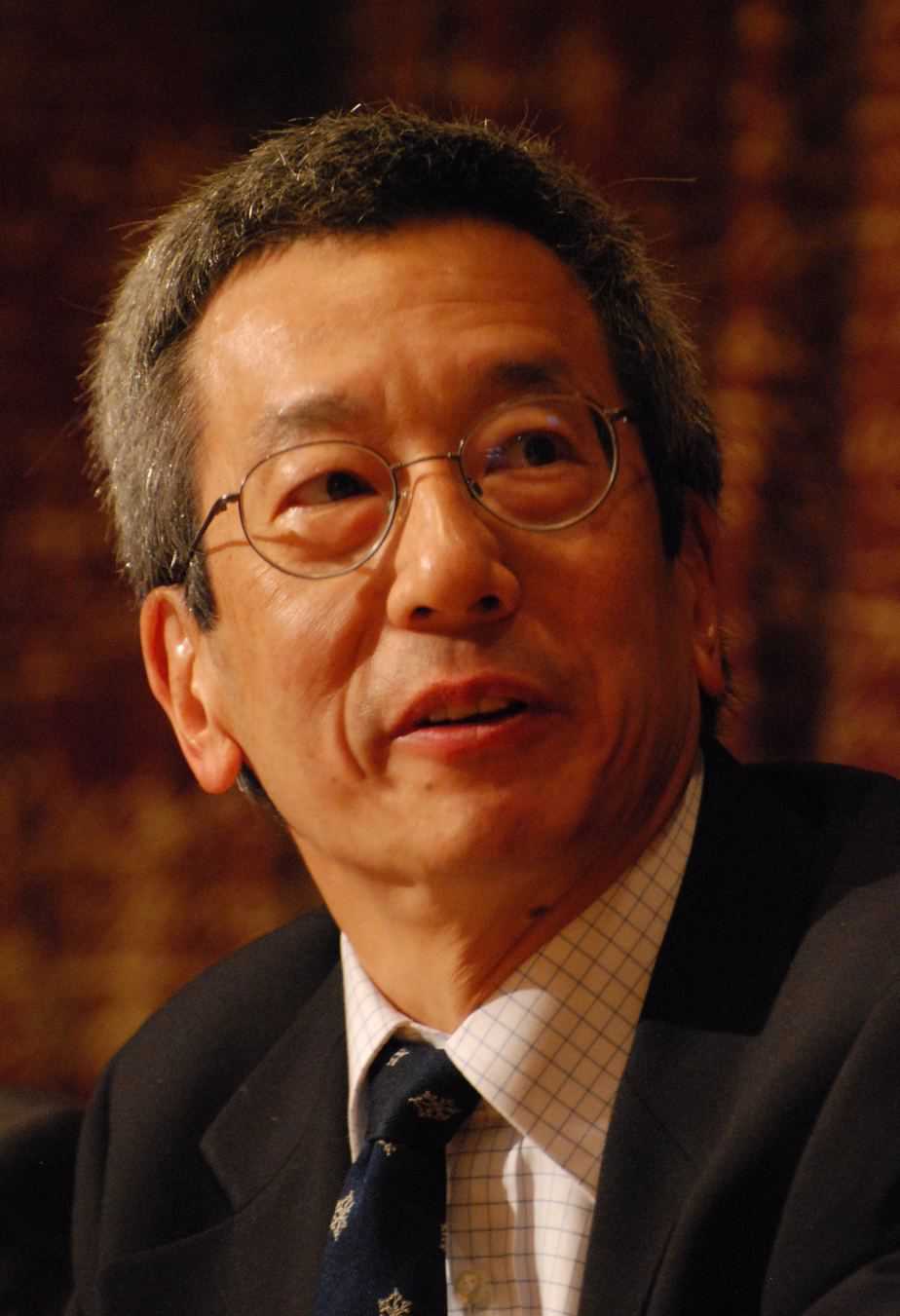
Today, I’d like to spotlight the late American biochemist Roger Yonchien Tsien, who won the Nobel Prize in 2008 (along with two other scientists) for his brilliant work in with the green fluorescent protein:
Combining his deep skills in chemistry and biology, Tsien found ways to make GFP glow more brightly and consistently; then he created a full palette of fluorescent proteins that scientists could use to track different cellular processes at the same time.
His remarkable scientific career took him to some of the most celebrated institutions in the world (Harvard, Cambridge University, University of California – Berkeley) before ultimately settling in as a professor at University of California at San Diego. And in particular, Tsien’s time as a post-doctoral research fellow in Cambridge University expanded his knowledge – and his love life:
…Tim [Tsien’s collaborator] and his wife Norma invited me to their Christmas party in 1976, where I first met their sister-in-law, Wendy. Soon I was spending every weekend visiting Wendy at her house in North London. When Tim and Norma found out several months later, they were quite astonished at the effectiveness of their entirely unintentional matchmaking. Wendy (Figures 3–4) is still the love of my life.
There’s something delightfully touching about a scientist who weaves his wife into a Nobel autobiography, in figures no less. 😉
Additionally, his autobiography offers some fascinating tidbits about himself and his past. For example, he wasn’t really named after his older brother’s childhood playmate, as he had originally thought:
Much later, perhaps when I was in college, I quizzed Dick about this mysterious namesake. Dick confessed that he actually named me after Roy Rogers, the famous cowboy actor.
Also, he described himself as “mystified” over his first prize win at the Westinghouse Talent Search, now the Intel Science Talent Search, which ultimately led to an additional unexpected benefit, beyond the $10,000 scholarship:
One of the most satisfying compliments I received was that the developer who had not wanted to sell a house to Mom and Dad in 1960 now used my photo in one of their advertisements as evidence of the quality of the local school system.
Tsien passed away in 2016 in Eugene, Oregon at 64 years of age, while on a bike trail. His wife called him “the adventurer, the pathfinder, the free and soaring spirit” and said, “He will not be forgotten.”
What do you think of Roger Yonchien Tsien and Wendy Globe?
Photo credit: By Prolineserver (talk) – Own work, GFDL 1.2, https://commons.wikimedia.org/w/index.php?curid=5398582