Chapter 63: SARS and Scare-buying

a bottle of cleaning alcohol
First comes SARS, then comes panic, then comes scare-buying. I discover the local pharmacies are all sold out of cleaning alcohol during SARS, and I wonder -- what will be next?

It was mid-May, 2003, in Shanghai — in the midst of the SARS epidemic — and I had just stopped at a pharmacy, to buy some alcohol for disinfecting our home. Or so I thought. “Meiyou — we don’t have any.” The shopkeeper, a matronly woman with a cap of silvery curls, said the words I feared.

I trudged back to our apartment, with the news. “I can’t believe it — they’ve sold out of alcohol!”

John looked towards me, his calm face the opposite of the near-panic and frustration I harbored within. “Scare-buying.” He said it as if he was announcing what we’d have for lunch, or mentioning an interesting news story.

Except there was nothing common about it, to me. “Great.” Here we were in the midst of SARS, and an important tool — alcohol — was now out of my reach.

But it wasn’t just alcohol. Continue reading “Chapter 63: SARS and Scare-buying”

Chapter 62: The Quietest May Day Ever

Rapid transit in Beijing during SARS
The SARS epidemic turned China's May holiday into the quietest one I had ever seen, with abandoned streets, shopping centers, and even public transit. (image by zh-wp, courtesy of Wikimedia Commons)

Never had a country of over 1.2 billion people seen such a quiet holiday.

Historically, May 1 began one of China’s “golden weeks” — seven days of unadulterated travel, shopping or even just relaxing with family and friends. Of course, with everyone on break at the same time, travel was either too expensive, too crowded, or too hard to get tickets — and shopping meant you had to elbow your way in with the masses to get a good deal. The holiday, arguably, was a perfect example of the Chinese concept of 热闹 [rènÉ‘o] — the lively, bustling, crowded, fire-breathing nature that is China, home to the descendants of the dragon.

There was no renao on this May 1, in 2003, since the Chinese government had canceled the holiday because of SARS. That cut the usual seven days down to five for most of us — except for John. Continue reading “Chapter 62: The Quietest May Day Ever”

Chapter 61: Unmasking SARS Panic

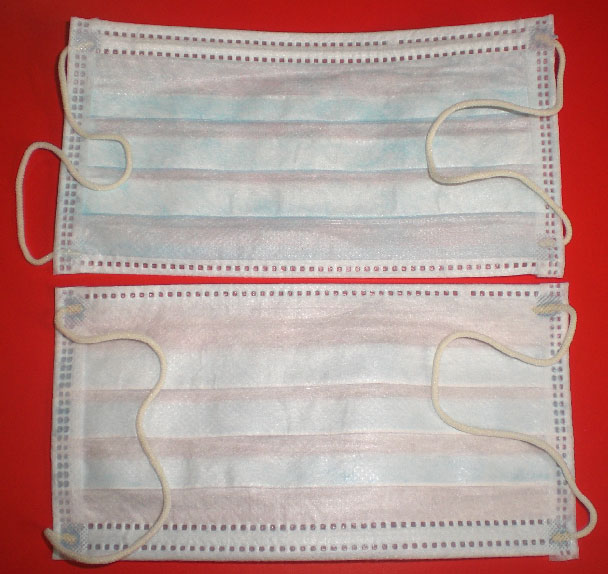
Surgical masks
When surgical masks appeared on the faces of coworkers, I knew the SARS panic had infected our office. (image by Blossoma, courtesy of Wikimedia Commons)

You know there’s something wrong when the entire Sales Department starts wearing surgical masks.

That’s what I saw one afternoon on April 22, 2003, after returning to the office from my lunch break. Only Sales hid their faces behind sterilized gauze, turning our office into a corporate version of an ER triage department. And like triage, those of us sitting at our desks were no better than the families awaiting their loved ones in surgery — hiding worries behind a calm countenance.

As we approached the National Day Holiday — a week long national holiday in China from May 1 to May 7 — I had my own concerns. According to the Chinese government, we only technically had five, not seven, days off — even though they gave us a weekend in there somewhere. So that meant we had to sacrifice a weekend before or after the break to “pay” for this. In my case, I’d have to work through the coming weekend, facing a tiring ten-day work week.

“Are you ready for our ten-day work marathon?” I joked to my coworker and trainer, Steve, April 21 — Monday morning — when I came into the office.

Steve’s face looked as grim as a doctor bearing bad news. “It’s been canceled.” Continue reading “Chapter 61: Unmasking SARS Panic”

Chapter 60: Love in the time of SARS

Hong Kong people wearing masks during SARS
Just as SARS began, and panic slowly began to mask the public, it felt odd to be so in love, in China. (Image from www.wired.com)

I’d been working for barely a month in Shanghai, when news of SARS began to spread like the virus itself.

Masks quietly spread around the bus I rode into downtown Shanghai.

The women’s bathroom became our morning decontamination station, as everyone washed their hands more obsessively than Lady MacBeth — over conversations about whether or not to buy face masks.

E-mails about Hong Kong infected my inbox, with seemingly fictional photographs of people muzzled with face masks, and health workers dressed in outfits straight out of the Andromeda Strain.

Even the office showed symptoms of the SARS scare. Continue reading “Chapter 60: Love in the time of SARS”

Chapter 59: Going to the Hospital in China

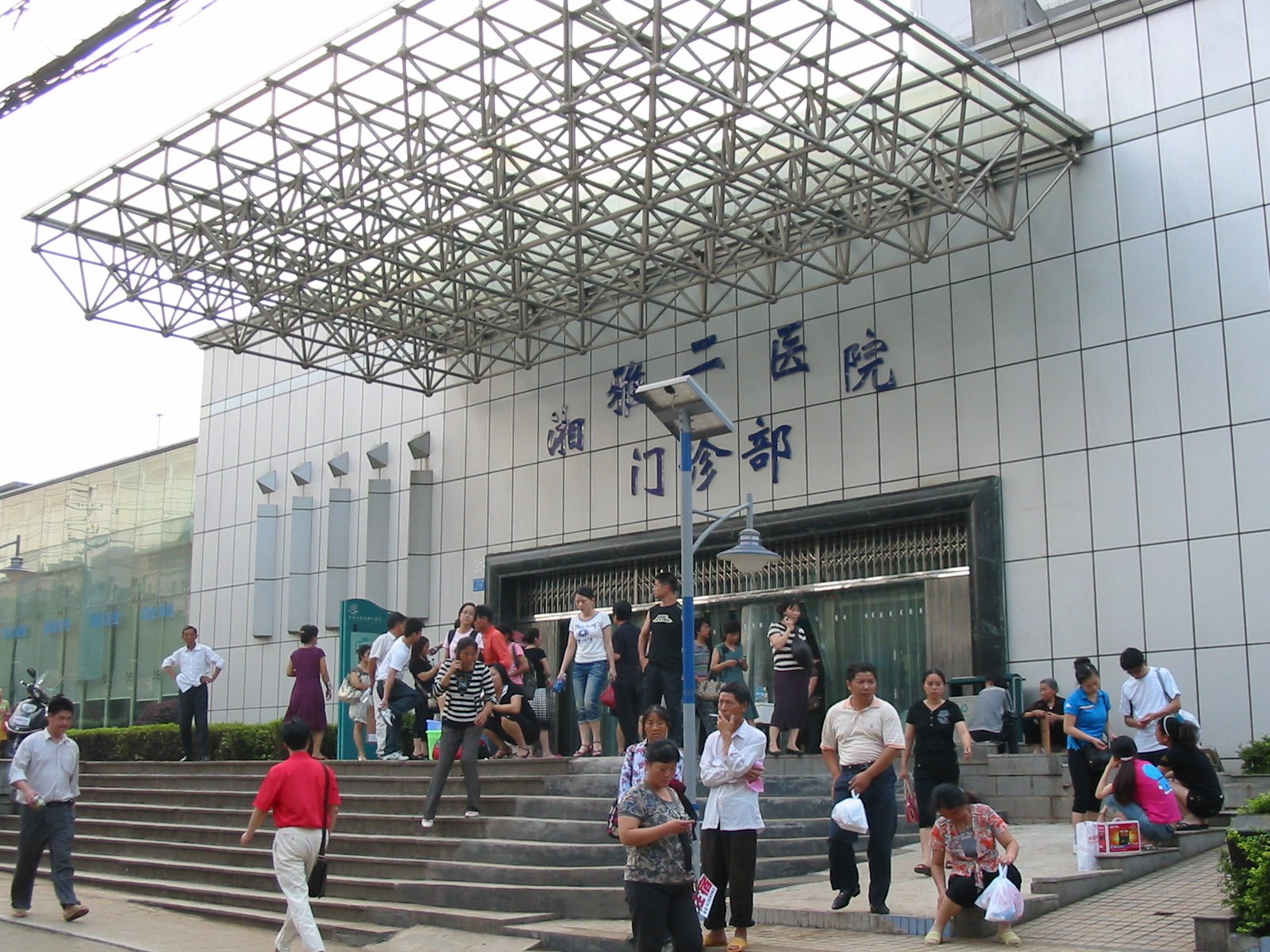
Xiangya Hospital
Going to the hospital in China didn't mean my cough was serious. But it came just at a time when a more serious illness began to threaten China.

Going to the hospital. Before I came to China, the phrase seemed so serious, a harbinger of bad news — in the US, only those with a sickness or problem beyond the family doctor would visit the hospital.

But in China, hospitals handled everything, from minor colds to major surgery. You could not divine the severity of a problem just because someone went to the hospital.

That someone going to a hospital, one evening in mid-March, 2003, was me — a young foreigner gripped with a relentless, raw cough. I felt so sickly before John, my Chinese boyfriend, who never took ill because, unlike me, he had met much of the bacteria and viruses in China once before in his lifetime. My health had been a source of consternation before, and still was. So this evening, as we walked into the hospital, John wrapped his arm around me, gently stroking my shoulder to comfort me, like a parent soothing a doctor-phobic young child. Continue reading “Chapter 59: Going to the Hospital in China”

Chapter 58: China Marriage On My Mind

Wedding rings on a white background
In Shanghai, my Chinese boyfriend and I were almost as close as husband and wife. All of the signs said we were headed to a wedding -- so why did I have to ask?

There was no history of casual dating in John’s family. His maternal grandmother was a child bride, sent to live with her grandfather’s family when she was seven or eight, without the ability or understanding to contest her fate. She went from being a virginal pre-adolescent to a wife who would immediately bear children.

John’s mother, her daughter, married during the Cultural Revolution, in 1972 — with a “revolutionary marriage certificate,” stamped in red, to prove it. She was never a child bride, but still a stranger to this man, introduced to her through a matchmaker in the village, with a courtship that fast-tracked them straight to a wedding. Marriage was simply a practical matter, solving what the Chinese often refer to as their “personal problem.”

By the time I moved to Shanghai, John and I were as close as a husband and wife, living together and depending on each other. John had long decided we were a “settled couple” — that’s why he moved in with me in Hangzhou, only days after our historic first kiss. We had skipped casual courtship and went straight to something serious — serious enough to wonder about marriage. Continue reading “Chapter 58: China Marriage On My Mind”

Chapter 57: Customers Are Our Lovers

As I began work at the global media company in Shanghai, I discovered that sometimes, the customer is not always right -- and definitely, is not your lover.
As I began work at the global media company in Shanghai, I discovered that sometimes, the customer is not always right -- and definitely, is not your lover. (image from EEfocus.com)

Silvery electronic components, in a swirling tornado shape. It was an unnatural disaster, against an electric blue background, that actually hoped to spin a tale — a tale of a Chinese manufacturer of electronic components. But the details were lost in the storm of objects, so instead of being informed or interested, I fought to hold back laughter.

It was hard not to laugh in the presence of Steve, a jovial thirtysomething American with a slight paunch, five-o-clock shadow and a shock of short wavy hair that was perhaps the only reminder of his nomadic Dead Head years. Steve had since gone corporate in joining the company, after years of work in public relations and copywriting. He was the Senior Copywriter for the ad production team I just joined in Shanghai, but even the training session he gave me this one morning, on how to write good ads for Chinese advertisers, bordered on comedic monologue — as we looked through the old magazine ads and the handbook, discussing how (or in the case of the vortex of components, how not) to make good ads. Continue reading “Chapter 57: Customers Are Our Lovers”

Chapter 56: Missing the Flavor of Hangzhou in Shanghai

Shanghai Oil Noodles
Even as I found so much to love in Shanghai, I still yearned for the flavors of the Hangzhou I once knew. (photo by HanWei, courtesy of Wikimedia Commons)

I moved to a district in Shanghai called Changning, which means “long peace.” After losing my job and even overstaying my visa in Hangzhou, living in Changning was like finding peace in my life. I had a promising new job as a copywriter in a multinational company named one of the Forbes’ 200 best small companies in the world. I resided in a quiet community, with evergreens, bushes, manicured lawns, weathered four-story, concrete apartment buildings and plenty of sunshine. Every morning, a fleet of modern — and mostly empty — air-conditioned buses could taxi me all the way to my new downtown office.

Most of all, I had John, my Chinese boyfriend, with me, everyday. And perhaps that was the most important difference between Hangzhou and Shanghai — now John was no longer an occasional weekend visitor, but, by unspoken agreement, my live-in partner. He turned Shanghai into something deceptively familiar, as if my new home was simply a Shanghai version of the Hangzhou neighborhood I once knew.

But this was a new neighborhood and a new city — with a new culinary landscape we didn’t understand. Continue reading “Chapter 56: Missing the Flavor of Hangzhou in Shanghai”

Chapter 55: New Position, New View of Shanghai

Shanghai Pudong Skyline
My view of Shanghai changed completely when I became gainfully employed as a copywriter, in a downtown office with a view of its own. (photo by Jens Schott Knudsen, courtesy of Wikipedia)

From the 12th floor of a certain office tower about a mile from the Bund, you can see some of the most quintessential views of Shanghai. Shanghai’s futuristic Pudong skyline — from the Oriental Pearl Tower’s shining space needle to the Jin Mao Tower’s steel pagoda — rises just above the buildings before us, out the East-facing windows. From the West-facing windows, the manicured greenery of People’s Square is bordered on one end by the ding-shaped Shanghai Museum, and, on the other, by a melange of fin de siecle and contemporary archecture on Nanjing Road. And just to the South is the Yan’an Road elevated highway and tunnel, restlessly pumping a neverending stream of traffic East and West, from Pudong to Puxi and Puxi to Pudong.

The view I cared about the most, however, was in the meeting room, where I had an interview for a copywriting position — an interview I had imagined for over a week, and spent hours preparing for, even down to my tangzhuang jacket, skirt and upswept hairdo. Continue reading “Chapter 55: New Position, New View of Shanghai”

Chapter 54: I’m Leaving Hangzhou on a Microvan

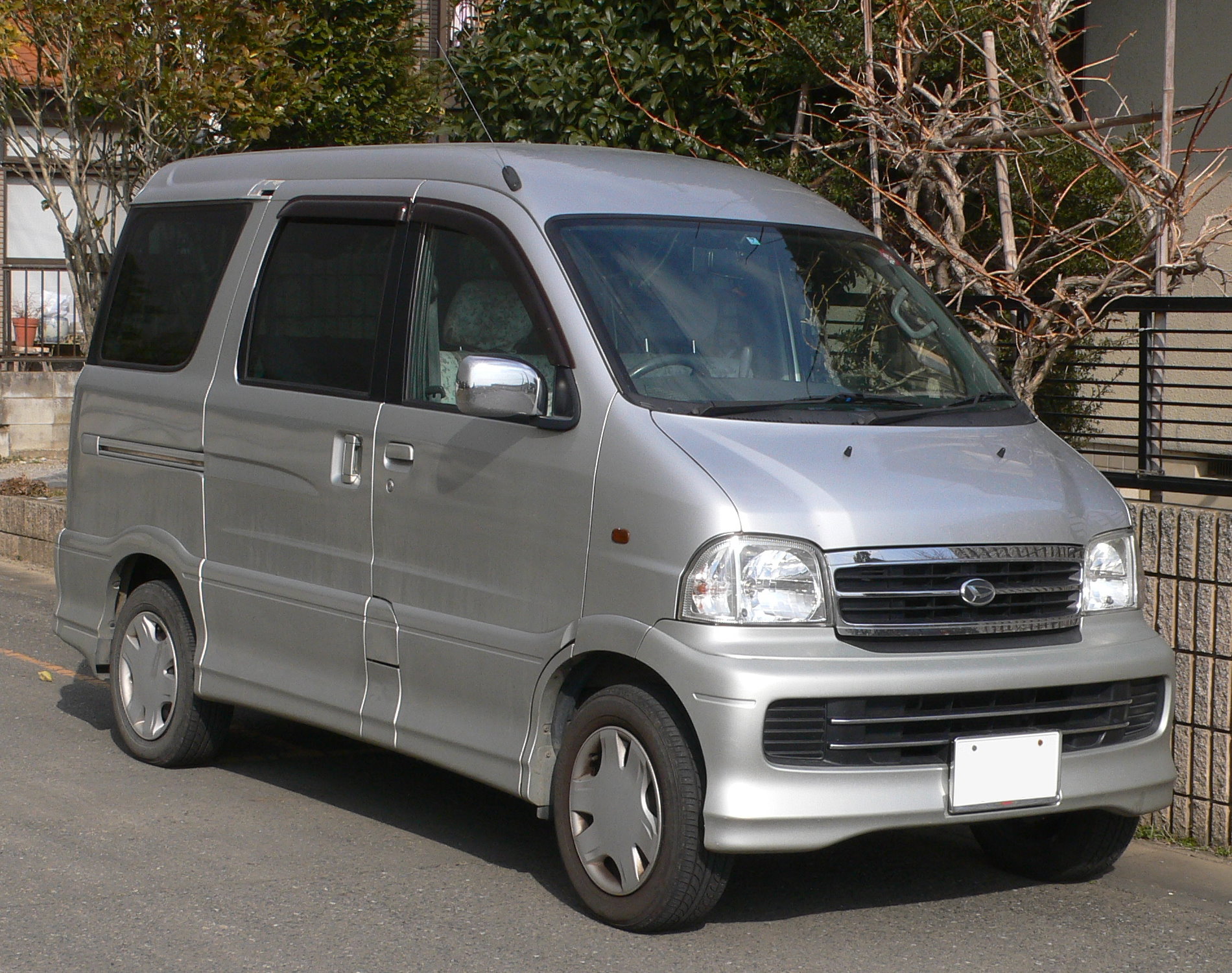
Microvan
As I moved to Shanghai in a microvan, I left behind Hangzhou -- and the memories -- and moved forward with John's support. (image from Mytho88, courtesy of Wikipedia)

I moved many times in my life. But I never moved in China — in a microvan — until March 1, 2003.

The gray microvan belonged to John’s cousin, a driver for an express mail service based in Shanghai. According to John, many people with a high school education — or less — left Tonglu to get into the express mail business. Tonglu natives now ran many of the smaller express mail services in the Yangtze River Delta area, including Shanghai. I imagine one Tonglu man left and made his fortune in express mail, bringing his contacts with him — and later inspiring copycat entrepreneurs. But, clearly, the model was working for this cousin. He had only a high school education, but he actually owned a car — a car that would help me move my home to Shanghai.

With only a job interview, no firm offers and a temporary visa expiring April 15, I still flirted with uncertainty in my life. But I had a lot of strength behind it all, because of John, my Chinese boyfriend. John found us an apartment, and put down a deposit. John asked his cousin to move me to Shanghai. And, through it all, John calmed my fears, reminding me “we were in the same company.” Continue reading “Chapter 54: I’m Leaving Hangzhou on a Microvan”