Does your 2015 holiday shopping list include book lovers? Over the past year, I’ve featured a lot of fantastic books on this blog (including AMWF titles); they could also make amazing gifts for that special someone in your life.
I’ve listed them in alphabetical order according to the author’s last name, along with a recommendation for who would love it and a link to my interview with the author. Happy holidays! (Note: titles are linked to Amazon.com, where your purchase helps support this blog.)
For people fascinated with intercultural relationships:
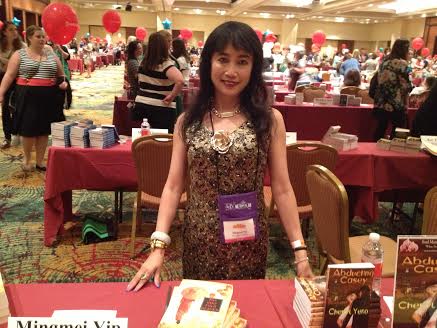
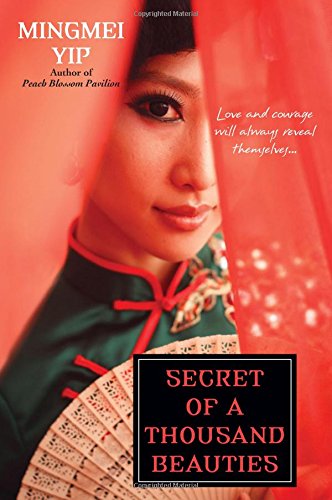
It’s not everyday you come across a novelist who is also a qin musician, painter and calligrapher. Mingmei Yip stands out for many reasons, including her beloved series of historical novels set in China. In Mingmei’s fiction, strong women rule and there’s plenty of love and romance to go around.
That’s because the story introduces us to a talented group of young women in Suzhou engaged in the traditional art of Chinese embroidery. Spring Swallow finds shelter in this sisterhood of embroiderers after escaping a ghost marriage, where she discovers the secrets of their celebrated art – and the determination to live life on her own terms (including when it comes to love). Fans of Lisa See and Gail Tsukiyama will enjoy this and the many other novels by Mingmei Yip.
In this interview, I asked Mingmei about everything from ghost marriages and Chinese embroidery to how interracial relationships were viewed in 1930s China.
—–
Your book offers a window into the world of Chinese embroidery, which has a 2,000-year history in China. What inspired you to build a story around the lives of women embroiderers?
In traditional China, women, considered men’s possessions, didn’t have much independence or freedom. A Chinese saying goes “The worst thing that can happen to a woman is to marry the wrong man. The worst thing that can happen to a man is to enter the wrong profession.” Unfortunately, because marriages were usually arranged, many women ended up marrying the wrong man at the cost of any chance for happiness. Wary of a bad marriage, some decided to remain single for the rest of their life. These women would join small communities established for non-marrying women. They displayed this choice by tying up the hair in a long pigtail.
Intrigued by these women and their sisterhoods, I decided to write a novel about them. Most worked as maids, but some were more fortunate and could learn a traditional woman’s craft. One of these was embroidery, an art that has always appealed to me, so I decided to write about this small group of embroiderers. They are supposedly celibate, but of course many succumbed to desire.
I was taught embroidery in elementary school and came to love it as a craft and art form. So it was natural for me to write about women embroiderers in China. As I wrote it I often imagined that I was moving the needle to create images in delicate colors.
Why did you choose to set the novel in 1930s China?
I love history, because it is like a mirror reflecting all that’s good and bad in humanity. I think 1930’s Shanghai was one of the sexiest eras in world history, populated with larger than life characters: glamorous women, cynical politicians, and corrupt police. But also with idealists trying to help China find its way in the modern world. It was also a time of extremes – from sybaritic luxury to abject poverty. I have tried to describe both from the indulgences of the rich to the miseries of the poor.
The thirties China was a time when everything was changing and the world seemed new.
At the heart of the novel is Spring Swallow, a “bad-luck woman” determined to fight for her own happiness at a time when women had few options in life. Could you talk about how you conceived of this character?
Most of my novels are about strong women who never give up despite all difficulties. I feel great rapport with these women because I went through very difficult times myself during my youth. Had I grown up in that earlier era, my difficulties would have been far greater. Though Spring Swallow faced much bigger challenges than I, I hope I share her indomitable spirit.
Your story offers many different aspects of love and marriage in China — including arranged marriages, secret love affairs and even concubinage. Could you share with us something fascinating or surprising about love and/or marriage in China that you learned while working on your book?
Ghost marriage was one of the many ways women were oppressed in traditional China. Couples were often betrothed in childhood, or even before birth. Since only half of children survived to adulthood, many lost their fiancés. Because they had already pledged marriage, the cruel custom was to marry the woman to the dead man. As a practical matter, this meant she was a slave to her supposed in-laws. And also she was denied the possibility of actual love with a living human. Chinese women have always been resourceful and many found ways to have affairs, though secretly and at great risk. Of course such relationships tended to be fleeting, leaving many women to a lonely old age.
A foreigner and a Chinese end up falling in love in the course of the novel. How did people in a 1930s China view interracial relationships?
Even when I was a teenager living in Hong Kong, people disapproved interracial relationship, especially between a Chinese woman and a white man. However, in the 1930ies, China’s jazz age, such relationships were more shocking, except in cosmopolitan cities like Shanghai and Beijing. But many believed such unions were based on lust, not true love. Chinese men were particularly resentful, blaming the Chinese women for benefiting a foreigner instead of their own race. However, though there might be name-calling, active oppression or violence was extremely rare. Now, White-Asian marriages are so common they attract little notice.
What message do you hope readers come away with from your novel?
Novels and movies provide entertainment, but I strongly believe that readers should also be given something more. Besides enjoying an escape filled with excitement and adventures, I hope my readers will discover some ancient Chinese wisdom and come to know a little more about human nature.
When I write about strong women who overcome obstacles, I feel that they became my teachers. Now I have a comfortable life, but getting there was a long journey. I hope my characters will inspire others not only to succeed, but also to develop wisdom and compassion.
This website uses cookies to improve your experience. We'll assume you're ok with this, but you can opt-out if you wish.AcceptRejectRead More
Privacy & Cookies Policy
Privacy Overview
This website uses cookies to improve your experience while you navigate through the website. Out of these cookies, the cookies that are categorized as necessary are stored on your browser as they are essential for the working of basic functionalities of the website. We also use third-party cookies that help us analyze and understand how you use this website. These cookies will be stored in your browser only with your consent. You also have the option to opt-out of these cookies. But opting out of some of these cookies may have an effect on your browsing experience.
Necessary cookies are absolutely essential for the website to function properly. This category only includes cookies that ensures basic functionalities and security features of the website. These cookies do not store any personal information.
Any cookies that may not be particularly necessary for the website to function and is used specifically to collect user personal data via analytics, ads, other embedded contents are termed as non-necessary cookies. It is mandatory to procure user consent prior to running these cookies on your website.