Guest Post: Get Romantic – Watch Chinese Love Films to Help You Learn Mandarin

I’ve always been a romantic at heart, which means when it comes to watching movies, I often opt for a good love story. That’s why I like this guest post from Yang, recommending four outstanding Chinese love films that could help you improve your Chinese at the same time.

Do you have a guest post you’d like to share here at Speaking of China? Check out the submit a post page to learn how to have your story or recommendations featured here.
—–

Watching a great love story at the movies or on TV with your loved one is not just fun. It’s also an enjoyable way for you to learn Mandarin and understand more about Chinese culture.

So, today, we are going to recommend some of the most popular Chinese romance based films for you to enjoy:

1. 甜蜜蜜(Almost a Love Story)

1. tian mi mi

This film was released in 1996, just before the return of Hong Kong to China and contains an all-star cast. Director Peter Chan is one of the most famous directors in Hong Kong for love stories. Leon Lai was one of the Four Heavenly Kings (ie one of Hong Kong’s most popular stars during the 1990s) and, in 1996, at the peak of his career. Maggie Cheung, an internationally known Hong Kong actress, also starred in this film, which reflected life in the last decade of the city’s colonial period. In addition, the film honours one of China’s most famous singers (Deng Lijun/Teresa Teng) who passed away in 1995; in fact, one of her songs, Tian Mimi, is often heard throughout the film. The film won numerous plaudits at the Hong Kong film awards in 1996 and became known as one of the classic romantic Chinese films.

2. 色戒 (Lust Caution)

2. se jie

Another great adventure film from Ang Lee, the Oscar winning Taiwanese director. In this film he works with Tony Leung, one of Hong Kong’s top actors, and also Tang Wei, who became a major star after this film. The film attracted a lot of “buzz” when it was released as, besides its famous director and actors, it is very violent with very realistic, often graphic, sex scenes, which are still rare in Chinese films. In any event, the film has been described as a very sophisticated love story.

3. 北京爱情故事(Beijing Love Story)

3. Beijing love story

This film was released with the same name as an earlier hit TV series (similar to Sex and the City) but was not just a predictable extension of the TV show. Rather, the film accurately portrayed both the happiness and typical problems of couples of different ages in China. It has been described as a warm and sensitive film. Another noteworthy point is that the actor/director and leading actress actually fell in love with each other and were married after making the TV show.

4. 那些年,我们一起追的女孩(You Are the Apple of My Eye)

4. na xie nian

If you watch any of the “campus love”/puppy love TV series and films being produced all over China currently, they probably originated as a result of the huge success of this film. The film was directed by Jiu Ba Dao, one of Taiwan’s famous authors, who decided to make a film to honor his teenage love in school. He did not have any prior directing experience and the leading actor and actress were also unknowns. However, when the film was released, it was an instant success, breaking records in Taiwan, Hong Kong and mainland China—making the lead actors in the film superstars, and encouraging others to produce similar films.

Undoubtedly you have your own favorite Chinese films and, whatever they are, we’re sure that watching Chinese movies will help you learn how to speak Chinese more effectively.

If you are a fan of Chinese movies, why not let us know which ones you have watched, or why you liked them. Or even email us to tell us which one is your very favorite; we’d love to know!

Yang is a serial web entrepreneur whose latest website is http://www.learnmandarinnow.com. Yang is passionate about learning new languages and cultures. You can check out the recent Chinese learning research here: How to learn Chinese.
—–

Speaking of China is always on the lookout for outstanding guest posts! If you have something you’d like us to feature, visit the submit a post page for details — and then submit yours today.
Guest Post: Did You Know Hollywood’s 1st Sex Symbol Was an Asian Man?

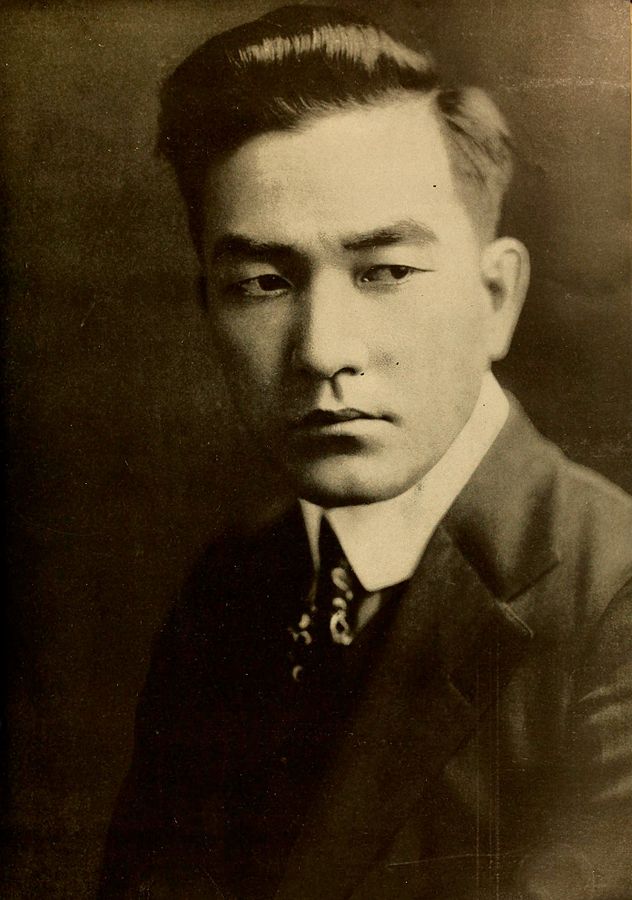
Logan Lo enlightened me with this guest post, which speaks to an oft-forgotten side of Hollywood history and how it has impacted Asian men in the media today. He writes: “…there are some that feel that the modern effeminization of Asian men in Hollywood and television was due – at least in some part – to the backlash over the first Hollywood sex symbol, a Japanese man named: Sessue Hayakawa.”

Who was Sessue Hayakawa? Read on to learn more about this fascinating and pioneering actor. (UPDATE: For more background on this topic, read Logan Lo’s post titled Asian-ish.)

Logan Lo — who wrote the books A Great Online Dating Profile and A Great First Date — has also authored another terrific guest post for Speaking of China titled “Why limit yourself? Logan Lo shares his interracial dating story.”

Want to follow in his footsteps and get your writing published here? Learn how by visiting the submit a post page.

—–

"Sessue Hayakawa 1918" by Unknown - Internet Archive. Licensed under Public domain via Wikimedia Commons - http://commons.wikimedia.org/wiki/File:Sessue_Hayakawa_1918.jpg#mediaviewer/File:Sessue_Hayakawa_1918.jpg
“Sessue Hayakawa 1918” by Unknown – Internet Archive. Licensed under Public domain via Wikimedia Commons – http://commons.wikimedia.org/wiki/File:Sessue_Hayakawa_1918.jpg#mediaviewer/File:Sessue_Hayakawa_1918.jpg

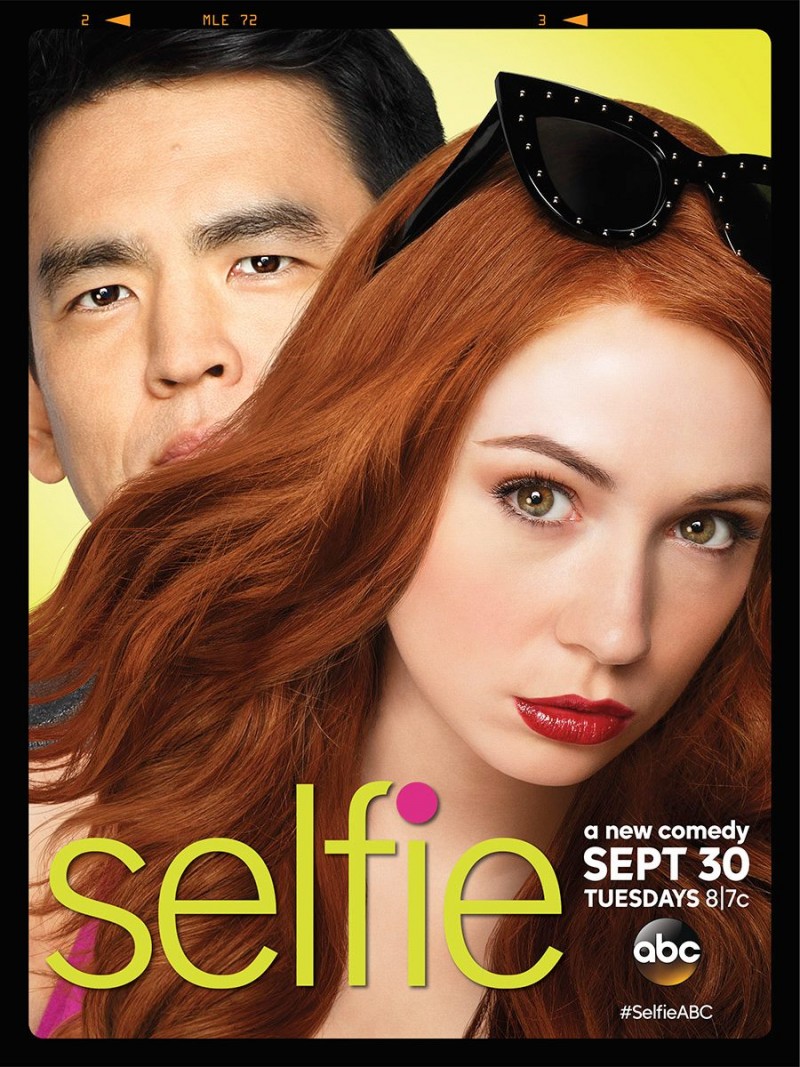
Jocelyn recently wrote 5 Reasons You Should Watch The New AMWF Comedy “Selfie” so I thought it would be a good a segue into into Asians in mass media, which was actually my thesis in college.

But for the purposes of this blog entry, let’s talk about just Asian men in Hollywood and television.

There’s always been a peculiar mindset about us in Western cinema. For years, there were two contradictory caricatures: the diabolical and animalistic Fu Manchu trope on end, and the intelligent and effeminate Charlie Chan trope on the other.

Both played, for years, by white actors.

The former can be traced back to the Mongol hordes and the Huns that were the boogymen of Europe for centuries but there are some that feel that the modern effeminization of Asian men in Hollywood and television was due – at least in some part – to the backlash over the first Hollywood sex symbol, a Japanese man named: Sessue Hayakawa.

"The Cheat FilmPoster" by The cover art can be obtained from Movieposterdb.com.. Licensed under Fair use of copyrighted material in the context of The Cheat (1915 film) via Wikipedia - http://en.wikipedia.org/wiki/File:The_Cheat_FilmPoster.jpeg#mediaviewer/File:The_Cheat_FilmPoster.jpeg
“The Cheat FilmPoster” by The cover art can be obtained from Movieposterdb.com.. Licensed under Fair use of copyrighted material in the context of The Cheat (1915 film) via Wikipedia – http://en.wikipedia.org/wiki/File:The_Cheat_FilmPoster.jpeg#mediaviewer/File:The_Cheat_FilmPoster.jpeg

How popular was he? He was as well known as Charlie Chaplin, got paid $200,000 a film, and made enough to drive around in a gold-plated car.

Unfortunately, in his breakout role on The Cheat – where he even appeared prominently in promotional posters – he was still in the mold of the sinister Asian male, albeit in a hyper-sexualized sorta way. That was the first time an Asian man was portrayed as, well, a leading man.

A sexual deviant man, but a man nonetheless.

Unfortunately, only a few years later, the idea of an Asian man as a masculine movie lead disappeared, leaving the simple extremes of Fu Manchu/Charlie Chan as the only dramatis personae for Asian dudes.

By the time WWII rolled around, it was exclusively one or the other, with the effeminate version culminating in “Long Duk Dong” of Pretty in Pink, which NPR examines far better than I could.

In that NPR article, however, the author uses a then up-and-coming John Cho as an interesting juxtaposition for the Long Duk Dong character. And currently, Cho is the Asian lead of the US television show, Selfie and the first Asian-American lead opposite a white female ever on television.

10499591_333471100140682_5360656967280378225_o

So here we are: 99 years after The Cheat, we have Selfie.

The hope is that it’s good. That John Cho doesn’t play some version of Fu Manchu or Charlie Chan but just your everyday all-American dude that just happens to be Asian.

Let’s see how it goes.

Logan Lo is a native New Yorker who’s been blogging since 2006. In between practicing law by day and teaching Filipino fencing by night, he’s managed to get married and write a popular article on online dating titled “eHarmony vs. Match,” as well as the books A Great Online Dating Profile and A Great First Date. He currently lives in Manhattan with his wife and his plant, Harold.

UPDATE: For more background on Sessue Hayakawa and Asian men in Hollywood, read Logan Lo’s post titled Asian-ish.

SECOND UPDATE: Changed the book titles mentioned in Logan’s bio.

—–

Speaking of China is always on the lookout for outstanding guest posts and love stories! If you have something you’d like us to feature, visit the submit a post page for details — and then submit yours today.