At China Int’l Import Expo in Shanghai to Shoot Videos for China Daily

This week, the China International Import Expo opens in Shanghai. And I’m there on behalf of China Daily website to host some videos, which include interviews with companies participating in the event (in its second year).

I’ll be on break from the blog during the week to focus on the video shoots, but will share with you any videos we put online from the event. And don’t worry, I’ll be back next week!

Gaining a ‘Bird-Watcher’s-Eye View’ of the World – Pub’d on China Daily

China Daily has published my most recent column titled Gaining a ‘Bird-Watcher’s-Eye View’ of the World. Here’s an excerpt:

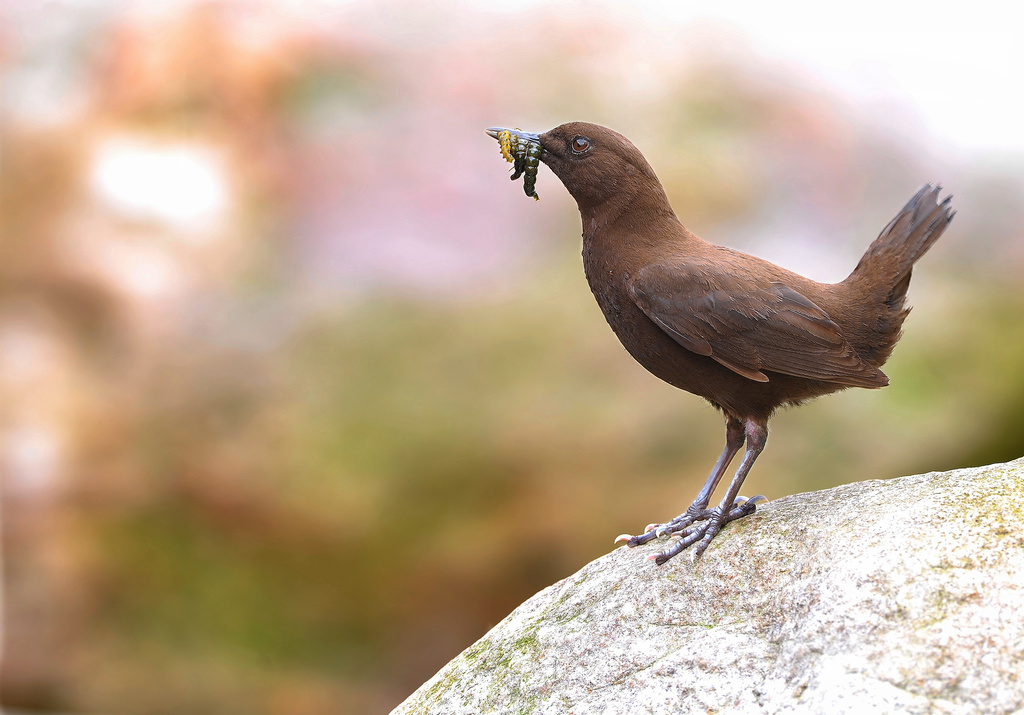
When my husband and I spotted a dusky brown bird bobbing on a rock in a stream not far from the family home in rural Zhejiang, a feeling of excitement swept through me.

“That’s a dipper, I’m certain of it!” I whispered in his ear, prompting him to reach for the camera draped over his shoulder and snap a photo.

The last time I laid eyes on such a bird was in Yosemite National Park, while trudging up switchbacks that rose 1,000 feet from the valley floor to the top of Upper Yosemite Falls. There, I encountered a bird perched on a rock near the cascading waters, and my hunch was later confirmed in the pages of the North American bird guide in my backpack: I had seen an American dipper.

The sweat slathered across my brow as well as sore feet and legs seemed a worthy trade-off for a glimpse of the only aquatic songbird in North America and one capable of “flying” underwater, as a nature documentary on TV had revealed.

It didn’t count as a rare sighting, since the dipper isn’t endangered. Still, the majesty of one of America’s most picturesque national parks framed the moment, leading me to cherish this bird — one not native to the Cleveland, Ohio, region where I grew up — all the more.

Never did I expect that, instead of spending hours on a strenuous hike up the granite cliffs of Yosemite, I only needed to venture on a short walk from my husband’s family home, tracing a mountain creek that cut through the valley.

You can read the full piece online, where you can also listen to an audio recording of me reading it. And as always, if you like it, share it!

Photo credit: By Robert tdc – https://www.flickr.com/photos/16942101@N06/4427599266/, CC BY-SA 2.0, https://commons.wikimedia.org/w/index.php?curid=9771334

Photo Essay: The Couple Who Walks Together, Stays Together

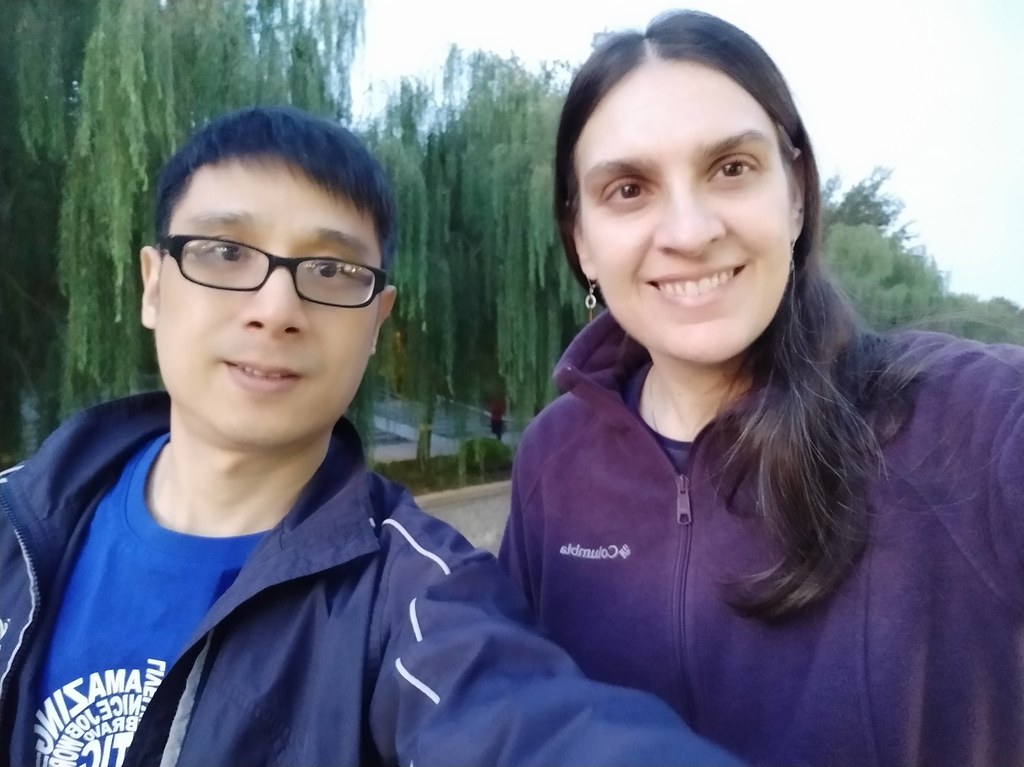
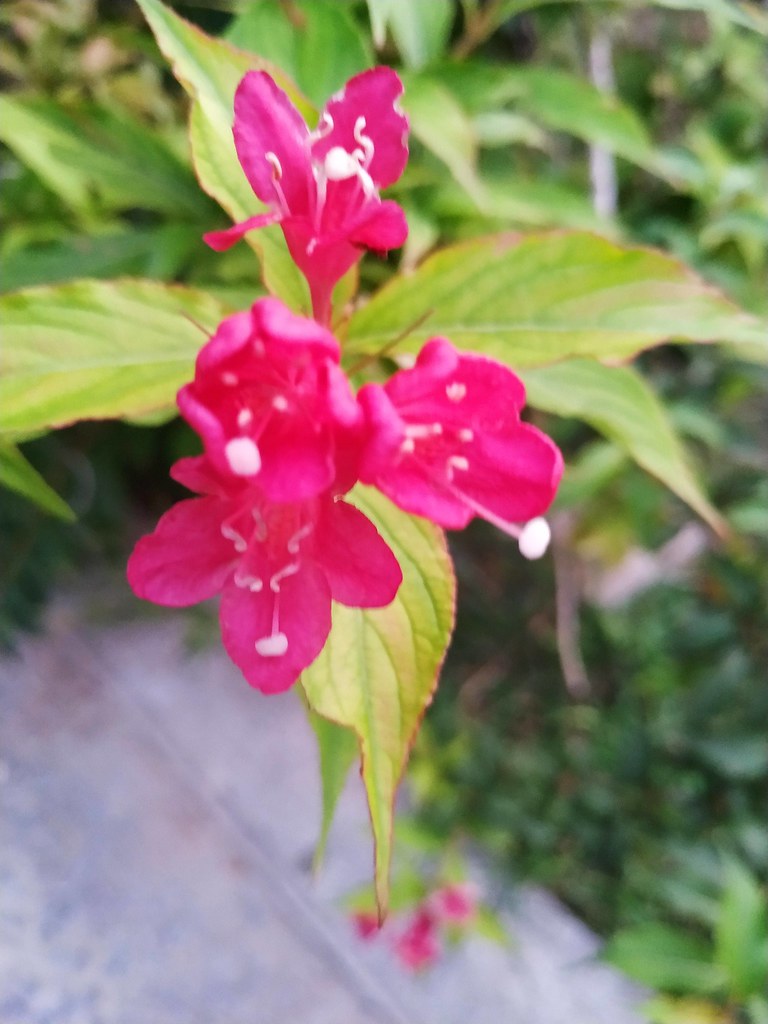
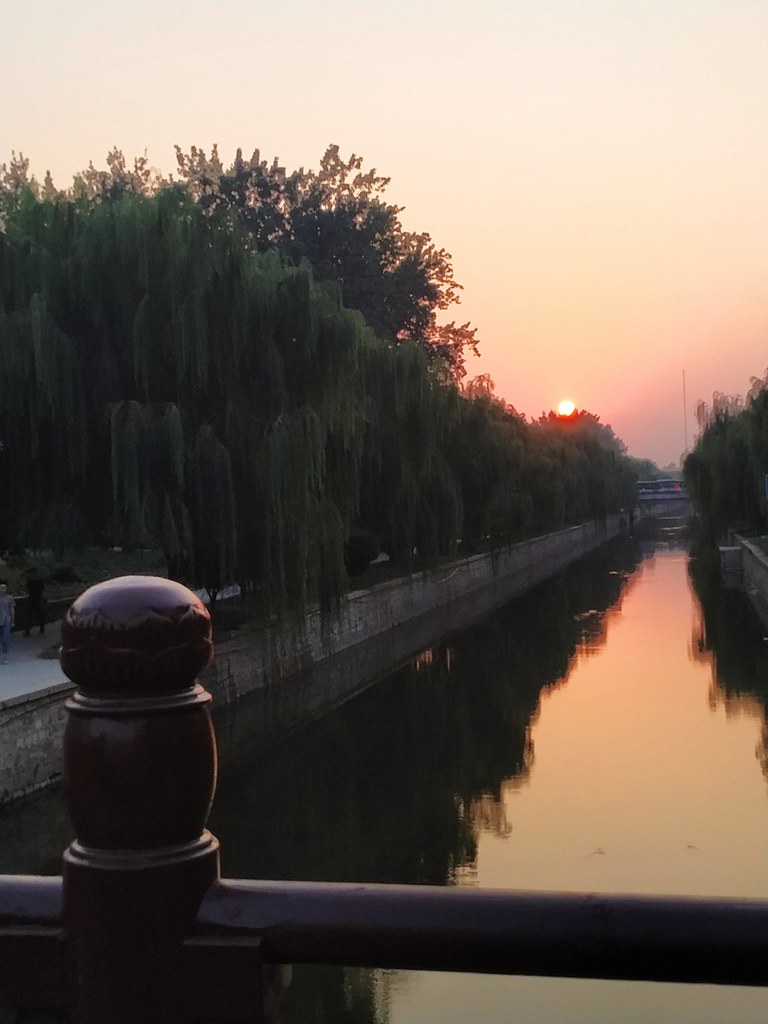
Jun and I have discovered our common love for walking and hiking, and it has led to many adventures outdoors in Beijing, from tracing the canal near my office to getting lost in the woods in Olympic Forest Park. This week, I’m sharing a selection of some favorite recent photos, perhaps proving that the couple who walks together, stays together.

IMG_20191005_180608_compress28

IMG_20191009_135005_compress0

IMG_20190915_182627_compress2

IMG_20191020_173959_compress83

IMG_20190929_173827_compress11

IMG_20191018_185113_compress14

Wherever you are, wishing you a gorgeous autumn!

Guard in Beijing Shows How NOT to Ask for Help Finding Foreign Girlfriend

Recently, a guard in the community where I live surely demonstrated exactly how NOT to ask for an introduction to a foreign girlfriend.

For starters, his timing proved terrible. When he opened the door of his post to speak to me, I happened to be passing through the gate, hurrying to the office. Not exactly the perfect moment to discuss romantic matters.

Of course, the very question — “Could you help me find a foreign girlfriend?” – would surely surprise the average person, expecting a hand wave or a “Ni Hao”, but puzzled me in particular.

Nearly a year earlier, I recalled this same guard yearning to return ahead of Chinese New Year to his hometown in another province, distressed that if he couldn’t get a train ticket back home in time, then he would surely miss, in his words, his “son’s childhood”.

Which meant, of course, that he already had a wife – and a kid.

Furthermore, I had even witnessed him dispensing relationship advice to an unmarried friend of his, keen to “learn the ropes” from someone supposedly “older and wiser”.

So when I heard his question, I raised an eyebrow in disbelief and almost wondered if this was his way of telling me he had just wrapped up a tidy divorce. Had he really let go of his wife?

Instead, I said to him, “But you’re married, right?”

A grin crept across his face. “She doesn’t have to know that.”

Oh, goodness.

I have no idea if the guard was actually being serious. This is, after all, a guy who once blurted out to me in English, “I love you”, and I could swear he stifled a laugh at the time. (Note too that, for many Chinese, saying “I love you” in English doesn’t necessary have the same weight or meaning.)

Still, for all I know he might also subscribe to that awful line of thought that foreign women make for perfect partners for an affair. (See point No 1 in my post 5 Fascinating Stereotypes of Western Women in China.)

Given that the last thing I wanted was a reputation for setting up women with men who cheat on their wives, I shook my head and said no.

And as I made my way into the office, a more perfect response to all of this nonsense arose in my thoughts – face in palm.

Baring it All for Love? The Skinny on ‘Naked Marriage’ in China

When I say my husband and I had a “half-naked marriage”, you’d be wrong to envision the two of us parading down the aisle in, say, a stripper’s version of wedding garb. As titillating as it might sound, the reality looks far more practical (and not nearly as sexy), as reported in the Feb 3, 2010, China Daily article Embracing a ‘naked marriage:

A witty poem on major BBS and SNS websites defines naked marriages as: “No apartment, no car, nor diamond ring; no wedding ceremony, nor honeymoon; each of us pays 4.50 yuan ($0.66), and we get a wedding certificate to start a new life.”

There are two types of naked marriage, the totally nude kind and the half-naked marriage, which means the man should at least provide a ring or something else for his beloved when they get hitched.

Our nuptials fell into the latter, as I described years ago in the post Marriage in China is Home, Car, Money?:

By July 2007, it’s not as if John and I hadn’t wrestled with these issues before. We faced “Money” all the time — hadn’t we survived summer 2006, when some months I never knew when the checks from my new business would come in, and wondered what bills to pay and what to leave aside? Hadn’t we just managed to scrounge the cash together for plane tickets? When it came to “Car,” we were just grateful that our secondhand 1991 Toyota station wagon — teeter-tottering with every bump on its barely-there shocks — still ran after some 170,000-plus miles. And as for “Home,” we felt lucky to manage the rent on our place — owning just wasn’t in the cards for us yet.

Still, we did have a wedding ceremony in 2007 (which included a banquet that welcomed over 150 guests) and enjoyed a simple honeymoon a few years earlier in Bali, firmly placing us in the “half-naked marriage” camp.

But here in China, our choice still remains largely exceptional, as the 2015 CNN article No frills? Chinese say ‘I do’ to creative — and cheaper — weddings stated:

While the public seems to appreciate the philosophy of true love trumping everything else, most respondents in repeated surveys still reject the notion of disavowing all traditional trappings of marriage.

The 2011 China Daily article Money-troubled post-80s find naked wedding as way out provides some examples of those statistics:

An online survey from China’s popular matchmaker’s network, Jiayuan.com, showed 38 percent of women voted in “support” of a naked marriage, while 77 percent of male voters were happy with it.

And so does the 2013 China Daily article Marriage attitudes slowly change:

When asked about “naked marriage”, a recently coined term for getting married without owning a house, car or much other property, 45 percent of those polled said they are not against the idea, but less than 30 percent would “practice a naked marriage” themselves.

While I embraced our half-naked marriage, I don’t believe I represent most foreign women either. In my previous post 5 Fascinating Stereotypes of Western Women in China, I emphasized that many follow the lead of Ember Swift, who blogged about how she valued the financial stability of the Chinese man she later married.

Nevertheless, China will always have its share of couples who dare to eschew all that pricey pomp and circumstance, whether for frugality or simply to make a statement. And while Jun and I most certainly did not have a bare-it-all ceremony, that hasn’t stopped some couples in China from trying out a more literal interpretation of the naked marriage concept — such as saying “I do” in something resembling their birthday suits.

Humanahumana!

What do you think about naked marriage?

P.S.: For those curious, naked marriage in Chinese is 裸婚 (luǒhūn).

On Eggplant, Intercultural Love and Making Room for Cultural Differences at the Table

Earlier, I wrote about How “Italian Eggplant” Divided Us, and Then United Us in Love:

Jun and I have a fascinating history with eggplant – specifically, a Chinese-style dish I’ve nicknamed “Italian Eggplant”. It’s one of the first dishes I ever prepared for him when we started dating years ago. It’s also a dish that led to one of our first heated (no pun intended) arguments.

I had spent the evening making one of my favorite dishes for Jun, and found myself shocked by his reaction:

“Too sour. Too much soy sauce. Too much tomato,” he said. Jun grimaced with every bite – and I could feel my anger rising with every complaint. How dare he insult the food I so lovingly prepared for him! Where was his appreciation for my hard work?

I was steaming almost as much as that dish fresh from the kitchen — not what I intended for a romantic dinner at home, and definitely not one of my proudest moments. But behind our spat wasn’t merely a difference of opinion, but rather one of culture and upbringing:

[My reaction] had to do with how I’d been raised – to always say thank you to the chef, even if you didn’t like the food. It was a lesson I’d learned well after years of dining at my paternal grandmother’s house. She was a notoriously horrible cook who would entertain us with things like soggy, tasteless macaroni and veggies from a can. Even though I could sometimes barely stomach the stuff on my plate, I would force myself to say how good the food was.

When I told Jun about this, his face turned as red as the tomatoes in the dish. Turns out, he had a completely different experience growing up at the table. Every dinner included a course of blunt feedback about how everything tasted – even if that meant saying the food was unequivocally bad.

I apologized for my outburst, and he apologized for criticizing my food, instead of saying thanks.

Thankfully, we were able to share our own perspectives and ultimately recognize where each of us went wrong in the exchange. And in doing so, we also learned something about our own respective cultural backgrounds. At the same time, it reminded us that the taste preferences we bring to the table reflect the respective cultures of our upbringing. (Jun did in time come to embrace my “Italian eggplant” dish — so much so that he has actually learned how to prepare it for me later on!)

But such a realization and reflection requires a willingness to see cultural differences and, in some circumstances, recognize there isn’t always one “right” point of view. This especially holds true when it comes to what we regard as “strange” foods. The macaroni and cheese that my mother often made us for dinner growing up seems bizarre to my husband, who never consumed this dairy product in his childhood in rural China, let alone with noodles. Meanwhile, the tofu and seaweed dishes my husband enjoyed as a young boy would appear odd or even downright unappetizing to many of my relatives in the US.

I wonder, what if that eggplant clash had happened between people with more rigid views about the world, believing their cultural upbringing was the “right” one? He might have branded her eggplant dish as “weird” and told her to never make it again. She would have become even more enraged — and perhaps might not have told him that his behavior violated the mealtime manners her parents had taught her growing up. Likewise, he probably wouldn’t have acknowledged that his family did things differently. Perhaps one of them might have stormed out of the apartment. And if the two couldn’t reconcile their differences over a simple meal, how could they possibly navigate the even trickier issues that arise in a long-term relationship?

Sometimes, two people of two distinct cultures might sit down to dinner, smell the eggplant, and discover they smelled something different after all. And that’s OK, so long as they make room for those differences at the table.

P.S.: See also my post Why Ignoring Cultural Differences in Cross-Cultural Relationships is Harmful.

Eileen Gu, Alex Hua Tian and More: Bicultural Olympic Athletes Switching Nationality for the Games – Pub’d on WWAM BAM

The group blog WWAM BAM just published a collaborative post I did with fellow contributor Holly. It’s titled Eileen Gu, Alex Hua Tian and More: Bicultural Olympic Athletes Switching Nationality for the Games. Here’s an excerpt:

When the 15-year-old skiing superstar Eileen Gu announced her decision to switch her nationality from the US to China, so she could represent the latter in its upcoming Winter Olympics in Beijing set for 2022, it made headlines throughout the internet. Gu had already racked up considerable wins competing for the US team in skiing, which meant she didn’t need to swap passports for a ticket to the Olympics (though, given China doesn’t recognize dual citizenship, she couldn’t keep them both). Some have wondered, why would she give up US citizenship to play for China?

Head on over to WWAM BAM to read the full post. And if you like it, share it!

Pub’d on China Daily: An Ode to China’s Enchanting Sweet Osmanthus Flower

China Daily just published my latest column titled An ode to China’s enchanting sweet osmanthus flower. Here’s an excerpt:

When I think of a golden autumn, my mind often turns to one of the great jewels of the season-sweet osmanthus, a tiny flower that has charmed generations of people every fall with its unforgettable fragrance.

This blossom, which measures only 1 centimeter across and grows in clusters scattered about evergreen branches of the osmanthus tree, truly exemplifies the idea that size and appearance aren’t everything. After all, even when painted in the most eye-catching bright orange or buttery yellow hues, it could never rival the more showy peony or rose on looks. But the osmanthus bloom doesn’t have to, because its real strength lies in its honeyed scent, which, much like being in love, will leave you feeling a little giddy and lost in the moment, even when standing meters away from the flowers. If dreams had a fragrance, they might just smell like the osmanthus, imbuing a touch of paradise to even the most ordinary of places.

The osmanthus tree in the front yard of my in-laws’ home in rural Zhejiang province left me wonder-struck one early October morning when its flowers unfurled their magic. The alluring aroma, which had wafted indoors through an open window, enveloped me as I was descending the stairs. It brought me to a standstill for a few seconds as I breathed it in, along with this sensation of pure, unfettered happiness. Dreary clouds blanketed the entire sky above me and yet, even to this day, whenever I recall this memory, my mind bathes it in sunshine because of that intoxicating natural perfume that surrounded me. It’s that uplifting.

I’m certain this kind of wondrous effect factored into why my father-in-law refused to sell that osmanthus tree to horticultural dealers who would continually come by to inquire about its cost. “It’s not for sale,” he would simply tell them. Surely he already understood that nobody could put a price on the experience of having such a delicious fragrance right outside your doorstep every year.

You can read the full column here. And if you like it, share it!

Intercultural Love Leads to More Creativity? Study by MIT Prof Says Yes

Creativity doesn’t usually come to mind when we think of intercultural love — but it should, thanks to the 2017 study from MIT assistant professor Jackson G. Lu titled “Going out” of the box: Close intercultural friendships and romantic relationships spark creativity, workplace innovation, and entrepreneurship.

Here’s a summary of the researchers’ findings from the study [emphasis added]:

…we found that close intercultural romantic relationships and friendships predicted important creative outcomes. As a two-phase longitudinal study, Study 1 found that MBA students who dated someone from another culture during their program performed better on both divergent and convergent forms of creativity at Phase 2 (accounting for creative performance at Phase 1 and other control variables). Using an experimental design, Study 2 revealed that reactivating a past intercultural dating experience led to higher creativity than reactivating a past intracultural dating experience; importantly, this effect was mediated by cultural learning. Comparing the duration versus the number of both intercultural and intracultural romantic relationships, Study 3 found that only the duration of intercultural relationships significantly predicted the ability of current employees to generate creative names for marketing products. Extending the preceding findings to the “Big C” creativity (Simonton, 1994), Study 4 found that professional repatriates’ frequency of contact with American friends positively predicted both entrepreneurship and workplace innovation back in their home countries….

Furthermore, the study offers some insightful advice about the importance of being deeply engaged and open to cultural differences [emphasis added]:

Importantly, the current findings suggest that people cannot simply “collect” intercultural relationships at a superficial level, but instead must engage in cultural learning at a deep level. When in an intercultural relationship, an individual should not eschew cultural differences but rather embrace them, because such differences enable one to discern and learn the underlying assumptions and values of both the foreign culture and the home culture (Cheng & Leung, 2013; Leung & Chiu, 2010). Without close social interactions, it can be difficult for individuals to juxtapose and synthesize different cultural perspectives to achieve cultural learning and produce creative insights.

Previously, I had written about Why Ignoring Cultural Differences in Cross-Cultural Relationships is Harmful, pointing out the negative consequences of this colorblind approach. But this study from Lu highlights the tremendous creative benefits that come from welcoming and exploring cultural differences in a thoughtful way, and the findings indicate that such advantages wouldn’t come to those who disregard cultural differences.

This fascinating research has also led me to reflect on my own intercultural relationship and the ways in which it may have boosted my creativity (such as the founding of this very blog). And I also thought about the many other creative folks I’ve encountered in intercultural relationships here in China, from bloggers and writers to entrepreneurs, artists and musicians. How much has their creative output benefited from loving outside the lines?

In any event, the study certainly stands as compelling evidence for why everyone should embrace meaningful intercultural ties in their lives, including romantic ones.

What do you think about this study?

Photo Essay: Behind the Scenes of Beijing Photo Shoot for China Daily

For most of last week, China Daily website sent me on assignment to shoot some videos around Beijing, which put the spotlight on changes in culture and education around the city. Here’s a behind-the-scenes look at some of the places we visited for the shoot.

We shot a number of scenes at the National Center for Performing Arts, recognized by many for its iconic egg-shaped design.

We shot some scenes right here in this spectacular hall, and also in one of the theaters as well, during a rehearsal.

In Beijing’s Wangjing neighborhood, we visited the Yabin Dance Studio, home to the renowned dancer Yabin Wang, who has appeared at the National Center for Performing Arts on numerous occasions, including in collaboration with foreign artists.

Here I stand with Yabin (right) and one of her fellow dancers in the studio. I later learned that she has also had a career as an actor — my colleagues on the video shoot recognized her as one of the leads in the first and second seasons of Xiangcun Aiqing (乡村爱情).

On the education front, we first visited Peking Union Medical College Hospital, the first Western medical institution established in China. There I spoke with the director of a postdoctoral program, who also introduced the hospital, including this photograph on the wall taken in 1921, during the celebration of its founding.

We went to the Communication University of China, the premier institution in the country for higher education in the media and communications industry, where we had a chance to visit its mobile 4K ultrahigh definition studio (seen in the background), equipped with the same technology you would find in major media outlets. The university is one of the few in the country to have a 5G network, which facilitates the broadcast of ultrahigh definition video.

Our last day of shooting brought us to the Qianmen area just south of Tian’anmen Square, and its lively pedestrian shopping streets.

The videos for these Beijing episodes will go live around the beginning of October — and once they’re available, I’ll share them with all of you online.