Does Marrying a Chinese Man Prove I’m an Outcast?

A girl sitting all alone in the corner of a playground, with two girls in the background gossiping about her.
Does my marriage to a Chinese man prove I'm an outcast and more? (photo by sanja gjenero)

Yesterday afternoon, while waiting for my car to get checked at the auto shop, I started reading a book called Intercultural Marriage: Promises and Pitfalls. When I got to the discussion about the kind of people who married someone from another culture, I discovered this list:

1. Outcasts
2. Rebels
3. Mavericks
4. Compensators
5. Adventurers
6. Escapists
7. Unstables

The author described it as the “seven types of people who enter intercultural marriages — people who share certain personality tendencies or matrimonial motives,” and even mentioned that most people fall into more than one category. Yet, I had this uncomfortable feeling as I read the names of these “types of people” — maybe because the labels reminded me of men who hit on me on the few times I went to bars (often the creepy, unshaven types with sour, alcoholic breath that make you swear off bars for the rest of your life).

Then I read the description for the Outcasts, which started out like this: Continue reading “Does Marrying a Chinese Man Prove I’m an Outcast?”

My Chinese In-laws’ No-Drama Goodbye

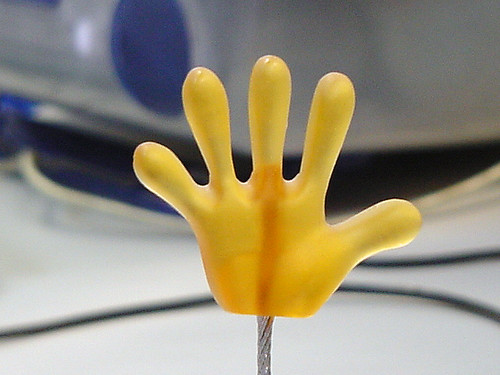
A rubber yellow hand on a stick, as if waving goodbye
The way my Chinese in-laws said goodbye to John and I, it could have been any other morning. But it wasn't -- we were leaving for the US, for another two years. (photo by Alexandre Caliman)

It looked like every other morning when I’d left my Chinese in-laws’ home this summer. My Chinese mother-in-law grumbled about how large our bags were, but then proceeded to push more honey pears and mooncakes into our backpacks. As usual, my Chinese father-in-law paced around the first floor like an expectant father – and only stopped when we climbed into my oldest brother-in-law’s car. Through the window, they appeared with the same calm and content face I remembered every morning, pushing heaping plates of breakfast my way (on this day, I had vegetarian dumplings stuffed with tofu and pickled vegetables and sweet fried rice pancakes) while asking why I’d risen so late from bed.

But this was not just any morning. John and I left his home for the US – which meant we wouldn’t see his family for another two years. When I waved at my Chinese mother-in-law and father-in-law through the window, that was the closest to a “goodbye” that we had.

As I thought about that moment over and over at Shanghai Pudong Airport, I couldn’t help but wonder – is that all there is? Continue reading “My Chinese In-laws’ No-Drama Goodbye”

Featured in Global Times Article: On the Fast Track to Love

Champagne glasses, toasting at the beach
The Global Times featured me in a recent article titled "On the Fast Track to Love." (photo by Roger Kirby)

I’m on the fast track back to the US (I’ll be hopping a plane back there on Tuesday, August 16). That’s why I’m late to tell you about my latest appearance in the news — a Global Times article titled On the Fast Track to Love, a story about cross-cultural speed dating. Here are a few quotes from me in the article:

For some, the attraction comes from an interest in their partner’s culture. “I’ve always felt more comfortable in the company of Chinese men, since their culture is more in tune with who I am,” US born Jocelyn Eikenburg, an English/Chinese translator who married a Chinese man and blogs about intercultural relationships, said, adding that she’s actually “incredibly shy and not so direct with people.”

For many Westerners, saying “I love you” is a big step in a relationship, a sign that you are really serious and invested; while love is usually implied among Chinese couples through actions such as sending you all the way to the door of your apartment, Eikenburg said.

“When Chinese do verbalize their feelings, they tend to use softer terms than what we are used to, such as ‘I like you’ because the word for love packs quite a punch in Chinese,” she added. “Not surprisingly, many Chinese with foreigners actually feel more comfortable saying ‘I love you’ in a foreign language.”

Check out the full article online. And if you love it, share it. Thanks!

My Chinese Husband’s Cousin, Looking For a Western Wife to Brag About

Wang, my Chinese husband’s cousin, seemed to have it all. A lucrative job as a real estate developer. Two new BMWs. Expensive suits. Nothing about him suggested his countryside roots — the same mountain village as my husband, where people still planted their own rice paddies, used wood-burning stoves, and had free-range chickens scurrying in and out of their houses.

But when he volunteered his silver BMW sedan as our wedding car in 2007 (of course, he couldn’t help but boast “oh, if you had mentioned this sooner, I could have prepared my bigger and better BMW.”), he discovered he was missing the ultimate accessory of all — a Western wife.

“He told me he wanted to find a yangxifu,” my husband recalled. “He asked if we could introduce him to some Western women.”

But we didn’t. Sure, we didn’t know any single Western women in China, since by then we lived in the US for nearly two years. But even if we did, introducing them to Wang had the kind of cheap, mail-order-bride feel to it that no friend would get their friend into. After all, he didn’t really care who she was, so long as she was foreign.

It’s just like I read over a year ago in a study about What Western Women Think of Chinese Men:

Those [Chinese] men with Western girlfriends or wives will brag about them, as if these women were a BMW.

Wang already had two BMWs to show off, but no such Western wife — never thinking, of course, that a wife, any wife, should never become a man’s bling.

“People who think this way have no suzhi,” my husband said as he frowned, using the word that Chinese often use to refer to the quality of people — which, in this case, was not much at all. “They turn their wives into objects, and  try to show they are better than others in such a low way.”

Still, Wang could have gone much lower, as we learned two years ago while visiting the Kaifeng Night Market. After we bought almond tea from a stall run by lanky twentysomething wearing a white kufi — the hat worn by the Muslim Hui minority in China — he nudged my husband. “Hey, do you think you could get me a foreign wife? I could buy her a house and a car.”

John grinned as he shook his head. “It’s not that simple. Western women have different expectations.”

Then the lanky guy leaned over and whispered something in my husband’s ear — which John told me about later. “He said his penis is very strong.”

What do you think about this?
Five Things Taiwanese Idol Dramas Say About Love in China

Down With Love Taiwanese Idol Drama promotional poster
What do Taiwanese Idol Dramas -- such as "Down With Love" -- say about love in China? (image from wikimedia commons)

This year, I’ve enjoyed a summer of love — if, by love, you mean the love portrayed in Taiwanese Idol Dramas. I got hooked sometime in June on Down With Love. Before I knew it, I tuned in for parts of Romantic Princess, Sunshine Angel, Miss No Good, They Kiss Again and even Taiwan’s version of Honey and Clover.

The more I watched, the more I realized these shows have something to say about love in China. Here are five things I noticed. Continue reading “Five Things Taiwanese Idol Dramas Say About Love in China”

For My Chinese In-laws, Scolding is Love

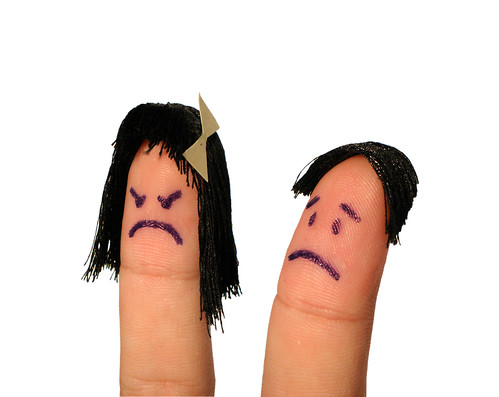
A finger-puppet couple with the wife visibly angry at the husband
I didn't understand why my Chinese mother-in-law always argued with my Chinese father-in-law. But, according to my husband, maybe that's their way of showing love (photo by kamil kantarcıoğlu).

My Chinese father-in-law isn’t just a husband and parent in our home. He’s also a punchline, and a virtual punching bag.

I’ll never forget that day in May when I watched my Chinese mother-in-law storm out into the yard and holler up to my Chinese father-in-law. “You’re just like a Bodhisattva! Always staying up and never coming down!”

I don’t know what he did to deserve that Buddhist curse. But after spending more than two months here – where almost a day wouldn’t pass without my Chinese mother-in-law naming my father-in-law’s stupidity du jour – I can guess why. Continue reading “For My Chinese In-laws, Scolding is Love”

The Relationship Between Language and Falling in Love

Over dinner two weeks ago in Beijing, Melanie Gao — a fellow yangxifu and blogger — asked an interesting question. “What language do you have a better relationship in with your Chinese husband?”

I didn’t know what to say because John and I had always floated between English and Mandarin, as if the two languages together somehow became our hybrid “husband-wife” language. “Hmmmmm, I don’t know. It’s hard to decide between English and Chinese. Maybe our relationship is slightly better in English these days.”

But I never would have guessed Melanie’s answer. “My husband and I have a better relationship in Japanese.” Japanese? If John had been here, he (and the remnants of his anti-Japanese ideas) would have fallen over. “I think it’s because it’s another language for us. We both have to try hard to understand one another.”

Still, I remembered reading how Melanie met her husband in Chiba, Japan when they were foreign students there — and came to know him in Japanese. Which made me wonder about another explanation. “Maybe that’s because Japanese is the language you fell in love in.”

Does it matter in what language you fall in love with someone? The question followed me long after that dinner, as I recalled my different loves in China. Continue reading “The Relationship Between Language and Falling in Love”

The Four Big Items For My Chinese In-laws’ Marriage

Bicycle, sewing machine, radio and wristwatch, the four big items or si dajian
When my Chinese inlaws married in 1971, the marriage must-haves were a bicycle, sewing machine, radio and wristwatch. (image from www.soufun.com)

My Chinese in-laws married in 1971. Back then, marriage wasn’t house, car and money — it was bicycle, sewing machine, wristwatch and radio, the si dajian (四大件, four big items).

My Chinese father-in-law grinned as he recalled that time. “These were the kinds of things that gave you ‘face’ in your wedding. They were considered hard for people to afford then. Not everyone had them. If you couldn’t afford them, you would even borrow money to get them! Nowadays, it’s silly to imagine this. Everyone wants a home and a car and money for their wedding.”

So I asked if he borrowed money to buy his si dajian. “Eh! I had to borrow from another teacher at my school. It took me two to three years just to pay him back. The sewing machine cost 145 RMB or so. The bicycle 100 or so. The wristwatch 50 RMB, radio maybe 20, maybe 50. But back then I only earned 20 RMB a month! It look me more than half a year just to get one sewing machine!”

My Chinese mother-in-law, lounging on a cot in the corner of our dining room as she played with sister-in-law’s baby, bust out in laughter the entire time he told me all of this.

Which makes me wonder — 40 years later, will we be laughing in the corner over China’s modern marriage must-haves, the house, car and money?

What do you think?

My Chinese Inlaws’ Not-So-Free Marriage

Clouds against a blue sky forming a heart
My Chinese father-in-law insisted that the new China included free choice in marriages. But it seemed like an illusion when he admitted he didn't freely choose his bride. (photo by miguel ugalde)

The other day, while talking about weddings in China with my Chinese father-in-law, we happened on the idea of parental involvement (or should I say, pressure) since the founding of the People’s Republic of China.

“It seems to me that parents still have a say in marriages today,” I said.

My Chinese father-in-law shook his head. “No, no, that’s the past,” he disagreed, referring to how Chinese parents used to arrange marriages for their children. “Now people have the freedom to marry whoever they want.”

How I longed to shake him and say, what about what you said about John and I? My Chinese father-in-law was the one who cautioned John against having a foreign girlfriend, telling him he could be friends with — but not date — me.

But I bit my tongue. “What I mean is, Chinese parents have ideas about their children’s marriages. The parent will tell the child if they like the person or not. The child has free choice, but may want to be filial and not go against their parents.”

My father-in-law’s eyes widened and he grinned. “Ah, yes, yes!” Then came a surprising confession. “That’s my marriage.” Continue reading “My Chinese Inlaws’ Not-So-Free Marriage”

The Chinese Relatives Name Game

rp_6287663793_de769896c5.jpgMore than a week ago, my Chinese mother-in-law spent a whole day helping someone plant their rice paddy. That “someone” turned out to be a relative.

“She was out helping our Jiujiu plant the fields,” my sister-in-law told me at dinner. Jiujiu is the Chinese word for uncles on the mother’s side. But as far as I knew, we only had two uncles on John’s mother’s side — Da Jiujiu and Xiao Jiujiu. Neither of them needed assistance in the fields, especially Xiao Jiujiu who just became our village secretary. How could she possibly help someone called “Jiujiu?”

“Oh, that’s the godfather’s little brother.” Godfather, as in John’s godfather (John needed a godfather because his Chinese zodiac sign, the horse, conflicted with his father’s, the rat).

Then I remembered that, some time ago, my Chinese mother-in-law told me the godfather was a relative — but I’d forgotten how and asked my sister-in-law. “He’s the Gunainai’s son.”

“Gunainai?” I felt as if I was getting tangled in the branches of this family tree. Continue reading “The Chinese Relatives Name Game”