One Vegan, Making Chinese Red-Braised Pork For Love

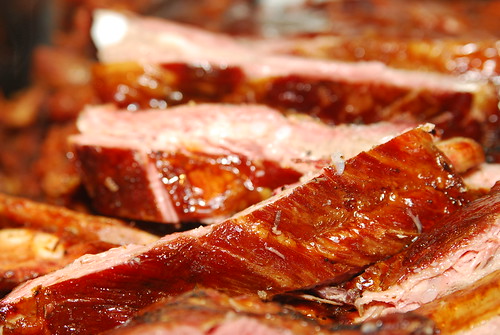
Close-up of BBQ pork ribs
As a vegan, I never though I’d end up making pork — and more — for my husband, all for love. (photo by Charles Thompson)

I can’t tell you how many times I’ve made red-braised chicken wings, legs or thighs for my husband. They’re the chicken equivalent of his favorite dish, red-braised pork (or, to be even more specific, Chairman Mao’s Red-Braised Pork, which I’m sure appeals to his patriotic side). I’ve adapted the sauce to become a marinade, and turned the whole recipe into something I can bake neatly in the oven for 50 minutes at 400 degrees Fahrenheit. I have to admit that there’s even this small part of me that beams with domestic pride when I watch John devour the chicken fresh out of the oven in blissful silence (in my home, when John simply eats, instead of talking, it’s the equivalent of giving the chef his highest compliments).

But for anyone who knows me well, this whole scenario feels rife with dietary dissonance and makes them go “hmmm” (or, in some cases, “what?!?”). That’s because I’m a vegan, married to a Chinese man who can’t live without his meat and fish. Continue reading “One Vegan, Making Chinese Red-Braised Pork For Love”
What White Parents Think of Asian Boyfriends: Pub’d on AMWW

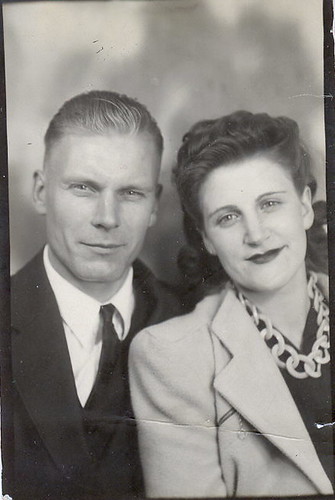
An old 1940s photo of a white husband and white wife in black and white
What white parents think of the Asian boyfriend -- the toughest subject I ever tackled, now covered in a piece in AMWW magazine. (photo by Susan H.)

Asian Man White Woman magazine just published an article of mine — What Do White Parents Think of Asian Boyfriends? Meanwhile, a commenter on this site, named David, wondered, why hasn’t she mentioned it on this blog?

Good question, David.

I’ll be honest — this remains one of the toughest articles I ever wrote. Why? The more I delved into it, the more I realized the news wasn’t pretty. And if you read it, you’ll see even I experienced some OMG moments in my own family (my grandmother, bless her heart, says the darnedest things sometimes).

Still, I stand behind it as a true depiction of white parents everywhere — yes, even my own (crosses her fingers that father and stepmother do not read it).

Here’s a snippet of it:

I’ll never forget when my Chinese husband John and I married, and my father stood up to give a speech. He spent more than half of his talk praising John — loving, hard-working, loyal, thoughtful — and ended by hugging him in front of the entire audience.

It’s such a tear-jerker of a moment that I almost cried the last time I watched it on our wedding DVD. Maybe they were tears of gratitude — because my family embraced John so publicly.

After all, not every white father — or parent — has the same opinion on the Asian boyfriend. Over the years, I’ve met many white women with Asian boyfriend and their meet-the-parents story is never quite the same. Usually, there’s acceptance. But sometimes it doesn’t come immediately, or even easily. And even if they welcome you with open arms, it doesn’t mean they understand you either.

One thing is certain, though. White parents sometimes think the darnedest things about your Asian boyfriend.

Head on over to AMWW to read the full article. And if you’re as excited about it as David, don’t forget to share. Thanks!

To My Chinese Husband, I’m A Hero?

A plastic hero figurine painted in red
Able to leap tall buildings in a single bound? Save the planet? No, I'm just a foreign woman who had the courage to go to China -- and my Chinese husband called me a "hero." (photo by Deon Staffelbach)

Hero. My Chinese husband John used that word to describe, of all people, me. That’s what he thought of me after we first had lunch together back in 2002.

“I thought you were kind of like a great hero, because you came all the way to China by yourself,” he confessed with a quiet grin.

I usually associated the term “hero” with people who saved lives, or scaled the walls of Gotham City in tights looking for the bad guys — not a single woman from the US who made a serendipitous choice to come to China on her own. But he reserved the term for, among other people, his future wife.

I cocked my head at John. “A hero?”

“Sure,” he replied matter-of-factly, as if my “knight-in-shining-armor” quality was so obvious to everyone but me. Continue reading “To My Chinese Husband, I’m A Hero?”

With A Little Help From Our Ancestors

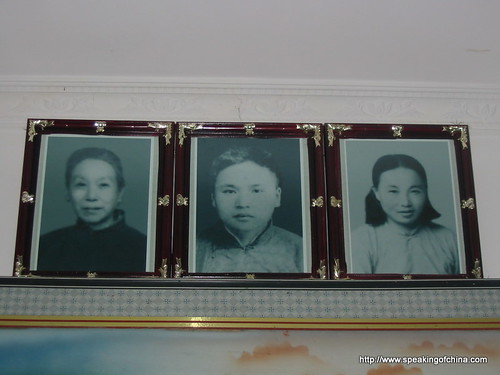
A photo of my Chinese husband's ancestors
The fact that my Chinese husband worshipped his ancestors inspired me to worship my own.

“I feel so hopeless.”

In the ebb and flow of my own moods, I had hit another low tide this past Friday. I didn’t want to feel this way, but the week had swept me under for a lot of reasons – from hormones to the fact that my Chinese husband John had a really bad week (for reasons I can’t get into right now). So there I was, sitting at the kitchen table and letting myself get pulled into a whirlpool of negativity.

Then I thought of it – or, rather, her, my deceased mother. And just like that, I sprang from my chair and my mental abyss, as if pricked by some invisible pin. “I know what we need!” I exclaimed to John as I started opening a little box in the corner of our living room. “A little help from our American ancestors.” Continue reading “With A Little Help From Our Ancestors”

On the Kim Lee and Li Yang Domestic Violence Story

Kim Lee's bruises as posted on Weibo
Kim Lee's bruises put a new face on her cross-cultural marriage to the founder of "Crazy English," Li Yang.

Just last month, I discovered a new celebrity couple in the cross-cultural community of Chinese men and Western women — Li Yang, the founder of Crazy English, and Kim Lee, his American wife. If only it weren’t because of revelations that Li Yang beat and battered Kim for many years.

If you’re in China, chances are you heard the news long ago. How Kim brought up the domestic violence by posting photos of her bruised body on Sina’s Weibo. That Li Yang admitted hitting his wife to the public, but then offered an unrepentant response.

If there was a “model Yangxifu” award, Kim Lee deserves it. She courageously shared her private turmoil with the public, starting a national conversation on domestic violence and spurring the Chinese government to reconsider dormant domestic violence legislation.

But Kim’s relationship with Li Yang could easily play into some of the worst cross-cultural marriage nightmares — and, I might add, negative stereotypes of Chinese men.

Of course, I don’t fault Kim for anything. She did the right thing. Still, a celebrity couple in the community of Chinese men and Western women in love makes the headlines… and, unfortunately, it’s for domestic violence. I couldn’t help but wonder — will some people come away with the wrong kind of message? Continue reading “On the Kim Lee and Li Yang Domestic Violence Story”

Submit Your Stories (And More): New Content Coming

A little girl using a pencil to write on a piece of paper
We're opening up Speaking of China to your stories and more new content. (photo by weliton slima)

Readers, we’re taking a “Great Leap Forward” in the Friday content. I’ve enjoyed writing Ask the Yangxifu since early 2010, but it’s time to bring in something new.

Now, don’t worry, Ask the Yangxifu fans. I’m still running the column at least one Friday a month — so keep those questions coming.

But what about the other Fridays? you ask. Here’s the deal… Continue reading “Submit Your Stories (And More): New Content Coming”

What if My Chinese Husband Was The Only Child?

What would it be like if my Chinese husband were an only child? (photo by Joseph Hoban)

“How is it your husband has two brothers? What about the One-Child Policy?”

The question came out this afternoon while sharing stories from my summer in China at a party — and, more specifically, photos showing my husband actually has two older brothers. One of the women at the party suddenly blurted the question out, because the idea of siblings just didn’t mesh with the narrative she’d heard all along about China.

I told them he was born in 1978, the first year the One-Child Policy began, and he happened to be the youngest in the family. “But most of the men younger than him don’t have brothers or sisters.”

I thought about this later on, long after I left the party — what would it be like if my Chinese husband were an only child? Continue reading “What if My Chinese Husband Was The Only Child?”

All You Need Is Destiny

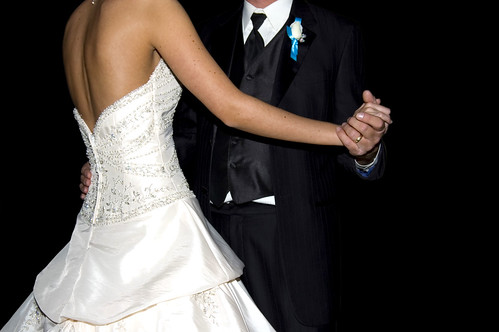
A bride and groom holding hands and dancing
In marriage, is love really destiny? (photo by Scott Snyder)

“I think love is destiny.” My Chinese sister-in-law Wenjuan blushed as said these words, her own definition of love in marriage.

But even though I understood her every word, I still didn’t get it. “What do you mean by that?”

She glanced down at the table and then met my eyes with an almost virginal shyness, as if she were yet to understand everything about love. “If a couple has destiny, then they have love. Love is a part of destiny.”

Love is destiny. I thought about her words long after we left the table — especially when I pondered something my Chinese father-in-law once said at my wedding ceremony:

There’s always someone out there who really understands you, they are destined to cross a thousand miles to meet. The same idea will bring two people together.

He never spoke of love between John and I; just that we had this destiny that bound us forever in marriage. I heard the same when I attended Lao Da’s wedding earlier this summer. When the bride’s mother praised their union, she called it “destiny” over and over again, never once coming out and using the big “L” word.

In China, how many times had I heard “destiny” invoked in the success or failure of a relationship? Before Lao Da found a wife, he used to shrug off the dates gone wrong and the girlfriends that never happened with this phrase: “We didn’t have a destiny to be together.” At the same time, so many Chinese friends praised the “destiny” between my husband and I — to the point that even I embraced “destiny” as the reason he and I came together.

If love really is destiny, then maybe that Beatles song could go another way — “all you need is destiny.” 😉

Have you ever heard “love is destiny”? What do you think? 

The Sanshi’erli Scare: Over Thirty and Still A Student?

A desk with a textbook open with a pen and ruler on it.
"Won't you graduate already?" That's the pressure my Chinese husband felt from family and friends, wondering why he was over thirty, with no career or children. (photo by shno)

My Chinese husband John shot me his weary, it’s-way-too-late-on-Sunday look. I expected him to vent about his PhD studies the way he always did when he appeared tired — the homework, the papers, the feeling that you’re always, despite your best efforts, just a little behind. Behind it all, though, I always felt his passion, his love for the path he’d chosen — to become a clinical psychologist.

But not tonight. “I’m tired of being a student,” he sighed.

I dashed into the living room, as if his words signaled some emergency, that his lifelong passion needed life support. “What do you mean?” I asked, staring into his eyes for signs of something, anything, that could tell me what was wrong.

He hid himself behind a generic smile, the kind that doesn’t really mean he’s happy. “My cousin is my age. He is settled down and has a family.”

“So? Your cousin also will never be able to do what you can do after graduating.”

He grinned, and with just one glance I had a feeling this problem went far beyond his cousin. “I’m too old,” he said. Continue reading “The Sanshi’erli Scare: Over Thirty and Still A Student?”

Finding Friends With Married Chinese Women

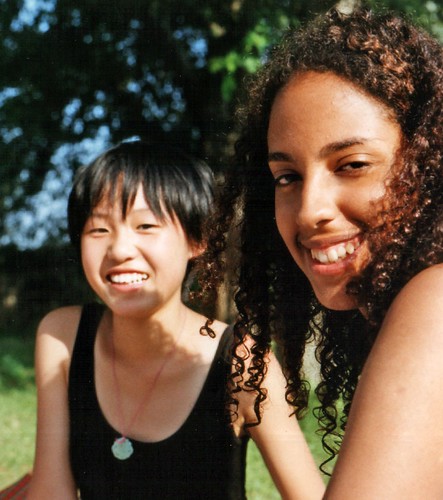
A Chinese girl sitting next to a Western girl
A birthday dinner in August reminded me of the value of friendships with Chinese women. (photo by ophelia cherry)

In early August, my Chinese husband and I invited five of our closest Chinese friends to celebrate my birthday a week late. We met at a Thai restaurant in Hangzhou. And while I longed for the piquant curries, I never realized I longed for something else even more until that evening.We happened to discuss the wedding between Min and Lao Da, who just married at the end of May. I really wanted to know about what they did to plan their ceremony. I had asked Lao Da about this almost two months earlier, but he dismissed the subject by saying his wife handled most of this.

When I approached Min about the process, she started dressing down Lao Da before she even got to the topic of dresses.“He did almost nothing to help!” she moaned, her eyebrows furrowed behind her geek-chic black frames. “I kept on trying to get him involved, but he didn’t. He always told me not to worry, that it wasn’t a problem. But we had all of these details to take care of and it was hard not to worry!” Continue reading “Finding Friends With Married Chinese Women”