I’m not often one to notice advertisements, but this campaign from Longines, featuring Taiwanese-born Canadian actor and Longines brand ambassador Eddie Peng, has me — and my husband — all in smiles.
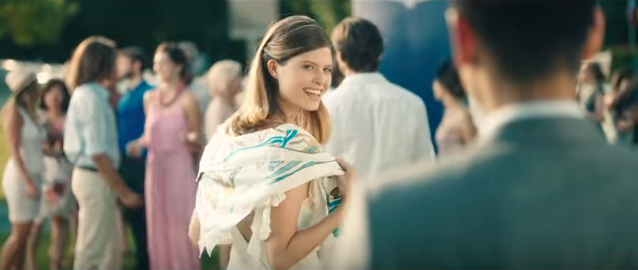
First off, I love how Eddie plays this ultimate kind of gentleman — all debonair in a fine gray suit, strolling around a horse racing venue with the kind of easy confidence of someone like James Bond. Nice to see an Asian man represented in such a positive, aspirational role in a TV commercial.
But it’s the subtle flirtation between him and a white woman in the commercial that always gets me. While walking past him, her silk scarf gets blown away — only to be caught by Peng’s character in one graceful lunge. Her face lights up in a smile, and as he offers the scarf back to her, their hands nearly touch, leading to the kind of blushing faces and playful glances that could only happen when two people share a “moment”.
And as the young woman walks away, she gives him one last wistful look, as if contemplating the possibility of something with this handsome gentleman.
This commercial never fails to make me and my husband laugh. We have this inside joke that he’s the guy in the spot, giving me back my silk scarf — totally corny, I know!
Years ago, when Philip Wong of Wongfu Productions cited Meet the Parents as a movie that should have starred Asians in one of the major roles, the universe must have heard his plea. That’s because a new Sino-Russian collaboration How I Became Russian (Как я стал русским), set to hit the theaters here in China on Jan 25, stands as a perfect example of a Meet the Parents-style tale, with a Sino-Russian twist.
The movie’s Chinese name Zhandou Minsu Yangchengji (战斗民族养成记), which roughly translates to “Notes on Battling Nationals”, pits a young Shanghainese man engaged to a Russian woman against his future Russian father-in-law, a nightmare of a man determined to put the newcomer through the wringer to prove his love for his fiancée.
Philip Wong would definitely approve of the casting, as he once stated “the basic premise [in Meet the Parents] of the “outsider” boyfriend meeting his fiancee’s ‘all-American’ family would be even more strengthened if said boyfriend was really ‘different’ i.e. Asian.” In this case, there’s no doubt who’s the outsider — the Shanghainese fellow met and proposed to his Russian fiancee in China, and then they travel to Russia, a foreign country, to meet the family.
And if the trailer is any measure, How I Became Russian also has lots of comedic potential with the hurdles the gun-toting Russian father throws at the Shanghai boyfriend. These include drinking duels with vodka, sweltering in saunas, shivering in the frigid cold and a showdown with an armored tank. The bottom line, like Meet the Parents, appears to be the same — it’s yet another father who doesn’t trust his daughter’s fiancee and will make him fight for the right to love her.
The movie stars Dong Chang (董畅) as the Shanghainese boyfriend, Elizaveta Kononova as the Russian girlfriend, and Vitaliy Khaev as the Russian father-in-law. Learn more about the movie in Chinese on Baidu (where you can also see trailers).
What do you think of How I Became Russian? Would you like to see this film?
While much of the world welcomes the start of the holiday season, this weekend brings great cheer for moviegoers in China who happen to adore a certain novel by Kevin Kwan. Yes, Nov 30 marks the opening date in China for “Crazy Rich Asians” the movie.
The movie hasn’t even hit the theaters yet and many of my chat groups filled with other women with Chinese husbands and boyfriends are buzzing about the film. And why not? “Crazy Rich Asians” is the highest-grossing romantic comedy in a decade, and it hopes to cash in on the same success in China, poised to become the world’s largest movie market.
But while “Crazy Rich Asians” could enjoy a splendid run in here in the Middle Kingdom, Chinese audiences already have a different perspective on the film.
It’s a bit misleading, as the character of Rachel Chu, played by Constance Wu, isn’t dating the “crazy-rich” Nick Young for his money, and doesn’t initially know he’s the scion of one of Singapore’s wealthiest families. But it does suggest that, here in China, people see “Crazy Rich Asians” through a different lens.
Look at what some Chinese have had to say about “Crazy Rich Asians” the movie on China’s movie review site Douban, including this:
One user criticized the film for its lack of authenticity, comparing it to Americanized Chinese food. “As a native Asian, I feel it’s like eating General Tso’s chicken in a Chinese restaurant” in a foreign country, chimed in someone in Los Angeles who goes by the moniker Durian Cake Brother (link in Chinese). “It looks like a film about Asians, but the spirit of it is American. The leading actress is an ABC. The story is about how Asians look in the eyes of the Americans.”
Professor Han Li, in an opinion piece for Sixth Tone, also writes in a similar vein about “Crazy Rich Asians”, singling out perceptions of the character Rachel Chu as a potential point of difference:
Despite my reservations about the movie’s portrayal of Chinese culture, there’s no doubt it struck a chord with Asian American audiences. It’s less clear, however, whether it would be met with the same reception in China, should it open here. The character of Rachel, in particular, might not be quite as popular. While some viewers may appreciate her depiction as a young, independent professional and be impressed with the way she has realized the American dream as a second-generation Chinese immigrant, others might see her not as the movie wants them to, but as Eleanor does — Chinese on the outside, American on the inside.
Jeff Yang echoes that in a piece about “Crazy Rich Asians” prospects in China, saying:
…the very thing that made “Crazy Rich Asians” so meaningful to Asians in the US might have given China’s cinematic powers-that-be pause: its focus on the global Chinese diaspora in America and Singapore.
…most Chinese don’t understand or find interest in the identity politics of more racially diverse societies like the US. The experience of Chinese Americans feels niche in China, where Chinese are the mainstream.”
Indeed, speaking of identity politics, don’t expect viewers or critics here to chime in on some of the controversies that arose in the West surrounding casting decisions (like having half-white/half-Asian Henry Golding play Nick Young, which some perceived as whitewashing). China has embraced many mixed-race celebrities (such as Fei Xiang), so it’s hard to imagine audiences having concerns about Golding.
Overall, these differences in perspective have a lot of critics uncertain about the film’s prospects in China, with some (like Victor Zheng at SupChina) even forecasting the possibility of a flop.
Nevertheless, as Jeff Yang notes, “Ultimately, of course, the biggest driver of the success of the film in China is likely to be its outsized success in America.” After all the movie topped the box offices for a record three weeks and raked in an incredible $230 million plus to date. That kind of triumph may be enough to power a strong run in China. We’ll see.
In the meantime, as for one tiny little demographic here in China — foreigners dating or married to Chinese — if the chat room conversations I’ve seen are any measure, I expect many of us will flock to the theaters in China for “Crazy Rich Asians”, success or no. Movie meetup, anyone?
What do you think about “Crazy Rich Asians” the movie in China? Do you feel audiences will embrace the movie anyhow? Or do you foresee a flop for the movie market in China?
Zhu Zhengting, the hot new heartthrob from boy bands Nine Percent and NEX7, stared at me from an ad, with his finger lingering seductively on the lips. It almost resembled those typical images of male models or stars, using their gorgeous faces and physiques to sell everything from jeans to jackets. But there was one striking difference.
He was wearing lipstick, a soft carnation pink, to help sell it, along with other cosmetics from a brand I discovered on Alibaba’s Tmall, an online shopping center.
A man as the brand ambassador for lip gloss, even wearing it? It’s unimaginable in the US, my home country, for a guy to model makeup, let alone vouch for it. Unless of course you’re a celebrity drag queen like RuPaul.
But Zhengting doesn’t do drag, and he isn’t playing up his feminine side, despite the makeup and softness of the photograph. Instead, his intense brown eyes seem to reach out to you, as he points to his lips, as if to say, Go ahead and kiss me.
Actually, that’s the part of the idea behind having young men help sell lipstick and lip gloss, which didn’t start with Zhengting, as China Daily reported in the article Love me, love my lipstick:
When Japanese superstar Takuya Kimura attentively stares at you, applying rouge on his tempting lips in a 1996 TV commercial, does your heart skip a beat?
Of course you can’t have him, yet having a lipstick he used might just bring him a little closer to you.
It seems Kimura’s fans had the same idea. That year, thanks to him, more than 3 million Kanebo lipsticks sold out within just two months, an unprecedented sales record stunning Japan.
The article goes on to detail other Asian celebrities who became the face of other cosmetics brands and more. But it underscores the growing importance of men in marketing cosmetics.
Dubbed “Taobao’s king of lipstick”, Li needs to test more than 300 types of lipstick on his lips every day during a seven-hour live broadcast, taking no breaks except to drink water or go to the bathroom.
“Many people question me, believing men do not have enough expertise to recommend female beauty products,” Li said.
But he believes he has advantages in this field. While many women may find their lips hurt after testing three lipsticks in a row, he can test as many as 380 lipsticks a day.
“Testing lipstick can damage the lips, but I do not treat my lips as lips,” Li said. Therefore, his fans have given him the nickname “iron-lipped brother”.
What a moniker!
Of course, all of this talk of men fronting lipstick brands, even wearing or testing different colors, would likely shock a lot of folks, including my fellow Americans. In the US, any man who dares to model cosmetics would surely find someone questioning his masculinity or even sexual orientation.
Admittedly, it’s a bit surprising for some Chinese audiences, as China Daily notes in its article Love me, love my lipstick: “If some people still feel confused about men advertising lipsticks, they may feel nervous when male stars also make commercials for other more intimate women’s products.”
Nevertheless, the trend of male celebrities advertising lipstick has gained traction in East Asian countries, including China.
I don’t exactly know why this works in East Asia, but it does. And there’s a part of me that wonders, is it evidence that East Asian countries like China are redefining masculinity in a new way? Is it driven by K-POP, where members of boy bands embrace makeup as part of their look? (See: K-pop boy bands defy traditional idea of masculinity)
Personally, I find it fascinating and even refreshing that there’s a corner of the world where a man can model lipstick and still be a man. I’m not sure the same would hold true in the US.
In the end, I decided to buy the lip gloss. While it had nothing to do with the arresting eyes of Zhu Zhengting, his face, and lips, certainly left an impression — in a soft carnation pink.
Can you resolve your cross-cultural dating dilemmas and boost your Chinese at the same time? Maybe, if you’re watching the Tianjin-based Chinese reality show Love Battle (爱情保卫战), where couples in crisis present their problems in front of a panel of “dating doctors,” who later offer their advice before a live studio audience. (Talk about “bearing your soul”!)
It’s not exactly what you’d call relationship counseling — in the few episodes I did watch, the panelists (who range from matchmaking experts to even actors and TV personalities) doled out a lot of pointed, even tough-love advice to troubled couples, a sharp contrast to how real counselors and psychologists usually handle couples therapy. But that’s reality TV for you.
What is interesting about Love Battle (爱情保卫战), however, is the fact that the show welcomes cross-cultural and international couples to take part, touching on a number of issues common to such couples. Even issues that resonate with me.
For example, there’s an African woman who doubts her Chinese boyfriend because he won’t introduce her to his parents. The reason (which I won’t reveal — you’ll have to watch this short clip for yourself) is one that I once faced in a relationship (and it ultimately led to our breakup).
In another segment, a Chinese man doesn’t understand why his Russian girlfriend wants her own space and independence in the relationship. Meanwhile, she thinks he’s too clingy and can’t understand why he doubts her commitment. Sound familiar?
Here’s a selection of a few other episodes of Love Battle (爱情保卫战) with international, cross-cultural couples if you’re curious and would like to watch:
Episode 20140821, with a Kenyan man and a Chinese woman, and a Russian man and a Chinese woman
Episode 20151231, with a Chinese man and a Kenyan woman, a Chinese man and a Russian woman, a German man and a Chinese woman, an Equatorial Guinean man and a Chinese woman
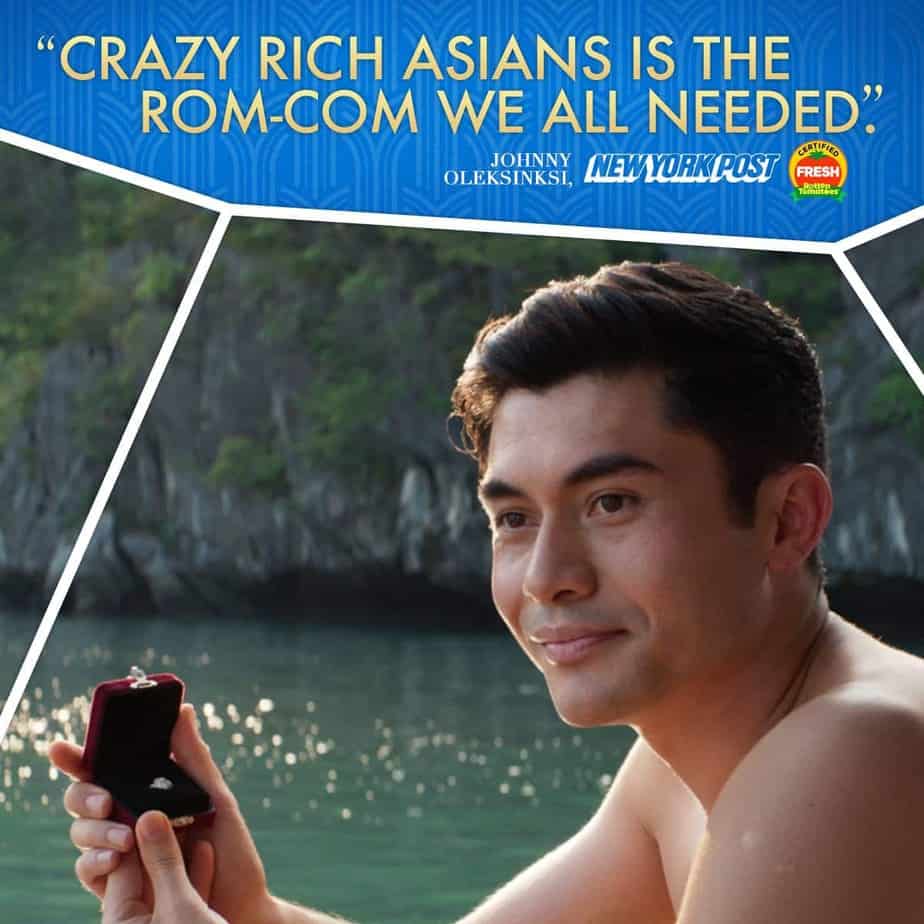
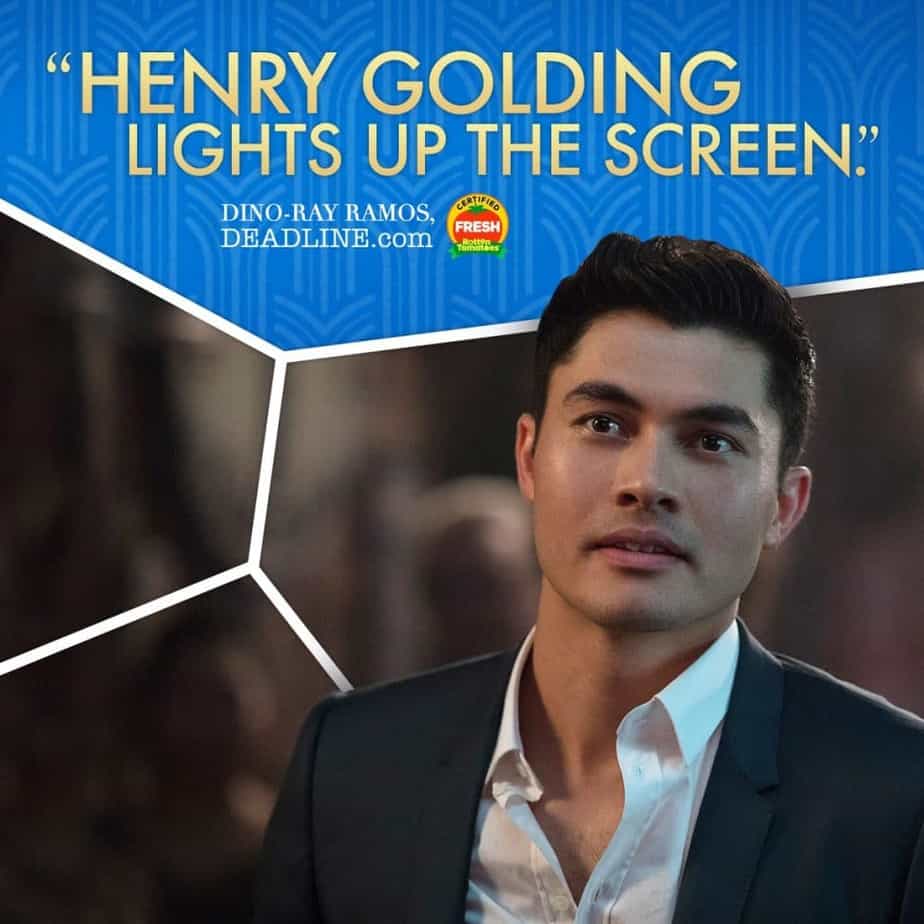
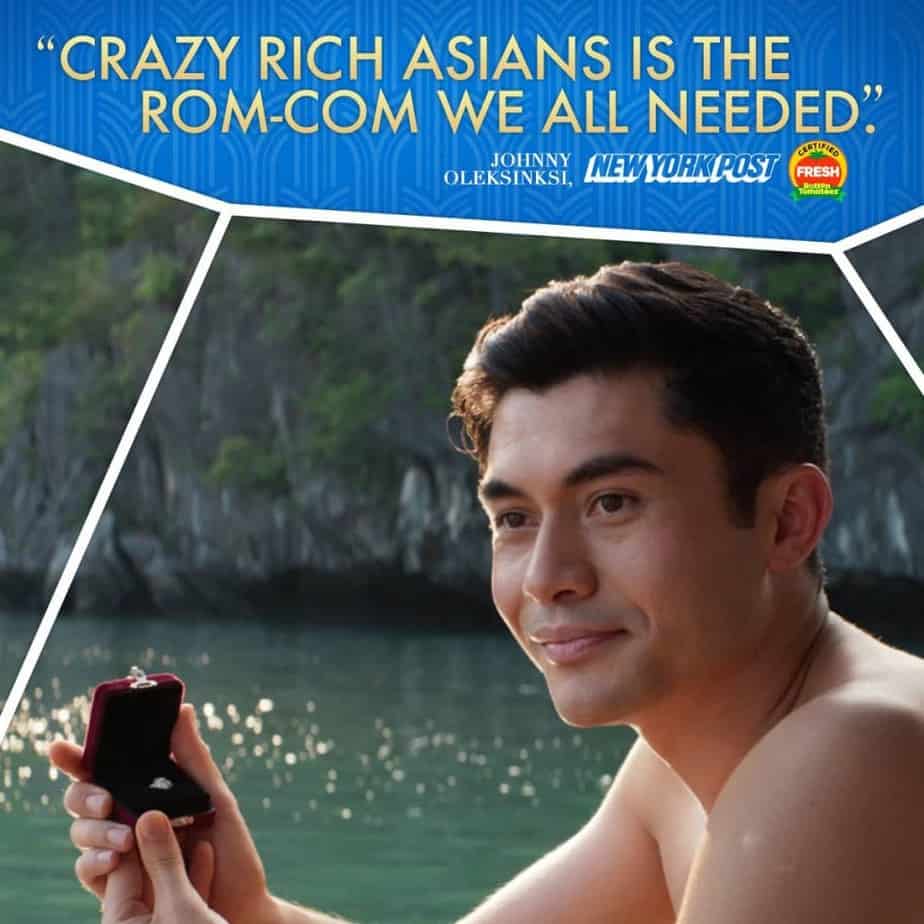
But one thing that has quickened the pulse of many a moviegoer? The handsome and drool-worthy Asian men that populate the film. There has never been another Hollywood movie packed with quite so many Asian male actors (with some serious washboard abs) who will make you say, “Hubba Hubba!”
“I’ve worked in TV for a long time and you begin to understand that if you see something about a certain group of people often enough, it becomes the truth,” Lim says. And this, in turn, affects how parts like romantic lead roles, which are so often written and cast exclusively for white actors, are written and cast. “The representation of the Asian male as sexually attractive and assertive is so important,” she says.
Of course, this is one of the reasons many people have had high hopes for “Crazy Rich Asians” (leading some people to feel #repsweats — anxiety over representation in the media). It’s gratifying to see the film succeed and continue the momentum that erupted back in May, when its director first called the movie “a movement.”
Still, that doesn’t mean you can’t love the movie for its entertainment value…and, er, “scenery.”
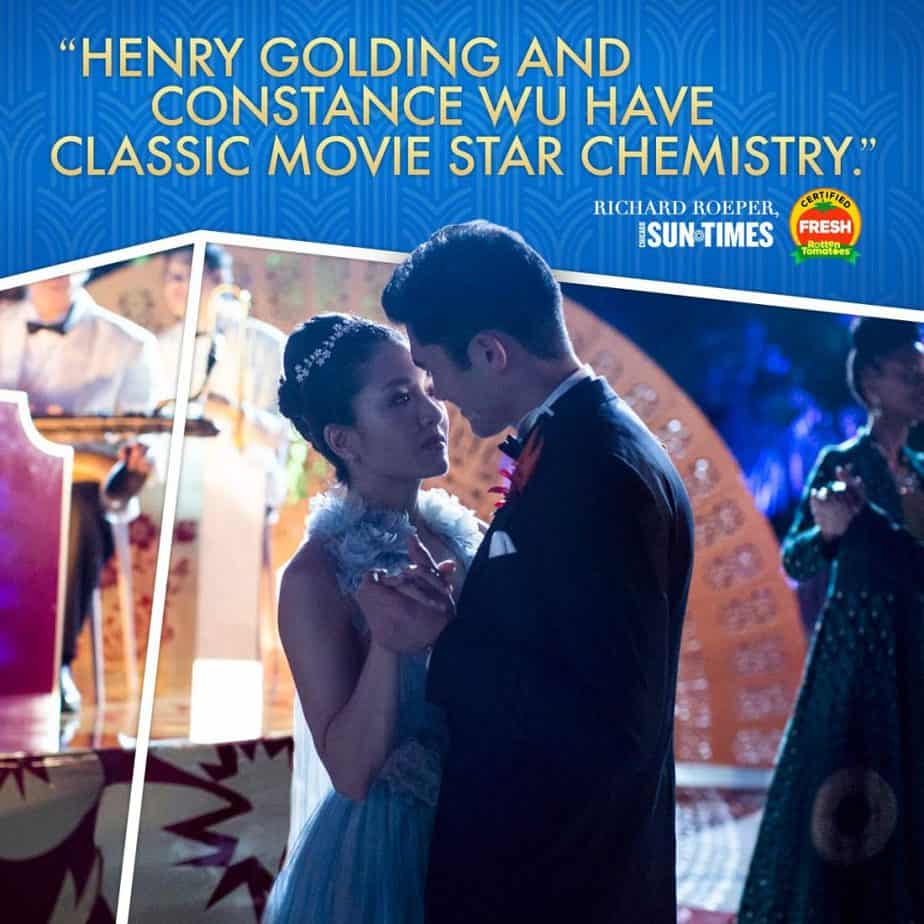
And on that note, here are a few more promotional pics for the film with Henry Golding as Nick Young.
“But apparently this stems from a tradition whereby Russian ladies would meet Chinese men here in the forest and kind of go on dates. But I guess it’s evolved to become more of a, you know, all encompassing thing.”
Those were the remarks in a recent episode of Travelogue on CGTN, or China Global Television Network (formerly CCTV International), that piqued my curiosity.
In Inner Mongolia 2: Life in the saddle, the host of the program Tianran He walked through a virgin forest in the Hulunbuir region of Inner Mongolia, China, when he started talking about these small messages dangling from the trees: “…in the forest there’s loads of these little good luck charms, and most of them are for love, but this one’s like, I wish my dad, mom, granddad and grandma good health.”
And then he explained this came about because of these rendezvous in the woods between Chinese men and Russian women who were apparently lovers.
Naturally, I was intrigued and set off to find whatever I could about this secret tradition in one of northern China’s border regions.
And I looked…and looked…and looked. But nothing definitive surfaced among the many searches I made in Chinese. (Incidentally, the host’s description of those items as “good luck charms” is inaccurate. Chinese would call them 许愿牌, xǔyuànpái, which could translate to “wish cards”.)
To be sure, Inner Mongolia’s Hulunbuir is a very remote destination in China. It’s tucked right up in the northeast corner of the country, sharing a border with Mongolia and Russia.
The close proximity to Russia does add plausibility to stories of cross-border dating in a forest. And if parents back then were anything like today — after all, it’s not uncommon for families to oppose interracial or intercultural love — chances are couples like this would welcome the cover and privacy of all those trees.
But exactly where is this forest in Hulunbuir? Based on the trees in the video, I suspect it’s a virgin birch forest — and there is such a place in Hulunbuir: 白桦林, báihuàlín, the white birch forest or white birch corridor in Ergun (额尔古纳). This area of Hulunbuir borders Russia, making it the most likely candidate.
Chances are, I’ll have to travel there to get the full story from the locals.
Then again, given that China has a long border with Russia (and the fact that white women in China like me are often mistaken for being Russian), there are probably many more forests out there that have served as sanctuaries of Chinese-Russian cross-border love. What stories have you heard?
P.S.: If want to see the episode for yourself, watch it in full on the CGTN Youtube channel:
But if you actually watch the entire Youtube series (it’s only five episodes, 20 min or less each, and totally free), what you’ll find is a thoughtful exploration of life and love through the eyes of an Asian-American guy named Andrew – played by Wong Fu’s Philip Wang — and his mainly Asian friends.
Wang cited inspiration from series such as “Insecure”, “Atlanta” and “Master of None”. And the basic storyline — which centers on Andrew’s journey of self-discovery and soul-searching through his relationships, including with friends, lovers and family — isn’t necessarily groundbreaking on the surface. Yet Wong Fu’s “Yappie” feels like nothing I’ve ever seen before on TV.
“Yappie” takes the familiar, such as ideas about yellow fever (as it relates to white guys and Asian girls), and then cleverly subverts it to great comedic effect. One exchange between an Asian woman and a white man at a bar takes a surprising turn when it ends up reflecting dynamics more typical among Asian men and white women in the interracial dating world. This is just one of many examples of how the series excels at setting viewers up to assume one thing, and delivering something else entirely.
Wong Fu’s “Yappie” has also cast a Blasian woman, Janine Oda, as Andrew’s love interest. It’s refreshing, and not just because you hardly see Asian men and Black women paired up on TV or in the movies. Her presence opens up a lot of conversations rarely heard in the media – from race relations between the Asian and Black communities to Asian identity itself (at one point, she reminds Andrew that she still has her “Asian card”). And all of the interracial dating issues going on in the series will especially resonate with anyone who has ever, to borrow the title of the Diane Farr book, kissed outside the racial lines.
Also, just as Yes, There’s a White Guy in Wong Fu’s YAPPIE So Get Over It points out, the white man cast as a series regular offers comic relief, turning the tables on decades of movies that have used (and abused) Asian actors as the token “Asian sidekick”.
While Wong Fu’s “Yappie” sees the world through an Asian lens, you don’t have to be Asian to appreciate it. After all, the main character of Andrew is a bit awkward and uncertain about life in a way that transcends racial boundaries, making him incredibly endearing and relatable to audiences. And it’s a pleasure to watch Andrew in these moments where he pushes himself, even a tiny bit, outside boundaries drawn by his family or society.
The first season of “Yappie” proves that Wong Fu still has many compelling stories to tell. Let’s hope this is the start of more series to come.
“One evening, I drank heavily and the next morning I awoke to find a girl lying by my side. At the time I was incredibly embarrassed, and she was very shocked, because the night before she had also drank a lot. We couldn’t even remember who checked us into the room.”
This is the final installment of my English translation of a Chinese-language article on Vice.cn featuring interviews with four Chinese men who dated foreign women. Today’s interview is with a journalist and writer in Beijing who had many foreign girlfriends when he lived in southern Europe, including one he met the morning after a night of revelry under surprising circumstances.
28 years old, journalist/writer, living in Beijing
VICE: I heard you’ve had many foreign girlfriends.
I’ve had some. That’s because in my former media work, I would often get sent out of the country. So I would contact with many people, mainly in southern Europe. Spain, Portugal, Italy, Greece — I’ve lived for at least half a year or longer in all of them, and got to know many women.
Could you share some impressive stories?
Ha ha, there are quite many. The countries I went to are relatively laid-back. The economies are not that developed, but the flavor of life is very strong and the people are very warm. I remember the first time I went out with a foreigner was with a Portuguese girl. At that time I was really young, just 24 and it was my first time to live independently overseas. One evening, I drank heavily and the next morning I awoke to find a girl lying by my side. At the time I was incredibly embarrassed, and she was very shocked, because the night before she had also drank a lot. We couldn’t even remember who checked us into the room. Later we went downstairs to the reception desk to find someone to ask about this, and then went to a bar looking for friends to inquire about what happened the previous night. The whole process was really quite ridiculous, but also very romantic. That evening we were once again having dinner together, and then continued to reserve a hotel room. Everything just happened naturally.
Have you had a long-term relationship with any of them?
Yes, she was French. But I don’t really want to share this story, it’s a little painful and I haven’t yet gotten over it.
With so many foreign girlfriends, do you feel like you’ve brought honor to your country?
No. Because my work was often overseas, my circle of friends included people of all different nationalities. To me, the individual means more than the nation.
As a Chinese guy, it’s rare to date so many foreign girls, right?
Before, I had never really thought about it, because this kind of situation is really uncommon. But after the first time I did, I realized that even thinking about this was a way of underestimating myself. Even though Chinese men in the eyes of foreigners are mostly thought of as martial arts experts or bespectacled geeks, Westerners have a really narrow understanding of us. But when it comes to actual relationships, Western women are willing to get to know me well.
A view of Lisbon, Portugal, at sunset.
So Western stereotypes about Chinese men haven’t affected your relations with foreign women?
After I got to know that first Portuguese girl, they affected me less and less. The individual differences between women are really not that big. Every person’s needs are very similar, especially emotional ones. Everyone needs to be loved, cared for, acknowledged. But because of culture, these might manifest themselves in different ways. Individual differences are much greater than differences because of country, culture or race. Once I no longer paid attention to the sense of inferiority brought by these stereotypes, I was more confident and smooth in my encounters with foreign girls. It’s like a guy from Henan chasing a girl from Jiangsu – what stereotypes would he consider?
Are there a lot of Chinese men around you together with foreign women?
Very many, and it has always been their Chinese character that attracts the girls. One friend went to university in Argentina and he said, “Actually, foreigners have a much stronger curiosity about Easterners because we’re more mysterious, and who wouldn’t want to try something new?”So the point is that, for this person, at the appropriate time their particular traits are a plus.
Did these women gain any new impressions of Chinese men because of you?
Of course. When I was dating them, I would share some Chinese culture with them and prepare some Chinese dishes for them. Although some things are cultural differences brought about by history, having a new interpretation is always better than unilaterally listening to Western media.
But does it seem easier for Chinese girls to be together with foreigners?
Because in the eyes of foreigners, Asian men have a lower status than Asian women. The typical stereotype of Chinese, or say Asian men, among other countries is: high achievers at school, introverted. These are the qualities that we carry with us. Capitalist culture distorts this notion in books, movies and the media. So who would be willing go on a date with some guy who is not even a little cool?
But for women, although some were rather quietly intelligent when they were young, when they leave the country they can easily fit right in. On one hand it’s related to how women have a strong tolerance. On the other, it’s that Western culture is more accepting of Chinese women. And when you look closely at foreign men with Asian women, for the most part they are very close to each other’s cultural traits, and it’s hard to see Western men following the living habits of Eastern women. That’s because Western men, in today’s mainstream cognition, have an advantaged position in terms of skin color and gender, the symbolic meaning of the more “advanced” human existence. So naturally it will be easier for them to find people no matter where they are.
Do you have any advice for Chinese men who want to pursue foreign women?
You only need to remember this: you and her are both people.
“Of course, the most tantalizing topic between men and women is sex. So she once asked me, ‘Do you want to try it with a foreign girl?’ Then somehow we went back to my dorm. It was her first time to sleep with a Chinese man.”
This is the third installment of my English translation of a Chinese-language article on Vice.cn featuring interviews with four Chinese men who dated foreign women. Today’s interview is with an ad professional in Shanghai who gets personal about his relationship with his white American girlfriend, including a few blushworthy details.
26 years old, advertising professional, living in Shanghai
VICE: How many foreign women have you dated?
Only one, who is my current girlfriend. She’s an American.
How did you two meet?
To talk about this makes me blush a little. We were at the same university in the US – she was studying ancient Chinese, and I was studying old English. We got together and became language partners. At first we would always study together. Once we became more familiar with one another we would talk about almost anything. Of course, the most tantalizing topic between men and women is sex. So she once asked me, “Do you want to try it with a foreign girl?” Then somehow we went back to my dorm. It was her first time to sleep with a Chinese man.
And afterwards you both decided to have a relationship?
Well, not exactly. Because of cultural differences, we were not accustomed to each other’s ways of living at first, and we went back and forth for a period of time before we settled things.
How does she understand your Chinese style of dating?
My girlfriend thinks that in Chinese or Asian culture, relations between men and women are either guided by patriarchy or strict management by wives, different from the gender equality and mutual respect that her culture values.
She often says that I am a typical Chinese guy. The more she says this, the more I want to shatter her stereotypes about Chinese men. Even though we have a good relationship and I’ve already changed some of her attitudes toward Chinese men, she will still inadvertently reveal that she doesn’t like Chinese men very much.
A view of the Pudong skyline in Shanghai, China.
Does this make you feel that there’s additional pressure in your relationship?
Yes, especially in relationships, as you will run into many more practical problems. If I was with a Chinese girl, if there were some living habits that I couldn’t accept I would just directly say so. For example, I really don’t like it when girlfriends are too close to their ex-boyfriends. But now I haven’t said it, because I have this pressure, which makes me consider whether or not to speak out. But in order to not let her think that Chinese men are petty, for now I won’t tell her.
Another burden brought about by ethnic pride?
Yeah, perhaps a little. There are times when I wonder, do I care too much about my Chinese identity and do I want to prove anything? And as a result I will not want to express my feelings. Perhaps it’s not really that necessary to abandon your feelings because of an ethnic burden.
Where do you think your sense of having an ethnic burden comes from?
I think this has something to do with the environment. The other Chinese men around me who have dated white women all seem to have a very similar situation. Perhaps from a young age we’ve all accepted this concept of the Chinese ethnicity, and how we have to bring honor to the country. We were always shouting slogans about how we shouldn’t make Chinese people lose face. Men in particular are especially this way, and in the end it becomes a habitual way of thinking.
Do you have a lot of friends around you who have dated foreigners?
Very few men have sought out foreign girls. But when I was at university in the US, there were quite a few Chinese women dating foreign men. Overseas, there are very few Asian men who pursue white women, and even Asian-Americans basically hang out with other Asians. Plus, Asian men are not as popular as white men in the eyes of foreigners. But women are different – there are always some women who can adapt well into Western life.
What is the biggest difference between dating foreign girls and dating Chinese girls?
The respect for personal space. Foreign girls are very independent and have this awareness of personal space. Even though she really loves you, that doesn’t mean she will do anything for you. This is something Chinese men are not aware of. Additionally, it’s a matter of destiny. Romantic relationships can’t be too deliberate.
This website uses cookies to improve your experience. We'll assume you're ok with this, but you can opt-out if you wish.AcceptRejectRead More
Privacy & Cookies Policy
Privacy Overview
This website uses cookies to improve your experience while you navigate through the website. Out of these cookies, the cookies that are categorized as necessary are stored on your browser as they are essential for the working of basic functionalities of the website. We also use third-party cookies that help us analyze and understand how you use this website. These cookies will be stored in your browser only with your consent. You also have the option to opt-out of these cookies. But opting out of some of these cookies may have an effect on your browsing experience.
Necessary cookies are absolutely essential for the website to function properly. This category only includes cookies that ensures basic functionalities and security features of the website. These cookies do not store any personal information.
Any cookies that may not be particularly necessary for the website to function and is used specifically to collect user personal data via analytics, ads, other embedded contents are termed as non-necessary cookies. It is mandatory to procure user consent prior to running these cookies on your website.




 A man as the brand ambassador for lip gloss, even wearing it? It’s unimaginable in the US, my home country, for a guy to model makeup, let alone vouch for it. Unless of course you’re a celebrity drag queen like RuPaul.

 In
In 


