

By January 14, 2003, the Chinese Internet company where I worked had already begun taking its first steps towards a possible listing on the Hong Kong stock market. But on that same day, I had only begun to take my first steps into the workplace — after two weeks of recovery from a sprained ankle.
And some people, on the other hand, had taken their last steps at work. Such as Ayi Zhong, the fiftysomething woman with a cap of salt-and-pepper hair who cleaned my apartment once a week, and the company offices several times a week.
She told me about it the evening of January 14, when I found her arranging my apartment, as she did every week. “The new office is twice the size of the old place, but they would not increase the salary.” The company only paid her 250 yuan (almost $37) a month, a pittance for her services.
Still, Ayi Zhong wasn’t the only company casualty. Continue reading “Chapter 37: Forgotten Workers and Contracts”


 As a foreigner in China, sometimes you touch people in ways you never realized. Something you say or do in a moment — a small, forgettable thing to you — becomes a lasting impression to someone else.
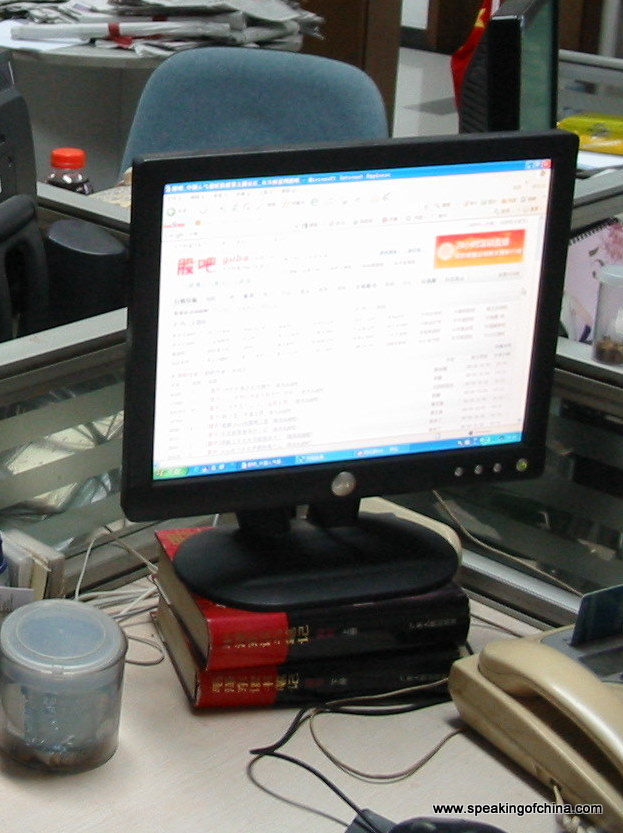
 I wanted it to be just another Saturday — as it was to my Chinese coworkers. I rode the number 44 bus to the office, as always. I took the elevator up to floor 12. And when I came to my desk, there was my ex-Chinese boyfriend, Frank, still sitting next to me, as usual.
 When you’re a foreigner in China, the most common phrase you might hear is: “Can you teach me English?” Your foreign face is like a walking advertisement that new friends or friends of friends can’t help but answer — because they live in a world where English could determine their future, or change their destiny.
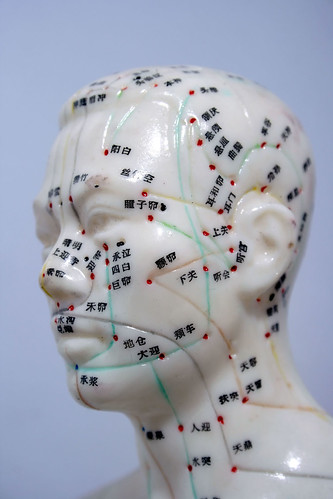 In Chinese traditional medicine, there is a saying: anger hurts your liver, melancholy hurts your lungs, thinking hurts your spleen, happiness hurts your heart. The thing is, we are all angry, melancholy, happy, or just thinking at different times in life. What hurts is when we do it too much, without balance.