Interview with Yuta Aoki on “There’s Something I Want to Tell You: True Stories of Mixed Dating in Japan”

Exploring cultural differences in my intercultural and international marriage has long been at the heart of my blog. Which is why, when Yuta Aoki contacted me about his new book exploring cultural differences for mixed couples dating in Japan, I jumped at the chance to do an interview.
24894230

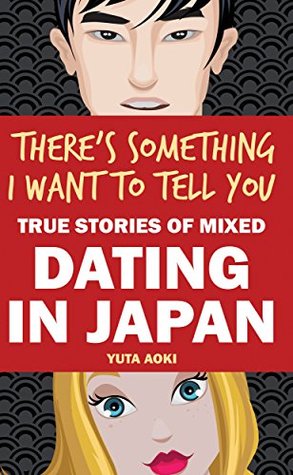
There’s Something I Want to Tell You: True Stories of Mixed Dating in Japan profiles 15 different people (spanning eight nationalities, both straight and LGBT) dating across racial and cultural borders in the country. Yuta’s deeply personal interviews touch some of the most private and intimate details of their love lives. He follows up each of the stories with a discussion of the cultural dynamics going on between the couples, which makes the book even more valuable. Whether you’re curious about intercultural dating in Japan or already in an intercultural relationship, you’ll find this a fascinating addition to your library.

I’m excited to introduce you to Yuta Aoki and There’s Something I Want to Tell You: True Stories of Mixed Dating in Japan through this interview.

yuta-aoki-large

Here’s Yuta’s bio from Amazon.com:

Yuta Aoki is a Japanese author, blogger, and YouTuber. He writes about Japanese culture, multi-cultural communication, and dating.

He is a chronic traveler. He has been to more than thirty countries, from Eastern Europe all the way across to Southeast Asia. He enjoys talking to local people and listening to their stories. His desire to share the best of these stories inspired him to write There’s Something I Want to Tell You – True Stories of Mixed Dating in Japan.

He dates internationally, although he’s slightly worried that he might end up spending more time writing about dating than actually doing it.

He was born and raised in Japan.

You can learn more about Yuta at his blog at YutaAoki.com.

I asked Yuta about everything from how he was able to get people to speak so candidly about their love lives, to his response to people who think culture doesn’t matter in intercultural dating:

—–

Tell us about the inspiration for writing this book.

One huge inspiration was my friend’s story about how she met her husband. She is African-American and her husband is Japanese.

One day, she was walking down the street of Gunma, a Japanese prefecture where she liked at that time. A car approached behind her and pulled up.

‘What’s up?’ the man inside shouted in English. He was Japanese.

‘Uh… good evening,’ she replied in Japanese, hesitantly.

He smiled, wanting to continue the conversation.

But she wasn’t up for a random chat. It was already getting dark. The sun was going down. She walked away.

She would have forgotten him, had it not been for the birthday party she was going to the same night. The party took place on the 2nd floor of a building where there were several bars.

During the party, her phone rang. It was her friend.

‘Hey, can you come downstairs? There’s someone I want to introduce you to,’ her friend said.

When she came downstairs, she noticed a familiar-looking man.

‘Hey, you are the guy from the car!’ she exclaimed.

That was how she met her husband.

This story made me realize that people had unusual dating stories. I also remembered a friend who had made countless crazy boyfriend, one of which had run 40 kilometers (25 miles) just to see her. I wanted to know more.

You share a variety of stories about dating in Japan from people of different nationalities, racial backgrounds and sexual orientations — many of them diving into very intimate and personal details about the relationships. How did you find the people to interview for this book? And how were you able to get them to speak so candidly on the record?

Finding people to interview was quite easy as I already knew very diverse people who lived in Japan. All I had to do was ask around. Then some of them introduced me to other people.

I think the reason why those people opened up was that most people actually want to talk about their relationships. Often, we are afraid of being judged. But once someone stars actively listening to you, you can’t stop.

I think being interviewed is a very interesting experience. I encourage you to try it if there’s an opportunity. If you have an interesting dating story, contact me!

What’s your favorite story from this book and why?

Every time people ask that question, I come up with a different answer because there are so many interesting stories.

There’s an American girl called Lily, and I loved her quasi-relationship with a dorky, smart, obsessive Japanese guy called Aiba-kun. Lily wants to be his friends because he’s a smart guy and likes Japanese literature which she likes a lot. He’s also one of few friends Lily made back in university in Nagoya. But Aiba-kun doesn’t seem to be able to shake off his romantic obsession. There have been countless misunderstandings—both personal and cultural—between them.

Once, Lily decided to go on a “date” with him. She knew he hadn’t dated any girl before, so she wanted him to experience what it was like to go out with a girl. She was always clear that she wasn’t interested in him, but it was difficult for him to hold back his feelings.

Lily had to go back to the States, but they continued exchange emails even though she found it difficult to write long messages in Japanese.

Eventually, she came back to Japan and started living in Tokyo, quite far from Nagoya. One day, Aiba-kun showed up in her house unnoticed. It was an awkward meeting. Lily had to take him to a nearby café and convince him to leave because he kept insisting on dating her.

But their (sort of) friendship still continues. Lily thinks that once he gets over his infatuation, they can be really good friends.

I like this story because it has several layers of misunderstanding. On one hand, there is American dating culture that tends to be more casual and relaxed. On the other hand, there is an awkward boy who is not experienced with women. I find their friendship kind of cute.

Was there anything you learned about dating in Japan in the process of writing this book that surprised or shocked you?

It’s not so much surprising as curious, but so many Japanese people in those stories are, well, Japanese, in their way of thinking.

Western women who date Japanese men often find it confusing that Japanese men don’t always express their emotions and thoughts verbally.

Michelle, a Finnish girl, says her Japanese ex-boyfriend didn’t want to talk about bad things because he didn’t like confrontations. He wasn’t a talkative guy, and when they went on a date, he didn’t have much to say. She wanted him to talk more.

Kala, another African-American woman, talks about the ‘automatic translator’ that she invented to decode her Japanese husband’s non-verbal messages. When her husband is hungry, he comes around the kitchen, where she is cooking, and asks, ‘Do you need any help?’ But Kala knows he is not really offering help. It’s his indirect way of saying, ‘I’m hungry.’

Lack of verbal, direct communication is just one thing. There are a lot of recurring themes about dating in Japan: mind-reading, passiveness in bed, accommodating personalities, private nature of dating, etc. It was interesting to re-discovering my own culture.

What would you say to people who claim that culture doesn’t matter in intercultural dating?

I think what they really mean is that cultural differences can be overcome, which isn’t false.

But some people overlook or simply don’t notice cultural differences and that can be a problem. I remember Andre, a Jamaican man, who dated a Japanese girl who had a completely different communication style.

When she wanted to stop seeing him, she simply stopped answering his text, which confused Andre a great deal because he needed a verbal, explicit explanation. The more he pushed, the more irritated she was. It wasn’t necessarily his fault because from her part, she was unable to communicate with him effectively. Instead, she just became angry and passive-aggressive, which confused him even more.

It turned out their relationship had been fraught with misunderstandings, which neither of them fully understood. I think a little understanding of cultural and personal differences would have made their relationship much more pleasant.

What do you hope people come away with after reading your book?

I hope that people come away with a good understanding of what to expect in dating in Japan. At the same time, I hope people notice that there are many Japanese people who don’t fit the Japanese stereotypes. I included very diverse people in my book, so I you can understand dating in Japan from different angles.

—-

Thanks so much to Yuta Aoki for this interview! Learn more about Yuta at his blog at YutaAoki.com. You can find There’s Something I Want to Tell You: True Stories of Mixed Dating on Amazon.com, where your purchase helps support this blog.

Guest Post: Why Did I Assume I’d Never Find a Man to Date in China?

Why did I assume I’d never find a man to date in China? It’s a question that haunted white American Rosalie Zhao (who blogs at Rosie in BJ), surprised to find the love of her life in the Middle Kingdom (she shared her unforgettable love story here in the post “Enter Zhao Ming…China’s Answer to Arnold Schwarzenegger”). She writes, “With rising tensions and deepening talks surrounding issues of race in the US, I’ve been doing a lot of reflecting on my own prejudices.”

Do you have a story worth sharing on Speaking of China? Visit the submit a post page today to learn how to become a guest poster on this blog.

—–

(Photo by Steve Webel via Flickr.com)

It’s been a couple years since my first guest post on Speaking of China. I wrote of how, against my initial expectations, I found love with a local man in China. Since that post, there’s been a rise of AMWF relationships in the media as well as a growing number of Asian men (and the western women who love them) speaking up and speaking out. With rising tensions and deepening talks surrounding issues of race in the US, I’ve been doing a lot of reflecting on my own prejudices. I’ve also given some thought as to why I assumed I’d never find a man to date in China, an assumption that many western women living in Asia seem to make. Then, the reason finally came to me—a man that was such a small part of my past but who I’ve come to realize had a seemingly profound impact on how I viewed Asian men and perhaps even how I saw myself.

It was freshman year of college and I was in a dating slump. The good news was that I got along fabulously with the other girls I lived with in my dormitory suite. There were five of us in total; I was the only one without a boyfriend. The two girls in the room next door, Laura and Erin, each were dating guys who attended a university on the other side of our state, which meant they were away most weekends visiting their beaus. I don’t know whose idea it was, theirs or mine, but somehow we came up with the idea of me having a blind date with one of their boyfriends’ friends. They quickly ran through their mental rolladexes (this was, of course, pre-Facebook). Who among these friends would be a good match? Laura looked up suddenly. “We should set you up with Johnny!” she exclaimed. “Yeah, he’s really cute!” Erin assured me. They shuffled through all the junk in their dorm room, eventually scrounging up a photo. Laura showed me his picture.

For a second, I was taken aback. I assumed he would be white, but he was in fact East Asian. I quickly admonished myself—what did it matter? He looked fairly cute from the photo and they eagerly sang his other praises: he was kind, smart, and 21 (old enough to buy us beer!). I decided to throw caution to the wind and join them on their next road trip across state, in hopes Johnny might be the man of my dreams. Or maybe someone fun to make-out with for the weekend. Whatever. When you’re 19 and in college, it hardly matters.

As fate would have it, Johnny was neither my future husband or make-out partner. The second I laid eyes on him I knew it wasn’t going to happen. I’m short. This guy? He was barely taller than me. He also weighed about 30 pounds less than me. The chemistry wasn’t there. I wanted a man who eclipsed me in size and strength, a man who would wrap me up into his arms and protect me from all danger. If Johnny was a little bigger and I a little smaller, maybe something could be there, I thought. Johnny, however, didn’t share my sentiments. He seemed very much into the idea of us becoming an item. He was smart enough to read my signals and not push me too hard, but he subtly pursued me that weekend and later, online.

I felt bad initially and even worse as time wore on. Johnny and I became closer friends while talking on MSN messenger and it became clear to me that he was suffering from a far worse dating slump than I was. He had been rejected over and over, to the point where he felt his efforts were futile. He was never going to find a girlfriend. I wanted to assure him that the right girl was out there, but I didn’t know how to do that without returning to an awkward conversation in which he asked why I didn’t like him. Eventually, our chats online became less frequent and I guiltily sighed with relief.

After that, I fell for my own perception bias. I viewed all Asian men as being smaller than me and therefore undatable. I assumed I could never again be attracted to them because I’d feel like an ogre in their presence. But then I came to China and discovered that Asian men come in all sizes and shapes. I also realized something else—a man’s true strength isn’t determined by his height in inches or weight in pounds; in the years since coming to China, I have found men attractive who had physiques similar to that of Johnny’s. And I have also realized that my own self-worth cannot be calculated by how small my jean size is. I don’t have to be thin for a man to find me beautiful.

I see now that I never gave Johnny a fair chance. Perhaps a romance could have blossomed and chemistry forged if I had had an open mind. Was I racist? Sizist? Self-loathing? I don’t know. But I don’t want to judge my 19-year-old self too harshly. I’m just glad that in time I was able to open myself up to the possibilities of dating cross-culturally and the idea of dating in China. I’m not sure where in the world I’d be today if I hadn’t.

Rosalie Zhao resides with her family in Hebei, China, where she writes a blog called Rosie in BJ.

—–
Speaking of China is always on the lookout for outstanding guest posts! If you have something you’d like us to feature, visit the submit a post page for details — and then submit yours today.

Photo Essay: Celebrating My Birthday Beside Hangzhou’s West Lake

Last Monday, I wrote about how wedding anniversaries aren’t a big deal to my Chinese husband. But not birthdays — especially my birthday. We just celebrated and, once again, he approached as if it were a national holiday.

John still loves coming up with what he calls “birthday programs” for my special day and this year was no exception. First, he declared the day a vacation day for us — no work under any circumstances! — and shelved my laptop away. But with the oppressive sunshine burning up the city streets, it was also no time to be outdoors; instead we decided to watch movies on demand at home. We just pulled the curtains, cuddled up in bed, and pretended we were at the movie theater. Simple but fun!

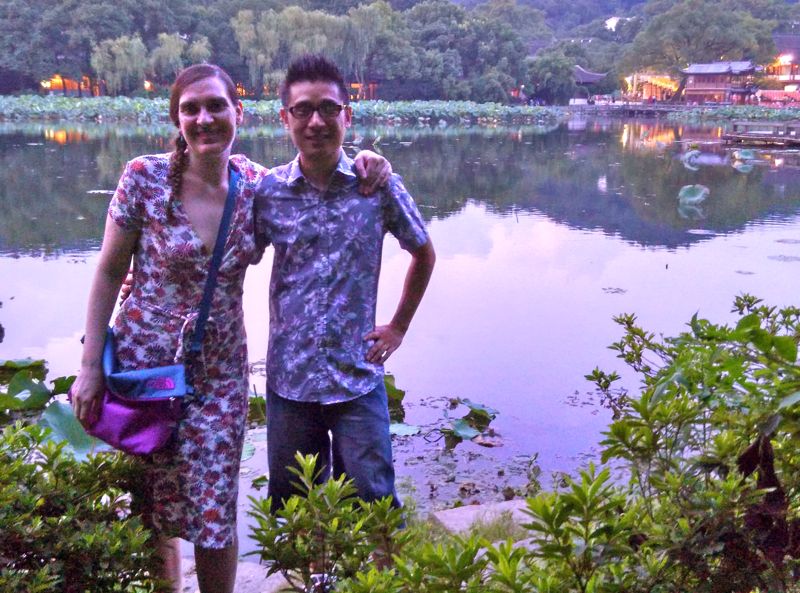
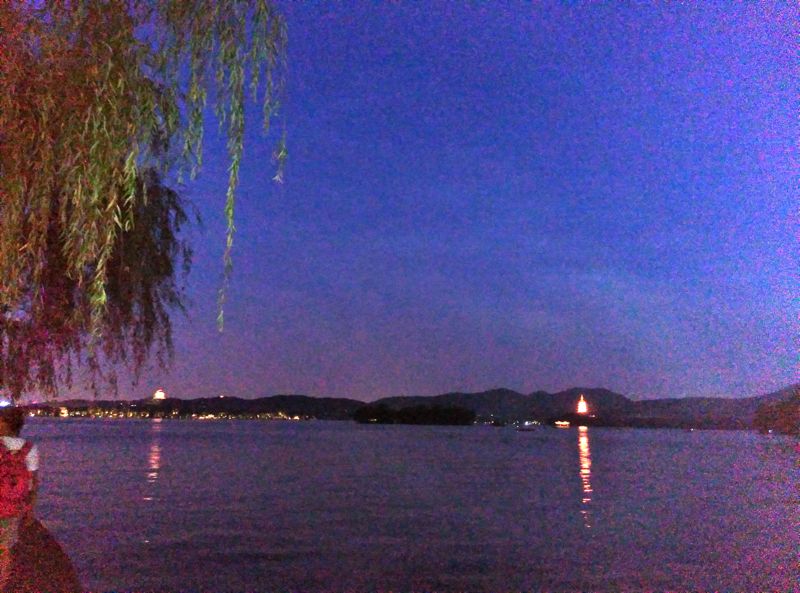
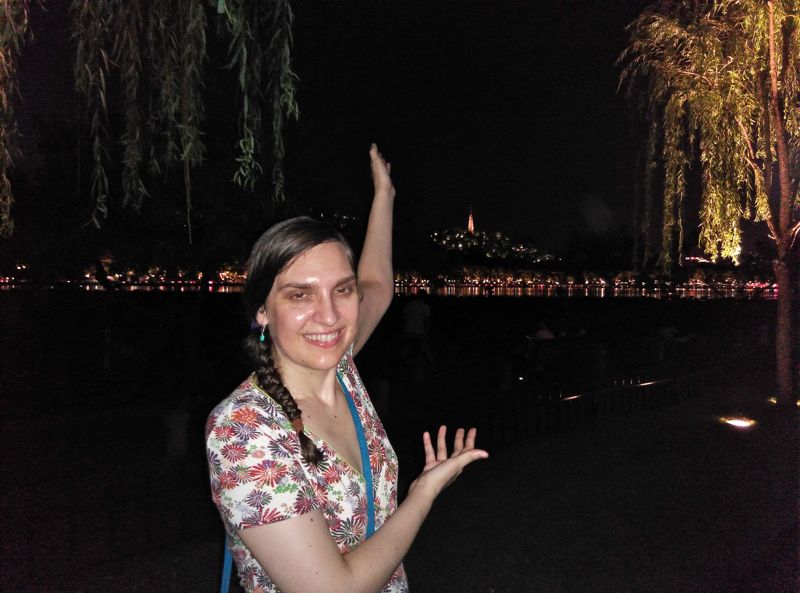
Come evening, however, John and I dressed up to step out into town — or rather, step out beside the West Lake to marvel in the lotus leaves dappling the lake’s surface as well as the dazzling show of lights from the city.

Here are my favorite photos from the evening:

IMG_190448

IMG_191152

IMG_190424_HDR

IMG_192928

IMG_194719

IMG_194115

Wishing you all a happy August!

Guest Post: A “Little” Something Red for My Chinese-American Groom

I know a lot of you out there are already fans of the AMWF blog When West Dates East (written by the incredibly funny and smart young writer Autumn Ashbough). Here’s the story of how Autumn decides to honor her fiance’s heritage with a very little something red on their wedding day. That’s all I’m going to say about that — read on for the whole story!

Do you have a hilarious wedding story to share, or something else that you think should be on Speaking of China? Check out the submit a post page to learn how to become a guest poster here.

—–

(Photo by _e.t via Flickr.com)

Like most brides, I got more than a few pieces of sexy lingerie at my bridal shower. Mesh merry widows, sheer nightgowns, several garters with blue, and even a red silk thong.

Now, I have never been a supporter of the thong. Nope. My politics are liberal, but my clothing is conservative. While I currently live in fashion forward, underwear-optional Los Angeles, I remain the Grand Champion of Excess Fabric. When turtlenecks are in style, I squeal and buy some in every color. (Sleeveless turtlenecks are also a godsend when you work in an over-air-conditioned office building with old, overweight white guys in suits.)

The giver of the red thong was one of my former coworkers. As I thanked her, I must have looked a little puzzled. She quickly explained that she thought it was appropriate, since red was the traditional lucky Chinese color. As I had not yet ventured into the AMWF cyber community, I nodded with the other clueless guests and filed that fact away for future reference.

My Chinese-American fiancé had a blast rummaging through my risqué gifts after the bridal shower. Andy picked up each item, examined it, and dropped it on the floor by the bed. He would then study the lingerie, nod, and say, “Yeah. That one’ll look great!”

But when he got to the red thong, he didn’t even take it out of the box. Andy just pushed it aside with a wistful sigh, because he knew there was no chance in hell I’d ever wear it.

****************************

Like many first generation Americans, Andy had no interest in his Chinese heritage. His goal was to assimilate quickly. He stopped speaking Cantonese after learning it was useless in kindergarten. The only accent Andy retains is a smidgeon of the pidgin he grew up with in Hawaii. He picked up tennis, baseball, weightlifting, and dancing instead of martial arts. Even his car, a Ford Mustang Cobra, was aggressively American. (He also drove it in an unhealthily aggressive American style.)

Andy’s cousins were the same way. His Fashion Plate Cousin’s wedding was as American as you can get – church wedding, hotel reception, poofy white dress, and even a super white groom from Oklahoma. There was no cheongsam, no daughter-in-law tea ceremony – not even a hint of red in the accent colors.

Clueless white girl that I am, I did not, in fact, notice any of these cultural omissions at the time. Months later, however, when Andy and I attended the wedding of a Japanese-American couple, the ballroom contained a thousand golden origami cranes. While the rest of the wedding was thoroughly American, the bride’s nod to her Japanese heritage involved a year of folding thousands of gold foil cranes – with only the flawless ones displayed. These cranes were eventually made into beautiful designs, framed, and displayed in the couple’s home.

I stared up at the cranes and whispered to Andy, “We should do something like that for our wedding.”

Andy chortled. “Uh-huh. You can’t even fold dumpling wrappers. Good luck with that, honey!”

I elbowed him. “Not the cranes, babe. But something Chinese. The wedding is all…white.”

Andy knew my fits of inspiration often meant more work. Andy was instantly wary. “It’s fine.”

“Maybe the bridesmaids’ dresses…no, they’re already bought…so is my dress, the flowers match the bridesmaids’ dress…” I thought furiously and came up empty. Our wedding was in rural New Hampshire in the fall. There’s nothing remotely Asian for miles. “What if I try and find some kind of cake topper?”

“Your Ex-stepmother already gave you that engraved crystal bell that matches the engraved champagne flutes your sisters gave you.”

“Isn’t there some Chinese custom we could work in?”

“Red envelopes, honey,” Andy responded instantly. “Red envelopes with lots of cash will be just fine.”

And although I bugged Andy repeatedly about trying to work in some Chinese wedding customs, he stuck with red envelopes and refused to budge.

***********************

A few weeks before our wedding, I came across a library display with Thousand Pieces of Gold, by Ruth Lum McCunn. I’ve always loved historical fiction, but when you grow up on the East Coast of the United States, most history is very Eurocentric. I’m always on the lookout to improve my California/ West Coast history, and I scooped up Thousand Pieces of Gold immediately.

Thousand Pieces of Gold tells the story of Lalu, a Chinese girl sold into slavery in 1871. Lalu goes from a Chinese brothel to an American slave merchant, is renamed Polly, and winds up in Idaho as the prize in a salon poker game. Polly regains her freedom, marries, and becomes an American frontierswoman.

The book was a nice escape from wedding stress. Polly’s hardships in the American West put my own wedding stress/ drama in perspective. My wedding shoes were lost? Hell, at least I had shoes! I was worried that my father walking me down the aisle would seem like an endorsement of the patriarchy? At least my father couldn’t ACTUALLY sell me when times were tough! (I have no doubt he would have. Also, I might have deserved it.)

But what struck me most, when I read Thousand Pieces of Gold, was this picture:

PollyBemis1894
Polly Bemis in her wedding dress, 1894.

Like Laura Ingalls Wilder, my favorite childhood heroine, Polly’s best dress – and therefore her wedding dress – was black. But unlike Laura, Polly was clad all in red underneath. Polly once explained that she was so happy on her wedding day that she just had to wear the Chinese colors of joy and good luck. So while her exterior was the somber, accepted American garb, underneath, Polly celebrated with her Chinese heritage.

And while it was too late to change any external décor at our overly white wedding, I had just the thing – or really, just the thong – to emulate the indomitable Polly Bemis.

****************

The post-wedding photography session at our wedding was interminable. There were photos of the enormous wedding party, and then of the enormous families. Well, my enormous family. Andy only had one set of family photos to take. I had three.

My smile faltered once we got to my Ex-Stepfather and his family. The photographer called out, “Your gums are showing, Autumn!” I lowered my upper lip while I tried to keep smiling. (Try it. I dare you.)

The photographer finally snapped the last shot and called for my Ex-Stepmother. As Ex-Stepmother and company arranged themselves around us, I dropped my smile and whimpered to Andy, “My feet are killing me. You?”

Andy whispered back, “My butt feels funny.”

I giggled. “Your butt? What’s wrong with your butt?”

“Aw, c’mon, honey. You are not alone. I got a red thong, too.”

“No!”

“Yes!”

Most of our wedding pictures are carefully choreographed, with careful smiles. But the one with my Ex-Stepmother and my Ex-Step-Grammy is a little different. In that particular photo, Andy and I grin like a pair of loons.

It’s my favorite.

loon

Autumn Ashbough is a White American woman who writes about the humorous perils of life with a Chinese-American significant other at When West Dates East.
—–

Speaking of China is always on the lookout for outstanding guest posts! If you have something you’d like us to feature, visit the submit a post page for details — and then submit yours today.

How Being “Married to China” Changed How I Celebrate My Wedding Anniversary

8525005221_9c01c8ced0_zWhen July rolls around, I’m guaranteed two things – plenty of sultry summer weather (especially here in Hangzhou, considered one of China’s “furnace” cities) and the yearly round of congratulations from American friends and family on another wedding anniversary with Jun. Nowadays it comes virtually through e-mails and Facebook messages; when we used to live in the US, it would arrive via greeting cards with silver-embossed print and sentimental prose neatly tucked into pale pink envelopes.

As a child and adolescent, I watched my parents mark their yearly wedding anniversaries with the appropriate festivities – fancy dinners out, weekend getaways, and of course gifts like jewelry. I also grew up in a culture so invested in the idea of celebrating wedding anniversaries that there’s an entire etiquette surrounding the appropriate gifts to mark wedding anniversaries. (Did you know, for example, that you’re supposed to give silverware on your fifth wedding anniversary?)

So it might surprise you to learn that whenever someone congratulations me on our wedding anniversary, sometimes it feels strange.

Why would something I was raised on now seem foreign to me? Well, there’s a personal reason for that – namely, my Chinese husband John. He doesn’t celebrate wedding anniversaries, which is how people are in China. And after years of being married to him, the idea that wedding anniversaries demand celebrations has fallen off my radar.

Why is it that people here don’t celebrate wedding anniversaries? Well, given that people in China hardly celebrate their own birthdays (or, for that matter, birthdays of family/friends), is it any shock that wedding anniversaries don’t count as a significant event? I wonder if it has to do with attitudes towards love and marriage here. In China, love is something implied, inherent in any marital relationship. It doesn’t need to be restated again and again (the way Americans and other Westerners can’t stop saying “I love you” to their spouses or partners). By that rationale, maybe it doesn’t need to be celebrated in some obvious, Hallmark kind of way either.

The thing is, as blasphemous as it might sound, I like the simplicity of this all. I like the fact that a wedding anniversary doesn’t require the cards, dinners out, getaways or gifts. I like knowing that, here in China, my anniversary isn’t something in the spotlight. It’s something that’s private and personal. Something that John and I can celebrate however we want to.

John and I may never mark our anniversary the same way my parents used to – and that’s okay in my book. The most important thing is that we’re still together as a couple, still married for over 11 years (yes!) and still crazy in love.

How about you?

Enter to Win 3 AMWF Memoirs of Love, Travel and Life in Asia (Ends July 7)!

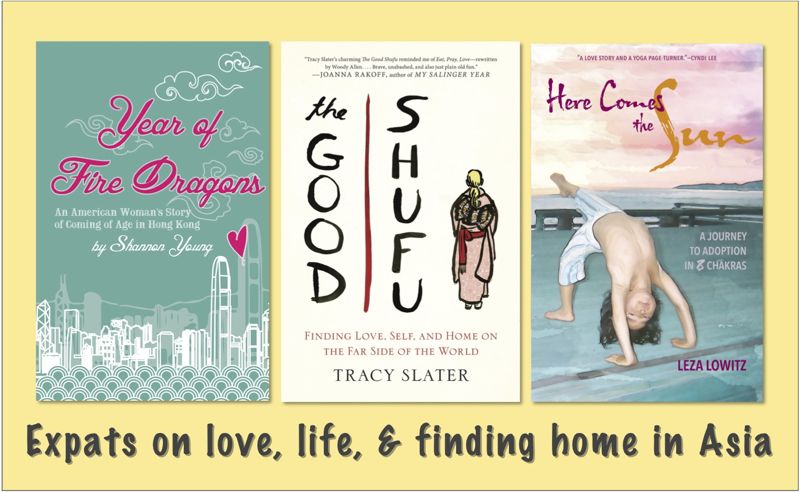
If you love stories of real-life AMWF couples, here’s your chance to win a bundle of three AMWF memoirs of love, travel and life in Asia! This giveaway is open to ANYONE in the world and it ends July 7.

3ExpatMemoirsBanner

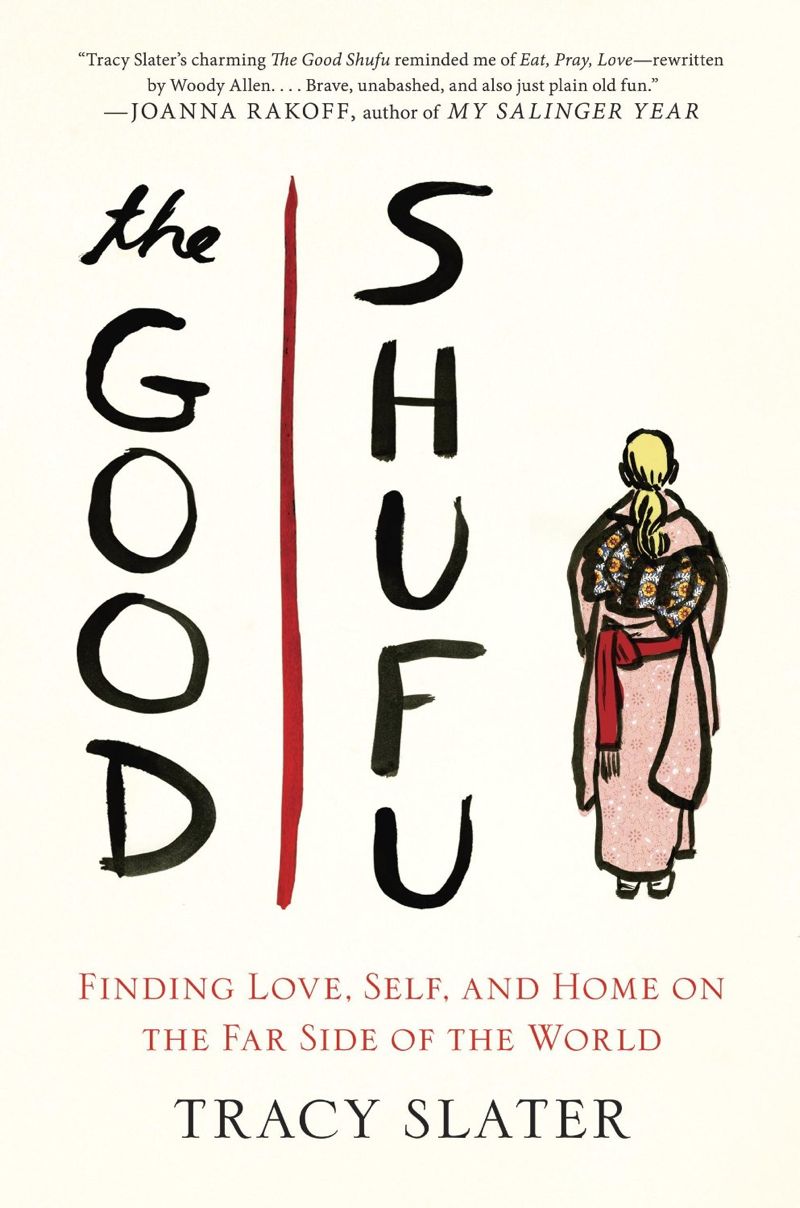
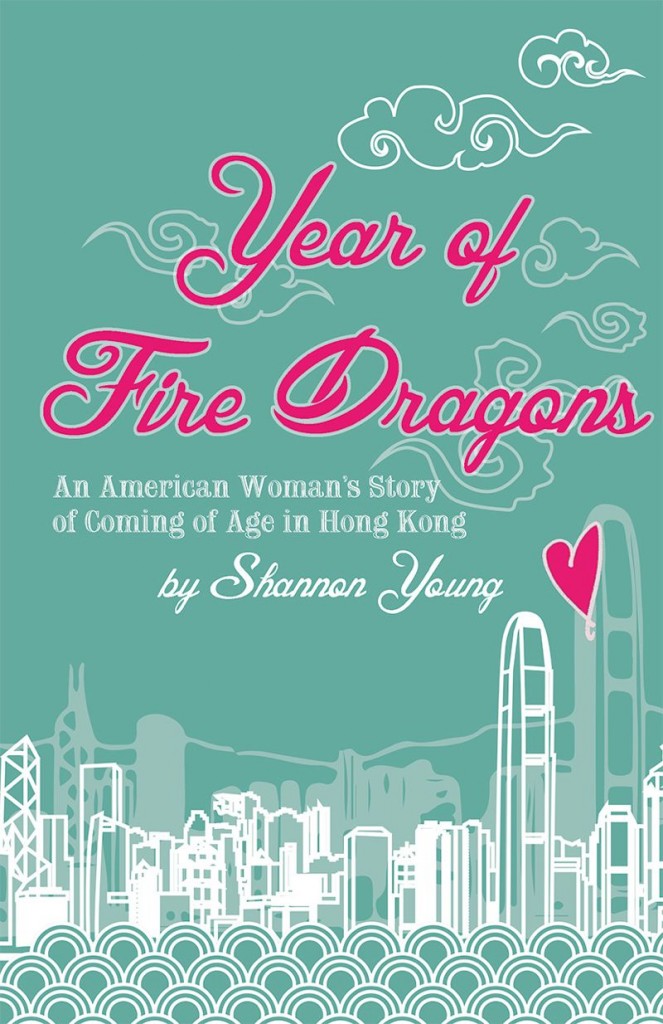
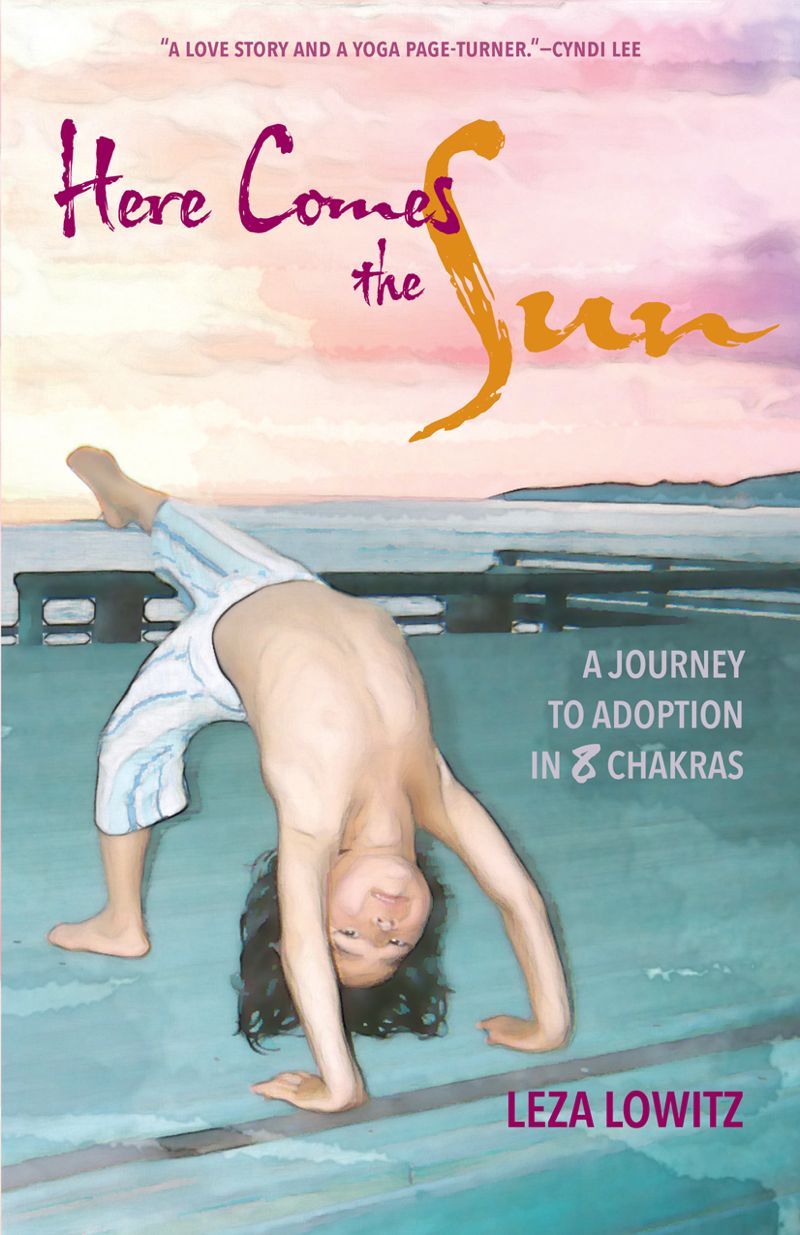
Longtime readers know about Year of Fire Dragons by Shannon Young and Here Comes the Sun by Leza Lowitz — two books I’ve already featured on the blog (see Shannon’s guest post and my recent interview with Leza). On top of these fantastic titles, the bundle includes The Good Shufu by Tracy Slater (note, I’ll be running an interview with Tracy here on the blog later on).

One winner will be randomly selected to receive ALL THREE books. Want to win? Scroll down this post to enter the giveaway!

The Good Shufu by Tracy Slater

The Good Shufu: Finding Love, Self, & Home on the Far Side of the World
By Tracy Slater

The Good Shufu is a true story of multicultural love, marriage, and mixups. When Tracy Slater, a highly independent American academic, falls head-over-heels in love with the least likely person in the world–a traditional Japanese salaryman who barely speaks English–she must choose between the existence she’d meticulously planned in the US and life as an illiterate housewife in Osaka. Rather than an ordinary travel memoir, this is a book about building a whole life in a language you don’t speak and a land you can barely navigate, and yet somehow finding a truer sense of home and meaning than ever before. A Summer ’15 Barnes & Noble Discover Great New Writers Selection, The Good Shufu is a celebration of the life least expected: messy, overwhelming, and deeply enriching in its complications.
Putnam/Penguin, June 30, 2015

Fire-Dragons_A

Year of Fire Dragons: An American Woman’s Story of Coming of Age in Hong Kong
By Shannon Young

In 2010, bookish 22-year-old Shannon follows her Eurasian boyfriend to Hong Kong, eager to forge a new love story in his hometown. She thinks their long distance romance is over, but a month later his company sends him to London. Shannon embarks on a wide-eyed newcomer’s journey through Hong Kong—alone. She teaches in a local school as the only foreigner, explores Asia with other young expats, and discovers a family history of her own in Hong Kong. The city enchants her, forcing her to question her plans. Soon, she must make a choice between her new life and the love that first brought her to Asia. Susan Blumberg-Kason, author of Good Chinese Wife, has called Year of Fire Dragons “a riveting coming of age story” and “a testament to the distance people will travel for love.”
Blacksmith Books, June 15, 2015

Here Comes the Sun by Leza Lowitz

Here Comes the Sun: A Journey to Adoption in 8 Chakras
By Leza Lowitz

At 30, Californian Leza Lowitz is single and traveling the world, which suits her just fine. Coming of age in Berkeley during the feminist revolution of the 1970s, she learned that marriage and family could wait. Or could they? When Leza moves to Japan and falls in love with a Japanese man, her heart opens in ways she never thought possible. But she’s still an outsider, and home is far away. Rather than struggle to fit in, she opens a yoga studio and makes a home for others. Then, at 44, Leza and her Japanese husband seek to adopt—in a country where bloodlines are paramount and family ties are almost feudal in their cultural importance. She travels to India to work on herself and back to California to deal with her past. Something is still not complete until she learns that when you give a little love to a child, you get the whole world in return. The author’s deep connection to yoga shows her that infertile does not mean inconceivable. By adapting and adopting, she transcends her struggles and embraces the joys of motherhood. “Here Comes the Sun proves that love is not bound by blood. I highly recommend it to anyone interested in that which connects us, holds us together, and makes us family.”—MC Yogi
Stonebridge Press, June 2015

—–

Enter the giveaway right now through the Rafflecopter widget below. (Folks in China, you must use a VPN to access the giveaway.)

You can also click on this link to enter the giveaway. It ends July 7, so don’t wait! And best of luck to everyone!

Guest Post: Fair to Say Asian Men Prefer White Women?

When it comes to dating, would Asian men rather be with white women? That’s the question the blogger at Big Asian Package (still one of my favorite new bloggers!) asks in his latest guest post for Speaking of China. (You might remember his previous post titled That 4th of July When I Met My White Girlfriend’s Racist Grandpa — and if you haven’t read it yet, take a look!)

Do you have something to say about AMWF relationships that would make for an awesome guest post? Check out the submit a post page to learn how to get your writing featured here.

—–

(Photograph by Williams + Hirakawa, via http://www.lamag.com)
(Photograph by Williams + Hirakawa)

I’ve wanted to write on this subject for a while in response to the seemingly common question of why Asian men are attracted to white women as marital partners or sexual partners. The question usually implies a disproportionate percentage of Asian men having a preference for white women in these departments.

This site is particularly appropriate for having that conversation, so I’m prompted to write about it now. My beliefs and impressions aren’t yet fully formed. Human attraction and emotion, these are fluid through time and in flux by the moment. So please bear with me as I make my way.

Racial preference for sex and marriage partners is a difficult area for calm discussion because it brings thoughts of our own deep seated fears to the surface. The arguments become less abstract and more personal. Some are less comfortable with this than others.

We continue to look at percentages of interracial pairings as a barometer of how our society is progressing. The OK Cupid Blog statistics opened a lot of eyes to the sexual degradation of black women and Asian men in society.

When I talk about partner preference, “preferring white women,” for example, I am talking about larger populations in this respect. Understanding interracial relationships as a barometer is not taking the position that the persons in an interracial relationship are more progressive. What I mean is that the presence of (healthy) interracial relationships is the sign of a progressive society. This little bit of logic eludes the “justified” racism heard commonly in this form: “I can say that about Asians, my girlfriend is Thai,” after saying something decidedly anti-Asian.

I have been an introspective person my whole life, and I try to live my life in harmony with my true beliefs. There have been times when I sought white women almost exclusively, excluded white women entirely, and there’s now – where the kind of closeness I seek casts the crudely fitting conceptions of any race aside.

I sought relationships with white women for a few reasons. First, practically, there were mostly white women around me 5:1, and almost no Asian population. Second, I was culturally more comfortable in white America (owing to a lot of factors). Finally, and to me most significantly, all the white women I dated were awesome. Open, bold, expressive, and fun. I met smart and attractive women, and I didn’t have any reason to stop.

There’s a bit of a sampling bias here though. Women who are more likely to cross social boundaries, I’m guessing, are more likely to have a great personality. For one, she is more likely to be intelligent, think for herself and is courageous or oblivious enough to cross strong social racial standards.

Then there was the period when I didn’t date white women. I was learning the racialized history of America through Howard Zinn, learning about the Third World Strikes for Ethnic Studies programs, reading poetry by Bao Phi, Ischle Park (and always Allen Ginsberg). I was the living embodiment of Kumar (of Harold & Kumar) when he says, “I’m sorry, I only date women of color.” I was at a point where I needed to show empathy and solidarity with women who struggled with their social sexual identity like I did. It was important. It still is.

Now, after a lot of learning, I understand that I don’t have to take it upon myself to be anything for society, to represent or stand for progressiveness or solidarity. Sex and intimacy, it’s for me and her – and that’s it. It’s our intimacy, our world of our making. And we’re leaving race out of it.

I’m an Asian American man in my 30s living in the U.S., Northern California. I was born and raised in the Midwest and in a predominantly white community that seemed to embrace every stereotype ever heard about Asian folks. I write about my sexual experiences and the politics of sex for straight Asian men. Don’t get a little bit of the truth, get the full package – http://bigasianpackage.wordpress.com.

—–
Speaking of China is always on the lookout for outstanding guest posts! If you have something you’d like us to feature, visit the submit a post page for details — and then submit yours today.

Man Seeks AMWF Couples in Beijing in Research for TEDx Speech

Wang Jia, an avid supporter of the AMWF community with a special project of his own, asked me to pass this on:

Wang Jia is married to a German lady and lives in Holland. He is interested in AMWF relationships. And he wants to make a wider impact through a TEDx speech on this topic. Originally from Beijing, he has spent last 14 years in Europe.

He would love to get in touch with anyone who has been in AMWF relationships or with a good understanding of cross-cultural/racial relationships. He is going to visit Beijing for a short holiday in September (likely 9th – 23rd) and possibly a chance to discuss f2f with anyone in Beijing.

Some of the questions he is still collecting information:
– There can be quite some differences between Western cultures, what’s the impact on AMWF?
– Any reliable statistics from Europe or China/Asia on AMWF vs AWWM?
– What’s the best advice for those who would like to form AMWF relationships but struggle a lot?

Email: [email protected] (you can use English, Chinese or German)

If you’re in Beijing and interested in talking with Wang Jia about AMWF relationships, contact him via e-mail.

Interview with Leza Lowitz on Her Memoir “Here Comes the Sun: A Journey to Adoption in 8 Chakras”

Here Comes the Sun by Leza Lowitz

China taught me how to love.

This might sound like a crazy thing to write, but it’s true on many levels. It was here in China that I first experienced what it was really like to love another person, to depend on them and know that they would be there for you. It was also in China that I learned to gradually love myself and, by extension, learned to open my heart to the possibility of writing incredibly personal stuff about my life. So yes, when I get right down to it, my journey here in this country has been about love.

That’s why I found Here Comes the Sun: A Journey to Adoption in 8 Chakras, a new memoir by Leza Lowitz, so touching.

Here Comes the Sun by Leza Lowitz

Leza arrived in Japan years ago in search of adventure, never expecting the country would teach her how to open her heart and soul up to new possibilities. Like marriage and yoga, most of all, motherhood itself. For Leza, who grew up watching her mother’s unhappy marriage collapse before her, it was hard to imagine any happiness from saying “I do” to someone or even having children. Yet living in Japan gradually helps her break through the barriers within herself to heal from the past and courageously move into a new future (a future that includes opening her own successful yoga studio in Tokyo). Leza invites you along for this emotional ride, sharing her story with honesty and lots of heart – a story that follows her marriage to a Japanese man named Shogo and, later, her quest to become a mother in Japan.

For anyone who has ever struggled or felt “stuck” in life, Here Comes the Sun stands as a reminder that you’re not alone – and that sometimes, miracles really can happen in the most delightfully unexpected ways.

I’m honored to introduce you to Leza Lowitz and Here Comes the Sun: A Journey to Adoption in 8 Chakras through this interview.

Leza Lowitz
Leza Lowitz

Here’s Leza Lowitz’s official bio from Stone Bridge Press:

Leza Lowitz lives in Tokyo with her husband, the writer Shogo Oketani, and their ten-year-old son. She has edited and published over seventeen books, many on Japan, and has run her own yoga studio in Tokyo for a decade. She travels throughout Japan and Asia to teach yoga and write. Her debut YA novel, Jet Black and the Ninja Wind, won the 2013–2014 Asian/Pacific American Award in Young Adult Literature.

You can learn more about Leza at her author website and read an excerpt from her memoir at Stone Bridge Press.

I asked Leza about everything from the book’s fascinating subtitle to her husband’s take on the story and also her thoughts on marriage and family.

—–

What inspired you to write this memoir?

Joan Didion, one of my favorite writers (whom I mention in the memoir), famously said, “We tell ourselves stories in order to live.” I wrote this book to write my way out of the struggle, to put things in perspective, and to let it go.

It’s been a long process. I’ve always kept a journal; writing has been my lifesaver. During my infertility struggles, I journaled. With the advent of the Internet and the explosion of blogs, I soon found many other women in the same boat. Their stories helped me find hope and gave me a community, which was also a lifesaver.

After we adopted our son, I published an excerpt from this memoir-in-progress in Shambhala Sun in 2010. The response was so positive that I decided to try to write a book. This was not as easy as it might sound–I was a big “starter,” and not a big “finisher.” Subsequent excerpts appeared in Best Buddhist Writing 2011, Yoga Journal, the New York Times Motherlode blog, and the popular blog Manifest-Station, which kept me on track. Women wrote to thank me for sharing my story, and to share their stories with me, and this gave me the courage to keep going.

Your book is subtitled “A Journey to Adoption in 8 Chakras.” Could you talk about why you chose this unique structure for your memoir?

I was introduced to meditation as a teenager, as I explain in this memoir, and mindfulness helped me deal with the violence around me. Yoga came into my life a decade later, and it has been a huge factor in helping me overcome many of the things that held me back in life. I became a yoga teacher in 2000, and opened my own yoga studio in Tokyo in 2004. I continued writing, marrying my spiritual quest with my literary one. I also moved abroad and married a Japanese man. My life was complicated, as I am sure the reader will understand.

I found that since outer life was so chaotic, I was drawn to poetic forms and structures like haiku and sonnets, which I felt could somehow help to “contain” the chaos. Content-wise, all of my books deal with notions of finding home. As an Expat, this issue was particularly important to me. We all long to belong somewhere.

So, chaos and structure=balance.

One of my first books, Yoga Poems: Lines to Unfold By deals with finding a home in one’s body and takes the Eight Limbs of Yoga as its structure. Yoga Heart: Lines on the Six Perfections, uses the Buddha’s six-tiered blueprint for happiness to chart the path to finding a home in the spirit. In Here Comes the Sun, I’ve taken the chakra system as a metaphor and roadmap for personal growth and transformation, charting the movement from “me” to “we.”

In the yogic system, there are seven major wheels of energy–or chakras–in the human body. The eighth chakra is believed to be our auric field. Each chakra has a particular function. Put simply, when we practice yoga, we awaken energy at the base of the spine, which rises up the central channel and unblocks the chakras along the way. Ultimately, female and male energy meet, and we become awakened, unified, whole.

Some chapters of the memoir deal directly with a particular chakra and the yogic practices that helped to balance it. In others, the work is more symbolic.

Throughout the process of becoming a mother, I had to ask myself questions many mothers never consider, like why did I want to be a mother?  This question led me on a pilgrimage from the U.S. to Japan and to India. It led me to yoga, to Buddhism, and back to my birth religion of Judaism. Across inner and outer oceans, the chakras helped me stitch the crazy quilt of life into a pattern that made sense. They helped me to find myself, and ultimately, to find my family.

You explore many painful experiences in your story — from witnessing the breakdown of your parents’ marriage as a child to struggling with infertility. How did it feel to revisit these painful memories in writing the book?

Life is full of pain, and it’s full of joy, and the two often inform each other. If we don’t write authentically from our own deepest experience, the writing won’t have power. So, while it was painful to revist some of those past experiences, writing helped me to overcome them and let them go. Of all the books I’ve written, Here Comes The Sun was definitely the most difficult to write, being so personal. But going through the pain was necessary to be able to come out to joy on the other side. Here Comes The Sun is ultimately about forgiveness, about finding a home in each other and in the world, making choices and owning them. It’s about loving our deeply flawed selves, and loving the lives we have–and make.

Your husband Shogo is one of the most important characters in your memoir. How does he feel about your memoir and his role in helping to open up your heart?

If you read the memoir, you can see that Shogo is very much a person who doesn’t waste energy on things that aren’t worth it. I’ve learned a lot from him. He has always been completely supportive of my experiences, and was totally supportive of me writing this memoir. In fact I think he wanted me to write it, to let the past go and move on! He’s the reason I am who I am today, because he just quietly gets the work done from behind the scenes. He’s incredibly wise, disciplined, and patient. I want to be like him in my next life.

You detail your experience with international adoption in your memoir, something that turns out to be challenging for you and your husband. What would you say to readers out there considering international adoption?

Since we live abroad, we had no choice but to pursue an international adoption. Actually, since we adopted in Japan and live in Japan, it was not really an “international adoption.” But, to anyone considering adoption, I would say do your research, talk to others who have done it, and make sure you are 100% in it for the long haul. Family is family.

So, if you are contemplating adoption, consider what the psychic Dietmar says in my book: “Think of so many women who give birth but have no real heart connection to their children. You see, it’s not always about giving birth from your body.”

Then he says, ”…this child is not going to come from your womb. But it will come from your heart. Which is more important?”   The answer is clear. Keep cracking open your heart.

The idea of marriage and family — and whether it can wait — is one of the themes in your memoir. After everything that you’ve experienced, how do you feel about it now?

I think everyone has their own path, their own journey. This has been mine. All the struggles have made the triumphs all the more sweet, and to be honest, I wouldn’t change a thing about it. As the saying goes, “Smooth seas don’t make skillful sailors.” I feel very blessed to have learned the lessons I needed to learn, and to have the beautiful family I now have.

What do you hope readers take away from your story?

If you have a dream, listen to it. The dream is yours for a reason. Do whatever it takes to make it happen. Start now. Stop at nothing to make it come true. And then help others make their dreams come true in whatever way you can.

—–

Thanks so much to Leza Lowitz for doing this interview about Here Comes the Sun: A Journey to Adoption in 8 Chakras. You can learn more about Leza at her author website and read an excerpt from her memoir at Stone Bridge Press. Here Comes the Sun: A Journey to Adoption in 8 Chakras is available on Amazon.com, where your purchase helps support this blog.
Guest Post: That 4th of July When I Met My White Girlfriend’s Racist Grandpa

A few weeks ago, I sent out a call for guest post submissions from Asian men. Well, my first guest poster who responded also happens to be one of my new favorite bloggers — Big Asian Package (Hung Asian Man Talks Sex Politics – Straight Up). So excited to run this post!

Do you have a great story or experience you’d love to share here at Speaking of China? Check out the submit a post page to learn how to get your writing published here!

—–

The blogger behind Big Asian Package (https://bigasianpackage.files.wordpress.com)
The blogger behind Big Asian Package (https://bigasianpackage.wordpress.com)

I’m an Asian American man. I started writing my thoughts to contribute my point of view to the social environment that injures me through stereotypes and racism. It hurts Asian men, our friends and families, and it hurts our partners. The predominant public commentary is critical of me and everyone who looks like me; they belittle me (why, even?). So why wasn’t I hearing from more Asian men?

I think I felt tempted too… it’s social withdrawal. Put it this way, how rational would it be to participate in a social system that starts you at the bottom, keeps you at the bottom, and laughs the whole time doing it? I think Asian men have seen enough to know that they’d be painted into another angry minority caricature (“angry black man,” “bitch feminist,” &c.)  I suspect this is a major reason for the lack of Asian male voices.  In the end, the racism in the echo chamber of the Internet proliferated, possibly exceeding overt anti-Asian sentiment displayed publicly. It’s too much already.

In the context of the Asian Male White Female (AMWF) relationship, something unique has emerged. As AMWF couples encountered unique difficulties, ones stemming from prejudice, the women started speaking out in large numbers. They told their stories, shared them, and built a community of support and celebration around one thing, and it wasn’t Asian men, it was love. It was being allowed to love in the way they wanted, to love whomever they wanted… however hot and sexy this Asian man might be!

This experience is one of the events that led to my unease when I’m invited to a family event with a… well, more conservative family. They’re tricky places to encounter hostility because around folks I know, family, I’m usually relaxed, not on guard, and trying to have a good time.

(Photo from the US National Archives via Flickr.com)

It couldn’t have been a more poetic holiday for this memory. It was Independence Day in Ohio, the Fourth of July, and my girlfriend, who was white (Czech, Polish, and German heritage) brought me to her family’s barbeque and picnic in their newly completed solarium. There was potato salad, macaroni salad, and a number of other misleadingly named things that cause heart disease by the mountainous bowlful. The Stars and Stripes were gratuitously displayed. Kids risked fingers with low-grade explosives. It was a good time. The centerpiece to the whole affair was the barbeque which they managed to overload with some forbidden pyramid of smoking meats. I used to work at a grill, and even I thought that was an obscene amount of meat.

Well, I’m a vegetarian (yes, vegetarian grill cook, I know) so when I was offered some, I politely turned down my sector of the pyramid. Whoops. People looked over at us.

I learned that, at least in the 90s, this was an American social faux pas on par with sneezing in someone’s face. There was murmuring. I heard an aunt exclaim, “How?…What?…”

I tried to redirect and talk about how good all the salads were, but this was like trying to wipe the sneeze off of their collective faces with my bare hands. I could feel people’s eyes still on me. It was too late. I had declined the centerpiece of the American Independence celebration.

“I have to go to the bathroom,” I said. I put my red, white, and blue plate down on a small table and strode over to the bathroom, shut the door, and breathed again. I’m a teenage boy so it’s not like I have a whole lot of composure to begin with, but I muster together what I can, and go back outside. People had resumed doing whatever they were doing and I wasn’t noticed. I picked up my plate, ate a few bites of the potato salad, and went back to the tarp covered table for more.

Potato salad (Photo by Christina via Flickr.com)

“Are you happy about those secrets?” said a voice from beside me.

“What? I’m sorry?” I said. It was my girlfriend’s grandpa.

“The nuclear secrets. I know you came here to steal from us,” said her grandpa,

“I go to school…” I say, protesting.

“You’re Chinese, I know you are,” he says quietly, triumphantly, like he’s got me checkmated.

“Yes,” I say, now seriously confused, not quite believing what I’m hearing.

And here’s where having a lady with a sharp social sense comes in handy. Because where I might turn to look at a guy friend and receive some eyeshot that says, yeah, pound that racist, I got an arm around mine, a brisk walk out to the street, and a fresh piece of cake for me to eat as she drove us home. What a sweetheart.

We didn’t talk about Grandpa Bigotnasty much after that. She apologized for him; I told her not to, and we just went home. I never saw Grandpa B. again either. My girlfriend was mortified by her family and understood I wouldn’t go anyplace her grandpa would be. I guess you could call this an incident of social rejection. I think I like the term social withdrawal better because it implies that it was more of my choice. It doesn’t really matter in in the end. I’m not there at her family events anymore because we broke up.

If I’m in an interracial relationship now, I sometimes try to talk to my partner about this anxiety over family gatherings. Sometimes I keep it to myself though…and hope that next time around, there won’t be a Grandpa Bigotnasty at the table.

I’m an Asian American man in my 30s living in the U.S., Northern California. I was born and raised in the Midwest and in a predominantly white community that seemed to embrace every stereotype ever heard about Asian folks. I write about my sexual experiences and the politics of sex for straight Asian men. Don’t get a little bit of the truth, get the full package – http://bigasianpackage.wordpress.com.

—–

Speaking of China is always on the lookout for outstanding guest posts! If you have something you’d like us to feature, visit the submit a post page for details — and then submit yours today.