Chapter 57: Customers Are Our Lovers

As I began work at the global media company in Shanghai, I discovered that sometimes, the customer is not always right -- and definitely, is not your lover.
As I began work at the global media company in Shanghai, I discovered that sometimes, the customer is not always right -- and definitely, is not your lover. (image from EEfocus.com)

Silvery electronic components, in a swirling tornado shape. It was an unnatural disaster, against an electric blue background, that actually hoped to spin a tale — a tale of a Chinese manufacturer of electronic components. But the details were lost in the storm of objects, so instead of being informed or interested, I fought to hold back laughter.

It was hard not to laugh in the presence of Steve, a jovial thirtysomething American with a slight paunch, five-o-clock shadow and a shock of short wavy hair that was perhaps the only reminder of his nomadic Dead Head years. Steve had since gone corporate in joining the company, after years of work in public relations and copywriting. He was the Senior Copywriter for the ad production team I just joined in Shanghai, but even the training session he gave me this one morning, on how to write good ads for Chinese advertisers, bordered on comedic monologue — as we looked through the old magazine ads and the handbook, discussing how (or in the case of the vortex of components, how not) to make good ads. Continue reading “Chapter 57: Customers Are Our Lovers”

Chapter 56: Missing the Flavor of Hangzhou in Shanghai

Shanghai Oil Noodles
Even as I found so much to love in Shanghai, I still yearned for the flavors of the Hangzhou I once knew. (photo by HanWei, courtesy of Wikimedia Commons)

I moved to a district in Shanghai called Changning, which means “long peace.” After losing my job and even overstaying my visa in Hangzhou, living in Changning was like finding peace in my life. I had a promising new job as a copywriter in a multinational company named one of the Forbes’ 200 best small companies in the world. I resided in a quiet community, with evergreens, bushes, manicured lawns, weathered four-story, concrete apartment buildings and plenty of sunshine. Every morning, a fleet of modern — and mostly empty — air-conditioned buses could taxi me all the way to my new downtown office.

Most of all, I had John, my Chinese boyfriend, with me, everyday. And perhaps that was the most important difference between Hangzhou and Shanghai — now John was no longer an occasional weekend visitor, but, by unspoken agreement, my live-in partner. He turned Shanghai into something deceptively familiar, as if my new home was simply a Shanghai version of the Hangzhou neighborhood I once knew.

But this was a new neighborhood and a new city — with a new culinary landscape we didn’t understand. Continue reading “Chapter 56: Missing the Flavor of Hangzhou in Shanghai”

Chapter 55: New Position, New View of Shanghai

Shanghai Pudong Skyline
My view of Shanghai changed completely when I became gainfully employed as a copywriter, in a downtown office with a view of its own. (photo by Jens Schott Knudsen, courtesy of Wikipedia)

From the 12th floor of a certain office tower about a mile from the Bund, you can see some of the most quintessential views of Shanghai. Shanghai’s futuristic Pudong skyline — from the Oriental Pearl Tower’s shining space needle to the Jin Mao Tower’s steel pagoda — rises just above the buildings before us, out the East-facing windows. From the West-facing windows, the manicured greenery of People’s Square is bordered on one end by the ding-shaped Shanghai Museum, and, on the other, by a melange of fin de siecle and contemporary archecture on Nanjing Road. And just to the South is the Yan’an Road elevated highway and tunnel, restlessly pumping a neverending stream of traffic East and West, from Pudong to Puxi and Puxi to Pudong.

The view I cared about the most, however, was in the meeting room, where I had an interview for a copywriting position — an interview I had imagined for over a week, and spent hours preparing for, even down to my tangzhuang jacket, skirt and upswept hairdo. Continue reading “Chapter 55: New Position, New View of Shanghai”

Chapter 54: I’m Leaving Hangzhou on a Microvan

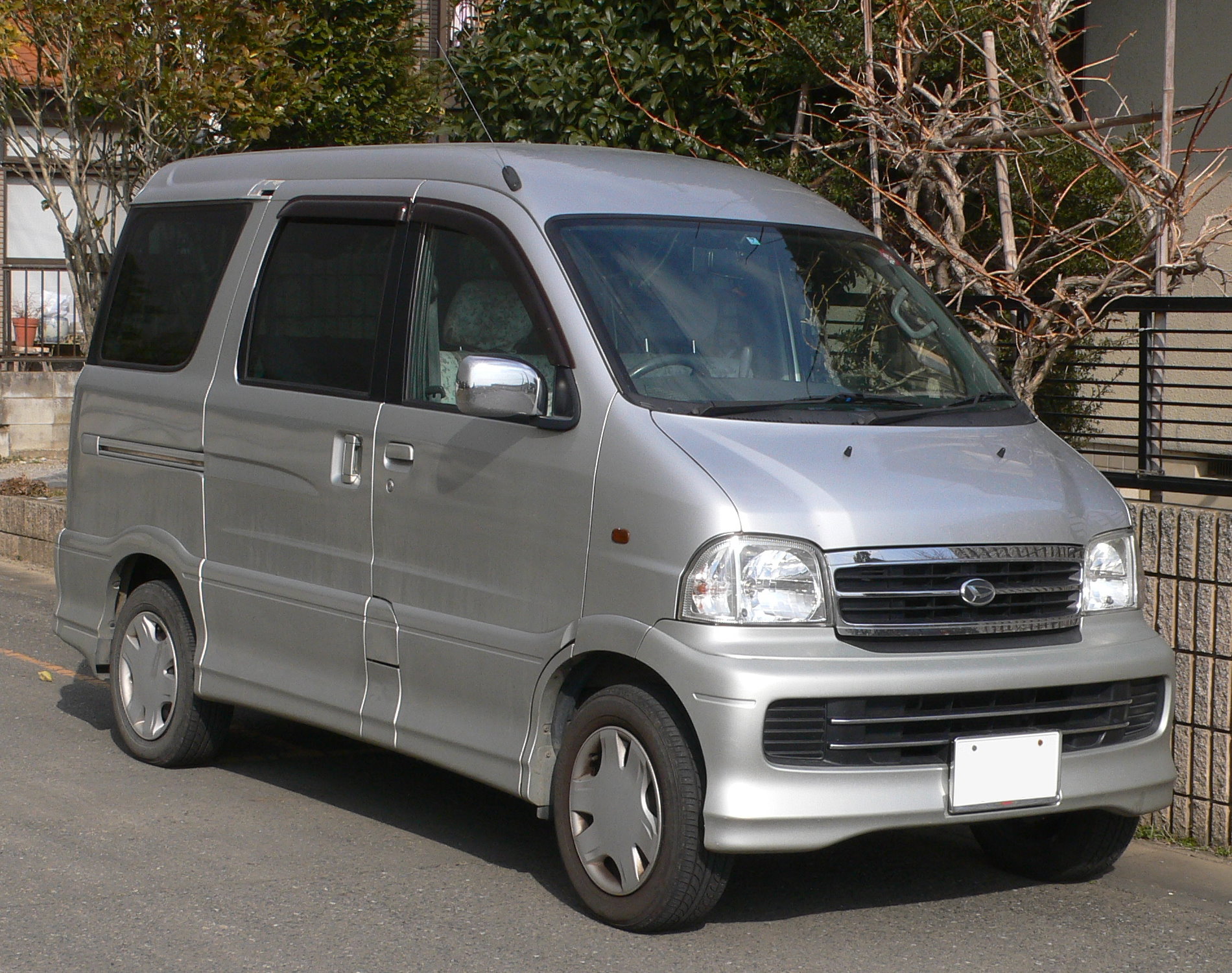
Microvan
As I moved to Shanghai in a microvan, I left behind Hangzhou -- and the memories -- and moved forward with John's support. (image from Mytho88, courtesy of Wikipedia)

I moved many times in my life. But I never moved in China — in a microvan — until March 1, 2003.

The gray microvan belonged to John’s cousin, a driver for an express mail service based in Shanghai. According to John, many people with a high school education — or less — left Tonglu to get into the express mail business. Tonglu natives now ran many of the smaller express mail services in the Yangtze River Delta area, including Shanghai. I imagine one Tonglu man left and made his fortune in express mail, bringing his contacts with him — and later inspiring copycat entrepreneurs. But, clearly, the model was working for this cousin. He had only a high school education, but he actually owned a car — a car that would help me move my home to Shanghai.

With only a job interview, no firm offers and a temporary visa expiring April 15, I still flirted with uncertainty in my life. But I had a lot of strength behind it all, because of John, my Chinese boyfriend. John found us an apartment, and put down a deposit. John asked his cousin to move me to Shanghai. And, through it all, John calmed my fears, reminding me “we were in the same company.” Continue reading “Chapter 54: I’m Leaving Hangzhou on a Microvan”

Chapter 53: Truth, Lies and Actual China Employment

A lie may have brought me into Shanghai, but it was the truth that would make me gainfully employed in China.

My Chinese friend Jane recommended me to Nick Jin, the CEO of a Shanghai Internet company, saying I once worked for Alibaba, and studied Mandarin at Zhejiang University. I finally had a contact in Shanghai — but what he knew about me was a lie.

Jane, a sprightly girl with a boy cut known for unconventional clothing and church-chime ringtones on her cell phone, had her reasons. “I mentioned Zhejiang University to prove you can speak good Chinese.” And Alibaba? “He really hates the Chinese Internet company you worked for.” Nick despised the company because of his experience there as a manager. Mr. CEO’s stinginess — he actually decreased Nick’s stock shares, and later, absorbed them all when Nick left — drove him to form a new company in Shanghai.

Even if we shared a mutual dislike of Mr. CEO, Nick didn’t know the truth about me. How could I contact him now? Continue reading “Chapter 53: Truth, Lies and Actual China Employment”

Chapter 52: Bad Luck or Blessings?

The Taoist yin-yang symbol
As I grappled with the uncertainty of finding a new job, and wondering where to live in China, I began to realize that my bad luck just might be a blessing after all.

There once was a Taoist man, named Saiweng, who lost his horse. While his neighbors thought it a great misfortune, Saiweng’s father said “I don’t know.” Later, the horse returned with a herd of the finest wild horses. The neighbors called this a blessing, but Saiweng’s father said “I don’t know.” One day, Saiweng decided to ride one of the new horses, but he fell off and broke his leg. The neighbors declared this tragic, and Saiweng’s father still said, yet again, “I don’t know.” Later, their region declared war, because of the invasion of barbarian tribes. While all able-bodied men had to take up arms and fight, Saiweng, with his crippled leg, could stay at home.

As the days in February 2003 passed, I slowly lost my hopes for staying in Hangzhou. Continue reading “Chapter 52: Bad Luck or Blessings?”

Chapter 51: My Guanxi, My Interview Nightmare

Photo of a suit and tie
Has your China guanxi (or contacts) ever surprised you? A new contact of mine set up a job interview in China like nothing I'd ever known.

In China, when you need to find a job, there’s no better way than through your guanxi, or relationships.

I spent hours calling my friends and contacts, announcing my jobless status, and asking them to look for leads. Even John consulted his own friends. But when you end the call, send that e-mail, or finish that text message, the rest depends on someone else — no matter how desperately you want results. And sometimes, the results you want aren’t the results you get.

I met David Dong in the gym, the week after I’d returned to Hangzhou, and mentioned, in passing, I was looking for a new job. While Dong, a CEO of a small company, offered his assistance enthusiastically, in near-native English, I didn’t expect much from a new contact.

Days later, my newly minted guanxi surprised me by calling in the morning with an opportunity. “My old classmate owns a foreign trade company, and he is interested in meeting you. Would you have time?” Continue reading “Chapter 51: My Guanxi, My Interview Nightmare”

Chapter 50: The Gumption to Stay in China

Western woman on a bridge in China
What keeps you abroad when life falls apart? When I faced uncertainty after losing my job, I remembered the things that kept me grounded in China.

How do you have the gumption to stay in China?

The question — posed by Heidi, one of my high school classmates back in the US — hit me hard. John, my Chinese boyfriend, and I had just returned from spending Chinese New Year with his family, and once again I faced the stir-fried mess my life was.

I’d lost my job at the Chinese Internet Company in January 2003. After some hard negotiations, I obtained a visa that would expire April 15, 2003. I had to move out of my apartment — originally provided by the company — at the end of February. And, with John in graduate school in Shanghai, I wondered if staying in Hangzhou was such a good idea.

But it’s one thing to debate cities, and another to debate countries.

Just as I prepared for my first job interview after Chinese New Year — with Alibaba — my cell phone rang. It was the CEO of a US company I had flirted with last summer for possible employment, but later declined. Continue reading “Chapter 50: The Gumption to Stay in China”

Chapter 49: Winter Showers and Different Living Standards

John warming himself in the living room of his family home in China's countryside
Living at John's home was different than what I'd known -- from showers to even the living room. But as I pondered the excesses of American life, I wondered -- whose standard is right?

Sitting on a stool in the bathroom, with warm water in a basin poured over my body, is the closest thing I’d ever get to a shower in John’s family home.

I’d been there for two days, and soon yearned for the familiar after-shower freshness — but didn’t know how to get it. “I desperately need a shower,” I confessed to John, my Chinese boyfriend. Not long after, he escorted me to the bathroom with a large, plastic red basin, filled with warm water, and a wooden, toddler-sized homemade stool. He placed the stool on the floor, where I crouched carefully to sit after removing my clothes. He ladled the water over me to wash away shampoo and soap — a fleeting burst of warmth to counteract the near-freezing air that surrounded us, even in the bathroom. Taking a shower never seemed so risky, and impractical. Continue reading “Chapter 49: Winter Showers and Different Living Standards”

Chapter 48: The Pressures of an Unmarried Chinese man in the Countryside

Chinese man holding a little baby
I wondered why Er Ge, John's second oldest brother, was so painfully quiet. Learning his story was like a window into the pressures of young unmarried Chinese in the countryside.

John’s second oldest brother, Er Ge, was like the wallflower of Chinese New Year at the family home in China’s countryside. He usually lingered in the corners with a slight hunchback and frightened, delicate eyes, like a fragile little sparrow hoping to escape the marauding glance of humans. There was a quiet, impenetrable sadness that clouded his personality, and somehow, I couldn’t get past a Ni Hao to really know the man within.

Only 26 years old, he was the only brother who still lived at the family home. He didn’t care much for study, only finishing Junior High and then going on to become an itinerant worker in the countryside, doing odd jobs for relatives and friends. But none of this seemed to explain why Er Ge withdrew from the world.

So I asked John one evening, as we sat around the hot coals and watched Chinese television. Continue reading “Chapter 48: The Pressures of an Unmarried Chinese man in the Countryside”