How My Husband Embraced My Wedding Ring Tradition

Photo of a bride with a bouquet and her wedding ring
(photo by Crystal Jensen)

Ah, wedding rings. Whenever I see an ad for them on TV, I immediately shout out “Hūnjiè,” (婚戒), the Chinese word for this most intimate of all jewelry, and then shoot my husband a grin. He usually laughs and nods at what’s become our husband-wife running joke — that I still have no wedding ring, and John still “owes” me.

This isn’t some post-wedding inner Bridezilla of mine coming out, as if I enjoyed putting my husband on a guilt trip for all the ways our wedding never lived up to expectations. No, as weddings go, I’m pretty happy over how we tied the knot and wouldn’t change a thing. I’ve never even pressured him about buying things; if anything, I’m the one usually clamping down on our family budget, and he’s the one encouraging me to “reward myself” with something I really wanted. Still, behind this running joke of ours remains a real promise — that, someday, he hopes to buy me the perfect wedding ring. Continue reading “How My Husband Embraced My Wedding Ring Tradition”

Ask the Yangxifu: Dealing With “How Come You Aren’t Married Yet?”

A blurred photo of a bride and groom on the grass with a bouquet in clear view.
(photo by Fernando Weberich)

Single Overseas Chinese Guy asks:

Although this may not affect you yourself. It affects a whole load of us overseas born Chinese types. Simply how on earth do we respond to the constant questions of how come you aren’t married yet?

Parents go to Chinese weddings, and fiery arguments ensue about getting married.

Fake BFs/GFs are old utilised tricks. But over time they cease to work and to be honest it feels bad tricking parents like this.

In our first generation barely anybody is married these days. But there seems an increasing desperation in the voices of parents wanting you to get married. As if it is a magic bullet or something. They just simply do not seem to realise that getting married isn’t the be all and end all of things. Yet their old fashioned values don’t seem to tie in with single independent people! Continue reading “Ask the Yangxifu: Dealing With “How Come You Aren’t Married Yet?””

Ask the Yangxifu: Big Fat Chinese Weddings Revisited

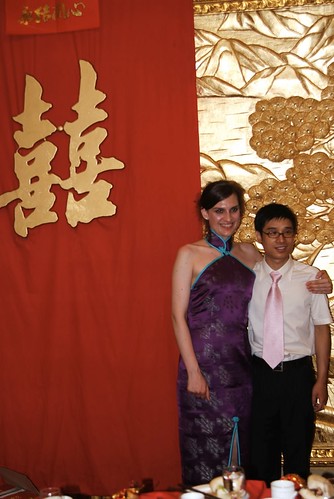
John and I standing before the "Double Happiness" banner at our wedding
(John and I at our wedding in China)

asks:

I’m 27 and I was born and raised in Europe but my fiancee is Shanghainese so we’re gonna have one of those Chinese super expensive weddings in a 5 stars hotel in Shanghai and I really dont know what to do. I really do not like the Chinese wedding style made up of performances, games and speech. Besides relatives, I invited around 20-30 friends to the wedding here and I’m gettin more and more nervous about what is going to happen during the feast. We have an MC that will entertain the guests and lead the night but both with him and the wedding planner I had a really hard time to plan everything and trying to make as nice and simple as possible but unfortunately there are some things such as exchange of vows and rings on the stage in front of everybody and organize some games for the guests, apparently Chinese people really appreciate and enjoy them. You went through this already so can you or anyone else who went through this and can give me some advises? Continue reading “Ask the Yangxifu: Big Fat Chinese Weddings Revisited”

All You Need Is Destiny

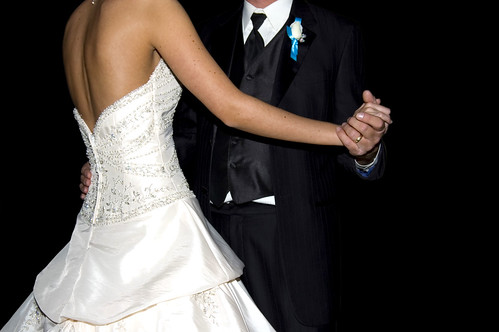
A bride and groom holding hands and dancing
In marriage, is love really destiny? (photo by Scott Snyder)

“I think love is destiny.” My Chinese sister-in-law Wenjuan blushed as said these words, her own definition of love in marriage.

But even though I understood her every word, I still didn’t get it. “What do you mean by that?”

She glanced down at the table and then met my eyes with an almost virginal shyness, as if she were yet to understand everything about love. “If a couple has destiny, then they have love. Love is a part of destiny.”

Love is destiny. I thought about her words long after we left the table — especially when I pondered something my Chinese father-in-law once said at my wedding ceremony:

There’s always someone out there who really understands you, they are destined to cross a thousand miles to meet. The same idea will bring two people together.

He never spoke of love between John and I; just that we had this destiny that bound us forever in marriage. I heard the same when I attended Lao Da’s wedding earlier this summer. When the bride’s mother praised their union, she called it “destiny” over and over again, never once coming out and using the big “L” word.

In China, how many times had I heard “destiny” invoked in the success or failure of a relationship? Before Lao Da found a wife, he used to shrug off the dates gone wrong and the girlfriends that never happened with this phrase: “We didn’t have a destiny to be together.” At the same time, so many Chinese friends praised the “destiny” between my husband and I — to the point that even I embraced “destiny” as the reason he and I came together.

If love really is destiny, then maybe that Beatles song could go another way — “all you need is destiny.” 😉

Have you ever heard “love is destiny”? What do you think? 

My Chinese Husband’s Cousin, Looking For a Western Wife to Brag About

Wang, my Chinese husband’s cousin, seemed to have it all. A lucrative job as a real estate developer. Two new BMWs. Expensive suits. Nothing about him suggested his countryside roots — the same mountain village as my husband, where people still planted their own rice paddies, used wood-burning stoves, and had free-range chickens scurrying in and out of their houses.

But when he volunteered his silver BMW sedan as our wedding car in 2007 (of course, he couldn’t help but boast “oh, if you had mentioned this sooner, I could have prepared my bigger and better BMW.”), he discovered he was missing the ultimate accessory of all — a Western wife.

“He told me he wanted to find a yangxifu,” my husband recalled. “He asked if we could introduce him to some Western women.”

But we didn’t. Sure, we didn’t know any single Western women in China, since by then we lived in the US for nearly two years. But even if we did, introducing them to Wang had the kind of cheap, mail-order-bride feel to it that no friend would get their friend into. After all, he didn’t really care who she was, so long as she was foreign.

It’s just like I read over a year ago in a study about What Western Women Think of Chinese Men:

Those [Chinese] men with Western girlfriends or wives will brag about them, as if these women were a BMW.

Wang already had two BMWs to show off, but no such Western wife — never thinking, of course, that a wife, any wife, should never become a man’s bling.

“People who think this way have no suzhi,” my husband said as he frowned, using the word that Chinese often use to refer to the quality of people — which, in this case, was not much at all. “They turn their wives into objects, and  try to show they are better than others in such a low way.”

Still, Wang could have gone much lower, as we learned two years ago while visiting the Kaifeng Night Market. After we bought almond tea from a stall run by lanky twentysomething wearing a white kufi — the hat worn by the Muslim Hui minority in China — he nudged my husband. “Hey, do you think you could get me a foreign wife? I could buy her a house and a car.”

John grinned as he shook his head. “It’s not that simple. Western women have different expectations.”

Then the lanky guy leaned over and whispered something in my husband’s ear — which John told me about later. “He said his penis is very strong.”

What do you think about this?
The Four Big Items For My Chinese In-laws’ Marriage

Bicycle, sewing machine, radio and wristwatch, the four big items or si dajian
When my Chinese inlaws married in 1971, the marriage must-haves were a bicycle, sewing machine, radio and wristwatch. (image from www.soufun.com)

My Chinese in-laws married in 1971. Back then, marriage wasn’t house, car and money — it was bicycle, sewing machine, wristwatch and radio, the si dajian (四大件, four big items).

My Chinese father-in-law grinned as he recalled that time. “These were the kinds of things that gave you ‘face’ in your wedding. They were considered hard for people to afford then. Not everyone had them. If you couldn’t afford them, you would even borrow money to get them! Nowadays, it’s silly to imagine this. Everyone wants a home and a car and money for their wedding.”

So I asked if he borrowed money to buy his si dajian. “Eh! I had to borrow from another teacher at my school. It took me two to three years just to pay him back. The sewing machine cost 145 RMB or so. The bicycle 100 or so. The wristwatch 50 RMB, radio maybe 20, maybe 50. But back then I only earned 20 RMB a month! It look me more than half a year just to get one sewing machine!”

My Chinese mother-in-law, lounging on a cot in the corner of our dining room as she played with sister-in-law’s baby, bust out in laughter the entire time he told me all of this.

Which makes me wonder — 40 years later, will we be laughing in the corner over China’s modern marriage must-haves, the house, car and money?

What do you think?

My Chinese Inlaws’ Not-So-Free Marriage

Clouds against a blue sky forming a heart
My Chinese father-in-law insisted that the new China included free choice in marriages. But it seemed like an illusion when he admitted he didn't freely choose his bride. (photo by miguel ugalde)

The other day, while talking about weddings in China with my Chinese father-in-law, we happened on the idea of parental involvement (or should I say, pressure) since the founding of the People’s Republic of China.

“It seems to me that parents still have a say in marriages today,” I said.

My Chinese father-in-law shook his head. “No, no, that’s the past,” he disagreed, referring to how Chinese parents used to arrange marriages for their children. “Now people have the freedom to marry whoever they want.”

How I longed to shake him and say, what about what you said about John and I? My Chinese father-in-law was the one who cautioned John against having a foreign girlfriend, telling him he could be friends with — but not date — me.

But I bit my tongue. “What I mean is, Chinese parents have ideas about their children’s marriages. The parent will tell the child if they like the person or not. The child has free choice, but may want to be filial and not go against their parents.”

My father-in-law’s eyes widened and he grinned. “Ah, yes, yes!” Then came a surprising confession. “That’s my marriage.” Continue reading “My Chinese Inlaws’ Not-So-Free Marriage”

Ruzhui: When Chinese Men “Marry Into” Wife’s Family

A man falling upside down
Ruzhui -- where Chinese men "marry into" the wife's family and have the child take on her name -- turns Chinese marriage tradition upside down. (photo by Charlie Balch)

Before I even entered his apartment with John, my Chinese husband, I knew O’Neil – a close Chinese friend of John’s from middle school – had marital distress. But I never imagined that – among other things — it would have anything to do with a struggle over the next generation’s name. “At first, her parents demanded ruzhui,” he shared late Friday, May 27, as John and I sat side by side on a sofa in his apartment for one on Hangzhou’s West Side.

I raised an eyebrow at this strange Chinese word. “What’s ruzhui?

“You marry into her family, and your children have her name,” explained O’Neil. Unlike O’Neil, who came from the countryside, his wife was the only child of a proud Hangzhou family – a family that didn’t want their name extinguished in the next generation, just because they happened to have a daughter. It turned Chinese tradition — the woman marrying into her husband’s family and giving her child his name — upside down.

O’Neil documented far greater transgressions in their marriage (the parents bought them a car, but only gave their daughter a key; on an apartment deed, where they were required by law to write their son-in-law’s name and give him a share in the real estate, the parents gave him only one percent of the value). If anything, the suggestion to ruzhui was almost understandable in a Chinese sense – except that the parents hadn’t discussed it with him before the marriage. Continue reading “Ruzhui: When Chinese Men “Marry Into” Wife’s Family”

2011 Blogs by Western Women who Love Chinese Men

John my Chinese husband and I after registering our marriage in China
My 2011 update of all the blogs by Western women who love Chinese men. 

March 8 — International Women’s Day — is just around the corner, so it’s time for my homage to other fabulous Western women out in the blogosphere who love Chinese men.

If this update is any measure, the state of the community — that is, the community of Western women who love Chinese men — is strong and growing. Last year, I featured only 16 blogs. This year, it’s over 30. Either there are more of you out there speaking up on the internet, or I’m just getting better at finding you. 😉

So, in alphabetical order according to title, here they are:

Aimee Barnes. She’s more known for thoughtful, probing interviews with China’s up-and-coming movers and shakers — but she once loved a man from Shandong (and, I hope, hasn’t given up writing about it). I’ve come to appreciate her voice even more after reading this post about how she went against expectations (she had a learning disability) to master Mandarin and succeed in college and graduate school. Aimee is now living in Singapore with her Asian husband. Continue reading “2011 Blogs by Western Women who Love Chinese Men”