‘Hutong Heartthrobs’ Memoir Explores Unlikely Romance in Beijing

Sparks fly when a young woman with a Ph.D. in literature has a chance encounter on the Beijing subway with a Beijing migrant who dreams of becoming an actor.

What reads like a romance novel blurb is actually reality for American Tammy Treichel, the author of the new memoir “Hutong Heartthrobs.”
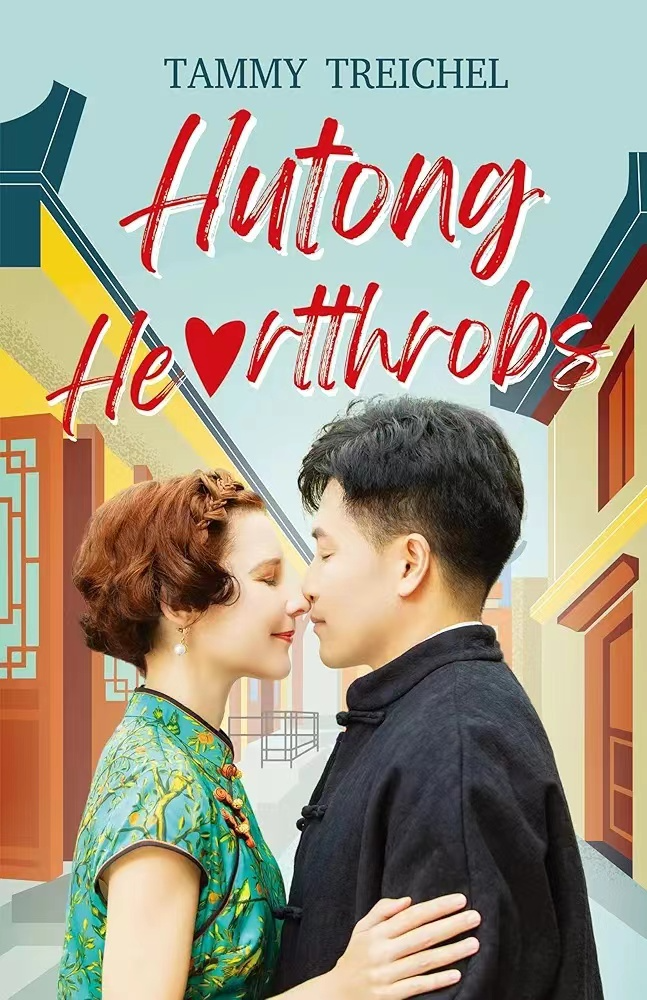
Set primarily in one of Beijing’s iconic residences, the book charts the course of her unlikely romance as well as her beau’s rise from obscurity to becoming a stand-in for Jackie Chan. Anyone in a cross-cultural relationship, especially with someone Chinese, will relate to the many differences, cultural and otherwise, that emerge between the couple throughout the narrative. It also provides a fascinating inside look into breaking into the competitive world of acting in Beijing and what it takes to survive.

It’s my pleasure to introduce you to “Hutong Heartthrobs” through this interview with Tammy. Here’s Tammy’s bio from Goodreads:

Tammy (Tamara) Arehart Treichel is an American with a passion for two things: China and writing. After graduating with an award-winning PhD in English on Herman Melville’s Moby Dick, she worked as a freelancer for various China-related publications. Born in Washington DC, she found a second lease on life and true love in China, where she has lived for over a decade and is working as an English editor at a local news agency in Beijing. Tammy greatly enjoys exploring all things China with her Chinese man, a former security guard-turned-actor named Jackie. They live in an old hutong (alleyway) house in an historic part of Beijing together with three rescue cats and numerous house lizards.

You can buy “Hutong Heartthrobs” online — your purchases help support this blog!


What inspired you to write this book?

Writing is in my blood I suppose, I have been writing and creating characters since I was a child (short stories, mawkish poetry, plays, for fun). My mother is a science writer and we enjoy “talking shop.” I like to tell people that my mother focuses “on the human brain” in her books and articles, whereas I personally am more interested in the “complexities of the human heart.” I suppose we complement each other well!

I did some research and was unable to find directly competitive titles to what would eventually become my memoir, “Hutong Heartthrobs.” When I approached my publisher, Graham Earnshaw, he said he thought the idea of a book that encompasses a Chinese and “Western” point of view, namely that of my Chinese husband Jackie and myself, an American woman, in the framework of a love story could be of value to readers.

How did your husband feel about being spotlighted in your memoir?

Oh, he loves the spotlight! After all, he works in the film industry. So he wasn’t concerned about being one of the main focuses of my book. Of course, I ran everything by him first as best as I could and double-checked facts before submitting my manuscript. I conducted interviews with him about his life story for “Hutong Heartthrobs“; he was dictating to me at the computer from his notes while I typed down his answers in Chinese characters (we communicate in Chinese). I then translated and had a third party (Chinese native speaker who was highly proficient in English) ensure that my translations were correct.

As highlighted in the title of your book, you and your husband grow to love one another primarily while residing in a hutong. What did you enjoy writing about most regarding life in your hutong home?

I enjoyed writing about the ambience of our old, musty hutong house and all the quirks that came with it (electricity outages, house lizards, neighborhood cats wooing each other on the hutong house roof, the old poplar tree)…. it gave me an opportunity to give my story a bit of a poetic touch, and at times a comedic one when I wrote about what was going wrong again with the house. A lot of the drama involving the hutong house involves my reactions to its quirks; it seems at times to take on a life of its own (cf. Poe’s short story “The Fall of the House of Usher” where the house collapses…).

Throughout your memoir, you highlight some of the cultural differences that emerged in your relationship, in very relatable moments. Could you share with us one of your favorites? 

I think in retrospect one of the funniest moments was when our night bus was “hijacked” on a Beijing highway by an elderly lady who was angry that she had missed her stop. The people involved (bus driver, security guard, my Chinese husband Jackie and myself) all reacted in different ways. Jackie reacted in a conflict-averse manner, which is typical for him, whereas I was more impatient and confrontational. He also said what he would have done to solve the problem if he had been the bus driver, and his answer pleasantly surprised me and opened up my eyes to different ways of solving the problems that life throws at us. It was, and is, refreshing to learn from him and his take on things. I wouldn’t necessarily say his is always “the Chinese point of view,” but the culture in which we are raised definitely informs our actions and reactions.

What do you hope readers come away with after reading your memoir?

I believe that Western readers will be able to learn more about life in China, both its complexities and rewards from an expat’s point of view, also about the joys and challenges of being in a cross-cultural relationship. For Chinese readers, they might be curious about how a “foreigner” regards their country and tackles life there. And of course, our love story might be a charming read for those who are romantics at heart, as I am. I initially believed that the majority of my readers would be women, but I was surprised at how many men have said they found “Hutong Heartthrobs” an entertaining read as well. 

‘Made in China: A memoir of Marriage and Mixed Babies in the Middle Kingdom’ – Excerpt

Starting a family in China can be a unique adventure, especially for cross-cultural couples. A native of Denmark, Simon Gjeroe shares his own foray into the world of parenting with his Chinese partner through his new book Made in China: A memoir of Marriage and Mixed Babies in the Middle Kingdom, which is published by Earnshaw Books.

It’s my pleasure to introduce you to this book through the following excerpt.

You can learn more about Simon Gjeroe and Made in China: A memoir of Marriage and Mixed Babies in the Middle Kingdom at Simon’s website. The book Made in China: A memoir of Marriage and Mixed Babies in the Middle Kingdom is available at Amazon, where your purchases help support this site.


The first time I really started to consider my life as a prospective father was when I was around twenty-two or twenty-three years old. One day, as I was staying in a small village in the southern province of Guangxi, I chanced upon an old soothsayer from the Yi ethnic minority who I still remember vividly. She stood only about 1.5 meters (less than five feet) tall, had more wrinkles than a Chinese Shar-pei puppy, and only a few crooked teeth left in her mouth, all stained a reddish-black, dyed from years of chewing betel nuts. She wore a big black turban with her white hair sticking out, and a cape over a simple blue and reddish set of clothes. Around her neck, dangling from her long earlobes, and wrapped around her wrists were elaborate and lovely pieces of silver jewelry. I believe (maybe naively) that I was the first foreigner she had ever set her beady black eyes on. She looked directly at me for a while and then took my left hand and turned it over and looked at my palm with a concentrated look on her face. Then she started to tell me what my future would be. Maybe because of the betel in her mouth or because she spoke only limited and broken Chinese, and my Chinese was very far from perfect at the time, I did not understand that much. However, what I did understand was that I would live to be 88 years old, and father no less than four children. After she finished predicting my future, almost to underscore her divination, she spat a red chunk of saliva on the ground dangerously close to my feet and left.

Fu and I had been trying for children for some months (Fu had long since given up smoking), even before we were married (please don’t tell anyone), but since nothing had really happened and considering we were both already in our mid-thirties, we began to wonder if everything was okay down there. This included me visiting a very local hospital to have ‘my everything’ looked at thoroughly, while struggling to keep the door closed to prevent people from peeking in. Ultimately, I was prescribed something probably derived from a poor dead animal or a fast-disappearing exotic forest somewhere in Southeast Asia. It wasn’t fair on my little boys to stand trial on such a hot and humid August day in Beijing anyway.

Then I did what probably quite a few Chinese, but very few foreigners, would consider normal. I invited a couple of friends out for a meal at the local restaurant called Guolizhuang, which translates into something like “the contents of the pot will make you strong”. Here we were shown into a small private room for a dinner consisting of mainly animal genitalia, which, according to Chinese beliefs, should increase male potency. To be more precise, a set menu which had been given the poetic name “The Essence of the Golden Buddha” was presented to us and it included not only ox, sheep and dog penis and testicles, but also a floating turtle and a sprinkle of seahorses. To my surprise, it was really tasty, although the dog penises were a little like eating a really old gummy bear. The waitress politely explained that our female companion should avoid eating the testicles, because it could give her both a deeper voice and even a beard. But she added that the penises would be fine for her to eat.

Harmless or not, I have to say that I was very sceptical to begin with, but I must admit that for the next twenty-four hours after we had finished our exotic meal, I have never felt so energized. I might sound weird, but I really felt like a ball of pure energy was streaming out from my belly and through my whole body. Animal genitalia or exotic forest plants, whatever the reason, something happened down there and just one month after our December wedding, Fu came to me one day with the delightful, but shocking news that she was pregnant.


Many thanks to Simon for sharing this excerpt! You can learn more about Simon Gjeroe and Made in China: A memoir of Marriage and Mixed Babies in the Middle Kingdom at Simon’s website. The book Made in China: A memoir of Marriage and Mixed Babies in the Middle Kingdom is available at Amazon, where your purchases help support this site.

22 Memoirs to Read with Asian Men & Western Women in Love

It’s been almost seven years since I posted about books featuring Chinese men and Western women in love, and over five years since I posted about memoirs featuring Asian men and Western women in love. Plus, a lot of wonderful memoirs have come out in the past few years. Time to update you with a full list of AMWF memoirs you should read!

I’ve listed the titles in alphabetical order according to the author’s last name and linked them to Amazon, where your purchases help support this site.

“Good Chinese Wife” by Susan Blumberg-Kason

When it comes to the success of a cross-cultural relationship, does culture or personality matter more? Susan Blumberg-Kason’s gripping memoir “Good Chinese Wife: A Love Affair With China Gone Wrong” offers a very personal answer to that question. Learn more through my interview with Susan.

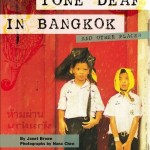
“Tone Deaf in Bangkok” by Janet Brown

It’s never too late to follow your heart to Asia. Just ask writer Janet Brown, who went to Thailand at age 45 and fell in love with the people and places. Learn more through my interview with Janet.

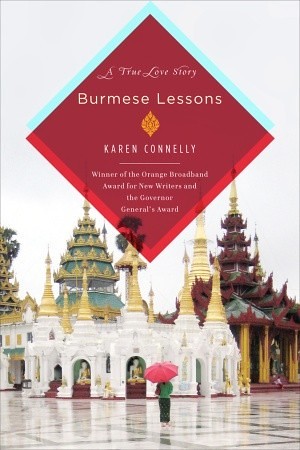
“Burmese Lessons: A true love story” by Karen Connelly

When Karen went to Burma in 1996 for research on the conditions of Burmese political prisoners, love wasn’t on her mind — until she met Maung, a sexy young Burmese revolutionary leader. But this isn’t just a love story, as she beautifully captures her entire experience in this country — including her interview with Aung San Suu Kyi.

“Foreign Babes in Beijing: Behind the Scenes of a New China” by Rachel DeWoskin

A woman who dared to love Chinese men on screen (and off), as well as Chinese culture. DeWoskin writes about it all with passion and humor.

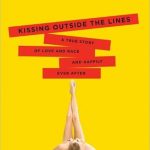
“Kissing Outside the Lines: A True Story of Love and Race and Happily Ever After” by Diane Farr

Think gorgeous girls don’t go for Asian men? Then you haven’t met actress and celebrity Diane Farr, who married a Korean-American man and shared her story — and those of many others who crossed racial/cultural/ethnic lines in the name of love — in this humorous read.

“Mae Franking’s My Chinese Marriage: An Annotated Edition” by Mae Franking

A rare window into the world of a Western woman who married a Chinese man in the early 20th century, despite the estrangement of both families. Half a love story, half a collection of letters that capture the times in which they lived.

“The Natural Laws of Good Luck: A Memoir of an Unlikely Marriage” by Ellen Graf

In her mid-forties and divorced, the last thing Ellen ever expected was to travel to China and marry a Chinese man she knew for less than a week. But the unspoken connection between then brings this unlikely pair together, and sustains them through the trials and tribulations of their new cross-cultural relationship.

“Sideways on a Scooter: Life and Love in India” by Miranda Kennedy

Miranda’s book is an exploration of the many cultural rules and norms that govern women’s lives there, especially love, marriage and family. She dates some Indian men along the way, but reveals so much more through the Indian women she comes to know throughout the story.

“A Field Guide to Happiness” by Linda Leaming

Linda Leaming’s new book “A Field Guide to Happiness: What I Learned in Bhutan about Living, Loving, and Waking Up” reads like a love letter to Bhutan. Learn more through my interview with Linda.

“Married to Bhutan: How One Woman Got Lost, Said “I Do,” and Found Bliss” by Linda Leaming

Linda discovered her bliss — and later, her Bhutanese husband — in this oft-overlooked Himalayan country. This magical tale of her relationship with her future husband and his country is filled with moments that will have you laughing out loud.

“Mao’s Last Dancer” by Li Cunxin

Li Cunxin is a poor rural Chinese who skyrockets to fame as a ballet dancer. But when China sends him to Texas as part of an exchange, he falls in love with an American woman and America, and wants to defect. (Also a movie.)

“Son of the Revolution” by Liang Heng and Judith Shapiro

Most of the story revolves around Liang Heng’s personal suffering during the Cultural Revolution. However, the last few chapters of this book document how Liang Heng and Judith Shapiro incredibly fall in love, and marry, in a China just barely open to the world.

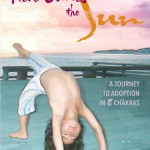
Here Comes the Sun by Leza Lowitz“Here Comes the Sun: A Journey to Adoption in 8 Chakras” by Leza Lowitz

Leza Lowitz shares her emotional journey towards marriage and motherhood in Japan (as well as opening a yoga studio in Tokyo) in “Here Comes the Sun”. Learn more through my interview with Leza.

“My Japanese Husband Thinks I’m Crazy” & “My Japanese Husband (Still) Thinks I’m Crazy” by Grace Mineta

If you’re a fan of graphic novels and you’re curious about Japan, you don’t want to miss these charming comics by Grace Mineta. Learn more through my interviews (here and here) with Grace.

“At Home in Japan: A Foreign Woman’s Journey of Discovery” by Rebecca Otowa

Rebecca’s book explores her 30 years as the foreign housewife of a Japanese man in their 350-year-old farmhouse in Japan’s countryside, a home that you might argue is one of the most important characters in the story.

“Love, Again: The Wisdom of Unexpected Romance” by Eve Pell

At 68, Eve fell for Sam Hirabayashi, a man 10 years her senior. She wrote about it for The New York Times, and the overwhelming response from readers helped spark this memoir exploring late-in-life love through her own relationship and others.

“The House on Dream Street: Memoir of an American Woman in Vietnam” by Dana Sachs

Dana truly followed her heart in moving to Vietnam when, in the course of learning the language and later teaching, she landed into an unlikely relationship with a local Vietnamese man. She writes about it with honesty and vulnerability, which made her a delightful narrator.

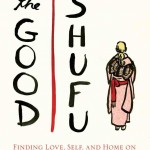
The Good Shufu“The Good Shufu” by Tracy Slater

“The Good Shufu” by Tracy Slater is a heartfelt story about love & life abroad that proves sometimes those unexpected detours lead us to incredible joy. Learn more through my interview with Tracy.

Big Little Man: In Search of My Asian Self“Big Little Man: In Search of My Asian Self” by Alex Tizon

Alex Tizon’s memoir “Big Little Man: In Search of My Asian Self” offers a personal view on Asian masculinity in the West — and is a book you must read. Learn more through my interview with Alex.

“Marriage in Translation: Foreign Wife, Japanese Husband” by Wendy Tokunaga

I connected so much with the experiences of the women interviewed by Wendy that I almost thought it could have been “Marriage in Translation: Foreign Wife, Chinese Husband.” (Sorry, John.) It’s not one memoir, but more like a collection brought together.

Year of Fire Dragons“Year of Fire Dragons” by Shannon Young

“Year of Fire Dragons” details the life-changing year Shannon Young spent in Hong Kong while in a long-distance relationship with her Eurasian boyfriend. Learn more through my interview with Shannon.

What memoirs did I miss? What would you recommend?

Yangxifu Pride: 8 Memoirs For Western Women Who Love Asian Men

Burmese Lessons by Karen Connelly
Burmese Lessons (photo from Goodreads.com)

Only a handful of Western women wrote about their love affairs with Chinese men (such as those I’ve recommended on this list). But I’ve found new women to call my Jiemei (that’s sisters in Chinese), thanks to the many memoirs I’ve discovered about Western women who found love in Asia (and beyond). In honor of International Women’s Day (March 8), I’d like to salute and recommend these literary sisters.

—–

Burmese Lessons: A true love story by Karen Connelly. When Karen went to Burma in 1996 for research on the conditions of Burmese political prisoners, love wasn’t on her mind — until she met Maung, a sexy young Burmese revolutionary leader. But this isn’t just a love story, as she beautifully captures her entire experience in this country — the struggling artists and writers she meets, the monks who pull her out of dangerous situation one evening and send her home with crackers, the family in the countryside who helps her understand the state of family planning, her interview with Aung San Suu Kyi. Continue reading “Yangxifu Pride: 8 Memoirs For Western Women Who Love Asian Men”