Chapter 62: The Quietest May Day Ever

Rapid transit in Beijing during SARS
The SARS epidemic turned China's May holiday into the quietest one I had ever seen, with abandoned streets, shopping centers, and even public transit. (image by zh-wp, courtesy of Wikimedia Commons)

Never had a country of over 1.2 billion people seen such a quiet holiday.

Historically, May 1 began one of China’s “golden weeks” — seven days of unadulterated travel, shopping or even just relaxing with family and friends. Of course, with everyone on break at the same time, travel was either too expensive, too crowded, or too hard to get tickets — and shopping meant you had to elbow your way in with the masses to get a good deal. The holiday, arguably, was a perfect example of the Chinese concept of 热闹 [rènÉ‘o] — the lively, bustling, crowded, fire-breathing nature that is China, home to the descendants of the dragon.

There was no renao on this May 1, in 2003, since the Chinese government had canceled the holiday because of SARS. That cut the usual seven days down to five for most of us — except for John. Continue reading “Chapter 62: The Quietest May Day Ever”
Chapter 61: Unmasking SARS Panic

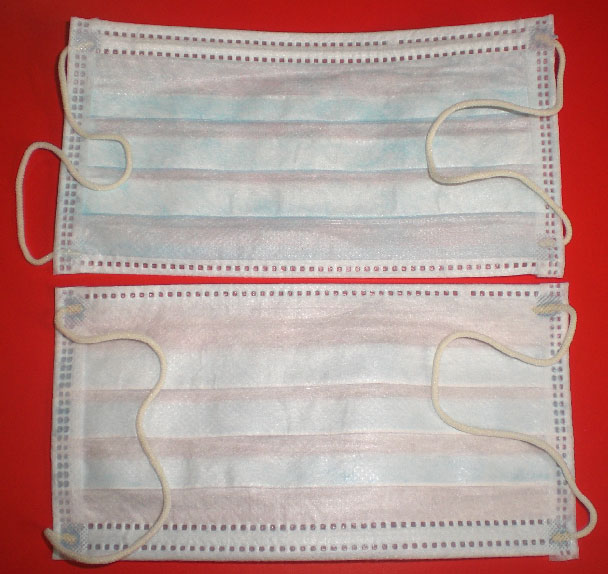
Surgical masks
When surgical masks appeared on the faces of coworkers, I knew the SARS panic had infected our office. (image by Blossoma, courtesy of Wikimedia Commons)

You know there’s something wrong when the entire Sales Department starts wearing surgical masks.

That’s what I saw one afternoon on April 22, 2003, after returning to the office from my lunch break. Only Sales hid their faces behind sterilized gauze, turning our office into a corporate version of an ER triage department. And like triage, those of us sitting at our desks were no better than the families awaiting their loved ones in surgery — hiding worries behind a calm countenance.

As we approached the National Day Holiday — a week long national holiday in China from May 1 to May 7 — I had my own concerns. According to the Chinese government, we only technically had five, not seven, days off — even though they gave us a weekend in there somewhere. So that meant we had to sacrifice a weekend before or after the break to “pay” for this. In my case, I’d have to work through the coming weekend, facing a tiring ten-day work week.

“Are you ready for our ten-day work marathon?” I joked to my coworker and trainer, Steve, April 21 — Monday morning — when I came into the office.

Steve’s face looked as grim as a doctor bearing bad news. “It’s been canceled.” Continue reading “Chapter 61: Unmasking SARS Panic”

Another Gift To You, A New Schedule

As the seasons change, so does this writer.

After nearly one year of reviving this blog, and sharing a unique perspective on China, I’ve decided I need to make some changes in my schedule. Why? To work on refining the writing I’ve done here, and begin turning this skeleton of a blog into a manuscript.

So, what can you expect? Don’t worry, I’m not taking a “vacation.” In fact, you’ll still see the same content on my site — only I’m posting three days a week, not five. Here’s the revised schedule: Continue reading “Another Gift To You, A New Schedule”

Ask the Yangxifu: What Western Women Think of Chinese Men


Western woman and a Chinese man
What do Western women think of Chinese men? A study by the Shanghai Academy of Social Sciences provides further insight into why couples of Chinese men and Western women are so rare.

This week on Ask the Yangxifu, I’m preempting the usual Q&A to share with you an article published a few weeks ago, in Chinese, discussing a China study about what Western women think of Chinese men — a topic on the minds of many readers.

No surprises here — especially if you’ve read or followed the comments on my post On the Rarity of Foreign Women and Chinese Boyfriends/Chinese Husbands. Still, it’s nice to see a more empirical take on something we have understood more intuitively, or through our own experiences.

My translation comes from the original article, first published on the Xinhua website. Continue reading “Ask the Yangxifu: What Western Women Think of Chinese Men”

Chapter 60: Love in the time of SARS

Hong Kong people wearing masks during SARS
Just as SARS began, and panic slowly began to mask the public, it felt odd to be so in love, in China. (Image from www.wired.com)

I’d been working for barely a month in Shanghai, when news of SARS began to spread like the virus itself.

Masks quietly spread around the bus I rode into downtown Shanghai.

The women’s bathroom became our morning decontamination station, as everyone washed their hands more obsessively than Lady MacBeth — over conversations about whether or not to buy face masks.

E-mails about Hong Kong infected my inbox, with seemingly fictional photographs of people muzzled with face masks, and health workers dressed in outfits straight out of the Andromeda Strain.

Even the office showed symptoms of the SARS scare. Continue reading “Chapter 60: Love in the time of SARS”

Chapter 59: Going to the Hospital in China

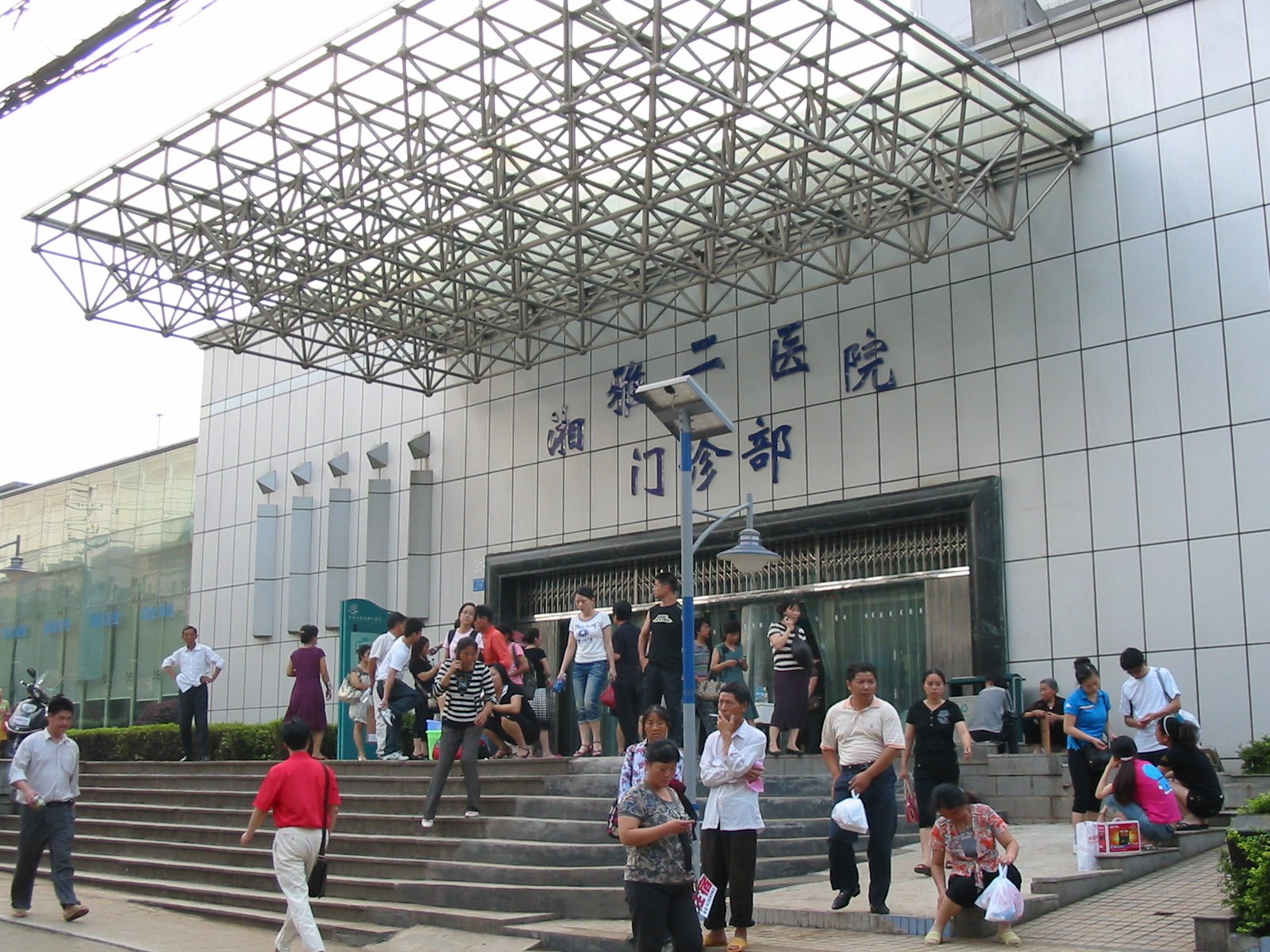
Xiangya Hospital
Going to the hospital in China didn't mean my cough was serious. But it came just at a time when a more serious illness began to threaten China.

Going to the hospital. Before I came to China, the phrase seemed so serious, a harbinger of bad news — in the US, only those with a sickness or problem beyond the family doctor would visit the hospital.

But in China, hospitals handled everything, from minor colds to major surgery. You could not divine the severity of a problem just because someone went to the hospital.

That someone going to a hospital, one evening in mid-March, 2003, was me — a young foreigner gripped with a relentless, raw cough. I felt so sickly before John, my Chinese boyfriend, who never took ill because, unlike me, he had met much of the bacteria and viruses in China once before in his lifetime. My health had been a source of consternation before, and still was. So this evening, as we walked into the hospital, John wrapped his arm around me, gently stroking my shoulder to comfort me, like a parent soothing a doctor-phobic young child. Continue reading “Chapter 59: Going to the Hospital in China”

Chapter 58: China Marriage On My Mind

Wedding rings on a white background
In Shanghai, my Chinese boyfriend and I were almost as close as husband and wife. All of the signs said we were headed to a wedding -- so why did I have to ask?

There was no history of casual dating in John’s family. His maternal grandmother was a child bride, sent to live with her grandfather’s family when she was seven or eight, without the ability or understanding to contest her fate. She went from being a virginal pre-adolescent to a wife who would immediately bear children.

John’s mother, her daughter, married during the Cultural Revolution, in 1972 — with a “revolutionary marriage certificate,” stamped in red, to prove it. She was never a child bride, but still a stranger to this man, introduced to her through a matchmaker in the village, with a courtship that fast-tracked them straight to a wedding. Marriage was simply a practical matter, solving what the Chinese often refer to as their “personal problem.”

By the time I moved to Shanghai, John and I were as close as a husband and wife, living together and depending on each other. John had long decided we were a “settled couple” — that’s why he moved in with me in Hangzhou, only days after our historic first kiss. We had skipped casual courtship and went straight to something serious — serious enough to wonder about marriage. Continue reading “Chapter 58: China Marriage On My Mind”

Chapter 57: Customers Are Our Lovers

As I began work at the global media company in Shanghai, I discovered that sometimes, the customer is not always right -- and definitely, is not your lover.
As I began work at the global media company in Shanghai, I discovered that sometimes, the customer is not always right -- and definitely, is not your lover. (image from EEfocus.com)

Silvery electronic components, in a swirling tornado shape. It was an unnatural disaster, against an electric blue background, that actually hoped to spin a tale — a tale of a Chinese manufacturer of electronic components. But the details were lost in the storm of objects, so instead of being informed or interested, I fought to hold back laughter.

It was hard not to laugh in the presence of Steve, a jovial thirtysomething American with a slight paunch, five-o-clock shadow and a shock of short wavy hair that was perhaps the only reminder of his nomadic Dead Head years. Steve had since gone corporate in joining the company, after years of work in public relations and copywriting. He was the Senior Copywriter for the ad production team I just joined in Shanghai, but even the training session he gave me this one morning, on how to write good ads for Chinese advertisers, bordered on comedic monologue — as we looked through the old magazine ads and the handbook, discussing how (or in the case of the vortex of components, how not) to make good ads. Continue reading “Chapter 57: Customers Are Our Lovers”

Ask the Yangxifu: Change your name after marriage in China?


signature

Gerald asks:

To change names or not [after marrying a Chinese in China], and if yes, how?

—–

When you marry a Chinese, it challenges many cultural assumptions about what matrimony is, and how we announce it. White dress or red qipao (or even both)? Hotel or church?

And, perhaps, even more puzzling — should she change her name, or not?

See, in China, women don’t change their names after marriage. In many Western countries, women do.

So, the question is, which tradition should you follow? Continue reading “Ask the Yangxifu: Change your name after marriage in China?”

Chapter 56: Missing the Flavor of Hangzhou in Shanghai

Shanghai Oil Noodles
Even as I found so much to love in Shanghai, I still yearned for the flavors of the Hangzhou I once knew. (photo by HanWei, courtesy of Wikimedia Commons)

I moved to a district in Shanghai called Changning, which means “long peace.” After losing my job and even overstaying my visa in Hangzhou, living in Changning was like finding peace in my life. I had a promising new job as a copywriter in a multinational company named one of the Forbes’ 200 best small companies in the world. I resided in a quiet community, with evergreens, bushes, manicured lawns, weathered four-story, concrete apartment buildings and plenty of sunshine. Every morning, a fleet of modern — and mostly empty — air-conditioned buses could taxi me all the way to my new downtown office.

Most of all, I had John, my Chinese boyfriend, with me, everyday. And perhaps that was the most important difference between Hangzhou and Shanghai — now John was no longer an occasional weekend visitor, but, by unspoken agreement, my live-in partner. He turned Shanghai into something deceptively familiar, as if my new home was simply a Shanghai version of the Hangzhou neighborhood I once knew.

But this was a new neighborhood and a new city — with a new culinary landscape we didn’t understand. Continue reading “Chapter 56: Missing the Flavor of Hangzhou in Shanghai”