Couple Shirts – Endearing or Obnoxious?

That couple looks exactly alike. And it’s not because of their faces or bodies – it’s because they’re wearing matching clothes.

Ah yes, the couple outfit. It’s something I’ve seen in China, though I know it also exists in other parts of the world (even the US).

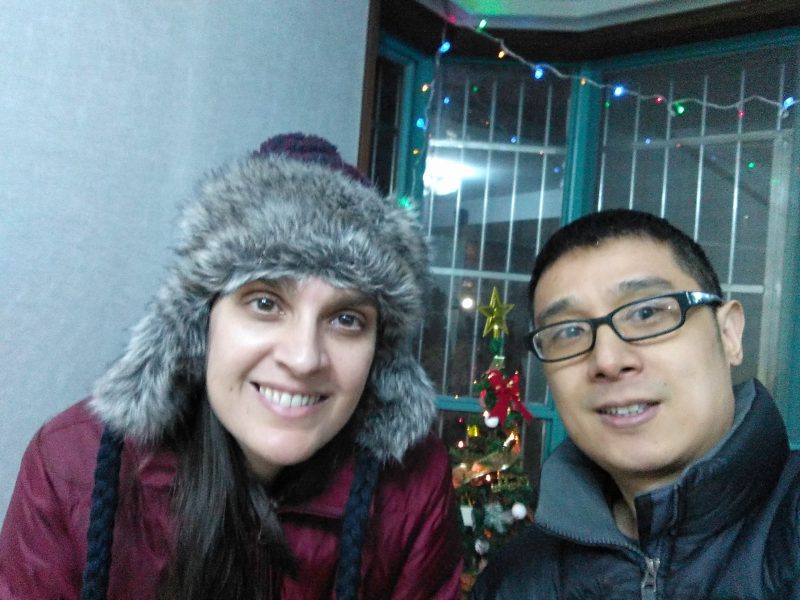
My favorite take on this is the couple shirt. And of course it would be my favorite because, well, Jun and I happen to own a pair of what we like to call couple shirts.

We actually didn’t intend to buy couple shirts and, honestly, the shirt wasn’t marketed like that.

A few years ago we were shopping in Giordano and happened upon these really cute “I love China” shirts in red and yellow. I immediately dropped whatever else I was looking for in the store and made a beeline for the shirts. And once we discovered they carried it in sizes that would fit me and Jun, there was no doubt about it – we were buying one for each of us.

It’s not like the store said, “Hey couples! If you both love China, you need to buy these shirts!” There wasn’t some display with a couple wearing the shirts. Honestly, even though the shirts did have a heart on them, it wasn’t meant to symbolize two hearts together as a couple.

One of the reasons I like the shirts is they feel meaningful to us. We love China, and it’s something we can share together.

But would I wear matching shirts specifically designed for couples – like these featured on Amazon? While many of the descriptions call the shirts “cute,” I’m not sure I’d always agree. If two people are walking down the street wearing the same thing, I get that they’re a couple; but if they’re wearing shirts that say something like “king” and “queen”, it could be a little obnoxious.

So I’ve got to ask you – would you be willing to wear couple shirts? Or do you already have couple shirts of your own? Do you think they’re endearing or obnoxious? Where do you draw the line?
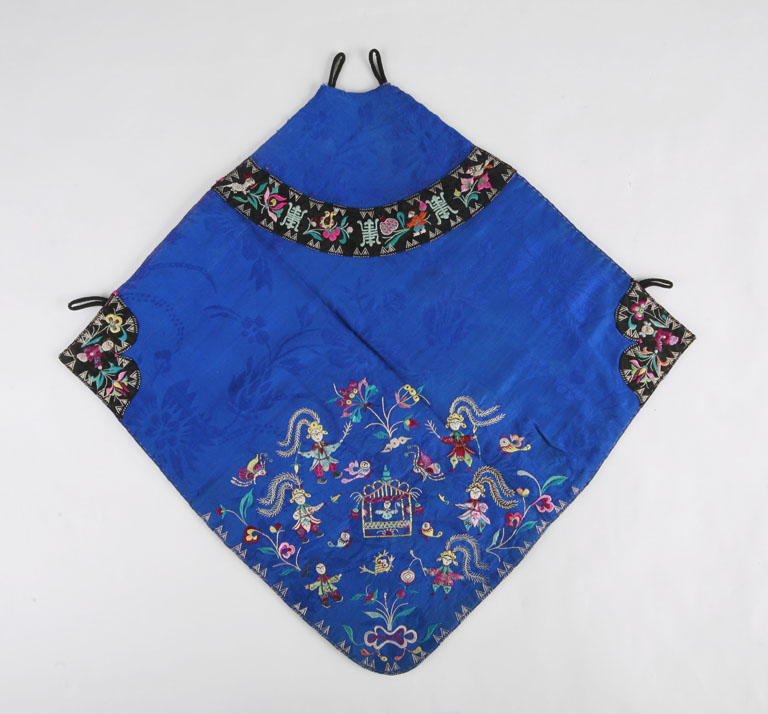
Underwear a secret gift between lovers? Meet the traditional Chinese dudou

By The Children’s Museum of Indianapolis, CC BY-SA 3.0, https://commons.wikimedia.org/w/index.php?curid=17132756

Picture this. You loved someone so much, you gave the person your underwear as a token of your affection – and they loved you so much, they wore it.

As kinky as this sounds, it was a real phenomenon in ancient China, where women would give their dudou, a type of underwear that covered the chest and was worn by women and men alike, to their lovers.

If you’ve never seen a dudou before, it’s an octagonal piece of cloth with strings you could tie around your neck and back to keep it in place. The dudou reminds me of a halter top, except instead of being a sexy, seasonal summer thing, it was traditionally tucked beneath one’s clothing all year long, safely out of sight.

As China Daily reported, there were two stories in China’s ancient history where this “unmentionable” came up as a gift among lovers:

There are no reliable historical records regarding the origin of the du dou. Yet a similar type of clothing called ri fu was mentioned in Zuo Zhuan, the earliest annals in China.

It was about a woman, Xia Ji, who had an affair with a king and the king’s two secretaries. The woman sent her ri fu as a gift to the king to show her love. The king was thrilled and wore her underwear all the time. One day, he showed the underwear off to his two secretaries. He didn’t expect that the latter two also took off their clothes and revealed ri fu that Xia Ji had sent to them.

The affair was recorded in the annals to criticize the shamelessness of the king. Yet it also implies underwear was a secret gift between lovers.

Many folk tales in the Yuan, Ming and Qing dynasties (1271-1911) have similar plots about lovers exchanging their du dou.

In Yu Shi Ming Yan, edited by litterateur Feng Menglong from the Ming Dynasty (1368-1644), there is a story about a du dou called “pearl underwear”. A woman also sent the underwear to her lover as a token, for they could not meet every day.

It’s fascinating that this was a thing in ancient China. After all, when modern lovers exchange underwear, it’s usually because someone just bought you, say, some sexy lingerie from Victoria’s Secret – and not because he or she just handed over their bra or panties or boxers for you to wear. Even if you could overcome that natural aversion to putting on someone else’s underwear (particularly for men, who would probably not want to be caught in something frilly, lacy or pink), could you even fit into it? I’m willing to bet that, for many of us, the answer is no.

That was the beauty of the dudou, though. It was designed to fit a wide range of bodies – men’s and women’s — and the ties made it inherently adjustable. Because it covered the chest and not the crotch, there wasn’t that ick factor involved in sharing it among lovers. Besides, everyone wore it, even the guys, so nobody would question your masculinity if you suddenly revealed you had on a dudou.

Could modern lovers revive this traditional gift? I have to confess I’m skeptical about the willingness of modern men to actually wear a dudou designed for women. But I’m pretty sure most guys wouldn’t say no to seeing you wear one – and maybe, if you gave him a really special one, he might just cherish it as much as the ancients did in China.

P.S.: If you’re interested in buying a dudou this holiday season and giving it to your lover, you can find them on Amazon, where your purchases help support this blog.

On Winter Dress Strategy in North China Vs. South China

This sweater served me well during the winter months in Hangzhou — but in Beijing, it’s another story.

The temperature that morning in Beijing had dipped below zero degrees Celsius. Yet there I was sitting in a restaurant that afternoon, feeling sweat moisten my brow. I seriously contemplated taking off my heavy blue-and-gold knit sweater — once indispensible for surviving the winter in Hangzhou — which I had layered over an equally warm long-sleeved thermal shirt. I even wondered if it was overkill to have on long underwear beneath my jeans.

Clearly, I had forgotten about the indoor heating in Beijing, and how it might mean rethinking how I dress for the winter. That I might actually need to wear lighter, more layered clothing under my jacket than in Hangzhou, despite the huge difference in latitude.

This is one of the ironies of the North China versus South China divide.

Down in Hangzhou, it’s not uncommon to see people completely bundled up indoors with their coats on. In South China, you wear your coat so much in the winter that it’s almost more important than your sweater. My mother-in-law once urged me to buy more jackets, concerned that people kept seeing me wearing the same one every day. (After all, they’re less likely to get a glimpse of those nice sweaters I bought, given how cold the indoors can be at times.)

You would think the same winter dress strategy would apply up in more northerly Beijing, with people donning even warmer, heavier layers to survive those bitter winds from Siberia and the Arctic. And while I’m sure this would be true for anyone forced to spend much of the winter toiling outdoors for work, it’s not for your average person who spends most of the day indoors.

I commute between my apartment and the office buildings, each a snug oasis of warmth thanks to the plentiful heating provided here in Beijing. Of course would I never need to keep my parka on indoors in either place. But sometimes, even your average sweater feels like a little too much – just like in that restaurant. This is a world where you might need to peel off that sweater every now and then, or hug it a little closer if a cold breeze happens to sneak through that window or door.

The problem is, I’ve spent years building up a wardrobe to survive winters in more southern Hangzhou. I jettisoned many of my light cardigans in favor of more substantial sweaters I’d wear over thermal underwear. Before we moved to Beijing, I remember feeling grateful I had these sweaters to see me through the season. But that was before I realized Beijing’s heating can be so abundant that, occasionally, the word “sauna” comes to mind.

Oh, how I wish I hadn’t tossed those cardigans. Especially since it is so darned difficult to find things in my size in China. (But that’s another story…)

Eventually, I’ll adapt my clothing to Beijing winters, heating and all. I’m already halfway there with an extra-warm parka to protect me from the frigid winds.

Still, I can’t help but recall another irony of the situation — that I, a woman who grew up in northerly Cleveland, Ohio, a city with a reputation for blustery winters, am having to re-learn how to dress for winter in the North.

What’s your winter dress strategy? Have you noticed a difference between dressing for winter in North China versus South China?

Your Holiday Gift Guide for 2017

Last month, I received my first-ever gift of Dior perfume from an unlikely source – the wife of one of my closest friends here in China. He is strictly middle-class. Yet for him and his wife, my move to Beijing warranted some luxury fragrances and, somehow, they put together the money to make it happen.

(Their gift to my husband? Two bottles of red wine imported from France that looked just as upscale as the perfume set I received.)

The experience was yet another reminder to me that, in China, gift-giving is serious business.

Since the holiday season is upon us, which means plenty of shopping and plenty of gift-giving, it’s also time for me to once again dust off my advice for gift-giving in China. Whether you’re buying for your Chinese boyfriend or girlfriend, your Chinese in-laws, or even a Chinese host family, I’ve got you covered, as always.

I’m a big believer in keeping it simple. And here’s the thing – you don’t have to shell out for Dior to leave a good impression with your loved ones, family or friends in China.

If you’re stressing about just what to give, I highly recommend giving my Huffington Post article titled The Top 6 Gifts Sure To Please Your Chinese Family a read. It’s a rundown of the best, most straightforward advice I have on this topic. (If you want to view the post that first inspired it, which is a little longer and more involved, see Giving Gifts to your Chinese family – A Modest Guide.)

Now, I know a lot of you out there aren’t doing your shopping in China or Asia. No problem – please see my post titled Gifts to Buy Abroad for Chinese Family and Relatives.

Do you have a Chinese friend or loved one who happens to be a dog in the Chinese zodiac, which is the zodiac sign for 2018? I’m sure they would be delighted and touched if you gave them a gift that will bring them good luck in the coming year. See my post Great Gifts For Your Chinese Zodiac Year (Ben Ming Nian).

Still not sure about the perfect gift? Then why not choose my go-to gift that’s sure to please anyone in China – the fruit basket. Read my 4 Tips for Giving Gift Baskets in China.

Finally, a huge thank you to everyone who reads this blog! Wishing you all a very happy holiday season!

P.S.: If you would like to show your support for Speaking of China this holiday season – at NO additional cost to you – while you shop for gifts, here’s how:

Wishing you all a great start to your holiday season! And thank you for your support!

3 American WWAMs in Asia Share Thanksgiving Stories – Pub’d on WWAM BAM!

The group blog WWAM BAM just published my post titled 3 American WWAMs in Asia Share Thanksgiving Stories. Here’s an excerpt from my contribution to the piece:

As a longtime vegan, Thanksgiving – a holiday that revolves around turkey – never ranked as one of my favorite holidays. So when I moved to China, where the fourth Thursday of November is just another average workday, I didn’t feel the need to resurrect the holiday and celebrate it in spite of being half a world away from my American family.

But all that changed after I moved back to America for a period of time with my husband Jun, who is Chinese. While he often jokes he’s an “80 percent vegan,” the reality is my guy loves to have a little meat and fish on occasion. We’ve managed to make our dietary differences work in our marriage with mutual respect and understanding.

Well, one of things I discovered in America is this – Jun loves turkey. A lot.

To read the full story — and also read contributions from two other fantastic bloggers — head on over to WWAM BAM. And if you like it, share it!

Differences Between Northern and Southern China – Pub’d on WWAM BAM!

The group blog WWAM BAM just published a collaborative article on Differences Between Northern and Southern China, inspired by my recent move to Beijing. Four Western women married to Asian me, including myself, share our experiences about leaving one latitude for another. Here’s my contribution to the post:

In China, I’ve lived the southern life for years, residing in the Hangzhou region my husband calls home. But recently I’ve moved from Hangzhou to China’s great northern capital of Beijing. Sure, I’m looking forward to enjoying a fully heated apartment in the winter, something you don’t often have in Hangzhou (where it’s common for people to wear their coats even indoors during the coldest months). But I’d like to share some of the differences I’ve experienced that you might not necessarily expect.

If you follow my blog, you probably know my husband and I drove up to Beijing. One pleasant reality we discovered in the city – they allow free street parking on designated parking spots, something increasingly difficult to find in Hangzhou. However, Hangzhou beats Beijing hands down when it comes to green buses. The vast majority of buses in Hangzhou are either electric or powered by natural gas, but I’ve yet to see even one example of this green public transport on the streets of Beijing.

Our eating habits have also changed since moving up here. Back in Hangzhou we bought our vegetables from the community fresh market and cooked exclusively at home. But here in Beijing, my employer has a cafeteria that serves up breakfast, lunch and dinner, and there are several super-affordable cafeterias just across the street at the university. All of them serve up some of the most mouth-watering cafeteria food I’ve ever tasted, and because the price (and flavor) is right, we’ve cooked maybe a handful of meals at home. Does Beijing have more of a “cafeteria culture” than Hangzhou, thanks to its wealth of state and government-owned institutions that also provide food service? I don’t know, but I’m loving the experience of leaving the cooking to someone else for a change!

Head on over to WWAM BAM to read the full post. And if you like it, share it.

Is Beijing China’s Best City for Western Women Married to Chinese Men?

Over 20 years ago, the TV series “Foreign Babes in Beijing” (洋妞在北京) became a sensation across China. Say what you want about the show – which Rachel DeWoskin, one of the show’s stars, described as “an apt, if tacky, example of China’s very conflicted feelings about the West“ – I couldn’t help thinking about it recently after moving to China’s great capital city. That’s because there’s one thing I’ve noticed about this city: there are a LOT of AMWF (Asian male, Western female) couples who call Beijing home.

Among the online groups of Western women with Chinese husbands I belong to, the Beijing group stands out for a very simple reason – sheer numbers. It has over 100 ladies! This blows my mind. Back in Hangzhou, I felt lucky to find one or two in the city (even though Hangzhou is pretty large, expats tend to come and go pretty quickly, making it difficult to connect to new folks). But here, there are so many women it could take me months, if not nearly a year, to meet all of them.

In my opinion, this is a good problem to have. A very good problem.

So I’ve been thinking about Beijing and its status as the unofficial epicenter of the AMWF community in China. What makes Beijing the number one city for couples of Western women and Chinese men? It’s even more intriguing to me because Shanghai appears to have a slight advantage over Beijing among foreigners as a whole (see this BBC report and this story from the China Daily).

So why Beijing over, say, Shanghai?

Is it a matter of job opportunities? (One foreign woman with a Chinese husband, who happens to live in Shanghai, once privately shared her frustrations over the city’s job market, which she considered stagnant compared to Beijing). Do more of us come as university students, landing in the one city that attracts the most foreigners to study abroad? Is it the wealth of resources in town, from great schools and hospitals to an airport connected to every major city across the globe? Or are we simply more enamored with Beijing’s rich cultural and historical traditions reflected in the many superlative sightseeing attractions here, from the Forbidden City and the Temple of Heaven to the Great Wall?

Whatever the reason, I’m loving this city just for the opportunity to have some good company with fellow yangxifu (the foreign wives of Chinese men) on a regular basis.

And if China’s entertainment industry ever finds out about Beijing’s pre-eminence among AMWF couples, maybe they’ll decide it’s high time for a proper “Foreign Babes in Beijing” sequel. But this time, it’ll be “Foreign Wives in Beijing.” 😉

Do you think Beijing is China’s best city to live in? Why or why not?

Photo Essay: Our Road Trip from Hangzhou to Beijing

Moving to Beijing was more than just a change of scenery for me. It was also the opportunity to experience my first long-distance road trip in China.

So what was it like driving from Hangzhou to Beijing? And what were some of the sights we saw along the way? Here’s a photo essay with some of the highlights of our journey.

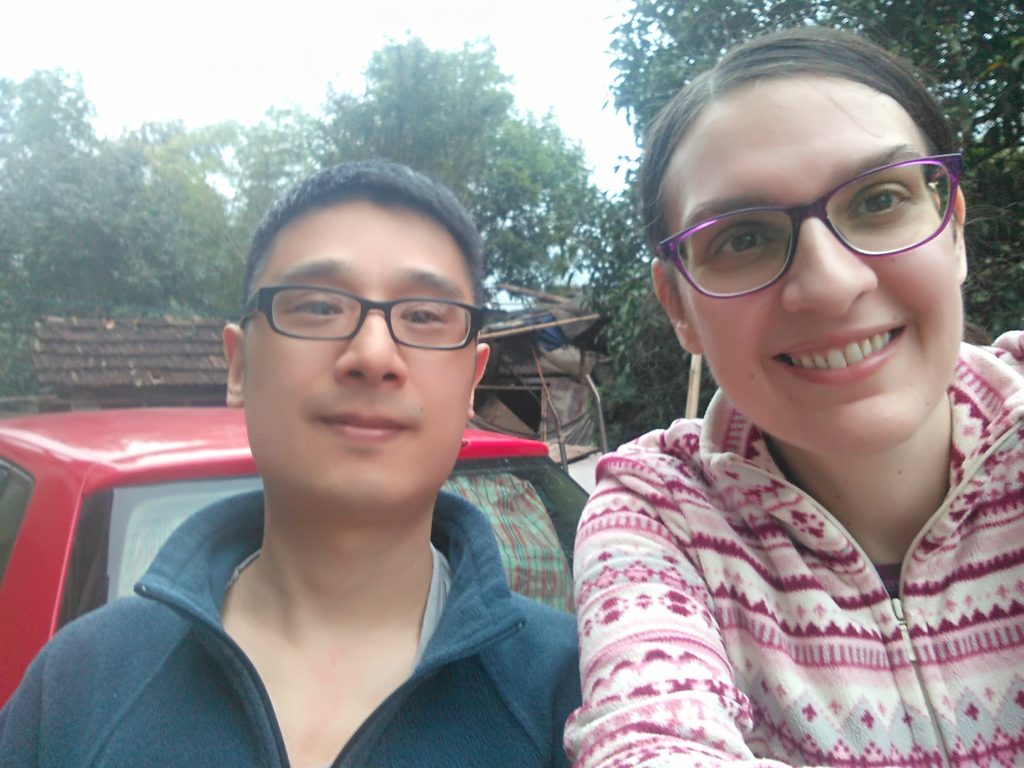
Our road trip began at 6:30am on Friday, Oct. 20. Here’s our final photo before we hit the road. Can you see just how packed the car is in the background? 😉

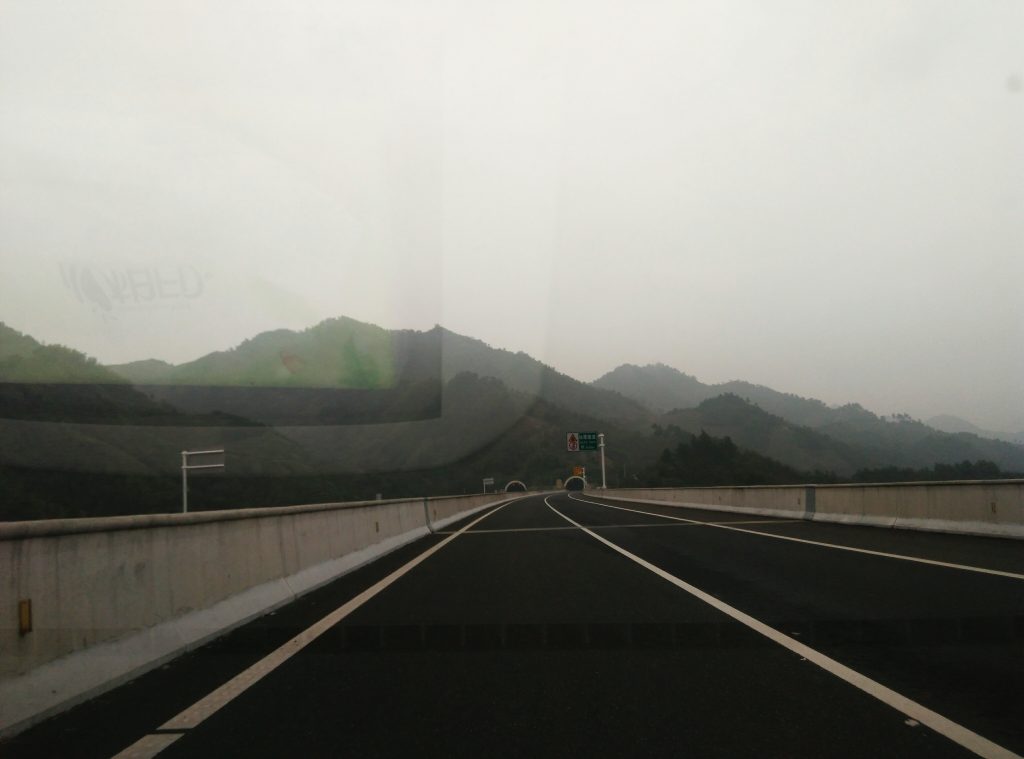
We traversed the mountainous region of southern Anhui province.

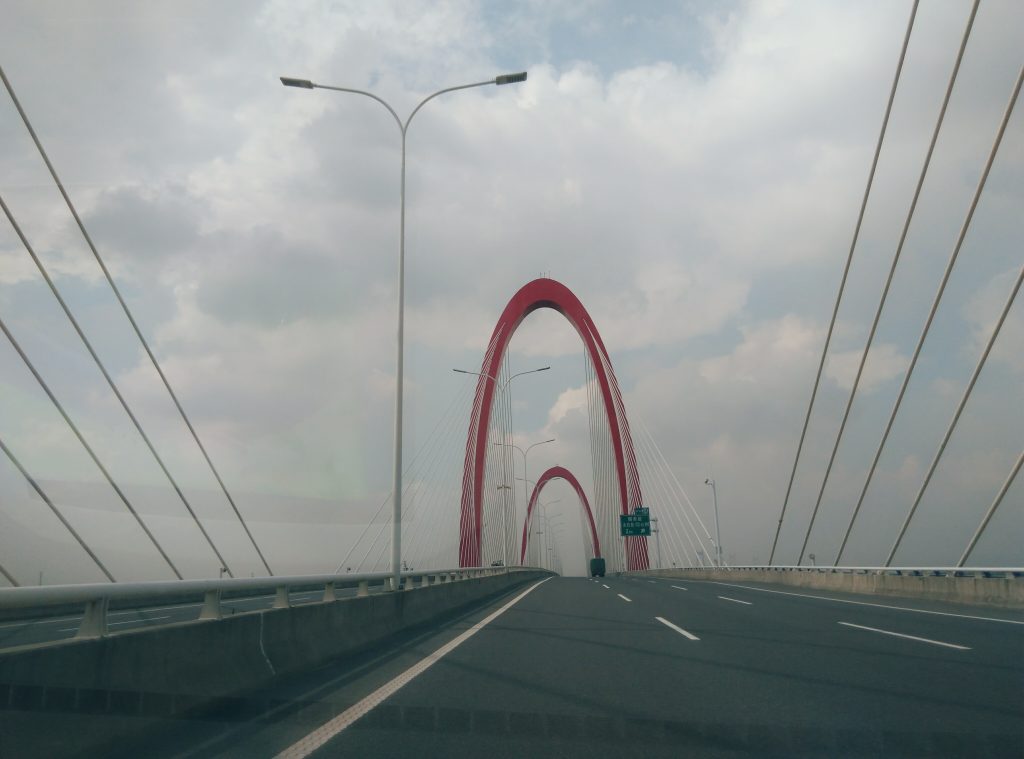
We crossed a long series of bridges lunging across the great Yangtze River, leaving behind the Jiangnan region we’ve called home for so many years.

At a rest stop in Anhui province, we enjoy a quick lunch of vegetarian baozi Jun’s mom prepared just for our trip. (Thank you mother-in-law!)


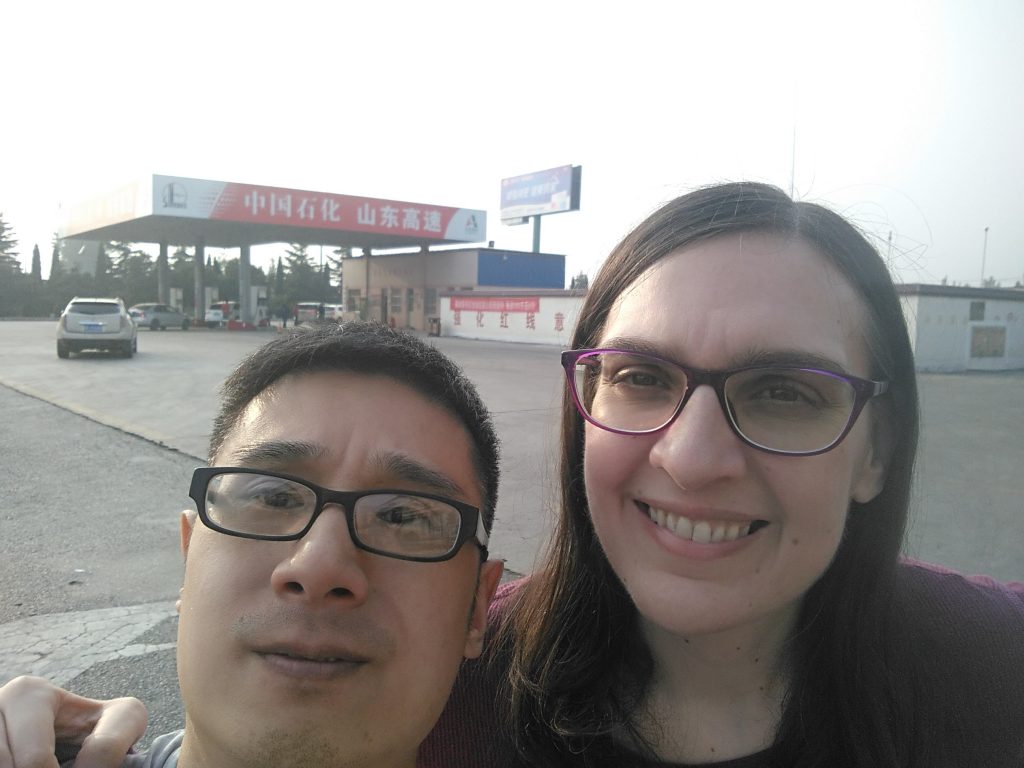
By the afternoon, we had already made it into Shandong province, where this rest stop is located.

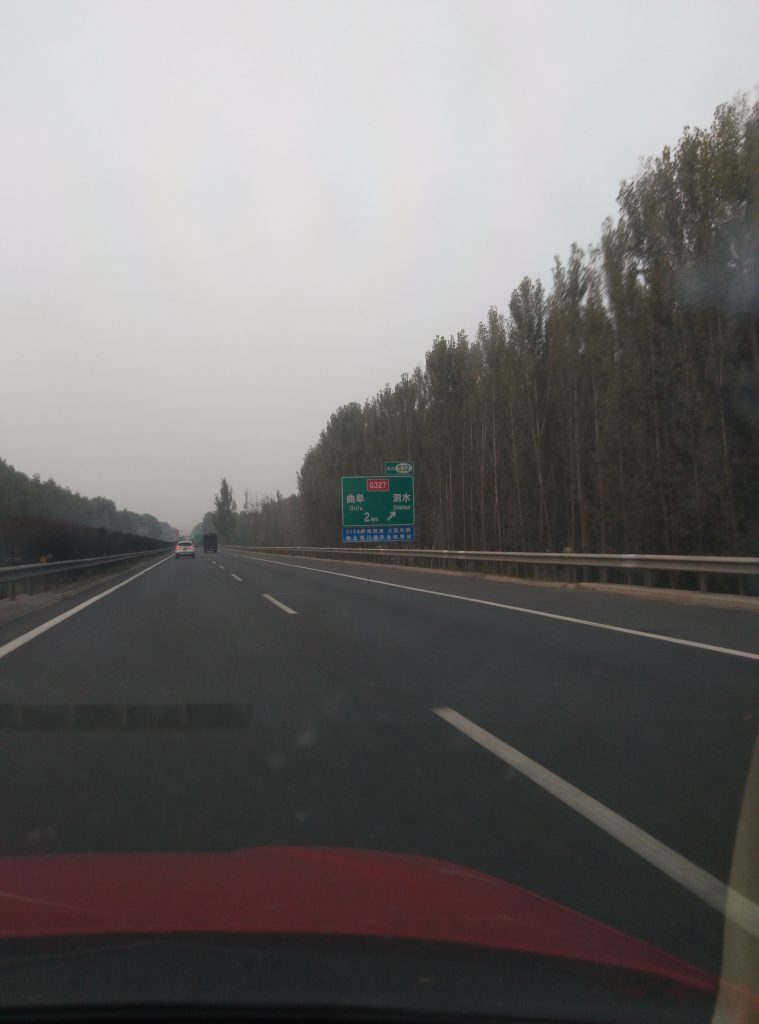
Before we knew it, our exit for the night appeared — Qufu, Shandong province, where Confucius was born.

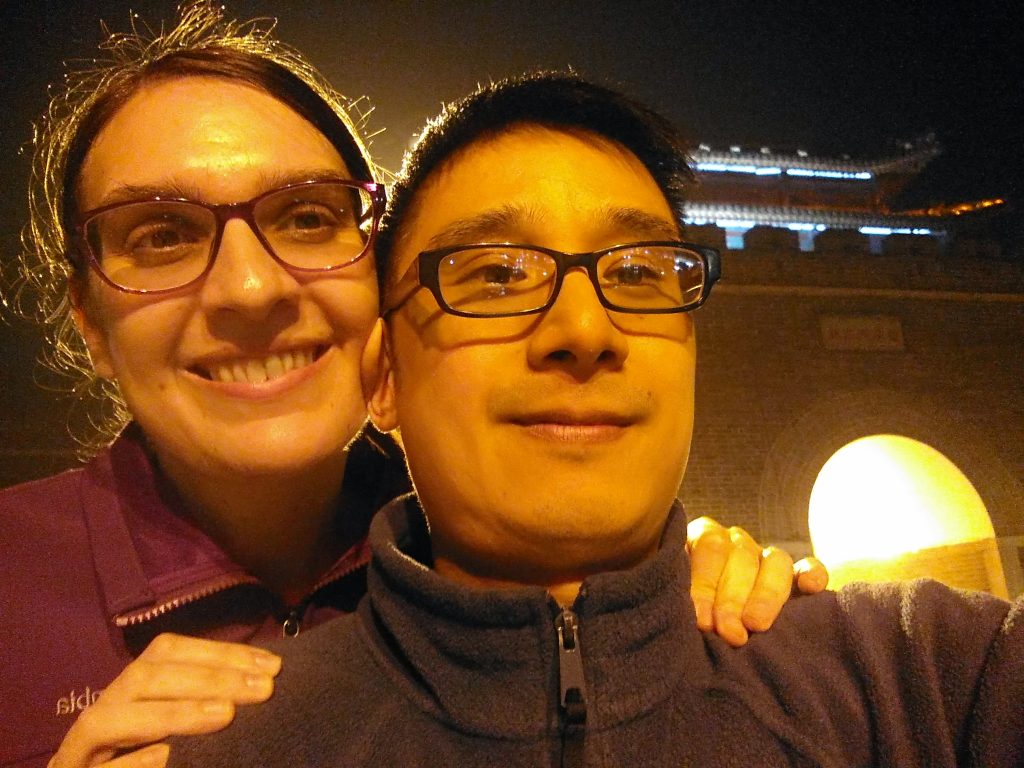
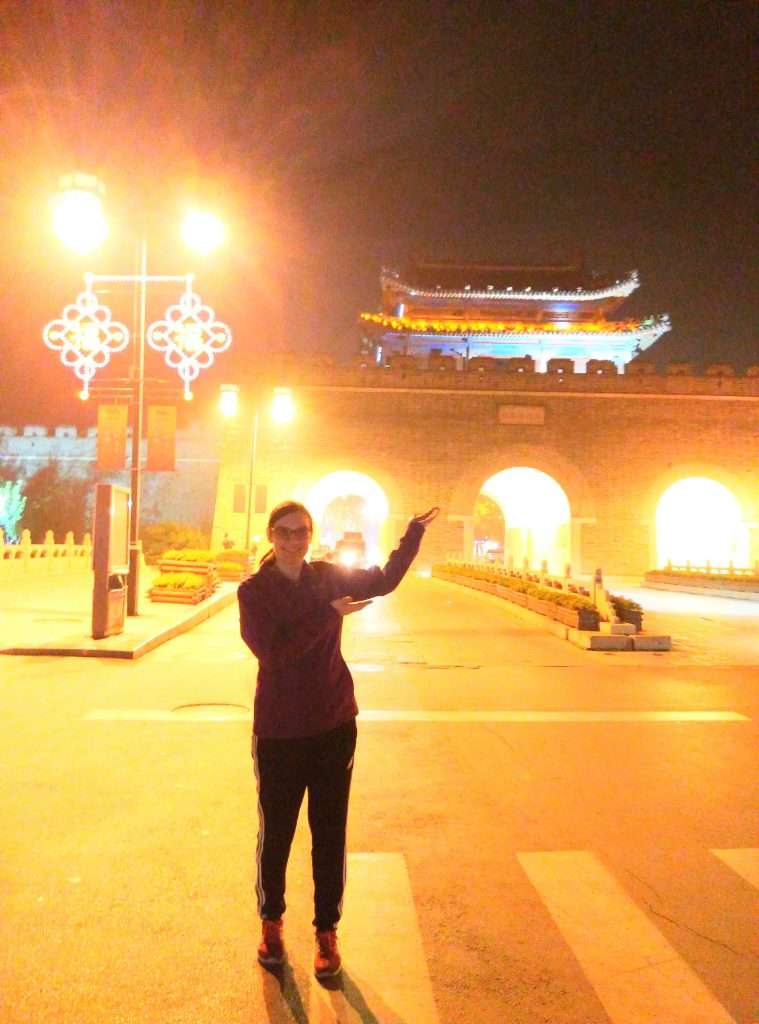
After we checked into our hotel and enjoyed a dinner of noodles, we walked around the city walls from the Ming dynasty, which made Qufu feel like a very traditionally Chinese city.

Isn’t that city gate just stunning at night?

The following day, we sped across another renowned river in China, the Yellow River.
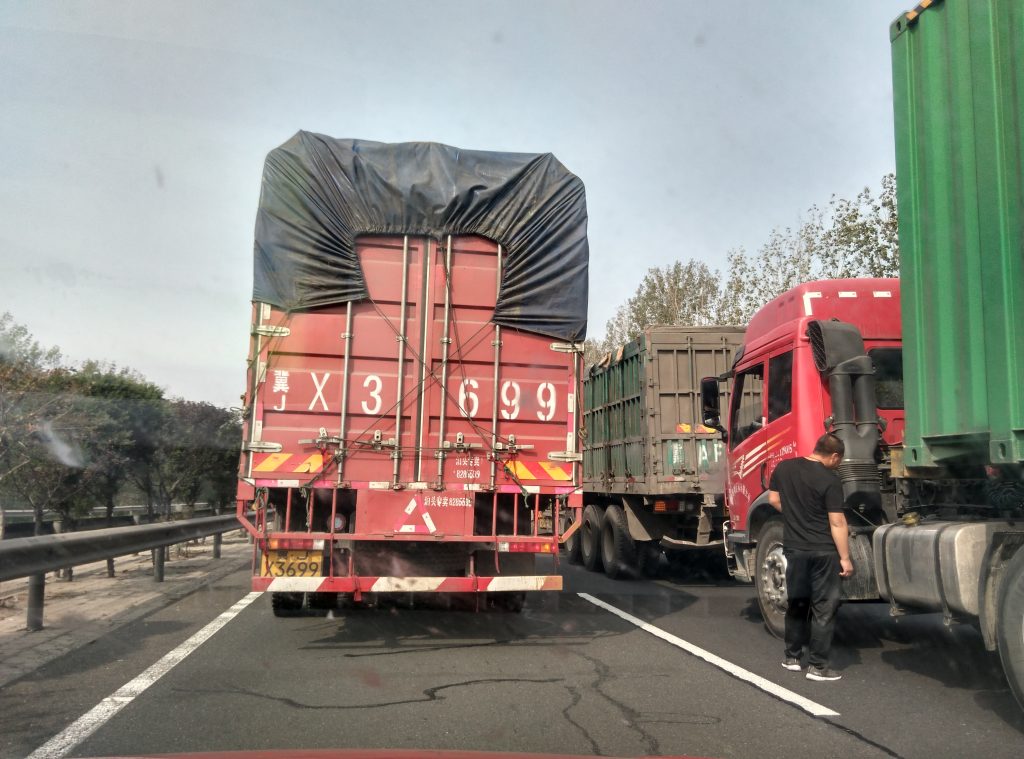
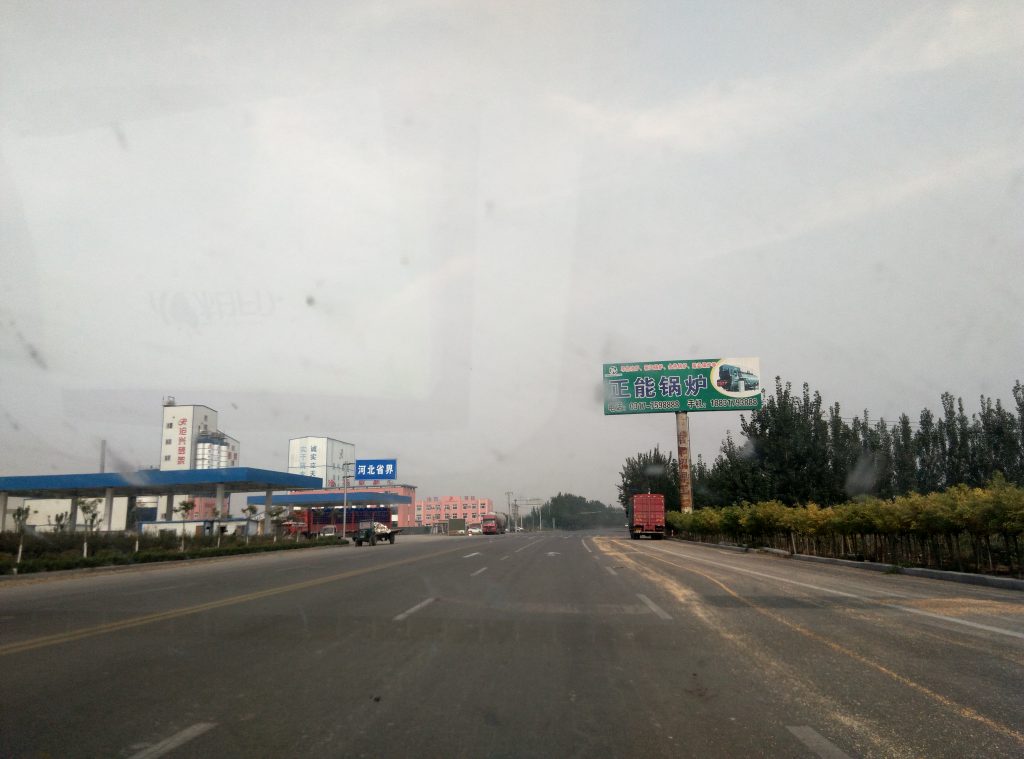
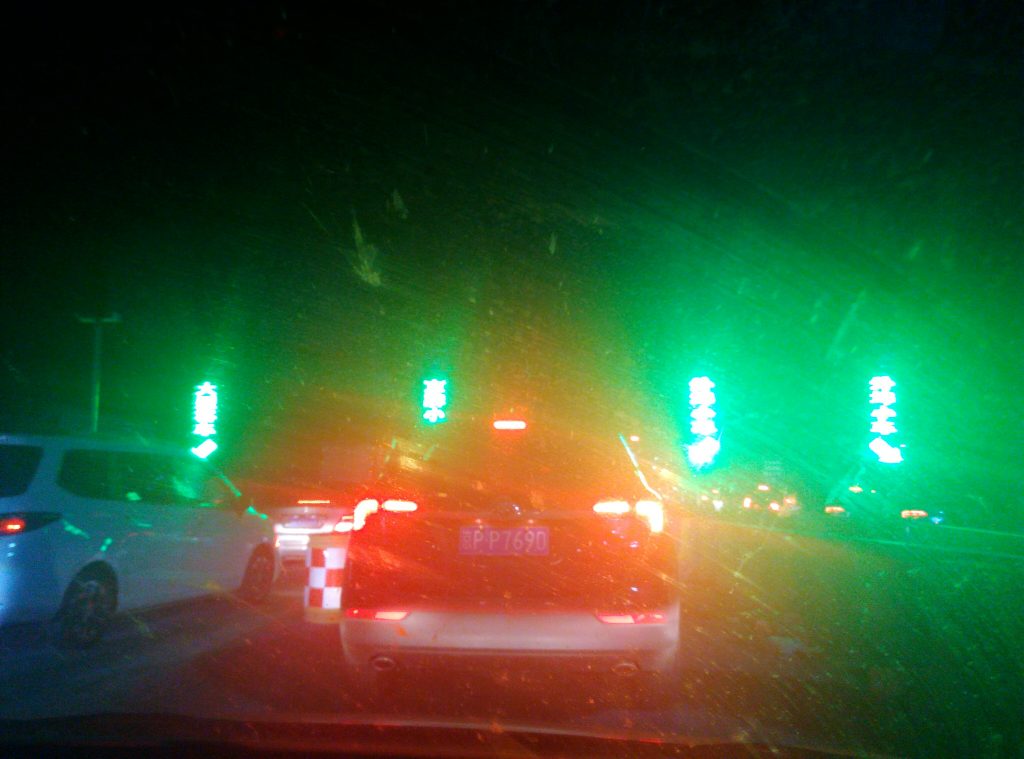
But our journey wasn’t without a few hiccups. As we neared the border between Shandong and Hebei province, traffic screeched to a halt on the highway. It was so bad everyone turned the ignition off and even got out of their vehicles to roam around the highway.

After running into a second traffic jam, we decided it was time for a detour. We left the highway, crossing into Hebei province on a smaller road close to the highway.

Unfortunately, we were delayed once again at the border between Hebei province and Beijing. It took us an entire hour to cover 1 kilometer! Even worse, the service station (also known as the only place nearby with bathrooms) happened to be closed. Yikes! After spending an hour with my legs clenched together, we had to pull over on the side of the road so I could relieve myself. (Thankfully, it was totally dark without a single street light and I used the car door to shield myself from any would-be voyeurs.)

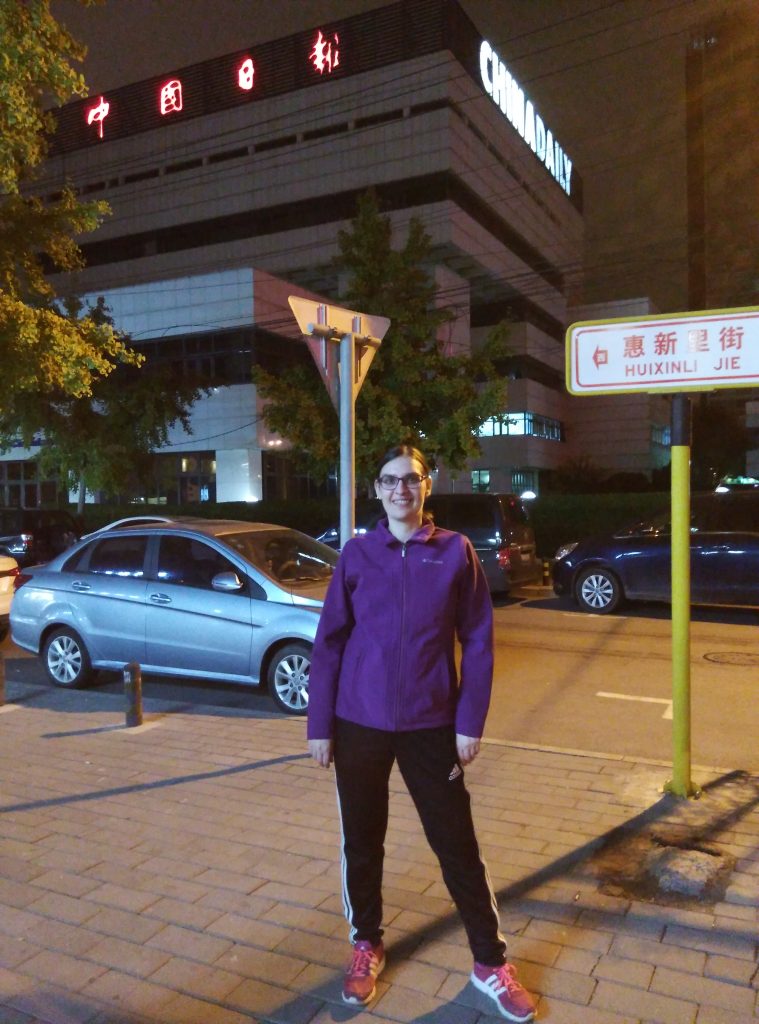
We finally arrived that evening at 8 o’clock, when I had my first glimpse of the China Daily building. How wonderful to see our new home, glowing like a lantern lighting the way to our brighter future.


Let the new chapter in our lives begin — our Beijing adventures!


WWAM of the Month: Bianca Wan – Pub’d on WWAM BAM!

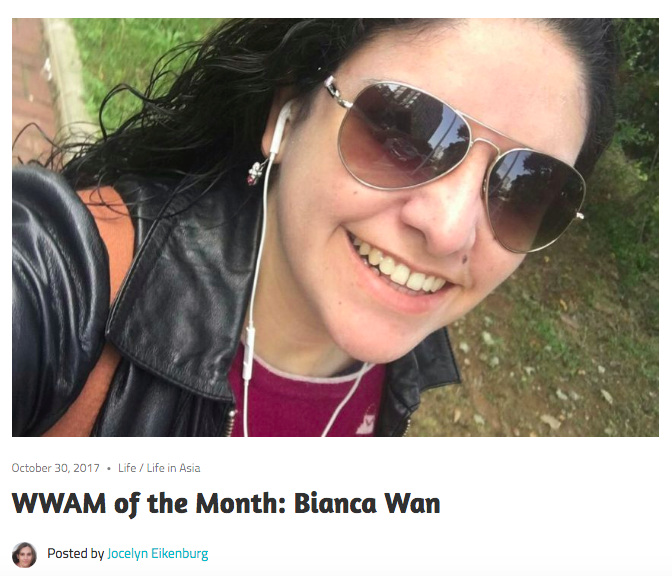
The group blog WWAM BAM just ran my latest WWAM of the Month interview with Bianca Wan, a Brazil native residing in Chongqing. Here’s an excerpt from the interview:

What attracted you to your husband?

I had an instant crush on him because he was a real gentleman and had the features I find attractive in a man. What I love the most about my husband is that he always supports me. He is a very just person and is reasonable most of the time. Plus he never gets tired of my constant need of hugs. Brazilians love hugs. I’m a Taurus as well – we’re very passionate lovers.

Head on over to WWAM BAM! to read the full interview. And if you love it, share it!

3 Delicious Fall Treasures in Hangzhou, China

If Hangzhou truly is one of the heavens in China, it might just be because of these three delicious treasures you can enjoy there in the fall. While visiting with this family this fall in rural Hangzhou, I rediscovered these treasures – and want to share them with you:

#1: Pomegranates

As much as I’ve loved pomegranate juice, I didn’t have the same affection for the fruit. It’s a bunch of pulpy little seeds. How could anyone love eating that?

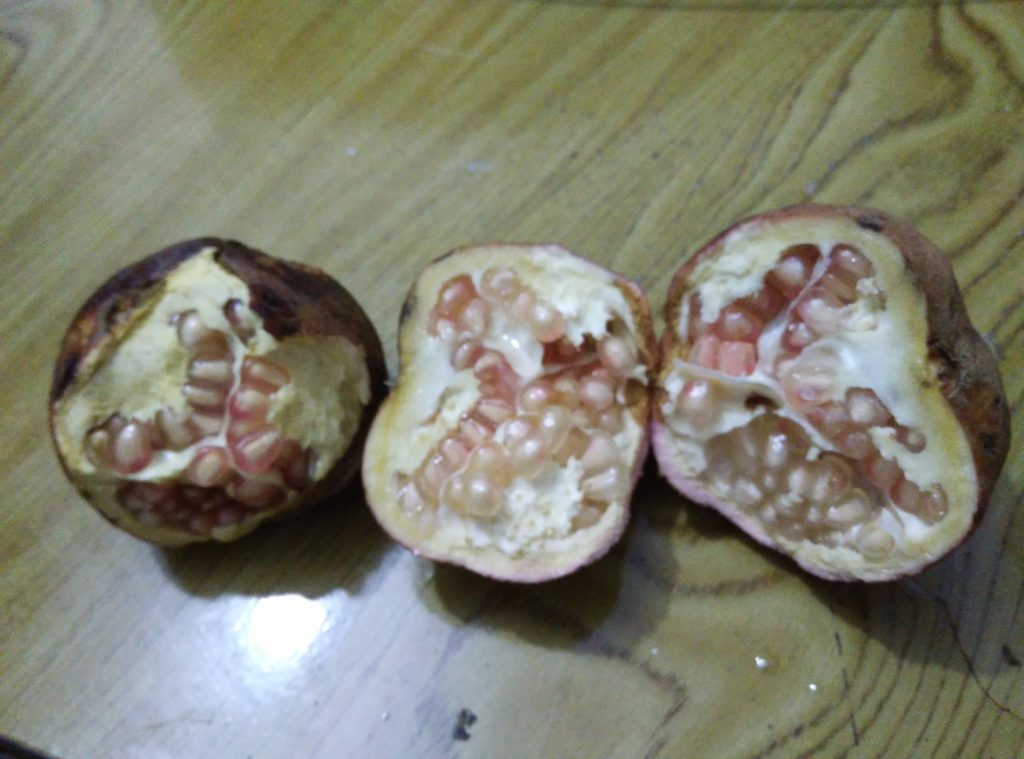
My anti-pomegranate bias was challenged, however, when my mother-in-law gifted us with a heaping bag of the fruit, freshly harvested from the tree in her yard. Not long after that, my husband broke one open and started sharing the seeds with me. So I popped a handful in mouth – and was stunned. They were bursting with that same rich, sweet-tart flavor I’ve come to love about pomegranate juice. But better! These weren’t a bunch of pulpy seeds – these were ambrosial fruit jewels.

Just like that, I became a pomegranate fan.

Here’s the best part – the pomegranates also healed me. I’ve faced a lot of exhaustion and stress recently from moving around, which usually leaves me with an uncomfortable, nervous stomach. Well, pomegranate is actually good for your digestion and pretty soon I found I no longer needed my usual peppermint tea after dinner. Now that’s a superfood!

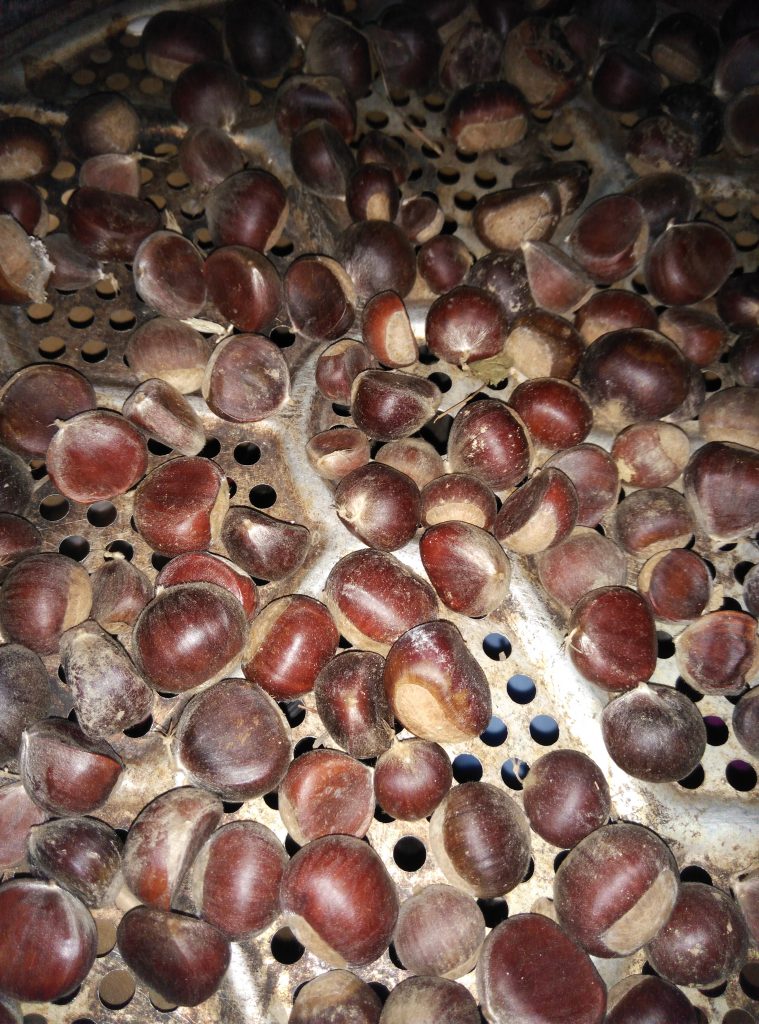
#2: Roast Chestnuts

As a kid, I used to sing the praises of roast chestnuts every holiday season in the form of Christmas carols. But I never once tried a roast chestnut until I came to the Hangzhou region – and especially, until I stayed with my husband’s family in the countryside.

Here the hillsides become a land of plenty as the chestnut trees shower their delicious fruit everywhere. People like my mother-in-law scour the natural areas for chestnuts, and then take them home to roast. There’s nothing quite like the aroma of roasted chestnuts, especially on a chilly fall evening. I also love the subtle flavor reminiscent of sweet potatoes, and the fact that they can be a terrific after-dinner snack. Open fire optional. 😉

#3: Osmanthus Flowers

In China, people call October the “golden month.” But I believe the real gold of the season is when the air is redolent with the intoxicating aroma of sweet osmanthus flowers.

Osmanthus trees produce some of the smallest blooms. But if heaven was a fragrance, it would probably smell something like this. Even better, these flowers are a delightful addition to a number of fall treats, including roast chestnuts and mooncakes. You can even make a tea out of the flowers.

But the best way to enjoy them is to take a fall stroll in a garden filled with blooming osmanthus trees, inhaling a scent so luscious it must have been reserved for the gods. This experience should be on everyone’s bucket list.

What are your favorite fall “treasures”?