I’m Moving to Beijing to Work for the China Daily

Finally, time to share the big news with you — I’m bound for Beijing this weekend, where I’ll be working for the China Daily website as a copy editor.

It’s really a dream job for me, and so hard to put into words just how excited I am to work for China’s most prominent English-language newspaper.

But I’m also thrilled about relocating to Beijing, where a lot of my friends happen to live. We’ve had to manage long-distance friendships, so the prospect of actually meeting these friends in person is also like a dream. Or an early Christmas present. 😉

I also look forward to making new friends up in the great Chinese capital, including readers like you.

And don’t worry, the blog isn’t going anywhere. I’ll continue to publish the same outstanding content you’ve come to love from Beijing.

Here’s wishing everyone a gorgeous October!

P.S.: For anyone wondering, yes, my husband will move with me.

3 Foreign Women with Kids in China Talk About Chinese Schools – Pub’d on WWAM BAM

The publication of Lenora Chu’s new memoir “Little Soldiers: An American Boy, a Chinese School, and the Global Race to Achieve” has reignited interest in the Chinese education system. Her book examines the pros and cons of Chinese schools through her son’s experiences in a Shanghai kindergarten and her own investigative reporting. While Chu acknowledges the challenges of the Chinese education system, she also praises a number of positive aspects, concluding that American schools could learn from China.

When I was reading this book, I couldn’t help thinking about the many Western women I know in China who have Chinese husbands and children here. What experiences did they have with the Chinese education system? What did they like or dislike about it? Would they send their kids to Chinese schools or prefer to educate them in their own countries?

That inspired me and the team of bloggers at WWAM BAM to search for Western women married to Chinese men who were willing to share their own experiences and perspectives on the Chinese education system. We were fortunate to find Sonia, Charlotte Edwards, and Tiffany, who talked to us about the decisions they made for their children.

We’ve just published their thoughts in a blog post on WWAM BAM titled 3 Foreign Women with Kids in China Talk About Chinese Schools. Each of these ladies had a completely different approach for educating their children, along with different opinions about Chinese schools. Here’s a snippet from the blog post:

Should I send my kids to Chinese schools? It’s a question that many foreign parents in China ask themselves, especially those with a Chinese spouse.

Journalist Lenora Chu asked herself the same question years ago in Shanghai when deciding where to send her son Rainey. She ultimately enrolled him in a local Shanghai kindergarten, and the experience inspired her to examine the Chinese education system as a reporter and mother. Her new memoir “Little Soldiers: An American Boy, a Chinese School, and the Global Race to Achieve” offers a nuanced and balanced perspective on the benefits and drawbacks of the Chinese education system. “Little Soldiers” ought to be required reading for any Westerner wondering if children would benefit from Chinese schooling.

After reading “Little Soldiers” I was curious to know about the experiences of any foreign parents with Chinese schools or their perspectives on the Chinese education system. We asked some Western women who married Chinese men and lived in China about the decisions they made for their children.

To read the full post, head on over to WWAM BAM! A huge thank you to Sonia, Charlotte and Tiffany, as well as fellow blogger Julia Chen, who helped us find and contact these contributors.

Finally, for anyone curious about the Chinese education system, “Little Soldiers” should be required reading. You can find it at Amazon, where your purchases help support this blog.

WWAM of the Month: Pamela – Pub’d on WWAM BAM

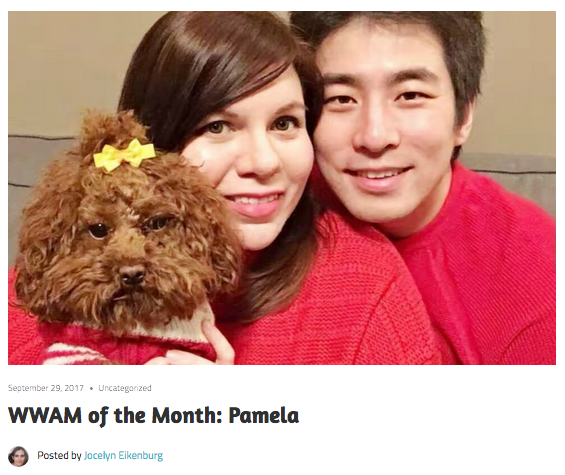
Just recently WWAM BAM ran my interview with Pamela, who is our lovely WWAM of the Month. Here’s the intro to that post:

If you’ve viewed our post on 25 More Stunning Photos of Western Women & Asian Men Who Got Married or Engaged (The June 2017 Edition), then you’ve seen Pamela, who graced the final photo in the post.

She hails from the beautiful beach community of Tampico, Mexico, and now calls Taiyuan, China home. With her Spanish-language Youtube channel, she’s helping folks around the world get a new perspective on China en español. (You can also follow her on Instagram.) We sat down with Pamela to learn more about how she landed in China and what it’s like connecting with people on Youtube.

Head on over to WWAM BAM to read the full post. And if you like it, share it!

On Toilets in China – or How I Learned to Love the Squat Toilet

NOTE: for everyone still awaiting news of where I’m moving, I’m still waiting for some official paperwork before I can make a formal announcement. Please bear with me — and in the meantime, please enjoy this blog post. 🙂

One of these days, my husband and I will eventually have our own home. Sometimes we like to talk about it. And when we do, occasionally the conversation turns to the bathroom.

Now, I’m not of those home improvement TV fanatics who already has her dream house mapped out down to the shower tiles and the faucets. But I can tell you there’s one non-negotiable for our future dream bathroom or bathrooms.

There must be a sitting toilet for me, and a squat toilet for Jun.

That might sound like a “wild and crazy” combination for one bathroom. But if you visit the average public toilet in the Hangzhou region of China, where my husband is from, there’s nothing wild and crazy about it.

Your typical public bathroom here in the city includes a mix of squat toilets and sitting toilets. Usually three out of four of the toilets, if not more, are squatters. But you’ll always find at least one or two sitting toilets for people who want them.

No matter where he is, my husband will almost always prefer a squat toilet. That’s the toilet style he grew up with.

But ask me what toilet I would prefer and I’ll say, “It depends.” At home, I always want a sitting toilet. Outside the house, however, I prefer squatters, thank you.

In my pre-China American life, squat toilets did not exist. I was raised on the sitting toilets you’ll find all across America in homes and public toilets everywhere. The closest I ever came to something different was the dry toilets we called “pit potties” that I would use in state and national parks. But even those had a seat just like the sitting flush toilets I used everywhere else.

Of course, when I signed on to come to China I soon learned I would face a new kind of toilet – the squat toilet. Like many Westerners unaccustomed to crouching down to do my business, I felt a twinge of anxiety over this new toilet I would face in China. Would my legs be up to the challenge? I never would have admitted it to anyone, but I secretly worried I might actually face the danger of “falling in,” something you would never want to happen with any public toilet.

Coming to China was like total toilet immersion. Except for my own apartment (which thankfully had a sitting toilet), squatters were everywhere: at work, the gym, and the apartment that belonged to my boyfriend at the time. Yes, even spending the night at his place meant squatting down.

As it turns out, when you’re given only one option for relieving yourself and you really, really need to go, you adjust pretty quickly. Even if it means wobbling about as you’re crouching over a squatter on the train. (Thank goodness for those handles on the wall.)

I also discovered something else over time: I appreciated the squat toilets. Yes, whenever I was in a public bathroom and presented the option to squat, I felt grateful that I could crouch down instead of sitting down.

You might be asking, “Why would someone raised on a sitting toilet actually prefer squat toilets in public places?”

Because with squat toilets, your behind doesn’t touch anything. You hover safely above the toilet with zero contact.

Even though studies have largely debunked the myth of dirty toilet seats, what woman hasn’t come to a public bathroom to find the occasional pool of urine or worse on the seat or front of the pot? I don’t know about you, but I find it enormously relieving to have my butt spared these issues in China.

It makes me wish squat toilets were available in America’s public restrooms.

For now, though, I’m grateful I live in China. This is a country that offers me the comfort of a sitting toilet in private, and the relief of having a squat toilet in public restrooms.

It’s also a country where one American wife and her Chinese husband can envision a dream home with a sitting toilet and a squat toilet in the same bathroom.

“Rotten Sweet Potato” & Other Funny but Unflattering Nicknames Among Chinese Friends and Family

By Llez – Own work, CC BY-SA 3.0, https://commons.wikimedia.org/w/index.php?curid=10483011

Note to everyone waiting on my moving announcement – sorry to keep you all in suspense on this, but I promise I’ll share the news soon. Please bear with me and in the meantime, enjoy this lighthearted post!

Do American men love to give their male friends unflattering nicknames? That was the conclusion of one American standup comedian I once watched years ago on cable television. He claimed women never do this, and followed it up with the seemingly preposterous example of a fictional woman dialing up her close girlfriend saying, “Hey Betty, you water-retaining cow, how are you?”

If only that comedian heard about the nicknames among my husband’s circle of male friends and relatives. Most are unflattering, and some are even downright derogatory. In other words, they’d be right at home in any standup comedy routine.

Is this phenomenon a worldwide guy thing or just a coincidence? While we ponder that, here are several examples of those unflattering nicknames from my husband’s own circle of guy friends and relatives in China.

Jīpìgu/鸡屁股 – literally “chicken butt.” I wonder if this guy always gets the rear end of all the chicken served at banquets as a joke?

Làlìtóu/瘌痢头 – literally someone with a head of favid, a rare fungal disease usually affecting the scalp. You can read about it in this Wikipedia article, though I don’t recommend checking it out during dinnertime. Makes you wonder about the guy with this nickname and how he ended up with it.

Lànfānshǔ/烂番薯 – literally “rotten sweet potato.” I have no idea where this nickname came from, but I’m pretty sure it has nothing to do with his cooking ability.

Mázi/麻子 –refers to someone with either a pockmarked face or a face covered in moles. I know a number of folks in the US who suffered through childhood because of freckles or other facial features such as moles or scars. I guess in China you don’t get a pass on this; and sometimes, you get a nickname.

Sóng/ — a term for male reproductive fluid. Try imagining someone with this nickname and see if you don’t laugh.

Yánghuǒdànzǐ/洋火弹子 – literally “matches and a shot from a bullet,” this nickname refers to the fellow’s prominent mullet. I guess this guy’s hair is really “on fire.” 😉

What unflattering nicknames have you heard?

I’m Moving to Another City in China!

One of the reasons I’ve been so busy in the past month? I’ve been planning a huge move for September. Yes, that’s right — I’m moving to another city in China.

What city? I’ll let you know later this month. In the meantime, I want to keep it a surprise. (He, he, he! 😉 )

So, since a lot of my energy will be directed towards packing things up and moving them around, you might not see me posting later this week. Never fear, however — I will be back on September 19.

If you are looking for some great reads, however, I would encourage you to head on over to the group blog WWAM BAM (Western Women, Asian Men – Breaking All Molds). We’ve just added some new voices to our blog, including Judith, who just published a piece called On my mother-in-law and my placenta, and Julia Chen, who wrote Having a Miscarriage in China. They’re both worth a look.

Wish you all a wonderful week!

WWAM of the Month: Toni – Pub’d on WWAM BAM!

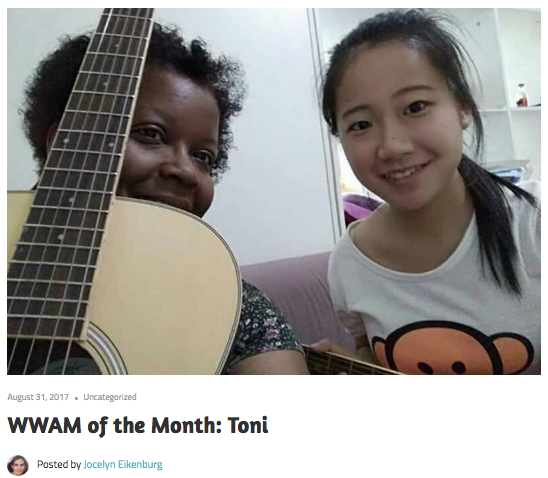
The group blog WWAM BAM! (Western Women, Asian Men – Breaking All Molds) just published my piece spotlighting our WWAM of the Month: Toni. Here’s an excerpt from the piece:

If the WWAM community held a talent show, you can guarantee Toni would shine onstage. This native of Alexandria, Virginia is a singer-songwriter who can play piano and the guitar. She also speaks Mandarin Chinese, one of the languages she shares with her fiancé Min, who she met while teaching English in Zhengzhou. Wow!

We sat down with Toni to learn more about everything from how she came to China to what it’s like having a bilingual relationship.

Head on over to WWAM BAM! to read the full interview. And if you like it, share it!

Photo Essay: Celebrating Our Anniversary By Hangzhou’s West Lake

So August has turned out to be one of the busiest months of this year for me. Who’d have thought the traditional “vacation month” could be so hectic?

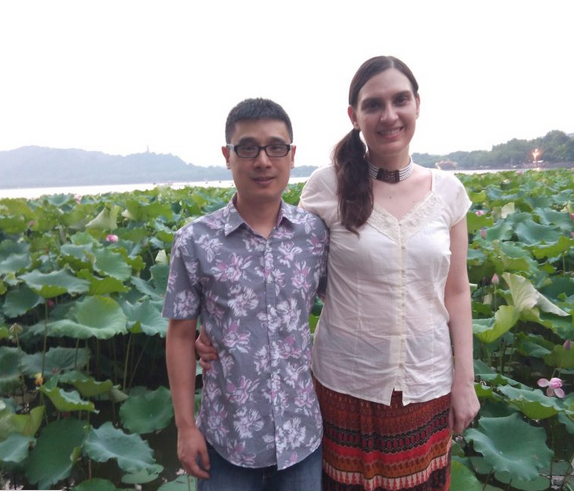
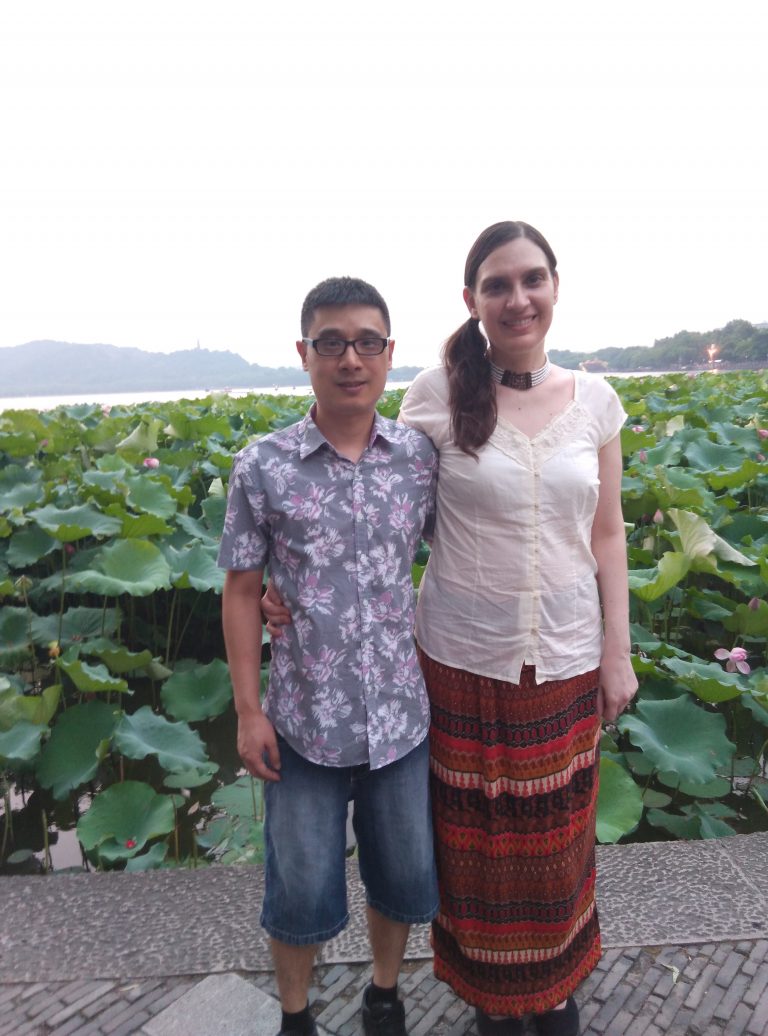
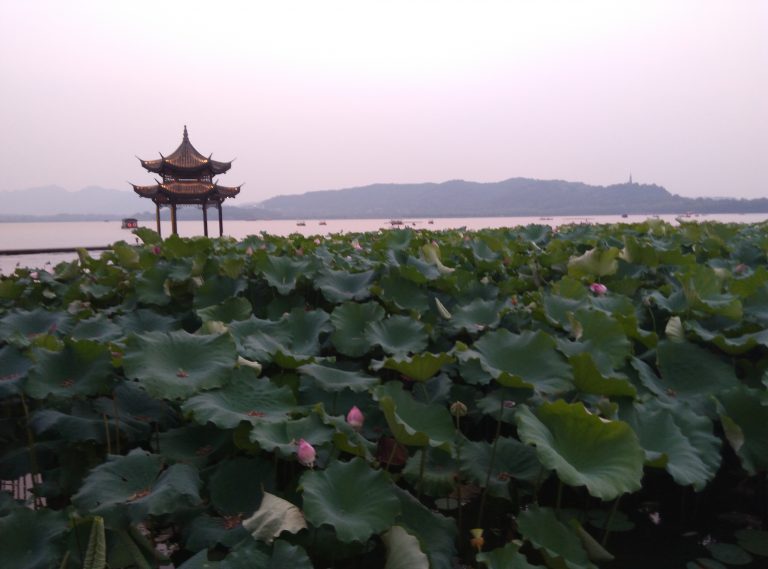
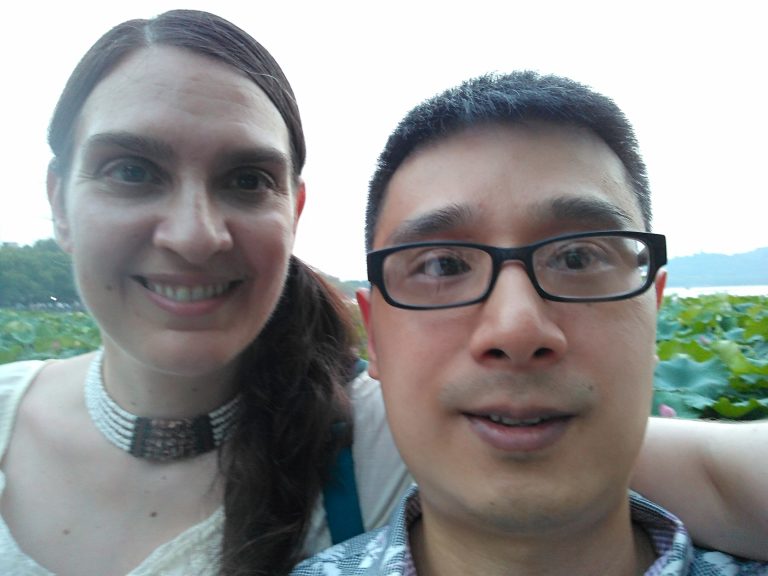
While I’m catching up on things, I thought I would share a few pictures from our anniversary celebration by Hangzhou’s West Lake a few weeks ago. Sure, Hangzhou summers can be ferociously hot. But take a stroll by the West Lake when the lotus flowers are in full bloom, and you could almost forgive the weather.

Almost. 😉

Anyhow, here are the photos — enjoy!

On Attraction Between White Women/Asian Men And What’s “Normal” – Pub’d on WWAM BAM!

In case you missed it, WWAM BAM! recently published my post titled On Attraction Between White Women/Asian Men And What’s “Normal”. Here’s an excerpt from the piece:

“It’s totally normal for white Western women not to be sexually attracted to Asian men,” wrote a woman in a comment I happened to read.

I shouldn’t have been stunned or surprised by her words. Hadn’t I heard variations on this theme before? After all, I’d been privy to many conversations where white Western women dismissed the possibility of dating Asian men in all sorts of ways. Sometimes in unprintable language.

But I was jarred by her comment, feeling the mental equivalent of a sudden static shock pulse through me as I read it. That’s because there was a time when it might have applied to me. That I might have concluded my own pre-China track record of exclusively dating white guys was “normal” and “natural”.

Head on over to WWAM BAM! to read the full post. And if you like it, share it.

“You Must Be Russian” – On Mistaken Identity in China and America

“She must be Russian…even her hat is Russian.” 😉

“Are you Russian?” someone asked me the other day here in Hangzhou.

It felt like a total a palm-in-face moment. After all, hadn’t he read my CV, which explicitly stated I was an American, in bold letters?

But the truth is, I had heard this same question – which more often came out as a statement (“She’s Russian”) – hundreds of times here in China. I can’t tell you the many times I’ve been standing on a metro or riding the bus, and all of a sudden I catch someone whispering in Chinese that I’m Russian, never knowing that I understood their every single word.

The thing is, I do understand where this comes from. Because I’ve heard many other white foreign women married to Chinese men share similar stories of being called citizens of China’s Northerly neighbor. Given Russia’s promixity, it’s not surprising.

But yet…sometimes the conclusion isn’t flattering either. Not when some people think we’re Russian prostitutes.

Sadly, I’ve heard stories from white women in China who were stalked and even nearly raped because someone assumed they were “for hire”. My Chinese husband, who has seen how some men look at me (and not always in a good way), makes it his duty to “protect my butt” from wandering eyes.

But here’s the fascinating thing in my case – Americans have also mistaken me for being Russian. Yes, Americans.

In fact, when I was at university, I was stopped on two occasions and explicitly asked if I wasn’t from Russia.

I had to confess feeling a little strange. What was it about me that prompted them to think this? Then again, this is America, a country where news giant CNN actually ran a map showing Hong Kong as part of South America.

Come to think of it, now that’s a true palm-in-face moment.

Do you have any stories of mistaken identity?