

While I faced a spamming dilemma in my company in Hangzhou, my Chinese boyfriend, John, faced a dormitory dilemma at his university in Shanghai.
John lived in a men’s graduate dormitory on campus, an older brick building with four floors that stood next to the school cafeteria. John’s initial dorm room, on the second floor, had a window perched just above some large fan or boiler unit for the cafeteria that looked like a large white mushroom made of metal.
John didn’t mind sharing a room with three others, or the smell of the drab, institutional bathrooms, or even the usual 11pm lights-out, power-off policy typical of a Chinese university. But he did mind the noise of the cafeteria — from that strange unit outside the window — which disrupted his sleep every morning, around 4:30am. Continue reading “Chapter 33: My Chinese Boyfriend’s Dormitory Despair”
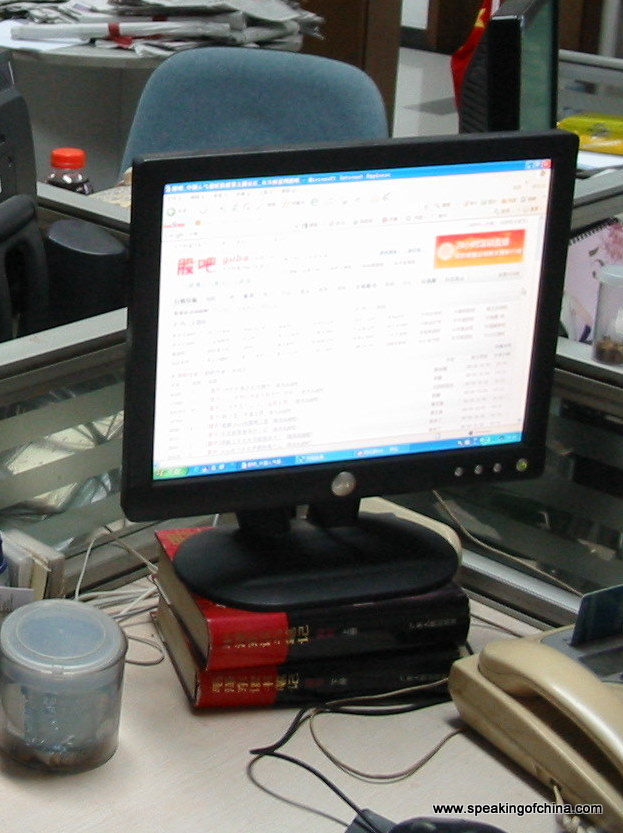
 As a foreigner in China, sometimes you touch people in ways you never realized. Something you say or do in a moment — a small, forgettable thing to you — becomes a lasting impression to someone else.
 Tony asks:
 I wanted it to be just another Saturday — as it was to my Chinese coworkers. I rode the number 44 bus to the office, as always. I took the elevator up to floor 12. And when I came to my desk, there was my ex-Chinese boyfriend, Frank, still sitting next to me, as usual.
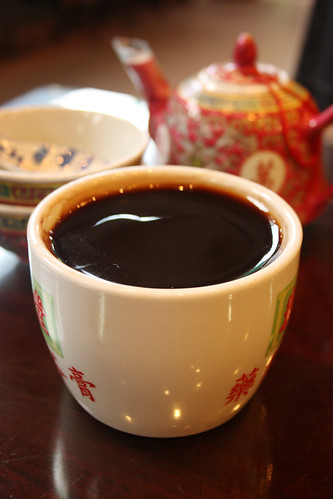 When you’re a foreigner in China, the most common phrase you might hear is: “Can you teach me English?” Your foreign face is like a walking advertisement that new friends or friends of friends can’t help but answer — because they live in a world where English could determine their future, or change their destiny.
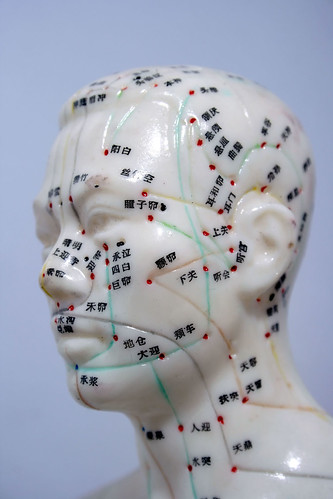 In Chinese traditional medicine, there is a saying: anger hurts your liver, melancholy hurts your lungs, thinking hurts your spleen, happiness hurts your heart. The thing is, we are all angry, melancholy, happy, or just thinking at different times in life. What hurts is when we do it too much, without balance.

