3 Ideas for Reducing Arguments in Your Cross-cultural Relationship

If you’ve ever thought that John and I had this perfect marriage where nothing ever goes wrong, well, I’m here to burst your bubble.
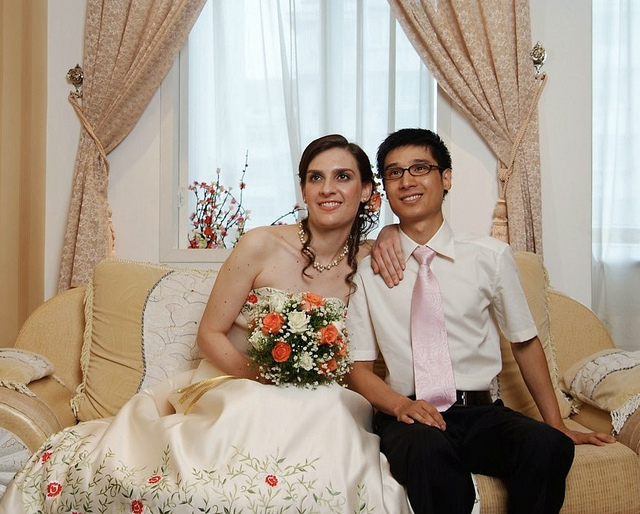
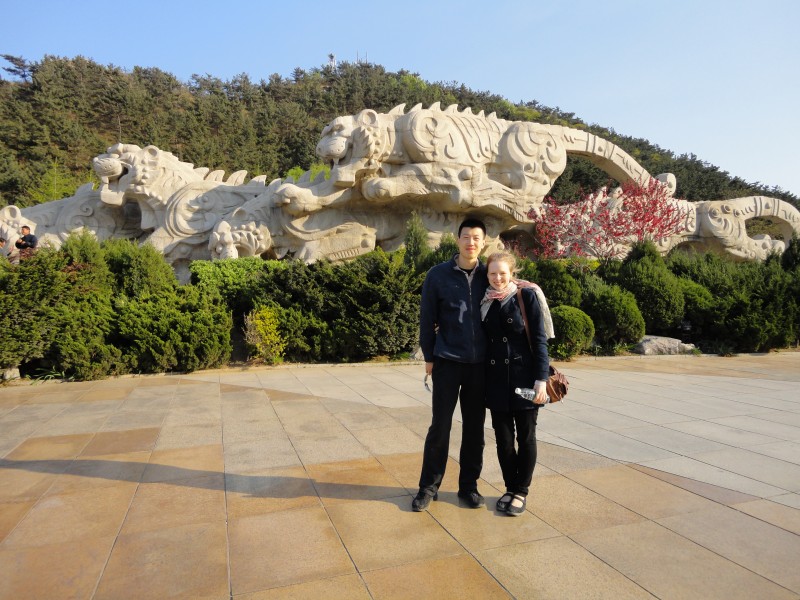
7673749600_070c70d55d_z
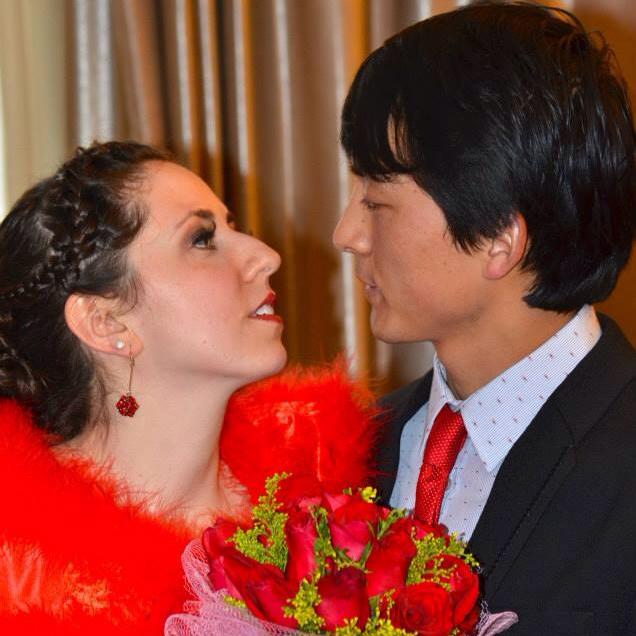
This picture may look perfect, but my marriage with John is not — and we’ve had our share of arguments!

You should have seen us a decade ago when we lived in Shanghai and had our share of arguments (including some explosive ones, with yours truly losing her temper and doing lots of yelling). I’m pretty certain I must have given some of our neighbors quite a “show” at times.

Arguments aren’t fun in any relationship, but they can get really ugly when you’re dealing with a cross-cultural relationship. Why? Because sometimes the ways in which we argue – and the things that get us irritated – relate back to culture.

After 10 years of marriage, we’ve learned a thing or two about each other and how to maintain a harmonious cross-cultural relationship – with a lot more happiness and a lot less arguing. Here are three things that have helped us get over arguments:

1.  How you manage anger and even argue can be a cultural thing – and sometimes the differences can set you off unexpectedly

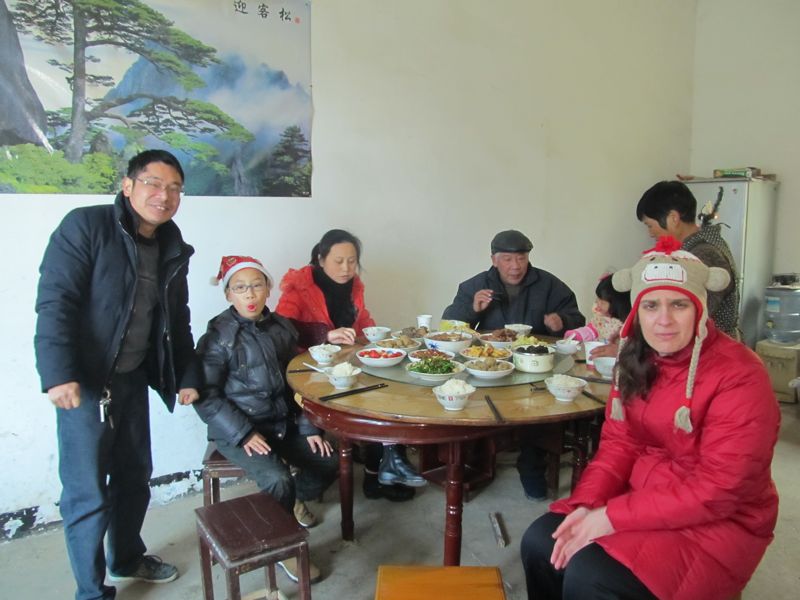
IMG_2145

In my husband’s home, his family has always valued a certain emotional restraint and don’t really show their anger that much. But I’ve seen his family angry – specifically, his brother – and guess how he responded initially? He was silent. Didn’t say a word. (I can tell you, it was a pretty painful silence!)

On the other hand, in the family I grew up in, when you’re angry, you show it – which means you might raise your voice, yell and even go red in the face. I come from a long line of fiery women. We’re an expressive bunch and, when something bad happens, it needs to be hashed out immediately – even if it gets a little emotional.

So you’ve got one emotionally restrained guy who goes silent when he’s upset, with an emotionally expressive woman who vents her anger and wants to talk it out. Put us together and you’ve got the potential for a disastrous argument to happen. How do I know? Because John and I have had plenty of them.

They used to go something like this: I would start out with some anger, and because John wouldn’t respond to me, my anger would escalate until I suddenly turned into a mad tiger on the prowl (which made John even more likely to clam up and avoid me).

It took us a while to realize that part of the problem was our totally different styles of handling anger.

So, John has learned that it’s important to acknowledge and respond to me when I’m upset.

I’ve also learned that it’s important to manage my own anger. Sometimes when I let my temper loose, things can go a little overboard. John’s a great model and reminder that you don’t always have to be like that when you’re angry.

2. Recognize that living in a different culture can be stressful — so it’s important to provide some “compensations” to the person who left their culture

IMG_2698

When John and I lived in America, I started noticing that he was much more irritable than he used to be back in China. And it didn’t take much to set him off and start another argument. It was so unlike John, who had always been so easy-going, always ready to greet me with a smile. What had happened?

Then one day, it hit me – he was stressed out because of living in America, a different country and culture from his own. And adding to all of that stress, he was forced to navigate this new and stressful world in English, his second language.

Of course, this didn’t occur to me for a long time. Because I felt so comfortable to be back in America, the country and culture that I grew up in, I took it for granted that John would feel as comfortable as I did.

So, eventually, I realized what I needed to do: make room for some things that John missed from his own culture. In other words, provide some “cultural compensations” if you will.

Naturally, it started with food. You know how they say that the way to a man’s heart is through his stomach? Well, I figured that the way to quiet a man’s heart – especially when he’s stressed over living in another culture — is through his stomach too. I started cooking up his favorite Chinese foods and putting rice on the menu more often.

But then I moved on to other things that he missed from China. We rented Chinese movies and streamed Chinese TV shows on the Internet. I even let John teach me how to play some soccer (a sport that, while not Chinese, is so popular in China it might as well be the national sport).

All of it made John a much happier guy – and, by extension, ours a much happier marriage. And if I had only figured it out sooner, I might have prevented a lot of unhappy moments we had together.

3. Practice reciprocity
102_2242

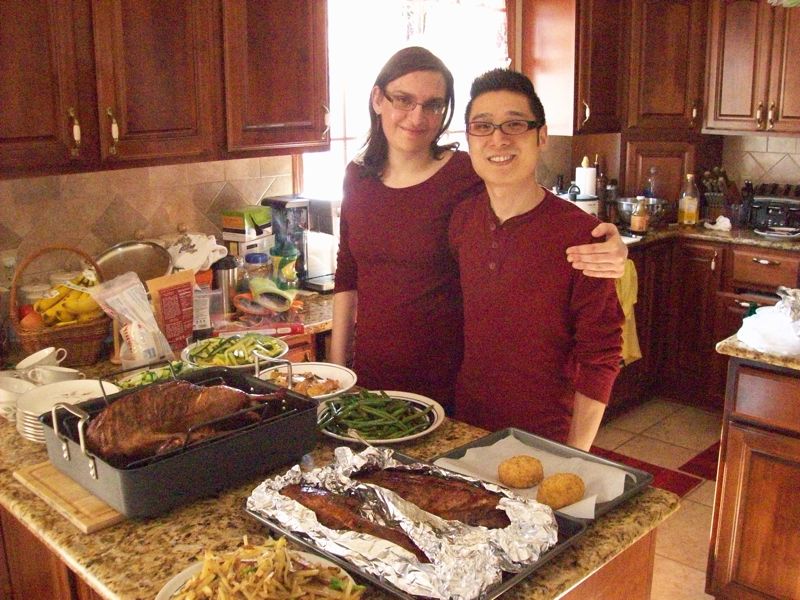
When I tell people that I make my husband red-braised pork, yet I’m still a devoted vegan, they look at me like I’m insane.

Well, believe me, it wasn’t easy to pick up that raw meat one afternoon and turn it into one of my husband’s most favorite comfort dishes from China. A part of me (the part that knows I was definitely made to be vegan) still recoils whenever I see any kind of raw animal flesh in the kitchen.

Ultimately I did it out of love – or, more specifically, to reduce arguments in our marriage.

See, at the time all this started, I had subjected my husband to months of vegan dining, thinking that we could eat vegan together in America and live happily ever after.

But there was a huge problem with that.

John grew up in a culture and household where people eat meat. It’s a normal part of life in China. Granted, when he was younger meat wasn’t as prevalent as it is today. But if people had meat, they were going to put it on the table.

So when you try to force a guy who grew up eating meat to go without, he gets grumpy. And it’s not fun to live with a grumpy husband.

So I started making a little meat on the side, just for John. Some red-braised pork. Baked chicken legs and chicken wings. The occasional fish too. Anything his carnivorous side desired.

Suddenly, my husband transformed into a much pleasant guy. It was a miracle for both of us to finally live in a house with a lot less arguing going on.

And since he was happy about his food, he decided to reciprocate. So whenever I went to do shopping at the store, he would encourage me to indulge my crazy vegan cravings and buy what John called a little “rewarding food”. Things like vegan cheese and faux meats and soy yogurt.

Sometimes, we’d end up having meals where the two of us might eat completely different things. At one end, there’s John digging into his red-braised pork. And at the other, there’s me tucking into a vegan Mexican wrap (with my favorite Daiya vegan cheese).

As bizarre as it might seem to be eating two different things at exactly the same time, it has really worked for us. This is reciprocity in action – both of us were happy because we accommodated each other’s personal cravings and needs.

We’ve extended that kind of reciprocity to other things in our life. For example, nowadays when we watch TV here in Hangzhou, I’ll let me husband tune into some of his favorite China news programs. Then he’ll toss me the remote after a while, so I can catch the kind of TV I like (such as romantic comedies and love stories – yeah, I’m a sucker for romance, can’t you tell?).

I think any couple – especially couples who hail from different cultures – would benefit from a little reciprocity in their lives.

What do you think? What strategies have you used in your own relationship to reduce arguments?
Do Some Chinese Men Really Feel Inferior to Western Women?

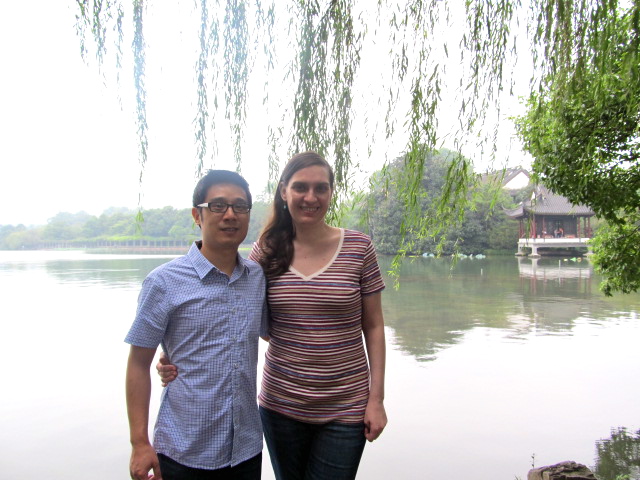
My husband John never felt inferior before me. But I was surprised when a friend told me some Chinese men would -- and wouldn't want to date me because of it.
My husband John (pictured above together with me beside Hangzhou’s West Lake) never felt inferior before me. But I was surprised many years ago when a friend told me some Chinese men would — and wouldn’t want to date me because of it.

Years ago, before I had finally met John (my husband), I recall spending an evening in one of Hangzhou’s many teahouses with my friend Xiao Yu, a male colleague I met in my company.

Xiao Yu always felt like a brother to me from the first day I entered that company. Maybe it was his near-flawless English, his easygoing smile that always seemed like an invitation to sit and chat, or his self-effacing personality. Whatever it was, he was the guy I felt like I could talk to about anything.

Well, as a young single woman in her twenties still new to dating in China – and still occasionally baffled by the way Chinese men behaved with me – I was desperate for a male perspective on it all. Or rather, a male perspective on one specific thing:

Would Chinese men really date a white Western woman like me?

After my recent bad luck, I was starting to believe this might be mission impossible. In the span of one month, a guy I hadn’t even been dating (but wanted to) rejected me by saying he could never marry a foreigner, while another fellow simply didn’t return my texts or phone me – even though every time I ran into him at the gym, he kept promising nights out that never came to be.

“Maybe I’ll never be welcomed with open arms by any guy in China,” I said to Xiao Yu with a sigh.

As usual, Xiao Yu served up one of his comforting smiles to ease my pain. “No, no, not at all! Of course many Chinese men would be proud to date you. Maybe their family would even be proud, that their son could understand foreigners. It’s just, well, you’re an American. You’re from one of the most powerful countries in the world. They just cannot believe you would ever want them.”

I cocked my head and raised an eyebrow at his surprising explanation. “Are you kidding me? They actually think a woman like me wouldn’t want them?”

He shrugged. “Some just cannot overcome their feeling of inferiority.”

I was stunned and had to take another sip of my tea to mull it all over. It sounded crazy to me. To think that some Chinese men thought I wouldn’t want to date them just because I’m an American woman!

If I had known about the interracial dating reality for Asian men the world over – including Chinese men – I wouldn’t have been surprised at all. (See my article in the Huffington Post on this titled “Why Won’t Western Women Date Chinese Men?”). But it would take me years before I learned the truth – and before I began to understand part of the reason why Chinese men might rather refuse a woman like me than face the possibility of being refused by a woman from, as Xiao Yu put it, “one of the most powerful countries in the world”.

Of course, I’m not the only one clued into this phenomenon in the interracial and international dating world in China, as my translation of a Xinhua News Story on Zhang Jiehai’s research on “Chinese men in the eyes of Western women” reminds me:

Reporter: Your survey is extremely interesting. I want to ask you, how did you first come up with this question?

Zhang Jiehai: “Chinese men in the eyes of Western women” is one of my starting points in research. In some places, it is common for Chinese to have an attitude that Western is better. This leads to a sense of inferiority before Westerners. I chose to look at Chinese men according to Western women, because, in terms of confidence and self-respect, we have higher expectations for men than women. For many Chinese men, when faced with international criticism, there are two themes that arise — one is inferiority; the other is concealed inferiority. For example, you might say to a person that something about him is not so good; his first reaction is to jump up and attack you, but really, this reaction is caused by a sense of inferiority. He’s angry because something someone else said touched something he is sensitive about. So, to solve the “inferiority” problem, the most essential first step is for you to admit inferiority. We did this survey because we wanted to look at the international world, to see if Western women already realized the inferiority of Chinese men. If so, I will once again turn around and tell everyone, your inferiority is already known, you don’t need to hide it.

As much as it pains me to read Zhang Jiehai’s translated words, I realize the truth in them. I’ve lived them through my own experiences in China. And while no Chinese man has ever admitted that they felt inferior before me and thus decided not to pursue me, I’m sure that’s exactly why some of them never did.

Since I’m now happily married to John, a native of the Hangzhou region (we just celebrated our 10th anniversary), those dating days are long behind me. But I have to wonder, what will it take before Chinese men no longer feel inferior before Westerners, including Western women? When will we finally meet each other as equals in the dating world in China?

What do you think?

Guest Post: “Am I in the ‘Wrong’ AMWF Relationship?” How a Woman Who Loved China Fell for a Korean man

Linda and Jeongsu in Korea.
Jeongsu and Linda

What happens when the man you love isn’t from the country and culture that first captured your heart? 

That’s the conundrum Linda Dunsmore of Linda Living in China — a self-professed “China fan” — faced when she fell for a man from Korea. She writes, “I was worried because he was Korean, while I was passionate about China…. I kept asking myself, ‘Why do I have to fall in love with a Korean man?'”

Do you have a fascinating AMWF relationship story or other guest post you’d love to see on Speaking of China? Check out the submit a post page to learn how you can submit your story today.

—–

Linda in China

I am a total China fan.

I started studying Chinese in 2010, went to China in 2012 for an internship, and also dated a Chinese man (the relationship failed but that is another story). In 2013, I had to return to America to finish my Bachelor’s degree in San Diego, California. Every day, I was still reminiscing about my life in China. I cooked Chinese food, started writing my own blog about China and made almost exclusively Chinese/Taiwanese friends. I was sure to return to China after I graduated.

However, one day, I met someone who changed my life completely.

Linda and Jeongsu with heart

I remember it like it was yesterday. I was helping a friend to find an apartment in Pacific Beach (San Diego’s party area). She wanted to move in together with two other students from our university. We were going to meet him in front of the apartment and he was also going to bring a few friends to help him. We arrived at the scene and a few minutes later they arrived — our classmate from Turkey plus three Asian guys (including one particularly handsome fellow). I had hoped they would either be Taiwanese or Chinese or even from Hong Kong, and I was super excited. But then I discovered they weren’t from any of these places – they were Korean.

There was something incredibly special about this one handsome Korean guy. He was extremely charming; he even asked me about my heart-shaped sunglasses and mentioned that they were really cute. He had something about him that literally drew me to him. I also noticed how he was also suddenly really interested in me. We started talking every day on Facebook or text messaging. Then, before I knew it we met for our “first date”, which was one of the best nights of my life.

Linda and Jeongsu on a date

I started to like him more and more, which should have made me feel amazing. Except, I actually felt incredibly worried. I was worried about what would happen if things worked out. I was worried because he was Korean, while I was passionate about China.

I was worried that I was in the “wrong” AMWF relationship.

I know that sounds ridiculous, but not for someone who invested so much of herself and her life into China. I already lived in China before, loved the country, and had finally mastered conversational Chinese. Meanwhile, I knew nothing about Korea and couldn’t speak a word of Korean. I didn’t know what to do and felt horribly confused! I kept asking myself, “Why do I have to fall in love with a Korean man?”

Jeongsu_Linda_Victorysign

Of course, all of this was my head talking. But the thing is, you don’t love with your head, you love with your heart.

When I searched the depths of my heart, I realized that I fell in love with Jeongsu because of who he is — not because of his race or nationality. In the end, isn’t this what the AMWF community is really all about? We all fall in love with someone because of who he is not because he is Chinese, or Korean or Japanese. These men just happen to be Asian. It doesn’t mean we are completely obsessed with Asian men and strictly ignore all men of other races. It just means we found the right love for us.

Now I work for a Chinese-German company in Hunan, China as I maintain a long-distance relationship with my boyfriend Jeongsu, who is living in Korea. I’ve learned to balance these two parts of my life. While my heart still remains filled with China in so many ways, I’ve started studying Korean, trying Korean foods and reading up about his culture as much as I can. I’m coming to embrace Korean culture just as much as I’ve embraced Chinese culture. I’ve already visited him in Korea twice, including my most recent visit earlier this month. I consider it my second home now and his family my second family — my Korean family.

10706547_929838747030882_1827683505_n

In the end, life cannot be planned. It always comes out differently than how you thought.

Linda Living in ChinaI never expected that my China-obsessed self would fall so hard for a Korean man. But as long as you’re following your heart, there’s no such thing as a “wrong” relationship.


Linda writes about life in China and Korea, her AMWF relationship with a Korean man, traveling around Asia and studying Asian languages at www.lindalivinginchina.com . She is also very active on social media, especially Facebook, Twitter and Instagram.

—–

Speaking of China is always on the lookout for outstanding guest posts and love stories! If you have something you’d like us to feature, visit the submit a post page for details — and then submit yours today.

Fenshou: “He made me alive and dead” in Hong Kong

(photo by Steve Webel via Flickr.com)

An anonymous woman writes of the Chinese man she once dated, “He made me alive and dead. He once left me sobbing on a hotel chaise lounge, naked and overlooking the Hong Kong skyline, and I remember thinking this was what it was like for an artist’s muse to become an artist’s mistress.”

It’s a powerful story of an all-consuming, passionate love between one Western woman and one Chinese man that ultimately burned out — but will never be forgotten.

Do you have a gripping story of passion or a guest post you’re dying to share on Speaking of China? Learn how at the submit a post page.

—–

I found myself falling in love with a man who amazed me. I’ll call him Richard. From his view on the world, to how he would take care of me, and how he invited me to China after only really being together for two months. It. Was. Amazing. He was intelligent, hilarious, and dressed impeccably, He had ambition that matched mine and was damn sexy. Tall, dark, beautiful. Strong, but elegant and delicate. Before this whole experience, I had never dated a Chinese man, let alone, someone who hailed from another country. I was two years older than him (26 and 24), and I was okay with it because of his deep maturity and knowledge and love for the world. All I wanted was to know more about him. Though I have been in love before, I had never felt the pure need I had for Richard. It was real and scary and intoxicating.

We met at a work party — Richard, a citizen of China, and I, a Midwestern girl. It was a whirlwind. Our first week together was spent in three different cities, jumping from hotel to hotel as we traveled with our work. His English wasn’t very good, and I speak no Mandarin. I almost liked how he struggled with the language, and how I had to simplify things just a bit. Instead of the usual nonsense I have to go through with native English speakers, he and I had to cut through all the crap and just say what we really meant.

It was refreshing.

Luckily, we found ourselves in the same city for the next month. Unluckily, our jobs considered dating a no-no, so we had to figure out ways for none of our coworkers to find out about the beautiful thing we had discovered. This entailed sneaking into each other’s rooms at night, only having midnight meals and gifts mysteriously being left in my room. One day, I had found a bottle of perfume hidden under my pillow. My good friend and co-worker, who I spent most of my free-time with, questioned where I got the scent. I struggled for an answer and internally swooned.

All of this sneaking was almost romantic, and added a sense of urgency and danger to all of our rendezvous’. It was entirely worth the rushed meal, just to be able to look into his beautiful eyes and feel the power he had over me. I still get chills thinking of our first kiss, outside of a sushi restaurant at two o’clock in the morning, no one else on the street. Our conversations were sparkling and we had this power over one another that was so electrically charged. My emotions ran so high for him, and his for me.

But still, most of our communication was via WeChat, where he was my only contact, and consisted of nearly 70% of my phone’s activity.

Just as soon as it all happened, Richard was on his way back to China. Now, being too many miles apart, things really got interesting.

The instant he landed in Hong Kong, he made it very clear what he wanted. Me. To not hang out with too many guys (but most of my friends are guys!) and not drink too much (but my hometown is KNOWN for beer!) and to text him from the moment I woke up, to the moment I went to sleep.

And I did. And he did. And we both became obsessed.

We texted from my morning, to way way into his night. I think each of us were only getting about four hours of sleep. Of course, we were still keeping things secret from our friends and common co-workers, so we had no time to Skype and could barely talk on the phone. Strictly WeChat. Our conversations were normal. Flirty, romantic, sexy. Up until a week before I was scheduled to leave.

A week before, his contact suddenly became slack. Not texting when he woke up, barely giving me details of his day. So I pulled back (with lots of struggle, of course). I was hurt and confused and couldn’t figure out where the change came from. All I knew is that I wanted to see him again so I could touch him, and kiss him, and have the bright conversations we were enjoying only a month ago.

I got angry. He got angry. And anger does not translate well on WeChat. Three days before leaving, I found myself awake at four in the morning, sobbing because he wasn’t responding to me. Richard assured me everything was alright, that he was busy preparing for my arrival. I understood.

When I landed for my three week trip, things got even weirder. I wasn’t greeted with a kiss. I wasn’t greeted with a hug, or even a ‘hello’.

“Wow that is a big suitcase.”

My first night in Hong Kong was spent kissing, then fighting, then making love, and fighting again. I felt like I was in a music video. The trip was off to a bad start and working things out was difficult. He was acting strangely. I was acting strangely, our whole vibe was different than it was before.

After a good talk and couple days of me wandering this foreign city by myself, we were better. But looking back, maybe we were faking our happiness. The controlling side of him took over, and my people-pleasing side was brought to surface. Our personalities clashed. Without the secrets, and sneaking, our ‘love’ was different than before. I thought he was urgent before to keep us from getting caught. But as he rushed me through a fantastic dinner, I saw a side of his personality that I didn’t like. And when I protested, he would call me selfish. I would fall to my knees and give in, abandoning half of my food.

We had our ups and downs, and told each other we loved one another. We fought passionately, made love passionately, and I felt pain in my gut when I made him mad. It was a dangerous relationship.

After three weeks of traveling, it was time to part. I think we both knew it was our end. When I landed, he messaged me making sure I made it home okay. I
told him I had.

And that was it.

Though the specifics in my tale are lacking, the feelings stirred up just by writing this assure me the experience ever even happened. It makes me want to message him. But I know I can’t. I know we are both better off. This whole ordeal is two months old, and I still feel like my life is lacking a certain something, something toxic.

Maybe it was the lust, the passion. The way he would hold me at night, like I was a life-raft. He made me alive and dead. He once left me sobbing on a hotel chaise lounge, naked and overlooking the Hong Kong skyline, and I remember thinking this was what it was like for an artist’s muse to become an artist’s mistress. I wanted to think I had the power, but if I really thought that I was a fool. He didn’t have it. I didn’t have it. The power was in us, together.

And I think letting go of that power is the worst thing I have ever done.

Though preferring to remain anonymous, the author is a young professional with bad luck in love.

—–

Speaking of China is always on the lookout for outstanding guest posts and love stories! If you have something you’d like us to feature, visit the submit a post page for details — and then submit yours today.

Double Happiness: From a UK Half-Marathon to a Romantic Dalian Proposal

SoC running 2
Sarah and her husband.

You never know where love’s going to find you — and where it might take you. Sarah (a native of Birmingham, England and the woman behind Diaries of a Yangxifu) had just finished the Half-Marathon in Birmingham, all sweaty and exhausted, when lo and behold, she discovered an incredibly handsome Chinese man right beside her. A man who would propose to her less than a year later in his hometown of Dalian, China. 

Have an unusual love story or thrilling guest post you’d love to see published on Speaking of China? Learn how you can do it (just Sarah did) at the submit a post page.

—–

DSC08890

I never felt quite the same after that year of teaching English in Nanjing in 2010. When I returned to the UK, I found I had a little thing for Chinese men, who reminded me of my year in China and shared my love of 饮茶 (drinking tea) and 烤鱼 (roasted fish). However after about two years, I had got back in to the swing of things back home and was really enjoying living in a multicultural city with a big Chinatown and occasional trips to KTV.

I had been training for the Half Marathon for over four months, including a three-week holiday in China where I managed to sneak in a few runs on the banks of the Pearl River in Guangzhou and along Victoria Harbour in HK. I was feeling incredibly proud of myself when I had completed the 13.1 mile run and felt on top of the world as I walked from the finish line to my home 10 minutes away. Still, I was a bit achey and was trying to decide whether to take a little rest or just get home and have a nice shower. I saw a free bit of wall in the square and decided to take a little rest.

SoC running 1

I soon noticed the handsome Chinese man sitting on the wall next to me and was deciding how to make conversation, a habit of mine since returning from China. Then he turned to me and congratulated me on finishing the run. (Let’s hope it was the medal round my neck rather than the bright red face and disgusting hair that gave me away!)

We got to chatting for a while, exchanged snacks (they put some strange things in race finish bags) and chatted about sport. I had not met such a sporty Chinese person before, or one with freckles. Some time into the conversation I asked whether he was Chinese, and he replied, “Yes, but don’t be scared.” (I’m not sure what kind of experience he’d had of British people!). I answered (in Chinese) that I wasn’t afraid and actually I could speak a little Chinese myself, much to his surprise!

20140516_144912

We spent the rest of that day together, and I think it was the best day of my life. I had not only met not only the most handsome man I’ve ever known. I also met the man who 10 months later proposed to me “movie-style” at the top of Dalian’s sightseeing tower observation deck, right in his hometown where we had moved a couple of months before. I feel so lucky to have met a man with such integrity and intelligence, someone who always strives to be better — just like me.

That day, sitting on a wall in the Birmingham city centre, marks the start of my greatest adventure: of marriage, of a new family, of living a taste of real Chinese life.

20140808_104050-1

Sarah is currently studying Mandarin Chinese in Guilin, China, where she lives with her husband, and documents the challenges and the joys of her adventure at Diaries of a Yangxifu.

—–

Speaking of China is always on the lookout for outstanding guest posts and love stories! If you have something you’d like us to feature, visit the submit a post page for details — and then submit yours today.


Double Happiness: How An American Woman Fell In Love With Xi’an (And One Special Guy)

Marissa and ZJ
Marissa and ZJ

“I’d never dated or been attracted to Chinese men before,” writes Marissa Kluger — not until she met ZJ in Xi’an, a city that stole her heart away.

Marissa’s blog Xiananigans has been a pleasure to follow over the years (right down to her “explosive” Chinese wedding, where she dons the most gorgeous red wedding gown I’ve ever seen). Here’s the story behind it all, from how she discovered Xi’an and ZJ to how they eventually moved it to her hometown in New Jersey.

Have an “explosive” story you’d like to share with us? To learn more about getting your stuff published on Speaking of China, check out the submit a post page for details.

—–

My first trip to China, in 2007, happened to be a three week intensive course abroad, a general education requirement instituted by Goucher College, my alma mater. Xi’an ended up being one of our destinations. Besides inspecting the soldiers at the Terracotta Warriors, bicycling around the Xi’an City Wall, and navigating the alleys of the Muslim Quarter, we met with an alumnus teaching at Xi’an International Studies University.

The city of Xi’an compelled me to return four years later to teach at Xi’an International Studies University. I’m a fairly indecisive person but I had made up my mind after listening to the alumnus’ anecdotes about his job, travels, and experiences. Meeting his students further cemented my longing to come back; they were inquisitive, interested in cultural exchange, American politics and exposing me to as much Chinese culture as several hours would allow.

Snapped at Delhi Darbar, our local Indian haunt, Summer 2013

Although I knew they would show us around their dorms, the campus, and give us small gifts, I was overwhelmed by their warmth, affection, and extroverted personalities. In many ways, they toppled every notion, or better yet, stereotype I read about Chinese students. We met students from universities in other cities during our travels, but XISU students left the deepest indent.

I also saw it as a one-year opportunity to do something outside-of-the-box before starting a career, although at that time I had little idea about what I’d be doing; I hadn’t even declared a major, still opting for that looming “Undecided” title. My parents thought I’d give up on the idea as I still had three years of schooling. They were supportive of the decision, also seeing it as a good opportunity, hoping I’d pick up the language and gain other valuable experiences that could propel whatever career path I chose forward.

In 2009-10, my final year at Goucher, I applied for a position at the university. Three months went by without a word, so I began applying for jobs in my chosen field in the Greater New York City area. A ray of sunshine appeared just a week before commencement…I had received an email from the university offering me a teaching position for the next academic year! When my college girlfriends offered their congratulatory sentiments, they also foreshadowed that 缘分, or fate would lead me to at least date, perhaps even settle down in China. I dismissed this as I didn’t really put much stock in fate.

Bicycling to the 798-like art district in Xi’an, Summer 2013

I arrived in Xi’an in late August 2010, and luckily I had the first month of September free, as I had been assigned freshman. Freshman have mandatory military training, and four years ago, this lasted an entire month. I took this chance to meet up with a very good friend of my former private drum instructor and his Chinese wife. Lu Min Lu, I called her Daphney, helped me settle in and introduced me to the nightlife Xi’an offered. She took me to Park Qin, a bar frequented by Xi’an expats. ZJ worked at Park Qin.

The first time ZJ and I met, I insisted on getting his phone number on behalf of a British girl. I initially cut in for several reasons: I was looking for Chinese acquaintances who might become friends, most of my college friends were guys, he was easy to talk to and charming. I, of course, did all of this not knowing anything about Chinese dating culture, or that ZJ considered himself “traditional.”

After getting his phone number and exchanging texts, we agreed to meet up on his next day off. Shortly after that first meeting, I went back to Park Qin and spent hours talking to ZJ about movies, music, college, culture and more. We had a lot in common, he spoke directly, didn’t seem shy or introverted, much like the students I met in 2007, but I didn’t see this going in a romantic direction. The American girlfriends I emailed back home were elated: “I told you.”

ZJ and I in Xi’an, Chinese New Year 2013

It was about a month later that ZJ and I began dating. In the early stages of our relationship, we looked more like friends. We weren’t affectionate in public and our relationship remained a secret. In February 2011, I met ZJ’s parents during our Chinese New Year visit to his hometown. He prepared me very well for that first visit, explaining that to his parents, bringing a girl home, let alone a foreign one, meant to them we were serious.

I met his best friend from high school as well as extended family from both his mother’s and father’s side; I felt more comfortable than I initially thought in an environment so different from Xi’an and New Jersey. ZJ cared, translated and interpreted for me; his way to show affection manifested itself unlike any previous relationships. I liked the nuances, subtlety of it all, and more importantly, started to fall for him, and so upon returning to Xi’an, ZJ moved in with me.

After moving in together, we spent Western Valentine’s Day on the City Wall, visited the Shaanxi Botancial Gardensattended a professional soccer game at the sports stadium, and he attended Thanksgiving dinner I hosted with a friend. I went back to the US for the summer in 2011. Although we lived together, I worked during the day while ZJ slept after bartending into the wee hours of the morning. After 2012’s Chinese New Year, he decided to take a sabbatical from work.

We visited Baoji after the Chinese New Year to meet 大哥, ZJ’s eldest brother. The spring months of 2012, free from working in the evenings, we visited another campus infamous for their cherry blossomsday-tripped to Hanzhong with friendsspent July in Xi’an and backpacked through Thailand and Laos that summer. This trip tested our relationship, and looking back, foreshadowed some of the difficulties we now face.

The flowers ZJ procured by riding on a motorbike taxi in the pouring rain, at our engagement on June 8, 2013

When the holiday season approached, ZJ fostered my homesickness by taking me out for Peking duck on Christmas, a tradition commonly observed by Jewish-Americans. I went home for three weeks in January 2013; I wished he could have traveled with me, to meet my family and friends. I missed him when I went home for two months in 2011, staying in touch via Skype, however, those three weeks felt utterly painful. I enjoyed my time at home, but a sense of relief washed over me when I touched down in Xi’an a week or so before heading to his 老家 for Chinese New Year.

We had already started discussing getting engaged and this discussion was met with approval by 老爸, 老妈, 大哥和二哥. ZJ proposed to me on June 8, 2013. The timing of the ceremony, the set-up, and the ring were all a surprise to me. He told me we were celebrating his birthday; I saw this as slightly suspicious, but didn’t give it a second thought when he shot me down over WeChat when I asked if he planned to propose.

DSC_4002_Fotor_Collage
A collage put together by one of our foreign guests at the Chinese wedding ceremony, Feb. 5, 2014

We had a friend take engagement photos, stayed at the Sheraton North as a quasi-engagement honeymoon, biked to Xi’an’s new art district, and went to Beijing. We talked about when we would get married that summer: would we stay in China or move to the US?

We registered our marriage a year ago. In October, we took our wedding photos for the Chinese wedding ceremony. Because many of ZJ’s coworkers and friends wouldn’t be able to make the two and a half hour trip to his 老家, we hosted a wedding luncheon in Xi’an, receiving the customary red envelopes. A month or so after, we began researching the DCF process so that we could move to the US in the summer, setting the wedding for February 5.

We made it up Cangshan, Dali Feb. 2014

I wore an ankle-length red gown, one of three dresses purchased on Taobao for the ceremony held in the countryside. I opted for a red princess-poofy gown, complete with fur-like trim, flowers, taffeta-like mesh, all in red. I changed into a red lace qipao in order to toast the guests, wearing it with a qipao-style top as a jacket in hopes of keeping out the cold. I even wore all red undergarments. My youngest sister made the trip from the US, served as pseudo-maid of honor, taking on my hair and makeupWe also had a few foreign colleagues from the university attend. 爸爸和妈妈 Zhang, my brothers and sisters-in-law ensured the shindig, a once-in-a-lifetime affair, could be watched over and over again (there’s a video!). We had a honeymoon of sorts, to Lijiang and Dali, and I say of sorts, because my sister and friends of ours tagged along.

We had traveled to Guangzhou for the petition in January and a couple of months after all the wedding excitement died down, we traveled back again for the medical and interview portions. ZJ didn’t pass on the spot, as we had to send additional documents. A week or two later, we had ZJ’s passport with the appropriate visa in hand. I couldn’t believe how relatively quickly and pain-free the process had been! More foreshadowing…

ZJ and I in Hanzhong, 2012

We’ve now been in the US for two and a half months. We live with my parents in the house I grew up in. I work part-time for Starbucks while I pursue other avenues. This is the first encounter ZJ’s had with my parents and friends, with the exception of my youngest sister, who also lives at home. He just received his social security number last week. When we went to the department of motor vehicles earlier in the week, they weren’t able to verify his status, meaning we have to wait before he can obtain his driver’s license. In other words, the ease we experienced during the DCF process meant more obstacles after landing stateside.

It’s not all bad news, though. I never imagined I’d be a 26 year-old “we”, returning from four years in Xi’an, and struggling to figure out what comes next. I would never take it back, or trade it in for an “easier life.” Much like the processes we’ve gone through in the last year: getting our red books, preparing for our Chinese ceremony, navigating the DCF process, prepared us for the ups and downs of a new life. I underestimated the adjustment moving to the US would be, but my husband never did.

10506957_709406521895_2768534532961771026_o
Ringwood State Park in New Jersey, July 2014

This is why I love him. When I’m losing it, he remains calm, rational, and thoughtful. When I’m overly emotional, which is pretty much all of the time, he’s calculated and prepared to counteract my moodiness by jokes, sarcasm, or a story. He knows exactly when I need solitude, a hug or a kiss, encourages me to not only pursue my dreams, but to do so independently.

His sense of humor is infectious, and he’s grown into a more talkative, outwardly affectionate individual. He supports me in all my endeavors. Our marriage and relationship may not be conventional in the eyes of some, and we may be opposites, but I always foresaw, if I did marry, ending up with my “other half.” You see, I didn’t think I would marry, especially in my mid-20s, not because I don’t believe in the institution of marriage, but after a failed serious relationship in college, preferred to bask in dating solitude.

DSC_0024It’s laughable that there are Western women in China who write off Chinese men. I’d never dated or been attracted to Chinese men before, but I’m very attracted to my husband: appearance, intelligence, and personality-wise. If I had written them off, the handsome, caring man sitting to my right reading the local paper wouldn’t be in my life.

Marissa Kluger married her Chinese husband ZJ a year ago. They live in New Jersey. She reminisces about Xi’an and muses about life in the US at Xiananigans.

—–

Speaking of China is always on the lookout for outstanding guest posts and love stories! If you have something you’d like us to feature, visit the submit a post page for details — and then submit yours today.

4 Things You Should Never Say to a Western Woman in China You Just Met

Some of the most bizarre first encounters I’ve had with people happened right here in China. When you’re a Western woman in this country, it’s amazing – and even shocking – what some people (especially Chinese men) will say to you in the very first moments you meet.

Want to make that great first impression with a Western woman in China? Don’t ever say any of the following things to her on that first meeting:

1. Will you be my friend?

"Will you be my friend?"
“Will you be my friend?”

I’ll never forget that one morning when I attended an English corner in Zhengzhou, China all those years back. Once I arrived at the appointed place, I was completely mobbed by a crowd of English enthusiasts, all hovering around me as though I was a Hollywood movie star who had magically descended into the park. Of the many questions that they rained upon me that day, one stunned me above all.

Will you be my friend?

It wasn’t just one person who asked me this – it was several of them. And to be honest, it was kind of a scary question. I think I flashed back to some safety town movie I watched as a little girl, where I was taught to be weary whenever some stranger approached me and offered to be my friend.

Even worse, I didn’t know what to say. It’s not exactly the kind of question you want to answer “Yes” to, because who could know they want to be friends with a total stranger? On the other hand, nobody likes to tell someone – who ostensibly offers a friendly hand out to you – to go away.

The thing is, most Western women will hear this question a LOT. It’s troubling to us for the reasons I mentioned above. And it’s totally improbable. After all, if we’ve just met, you don’t know us and we don’t know you. How can either of us know we ought to be friends?

If you’re a Chinese man, it’s even more critical that you exercise caution. When you ask for our friendship without even really knowing us, we might wonder in the back of our minds if your idea of “friendship” is really just a euphemism for something totally inappropriate.

Instead, if you want to be friends with us, don’t ask for it directly (especially the first time you’ve met us!) – behave like a friend. Listen to us, instead of talking over us. Show genuine concern for who we are. Take your time in getting to know us. Only time will tell if we will finally be friends.

2. Can I have your phone number?

(photo by Vanessa Berry via Flickr.com)

One lazy late summer afternoon many years ago, I was strolling beside Hangzhou’s West Lake by myself, basking in the beauty of the willow fronds swaying in the wind and the delicate stone bridges of Su Causeway. And it was a perfect moment, up until this middle aged Chinese man suddenly stopped in front of me and began asking the usual number of questions in rapid-fire sequence (from “Where are you from?” to “What do you think of China?”). I felt a little restless, mostly because he was disturbing the solitude I had hoped to enjoy that afternoon, and offered up vague, short answers that were polite all the same – but that I also hoped would send him the subtle message that I wasn’t really interested in conversation.

Instead, he threw a bomb of a question my way: Can I have your phone number?

It startled me completely. Here’s a guy who I had never met until this moment, and he expected to have a direct, personal line to me? Once again, I was totally put on the spot!

This sort of thing happens a lot to Western women in China, where people we’ve just met are suddenly asking for very personal contact information – which we’re not sure they merit, and we don’t really feel comfortable providing. Especially because, as women, we’ve spent some portion of our lives fending off unwanted attention from weirdo guys, and become very protective of our privacy before strangers.

Now, this middle-aged man could have avoided all of this weirdness of the situation by simply doing a very different thing. He could have handed me a business card of his – or a piece of paper with his contact information – and simply invited me to contact him if I was interested. And if he had done that, I might have been impressed – that here was a man in China who, for once, didn’t press me for personal information I might not have been willing to give him.

 3. You’re so beautiful.

(photo by haylee via Flickr.com)

A few years back, I wrote about an encounter I had in a beauty salon:

“Beauty” could barely describe the two girls hovering over me for a makeup session two weekends ago. Both had smooth black hair reminiscent of a calligraphy brush dipped in black ink, eyes the color of pu-er tea and lips more brilliant than the fiery red pomegranate blossoms. Their smiles illuminated the entire room.

But in their minds, they weren’t the real beauty. I was.

“Look at her eyes! So big!” one of the women squealed, after powdering my face.

“Her nose is so straight,” the other sighed. She then squeezed it gently a couple of times, giggling like a schoolgirl.

But when they moved to my eyes – and specifically, my mascara – the excitement waved over the room in sudden tsunami fashion. “Her eyelashes are curved. Can you believe that?” Several women from outside rushed in to take a peek. A makeup artist next to me and even her client pulled the curtains back and lunged their heads to admire my lashes. “She doesn’t even need an eyelash curler!”

Laying there on the table, I felt like some sort of model woman from another world on display – and given my sweltering palms and the way I kept crossing my feet, it wasn’t an easy job. If anything, I didn’t understand them at all, or the way they told me “you’re so beautiful” the moment I sat down next to them, before going over to the makeup room.

It was a reminder of how China values someone with my looks: the pale white skin, large round eyes, and a straight foreign nose. While back in America people thought of me as a plain Jane, many of the people I’ve encountered here will dote upon my looks as though I were a beauty queen.

It’s strange at times, but it definitely feels even stranger when it comes from Chinese men you don’t even know, as Emma, a girl from London, reported in a guest post for Linda Living in China titled “Blonde and Alone in China: Language Learning the Awkward Way”:

Being a white foreigner, with long blond hair, I was prepared to receive some attention. Every foreign visitor to China should be prepared for the not so subtle stares and sneaky – or sometimes blatant – pictures of you being snapped without permission. I was not prepared, however, for all the attention I was to receive from the young Chinese guys.

Travelling on my own clearly gave them the courage to approach me. I was constantly being told how piao liang (漂亮: beautiful) I was. As much as this flattered my ego, I was well aware that this was more due to the lad points they would score for getting lucky with an ‘exotic’ blonde, than it was down to my actual appearance. This was clear to me after being hit on having just cycled 20k on a rented bicycle in the heat of the South China sun. I was pink faced and dripping in sweat, in stark contrast to immaculately made-up pretty Chinese girls (I still haven’t figured out how to stop the makeup from simply melting off my face when it’s so hot and humid).

Men in China who she had never met before in her life were suddenly calling her beautiful, and in the back of her mind, she wondered just what these men REALLY wanted with her.

That’s why it’s incredibly dangerous to walk up to a Western woman you’ve just met and suddenly praise her as beautiful. Because we’re going to wonder, are our looks the only thing that’s really on your mind? Are you just another one of those Chinese men who thinks Western women are sluts?

Instead, if you’re thinking “She’s beautiful” the first time you meet us, the most beautiful thing you can do is to wait until we’re friends before you would even think of telling us.

 4. A creepy version of “Hello!”

That "hello" is just creepy! (photo by Keenan Pepper via Flickr.com)
That “hello” is just creepy! (photo by Keenan Pepper via Flickr.com)

When I first came to China in 1999 and roamed the streets of Zhengzhou, I soon discovered that my wanderings in the city didn’t go unnoticed. Of course, every foreigner reading their trusty China travel guide usually discovers that it’s not uncommon to hear the term “Laowai!” (one of the Chinese term for “foreigner”) shouted when you’re around. But what the guides often don’t mention is that you’re also subject to something I like to call the “creepy Hello”.

“Creepy Hello” is when someone yells out “Hello!” to you in a voice that sounds completely unworldly for what is supposed to be a friendly greeting. Sometimes it’s like hearing someone do a horrible impression of a cartoonish voice. But the reason it’s usually horrible for us is that it sounds frighteningly like a catcall – as in, those loud whistles or comments of a sexual nature that we were forced to endure in our home countries, and rather wished we didn’t have to be reminded of while we’re in China.

If you’re reading this, chances are you’re smart enough to know that no woman – especially us – would want to be greeted in this way. Still, it happens on occasion in China, where Chinese men we’ve never met will give you a “creepy Hello” in passing. So guys, if you actually want to get past “Hello”, don’t even think about making it a creepy one!

What do you think? What other things should Chinese men never say to Western women in China they just met? 

Interview with Nicki Chen about her Novel “Tiger Tail Soup”

9781457526756cvr.inddIn her new book Tiger Tail Soup, Nicki Chen transports us to a corner of China you don’t often find in wartime China literature – Fujian Province’s Gulangyu Island, an international settlement near Xiamen. But what makes this book even more fascinating is that it was inspired by stories from her Chinese husband, who was actually born on Gulangyu following the Japanese invasion.

Anyone who has read Nicki Chen’s blog – cleverly titled Behind the Story – knows she has some incredible tales to spin (thanks in part to her marriage). This novel about An Lee, a young mother who shows extraordinary courage, resilience and patriotism in the face of danger, is also a lovely story. Tiger Tail Soup offers a touching and poetic tale that ultimately speaks to the enduring power of love.

It’s my pleasure to introduce you to Tiger Tail Soup through this interview with Nicki Chen. A native of Sedro-Wooley, Washington, she holds an MFA in Creative Writing from Vermont College and has lived in some of the most beautiful places on earth, from the Seattle area to the Philippines and Vanuatu. Nicki also married her husband Eugene during the extraordinary year of 1967 (yes, the very same year that interracial marriage was finally deemed legal across the US). You can learn more about her writing at NickiChenWrites.com.

Nicki Chen
Nicki Chen

—–

Your husband and his family’s stories were the major inspiration for this novel. Could you tell us briefly about some of your favorite stories behind Tiger Tail Soup?

The title of the novel is taken from one of my favorite stories. My late husband was born soon after the Japanese invaded Fujian Province. During his early years, his family seldom had enough food. Meat was especially hard to come by. One day they heard that the Japanese had killed a tiger, so they sent their maid out, hoping she’d be able to buy some tiger meat. As expected, the Japanese commander claimed the heart and liver and the other officers and soldiers took most of the meat. But in the end, there were some scraps left over to sell to the Chinese. My husband’s maid stood in line all morning, and that afternoon she returned with a small piece of the tiger’s tail. A grand prize under the circumstances. In the days to come, they made soup, boiling the tail over and over until every last bit of nourishment and taste was extracted.

Another favorite tale involved my husband’s grandmother. She was a cigarette smoker, but she didn’t want people to know. Unfortunately, her bound feet were too tiny and crippled for her to run to the store. So when my husband was old enough, she sent him. One day after buying her cigarettes, he fooled around so long, playing and talking to the shopkeepers that he had to rush home. Even as the sun set, he took a shortcut through the cemetery. And that’s where he saw the ghost: a Western woman in a long white dress floating above the gravestones. When he told his grandmother, her advice to him was simple. “Don’t worry,” she said. “If you didn’t mistreat the person when he or she was alive, the ghost will not harm you.”

At the heart of this novel is An Lee, who you have described as “a young woman who longs for a life of patriotic heroism” even as she stays at home to take care of her family. You created a very fascinating character in An Lee—a woman who on the surface seems much like a typical housewife, but who in fact demonstrates incredible courage and strength throughout the story. Could you talk about what it was like creating this character? Was she inspired by real-life individuals or by fictional characters you’ve come across in your own reading?

The Chinese women I’ve known, friends and family, are without exception more strong and independent-minded than the old American stereotype of the submissive Asian woman. In that sense, the character of An Lee was inspired by all the Chinese women I’ve ever known and read about. When I was researching the novel, though, I was struck by accounts of the patriotic fervor of the Chinese men and women as they coped with the invasion of their country. I knew that An Lee would be caught up in that fervor, but, like every other human being, she would have her ups and downs—her struggles to keep fighting to survive.

The story is set during the Japanese invasion and occupation on Fujian’s Gulangyu Island, which was where your husband grew up and a place rarely featured in historical fiction about China. How did the Japanese invasion and World War II impact Gulangyu differently from other parts of China?

When the Japanese began their invasion of China in 1937, they weren’t ready to go to war with the Western Powers. And since Gulangyu was an International Settlement that housed many consulates, they stayed off the island, in the beginning at least. It was surrounded by the enemy, though, flooded with refugees, and cut off from shipments of food, fuel and medicine. People in the international sections of Shanghai experienced similar circumstances. Then, in 1941, the Japanese bombed Pearl Harbor and marched into Shanghai and Gulangyu. They remained under occupation until the war’s end in 1945.

It’s too bad that Gulangyu and Xiamen are rarely featured in historical fiction about China since they’re the ancestral homeland of most Chinese in Southeast Asia.

What message or messages do you hope readers will come away with after reading Tiger Tail Soup?

I hope the reader will take away a sense of possibility and hopefulness. We all face challenges and pain; we make mistakes and feel like giving up. But, like An Lee, we can survive and succeed. In a more general sense, I hope Tiger Tail Soup increases the reader’s empathy and understanding of other people. When we read a novel and imagine ourselves alive in another time and place, we escape the narrow confines of our own lives and become someone new.

—–

A big thanks to Nicki Chen for this interview! You can learn more about Tiger Tail Soup and her writing at NickiChenWrites.com, where you’ll also find an excerpt from the novel.

5 Fascinating Stereotypes of Western Women in China

After years of living in China, there’s one thing I’ve learned – many of the locals, including the local men, have some rather fascinating ideas about Western women. What stereotypes come into their minds when they look upon a face like mine? Here are 5 stereotypes about Western women that I’ve personally encountered during my time in China.

Stereotype #1: Western women are sluts and like to sleep around.

246087414_8e856a3ee7_z
(photo by Joel Gillman via Flickr.com)

Many moons ago when I first set foot in China, I went with an American female colleague I’ll call Sheila to a nightclub just around the corner from the school where we taught. The plan was to relax over a few beers, maybe dance, and just try to unwind after the end of an exhausting semester.

What I didn’t count on, however, was all of the leering we were subjected to in that club – especially when we decided to dance. There was even a guy who kept purposely trying to touch me in ways that, well, were completely out of bounds for a stranger. I remember storming into the bathroom, where I took refuge for part of the night (before deciding to ditch the place…something I should have done earlier). All the while I kept wondering, just who do they think I am?

A slut, as it turns out. Or even a Russian prostitute. (See my post on Stereotypes About Couples of Chinese Men-Western Women for more on this.)

It took me years to learn that some Chinese men automatically assume Western women love to sleep around or are simply easy sex for the taking.

I blame it in part on the ubiquitous Hollywood movies and TV you’ll find in China at the local DVD vendor or online, where Western women’s sex lives often turn into a revolving door of one-night stands and disposable boyfriends.

Of course, we’re not all sluts. As I’ve written before in the post Western women in China are NOT all sluts:

…the majority of Western women are just looking for that ONE guy we can settle down with. A soulmate. That best friend we can fall in love with. Or, to borrow from Jerry Maguire, someone to whom we can say “you complete me.” And that takes time — as in, getting to know someone as a friend first, and then upgrading to “dating” that person. But sorry, that usually doesn’t happen in one date, or even one week.

But it’ll take some time before everyone in China gets that message.

Unfortunately, I personally knew a Western woman who was almost raped by a taxi driver in Shenyang. I was also once sexually assaulted in China.

So, to all the foreign ladies out there in China, please be careful whenever you’re out and about.

Stereotype #2: Western women don’t care about family as much as Chinese women do.

That amazing Winter Solstice dinner you had at the family home in China? Nobody gives a damn about it.

I’ve faced my share of rejections and breakups with Chinese men in China. And there’s a particular one that I’ve encountered on a couple of occasions – the guy who tells you his family could never accept a Western woman.

There could be a lot of reasons why the family would be against us. Certainly if they buy into the above-mentioned slut stereotype, that wouldn’t exactly make us your number one choice for a new daughter-in-law. Sometimes it’s just a matter of worrying about those cultural differences (i.e.: how will we raise the future children?). But I believe sometimes Chinese families don’t want Western women coming into their lives because of another stereotype – that, supposedly, we don’t care enough about family. Not like the Chinese do.

Well, it’s not hard to imagine where people would get this idea. The same aforementioned Hollywood movies and TV – promoting “the Western woman as slut” stereotype – do us no favors in this department. Add to that the popular belief that Westerners toss their elderly into cold, impersonal nursing homes instead of caring for them in the family. Plus, the Chinese people often see Westerners — including women like me — as more independent. Surely, the independent young woman who left her family back in America to come to China couldn’t care that much about them?

The fact is, most of us are just like the Chinese – we care about our families too…sometimes, even, in ways that seem very Chinese. For example, my paternal grandfather lived with my father and stepmother for the last years of his life, and my maternal grandmother still enjoys care at home from her children. My dad and stepmom also provide day care for their granddaughter during the weekdays, echoing the way Yeye and Nainai often take care of the grandchildren here in China. And there have been times in my life when family members helped me in times of need with a little money.

Nowadays, though I live far away from my family, they still remain close to my heart. I regularly Skype with my dad and stepmom. I send gifts and greetings back home to my relatives, and e-mail with them from time to time. Though I wouldn’t easily admit it, I do look forward to the day when I can return to Cleveland, Ohio once again and see them all.

I’d like to think there’s a deeply filial side to my personality. Maybe it’s no surprise, then, that during our wedding ceremony, John’s father actually called me “filial” in a speech welcoming me into the family.

Stereotype #3: Western women don’t care that much about material things (like having a home, car and lots of money upon marriage), so you don’t have to work as hard.

IMG_4773
No house? No problem…we can just live in the wilderness! 😉

Several years ago, I shared the financial and material realities of my marriage to John in post titled, Marriage in China is Home, Car, Money?:

We faced “Money” all the time — hadn’t we survived summer 2006, when some months I never knew when the checks from my new business would come in, and wondered what bills to pay and what to leave aside? Hadn’t we just managed to scrounge the cash together for plane tickets? When it came to “Car,” we were just grateful that our secondhand 1991 Toyota station wagon — teeter-tottering with every bump on its barely-there shocks — still ran after some 170,000-plus miles. And as for “Home,” we felt lucky to manage the rent on our place — owning just wasn’t in the cards for us yet.

Even today, we still don’t own our own apartment. We’re far from wealthy. We sold our car before moving to China and still haven’t the means to purchase one yet.

People who know of all this often say my husband is so lucky to have me as his wife. After all, they believe my story proves what they’ve thought about Western women — that we don’t care about all those material things.

That if you’re a guy like John, you don’t have to work nearly as hard as you would for a Chinese woman.

(It’s totally nuts!)

Maybe I am different from many Chinese women, who expect their men to have a home, car and enough money before marriage. But that doesn’t mean I never want a home, car or money. I’m just willing work with my husband to get there — because he has always wanted to work hard for our future together.

In other words, I wouldn’t be pleased to be with a guy who just wanted to freeload on me.

Plus, it’s not as if Western women don’t care about these things. Just consider what Ember Swift wrote about her own husband:

When I first met Guo Jian, he was one of the few Chinese people I’d come across who had a car—young people, that is. Especially in the world of musicians who make so little per gig, cars are rare here. He was working with a famous Chinese rock star at the time, though, and he had become pretty famous himself as a result of that initial association, so I figured he just made a fair bit of money and that he was able to afford it. It wasn’t a new car, but it was his.

I also discovered early on that the apartment he lived in was also his. He owned it, he told me, when he first invited me for tea and I had a glimpse at his spotless abode. (Oh, how he tricked me into thinking he was a neat freak!) And, about his possessing property, I am a bit ashamed to say that I was impressed. I knew even then that housing is very expensive in Beijing, particularly compared to the average wage. I immediately viewed him as stable, mature, and financially secure.

There you go.

So to all the would-be bums out there, sorry – we’re not interested!

Stereotype #4: Chinese men will never be able to sexually satisfy Western women.

(photo by Mario Izquierdo via Flickr.com)

A driver in Beijing once told me about how he broke it off years ago with his Russian girlfriend. When I asked why, he provided a shocking reason – her supposedly insatiable libido. He even told me that Chinese men could never possibly satisfy Western women in THAT department, so why even try?

Ridiculous, I know.

It’s bad enough that Westerners promote that incredibly offensive sexless/dickless stereotype of Asian men. Men in Asia don’t need to pile it on by essentially shooting themselves in the genitals.

Trust me guys, judging by my experiences and those I’ve heard about through the hundreds of Western women with Chinese men I’ve connected with, your member can rock our world just fine.

Stereotype #5: Western women are stronger than Chinese women.

696px-We_Can_Do_It!

A Chinese female friend once said to me, “Western women don’t need to do zuo yuezi because you’re much stronger than us.”

Zuo yuezi, for those of you who don’t know about this, is the month-long confinement that new mothers generally observe in China after birthing their child. During that time, they rest, eat nourishing foods, and usually have assistance with the new baby (often from their mother or mother-in-law). It’s an extremely important recuperation custom for new mothers in China.

Now, zuo yuezi is not a tradition in most Western countries. But it’s not because the women are so strong they don’t need a rest! According to Taiwanxifu, it’s mainly a matter of money and priorities:

When I first began writing about zuo yuezi, some readers were aghast at the cost. One friend, with whom I shared my post about the cost of postpartum confinement centers, thought that the hotel-like accommodation was only for the extremely wealthy.  Actually, while the per night tariff is not cheap, many people I know have stayed at them for a month or longer after having a baby.  Others have spent between US$1,000 and US$2,000 a month on special home delivered postpartum meals.

Why is there instead a perception in Western cultures that it is wrong to spend money (and time) on a woman’s recovery?  If a husband loves his wife, why wouldn’t he want her to have the best care?  And if she loves herself, why doesn’t she demand it?

….getting someone to come in and help the mother with cooking, cleaning and looking after baby so that she can get some sleep?  What extravagance!  Why, people would think she was lazy, or that she was a negligent mother who could not perform her duties.  Real mothers prove themselves by feeding through the night, changing dirty nappies, cleaning up vomit and doing several loads of washing.  Then they put on some lipstick and try to look glamorous as they entertain guests.

Unfortunately, most supermums fizzle out eventually.  In my case, it took less than a month with first baby before I began to get worn out and very cranky.

Taiwanxifu, who is Australian, clearly wasn’t some “supermum” who could just power through things after giving birth (which is why she did a modified zuo yuezi for her second baby). Canadian Ember Swift also did modified zuo yuezi after giving birth both times.

It’s kind of crazy that the absence of zuo yuezi in Western countries could lead people to conclude Western women must be stronger – though it’s not the first time I’ve heard this sort of thing.

People in China also claim Westerners are tough because we’re taller and larger than a part of the population here in China — with some even attributing this physical difference to diet (that Westerners supposedly consume loads of dairy and red meat). Naturally, this leads to bizarre conversations among friends. For example, one of our friends here in China proudly announced she planned to feed her toddler lots of cheese, because it’s supposedly the “food of champions” for foreigners. All the while I kept thinking to myself, where did she learn this nonsense?

Trust me guys, we’re not superwomen…though we can be “super women” to date and marry! 😉

What do you think? What stereotypes have you heard about Western women when you’ve been in China? 

7 Challenges after Moving from China to America with your Chinese Spouse

Many years ago, when my husband first received clearance in China his US Green Card, I breathed a huge sigh of relief. “Now the greatest challenges are finally over,” I thought.

Oh, how wrong I was.

It was only after I moved to America with my Chinese husband that I finally learned the truth — that the most challenging things happen after you set foot in American soil.

Here are 7 major challenges we faced after we moved together from China to America:

1. Nobody really cares about what you did in China

That amazing Winter Solstice dinner you had at the family home in China? Nobody gives a damn about it.

Returning to the US with a new spouse after years in China is like coming home from the greatest world adventure ever. You’ve both seen and experienced incredible things you’re dying to share with everyone you meet, from old family and to new friends. You want to enlighten your fellow Americans about the “real” China.

Except, there’s just one problem — nobody really cares!

As Marissa of Xiananigans noted:

Those closest do care, and job interviewers take a keen interest in my unconventional background, but for the most part I feel it’s a polite interest, not a deeply profound one. I’m a lone wolf in the sense that I don’t really know too many people, acquaintances or otherwise, interested in China. Many have a hard time placing Xi’an, even when I mention the Terracotta Warriors.

But is this really surprising for a country that often treats international headlines as an afterthought to Kim Kardashian’s bod and the popular reality show du jour? A country where a cable TV news show actually ran a map locating Hong Kong on the East Coast of South America?

John and I felt like the odd-couple-out at hundreds of social gatherings in the US, surrounded by Americans who would rather talk about TV shows neither of us had ever heard of.

It was a sad reversal of what we experienced in China, where friends and family would remain rapt with attention when we spoke of America. They were always hungry to hear about what things were really like in my home country, and excited to discuss the latest news headlines, movies and even TV shows.

Ultimately, the few people who actually wanted to talk China were usually from the country, former expats, or traveled there once upon a time. And sadly, there were never enough of them to go around.

2. Americans are incredibly judgmental towards non-native English speakers

(photo by -Curly- via Flickr.com)

Growing up, I often gravitated towards foreigners in the US who didn’t speak native English. When a young girl from Belgrade joined our high school orchestra for a period of time, I loved hanging out with her in the hallway and hearing her spin stories of the former Yugoslavia through her splendidly imperfect English. In college, I used to enjoy green tea with a couple of Japanese guys who sometimes paused in the middle of a sentence, and once helped put together a party to welcome a gaggle of Brazilian girls who spoke English with heavy accents.

None of these imperfections in their English bothered me in the least. After all, we could communicate and in the end, that’s all that mattered. Right?

Then I returned to the US with my Chinese husband who speaks English as a second language – and discovered the shocking truth. Most Americans were not like me at all.

Americans are extremely judgmental towards non-native English speakers – even when they speak outstanding English (as my husband does).

They’re even judgmental when they haven’t met your foreign spouse. People who had never even heard my husband speak a single word automatically assumed his English must be poor because he’s Chinese. (Sadly, in the hierarchy of non-native English speakers, Chinese place somewhere at the bottom.)

Whether you like it or not, language discrimination is a reality in the US – and it’s going to make life for you and your spouse that much harder. But that leads me to the next challenge you’ll face:

3. Discrimination

(photo by Loving Earth via Flickr.com)

If you’re a white American like me, get ready to experience a new kind of education through your Chinese spouse: discrimination.

As I’ve written before in this piece published in Hippo Reads, discrimination is real for Asians of all stripes in the US (including those born and raised on American soil). But it’s going to be that much harder for your spouse because they’re not used to it – and, if you’re white, neither are you.

Even worse, if you’re like the vast majority of white people (who have no people of color as friends), you’re going to feel incredibly isolated when your spouse finally experiences the worst. Most whites don’t believe discrimination still happens in America today. Suddenly, the friends you thought would always be there for you just don’t get it. If you’re anything like me, you’ll grow tired of trying to convince them of the fact that it’s a real thing – and will be forced to move on and forge completely new friendships.

My advice? Be prepared. Read about how modern discrimination and racism in America really works (Eduardo Bonilla-Silva’s Racism Without Racists is my favorite, but it’s not the last word on this). Make more friends with people of color – they can share their experiences with you and will become your allies when the worst hits your spouse.

4. Deep cravings for authentic Chinese food that are tough to satisfy

102_2242
If we wanted the real, authentic taste of John’s hometown in the US, we had to make it ourselves.

Call it the American Chinese food conundrum. There are literally hundreds of thousands of Chinese restaurants that cover the US – and only a small fraction of them can deliver anything close to the ambrosial delights that you fell in love with in China.

It’s a nightmare for your Chinese partner, accustomed to the incredible diversity of Chinese food you can find in most urban areas in China.

On the streets right beside our apartment, we can dine on cross-the-bridge noodles from Yunnan, spicy BBQ from Chongqing and Hunan, Lanzhou-style pulled noodles, and at least four or five different specialties from cities in Zhejiang province you’ve probably never even heard of.

When you move to America, you’re trading in that kind of rich culinary heritage for a blandly bastardized version that’s either breaded and deep-fried or drowning in some unnaturally pink glop.

Ugh.

If you’re lucky, one or both of you can actually cook decent Chinese food and satisfy those cravings on a regular basis. Even then, you’ll never cover it all. There are some things that are WAY too complicated to prepare on a regular basis (Beijing duck, anyone?). There are others you’ll struggle to buy or never find at all, such as fresh Spring bamboo roots, tang hulu, and Suzhou-style mooncakes.

(Well, at least it’ll give you something to look forward to when you return to China for visits, right?)

5. Teaching your spouse how to drive a car

Sorry guys, but teaching your spouse how to drive in the US is not lovely like this photo!

Unless you’re one of the fortunate few Americans returning to a city with excellent mass transportation (like New York City) you’ll need a car to get around. So will your spouse, except for one small problem: chances are, he or she doesn’t know how to drive.

Guess who will become their teacher?

This is a dangerous proposition – “dangerous” as in it could seriously wreck your marriage.

Anyone who has ever listened to the popular NPR show Car Talk knows that many a couple gets into an argument over something as simple as how to drive (and we’re talking about two adults who already have their license). There’s nothing more nervewracking than sitting shotgun as your sweetie is swerving in between lanes and on the verge of clipping someone else’s car – and it’s your job to yell at them and get the car under control.

In the end, I helped my husband successfully earn his US driver’s license. But ask me to do it all over again? Please…no!

6. Helping your foreign spouse through the exhausting task of finding work while you’re finding work

We may be smiling in this photo, but we weren't months later when we were both trying to figure out our lives in America.
We may be smiling in this photo, but we weren’t months later when we were both trying to figure out our lives in America.

Anyone who recalls that demanding post-graduation job hunt knows it’s not easy to land on your feet with that perfect job and apartment. Just imagine how much harder that whole process is when you have to do it as you’re guiding a foreigner through the ins and outs of a whole job hunting culture that’s not second nature to them.

If you haven’t already, you’ll soon learn that the process is NOT as universal as you imagined. You’ll also learn that America puts a premium on appearances (aka job interviews) so even if your spouse is wholly qualified for the work, they still might not get the job. Sadly, discrimination (especially language-based discrimination) looms large in subjective situations like interviews, leading to a lot of potential disappointments and frustrations that you never even expected.

Worst case scenario? You’ll give up on ever finding employment for your Chinese spouse.

That might sound easy enough if you’re an American man with a Chinese wife, but it flips the traditional marriage expectation on its head for American women with Chinese husbands. Still, I know of American women who have returned to the US with their families, understanding that their husbands will either be underemployed or become stay-at-home dads.

7. Realizing the American dream isn’t always what you imagined

We've traded in our American dream for a China dream.
We’ve traded in our American dream for a China dream.

So many Chinese remain starstruck with America, believing everything must be better in the “beautiful country” (the literal translation of “America” in Chinese). Their enthusiasm is so infectious that you’ll be dreaming of those Technicolor blue skies, sweet clean air, and the smell of freshly cut green grass on the lawn. Before you know it, you’ll build up your very own country into this perfect American dream that will deliver everything you ever hoped for – and more – to you and your new spouse.

One of the most painful things about moving to America was when the experience shattered all the fantasies I ever had about settling there with my husband. My own country crushed us and let us down in countless ways.

I know of couples who pushed past the imperfect and frustrating reality to eventually build a “good enough” for themselves and their families.

As for us, we’ve had it with the American dream, trading it in for our own China dream instead.

Have you moved from China to America? Are you planning your own move? Weigh in with your thoughts on the challenges of bringing your family to the USA!