6 Surprising Ways Funerals in China Resemble Weddings in China

When John’s Grandpa passed away earlier this year, the last thing I ever expected was to imagine the happiest of all life events. But in many ways, his funeral ended up reminding me of weddings in China.

Coincidence? Maybe not.

The Chinese phrase hongbai xishi (hóngbáixǐshì or 红白喜事, literally “red-white happy events”) links these two drastically different life celebrations in the same breath, with the “red” symbolizing weddings and the “white” funerals. There are even companies in China who exist solely to supply folks with just about everything they need to put on either a wedding or a funeral, advertising themselves as “hongbai xishi” specialists. Who would have thought a wedding planner could be a funeral planner at the same time? But in China, it’s possible.

Well, here are 6 surprising ways that Grandpa’s funeral resembled the weddings I’ve attended in China:

(NOTE: None of the following photos came from the funeral itself. The family specifically asked that we not photograph anything and, as fascinating as it would have been to share those pictures, we obviously needed to respect those wishes.)

IMG_0411

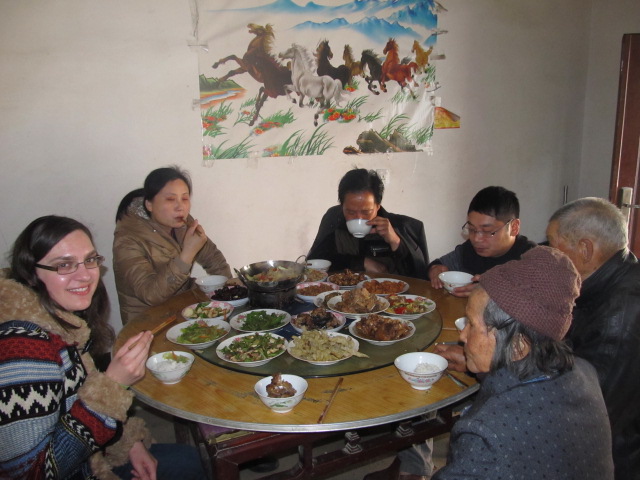
1. Banquets, banquets and more banquets

Anyone who has ever attended a wedding in China or tied the knot themselves knows what the real star attraction is for the event – the sumptuous food. Dish after succulent dish of such incredible delicacies (which, incidentally, have without exception made all of the food I’ve ever dined on at weddings in America look like something out of a high school cafeteria line).

Well, based on my experience at John’s grandpa’s funeral, if you’re attending a funeral in China, prepare to chow down at lots of banquets.

When we arrived at Big Uncle’s home that first evening, we discovered his entire first floor had been converted into a huge makeshift banquet hall, complete with the kind of tacky red plastic table covers I’ve come to associate with weddings in John’s rural hometown. In the four-plus days we spent during the funeral, the vast majority of our participation involved crowding around one of these tables with distant relatives or friends, downing the local dishes while battling with the elders for our sobriety (yes, like weddings the alcohol flows a lot!).

We literally sat down to at least seven banquets that week (and there were at least one or two we even missed because we arrived late and left early).

One thing, though. I don’t know if this is true for every funeral in China, but the food we dined on was definitely NOT the best we’ve ever tasted. But let’s face it – this is a funeral and nobody’s coming just for the food, right?

(photo by ChinaKFC via Flickr.com)

2. Giving money

In China, attending a wedding has its own “entrance fee” if you will. A good guest will always present the happy new couple with one of those infamous hongbao – red envelopes stuffed with an auspicious amount of cash that serve as a wedding gift.

When I caught my father-in-law doing “accounting” one afternoon following a banquet, I soon learned that funerals in China also demanded a little financial support from guests.

That’s right – if you attend a funeral in China, be sure to give the family some cash, just like you would for a wedding.

I’m no expert on how much to give, but I can tell you that guests attending Grandpa’s funeral gave amounts ranging from 200 RMB to 1,000 RMB. By the looks of how many pages were filled in on my father-in-law’s accounting book, I’d say the family did pretty well (except, of course, the fact that no amount of money will ever bring Grandpa back…sigh).

See the floral wreaths in this photo -- they're very similar to those we carried in Grandpa's procession. (photo by 曹鹏 via Flickr.com)
See the floral wreaths in this photo — they’re very similar to those we carried in Grandpa’s procession. (photo by 曹鹏 via Flickr.com)

3. Processions

Traditionally, Chinese weddings always included a lively procession. The bride would be lifted into a dazzling sedan chair decked out in red silk followed by a parade of her dowry items, with the whole thing accompanied by the jubilant sounds of horns, drums and cymbals.

While there was no rejoicing over Grandpa’s funeral, the procession to his tomb in the hills was more striking and vibrant than I ever expected.

For example, white wasn’t the only color on display. Sure, this traditional color of mourning in China figured prominently in the event, with a number of family members wearing white caps on their heads and everyone wearing a white ribbon like a necklace. But there were also brilliant floral wreaths made up of flowers from every color on the rainbow. We carried these eye-catching arrangements on the way to the tomb and it made the procession look quite beautiful.

The sound of drums and cymbals also accompanied us on our short journey to Grandpa’s tomb. John said the instruments struck a mournful tone in comparison to what you’d hear in a wedding procession – but just having them in the background was quite the contrast to the staid and quiet Catholic American funerals I’ve attended back in the US!

IMG_2129

4. Firecrackers

Nowadays, every modern wedding is an explosive experience – literally – with lots of fireworks and firecrackers.

If Grandpa’s funeral is any measure, China clearly wants to send their deceased off with a bang.

Of course, there were the obligatory explosions right near the tomb and before they started the big procession to Grandpa’s tomb, but that’s not all. Big Uncle’s family actually used firecrackers to announce all of the banquets that week. (By the time we were ready to leave, I swore I was almost having this strange Pavlovian reaction to the sound of firecrackers – where that booming noise made me feel hungry!)

143486176_6d0c8c93f9_z
The guests at Grandpa’s funeral dressed a lot like these folks. (photo by Steven Yu via Flickr.com)

5. People dress in surprisingly casual clothing

As I’ve written before, don’t even think about trotting out your best cocktail dress and suit and tie when you’re attending a wedding in China. Well, by the looks of Grandpa’s funeral, I’d say don’t even bother donning the kind of funeral outfits you’re used to in the West.

While most people generally stuck to muted colors as well as black and white, the styles were all over the map. My sister-in-law, for example, spent the entire funeral wearing a jean skort so short and tight I was stunned – a look that seemed more on the corner of Hollywood Boulevard than mourning a relative.

Most people wore shorts and T-shirts, sneakers and old loafers; only a small handful of women had on casual dresses and not a single man in attendance sported a necktie.

(photo by kenji via Flickr.com)

6. The experience will exhaust you

The one thing people never tell you about participating in Chinese weddings – something you only learn through experience – is just how incredibly exhausting it is to be the bride and the groom. You’re on your feet almost the entire celebration, you spend so much time toasting all the guests that you don’t even have time to dig into the amazing food, and then just before it’s all over you have to take part in the embarrassing ritual of roughhousing in the bridal chamber.

Well, if your dearly departed is close family – like Grandpa was for us – get ready for a marathon experience yourself. His funeral lasted from Sunday through Thursday evening, five entire days of remembrances, rituals and banquets.

Just thinking about that makes me feel exhausted all over again.

But the real exhaustion lies in the details – and in particular, a certain ritual called shouling (shǒulíng or 守灵). This tradition requires that a family member keep vigil on the deceased’s coffin at all times, even through the night. Many relatives sacrificed their sleep night after night to fulfill their duty and accompany grandpa – especially Grandpa’s children, like my mother-in-law. Well, she paid a steep price for staying up late several days in a row: it sent her straight to the hospital following the funeral.

While her example is pretty extreme, the whole experience of Grandpa’s funeral left everyone feeling a little fatigued. At times, it seemed like taking care of Grandpa (through the traditions) mattered more than having the family members left behind actually take care of themselves.

Still, the fact that John’s oldest brother complained about the length of the funeral – and the fact that it put his mother in the hospital – tells me that there’s still room for a happy medium that respects the culture and the needs of the attending family members.

What do you think? Have you seen similarities between funerals and weddings in China?

4 Really Bad Reasons for Marrying Western Women in China

As I’ve written before, people in China are just crazy about yangxifu (the foreign wives of Chinese men).  We’ve inspired two popular forums on Baidu devoted to discussing yangxifu (Yangxifu Ba and Waiguoxifu Ba), while yangxifu regularly make headlines in China news.

So of course, many Chinese men would love to marry a Western woman just like me. For some, it’s even their life’s dream.

But just because a guy would love to marry us doesn’t mean he’s always doing it with love in mind. Unfortunately, some Chinese men approach us with the wrong ideas altogether — things that would surprise and totally shock you.

If you really want to wed a Western woman in China, please – PLEASE — don’t do it for one of these four incredibly bad reasons:

1. To show off

In today’s China, everyone yearns for status symbols like BMWs, Louis Vuitton purses and Burberry scarves. They want to tell the world they’re powerful, wealthy and successful. But for some men, the ultimate status symbol – the proof that they’ve truly “made it” – is a Western wife.

I’ve got news for you, guys. We don’t take well to being treated as nothing more than your accessory. We’re not just some Coach purse, content to swing around your arm in front of your friends and colleagues. And believe me, we’re usually smart enough to figure out that that’s exactly what you’re doing (especially if you seem intent on parading us in front of as many people as possible every time we go out).

If you really want to show off, do us a favor and get a Porsche or something instead.

(P.S.: for a personal take on this issue, read about how my husband’s cousin wanted a Western wife to brag about.)

IMG_0721

 2. To immigrate to her Western country

Have you been “California dreaming” or hoping to live out a permanent “Roman holiday” in a Western country? Perhaps you’ve imagined a highly questionable solution to your problem – just marry a Western woman. With her by your side, a coveted foreign passport, the rights to work or study in her country just like a local, and tons of enviable visa-free travel destinations are all yours for the taking, right?

Except…what happens when your wife discovers she’s nothing more than your personal passport machine?

I once knew of an American woman I’ll call “Sally” who was smitten with a Beijinger. For Sally, a plus-sized woman in her forties used to being invisible to the vast majority of men, finding a guy who actually wanted to marry her and come to live with her in the US was nothing short of a miracle. So they tied the knot and then her Beijing husband came to Seattle. That’s also the city where he abandoned Sally by disappearing from her life, just after he nabbed his US green card. It’s not hard to tell who (or rather, what) he was really in love with.

She posted the whole harrowing story on an online forum. While it broke my heart to read it, I can only imagine the state of Sally’s heart when she discovered her so-called husband had essentially punk’d her in the most despicable way.

Do you want to be that kind of guy? Do you want your immigration rights at the expense of her happiness? Do want to shatter her trust in men forever (including men from China)? We’re talking about a Faustian bargain that could haunt you for the rest of your life (that is, if you actually have morals).

Besides, living abroad isn’t all champagne and English roses. The moment you set foot in a Western country, you’ve just traded in one set of challenges for another. And let me tell you, some of those challenges will surprise and shock you (like discrimination).

Still gotta “Go West”? Just don’t use a Western woman who you never really loved in the first place to do it.

36696358_ea8613ff28_z
(photo by Susan Sermoneta via Flickr.com)

 3. To improve your English

“So you only speak English to her!”

God, I can’t tell you how many times I’ve heard this from Chinese people, who wrongly assume my husband only communicates with my in English. Even worse, some jump to the conclusion that his English is so awesome because he married me.

Sometimes, I just want to cringe because of what they’re implying — a Western wife who speaks English equals your own private English teacher.

I want to be appreciated for who I really am, not because I happen to be a native English speaker. Who wouldn’t feel the same?

It’s bad enough that a lot of Western women in China – women just like me – end up teaching English here, an occupation that sometimes makes you feel like an “English machine” when seemingly everyone and their brother demands a piece of you to boost their English studies. We don’t want that kind of exhausting mess in our marriage.

That doesn’t mean we can’t support your language studies at all. Actually, my husband John and I have enjoyed a bilingual relationship from the moment we started flirting years ago. It’s one of the things that makes our marriage a lot of fun.

But if you’re only looking for love with us for English, believe me, we’ll catch on. After all, we’ve probably all taught English at one time or another – and we can tell if you belong in our bedroom or our classroom. And if you’re only looking for “private lessons”, we’ll dump you and your crazy English ideas.

2039738436_1bca285621_b
(photo by bandita via Flickr.com)

 4. Because you’re racist

To the Chinese guys who exclude all other women in pursuit of a pale-skinned Western beauty with golden hair, I’m talking to you. You know, someone who thinks that mixed-race kids are so much more “beautiful” and “clever”, and therefore must have, for example, a white Western wife.

I get that people have preferences in the dating world. But if you’re dating a certain group of people because of their race (or characteristics only unique to a certain race) to the exclusion of people from other racial groups…that’s racist. I wouldn’t want a guy who loves me solely for my white skin – or the fact that I could provide him with a mixed-race baby. That’s just creepy!

What do you think of these reasons? What did I miss?

5 Awkward Things for a Longtime Married Couple in China with No Kids

DSCF0777

I’ve got a secret to share with you.

Remember how a couple of weeks ago I mentioned John and I just celebrated our 10th marriage anniversary? And remember how we subsequently met with our friends at a nice Hangzhou restaurant on said anniversary?

Our friends who dined with us that evening had no idea it was our 10th anniversary. (We actually told them it was a dinner to celebrate my birthday – which was true, in part.)

It’s crazy, I know. And you might be wondering, Why would they hide such an important anniversary from their friends in China?
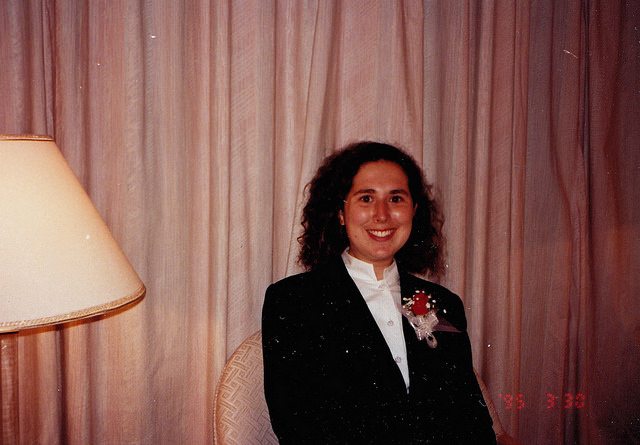
Because in China, it’s incredibly awkward to be married for 10 years and not have any kids. So awkward, that my husband just doesn’t want to mention it to his friends or even talk about it with people we know (like a friend’s mom we walked through the park with the other night). It’s funny how something that made me feel so proud could actually make me feel embarrassed at the same time.

For those of you wondering what that awkwardness is like, here are 5 things that reflect the challenges of being a married couple of 10 years in China with no children:

1. You will need a coping mechanism for the many times people ask you, “Why don’t you have children?”

In the US where I grew up, this sort of question is mostly off-limits (unless you have one of those really nosy relatives who doesn’t know the meaning of the term “off-limits”). In China, it’s par for the course. After all, this is a country where “Are you married?” and “Do you have children?” are a Chinese equivalent of asking “Are you well?” – ways to show your care and concern for someone else.

Well, believe me, when people find out we’re married but have zero children, they look INCREDIBLY concerned.

This is a culture that believes marriage and children are as inseparable as Beijing duck and those tasty little pancakes – you just cannot have one without the other. Chalk it up to Confucian values, particularly filial piety. In fact, of the three unfilial actions, the worst of all is never having kids (which are the next generation to care for the elders and worship the ancestors).

When I hear this question – “Why don’t you have children?” — the flippant side of me desperately wants to say, “Mind your own business!” But that doesn’t go over too well with most people, as you can imagine.

Sometimes I just say, “Because we don’t.” Sometimes I tell people, “Because we can’t,” and leave it up to them to figure out what that means. Sometimes I just change the subject. But more often, if my husband is with me, I just leave the answering to him!

IMG_2151
Me and my mother-in-law.

 2. You will need to find your inner courage whenever your mother-in-law suggests you’re an “old maid”.

I love my mother-in-law to pieces, but whenever we return back to the family home after a long hiatus, she immediately brings up having kids and then tells me I’m “too old”. After all, we’ve been married for a decade and I’m over 30 (30 is the official “expiration date” in China for having kids).

I know what you’re thinking, it’s just her opinion and it’s just a bunch of words. But things like that have a way of wiggling into your subconscious and tugging on your insecurities. Before you know it, you’re wondering, “Am I too old?” Or worse, you follow this whole train of thought to its depressing end – often something involving you curled up on your bed crying away a perfectly good afternoon.

It takes a LOT of courage to fight through these awkward moments and find your inner confidence. I still don’t have a magic bullet to deal with suggestions that I’m too old. What I have found, though, is that moments of just being present – taking a walk through the park, or focusing on my breathing – can help me feel more comfortable with where I am right at this moment.

IMG_2173

 3. You will dread going home for holidays like Chinese New Year, when all of your husband’s peers from school come over to visit – with their school-age children.

Unlike us, my husband’s peers jumped on the baby bandwagon almost immediately into their marriages (including a friend whose wife was famously pregnant and showing at their wedding – a bridal bump I had the chance to witness with my own eyes).

So whenever Chinese New Year comes around, they come around to visit as well – with, well, their young and even school-age kids.

Actually, for the most part, his friends and peers don’t give us pressure. It’s their parents that do – parents who will compare us to John’s peers and then pelt us with all sorts of uncomfortable questions or comments (usually of the “Why don’t you have children” or “You’re too old” variety) when they notice we have no little ones in tow. The whole situation completely strips all of that sepia-toned nostalgia from the idea of “home for the holidays”.

We were able to dodge a lot of these questions this year, because most people were just glad to see us back in China. But next year? I don’t really know what’s going to happen. Deep down a part of me is secretly saying, “Help!”

12222324205_7aaa3fc67b_z

 4. You’ll feel isolated from your friends with kids – and instead gravitate to friendships with other people who “don’t belong”.

Don’t get me wrong, we love our friends with kids. But sometimes being around them can feel a little uncomfortable, particularly when they – with well intentions – bring up the topic of us having kids. Sometimes we feel like we don’t entirely belong to the same club, if you know what I mean. So of course, we inevitably gravitate to our other friends who feel as if they “don’t belong” in Chinese society.

In particular, one of our best friends in China is Caroline, who happens to be what people call a “leftover woman.” “Leftover women” and “leftover men” describe people of a certain age in China (over 27 for women, 30 for men) who haven’t married yet. They also feel as out of step with China’s society as we do, because it’s just not normal in China for adults to be single.

We’ve always loved Caroline, our mutual friend who introduced the two of us years ago. But maybe we feel even closer to her because she’s like the ultimate safe space where we can vent about the awkwardness of our situations – hers not being married, ours being childless.

I feel like I’ve come to understand Caroline’s pain every time someone else pelts her with that unwelcome question: “Why aren’t you married yet?” She’s even shared with us some of her less-than-pleasant encounters with the question, encounters that make her angry and frustrated, and I feel her. Because to me, the question isn’t all that different from “Why don’t you have kids yet?” It’s a question that also singles you out, that divides you from the world, that reminds you of something you lack or something that perhaps you even desire but cannot have.

The other night, she told John and me about this one ridiculous girl she used to work with (“ridiculous” was her description) who kept interrogating Caroline about things that could easily have been ripped from a list of the “10 most cringeworthy questions in China”: Why aren’t you married? Why don’t you own an apartment? Why don’t you have a car?

“What do you want to hear from me?” Caroline said to this girl (surely in a voice that was getting dangerously close to angry). “That I’m unable to find someone? That I have no money?” Somehow, just hearing about Caroline’s courageous, “take no crap” response to this girl made the three of us erupt in a cathartic burst of laughter. In these moments, we always feel a little less alone and isolated.

 5. “Being married for 10 years with no kids and living in China” will become one of the scariest things you write about.

For the longest time, I never wanted to go public with this topic. It scares me because it’s such a personal thing – and one that weighs on me on a regular basis (for many of the reasons I mentioned above). Why put it out there and risk having more people tell me either 1) You’re too old for kids or 2) What’s wrong with you?

But one of the things I’ve learned from my husband is the importance of self-acceptance. This is who I am – a woman who has been married to her Chinese husband for 10 years, lives in China, and has no children. Will I be like this forever? Honestly, I really don’t know for a lot of reasons I can’t share on this blog. But regardless, I must face my reality and embrace it – in all of its awkwardness. And for the moment, maybe that’s enough.

IMG_2426
This is who I am, red-starred hat and all!

What do you think?

How to have an incredibly imperfect 10th wedding anniversary in Hangzhou (just like us)

IMG_20140726_205043

When you’re getting ready to remember 10 years together with the person you love most in the world, you want it all to be as perfect as that diamond wedding ring. After all, isn’t 10 years of marriage called the “diamond anniversary”?

But the reality doesn’t always sparkle like that most coveted of all jewels, just as John and I discovered this past Saturday when we set out to celebrate our 10th anniversary together. Here’s how our day ended up losing some of its luster:

1. Celebrate it right smack in the middle of the hottest days of summer.

Notice the sweat gleaming on my face and neck? Welcome to Hangzhou in the summer!

Our marriage anniversary is July 26, only three days after July 23 (also known as by the Chinese as dàshǔ or 大署, the “Greater Heat”). At this time of the year, the entire city feels like one huge sultry public sauna that you can never leave (unless you duck into an air-conditioned store or home).

As soon as John and I left our apartment, the heat and humidity enveloped us like a huge wet rag — and it wasn’t long before my brand-new fuchsia T-shirt was dotted with beads of sweat. Not an auspicious start to our celebration!

2. Arrive at the West Lake just as a huge thunderstorm descends upon the city.

Taking shelter from the storm

After indulging in a little pampering at a local hair salon (a up-do) and a makeup shop (where a pro did my makeup for the day) John whisked me off to the most romantic locale in all of Hangzhou: the West Lake. Our goal? To visit the very bench on Su Causeway where we had our first kiss on July 26 in 2002.

But not long after we reached the scenic shores of the lake, fringed with the rich green patches of lotus plants studded with pale pink flowers, an ominous gray cloud darkened the sky. Thunder soon rumbled right in, followed lightning and a monumental downpour. When I say “monumental downpour”, I mean 90 mm worth of rain (that’s a little over 3.5 inches) in one hour!

We sought shelter just in time in a public teahouse beside the lake, and were trapped there for almost an hour, witnessing nature’s own version of fireworks boom across the lake (I screamed when the lightning hit a nearby tree) as the landscape around us became soaked in rain.

Then, because we needed to hustle to make our 6pm dinner reservation at a hotel, we splashed our way down Beishan Road through the runoff water that burst up from the drains beside the road and cascaded over the sidewalk right into the West Lake. It reminded me of all those times when I was a kid and insisted on going creek-walking — except you don’t usually go creek-walking with your hair and makeup done, all dolled up in your new shirt and long black skirt.

Even worse — the rain revealed leaks in my own umbrella, scattering droplets of rain all over me (including more than a few that conspired to ruin my nice up-do and makeup…thank goodness they didn’t!).

You might wonder, “Why didn’t they just flag down a taxi or take the bus?” Well, as anyone who has ever lived in Hangzhou knows, it’s almost impossible to flag down a taxi on rainy days. Plus, the traffic on Beishan Road was locked in gridlock and plodded along so slow we actually walked faster than the buses themselves!

3. Due to a downpour of seemingly Biblical proportions, walk into the five-star hotel where you’re going to have dinner with at least half of your outfit completely soaked

I know I'm smiling here, but believe me, most of my skirt and all of my shoes are soaking wet!
I know I’m smiling here, but believe me, most of my skirt and all of my shoes are soaking wet!

There’s nothing that says class quite like strolling into the glittering lobby of a five-star hotel looking as if you crawled out of one of the drainage pipes beside the West Lake. The Assistant Manager on duty — a willowy blonde dressed in a perfectly-pressed suit jacket and pencil skirt — stared at us as we hurried across the lobby and up the stairs, and I couldn’t tell whether it was because we were that rare AMWF couple in China or because our shoes left little puddles behind us wherever we walked.

4. Due to same downpour, spend over an hour awaiting the rest of your friends to arrive.

IMG_20140726_194849-001

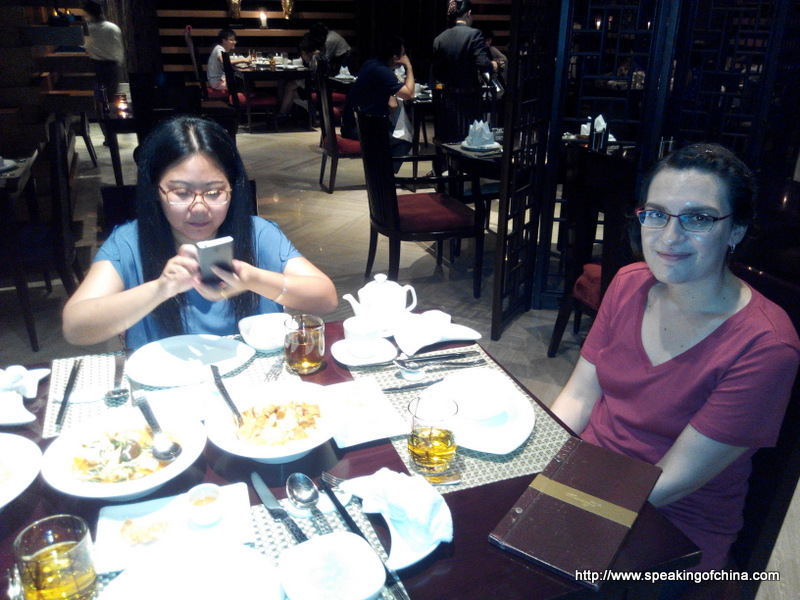
Four of our guests — more than half of our table — took over an hour to make it to the hotel because the downpour brought Hangzhou’s traffic to a screeching halt. This photo (with me putting on a smile while my friend Caroline plays with her mobile phone) pretty much sums up how we spent that hour at a very empty table for seven.

5. Realize it’s the most imperfect anniversary celebration you’ve ever had — and enjoy yourselves regardless.

IMG_20140726_195028

Between the sweltering heat and all of the mayhem caused by a sudden downpour, we had one tumultuous afternoon. No carefree strolling beside the lake, no stolen kisses at our old bench on Su Causeway, no confident entrance into the hotel. Our shoes were still totally wet and squishy. The rain even drenched a classic photo of us that John carried in his wallet.

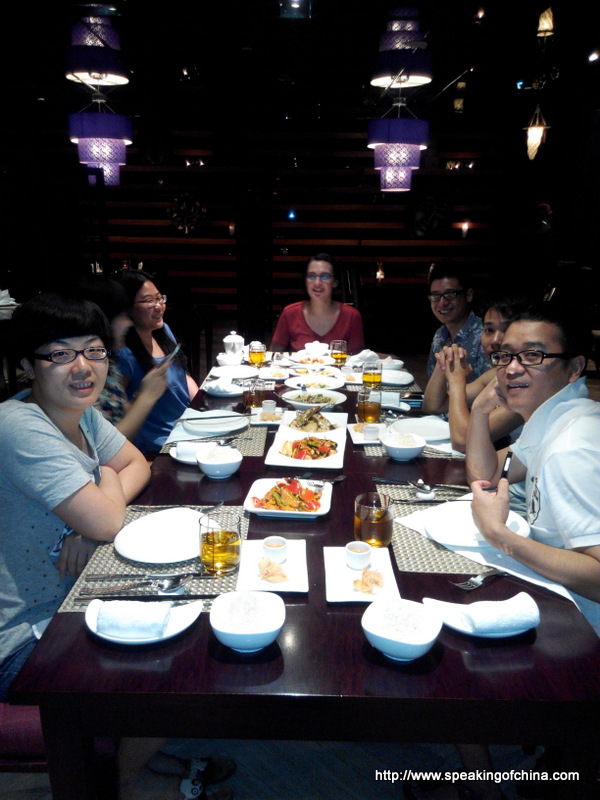
But we had five of our friends with us, as we dined on some of the most sumptuous Thai dishes I’ve ever sampled in my life in one of the most glamorous restaurants in town. Maybe we didn’t get the perfect day we hoped for — but as I helped myself to another creamy mouthful of green curry vegetables and admired the mahogany-toned wooden accents in the space, I couldn’t help but think that, for the moment, it was just perfect enough.

(P.S.: For those of you curious as to where we had our anniversary dinner, it was at the lovely  Sawasdee Thai Restaurant in Hangzhou — one of my favorite dining spots in the city.)

Have you ever experienced a less-than-perfect celebration?

Photo Essay: Celebrating 10 years of marriage to my husband!

Ten years ago on July 26, my husband and I stood before a government representative in Shanghai, promising to spend the rest of our lives together. It’s hard to believe that 10 years have passed since that moment, yet I love John just as much as the first time I stood before him and said, “Wo yuanyi!” (“I do” in Chinese — and yes, like most of us in China, I did it more than once for reasons explained in this post).

To commemorate those 10 incredible years I’ve enjoyed with the love of my life, a guy who still makes me swoon after all this time together, I’m sharing one of our marriage registration photos from 2004 plus 10 photos of us together (one from each year of our marriage)!

2004

IMG_0012

This photo was taken just moments after we took our vows in a civil ceremony in Shanghai and signed our official little red marriage books. Can’t you just see that newly-registered glow in our faces? (Or maybe it’s the red we both wore that day!) 😉

2005

IMG_2109

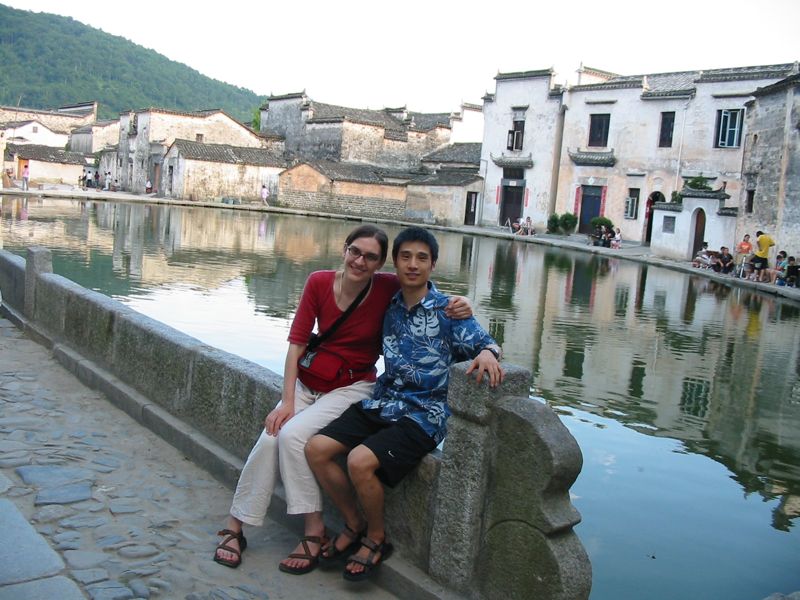
As part of our Huangshan Honeymoon in 2005 (which I wrote about in an essay for the new anthology How Does One Dress to Buy Dragonfruit) we visited a couple of traditional Huizhou-style villages in the foothills of Huangshan. Here we pose before a reflecting pool in Hongcun.

2006

IMG_2698

We visited friends in Chicago in February 2006 and ended up strolling beside Lake Michigan, despite the freezing winter temperatures. Who needs to worry about cold weather when you have the love of your life beside you to keep you warm? 😉

2007

Jocelyn and Jun in the park near Fenshui River.

The summer of 2007, we returned to John’s hometown to make our marriage official (in the eyes of his family and friends) with a big Chinese wedding ceremony.

2008

IMG_4773

Late in the summer of 2008, John and I took off for one last camping trip deep in the Rocky Mountains. What views!

2009

IMG_6056

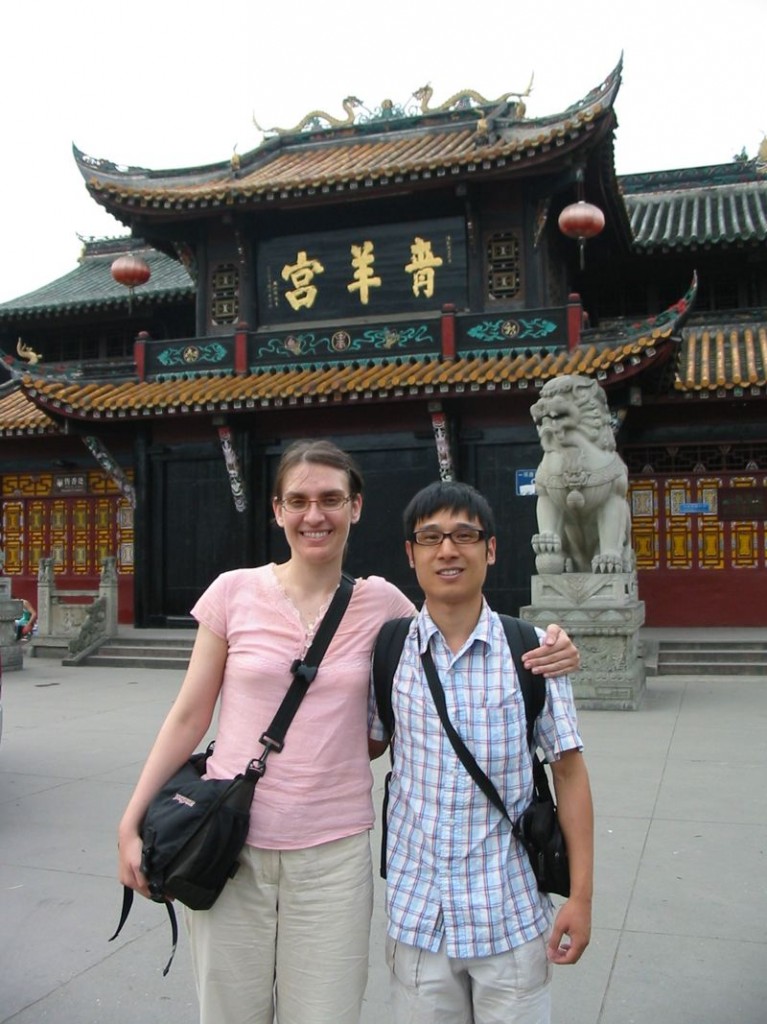
When John and I went to China for the summer of 2009, we indulged in a month-long trip across the country to take in all of the sights we never visited years before — from Xi’an and Chengdu to Changsha and Kaifeng.

2010

IMG_5743-1

John and I welcomed the year of the tiger in 2010 as the emcees of a Chinese New Year celebration. What a night!

2011

IMG_0537

Here we are in 2011 celebrating John’s birthday over Thai curries. John never used to think much of his birthday until I came along — but if the smile on his face is any measure, he loves the change!

2012

IMG_1272

To commemorate our wedding anniversary in 2012, we enjoyed a relaxing evening of classical music performed by the Cleveland Orchestra. But before heading out, we posed before the flower garden to remember the evening.

2013

102_2242

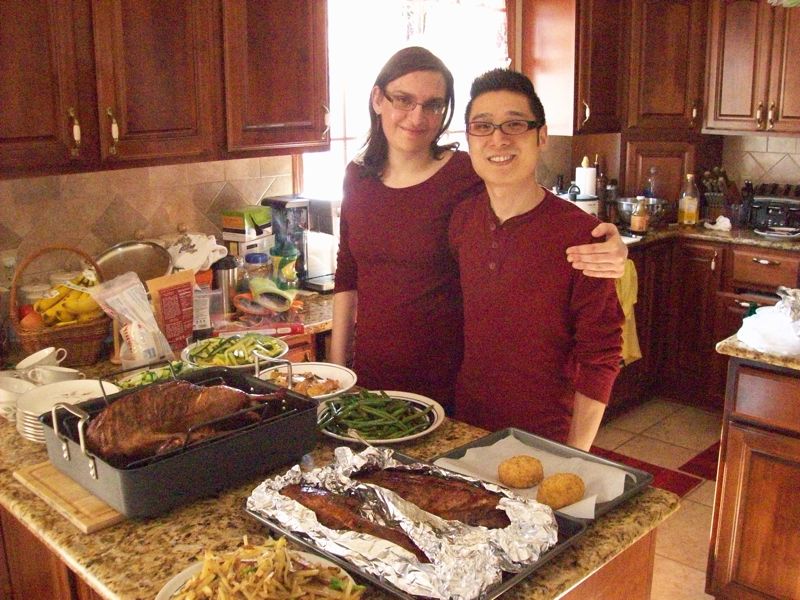
For Chinese New Year in 2013, John and I whipped up a traditional Chinese feast for the family — from roast goose and ribs to ginger-garlic green beans and stir-fried matchstick potatoes. We’re smiling, but there’s exhaustion behind those eyes because we spent the entire morning in the kitchen! Still, it was worth the effort.

2014

IMG_2145

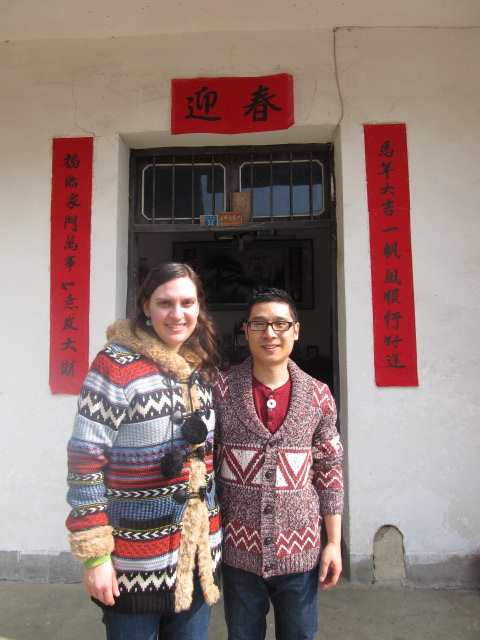
There’s nothing like finally spending Chinese New Year at the family home in China for the first time in years. In 2014, John and I reunited with his family and the country we love.

Here’s to hoping for 10 more incredible years with my incredible man. Thanks for everything, John.

Double Happiness: Xi’an native introduces Kiwi fiancee to his hometown

Jo and Kane in Xi'an.
Jo and Kane in Xi’an.

A few weeks ago, Kane Gu graciously regaled us with the story of how one “foreign student-turned-party boy” found the love of his life in New Zealand. It’s a beautiful love story and worth a read.

But what happens when Kane finally introduces his fiancee to China and his hometown of Xi’an for the first time? A fiancee that has never stepped foot in the Middle Kingdom and doesn’t speak of word of Chinese? It’s one big cross-cultural adventure that the two of them will never forget. 

If you want to be like Kane and have your words published on Speaking of China, check out my submit a post page for details.

—–

In August 2012, almost 2 years after Jo and I first met, we became engaged to be married on a cool Autumn night by the beach at Maraetai. There, Jo whispered in my ear, “I will.” We both knew we were in for an adventure of a lifetime together.

My adventure first began when I crossed the Pacific and found Jo. Then one day, we decided to trace my steps back to visit my hometown of Xi’an, China. This is my place of origin, the land that nourished me as a child, the great Northwest and the Loess Plateau dotted with cave dwellings, the voice of Qin and of a people born tough but pure of heart.

Southern comfort, Northern discomfort

We arrived in late August, expecting the weather to cool down as Autumn approached. I had been away from home so long that I had forgotten just how vicious the sun was during the Xi’an summers. While I was born and bred in Xi’an, I had suggested that we should bring warm clothing, only to be assaulted by scorching temperatures above 38C upon our arrival. There we were, each carrying a thick coat as we stepped off the plane while quickly realising how big of a mistake we had made. Needless to say, suddenly I felt even more foreign than the white guy we saw at the airport dressed in a t-shirt and shorts.

Since we arrived at lunchtime, my parents decided we should grab a quick bite to eat before we get to their apartment. My heart yearned for some roujiamo and cold noodles — typical Xi’an street food — from a typical Xi’an roadside restaurant. As we walked in, I was reunited with all the familiar and delicious aromas of pickled garlic, slow cooked pork for the roujiamos, vinegar and chilli oil. With the noisy atmosphere and the scattered tables full of people, all these memories suddenly came pouring out and I felt home again.

I couldn’t say the same for Jo, however. She was the only white person in the entire restaurant. The moment she walked into the room, all the chattering and clinking of utensils ceased abruptly with her presence as 50 heads turned her way — some amused, some bewildered, and some just amazed. As we searched around and found a table to sit down, everyone gradually returned to their own business and the noise resumed. Our dishes arrived quickly to the table one by one and so did some curious gazes. Jo quietly said to me she felt uncomfortable with the amount of staring and attention she was receiving, which didn’t surprise me. Even I felt a little uneasy about it. But I had to reassure her that people are simply curious about why a foreigner would visit a humble local eatery, and what she was doing with a Chinese family. To many, an East-West relationship is still a novelty and when the man happens to be a local, he gets to become the “translator” and the “tour guide”, as I had been referred to on multiple occasions.

Lost in translation

Even with a translator on standby 24/7 (me), life still became difficult for my non-Mandarin-speaking fiancee.

A lack of English signage made outings impossible without me accompanying her. She had limited abilities to converse with anyone else but me and translations were not always easy with cultural and social contexts were thrown in. Once a minor mistake caused a major misunderstanding between Jo and my mother. Ever since Jo had some dental work done on her teeth, she was advised to avoid foods that are “hard to eat”. In English it would generally be intepreted as items that are hard or chewy, but in Chinese, if directly translated it becomes “nanchi”, which means “unpalatable”. This, unfortunately, was how I translated Jo’s English when she was discussing a particular dish with my mom — and you can imagine my mom wasn’t happy about her dish being regarded as “nan chi”. I finally explained to her that it was indeed an error on my behalf rather than because of her cooking.

Of course, while we were out exploring the countless heritage sites Xi’an and its surrounding areas had to offer, we were solicited by one hawker after another, attempting to offer us their goods and services at vastly inflated prices. A refusal from me in the local dialect however would normally suffice in stopping the harassment, even against the very persistent ones.

Jo in Xi'an.
Jo in Xi’an.

Shopping woes

While globalisation draw nations closer to each other than ever, you would think people around the world now would have more in common. But when it comes to fashion, this isn’t always the case.

What Jo, a young Kiwi woman, would consider as fashionable and attractive was almost never the same as her Chinese counterparts and vice versa. And on the rare occasions when she actually liked something, it was never in a size or style that would actually fit her. Jo had trouble shopping for almost everything in Xi’an. The biggest shoes we could find were always half a size too small. Not much luck with clothing either, as she is considered a big girl in China while her size is quite normal in New Zealand.

However, having a Chinese MIL shop with you could be a huge advantage. First, she knows where to go. Second, you end up saving hundreds as a result of her expertise in bargaining. And third, if she likes her daughter-in-law enough she might even offer to foot the bill as a gift. The drawbacks? Besides the aforementioned difference in taste, you will get taken to some very “Chinese” shopping complexes. Forget the modern, glitzy and smoke-free malls with all the creature comforts you can afford. Some hidden jewels and good bargains can be found in those sweaty, overcrowded, and sometimes gritty looking suburban shopping centers (if you knew how to find them in the first place).

For the love of food

To many expats out there, nothing reminds them more of home than the food they grew up on. It could be something simple like a burger or pizza, or in my case, cold noodles, roujiamo, and street snacks like barbecued lamb on skewers. Coming home brought me back to food paradise, but for Jo, it was a shock to the system, literally. All these new delicacies and spices just didn’t agree with her stomach.

When my mom suggested that we should go to Pizza Hut one day for lunch, I could almost hear the excitement in Jo’s voice as she said, “Please, that sounds great!” Just like back home? Perhaps it tasted even better than the Pizza Hut we remembered from back home, or perhaps I had cravings as well. So in the following days, we had sampled all the Western foods in the area — first KFC, followed by McDonald’s and Papa John’s pizza. It was like festival time for Jo and her poor shell-shocked Western stomach.

It all ended when Jo discovered Haidilao, that extremely popular hotpot chain across the country. Despite the unspeakable aftermath of each hotpot session, we kept coming back for more. Maybe Jo had found the perfect comfort food in China? It might not have reminded her of home, but it made her feel at home: a family sitting around a table, cooking and eating at the same time while laughing and chatting away. You’d never find this kind of family atmosphere in New Zealand!
Conclusion

That trip to China was a homecoming for me, and it was an eye-opening experience for Jo. She felt frightened at first, but then I witnessed her transformation as the days progressed. She established a mutual friendship with my parents as they readily accepted her into our family with open arms. She faithfully accompanied me halfway around the globe into a world of unknowns just to experience my homeland with me. What more could I ask for in a woman? My parents loved her as well. They already consider her a xifu or daughter-in-law despite the fact that we weren’t married yet.

Eventually, that inevitable day came when we had to say goodbye. As my parents watched us walk through the departure gate, that familiar feeling erupted in my chest again just as it did 10 years before when I left home for the first time. I tried to hold back my emotions and turned around to glance at Jo. But the moment I gazed upon her, she turned away. In the corner of her eye, I saw something flickering and eventually running down her cheek. Maybe I wasn’t the only one that had come home after all.

Kane Gu found his true love in Aotearoa, the land of the long white cloud.

—–

Speaking of China is always on the lookout for outstanding guest posts and love stories! If you have something you’d like us to feature, visit the submit a post page for details — and then submit yours today.

The “Good Chinese Wife” Interview with Susan Blumberg-Kason

(Note: I’m excited to be giving away one FREE copy of Good Chinese Wife! Want to enter the giveaway? Scroll down to the end of this post for details!)

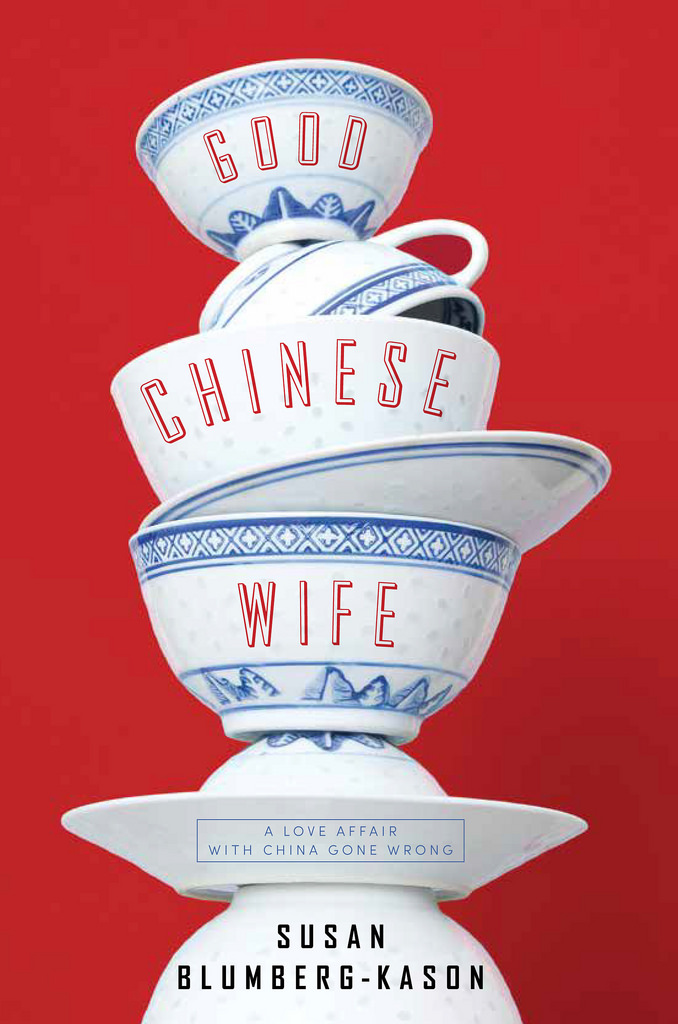
Susan Blumberg-Kason’s new memoir Good Chinese Wife comes with a revealing subtitle: A Love Affair With China Gone Wrong. Before you even open the book, you already know what kind of love this is – a marriage between a white American woman and a Chinese man that doesn’t end well.

But as I’ve learned over time, there’s tremendous value in sharing the stories of couples that didn’t work out. That’s why I sent out a submission call for stories of love lost and unrequited love. And that’s why Good Chinese Wife should be on the reading list of everyone who follows this blog.

I’m calling it the AMWF memoir of 2014 and you shouldn’t miss it.

Good Chinese Wife: A Love Affair with China Gone Wrong

This book has it all. A Chinese love interest with movie-star looks. A romance set in glitzy Hong Kong. A huge red wedding in Wuhan. A fascinating journey across China in the mid-1990s. And a transformative tale of how one shy young woman eventually finds the courage to make a dramatic escape.

But most importantly, Good Chinese Wife is just an incredibly entertaining memoir. It’s the kind of book that you’ll open, thinking you’re only going to read for a little while, and before you know it you’ve devoured the whole story in one sitting.

Susan Blumberg-Kason

As someone who has known Susan for several years, I’ve had the privilege to witness the inspiring metamorphosis of Good Chinese Wife from manuscript to published memoir. It is an extraordinary honor to introduce you to Good Chinese Wife and Susan through this interview.

A freelance writer in Chicago, Susan has written for the Chicago Sun Times, the Journal of the American Dietetic Association, and Chicago Parent magazine. Her essay “Ninety Minutes in Tsim Sha Tsui” is included in the fabulous new anthology How Does One Dress to Buy Dragonfruit. She also wrote All the Tea in Chicago, the ultimate guidebook to the city for tea enthusiasts.

I talked to Susan to learn more about her memoir – from what inspired her to write it, to her experiences as a yangxifu (the foreign wife of a Chinese man) in the mid-1990s, to what she hopes readers will come away with from her story.

—–

When did you first realize you wanted to turn your story into a memoir? What ultimately inspired you to write it?

I first thought about writing this memoir after my divorce attorney in California asked me to write out everything that went wrong in that marriage. She needed all the details in case we went to trial. It was 14 years ago and I was living with my parents. They didn’t have a laptop connected to a printer and I wasn’t in the mood to camp out in front of the basement desktop—after having felt so isolated for the past five and a half years—so I hand-wrote it over the span of a week in the company of my family. This document was sixty-seven pages! When I proofread it before sending it off to my lawyer, I thought, “Wow! This would make a great book.”

A week later I saw the movie “Not Without My Daughter” for the first time. It was about a woman who almost lost her daughter when her family traveled to Iran to visit her husband’s family. The husband had lived in the US for 20 years, but when he returned to his motherland, he suddenly wanted to stay there and keep his daughter there. I cried because the same thing could have happened to me. I wanted to share my story with others and hoped it would give parents in cross-cultural relationships something to think about if they’re in similar situations.

Susan at the Tsim Sha Tsui metro stop in Hong Kong.

Your love affair with Cai, a man from Wuhan, China, takes place in Hong Kong in the mid-1990s, at a time when you were mainly a graduate student. What are some of your most interesting memories about dating in Hong Kong back then?

Hong Kong was magical back then! I was so happy to be back (I’d lived there for a year in 1990-91) and open to new opportunities, including dating. Maybe it was the thrill of being back and the comfort I felt around Hong Kong people, but I definitely took more chances there than I had back in the US. There was a new confidence in the air as people who had left Hong Kong in the 1980s were returning. One was a friend of a friend who confided some pretty heavy personal history to me on our one and only date. At one point he became violent as he grabbed my arms and squeezed them as if in a vice. I was scared about leaving that bar—we were out in the middle of the New Territories—but in the end he paid for my taxi ride home, which was two hours away. I also went out with a television anchorman who promised a weekend away in Macau, but canceled at the last minute. And then there were the two guys I wrote about in the book, the two I went out with before I met Cai.

Hidden River, China - Cai's hometown
Hidden River, China – Cai’s hometown in Hubei Province

How did people react to yangxifu back in the mid-1990s?

It was a novelty for Chinese men to have a foreign wife. In Hidden River, Cai’s hometown in Hubei province, his parents had a friend whose son had married a Japanese woman. She was a legend in that danwei—whether or not people had met her—because she was a foreigner. So my inlaws were very accepting of me and liked to brag about me with their friends. When I walked around Hidden River, people were all very polite, even when they stared and pointed at my curly hair and western nose.

14583639023_393094e530_oYour wedding in 1995 was special compared to the average wedding banquet in Wuhan. Could you share with us some of the things that made your celebration different?

Well, back then children of Communist Party members had to have modest wedding celebrations. For instance, they could only use a couple of cars in their motorcades and could only have ten tables at their banquets. But because I was a foreigner, those rules didn’t apply to my wedding even though my father-in-law was a Party member. We had twenty tables at our wedding and five or six cars. Traditions were still low key in China then, so weddings were simple and quick. There weren’t tea ceremonies and the like. And women in Hubei didn’t wear red qipaos. It was all big poufy white wedding dresses. I had a difficult time finding a red qipao in Suzhou!

Cai’s parents also play a major role in your story. Give us one of your favorite scenes from the book featuring your inlaws.

I think my favorite scene in the book was when they were leaving San Francisco to return to China. They had lived with us for ten months and after many clashes about childcare, I realized too late, of course, how much I had appreciated their presence at home. Every night we watched Chinese soap operas and news from Beijing while Cai went out. And they were often my only adult interaction at home. As we said goodbye at the airport, I also thought about how difficult it must be for them to leave Jake, their beloved grandson. So this scene is full of contrasts and difficult emotions.

Susan and Jake in San Francisco in 1999.

Your book includes many memorable characters, but none more so than “Japanese father” — a rather unconventional father-figure to Cai. Without giving everything away, could you tell us something about this fascinating character?

Japanese Father was a music professor who visited China one summer and met Cai in Wuhan. The two became pen pals and wrote long letters to each other almost every week. The Japanese economy was so far ahead of China’s at the time—it wasn’t even comparable—so the opportunities that Japanese Father could offer Cai, and later his friend Rui, were very attractive to young teachers who had no other way of making more than US$75 a month. Japanese Father had a lot of time to spend on his Chinese protégées because he was estranged from his wife and son. His daughter still spoke to him, though.

Susan at the Miramar in Hong Kong.

As the subtitle explains, your story is “a love affair with China gone wrong.” Some people may see your book as yet another story that casts Asian men in a negative light, as well as AMWF relationships and even China itself. How would you respond to those concerns?

The subtitle refers to my initial attraction to China and how that all changed. It wasn’t necessarily a bad thing; it just didn’t go according to plan. As for a negative portrayal of Asian men, I can only see two Asian men who don’t come out looking great. Some reviewers think that Cai is sympathetic, and I can see that, too. But the others—Baba, Cai’s friend Rui, my former brothers-in-law, and even the guys I dated in Hong Kong—are portrayed just as men in any other countries. They have a variety of positive traits and aren’t lumped into one general category. And as one friend pointed out, at the end I go to lengths to protect the Chinese male who matters most to me—my son Jake. As for AMWF relationships, I clearly do everything I can to make mine work. In writing my story, I hope that people will see how not to conduct an AMWF relationship! And as for China, I felt aligned with many young Chinese at that time. Every time Cai and I returned to China, he was heartbroken that it was changing so quickly and wasn’t like the China of his childhood. I echoed his feelings and could see how things were different even from my first trip to China in 1988. To me, that’s not being anti-China, but rather wishing for a smoother transition, for China to have eased into the twentieth century instead of leaping into the twenty-first in one blink!

In Hidden River, Cai’s hometown near Wuhan.

Could you share some of the lessons you’ve learned from your courtship and marriage to Cai, and what you hope readers take away from your book?

From the courtship, people will probably conclude that I married Cai too quickly. But I think it’s more than that. He told me from the get-go that he had certain conditions for our marriage. Those are things I ignored or thought I could eventually get him to change. That should have been my red flag, not the time in which we became engaged and married. And from the marriage, I hope people can see that it’s not a good idea to justify bad behavior in the name of cultural differences, whatever those may be. (Unless we come from the exact background as our partner, we will have cultural differences. My new husband and I are from different religious backgrounds.) If something doesn’t sit well, it doesn’t sit well and shouldn’t be tolerated. It doesn’t matter if the person is from Asia or the US or wherever. One more thing: just be yourself and you’ll be fine!

—–

Thanks so much to Susan Blumberg-Kason for enlightening us about Good Chinese Wife!

Want to win a FREE copy of Good Chinese Wife? I’m giving one away on Twitter to anyone based in the US or Canada. And it’s simple to enter! Just tweet the following:

[Tweet “@jossailin is giving away the new memoir #GoodChineseWife and I want to win!”]

Entries must be received by 12 midnight Pacific Time on July 16, 2014! I’ll then notify the winner via messaging on Twitter. Good luck!

UPDATE: Congratulations to @JohnWGuise for winning the giveaway!

4 China soccer experiences to expect when dating Chinese men who love the sport

In my mind, soccer — also known as football — is synonymous with romance. That’s because it’s the relationships I’ve had in China (especially my marriage to John) that introduced me to the sport and made me a fan.

4696725501_16722615e3_b
(photo by Chris Brown via Flickr.com)

Who’d have thought that the woman who in 1994 had no idea the US was hosting the World Cup now has her own list of can’t-miss matches for this year’s World Cup in Brazil?

Before I came to China, and starting dating the men here, the World Cup — and, for that matter, the entire sport of soccer — was completely off my radar. I knew what a soccer ball looked like and had a handful of girlfriends who played in kids’ leagues growing up…and that was about it. In fact, when I first arrived in China in August 1999, the name David Beckham meant absolutely nothing to me.

All that changed in the fall of 1999 with my first relationship with a guy named Yao, where I spent part of my weekend evenings snuggled in his arms as we watched the English League soccer matches. He schooled me in the rules of the game, the best teams, and of course, all his favorite stars (including, of course, David Beckham). We even played the FIFA soccer video game together a number of times.

As it turned out, Yao was no exception. Every single man I’ve dated in China — especially my husband John — has been a big fan of the sport. In fact, John even famously cut work during the summer of 2002 just to watch matches. Yes, that big.

Now I’m not saying that every Chinese man here in China will go to that extreme for soccer — or even likes the sport. But there’s a good chance that any man you meet here will be a fan of some kind.

So if you’re going to fall in love with a fellow from the Middle Kingdom — and you’ve never been into soccer — get ready to experience a different kind of relationship with the sport (one with decidedly Chinese characteristics).

Here are four things you should know about soccer and Chinese men if your sweetie is a fan:

1. Get ready for some late night soccer time (including when you least expect it)

(Source: http://www.cqnews.net/)

John often says, “Chinese soccer fans have the hardest time.” Take a look at the scheduling of the matches in Beijing time and you’ll understand why.

Essentially, China gets “the graveyard shift” of all World Cup scheduling. Matches start at either 12am, 3am, 4am or 6am.

My eyes are already going bloodshot just reading those kickoff times.

Chinese fans don’t even get a break during the official soccer season in the European leagues, where the games kick off late into the evening or after midnight or even in the middle of the night. Remember the UEFA Champions League Final last month in Lisbon? If you wanted the privilege of watching Ronaldo score goals in real time in China, you would have had to wake yourself up at 2:45am in the morning and then survive more than two restless hours before it was all over.

But anyone who knows China’s history also knows the Chinese people never flinch from a challenge — including when it comes to watching soccer matches. This is why as I write this, there are literally tons of sleep-deprived soccer fans scattered across China, including the really hard core folks who will stay up all night to catch World Cup matches. (It’s a dangerous occupation — three people have already died from staying up multiple nights in a row.)

Fortunately, John isn’t crazy enough to give up his life over some World Cup matches. But yes, almost every night he’s been catching the first half of the soccer games that start at midnight here. And because John is a morning guy (who, without fail, rises and shines sometime after 6am), he often catches the entire last game — if not most of it. And if I’m unlucky, his early morning matches snap me straight out of my dreams and into the hard life of a Chinese soccer fan.

The most infamous experience in our relationship has to be the Euro Cup matches during the summer of 2004 in sweltering Shanghai. Of course, John couldn’t miss the semifinal or final matches, which all started sometime around 3am or so. The flickering of the TV and the hum of the crowds in the background became the late night wake up call I never asked for. I remember mumbling something to the effect of, “What are you doing?” Up until that moment, I never knew that my husband would actually sacrifice part of his nighttime rest just to enjoy the excitement that comes when the announcer screams, “Goooooal!”

But then again, I’m just as guilty. Wasn’t I the one who dragged John out of bed for all of those early morning matches during World Cup 2010? And wasn’t I the one checking the score well after midnight the other night in the Argentina versus Iran match while John dozed away beside me? (What can I say? I’m a fan!)

2. You’ll learn the meaning of 2002 and the China World Cup soccer conundrum

China’s national soccer team (photo by Albatross2147 via wikimedia.org)

China’s population exceeds 1.3 billion. So why can’t the country find at least 11 soccer players talented enough to get China to the World Cup finals every time? Call it the China World Cup soccer conundrum, which is something you’re sure to learn about if you date or marry a Chinese man who loves the sport.

John, bless his soccer-loving heart, still dares to watch China’s national team play in real time (usually followed by a string of expletives). I’ve learned all of his horrible nicknames for them (including his favorite, the “head-ball team”), and heard the frustration in his voice when they suffer yet another humiliating loss.

Of course, he’s told me all about 2002, the first time China ever qualified for the World Cup finals — and something you’re sure to learn about from any soccer-addicted Chinese guy. John sums it up in these four disappointing words: no goals, no wins.

Well, with any luck, your home country has qualified for this year’s World Cup finals (and hasn’t been eliminated yet). Maybe you’ll give him — temporarily — some other team to root for. (Sigh.)

3. Your mind will be filled with all sorts of hilarious anecdotes about China soccer that your friends back home will never understand

Huang Jianxiang, World Cup 2006. If my husband wasn’t a soccer fan or from China, this hilarious incident in the China soccer world would never have been on my radar.

14499313993_cdf20affa0_b

It was the Italy versus Australia match on June 26 when CCTV sports commentator Huang Jianxiang went wild on the air during the last few minutes of the match (when Italy scored that decisive goal that allowed them to advance). Between his passionate chanting of “Long live Italy!” and “The great Italian left back” (plus his remarks about not giving Australia any chances), Huang put his own pro-Italian bias on public display. Showing favoritism on the job was a no-no by TV station regulations, leading to Huang’s suspension from working the following match. (He would resign from the station later in 2006.) Huang was unapologetic for his actions, and while some criticized his partiality, the stunt ultimately turn this already legendary soccer commentator in China into one of the most controversial figures of the World Cup that year. Incidentally, the best of his anti-Australia rant (including the “Long live Italy!”) became the must-download cell phone ringtone for Chinese soccer fans everywhere.

Even though this still makes John and me bust out laughing, it doesn’t sound nearly as funny when I have to explain the whole thing to you. Worse, my American friends in the US will probably give me extra blank looks because Americans think soccer is the world’s most boring sport.

Still intrigued? Watch the video for yourself (on Youtube or this China-based site) and see if you find this as hilarious as John and I do.

4. You might just end up like me — another accidental soccer fan, thanks to my husband

I wouldn’t call John soccer-obsessed. But he stays up late (or wakes up early) for certain matches, knows the difference between AC Milan and Inter Milan, fondly remembers watching Maradona play in the 1994 World Cup, and still hasn’t given up on the Chinese national soccer team. He even owns three different jerseys and two pairs of soccer shoes to play the occasional pickup game, a legacy of his university years when he captained his department’s team.

John, showing off his soccer form (and Argentina warm-up jersey)!

In other words, he is a soccer fan for life. And when you spend time with a guy like that, it’s bound to rub off on you.

For me, it’s about learning to love a sport I never expected to love.

To think that once I had the US hosted the World Cup in 1994, and now I know all the big soccer stars from Balotelli and Messi to Neymar and Suarez. I own a T-shirt with US soccer player Landon Donovan’s name on it. Last year, my parents bought us tickets to a friendly match between the US and Belgium for my birthday. I even have favorite teams in this year’s World Cup: Italy, Argentina, Uruguay, France and of course, the disappointing Portugal and (sob) Spain. And let’s not forget that I’ve been checking some late night World Cup scores these days — and even once pulled a half-asleep John out of bed just to watch the World Cup matches in 2010.

I’d like to think the beautiful game is a little more beautiful when you can share it with the ones you love. 

And besides, I’m not the only impressionable one in this relationship. Ever since I introduced John to birdwatching back in 2004, he’s now been the one pausing on walks in the parks in Hangzhou to catch of glimpse of a heron or coot.

It’s too bad, though, that our love — and the mutual love of soccer — doesn’t do a darn thing about those past-midnight kickoff times during this World Cup.

Ah well, you can’t win everything. 😉

12 reasons you should read “Dragonfruit” anthology of true stories of expat women in Asia

Last week, I shared a photo essay as a companion to “Huangshan Honeymoon“, my own true story of the honeymoon vacation where my husband and I brought his father along to view one of China’s most breathtaking mountains. (Well, thanks to the lousy weather, I’ll have to take someone else’s word for just how breathtaking Huangshan can be.)

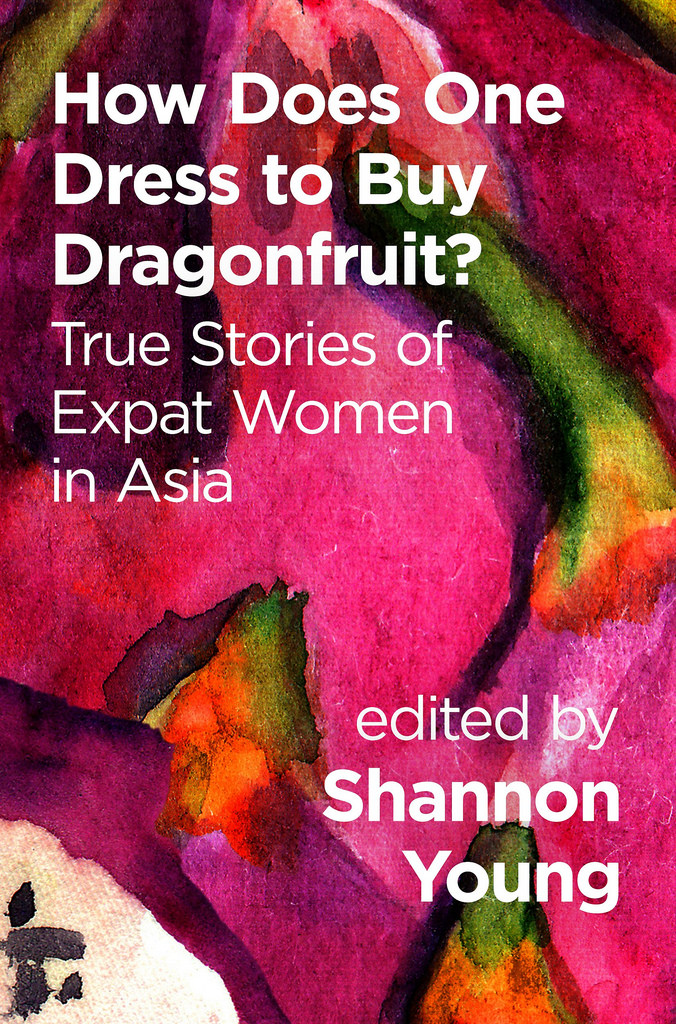
Yet that’s not the only reason you should pick up a copy of How Does One Dress to Buy Dragonfruit? True Stories of Expat Women in Asiaa collection I can’t stop raving about because of how personal and soulful every single essay is.

For me, this is the rarest of all anthologies. I actually devoured it from cover to cover in record time, and found something to love in all the essays — regardless of the story. But if you’re looking for the sort of stories that drew you to this blog, well, you’re in luck.

Love reading about cross-cultural relationships? Or dating and marriages and families in Asia? Or just want some great stories from AMWF writers? This anthology is also for you! Specifically, you’ll enjoy these 12 other essays I’d like to introduce to you. Think of them as 12 more reasons (besides, of course, “Huangshan Honeymoon“) why you should buy How Does One Dress to Buy Dragonfruit? True Stories of Expat Women in Asia.

Here they are in order of appearance:

(photo by Giorgio Minguzzi via Flickr.com)

1. “The Weight of Beauty” by Dorcas Cheng-Tozun

Dorcas instantly became one of my favorite writers when I discovered her funny and moving essay last summer titled How to be Mistaken for a Prostitute in China. Her contribution to this anthology is yet another exploration of her experience as the Chinese-American wife of a white American guy in China, but it also delves into issues all-too-familiar to many of us — how we view our bodies and ourselves. You can actually read it in the sample chapters featured Amazon.com — and chances are, you’ll love her writing as much as I did.

(photo by LeeAnn Adams via Flickr.com)

2. “Finding Yuanfen on a Chinese Bus” by Kaitlin Solimine

When Kaitlin steps onto that rickety, sleeper bus for a two-day journey from Kunming to Guangzhou, she ends up finding the ultimate road buddy (or should I say, “road gal”?). In the process, she ends up reflecting on her dating experiences in China with expats and locals alike. Kaitlin’s essay is so refreshingly honest, delving into all of the off-and-on madness, the one-night stands, the “just for sex” experiences…things most of us would rather keep locked away in our journals and minds. It’s this, plus her beautiful writing, that makes you fall in love with her essay — and long for more.

(photo by Shoko Muraguchi via Flickr.com)

3. “Love and Polka Dots” by Suzanne Kamata

Suzanne  has a different kind of AMWF family experience in Japan because of her special needs daughter Lilia, who is deaf and uses a wheelchair. Suzanne promised to take Lilia to an exhibition of artwork from the internationally renowned artist Yayoi Kusama in Osaka (which requires a two and a half-hour bus ride), and you can imagine the challenges involved in taking out a wheelchair-bound child and communicating in a language (signing) that, for Suzanne, can be tiring. Ultimately, they make the journey together to appreciate what Suzanne describes as Kusama’s “playful and whimsical” works of art (with, you guessed it, polka dots) and come away feeling stronger, inspired and even hopeful.

(By the way, many fans of this blog will enjoy Suzanne’s anthology Call Me Okaasan: Adventures in Multicultural Mothering.)

(photo by Jo Schmaltz via Flickr.com)

4. “Happy Anniversary” by Stephanie Han

While this essay tells the story of how one Korean American woman happens to fall in love with a white British man in Hong Kong on the eve of the turnover, it’s also an excellent meditation on the peripatetic nature of expat life (especially in an international family). It’s the details that make Stephanie’s essay a joy, from screaming “Kill it!” to the cobra coiled before her door (which challenges her identity as an “animal-lover”) to the $5 gold ring she got as a freebie from a Turkish rug salesman (which she subsequently uses when she gets married).

(photo by Jonathan E. Shaw via Flickr.com)

5. “Giving in to Mongolia” by Michelle Borok

A lifelong horseback riding enthusiast, Michelle once again returns to the saddle in her thirties and ultimately her passion draws her to Mongolia for a solo vacation. There she discovers a braver, stronger side of herself and finds herself gradually falling for “a man with golden eyes, a gentle voice, broad shoulders, and close-cropped salt- and-pepper hair” who speaks no English. It’s an epic story of love and personal transformation, and it stars an incredibly handsome Asian guy. What’s not to like?

(photo by Vanessa Berry via Flickr.com)

6. “An Awkward Phone Call” by Christine Tan

When she used to blog at Shanghai Shiok, Christine dished out some of the smartest (and most addictive) essays I’ve ever encountered about the experience of being an Asian woman dating a White man. And this contribution doesn’t disappoint, as she continues that conversation and deepens it with completely new and unexpected layers (including the shocking comment that drove her to abandon Shanghai Shiok). It’s moving, confessional and incredibly brave — and personally, I hope we’ll hear much more from Christine (such as finishing the memoir she alludes to in her essay).

(photo by Sarah Kim via Flickr.com)

7. “How to Marry a Moonie” by Catherine Rose Torres

Stereotypes about cross-cultural relationships don’t end with “yellow fever”, as Catherine reminds us. “…the term moonie came to mean all Korean men seeking mail-order brides from poor countries like the Philippines. But I expected my friends to know the difference—to know I wasn’t mail-order bride material.” She’s Filipino, Jay is Korean, and the challenges they face go far beyond stereotypes. A terrific essay for anyone who has ever had the bride-to-be jitters (like me!) or managed to survive the kind of “our family will handle everything”, big, fat wedding I had in China.

(photo by Eric Hunt via Flickr.com)

8. “The Rainiest Season” by India Harris

As longtime readers know, I’ve railed against the whole “Asian women are stealing our husbands” stereotype that makes its rounds in the expat world. Still, you’ve heard the stories — how some white guy relocates to Asia with his wife in tow, only to toss her aside for a local woman. For anyone wondering what could happen when a marriage blows up this way (and for that matter, how the woman comes to reclaim her own life) here’s your essay. If you’re anything like me, you’ll keep turning the pages and thinking, “Oh. My. God.”

(photo by Jose Javier Martin Espartosa via Flickr.com)

9. “Moving to the Tropic of Cancer” by Philippa Ramsden

Living abroad doesn’t make you immune to the ravages of life, such as a potentially life threatening illness. That’s not what Philippa, who hails from Scotland, expected when she moved to Burma with her Himalayan Tamang husband. But suddenly, she’s forced to navigate hospitals, appointments and tests in a completely foreign world — and must find the courage to face one frightening diagnosis. A moving essay from an AMWF sister.

(photo by Sarah Joy via Flickr.com)

10. “Ninety Minutes in Tsim Sha Tsui” by Susan Blumberg-Kason

A stroll through this neighborhood in Hong Kong transports Susan right back to the days when she was still the “Good Chinese Wife” to her husband from Wuhan, and all of the challenges she faced back then. While you’re waiting for Susan’s book to come out in late July (titled, of course, Good Chinese Wife), this essay is the perfect introduction to what I’m calling the AMWF memoir of the year.

(photo by Boff Hiroshi via Flickr.com)

11. “Here Comes the Sun” by Leza Lowitz

Not every country and culture encourages adoption, including China…and Japan. That’s where Leza and Shogo, her Japanese husband, decide pursue this unconventional pathway to parenthood. It’s a tale of determination, silver linings, and what happens when a little boy suddenly becomes a new ray of sunshine in your life. And if you enjoy this essay, watch for Leza’s forthcoming memoir which covers her adoption experience.

8413571054_5b64023fed_z
Guo Jian and Ember Swift (photo by Luna Zhang)

12. “Chinese Stonewalls” by Ember Swift

Going abroad has a way of teaching us new things about ourselves. For Ember, who had only ever been with women, falling for a man (Guo Jian, the lead singer of Long Shen Dao) takes her by surprise in Beijing, and eventually pulls her into a life she never imagined for herself. Anyone who has followed Ember’s writing will enjoy the beautiful and life-changing story of how she came to be the queer girl who got married in China.

So what are you waiting for? Pick up your copy of How Does One Dress to Buy Dragonfruit? today and get swept away by these and the many other outstanding stories!

P.S.: On Facebook? Follow How Does One Dress to Buy Dragonfruit? now!

How Does One Dress to Buy Dragonfruit?

On my first funeral in China, and the loss of my first close Chinese family member

When you’re married to a Chinese national, you’re privilege to a lot of things the average expat in China would never experience. The opportunity to be a Chinese bride or groom in an incredibly big, red wedding celebration (emphasis on the “big” and “red”). Spending that explosive holiday of Chinese New Year’s in the family home (where you get to see exactly how folks light those fireworks or learn how to make his mother’s homemade tofu). Watching your sister-in-law raise her only months-old infant and all of the pomp and circumstance this new addition to the family brings with her (such as the 100 days old celebration for my niece).

But then, there are the experiences you get to be privilege to — and wish you weren’t. Like a funeral in China.

14184452397_e0ecc7a66e_b

How could I have been married to John for nearly 10 years (yes, that’s right, nearly a decade) and never experienced a funeral in China? Luck, perhaps. Or great genes. Sometimes, after seeing many of my close relatives pass away earlier before his — like my paternal grandfather in 2003, and my maternal grandfather in 2011 —  and remembering how I lost my own mother at the tender age of 17, I would think of his family somehow like a giant, extended version of the Energizer Bunny that just kept going and going. Of course they would always be there when we returned. Of course everyone would be fine. John’s family was somehow different. (Or at least, I wanted to kid myself into believing that was true.)

But then this morning, our smartphone rang and on the other end was John’s oldest brother, with the news that would usher in my unwanted invitation to this one experience I had never had before (or wanted).

John’s maternal grandfather — his only remaining grandfather — just passed away.

Grandpa at far right, along with Grandma and a cousin.

But shouldn’t we have seen this coming? Once the 2014 horse year galloped into our lives, grandfather kept trotting in and out of hospitals month after month. First it was that Chinese traditional medicine hospital near one of his daughters’ homes. Then it was the hospital in the county seat, where John’s grandmother — who has a heart condition — also joined him for a week or two. Then both of them once again went back into the hospital in the county seat for several weeks in May, only to return to their home the very afternoon before we moved to Hangzhou.

I remember squeezing in that last minute visit only two weeks before to Grandma’s house (Grandma was always the more talkative one, cracking jokes and her lovable grin, so we aways associated the place with her). It was just like any other visit in the past few months, where we found Grandpa lying in his bed in the far corner, looking a little beaten down from his many health concerns (heart, lungs, even his stomach) but still kicking and having survived yet another stay in the hospital. He only flashed us a weak smile from beneath the covers, with his leg akimbo. I told him, “Don’t worry, Hangzhou is so close to here. We’ll be able to visit you often!” Did I see relief in his eyes? A sense of comfort knowing we cared about him? Or maybe just the exhaustion from his time in the hospital? I couldn’t tell. But more importantly, I never realized that this would be the very last thing I would ever say to him, and the very last time I would ever see him alive.

Deep down, a sense of dread surrounds me with each passing moment. A part of me wants to believe it’s my fear of the funeral itself — that I’ve never before experienced a funeral in China, in the custom of my husband’s hometown. That my husband has only shared tidbits and small anecdotes that never even began to paint a picture of what it means to participate in a funeral. But I know that truthfully, what I fear the most is what that funeral signifies — that Grandpa is officially no longer with us.

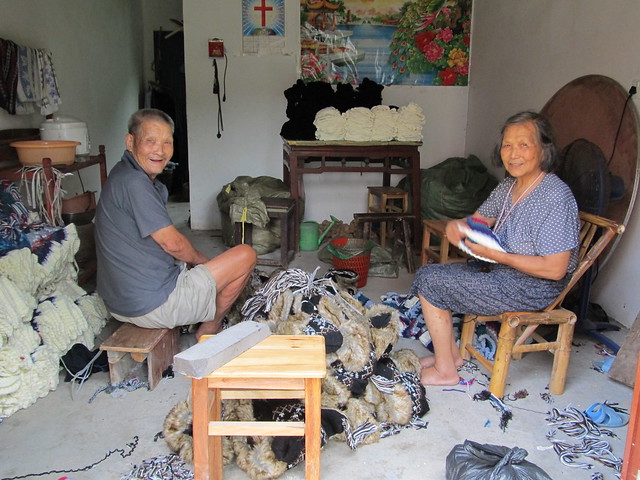
Grandpa and Grandma, knitting hats one summer (a local industry) to earn some money.

And even though I’ve never felt as close to him as Grandma, I worry about her as well. We’ve all watched her health falter throughout the year and breathed a sigh of relief every time she returned home with the same grin and the same unexpected quips and jokes in her local dialect. But what now? How will she cope with an empty home? Will this be the experience that breaks her as well?

I remember how she told us earlier in the year, “I don’t want to die this year.” She’s 81 and for whatever reason, passing away at this age is somehow inauspicious. Personally, I think any passing is inauspicious and especially the people closest to us, the people we love most.

Grandpa’s passing has summoned us back once again to John’s hometown, just at the very moment when he and I seemed to be settling into life here in Hangzhou. And now I’m on the verge of experiencing a Chinese funeral and the loss that comes along with it.

But I’m also married to John and have the support of his family through this all — people who have experienced many a funeral in their lives. While I can’t say it’s a privilege to go through all of this, it is a relief and comfort to know I’m not alone in this process.

Eating a Grandma and Grandpa’s home during Chinese New Year.