Chapter 64: Living in the Face of SARS

Doctor in a surgical mask
As a friend goes into quarantine, and the virus closes in on John's hometown in the countryside, I had to learn how to live with the threat of SARS, everyday.

I could have been quarantined.

One of the employees at Alibaba — the Internet company I interviewed at in Hangzhou — contracted SARS while attending the Canton Fair. On her second visit to the hospital, she discovered her illness was no typical flu. And just like that, everyone who worked in Alibaba — and other companies sharing the office building — was put under quarantine in early May, 2003, including John’s high school classmate, Douglas.

I wanted so much to stay in Hangzhou only months before, and work for Alibaba. Weeks after I moved to Shanghai and began work for the global media company, Alibaba even called to offer me the job — which of course I turned down. I came so close to this company. I could have been another casualty of SARS.

As SARS continued to spread, before long it began to touch the people you know and care about. Continue reading “Chapter 64: Living in the Face of SARS”
Chapter 54: I’m Leaving Hangzhou on a Microvan

Microvan
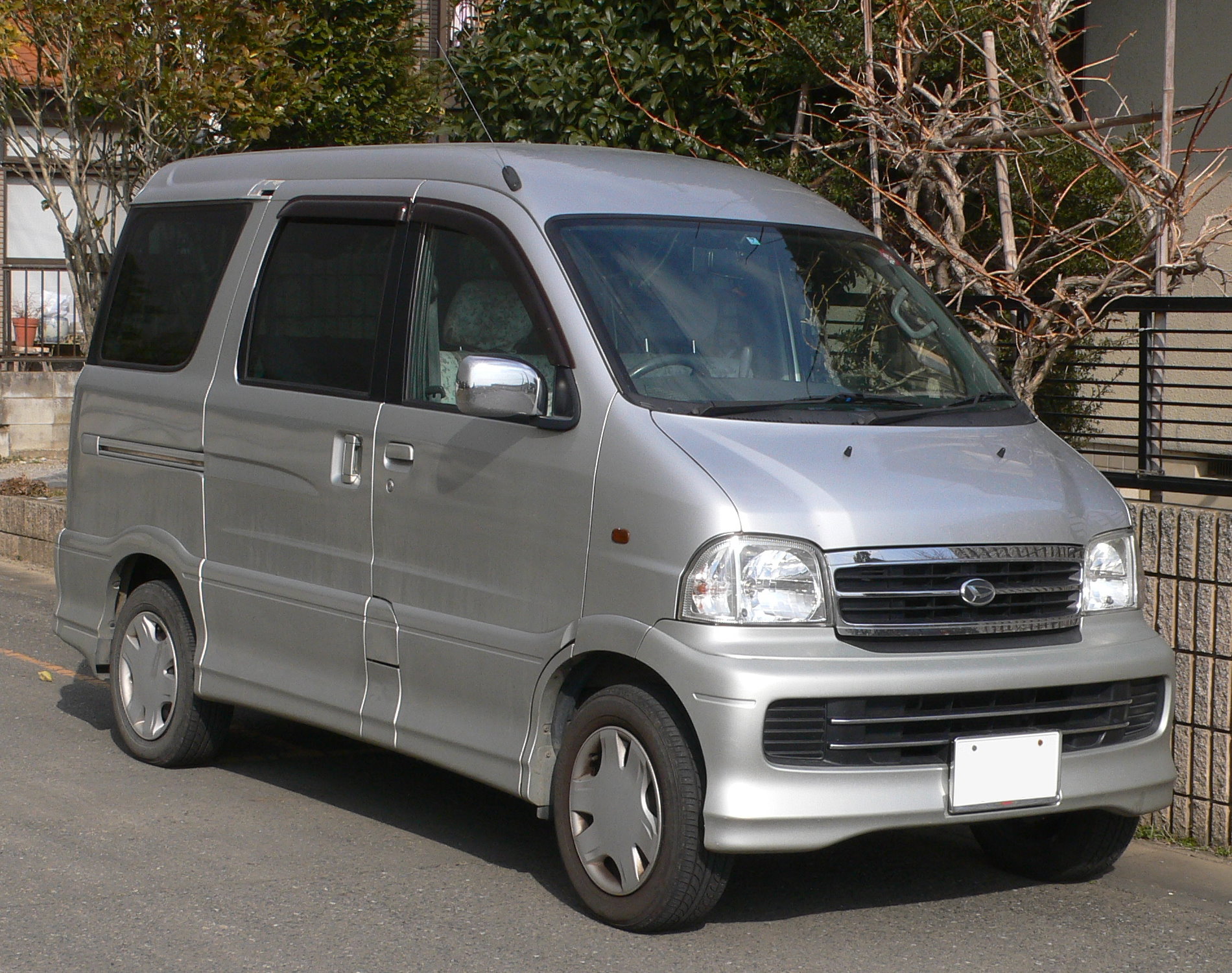
As I moved to Shanghai in a microvan, I left behind Hangzhou -- and the memories -- and moved forward with John's support. (image from Mytho88, courtesy of Wikipedia)

I moved many times in my life. But I never moved in China — in a microvan — until March 1, 2003.

The gray microvan belonged to John’s cousin, a driver for an express mail service based in Shanghai. According to John, many people with a high school education — or less — left Tonglu to get into the express mail business. Tonglu natives now ran many of the smaller express mail services in the Yangtze River Delta area, including Shanghai. I imagine one Tonglu man left and made his fortune in express mail, bringing his contacts with him — and later inspiring copycat entrepreneurs. But, clearly, the model was working for this cousin. He had only a high school education, but he actually owned a car — a car that would help me move my home to Shanghai.

With only a job interview, no firm offers and a temporary visa expiring April 15, I still flirted with uncertainty in my life. But I had a lot of strength behind it all, because of John, my Chinese boyfriend. John found us an apartment, and put down a deposit. John asked his cousin to move me to Shanghai. And, through it all, John calmed my fears, reminding me “we were in the same company.” Continue reading “Chapter 54: I’m Leaving Hangzhou on a Microvan”

Chapter 53: Truth, Lies and Actual China Employment

A lie may have brought me into Shanghai, but it was the truth that would make me gainfully employed in China.

My Chinese friend Jane recommended me to Nick Jin, the CEO of a Shanghai Internet company, saying I once worked for Alibaba, and studied Mandarin at Zhejiang University. I finally had a contact in Shanghai — but what he knew about me was a lie.

Jane, a sprightly girl with a boy cut known for unconventional clothing and church-chime ringtones on her cell phone, had her reasons. “I mentioned Zhejiang University to prove you can speak good Chinese.” And Alibaba? “He really hates the Chinese Internet company you worked for.” Nick despised the company because of his experience there as a manager. Mr. CEO’s stinginess — he actually decreased Nick’s stock shares, and later, absorbed them all when Nick left — drove him to form a new company in Shanghai.

Even if we shared a mutual dislike of Mr. CEO, Nick didn’t know the truth about me. How could I contact him now? Continue reading “Chapter 53: Truth, Lies and Actual China Employment”

Chapter 51: My Guanxi, My Interview Nightmare

Photo of a suit and tie
Has your China guanxi (or contacts) ever surprised you? A new contact of mine set up a job interview in China like nothing I'd ever known.

In China, when you need to find a job, there’s no better way than through your guanxi, or relationships.

I spent hours calling my friends and contacts, announcing my jobless status, and asking them to look for leads. Even John consulted his own friends. But when you end the call, send that e-mail, or finish that text message, the rest depends on someone else — no matter how desperately you want results. And sometimes, the results you want aren’t the results you get.

I met David Dong in the gym, the week after I’d returned to Hangzhou, and mentioned, in passing, I was looking for a new job. While Dong, a CEO of a small company, offered his assistance enthusiastically, in near-native English, I didn’t expect much from a new contact.

Days later, my newly minted guanxi surprised me by calling in the morning with an opportunity. “My old classmate owns a foreign trade company, and he is interested in meeting you. Would you have time?” Continue reading “Chapter 51: My Guanxi, My Interview Nightmare”

Chapter 42: New Clothes for Chinese New Year

Chinese tangzhuang silk jacket
I wanted a new beginning in Chinese New Year. So, I made an outfit to make a good impression on John's parents, and, later, a new job.

In Chinese New Year, wearing new clothes means a new beginning. Before Chinese New Year in 2003, I desperately needed a new beginning — because I’d lost my job at the Chinese Internet Company, and I was about to meet John’s parents.

After the remark from John’s father — that foreign women make good friends, not girlfriends — I needed something to make a fresh start with his family. That’s what I told Caroline, my Chinese friend, days before John and I would travel to his countryside home. We had just had dinner together that evening, and on our post-meal stroll, came across the tiny, brightly-lit store of a tailor I knew all too well.

My eyes twinkled like a child before the tantalizing toys in a Christmas store window display. “She’s the one who made my qipao.” The same qipao I wore for my birthday celebration the summer John and I fell in love. “Let’s go inside and take a look.” Continue reading “Chapter 42: New Clothes for Chinese New Year”

Chapter 41: Losing Jobs and Gaining Chinese Friends

night walk in China
Sometimes, your Chinese friends -- and exes -- surprise you. During an evening walk, after cleaning out my desk, I discovered a surprising understanding from Frank, my ex-Chinese boyfriend.

Just as I lost my job and visa, Frank, my ex-Chinese boyfriend, was being groomed for management by Mr. CEO. The company rescued his desk from the impersonal production room, and safeguarded him behind the protective, sunshine-lit walls of a small office beside his. Frank and I had long had walls between us — but now, we could finally see them.

I wanted to stay far from Frank after my job and visa crisis. I didn’t see how he would understand me. He didn’t when we dated before, letting our relationship turn bitter like a neglected glass of green tea. Now that he and Mr. CEO all but drank from the same cup, how could Frank and I ever get beyond the shards of our past?

On January 28, 2003, I visited the Chinese Internet company in the afternoon, to remove sensitive information from my computer. I ducked into my cubicle in the production room, slouching in the corner in the hopes nobody — especially Frank — would see me there. Continue reading “Chapter 41: Losing Jobs and Gaining Chinese Friends”

Chapter 37: Forgotten Workers and Contracts

Lonely person standing at a sunrise
My Chinese Internet company had a history of forgetting workers and contracts. And, soon, it would forget me, too.

By January 14, 2003, the Chinese Internet company where I worked had already begun taking its first steps towards a possible listing on the Hong Kong stock market. But on that same day, I had only begun to take my first steps into the workplace — after two weeks of recovery from a sprained ankle.

And some people, on the other hand, had taken their last steps at work. Such as Ayi Zhong, the fiftysomething woman with a cap of salt-and-pepper hair who cleaned my apartment once a week, and the company offices several times a week.

She told me about it the evening of January 14, when I found her arranging my apartment, as she did every week. “The new office is twice the size of the old place, but they would not increase the salary.” The company only paid her 250 yuan (almost $37) a month, a pittance for her services.

Still, Ayi Zhong wasn’t the only company casualty. Continue reading “Chapter 37: Forgotten Workers and Contracts”

Chapter 36: Leaning on Your Chinese Friends and Lovers

Western woman and Chinese woman, leaning on each other
When you're helpless in China -- because of language, or even a sprained foot -- sometimes all you can do to survive is lean on your friends

When you live as a foreigner in China, sometimes you can’t help but feel like a child. Maybe it’s because you can’t speak the language — or stumble through it, like a toddler playing with sounds and words. Maybe it’s because you don’t read the signs, and feel as lost as a little kid, abandoned by their parents in a strange world. Maybe it’s the culture, where you commit the sort of faux pas that your parents would have admonished you about after visiting grandma’s house.

And, maybe, it’s because you depend on your Chinese friends and lovers so much, that they become your caregivers all over again.

When my left ankle was put into a cast — after clumsily spraining it outside a shopping center in Hangzhou — the hospital had no crutches, and no protective sheath that would allow me to walk outside. I had leaned on my Chinese friend Chris for a lot of things before — advice, Chinese lessons, help at the hospital — but now I leaned on him, physically, just to leave the hospital grounds.

Yet, leaning could only take me so far. Continue reading “Chapter 36: Leaning on Your Chinese Friends and Lovers”

Chapter 33: My Chinese Boyfriend’s Dormitory Despair

Door in a Chinese university
John, my Chinese boyfriend, was left in the dark at university when he faced a semester of dormitory despair.

While I faced a spamming dilemma in my company in Hangzhou, my Chinese boyfriend, John, faced a dormitory dilemma at his university in Shanghai.

John lived in a men’s graduate dormitory on campus, an older brick building with four floors that stood next to the school cafeteria. John’s initial dorm room, on the second floor, had a window perched just above some large fan or boiler unit for the cafeteria that looked like a large white mushroom made of metal.

John didn’t mind sharing a room with three others, or the smell of the drab, institutional bathrooms, or even the usual 11pm lights-out, power-off policy typical of a Chinese university. But he did mind the noise of the cafeteria — from that strange unit outside the window — which disrupted his sleep every morning, around 4:30am. Continue reading “Chapter 33: My Chinese Boyfriend’s Dormitory Despair”

Chapter 32: To Spam or Not To Spam

Computer screen in China
To spam or not to spam? That was my dilemma, after the company asked me to do some "international marketing."

By December 2002, I had seen a lot of things at the Chinese Internet company in Hangzhou, where I worked. But spamming wasn’t one of them — until, in mid-December, when my supervisor, Mr. Fang, had a talk with me.

I was already worried when Mr. Fang asked me to follow him to the conference room. And, after I nervously slid into one the black chairs surrounding the solid black conference table, Mr. Fang did nothing to quell my fears.

“So, I was wondering if you could tell me about what activities you’ve been doing at work these days. Ideally, if you could tell me, down to the hour, that would be great.”

It was the kind of thing that “consultants” usually asked, before recommending an employee’s dismissal — except I was the employee, and Fang was no consultant, but my supervisor. “Is there a problem?”

Fang smiled — a meaningless workplace kind of smile that is either there to comfort others, or simply mask the unfathomable emotions within. Either way, I didn’t know where this was going, until Fang spoke the words. “Well, actually, we have a new task for you. International marketing.”

International marketing? Continue reading “Chapter 32: To Spam or Not To Spam”