
 As a foreigner in China, sometimes you touch people in ways you never realized. Something you say or do in a moment — a small, forgettable thing to you — becomes a lasting impression to someone else.
I didn’t think much about swimming at the Chenjinglun pool in Hangzhou. I’d been going there since September. By early December, 2002, it was just a part of my routine — a way to get some exercise, while my usual gym was closed for renovation.
Chenjinglun was a typical indoor pool in China. It had lanes roped off for lap swimming. Yet, with the evening demand, you often shared a lane with as many as two or three people. I didn’t mind the sharing. But more people together means more collisions — such as getting clipped by a scissor kick, or clobbered by a front crawl.
That’s why my swimming routine also included flexing my language muscles. Because, if anyone got too close to me, or bumped me, I’d let them know with a firm, but polite, “Xiaoxin!” (Be careful) It was simply communication, acting as my lifeguard.
But, in fact, it’s not so simple when you’re a foreigner, speaking Chinese in China. Continue reading “Chapter 31: An Unintended Splash at the Hangzhou Pool”
 When you’re a foreigner in China, the most common phrase you might hear is: “Can you teach me English?” Your foreign face is like a walking advertisement that new friends or friends of friends can’t help but answer — because they live in a world where English could determine their future, or change their destiny.
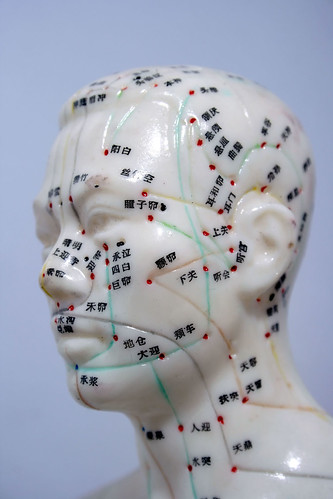 In Chinese traditional medicine, there is a saying: anger hurts your liver, melancholy hurts your lungs, thinking hurts your spleen, happiness hurts your heart. The thing is, we are all angry, melancholy, happy, or just thinking at different times in life. What hurts is when we do it too much, without balance.




 Frank, my ex-Chinese boyfriend