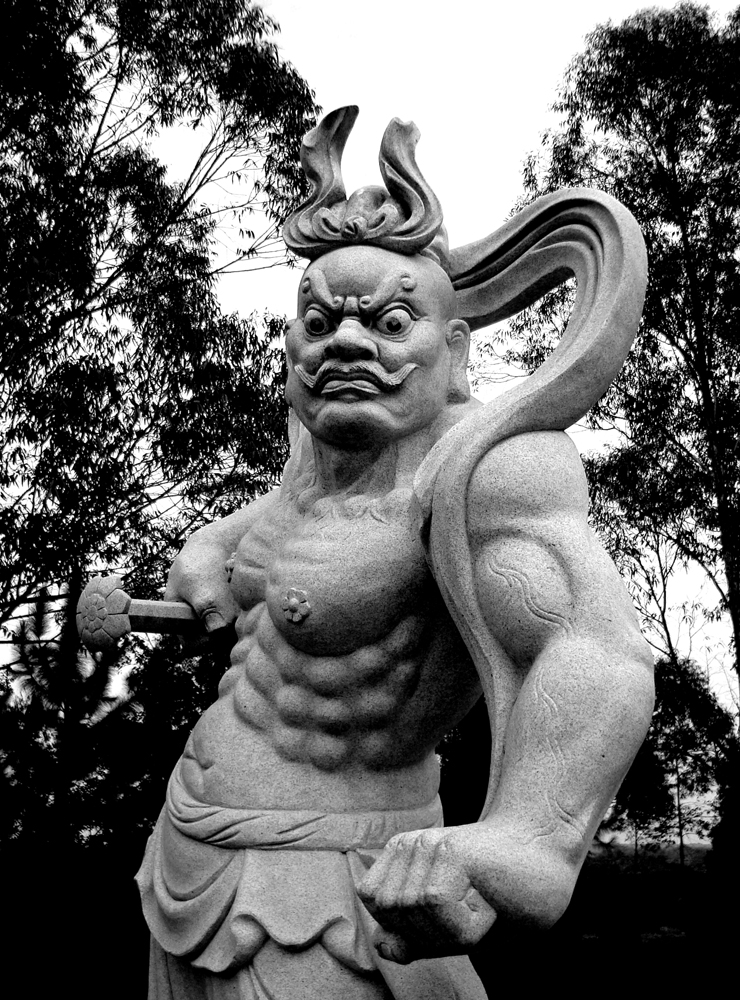
During a reunion lunch with one of my favorite former Chinese coworkers, Jane, I discover she's gone over to F@lun G0ng -- and hopes John and I will too.
In late August 2003, John and I returned to Hangzhou to reunite with our friends — including my former Chinese coworker Jane.
This was the same “almost vegetarian,” sprightly young twentysomething with a zen chime ringtone, and a grin that could breath even a little humor and grace into the ultra-serious “technical room,” where the two of us used to work. Jane even worked her own hours, and wore edgy outfits, defying the usual “good-girl” pastels most Chinese women wore. Jane reminded me that, even in China, there are girls who just want to have fun — their way. My inner feminist adored her.
If only this were the same Jane I’d known. That day, she served up Hangzhou-style, stir-fried veggies — and a surprise helping of F@lun G0ng. Continue reading “Chapter 74: F@lun G0ne”
Even as I found so much to love in Shanghai, I still yearned for the flavors of the Hangzhou I once knew. (photo by HanWei, courtesy of Wikimedia Commons)
I moved to a district in Shanghai called Changning, which means “long peace.” After losing my job and even overstaying my visa in Hangzhou, living in Changning was like finding peace in my life. I had a promising new job as a copywriter in a multinational company named one of the Forbes’ 200 best small companies in the world. I resided in a quiet community, with evergreens, bushes, manicured lawns, weathered four-story, concrete apartment buildings and plenty of sunshine. Every morning, a fleet of modern — and mostly empty — air-conditioned buses could taxi me all the way to my new downtown office.
Most of all, I had John, my Chinese boyfriend, with me, everyday. And perhaps that was the most important difference between Hangzhou and Shanghai — now John was no longer an occasional weekend visitor, but, by unspoken agreement, my live-in partner. He turned Shanghai into something deceptively familiar, as if my new home was simply a Shanghai version of the Hangzhou neighborhood I once knew.
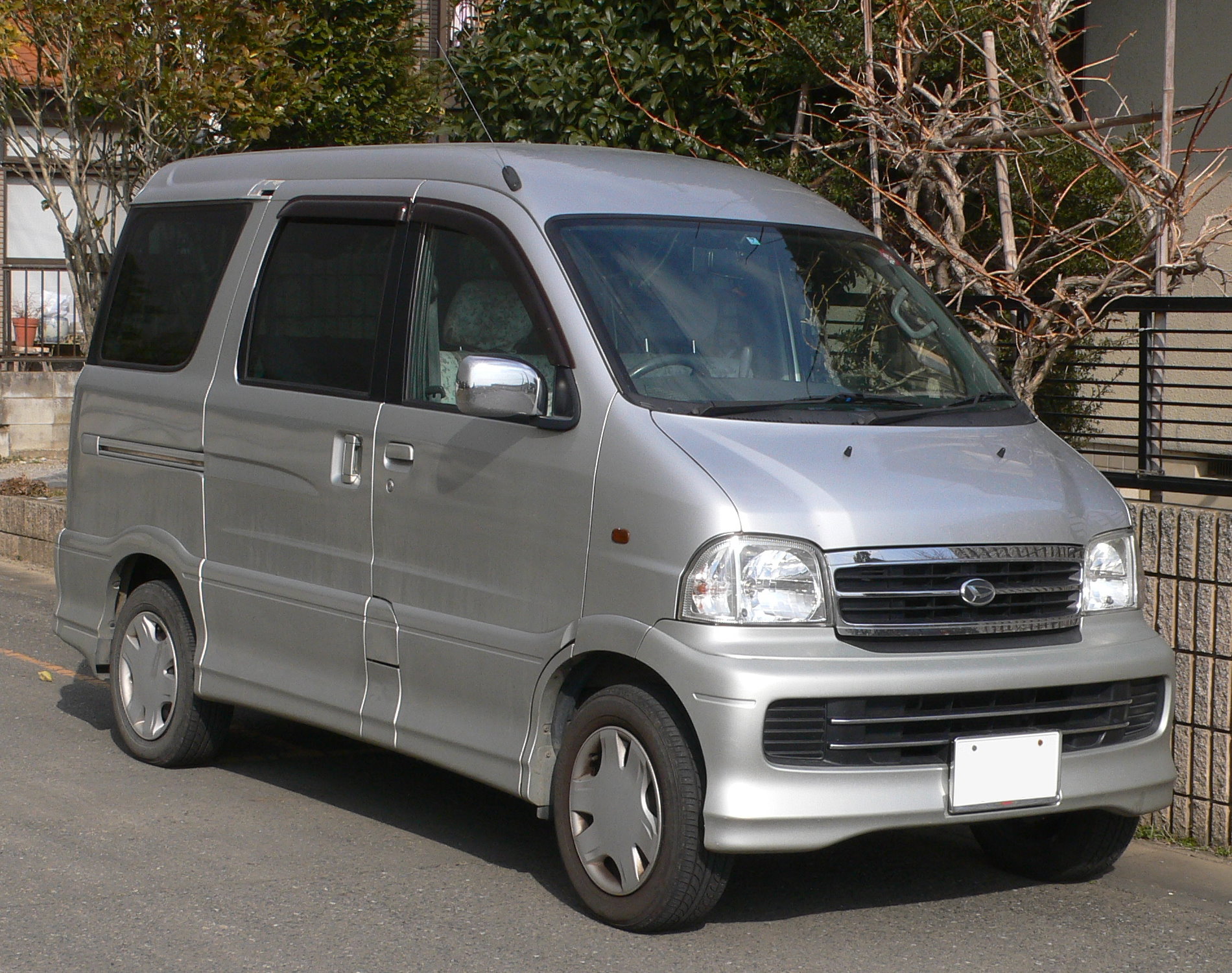
As I moved to Shanghai in a microvan, I left behind Hangzhou -- and the memories -- and moved forward with John's support. (image from Mytho88, courtesy of Wikipedia)
I moved many times in my life. But I never moved in China — in a microvan — until March 1, 2003.
The gray microvan belonged to John’s cousin, a driver for an express mail service based in Shanghai. According to John, many people with a high school education — or less — left Tonglu to get into the express mail business. Tonglu natives now ran many of the smaller express mail services in the Yangtze River Delta area, including Shanghai. I imagine one Tonglu man left and made his fortune in express mail, bringing his contacts with him — and later inspiring copycat entrepreneurs. But, clearly, the model was working for this cousin. He had only a high school education, but he actually owned a car — a car that would help me move my home to Shanghai.
With only a job interview, no firm offers and a temporary visa expiring April 15, I still flirted with uncertainty in my life. But I had a lot of strength behind it all, because of John, my Chinese boyfriend. John found us an apartment, and put down a deposit. John asked his cousin to move me to Shanghai. And, through it all, John calmed my fears, reminding me “we were in the same company.” Continue reading “Chapter 54: I’m Leaving Hangzhou on a Microvan”
As I grappled with the uncertainty of finding a new job, and wondering where to live in China, I began to realize that my bad luck just might be a blessing after all.
There once was a Taoist man, named Saiweng, who lost his horse. While his neighbors thought it a great misfortune, Saiweng’s father said “I don’t know.” Later, the horse returned with a herd of the finest wild horses. The neighbors called this a blessing, but Saiweng’s father said “I don’t know.” One day, Saiweng decided to ride one of the new horses, but he fell off and broke his leg. The neighbors declared this tragic, and Saiweng’s father still said, yet again, “I don’t know.” Later, their region declared war, because of the invasion of barbarian tribes. While all able-bodied men had to take up arms and fight, Saiweng, with his crippled leg, could stay at home.
Has your China guanxi (or contacts) ever surprised you? A new contact of mine set up a job interview in China like nothing I'd ever known.
In China, when you need to find a job, there’s no better way than through your guanxi, or relationships.
I spent hours calling my friends and contacts, announcing my jobless status, and asking them to look for leads. Even John consulted his own friends. But when you end the call, send that e-mail, or finish that text message, the rest depends on someone else — no matter how desperately you want results. And sometimes, the results you want aren’t the results you get.
I met David Dong in the gym, the week after I’d returned to Hangzhou, and mentioned, in passing, I was looking for a new job. While Dong, a CEO of a small company, offered his assistance enthusiastically, in near-native English, I didn’t expect much from a new contact.
Days later, my newly minted guanxi surprised me by calling in the morning with an opportunity. “My old classmate owns a foreign trade company, and he is interested in meeting you. Would you have time?” Continue reading “Chapter 51: My Guanxi, My Interview Nightmare”
What keeps you abroad when life falls apart? When I faced uncertainty after losing my job, I remembered the things that kept me grounded in China.
How do you have the gumption to stay in China?
The question — posed by Heidi, one of my high school classmates back in the US — hit me hard. John, my Chinese boyfriend, and I had just returned from spending Chinese New Year with his family, and once again I faced the stir-fried mess my life was.
I’d lost my job at the Chinese Internet Company in January 2003. After some hard negotiations, I obtained a visa that would expire April 15, 2003. I had to move out of my apartment — originally provided by the company — at the end of February. And, with John in graduate school in Shanghai, I wondered if staying in Hangzhou was such a good idea.
But it’s one thing to debate cities, and another to debate countries.
John's ancestors come from the area near Huangshan -- one of China's most impressive mountains. But his family lives in a countryside ravaged by economic development, worlds away from what his ancestors knew. (pictured: me before the fields opposite John's home, Chinese New Year 2003)
“五岳归来不看山,黄山归来不看岳” — After China’s Five Sacred Mountains, you needn’t see another mountain; after Huangshan, you needn’t see China’s Five Sacred Mountains.
John loves this expression, and has told it to me many times in our relationship. There is truth to it. Huangshan is an impressive mountain, and has a greater scale than China’s Five Sacred Mountains — Songshan, Hengshan, Hengshan, Huashan, and Taishan. But many would argue that the Five Sacred Mountains have their own beauty, and a beauty worth seeing, even if you have visited Huangshan. I don’t mention this to John, because I know his words say more about him than Huangshan. He loves Huangshan, because his relatives lived in the shadow of its enormous spires. His people are mountain people, and come from a mountain that claims to overshadow the rest.
Though he didn’t grow up at the feet of Huangshan, he was born and raised in the mountains just southeast of Huangshan. On the top level of a double-decker bus, on a sultry summer evening in 2002, he turns to me and speaks of the beauty of the mountains in his hometown. “My hometown is a tourist destination,” he says proudly. He tells me it is Tonglu, but I have never heard of it. “We have mountains, rivers, and caves,” he says. And then he smiles gently and adds this: “You’re welcome to visit anytime.”
I wanted a new beginning in Chinese New Year. So, I made an outfit to make a good impression on John's parents, and, later, a new job.
In Chinese New Year, wearing new clothes means a new beginning. Before Chinese New Year in 2003, I desperately needed a new beginning — because I’d lost my job at the Chinese Internet Company, and I was about to meet John’s parents.
After the remark from John’s father — that foreign women make good friends, not girlfriends — I needed something to make a fresh start with his family. That’s what I told Caroline, my Chinese friend, days before John and I would travel to his countryside home. We had just had dinner together that evening, and on our post-meal stroll, came across the tiny, brightly-lit store of a tailor I knew all too well.
Sometimes, your Chinese friends -- and exes -- surprise you. During an evening walk, after cleaning out my desk, I discovered a surprising understanding from Frank, my ex-Chinese boyfriend.
Just as I lost my job and visa, Frank, my ex-Chinese boyfriend, was being groomed for management by Mr. CEO. The company rescued his desk from the impersonal production room, and safeguarded him behind the protective, sunshine-lit walls of a small office beside his. Frank and I had long had walls between us — but now, we could finally see them.
I wanted to stay far from Frank after my job and visa crisis. I didn’t see how he would understand me. He didn’t when we dated before, letting our relationship turn bitter like a neglected glass of green tea. Now that he and Mr. CEO all but drank from the same cup, how could Frank and I ever get beyond the shards of our past?
On January 28, 2003, I visited the Chinese Internet company in the afternoon, to remove sensitive information from my computer. I ducked into my cubicle in the production room, slouching in the corner in the hopes nobody — especially Frank — would see me there. Continue reading “Chapter 41: Losing Jobs and Gaining Chinese Friends”
Going to negotiate with my Chinese boss, Mr. CEO, felt like facing a barbarous warrior.
After Mr. CEO had massacred my job and visa, I didn’t know how to negotiate with him. In my mind, he had become another Cao Cao — the barbarous warlord of Romance of the Three Kingdoms. I’d imagined our meeting on January 22, 2003 again and again — how he shot me down into a timorous, tearful woman.
But this would be different. Just as the sensitive Liu Bei, the compassionate leader of the Kingdom of Shu in the Three Kingdoms, had his strategist, Zhuge Liang, so I had John, my Chinese boyfriend. John didn’t have the arresting appearance of a warrior — but he had an arresting sense of justice. This moved him to challenge the stone factories in his hometown. Now, he wanted to help me challenge my boss.
The night before, he turned my apartment into battle headquarters, where we developed a list of demands for Mr. CEO. If I was to go to Hong Kong for a visa renewal, we wanted Mr. CEO to pay. We expected a guarantee on my company apartment, to stay until the end of February, and my salary for January. And, finally, John added what might just be the most wishful demand of all — an apology. “I’ll accompany you tomorrow, as a witness,” John promised.
This website uses cookies to improve your experience. We'll assume you're ok with this, but you can opt-out if you wish.AcceptRejectRead More
Privacy & Cookies Policy
Privacy Overview
This website uses cookies to improve your experience while you navigate through the website. Out of these cookies, the cookies that are categorized as necessary are stored on your browser as they are essential for the working of basic functionalities of the website. We also use third-party cookies that help us analyze and understand how you use this website. These cookies will be stored in your browser only with your consent. You also have the option to opt-out of these cookies. But opting out of some of these cookies may have an effect on your browsing experience.
Necessary cookies are absolutely essential for the website to function properly. This category only includes cookies that ensures basic functionalities and security features of the website. These cookies do not store any personal information.
Any cookies that may not be particularly necessary for the website to function and is used specifically to collect user personal data via analytics, ads, other embedded contents are termed as non-necessary cookies. It is mandatory to procure user consent prior to running these cookies on your website.