I have no idea when I’ll return to the US to visit my family.
Writing these words out feels strange enough, let alone allowing the reality to settle into my post-pandemic mind. But it’s the truth. I really don’t know when it might happen.
There are a lot of reasons why it just isn’t feasible, particularly the fact that for foreigners from the US, getting back to China isn’t a sure thing.
Imagine being adopted by US parents, only to learn as an adult you never got US citizenship after all. And now, a criminal record puts you at risk for deportation from the only country you’ve ever known.
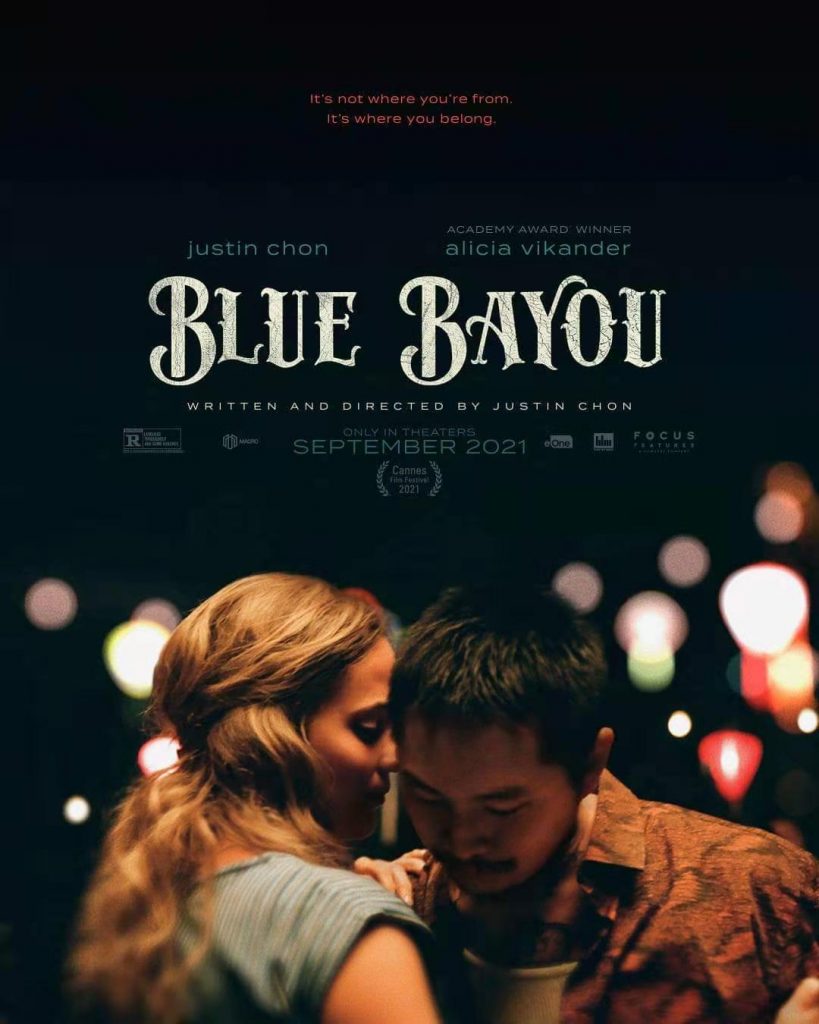
Justin Chon highlights this immigration injustice in his latest directorial work Blue Bayou, a heartwrenching drama in which he plays a Korean adoptee with a sketchy past fighting to stay with his family, including his pregnant white wife (portrayed by Alicia Vikander) and her daughter from another marriage.
The movie, which debuted at the Cannes Film Festival and is set to open in theaters in September 2021, has already landed on Vogue’s Best Fall Movies of 2021 list, with the magazine saying: “the film features some breathtakingly beautiful scenes and colors and one set piece that’s a clear homage to Wong Kar Wai.”
Critics, while hard on the film for its heavy-handed approach, have still praised Chon for raising awareness through the production, with the Hollywood Reporter noting: “…there’s a lot here that’s good, starting with the honorable intention to tell a story about the travesty of immigration law enforcement that tears apart American families.” The film holds a 64% fresh rating at Rotten Tomatoes.
I’ve often heard that life is what happens when you’re making plans. Never have we had a more salient reminder of that reality than the COVID-19 pandemic, which has ravaged not only our lives but also our best of plans.
For American Apryl Reagan, a singer and actress in Beijing, and Ma Yinliang, that meant facing a wedding in Beijing where, due to the pandemic, Apryl’s family could not attend in person. So she decided to add a little American flair to the special day by inviting some Americans she didn’t know to join in the ceremony, according to a recent report on the Beijinger:
When asked about her decision to invite strangers, Reagan says that the choice was simple.
“Of course, a wedding is a great place to celebrate our love, but it’s also just a great place to celebrate! And judging by the amount of energy these Americans brought to our group chat, they were guaranteed to make it a party,” explains Reagan. “I also really wanted to give my new Chinese family this opportunity to see how Americans party! But even more than that, sometimes I am afraid they see me as ‘America.’ Since they have never met another American, I worry that anything I do will be seen as what ‘all Americans do.’ So, I also wanted them to be able to have a chance to be around Americans other than me, meanwhile experiencing first-hand some of the cultural differences between an American wedding and a Chinese wedding.”
Americans filled two tables at the Beijing venue — the Palace International Hotel — with many of them meeting the newlyweds for the first time as they went around to personally thank all of the attendees.
The couple’s romance amid the pandemic actually lifted the hearts of others, as the Beijinger article noted:
Despite the year’s Covid fears and border closures, however, Ma and Reagan kept their hearts open to love. At the ceremony, the maid of honor noted in her remarks that their whirlwind romance inspired many friends present who hoped to one day build a partnership on the same foundation of care and respect.
You can read the full piece and peruse the lively photos from the evening — which included dancing to the Macarena! — at the Beijinger.
I’m on a 10-day work trip to Xinjiang that includes travel to Kashgar, Kuqa and Urumchi. This marks my first time to visit the far western province of China, so I’m looking forward to experiencing places I’ve read about for years in guides on China. As I’ll be very busy during and after this trip, I’ll be on break from the blog for most of this month.
Wishing you a jubilant July, filled with adventures of your own.
With the arrival of July, the month I was born, conversations at my home have invariably shifted to discussing potential “birthday programs”, as my husband Jun likes to say. ….
This year, he has already begun sketching out details for a birthday trip to the Chengde Mountain Resort, where we can walk together hand in hand in the splendor of the former imperial summer palace and grounds, and hopefully take in some of the picturesque mountain views I’ve glimpsed in photographs online.
But while Jun has approached my birthday like a production, he has often seen his own birthday as just an afterthought.
At the end of April I made a brief trip to Southwest China’s Guiyang (capital of Guizhou province) and Nanning (a major inland city in Guangxi province). I wanted to take the chance to share are some of my favorite photos from that week:
We visited an ancient town in Guiyang, with hundreds of years of history and minority traditions in its rambling stone alleyways. Here I am having a conversation there while sampling some local green tea.
Guiyang is also a city on the move, with many emerging industries, from big data to even electric vehicles and buses. This factory we visited there produces electric buses. I also had my first ride on a self-driving bus, which took us for a short drive on the factory grounds.
I was surprised to discover a legal aid clinic nestled within a community center in Guiyang, and had the chance to meet and interview the head lawyer, Liu Yuanhe, who inspired my most recent column.
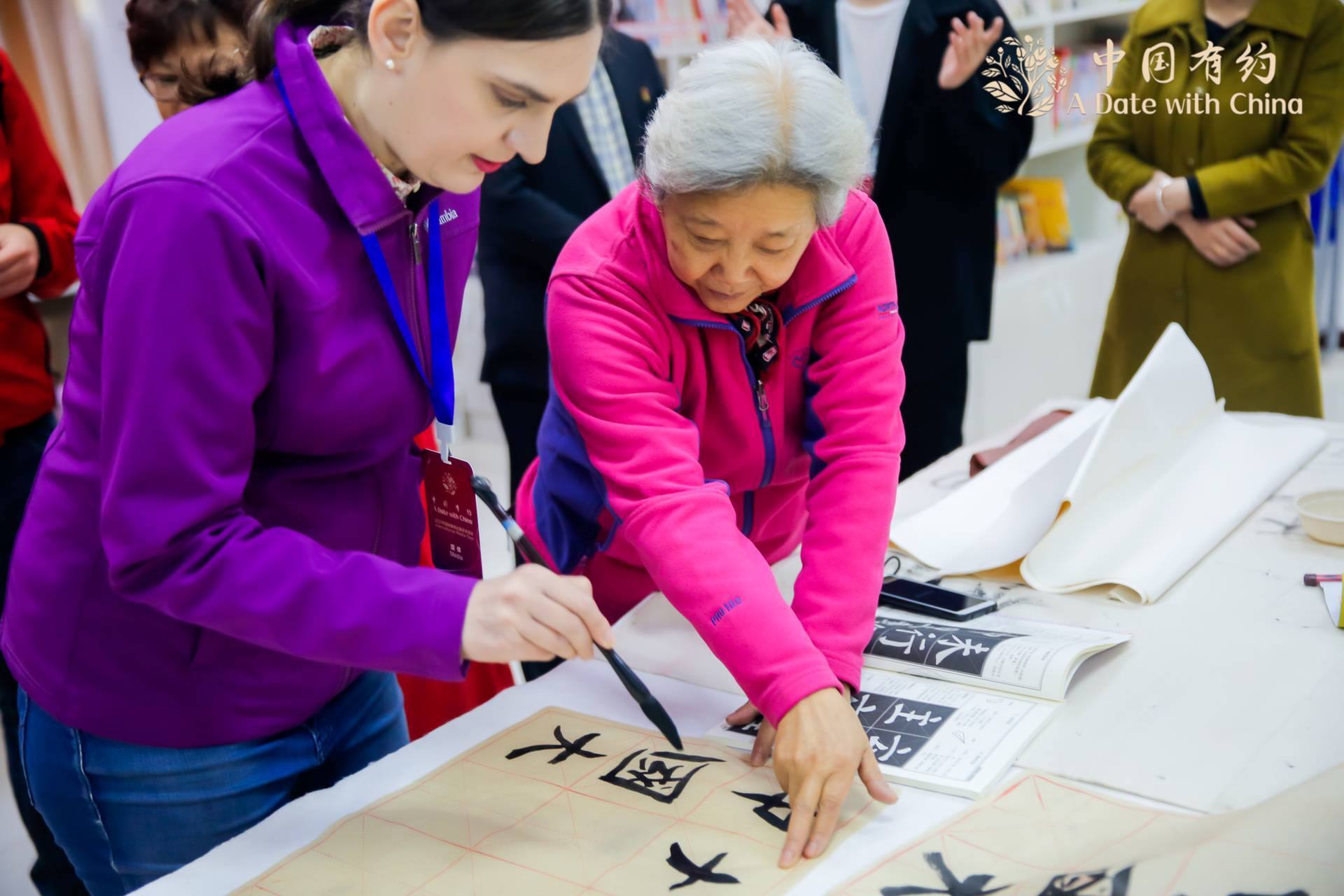
At the same community center in Guiyang, I tried my hand at Chinese calligraphy, with the help of a very patient volunteer instructor!
Nothing quite like tasting the “fruits” of agricultural labor firsthand — especially at this agricultural demonstration base in Nanning. The cherry tomatoes I sampled were organic and delicious!
In Nanning, we also visited a Zhuang minority brocade base, where the staff schooled me in the intricate art of weaving silk brocade into stunning designs.
I also had the opportunity there to try on some ethnic minority clothing, including this colorful outfit from the Miao ethnic group.
We visited a dragonfruit agricultural base as well, where we had the chance to visit the fields during the day…
And night as well. The lamps aren’t for show, but are actually used to stimulate the dragonfruit plants to stay in “production mode” 24 hours a day, boosting the productivity of the fields.
What an “enlightening” weeklong journey (sorry, couldn’t resist with the pun).
Have you ever been to Guiyang or Nanning in Southwest China?
How to hold a reed leaf was just one of the things I learned one evening in my mother-in-law’s kitchen in rural Zhejiang province, as she schooled me and my husband Jun in a delicious family tradition.
“Like this,” she said, cupping the leaf like a cone, a gesture we tried to imitate by subtly adjusting our own hands.
Next, we learned how much glutinous rice to add, watching her scoop a measuring cup of the grains into her reed leaf before we did the same. Then came the honey dates-only two, she said, placed right in the center and covered by more rice, before wrapping it up with the leaf followed by lengths of string.
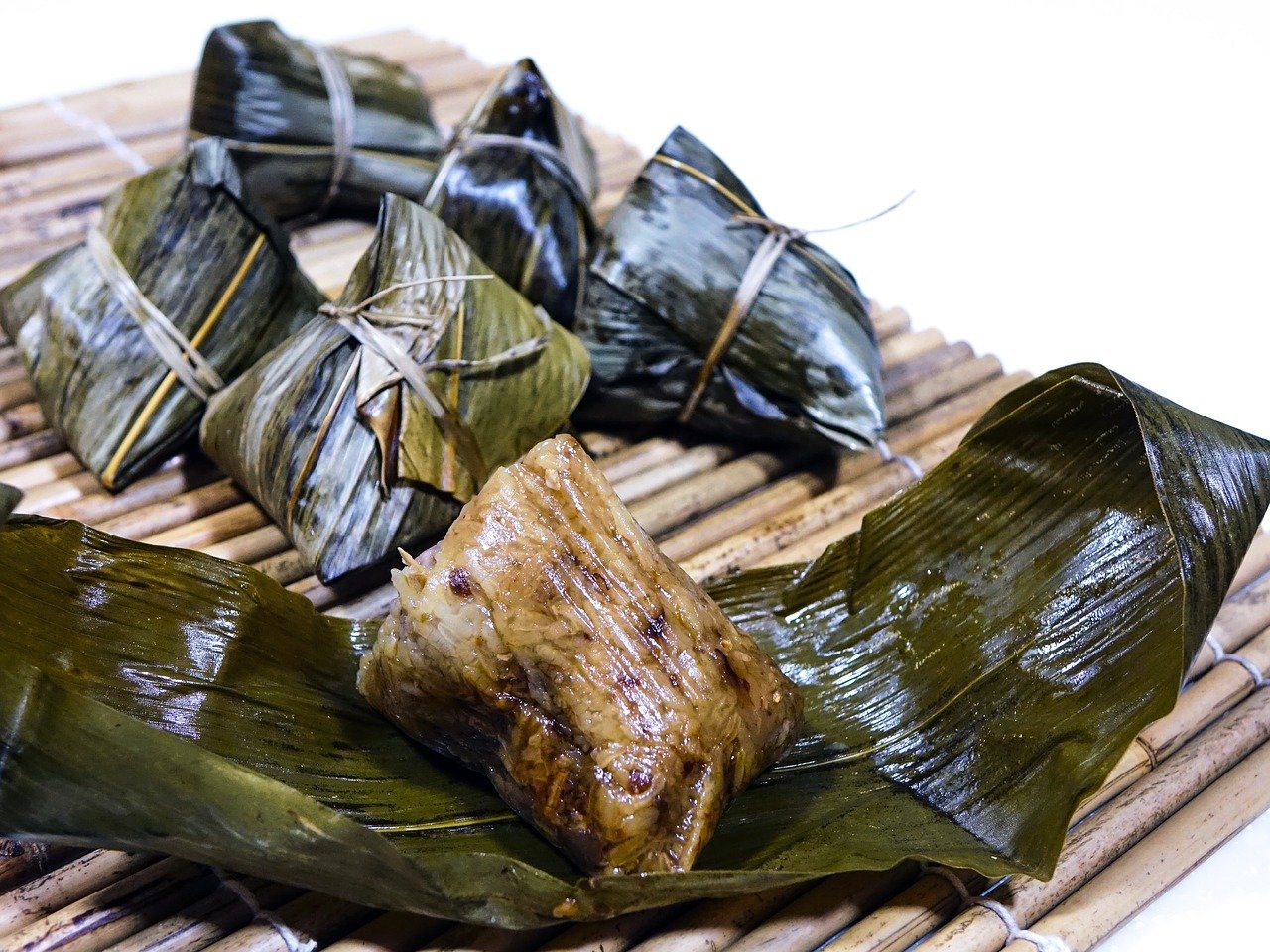
Our new creations landed in my mother-in-law’s bamboo steamer, transforming them within minutes into that distinctive holiday snack known as zongzi, or rice dumplings.
Except, these zongzi weren’t made for that summer holiday in June.
Instead, we had bundled up in down jackets and layers of clothing, warming our hands in turns over the wok as we prepared the treats in the chilly night air, to welcome the arrival of Chinese New Year.
It might seem strange for zongzi, the quintessential Dragon Boat Festival snack, to appear in this winter holiday more associated with jiaozi dumplings. But for some reason, zongzi has transcended these traditional Dragon Boat Festival roots, to become a beloved food at nearly every important gathering in my husband’s family in Zhejiang.
China Daily just published my latest column titled Guiyang Legal Clinic Serves Up Remedy of Justice, detailing my encounter with a legal aid clinic nestled within a community in Guiyang, Southwest China’s Guizhou province. Here’s an excerpt:
On a tour of the comprehensive service center for the Jinyuan community in Guiyang, the capital of Southwest China’s Guizhou province, the last thing I ever expected our guide to say was, “This is our legal clinic.”
A red sign with the Chinese characters for “legal clinic “hung just above the door, and inside, behind a desk, sat a middle-aged man wearing a military green button-down shirt. As I peered inside, I noted the curious smile on his face, as if he were just as surprised to find a foreigner observing him from the hallway as I was to discover this clinic. Never before had I seen a lawyer within the walls of a community service center anywhere in the world.
“Pardon me, but could I ask you a few questions?” I said to him, as I stepped into the clinic with an outstretched hand and my fascination.
He introduced himself as Liu Yuanhe, the head of the clinic’s legal team and a retired soldier from the People’s Liberation Army. While his career as a lawyer dated back to 1996, when he passed exams to become certified in the profession, he had been involved in legal aid service in the community over the past year. Liu said the clinic, which had officially opened its doors in January, helped people free of charge with anything at all involving the law. While typical cases involved matters like contract disputes and recovering unpaid wages, he emphasized they handled any legal problem and would even file lawsuits, if needed, at no cost. In his view, the work he did at the clinic was part of a selfless dedication to give back to society.
Moreover, he stressed the importance of justice to people’s well-being. “What do people want? They want some form of happiness. What is the essence of happiness? I think it is a kind of social fairness and justice.”
I’m already halfway through a trip to Guiyang in Guizhou province and also Nanning in Guangxi province. The visit has already shown me some of the highlights of Guiyang, an emerging big data hub in China. And now I’m gearing up to explore everything from foreign trade to local culture in Nanning.
Since it’s a busy working trip, I’m taking a break from blogging. But don’t worry — I’ll be back next week with some photos offering a behind-the-scenes look at the experience. See you then!
This website uses cookies to improve your experience. We'll assume you're ok with this, but you can opt-out if you wish.AcceptRejectRead More
Privacy & Cookies Policy
Privacy Overview
This website uses cookies to improve your experience while you navigate through the website. Out of these cookies, the cookies that are categorized as necessary are stored on your browser as they are essential for the working of basic functionalities of the website. We also use third-party cookies that help us analyze and understand how you use this website. These cookies will be stored in your browser only with your consent. You also have the option to opt-out of these cookies. But opting out of some of these cookies may have an effect on your browsing experience.
Necessary cookies are absolutely essential for the website to function properly. This category only includes cookies that ensures basic functionalities and security features of the website. These cookies do not store any personal information.
Any cookies that may not be particularly necessary for the website to function and is used specifically to collect user personal data via analytics, ads, other embedded contents are termed as non-necessary cookies. It is mandatory to procure user consent prior to running these cookies on your website.