Guest Post: Fair to Say Asian Men Prefer White Women?

When it comes to dating, would Asian men rather be with white women? That’s the question the blogger at Big Asian Package (still one of my favorite new bloggers!) asks in his latest guest post for Speaking of China. (You might remember his previous post titled That 4th of July When I Met My White Girlfriend’s Racist Grandpa — and if you haven’t read it yet, take a look!)

Do you have something to say about AMWF relationships that would make for an awesome guest post? Check out the submit a post page to learn how to get your writing featured here.

—–

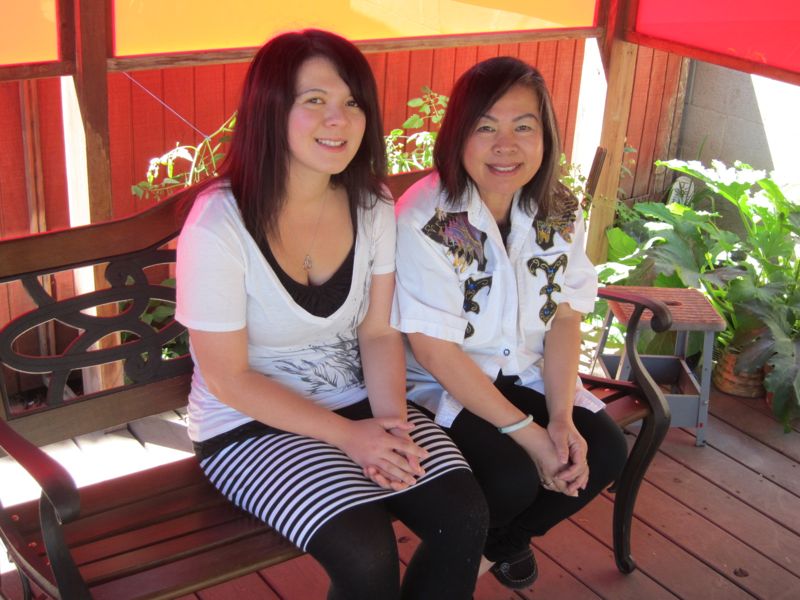
(Photograph by Williams + Hirakawa, via http://www.lamag.com)
(Photograph by Williams + Hirakawa)

I’ve wanted to write on this subject for a while in response to the seemingly common question of why Asian men are attracted to white women as marital partners or sexual partners. The question usually implies a disproportionate percentage of Asian men having a preference for white women in these departments.

This site is particularly appropriate for having that conversation, so I’m prompted to write about it now. My beliefs and impressions aren’t yet fully formed. Human attraction and emotion, these are fluid through time and in flux by the moment. So please bear with me as I make my way.

Racial preference for sex and marriage partners is a difficult area for calm discussion because it brings thoughts of our own deep seated fears to the surface. The arguments become less abstract and more personal. Some are less comfortable with this than others.

We continue to look at percentages of interracial pairings as a barometer of how our society is progressing. The OK Cupid Blog statistics opened a lot of eyes to the sexual degradation of black women and Asian men in society.

When I talk about partner preference, “preferring white women,” for example, I am talking about larger populations in this respect. Understanding interracial relationships as a barometer is not taking the position that the persons in an interracial relationship are more progressive. What I mean is that the presence of (healthy) interracial relationships is the sign of a progressive society. This little bit of logic eludes the “justified” racism heard commonly in this form: “I can say that about Asians, my girlfriend is Thai,” after saying something decidedly anti-Asian.

I have been an introspective person my whole life, and I try to live my life in harmony with my true beliefs. There have been times when I sought white women almost exclusively, excluded white women entirely, and there’s now – where the kind of closeness I seek casts the crudely fitting conceptions of any race aside.

I sought relationships with white women for a few reasons. First, practically, there were mostly white women around me 5:1, and almost no Asian population. Second, I was culturally more comfortable in white America (owing to a lot of factors). Finally, and to me most significantly, all the white women I dated were awesome. Open, bold, expressive, and fun. I met smart and attractive women, and I didn’t have any reason to stop.

There’s a bit of a sampling bias here though. Women who are more likely to cross social boundaries, I’m guessing, are more likely to have a great personality. For one, she is more likely to be intelligent, think for herself and is courageous or oblivious enough to cross strong social racial standards.

Then there was the period when I didn’t date white women. I was learning the racialized history of America through Howard Zinn, learning about the Third World Strikes for Ethnic Studies programs, reading poetry by Bao Phi, Ischle Park (and always Allen Ginsberg). I was the living embodiment of Kumar (of Harold & Kumar) when he says, “I’m sorry, I only date women of color.” I was at a point where I needed to show empathy and solidarity with women who struggled with their social sexual identity like I did. It was important. It still is.

Now, after a lot of learning, I understand that I don’t have to take it upon myself to be anything for society, to represent or stand for progressiveness or solidarity. Sex and intimacy, it’s for me and her – and that’s it. It’s our intimacy, our world of our making. And we’re leaving race out of it.

I’m an Asian American man in my 30s living in the U.S., Northern California. I was born and raised in the Midwest and in a predominantly white community that seemed to embrace every stereotype ever heard about Asian folks. I write about my sexual experiences and the politics of sex for straight Asian men. Don’t get a little bit of the truth, get the full package – http://bigasianpackage.wordpress.com.

—–
Speaking of China is always on the lookout for outstanding guest posts! If you have something you’d like us to feature, visit the submit a post page for details — and then submit yours today.
Guest Post: How Asian Will My Future Husband Be?

Over a year ago, I wrote a post titled What’s the big deal about Asian men and bags? Even though it’s not a custom in the America where I grew up, after coming to China I came to love how men (including my husband) would gladly hold my bags for me when we’re out and about.

Lena, a Danish woman currently studying in Beijing, feels exactly the same way. She has dated the men here — and in the process, she has come to love some of those cultural differences in dating (including carrying bags for women). But the thing is, her foreign friends don’t always understand.

Do you have a story about how coming to China has changed your views about dating? Or another guest post that fits the scope of this blog? Check out the submit a post page to learn how to have your writing featured here!
—–

https://instagram.com/p/3V0bEJQye8/
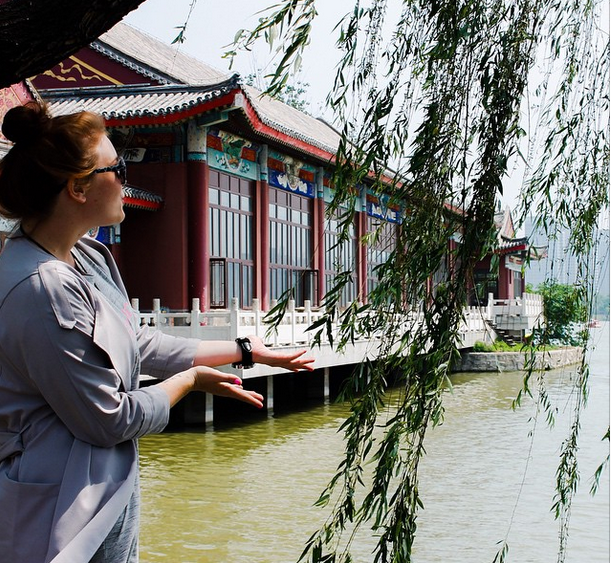
(Photo by lenaelsxx at https://instagram.com/p/3V0bEJQye8/)

“When in Rome, do as the Romans do.”

This is an old saying that makes perfect sense. When going to another country, it’s important to associate with the culture and the people. I don’t mean it’s necessary to change the way you are personally. But when you’re placed in another culture, there are some differences. And some of them, I do think, are important to recognize and follow so you won’t make trouble every time you walk out the door.

I’m in China right now and the dating rules here are a bit different from my home country of Denmark. Because of this, my friends and I love to discuss how “Chinese” or “Western” a boy can be. Races are also a big topic. It has nothing to do with racism towards anyone, but just about what is more attractive to us — in this case, my friends from South Africa and Italy, and me. And yes, most of my friends have different preferences.

https://instagram.com/p/3NtWl8QyfY/
(Photo by lenaelsxx at https://instagram.com/p/3NtWl8QyfY/)

So intercultural dating is a hot topic these days. Many people traveling abroad meet a handsome boy or beautiful girl who they fall in love with. But when reality hits them, they realize that dating between different cultures isn’t always that easy. Love is one thing but culture is another, and our own culture and behavior are very difficult to change. Furthermore, I don’t think we should try to change, but we also need to accept the other person as well and realized that they don’t necessarily need to change, even if their habits annoy us sometimes.

So last night at dinner when discussing the Chinese dating culture with my friends, we ended up talking about the classic “carrying-the-bag” issue. What is that about? Let me explain. Chinese guys are supposed to carry their girlfriend’s bag. This is the rule no matter how small, purple or bling-bling it is. My friends in this discussion are all foreigners (both boys and girls) and none of them like this. I wasn’t sure I agreed because I realized that I actually do expect the boy to carry my bag. I carry my own small fake Gucci purse but if I carry something just a bit bigger without bling, I would expect my male friend to ask if he should carry it for me. Maybe I’ll give it to him, maybe I won’t. It depends.

My friends were laughing at me when I told them the story of me and a male friend out shopping. I was carrying my bag and he had bought something. Because he didn’t have a bag, he asked if he could put his stuff in mine. I took his things and suddenly my bag was quite full. He didn’t notice. I tried to tell him, and still no reaction. I even told him that he wasn’t a real gentleman, way too Western (my other way of saying he wasn’t a gentleman) and not caring at all. He laughed at me as well and I realized that I was actually annoyed by this English guy who obviously didn’t know anything about Chinese culture. (How could he? He had just arrived and my face is pale and Scandinavian. How would he know that I expect this from every man I meet these days? It came as a surprise to me as well).

https://instagram.com/p/3OnMy0wyWh/
(Photo by lenaelsxx via https://instagram.com/p/3OnMy0wyWh/)

Another day, my stomach wasn’t quite well, and my Chinese male friend automatically took my little fake Gucci out of my hand immediately and carried it for me the rest of the day. I tried to take it back a few times but he was afraid of me being in too much pain. I don’t think the little purse would have made any difference but I liked his way of thinking.

After listening to these two stories, my Western friends told me that I was way too Chinese. I thought about this afterwards and I know that I am, but is it that bad then? I’ve been in the middle for a while because I know that there are some Chinese cultural behaviors that I’ll never associate with. But there are also others that I haven’t even realized I’ve already taken on my shoulders a long time ago. One reason is the fact that I actually hang out with Chinese people for fun, while many of my foreign friends don’t. It’s interesting to see this difference in our discussions. Things I never would’ve done before suddenly come so naturally now.

I’m not sure how Asian my future husband will be. But I know that if he won’t ask for my bag, I’ll probably teach him to. Not because he has to carry it around, but because it makes me feel like he’s thinking about my well-being.

https://instagram.com/p/3Fz7XQQyVn/
(Photo by lenaelsxx via https://instagram.com/p/3Fz7XQQyVn/)

Lena is a 20-something Danish girl currently studying for a semester at Renmin University in Beijing while writing about China, travel and love at http://www.lenakina.tumblr.com/.
—–

Speaking of China is always on the lookout for outstanding guest posts! If you have something you’d like us to feature, visit the submit a post page for details — and then submit yours today.
Guest Post: The Unexpected Benefits of Long Distance Relationships

What happens when you fall in love with someone from another country, and geography gets in the way? When you’re separated by time zones and international borders and even oceans, counting on those Skype video chats to get you through? Does it always mean hardship or, worse, heartbreak? 

Marghini, who writes the lovely blog The Love Blender, survived a long-distance relationship (LDR) — and discovered the unexpected joys that come from loving someone from afar. 

Do you have something worth sharing here at Speaking of China? We’re always looking for great guest posts — check out the submit a post page to learn how you can see your writing published here!

—–

image1
Marghini and Mr. B.

We hear how Long Distance Relationships (LDR) are so hard all the times. The internet is full of suggestions, tips and tricks to survive through the awfulness of Long Distance Dating and most people state they would never ever accept to be in a LDR because they just need that physical presence that a LDR denies to lovers. Couples that are entering a LDR get comprehensibly worried and start frantically reading all the available materials about how to overcome the terrible hardship they are about to face.

Truth is, Long Distance Dating is not always so terrible: if anything, sometimes LDR can even be pretty good. No one ever talks about the bright side of Long Distance Dating and this contributed to generate a negative stigma around it. However, if a couple is healthy and solid, dating on a distance for a while can have a positive effect on both parties and strengthen the relationship all-around.

Around one year into my relationship with my boyfriend, I had to move back to Milan to complete my Master Degree, while he stayed in Beijing to work. We long-distance dated for over a year, until I graduated from my program and I joined him in Hong Kong, where he had moved to in the meantime. Sure, when we reunited we were both happy to be together again. However, in our case the distance did not turn out to be a big challenge and we navigated through that separation with relative ease. Not that just that: it was a great time for our relationship and we still cherish lots of memories from that period as some of the best of our life. I don’t think we are any different from many other couples out there and we didn’t do anything special to manage our separation: everyone can benefit from a LDR if it is approached with the right mindset.

First of all, Long Distance Dating is a great way to develop trust within the couple. A good dose of distance is a great trust-building experience for a healthy relationship: you have to trust your partner in this, otherwise it will never work out and it will drive you both crazy. Obviously this only works if the relationship does not have previous trust-related issues, in which case a LDR is probably a bad idea.

On top of that, a LDR gives you a lot of free time that you would spend with your partner otherwise. That allows you to cultivate hobbies, workout, learn foreign languages, hang out with friends and be awesome at your studies/ job. What a great chance! I firmly believe that we can only be amazing partners if we are amazing individuals first, and this is the perfect situation to actually put this principle into effect. At the beginning of a relationship we all tend to get a bit obsessive about spending a ton of time with our partner and doing everything together, but in the long run that is usually not the healthiest balance for a couple. A LDR forces you to be autonomous, gives you plenty of time to grow as a person and creates independency within the couple. Once the distance is over, you will both benefit from this, I promise!

Moreover, don’t forget how awesome it is to visit each other and spend time together during the separation! That is probably my favorite positive side of a LDR. When I think about the year my boyfriend and I spent apart, I remember blissful weekends, romantic strolls holding hands and amazing candlelight dinners. In between visits our desire to be together grew incredibly strong and as soon as we could see each other it felt like pure heaven. When you have limited time to spend together you really cherish it: special dinners, romantic trips and so on. Unfortunately, when you live in the same city (or in the same house) and you have a lot of chances to see each other, it is so easy to forget about the quality of the time you spend together: you end up glued to your smartphone during a supposedly romantic dinner or just watching television in total silence after a tiring day at work. When you are in a LDR this does not happen, as you really cherish the time you spend with your partner and put an effort in to make it special. When I think about my LDR, I actually miss the excitement that preceded our meetings and the absolute bliss of being together after such a long separation.

Let me just get this out: I am not trying to say that a LDR will be easy and pleasant for everyone. I am sure the way people deal with it has a lot to do with individual personalities and some may have it much harder than I did. However, I think it is good to put things in perspective and let people know that for some of them it may be tough, but for others it could very well be a positive experience.

I hope my story of Long-Distance Dating could provide a positive case study and take away some of the stigma that was placed over LDR. For me and my boyfriend Long Distance Dating was a good choice and it had a lot of positive effects on us. When the distance was over, our relationship was stronger than ever, because we used the separation as a chance to develop ourselves, cultivate our trust in each other and fall in love even more deeply, if possibly. That year taught us a lot about us as a couple and improved our relationship in ways we didn’t expect.

Often we don’t have a choice when it comes about separating from our partner; we just have to accept it as a temporary compromise. However, we have power over our attitude and we can choose how to live the experience of Long-Distance Dating. You can look at it as an opportunity of growth, enjoy the process and learn from it. Otherwise you can focus about the negative side, complain, cry and suffer through every second of it. Which option sounds better to you?

marghiniMarghini is an Italian Interior Designer, a nomadic soul and a cat lady. After living in Milan, Copenhagen, Beijing and Hong Kong, she is currently based in Taipei. She likes Japanese literature, swing music, urban gardening and her cross-cultural boyfriend. She writes about expat life, cross-cultural relationships and Third Culture Kids at The Love Blender.

—–

Speaking of China is always on the lookout for outstanding guest posts! If you have something you’d like us to feature, visit the submit a post page for details — and then submit yours today.

Guest Post: That 4th of July When I Met My White Girlfriend’s Racist Grandpa

A few weeks ago, I sent out a call for guest post submissions from Asian men. Well, my first guest poster who responded also happens to be one of my new favorite bloggers — Big Asian Package (Hung Asian Man Talks Sex Politics – Straight Up). So excited to run this post!

Do you have a great story or experience you’d love to share here at Speaking of China? Check out the submit a post page to learn how to get your writing published here!

—–

The blogger behind Big Asian Package (https://bigasianpackage.files.wordpress.com)
The blogger behind Big Asian Package (https://bigasianpackage.wordpress.com)

I’m an Asian American man. I started writing my thoughts to contribute my point of view to the social environment that injures me through stereotypes and racism. It hurts Asian men, our friends and families, and it hurts our partners. The predominant public commentary is critical of me and everyone who looks like me; they belittle me (why, even?). So why wasn’t I hearing from more Asian men?

I think I felt tempted too… it’s social withdrawal. Put it this way, how rational would it be to participate in a social system that starts you at the bottom, keeps you at the bottom, and laughs the whole time doing it? I think Asian men have seen enough to know that they’d be painted into another angry minority caricature (“angry black man,” “bitch feminist,” &c.)  I suspect this is a major reason for the lack of Asian male voices.  In the end, the racism in the echo chamber of the Internet proliferated, possibly exceeding overt anti-Asian sentiment displayed publicly. It’s too much already.

In the context of the Asian Male White Female (AMWF) relationship, something unique has emerged. As AMWF couples encountered unique difficulties, ones stemming from prejudice, the women started speaking out in large numbers. They told their stories, shared them, and built a community of support and celebration around one thing, and it wasn’t Asian men, it was love. It was being allowed to love in the way they wanted, to love whomever they wanted… however hot and sexy this Asian man might be!

This experience is one of the events that led to my unease when I’m invited to a family event with a… well, more conservative family. They’re tricky places to encounter hostility because around folks I know, family, I’m usually relaxed, not on guard, and trying to have a good time.

(Photo from the US National Archives via Flickr.com)

It couldn’t have been a more poetic holiday for this memory. It was Independence Day in Ohio, the Fourth of July, and my girlfriend, who was white (Czech, Polish, and German heritage) brought me to her family’s barbeque and picnic in their newly completed solarium. There was potato salad, macaroni salad, and a number of other misleadingly named things that cause heart disease by the mountainous bowlful. The Stars and Stripes were gratuitously displayed. Kids risked fingers with low-grade explosives. It was a good time. The centerpiece to the whole affair was the barbeque which they managed to overload with some forbidden pyramid of smoking meats. I used to work at a grill, and even I thought that was an obscene amount of meat.

Well, I’m a vegetarian (yes, vegetarian grill cook, I know) so when I was offered some, I politely turned down my sector of the pyramid. Whoops. People looked over at us.

I learned that, at least in the 90s, this was an American social faux pas on par with sneezing in someone’s face. There was murmuring. I heard an aunt exclaim, “How?…What?…”

I tried to redirect and talk about how good all the salads were, but this was like trying to wipe the sneeze off of their collective faces with my bare hands. I could feel people’s eyes still on me. It was too late. I had declined the centerpiece of the American Independence celebration.

“I have to go to the bathroom,” I said. I put my red, white, and blue plate down on a small table and strode over to the bathroom, shut the door, and breathed again. I’m a teenage boy so it’s not like I have a whole lot of composure to begin with, but I muster together what I can, and go back outside. People had resumed doing whatever they were doing and I wasn’t noticed. I picked up my plate, ate a few bites of the potato salad, and went back to the tarp covered table for more.

Potato salad (Photo by Christina via Flickr.com)

“Are you happy about those secrets?” said a voice from beside me.

“What? I’m sorry?” I said. It was my girlfriend’s grandpa.

“The nuclear secrets. I know you came here to steal from us,” said her grandpa,

“I go to school…” I say, protesting.

“You’re Chinese, I know you are,” he says quietly, triumphantly, like he’s got me checkmated.

“Yes,” I say, now seriously confused, not quite believing what I’m hearing.

And here’s where having a lady with a sharp social sense comes in handy. Because where I might turn to look at a guy friend and receive some eyeshot that says, yeah, pound that racist, I got an arm around mine, a brisk walk out to the street, and a fresh piece of cake for me to eat as she drove us home. What a sweetheart.

We didn’t talk about Grandpa Bigotnasty much after that. She apologized for him; I told her not to, and we just went home. I never saw Grandpa B. again either. My girlfriend was mortified by her family and understood I wouldn’t go anyplace her grandpa would be. I guess you could call this an incident of social rejection. I think I like the term social withdrawal better because it implies that it was more of my choice. It doesn’t really matter in in the end. I’m not there at her family events anymore because we broke up.

If I’m in an interracial relationship now, I sometimes try to talk to my partner about this anxiety over family gatherings. Sometimes I keep it to myself though…and hope that next time around, there won’t be a Grandpa Bigotnasty at the table.

I’m an Asian American man in my 30s living in the U.S., Northern California. I was born and raised in the Midwest and in a predominantly white community that seemed to embrace every stereotype ever heard about Asian folks. I write about my sexual experiences and the politics of sex for straight Asian men. Don’t get a little bit of the truth, get the full package – http://bigasianpackage.wordpress.com.

—–

Speaking of China is always on the lookout for outstanding guest posts! If you have something you’d like us to feature, visit the submit a post page for details — and then submit yours today.

Guest Post: Learn Mandarin Chinese Like Lovers Do

I’ll admit it — I’m a huge fan of “the karaoke method” for learning Chinese. It’s why I wrote a few years back about 8 Bands to Help You Learn Mandarin Chinese for Matador. And it’s also why I’m happy to share this post from Yang of Learn Mandarin Now. 

Do you have a guest post you’d like to see published here? Visit the submit a post page to learn more about guest post guidelines and how to submit. 

—–

Learn Mandarin Now Guest Post Picture

Listening to Chinese love songs is a really great way to learn Chinese, and was highly rated in a recent survey we undertook, details of which are consolidated in our blog post: How to Learn Chinese: 50+ bloggers give their tips.

We believe Jocelyn agrees with this, as recall reading one of her own previous blogs on the subject some time ago; so, before we go further, many thanks to her for letting us from Learn Mandarin Now make another guest post here, but this time all about one of our favourite topics: Chinese Love Songs!

Whilst, naturally, everyone has their own tastes in music, listening to Chinese love songs is, perhaps, one of the very best ways to learn Chinese, as it will be sure to get the attention of your girlfriend, boyfriend, wife or husband—and probably find you a “special” tutor into the bargain!

Some of the songs below, both from the past and more modern times, can be considered “classics” and are extremely popular amongst many Chinese people—in some cases being an integral part of Chinese music culture.

Here are four we especially like:

1. The Moon Represents My Heart – 月亮代表我的心

This song is really one of the classic Chinese love songs and almost all Chinese, no matter old or young, will know the lyrics and are happy to sing along with it.

The song was actually written in the early 1970s but it was not until the late 1970s that it came to prominence and fame when Teresa Teng’s(邓丽君) version, which has been described as: love song with a waltz-like lilt”, made the song known throughout Asia.

The essence of the song expressing the feelings that words cannot adequately convey the speaker’s love, whereas the moon, a symbol of romance the world over, can.

2. The Goodbye Kiss – 吻別

First released in 1993 by the famous Jacky Cheung’s (张学友), this song became one of the most popular Chinese love songs in the 1990s. Jacky Cheung, with records sales of over 25 million and internationally famous, is known as one of the “Four Heavenly Kings”(四大天王) of Hong Kong.

In addition to the song, the music video was also very popular in China and, if you ever went to KTV in the country during the 1990s, you would have almost certainly heard people asking for and singing along with this song.

3. Red Bean – 红豆

Written by the famous Hong Kong lyricist Lin Xi(林夕), Red Bean is one of the most famous and successful of Faye Wong’s(王菲) love songs, released in 1998 at the height of her success.

Faye Wong is considered to be one of the “divas” of Chinese music, as well as the queen of “Canto-pop”—and one of the highest paid singers in the region. These days, Faye Wong rarely appears on TV or in movies or releases any new albums, yet when she does do a concert it’s usually sold out in just minutes, no matter how high the ticket prices.

4. Marry Me Today-今天你要嫁给我

Marry Me Today, sung in a duet by famous Taiwanese artists David Tao(陶喆) and Jolin Tsai(蔡依林) is, not surprisingly in view of its title, one of the most popular songs heard at Chinese weddings.

Released in 2006 on David Tao’s fifth studio album “Beautiful”, this song became an almost instant hit for the singer, for whom it subsequently won the “best song” at the prestigious GMA Awards. It can usually be heard at any typical KTV session where couples love to sing it together/to each other.

There are so many Chinese love songs to choose from that we had a hard time selecting only four. In fact, if you have some special love song which has helped you learn Mandarin Chinese, be sure to let us know by visiting our website: www.learnmandarinnow.com.

Yang is a serial web entrepreneur whose latest website is www.learnmandarinnow.com. He is passionate about learning new languages and cultures. 

—–

Speaking of China is always on the lookout for outstanding guest posts! If you have something you’d like us to feature, visit the submit a post page for details — and then submit yours today.

Guest Post: “The F-Word” – Body Image in China

Have you heard someone call you fat (pàng/胖) in China? Then you’ll definitely relate to this fantastic guest post from Laura, a British-German editor and journalist in Nanjing who also writes the new blog “Our Chinese Wedding“, a lighthearted look at her intercultural relationship with a guy from Inner Mongolia. 

If you’d like to follow in Laura’s footsteps and have your writing published here, I’m always on the lookout for great guest posts. Check out the submit a post page to learn more about what I’m running here.

—–

Who can compete with backsides like that? Not me!

“Oh my god, look at that foreigner. Her bum is so big!”

I was so shocked at what I just heard, I was simply unable to think of any good comeback. I wanted to turn around and say something sarky in Chinese; I had the language ability, yet I felt so ashamed at what they had just said while walking only three steps behind me, that I simply did not want to acknowledge I had understood their comment about my behind.

It was my first memorable experience with body image in China. Where in the West we would only mention the F-word in hushed tones while our girlfriends encouragingly told us “No, you haven’t put on weight. No, you don’t look fat at all”, in China people from your boss to your mother will just blatantly tell you that you have gained a few pounds or, as Bridget Jones would say, “have [a] bum the size of Brazil.”

What made the whole thing worse was that when I had been going out with my boyfriend Mr. Li in the UK, he had rarely said anything about my bum. However, after we moved to China, suddenly it seemed to come up a lot more. While he assured me that the reason he mentioned it was simply because he liked it, incidence such as the above instantly turned me into an emotional wreck at any mention of my rear end.

Still struggling to come to terms with the fact that random strangers will comment on my most blatant feature, and often to my face, I could not help but ask myself; why is it that in China it is culturally acceptable to talk about body weight in such a fashion? How come it is not uncommon for people with a boxier body build to be nicknamed “Fatty” by close friends, even irrespective of whether they are male or female? Many of my Chinese friends have brushed it off as not offensive, when people are called fat or teased about their kilos. Yet, that is truly not accurate, since I have witnessed first-hand how many of my Chinese friends would get very upset about hearing about their weight, and with good reason.

More likely, I believe weight-related honesty is meant as a warning, a way for friends and family to watch out for their beloved because in China being overweight can have serious ramifications. On a personal level, especially women will struggle to find a man if they are not of average build. Considering the importance placed on family and marriage in China, failing to tie the knot as a woman even today for a majority pretty much equates to failing at life.

One could argue that obsession with appearance and being thin is just as present in the West, and it is probably true that many overweight women back home struggle considerably to find their other halves.

However, in China the consequences of being curvy are even farther reaching than one’s love life. In the professional realm being overweight can mean unemployment; and no, not just for models and movie stars, also for jobs as seemingly unrelated as kindergarten teaching.

To my complete and utter disbelief, I learned that overweight teachers tend to be unable to find jobs in China, as Mr. Li told me after we met a comparatively big girl who used to be a childhood friend of his. He explained to me Chinese parent’s logic in relation to a teacher’s weight. As a teacher you are taking care of their precious children, yet if you cannot even “take care of yourself”, how can you be a good teacher?

“Taking care of oneself” is really what is at the heart of the weight issue. While in the past it was mainly the women who saw themselves under immense pressure to remain slim, now increasingly men are expected to watch their weight. Anything else is perceived as laziness on their part and frowned upon. The days when having a beer belly was just another sign of how thick one’s wallet was as a male are slowly coming to an end as chiselled Korean pop stars and Hong Kong martial arts actors are propagating an increasingly unrealistic body image.

All this talk about staying thin causes a major dilemma; with Western food becoming more and more fashionable and available, the Chinese diet is evolving into a considerably more calorific one. This is making it harder for young women and men to stay thin. At the same time, local women can often be heard commenting that they are not having any rice with their Chinese meal, since they are on a diet.

Is all this frenzy about looks leading China into an eating crisis? Are food-related disorders as present in Chinese culture as they are in Western ones?

Dr. Robert Portnoy told the Nanjinger magazine in November 2014 that he had witnessed strong evidence of the early stages of eating disorders during his year in Nanjing. Yet he observed that “whenever I raised the issue of eating disorders, I was told that this was not of concern in China.” The Fulbright scholar believes that the Middle Kindom is not yet recognising what will soon become a growing epidemic.

The example of Fan Bingbing, “China’s Fattest Star” as she recently nicknamed herself when her weight was revealed on the talent show 出彩中国人 (chūcǎi zhōngguórén), certainly is cause for concern.

Fan Bingbing (Photo by hto2008 of www.HuaTongOversea.com/blog

At 1m68 tall, she weighs not even 60 kilos. To put this in perspective, that equals a BMI of 21.26. People whose BMI lies within 18.5 to 24.9 possess the ideal amount of body weight, and Fan Bingbing is right in the middle of these two values, even a little closer to the underweight scale. Yet, Chinese media had a field day with the revelation that “Little Fat Fan”, as she has been referred to by publications many times in the past, is so “heavy”.

On the other hand research by Amy Pan-Shing conducted in 2000 suggests that, while of the different racial groups analysed in the study, Chinese were reported to have the highest dissatisfaction with their weight, they were also exhibiting the least signs of eating disorders. Anyone who has been to dinner at a Chinese family will know instantly why that is the case. It is difficult to become dangerously underweight while grandma, aunty or mother are tirelessly shoving food and snacks and more food in your face, no matter how many times you insist that you are full. They are walking the tight rope; trying on the one hand to not make you too fat, as this would also reflect badly on them, suggesting that they don’t care for you enough to gamble away your future with your extra pounds, while simultaneously worrying that you are too thin.

The concern that you might eat too little will stem from a number of external factors, though I personally believe that two specific cultural characteristics might be involved in ensuring China’s women do stray onto the path to anorexia. On the one hand, the older generation has been through the hardships of famines, Cultural Revolution and in many cases even civil war. With food shortage being a daily reality, it has surely become a natural reflex to encourage the younger generations to eat whatever they could get their hands on to ensure their survival.

With relation to the women in particular, I would not be surprised if a major concern working against anorexia becoming a more serious phenomenonin the Middle Kingdom is its negative influence on child-bearing capabilities. After all, aside from getting married, the most important task for a Chinese couple is to reproduce in order to be filial and pay respect to their own parents. A woman who is barren in China cannot fulfill her destiny and hence will have immense difficulties finding a husband. So, it is the duty of the family to make sure she is in a healthy enough state to produce heirs. Hence, the obsessive feeding and worry over whether one is getting too thin.

While this is not a problem I will ever face in my life, since I love cheese and alcohol way too much, the numerous remarks about my weight and physique have left their mark on me. In the best case they have made me a lot more resilient.

I am happy to say that Mr. Li is now my husband, and while he still likes to mention my bum on the most random occasions, all I have to do now is give him the stern teacher look and he will immediately and most enthusiastically declare: “I LOVE IT!”

If life gives you a big bum, drink that lemonade anyway, ladies.

Laura is a British-German editor and journalist based in Nanjing. In her personal blog “Our Chinese Wedding“, she writes about the intercultural relationship with her Chinese husband from Inner Mongolia, who currently lives in Beijing, and all the funny anecdotes of planning a wedding with her seriously superstitious Chinese family.
—–

Speaking of China is always on the lookout for outstanding guest posts! If you have something you’d like us to feature, visit the submit a post page for details — and then submit yours today.

Wanted: More Guest Posts from Asian Men on Love, Dating and More

(Photo by Gage Skidmore via Flickr.com)

Today’s the first day of May (Asian-Pacific American Heritage Month in the US) and it’s the perfect time to put out my latest call for submissions. If you’re an Asian man and you have something to say about love and dating, I want to hear from you!

Here’s a snippet from an anonymous reader’s e-mail that inspired me to put this call for submissions:

The simple thing is that many of us Asian men have a very hard time escaping not only our own paradigms of the world, but the paradigms of American white women. I know that the only paradigm we can really change is ours. Change our paradigm and soon how the world looks at us changes, too. But that paradigm has such a powerful hold on our lives that I find myself constantly falling back upon my old thought patterns of worthless and asexuality. And I work out and have been improving my fashion sense and people skills for the past couple of years!

Here’s where I hope that an influential site such as yours can help to effect the change I want to see in the world. The majority of your posts seem to be mainly about couples in China. Would it be possible to get a balance of couples in America, models that men like me can see and then believe in the possibility of love where skin color do not exist?

I think it would also be a great idea for your blog to have guest posts by men who were able to overcome their f***ed up beliefs, gain more confidence in themselves, and what they did to find love.

Additionally, this post by Big Asian Package also gave me an extra nudge:

Asian men, bros, let me have your attention for a moment. I don’t need to tell you about the discrimination, you’re living in it. You have to act if you want change. It’s a hostile environment, but the ladies are leading the charge, kicking all kinds of ass, and you’re not helping enough. So don’t think of it in terms of modesty, privacy, or hassle; think of it in terms of picking up a fair share of the work that we all agree needs to be done. Write your experiences. They are worthwhile.

Exactly!

So, what should you write about? Here’s a sampling:

  • Stories of how you found interracial love (that classic tale of how you met and, if you married, how you tied the knot)
  • Stories about how you were able to gain confidence in dating and overcome barriers (such as stereotypes and racism)
  • Your personal experiences with interracial dating anywhere in the world

Of course, you’re welcome to write about anything that you feel fits within the scope of this blog. See my blog’s tagline above for starters or peruse my submit a post page for additional ideas.

I’m looking forward to your submissions and can’t wait to hear from the men out there!

Guest Post: Learn Chinese with phrases of love and affection

A while back I started a Friday column of my own titled Mandarin Love, covering how to express your love in Chinese with some special Chinese idioms. (My Mandarin Love post on Chinese phrases on love and destiny is one of the 10 most popular posts on this site.)

So I was thrilled to receive this guest post from Yang of Learn Mandarin Now, who offered to revive my Mandarin Love series with an entry of his own. 

Do you have a few good Chinese phrases or a great story to share on Speaking of China? Check out the submit a post page to learn how you can have your guest post published here.

—–

Learn Mandarin Now_1Firstly, sincere thanks to Jocelyn for inviting us from Learn Mandarin Now to write a guest blog post.

Following on with Jocelyn’s own theme of phrases and of love and affection in Mandarin Chinese, we’d like to highlight several more very well known Chinese phrases dealing with matters of the heart and highlighting the yearning and passion lovers can have for each other…

One of our favourites is:

Jin Yu Liang Yuan (金玉良缘, jīnyù liángyuán) which literally means: a perfect couple, with a shining, ideal future.

This phrase often appears with reference to Chinese weddings and refers to   the prospects for a good marriage. It is originally from the Dream of the Red Chamber(红楼梦), one of China’s Four Great Classical Novels. This novel was written sometime in the middle of the 18th century during the Qing Dynasty and is considered to be a masterpiece of Chinese literature.

With its inferences for a good future and a successful marriage, Jin Yu Liang Yuan is also a popular name for many TV shows and dramas in China.

Then there is Fei Cheng Wu Rao (非诚勿扰, fēichéngwùrǎo) which literally means: “If you are not sincere, don’t bother me.”

There are two main reasons this phrase is so popular in China, and both relate to the cinema and TV.

The first reason relates to the name for the popular love story/romantic comedy movie, from 2008: ”If You Are The One” which starred two famous Chinese movie stars, Shu Qi(舒淇) and Ge You(葛优), and was also directed by one of China’s best known directors, Feng Xaiogang(冯小刚).

The other reason is that Fei Cheng Wu Rao is also the name of a TV show produced by the Jiang Su television station and is the Chinese version of the well known dating TV show “Take Me Out”. This Chinese version is hosted by famous TV host Meng Fei(孟非) although, in fact, in recent years, more and more single foreigners, including overseas Chinese, have also joined the show, and some of them have even found the right partner.

Learn Mandarin Now_2

Another very popular expression (shown below) literally means “Once, true love was placed before me, but I didn’t cherish it. After I lost it, I regretted it. This was the most painful thing in the world and if heaven could give me another chance, I would say to that girl three words, “I love you.” If I had to place a time limit on this love, I hope it would be 10,000 years.”

曾经有一份真诚的爱情放在我面前,我没有珍惜,等我失去的时候我才后悔莫及,人世间最痛苦的事莫过于此。
如果上天能够给我一个再来一次的机会,我会对那个女孩子说三个字:我爱你。
如果非要在这份爱上加上一个期限,我希望是……
一万年

This expression originated from a Stephen Chow (one of Hong Kong’s most famous film stars who combines kung-fu style action with comedy) movie and most Chinese growing up at the time this movie was released know this line well. Although not so popular at first in Hong Kong, the movie finally became well known in Mainland China and became recognised as one of the best movies made by Stephen Chow—especially for these classic lines.

Of course, there are many other Chinese phrases which convey the feelings of cherished love and you can find some more of them with a little research or, if you simply wish to brush up on your Mandarin, take a look at our site Learn Mandarin Now.

Yang is a serial web entrepreneur whose latest website is www.learnmandarinnow.com. He is passionate about learning new languages and cultures. Yang is currently working on researching the preferred ways 50 international bloggers learn Chinese, and will share the results in his blog shortly.

—–

Speaking of China is always on the lookout for outstanding guest posts! If you have something you’d like us to feature, visit the submit a post page for details — and then submit yours today.

Guest Post: “Thank you, Mom. I’m proud to be biracial and Vietnamese.”

I’m excited to run this post by Mary, who runs the wonderful blog The Ruby Ronin. Her mother was a refugee of the Vietnam War and her father a white American veteran; she writes about her experience growing up biracial in a small town in America — and how she came to appreciate her mother after growing up (and especially after her trip to Vietnam). Thanks for sharing Mary!

If you have a story you’d like to share on Speaking of China, we’re always looking for great guest posts. Visit the submit a post page to learn how your words could be published here.
—–

Mary and her mother

I didn’t realize that I was “different” until I hit the second grade. That’s when the kids started calling me “Chinese.”

“Am I Chinese, mom?” I asked my mother one day after school.

She exploded in laughter and replied, “Why do you think you’re Chinese?”

“Because everyone at school calls me Chinese.”

Her smiling expression soon turned to concern, “No, Mary, you’re not Chinese.” She replied sternly, “You’re Vietnamese.”

I cocked my head in confusion.

“What’s a Vietnanese?”

My mother was a refugee from the Vietnam War, my American father a veteran of that war. After the war my mother and father relocated to rural, coal mining America where I was the only “Asian” (half, really) in my elementary school. For most of my childhood and adolescent life, I was labeled as “Chinese” and my social identity revolved around my Asian ethnicity.

Mary's mom, Mary and her father

“Why does your mom talk funny?” my friends once asked me in third grade after meeting my mother for the first time.

It wasn’t until that moment I realized that, indeed, my mother was different. She was unable to pronounce certain words correctly and her grammar was off. Every now and then I heard her ramble off on the phone in a language I didn’t know, and which I could only assume was this newly discovered “Vietnanese.”

My mom used to drive us two hours north for the sole purpose of going to one of the rare Asian markets in our state and stocking up on Vietnamese food for the long winter. I remember those market visits vividly, because every time I set foot into that store all of my senses went into overload. The sound of live fish flapping in the seafood isle, the overpowering stench of freshly cut durian, the colors of all the exotic fruits in the produce section (dragon fruit!)—it was like being in another world.

Although I knew that somehow this culture was associated with me, it all felt so strangely foreign.

I used to cuddle up with my mom and watch Vietnamese movies together as a child. I couldn’t understand a word, although I desperately wanted to. I asked my mother to teach me Vietnamese multiple times, but she always refused. She laughed and said that teaching me Vietnamese was too much work, but I think deep down she wanted to give me a life that had nothing to do with the harsh, war-torn country she had just left. While she was still very Vietnamese at heart, she wanted her daughter to be nothing but American.

guestpost1

My mother and I could never communicate. I always wondered if it was culture, or language, or a little bit of both. When I told her I didn’t want fruit or another helping of food, she still cut up fresh apples or scooped an extra bowl of rice for me. When I tried to talk to her about my inner feelings and insecurities, she turned a deaf ear and seemed more concerned about the warmth of my coat or the food in my stomach. At times I felt like she didn’t care about who I was as a person, but it wasn’t until I moved to Asia later in life that I realized all of her so-called “minor” concerns was her way of showing love.

Growing up biracial, especially in a small town like we did, was extremely difficult. There were times I wanted nothing more than to be fully Asian so that I could finally blend in with my Asian relatives, and there were other times I longed to be completely American so that I could fit in with the kids at school.

It wasn’t until I moved to Asia later in life that I realized it wasn’t me that struggled the most—it was my mother and the hardships she endured living in America. Like many of us that move abroad, my mother coped with challenges such as living in a new language and trying to fit into a foreign society—but unlike most modern travelers today, she didn’t have the option that many of us have: to go home. Her country was torn by war and her Vietnamese passport revoked—even to this day, she has never returned to Vietnam.

guestpost2

My mother was completely isolated as the only Vietnamese person in our town, her only connection to home being interspersed phone calls with distant family and the Vietnamese movies I used to watch with her as a child.

I screamed at my mother a lot, because I didn’t understand. I wondered why she had to be so strange, why she couldn’t understand me, why our family had to be so different — yet she never yelled back. She only smiled.

Years later, I traveled to Vietnam alone to learn about a very important part of me—the history of my mother. I went to her old neighborhood in Saigon and to the markets she used to frequent as a child. Although my mother raised me to be the best American girl I could be, deep down I was still Vietnamese.

On the bus ride from Saigon to Hanoi, a song played on the radio. I recognized it as the famous melody from the movies my mother and I used to watch together, and I was helpless in holding back the tears.

Thank you, mom, for making me who I am today. I’m proud to be biracial, and I’m proud to say that yes—I am Vietnamese.

Mary writes about life in China and Japan, dating in Asia, world travel and everyday inspirations at The Ruby Ronin.

—–

Speaking of China is always on the lookout for outstanding guest posts! If you have something you’d like us to feature, visit the submit a post page for details — and then submit yours today.

Guest Post: Everything Happens For A Reason (Even Finding Love + A New Life in Taiwan)

Sometimes, when I think about how I grew up in a very average, very white, very Midwestern suburb in the US, never dreaming that I would eventually find my future husband and a totally new life in China, it blows my mind that here I am in Hangzhou. And yet, at the same time I firmly believe (like many of my husband’s friends) that destiny had a role — that somehow, this was all meant to be.

That’s why I love this guest post from Constance, who blogs at Foreign Sanctuary and writes today about how her unlikely journey to Taiwan (where she met her Taiwanese husband) was anything but an accident. (Enjoy the striking photos as well, a delightful sampling of Constance’s own photography.)

Do you have a story you’d love to see featured here on Speaking of China? To learn how, visit the submit a post page for details.
—–

If someone had to tell me twenty years ago that I would be living in Taiwan and married to a Taiwanese man, I would have laughed in their face and then, well, I would have probably grabbed my atlas, turned to Asia, and then tried to find the location of where most of my childhood toys were made. Yes, that was probably the extent of my knowledge of Taiwan when I was little – a far away place where people hammered and sewed and assembled the toys that I played with and then stamped ‘Made in Taiwan’ somewhere on the box or toy.

A Selfie with the Chinese New Year Decor

Fast forward to now and I am a firm believer that everything happens for a reason. If it wasn’t for that casual conversation with friends over a glass (or two) of wine one cold night in January of 1999, I would have never considered teaching in Asia.The thought never, ever crossed my mind until that point in time.

One of my favorite pictures of us - Paris, France
One of my favorite pictures of us – Paris, France

My fortitude and tenacity was tested to the max when it took me nearly an entire week to get to Taiwan, a nightmare that I recently relived while writing my book. I thought about giving up on my dream to move to Asia so many times that week and if it wasn’t for my recruiter, who gave me the extra reassurance that everything was going to be OK, I probably would be in living and working somewhere in Canada right now.

Hiking in Canada
Hiking in Canada

My thirst for adventure and for experiencing new things led me to sign a third contract at the school where I worked at, which extended my time in Taiwan for one more year. And if it wasn’t for that, I wouldn’t have been out celebrating with a group of friends the night my husband literally danced into my life. However, if it wasn’t for his quick thinking and cleverness, he would have not gotten my number that night and we would not be together right now.

2014 Taiwan Lantern Festival

Four years later, my husband and I decided to get married. I always knew he was one (nearly) right from the beginning. We shared the same interests such as travel, we had so much fun together, and he always gave me ‘that feeling’ which never dwindled with time. When the newness of the relationship wore off, the feeling of ‘puppy love’ was still there. I was and still am a better person because of him. He is an optimist who dares me to take chances and to dream bigger. I am a realist who keeps him grounded (with regards to certain things). We complement each other. We are better people because of our relationship and each other. We may have grown up on different sides of the world but that makes life interesting.

Sun Setting over Alishan, Taiwan

On June 10, 2005, four years to the exact date that we met, we got married at the court.According to the lunar calendar, it was a perfect day. Probably too perfect! It was definitely a wedding to remember, all for the wrong reasons. Luckily, we had our Canadian church wedding and reception a few months later which was perfect – well, except for me putting the ring on the wrong finger. Plus, we had our reception in Taiwan where we celebrated with our closest friends.

The Beautiful Beach on Jibei [one of the many islands that comprise Penghu off the coast of Taiwan]
Then, we come to the house which we actually purchased three months prior to completion. If it wasn’t for a series of events, this house that we bought over five year ago wouldn’t have been ours. It was the first house we looked at. My husband knew it was the one but I wanted to look at more. It was actually purchased by our neighbor who opted to buy another one. And if it wasn’t been for the poor state of the economy at the time, it would have been sold immediately at a higher price. The house was meant to be ours.

Constance
Constance

Which brings me to now! If it wasn’t for that heartbreaking news that shook me to the core and tested my hope and strength two years ago this month, but had a happy ending, I wouldn’t be the person I am today. That incident reminds me each and every day of all the good in my life and to appreciate the now, the present!

That is why I am a firm believer that everything happens for a reason.

Constance is a Canadian expat who currently calls Taiwan home. She blogs about her travel experiences as well as her personal reflections about expat and married life on her blog, Foreign Sanctuary. Photography is one of her passions and she shares photos from her [Photographing 2015] project daily on her Facebook page. She is also an aspiring writer with a memoir in the works.
—–

Speaking of China is always on the lookout for outstanding guest posts! If you have something you’d like us to feature, visit the submit a post page for details — and then submit yours today.