Guest Post: How I Came to Write Gay (Asian Male/Western Male) Romance Novels

Atom Yang Red Envelope

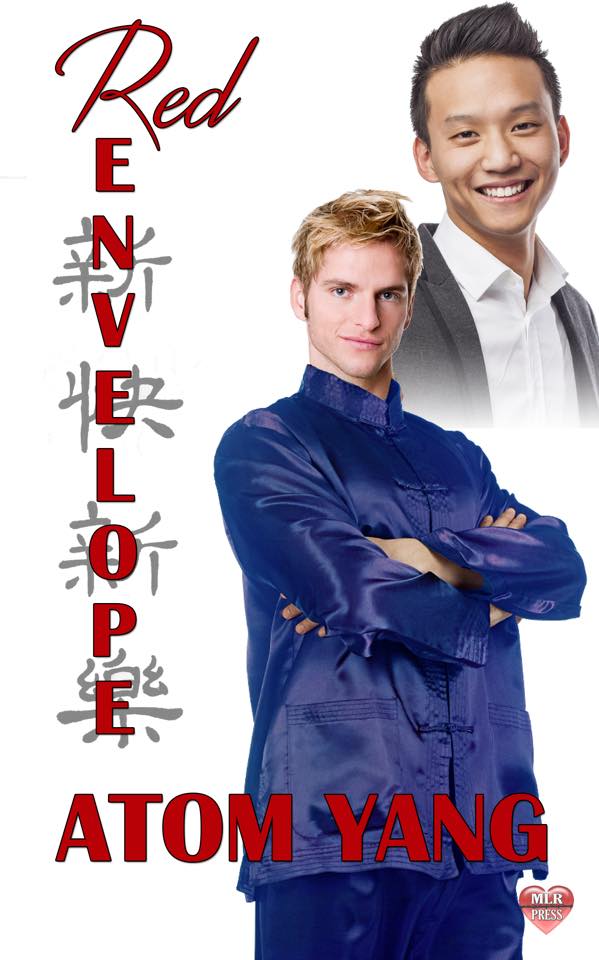
I’m excited to feature this post from writer Atom Yang, and not just because it’s a beautifully written and compelling story. Today marks the debut of Atom Yang’s first romance novel Red Envelope from MLR Press! Here’s the description:

The Chinese New Year is a time for saying goodbye to the past and hello to the future, but Clint doesn’t want to bid farewell to his cousin’s handsome American friend, Weaver, after they share an unexpected passionate encounter.

The Lunar New Year is the biggest holiday in the Chinese calendar, a time for family reunions, and for saying goodbye to the past and hello to the future. Clint, however, doesn’t want to bid farewell to what happened after last year’s celebration, when he and his Cousin Maggie’s handsome Caucasian friend, Weaver, shared an unexpected but long-desired passionate encounter. East is East and West is West, and Weaver seems to want to keep it that way, but maybe Clint can bridge that great divide this coming New Year, and show Weaver what it means to be loved and accepted.

It’s available on Amazon.com (where your purchase helps support this site) and might just be a wonderful holiday gift for the book lovers in your life. 

Do you have a guest post you’d love to see featured here on Speaking of China? Check out the submit a post page to learn more about how to write for us. 

—–
Atom Yang Red Envelope

My name is Atom Yang, and I write romance. How I came to write romance took a lot of heartbreak, time, and eventually meeting the man of my dreams (just like in those novels).

Cross-cultural and interracial dating isn’t easy for Asian men, especially in the West. The standards of male beauty differ, and in the East, men are prized for appearing scholarly and refined (even androgynous), with lithe bodies, a sensitive demeanor, and high intelligence. This may also be one of the reasons why Western media perpetuates the stereotype of the sexless Asian male. What it means to be a man in the West today—athletic and rugged, with muscular bodies, stoic and individualistic—is essentially the polar opposite of Eastern ideals of masculinity. It’s no wonder that Asian guys get little game outside of the home court—would you want a ballet dancer to be your offensive lineman?

Years of hearing or reading Sorry, I’m not into Asians or No Asians, fats, or femmes or I love Asians took its toll on my self-esteem, to the point where if the proverbial mirror didn’t crack with my obvious unattractiveness or sole value as a fetish, I’d smash it myself to make it true. This is one of the worst heartbreaks a person can experience: to fall out of love with who they are, and to lose faith in their own beauty and worthiness.

That said, stories about rejection and loneliness all have the potential to be an ugly duckling story, but not the kind where a makeover and montage scene solves the protagonist’s problems and brings the love interest around, because this isn’t about how I changed myself with blue contact lenses and bleached hair and suddenly all the white boys who had said Not racist, just my preference decided that I was acceptable. No, this is the real ugly duckling story, and it’s about becoming who you are, leaving behind those who do not appreciate you, and finding those who do.

Over time and in my travels, I came to realize that people other than those in my hometown found me attractive and unique. My ethnicity makes up a part of who I am, and I would hope that it does because it’s an aspect of my identity that informs both my perspective and my experiences in life—things I need my partner to want to understand.

After two decades, a couple of long term relationships, and longer dating dry spells due to prejudice and my location, I finally met my future partner (he’s of German, Irish, and English descent) online, and he lived four hours away. According to those inscrutable algorithms, we were a 99% match, which I think is math for “soul mate.” I admit it’s been uncannily accurate, but to be clear, we were not matched merely based on our interests—we were also matched according to how we express love, support, and understanding for our partners. The only thing the site couldn’t figure out is if there’d be physical chemistry.

We met in person after chatting for two weeks (I read research about online dating and knew it was important to meet early to prevent unrealistic expectations and to allow the relationship to develop). We had seen each other’s pictures and had expressed initial attraction, but a picture is nothing compared to real life. Our first date would be at a geographical midpoint. I arrived first, and spent time trembling with nervous energy hoping we would feel the same in person as we did on the phone, and then he arrived a few minutes later. It was love at first sight for both of us.

Two more months of dating, and given what we knew and what the site had shown us, we proposed to each other. After four months of doing the long distance thing, we decided that I would close down my practice and move in with him. He came up, helped me pack my life on a rainy day with the wizardry of an international Tetris champion, and we caravanned to his home—our home—stopping for dinner at the midway point at the Moroccan restaurant where we had our first date. Sharing our story with several friends who had been married for years, many revealed their own stories of knowing and proposals after a week or two of dating, with the longevity and satisfaction of their marriage as proof that this sort of thing does happen, and more frequently than previously believed.

Domestic life couldn’t be better, but reestablishing my practice in a new town left me a lot of time on my hands that also left the house extremely clean. Feeling loved, supported, and hot by my partner in a way I hadn’t for almost all of my life, I had the mental and emotional space to begin an endeavor I half-finished due to personal difficulties ten years ago: write stories.

Given the happily ever after ending I’ve been creating, I gravitated toward romance. Working in this genre has been an act of gratitude, hope, and social justice for me. It’s a chance to pay it forward and offer narratives that change and expand the landscape upon which we connect to each other and imagine the possibilities of our lives, so that there might be less heartbreak and wasted time for someone while they find out who they are and where they belong. I came to write romance because it happened to me, and I want to share my fervent belief that we all deserve love, good relationships, and happily ever afters. It can happen. Just like in those novels.

Atom Yang

Atom Yang debuts today with his story, Red Envelope, available from MLR Press.

Atom was born to Chinese immigrant parents who thought it’d be a hoot to raise him as an immigrant, too–so he grew up estranged in a familiar land, which gives him an interesting perspective. He’s named after a Japanese manga (comic book) character his father loved, in case you were wondering.
—–

Speaking of China is always on the lookout for outstanding guest posts! If you have something you’d like us to feature, visit the submit a post page for details — and then submit yours today.

Wanted: Talented Men/Women in AMWF Couples to Interview Here

Jess Meider
Jess Meider
I featured Jess Meider last month right here on this blog — and I’m looking for more talented folks to interview here.

The more I’ve come to know the AMWF community here in China and beyond, the more I’ve realized that, truly, we’ve got talent in more ways than one. Singer songwriters, musicians, entrepreneurs, actors, artists, dancers and much more. I’ve already featured a few talented folks here (such as Ember Swift and Jess Meider).

And that got me thinking. Wouldn’t it be fun to introduce more outstanding individuals in the community – inspiring men and women who just happen to be part of an AMWF couple?

If you’re talented and in an AMWF couple, or would like to recommend someone who fits that description, e-mail me today! If I choose to feature you on the blog, you’ll be interviewed by me and have the opportunity to promote your work here.

I look forward to hearing from you with your suggestions. In the meantime, here’s to our talented community!

P.S.: I also welcome guest posts to run on Fridays – and if you’ve been thinking about submitting something to my blog, it’s never been a better time. I have a lot of openings in the next coming weeks. Check out the submit a post page for details on what I’m looking for.

Guest Post: Get Romantic – Watch Chinese Love Films to Help You Learn Mandarin

I’ve always been a romantic at heart, which means when it comes to watching movies, I often opt for a good love story. That’s why I like this guest post from Yang, recommending four outstanding Chinese love films that could help you improve your Chinese at the same time.

Do you have a guest post you’d like to share here at Speaking of China? Check out the submit a post page to learn how to have your story or recommendations featured here.
—–

Watching a great love story at the movies or on TV with your loved one is not just fun. It’s also an enjoyable way for you to learn Mandarin and understand more about Chinese culture.

So, today, we are going to recommend some of the most popular Chinese romance based films for you to enjoy:

1. 甜蜜蜜(Almost a Love Story)

1. tian mi mi

This film was released in 1996, just before the return of Hong Kong to China and contains an all-star cast. Director Peter Chan is one of the most famous directors in Hong Kong for love stories. Leon Lai was one of the Four Heavenly Kings (ie one of Hong Kong’s most popular stars during the 1990s) and, in 1996, at the peak of his career. Maggie Cheung, an internationally known Hong Kong actress, also starred in this film, which reflected life in the last decade of the city’s colonial period. In addition, the film honours one of China’s most famous singers (Deng Lijun/Teresa Teng) who passed away in 1995; in fact, one of her songs, Tian Mimi, is often heard throughout the film. The film won numerous plaudits at the Hong Kong film awards in 1996 and became known as one of the classic romantic Chinese films.

2. 色戒 (Lust Caution)

2. se jie

Another great adventure film from Ang Lee, the Oscar winning Taiwanese director. In this film he works with Tony Leung, one of Hong Kong’s top actors, and also Tang Wei, who became a major star after this film. The film attracted a lot of “buzz” when it was released as, besides its famous director and actors, it is very violent with very realistic, often graphic, sex scenes, which are still rare in Chinese films. In any event, the film has been described as a very sophisticated love story.

3. 北京爱情故事(Beijing Love Story)

3. Beijing love story

This film was released with the same name as an earlier hit TV series (similar to Sex and the City) but was not just a predictable extension of the TV show. Rather, the film accurately portrayed both the happiness and typical problems of couples of different ages in China. It has been described as a warm and sensitive film. Another noteworthy point is that the actor/director and leading actress actually fell in love with each other and were married after making the TV show.

4. 那些年,我们一起追的女孩(You Are the Apple of My Eye)

4. na xie nian

If you watch any of the “campus love”/puppy love TV series and films being produced all over China currently, they probably originated as a result of the huge success of this film. The film was directed by Jiu Ba Dao, one of Taiwan’s famous authors, who decided to make a film to honor his teenage love in school. He did not have any prior directing experience and the leading actor and actress were also unknowns. However, when the film was released, it was an instant success, breaking records in Taiwan, Hong Kong and mainland China—making the lead actors in the film superstars, and encouraging others to produce similar films.

Undoubtedly you have your own favorite Chinese films and, whatever they are, we’re sure that watching Chinese movies will help you learn how to speak Chinese more effectively.

If you are a fan of Chinese movies, why not let us know which ones you have watched, or why you liked them. Or even email us to tell us which one is your very favorite; we’d love to know!

Yang is a serial web entrepreneur whose latest website is http://www.learnmandarinnow.com. Yang is passionate about learning new languages and cultures. You can check out the recent Chinese learning research here: How to learn Chinese.
—–

Speaking of China is always on the lookout for outstanding guest posts! If you have something you’d like us to feature, visit the submit a post page for details — and then submit yours today.

Guest Post: Waiting for Tiger to Love Me Fully in America

Love doesn’t always happen when or how we’d like it to be — including when it comes to Tiger and Lea, whose 11-year flirtation has tugged them back and forth between divorces, difficult marriages and less-than-perfect timing.

Do you have a tumultuous love story you’d like to share, or something else you think would be perfect for Speaking of China? Visit the submit a post page to learn more about the guidelines for guest posting and how to submit.
—–

(Photo by Philip Edmondson via Flickr.com)

Flirtatious friendship. Tiger and I met at our mutual place of work shortly after I returned from giving birth to my only child. It didn’t make sense to me then, but I realize now that his interest in me was quite evident by his frequent visits to my work area each day to chat. I thought nothing of it since we were both married, hence, the easy breeze to our friendly conversations.

I’ll never forget the early instance when he sat on my desk and I thought to myself, “Who does this guy think he is – acting so casually as to actually sit on my desk. The nerve of him!” In that same instance, I remember looking into his eyes and thinking “But there’s something about this guy and I don’t know what it is.” Eventually, I found myself having reasons to visit his work area from time to time and on many occasions, I found him waiting for me at my car after work. Despite my confusion concerning his actions, I still took walks during lunch with him. They were welcomed afternoon breaks during the days of beautiful weather. We carried on that way for almost three years.

Courting. Tiger and I learned much about each other during our work-day friendship. He shared some very traumatic experiences he’d endured and I shared much about my unhappy marriage. We also found common interests and laughed a lot. During one of my visits to his workplace, I matter-of-factly mentioned that I had separated from my husband. At that time, he revealed that he had separated from his wife two weeks prior. I think that was the moment the door of possibilities opened.

For a few months, nothing really changed until I sent an instant message to him revealing a dream I had with him in it. From that time, we chatted throughout the day via instant message on the computer. We were becoming closer friends helping each other manage the heartache and disappointment of failed relationships. Neither of us was yet divorced, but in his mind, his marriage was already over (and unbeknownst to me, he was in pursuit of me).

However, I was still thinking reconciliation was possible for mine.

He started calling me in the morning on his way to work and in the evening on his way home from work – almost every day! I was happy to have someone to talk to. He became my emotional crutch, letting me vent and complain on any occasion. Eventually, we started seeing each other on the weekends for meals, movies, and just hanging out. During that time, I never questioned his intentions. He was just a good friend that I enjoyed sharing time and space with.

That was, until my feelings started to run more deeply for him.

Guilt began to set in since I was still married, so I initiated a hiatus in our regular communications with the noble statement, “I really want to explore a deeper relationship with you, but I can’t until I’m divorced. After that, I’ll be ready and willing to go to the next level with you.”

I could tell he was hurt, but he showed no emotion and simply agreed to cease and desist contact with one another. I was a bit hurt by his seemingly uncaring reaction.

For approximately the next 2.5 years, we were in a limbo status between no contact, sporadic texting, brief phone calls, occasional email, and spontaneous weekend romps. It seemed we could never go more than about a month and a half before one of us would make contact – even after he changed jobs and we were no longer working in the same building.

Finally, I filed for divorce and two weeks after it was official, I told him I was ready to take our relationship to the next level. That’s when he revealed that he was not ready yet and was getting back together with his wife for one last chance to see if it could work. I was devastated; so much so that I sought sanctuary in writing a poem to him about letting him go. To this day, I don’t know if he still has it nor can I believe I actually cried about it. Anyway, I valued our friendship so I agreed to stay in contact while he worked on his marriage.

Loosely dating. That was roughly four years ago when my declaration to end our so-called hiatus failed in its attempt to usher in bliss with my Tiger. Since then, we’ve been on separate, but parallel roller coasters catching glimpses of each other at the peaks and valleys through the grey mist called friends with benefits/lovers. He’s been adamant about not admitting how he truly feels about me stating, “We’re not on that level yet, so what’s the point of saying it?” For that reason, I’ve learned to keep my emotions in check (although he does appease my heart from time to time when he knows it’s hurting). I’ve also had a very serious internal conflict regarding whether he’s stringing me along or seriously and patiently planning and waiting for the opportune time to end things with his wife so we can finally start our journey on the same coaster.

My internal conflict led me to reading more about Chinese culture and men. It was easy since I’ve always had a keen interest in Eastern Asian culture. Tiger’s interest in me took me completely by surprise since I’ve never been attracted to Asian men, nor did I think they were attracted to me. However, I’ve since learned that they are very discreet, which explains why I never noticed if any were attracted to me. Now, I can easily tell and, to my delight, I’ve discovered that I indeed turn some Asian heads – but I digress.

Two years ago, Tiger fathered another child with his wife. He insisted he was drunk and she took advantage of his altered state. He also continues to declare abstinence from sex since that fateful night of conception. I have reason to believe what he says may be true. Even so, I still can’t seem to let him go. I know he thought for sure he’d hear me say, “Oh, you have a kid now? Okay, have a nice a life”, but I didn’t. Again, I valued our friendship more than my desire to have him for myself. By American culture standards, he’d be deemed a liar and a cheat because he’s still “there” and, to add insult to injury, he had a child too. But, I believe him to be honorable and loyal.

He continues to show his feelings with subtlety. For instance, he planned and paid for a weekend getaway for us on my birthday this year. Of course, he was nonchalant about it so as not to seemingly make a big deal of my birthday, but he made it a point to let me know beforehand that our status had upgraded to “loosely dating”. According to him, it was for my benefit of course, since I’ve always said he’s not mine yet. I was overwhelmed and I wanted to believe it was his way of letting me know how much he cared.

Three months later, I’m still adjusting to our new status because in my heart, nothing’s really changed. I can’t help but wonder if his declaration of this new status is a milestone more for him than for me. He’s a man of few words when it comes to matters of the heart; and as a Westerner who enjoys free expression at will, and considering the circumstances around our relationship over the years, it’s been a challenge for me.

What now? Well, our daily calls/texts/weekend romps continue. In fact, just this past weekend Tiger warmed my heart once again by accompanying me to an outdoor festival despite his obvious fatigue. He also acknowledged and validated my efforts to refrain from pressuring him and to provide sanctuary for him. Again, to the typical American, I probably sound like a fool for accepting such circumstances. But in my Tiger’s case, I hope I’m not wrong so I continue to pray that I’m not wasting time. After all, it’s been eleven years already. My daughter will be on her own in a mere seven years, and we’re not getting any younger. I’m not sure how much longer I can go on this way wondering if he is saving his heart for me. Only time will tell – if I allow it, I suppose.

To be continued…hopefully with a happy ending.

Lea is a biracial American woman who is still waiting for her Tiger to love her fully.
—–

Speaking of China is always on the lookout for outstanding guest posts! If you have something you’d like us to feature, visit the submit a post page for details — and then submit yours today.

Guest Post: My Relationship Ideals Were a Smorgasbord of Western & Eastern Values, All Torn Down by Him

Have you ever compromised your own core values in a relationship? That’s what happened to Jocelyn Wong (who blogs at Jocelyn Writes and Is That Top 30?) when she dated a fellow from China. She writes, “I grew up in Hong Kong but many of the things I was brought up with included splitting a meal, not having sex on the first date and waiting until the engagement to meet each other’s parents. These ideals were a smorgasbord of Western and Eastern values that were all torn down early on in the relationship.”

Read on for the full story.

Do you have a tough breakup, love story or other guest post you’d like to share on Speaking of China? Learn how to become a guest poster by checking out the submit a post page.
—–

(Photo by Kiril Strax via Flickr.com)

Kyle and I met through Tinder of all places after one too many messy breakups. Back then I was living in a small town in Canada. I went into the app with the notion that maybe people in my own social circle just weren’t “good” enough and that my circle of friends might be too small. So I took to online dating to correct that.

I grew up in Hong Kong but many of the things I was brought up with included splitting a meal, not having sex on the first date and waiting until the engagement to meet each other’s parents. These ideals were a smorgasbord of Western and Eastern values that were all torn down early on in the relationship.

Early on our relationship I found it difficult to communicate with Kyle even though I had a very international background. Firstly there was the pseudo language barrier. Don’t get me wrong, I am a native English speaker but there are times when I find it difficult to find certain words in English that communicate my feelings. This proved to be an obstacle on our first date when I was signaling furiously at him to try get him to understand what the concept of 無奈 or 孝順 was in half broken English and Chinese. At the very least, it broke the ice.

There were other things about him that really confounded me on a cultural perspective. I was raised with the theory that “sex comes after marriage” and that you should “only have sex with your husband”. Even barring that, sex always came after “monogamy,” as I was taught by Patti Stanger who hosted Millionaire Matchmaker on Bravo. He was a lot more promiscuous than I was (though I didn’t know it at the time). It was cute though when he asked “Do you kiss on the second date?” Immediately I knew that he was going to be mine sooner or later. I would pursue him romantically because that level of awkwardness and consideration was just what I was looking for in a partner.

I digress though. That night, there was something about him, something strange that just made me throw away all the principles I was brought up with. So I slept with him on that second date.

The sex was unfulfilling, but I should’ve known better.

I’d been spoiled previously – falling in love and having meaningful sex with my previous partners that I forgot what meaningless, hedonistic sex felt like. I regretted my decision almost immediately and wished I’d stuck with my traditional principles. Still, things worked out and we became a couple very soon. The sex didn’t improve though, we were still a premature couple and that level of connection needed to be built up.

The second time our values clashed was when I met his parents the day we decided to become a couple – five days after we had met – and it was too overwhelming. He expected me to be okay with meeting his family the morning after I had slept over at his place. This meant: no makeup, grubby outfit, no carefully pre-arranged gift and certainly no mental preparation. What kind of daughter-in-law was I going to be?! I was mortified. I was raised in an environment where it was absolutely necessary to give your significant other’s parent a gift on your first encounter and to look your best. That day, I failed all of those criteria and retreated into myself, I was disgusted with myself. I didn’t see him for a couple of days because I was so angry with myself and him for making me go through that experience.

More cultural differences: I met his parents again soon after that first awkward encounter. This time I was prepared. I was dressed to the nines and brought them their favourite choice of alcohol (the right brand even) and some gifts I had purchased in Toronto when I spent a weekend there. They were “taken aback by my generosity” but I honestly knew no other way to act. This was how I was brought up and it seemed to have made a good impression on my other Canadian boyfriends so I followed suit this time. I later learned that they found me to be a little over the top.

Throughout our relationship, we would have troubles communicating with each other because of our cultural differences but this was the most glaring when we broke up. I was raised on local TV shows and my mother’s advice to make breakups short and snappy, like “ripping off a bandage” and to “never speak to him again” afterwards. Clean and Clear. Just like those pore strips. And that’s how my breakups had been orchestrated each time: I returned my ex-lovers things and we never spoke to each other again. You can imagine my utter shock and horror when he suggested that we not only gradually return each other’s things but to remain “friends” or “friends-with-benefits” afterwards. I could not comprehend that level of promiscuity at all and his utter lack of consideration for my feelings.

This is not my first trip around the rodeo but one that embodied the biggest cultural differences. I didn’t realise I could compromise my core values for a man. But what can I say? I was stupidly in love. Let’s hope that next time around, I learn from my mistakes and stick to what I believe in and hopefully, it’ll work out.

Jocelyn Wong is a writer, blogger, journalist and radio host. She blogs about food and fun things at www.jocelynwrites.com, and about music at www.isthattop30.com. She has been published in the 2014 Women in Publishing Hong Kong Anthology: Imprint.
—–

Speaking of China is always on the lookout for outstanding guest posts! If you have something you’d like us to feature, visit the submit a post page for details — and then submit yours today.

Guest Post: Things I’ve Learned After Moving From China to America with My Chinese Husband

Every year, there’s always a new bunch of Western women married to Chinese men who announce their plans to move to her country. But what happens after the plane ride is over, the luggage unpacked, and the honeymoon excitement of the move a distant memory?

White American Marissa, the writer and blogger behind Xiananigans, (you might remember her from her Double Happiness story published last year on this blog, How An American Woman Fell In Love With Xi’an (And One Special Guy)) moved back to her country over a year ago with her husband in tow. Here’s what she’s learned since then.

Would you like to follow in Marissa’s footsteps and have your writing published here? Head on over to the submit a post page to learn more.
—–

IMG_1217

“Why ever did you move home?” said a doctor I saw at a clinic last October. It is a question I am still grappling to answer.

I repatriated just over a year ago, saddling my husband into the whole affair.

Much has not changed since divulging our Double Happiness story. We live with my parents and youngest sister, both working in retail.

I also freelance write for an online hyperlocal, and do a particularly terrible job of keeping up on Xiananigans.

With the cons, come pros. Partaking in road trips, day trips to the beach, exploring New York City, Jersey City where a good friend lives, brunching, driving two hours for the sole purpose of purchasing ingredients for a home-cooked Chinese meal, pestering my father during his weekly grocery shopping trips, hiking and basking in summer’s glorious weather in local parks, a 散步 in the evenings, indulging in ice cream on a far too regular basis, getting outdoors by playing basketball, badminton, bike riding, going to the gym and building tolerance for intolerance.

So if you repatriated or plan to do so in the immediate future, I advise:

IMG_1173Starting your search before arriving, line up a job or consider industries outside your field. There are industries experiencing growth, particularly healthcare, education, and retail. There is a need for postsecondary teachers, office clerks, registered nurses, personal care aids, and customer service representatives, to name a few. I can say most, if not all, do not appeal to me, in the slightest, yet I am currently employed in one of the previously mentioned fields, freeing you to pursue other career interests, think moonlighting or freelance gigs, or perhaps work on your side hustle.

Living with your family, for the interim. If at all possible to reside with your parents, or extended family members, as my husband and I have done, then do so. Although not always ideal, we spend less, share evening meals, and cooking responsibilities, whether we put together Chinese or Western dinners, several times a week. Those who did not cook, help out by cleaning up. In hindsight, I suggest creating a written agreement of duties, including both parties’ expectations.

IMG_1085Staying connected to China, however you see fit. I read Chinese several times a week, picking up children’s books, written in Chinese, from the public library. The librarian bequeathed a stack of books to me, saying the library had no room or real need for them. Among them was Eric CarIe’s The Very Hungry Caterpillar, a children’s story I had a copy of and had my sister purchased for one of my nephews. I also read literature by Chinese authors, in translation of course, or books, fiction and nonfiction alike, interweaving China into their narratives. Keeping up with your spoken Chinese, even if, like me, you are merely conversational, proves as yet another way to stay connected. Talk to your in-laws, even if saying hello, how are you, and wishing them good health is all you can muster. Nag your husband to keep in touch with his family, friends, and acquaintances; it is easy and free to connect on WeChat. Watch Chinese films and TV shows together (we fawned over Jia Zhangke films and Hunan TV’s 爸爸去哪儿第三季…kudos to readers who uncover why 😉 ), partake in Chinese chess 象棋, mahjong 麻将, and Chinese card games. Find your area’s most authentic Chinese restaurant, frequent it, making sure to use the visit as a chance to practice Chinese with people other than your spouse.

IMG_1178Making new friends, but reconnecting with the “old.” Reach out to people you have not heard from in ages, believe me, they will be happy to hear from you. Finding new friends, particularly other repatriated individuals, helps build a stronger support system where you have those you can share your overseas experience with, and not nag the friends who do not wish to hear every minute detail recounted to them for the third time.

Be prepared to discuss politics, the weather, and make small talk. No one will ask you have you eaten “你吃了没有?/你吃了吗?” when you run into them, instead asking after your day, discussing the latest in political affairs, and complaining about today’s humidity, or lack thereof, peppers conversations here.

Ensure you can defend China, or deal with the inaccurate ramblings and representations smattered in the American media. China is a hot topic as of late in the American media (when is it not?), covering the explosion in Tianjin, the devaluing of the renminbi, the fluctuating stock markets in Shanghai, Shenzhen, and Hong Kong, and President Xi Jinping’s visit to the US slated for September. Inaccuracies, biases regarding China are too easy to find in print and online, leading even the most informed of Americans to rattle off their “informed” thoughts, telling you what China is like, even though they never lived, let alone visited there. When words like “backwards,” “Communist” accompany the phrases “I know, I read” there is no hope for that conversation to progress. Resort to jumping ship, neutralizing the topic, and return to domestic politics, where they can rant up a storm, and you can pretend to listen intently.

IMG_1142Patience, patience, and more patience. Embracing the mantra “Good things come to those who wait” will serve you well. Similarly, remaining optimistic in your search for a career and supporting each other, in all your endeavors, helps envisioning the light at the end of that proverbial tunnel. Do not forget to exude patience with your partner, as acculturating is far harder for them. In my case, ZJ proves thick skinned and unphased by intolerance. Stick up for your partner, regardless if the hate comes from relatives or strangers. And, slightly unrelated, be patient with your spouse’s language acquisition. I lucked out, as ZJ has very few language-related barriers, flaunting a unique blend of dry humor laced with sarcasm, snide (yet always polite!) commentary in the face of rude, intolerant, or unsavory proclamations. He does pick up some rather intriguing phrases from coworkers, “Oh my ‘lanta” replacing “OMG” until, thankfully, he retired it! 😉

And apologies for sounding too positive…let me return to my good old chastising self in the final piece of advice.

IMG_1165If you managed to internalize the friendly, complimentary offerings Chinese friends, students, and maybe even strangers bequeathed on you, perhaps commenting on your impeccable Chinese langauge skills, appearance, personality or competencies, then brace yourself to be labeled as “too sensitive.” Simply put, you may have received compliments, flattery of some kind, or even the opposite. Chinese people told you exactly how it is, as was the case with students who did not shy away from telling me I was a little fat, but not as fat as most Americans! I disliked this approach at first but eventually learned to appreciate this type of honesty. Americans tend to speak ill of an individual behind their back, and provide empty means of flattery when facing the person. Although well aware the compliments and flattery I received in China may have been as equally fake, the honesty I received from students, friends and acquaintances helped me project and blame others less, giving me a thick skin, but one thick enough for dealing with the Chinese way of bluntness. This so-called “thick skin” is thin here, where relatives perceived me as such. Moving back to America means readjusting the way you internalize the comments others make, so reinvest in learning to not care what people think. Easier said than done, but you can do it (is better said in Chinese 加油!)!

Marissa Kluger married her Chinese husband ZJ almost two years ago. They live in New Jersey. She occasionally reminisces about Xi’an and muses about life in the US at Xiananigans. 
—–

Speaking of China is always on the lookout for outstanding guest posts! If you have something you’d like us to feature, visit the submit a post page for details — and then submit yours today.

Guest Post: Why Did I Assume I’d Never Find a Man to Date in China?

Why did I assume I’d never find a man to date in China? It’s a question that haunted white American Rosalie Zhao (who blogs at Rosie in BJ), surprised to find the love of her life in the Middle Kingdom (she shared her unforgettable love story here in the post “Enter Zhao Ming…China’s Answer to Arnold Schwarzenegger”). She writes, “With rising tensions and deepening talks surrounding issues of race in the US, I’ve been doing a lot of reflecting on my own prejudices.”

Do you have a story worth sharing on Speaking of China? Visit the submit a post page today to learn how to become a guest poster on this blog.

—–

(Photo by Steve Webel via Flickr.com)

It’s been a couple years since my first guest post on Speaking of China. I wrote of how, against my initial expectations, I found love with a local man in China. Since that post, there’s been a rise of AMWF relationships in the media as well as a growing number of Asian men (and the western women who love them) speaking up and speaking out. With rising tensions and deepening talks surrounding issues of race in the US, I’ve been doing a lot of reflecting on my own prejudices. I’ve also given some thought as to why I assumed I’d never find a man to date in China, an assumption that many western women living in Asia seem to make. Then, the reason finally came to me—a man that was such a small part of my past but who I’ve come to realize had a seemingly profound impact on how I viewed Asian men and perhaps even how I saw myself.

It was freshman year of college and I was in a dating slump. The good news was that I got along fabulously with the other girls I lived with in my dormitory suite. There were five of us in total; I was the only one without a boyfriend. The two girls in the room next door, Laura and Erin, each were dating guys who attended a university on the other side of our state, which meant they were away most weekends visiting their beaus. I don’t know whose idea it was, theirs or mine, but somehow we came up with the idea of me having a blind date with one of their boyfriends’ friends. They quickly ran through their mental rolladexes (this was, of course, pre-Facebook). Who among these friends would be a good match? Laura looked up suddenly. “We should set you up with Johnny!” she exclaimed. “Yeah, he’s really cute!” Erin assured me. They shuffled through all the junk in their dorm room, eventually scrounging up a photo. Laura showed me his picture.

For a second, I was taken aback. I assumed he would be white, but he was in fact East Asian. I quickly admonished myself—what did it matter? He looked fairly cute from the photo and they eagerly sang his other praises: he was kind, smart, and 21 (old enough to buy us beer!). I decided to throw caution to the wind and join them on their next road trip across state, in hopes Johnny might be the man of my dreams. Or maybe someone fun to make-out with for the weekend. Whatever. When you’re 19 and in college, it hardly matters.

As fate would have it, Johnny was neither my future husband or make-out partner. The second I laid eyes on him I knew it wasn’t going to happen. I’m short. This guy? He was barely taller than me. He also weighed about 30 pounds less than me. The chemistry wasn’t there. I wanted a man who eclipsed me in size and strength, a man who would wrap me up into his arms and protect me from all danger. If Johnny was a little bigger and I a little smaller, maybe something could be there, I thought. Johnny, however, didn’t share my sentiments. He seemed very much into the idea of us becoming an item. He was smart enough to read my signals and not push me too hard, but he subtly pursued me that weekend and later, online.

I felt bad initially and even worse as time wore on. Johnny and I became closer friends while talking on MSN messenger and it became clear to me that he was suffering from a far worse dating slump than I was. He had been rejected over and over, to the point where he felt his efforts were futile. He was never going to find a girlfriend. I wanted to assure him that the right girl was out there, but I didn’t know how to do that without returning to an awkward conversation in which he asked why I didn’t like him. Eventually, our chats online became less frequent and I guiltily sighed with relief.

After that, I fell for my own perception bias. I viewed all Asian men as being smaller than me and therefore undatable. I assumed I could never again be attracted to them because I’d feel like an ogre in their presence. But then I came to China and discovered that Asian men come in all sizes and shapes. I also realized something else—a man’s true strength isn’t determined by his height in inches or weight in pounds; in the years since coming to China, I have found men attractive who had physiques similar to that of Johnny’s. And I have also realized that my own self-worth cannot be calculated by how small my jean size is. I don’t have to be thin for a man to find me beautiful.

I see now that I never gave Johnny a fair chance. Perhaps a romance could have blossomed and chemistry forged if I had had an open mind. Was I racist? Sizist? Self-loathing? I don’t know. But I don’t want to judge my 19-year-old self too harshly. I’m just glad that in time I was able to open myself up to the possibilities of dating cross-culturally and the idea of dating in China. I’m not sure where in the world I’d be today if I hadn’t.

Rosalie Zhao resides with her family in Hebei, China, where she writes a blog called Rosie in BJ.

—–
Speaking of China is always on the lookout for outstanding guest posts! If you have something you’d like us to feature, visit the submit a post page for details — and then submit yours today.

Guest Post: A “Little” Something Red for My Chinese-American Groom

I know a lot of you out there are already fans of the AMWF blog When West Dates East (written by the incredibly funny and smart young writer Autumn Ashbough). Here’s the story of how Autumn decides to honor her fiance’s heritage with a very little something red on their wedding day. That’s all I’m going to say about that — read on for the whole story!

Do you have a hilarious wedding story to share, or something else that you think should be on Speaking of China? Check out the submit a post page to learn how to become a guest poster here.

—–

(Photo by _e.t via Flickr.com)

Like most brides, I got more than a few pieces of sexy lingerie at my bridal shower. Mesh merry widows, sheer nightgowns, several garters with blue, and even a red silk thong.

Now, I have never been a supporter of the thong. Nope. My politics are liberal, but my clothing is conservative. While I currently live in fashion forward, underwear-optional Los Angeles, I remain the Grand Champion of Excess Fabric. When turtlenecks are in style, I squeal and buy some in every color. (Sleeveless turtlenecks are also a godsend when you work in an over-air-conditioned office building with old, overweight white guys in suits.)

The giver of the red thong was one of my former coworkers. As I thanked her, I must have looked a little puzzled. She quickly explained that she thought it was appropriate, since red was the traditional lucky Chinese color. As I had not yet ventured into the AMWF cyber community, I nodded with the other clueless guests and filed that fact away for future reference.

My Chinese-American fiancé had a blast rummaging through my risqué gifts after the bridal shower. Andy picked up each item, examined it, and dropped it on the floor by the bed. He would then study the lingerie, nod, and say, “Yeah. That one’ll look great!”

But when he got to the red thong, he didn’t even take it out of the box. Andy just pushed it aside with a wistful sigh, because he knew there was no chance in hell I’d ever wear it.

****************************

Like many first generation Americans, Andy had no interest in his Chinese heritage. His goal was to assimilate quickly. He stopped speaking Cantonese after learning it was useless in kindergarten. The only accent Andy retains is a smidgeon of the pidgin he grew up with in Hawaii. He picked up tennis, baseball, weightlifting, and dancing instead of martial arts. Even his car, a Ford Mustang Cobra, was aggressively American. (He also drove it in an unhealthily aggressive American style.)

Andy’s cousins were the same way. His Fashion Plate Cousin’s wedding was as American as you can get – church wedding, hotel reception, poofy white dress, and even a super white groom from Oklahoma. There was no cheongsam, no daughter-in-law tea ceremony – not even a hint of red in the accent colors.

Clueless white girl that I am, I did not, in fact, notice any of these cultural omissions at the time. Months later, however, when Andy and I attended the wedding of a Japanese-American couple, the ballroom contained a thousand golden origami cranes. While the rest of the wedding was thoroughly American, the bride’s nod to her Japanese heritage involved a year of folding thousands of gold foil cranes – with only the flawless ones displayed. These cranes were eventually made into beautiful designs, framed, and displayed in the couple’s home.

I stared up at the cranes and whispered to Andy, “We should do something like that for our wedding.”

Andy chortled. “Uh-huh. You can’t even fold dumpling wrappers. Good luck with that, honey!”

I elbowed him. “Not the cranes, babe. But something Chinese. The wedding is all…white.”

Andy knew my fits of inspiration often meant more work. Andy was instantly wary. “It’s fine.”

“Maybe the bridesmaids’ dresses…no, they’re already bought…so is my dress, the flowers match the bridesmaids’ dress…” I thought furiously and came up empty. Our wedding was in rural New Hampshire in the fall. There’s nothing remotely Asian for miles. “What if I try and find some kind of cake topper?”

“Your Ex-stepmother already gave you that engraved crystal bell that matches the engraved champagne flutes your sisters gave you.”

“Isn’t there some Chinese custom we could work in?”

“Red envelopes, honey,” Andy responded instantly. “Red envelopes with lots of cash will be just fine.”

And although I bugged Andy repeatedly about trying to work in some Chinese wedding customs, he stuck with red envelopes and refused to budge.

***********************

A few weeks before our wedding, I came across a library display with Thousand Pieces of Gold, by Ruth Lum McCunn. I’ve always loved historical fiction, but when you grow up on the East Coast of the United States, most history is very Eurocentric. I’m always on the lookout to improve my California/ West Coast history, and I scooped up Thousand Pieces of Gold immediately.

Thousand Pieces of Gold tells the story of Lalu, a Chinese girl sold into slavery in 1871. Lalu goes from a Chinese brothel to an American slave merchant, is renamed Polly, and winds up in Idaho as the prize in a salon poker game. Polly regains her freedom, marries, and becomes an American frontierswoman.

The book was a nice escape from wedding stress. Polly’s hardships in the American West put my own wedding stress/ drama in perspective. My wedding shoes were lost? Hell, at least I had shoes! I was worried that my father walking me down the aisle would seem like an endorsement of the patriarchy? At least my father couldn’t ACTUALLY sell me when times were tough! (I have no doubt he would have. Also, I might have deserved it.)

But what struck me most, when I read Thousand Pieces of Gold, was this picture:

PollyBemis1894
Polly Bemis in her wedding dress, 1894.

Like Laura Ingalls Wilder, my favorite childhood heroine, Polly’s best dress – and therefore her wedding dress – was black. But unlike Laura, Polly was clad all in red underneath. Polly once explained that she was so happy on her wedding day that she just had to wear the Chinese colors of joy and good luck. So while her exterior was the somber, accepted American garb, underneath, Polly celebrated with her Chinese heritage.

And while it was too late to change any external décor at our overly white wedding, I had just the thing – or really, just the thong – to emulate the indomitable Polly Bemis.

****************

The post-wedding photography session at our wedding was interminable. There were photos of the enormous wedding party, and then of the enormous families. Well, my enormous family. Andy only had one set of family photos to take. I had three.

My smile faltered once we got to my Ex-Stepfather and his family. The photographer called out, “Your gums are showing, Autumn!” I lowered my upper lip while I tried to keep smiling. (Try it. I dare you.)

The photographer finally snapped the last shot and called for my Ex-Stepmother. As Ex-Stepmother and company arranged themselves around us, I dropped my smile and whimpered to Andy, “My feet are killing me. You?”

Andy whispered back, “My butt feels funny.”

I giggled. “Your butt? What’s wrong with your butt?”

“Aw, c’mon, honey. You are not alone. I got a red thong, too.”

“No!”

“Yes!”

Most of our wedding pictures are carefully choreographed, with careful smiles. But the one with my Ex-Stepmother and my Ex-Step-Grammy is a little different. In that particular photo, Andy and I grin like a pair of loons.

It’s my favorite.

loon

Autumn Ashbough is a White American woman who writes about the humorous perils of life with a Chinese-American significant other at When West Dates East.
—–

Speaking of China is always on the lookout for outstanding guest posts! If you have something you’d like us to feature, visit the submit a post page for details — and then submit yours today.

Guest Post: Six Questions Chinese-Foreigner Couples Should Discuss Before Having Kids in China

While I’m married without children in China, many foreigners — like American Charlotte, a freelance writer in small town China who blogs at Chinese Potpourri — have chosen to start a family here. (Longtime readers might remember Charlotte from her unforgettable love story titled “I Want To Be Your Slave For The Rest of My Life”.) But as Charlotte has learned, having kids in China with your Chinese spouse involves a lot more than just “basics like a starry night themed nursery versus a jungle one.” 

Would you like to share your wisdom with the readers of Speaking of China through a personal guest post? Check out the submit a post page to learn more about how to have your writing featured here.

—–

(Photo by Andre Laubner via Flickr.com)

Most Chinese couples want a child, if only to make their parents happy. My husband was no exception, though he was in more of a hurry than I was due to his old-by-Chinese-standards age of 32 at the time of our marriage. And he did truly want kids. It shouldn’t come as a surprise that our son was born just four days after we celebrated our first anniversary.

One thing I didn’t anticipate is all of the decisions that we’d have to make. I’m not talking basics like a starry night themed nursery versus a jungle one. That’s ridiculous, Chinese typically co-sleep with the baby. Nor am I talking about the never ending debate of breast feeding versus formula (news of the formula scandal broke when my son was less than a week old and I was glad that I’d chosen to breastfeed; for those who choose formula, please do due diligence and find a reputable brand).

No, these questions are a bit more serious than that. Once you and your Chinese husband decide to start a family, a few more things need to be discussed. In a perfect world, you’d sort out all these questions as you dated. In reality, we rarely get past the decision to have or not have children before we say “I do.” Here are six questions that are worthy of some serious talk time as you ponder the joys and challenges of parenthood:

1. Which maternity and post-partum customs will you follow?

This goes from quitting your job and not having sex once you know you’re pregnant (first and third trimesters are a “no-no” when it comes to being intimate) to wearing a radiation smock for the duration of the pregnancy and eating dumplings made from insects your mother-in-law picked out of a pile of manure from a farmer’s barnyard to improve your milk production. Nope, not kidding on that. Luckily it was my sister-in-law that got those delicacies; I’m quite the milk producer.

Sometimes it pays to insist on your traditions. But sometimes you need to know when to give in to win. I’ve finally figured out that sometimes I just have to humor my Chinese family. They don’t have as much knowledge about the world as I do and just aren’t capable of understanding some things. Like the fact that rollerskating did not cause my miscarriage. Really, they simply don’t get it. I also assured them that I will not blame them for any ailments I have in old age. Once I came to the realization that I can’t change what my mother-in-law knows and understands, life became easier.

2. Which nationality will the kids be?

I attended school with several military kids and they’d talk about their dual citizenship because they were born abroad and when they were 18 they could choose which nationality to keep. This was interesting to me, and when I found out we were expecting, I looked up the requirements of getting that for our kids. The friendly person at the American embassy informed me that China doesn’t recognize dual citizenship and that all babies born here are Chinese citizens. So these half-Chinese kids are in a sort of nationality purgatory; they can get a passport from their own country but China will still want to count them as one of their own.

3. Who and how will you name the baby?

When I taught English at a local college I always did a unit on names with the students. It was a chance for me to learn more characters and for them to explain something pretty basic in English. I was surprised to find that most students were not named by their parents. Grandparents seemed to be the most common person giving names, but fortune tellers and aunts and uncles were also named as the origin of their moniker.

Once we decided that our kids would get American citizenship, we felt it best that they had a Western sounding name as their given name, their Chinese name makes up their middle and family names. So their names are something like this: Andrew Lingfeng Wang. It helps that both sides of the family can call the kids by names that they understand, even if their Chinese birth certificates are quite a mess due to their strange names. Fortunately, when it was time to get their citizenship changed at the embassy, I wrote up an explanation of why my son’s name is partially illegible and tried to offer some reasoning as to why my daughter’s names start with lowercase letters and have periods at the end of each one and their paperwork was processed easily.

4. How many kids will we have?

Coming from three-child families, my husband and I knew that we wanted more than one. But there are so many questions that come up when having a second child while the one-child policy is still in place for the majority of the population. The authorities consider my son Chinese, so we went to the other hospital (only two hospitals, of a dozen, in our town have maternity departments). Technically it’s illegal, though I was told that giving birth in a foreign hospital is never a problem for couples having subsequent children in big cities like Beijing and Shanghai. Actually, any child born in China is Chinese regardless of whether one or both parents are Chinese or not.

5. Will you return to work or will one parent stay home with the child?

I returned to work when my son was 34 days old. The basic laws for foreigners don’t allow for maternity leave like our Chinese counterparts, but I have heard of foreign women successfully negotiating maternity leave into their contracts if they’re planning to have kids. Chinese women get six months to three years, depending on their job and desire to take advantage of it. I wanted to stay home, but as in many situations, we needed both incomes. My in-laws are very traditional and watched my son on days that I worked.

Since my last job ended, I’m home everyday. I frequently hear comments about how I’m lazy and don’t work or don’t care about my family enough to go find a job. That seems to be the general consensus about women in my town who don’t work: they’re lazy, they don’t care or they’re rich. It’s true I won’t move to a bigger city to find foreigner-friendly job, but they don’t see that I’m up at the crack of dawn and burning the midnight oil freelancing.

6. Where will they go to school?

I can count on one hand the number of Western families, whom I know personally or through someone, whose kids go to Chinese schools. The easiest way to explain it is that Chinese schools produce robots who aim to be number-one. Everything, starting from first grade, is about being the top student. Parents go to school on weekends to clean to earn points for their kids which puts them in better standing with the teachers. Teachers teach to the top of the class and shame the parents of kids who are at the bottom, since their salary is in jeopardy if the class scores aren’t high enough.

I’m not implying that other types of education are flawless, and the Chinese style of education does have it’s good points, but kids in Chinese school have little free time. Every weekend and holiday is packed with extra homework to “make up” for the days away from school. Overseeing nightly homework is like a part-time job.

What other questions would you add to the list?

Charlotte — a wife, mom and freelance writer in small town China — blogs about her life at Chinese Potpourri.
—–
Speaking of China is always on the lookout for outstanding guest posts! If you have something you’d like us to feature, visit the submit a post page for details — and then submit yours today.

Guest Post: Will I keep my Asian surname? Am I Asian? Am I Western?

When an intercultural relationship ends – a relationship that deeply impacted who you are – what does it mean for your identity?

Serina Huang (a fantastic writer, blogger, mother and frugalista many of us know as the Taiwanxifu) writes, “Now that I am no longer with my Taiwanese husband, I am beginning to rediscover and question who I am. Will I keep my Asian surname? Am I Asian? Am I Western?”

Do you have a story you’d like to share on Speaking of China? Have a look at the submit a post page to learn more about how to become a guest poster.

—–

11414799_843733932373119_1316058218_n (1)

“Is he Australian?” my friend Rose asked.

I knew what she meant, but still the question surprised me. I paused for a minute, before replying, “no, actually, he’s English.”

Her eyebrows went up slightly, and she gave a slight giggle. “Oh, Serina!”

For seventeen years I had shared my life with a Taiwanese man, with whom I bore two dual-cultural children. We were introduced while I was studying Mandarin Chinese at University: he had been my language partner, and – quite unexpectedly to all concerned, myself included – morphed into my partner with whom I hoped I would spend my life.

I have spent over twenty years being immersed in Chinese (and Taiwanese) culture. This isn’t something faddish, but rather something was essential in my role as a Taiwanese xifu or daughter-in-law. Before we were married, my Taiwanese mother-in-law told me that once I became a xifu I must become Taiwanese rather than a foreigner. (She also made it clear she expected to live with us and for me to care for her in her old age.) I laughed a little about this as it seemed absurd not to live like an Australian in my own country.

But somehow, bit by bit, I changed. I became an egg: outwardly white, yet inwardly Asian yellow. I would go to work and act out my work existence, but somehow felt different and apart, unsure about how to behave in the oddly open Australian office environment. I didn’t spend my evenings and weekends the way that other people seemed to; I rarely went out for after work drinks, rarely went to the movies, hardly ever watched commercial TV.

Instead I went home to cook for a house full of Asian people – for six years we had home-stay students and invariably they were Chinese, broken up occasionally by Japanese or Korean students. I bought rice in 10kg bags (only ever high-grade Japonica rice, which I cooked in a special Ta-tung electric cooker we had imported from Taiwan). I only purchased the proper brand of naturally brewed soy sauce. I learned through trial and error to cook meals that tasted the way a Chinese mother would have made them. I still remember the night my husband nodded with appreciation because I had stir-fried a simple meal of Hokkien chicken noodles just right “That tastes like it was cooked by someone Chinese, not like a lao wai,” he said, scooping up mouthfuls of the noodles with relish in his shiny metal chopsticks.

We were always saving money to invest in properties that would help build a better future for us and for the children I eventually produced. One of my work colleagues laughed at this and told me I was ‘so boring and so Chinese.’ Unlike him, I didn’t have cool or expensive hobbies, and we rarely travelled. When we were invited to noisy dinner gatherings with Chinese friends, invariably the discussion would drift to money and investing in property. Even people who were not working had investments. We were held up as models of the successful Taiwanese immigrant life. My husband was an investment guru and financial star and held court dispensing advice for those looking to emulate our experience.

11356128_843733962373116_1298117246_n (1)

We rarely dined out and instead spent evenings sitting on the sofa watching Japanese soap-operas with Chinese subtitles. My favourite mega-series, which I have watched at least four times, is called ‘Diamond Girl’. Kind of like a Japanese version of Legally Blonde, it follows the journey of a privileged and spoiled young woman (with her endless wardrobe of brand name clothing) who worked as a secretary in law firm in an impossible quest to win back her fiancé. In the beginning of the series she studies (or rather socializes) in Sydney, and I loved seeing my own country through the eyes of a Japanese fashion princess. I so wanted to be Diamond Girl: she was cute and sassy, and I aspired to wear her bright and sexy clothes.

Later, I became madly addicted to a Taiwanese soap Inborn Pair. It is an odd title, and a better translation is Love Looking for Trouble. I lusted over the clean-cut Burberry overcoat clad actor who played the lead in the series, Chris Wang. I discovered that he spent his early years studying/working in Australia, and I used to daydream about meeting him and casually asking about his experiences Downunder. I imagined him as a younger and more romantic version of my husband. In my dreams I was transported back to an idealized vision of when we first met, before xifu responsibilities and cross-cultural misunderstandings got in the way.

Of course these were hardly tales that you could talk about in the kitchenette at work while filling up my thermos to make a cup of Taiwanese gaoshan high mountain green tea.

“You know, last night I cooked Chinese kongxincai greens with fermented beancurd, stewed fatty pork belly with star anise and hard boiled eggs, and served it over perfectly steamed rice. And then I watched Diamond Girl pretend to be a hostess in a bar in order to win back a client whom she accidentally insulted at the law firm she worked at. Oh, and her boss really likes the tea that she makes for him – you can tell because he grunted.” This wasn’t something most ‘Aussies’ could relate to.

Now that I am no longer with my Taiwanese husband, I am beginning to rediscover and question who I am. Will I keep my Asian surname? Am I Asian? Am I Western? What does the ‘West’ even mean? What bits of my ‘egg’ identity to I want to keep? Are there bits that I want to separate out, like a yolk being separated from the whites?

Above all, how to explain to New Man, whom I started dating in a strange yuan fen coincidence of destiny that only Chinese people could fully understand, that I might look like outwardly a plump middle-aged Anglo-Saxon mother, but my head and my heart operate quite differently.

Some things are easy: I tell him my favourite band is the Taiwanese rock group Mayday (aka wu yue tian), and I love singing karaoke classics by Teresa Teng and Ah-mei, and more recent songs by the lovely Della Ting and breathless Jia Jia. He nods but I know that Mando-pop will probably never appeal. At least my Taiwanese-Australian girlfriend gets it; over Easter we spend an afternoon belting out karaoke classics on my computer while my kids are with their father. She introduces me to Leehom and Kimberly; I fall in love with Leehom youtube videos and he becomes my new Asian pin-up model.

I talk about my student days in Beijing, with toilets that stank so much I could smell them from my room down the hallway. About my first frightened night in student accommodation and the drunken Kazakhstanis who kick-boxed down the door opposite mine in a quest for beer from the xiaomaibu store. Surviving that to spend a year partying and flirting with abandon. Naively backpacking through China. About living in Taiwan, about the dumplings, vegetarian buffets with fake meat and vegetables grown in the mountains, hidden hipster cafes in the back laneways and how sad I was to say goodbye to the royal blue LED-lit tiers of Taipei 101 as our chauffeured car swung past it in the light winter rain. I joke about travelling back to Taiwan with my mother-in-law on my honeymoon, and (having left her in Taipei) reminisce about clutching my new husband on a scooter while we travelled along the fiercely beautiful coastal region near Taitung. I tell New Man that Taiwan is a clean, green city in Asia, that the subways (jieyun) and High Speed Rail (gaotie) are amazing. I get excited about the emerging art scene in Taiwan, the way that ancient and modern cultures are converging to form a new identity.

11356065_843733975706448_1845776398_n (1)

He has been to Hong Kong but never really travelled through Asia; Asia to him is a night at a Thai restaurant eating laksa. (That prompted a whole explanation of Singapore’s nyonya cuisine, and regional differences in Chinese cuisines, which I think again went over his head.)

I tell him I can speak Mandarin. “You clever thing,” he says. He starts sending me sexy messages on Facebook messenger with the help of Google Translate. They make me laugh.

But it is difficult to explain that my brain doesn’t just translate from English into Mandarin, like a tap that I can turn on and off. I might not be a native speaker, but I think, I live, I dream in Chinese. I am often at my happiest prattling on in imperfect Mandarin, so happy to meet Taiwanese Mums on a playdate and to bitch light-heartedly about the frustrations of navigating the Australian dream – many are married to Australian men and experience what I did in reverse. My children’s English is littered with Chinglish phrases. “Mummy, bao bao,” my toddler pleads when he wants a cuddle. My preschooler, who seems to perpetually have his hands in his undies, refers to his genitalia as ‘xiao niaoniao’ and this seems an easier term to use when chiding him about it in public.

In the early days of dating, I had to stop myself from speaking to New Man in Chinese. “Ni xian shuo ba! – you speak first,” I have nearly said on the phone countless times. Chinese was the secret language of courtship and intimacy with my husband, a language I intuitively retreat to when thinking emotively. “Talking about love – tan lian ai’ , is how they refer to this stage of dating someone in Chinese.

I argue best in Chinese. It is only in Mandarin that I feel that I can truly express my anger, my indignation about things, especially injustices right or wrong in my marriage. When I get truly worked up, I make my point more shrilly and cruelly than in English. Perhaps it is best that I am not able to tap into this, as it would probably tear New Man’s soft vulnerability to shreds.

I explain to New Man that I feel uncomfortable when people split bills. (Thankfully that has never come up on a date.) I talk a bit about the importance of face (mianzi), and gloss over the importance of cultivating networks or guanxi. I explain about how I plan to help my kids maintain their Chinese language skills. We take our children out together to a Chinese lantern festival. He likes the lion dance and tells me it is fun but that he doesn’t like yum cha (yuk cha, he calls it).

How to explain the deep yearning within me to return to Asia, how I constantly miss living in Taiwan? How a part of me feels this quest to explore, to discover, to connect with Chinese culture as if I was born into it in a past life? That despite my Caucasian appearance, that I feel a sense of belonging and normalcy when I glance out the taxi window and read glaring neon signs in Chinese? That sometimes I feel lost and lonely just being normal in suburban Canberra? How I am a temple junkie, and pray with unadvisable regularity to Guanyin for relationships, Matsu for safe passage, Guan Gong for courage and wisdom, Cai Shen for money and Wen Chang for a promotion in my public service career? What it truly means to express gan en – appreciation – when you receive your hearts desire? How feng shui matters to my life and defines where and how I live? How my children’s Chinese names were chosen by a fortune teller, and mine has layers of meaning that takes five minutes to explain?

“But you are not even Chinese,” I tell New Man on a picnic date shortly after meeting him, as we discuss how inexplicable that it was that we should have hooked up.

With his blond hair and blue eyes, this is fairly obvious. Nor do I wish he was anything other than what he is. The attraction took me by surprise, powerful and unexpected, making me as giddy as a teenager. He is unaware how very English he is. I went to Beijing rather than do the usual pulling a beer in a pub gap year that many Aussies do and so I know nothing about England, nothing about his culture or the landscape that shaped him. To me, being with him is the new foreign, the new exotic.

And through it I am inventing my new life as a mixed-up scrambled egg, choosing how I want to flavour my omelette.

Serina Huang is a writer, blogger, mother and frugalista. She blogs about Taiwanese culture and food at www.taiwanxifu.com, and about parenting and being frugal at www.weekendparent.co. She is currently working on a book about her experiences of doing Chinese postpartum confinement (zuo yuezi).
—–
Speaking of China is always on the lookout for outstanding guest posts! If you have something you’d like us to feature, visit the submit a post page for details — and then submit yours today.