Yung Wing, China’s 1st Overseas Graduate, Finds Love, Tragedy in US

Yung Wing (1828-1912) stands out in history as the pioneering overseas Chinese student, the first from China to graduate from an American university (Yale, class of 1854). He also went on to champion higher education for his fellow Chinese compatriots by establishing the Chinese Educational Mission, which helped send other Chinese students to US schools (including Yale) for a period of time. And countless students, scholars and lifelong learners have benefited from his generous donation of over 1,200 books to Yale, which formed the heart of its celebrated East Asian library.

But Yung Wing’s life also stands as a tragic example of how Chinese exclusion brought about needless suffering — and in his case, the death of his beloved wife, a European American woman.

Yung Wing, who had become a naturalized US citizen in 1852, married Mary Kellogg, from the town of Avon, Connecticut. In a 1875 photo from their wedding day, Mary looks graceful in a long, flowing white gown adorned with garlands of flowers, just like any beautiful bride. (In his memoir, Yung Wing states that, much like the Chinese Educational Mission, it was one of his daydreams while at college to marry an American woman.)

Yung Wing and Mary Kellogg went on to have two sons together: Morrison Brown Yung and Bartlett Golden Yung. Yung said of them in his memoir My Life in China and America:

They are most faithful, thoughtful and affectionate sons, and I am proud of their manly and earnest Christian characters. My gratitude to God for blessing me with two such sons will forever rise to heaven, an endless incense.

By Fred Hsu – Own work, CC BY-SA 3.0, https://commons.wikimedia.org/w/index.php?curid=22760947

Unfortunately, their marriage took place amid growing the anti-Chinese sentiment gripping the US — as Yung Wing described it in his memoir, “The race prejudice against the Chinese was so rampant and rank….” The era culminated in one of the most discriminatory laws ever enacted in America: the Chinese Exclusion Act, which passed in 1882.

As Ben Ralton writes in a piece for HuffPost:

…the Chinese Exclusion Act [was] overtly designed to impact and even destroy the existing Chinese American community. Yung’s citizenship was stripped, and when he traveled back to China to continue his work as a diplomat, he was denied readmission into the United States under the law’s bigoted pretenses. In a painfully blunt letter relying this decision to diplomat Charles Denby, Secretary of State John Sherman admitted that the exclusion “would on its face seem unjust and without warrant. … Nevertheless, … the department does not feel that it can properly recognize him as a citizen of the United States.”

This denial of Yung’s citizenship, and indeed of the fundamental truths of his half-century of inspiring and influential American life and work, profoundly affected his family and final decades of life. Deeply traumatized by their extended separation and by fears for Yung’s life, Mary passed away, leaving Morrison and Bartlett to be fostered out to family friends in New England.

Mary’s death came in 1886, which meant their entire marriage lasted only a scant 11 years. She would never live to see other indignities visited upon her husband, as TK Chu noted in the work 150 Years of Chinese Students in America:

[Yung Wing’s] life at old age was lonely (his children were working in China) and at times humiliating. He was asked to leave a boarding house when fellow boarders refused to share a dining table with him. After that he found his last residence at 284 Sergeant Street, Hartford; he entered his second floor quarters through a side entrance.

To learn more about Yung Wing and his extraordinary life, you can read his memoir My Life in China and America.

Guest Post: I Love How This Young Chinese Man Treats My White American Daughter

Today, I’m sharing a short story a reader shared about her white American daughter Jessica, who she introduced to a lovely young Chinese man that has brought happiness to the both of them.

Do you have a story about love or anything else you think would fit this blog? Have a look at the submit a post page and then contact me today with your ideas or draft submission.


My daughter Jessica is as American peaches and cream as you get, and James, who has been in the U.S. for two years, is shy, a little awkward, respectful, brilliant and just a bit goofy. He and my daughter share a love of cats, music, Volkswagen Beetles, and all things anime and “cute.” They text off and on all day and never run out of things to say.

Ordinarily I’d be a little reluctant to let my daughter, who is in her late teens, get close to someone four years older, but James is as innocent as she is (they’ve both never dated anyone before), and I got to know James pretty well over the past couple of years and actually introduced him to my daughter.

Right after I introduced them, a group of us went to dinner for my birthday. Jessica was very shy and withdrawn. And James, knowing that Jessica’s favorite music group is Owl City, arranged with the restaurant somehow to play only Owl City music the entire time. A couple of weeks ago he bought her Hello Kitty Converse shoes, and Jessica reciprocated by giving him no-bake cookies (which I got to make, since Jessica tends to burn things up when she cooks – LOL). Next came snacks from the Asian market that James determined were all “cute,” and banana bread (baked by me, of course) was Jessica’s next thank-you offering. I’ve told her it’s okay to accept these things from James as long as she remembers to show him kindness as well and not just accept gifts as her due.

I have no idea what will happen in the future, but I love this young man and how well he treats both me and my daughter.

I wish I could tell every young Chinese man out there, both in the U.S. and in China, not to give up hope; that there are, indeed, lovely young American women who think Chinese men are desirable and fun, girls who think these young men are exactly what a man should be. Girls who are wise enough to look at a person’s heart and character instead.


Speaking of China is always on the lookout for outstanding guest posts! If you have something you’d like us to feature, visit the submit a post page for details — and then submit yours today.

When East Marries West: When One Wedding Won’t Do

Many years ago, fellow blogger Tianjin Shannon, an American woman, penned a post titled The Most Married, where she wrote about her third wedding ceremony with her husband Haike, from Hunan, China. Yes, you read that right — third. (And in fact, she would go on to later hold a fourth ceremony!)

While Shannon might indeed claim the title of “Most Married,” in fact, many other intercultural and/or international couples straddling the East-West divide have also held more than one wedding ceremony.

Tying the knot across cultures and borders makes it that much harder to have all your family and friends together at one single ceremony. Travel costs and even securing visas can already get in the way of well-intended supporters who would love to watch a couple say “I do”. Plus, every country and culture has its own distinctive wedding customs and foods, often difficult to replicate outside those borders. And what about those of us who, say, grow up with a dream of getting married at home?

For all of these reasons — and more — many East-West couples prefer to organize at least two wedding ceremonies (and yes, sometimes even three or four)!

Whether you’re looking for wedding inspiration, a way to remember your big day, or a delightful diversion, here are two different examples of how East-West couples have chosen to walk down the aisle more than once.

Traditional ceremonies in the East (Japan) and West (Italy) – My Japan Slice

The blogger at My Japan Slice represents the most traditional choice for those who decide to have two wedding ceremonies. Their reasoning would surely resonate with most East-West couples:

Since the beginning we planned a double ceremony. We are both interested in each other’s culture and we like to learn and experience about it so having our wedding ceremony only in one of our countries would have meant missing something.  Besides, we both have aging grandparents who could not travel. A double ceremony, one in Japan and one in Italy, was the perfect solution.

They set their dates in winter with Dec 23, 2016 for the Japanese ceremony in Kyoto:

My husband’s family lives in Kyoto so it was natural for us to get married there. We choose Kamigamo Shrine because the Kamo river had played an important role in our story being the place where we strolled hand in hand for the first time on our first date. Again we were lucky because the shrine was already almost fully booked and we got the 12.45 slot.

For the Italian ceremony, they chose Jan 5, 2017, at a church in a small mountain village in the northern Alps:

I choose this village because it is the place where the priest who celebrated my parent’s wedding lives. He moved there some years ago and we kept in contact. He was overjoyed when I asked him to celebrate our wedding on January 5th 2017. He also helped us a lot because, since my husband is not Catholic, we needed to obtain a special permission from the Catholic Church in order to get married with a Catholic ceremony. My priest is so dear!

The couple also decided to sandwich their honeymoon between the two ceremonies (they went to Norway — Northern Lights and dog sledding!).

This blogger went on to chronicle every moment of each wedding ceremony, with lots of Instagram-worthy photos. In Kyoto, the couple organized the day a little differently to reflect their cultures and also accomodate guests from outside Japan. Here’s my favorite quote about their ceremony:

The ceremony lasts twenty minutes and ends with further blessings and prayers. We leave the wedding hall and walk to the inner shrine where we pay our respect to the god. In the meantime it has stopped raining. My father in law says it is the hare hito hare onna power. Hare hito hare onnameans sunny guy, sunny girl, my father in law likes to say that when me and my husband are together the sun always shines. The funny thing is that it is actually true almost all the time, we have always been lucky with the weather.

And here’s a highlight from their wedding in Italy:

We didn’t exchange rings during the Japanese ceremony because we choose to do it during the Italian ceremony since the rings exchange originally is a western tradition. Our wedding rings are a gift from my parents and our Best Men. Usually inside the wedding rings there is the wedding date engraved but we got married twice and we didn’t want to choose one date over the other so we decided instead to write 二人三脚 (nininsankyaku) that means “two people, three legs”. It is a Japanese proverb and it describes two people cooperating and sharing responsibility to achieve a common goal. To us it is the perfect synthesis of what being a married couple means.

You can read both posts for a vicarious look into the ceremonies in Japan and Italy (and to ooh and ahh over the photos)!

East-West ceremonies in each country (China, USA) – Adventures in Asia

If you’re an East-West couple, then shouldn’t each ceremony truly reflect your cross-cultural relationship? That’s the kind of reasoning that Katie at Adventures in Asia shared about her decision to have a Chinese-style wedding in the US and an American-style wedding in China:

My dream was to have an American-style wedding in China and a Chinese-style wedding in America. I thought this sounded fun and interesting! Until our wedding, none of my family had visited China before, so giving my relatives and friends a taste of my relationship and my life in China at our wedding in the U.S. was very important to me. I felt that doing cross-cultural weddings would express our cross-cultural identity as a couple. Doing our weddings this way would mean sacrificing certain customs – that is, I couldn’t have a truly and completely American wedding in China on a reasonable budget, and we couldn’t do all of the Chinese family traditions in America. That’s reality.

So how did they pull it off?

Here’s a quote about what Katie and her husband did for their Chinese-style wedding in the US:

The Chinese wedding dinner usually includes a Western-style ceremony inserted halfway, complete with the bride dramatically entering in a white dress and the exchanging of rings and simple vows. This is sandwiched between the Chinese traditions of the bride and groom welcoming all the guests at the door (and receiving all the red envelopes of cash money), and the couple toasting each table of guests (after the bride has changed into a red dress or qipao). There is also usually entirely too much food stacked onto the tables, the parents give speeches, someone sings a song or performs a dance, and an emcee entertains with games and prizes. We tried to replicate this dinner at our States-side wedding and got decently close!

She also shared some of the pros and cons of doing an American-style wedding in China, including the following:

+We had our ceremony at the church where we attend, and as such we did not pay anything for the building, the officiant, the pianist, or the sound guy. In China, it’s all about who you know!

-Finding an officiant to marry us was surprisingly difficult. Most of the people we asked weren’t too keen on the attention of a Chinese-foreigner wedding. (For Chinese, the emcee usually narrates the vows, if they do them.) I wrote the entire script for the wedding myself (mostly inspired by traditional Western ceremony I found online), and my husband translated it.

+We were able to hire a company to handle the reception decorations (as mentioned previously). Our dining tables were outdoors with candles and dangling lights in the trees and dancing under the stars! This definitely would have been outside our budget in the U.S.

-Finding everything from candles to the flower girl basket in white, not red, was a constant struggle, but possible!

I recommend reading Katie’s entire blog post, which details everything from some of the initial challenges to their East-West engagements and both of the ceremonies.

For East-West couples who are considering two wedding ceremonies, what do you think is the best solution?

“It Was Her First Time to Sleep With a Chinese Man”: Chinese Men Open up About Dating Foreign Women on Vice.cn

“Of course, the most tantalizing topic between men and women is sex. So she once asked me, ‘Do you want to try it with a foreign girl?’ Then somehow we went back to my dorm. It was her first time to sleep with a Chinese man.”

This is the third installment of my English translation of a Chinese-language article on Vice.cn featuring interviews with four Chinese men who dated foreign women. Today’s interview is with an ad professional in Shanghai who gets personal about his relationship with his white American girlfriend, including a few blushworthy details.

If you missed the first two installments, have a look at “She Liked Having Threesomes”: Chinese Men Open up About Dating Foreign Women on Vice.cn and “The Moment Our Eyes Met, I Froze”: Chinese Men Open up About Dating Foreign Women on Vice.cn. And stay tuned for the final post!


26 years old, advertising professional, living in Shanghai

VICE: How many foreign women have you dated?

Only one, who is my current girlfriend. She’s an American.

How did you two meet?

To talk about this makes me blush a little. We were at the same university in the US – she was studying ancient Chinese, and I was studying old English. We got together and became language partners. At first we would always study together. Once we became more familiar with one another we would talk about almost anything. Of course, the most tantalizing topic between men and women is sex. So she once asked me, “Do you want to try it with a foreign girl?” Then somehow we went back to my dorm. It was her first time to sleep with a Chinese man.

And afterwards you both decided to have a relationship?

Well, not exactly. Because of cultural differences, we were not accustomed to each other’s ways of living at first, and we went back and forth for a period of time before we settled things.

How does she understand your Chinese style of dating?

My girlfriend thinks that in Chinese or Asian culture, relations between men and women are either guided by patriarchy or strict management by wives, different from the gender equality and mutual respect that her culture values.

She often says that I am a typical Chinese guy. The more she says this, the more I want to shatter her stereotypes about Chinese men. Even though we have a good relationship and I’ve already changed some of her attitudes toward Chinese men, she will still inadvertently reveal that she doesn’t like Chinese men very much.

A view of the Pudong skyline in Shanghai, China.

Does this make you feel that there’s additional pressure in your relationship?

Yes, especially in relationships, as you will run into many more practical problems. If I was with a Chinese girl, if there were some living habits that I couldn’t accept I would just directly say so. For example, I really don’t like it when girlfriends are too close to their ex-boyfriends. But now I haven’t said it, because I have this pressure, which makes me consider whether or not to speak out. But in order to not let her think that Chinese men are petty, for now I won’t tell her.

Another burden brought about by ethnic pride?

Yeah, perhaps a little. There are times when I wonder, do I care too much about my Chinese identity and do I want to prove anything? And as a result I will not want to express my feelings. Perhaps it’s not really that necessary to abandon your feelings because of an ethnic burden.

Where do you think your sense of having an ethnic burden comes from?

I think this has something to do with the environment. The other Chinese men around me who have dated white women all seem to have a very similar situation. Perhaps from a young age we’ve all accepted this concept of the Chinese ethnicity, and how we have to bring honor to the country. We were always shouting slogans about how we shouldn’t make Chinese people lose face. Men in particular are especially this way, and in the end it becomes a habitual way of thinking.

Do you have a lot of friends around you who have dated foreigners?

Very few men have sought out foreign girls. But when I was at university in the US, there were quite a few Chinese women dating foreign men. Overseas, there are very few Asian men who pursue white women, and even Asian-Americans basically hang out with other Asians. Plus, Asian men are not as popular as white men in the eyes of foreigners. But women are different – there are always some women who can adapt well into Western life.

What is the biggest difference between dating foreign girls and dating Chinese girls?

The respect for personal space. Foreign girls are very independent and have this awareness of personal space. Even though she really loves you, that doesn’t mean she will do anything for you. This is something Chinese men are not aware of. Additionally, it’s a matter of destiny. Romantic relationships can’t be too deliberate.


This is the third installment of my English translation of a Chinese-language article on Vice.cn featuring interviews with four Chinese men who dated foreign women. If you missed the first two installments, have a look at “She Liked Having Threesomes”: Chinese Men Open up About Dating Foreign Women on Vice.cn and “The Moment Our Eyes Met, I Froze”: Chinese Men Open up About Dating Foreign Women on Vice.cn. And stay tuned for the final post!

Cambodian Husband Deported from US, White American Wife to Follow Him to Cambodia

As the US continues to ramp up its deportation efforts, the media have documented the casualties of this punitive response toward immigrants in terms of affected families.

A heartbreaking story on PRI I came across the other day details the deportation of a Cambodian man married to a white American woman from Wisconsin:

Lisa Kum has an endless list of tasks every day. The 41-year-old from Cottage Grove, Wisconsin, has a 19-month-old daughter and a high school-aged son. She’s also tending to her health after undergoing elbow surgery earlier this year.

Nowadays, she’s also busy growing her business that sells refurbished HP printer parts — so that she can sell it and move her family to Cambodia. That’s because Kum’s husband, Sothy Kum, was deported to Cambodia, a country he left when he was just 2 years old. She plans to shut down the small business they started together four years ago and start over 8,000 miles away.

“It’s pretty much been pure hell,” she says. “It’s very emotional. At the same time, you have to get up every morning and keep going because what other choice do you have?”

I can only imagine what a nightmare this has to be for her and her family. Meanwhile, you’re probably wondering, what exactly prompted the US to arrest and deport Sothy Kim? The article details that as well:

Lisa says her husband spent most of the last two years in immigration detention, almost as long as their young daughter has been alive. Sothy and his family fled Cambodia as refugees and spent years in camps, first in Thailand and then the Philippines. He arrived in the US in 1981, when he was about 6 years old.

Lisa and Sothy met in 2009 when they worked at the same company. In 2014, they decided to quit their jobs and take the financial risk of starting their own business. Sothy allowed an acquaintance to pay him to send marijuana to his house. He was convicted of possession of marijuana with the intent to deliver.

After serving his one-year sentence in 2016, Sothy was again detained by ICE. Though Sothy was a legal permanent resident with a green card, his conviction made him deportable. He remained in ICE detention until August 2017, when he was released just in time to see his daughter turn 1 and to marry Lisa. But by October 2017, Sothy was back in custody.

The reporter doesn’t probe further into Sothy’s conviction for marijuana, but it follows a sinister pattern in the US — that people of color constitute close to 80 percent of those imprisoned for possession and sales of marijuana, compared with a paltry 4 percent for whites. (And interestingly, with the legalization of marijuana in America, the people who now stand most to profit are overwhelmingly white.)

Does a conviction of this nature warrant deportation? Supposedly only people committing “crimes of violence” should be sent back to their countries, and it’s hard to imagine that any real violence was going on here.

Meanwhile, there’s another question worth asking — is it right to deport a man who came to the US as a refugee, and at such a young age? The actions of the current Trump administration have overwhelmingly shown they have no regard for such people, including the most recent example of ending protected status for Hondurans in the US. But still, it boggles the mind that a country that would welcome a refugee when he was only 6 years old has now shipped him back to his country of birth, despite the fact that he’s lived the vast majority of his adult life in the US.

Lisa and Sothy Kum remind me of so many interracial couples I’ve encountered over the years, and it was chilling to encounter their story in PRI. Meanwhile, I can’t help but wonder, what will their lives be like after reuniting in Cambodia? Will they be able to find a way forward for themselves and their family? I know deportation can have a devastating effect on people and their families, as a recent report of the tragic end of one man deported to Mexico revealed.

But here’s hoping their family will overcome these difficulties and start anew in Cambodia.

What do you think of this story? Do you believe Sothy Kim’s crime warranted deportation?

9 Awesome Olympic Moments from Asian Figure Skaters Around the World

If there’s one thing I love about the Winter Olympics, it’s figure skating. And at this year’s Winter Olympics in Pyeongchang, Asian figure skaters from around the world have delivered some incredible Olympic moments in figure skating, even making and breaking records.

Here are 9 awesome Olympic moments from Asian figure skaters from around the world:

Vincent Zhou becomes first to land quadruple lutz at the Olympics

While American figure skater Vincent Zhou ultimately ended up in sixth place, he created a golden moment at the Olympics with his pioneering quadruple lutz, becoming the first person to complete the jump at the Games.

Boyang Jin pulls off record fourth-place performance for China

Never mind that Chinese figure skater Boyang Jin came in fourth place, just shy of a medal. He’s now beloved in China for becoming the country’s highest-ranked Olympic athlete in men’s figure skating. Besides, his choice of Star Wars music won plenty of applause from audiences, so maybe the force will be with him next time around.

Nathan Chen lands a record six quadruple jumps in his free program

While American figure skater Nathan Chen couldn’t bring home a medal in men’s figure skating, he stunned audiences by landing a record six quadruple jumps during his free program, with a score that even topped Yuzuru Hanyu’s free skating performance. Wow! He’s proven he’s worthy of a medal, and at 18 he still has Olympic chances ahead of him.

Mirai Nagasu thrills as first American woman to nail a triple axel

Despite her inconsistency on the ice, Mirai Nagasu still delivered one of the most thrilling moments of the Olympic Games when she successfully landed a triple axel during the ladies free skating event in the team figure skating competition — a first for American women. Mirai Nagasu also became the third woman to do so in any competition after Tonya Harding and Kimmie Meissner, and her performance helped America walk away with a team bronze.

Alex Shibutani and Maia Shibutani become first ice dancers of Asian descent to receive Olympic medals

American ice dancers Alex Shibutani and Maia Shibutani (the “Shib Sibs”) didn’t just wow audiences with stunning performances in ice dancing. They also made history as the first ice dancers of Asian decent to win Olympic medals — a bronze as part of team USA and a bronze in ice dancing. Alex Shibutani also shared an inspiring thread of tweets, noting “Our differences are what make us unique.”

China’s silver medalists Han Cong and Sui Wenjing dazzle with near-perfect short program

While this duo ultimately took the silver in figure skating pairs, Chinese figure skaters Han Cong and Sui Wenjing will be remembered for a powerful short program performance — one that judges considered the second strongest the world has ever witnessed.

“Pocket rocket” Shoma Uno delivers silver for Japan

Though Japanese figure skater Shoma Uno was invariably overshadowed by Olympic champion and fellow compatriot Yuzuru Hanyu, Uno — also known as the “pocket rocket” for his superlative jumping skills — secured a silver medal in his first Olympic appearance, allowing Japan to occupy two positions on the podium.

Hallelujah! Patrick Chan finally gets Olympic gold through Canada’s team medal

The Canadian figure skater’s song for his free skate program — Jeff Buckley’s “Hallelujah” — turned out to be apropos. After years of chasing Olympic gold, Patrick Chan finally secured the medal through Canada’s team win in figure skating.

Yuzuru Hanyu clinches a second consecutive Olympic gold in men’s figure skating — and gets showered with Winnie-the-Pooh bears

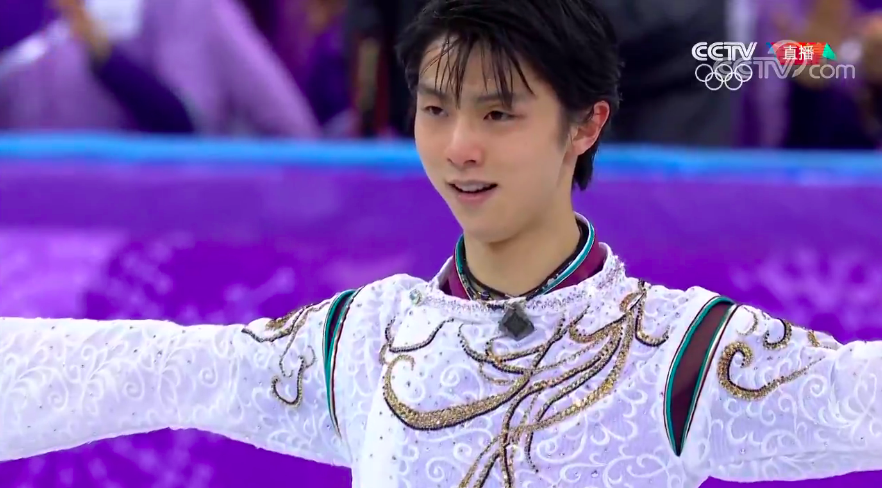
Japanese figure skater Yuzuru Hanyu’s consummate run in the men’s figure skating competition earned him a second consecutive Olympic gold, and legendary status as the second person to accomplish this after Dick Button. Some are calling him the greatest figure skater of all time. But he’s also famous for his love of Winnie the Pooh, leading his entourage of fans to rain down stuffed Pooh bears after his performances. It’s quite a phenomenon to behold at the Olympics, much like Yuzuru Hanyu himself.

What are your favorite Olympic moments?

“You Must Be Russian” – On Mistaken Identity in China and America

“She must be Russian…even her hat is Russian.” 😉

“Are you Russian?” someone asked me the other day here in Hangzhou.

It felt like a total a palm-in-face moment. After all, hadn’t he read my CV, which explicitly stated I was an American, in bold letters?

But the truth is, I had heard this same question – which more often came out as a statement (“She’s Russian”) – hundreds of times here in China. I can’t tell you the many times I’ve been standing on a metro or riding the bus, and all of a sudden I catch someone whispering in Chinese that I’m Russian, never knowing that I understood their every single word.

The thing is, I do understand where this comes from. Because I’ve heard many other white foreign women married to Chinese men share similar stories of being called citizens of China’s Northerly neighbor. Given Russia’s promixity, it’s not surprising.

But yet…sometimes the conclusion isn’t flattering either. Not when some people think we’re Russian prostitutes.

Sadly, I’ve heard stories from white women in China who were stalked and even nearly raped because someone assumed they were “for hire”. My Chinese husband, who has seen how some men look at me (and not always in a good way), makes it his duty to “protect my butt” from wandering eyes.

But here’s the fascinating thing in my case – Americans have also mistaken me for being Russian. Yes, Americans.

In fact, when I was at university, I was stopped on two occasions and explicitly asked if I wasn’t from Russia.

I had to confess feeling a little strange. What was it about me that prompted them to think this? Then again, this is America, a country where news giant CNN actually ran a map showing Hong Kong as part of South America.

Come to think of it, now that’s a true palm-in-face moment.

Do you have any stories of mistaken identity?

7 Things That Make Living in China Better Than America

Why would you want to go to China?

An American actually asked me this very question years ago when I confessed my plans to move back to the Middle Kingdom. It didn’t matter how many good reasons I gave her – she stared at me with incredulity, as if I had just proposed rocketing straight to Mars and not a country on this very planet.

Of course, she’s not the only one guilty of being down on China. “Bad China Days” are a phenomenon for every expat who lives here, even me. In the worst moments, it can be easy to forget why we’re here or even why we love this place so much, warts and all.

But the truth is, there are actually some pretty incredible things about living in China. Things that, on balance, are better than America. Here are 7 of my favorites:

#1: Doing your entire grocery shopping online, with fast home delivery and no shipping charges

When I was back in America last year, I happened to tell my uncle about how I was doing my grocery shopping in China online, courtesy of Taobao’s Tmall online supermarket. “They deliver straight to your door the next day. You can order almost anything from them – even fresh fruits and vegetables.”

He was astonished, as if I was speaking of some magical Shangri-La of online shopping.

No, I didn’t need to be a VIP. And no, I hadn’t joined their paid premium club. All I had to do was order at least 88 RMB (~$13) worth of groceries for free one-day shipping.

Not even Amazon Prime or Walmart (which both offer two-day shipping in the US) can beat that.

And did I mention the delivery guys for Taobao’s Tmall always place the boxes inside our apartment (never leaving them tossed outside the door) and offer to take the garbage out too, for no extra charge?

#2: You don’t need to own a car to conveniently get around

As much as I love the freedom to drive around, sometimes you’d like to leave the driving to someone else.

But in America, outside the biggest cities, you don’t have a lot of options. Want to get around town without a car? Good luck catching the public bus with its limited hours and stops. Want to travel to another city or across the country? If you’re not flying, the only options are those grimy Greyhound buses (which make lots of stops at often dodgy stations) or Amtrak trains (which, apart from the East Coast, are really inconvenient and slow).

In China, you always have plenty of public transport options everywhere you go – even smaller cities. Public buses are frequent and convenient, and so are long distance buses too. High-speed trains can zoom you across most of China and they always leave on time (unlike flights). Bicycles you can rent with your smartphone have popped up all over major cities in China too (including Hangzhou), as well as docked bicycles you can rent out with your bus pass.

It’s gotten to the point that, when I want to visit Hangzhou’s legendary West Lake, it’s usually easier (and more fun) to bicycle or just take the bus.

#3: Authentic Chinese food

I know this is so obvious you must be wondering, why would she even bother pointing it out? Simple – if you are an aficionado of Chinese cuisine, as I am, you feel a sense of deprivation whenever you’re away from authentic food for too long.

When my husband and I used to live in America, I can’t tell you how many times we would reminisce about all of our favorite Chinese dishes that we just couldn’t find in America. Like that secret-recipe smoked tofu from Jun’s hometown, or the slender Asian eggplant deliciously stir-fried with green peppers, or even Jun’s mother’s homemade fried flatbread (it’s like Chinese pizza…mmmmm). You can’t walk up to your American “Panda Express” and find this kind of stuff among the deep fried “General Tso’s Chicken” (a dish that doesn’t even exist in China) and fortune cookies.

Even when we attempt to recreate authentic dishes from China, it never tastes the same. In America, we don’t have the fragrant rapeseed oil that my Chinese mother-in-law harvests and cold-presses herself. The soy sauce is different, too. And good luck trying to find those local ingredients like fresh bamboo shoots, winter melon, and red bean paste. (Even when we do find them, they’re often not fresh enough to justify the purchase.)

So if you’re as addicted to authentic Chinese food as I am, why live anywhere else but the country that does it best?

#4: More authentic food from other Asian countries

Whenever I visit my family back in the US, you can guarantee we’ll be going out for Thai food at least once. There’s a wonderful little spot right up the street from my parents’ home, where a dinner of pad thai and fragrant green curries makes for one delicious meal.

But as much as I love the food, I have to say it – it’s not that authentic.

I should I know. My husband and I visited Thailand years ago, where the succulent red, green, yellow and Massaman curries we had were as much of an attraction as the temples, ancient ruins, and azure blue shores. The food in Thailand is so incredible you could tell people you were traveling there just for the dining experience and they would believe it.

While I can’t travel to Thailand every time a curry craving strikes, living in China means I have the next best thing – authentic Thai restaurants. Here in Hangzhou, there’s nothing better than an evening at Sawasdee in the five-star Wyndham Hotel. You can enjoy an elegant and surprisingly affordable night out of delectable Thai curries, transporting you right back to Bangkok and the beaches.

#5: You can pay by mobile phone almost anywhere

In the US, a mobile wallet is still a dream for most consumers. And every time I’m back in America, I still have to lug around my credit cards.

But here in China, we pay almost exclusively by phone almost everywhere we go – from shopping at Wal-Mart to buying clothes at our favorite clothing retailers to going to out to eat to even getting our hair cut. It’s so ubiquitous that my husband once ran into a street peddler selling rice cakes who could offer pay by mobile phone.

I love the freedom and convenience – just grab your mobile phone and shop!

By bjornfalkevik – Own work, CC BY-SA 4.0, https://commons.wikimedia.org/w/index.php?curid=50948551

#6: It’s easy to get everyday things repaired and improved

In the community where we live, there’s a guy who goes around singing out his knife-sharpening services. For the equivalent of a few US dollars this guy can magically transform your lackluster kitchen knives, making them slice and dice like new.

There’s also a guy who sits around the gate offering to repair umbrellas, and someone else out there who repairs bicycles. Around the fresh market, there’s even someone who repairs your shoes.

In America, it’s tough to find someone who offers these simple – but very useful – repair and improvement services. If you want sharper knives, you probably have to buy a grinding tool (which, trust me, won’t do nearly the job this guy did with our knives). There’s no such thing as umbrella repair over there. And if you want someone to fix your bicycle or your shoes, you’ll have to venture out to a professional store for that (assuming such a store even exists in your town).

Besides, even if America had them, I doubt you’d ever hear someone advertising with such a beautiful song as the professional knife-sharpening guy. (Here’s an example of the melody our guy sings when he canvasses the community.)

When I was in the hospital last year, they offered me some traditional Chinese medical treatments.

#7: Traditional Chinese medicine is always available and can be affordable

In America, traditional Chinese medicine providers are out there. But good luck finding a convenient one – or even someone affordable who accepts your insurance.

Not here in China, where you’ll find traditional Chinese medicine options at the average hospital or even your local pharmacy. I’ve often found them to be reasonably priced, by and large. And if you have insurance, traditional Chinese medicine is usually covered by the plan. How great is that?

What do you like better about living in China?

“I Don’t Lend Out My Car or Wife” Is a Real Bumper Sticker in China – Pub’d on WWAM Bam

WWAM Bam just published my piece titled “I Don’t Lend Out My Car or Wife” Is a Real Bumper Sticker in China. Here’s an excerpt:

My husband always says that what’s popular in America will find its way to China, somehow. I see it all around me whenever we venture out. There’s a Wal-Mart across the street from us, a Starbucks Coffee at the closest mall, and lots of American car brands weaving through traffic. And when we’re at home, perusing the Chinese versions of Netflix, there’s a seemingly endless supply of Hollywood movies and TV shows.

So it was only a matter of time before rude bumper stickers made inroads into China.

Americans love their rude bumper stickers, and there are tons of them. Most say something rude about the driver behind them. Some insult groups of people according to ethnicity, gender, politics or sexual orientation. I’m convinced America gave birth to the idea of putting totally inappropriate phrases on your car’s bumper. And given that America elected Donald Trump as President, a man who spews rude comments every time he takes to Twitter, it’s not hard to believe this. So I expect this kind of rudeness displayed on someone’s bumper in America.

Wouldn’t you know it, rude bumper stickers are now making headways in China.

Head on over to WWAM Bam to read the full post. And if you love it, share it!


Guest Post: Gaining a “Chinese Family” While Teaching English in China

Sometimes the family you discover in China isn’t the family you married into. It’s the family you create through meaningful connections. That’s the story Josh and Liz of Career China have to share in this guest post.

Do you have a story about your Chinese family or other guest post you’d like to share on Speaking of China? Visit the submit a post page to learn how to have your words featured here.
—–

Swirling my chopsticks around in the giant pot of boiling oil and spices, I make a feeble attempt to snag a piece of thinly sliced beef floating about. Finally I catch one, but that’s the easy part. Now I must have confidence in my shaky chopstick skills to get it out of the pot and into my bowl of sauce, then into my mouth without dropping it on the table…or my shirt. After my success in this seemingly minor act, my husband and our Chinese hosts, CJ and Gigi, cheer and hold up their glasses of wine for a toast. “To good friends from around the world, China and the USA!” our new friend CJ proclaims. But for us, the relationship is more than just friends, it feels more like we have a Chinese family.

How Did We End Up In China?

My husband and I arrived in Guangzhou, China back in 2014. The previous year we had decided that we weren’t satisfied with our old lives in the United States, even though we had good jobs and a comfortable middle-class lifestyle. The two of us always had a passion for exploring the world, not just traveling and seeing the sights, but interacting with the local people and learning about the culture.

We realized that we weren’t fulfilling this passion with only a few weeks of vacation each year, so we made a plan to save up some money and then sell everything to hit the road for a while. Setting off in August 2014, we spent time in South East Asia as well as New Zealand before ending up back in Thailand for TEFL training (teaching English as a foreign language). Our plan was to be able to stay longer in a country by working as English teachers, that way we could really experience the culture more closely and for a longer period of time.

Shortly after finishing our month-long program, we began searching for teaching opportunities. Knowing that China has such a massive market for English learning, and such an interesting ancient culture, we set our sights on finding a job in China. And we were surprised how quickly it all happened — within a matter of weeks, we were flying to China!

Our “Chinese Family”

When we decided to move to China, we had absolutely no idea what to expect. And now as we look back on our time here, we can’t imagine not having our “Chinese family” in our lives. We were really fortunate to make good friends during our time in China, including Gigi and CJ, who are a Chinese couple that run an English school and have a little daughter. We also became great friends with another expat, Stephen, who is from England and had been living and working in China for many years; he has a Chinese wife, Wendy.

One of our fears about living in China was that we would feel isolated or lonely without close friends and family. But we’ve discovered that it has been the opposite. Our social calendars seem to always be full. And while we also had some other expat friends who were teaching in China also, we spent a significant part of our time with CJ, Gigi, Stephen and Wendy.

But it wasn’t only for fun. Our “Chinese Family” was there for us when we needed them. Whether it was helping to solve problems with our bank account, getting our internet upgraded in our apartment, or talking to the landlord to fix a wall. They would help translate and take us through the process. If we were sick, they brought us medicine and even food. And when I broke my foot, they were there to take me to the hospital for check-ups. They have been like family to us in just about every way!

Alike, But So Different…

Whenever we travel and meet people from around the world, it’s interesting to note the similarities and differences. In many ways, our “Chinese family” was just like us. Young couples who talked a lot about their futures and their dreams. They discussed their apartments and what they loved about them, and what they wished they could remodel. We all spoke fondly of our childhood and families, but also vented about frustrations with our parents.

But at the same time, we also came from very different backgrounds and had quite different family situations. With my husband and I both being from the States, we discovered just how fortunate we were to have fun-loving childhoods with minimal pressure. We also began to appreciate how we were able to choose on our own who we wanted to marry, without much input from our parents. But in Chinese culture, the parents are quite involved in match-making. And for our Chinese friends growing up, there was a lot more pressure on the children to do well in school and get good jobs.

Another area that we discovered a difference was in our desire to travel freely and not worry about having children. In fact, whenever people in China found out I was married, they would immediately ask about children. Not that they were intending to be rude, they were just curious how I could travel if I had kids. And when they found out I didn’t, they wanted to know why.

In China, children are expected almost immediately after marriage — and in the States, many people are happy to enjoy themselves with their new spouse for some time before they consider having kids. It’s also perfectly acceptable if people choose not to have children in the States, while that’s not really the case in China. If a couple is married for some time and don’t have kids, people will start to think something is wrong.

It was definitely eye-opening to chat with our Chinese friends about the subject of family structure and children. We could see that they wanted to make their parents happy, and that there were expectations of them when it came to having kids. While we didn’t feel like they were unhappy with these expectations, we could feel that there was maybe some pressure on them. Gigi and CJ were happy to have their daughter, but they were also planning to have a second child — and Gigi kept saying how she really was praying for a son, so she could make her husband happy. Personally, we know CJ would be happy with either a son or a daughter – he is a great father. But but deep down, we knew that there was a cultural aspect to this pressure to have a son too.

Oh the Memories!

Because of our “Chinese family” we were able to experience so many things that many other expats may not have been able to experience. For example, during Chinese holidays we felt like we got an inside scoop about the holiday from our friends, and were even be able to participate in special family activities. In fact, one of our best memories of our time China was during the Spring Festival holiday (Chinese New Year). We were invited over to Gigi & CJ’s apartment to cook homemade dumplings, which is an important tradition during the festival.

We made everything from scratch together, even mincing the meat with big cleavers! While the men chopped the meat with lighting speed, Gigi, Wendy and I were out on the large patio rolling the dough and chopping vegetables. Then we all handmade what seemed like hundreds of pork stuffed dumplings!

I discovered quickly that making dumplings is not as easy as it looks…in fact, mine were downright ugly! Our friends also told us how we needed to put little “surprises” in some of the dumplings for good luck, such as a big garlic clove or a pepper. Then if a person bites into it, they should have good luck in the next year!

It sounds like a fun little game, until later when you are eating them and somehow manage to be the only person not to find a “surprise” until you’ve eating about 15 dumplings and your stomach is about to explode! “Come on Lizzie,” Gigi told me “you have to eat another until you find one so you can have good luck next year!”

In addition to spending time with our friends over other holidays like the Dragon Boat Festival or Mid-Autumn festival, we also enjoyed having fun with them at sporting events. CJ was a huge football (soccer in the States) fan, and the local professional team, the Guangzhou Dragons, was actually one of the best in the country. So they purchased us tickets to go to a couple local games, where we all wore our jerseys and cheered loudly for the local team. We also enjoyed sporting our jerseys and playing football together in the park on pleasant evenings, or going to a local bar to watch the team play while having a few drinks.

Being a huge sports fan, my husband was really excited to have a local friend here in China who enjoyed sports just as much as him. And he was really excited to learn more about football and have a team to cheer for. Growing up in the US, he was more into American football, so he has definitely developed a new appreciation for the international football game that is so popular everywhere else in the world.

Bringing the World Together, With Open Hearts

We really couldn’t imagine our experience in China without our lovely local friends. From sharing their special holidays with us and letting us experience it with them, to making us feel at home, and even taking care of us when we needed them. It has been the ultimate cultural exchange, and something we never could have experienced if we didn’t take a risk to move to China to live for a while.

China has been great to us, and it’s not just our “Chinese family” — we’ve made so many other friends and met many other people who have touched our hearts. Never again will we see this country the same way. And that’s the point. To bring the world together by opening our hearts to each other and learning about one another.

Liz and her husband Josh have been living and traveling around Asia since 2014. Currently they split their time between the USA and China, working on their travel blog and assisting those who are interested in living and working in China through their project Career China.
—–

Speaking of China is always on the lookout for outstanding guest posts! If you have something you’d like us to feature, visit the submit a post page for details — and then submit yours today.