New Romantic Chinese TV Series to Sweeten Up Your Qixi Festival (Chinese Valentine’s Day) – Rec’d by China Daily

Qixi Festival, or Chinese Valentine’s Day, is coming up (this year August 7). If you’re a fan of TV series — and enjoy watching in Chinese — consider sweetening up the holiday with one of these new Chinese shows, as featured in the China Daily article Romantic dramas a sweet TV treat for Qixi:

In the past, realistic or tragic TV dramas dominated the Chinese TV market. But this year has seen a big shift as more viewers, especially young women, are turning to sweet romantic dramas with a happy ending.

All of these TV dramas have a similar format. The leading male and female characters are very outstanding in their studies and careers, and have rarely had romantic relationships before they meet. Usually, they fall in love with each other at first sight or after they clear up some misunderstandings. And the couple continues to show affection through the drama.

Anyone whose guilty TV pleasures happen to include romantic, lighthearted picks (such as movies from Netflix or Hallmark) should find something to love in the 10 recommended TV series in the article, which include Gank Your Heart (陪你到世界之巅), the TV series featured in the image above.

Those of you studying Mandarin might also give these TV series a try. After all, some of the best learning aids are those that make it fun! When I started out, I spent a lot of evenings engrossed in TV series about young people falling in love. My desire to understand everything on screen pushed me to learn more Chinese words and characters. (After all, how else will you know why they’re breaking up or who has a crush on who?) 😉

Head on over to China Daily to read Romantic dramas a sweet TV treat for Qixi. And then start watching!

Happy Qixi Festival (Chinese Valentine’s Day) to everyone!

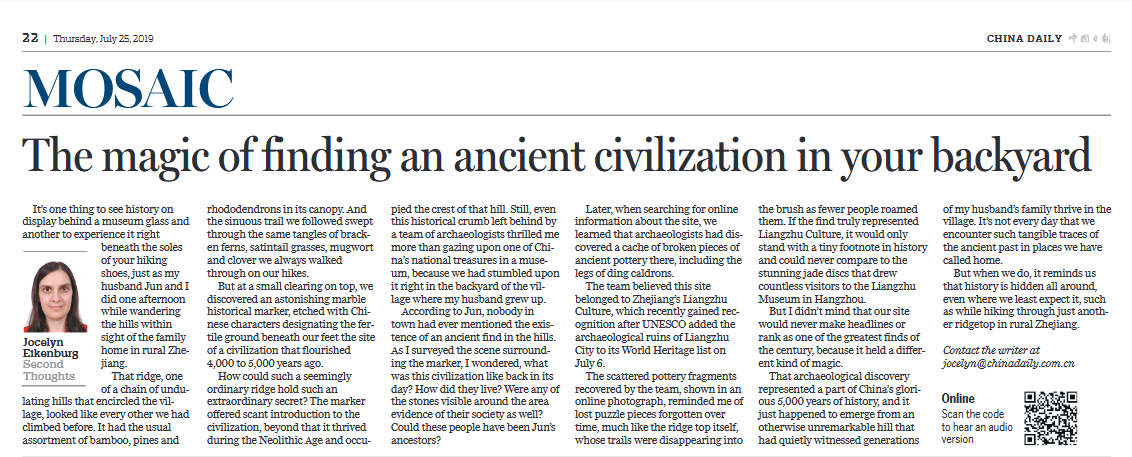
The Magic of Finding an Ancient Civilization in Your Backyard – Pub’d on China Daily

My latest column for China Daily was just published in the paper. It’s titled The magic of finding an ancient civilization in your backyard. Here’s an excerpt:

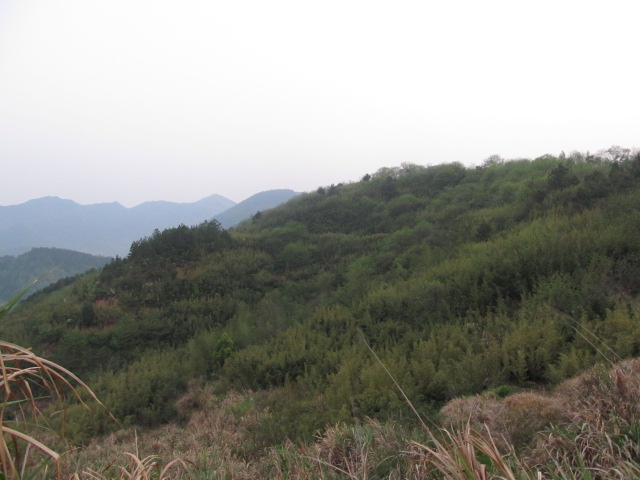
It’s one thing to see history on display behind a museum glass and another to experience it right beneath the soles of your hiking shoes, just as my husband Jun and I did one afternoon while wandering the hills within sight of the family home in rural Zhejiang.

That ridge, one of a chain of undulating hills that encircled the village, looked like every other we had climbed before. It had the usual assortment of bamboo, pines and rhododendrons in its canopy. And the sinuous trail we followed swept through the same tangles of bracken ferns, satintail grasses, mugwort and clover we always walked through on our hikes.

But at a small clearing on top, we discovered an astonishing marble historical marker, etched with Chinese characters designating the fertile ground beneath our feet the site of an ancient civilization that flourished 4,000 to 5,000 years ago.

How could such a seemingly ordinary ridge hold such an extraordinary secret? The marker offered scant introduction to the civilization, beyond that it thrived during the Neolithic Age and occupied the crest of that hill.

Still, even this historical crumb left behind by a team of archeologists thrilled me more than gazing upon one of China’s national treasures in a museum, because we had stumbled upon it right in the backyard of the village where my husband grew up.

You can read the full piece here and also hear a recording of me reading it. And if you love it, share it!

Two Rachel DeWoskin Interviews on ‘Someday We Will Fly’ – Pub’d in China Daily

The paper version of China Daily recently published my interview with Rachel DeWoskin about her new book “Someday We Will Fly“.

Here’s an excerpt from that piece, titled Creating hope in a wartime city:

A photo of three teenage Jewish boys on a table tennis team, wearing matching T-shirts with their school logo, are among some images of children at the Shanghai Jewish Refugees Museum that American author Rachel DeWoskin saw one summer, inspiring her new historical novel set in the 1940s in Shanghai’s Hongkou Jewish settlement.

“There was so much evidence of how devoted these kids’ community was to creating a sense of normalcy, giving the children a childhood, even though the context of an occupied city at war was excruciating,” says DeWoskin.

“Many of the refugees had no idea where their family members were or whether they were OK. Many had fled Nazi-occupied Europe and landed in Shanghai, destitute and disoriented. Yet they created schools for their kids, ran camps, music lessons and table tennis teams. And shirts. I found those small insignia so moving, and the combination the photos evoked-of danger and resilience to be worthy of literary exploration.”

DeWoskin imagines this world through her character Lillia, a 15-year-old aerial acrobat from a circus family in Poland who flees in 1939 with her father and 1-year-old sister to Shanghai, where they struggle to survive as she wonders if her mother is still alive.

“Lillia is suddenly on her own for the first time in her life, and in a certain sense responsible for her sister, which is intense and complicated, especially given that she’s in an unfamiliar city. But she finds her way, as kids so often do-with grit, grace and practical application of her skills, with warmth and by way of friendship. She figures out how to keep her hope alive even though she’s also full of dread.”

The title Someday We Will Fly, which echoes Lillia’s circus performances, emerged in response to what DeWoskin says is Lillia’s “desperate desire to have a view of her own life that offers some possible future escape from the constraints of war. She wants, as I think we all do, to transcend her circumstances”.

You can read the full piece here.

But that’s not all — China Daily website also published another interview on Rachel DeWoskin’s book: ‘Someday We Will Fly’: Novel spotlights Shanghai Jewish settlement. Here’s an excerpt:

The dedication at the beginning of American author Rachel DeWoskin’s new historical novel, Someday We Will Fly, includes the following: “And for Shanghai, a haven for so many refugees in the 1930s and ’40s”.

She honors the city – and in particular, its Hongkou Jewish settlement that offered wartime refuge to some 20,000 Jews – through her fictional story of a 15-year-old girl named Lillia, an aerial acrobat who flees to Shanghai from Poland with her circus family in 1939.

DeWoskin recently appeared in China to promote her novel. She was in Beijing at The Bookworm on June 6, as well as in Shanghai at M on the Bund on June 8 and through an Historic Shanghai tour on June 9. But to write Someday We Will Fly, she spent seven summers in Shanghai, immersed in the Hongkou Jewish neighborhood, whose landmarks helped give rise to and shape the narrative.

Read the full piece here online.

And if you like these two articles, share them!

China’s Great Gastronomy Book Inspires Chef – Pub’d on China Daily

China Daily just published my column for the month titled China’s great gastronomy book inspires chef, which was actually inspired by my trip to Hangzhou in April for a video shoot. Here’s an excerpt from the piece:

In a banquet room with a view of the historic West Lake in Hangzhou, a chef revealed to me a source of inspiration as legendary as the scenery just beyond the windows: the celebrated poet and gourmet Yuan Mei who wrote Suiyuan Shidan (Recipes from the Garden of Contentment), the seminal manual of Chinese gastronomy published in 1792.

Suiyuan Shidan, which I had only discovered months before after reading the first English translation of the book, has long been hailed as the first great guide to Chinese cuisine. No other work before it had ever gathered together such a comprehensive selection of recipes and information on Chinese cookery, all filtered through the discerning eye and palate of Yuan Mei, a man born in Hangzhou whose exceptional standards for food and dining earned him distinction as one of the finest gastronomes in Chinese history.

This has made the work invaluable to many chefs, despite the fact that the vast majority of the recipes are more rough sketches or descriptions of dishes that novices might struggle to replicate. After all, Yuan Mei, a member of the literati class, had probably never entered the kitchen, instead dispatching his cooks to learn the recipes that he later recorded. So as experts in the art of preparing food, chefs can glean more insight from this esteemed culinary Bible, turning to its pages to refine their talents as well as their offerings on the table.

Chef Fang at the Hangzhou Restaurant, an eatery that has served up authentic Hangzhou-style food since 1921, stands as one such example.

You can read the full column here, where you can also hear me read a recording of it. And if you like it, share it!

P.S.: If you would like to learn more about the first English translation of this book, see my post ‘Recipes From the Garden of Contentment’ (随园食单): 1st English Translation of Seminal Guide to Chinese Gastronomy.

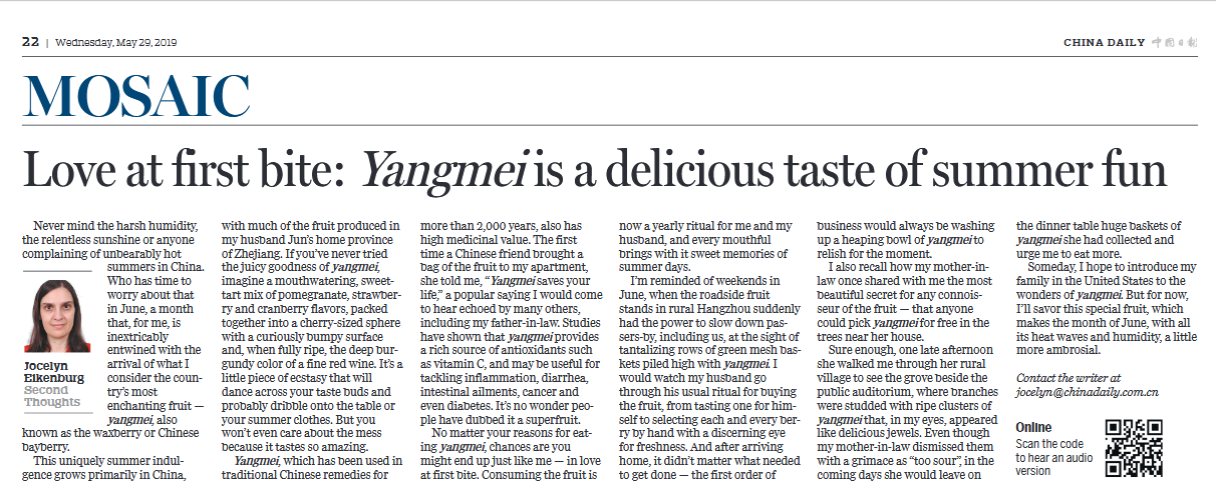
Love at First Bite: Yangmei Is a Delicious Taste of Summer Fun – Pub’d on China Daily

China Daily just recently published my latest column, Love at first bite: Yangmei is a delicious taste of summer fun. Here’s an excerpt:

Never mind the harsh humidity, the relentless sunshine or anyone complaining of unbearably hot summers in China. Who has time to worry about that in June, a month that, for me, is inextricably entwined with the arrival of what I consider the country’s most enchanting fruit-yangmei, also known as the waxberry or Chinese bayberry.

This uniquely summer indulgence grows primarily in China, with much of the fruit produced in my husband Jun’s home province of Zhejiang. If you’ve never tried the juicy goodness of yangmei, imagine a mouthwatering, sweet-tart mix of pomegranate, strawberry and cranberry flavors, packed together into a cherry-sized sphere with a curiously bumpy surface and, when fully ripe, the deep burgundy color of a fine red wine. It’s a little piece of ecstasy that will dance across your taste buds and probably dribble onto the table or your summer clothes. But you won’t even care about the mess because it tastes so amazing.

Yangmei, which has been used in traditional Chinese remedies for more than 2,000 years, also has high medicinal value. The first time a Chinese friend brought a bag of the fruit to my apartment, she told me, “Yangmei saves your life,” a popular saying I would come to hear echoed by many others, including my father-in-law. Studies have shown that yangmei provides a rich source of antioxidants such as vitamin C, and may be useful for tackling inflammation, diarrhea, intestinal ailments, cancer and even diabetes. It’s no wonder people have dubbed it a superfruit.

No matter your reasons for eating yangmei, chances are you might end up just like me-in love at first bite. Consuming the fruit is now a yearly ritual for me and my husband, and every mouthful brings with it sweet memories of summer days.

You can read the full column here. And if you like it, share it!

Every Grain of Rice Reflects Virtue of Hard Labor Along Life’s Path – Pub’d on China Daily

Earlier this week, China Daily published my latest column, Every grain of rice reflects virtue of hard labor along life’s path. Here’s an excerpt:

One evening in May, while spending a summer break at my in-laws’ home in their village in Zhejiang province, I returned from a walk to discover a dusty brown water ox tied to a tree just outside the gate of the house.

It stood perfectly parallel to the road, much like a parked vehicle, apart from grazing on the grass at its hooves, and eyeing me with a stony gaze that suggested I best keep my distance.

The ox signaled to me, long before I entered the house, that we would be having dinner that evening with a distant relative long appointed as my husband’s godfather, a man I simply referred to as “uncle”.

A tiger in the Chinese zodiac, this uncle had often joked of how much he embodied the sign, calling himself “fierce”.

You could believe it, given his thunderous voice, which even the ox minded, his ability to move beehives and the fact that he made a living slaughtering livestock. Some dubbed him the finest butcher in town.

Upon settling onto my stool at the table, I soon learned why the uncle had brought along his bovine companion. He had spent the afternoon leading the ox, pulling a plow, through my in-laws’ square plot of land in the terraced fields, to prepare for growing rice.

This uncle never shied away from grueling tasks, such as working the rice fields, and his face bore witness to this “fierce” side of him, weathered and tanned from years of labor outdoors in all sorts of conditions.

Watching him and the ox trundle through the sunny fields, as I did later on, proved fascinating.

Enjoy the full piece here — and if you like it, share it!

Photo Essay: Hangzhou Video Shoot – From West Lake to Wondrous Food

I just returned from my trip to Hangzhou to shoot video footage for China Daily Website as well as the Asian Cuisine Festival set to take place in the city from May 15 to 22. While we followed a very demanding schedule that meant being out of our hotel around 12 hours a day for shoots, the experience was unforgettable and worth the effort.

As I’m still catching up on pretty much everything (please bear with me!), in lieu of a written post I thought I’d share some behind-the-scenes shots from the experience, giving you a look at where we went as well as what things looked like before the cameras.

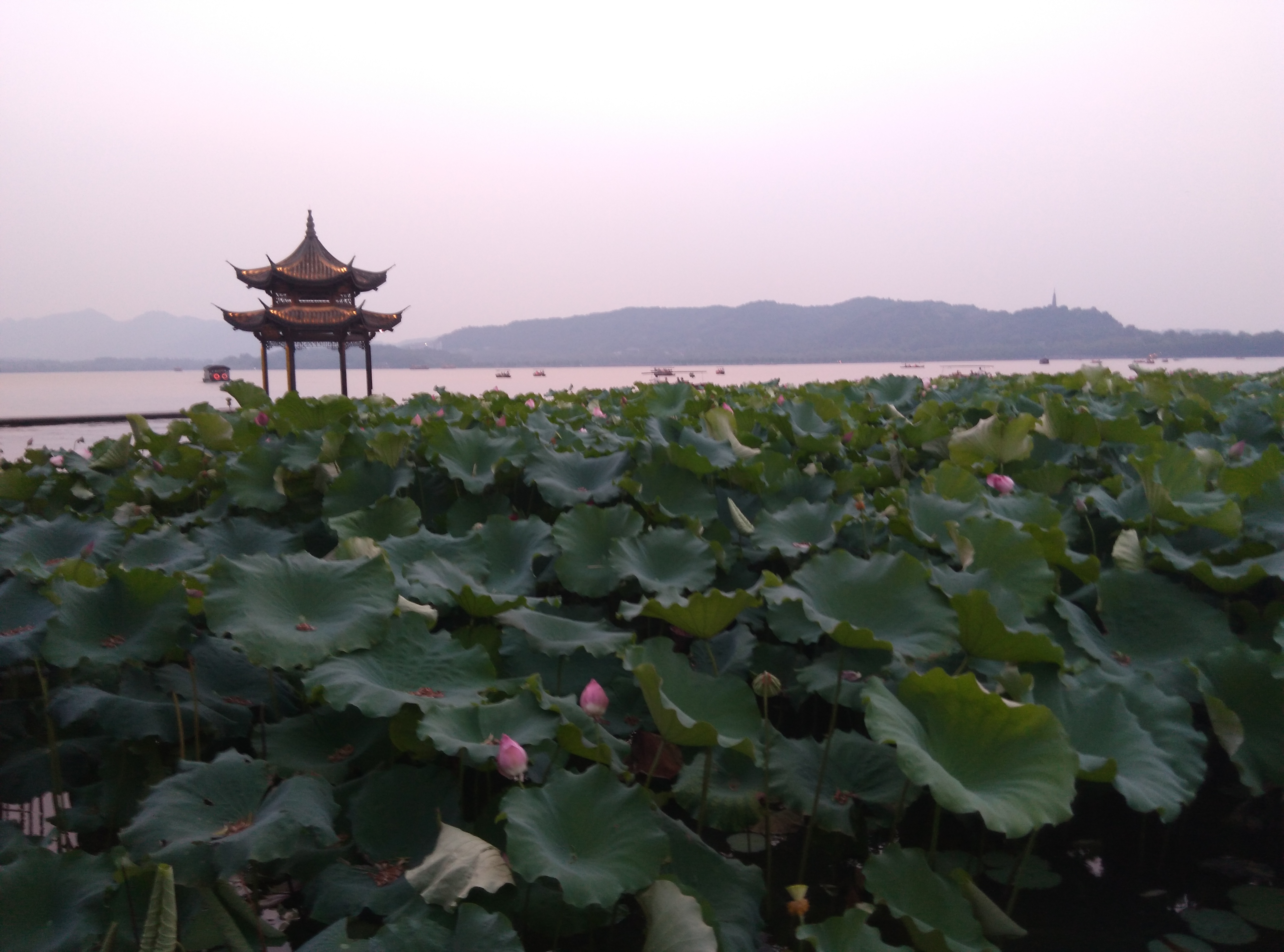
On our first day, we arrived in the afternoon at Hangzhou and the headed to the West Lake, where the production team scoped out the area for shooting.

The following day, we went to Hangzhou’s legendary restaurant Lou Wai Lou on Baidi. Part of the shoot took us to the top floor, where I sat at an al fresco table with views of the West Lake. It probably ranks as the most breathtaking seating I’ve ever experienced in a restaurant — if only I could have enjoyed it with my husband!

And of course, as you can probably tell, most of the dishes aren’t even food that I could eat, as a vegan. We had to get really creative in the shooting process, so it appeared as if I was sampling everything. Am really grateful the production team was so accommodating on this.

But make no mistake, as beautiful as the setting looked, we had work to accomplish. And that kept me quite occupied!

But still had enough time to grab this selfie with one of the team members!

Still, we did manage to enjoy a delightful lunch at Lou Wai Lou — and our director gave the food a hearty thumbs-up.

In the afternoon, we went to Zhiweiguan, another time-honored restaurant in Hangzhou, to do a shoot. It was delightful to meet several of their chefs, including these very talented young women.

Zhiweiguan really impressed me with their snacks and desserts, including the dish at the very bottom of the photo — longjing wencha — where dough is fashioned to look like the leaves of Dragonwell tea, steamed, and then served in a clear broth with shrimp. If you didn’t pay close attention, you might think they were just cups of green tea!

On Thursday, we visited a food street and found ourselves in a restaurant overlooking a stream leading into the Grand Canal, which links Hangzhou and Beijing. It meant more food, and of course more shooting too.

Here’s another angle during a shot in the restaurant.

In the afternoon, we shot scenes by the West Lake in my favorite corner — Qu Yuan Feng He (曲院风荷) — as well as one critical shot on Su Causeway, with a view of Lou Wai Lou on Bai Causeway.

We returned that evening to the food street to revel in the evening atmosphere, perfect for the video, and dined at one of the restaurants on the strip. Yes, even during the meal we were working!

On Friday, we did shooting at Hangzhou Restaurant, which took us to its sixth floor, where we could dine beside stunning views of the West Lake while shooting video footage. Oh, how I wish I could have been there with my husband too!

On the sixth floor of Hangzhou Restaurant, the windows are like screens — and pulled back they reveal a glorious scene of the West Lake. (Sorry, it was a bit rainy and cloudy, but during clear weather it would certainly look enchanting.)

In the afternoon, we arrived at our last location — Charen Cun, nestled in the most prized tea fields in the city, where Lion’s Peak Dragonwell tea grows. This restaurant had the most dazzling traditional decor, hands down!

Immediately, the restaurant served up a hot cup of fine Dragonwell tea. As this is the one and only tea I drink to start my day, it was a welcome sight on the table.

Upstairs, I changed into my qipao to interview the restaurant owner about Dragonwell tea as well as the story behind his restaurant, Charen Cun. It was my favorite interview of all because of how much I adore Dragonwell tea.

Then the owner took me into the tea fields to show me how to pick Dragonwell tea. What a delight and honor! I wished I could have stayed much longer…too bad the weather turned cold, otherwise I could have kept my qipao on! 😉

That evening, we dined with the owner and it proved the finest meal of our trip, with a delicious sampling of dishes that emphasized freshness and rural, home-style flavor. Some even reminded me of my mother-in-law’s cooking.

Again, how I wish I could have shared this dinner with my husband, who would have really appreciated the food and company. The owner was very warm and hospitable, inviting us all to return again in the future.

But even the finest meals come to an end. I had a plane to catch later that evening, so we all headed home to the hotel, where I packed my things and then got a taxi to the airport.

I smiled upon finding my seat on the plane, knowing I would be reunited soon with my husband, with tales of my fascinating experiences in Hangzhou, the city that first brought us together so many years ago.

Overall, I gained some valuable experience and at the same time discovered another side to Hangzhou and its culinary heritage. I’m looking forward to seeing how the videos turn out — and once they go live, I’ll definitely share them with all of you!

Heading to Hangzhou to Shoot Videos for China Daily Website

I’ve lived in Hangzhou for years, and it’s the home region of my husband. So what a thrill to have the opportunity to return there to shoot videos about one of the greatest attractions of the city — its distinctive cuisine.

We’ll be in Hangzhou through the rest of the week, and possibly into the weekend.

And we aim to sample more than just the flavors at the table, with plans to visit the West Lake as well.

Because of the intense schedule for this trip, I’m taking a break from blogging this week. I’ll be back next week — and will let you know when the videos finally get published on China Daily.

Now a Featured Contributor for ‘China Views’ on China Daily Website

I’m thrilled to share that China Daily’s website ecently added me as one of the featured contributors in their “China Views” section on the Opinion page. (See my photo in the lower right-hand corner, which I’ve circled in red.)

You’ll now also find my regular columns right there on the website (as well as the paper and, often, its official WeChat account).

As always, thank you so much for reading and following my work!