Chapter 19: Only Mandarin-Speaking Foreigners Belong in China?

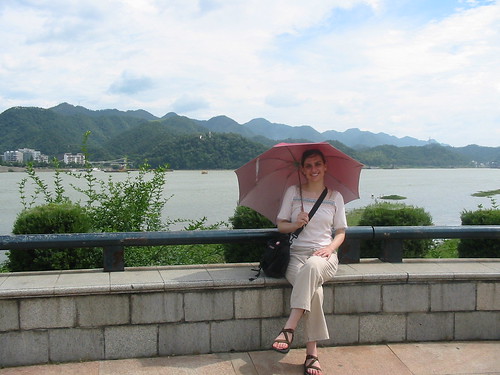
Western woman sitting with Chinese graduates.
Are Mandarin-speaking foreigners the only ones who can integrate into China? Or will foreigners always be foreigners no matter what (and stand apart from the crowd)?

Even in a city as large as Hangzhou — with over 6 million people — it’s hard to escape your past. My ex-Chinese boyfriend Frank still sat next to me at work in the Chinese Internet company. And far across the West Lake sat remnants of my ex-life in Hangzhou, when, in 2001, I endured four months in an international NGO struggling to be a technical writer.

I wanted to leave that place behind, because, like Frank, it left me with painful memories. A dictatorial Chinese director who blocked me from doing the writing I was hired to do. A European roommate who harassed and humiliated me, in an effort to drive me away from our coworkers. Poor facilities, from the broken washing machine to the dank, windowless basement kitchen filled with crickets. The only thing I could be proud of was that I managed to survive for four months.

So when Camille — a new European volunteer at the NGO — got in touch with me, it was like getting a call from an ex that I wasn’t even sure I wanted to talk to again. Continue reading “Chapter 19: Only Mandarin-Speaking Foreigners Belong in China?”

Chapter 18: The Parts of My Chinese Boyfriend Left Behind

Picture of Chinese boyfriend
Even though my Chinese boyfriend, John, was going to Shanghai for graduate school, what he left behind warmed my heart.

More than a month ago, John’s duffel bag mysteriously appeared in my apartment — as he moved in with me. Now that blue duffel bag had turned into a maroon wheeled suitcase we bought at the corner supermarket, and that suitcase would be leaving with John for Shanghai. There was no mystery in it — John was going into a master’s program in psychology at a university in Shanghai.

We had our official sending-off dinner at the formal dining room in Hangzhou’s Town God’s Temple, perched on a hill just above Wushan Square. As we walked up the winding trail to the restaurant, weaving in and out of the shadows of pine and oriental plane trees, I sang “Rainbow” by Yuquan, a song that had become ours ever since John gave me the CD with it on my birthday. Yuquan was John’s favorite Chinese rock group, and now I was using the music he romanced me with to romance him back.

But, even as I sang to John — in the music John loved best — he wore a salmon, Italian-style buttoned shirt and slacks, one of the many outfits I had bought after discovering that, in fact, John had only two decent T-shirts, a worn pair of jeans and polyester pants with frayed hems that fluttered in the wind.

So much of our recent lives had been lived together, and influenced in subtle ways by our shared presence. Continue reading “Chapter 18: The Parts of My Chinese Boyfriend Left Behind”

Chapter 17: A Dream Of Life Without My Chinese Boyfriend

Foreign woman sitting next to a pagoda by the West Lake in China
On an afternoon alone, as I read through "A Dream of Red Mansions," and lost power in my apartment, I wondered what would happen in my life without John, who was leaving Hangzhou for graduate school in Shanghai.

Sometimes love isn’t enough, as A Dream of Red Mansions — the classic Chinese novel of the demise of a powerful family during the Ming Dynasty — tells it. It’s not enough that Lin Daiyu and Jia Baoyu love each other — love is not theirs to choose, but chosen by their parents instead. And the weepy, sensitive, and critical Lin Daiyu just can’t win hearts like the well-behaved, more presentable Xue Baochai. Xue Baochai and Jia Baoyu are married, and Lin Daiyu dies not long afterward.

As I read A Dream of Red Mansions on the afternoon of September 14, 2002, I am reminded that life is not always ours to choose — that sometimes, things happen. Sometimes, things just die…like the power.

I was all by myself that rainy afternoon, while John went to spend the day saying goodbye to his close male friends from high school and college, his “brothers” — in just five days, he would go to Shanghai to start graduate school. I spent the afternoon with the love triangle in A Dream of Red Mansions — Lin Daiyu and Jia Baoyu and, yes, even Xue Baochai. But as I turned the pages, approaching Lin Daiyu’s inevitable demise, the power suddenly went out. Not long after that, so did Lin Daiyu, on the pages of my book.

With no John, no power, and no Lin Daiyu, my world — from the pages to the present — felt so dark and lonely. If John was saying goodbye to his “brothers,” I seemed to be saying hello to what it would be like without him by my side. I wonder if that alone could have sent Lin Daiyu — who was ill even as a baby — to the sickbed. Continue reading “Chapter 17: A Dream Of Life Without My Chinese Boyfriend”

Chapter 16: Foreign Girlfriend or Fascinating Moonlight Tale?

(photo from Stuart Williams’ Flickr)

In China, the Autumn is a time of separation, like the solitary confinement of Chang’e, the woman of the moon. Early Autumn is when we celebrate the Mid-Autumn festival, gazing at the moon and paying homage to Chang’e. Chang’e once had a loving husband, Houyi, who saved the earth by shooting down the nine other suns that were scorching its crust. It wasn’t enough for her to have a husband who was hers; she wanted more. She wanted his immortality pill, the one he received from the heavens themselves. After she stole the pill, the immortals banished her to the moon, forever apart from her dear Houyi.

On September 2, 2002, after we visited Daqi Mountain, John sent me back to Hangzhou on a bus, and returned to his village in the countryside for most of the week. His trip made me wonder — was I asking too much out of him, to have a foreign girlfriend? Continue reading “Chapter 16: Foreign Girlfriend or Fascinating Moonlight Tale?”

Ask the Yangxifu: Does Dating Past (And More) Matter to Chinese Men?

Anonymous asks:

im from europe, i really like a chinese man, and he seems to like me, but i dont know if he will if he gets to know me better. we met in china at work, get along well, both in mid-twenties. but i am not a virgin. ive had many boyfriends before too.

im afraid if he gets to know me, he will think badly of me. ive heard chinese men cant accept a girl who isnt virgin. i really need advice — please help! and please dont use my name/email! Continue reading “Ask the Yangxifu: Does Dating Past (And More) Matter to Chinese Men?”

Chapter 15: Climbing Back Into Love With John

John brought me to Tonglu, his hometown in the Chinese countryside, to climb Daqi Mountain. If only I knew I’d have to do more than just climb the mountain — I’d have to climb out of the mess I created this morning.
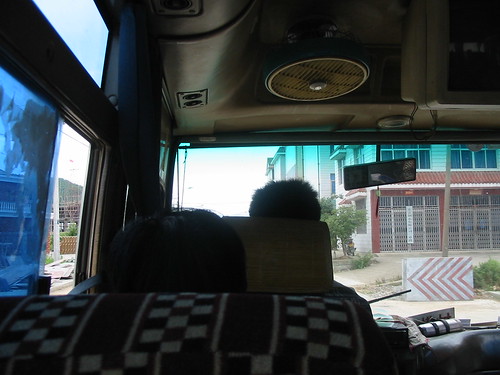
John didn’t see the best of me on that bus, complaining about the indirect, circuitous route, the precipitous driving, the secondhand smoke, the unpredictable pickups and drop-offs. It was only a couple of hours — why did I say anything at all? After my display of intolerance and impatience with China, did John wonder if the girl he fell in love with — the girl who opened herself to China, who wanted to understand — was still there?

As we sat down at one of Tonglu’s restaurants, dining on a feast of vegetarian delicacies for lunch, I laid myself out — with all of my flaws — like the dishes before us. “I’m so sorry about this morning. I don’t know what I was thinking. I may have been here in China for two years, but I don’t understand everything. I should have been more understanding.” I exposed myself for what I behaved like: a foreigner who only saw the shadows of China. But all I seemed to eat during lunch was shame, and the deep, persistent feeling that I was pushing John away. Continue reading “Chapter 15: Climbing Back Into Love With John”

Chapter 14: The China Road of Misunderstanding

I really want to be on the new highway leading to Tonglu, John’s hometown in the Chinese countryside. The smooth concrete is perfect, unblemished by potholes or cracks. Each side of the highway has a new guardrail, with newly transplanted trees beside it, propped up by four wooden supports and rope tied around the trunk. And on the highway, a bus cannot stop to pick up new passengers — it must go nonstop to its destination, so the passengers know when it will arrive. It is China’s future, right next to me.

I, however, am currently in the present on this Sunday in early September, 2002

The present is a rickety minibus on road etched with cracks and potholes — as the minibus hits them, the feeling becomes amplified through the floor and seats like a cacophonous sound in an auditorium. Everything on the bus, from the exterior to the furniture, is stained by a brown veneer, like the patina of a dirty teacup.

The bus rambles along this road next to the highway — stopping every now and then to pick up a passenger, or drop someone off — and with each passing moment, my patience rambles along towards anger. Continue reading “Chapter 14: The China Road of Misunderstanding”

Chapter 13: Different Eggplant, Different Cultural Expectations

(photo by JulkaG via Flickr)

John and I had barely been together for a month, and here we were, arguing about food.

I had offered to cook John, my Chinese boyfriend, dinner, and decided to make my famous “Italian-style eggplant,” an East-West fusion of the standard fish-fragrant eggplant recipe, with tomatoes added to give it that Italian feel. I’d made this dish hundreds of times, for many other Chinese friends. Everyone loved the recipe. Everyone, that is, except for John.

He’s going to love it, I thought, as I sat across from him, watching him choose a few morsels of eggplant with his chopsticks, and eating them with a small helping of rice. I couldn’t wait to hear what he had to say — until he said it. Continue reading “Chapter 13: Different Eggplant, Different Cultural Expectations”

Chapter 12: What is Buried Beneath Our Hearts, and Lakes, in China

Chinese poets once praised the Xin’an River in Zhejiang Province as a mirror, so clean and clear you could see the bottom. But the Xin’an River is no more. It was dammed in 1958 to create 1,000 Island Lake, where John takes me in August 2002 to visit the country of his ancestors.

His ancestors, and all of the beauty that inspired the poets, are buried beneath 1,000 Island Lake. But we are interested in one ancestor in particular — John’s grandfather, who died in 1948, the same year John’s father was born. This grandfather never saw Communist China or 1,000 Island Lake, only knowing the clarity, the lucidity that was Xin’an River. Maybe he is lucky for that.

“I once tried to find my grandfather’s grave,” John confessed. “I rowed all around this one area, the area where he supposedly was buried. But I never found it.” Today, we hope to find his grandfather’s grave, because John, like many Chinese, still believes in ancestor worship, in the importance of the connection to his past. We only hope it isn’t lost for good.

But we are lost on the lake. Continue reading “Chapter 12: What is Buried Beneath Our Hearts, and Lakes, in China”

Ask the Yangxifu: How to impress your Chinese boyfriend’s (or girlfriend’s) family during Chinese New Year

Kelley asks:

I started teaching English in China this past fall, and met a wonderful Chinese man. I never expected to have a Chinese boyfriend, or expected it so soon! But we’ve been dating since October, and are very much in love.

However, I am really starting to freak out because he asked me to spend Chinese New Year at his parents home. I am so concerned about meeting his parents. I know family is a really big deal in China, and it seems that if they don’t like me, my boyfriend and I don’t have a future. I really need to impress them! I’ve only started learning Mandarin, so I’m barely proficient, but I guess a little is better than none at all.

I’m definitely going to bring gifts (thanks so much for the great suggestions!).

But I was wondering what other advice you might have — specifically, what should I do to make the visit go smoothly? I really could use some help! Thanks!
—– Continue reading “Ask the Yangxifu: How to impress your Chinese boyfriend’s (or girlfriend’s) family during Chinese New Year”