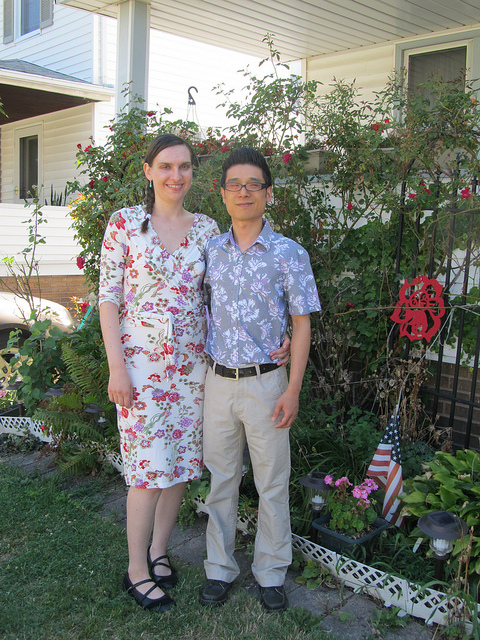
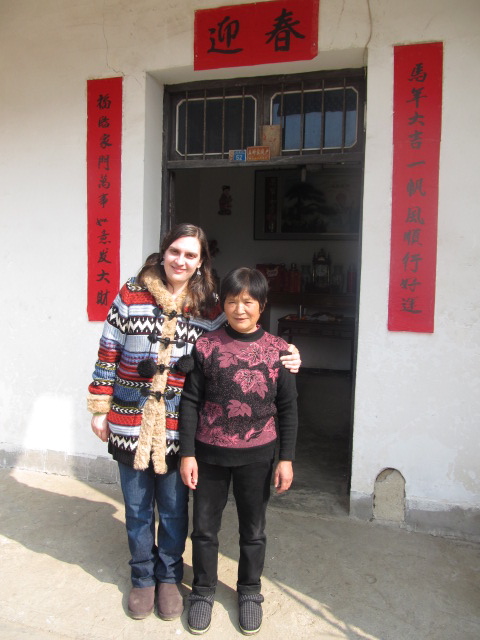
It’s one thing to see history on display behind a museum glass and another to experience it right beneath the soles of your hiking shoes.
My husband has always told me China is a magical place. And among the “magical” things about his native country is, naturally, its amazing 5,000 years of history. Over the years that I’ve been together with John — first as his girlfriend, then as his wife — I’ve heard him gush with pride about how China is one of the world’s oldest civilizations. And why wouldn’t he? If I came from a country with a continuous culture that stretched back thousands of years, I’d be proud of it too.
We’re both history and culture buffs, so naturally we’ve visited lots of museums on our travels across China, often in awe of the beauty and craftmanship of artifacts that are thousands of years old.
But I never believed we would ever find a piece of China’s history right in John’s humble little village in the countryside.
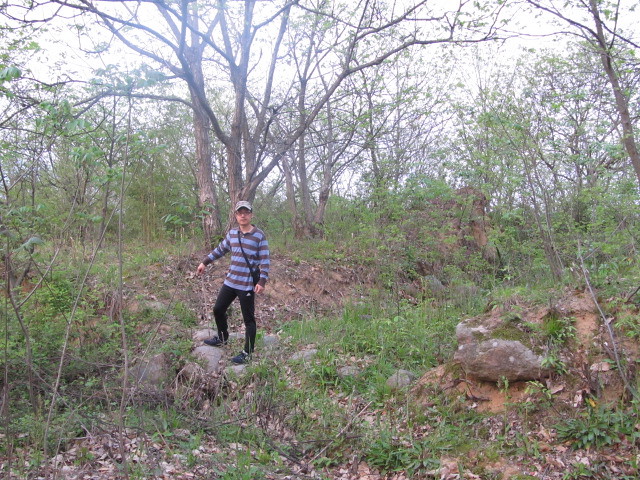
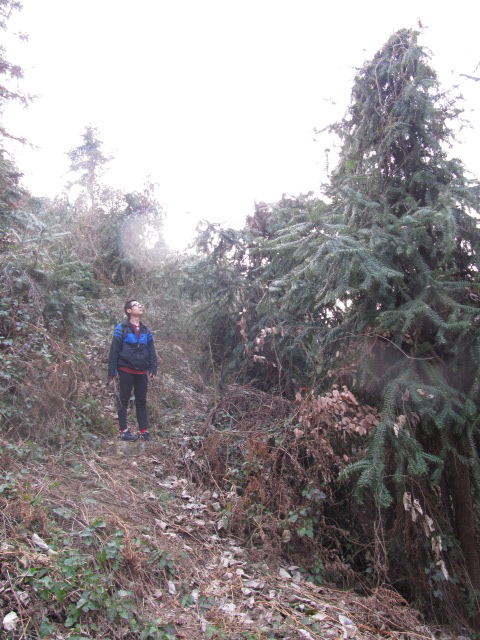
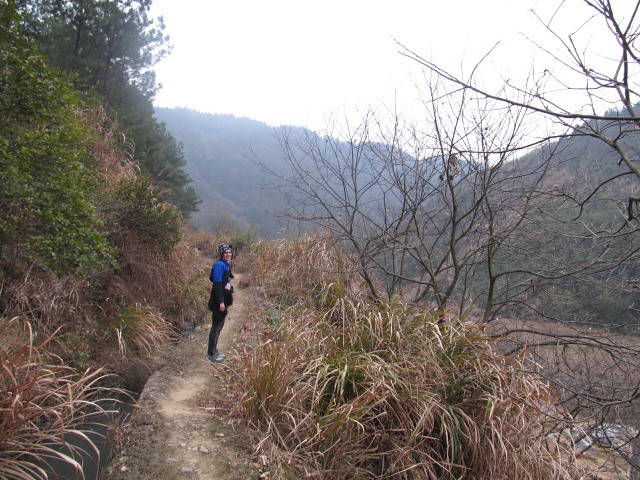
While exploring a ridge trail that cut across patches of bracken ferns, bamboo and satintail grasses on a hilltop, we suddenly came upon a clearing on the hilltop — and a historical marker carved into a slab of marble. That landmark designated the fertile ground beneath our feet the site of an ancient civilization that flourished 4,000 to 5,000 years ago.
That’s right. Four to five thousand years ago!
I couldn’t believe we found this on our hike! I surveyed the clearing around us, covered in mugwort, clover and other small weeds. Nothing about the geography could have told us we would stumble upon an ancient site on this ridgetop. And then I wondered, what was it like back then? How did these people live? Were any of the stones around the area evidence of their civilization as well?
Stones scattered around the site. Just coincidence or were they left behind by the ancient civilization?
But the other side of the marker provided no introduction or description for the culture, beyond that it was an ancient site dated to China’s Neolithic age.
I also wondered about what it meant for John and his past. Were these people among John’s ancestors? The idea thrilled me for a moment, even if we had no way to confirm it.
Later, when my husband looked up the site online, we learned that archaeologists had discovered a cache of broken pieces of ancient pottery at the site, including the legs of ding vessels, and suggested it was a part of Zhejiang’s Liangzhu culture.
When I saw an online photograph of the site’s scattered pottery fragments, each like a lost puzzle piece, I knew the find would only stand as footnote in China’s ancient history. Since the archaeologists already unearthed the major artifacts on the site, there wasn’t much to see there, apart from the landmark the government left behind. Meanwhile, friends and family in the village didn’t even know about it, and nothing about that hillside nor its trail even suggested that a fantastic find lay hidden beneath the trees and bushes.
Still, it felt magical all the same to know that a small part of China’s ancient history sat right in our backyard.
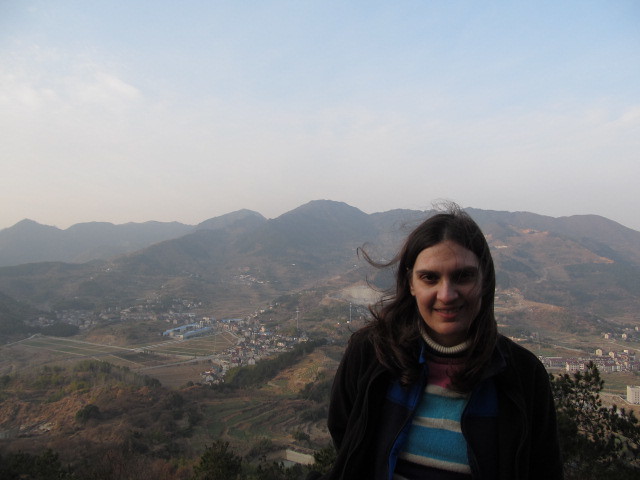
The hillside where we found the landmark. It looked so ordinary from afar!
Have you ever stumbled upon a historical or ancient site?
While checking my site analytics the other day, I noticed some incredibly weird questions that brought visitors to my site. Let me tell you, some of these search strings read like a bizarre Ask the Yangxifu question from an alternate universe. And that gave me an idea…
So, in the spirit of having a little fun with this column, I thought I’d share seven of these weird questions. Of course, they’ll never end up in a real Ask the Yangxifu column. But hey, they might just make you go “Hmmmm”, “Whoa!” or just give you a laugh before your weekend comes. 😉
P.S.: As always, if you have a real Ask the Yangxifu question, you’re welcome to send it on to me! I can even answer you off the blog and keep things confidential. See my Ask the Yangxifu page for details.
1.
There’s a potentially tragic personal story behind this search string, but given how the asker referred to her as “china gal” (which sounds a lot like a female version of that offensive term “chinaman”), I think I’d rather not know.
2.
Whoa. If you’re not sure about your marital status in China, you should not be asking a yangxifu about this. Try asking a divorce lawyer in China some questions. Like, now.
3.
Hmmm, I guess you missed that health class in middle school where they talked about, you know, sex.
4.
So, because a guy is Asian, he must have a certain favorite sex position, like all Asian men? Would you be asking about “what’s a white guy’s favorite sex position”? No? Exactly.
5.
Uh, I think you’re a little confused about ethnicity and race. And, for that matter, women, relationships and, you know, basic human morals.
6.
Because, of course, it must be so wildly different from all the other non-Asian guys you slept with. [insert sarcastic look]
7.
File this one under “search terms with a crazy story behind them I’m dying to know”.
Have you ever encountered weird search questions about love, dating or relationships in China or Asia? Share them in the comments!
As a child growing up in Cleveland, Ohio, USA, wild edible plants — especially those we foraged for ourselves — were never on the menu. Sure, we picked blackberries on late summer hikes and a few times I tried harvesting Staghorn sumac berries to make my own tea. But otherwise, the food on our dinner table came straight out of a supermarket.
So it’s hard to believe that, these days, wild edible plants comprise at least half or more of the stir-fried dishes that leave my mother-in-law’s kitchen here in China. Even stranger to me, I’ve actually helped forage for some of these wild edible plants. To think that something I harvested actually became dinner!
Here are three amazing wild edible plants here in Zhejiang, China that have enchanted me and my Chinese family this Spring.
Fiddlehead ferns
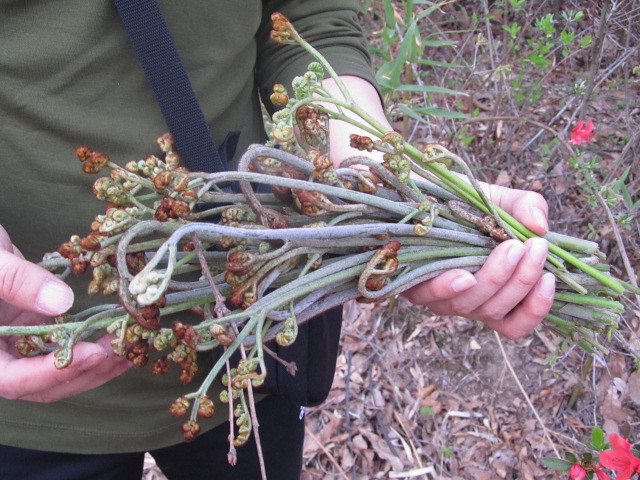
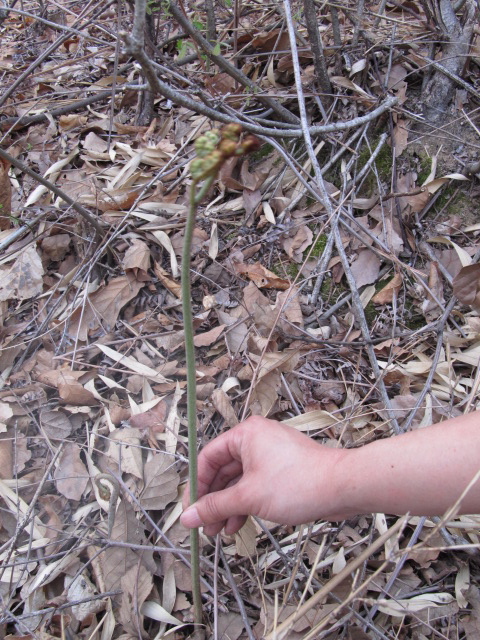
These tender fronds have become a Spring favorite in farmers markets in the US (and among foragers who know and love them). But out here in rural Zhejiang, people have gathered fiddlehead ferns in the mountains for generations. The local variety is the bracken fern and the tender shoots spring up over the mountains in our village.
Some claim bracken fern is carcinogenic, though there’s really no absolute evidence proving that the consumption of bracken fern fiddleheads will definitely give you cancer. When I posed this “do bracken fern fiddleheads cause cancer?” question to my mother-in-law, she dismissed it as unscientific and ridiculous. “People here have been eating this for generations, even grandma, and they’re not getting cancer.” Well, even if you disagree, remember that some popular foods (red meat and hot dogs, anyone?) are considered carcinogenic. Personally, I think I’ll take the risk.
We only pick the most tender fiddleheads growing in the mountains, with the fronds still curled up. These days, it’s not uncommon for my husband and me to return from a hike through the hills with a huge handful of fresh fiddleheads. I never thought a simple hike could yield so many delicious things! 😉
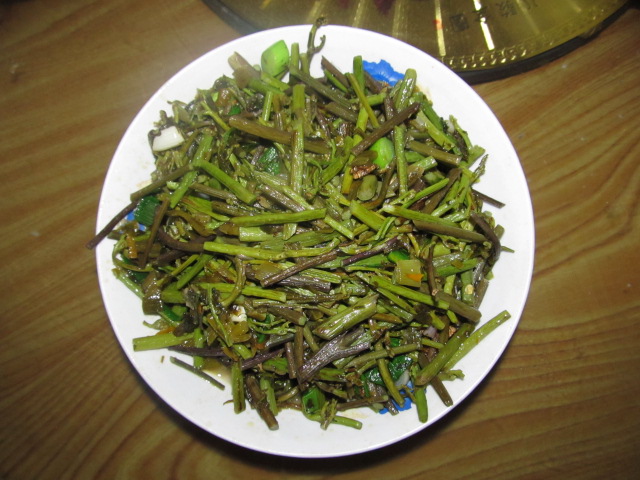
My mother-in-law washes them thoroughly in her kitchen and then blanches them. Some claim the process reduces the carcinogens in the fern, though my mother-in-law says this simply eliminates the unpleasant sour, “numbing” flavor of the fiddleheads. Finally, she chops them into matchstick-sized pieces and stir-fries them with fragrant garlic, ginger, pickled hot peppers, Shaoxing wine, and salt.
So tasty, you’ll forget all about the alleged cancer claims. Promise!
Spring bamboo shoots
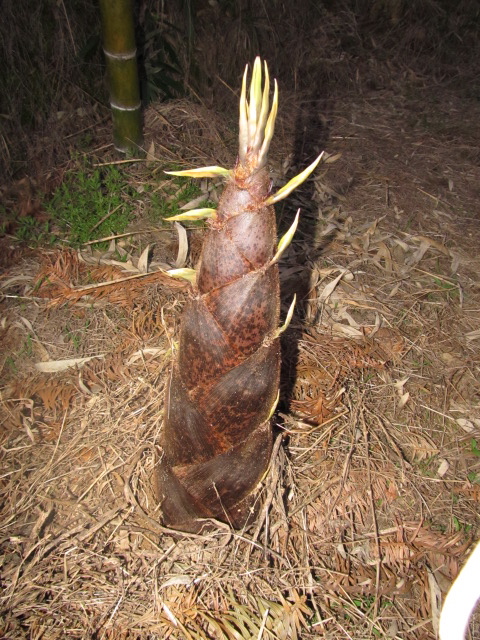
Spring maosun found in the wild
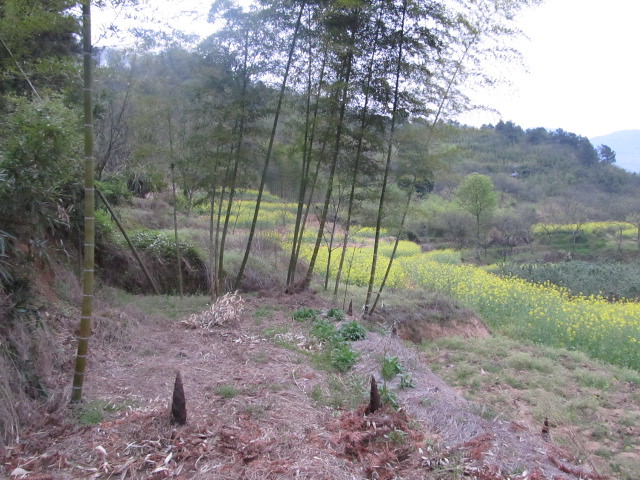
The Chinese saying “like spring bamboo shoots after rain” (yǔhòuchūnsǔn, 雨后春笋) refers to how quickly things can suddenly happen or come up. And trust me, after the rains in late February and March settled over our region of Zhejiang, before I knew it spring bamboo shoots were sprouting all over the hills.
Notice the bamboo shoots sprouting up from the ground?
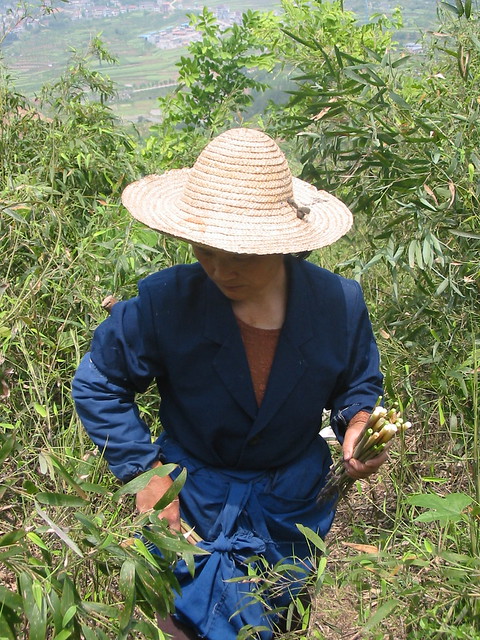
Right now, we’re seeing two varieties in the mountains. One is moso bamboo shoots or maosun (máosǔn, 毛笋); this is the largest variety of bamboo you usually see in the area. If you’ve ever watched any Chinese films that feature bamboo forests, chances are they’re moso bamboo. The other, well, I have no idea what it’s called in English — but it’s small and grows wild all across the mountains, so in the local language they call it “mountain bamboo shoots” or shansun (shānsǔn, 山笋). To harvest either variety, you simply dig up the shoots from the ground.
My mother-in-law, harvesting shansun from the mountains.
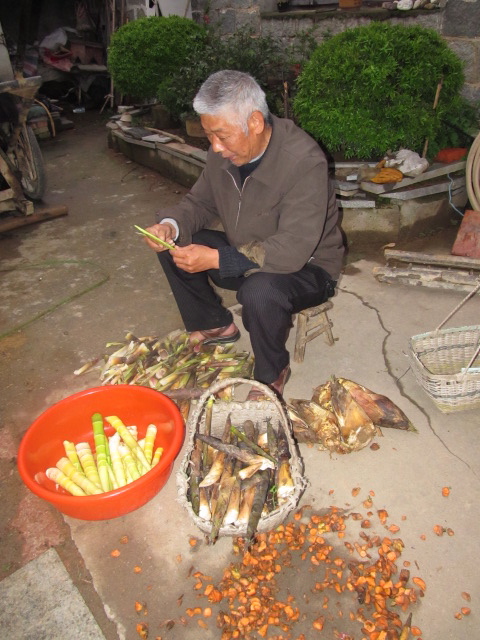
Whether maosun or shansun, you must first peel away the hard husk of the bamboo shoots to reveal the tender and edible portion.
Peeling the bamboo shoots to reveal the tender and edible part of the shoots.
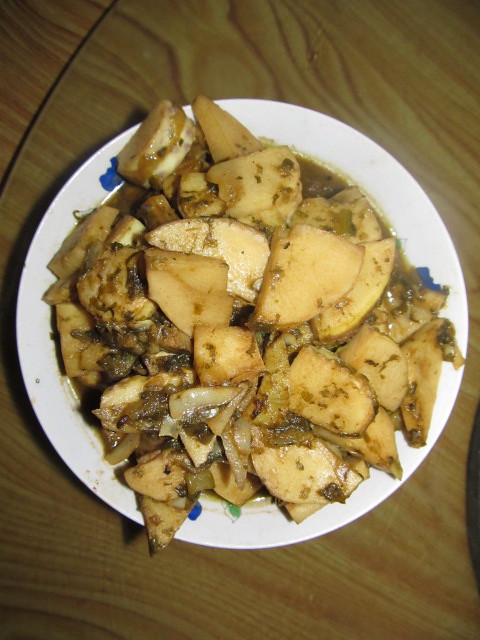
These days, when it comes to wild bamboo, we’ve mainly seen wild maosun at the table. My mother-in-law usually prepares it one of two ways. For the vegetarians in the family (i.e., me!), she stir-fries it with lots of rapeseed oil, ginger, sugar, Shaoxing wine, soy sauce, pickled greens, and salt to taste.
Maosun with pickled greens
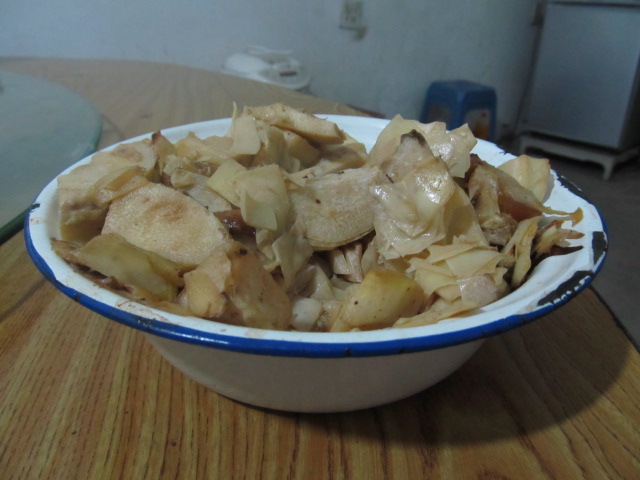
For the carnivores, she stews the maosun along with fatty pork, ginger, sugar, Shaoxing wine and salt to taste.
Maosun with pork
If you’ve only known bamboo through the lackluster canned versions sold in the West, all you need is one taste some wild bamboo shoots and I promise, you’ll never buy another can again!
Mugwort (Qingmingcao)
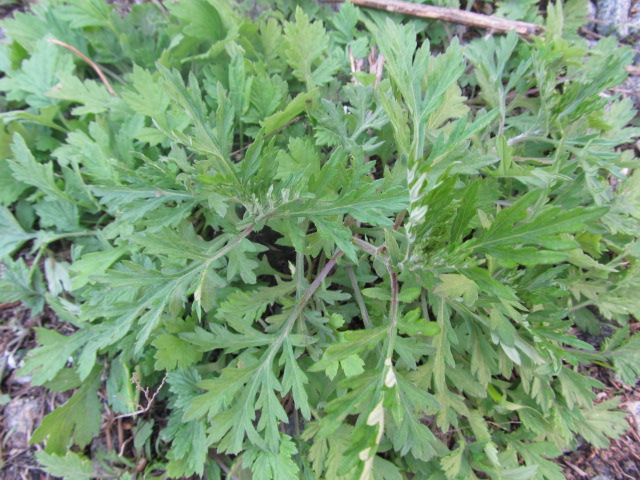
This past Saturday (April 5) we just celebrated Qingming Jie (qīngmíngjié, 清明节) or the Tomb-Sweeping Festival where people visit their ancestors graves and remember family and love ones who have passed away. And here in rural Zhejiang Province, there’s no wild plant more beloved during this holiday than the aromatic mugwort, also known as qingmingcao.
It’s hard to believe just how common this variety of mugwort is around here. In fact, it grows like a weed everywhere, even in the dusty pebble lanes that criss-cross the fields in the village. For nearly two weeks, I hiked these lanes, never realizing all that time that mugwort was right under my shoes!
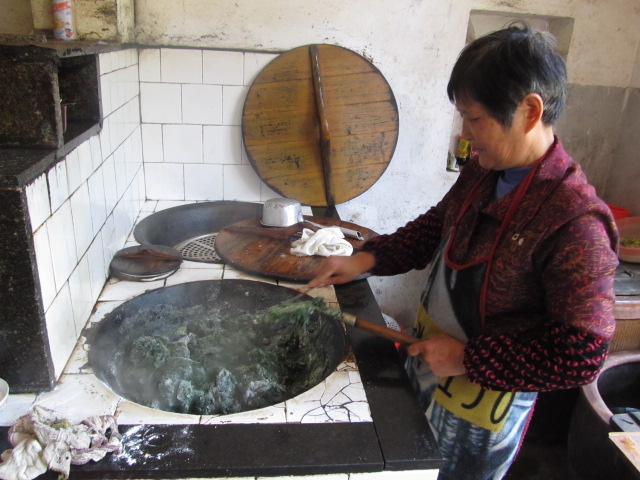
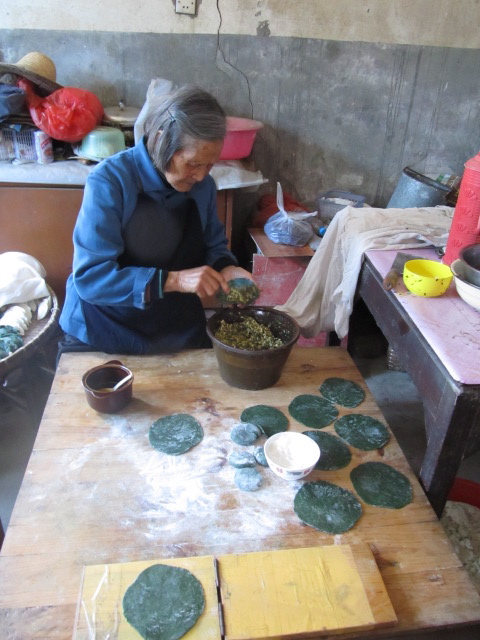
My mother-in-law gathers wild mugwort from the hills well in advance of the holiday, because this lowly little wild green undergoes an extraordinary transformation in the kitchen. After cleaning it, she blanches it and then crushes and grinds it into a paste, infusing the kitchen with an aroma reminiscent of lavender. The paste then goes into a warm wok along with glutinous rice flour, creating a dark green dough.
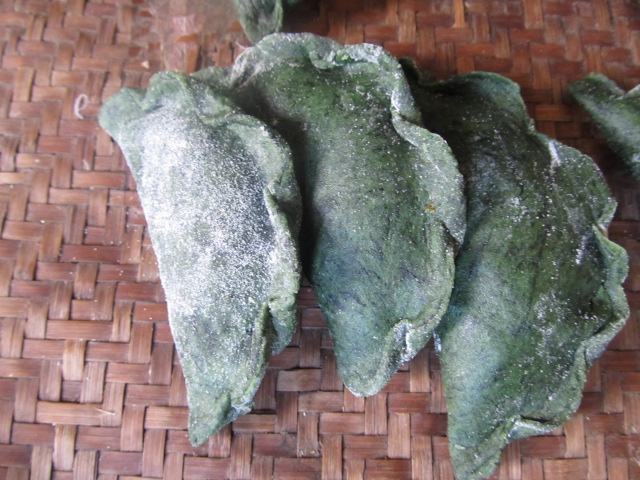
That dough then gets kneaded and partitioned into small rounds, which after being flattened, become the wrappers for qingming turnovers (stuffed with chopped up bamboo shoots, tofu, and salted greens).
Making the qingming turnovers (flattening the rounds, then filling them with vegetable filling).The finished qingming turnover up close.
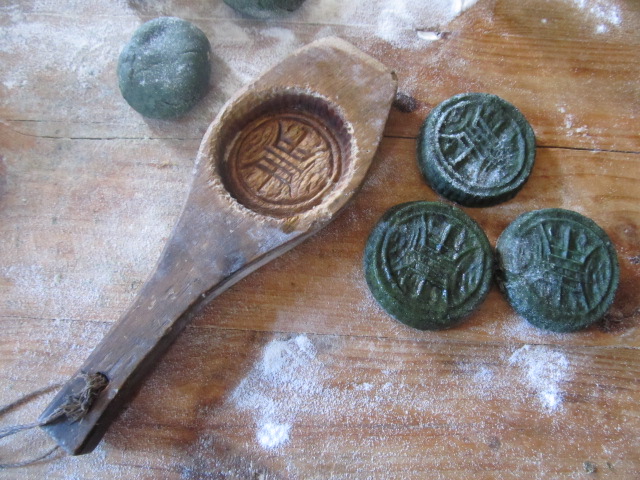
For a sweet version, my mother-in-law adds sugar to taste to the green dough and then shapes the rounds in a small mold made especially for Qingming Jie.
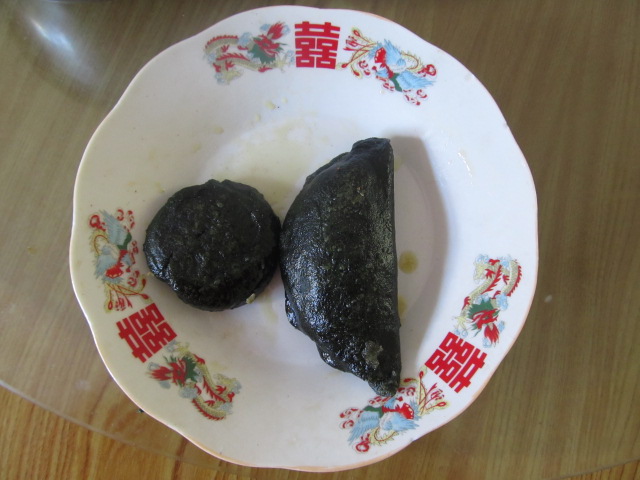
Finally, she steams the turnovers and sweet rounds in her wok until they’re cooked through and turn a deeper shade of green.
Here’s the final product (one turnover, one sweet round) — slightly fragrant, sticky, and oh-so scrumptious. Remembering your ancestors never tasted so good!
Have you ever foraged for wild edible plants? What are your Spring favorites?
I was born and raised in a very white and very average suburb of Cleveland, Ohio in the United States. Yet now, I live in the countryside of Zhejiang, China with my Chinese husband and his family, where bamboo and tea bushes grow wild in the mountains, the chickens are always free range, dog leashes are optional, and central heating doesn’t exist.
Nothing in my life before prepared me for this one — and to be sure, the first time I came here I never imagined I would ever feel comfortable in this home or area. But it’s amazing how you can adapt and learn in a new environment. Over time, I’ve found myself feeling extremely at home in this home and this village. And in the process, I’ve experienced and learned things that, when I think about the woman I once was back in the US, really surprise me at times.
1. When you live without central heating, there are ingenious ways to stay warm
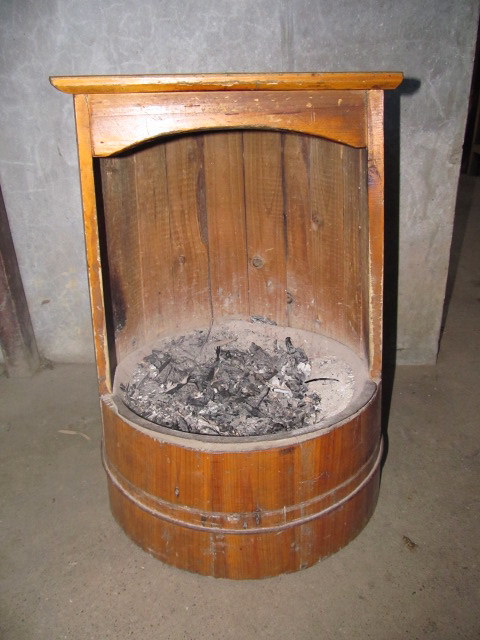
No heating in the dining room? No problem! Meet the huǒtǒng (火桶). You just add warm coals to the receptacle in the bottom, then sit and enjoy the warmth underneath while you eat. This is how I survived many a dinner in the wintertime (when I wasn’t bundled under the covers, with the electric blanket cranked up!).
One of the huotongs in our home is even a family heirloom, gifted to my in-laws more than 40 years ago for their wedding. And according to my mother-in-law, it still warms your behind just as well as it did the first time they used it.
2. There’s nothing like the “sunshine scent” of freshly sunned laundry
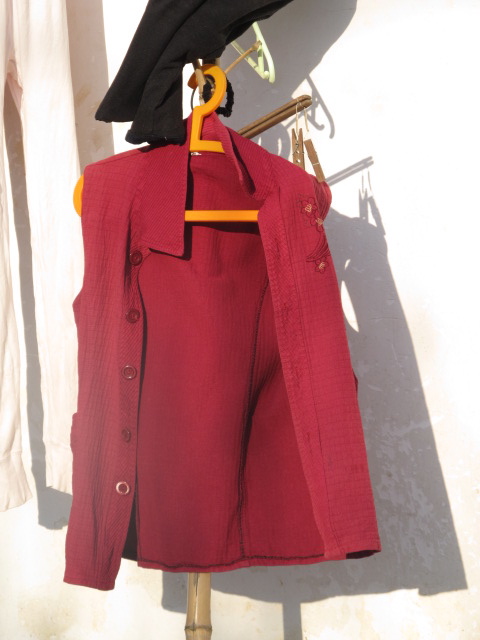
Growing up, my family and our neighbors never used laundry lines to dry clothing, robbing me of the chance to discover one of the great wonders of sunshine — that alluring “sunshine scent” after sunning clothes for an entire day. The sun-dried laundry smells especially fragrant where I live, thanks to the absence of smog and plenty of glorious blue sky afternoons with lots of fresh air.
If you’ve never experienced the “sunshine scent” from a sheet or towel or shirt left to sun for a golden afternoon, well, you’re missing out on one of life’s wonders.
3. Fire-powered woks truly rock
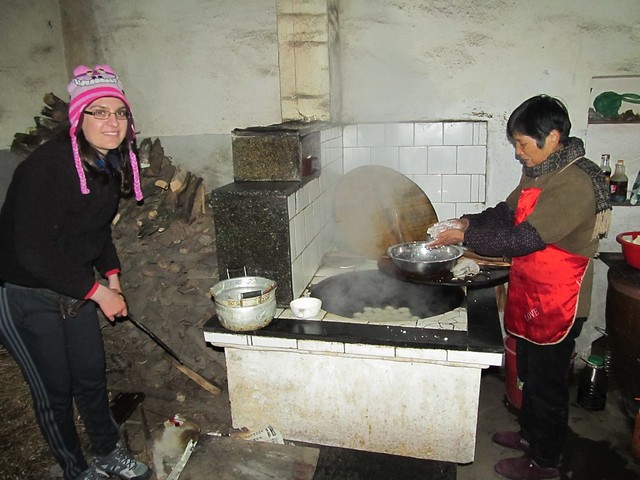
I’ll admit, the first time I peered into my mother-in-law’s kitchen and found a pile of wood stacked up behind her wok, a part of me felt like I was transported to another era. People still use wood to fire their woks?
But soon I discovered the wonders of a fire-powered wok — namely, that it makes some amazing dishes.
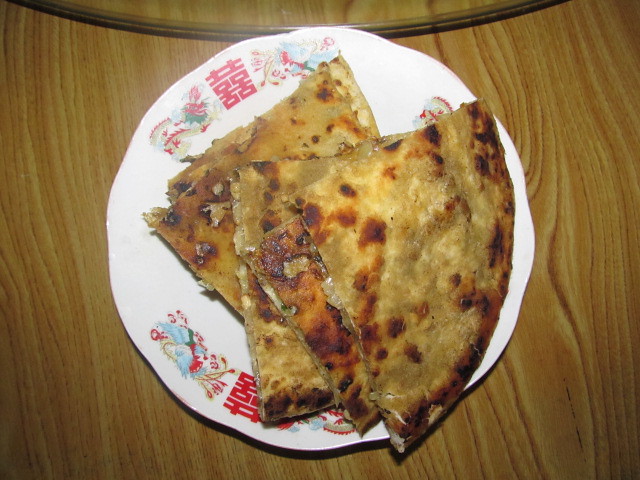
I still can’t get over the jianbing my mother-in-law once made. The flavor and even texture of it was so reminiscent of tandoori-style Indian flatbreads, and even more delicious with the vegetables tucked inside. You could never get the same satisfying taste making the flatbread in a wok heated by gas or even electricity.
My mother-in-law’s jianbing fresh from her fire-powered wok — so delicious!
Maybe it’s no wonder, then, that when I imagine my future dream home, I envision a fire-powered oven or wok somewhere in the kitchen!
4. How to clean up chicken droppings
My mother-in-law raises a flock of free-range chickens. So from time to time, they meander into the house to forage for scraps and leave behind a little something we’d rather not step on. Well, when I spotted one of these offending “presents” near the front door, I instinctively sought out the remedy my mother-in-law uses time and time again: ashes. Just cover the droppings with ashes, wait a few minutes, then you can easily sweep them up (and out the door) with a broom.
I still can’t believe “cleaning up chicken droppings” is now part of my house-cleaning repertoire.
5. Even the scariest unleashed dogs can fear sticks and clubs
I never thought that “speak softly and carry a stick” could also help protect you from dogs.
Where we live, dogs are the countryside version of home alarm systems — everyone has one. But leashes are optional. So when my husband and I take our hikes through the mountains in the village, well, you can imagine how I’ve felt when we suddenly hear a threatening bark or growl — and have no idea if “Cujo” is even tied up.
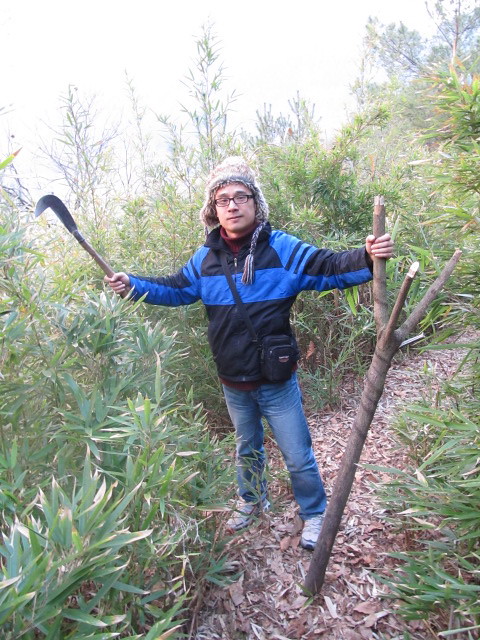
The first time this happened, my husband just grabbed a stick beside the trail and waved the stick above his head so the dog could see it. Instantly, the dog backed off from us…and I could breathe again. 😉
I don’t know exactly why this works, but it does. Along with water and a sturdy pair of shoes, “walking stick” has now become one of my must-haves for hiking out here!
6. Hot water from the tap is a precious thing
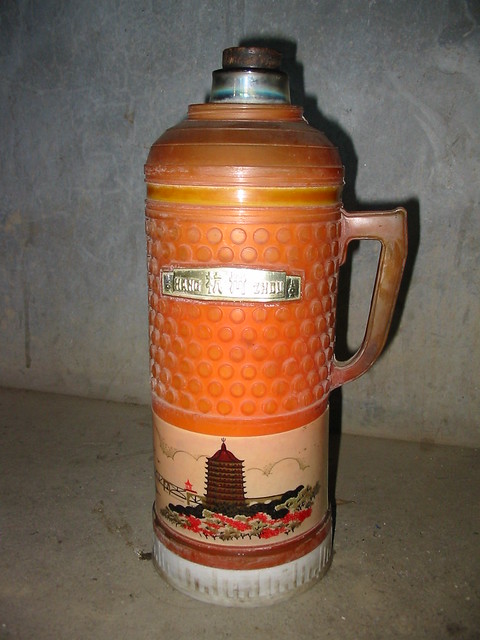
When there’s no hot water from the tap, we turn to boiled water, which we usually store in a thermos like this.
Our house has a solar-powered water heater. But when there’s no sunshine, there’s also no hot water from the tap.
Still, who says we have to go without? We can always have hot water…provided we boil it and store it up in thermoses, ready to mix with cold or lukewarm water for washing up or a bath. Some evenings, I spent an as much as an hour preparing all of that hot water to bathe.
The experience of preparing my own hot water makes me appreciate the precious hot water from the tap so much more.
7. Irrigation ditches make really awesome hiking trails
I’ll be honest, it’s hard to hike the mountains out here in the countryside, where there’s no such thing as “trail maintenance”. Sometimes we’ll be on a perfect trail tracing a mountain ridge…only to find that the deeper we walk into the woods, the more it descends into a thorny mess of bushes and vines that will slash your clothes and even your tender hands. Don’t even ask me about that time we climbed to the top of that mountain, only to take a different trail down…that landed us in the most odious field of thorns I’ve ever encountered.
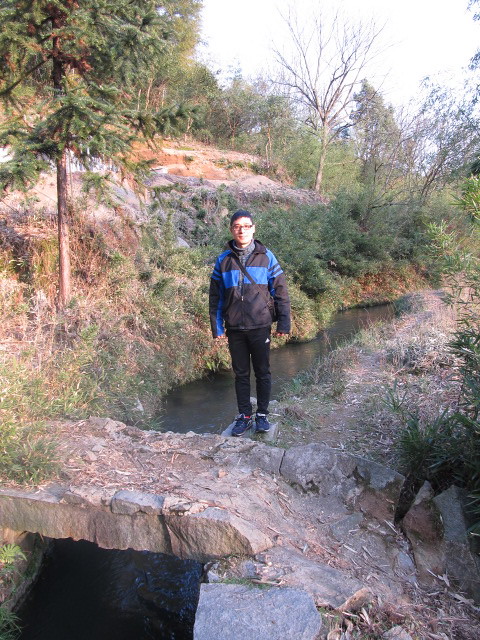
So I’ve come to love the irrigation ditches out here that are built into the hillsides. The stone walls reinforcing these ditches repel those noisome thorny bushes and vines. But even better, the wall itself becomes a perfect trail, naturally “maintained” and kept open by the heavy foot traffic beside the ditches (essential for watering the terraced fields in the village).
My most favorite trail in the area includes an extra-long irrigation ditch that passes some of the most beautiful scenery in the area — from a natural river that cuts through a wooded hillside to the brilliant green terraced fields in the villages.
8. You can make a home in some of the most unlikely places
If you had told me years before I would be happily residing in the countryside — in the same home as my in-laws — I might have called you crazy or even laughed at the thought. Yet here I am, living under the same roof as my in-laws…and actually having a pretty good time of it.
Life hasn’t always turned out as I expected it, including the circumstances that have necessitated my current residence. But I feel so incredibly loved and cared for here.
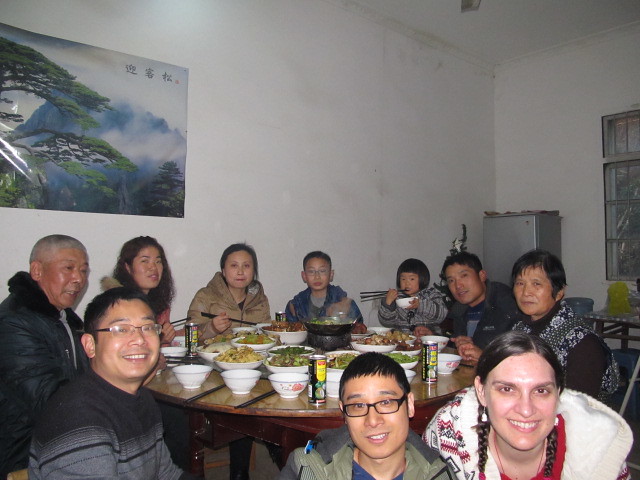
Every meal with the family feels like a small holiday feast, beguiling us with the wonderful aroma of eight or nine different home-cooked dishes on the table — and always with an ample selection of my vegan favorites, from spicy pickled daikon radish to the local smoked tofu stir-fried with peppers or celery. My mother-in-law refuses to let me even lift a finger to do my own laundry, preferring instead to wash it herself by hand and then hang it to dry on the clotheslines that criss-cross the front yard. My father-in-law will slip John an overly generous sum of RMB he withdrew from the bank, refusing to let us return a single note. Our relatives in the village insist on inviting the two of us over to their homes only a short walk away for dinners as lavish as a wedding banquet, telling us to eat, eat, eat. And John and I sleep snugly in our very own private suite in the home, outfitted with every possible comfort we could need — from our soft, warm bed to the TV and Internet — and a view of bamboo fronds and orange trees just outside the window.
Most importantly, I’ve learned that it’s always home to me as long as I have my loving husband, space to read and write, and time for hiking or walks. It’s that simple.
Have you ever lived in a place you never expected to live? Did you learn some surprising things from your experience?
John and I knew exactly where we wanted to live and work in the future: China. But these decisions don’t always come easy for other couples — and sometimes lead to breakups.
Over the years, I’ve noticed a certain e-mail finds its way into my Ask the Yangxifu inbox. The story usually goes like this: Chinese boy who was born and raised in China meets Western girl, they fall crazy in love and the future seems ripe with possibilities for the two of them…until reality hits in the form of a few simple questions. What about our careers? Where will we live?
So when I receive these questions — which are invariably confidential — it either happens that 1) the couple can’t decide where to live (often China versus her Western country) because each country somehow handicaps one person career-wise, or 2) the relationship ended because one or both of them gave up.
Whenever people talk about Chinese-Western international marriages, you would think that language or culture pose the greatest barriers. But when it comes to Chinese men and Western women in love, this “love, location, career” dilemma more often threatens an otherwise outstanding relationship. Career options aren’t always the same for both people in his home country (China or another Asian country) versus hers. Sometimes, when a couple can’t reach an agreement, they sadly break up — just as my Chinese ex and I did years ago.
At the time, he had moved from China to a European country for university and hoped I would follow him and, in his words, “be his wife.” It sounded glorious at first when he whispered this to in my arms…but not when I discovered the unappealing possibilities for a US national in this European country (not to mention all of the visa headaches for me). It didn’t help that his phone calls, e-mails and other communications dwindled over time, until an entire month passed without a single e-mail from him. So on top of the whole “where to live/work” issue, I also started doubting our very relationship — the foundation of everything we had together. In the end, I had to say, “Enough!” I couldn’t justify all of the headaches of moving to this country when he couldn’t make the time to even write me a simple e-mail or call me.
My face was glazed with tears the day that I called him and said I couldn’t move there. I knew our relationship would collapse and sure enough, we broke things off officially in the weeks that followed. But looking back, I also realize that — in a sense — he determined our fate the moment he put down a deposit for that European university. He was fluent in English and could easily have chosen to study abroad in the US, my home country…but he didn’t, citing a personal distaste for America.
Hence I learned my first lesson in cross-cultural relationships: love isn’t always enough. When you add into the mix each person’s careers and dreams (often linked with a specific country or place in the world, especially if a person only speaks one language) it complicates things in a way that couples from the same country would hardly understand.
I think about my stepsister, for example, who is happily married to her college sweetheart. They both were born and raised in the Cleveland, Ohio region in the US and, naturally, always wanted to settle and build their careers up there as well. There was never any question about what country might offer the two of them the most opportunities and most benefits, no tug-of-war about living here versus there or somewhere else.
Nothing like what I experienced with my ex-boyfriend in China. It was his lifelong dream to reside in this European country, so naturally he wanted to study abroad there. But his dreams clashed completely with mine. Granted, I was still trying to find my way in the world at the time. But the longer I pondered moving there with him, the more I intuitively realized I just didn’t belong in that country — that following him would be a colossal mistake.
With my husband John, though, the choices were a lot easier and, in the end, much more obvious. John had always envisioned getting educated in the US and then bringing his talents back to China to start a business. We had discussed this years before when we started dating, developing a long-term plan together to help him achieve his dreams. But it’s not as if I was putting his needs before mine. In fact, China made sense for me personally and professionally for a variety of reasons…not to mention that I’m fluent in Mandarin Chinese, absolutely love this place, and find endless inspiration here for my writing.
Unfortunately, decisions don’t always come so easy.
For example, I’ve heard from couples where she wants to settle in her home country in the West for career reasons, but he doesn’t for reasons of his own (he can’t speak the language, he has better opportunities in China). I’ve also met couples who decided to live in her country, only to realize even more problems with his career — for example, people don’t value his degree from China. Even gaining an education in her country offers no guarantees of employment, as prospective employers may discriminate against him.
Then there’s the flip side — he says, “Let’s live in China,” and she’s not sure. Maybe she struggles with Mandarin Chinese or can’t even say a word. Or she spent years studying in a certain field — which offers few or no opportunities in China — and doesn’t want to abandon her chosen career.
How should Chinese men and Western women handle a “love, location, career” dilemma? Here are some of my thoughts:
Support, support, support. He’s into pharmacy, she dreams of being a physical therapist. Whatever your partner’s work dreams are, you should say, “More power to you!” In other words, support them.
Think about both of your respective careers first and foremost. Don’t get caught up in finding the ideal for your own career — instead, the question you should be asking is, “What’s good for both of us?”
Don’t fall into the “sacrifice your job for my sake” trap either. I’ve heard of couples, where one person expects the other to quit their careers or jobs for all sorts of reasons — but that should honestly be your last resort, if at all. It breeds resentment (i.e., “How come I have to make the sacrifice and he/she doesn’t?”), and resentment is not a good bedfellow in any relationship.
Compromises sometimes have to be made — but if so, give it an expiration date. For example, my husband washed dishes in a restaurant in the US, but we both agreed he would only do this for half a year. I also know of an American woman considering teaching English in China for a year, which would give her the chance to remain closer to her fiancee while they apply for his US green card from China.
Never choose places over him/her. Preferences and prejudices about where to live and work can sometimes wreck an otherwise awesome international relationship. For example, my Chinese ex could have chosen to go to the US; maybe that wasn’t his dream location, but he would have had no problem finding endless universities with his field of study (a very popular one) and I would have had no problems finding a job. Instead, he prioritized geography over me — and contributed to our eventual breakup.
If you and your partner both agree on where to live (like John and me) you’re fortunate! If not, look for locations that benefit both of you career-wise. It could be your home countries or even a third country or region. For example, one American woman married to a fellow from Northeast China agreed to try living in the US first, with Hong Kong and Singapore as backup options.
Back to school. Sometimes all you or your partner needs is a little education — whether graduate school or business school — and suddenly you end up with a great location for everyone in the relationship. I know several couples of American women and Chinese men who are moving to the US, where both husband and wife will enroll in graduate school. Studying Mandarin Chinese at one of China’s many universities (like Sara Jaaksola) can offer foreign women a wealth of career opportunities in China.
It’s the relationship, stupid. Still butting heads over London versus Shanghai? Sometimes that’s just a symptom and the real issue is your relationship. Look at my Chinese ex — he didn’t e-mail me for an entire month, proving that we had bigger issues going on in our relationship.
If you have a relationship problem and both of you feel motivated to work on it, consider relationship counseling.
What do you think? What advice do you have for couples struggling over where to work and live?
I’m the good foreign daughter-in-law…because I stay around home.
Whenever my husband calls me his nèirén (内人), we both erupt in laughter — and for a good reason. Nèirén, a traditional Chinese term for “wife”, also literally means “inside person” — a perfect catchphrase for my current situation. After all, I spent my days either inside our home or inside our village, almost never venturing into the nearby town or beyond.
I have to confess, it’s a little strange to admit that my life remains pretty much confined to this rural mountainous village in Zhejiang Province and, specifically, to the family home.
You might wonder, why don’t you and the husband travel? You could go to Shanghai or some other nearby city? You could visit friends in China or see the country? Well, we have our reasons for sticking around here instead — reasons I’m unable to share here on the blog.
Still, here’s the really odd part for me — I no longer even run errands, things I used to do many years before when John and I lived in Shanghai. Back then, I used to go shopping on the weekends, mail things at the post office, and more. But here? Nothing.
In a sense, that reflects the fact that I’m living under one roof with my husband, his parents and other family members. My father-in-law handles pretty much all of the shopping for our home and does all of the post office runs — so if anyone needs something, we just let him know and he takes care of it.
But what if I wanted to go shopping in town on my own? Maybe I’m curious about what that local Falian Supermarket actually has on the shelves? Every time I’ve suggested anything like this to the family, I’m always met with a resounding “no”! Usually they say, with a grimace on their faces, “Don’t go, it’s too much trouble!”
Yet it’s more than just a matter of trouble, as my husband has told me. “It’s about safety,” he once said to me while we were walking through the mountains. “It’s better if people in town don’t see you.”
How could my simple stroll into town create a safety problem?
According to my husband, it works like this. If I head into town for shopping or other errands, invariably I’ll turn a lot of heads. People will stare, giggle, and talk about me — and if I’m unlucky, the wrong kind of person might notice me. You know, a thief.
Among this beautiful mountain village hides the ugly specter of theft. Every year, someone in the village is robbed, especially just before Chinese New Year, and past victims include my husband’s uncle and aunt who live just next door to us. My mother-in-law cited all kinds of shocking tales — of people who were at home while the robberies happened, of thieves who pried open the bars on windows to enter, of homeowners fast asleep as the criminals tip-toed into their rooms and bedrooms to steal valuables. As crazy as the stories sound, I believe them. Every evening I tune into the local Zhejiang news, reporting the latest batch of outrageous robberies in the province — and every small tragedy reminds me that the whole family must be careful, especially me.
The problem is, most Chinese think foreigners are wealthy, making my home an especially tempting one for any would-be burglar. Since it’s such a small town, it wouldn’t take long for anyone to ask around about where I live. In China, people love to talk — particularly when you have a yangxifu (foreign wife of a Chinese man) in town, the only one around for miles.
And if people came to rob my suite, they’d probably rob from the rest of the family too I would feel horribly guilty if my selfish desires to explore the town — a town that, when it comes right down to it, doesn’t have anything really special to offer — ended up harming the entire family.
Hence, being an “inside person” has become my life.
Sometimes I’ve wondered, how long can we keep this up before the wrong person discovers where I live? Well, as my husband and family sees it, the problem people would be in town, not in this village. Here in the village, only locals — folks who grew up in this area their entire lives — reside (it’s still against the law to buy or sell property in the countryside). But in the town a 15 minute walk away from us, you’ll find restaurants, rooms for rent, and all the other signs that outsiders (Chinese from other areas) and migrants pass through. Most Chinese believe that outsiders tend to commit crimes — and even though it’s a stereotype, it sort of makes sense. Everyone in China returns to their hometown for Chinese New Year, so why would you spoil it (or worse, increase your chances of being caught) by, say, robbing your neighbor there?
Still, please don’t feel sorry for me. I may be a good daughter-in-law who sticks to home and the village…but what a heck of a playground it is!
Yes, now that I think about it….I could get used to this whole “inside person” life here in China. 😉
My Chinese Grandma is a lovely woman…who doesn’t speak Mandarin Chinese at all.
“Learn some Mandarin Chinese” is a suggestion I offer any foreigner dating someone Chinese, especially if they want to make a great first impression with the family. Even just knowing a handful of phrases makes a difference.
But what happens if you’re like me, someone now fluent in Mandarin Chinese after years of study…with a Chinese family whose local dialect is a completely different language.
My husband John hails from Western Zhejiang Province and his local language is one of China’s Wu Dialects (a family of languages that includes the dialects of Shanghai, Suzhou, Hangzhou, Ningbo and Wenzhou). There are literally thousands of dialects within this family. Even here in the Hangzhou region, which includes the county where my husband was born and raised, his local dialect differs from the county seat’s local dialect which also differs from the Hangzhou dialect. When John and I visited a friend in Yiwu, a city in Central Zhejiang Province, the local dialect there was completely different as well — and tough for both of us to understand. Still, nothing can beat Wenzhou dialect, considered one of China’s most difficult local languages to comprehend (supposedly, it was used for communications in China during World War II to ensure no enemies — especially Japan — could intercept wartime messages).
How is John’s local language different from Mandarin Chinese? Here are few examples:
Grandmother
– Mandarin Chinese: Waipo
– John’s local dialect: Abu
Play/have a good time
– Mandarin Chinese: wan
– John’s local dialect: xi
Shoe
– Mandarin Chinese: xie
– John’s local dialect: a
Oneself
– Mandarin Chinese: ziji
– John’s local dialect: xiguo
Hour – Mandarin Chinese: xiaoshi – John’s local dialect: zhongtou
You get the idea…it’s an entirely different language!
But unlike Cantonese or Shanghainese, which are local languages in some of China’s biggest business/financial centers (Guangzhou, Hong Kong, Shanghai), my husband’s local dialect is only spoken in John’s hometown, a mountainous rural backwater. You won’t see foreign language students flocking to study John’s dialect, nor will doing so boost my resume.
So why bother learning at all?
That was my initial feeling when I first spent time at my husband’s home in the village. I had invested so much of my language study on Mandarin Chinese…and besides, we never stayed at his hometown for more than a few days or a week, providing me few opportunities to learn or practice.
But over the years, I started to find myself hitting a wall — and that wall was named Grandma (Waipo to you Mandarin speakers, Abu out here). See, Grandma doesn’t speak a word of Mandarin Chinese. And to make matters worse, she was born in the Wenzhou area…so her local dialect is clouded with a Wenzhou accent, making it even more of a challenge to understand her. During the summer of 2011, when John left me here at the family home, I passed many uncomfortable moments at Grandma’s house, trying to decipher what she was trying to say — missing out on opportunities to get to know her as person.
That’s the thing: this is the language of people I care about.
I don’t know where the tipping point was when dialects turned from a communication obstacle to a cherished heritage for Chinese culture. But when I stumbled upon children in my hometown talking to each other in Mandarin while playing on the street, it dawned on me that the days for most dialects are doomed. They would disappear within one generation or two. Possibly within my lifetime, most dialects would go down the road of calligraphy, or worse the abacus, where they would be under academic scrutiny and government protection, but out of the daily use of the common folk.
By learning John’s local dialect, even if it isn’t obviously “useful” or “practical”, I could actually help preserve part of China’s cultural heritage.
Of course, that’s if I ever actually master the language. For now, it’s just a phrase here, a phrase there, and a smattering of words.
But you should have seen the way John’s Grandma beamed at me when I opened her door and finally called her “Abu!” It warmed my soul to know that we were finally communicating for the first time in years. And though I have a long way to go (John still does most of the talking with her) I know in my heart I made the right decision to learn.
Have you ever considered learning an uncommon Chinese dialect? Why or why not?
Update: scratched out the entries under “Hour” above, thanks to the commenters who noted that Mandarin Chinese speakers may use both. Good catch!
When my mother-in-law shouted the news up the stairwell a few weeks ago, I was dumbfounded. It was 4:30pm and we never ate dinner until at least 5:30pm. But more importantly, nobody told John and me we were having dinner out this evening. And we weren’t the only ones surprised, as we learned when we met my mother-in-law downstairs.
“They’ve already made dinner,” she said. She was wearing her favorite blue-and-yellow felt apron, evidence that she had probably been working on dinner for us when someone from big uncle’s home came over with the news. “It’s bad not to go. Just go over there and eat a little.”
A little, however, was not what big uncle had in mind — as John and I discovered when we walked into the dining room. Eight people were already huddled around a dining room table filled with more than 10 different dishes, a delicious assortment of stir-fried meats and vegetables that would have rivaled some of the most lavish banquets I’ve ever attended in China.
I couldn’t help thinking how my family back in the US would never pull off such a huge spread at the last minute. People would need days if not weeks of notice, and even then some people might not be available. Yet here, it just happened one afternoon, all because big uncle wanted to share his generosity with us.
Even though I still equate the word “invitation” with advance notification, I’m also learning to understand that invitations don’t always work like that — especially out here in my husband’s village. Sometimes it’s not an easy thing to accept when, like me, you’re so used to setting your own schedule and being told well in advance of upcoming dinners, meetings or other events. But there’s also beauty in living spontaneously, in not always having every moment and every second planned out…especially when, like big uncle’s dinner, it turns out to be a tasty surprise.
Yesterday, I received an e-mail from a friend who urged me to read an essay by Virginia Proud of Tales of Expatria. She dubbed the essay “controversial” but then again, as she put it “blogs thrive on controversy” and encouraged me to introduce the topic. Well, she said the magic word — “controversy” — so of course, I immediately clicked on the link and dove into the first paragraph.
But when I finished the essay, a feeling of dread settled over me…which had nothing to do with Virginia’s essay per se.
First off, let me say that I thoroughly enjoyed the essay. The writing was exceptional — humorous, thoughtful and self-reflective — and you could clearly tell that Virginia has, as you might say, “been around the global block” in her own experiences as an expat.
If you spend enough time in Expatria you’ll meet this chap, we affectionately call him the LBH. The Loser Back Home. Best described as someone you wouldn’t normally touch with a barge pole, but transplanted to foreign soil, is suddenly hot property, especially with attractive, young local women….
The LBH has always been with us and probably always will be. I remember my first LBH encounters as a teenager, when my family lived in Hong Kong. I couldn’t understand these corpulent old buggers with their gorgeous Chinese wives, until my mother pointed out their diamonds. It was the glory days of British rule and massive salaries and no one cared if the men were boring, ugly, stupid, or even mean. But then again, money and power has always been enough to make men wildly attractive, even back home….
Yes, the LBH — or, as people call him here in China, the Loser Laowai. Or for the purposes of this blog, the white Loser Laowai who only dates local Chinese women.
To me, this topic feels like the “skeleton in the closet” in the realm of cross-cultural and interracial dating in China — a topic so icky I’ve wanted to stay far, far away from it. And in the few times I’ve gathered the gumption to attempt a blog post on it in the past, invariably I abandoned my drafts and turned my attention to other topics.
Yet Virginia was able to produce a splendid essay that, to an extent, dealt with this topic, and I can’t help but wonder if it’s a matter of perspective. After all, Virginia, who is originally from Australia, currently calls Budapest, Hungary home and referred to this LBH in a more universal sense. She doesn’t have to address the proverbial “panda in the room” that immediately comes to mind once you move the topic to China — yellow fever. And for the purposes of this blog post, I’m referring to those white Laowai men who prefer Asians and potentially have highly racialized notions about Asian women.
See what I mean? Loaded stuff.
In my opinion the majority of white men with Chinese women do NOT fall into this “Loser Laowai” category. But still, we all know there are white loser laowai out there hooking up with Chinese women. And like the yellow fever phenomenon, their existence does have ramifications for couples of white men and Chinese women around the world. As Christine Tan of Shanghai Shiok wrote:
The problem, to me, is that shallow, superficial relationships between white men and Asian women vastly outnumber the same sort of suspicious pairings between Asian men and white women. And sadly, these types of WM/AF pairings are the most visible ones, because they often create spectacles of themselves….They are the Douchebags, the Jerks, and the Ambitious who think dating a white man or Asian woman betters them, financially or socially….those are the types of WM/AF pairings we remember, because they were too in-your-face to forget.
Which unfortunately could lead to the wrong assumptions when you see a white man and an Chinese woman walking down the street. Again, as Christine wrote:
I know that the white male/Asian female pairing has numerous negative associations attached to it. Words that immediately come to mind: Opportunistic. Gold-digger. Fetish. Sexualization. White-worship. Money. Exploitation. Lust. Pinkerton Syndrome. ‘Sarong Party Girl’ behavior was something I was warned against growing up.
I think a lot about why those associations exist. There are poorer women in China and the rest of Asia who view a foreign man as a meal ticket. There are Asian women who only date white men because most of the men they meet are white, and/or they find them more culturally/sexually appealing. There are white men who only date Asian women because of the society they live in — where the women are mostly Asian — or yes, they do find Asian women more culturally/sexually appealing. There are white men who come to Asia to hook up with local women in certain seedier places. There are local women who go to these places to hook up with the white men who come to Asia.
But then there are cases like mine — a mutual friend introduces a man and a woman and they get along, they like each other, they both like eating, and books, and the Barbie store. And oh, by the way, they happen to be white and Asian, respectively.
Enough said.
There’s another side to this topic of white Loser Laowai who only date Chinese women — when the men justify their dating choices by insulting the women back home, which Virginia alludes to in her essay. I’ve addressed this before and find it abhorrent that anyone would defend their relationship in such a hateful way. But it happens, most often in anonymous online forums. And because the expat gender balance is so skewed — far more expat men, who are overwhelming white, than women — well, let’s say if you’re a woman like me, you need a lot of courage to speak up about it in public.
Additionally, let’s not forget what Virginia mentioned near the end of the post: “And the fall out of all this, of course, lands on the head of the single expat women, who need to keep adjusting their ideas of ‘attractive’ as their dating pool starts to feel more like a puddle.” Or in other words, it’s the China Daily article published a few years back titled Foreign women label [China] a dating wasteland. This is also thorny territory…because then the question comes, why aren’t they interested in dating Chinese men? Some women have understandable reservations (for example, they’re not interested in marriage or getting too serious in a relationship) but others exclude locals for completely superficial reasons, often based on stereotypes.
Ugh.
In the end, I’ll never be able to write something like Virginia, not with all the baggage that accompanies this idea of white Laowai Losers with Chinese women. Still, I believe the subject deserves a conclusion. So, as someone who writes about relationships, perhaps it’s fitting that I sum this up with a phrase used on dating sites around the world: it’s complicated.
P.S.: For further reading on this “thorny topic”, I recommend They’re So Beautiful, the companion website to the compelling documentary Seeking Asian Female.
Nicki and Eugene (photo from http://nickichenwrites.com/)
American writer Nicki Chen, who blogs at Behind the Story, has lived one fascinating life. She married her late husband Eugene (who grew up in China) in 1967, the same year that the US Supreme Court made interracial marriages like theirs legal in every state in the country. Nicki also spent 15 years in the Philippines with her family as an “expat wife” and traveled to China in the 1980s. It’s no wonder, then, that her experiences have inspired much of her writing and blogging.
In this guest post, she writes, “Before I decided to marry my husband, I remember thinking: We complement each other, and that’s a good thing. We had a lot in common, too, enough to make our marriage work. But the fact that we were so dissimilar meant we had a lot to learn from each other.” I could have easily written the same about my own marriage. Chances are, many of you will relate to the “whole new world” Nicki captures in her post.
Thanks so much to Nicki for this fantastic essay! If you love her writing, you can subscribe to her blog and follow her on Facebook.
—–
Bruce Lee vs. Mary Poppins
(photo courtesy of Broadway Tour)
My first martial arts movie was The Big Boss starring Bruce Lee. It was 1971. We’d recently moved to the Philippines, and though Bruce Lee was already well known for his role as Kato in The Green Hornet, I’d never heard of him. My taste in movies ran in a different direction. I’d seen every musical that came to the Dream Theater in my hometown: Oklahoma, South Pacific, West Side Story, My Fair Lady, The King and I, The Sound of Music, Mary Poppins, Camelot … I’d seen them all and memorized most of the songs. What did I know about kung fu movies?
My husband was Chinese however. In his childhood, while I was in the United States reading fairy tales and Little Women and Little House on the Prairie, he was in China living under occupation and reading Romance of the Three Kingdoms, which is not a romance at all. It’s a four volume Chinese classic written in the fourteenth century, a non-stop account of the historical and fabled battles and intrigues that took place between 169 AD and 280 AD when three kingdoms were struggling for dominance in China.
Pompoms and judo
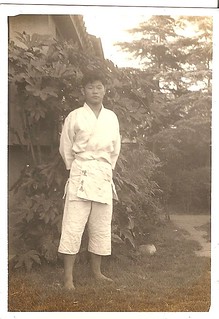
Eugene after judo class (photo courtesy of Nicki Chen)
In our teenage years, while I was taking ballroom dancing classes and shaking pompoms at basketball games, my future husband was in Japan, studying judo and kendo after school.
So now, here I was, expanding my horizons as I accompanied my husband to the little theater in Binondo, Manila’s Chinatown. The Hong Kong version of The Big Boss was definitely more violent than I was used to. It showed, for example, Bruce Lee’s fingers piercing the rib cage of the villain, a scene that was partially cut to get an R rating in the United States. And yet, Lee was a sympathetic hero. And though the evening was punctuated with the sound of our fellow moviegoers cracking melon seeds between their teeth and throwing them on the floor, the movie intrigued me. I could conceive of liking martial arts movies.
Enter the Dragon
Nicki in her dancing shoes in 9th grade (photo courtesy of Nicki Chen)
The following year Fist of Fury and The Way of the Dragon came out. I liked them … and sometimes I didn’t. In 1973 we saw Enter the Dragon, Bruce Lee’s last movie before his tragic death. This time it was playing in the big modern theater in Makati. We brought our oldest daughter, who was five years old by then, old enough we thought to be introduced to a kung fu movie.
I suppose I’ll never be the biggest fan of martial arts movies. I still prefer a film in which dialog and meaning trump violent action. And yet, I have to admit, a good fighting scene is a pleasure to watch. I’m glad my husband helped me expand my horizons.
The Promise of an Interracial Relationship
Before I decided to marry my husband, I remember thinking: We complement each other, and that’s a good thing. We had a lot in common, too, enough to make our marriage work. But the fact that we were so dissimilar meant we had a lot to learn from each other.
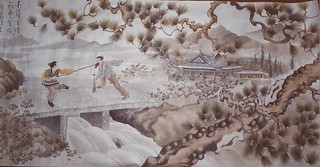
Kung fu painting
Every relationship provides opportunities to learn and grow, to share ideas and enthusiasms, hobbies and histories. But in an intercultural or interracial relationship, those opportunities are enormous. If both people are open to new ideas and experiences, their worlds can double in size.
Nicki Chen blogs at Behind the Story and is the author of the forthcoming novel Tiger Tail Soup.
This website uses cookies to improve your experience. We'll assume you're ok with this, but you can opt-out if you wish.AcceptRejectRead More
Privacy & Cookies Policy
Privacy Overview
This website uses cookies to improve your experience while you navigate through the website. Out of these cookies, the cookies that are categorized as necessary are stored on your browser as they are essential for the working of basic functionalities of the website. We also use third-party cookies that help us analyze and understand how you use this website. These cookies will be stored in your browser only with your consent. You also have the option to opt-out of these cookies. But opting out of some of these cookies may have an effect on your browsing experience.
Necessary cookies are absolutely essential for the website to function properly. This category only includes cookies that ensures basic functionalities and security features of the website. These cookies do not store any personal information.
Any cookies that may not be particularly necessary for the website to function and is used specifically to collect user personal data via analytics, ads, other embedded contents are termed as non-necessary cookies. It is mandatory to procure user consent prior to running these cookies on your website.