Are Highly Sensitive People More Accepted in Chinese Culture? One Study Says Yes

One of the fascinating things I learned from my husband when we began dating many years ago is this – that, as a more quiet and sensitive kind of guy who excelled at his studies, he was popular in school growing up in China.

This was the complete opposite of my own experience growing up in America. Being quiet and sensitive didn’t exactly help me rise in popularity among my peers, particularly in junior high and high school. Add to that the fact that I was a straight-A student near the top of the class, which led a number of kids to just write me off as another geek.

Over the years, I’ve found myself more at ease in China, and I would often attribute it to a number of things, including this sense that I felt my personality was more accepted in the culture. Imagine my surprise to read Elaine Aron’s The Highly Sensitive Person and discover a study that actually revealed that Chinese culture appears more welcoming to sensitive individuals:

If you remember only one thing from this book, it should be the following research study. Xinyin Chen and Kenneth Rubin of the University of Waterloo in Ontario, Canada, and Yuerong Sun of Shanghai Teachers University compared 480 schoolchildren in Shanghai to 296 in Canada to see what traits made children most popular. In China “shy” and “sensitive” children were among those most chosen by others to be friends or playmates. (In Mandarin, the word for shy or quiet means good or well-behaved; sensitive can be translated as “having understanding,” a term of praise.) In Canada, shy and sensitive children were among the least chosen. Chances are, this is the kind of attitude you faced growing up.

Think about the impact on you of not being the ideal for your culture. It has to affect you — not only how others have treated you but how you have come to treat yourself.

Reading this was like a revelation, an ah-ha moment that confirmed something I had understood for years – that my personality felt like a better fit in China compared to the US.

How about you? Are you a highly sensitive person who has lived in the East and the West? Have you also felt more at ease in a culture in the East, such as Chinese?

Romance in the Chinese Lantern Festival – Why the Holiday Lights Up Hearts Too

In Chinese culture, the Lantern Festival, which falls on the 15th day of the lunar new year (Feb 19 this year), sees celebrations marked by elaborate displays of colorfully illuminated lantern installations. Even in the coldest of weather, people will brave the elements just to get out and visit lantern exhibitions all across Asia.

But just as the Chinese Lantern Festival lights up the night, it has also traditionally lit up young hearts as well.

A few years ago, I discovered its connection to romance when the holiday happened to fall on Valentine’s Day:

In China some have dubbed the Lantern Festival the real Chinese Valentine’s Day. In the past, unmarried women were not allowed to freely leave their homes. But during the Lantern Festival, they had the chance to come out with chaperones and enjoy the lanterns in public, a wonderful opportunity to meet potential romantic partners as well.

The fact that this holiday traditionally served to encourage courtship has led people to dub it the true Chinese Valentine’s Day, instead of the Qixi Festival or Double-Seven Festival, which falls on the seventh day of the seventh month in the lunar calendar.

Plus, anyone who has ever visited displays of lanterns knows just how romantic the entire atmosphere can be. The bright, colorful glow of the lanterns at night creates this magical backdrop certain to warm the hearts of any couple. And in this scenario, to borrow the lyrics of the Patti Smith and Bruce Springsteen song, “…the night belongs to lovers”.

Whether you have romance on your mind or not, a visit to a lantern display in your area will surely light up your heart. And who knows? Maybe you just might meet that someone special during the Chinese Lantern Festival.

What do you think about the romantic side of the Lantern Festival in Chinese culture?

No Time for ‘Marry Me’: Train Couple’s Fleeting Rendezvous Warms Hearts Across China

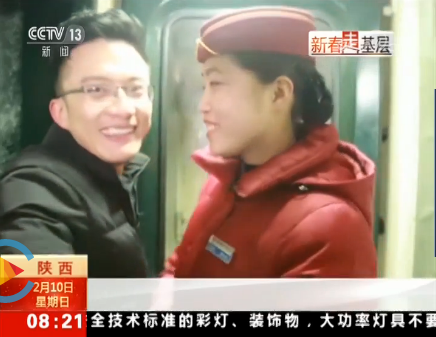
This past week at the office, one of the biggest — and most moving — love stories to come across my desk came just in time for Valentine’s Day. It’s the story of the train couple Hao Kang and Lei Jie, a pair who have such difficulty meeting each other that the man, Hao, compared the chance of even seeing Lei while on the job with winning the lottery.

He’s a freight train driver who works at Yulin Station in Shaanxi province (where they’re both from), while she’s a train attendant on a line that stops every day at Yulin Station at 12:37 am. Sometimes they won’t see each other for months. And when they do, it usually happens when she’s standing at the entrance gate on train where she works, which means less privacy and little time during the stop.

Both had to work during the recent holidays, and Hao decided to surprise his girlfriend at the Yulin Station with a special Chinese New Year’s gift — a diamond engagement ring.

Yet because her train arrived to the station late, due to snow, and she got transferred to a different carriage that evening, Hao lost a lot of time in trying to find her for this crucial meeting. And when he did, they only got 112 seconds together, not even enough time to utter the most important words for a marriage proposal: marry me.

This couple and the extraordinary tale of their fleeting rendezvous, moved so many people, turning them into one of the most popular holiday stories in China.

Want to watch it all unfold? See the video on China Daily with English subtitles or, if you’re in China, view the original at China Central Television.

Have you heard about this train couple from Shaanxi province? What do you think about their love story?

Study of Foreign Women/Chinese Men Seeks Online Survey Participants

Are you a foreign woman or Chinese man in a foreign-Chinese couple in mainland China? Aliza Warwick, a researcher at Peking University’s Yenching Academy, just came out with an online survey that you could take (only takes 10-15 minutes) to help support her exploration of intercultural marriages. Here’s some background on her research:

Data from the Chinese government show that the number of marriage between foreigners and Chinese citizens in mainland China has been rising rapidly in the past several decades since China’s opening up. However, no demographic data are released about the individuals in theses marriages, such as where the foreign spouse is from originally, the ages of the individuals in the marriages, or their educational and occupational backgrounds. Anecdotes from the media hardly provide a clearer picture and instead often serve to fuel stereotypes. This questionnaire seeks to address this information gap and shed some light on this growing population of intercultural couples. The survey is part of a larger research project focused on intercultural marriage in mainland China by a Masters student at Peking University’s Yenching Academy.

You can learn more by clicking on this link for the survey, which provides further background information on the research. And if you’d like to participate, you can do so anonymously online.

Additionally, if you have further questions about the research, you can contact Aliza via email at [email protected] or via WeChat at aliza23.

Photo credits:
Models: Justin Zhang, fitness coach and Youtuber (IG: NoobStrength) and
Angelina Bower, beautiful fashion model (IG: musicloveandlies)
Photographer: Ana Hudson (WhiteChocolatePlayer)

Caution! Chinese New Year Is Coming: Why You Should Be Careful Ahead of the Holidays

Chinese New Year is the most wonderful time of the year for Chinese people, a holiday marked by joyful family reunions, feasts and traditional festivities.

But there’s a flip side to the coming holiday season: It’s also the time of the year when people should exercise additional caution.

A coworker of mine provides a typical example why. Recently, she needed to run to the bank and decided to rent a shared bicycle, which required using her smartphone to scan a QR code on it, which of course let any would-be thieves see her high-end phone. Because she felt rushed in a busy area, she didn’t pay much attention in the process. But after arriving at the bank, she suddenly realized that someone had stolen her smartphone — which very likely happened as she was distracted and getting ready to pedal away.

(She even told me, later on, that she should have been more careful, given that Chinese New Year is approaching.)

This kind of thing is more likely to happen in the weeks leading up the holidays, a time when thefts and other related crimes spike (so much so that a Tencent-backed news outlet devoted an entire article in Chinese to exploring why thieves are so rampant during Chinese New Year).

But it’s not just pickpockets you have to worry about.

Over the years, I’ve often heard my Chinese mother-in-law warn me to be more vigilant as Chinese New Year approaches, because it’s a time when more burglaries occur. In her village, people have had everything from valuables to crisp stacks of renminbi bills disappear after break-ins. (That’s why my in-laws always aim to have someone stay at home at all times during the holiday season.)

Why does so more crime take place in the holiday lead-up?

First of all, China experiences a huge migration of people during this time, with a rise in people carrying money and valuable gifts, providing more opportunities for thieves in places like crowded train stations and airports, and packed public transport around town (such as subways and buses).

Because so many people leave their homes and apartments for travel, this also creates more chances for burglars as well.

Add to this the fact that the holidays also come with a lot of pressure. People are expected to bring something home (like money or gifts) and appear successful before friends, family and peers. That includes crooks too, and anyone else less ethically inclined in society. So they have extra motivation to get out there and take advantage of the potential bounty that the Chinese New Year period brings.

Still, it’s good to know that China (a country that’s largely still very safe) isn’t the only place where the holidays demand more awareness when it comes to public safety.

After all, look at this advice from the Los Angeles Police Department ahead of the Christmas holidays, which includes the following words:

The holiday season is always a special time of year. It is also a time when busy people become careless and vulnerable to theft and other holiday crime. We can never be too careful, too prepared or too aware.

Or this information from the University of Alabama – Birmingham before the Christmas holidays:

During the holidays, the potential for thefts and robberies increase. More people are out and about, and they are carrying more money than during other times of the year.

Wherever you happen to be celebrating the holidays, here’s hoping your Chinese New Year is a safe one.

What do you think?

Photo credit: Paul via Flickr.

Should Foreigners Who Marry Chinese Also Learn the Language?

If you’re a foreigner with a Chinese spouse or loved one, should you learn some Chinese? Even just at a conversational level? Do we have an obligation to do so because we’re intimately connected to this country and culture?

This idea came to mind while pondering my own past, and first steps, in China many years ago, a time when I began dating a local Chinese man in Zhengzhou and couldn’t speak a word of Mandarin. He and I eventually broke up after six months, yet during our relationship, his presence in my life served as a spark to prod me into learning (along with other more practical reasons, such as being more independent). Deep down, a part of me felt that because I loved him, I should make an effort to study his language, even if that simply meant mastering the most basic conversational phrases.

Ironically, he didn’t encourage my efforts, suggesting my afternoon tutoring sessions were just a waste of time. Of course, he said this late in our relationship, which means it potentially reflected the growing rift between us, more than his genuine thoughts on the subject. Nevertheless, some people out there would agree with him – and I’ve met some or even heard about them, including those who have lived many years in China and, yes, have Chinese spouses.

Most people who argue against learning Chinese turn to two primary arguments: One, that it’s too difficult, and two, that it’s not necessary anyhow.

We all know Chinese remains notoriously difficult to learn. A few months ago, during a business trip at a conference, Chinese academics from some of the most celebrated institutions in China admitted to me in private conversations just how challenging the country’s official language is. Still, nobody says you need to emerge as the next Da Shan, have absolutely perfect tones, or reach the highest level in the HSK. Merely choosing a more reasonable “conversational” level can make the task more doable and less daunting. (That’s exactly what I did when I began learning Mandarin.)

I found an entire article devoted to why foreigners in China often don’t learn Chinese, and it adds an explanation unique those who speak English: “The main reason why more expats don’t speak much Chinese is this: we don’t need to learn it. China caters to English speakers.” This would fall under the “not necessary” arguments many put forth, including that their job doesn’t require it or the employer provides a translator.

For those of us with a Chinese spouse, our loved ones from China invariably end up helping with all sorts of errands, even if you can speak Chinese. It makes sense for a number of reasons, including the fact that they understand how to conduct business much better than we do because it’s their native country and culture. But of course, this gives the foreigner less motivation to learn – and bolsters the “not necessary” side of the argument.

Still, you could argue there’s a “need” for foreigners with a Chinese spouse. Given we already have an intimate relationship with the country, we’re going to encounter the language for the rest of our lives through family. When you can’t communicate with your spouse’s parents or grandparents or other relatives, it’s that much harder to forge a meaningful bond with them and makes holidays with Chinese family more challenging.

Besides the two usual arguments – “too hard” and “not necessary” — an additional barrier exists among cross-cultural couples. Whatever language you use while falling in love with someone becomes the language you prefer to use for communication (see The Relationship Between Language and Falling in Love). For those foreigners who start a relationship with their future spouses in English or another non-Chinese language, this serves as a psychological barrier to trying out their fledgling Chinese with their loved ones. Still, it doesn’t mean you can’t learn; you just might need to find yourself a supportive tutor or a language school or university program to fulfill your goals, instead of relying on your spouse, who might not be the best teacher anyhow. (See my post Why It’s a Really Bad Idea to Teach Your Spouse Your Language.)

So, let’s consider all of these factors together.

#1: Chinese may be difficult, but you can set a more reasonable goal (such as learning a set of useful conversational phrases) to put learning within your reach.

#2: While Chinese might not be a requirement for work or even running errands, foreigners with Chinese spouses may need to know some Chinese because they’ll encounter the language for the rest of their lives, through family.

#3: Foreigners who never spoke Chinese before with their spouses might feel challenged to learn, but they can choose to find tutors or language programs to study, instead of their spouse.

Ultimately, foreigners with Chinese spouses have a really strong excuse for learning – family. And they can overcome the barriers, if they set a reasonable goal and recognize their spouses can’t always be teachers.

So perhaps we shouldn’t ask the question, “Should foreigners with a Chinese spouse learn the language?” Instead, maybe it’s time we start talking about how to learn – and when.

What do you think? Do you agree that foreigners with a Chinese spouse should learn the language?

Photo credit: Kevin Dooley

Photo Essay: I Made News + Other Xi’an Trip Highlights

A few weeks ago, I made a business trip to Xi’an to participate in a conference discussing the China-initiated Belt and Road Initiative, with a special focus on the China-Europe freight trains that have helped power some of the newest projects on this revival of the ancient Silk Road routes. I ended up making news twice during the journey, and forged connections with leading academics and people in the media. Here’s a photo essay detailing everything from what we did and saw to even some of what we ate.

We first arrived at the Xinzhu station in Xi’an, a major inland port for China-Europe trains, and gathered for an opening ceremony, which took place right beside one of the trains set to travel to Hamburg, Germany. I’m standing in the front row before the stage, wearing a powder blue down jacket.

Then, after hearing a few other leaders speak, it was my turn to take the stage and deliver a speech in Mandarin Chinese for the opening ceremony.

This marked my first time to ever give a public speech in Mandarin Chinese!

Afterwards, we took a group photo. I stood in the front row, next to the former ambassador to Kazakhstan, Kyrgyzstan and the Ukraine, and a professor at one of China’s top universities.

We then had the opportunity to tour the expansive grounds at the China-Europe train station.

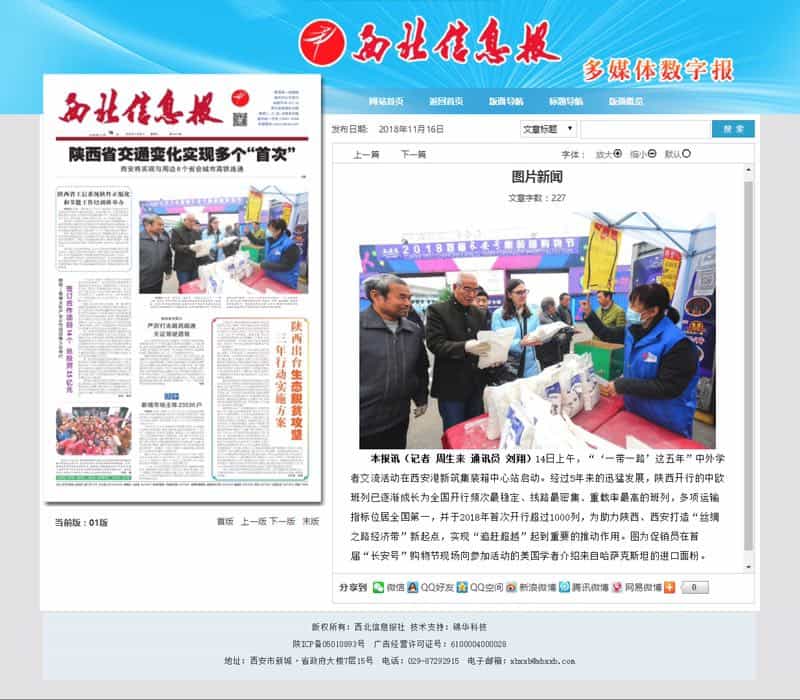
Next door, a “shopping festival” featured a number of goods shipped on the China-Europe trains, including this flour made from wheat grown in Kazakhstan.

That picture later made front-page news for a paper in Xi’an.

The following day, we visited Fucha town, which has developed an entire industry founded on a variety of locally produced brick tea, which is also shipped on the China-Europe freight trains.

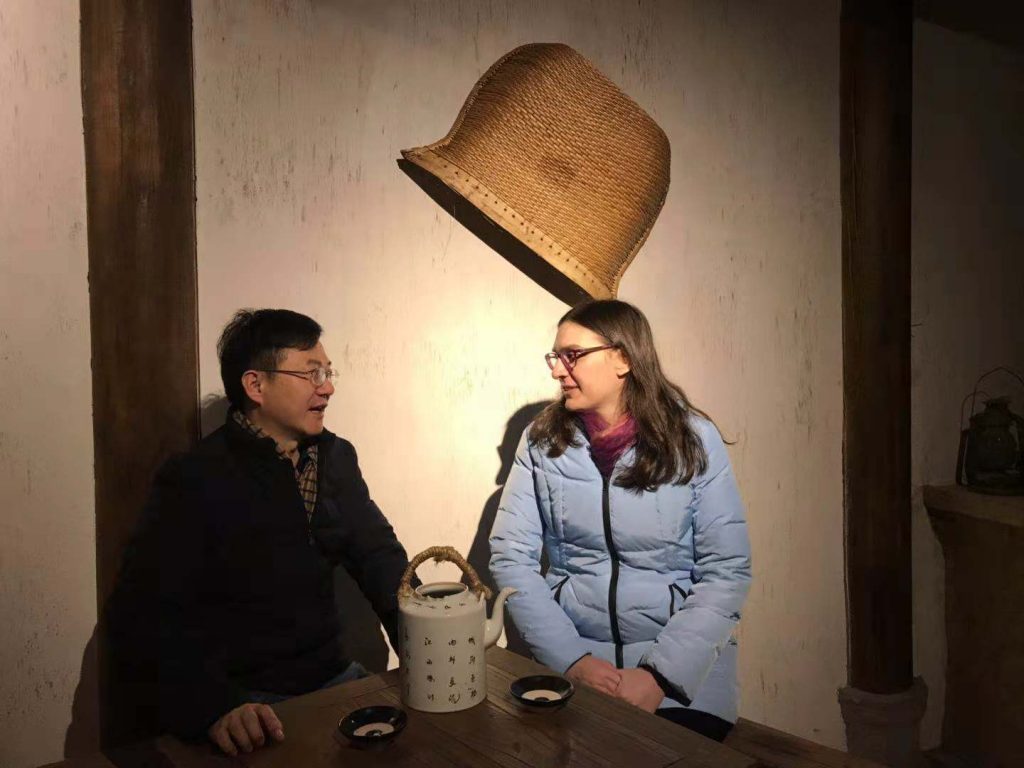
We learned more about the local tea and tea culture at the museum.

That afternoon, we gathered for a conference to share ideas and perspectives on the Belt and Road Initiative over five years, and I was one of the featured speakers, sharing stories from China Daily reporting.

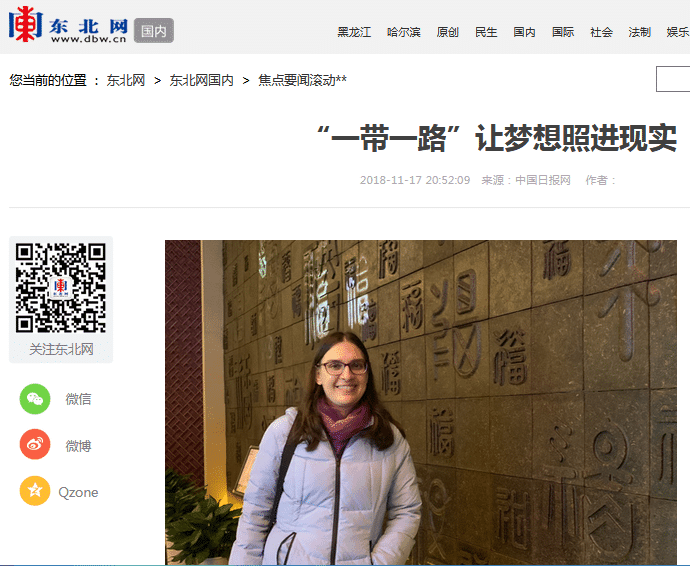
My speech that afternoon turned into a news story.

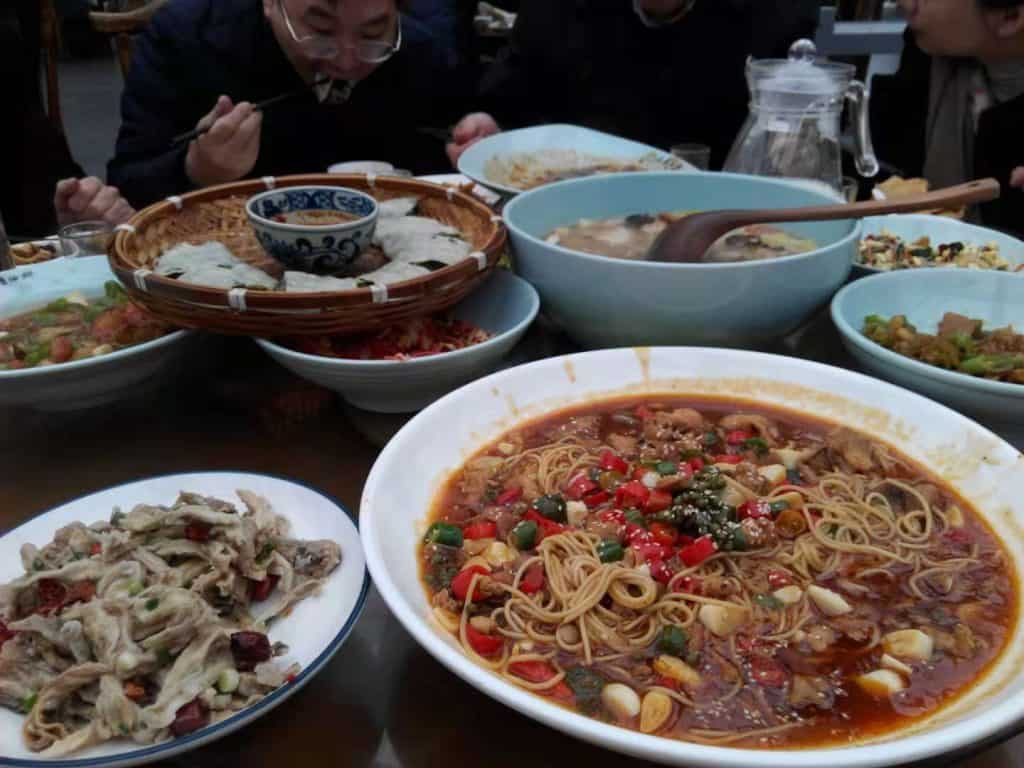
Now we the trip focused on business, it wasn’t without its small pleasures, such as the dining opportunities we had in Xi’an, renowned as a distinctive culinary crossroads.

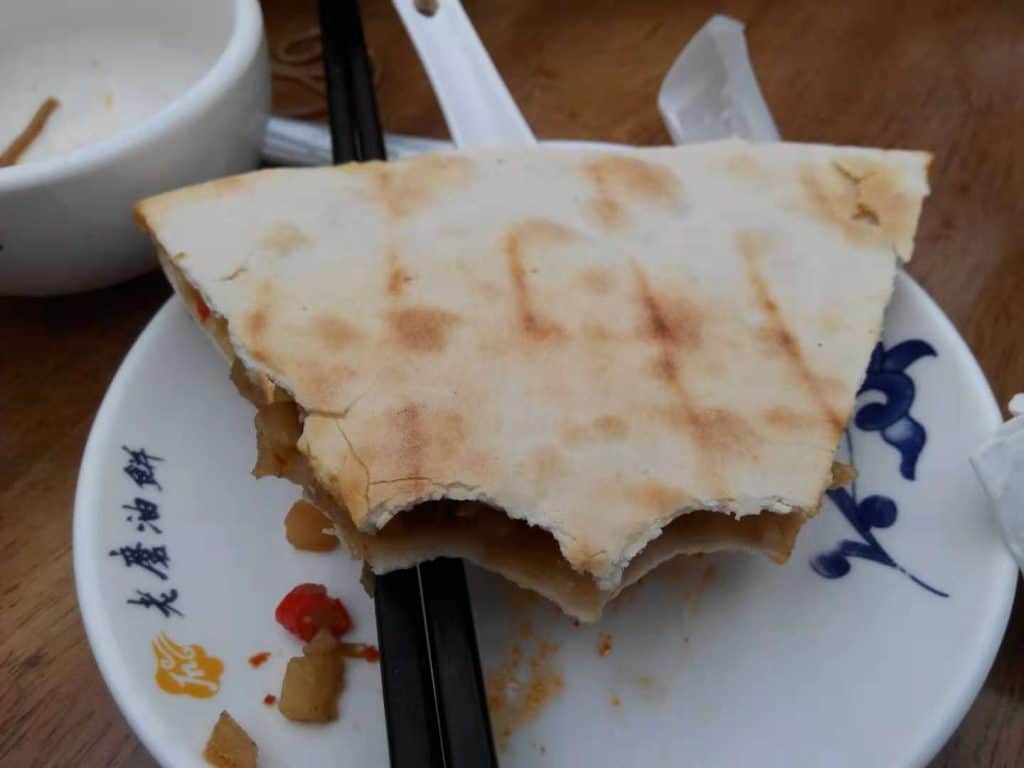
This flatbread with a vegetarian filling reminded me of an inside-out pizza.

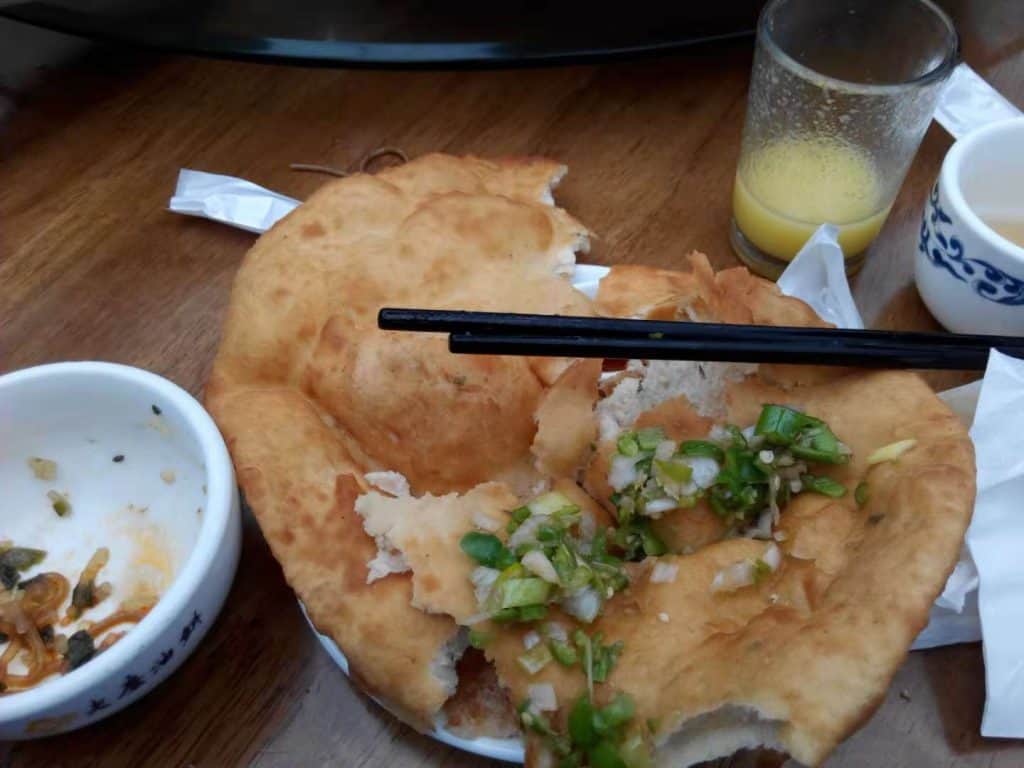
And this deep-fried bread, the namesake of one of the restaurants we dined at (老磨油饼), had a delightfully light, fluffy texture and was irresistible with salted peppers and green onion.

The Xi’an trip will forever shine as one of my highlights of 2018. So grateful I had the opportunity to visit this brilliant area of China for work.

‘Crazy Rich Asians’ the Movie Opens in China. How Will It Play With Audiences?

While much of the world welcomes the start of the holiday season, this weekend brings great cheer for moviegoers in China who happen to adore a certain novel by Kevin Kwan. Yes, Nov 30 marks the opening date in China for “Crazy Rich Asians” the movie.

The movie hasn’t even hit the theaters yet and many of my chat groups filled with other women with Chinese husbands and boyfriends are buzzing about the film. And why not? “Crazy Rich Asians” is the highest-grossing romantic comedy in a decade,  and it hopes to cash in on the same success in China, poised to become the world’s largest movie market.

But while “Crazy Rich Asians” could enjoy a splendid run in here in the Middle Kingdom, Chinese audiences already have a different perspective on the film.

Just consider its Chinese title, zhāijīn qíyuán (摘金奇缘), which others have translated into English as everything from “Tales of Gold-Digging” to “Gold-Picking Romance” or even “An Unexpected Gold-Digging Romance”.

It’s a bit misleading, as the character of Rachel Chu, played by Constance Wu, isn’t dating the “crazy-rich” Nick Young for his money, and doesn’t initially know he’s the scion of one of Singapore’s wealthiest families. But it does suggest that, here in China, people see “Crazy Rich Asians” through a different lens.

Look at what some Chinese have had to say about “Crazy Rich Asians” the movie on China’s movie review site Douban, including this:

One user criticized the film for its lack of authenticity, comparing it to Americanized Chinese food. “As a native Asian, I feel it’s like eating General Tso’s chicken in a Chinese restaurant” in a foreign country, chimed in someone in Los Angeles who goes by the moniker Durian Cake Brother (link in Chinese). “It looks like a film about Asians, but the spirit of it is American. The leading actress is an ABC. The story is about how Asians look in the eyes of the Americans.”

Professor Han Li, in an opinion piece for Sixth Tone, also writes in a similar vein about “Crazy Rich Asians”, singling out perceptions of the character Rachel Chu as a potential point of difference:

Despite my reservations about the movie’s portrayal of Chinese culture, there’s no doubt it struck a chord with Asian American audiences. It’s less clear, however, whether it would be met with the same reception in China, should it open here. The character of Rachel, in particular, might not be quite as popular. While some viewers may appreciate her depiction as a young, independent professional and be impressed with the way she has realized the American dream as a second-generation Chinese immigrant, others might see her not as the movie wants them to, but as Eleanor does — Chinese on the outside, American on the inside.

Jeff Yang echoes that in a piece about “Crazy Rich Asians” prospects in China, saying:

…the very thing that made “Crazy Rich Asians” so meaningful to Asians in the US might have given China’s cinematic powers-that-be pause: its focus on the global Chinese diaspora in America and Singapore.

…most Chinese don’t understand or find interest in the identity politics of more racially diverse societies like the US. The experience of Chinese Americans feels niche in China, where Chinese are the mainstream.”

Indeed, speaking of identity politics, don’t expect viewers or critics here to chime in on some of the controversies that arose in the West surrounding casting decisions (like having half-white/half-Asian Henry Golding play Nick Young, which some perceived as whitewashing). China has embraced many mixed-race celebrities (such as Fei Xiang), so it’s hard to imagine audiences having concerns about Golding.

Overall, these differences in perspective have a lot of critics uncertain about the film’s prospects in China, with some (like Victor Zheng at SupChina) even forecasting the possibility of a flop.

Nevertheless, as Jeff Yang notes, “Ultimately, of course, the biggest driver of the success of the film in China is likely to be its outsized success in America.” After all the movie topped the box offices for a record three weeks and raked in an incredible $230 million plus to date. That kind of triumph may be enough to power a strong run in China. We’ll see.

In the meantime, as for one tiny little demographic here in China — foreigners dating or married to Chinese — if the chat room conversations I’ve seen are any measure, I expect many of us will flock to the theaters in China for “Crazy Rich Asians”, success or no. Movie meetup, anyone?

What do you think about “Crazy Rich Asians” the movie in China? Do you feel audiences will embrace the movie anyhow? Or do you foresee a flop for the movie market in China?

Men Can Model Lipstick, and Still Be Men

Zhu Zhengting, the hot new heartthrob from boy bands Nine Percent and NEX7, stared at me from an ad, with his finger lingering seductively on the lips. It almost resembled those typical images of male models or stars, using their gorgeous faces and physiques to sell everything from jeans to jackets. But there was one striking difference.

He was wearing lipstick, a soft carnation pink, to help sell it, along with other cosmetics from a brand I discovered on Alibaba’s Tmall, an online shopping center.

A man as the brand ambassador for lip gloss, even wearing it? It’s unimaginable in the US, my home country, for a guy to model makeup, let alone vouch for it. Unless of course you’re a celebrity drag queen like RuPaul.

But Zhengting doesn’t do drag, and he isn’t playing up his feminine side, despite the makeup and softness of the photograph. Instead, his intense brown eyes seem to reach out to you, as he points to his lips, as if to say, Go ahead and kiss me.

Actually, that’s the part of the idea behind having young men help sell lipstick and lip gloss, which didn’t start with Zhengting, as China Daily reported in the article Love me, love my lipstick:

When Japanese superstar Takuya Kimura attentively stares at you, applying rouge on his tempting lips in a 1996 TV commercial, does your heart skip a beat?

Of course you can’t have him, yet having a lipstick he used might just bring him a little closer to you.

It seems Kimura’s fans had the same idea. That year, thanks to him, more than 3 million Kanebo lipsticks sold out within just two months, an unprecedented sales record stunning Japan.

The article goes on to detail other Asian celebrities who became the face of other cosmetics brands and more. But it underscores the growing importance of men in marketing cosmetics.

So does the emergence of male beauty bloggers like Li Jiaqi:

Dubbed “Taobao’s king of lipstick”, Li needs to test more than 300 types of lipstick on his lips every day during a seven-hour live broadcast, taking no breaks except to drink water or go to the bathroom.

“Many people question me, believing men do not have enough expertise to recommend female beauty products,” Li said.

But he believes he has advantages in this field. While many women may find their lips hurt after testing three lipsticks in a row, he can test as many as 380 lipsticks a day.

“Testing lipstick can damage the lips, but I do not treat my lips as lips,” Li said. Therefore, his fans have given him the nickname “iron-lipped brother”.

What a moniker!

Of course, all of this talk of men fronting lipstick brands, even wearing or testing different colors, would likely shock a lot of folks, including my fellow Americans. In the US, any man who dares to model cosmetics would surely find someone questioning his masculinity or even sexual orientation.

Admittedly, it’s a bit surprising for some Chinese audiences, as China Daily notes in its article Love me, love my lipstick: “If some people still feel confused about men advertising lipsticks, they may feel nervous when male stars also make commercials for other more intimate women’s products.”

Nevertheless, the trend of male celebrities advertising lipstick has gained traction in East Asian countries, including China.

I don’t exactly know why this works in East Asia, but it does. And there’s a part of me that wonders, is it evidence that East Asian countries like China are redefining masculinity in a new way? Is it driven by K-POP, where members of boy bands embrace makeup as part of their look? (See: K-pop boy bands defy traditional idea of masculinity)

Personally, I find it fascinating and even refreshing that there’s a corner of the world where a man can model lipstick and still be a man. I’m not sure the same would hold true in the US.

In the end, I decided to buy the lip gloss. While it had nothing to do with the arresting eyes of Zhu Zhengting, his face, and lips, certainly left an impression — in a soft carnation pink.

What do you think about men modeling lipstick?

Guest Post: I Love How This Young Chinese Man Treats My White American Daughter

Today, I’m sharing a short story a reader shared about her white American daughter Jessica, who she introduced to a lovely young Chinese man that has brought happiness to the both of them.

Do you have a story about love or anything else you think would fit this blog? Have a look at the submit a post page and then contact me today with your ideas or draft submission.


My daughter Jessica is as American peaches and cream as you get, and James, who has been in the U.S. for two years, is shy, a little awkward, respectful, brilliant and just a bit goofy. He and my daughter share a love of cats, music, Volkswagen Beetles, and all things anime and “cute.” They text off and on all day and never run out of things to say.

Ordinarily I’d be a little reluctant to let my daughter, who is in her late teens, get close to someone four years older, but James is as innocent as she is (they’ve both never dated anyone before), and I got to know James pretty well over the past couple of years and actually introduced him to my daughter.

Right after I introduced them, a group of us went to dinner for my birthday. Jessica was very shy and withdrawn. And James, knowing that Jessica’s favorite music group is Owl City, arranged with the restaurant somehow to play only Owl City music the entire time. A couple of weeks ago he bought her Hello Kitty Converse shoes, and Jessica reciprocated by giving him no-bake cookies (which I got to make, since Jessica tends to burn things up when she cooks – LOL). Next came snacks from the Asian market that James determined were all “cute,” and banana bread (baked by me, of course) was Jessica’s next thank-you offering. I’ve told her it’s okay to accept these things from James as long as she remembers to show him kindness as well and not just accept gifts as her due.

I have no idea what will happen in the future, but I love this young man and how well he treats both me and my daughter.

I wish I could tell every young Chinese man out there, both in the U.S. and in China, not to give up hope; that there are, indeed, lovely young American women who think Chinese men are desirable and fun, girls who think these young men are exactly what a man should be. Girls who are wise enough to look at a person’s heart and character instead.


Speaking of China is always on the lookout for outstanding guest posts! If you have something you’d like us to feature, visit the submit a post page for details — and then submit yours today.