
Velma Demerson, Arrested for Having Chinese Boyfriend in Canada

Loving a Chinese man and expecting his child shouldn’t be a crime. But white Canadian Velma Demerson got arrested in Canada in May 1939 because she was pregnant at 18 with the child of her fiancee Harry Yip.

Authorities took her in under the Female Refugees Act of 1897, where women could go to jail and become institutionalized for “incorrigible” behavior, including promiscuity and pregnancy outside marriage. As Vancouver Observer reported:

Demerson was sentenced to ten months at Ontario’s infamous Mercer Reformatory for Women. There, she said attending physicians performed eugenics testing on her and her unborn child, tests Demerson believes cost the health of her son and sent her down a path of despair and tragedy.

Imprisonment over “loving the wrong person” is outrageous enough, but Canada didn’t stop there with its punishment. As the CBC reported in an interview with Karin Lee, who is working on a documentary about Demerson called “Incorrigible”:

As soon as she got out of jail, she immediately married Harry and they tried to raise their son.

But [the child] was affected by some of the medications that she was given … so he had very extreme eczema, very severe eczema.

And the social worker just came by and just said, “You know, you’re just a child. There’s no possible way that you can raise this kid.”

So they took the kid away, and that was the beginning of a long struggle of trying to have her son in her possession [so] that she could raise [him].

Additionally, Velma Demerson’s marriage to Yip cost her Canadian citizenship due to an old law still on the books, stating women who wed foreign men would assume their husband’s citizenship. (The US also had a similar law that cost American women their citizenship when they married foreigners.) She only discovered this when applying for a passport in 1948. And when she followed the advice to seek Chinese citizenship instead, the Chinese embassy refused her application, which left Demerson stateless.

(That lasted for more than 60 years — yes, you read that right — until she finally had her Canadian citizenship restored in 2004.)

But because she had plans to move to Hong Kong, she went to British Columbia and managed to secure a passport under her maiden name. If authorities ever found out, it would have meant five years in prison for her, a risk that worried her every time she left Canada on her maiden name passport.

But in Hong Kong, where she went with her son, the hardship continued, as reported by the Vancouver Observer:

Demerson’s marriage fell apart under the strain of her pariah status, and unable to make ends meet in Hong Kong, she sent her son home to his father in Canada without her. Upon return a year after, she discovered her son had been placed into state care. She was never allowed to raise him. The two never reconciled. He drowned at the age of 26.

She went on to remarry and have another family, but everything she suffered because of her love for Harry Yip still weighed upon her. So after turning 60, she researched her situation and eventually decided to seek justice through the legal system, filing a lawsuit against the Ontario government, demanding an apology and $11 million in compensation. She received an apology in 2003 and later an undisclosed sum of money out of court.

Additionally, Velma Demerson went on to help other women imprisoned under the Female Refugees Act of 1897 get justice as well.

It’s heartbreaking to imagine that all of this happened to Demerson just because she loved a Chinese man and was having his baby.

How did the two meet? According to the filmmaker Karin Lee, Harry Yip caught Demerson’s eye when she was patronizing a Chinese cafe:

She was with her mother and a couple of other friends and they went to this Chinese café, and she thought he was a very cute waiter. So she kept dropping her silver to get his attention.

And finally he did pick it up and then he asked her for a date, and everybody was, like, happy about that. And then they went on some dates and she said that he was the most polite person and respectful person that she had ever met and just fell in love with him because he was such a decent guy — and good looking.

Just imagine what a beautiful life they might have had together, were it not for that fateful arrest.

Velma Demerson passed away in May 2019 at the age of 98. But Karin Lee hopes to share her story and struggle with wider audiences through a documentary about Demerson called “Incorrigible”, for which she’s currently seeking funding in an Indiegogo Campaign.

You can also learn more about this story through the interview with Karin Lee on CBC (Remembering Velma Demerson — the woman jailed in Toronto for living with her Chinese fiancé), a story about Demerson at the Vancouver Observer (Lost Canadian Velma Demerson’s tragic story of love and loss), and Velma Demerson’s page on Wikipedia.

What do you think of what happened to Velma Demerson?

How China’s ‘Butterfly Lovers’ Fluttered Into My Heart – and Mobile Phone

This year marks the 60th anniversary of the beloved Chinese concerto Butterfly Lovers, a composition inspired by the Yue Opera Liang Zhu, often thought of as China’s Romeo and Juliet story, where the world also conspires to separate a couple, with tragic results.

Despite the bittersweet nature of the opera, the concerto Butterfly Lovers soars with such a grandiose, joyful melody that I embraced it after coming to live China – so much so that I later set it as the ringtone on my mobile phone.

The story, which has its roots in Zhejiang province, resonated even more with me when I resided in its capital city of Hangzhou and found myself falling in love with one of its citizens – Jun, the man who would become my future husband.

Guess how I knew he had a thing for me? One day I happened to stroll into his side of the office, and discovered that he happened to set the very same ringtone – Butterfly Lovers – on his own mobile phone. This subtle flirtation, along with so many other sweet gestures from Jun, helped him flutter straight into my own heart. We kept the ringtones unchanged on our mobile phones for a very, very long time too.

In a way, it’s funny that we both saw the Butterfly Lovers as a kind of reflection of a relationship, given the fact that things don’t entirely end well for the couple. Still, what inspired us with the undying devotion the two had for one another – so powerful that the two transformed into butterflies, which allowed them to spend the rest of their days together. There’s something beautiful about a love that transcends even a human existence.

And it’s even more beautiful when you can share that with the person you care most for in the world, in a gorgeous melody.

Have you ever heard the Butterfly Lovers before? Do you consider it a romantic composition?

Food Is the Language of Love in My Mother-in-Law’s Kitchen

Tiny potatoes from my mother-in-law’s garden still litter the floor in the corner of our kitchen, ready to serve up their starchy delights in several more meals. Slices of crispy fried shaobing, my mother-in-law’s specialty flatbread, and heaping bags of the local smoked tofu from her village still cram the shelves of our freezer. We’ve barely dug into the jar of my mother-in-law’s mouthwatering homemade pickled kale, which perks up just about every stir-fried and stewed dish you could imagine, and we still have two more we haven’t even opened yet. And in the third drawer down next to the sink, bundles of rice noodles from my mother-in-law’s pantry have fed us for weeks already.

Whenever I gaze upon this abundance of flavors and foods for our next lunch or dinner, it reminds me of my mother-in-law and her boundless love for us, most often translated through treasures from her kitchen.

Like most Chinese parents, she would never say “I love you”, a phrase constantly showered upon me during my childhood. But over the years, I’ve found it in flavors of her lovingly prepared dishes, as well as in the items from her kitchen, pantry and garden that she always urges us to take home, with a forcefulness no less potent than any verbal declaration of affection.

Food has become a delicious means to bind us closer together, across cultures and continents. One of my favorite things to talk to my mother-in-law about is her home recipes, which I’ve come to miss since moving to Beijing. Sometimes we’ll call her on the phone, where I’ll ask her how to prepare potato cakes, a tempting stir-fry that turns these root vegetables into buttery cake-like morsels tossed with hot peppers and garlic. Or inquire about how much of the pickled kale I should use to make her classic tofu with pickled vegetables, a mouthwatering take on bean curd that transports me right back to her kitchen in the village.

Whenever she lovingly repeats every step with care and concern, making sure I understand her techniques, and patiently answers my questions, I know what she’s really saying to me. And it warms my heart, even long after we’ve said goodbye.

Did Writer Pearl Buck and Poet Xu Zhimo Have a Love Affair?

Xu Zhimo distinguished himself in literary history as one of the most esteemed romantic Chinese poets. But despite his devotion to the written word, Xu proved unfaithful when it came to marital relations — and his dalliances may have even extended to one notable literary figure from the West: Nobel Prize-winning author Pearl S. Buck.

That’s what Peter Conn, an English professor at the University of Pennsylvania, argues in his book Pearl S. Buck: A Cultural Biography:

Lossing was unfaithful to Pearl; she said that he “had his women,” both before and during his marriage to Pearl. Pearl believed that his assorted “silly secret episodes” repudiated “all the mutual fine loyalty of feeling and understanding that makes a marriage real.”

Perhaps in retaliation, Pearl took a lover, an extraordinary Chinese poet named Hsu Chih-mo (Xu Zhimo). The affair probably began in Shanghai and continued intermittently until Hsu’s death in a plane crash in November, 1931. The evidence suggests that Pearl had been faithful to Lossing throughout the decade of their marriage. She met Hsu at a time of intense personal need, and apparently found a brief joy that was canceled by the tragedy of his death. ….

There was never any question of marriage between Pearl and Hsu. Both were married, and, despite the fantasies of Letter from Peking, neither of them would actually have married across racial lines.

Conn further writes that their relationship inspired Buck to commemorate it in her novel Letter from Peking.

However, British literary biographer Hilary Spurling disagrees about the existence of such a romantic intrigue in her 2010 work Pearl Buck in China: Journey to the Good Earth:

…[it] seems unlikely if only because he was one of the stars of his literary generation, while she was at best an onlooker on the sidelines, having published no more than a handful of pieces in mission publications and American magazines. None of his biographers have found a shred of evidence for this affair, and the only Chinese witness who knew them both…categorically denied the possibility that Pearl had been Xu’s lover. …

No one in Pearl’s circle at the time in China, not even her husband, knew anything of this putative affair, apart from a vague assertion made fifty years later by Lillieth Bates that she had heard gossip linking their two names.

Spurling also goes on to quote Pearl Buck’s late-life companion Theodore Harris (a man who supposedly first posited the idea that Buck’s awe for Xu Zhimo was more than just a fanciful notion), calling his testimony “highly ambivalent”:

“It is the privilege of a writer to grasp a situation as it stands and complete it in her own mind,” he wrote of Pearl’s relationship with Xu. “It could have happened. How much actually did is not for us to know.”

And we may never know, unless someone happens to unearth a lost journal or letter that offers more convincing evidence that the two were lovers.

For those of you wondering what a tryst between Pearl Buck and Xu Zhimo might have looked like, you can read Anchee Min’s Pearl of China, which includes a fictionalized version of their supposed love affair, or pick up a copy of Pearl Buck’s Letter from Peking.

What do you think? Do you believe Pearl Buck and Xu Zhimo were once lovers?

Photo credits: 

Xu Zhimo: By Unknown – http://www.dg163.cn/Files/File/2009-9/14/I7JF4K7G5E203339F8.jpg, Public Domain, https://commons.wikimedia.org/w/index.php?curid=17163608

Pearl Buck: By Arnold Genthe – This image is available from the United States Library of Congress’s Prints and Photographs division under the digital ID cph.3a12720. This tag does not indicate the copyright status of the attached work. A normal copyright tag is still required. See Commons:Licensing for more information., Public Domain, https://commons.wikimedia.org/w/index.php?curid=422006

Celebrating 10 Years of Blogging With 10 Photos

Ten years of blogging. I can’t believe that, as of this Saturday, I will have been at this for a decade, ever since May 18, 2009.

To mark this special 10-year “blog-iversary” I’m running 10 photos of me and my husband from the past decade, along with a popular post from the end of each of these past 10 years.

Thank you so much to all the readers out there, no matter how long you’ve followed Speaking of China. You’ve continually inspired me and also helped make this a better blog. I’m also deeply grateful to have made so many wonderful friends in the process too. Know that I’m raising my glass to everyone in appreciation!

2009

IMG_6056

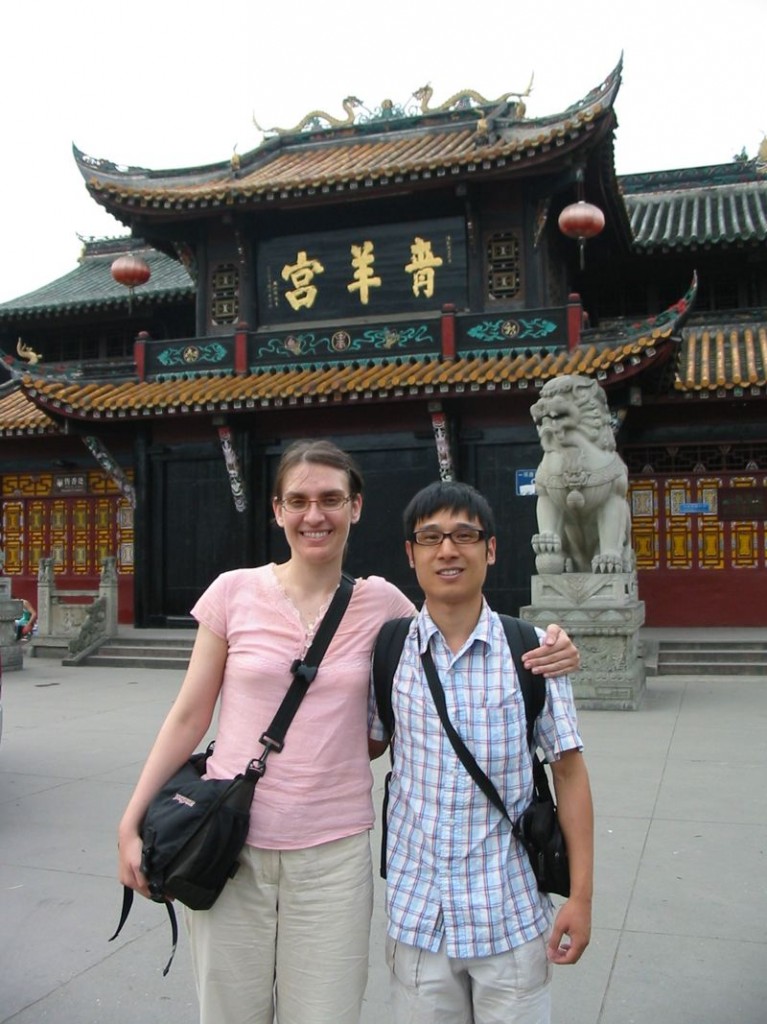
When Jun and I went to China for the summer of 2009, we indulged in a month-long trip across the country to take in all of the sights we never visited years before — from Xi’an and Chengdu to Changsha and Kaifeng.

Post: On the Rarity of Foreign Women and Chinese Boyfriends/Chinese Husbands

2010

IMG_5743-1

Jun and I welcomed the year of the tiger in 2010 as the emcees of a Chinese New Year celebration. What a night!

Post: China Blogs by Western Women who Love Chinese Men

2011

IMG_0537

Here we are in 2011 celebrating Jun’s birthday over Thai curries.

Post: Dating Advice for Chinese Men from J.T. Tran, the Asian Playboy

2012

IMG_1272

To commemorate our wedding anniversary in 2012, we enjoyed a relaxing evening of classical music performed by the Cleveland Orchestra. But before heading out, we posed before the flower garden to remember the evening.

Post: 2012 Blogs By Western Women Who Love Chinese Men

2013

102_2242

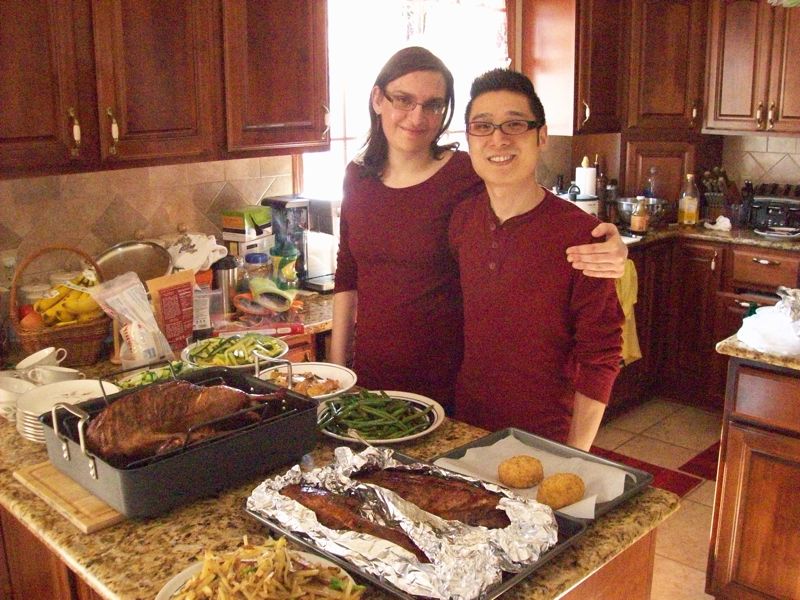
For Chinese New Year in 2013, Jun and I whipped up a traditional Chinese feast for the family — from roast goose and ribs to ginger-garlic green beans and stir-fried matchstick potatoes. We’re smiling, but there’s exhaustion behind those eyes because we spent the entire morning in the kitchen! Still, it was worth the effort.

Post: Why Aren’t We Talking More About The Rarity of AMWF?

2014

IMG_2145

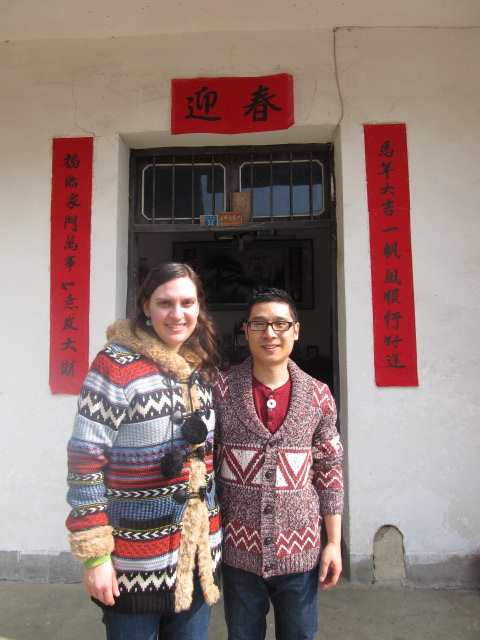
There’s nothing like finally spending Chinese New Year at the family home in China for the first time in years. In 2014, Jun and I reunited with his family and the country we love.

Post: 6 Stunning Celebrity Couples of Asian Men & Non-Asian Women

2015

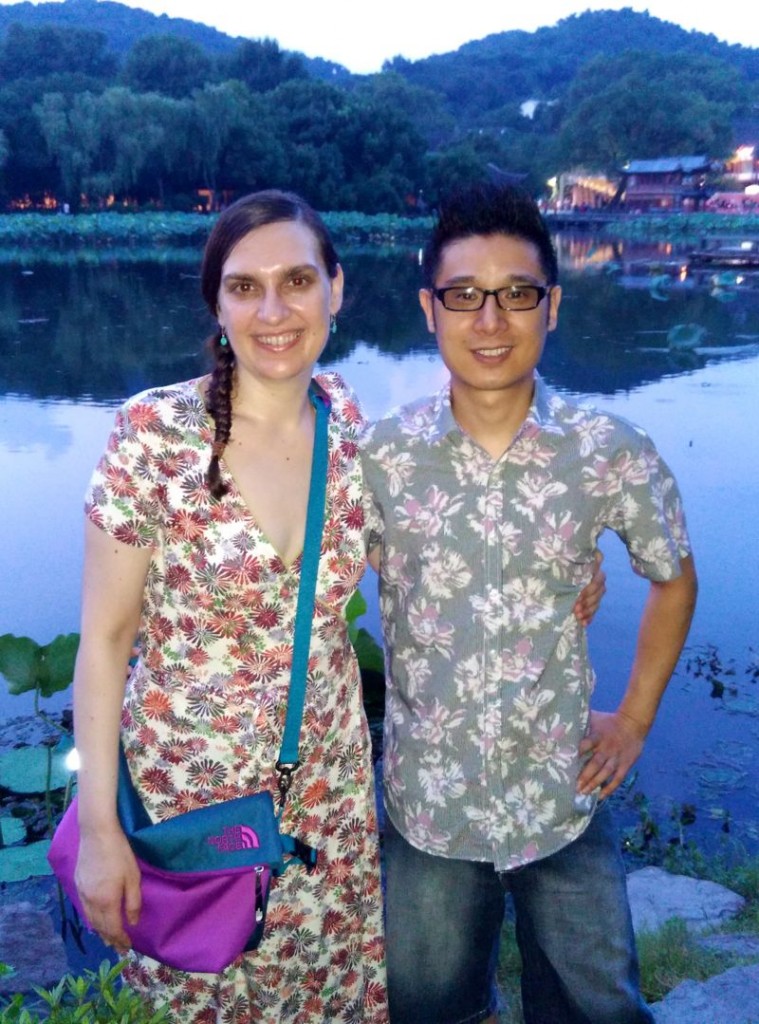
On my birthday in 2015, Jun and I visited the West Lake, snapping this photo by our beloved corner of the lake near Qu Yuan Feng He (曲院风荷).

Post: 4 Habits I’ve Learned from my Chinese Husband

2016

Jun and I felt fortunate to have the opportunity to visit Washington DC with family in the summer of 2016, where we had the chance to look upon all the iconic landmarks.

Post: 5 Unhappy Things I’ve Struggled with as an Expat Married to a Foreigner

2017

Jun and I took this shot just after moving from Hangzhou to Beijing.

Post: 2017 Blogs by Western Women Who Love Chinese Men

2018

As spring arrived in the park near our home in Beijing, Jun and I took the time to take a walk and appreciate the flowers.

Post: Olympic Speedskater Shaolin Sandor Liu Has a Cool China Connection Beyond His Chinese Father

Thank you so much for reading!

‘Travel to China: Everything You Need to Know Before You Go’: Interview With Josh Summers

Years ago before my first foray into China, I agonized over exactly what to pack for the year of work there that loomed ahead of me. I had studied every guidebook, primer and even memoir I could get my hands on about the country. Yet none of them seemed to answer certain nagging concerns about what I should make of my precious, and very limited, luggage space.

Could I purchase the feminine products I needed there? Would I still find contact lens solution if I needed it? Should I bring a year’s supply of vitamins, just in case? And what about deodorant?

As trivial as these questions might seem in retrospect, details matter when you’re planning for a trip or, in my case, a long-haul adventure of work overseas. And newcomers to China who sift through the usual titles on the country — such as the Lonely Planet China Guide (at the time, the most definitive and trusted guidebook) — may find themselves disappointed on small details that, nevertheless, make a big difference in travel.

That’s why “Travel to China: Everything You Need to Know Before You Go” by Josh Summers, which truly lives up to its title, offers a welcome addition to the world of guidebooks about China.

From basics such as visas, documents, money, packing and accommodations down to transportation of all kinds, staying connected, the Chinese language and keeping healthy, the book covers almost every issue a traveler might have and steers you toward the best choices for a smooth journey in China. It even includes a sample packing list to simplify your decisions on what to put in that suitcase (if only I had possessed that years ago!).

Essentially, it’s chock full of all the practical tips you’d need to know from a travel insider, and will easily pay for itself by saving you time and money. I recommend this guide to anyone either planning or considering travel to China (there’s even a chapter actually addressed to travelers on the fence about visiting the country).

It’s my great pleasure to introduce you to “Travel to China: Everything You Need to Know Before You Go”  through this interview with Josh Summers.

Here’s Josh’s bio from Amazon:

Josh Summers was born and raised in Dallas, Texas and never considered the idea of writing until he started traveling the world. In 2006, he and his wife set off for an adventure around Asia that aroused a passion for photography, filmography and, of course…writing. Over time, Josh has become known for a unique style of travel writing that is extremely personal, empathetic to the reader and very easy to follow. His blogs and videos reach millions of travelers each year and have inspired countless travelers to venture out beyond their comfort zone.

You can learn more about Josh and his book at his website Travel China Cheaper. “Travel to China: Everything You Need to Know Before You Go” is available on Amazon, where your purchase helps support this blog.


What sparked the publication of this book?

I get over a thousand emails every month from travelers that run across TravelChinaCheaper while planning for their trip. As much as I try to respond to these emails, it has just become too much for me to handle. What I wanted to do was create a concise, low-cost resource that I could point people to not as a way to make tons of money, but rather as a way to provide help to as many of these people as possible.

Unlike most guidebooks, which usually assume you’re planning to head to China because you purchased them, yours has a chapter titled, “Should I travel to China?” Why did you decide to include this in the book?

You’re right: a number of the questions that I hear from travelers center around their fear of the unknown. They have a desire to travel to China and they’re making the necessary steps to get there, but they’re not 100% convinced. Will they be able to get around using only English? Will they have to use a squatty potty? I wanted to be realistic about the challenges of China but also erase any unnecessary fears from the equation.

Tell us something from your book that you’ve found travelers are surprised to learn about China.

People are generally surprised to learn that China has surpassed most of the world when it comes to the adoption of mobile payment systems. As most expats in China know, we rarely walk around with cash anymore! What’s equally frustrating for tourists to learn, though, is that these mobile payment systems (WeChat, Alipay, etc.) are not geared toward short-term travelers and are pretty much impossible to set up without a Chinese bank account. So, like it or not, cash is still king if you’re walking around China as a traveler. This is the type of information that most travel guides don’t/can’t cover.

Could you share with us a few of the great tips from your book that travelers might not glean from a typical guidebook?

Sure! There’s an entire chapter dedicated to staying connected while in China. For many of us, that means finding a way to connect our mobile devices to the internet while we’re traveling. Most guidebooks will tell you that the internet in China is censored and that WiFi is ubiquitous around most major Chinese cities. It’s very generic and obvious information. What they don’t tell you is that often times these WiFi hotspots are locked behind a text-verification wall, which means that if you don’t have a Chinese phone number, you can’t use the WiFi. This is the case for most airports, shopping areas and even some coffee shops. My guidebook gives simple tips on how to prepare your phone to connect to the Chinese network or how to access global WiFi easily without the need for text verification.

How have readers responded to your guidebook?

So far the reception has been great! I’m so encouraged when I receive emails from people telling me that reading the book was like sitting down with me to chat about my experiences in China. Whereas most emails I used to receive ended with a travel question requiring an answer, nowadays I’m getting more and more emails that are simply a “thank you for your help”. It’s genuinely satisfying.

What do you hope readers gain from your book?

In the end, my desire is that readers will walk away with a confidence that even as a first-time traveler with no Chinese language skills, they could enter China and easily travel around. The world – not just China – is a much friendlier place if you know what to expect before you arrive.


Many thanks to Josh Summers for this interview! You can learn more about Josh and his book at his website Travel China Cheaper. “Travel to China: Everything You Need to Know Before You Go” is available on Amazon, where your purchase helps support this blog.

Photo Essay: Hangzhou Video Shoot – From West Lake to Wondrous Food

I just returned from my trip to Hangzhou to shoot video footage for China Daily Website as well as the Asian Cuisine Festival set to take place in the city from May 15 to 22. While we followed a very demanding schedule that meant being out of our hotel around 12 hours a day for shoots, the experience was unforgettable and worth the effort.

As I’m still catching up on pretty much everything (please bear with me!), in lieu of a written post I thought I’d share some behind-the-scenes shots from the experience, giving you a look at where we went as well as what things looked like before the cameras.

On our first day, we arrived in the afternoon at Hangzhou and the headed to the West Lake, where the production team scoped out the area for shooting.

The following day, we went to Hangzhou’s legendary restaurant Lou Wai Lou on Baidi. Part of the shoot took us to the top floor, where I sat at an al fresco table with views of the West Lake. It probably ranks as the most breathtaking seating I’ve ever experienced in a restaurant — if only I could have enjoyed it with my husband!

And of course, as you can probably tell, most of the dishes aren’t even food that I could eat, as a vegan. We had to get really creative in the shooting process, so it appeared as if I was sampling everything. Am really grateful the production team was so accommodating on this.

But make no mistake, as beautiful as the setting looked, we had work to accomplish. And that kept me quite occupied!

But still had enough time to grab this selfie with one of the team members!

Still, we did manage to enjoy a delightful lunch at Lou Wai Lou — and our director gave the food a hearty thumbs-up.

In the afternoon, we went to Zhiweiguan, another time-honored restaurant in Hangzhou, to do a shoot. It was delightful to meet several of their chefs, including these very talented young women.

Zhiweiguan really impressed me with their snacks and desserts, including the dish at the very bottom of the photo — longjing wencha — where dough is fashioned to look like the leaves of Dragonwell tea, steamed, and then served in a clear broth with shrimp. If you didn’t pay close attention, you might think they were just cups of green tea!

On Thursday, we visited a food street and found ourselves in a restaurant overlooking a stream leading into the Grand Canal, which links Hangzhou and Beijing. It meant more food, and of course more shooting too.

Here’s another angle during a shot in the restaurant.

In the afternoon, we shot scenes by the West Lake in my favorite corner — Qu Yuan Feng He (曲院风荷) — as well as one critical shot on Su Causeway, with a view of Lou Wai Lou on Bai Causeway.

We returned that evening to the food street to revel in the evening atmosphere, perfect for the video, and dined at one of the restaurants on the strip. Yes, even during the meal we were working!

On Friday, we did shooting at Hangzhou Restaurant, which took us to its sixth floor, where we could dine beside stunning views of the West Lake while shooting video footage. Oh, how I wish I could have been there with my husband too!

On the sixth floor of Hangzhou Restaurant, the windows are like screens — and pulled back they reveal a glorious scene of the West Lake. (Sorry, it was a bit rainy and cloudy, but during clear weather it would certainly look enchanting.)

In the afternoon, we arrived at our last location — Charen Cun, nestled in the most prized tea fields in the city, where Lion’s Peak Dragonwell tea grows. This restaurant had the most dazzling traditional decor, hands down!

Immediately, the restaurant served up a hot cup of fine Dragonwell tea. As this is the one and only tea I drink to start my day, it was a welcome sight on the table.

Upstairs, I changed into my qipao to interview the restaurant owner about Dragonwell tea as well as the story behind his restaurant, Charen Cun. It was my favorite interview of all because of how much I adore Dragonwell tea.

Then the owner took me into the tea fields to show me how to pick Dragonwell tea. What a delight and honor! I wished I could have stayed much longer…too bad the weather turned cold, otherwise I could have kept my qipao on! 😉

That evening, we dined with the owner and it proved the finest meal of our trip, with a delicious sampling of dishes that emphasized freshness and rural, home-style flavor. Some even reminded me of my mother-in-law’s cooking.

Again, how I wish I could have shared this dinner with my husband, who would have really appreciated the food and company. The owner was very warm and hospitable, inviting us all to return again in the future.

But even the finest meals come to an end. I had a plane to catch later that evening, so we all headed home to the hotel, where I packed my things and then got a taxi to the airport.

I smiled upon finding my seat on the plane, knowing I would be reunited soon with my husband, with tales of my fascinating experiences in Hangzhou, the city that first brought us together so many years ago.

Overall, I gained some valuable experience and at the same time discovered another side to Hangzhou and its culinary heritage. I’m looking forward to seeing how the videos turn out — and once they go live, I’ll definitely share them with all of you!

13 Hot Travel Spots for Chinese Passport Holders in 2019

Traditionally, Chinese passports have been synonymous with onerous visa applications, in-person interviews and other bureaucratic headaches when considering international travel. That’s something I learned many years ago when I first tried to bring my husband, then boyfriend, home to the US with me.

But, to borrow that line from Bob Dylan, the (traveling) times, they are a’ changing.

Today’s Chinese tourists have just as much wanderlust as their Western counterparts, as more opt for independent travel and unique locales, and they also represent huge dollars in the international tourism industry. That has spurred a growing number of global destinations to welcome Chinese visitors with preferential policies.

Earlier this year Travel & Leisure and Lonely Planet posted their lists of the hottest travel destinations for 2019, and a number of the countries listed give easier visa clearance for Chinese citizens. So if you’re interested in hitting a buzz-worthy destination as a Chinese citizen, check out the following countries, listed in alphabetical order:

Image by Dean Moriarty from Pixabay

#1: Cambodia

The seat of the legendary Angkor Wat also offers superb beaches and a cuisine that shares much common ground with Thailand and Vietnam, not to mention some new ecotourism adventures in the country’s south (as mentioned by Travel & Leisure). And for Chinese passport holders, an e-visa (which you can pay for with Alipay and even a UnionPay card) or visa on arrival will help secure your vacation in the land of Khmer culture.

Image by Pete Linforth from Pixabay

#2: Egypt

Who hasn’t dreamed of gazing upon the country’s ancient pyramids, Sphinx, the Nile and more (made even more tantalizing in this mention on Travel & Leisure)? Fulfill your wish, thanks to Egypt’s visa on arrival for Chinese passport holders who meet some relatively simple requirements.

Image by Judith Scharnowski from Pixabay

#3: Jordan

Jordan has enticed many travelers (and Lonely Planet in 2019) with its iconic Jordan Trail (which includes the ancient city of Petra). The fact that it offers visas on arrival for Chinese passport holders further paves the way for your visit there.

Image by Herbert Aust from Pixabay

#4: Kenya

Besides the great outdoors and safari adventures, Kenya has also landed on savvy travelers’ must-see lists (including Travel & Leisure) for its vibrant arts scene in Nairobi. E-visas for Chinese passport holders will help kickstart your journey to this dynamic East African country.

Image by David Mark from Pixabay

#5: Kyrgyzstan

This far western neighbor to China has garnered rave reviews among a growing group of independent travelers for trekking and pristine landscapes (earning it a mention by Lonely Planet). Its e-visa offers a simple, convenient way for Chinese passport holders to gain entry and experience the stunning scenery.

Image by David Mark from Pixabay

#6: Malaysia

From picturesque Penang and to idyllic coastlines, islands and rainforests, Malaysia has long remained a trusty destination for Chinese passport holders – and it got a special recommendation from Travel & Leisure in 2019. An e-visa is all Chinese passport holders need before buying that ticket to Kuala Lumpur.

Image by Patrick Fransoo from Pixabay

#7: Oman

Considered by Travel & Leisure as “one of the most beautiful countries on the Arabian peninsula”, Oman has everything from brilliant beaches and desert wonders to the UNESCO Frankincense Trail. And Chinese passport holders just need an e-visa to set foot in this Middle Eastern gem.

Image by Walkerssk from Pixabay

#8: Seychelles

The Seychelles have seduced many a traveler to its shores with its Instagram-worthy beaches and forests straight out of a travel brochure (catching the eye of Travel & Leisure this year too). Even better, no visa needed for Chinese passport holders to visit this island paradise, so all you need to worry about is your plane tickets and luggage.

Image by Jason Goh from Pixabay

#9: Singapore

The success of the movie “Crazy Rich Asians” has catapulted Singapore, one of the first overseas destinations open to Chinese, to the top of many travelers’ itineraries (including Travel & Leisure), hoping to experience some of the swanky spots featured in the novel and film. Chinese passport holders only need an e-visa or, even simpler, the visa-free 96-hour transit option — then you’re one step closer to cocktails at the Marina Bay Sands Hotel.

Image by Roman Bader from Pixabay

#10: Sri Lanka

Lonely Planet says “Sri Lanka is decidedly having its moment in the equatorial sun,” and that’s especially true among Chinese travelers. They flock to its shores for the great temples, natural wonders, amazing beaches and surfing, mouth-watering curries, spice gardens, world-famous teas and more – especially because the country offers a visa on arrival or e-visa.

Image by Alex Sky from Pixabay

#11: Tunisia

From awe-inspiring Roman sites to glorious Mediterranean beaches, Tunisia has a lot for visitors – and it’s making a comeback with travelers in recent years, as Travel & Leisure reported. Even better, no visa required for Chinese passport holders, making this land of couscous especially tempting.

Image by Olga Ozik from Pixabay

#12: United Arab Emirates

United Arab Emirates has gripped the world with grand and glittering Dubai (which has everything from the tallest building on Earth to superior options for shopping). But Travel & Leisure also recommends rising star Sharjah for its beautifully preserved heritage and more. No visa necessary for Chinese passport holders to experience this Middle Eastern powerhouse.

Image by Simon Matzinger from Pixabay

#13: Zimbabwe

Home to the most mesmerizing views of Victoria Falls, Zimbabwe has inspired wanderlust among countless travelers, eager to gaze upon the superlative natural wonder (and more). It ranked No. 3 on Lonely Planet’s list of countries for 2019 – and it should get priority on your list, since Chinese passport holders can secure an e-visa/visa on arrival.

What other hot destinations for 2019 would you recommend for someone traveling on a Chinese passport? Let us know in the comments!

Yung Wing, China’s 1st Overseas Graduate, Finds Love, Tragedy in US

Yung Wing (1828-1912) stands out in history as the pioneering overseas Chinese student, the first from China to graduate from an American university (Yale, class of 1854). He also went on to champion higher education for his fellow Chinese compatriots by establishing the Chinese Educational Mission, which helped send other Chinese students to US schools (including Yale) for a period of time. And countless students, scholars and lifelong learners have benefited from his generous donation of over 1,200 books to Yale, which formed the heart of its celebrated East Asian library.

But Yung Wing’s life also stands as a tragic example of how Chinese exclusion brought about needless suffering — and in his case, the death of his beloved wife, a European American woman.

Yung Wing, who had become a naturalized US citizen in 1852, married Mary Kellogg, from the town of Avon, Connecticut. In a 1875 photo from their wedding day, Mary looks graceful in a long, flowing white gown adorned with garlands of flowers, just like any beautiful bride. (In his memoir, Yung Wing states that, much like the Chinese Educational Mission, it was one of his daydreams while at college to marry an American woman.)

Yung Wing and Mary Kellogg went on to have two sons together: Morrison Brown Yung and Bartlett Golden Yung. Yung said of them in his memoir My Life in China and America:

They are most faithful, thoughtful and affectionate sons, and I am proud of their manly and earnest Christian characters. My gratitude to God for blessing me with two such sons will forever rise to heaven, an endless incense.

By Fred Hsu – Own work, CC BY-SA 3.0, https://commons.wikimedia.org/w/index.php?curid=22760947

Unfortunately, their marriage took place amid growing the anti-Chinese sentiment gripping the US — as Yung Wing described it in his memoir, “The race prejudice against the Chinese was so rampant and rank….” The era culminated in one of the most discriminatory laws ever enacted in America: the Chinese Exclusion Act, which passed in 1882.

As Ben Ralton writes in a piece for HuffPost:

…the Chinese Exclusion Act [was] overtly designed to impact and even destroy the existing Chinese American community. Yung’s citizenship was stripped, and when he traveled back to China to continue his work as a diplomat, he was denied readmission into the United States under the law’s bigoted pretenses. In a painfully blunt letter relying this decision to diplomat Charles Denby, Secretary of State John Sherman admitted that the exclusion “would on its face seem unjust and without warrant. … Nevertheless, … the department does not feel that it can properly recognize him as a citizen of the United States.”

This denial of Yung’s citizenship, and indeed of the fundamental truths of his half-century of inspiring and influential American life and work, profoundly affected his family and final decades of life. Deeply traumatized by their extended separation and by fears for Yung’s life, Mary passed away, leaving Morrison and Bartlett to be fostered out to family friends in New England.

Mary’s death came in 1886, which meant their entire marriage lasted only a scant 11 years. She would never live to see other indignities visited upon her husband, as TK Chu noted in the work 150 Years of Chinese Students in America:

[Yung Wing’s] life at old age was lonely (his children were working in China) and at times humiliating. He was asked to leave a boarding house when fellow boarders refused to share a dining table with him. After that he found his last residence at 284 Sergeant Street, Hartford; he entered his second floor quarters through a side entrance.

To learn more about Yung Wing and his extraordinary life, you can read his memoir My Life in China and America.

‘African Jasmine Flower’: Ruth Njeri Finds Success, Love on Chinese Stage

Among the many talented foreign women who happened to marry Chinese men, there’s Kenyan Ruth Njeri, who rose to fame – and found love – on the stage in China.

Njeri is also known in China as “非洲茉莉花“ (fēizhōu mòlìhuā, the “African jasmine flower”), a nickname she received from the country’s former president Hu Jintao after meeting him and singing together with him the Chinese folk song “茉莉花” (Jasmine Flower) in Nairobi, Kenya, in 2006, which landed her in the national TV news in China. As China Daily reported in an April 7, 2013, story titled Chinese Tones:

Njeri’s patience and persistence in learning Mandarin paid off in April 2006 when Hu Jintao, then China’s president, visited Kenya. Because of her progress in Chinese, she was selected from the Confucius Institute to meet him.

“I was quite nervous meeting him, and I heard my voice trembling while talking to him. He is actually a nice person who is very approachable and likes to chat with young people.”

Njeri completed her studies at Nairobi’s Confucius Institute in June that year and moved to China to pursue a degree in language and literature at Tianjin Normal University a month later.

She also received a scholarship for her studies, thanks to winning the Chinese Bridge Competition in Kenya.

In the next several years, she went on to appear numerous times in TV shows on networks all across China, including the country’s prominent China Central Television, or CCTV, which named her one of the most influential foreigners of 2007.

But her greatest moment – the one that changed her life and love forever – came with her high-profile singing performance in the 2011 Spring Festival Gala, or Chunwan, China’s annual Chinese New Year’s Eve show broadcast across the country on CCTV on the most important night of the year. That year, she shared the stage with Ya Xing, a Chinese man she first met in a Shanghai:

Ya, 40, hails from Luoyang, an industrial city in Central China’s Henan province. He met Njeri, 34, from Nairobi, Kenya in a restaurant in Shanghai while she was studying on a Chinese government scholarship. At the time, they were both participating in the World Expo and met again a month later in Shanghai just before sharing a stage during the CCTV Spring Festival Gala in Beijing in 2011.

“It was fate, Yuánfèn“, Ya said.

The two of them would go on to perform together on TV many times.

Njeri also sang for the 2013 Spring Festival Gala as well (a year that saw Celine Dion perform for the event).

And as for Njeri and Ya:

Three years ago, Ya Xing married Ruth Njeri before his friends and family in China. He is considered brave among his peers for starting a new life in Kenya but the ebullient entrepreneur, once a TV host, does not think so.

“I am in love,” he said. “It might look complicated to marry into a new culture, but I think people think too much of it.”

Read the full story — and see a photo of the delightful couple — at China Daily.

Bilibili has a more recent video about Ruth Njeri’s life in Kenya, including highlights from her performances.

For people in China, here are links to Ruth Njeri’s performances on CCTV, including this CCTV performance of Ruth and Xing, and this other CCTV performance by the couple

You can learn more about Ruth Njeri at Baidu Baike (written in Chinese).

What do you think of Ruth Njeri?