Actor Liu Ye, Wife Anais Martane Stand Up for Sea Turtles with WildAid

While reading China Daily’s newspaper recently, I came across a public service ad starring a rather familiar couple:

Sure enough, I recognized actor Liu Ye and his wife Anais Martane, one of the most beloved celebrity Chinese-foreign couples here in China — and now ambassadors for the nongovernmental organization WildAid:

WildAid released a new series of TV messages and billboards featuring popular actor Liu Ye and his wife Anais Martane to raise awareness about the threats while calling on the public to stop buying sea turtle products. Speaking at the launch event this week, Liu Ye said “we can all do something really simple to help protect sea turtles, and that is simply not buying sea turtle products. We should all also reduce our use of plastics, and keep plastic waste away from coastlines.”

Liu Ye, considered one of the top actors in the Chinese mainland, remains best known in the West for his breakout performance in the 2005 release of Balzac and the Little Chinese Seamstress, the 2006 Curse of the Golden Flower and the 2007 Hollywood film Dark Matter. He and Anais Martane, a French photographer, married in Beijing in 2009.

According to a China Daily interview with Liu Ye — Heartthrob Liu Ye Now Enjoying Work and Married Life, published March 11, 2010 — Liu said, “We decided to get married because we share traditional views of the family. I am over 30 and she is one year younger than me. I want to be responsible for her and marriage is a promise.” In response to a question about what he found most attractive about Martane, he said, “She is a very nice woman. She gives me lots of peaceful feelings. She likes reading and has read many classics. She likes Israeli and Russian music.”

And another China Daily article notes Anais Martane stands as “more than just a Chinese celebrity’s wife” as she has become involved in public service projects and cares very deeply about the environment. She told China Daily, “My relationship with environmental protection began with a connection to the sea, as my childhood was spent in a coastal town, and I am crazy about everything to do with the sea.”

You can learn more about the WildAid campaign for Sea Turtles involving Liu Ye and Anais Martane at the WildAid website.

Actor, Model Godfrey Gao, 35, Died While Filming a Reality Show in China. What Happened?

Taiwanese-Canadian actor and model Godfrey Gao, 35, died from sudden cardiac arrest. Yes, the same Godfrey Gao who starred as Magnus Bane in “Mortal Instruments: City of Bones” and the man who made headlines in 2011 as the first Asian model to appear in an ad campaign for Louis Vuitton.

This news shocked many of his fans, myself included, last week on Nov. 27, when we all learned of his untimely passing during his participation in an extreme reality show in China called “Chase Me” (“追我吧”). Here’s a rundown of the basic facts, as reported by the South China Morning Post:

Chase Me is one of China’s most popular sports reality shows with a cast of two regular teams, plus guests, taking part in a series of night-time physical challenges, for example racing up and down a 70-metre (230 foot) wall.

Gao, who was one of the guest competitors, died after collapsing while running at 1.30am on Wednesday, the television company said in an earlier statement.

He was declared dead at a local hospital three hours later.

Another report from the South China Morning Post provides statements from the TV show and Gao’s representatives, which said that “The show’s medical staff began rescue efforts right away, and then rushed him to the hospital”. Further, a Chinese-language article in the Oriental Times points out that Gao had been filming for 17 hours when he collapsed.

Not surprisingly, Gao’s death at such a young age, and on a show that The New York Times describes as “famous for pushing its contestants to the limits”, has triggered public outcry in China over the incident. Much like myself, people are wondering, just what exactly happened? How could a TV show allow its contestants to engage in such life-threatening stunts for the sake of ratings and views?

Even though Godfrey Gao’s family have not faulted the broadcaster, Zhejiang TV, for his death, online fans see it differently, as noted by the South China Morning Post:

According to a copy of the competitors’ contracts that circulated online, the participants agree that the programme makers cannot be held liable for any accidents that happen during filming.

…the leaked document prompted widespread criticism as many social media users asked whether the station should bear some responsibility for Gao’s death.

One Weibo user commented: “This is too much. The broadcaster should take responsibility, investigate the responsibilities of the relevant personnel, take care of his family, sincerely apologise and compensate them.”

Furthermore, those with medical expertise have denounced the broadcaster for poor medical judgment as China Daily shared:

Netizen Li Miaowen-Zhao Kexin, also an endocrinology doctoral candidate at Huazhong University of Science and Technology, wrote that Zhejiang TV lacked “medical common sense”, a comment that became most popular under a thread on Gao’s death on Zhihu, a widely popular question-and-answer platform.

“It happened at one or two in the morning, right after midnight, when the human body temperature is at the lowest, and numerous bodily functions, including nervous responsiveness, joint reflexes and functions of the heart and the lungs are also at their lowest active level. Isn’t running at this time of the hour equivalent to self-harm? Doesn’t Zhejiang TV have any medical common sense?” the doctoral candidate added.

The public pressure has prompted the broadcaster to open an investigation into Godfrey Gao’s death, and also take the blame for Gao’s passing as China Daily reported:

Reiterating deep sorrow, the TV station, through its official Weibo account, said it will bear responsibility for Gao’s death, and replace Friday’s broadcast of Chase Me with TV episodes.

At the same time, China Television Artists Association’s actors committee has now urged actors to refuse overtime work, and called on TV producers to allow talent sufficient time to rest and recover, according to a China Daily article.

Gao died days before Friday Nov. 29, when he “was meant to be a groomsman at former Taiwanese basketball star James Mao’s wedding” as Variety shared.

May Godfrey Gao rest in peace.

What do you think about the death of Godfrey Gao?

Photo credit: Gage Skidmore from Peoria, AZ, United States of America – Godfrey Gao,CC BY-SA 2.0,https://commons.wikimedia.org/w/index.php?curid=76189999

6 Tips and Tricks for Making an Amazing Thanksgiving Dinner in China

2019 marks a sort of milestone for my husband Jun and me — the year that we will finally make an authentic American-style Thanksgiving dinner here in China. We’ve got a whole bird on the menu (for my carnivorous husband!), baked tofu for me, the vegan, and loads of comfort foods with a vegan twist — from stuffing and green bean casserole to gravy and dessert.

Thankfully, in the era of online shopping, powered by Taobao and JD, it’s never been easier to pull together the ingredients for a meal just like your mother or grandma used to make.

Still, bringing it all together requires flexibility and sometimes a little ingenuity too. As we gear up to make this our best Thanksgiving ever in China, I’d like to share a few tips and tricks for anyone else hoping to cook up an amazing and authentic Thanksgiving dinner in China.

#1: Aim for more local poultry

While a traditional Thanksgiving dinner revolves around turkey (so much so that in the US people even refer to Thanksgiving as “Turkey Day”), this poultry isn’t native to China and won’t easily be found at your local supermarket or fresh market. On top of it, most of us here only have toaster ovens that couldn’t possibly accommodate such a huge bird.

So if you don’t own a super-huge oven and you’re not keen on splurging on a restaurant’s ready-made turkey, then simply aim for a more local poultry option, period. For example, whole chicken and duck are both readily available in fresh markets in most cities, and either could make for a wonderful culinary centerpiece for your meal. Besides, it really all comes down to the seasoning — just spice up the bird as you usually would at home, and you’ll still find it delivers that nostalgic flavor you remember from past dinners.

This year, I’m planning on adapting my favorite turkey recipe — soy-sauce and honey-glazed turkey — with a chicken instead.

#2 Cranberries don’t need to be in a sauce

While cranberry lovers have rejoiced over their rising abundance in China (Ocean Spray Craisins, I’m looking at you), good luck finding fresh cranberries. But who says you absolutely must serve your cranberries as a sauce? I’m planning on providing a small bowl of my favorite dried cranberries to represent this must-have at the table.

#3 Adapt your recipes to the stovetop or rice cooker

While much of Thanksgiving cooking relies heavily on baking in the oven, for those of us in China, that puts extra pressure on your toaster oven, which is often much smaller and less accommodating than the ovens most Americans use. But lots of things that normally get baked could also go on the stovetop, such as stuffing and green bean casserole. Or you could even use your rice cooker to make some of the dinner (such as rice cooker stuffing).

#4 No poultry seasoning? No sage? No problem!

The beloved American poultry seasoning that appears in seemingly every Thanksgiving recipe you’ll find online is pretty much missing in action here in China. Same for sage, which features in just about every single poultry seasoning substitute. Never fear — first off, consider any of these substitutes for sage. And then use those as you build a poultry seasoning substitute.
#5 Make your own “canned” pumpkin puree

You’ll strain to find canned pumpkin puree outside of supermarkets that cater to foreigners, and even then those cans come at a premium. But sweet, hearty pumpkins much like those used to make pumpkin pie are plentiful at markets, for much less, so why not make your own puree instead? Here’s an easy recipe for pumpkin puree.

#6 Lettuce not a must for salads

Growing up, Thanksgiving always included at least one salad at the table, with plenty of fresh lettuce. But here in China, I can’t always find my favorite lettuce in a pinch, especially at the last minute. So my plan is to make a salad that doesn’t need any lettuce, such as this Middle Eastern chickpea salad or Israeli salad. (Even better, salads without lettuce can often be made ahead of time to simplify your preparation for Thanksgiving.)

Wherever you are in the world, here’s wishing you a Happy Thanksgiving!

If you’ve ever prepared a Thanksgiving dinner in China, what tips and tricks would you recommend?

Racist Rant Against Chinese Gets Foreigner in China Fired and Booted From China

Last week, Austrian Mark Kolars, who had worked at the Chinese Academy of Sciences, posted a number of extremely racist comments on LinkedIn which went viral on Chinese social media. That led to him getting suspended from his job and subsequently booted out of China, as reported by the South China Morning Post:

One of them [Kolars’ comments] read: “not racism, just don’t like dirty yellow guys, talking trash all day long, who cares about your leaders, we are here to make money and you need us. Without us to begin with you would still wear rice heads”.

In another, Kolars referred to his son as “a mix of European Caucasian and Asien [sic] Chinese blood. Europe as bench mark which China will never reach. Not smart enough. Inbreeding for too long. Nature strives for genetic variances.”

He has a Chinese wife, and of course his son is part Chinese, which makes his racist tirade against Chinese people all the more stunning.

As the Global Times reported:

Kolars on Tuesday night apologized on LinkedIn, saying the posts “were inappropriate and racist in nature and hurt the feelings of my Chinese friends and colleagues, and caused a very bad impact in the society.”

Nevertheless, he’s leaving China — for good. According to a report in China Daily:

On Friday, the office of exit and entry control of the Beijing Municipal Public Security Bureau said in a statement that it revoked Kolars’ work-related residence permit on Thursday. It also stated that the Austrian had been asked to leave the country within a specified period of time.

What do you think about Mark Kolars’ racist comments and the consequences he suffered as a result?

South Korea Bans Abusive Men from Marrying Foreign Women

Recently, the Guardian reported that South Korea approved legislation to prohibit men with a criminal record of domestic violence from inviting foreign women to the country for marriage:

The ministry said the change was prompted by national outcry over footage that emerged in July showing a 36-year-old South Korean man physically and verbally assaulting his Vietnamese wife in front of their young child.

Footage of the assault, which occurred in the south-western county of Yeongam, shows the man slapping and kicking his wife and then repeatedly punching her in the head in front of their young child. “Didn’t I tell you that you are not in Vietnam,” he shouts.

And while that incident may have sparked the new law, here’s what researchers discovered in the country:

In 2018 a study by the National Human Rights Commission found that of 920 foreign wives in South Korea, 42% had suffered domestic violence, while 68% had experienced unwanted sexual advances.

Activists say that while a high proportion of migrant wives experience abuse, few report their cases to the police.

I found this story fascinating as a foreign woman married to a man from China, a neighbor to South Korea. While China has yet to draft any laws explicitly banning men with a criminal record on domestic violence from taking a foreign spouse, domestic violence in China had in recent years made headlines as well, thanks to a certain foreign woman.

Remember the case of Kim Lee, a white American woman battered by her Chinese husband Li Yang (who had enjoyed celebrity status in China over his popular “Crazy English” series)? Her Weibo photos revealing everything from a badly bruised forehead to a bloodied ear thrust her into the public spotlight. Eventually, she won a landmark divorce case in China that granted her the right to leave her husband over domestic violence. Her fight also sparked the passage of China’s first law prohibiting domestic violence.

I hope the new law in South Korea will serve as an important step forward as it shines a light on a vulnerable group of women.

What do you think about South Korea banning men with a history of domestic abuse from marrying foreign women?

Tibetan-Style Blankets: Cross-Cultural Couple Creates Colorful Business

A few years ago, I discovered Kimberly, a white American woman married to a Tibetan man in Qinghai, and later shared her story in the post Love on the Qinghai-Tibetan Plateau – Konchok and Kimberly.

More recently, the couple has built up a business selling blankets in a rainbow of brilliant hues — and is gaining a following for the beauty and quality of their Tibetan-style products.

How did it all come about? Kimberly has graciously written a guest post sharing the story behind Shema-lep Tibetan Style Blankets.

If you’d like to learn more or make a purchase, you can connect with Shema-lep Tibetan Style Blankets through WeChat (by scanning the QR code in the photo below) or through Facebook and Instagram.


As a foreigner living in a minority area in China, I have had the opportunity to enjoy traditional handicrafts around every corner. I’ve also had the chance to spend time with and observe other foreign visitors to the area. One thing we all seem to have in common is an admiration for traditional Tibetan clothing.

Pictured, from left, are Kimberly’s daughter, Kimberly, Tsoko (the main tailor for their business), Tsoko’s son, and Kimberly’s husband Konchok.

Having married into a Tibetan family has also taught me a lot over the years. I’ve been able to get to know people in my husband’s hometown and the surrounding area, see how their lives are, and watch the rapid changes happening there.

The idea for our Tibetan-style blankets came to me after realizing a few different things.

Even though the traditional robes Tibetans wear daily or for special occasions are beautiful and readily available for purchase, they do not make very good souvenirs or gifts for visitors. This is because there aren’t many opportunities to wear them once visitors go back home. I wanted to provide something similar to these robes that everyone can use, display and enjoy.

I have learned a bit about Tibetan tailors in my husband’s hometown area. Most are elderly; young people are not learning the trade. The culture has changed in recent years due to shifts in the economy and education. Now, instead of patching up old robes or asking tailors to make new ones, people buy new premade robes in shops. This means less and less work for local tailors.

By employing seasoned village tailors to make blankets in the style of their Tibetan robes, we can improve their incomes while providing useful and cultural home furnishings. It is our hope that our success will help Tibetans realize the beauty and value of their traditional crafts, and inspire an interest in preserving them for future generations.

Tsoko at work on a Tibetan-style blanket.

At the moment, our main tailor Tsoko is working on the majority of our blanket orders. At the same time she is providing for her 80-year-old mother and middle school-aged son. As a single parent and sole caretaker of her mother, she is the only earner in her family. She has been working odd jobs to make ends meet. We are happy to be able to provide her with a more regular income and to reduce the strain on her family’s finances.

Because our blankets are so beautifully colorful, like butterflies, we chose to name our business Shema-lep, the word for “butterfly” in the Amdo Tibetan language.

Shema-lep Tibetan Style Blankets lets customers choose from a variety of colors, materials and sizes. All of the materials available are the same materials Tibetans use to make their modern-day robes. Now real sheep and lambskin blankets are available as well. We are pleased to be able to provide something that is both authentically Tibetan and beautifully useful in any home. We are looking forward to growing and helping more tailors in the future. We enjoy sharing Tibetan culture through textiles and stories. Thank you for reading our story.


A huge thank you to Kimberly for sharing this story! If you’d like to learn more or make a purchase, you can connect with Shema-lep Tibetan Style Blankets through WeChat (by scanning the QR code in the photo below) or through Facebook and Instagram.

Riding the ‘Love Train’: Matchmaking Express Takes Off in China’s Chongqing

Move over, Love Boat. Southwest China’s Chongqing has discovered a more creative vehicle for matchmaking with its own “Love Train”, which has gained momentum since its opening in 2016, as China Daily reported in a recent story. The train whisks nearly 1,000 single men and women on a two-day, one-night journey within Chongqing, with one destination in mind: romance. Here’s an excerpt from the story:

“Such activities are more creative than matchmaking. The train is like a magpie bridge, bringing people from different places together to get to know each other during the journey,” said Huang Song, one of the participants. “Even if you don’t find the right one for you, you can still make a lot of friends on the train.”

And with a little luck, they could discover that special someone. Ten couples who met on the train have already tied the knot, after all.

(Interestingly, the train runs under the number 999, a lucky figure for lovers which signifies “together forever” in Chinese.)

To read the full story and check out the photos, head on over to China Daily to see The pursuit of true love is hopeful aim on matchmaking train.

What do you think about the idea of a “love train”? Do you think trains are a good place for matchmaking? Would you enjoy hopping on board in an effort to find love?

Photo credit: https://commons.m.wikimedia.org/wiki/File:China_Railways_YZ22_336250_in_2678_Ordinary_Fast_Train_20131001.jpg

Photo Essay: Video Shoots in Suzhou and Shandong Province – Behind the Scenes

Last week I returned from a 10-day trip for video shoots for China Daily, which took me to the cities of Suzhou in Jiangsu province, and Qufu, Rongcheng and Weihai in Shandong province. The videos will publish sometime in the next few months. But in the meantime, I’d like to share a few of my favorite images from the trip in this photo essay.

On my first day of shooting in Suzhou, we came to Canglang Pavilion, one of the city’s classical gardens which also happens to host a Kunqu Opera troupe. I spent over two hours getting a “makeover” to look like an opera performer. While I could never match the professional moves of the veteran actors, the whole experience proved unforgettable (right down to removing the makeup, which required multiple washes!).

IMG_20190811_104538We did some shooting on our second day in Suzhou at the Suzhou Culture and Arts Centre, in its spacious lobby.

IMG_20190811_154717

That afternoon in Suzhou, we shot at a community center — which also happened to lie in the very neighborhood that Marta of Marta Lives in China calls home. What serendipity that we had the opportunity to meet each other and even spend some time together!

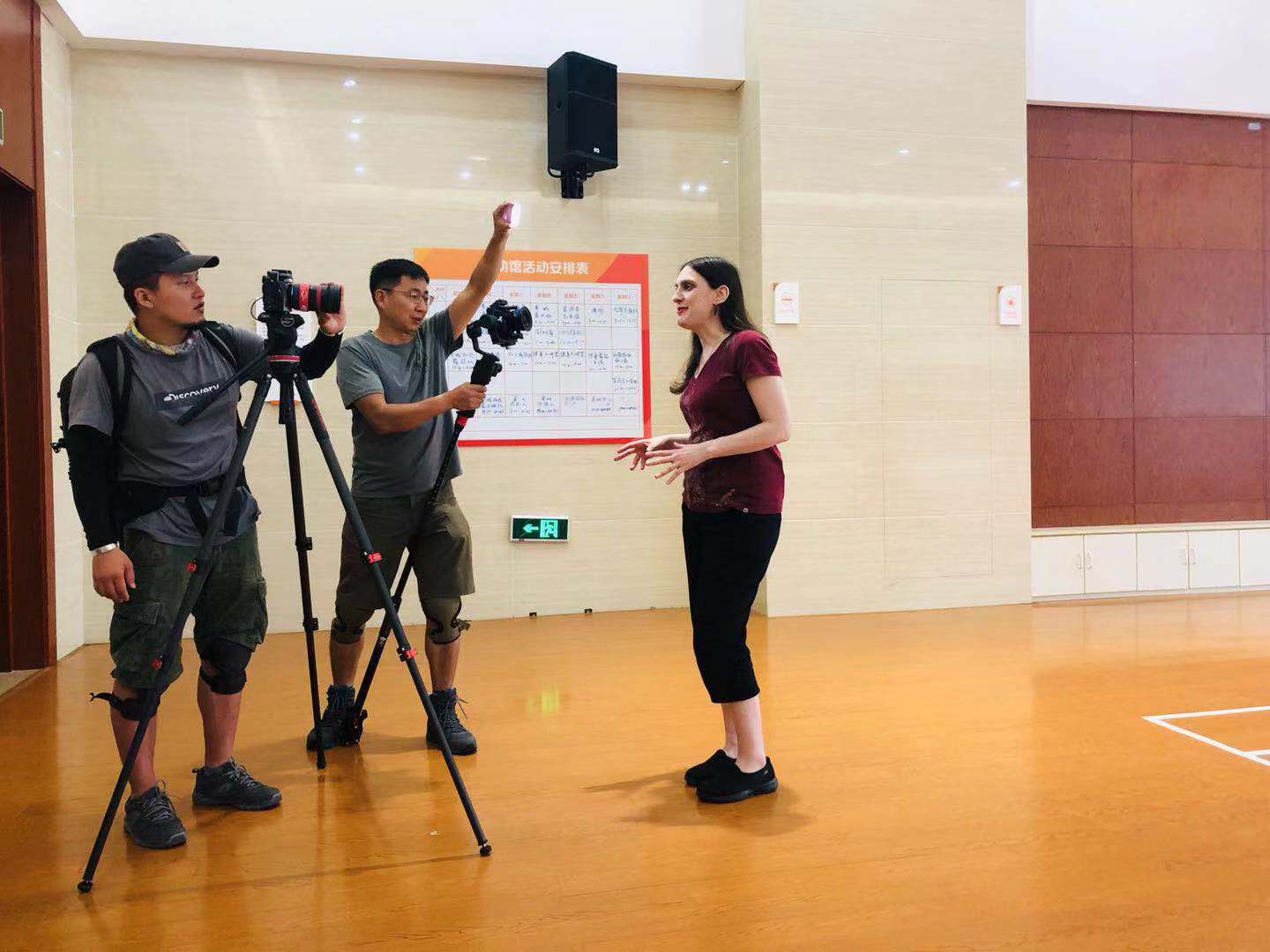
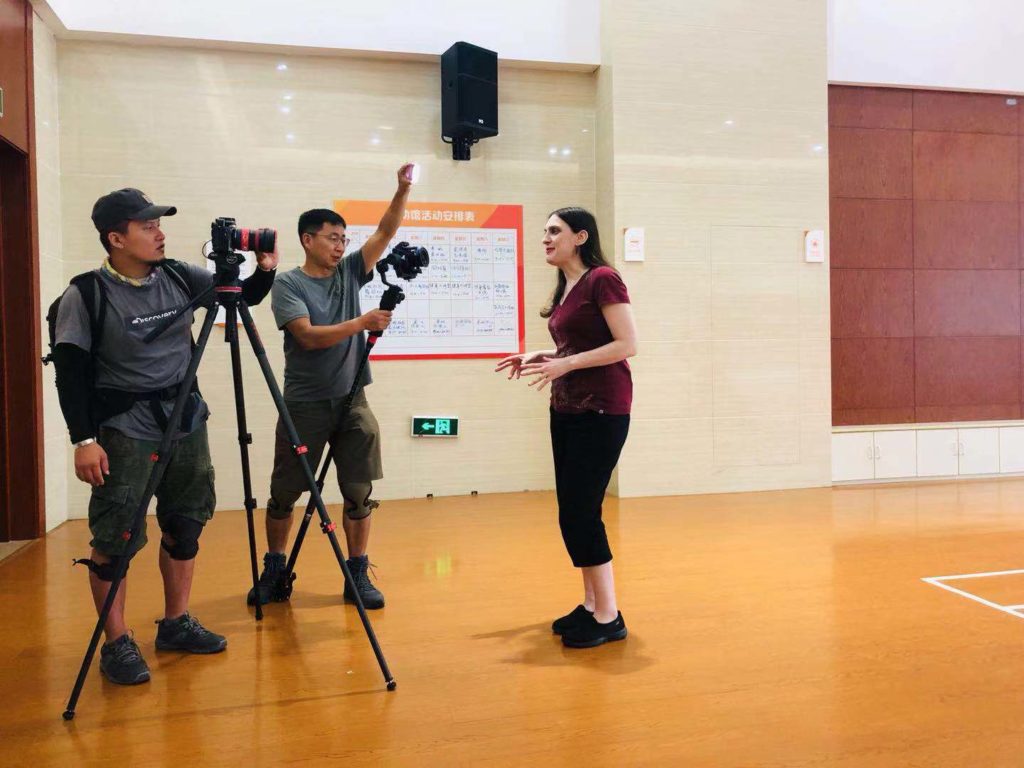
Here’s a shot of me introducing the community center in Suzhou while on camera.

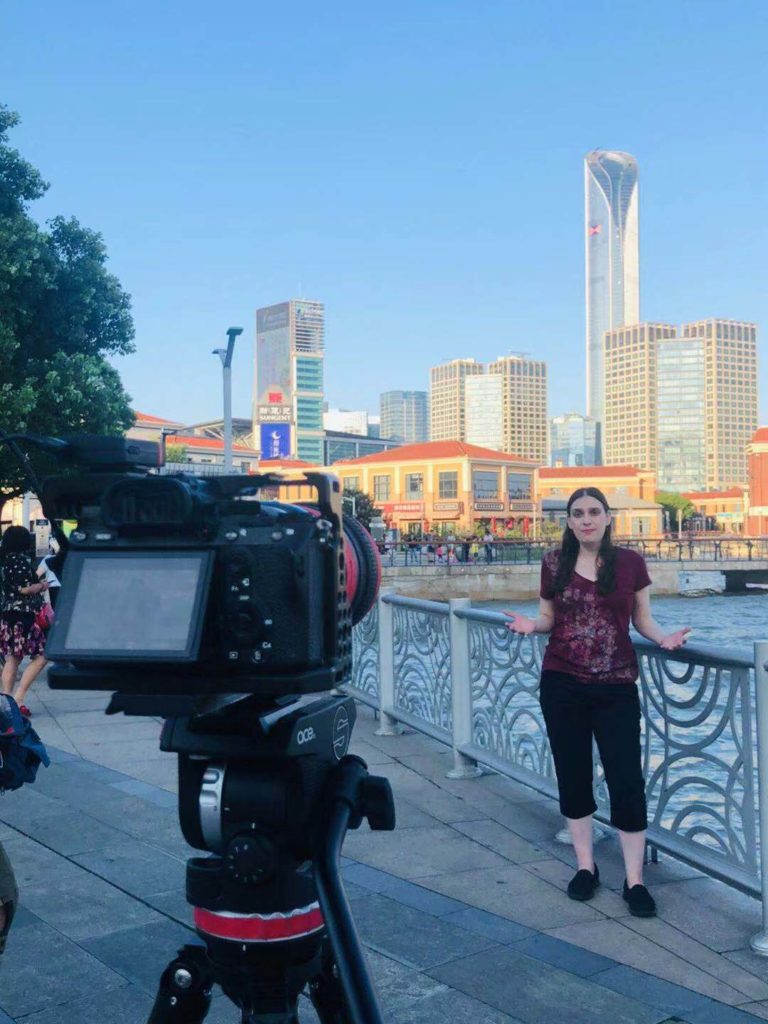
Later that same day, I did another introduction for the camera, this time in Suzhou Industrial Park.

IMG_20190812_112240On our third day in Suzhou, we returned to the Suzhou Culture and Arts Centre, where I had the opportunity to meet the founders of the Suzhou Ballet Theatre.

IMG_20190812_103539I also got to watch the ballet company rehearse backstage — what a joy to see them practicing their graceful and athletic moves!

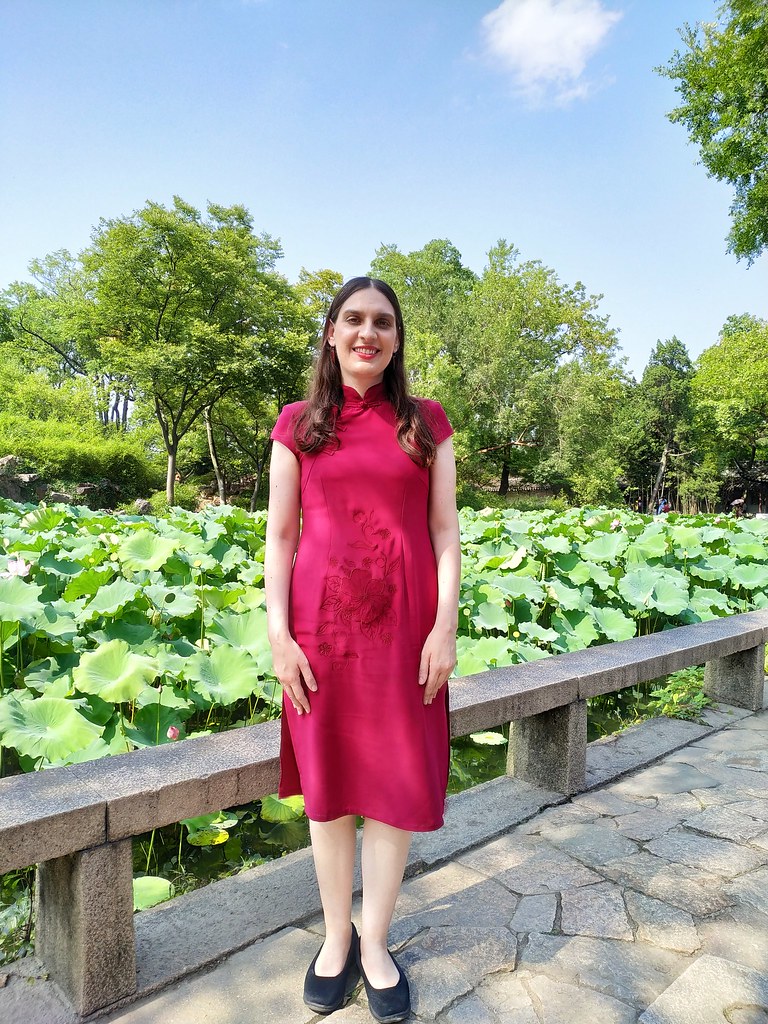
IMG_20190812_145216In the afternoon, we traveled to the Humble Administrator’s Garden, the largest classical garden in Suzhou, for a shoot.

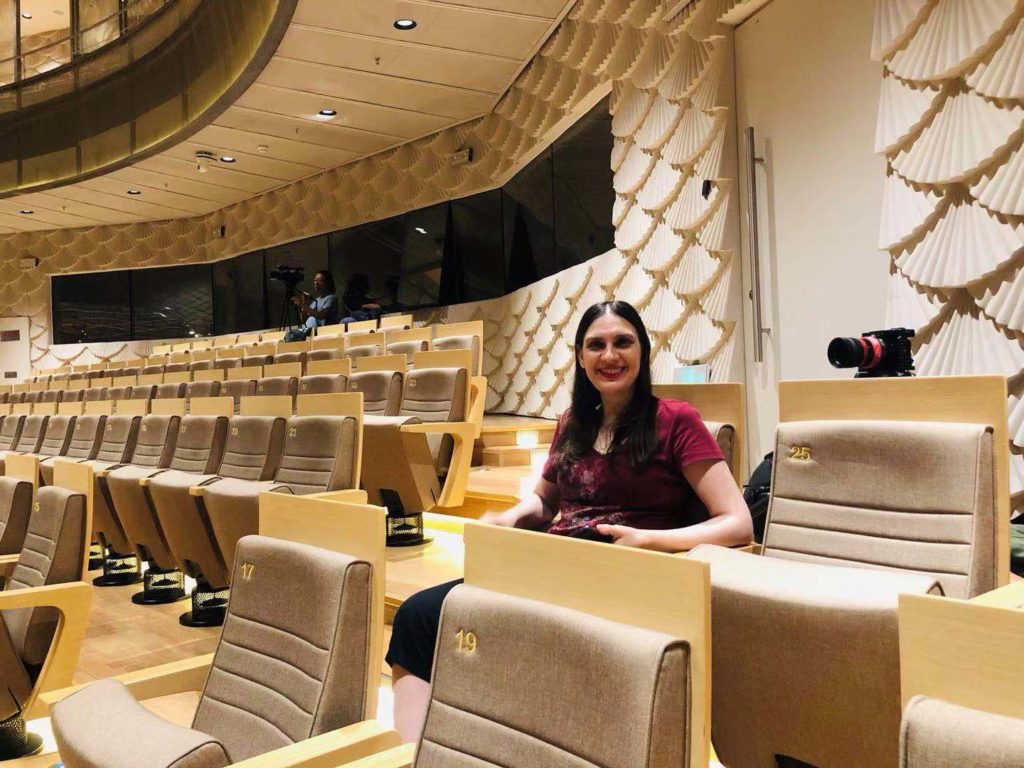
In the evening, I joined audiences at the Suzhou Culture and Arts Centre for some evening performances from young singers.

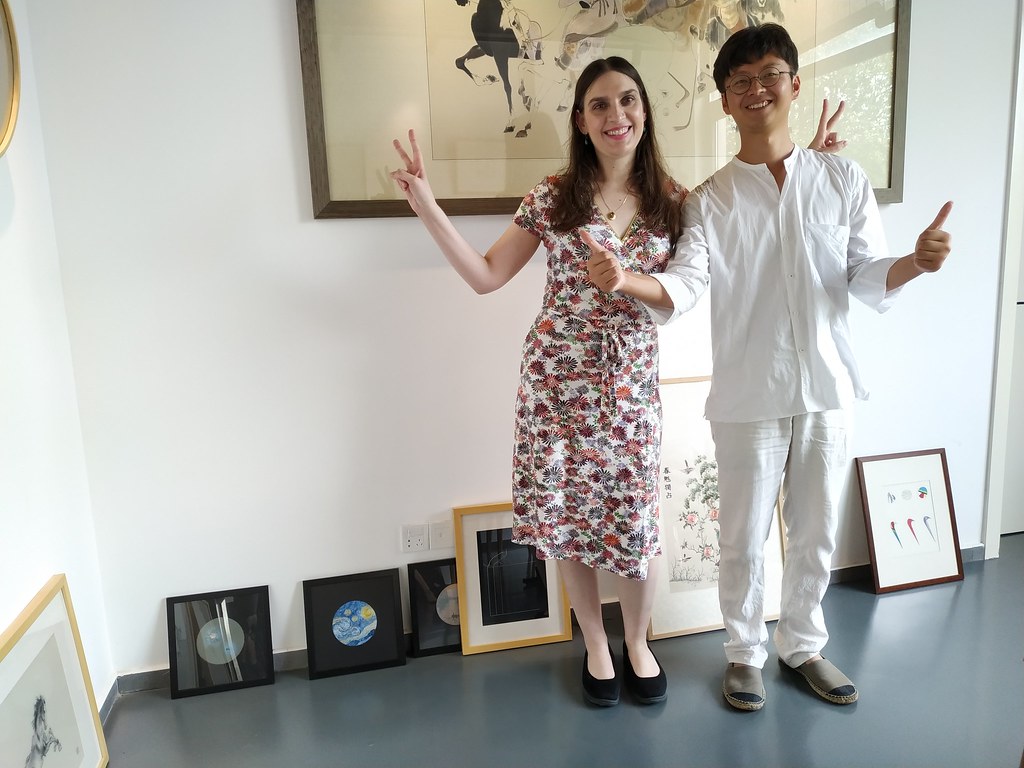
IMG_20190813_110831Our fourth day in Suzhou led us to the studios of an exceptional young artist engaged in Suzhou embroidery.

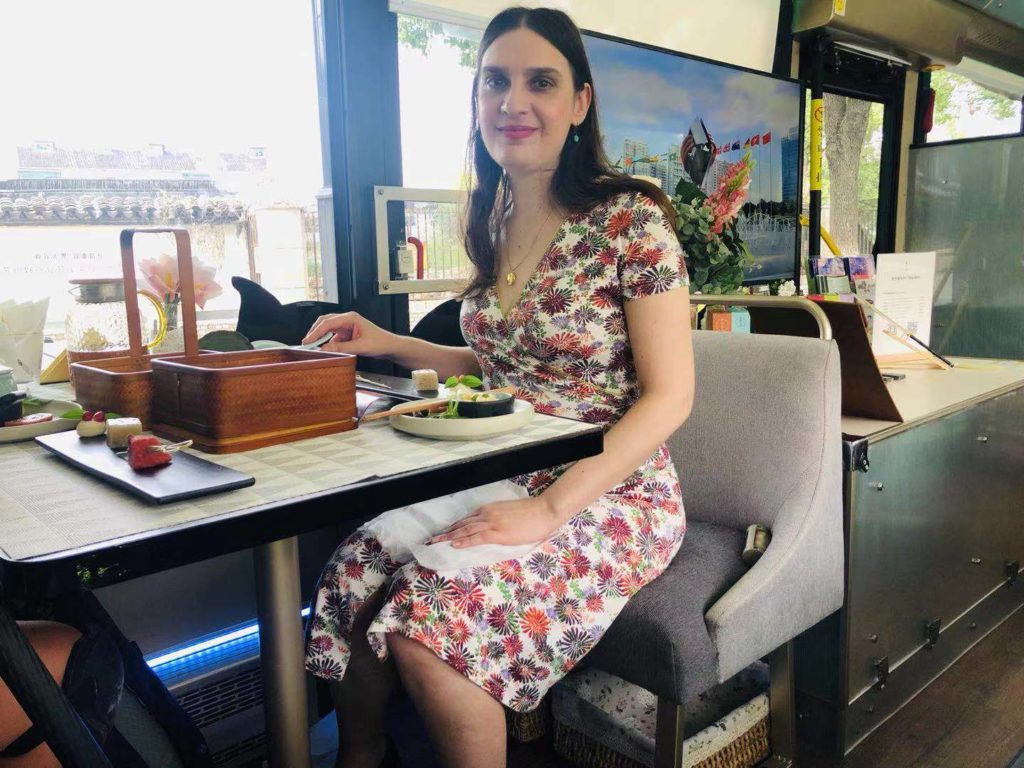
In the afternoon, we took a ride on a bus where you can dine and do sightseeing at the same time in Suzhou.

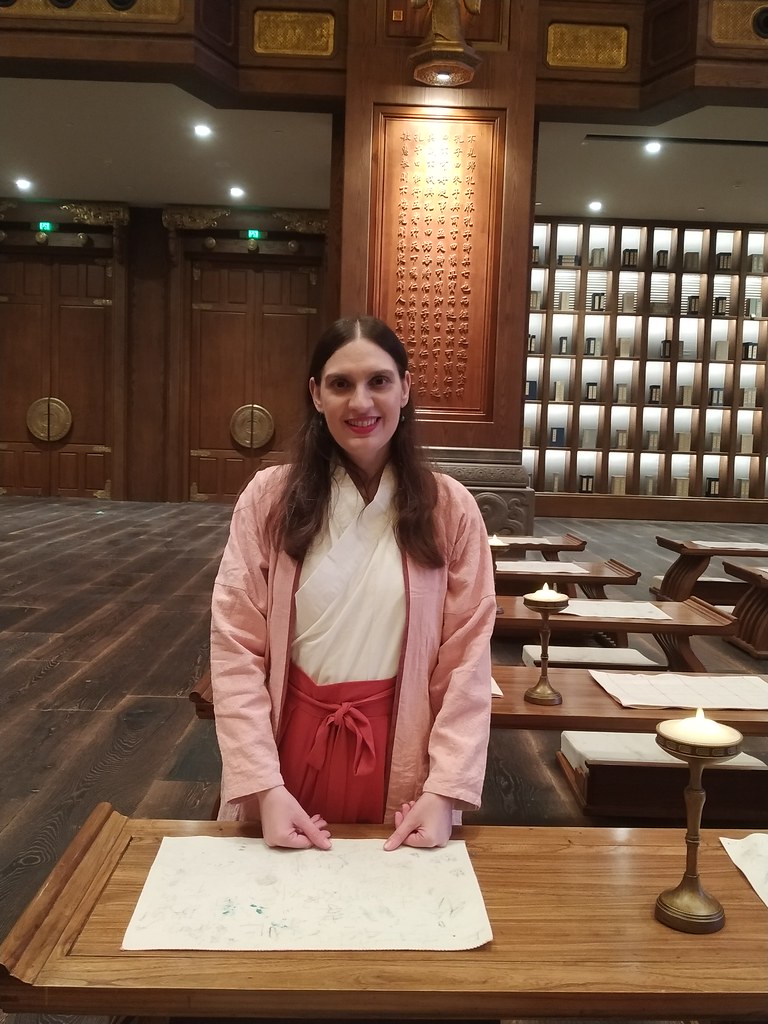
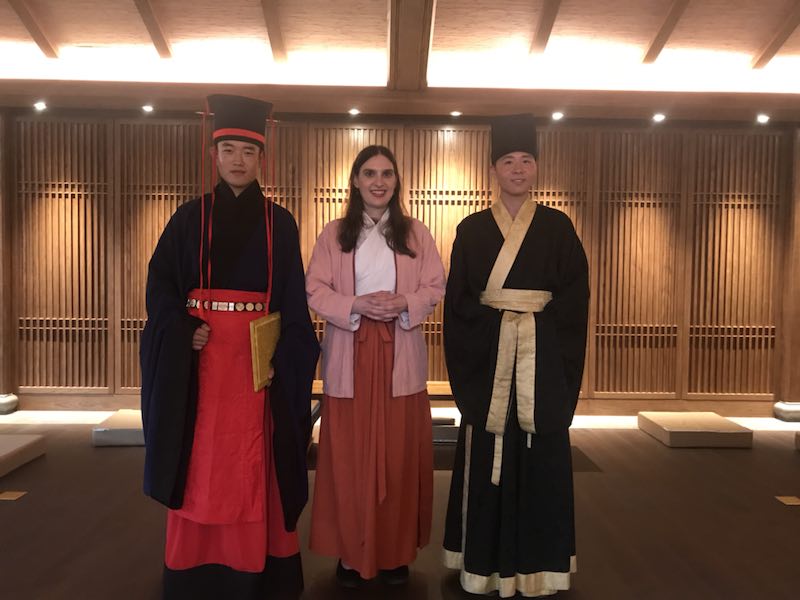
IMG_20190815_150112My next shooting assignment sent me to Qufu in Shandong province, where we visited a theme park, providing an immersive experience in the world of Confucius, right down to clothing and even desks.

The whole theme park aimed to transport you back over 2,000 years, and it had an enormous staff dressed in the garb of the era, which made for a lot of fun photo opportunities!

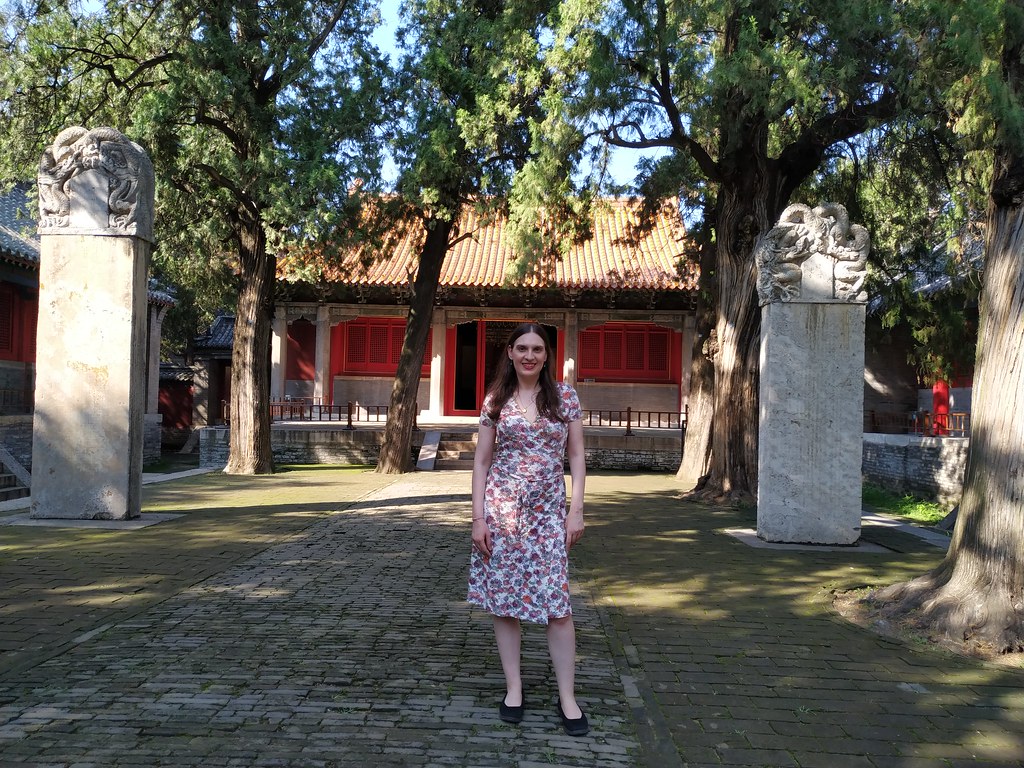
IMG_20190815_154946We also shot at a temple built near the birthplace of Confucius.

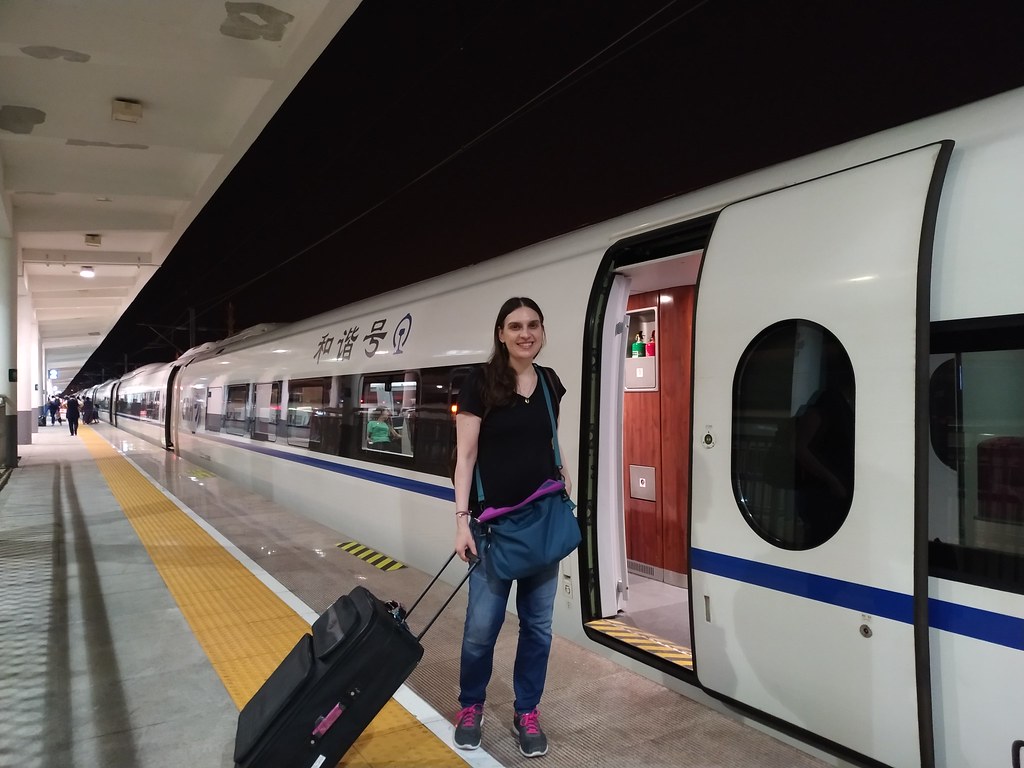
IMG_20190816_221840We traveled on high-speed train the following day to Rongcheng, a city at the easternmost point of Shandong province.

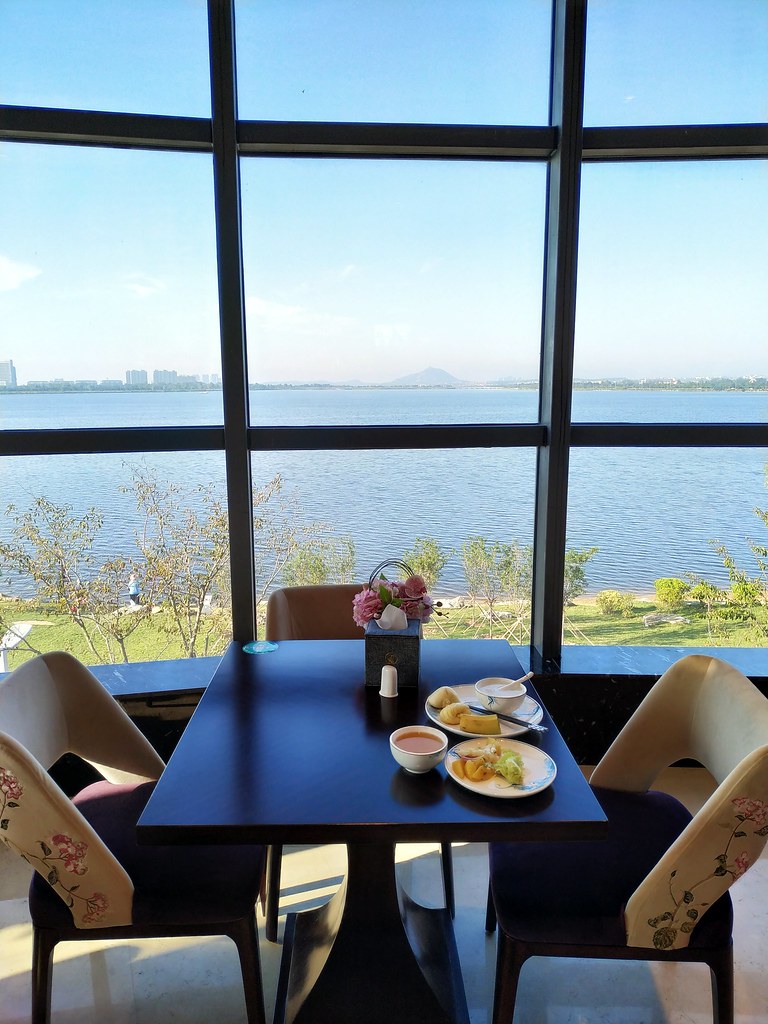
IMG_20190817_071018In Rongcheng, the hotel breakfast area offered the most stunning views of any other on the trip, with a gleaming blue lake just outside the windows.

First stop in Rongcheng — the easternmost tip of Shandong province and its picturesque ocean views.

IMG_20190817_144721We visited a sustainable aquaculture center in Rongcheng, where I had the chance to ride a boat out onto the gorgeous ocean waters.

IMG_20190817_155258At a tuna fish processing plant in Rongcheng, I couldn’t believe the size of these frozen tuna fish!

Late in the afternoon, I had the opportunity to enjoy a barefoot walk along the beach, letting the cool ocean waters lap at my feet.

IMG_20190818_124623Our final day of shooting landed us in Weihai, where my heart leaped upon checking into my room and discovering this lovely ocean view from its balcony.

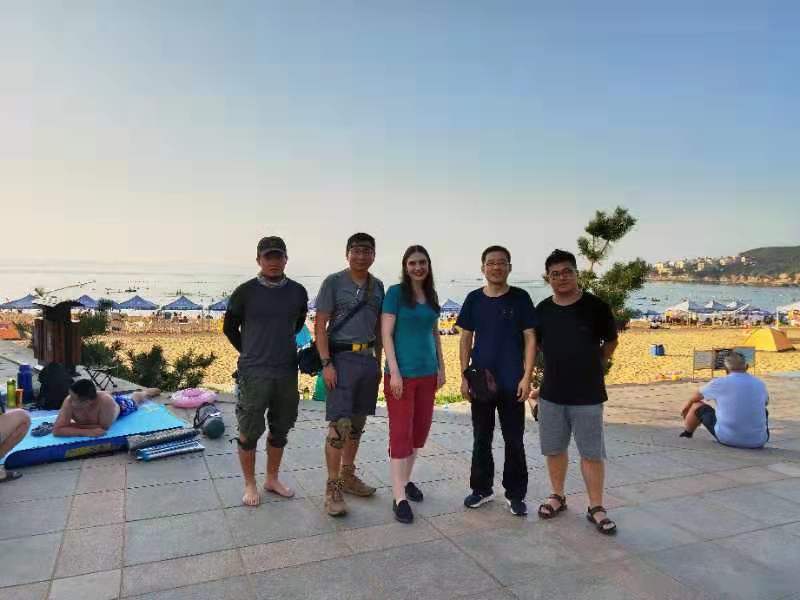
We finished shooting in Weihai at the beach, where we snapped this shot of the full video production team. It felt like an enchanting — and ideal — place to call it a wrap.

IMG_20190819_135939The following day, I caught the high-speed train home to Beijing, and traveled part of the way with the video production team. Here’s a shot of all of our luggage together — the video production required some major equipment that the guys had to lug along to every location!

Stay tuned, as I will share with you the videos once they go live online — and then you can get a closer look at all the places I visited on this trip.

What do you think?

Giant Man Zhan Shicai (Chang Woo Gow) and Catherine Santley

If Yao Ming had lived in Qing Dynasty China, perhaps his astonishing height might have landed him a role in a circus or onstage.

Photo credit: By ralph repo – Chang The Chinese Giant [c1870] Attribution Unk [RESTORED], CC BY 2.0, https://commons.wikimedia.org/w/index.php?curid=33422368
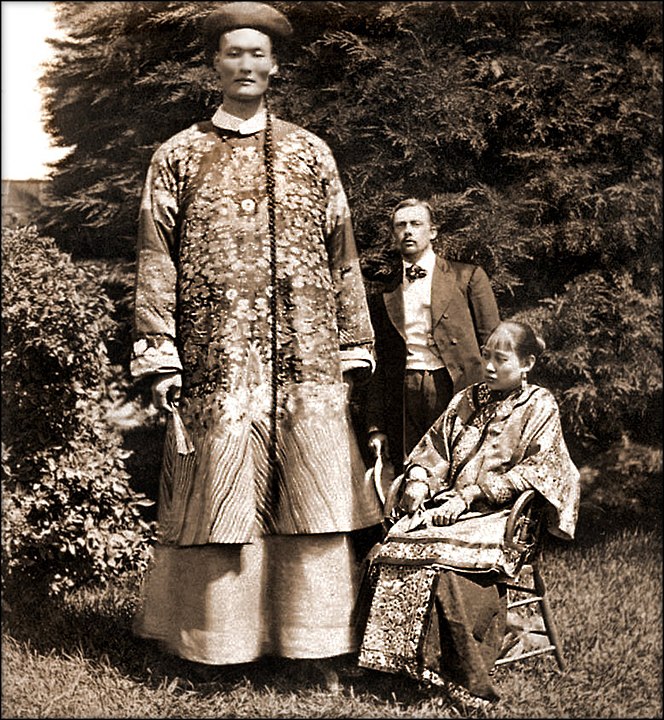
That was the life of Zhan Shicai, better known among Western audiences as Chang Woo Gow, whose towering stature (he reportedly stood over 8 feet tall) propelled him into such a career in the 1800s, including a stint in P.T. Barnum’s famous circus freak show that toured the US.

Born in Qing-era China in the 1840s, Chang Woo Gow made his first appearance abroad in London in 1865 at the Egyptian Hall in Piccadilly, together Kin Foo, his onstage wife, and the dwarf Chung Mow. An article published on Nov 9, 1893 in the London Times described what Chang Woo Gow’s performances were like in that era:

Amidst a hushed room Chang would arise to the tinkles of bells and a piano playing a Polka. He slowly descended to greet his audience, and to gasps of amazement at his great height, he would gently shake hands with those nearest the front. With excitedly playing music he would “chin chin” to his audience and then, with a great flourish of gongs he would majestically regain his throne – and the exhibition would be finished.

The admission fees to this spectacle of Victorian human curiosity were up to three shillings. Chang’s employers disgracefully refused him permission to walk about town with the shameful excuse that this lowered his value as an “exhibit”. This he found untenable, and longed for a quieter life.

Indeed, as Chang Woo Gow, who went on to tour Europe, the US and Australia as “Chang the Chinese Giant”, lived an existence which the Dorset Magazine characterized as “tawdry”:

Even though Barnum paid him the handsome sum of $500-a-month to dress up in Mandarin robes or the war-mongering finery of a Mongolian warrior, Chang almost certainly wished that it didn’t have to be that way.

He was fluent in six languages, gentle, intelligent, well-mannered and quiet by nature with no natural affinity for the brash showmanship of the circus world.

Still, traveling the globe allowed Chang Woo Gow to meet Catherine Santley, who enchanted him during his visit to Australia. They married in a church in Sydney and went on to have two children, Edwin and Ernest.

The couple eventually moved to a villa they dubbed “Moyuen” in Bournemouth, England, at a time when Chang Woo Gow suffered from tuberculosis. He opened a teahouse and store selling Chinese imports there. But surely he harbored deep affection for his wife Catherine, as the report in the London times stated that in 1893 “he died of a broken heart, at the age of 52, just four months after his wife’s death.”

You can also learn more about Zhan Shicai/Chang Woo Gow and Catherine Santley at his Wikipedia page and this page maintained by the Chinese Museum in Australia.

What do you think of Zhan Shicai/Chang Woo Gow and Catherine Santley?

Photo credit: By ralph repo – Chang The Chinese Giant [c1870] Attribution Unk [RESTORED], CC BY 2.0, https://commons.wikimedia.org/w/index.php?curid=33422368

‘Touching Home in China’ Explores Nation, Lives of Girls in Insightful, Intimate Curriculum

China’s rise has continued to drive interest in learning about the country and its culture, as well as also a need for more insightful resources for the classroom. Touching Home in China, an open source multimedia curriculum created by Melissa Ludtke, Julie Mallozzi and Jocelyn Ford (which includes a textbook), offers a very compelling and intimate take on China by following Maya Ludtke and Jennie Lytel-Sternberg, two Chinese adoptees in America who journey back to their birthplaces in the country, two rural communities located in Jiangsu province.

Readers explore China vicariously though not only Maya and Jennie, who discover what their girlhoods might have been like in their birth villages, but also through the many rural girls they meet. Their own stories, along with photographs and videos (available online), become woven together with the academic, bringing to vivid life trends, statistics and scholarly insights.

For example, a section titled “Becoming a Wife”, which starts off with the idea that families in China typically expect girls to get married and have children, shows how Mengping always gets asked if she has a boyfriend every time she returns from Shanghai to visit family in her rural village. The same section concludes with a conversation between Maya, Mengping and another girl in the same village, where they discuss gender roles in marriage in China and the US.

The thread of self-discovery in Touching Home in China also extends to identity, something Maya and Jennie ponder while visiting these rural villages where they were born. For example, in one conversation the girls talk about feeling at times not entirely Chinese or American. It’s enlightening to read about how each of the girls grapples with their own evolving sense of self throughout the curriculum, helping readers to understand their perspectives and the experience of feeling tied to two different worlds, yet wondering where you belong.

Touching Home in China has such a fresh approach that it even captivated me, someone who has lived over a decade in the country and picked up countless books on the subject. When you read about these girls’ dreams, disappointments and hopes, you can’t help but care and root for them as you follow their paths through school to graduation and beyond. Not every story ends happily. Still, I found it heartening to observe the ways in which the girls in both countries gained something from these cross-cultural exchanges — from learning more about who they are to finding inspiration in new possibilities.

You can access Touching Home in China at its website or buy the companion textbook at Amazon, where your purchases help support this blog.

P.S.: To learn more about Touching Home in Chinaread my interview with Melissa Ludtke.