Interview with Jo Bai: Fashion Entrepreneur, App Creator and Bar Owner in China

If you want living proof of just how far you can take your expat business dreams in China, then you need to meet Jo Bai.

She first wowed us all with her award-winning blog Life Behind The Wall. But more recently, she’s been making a name for herself as a serial entrepreneur, living out her business dreams here in China. Just recently, she has opened HeiLan Hair & Fashions — a store specializing in weaves, wigs, and Western-style clothes, shoes and jewelry – and launched a new teaching app called Freebao. In addition, she’s still an owner and host for SharesBar here in Hangzhou.

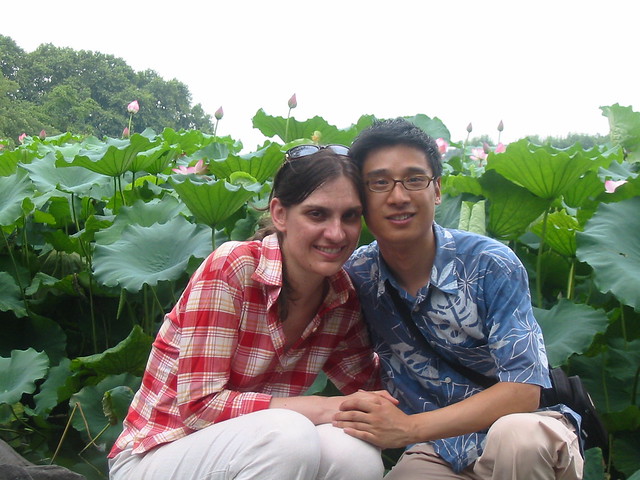
And did I mention that she’s snagged a gorgeous Chinese guy?

IMG_6646

I don’t know about you, but I’m totally inspired by this woman! It’s my great pleasure to introduce you to Jo Bai and her entrepreneurial adventures (and more) through this interview.

IMG_0261

Here’s Jo Gan’s bio from her blog Life Behind The Wall:

Born in Columbia, Missouri and raised in a small town not far from there, then moved to Naples, Florida for the majority of my life .  I always knew I was not your normal Mid-Western/Floridian.  I had dreams and wanted to see things that my family thought were impossible at the time.   However, after a living a life of many different experience that only a book could express totally… I have found my place in the world, for now.  Surprisingly, that place is  The People’s Republic of China.

Yes, I am an African-American Woman over 40 living in the P.R. China…. I decided that I wanted to express myself and my feelings the best way I knew how, through words.   I also wanted to share what it was like to live in a foreign country where things are not what you expect and people are not what you think.

Follow me through my experiences, my joys and my pains, my sane and insane times.. but most of all live through me what you are not ready to do yourself.  I hope to inspire all of you to live your life the way you want and to not be afraid of the unknown or the comments of others that are not living their dream……Live outside the box…. do not only “Dream it… Do it”

You can learn more about Jo at her blog, check out her app at Freebao.com, and visit SharesBar on Facebook. If you’d like to shop HeiLan Hair & Fashions right now on WeChat (the official website will launch on January 2, 2016), just scan the bar code below.

—–

What first brought you here to China?

I came to China to see China. I had always wanted to go to the Far East. I had gotten laid off and my kids were out of high school. So, they said go for it. Here I am 8 years later.

IMG_4830

Many of us first came to know you through your award-winning blog, Life Behind the Wall. What inspired you to start blogging?

Actually, laziness. Lol. I was tired of writing long emails to all my friends and family and decided to put it in a blog for all to read. And taaadaaaa I’m Internet famous. Who knew?
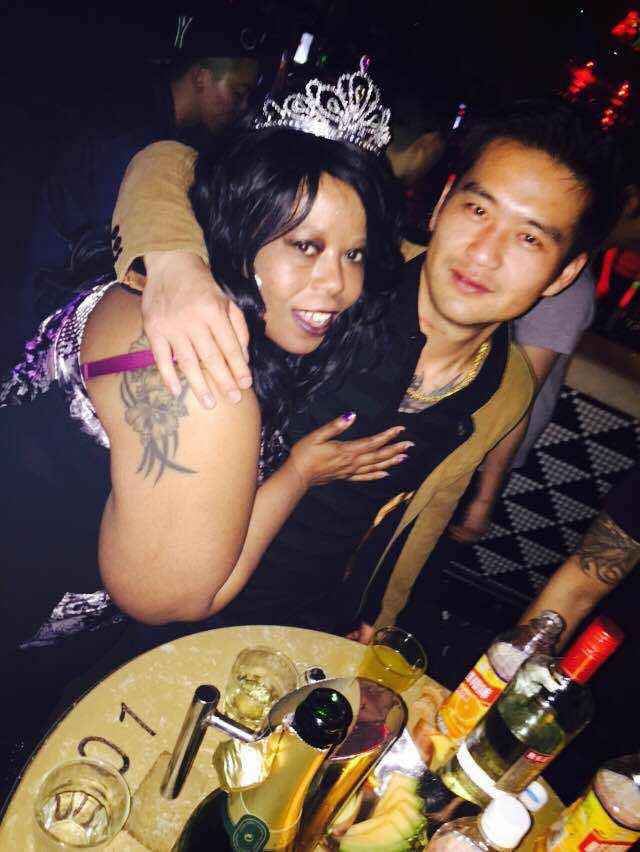
IMG_2725

In 2014, you started out as a partner/shareholder in a Hangzhou bar called SharesBar and went on to become an Assistant Manager there. Tell us about how you became involved in this business, and what you enjoy about working for the bar.

Well, SharesBar in Hangzhou is a low key place where we have a lot of different activities like bands, comedy, theme nights etc. I used hang out there with my friends. So one day I saw some English mistakes in the advertisement and brought it to their attention. They asked me to edit the ads, then write them. Next thing I know I was hosting shows and volunteered to be lead singer in a band.

Not long after that I was helping to make decisions at the bar. They said you might as well be an owner. And I bought into the bar. I was elected to be apart of the management team. I am still an owner and I still host. But my schedule doesn’t allow me to do much else anymore.

IMG_5436

While you divorced in 2014 from a marriage that you shared very publicly with us, you also went on to meet Jet Liu (“a former gangster turned good”), your new partner here in China. Tell us about how the two of you met and what attracted you to him.

Jet, he is amazing. You never know what’s missing from your life until you find someone that completes you. After my divorce, my ex husband remarried a month later. Tells me he had a Chinese girl on the side. But you know me, nothing holds me down long. I dated a lot and one night went to the club on a girl’s night and we were feeling like we needed some men around. So I suggested that we just pick one like apples. They laughed and told me to go first. I looked around and pointed at Jet. Muscular, handsome Chinese man with a big dragon tattoo. I know nothing about him. Just picked him.

He came to sit with us and the other girls followed my lead. We all partied until six in the morning. I could not find a taxi back home so he invited me to stay in his apt. The rest is rated R. But been together ever since.

IMG_6335
A dress from HeiLan Hair & Fashions

You’ve started up an online business called HeiLan Hair & Fashions. What sparked your interest in the fashion business? Was it challenging to open a store in China?

I sell hair like weaves, and wigs, and Western-style clothes, shoes and jewelry. Due to Jet’s background it is very difficult for him to get a job in China. So we needed to think of a business. I saw a lack of products for the curvy girl and Black hair products, and decided to fill the void. It took off like crazy. Expats contact me from all over the world looking for clothes and hair. Jet helps me a lot since I have a job and three businesses.

I do most of my selling through Wechat and mobile apps. I just am finishing up the redesign of my website. I think all my items are popular since they are hard to get in China for foreigners.

The Freebao app
The Freebao app

I’ve heard you’ve been working on an app called Freebao as well. Could you talk about that?

My third endeavor is a teaching app that uses face-to-face video chats to teach languages. Works kind of like Uber. Request a teacher and they will pick up and teach you a class. It has launched and is doing well. Freebao is available in the Apple Store and Google Play.

My plate is full I guess.

IMG_0711

Many foreigners dream of opening businesses in China. What do you think it takes to be a successful foreign entrepreneur in China?

Patience. There is a lot of red tape. You need Chinese friends. Influential friends to help you with the government stuff. You also need money. Everything is up-front here. Foreigners cannot get loans here.
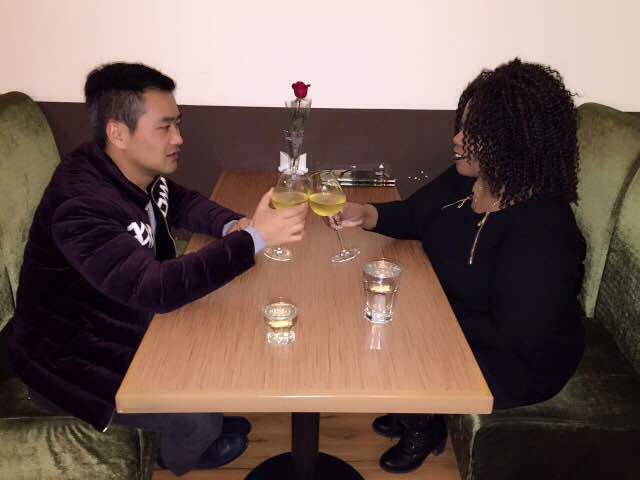
IMG_2735

Jo, I know you’re always working on something new. Do you have any business ideas for the future or plans for your current businesses that you’d like to share with us?

Well you know me, I always have something brewing. I’m thinking men’s clothes and make up next. Who knows, I’m just trying to grow my Empire.

—–

Thanks so much to Jo Bai for this interview! You can learn more about Jo at her blog, check out her app at Freebao.com, and visit SharesBar on Facebook. If you’d like to shop HeiLan Hair & Fashions right now on WeChat (the official website will launch on January 2, 2016), just scan the bar code in the intro to this interview.
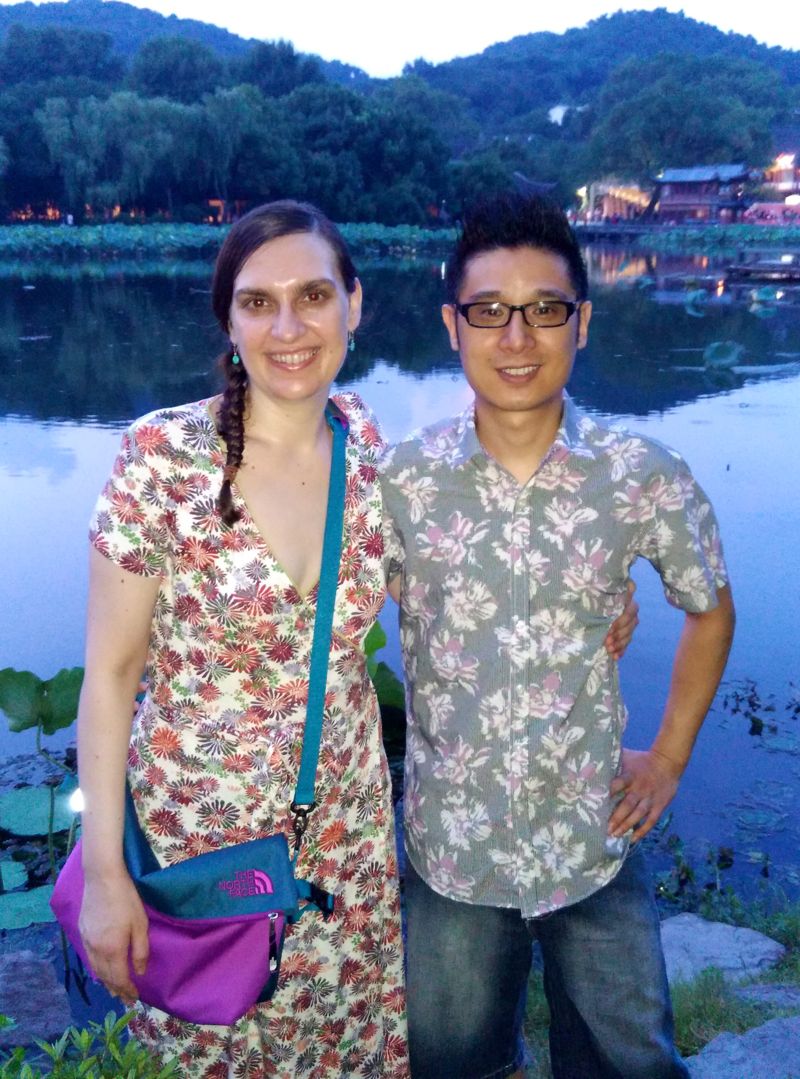
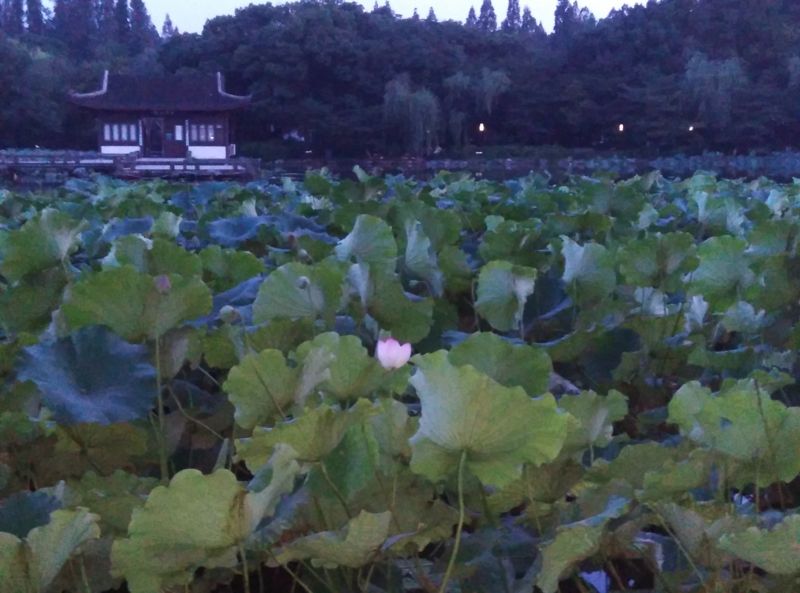
Photo Essay: Celebrating My Birthday Beside Hangzhou’s West Lake

Last Monday, I wrote about how wedding anniversaries aren’t a big deal to my Chinese husband. But not birthdays — especially my birthday. We just celebrated and, once again, he approached as if it were a national holiday.

John still loves coming up with what he calls “birthday programs” for my special day and this year was no exception. First, he declared the day a vacation day for us — no work under any circumstances! — and shelved my laptop away. But with the oppressive sunshine burning up the city streets, it was also no time to be outdoors; instead we decided to watch movies on demand at home. We just pulled the curtains, cuddled up in bed, and pretended we were at the movie theater. Simple but fun!

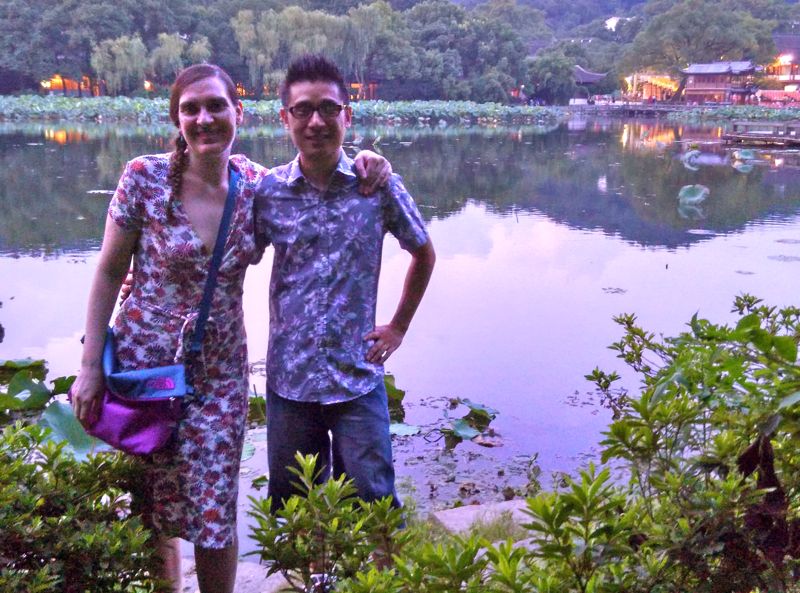
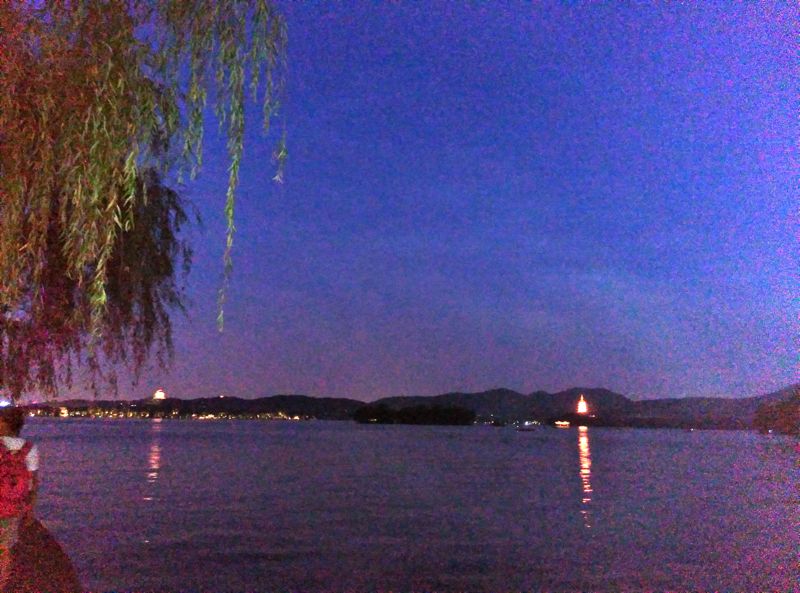
Come evening, however, John and I dressed up to step out into town — or rather, step out beside the West Lake to marvel in the lotus leaves dappling the lake’s surface as well as the dazzling show of lights from the city.

Here are my favorite photos from the evening:

IMG_190448

IMG_191152

IMG_190424_HDR

IMG_192928

IMG_194719

IMG_194115

Wishing you all a happy August!

Why Hangzhou China is truly for lovers (and Valentine’s Day)

When I was growing up, my parents took me to one of these tourism fairs in Cleveland, Ohio, which introduced me to a slogan I just couldn’t understand: Virginia is for lovers. I’d been to the state of Virginia. The Blue Ridge Mountains were pretty enough, and so were the beaches. But to say that this state was for lovers? It didn’t seem right to me.

In hindsight, my hesitation could have had another explanation. That I was destined to discover and eventually settle in a city that, in my mind, truly was for lovers (and truly deserved such a slogan). Hangzhou, China!

Yes, Hangzhou really is the ideal place for people in love. And if you’ve never visited before, here are four reasons why it could be the perfect place to spend your Valentine’s Day – or, for that matter, any romantic holiday or getaway:

1. It’s the setting of one of the greatest love stories in Chinese history (The White Snake or 白蛇传)

IMG_3049
For John and me, visiting Leifeng Pagoda was like paying homage to one of China’s greatest love stories.

The forbidden love story of the Madame White Snake – a magical snake who turns into a lovely young woman and captures the heart of Xu Xian – is considered one of China’s most beloved folktales. And it all happened right here in beautiful Hangzhou (supposedly, at least!).

You could bring your own sweetheart here to have your own personal re-enactment of Madame White Snake.

Why not flirt at the Broken Bridge (断桥) on Bai Causeway, where the white snake and Xu Xian first fell in love? You could also buy yourselves a little tang hulu there just as Xu Xian did, the sweet and tart candied fruits on a stick that first entwined Xu Xian’s fate together with the white snake in the story.

On the opposite side of the lake, climb to the top of the reconstructed Leifeng Pagoda, where the white snake was imprisoned for loving and marrying Xu Xian. As you and your lover admire the view from the top – the glistening surface of the lake fringed by the endless emerald gardens – you can feel grateful that you’re both free to love one another in that moment.

2. The West Lake is the perfect place for lovers to stroll and relax

IMG_2856
Trust me, come to the West Lake and even you won’t be able to resist kissing your loved one!

Hangzhou’s West Lake has been famous for thousands of years and inspired countless works of art, poems and even replicas of the lake itself (including Kunming Lake at Beijing’s Summer Palace). It’s a breathtaking destination – and, not surprisingly, one with many perfect places for lovers to stroll and relax.

One of the easiest – and most low cost – ways for couples to bask in the beauty of the West Lake is through a stroll around one of the many gardens surrounding the West Lake. My favorite romantic spots include Orioles Singing in the Willows (柳浪聞鶯) and Curved Yard and Lotus Pool in Summer (曲院風荷) during the daytime, as well as Su Causeway itself (either early in the morning or late at night).

You can also hire boats to glide across the lake and get away from the crowds; it’s most picturesque just a little before sunset.

In the Beishan area and Curved Yard and Lotus Pool in Summer (曲院風荷), lighting makes the gardens bloom with stunning shades of salmon pink, cerulean blue and jade green – colors as brilliant as the love in your own heart.

IMG_2905

Even the city lights take on a romantic glow when viewed from Su Causeway.

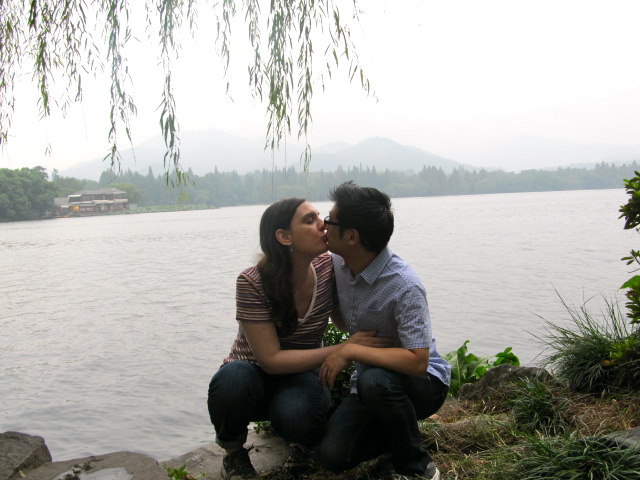
And of course, if the moment is just right, you might find yourself settling into one of the many benches around the lake to share a kiss, just as John and I once did years ago.

3. There’s nothing sexier than a private tea for two in a Hangzhou teahouse

IMG_20140809_140034
A teahouse spread fit for a king…or even just a couple of people really crazy in love!

As much as I love my soy lattes from Starbucks, that coffeehouse – or really, any coffeehouse for that matter – has nothing on some of the best Hangzhou teahouses. Picture slipping behind a sliding tatami door into the private decadence of a tea for two, from the aromatic delights of Hangzhou’s famous Dragonwell tea to an exquisite spread of all-you-can-eat snacks, hot food and even dessert. Some private rooms even allow you to sit on the floor, making the whole atmosphere that much more romantic.

Best of all, the unhurried pace of a teahouse – where the servers are simply there to serve instead of herding you in and out – means you can linger over the meal, taking your time to savor the moment together…and perhaps steal a kiss or two behind closed doors.

While there are many teahouses in Hangzhou, I highly recommend Qingteng Teahouse (青藤茶楼), especially the branch in the Wyndham Hotel which offers private rooms and unforgettably delectable set meals – the perfect combination for any pair of lovers.

4. You can enjoy flowers every season of the year

IMG_2251

From red roses on Valentine’s Day to bridal bouquets, flowers have long been synonymous with love and romance. But flowers are best enjoyed in the outdoors – and what better place to appreciate them than Hangzhou, where the flowers enchant us every season of the year.

In wintertime, you’ll find plum blossoms beside the West Lake, reminding us all that even in harsh conditions, the most delicate beauty can flourish and prevail.

IMG_2259
It’s pretty amazing that the plum blossoms come out even in the cold of winter!

You know it’s spring when sweet white peach blossoms surround the West Lake like a dusting of late-season snow in the treetops.

f45adae15f0c99cc8ecfa1ed8b1773cf
Peach blossoms by the West Lake (Photo via hzxcnews.com)

Summertime welcomes the lotus blossoms in the West Lake, each as pink as a blushing bride, a jewel to behold.

IMG_0342
Even though the summers can be unbearably hot, knowing that the lotus blossoms will come out gives me something to look forward to.

But best of all is the osmanthus bloom, the smallest and most intoxicating of all with an aroma that might just be the closest thing to passionate young love in a fragrance.

IMG_2816
These flowers are tiny, but their fragrance packs quite the punch. Seriously!

Do you think Hangzhou is a romantic destination? Why or why not?

6 Surprising Ways Funerals in China Resemble Weddings in China

When John’s Grandpa passed away earlier this year, the last thing I ever expected was to imagine the happiest of all life events. But in many ways, his funeral ended up reminding me of weddings in China.

Coincidence? Maybe not.

The Chinese phrase hongbai xishi (hóngbáixǐshì or 红白喜事, literally “red-white happy events”) links these two drastically different life celebrations in the same breath, with the “red” symbolizing weddings and the “white” funerals. There are even companies in China who exist solely to supply folks with just about everything they need to put on either a wedding or a funeral, advertising themselves as “hongbai xishi” specialists. Who would have thought a wedding planner could be a funeral planner at the same time? But in China, it’s possible.

Well, here are 6 surprising ways that Grandpa’s funeral resembled the weddings I’ve attended in China:

(NOTE: None of the following photos came from the funeral itself. The family specifically asked that we not photograph anything and, as fascinating as it would have been to share those pictures, we obviously needed to respect those wishes.)

IMG_0411

1. Banquets, banquets and more banquets

Anyone who has ever attended a wedding in China or tied the knot themselves knows what the real star attraction is for the event – the sumptuous food. Dish after succulent dish of such incredible delicacies (which, incidentally, have without exception made all of the food I’ve ever dined on at weddings in America look like something out of a high school cafeteria line).

Well, based on my experience at John’s grandpa’s funeral, if you’re attending a funeral in China, prepare to chow down at lots of banquets.

When we arrived at Big Uncle’s home that first evening, we discovered his entire first floor had been converted into a huge makeshift banquet hall, complete with the kind of tacky red plastic table covers I’ve come to associate with weddings in John’s rural hometown. In the four-plus days we spent during the funeral, the vast majority of our participation involved crowding around one of these tables with distant relatives or friends, downing the local dishes while battling with the elders for our sobriety (yes, like weddings the alcohol flows a lot!).

We literally sat down to at least seven banquets that week (and there were at least one or two we even missed because we arrived late and left early).

One thing, though. I don’t know if this is true for every funeral in China, but the food we dined on was definitely NOT the best we’ve ever tasted. But let’s face it – this is a funeral and nobody’s coming just for the food, right?

(photo by ChinaKFC via Flickr.com)

2. Giving money

In China, attending a wedding has its own “entrance fee” if you will. A good guest will always present the happy new couple with one of those infamous hongbao – red envelopes stuffed with an auspicious amount of cash that serve as a wedding gift.

When I caught my father-in-law doing “accounting” one afternoon following a banquet, I soon learned that funerals in China also demanded a little financial support from guests.

That’s right – if you attend a funeral in China, be sure to give the family some cash, just like you would for a wedding.

I’m no expert on how much to give, but I can tell you that guests attending Grandpa’s funeral gave amounts ranging from 200 RMB to 1,000 RMB. By the looks of how many pages were filled in on my father-in-law’s accounting book, I’d say the family did pretty well (except, of course, the fact that no amount of money will ever bring Grandpa back…sigh).

See the floral wreaths in this photo -- they're very similar to those we carried in Grandpa's procession. (photo by 曹鹏 via Flickr.com)
See the floral wreaths in this photo — they’re very similar to those we carried in Grandpa’s procession. (photo by 曹鹏 via Flickr.com)

3. Processions

Traditionally, Chinese weddings always included a lively procession. The bride would be lifted into a dazzling sedan chair decked out in red silk followed by a parade of her dowry items, with the whole thing accompanied by the jubilant sounds of horns, drums and cymbals.

While there was no rejoicing over Grandpa’s funeral, the procession to his tomb in the hills was more striking and vibrant than I ever expected.

For example, white wasn’t the only color on display. Sure, this traditional color of mourning in China figured prominently in the event, with a number of family members wearing white caps on their heads and everyone wearing a white ribbon like a necklace. But there were also brilliant floral wreaths made up of flowers from every color on the rainbow. We carried these eye-catching arrangements on the way to the tomb and it made the procession look quite beautiful.
The sound of drums and cymbals also accompanied us on our short journey to Grandpa’s tomb. John said the instruments struck a mournful tone in comparison to what you’d hear in a wedding procession – but just having them in the background was quite the contrast to the staid and quiet Catholic American funerals I’ve attended back in the US!

IMG_2129

4. Firecrackers

Nowadays, every modern wedding is an explosive experience – literally – with lots of fireworks and firecrackers.

If Grandpa’s funeral is any measure, China clearly wants to send their deceased off with a bang.

Of course, there were the obligatory explosions right near the tomb and before they started the big procession to Grandpa’s tomb, but that’s not all. Big Uncle’s family actually used firecrackers to announce all of the banquets that week. (By the time we were ready to leave, I swore I was almost having this strange Pavlovian reaction to the sound of firecrackers – where that booming noise made me feel hungry!)

143486176_6d0c8c93f9_z
The guests at Grandpa’s funeral dressed a lot like these folks. (photo by Steven Yu via Flickr.com)

5. People dress in surprisingly casual clothing

As I’ve written before, don’t even think about trotting out your best cocktail dress and suit and tie when you’re attending a wedding in China. Well, by the looks of Grandpa’s funeral, I’d say don’t even bother donning the kind of funeral outfits you’re used to in the West.

While most people generally stuck to muted colors as well as black and white, the styles were all over the map. My sister-in-law, for example, spent the entire funeral wearing a jean skort so short and tight I was stunned – a look that seemed more on the corner of Hollywood Boulevard than mourning a relative.

Most people wore shorts and T-shirts, sneakers and old loafers; only a small handful of women had on casual dresses and not a single man in attendance sported a necktie.

(photo by kenji via Flickr.com)

6. The experience will exhaust you

The one thing people never tell you about participating in Chinese weddings – something you only learn through experience – is just how incredibly exhausting it is to be the bride and the groom. You’re on your feet almost the entire celebration, you spend so much time toasting all the guests that you don’t even have time to dig into the amazing food, and then just before it’s all over you have to take part in the embarrassing ritual of roughhousing in the bridal chamber.

Well, if your dearly departed is close family – like Grandpa was for us – get ready for a marathon experience yourself. His funeral lasted from Sunday through Thursday evening, five entire days of remembrances, rituals and banquets.

Just thinking about that makes me feel exhausted all over again.

But the real exhaustion lies in the details – and in particular, a certain ritual called shouling (shǒulíng or 守灵). This tradition requires that a family member keep vigil on the deceased’s coffin at all times, even through the night. Many relatives sacrificed their sleep night after night to fulfill their duty and accompany grandpa – especially Grandpa’s children, like my mother-in-law. Well, she paid a steep price for staying up late several days in a row: it sent her straight to the hospital following the funeral.

While her example is pretty extreme, the whole experience of Grandpa’s funeral left everyone feeling a little fatigued. At times, it seemed like taking care of Grandpa (through the traditions) mattered more than having the family members left behind actually take care of themselves.

Still, the fact that John’s oldest brother complained about the length of the funeral – and the fact that it put his mother in the hospital – tells me that there’s still room for a happy medium that respects the culture and the needs of the attending family members.

What do you think? Have you seen similarities between funerals and weddings in China?

How to have an incredibly imperfect 10th wedding anniversary in Hangzhou (just like us)

IMG_20140726_205043

When you’re getting ready to remember 10 years together with the person you love most in the world, you want it all to be as perfect as that diamond wedding ring. After all, isn’t 10 years of marriage called the “diamond anniversary”?

But the reality doesn’t always sparkle like that most coveted of all jewels, just as John and I discovered this past Saturday when we set out to celebrate our 10th anniversary together. Here’s how our day ended up losing some of its luster:

1. Celebrate it right smack in the middle of the hottest days of summer.

Notice the sweat gleaming on my face and neck? Welcome to Hangzhou in the summer!

Our marriage anniversary is July 26, only three days after July 23 (also known as by the Chinese as dàshǔ or 大署, the “Greater Heat”). At this time of the year, the entire city feels like one huge sultry public sauna that you can never leave (unless you duck into an air-conditioned store or home).

As soon as John and I left our apartment, the heat and humidity enveloped us like a huge wet rag — and it wasn’t long before my brand-new fuchsia T-shirt was dotted with beads of sweat. Not an auspicious start to our celebration!

2. Arrive at the West Lake just as a huge thunderstorm descends upon the city.

Taking shelter from the storm

After indulging in a little pampering at a local hair salon (a up-do) and a makeup shop (where a pro did my makeup for the day) John whisked me off to the most romantic locale in all of Hangzhou: the West Lake. Our goal? To visit the very bench on Su Causeway where we had our first kiss on July 26 in 2002.

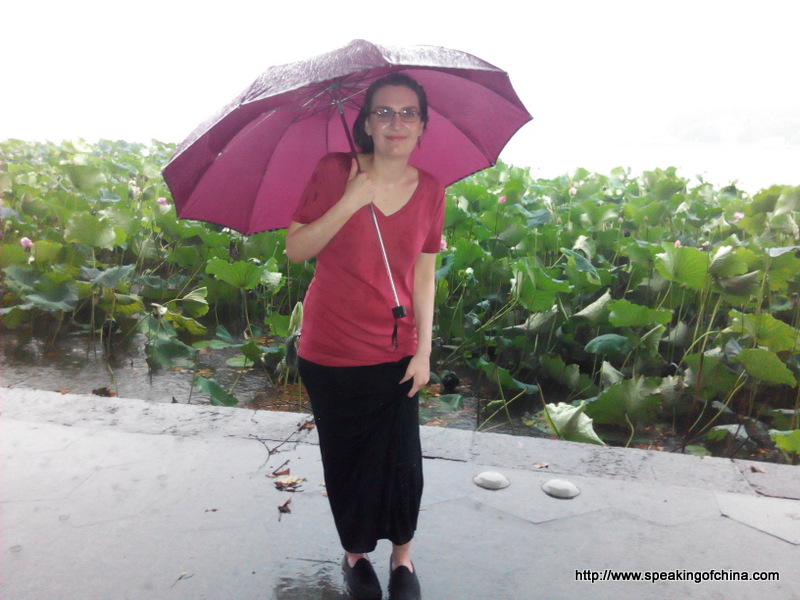
But not long after we reached the scenic shores of the lake, fringed with the rich green patches of lotus plants studded with pale pink flowers, an ominous gray cloud darkened the sky. Thunder soon rumbled right in, followed lightning and a monumental downpour. When I say “monumental downpour”, I mean 90 mm worth of rain (that’s a little over 3.5 inches) in one hour!

We sought shelter just in time in a public teahouse beside the lake, and were trapped there for almost an hour, witnessing nature’s own version of fireworks boom across the lake (I screamed when the lightning hit a nearby tree) as the landscape around us became soaked in rain.

Then, because we needed to hustle to make our 6pm dinner reservation at a hotel, we splashed our way down Beishan Road through the runoff water that burst up from the drains beside the road and cascaded over the sidewalk right into the West Lake. It reminded me of all those times when I was a kid and insisted on going creek-walking — except you don’t usually go creek-walking with your hair and makeup done, all dolled up in your new shirt and long black skirt.

Even worse — the rain revealed leaks in my own umbrella, scattering droplets of rain all over me (including more than a few that conspired to ruin my nice up-do and makeup…thank goodness they didn’t!).

You might wonder, “Why didn’t they just flag down a taxi or take the bus?” Well, as anyone who has ever lived in Hangzhou knows, it’s almost impossible to flag down a taxi on rainy days. Plus, the traffic on Beishan Road was locked in gridlock and plodded along so slow we actually walked faster than the buses themselves!

3. Due to a downpour of seemingly Biblical proportions, walk into the five-star hotel where you’re going to have dinner with at least half of your outfit completely soaked

I know I'm smiling here, but believe me, most of my skirt and all of my shoes are soaking wet!
I know I’m smiling here, but believe me, most of my skirt and all of my shoes are soaking wet!

There’s nothing that says class quite like strolling into the glittering lobby of a five-star hotel looking as if you crawled out of one of the drainage pipes beside the West Lake. The Assistant Manager on duty — a willowy blonde dressed in a perfectly-pressed suit jacket and pencil skirt — stared at us as we hurried across the lobby and up the stairs, and I couldn’t tell whether it was because we were that rare AMWF couple in China or because our shoes left little puddles behind us wherever we walked.

4. Due to same downpour, spend over an hour awaiting the rest of your friends to arrive.

IMG_20140726_194849-001

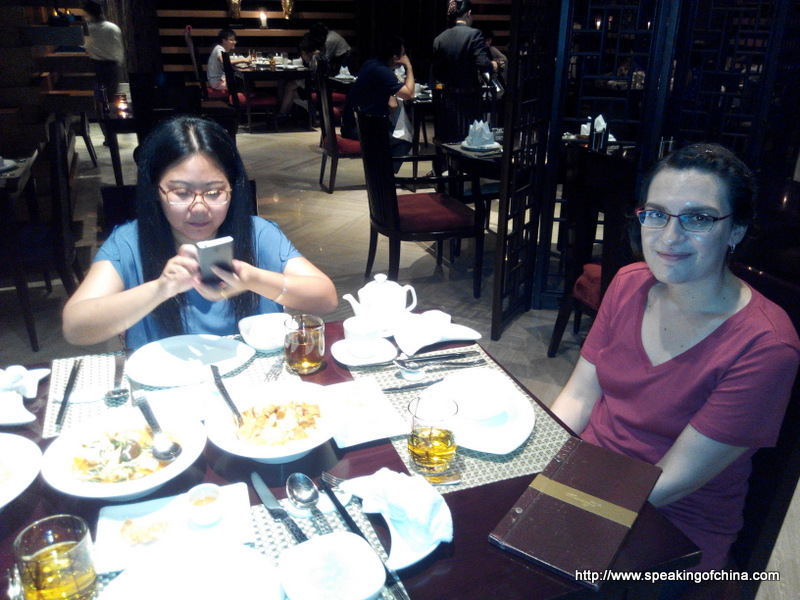
Four of our guests — more than half of our table — took over an hour to make it to the hotel because the downpour brought Hangzhou’s traffic to a screeching halt. This photo (with me putting on a smile while my friend Caroline plays with her mobile phone) pretty much sums up how we spent that hour at a very empty table for seven.

5. Realize it’s the most imperfect anniversary celebration you’ve ever had — and enjoy yourselves regardless.

IMG_20140726_195028

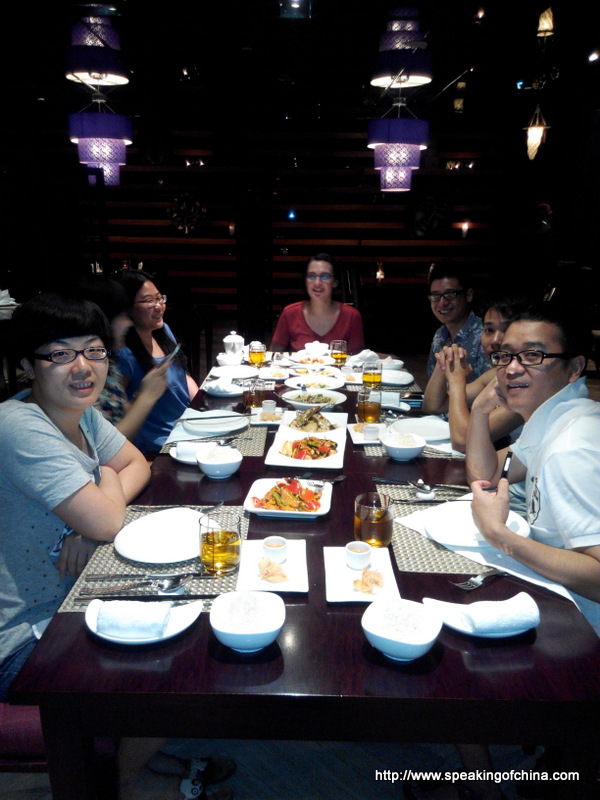
Between the sweltering heat and all of the mayhem caused by a sudden downpour, we had one tumultuous afternoon. No carefree strolling beside the lake, no stolen kisses at our old bench on Su Causeway, no confident entrance into the hotel. Our shoes were still totally wet and squishy. The rain even drenched a classic photo of us that John carried in his wallet.

But we had five of our friends with us, as we dined on some of the most sumptuous Thai dishes I’ve ever sampled in my life in one of the most glamorous restaurants in town. Maybe we didn’t get the perfect day we hoped for — but as I helped myself to another creamy mouthful of green curry vegetables and admired the mahogany-toned wooden accents in the space, I couldn’t help but think that, for the moment, it was just perfect enough.

(P.S.: For those of you curious as to where we had our anniversary dinner, it was at the lovely  Sawasdee Thai Restaurant in Hangzhou — one of my favorite dining spots in the city.)

Have you ever experienced a less-than-perfect celebration?

As we move to Hangzhou, we’re feeling the love (and support) from family in China

IMG_2096

Sometimes, I think the love of a Chinese family is one of the best kept secrets in the world. And if ever there was an example of that, it’s our upcoming move to Hangzhou. As we trade the countryside for city life, I still can’t believe how my husband’s family has gone out of their way to help us make the transition.

Secretly buying our brand-new apartment essentials

Okay, I know rice cookers, pressure cookers, dishes, woks and bedding don’t appear out of thin air. But when my mother-in-law suddenly pulled out all of these brand-spanking-new things (and more!) from storage in our house, it felt like some magic trick. Or the wedding registry I never imagined I had signed up for.

Because, after all, we never asked them to buy any of these things. But they bought them anyway!

My mother-in-law has continued this apartment hocus-pocus almost every day leading up to the move, trotting out new things during lunch, and has even pulled a few extra-special surprises out of her own proverbial hat (including honey and even veggies from her garden).

Making it an auspicious move

“It’s not superstition. It’s the Book of Change, a Chinese tradition.” Whether or not you agree with my father-in-law, the fact remains that good luck matters to my in-laws in every important aspect of life — including moving house.

So naturally, once we announced the news on Saturday, my father-in-law whipped out that indispensable little red book in his library — the Chinese Farmer’s Almanac, based on China’s Book of Change. It lists every date in the year, recommending what you should and should not do on that date. According to his almanac, the best upcoming date for our move (and preparing our new bedroom) would be this coming Tuesday, May 27.

And believe me, this stuff counts to them. How much? Enough for my mother-in-law to make a second phone call to my husband’s oldest brother (who initially said he couldn’t move us on Tuesday), convincing him to do it earlier in the day!

Money? We didn’t ask for money!

Compared to so many Americans I know, Chinese families seen to operate on a completely different wavelength when it comes to money — and my husband’s family is no exception.

You don’t even need to ask them, “Could you lend us some money?” It’s a given they will, which I still haven’t quite gotten used to (yes, I am a bag of nerves whenever John has to borrow cash from his family — and John always thinks it’s so funny).

And more often than not, you don’t even need to bring up the topic of money with them — because they’ll do it first.

That’s exactly what my father-in-law did the other day when he sauntered over to John and me in the yard. John’s dad had this serious look on his face that made me all nervous inside, as if he was like my dad and about to lecture us on something we messed up in his house. But this “serious talk” turned out to be nothing more than him saying, “You’re going to need some money for your move. How much?” (A question that, of course, I felt too embarrassed to answer. I mean, here’s my father-in-law approaching me with a gesture that seems too generous to be real, and expecting me to give him a number?)

Days later, I discovered a thick stack of crisp, red bills lying in the corner of our room — an amount that turned out to be more than three times more what I expected!

Sometimes it’s not even a question, but an order. Like, yesterday John’s oldest brother phoned him out of the blue just to say “Open an account so I can send you some money” when John hadn’t even asked for it. After my husband recounted this to me, I was shocked (in a good way)…and then almost wanted to pinch myself.

Nope, it wasn’t a daydream.

In the end, it’s all about the love

My Chinese relatives will never hug or kiss us, or say how much they love us the way my American relatives do. But they’ll pony up brand-new apartment essentials and money without us asking them, and make certain we move on the luckiest possible day. It all comes down to one simple idea — this is how they show us their love.

Now if you excuse me, I’ve got a move to get ready for. Hangzhou, here we come!

In Hangzhou, the city where John and I fell in love — and love with all our hearts!

The power of a smile in China’s countryside

14163236553_a672f5783f_z

As John and I stopped to admire a patch of yellow daisies while hiking through his village in Zhejiang, a voice speaking Chinese reached us from across the creek. “Aren’t those flowers beautiful?”

I looked up to see two smiling yet unfamiliar faces staring at my husband and me, both filled with a friendly curiosity. After all, it’s not everyday they find a white foreigner hiking across from their fields.

The warmth from their gazes made me do something so uncharacteristic in China, something I rarely do with strangers here: I waved at them and smiled.

“Yes, they’re very beautiful,” I said to them in Chinese. “And fragrant!”

Soon, we fell into a brief conversation — about why we were hiking around the creek (for fun), about what they were doing (planting some crops in the fields). Even though it was all just small talk, by the time we left and continued on our way home, I felt as if we just made a couple of new friends. And it’s not the first time this has happened.

A woman in the mountains always invites us in for dinner or a little small talk whenever we hike past her house. While cruising down the hill on our bicycles, one fellow standing outside his house with a bowl of rice and bamboo also asked us to come over for dinner. A farmer picking cherries in the fields suddenly pushed his basket of sweet red bounty in front of me, insisting I must take some home — and even forcing the cherries into my hands when I hadn’t taken enough. And then there are the countless individuals who crack an unexpected smile at my husband whenever he greets them in the local dialect with a question like, “Off work?”

It’s amazing how a simple walk through my husband’s village in rural Zhejiang suddenly opens up unexpected doors and hearts. There’s a brilliant friendliness here that shines upon us like the golden sunshine. Maybe it’s because my husband always called these mountains home — and whenever he speaks the dialect of this region, he announces his hometown roots. Maybe it’s in part that the curious presence of a foreigner in a remote mountain village inevitably opens up even some of the shyest people to a little conversation.

Yet I know we would never enjoy the same friendly welcome in a big city like Hangzhou, Shanghai or even Beijing. After living in big cities in China, I know all too well the watchful distance between strangers on the streets — where there’s no such thing as waving hello or asking someone, “What are you up to?” It’s a world where people worry about helping up a fallen little old grandmother in the streets for fear of getting sued…where you automatically assume “swindler” or even “thief” if someone you don’t know approaches you.

So of course, I assumed the same rules applied to us when we moved to my husband’s hometown in the countryside…and how wrong I was.

I’ve also watched my husband transform from the shy wallflower he once was in the US to the confident social butterfly who could charm almost anyone into a smile, even the most impossible grimacing grandfathers on the streets. Even after all of the hardships we’ve faced in the US, my husband still greets everyone in this village with a cheerful optimism that is so inspiring, especially to me.

My husband reminds me that, no matter what difficulties you’ve encountered in life, there’s still room for a smile, a nod and a little small talk. Sometimes, it’s also the best remedy for those sad and lonely days I experience here in China, where the world seems crazy and unfair and impossible. It’s like slowing down to enjoy a patch of yellow flowers — realizing the beauty and love that’s already around us, but that we’ve forgotten in our daily routines.

Someday, John and I will leave his parents’ home for bigger things. Yet a part of us will undoubtedly remain among these welcoming mountains in the countryside, which have taught us to believe once again in humanity and the power of a smile.

Finding a magical piece of China’s long history in my husband’s backyard

IMG_2585

It’s one thing to see history on display behind a museum glass and another to experience it right beneath the soles of your hiking shoes.

My husband has always told me China is a magical place. And among the “magical” things about his native country is, naturally, its amazing 5,000 years of history. Over the years that I’ve been together with John — first as his girlfriend, then as his wife — I’ve heard him gush with pride about how China is one of the world’s oldest civilizations. And why wouldn’t he? If I came from a country with a continuous culture that stretched back thousands of years, I’d be proud of it too.

We’re both history and culture buffs, so naturally we’ve visited lots of museums on our travels across China, often in awe of the beauty and craftmanship of artifacts that are thousands of years old.

But I never believed we would ever find a piece of China’s history right in John’s humble little village in the countryside.

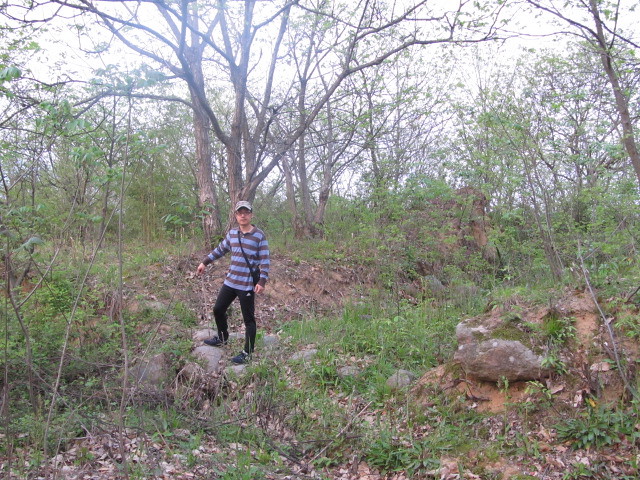
While exploring a ridge trail that cut across patches of bracken ferns, bamboo and satintail grasses on a hilltop, we suddenly came upon a clearing on the hilltop — and a historical marker carved into a slab of marble. That landmark designated the fertile ground beneath our feet the site of an ancient civilization that flourished 4,000 to 5,000 years ago.

That’s right. Four to five thousand years ago!

I couldn’t believe we found this on our hike! I surveyed the clearing around us, covered in mugwort, clover and other small weeds. Nothing about the geography could have told us we would stumble upon an ancient site on this ridgetop. And then I wondered, what was it like back then? How did these people live? Were any of the stones around the area evidence of their civilization as well?

Stones scattered around the site. Just coincidence or were they left behind by the ancient civilization?

But the other side of the marker provided no introduction or description for the culture, beyond that it was an ancient site dated to China’s Neolithic age.

I also wondered about what it meant for John and his past. Were these people among John’s ancestors? The idea thrilled me for a moment, even if we had no way to confirm it.

Later, when my husband looked up the site online, we learned that archaeologists had discovered a cache of broken pieces of ancient pottery at the site, including the legs of ding vessels, and suggested it was a part of Zhejiang’s Liangzhu culture.

When I saw an online photograph of the site’s scattered pottery fragments, each like a lost puzzle piece, I knew the find would only stand as footnote in China’s ancient history. Since the archaeologists already unearthed the major artifacts on the site, there wasn’t much to see there, apart from the landmark the government left behind. Meanwhile, friends and family in the village didn’t even know about it, and nothing about that hillside nor its trail even suggested that a fantastic find lay hidden beneath the trees and bushes.

Still, it felt magical all the same to know that a small part of China’s ancient history sat right in our backyard.

The hillside where we found the landmark. It looked so ordinary from afar!

Have you ever stumbled upon a historical or ancient site?

Things I’ve Learned from My Chinese Family: 3 Amazing Wild Edible Plants

13660077265_0acbafdcdf_z

As a child growing up in Cleveland, Ohio, USA, wild edible plants — especially those we foraged for ourselves — were never on the menu. Sure, we picked blackberries on late summer hikes and a few times I tried harvesting Staghorn sumac berries to make my own tea. But otherwise, the food on our dinner table came straight out of a supermarket.

So it’s hard to believe that, these days, wild edible plants comprise at least half or more of the stir-fried dishes that leave my mother-in-law’s kitchen here in China. Even stranger to me, I’ve actually helped forage for some of these wild edible plants. To think that something I harvested actually became dinner!

Now that I’ve discovered the joys of harvesting and dining on wild edible plants, I can’t imagine life — or lunch — without them. Call it yet another one of those surprising things I’ve learned from living with a Chinese family in the countryside.

Here are three amazing wild edible plants here in Zhejiang, China that have enchanted me and my Chinese family this Spring.

Fiddlehead ferns

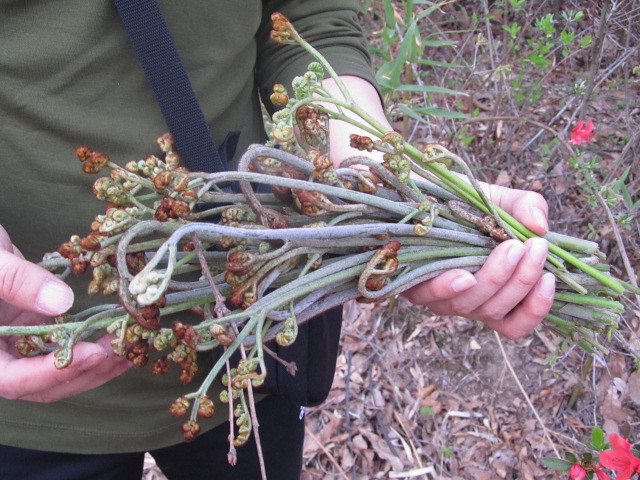
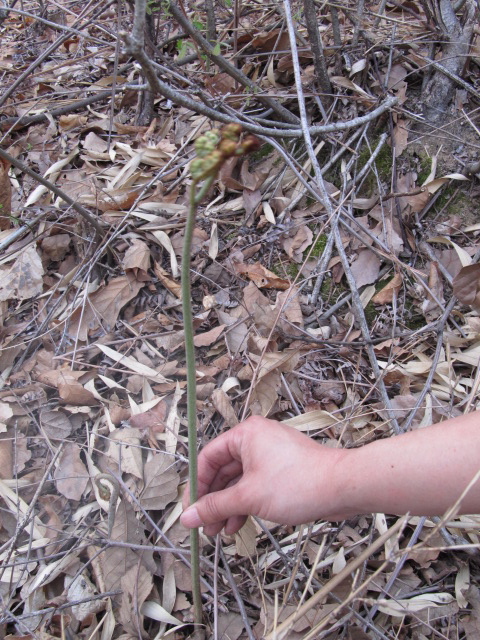
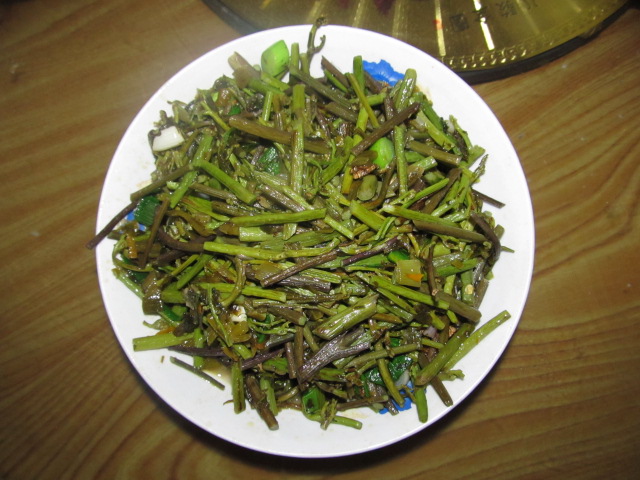
These tender fronds have become a Spring favorite in farmers markets in the US (and among foragers who know and love them). But out here in rural Zhejiang, people have gathered fiddlehead ferns in the mountains for generations. The local variety is the bracken fern and the tender shoots spring up over the mountains in our village.

Some claim bracken fern is carcinogenic, though there’s really no absolute evidence proving that the consumption of bracken fern fiddleheads will definitely give you cancer. When I posed this “do bracken fern fiddleheads cause cancer?” question to my mother-in-law, she dismissed it as unscientific and ridiculous. “People here have been eating this for generations, even grandma, and they’re not getting cancer.” Well, even if you disagree, remember that some popular foods (red meat and hot dogs, anyone?) are considered carcinogenic. Personally, I think I’ll take the risk.

We only pick the most tender fiddleheads growing in the mountains, with the fronds still curled up. These days, it’s not uncommon for my husband and me to return from a hike through the hills with a huge handful of fresh fiddleheads. I never thought a simple hike could yield so many delicious things! 😉

My mother-in-law washes them thoroughly in her kitchen and then blanches them. Some claim the process reduces the carcinogens in the fern, though my mother-in-law says this simply eliminates the unpleasant sour, “numbing” flavor of the fiddleheads. Finally, she chops them into matchstick-sized pieces and stir-fries them with fragrant garlic, ginger, pickled hot peppers, Shaoxing wine, and salt.

So tasty, you’ll forget all about the alleged cancer claims. Promise!

Spring bamboo shoots

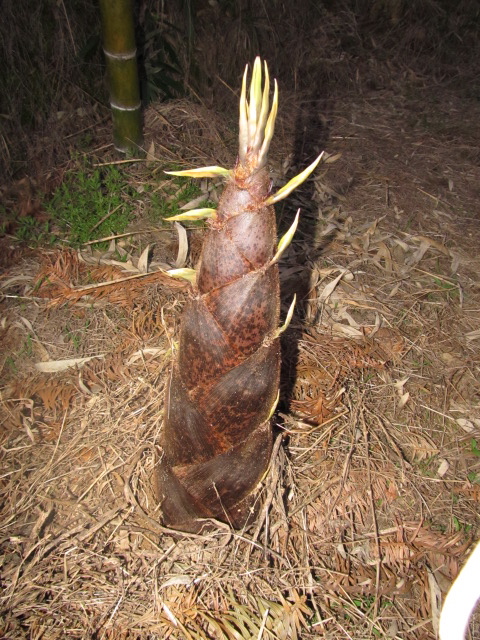
Spring maosun found in the wild

The Chinese saying “like spring bamboo shoots after rain” (yǔhòuchūnsǔn, 雨后春笋) refers to how quickly things can suddenly happen or come up. And trust me, after the rains in late February and March settled over our region of Zhejiang, before I knew it spring bamboo shoots were sprouting all over the hills.

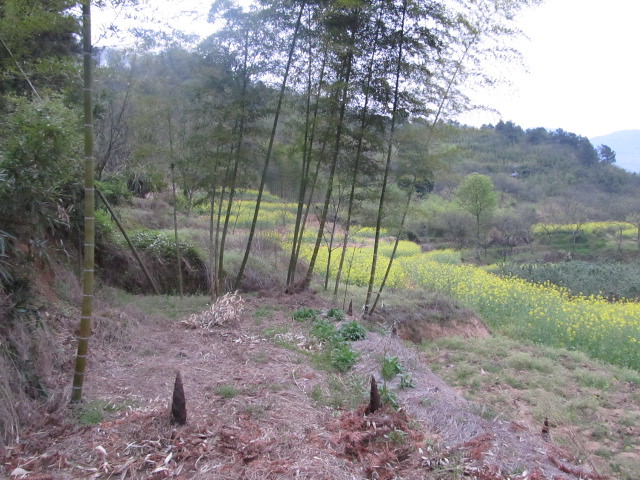
Notice the bamboo shoots sprouting up from the ground?

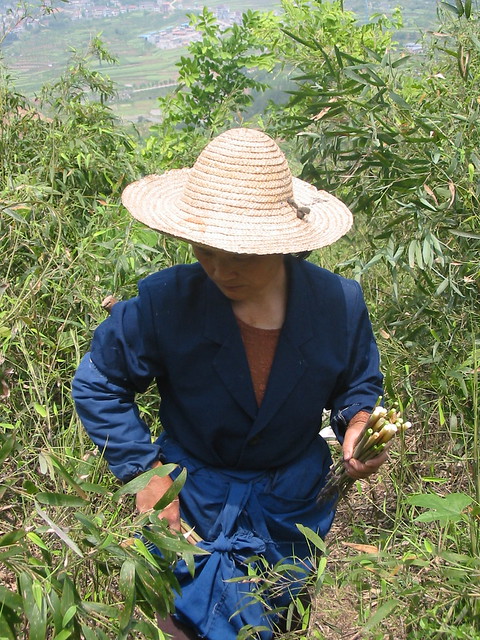
Right now, we’re seeing two varieties in the mountains. One is moso bamboo shoots or maosun (máosǔn, 毛笋); this is the largest variety of bamboo you usually see in the area. If you’ve ever watched any Chinese films that feature bamboo forests, chances are they’re moso bamboo. The other, well, I have no idea what it’s called in English — but it’s small and grows wild all across the mountains, so in the local language they call it “mountain bamboo shoots” or shansun (shānsǔn, 山笋). To harvest either variety, you simply dig up the shoots from the ground.

My mother-in-law, harvesting shansun from the mountains.

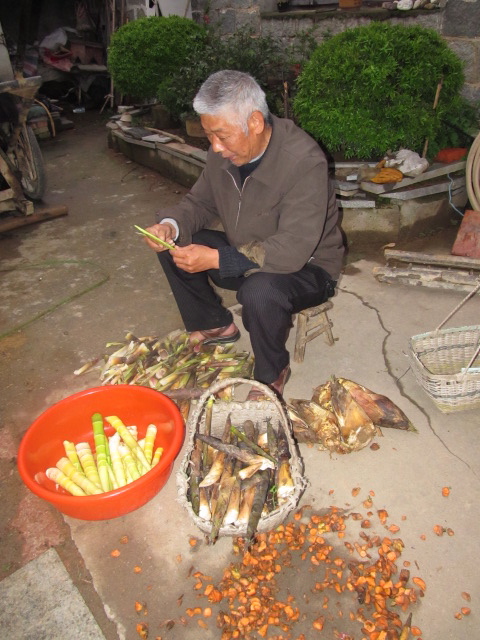
Whether maosun or shansun, you must first peel away the hard husk of the bamboo shoots to reveal the tender and edible portion.

Peeling the bamboo shoots to reveal the tender and edible part of the shoots.

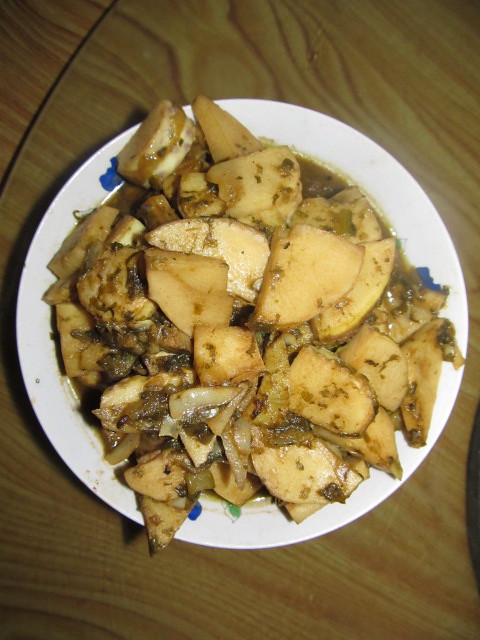
These days, when it comes to wild bamboo, we’ve mainly seen wild maosun at the table. My mother-in-law usually prepares it one of two ways. For the vegetarians in the family (i.e., me!), she stir-fries it with lots of rapeseed oil, ginger, sugar, Shaoxing wine, soy sauce, pickled greens, and salt to taste.

Maosun with pickled greens

For the carnivores, she stews the maosun along with fatty pork, ginger, sugar, Shaoxing wine and salt to taste.

Maosun with pork

If you’ve only known bamboo through the lackluster canned versions sold in the West, all you need is one taste some wild bamboo shoots and I promise, you’ll never buy another can again!

Mugwort (Qingmingcao)

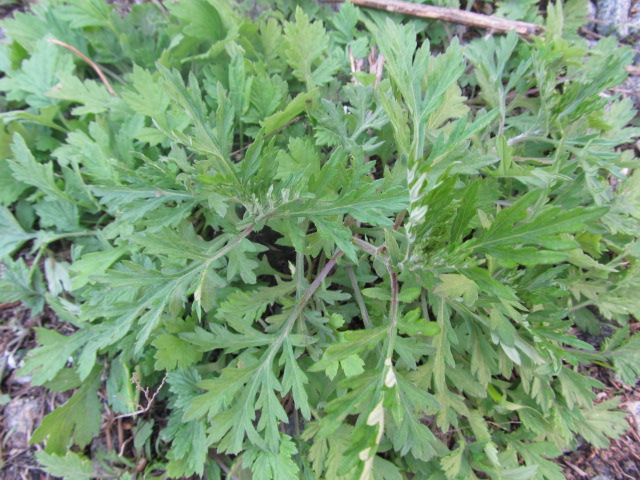
This past Saturday (April 5) we just celebrated Qingming Jie (qīngmíngjié, 清明节) or the Tomb-Sweeping Festival where people visit their ancestors graves and remember family and love ones who have passed away. And here in rural Zhejiang Province, there’s no wild plant more beloved during this holiday than the aromatic mugwort, also known as qingmingcao.

It’s hard to believe just how common this variety of mugwort is around here. In fact, it grows like a weed everywhere, even in the dusty pebble lanes that criss-cross the fields in the village. For nearly two weeks, I hiked these lanes, never realizing all that time that mugwort was right under my shoes!

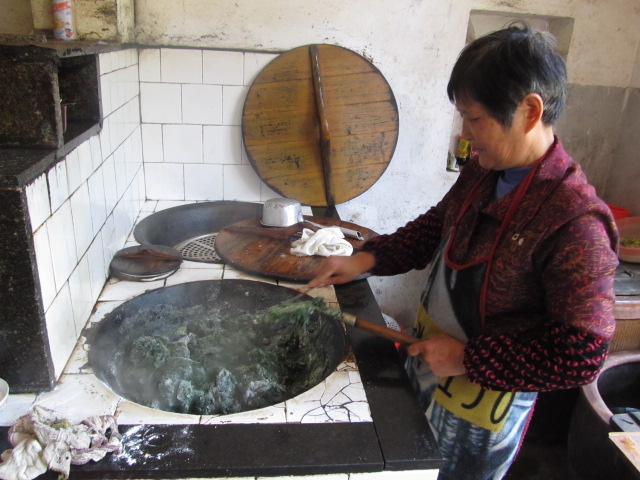
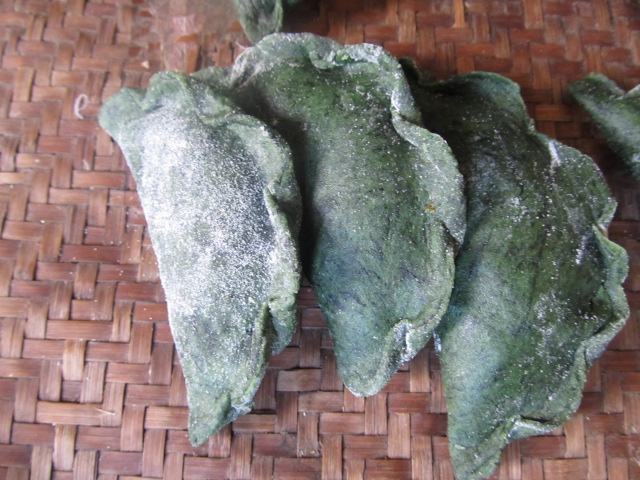
My mother-in-law gathers wild mugwort from the hills well in advance of the holiday, because this lowly little wild green undergoes an extraordinary transformation in the kitchen. After cleaning it, she blanches it and then crushes and grinds it into a paste, infusing the kitchen with an aroma reminiscent of lavender. The paste then goes into a warm wok along with glutinous rice flour, creating a dark green dough.

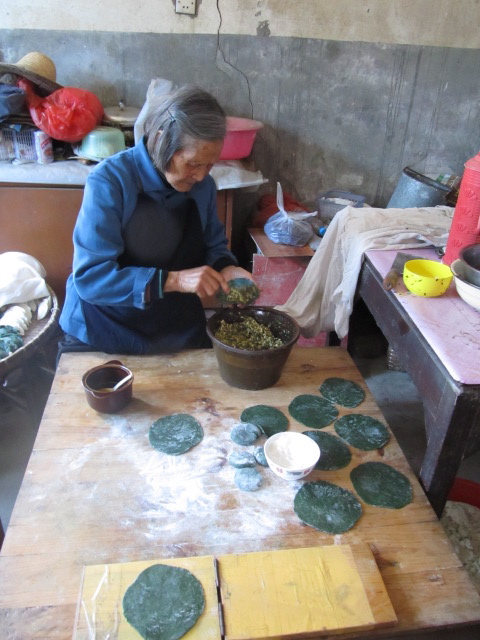
That dough then gets kneaded and partitioned into small rounds, which after being flattened, become the wrappers for qingming turnovers (stuffed with chopped up bamboo shoots, tofu, and salted greens).

Making the qingming turnovers (flattening the rounds, then filling them with vegetable filling).
The finished qingming turnover up close.

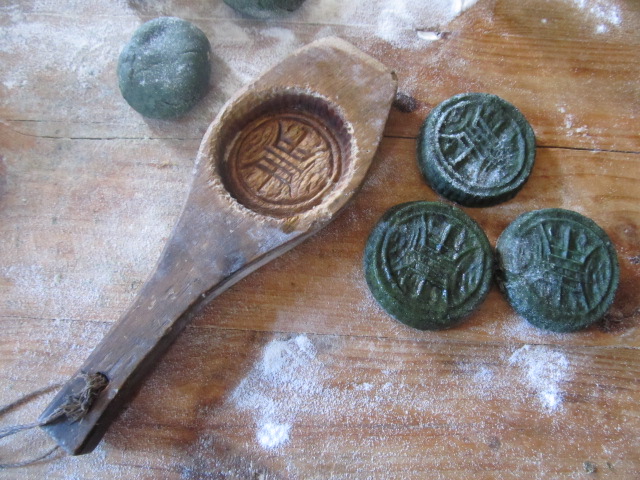
For a sweet version, my mother-in-law adds sugar to taste to the green dough and then shapes the rounds in a small mold made especially for Qingming Jie.

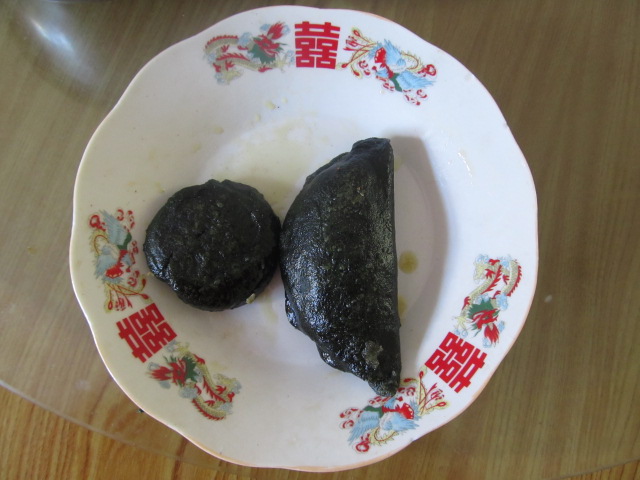
Finally, she steams the turnovers and sweet rounds in her wok until they’re cooked through and turn a deeper shade of green.

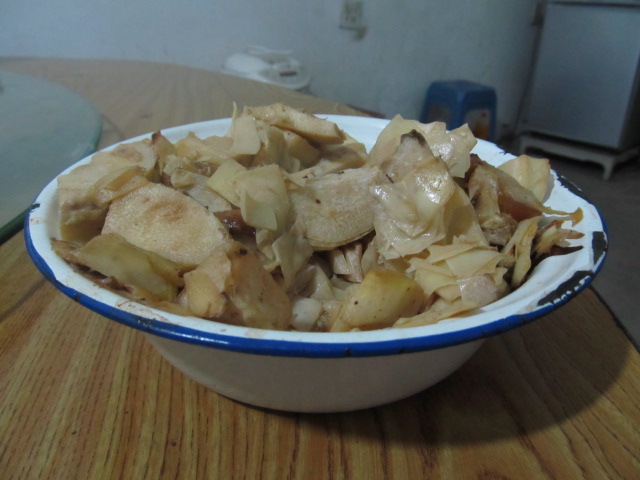
Here’s the final product (one turnover, one sweet round) — slightly fragrant, sticky, and oh-so scrumptious. Remembering your ancestors never tasted so good!

Have you ever foraged for wild edible plants? What are your Spring favorites?

On Invitations and the Dinner We Never Expected

IMG_1979“Time for dinner! Go to big uncle’s home!”

When my mother-in-law shouted the news up the stairwell a few weeks ago, I was dumbfounded. It was 4:30pm and we never ate dinner until at least 5:30pm. But more importantly, nobody told John and me we were having dinner out this evening. And we weren’t the only ones surprised, as we learned when we met my mother-in-law downstairs.

“They’ve already made dinner,” she said. She was wearing her favorite blue-and-yellow felt apron, evidence that she had probably been working on dinner for us when someone from big uncle’s home came over with the news. “It’s bad not to go. Just go over there and eat a little.”

A little, however, was not what big uncle had in mind — as John and I discovered when we walked into the dining room. Eight people were already huddled around a dining room table filled with more than 10 different dishes, a delicious assortment of stir-fried meats and vegetables that would have rivaled some of the most lavish banquets I’ve ever attended in China.

I couldn’t help thinking how my family back in the US would never pull off such a huge spread at the last minute. People would need days if not weeks of notice, and even then some people might not be available. Yet here, it just happened one afternoon, all because big uncle wanted to share his generosity with us.

Even though I still equate the word “invitation” with advance notification, I’m also learning to understand that invitations don’t always work like that — especially out here in my husband’s village. Sometimes it’s not an easy thing to accept when, like me, you’re so used to setting your own schedule and being told well in advance of upcoming dinners, meetings or other events. But there’s also beauty in living spontaneously, in not always having every moment and every second planned out…especially when, like big uncle’s dinner, it turns out to be a tasty surprise.