While I’m still on break this week, I thought I’d share some recent photos from the gorgeous “golden” spring blooming all around us here in the Hangzhou countryside.
I call it “golden” because of the golden yellow rapeseed flowers that dominate the fields at this time of year. There’s nothing quite like standing among these fields of gold in the sunshine…
Or even the rain.
Even when it’s overcast, the fields shine with the golden radiance of these flowers.
It’s even better when you can enjoy them with your best friend (and husband). Thanks John. 🙂
The Wall Street Journal Expat Blog just published an article titled Strategies for Coping as an Unhappy Expat. While I loved the suggestions provided by the author, the thing that struck me most about it was the focus. The idea of the unhappy expat.
Unhappy moments are not the sexy sort of thing we’d like to plaster all over our blogs and social media accounts.
Before I met Jun, I imagined international love to be as sexy as a James Bond movie, where lovers went from Monte Carlo to the Casbah as easily as ordering a martini. But then I went to China, and I was shaken and stirred by the reality there…
I think we’re all a little shaken a stirred – and not always in a positive way – when we chose to make another country home, with a spouse from that country. There are inevitable sacrifices and challenges that people don’t always talk about, but probably should. It would be a great leap forward to helping us all overcome the shame of feeling sad when we’re supposed to have these “fabulously sexy” expat lives.
Here are 5 unhappy things I’ve struggled with as a longtime expat in China married to a foreigner:
#1: Missing friends and family from your home country
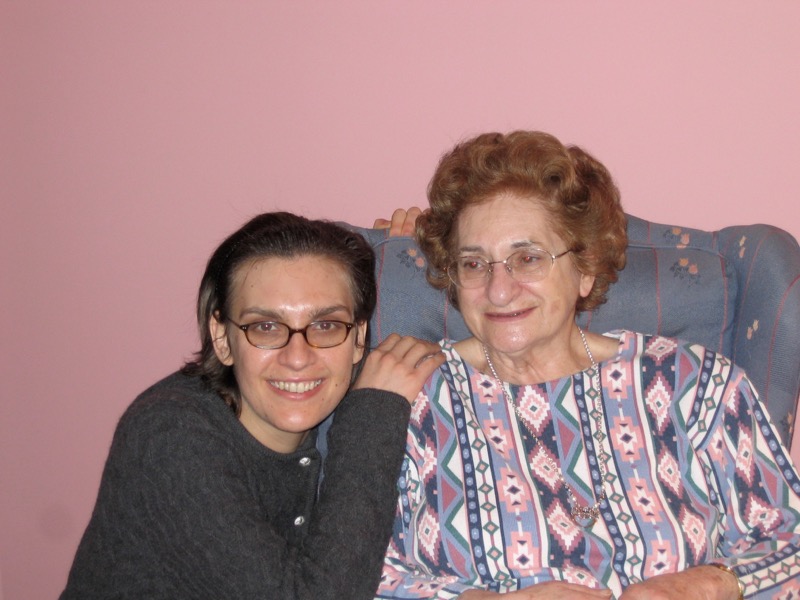
I chose to live in China, half a world away from my friends and family back home. But, goodness, not a day goes by when I don’t think about them – and wish I could see them again.
Right now, for personal reasons, it’s just not feasible for me to return to the US. In fact, I haven’t returned ever since I moved here to China at the end of 2013, making it more than two years since I’ve been away.
This is probably a huge surprise to a lot of people, who might think expats always make those trips home at least once a year. But it’s not uncommon among the yangxifu (foreign wives of Chinese men) that I know. There’s one woman who actually lived six years straight in China before hopping on a plane to return to her home country. (Her reason was having kids in China – it was just too difficult for her to make the trip.)
#2: Feeling isolated
I live in Hangzhou, China. While it’s not a Beijing or Shanghai, it’s definitely right up there with the major cities in China. But there’s one thing Hangzhou doesn’t have – a vibrant, more permanent expat community.
The majority of expats in the city are pretty transient – overwhelmingly students at the universities – and don’t stick around too long. The rest of the working expats are scattered all over town. I almost never run into folks in the city, and there aren’t tons of venues to meet up with them either.
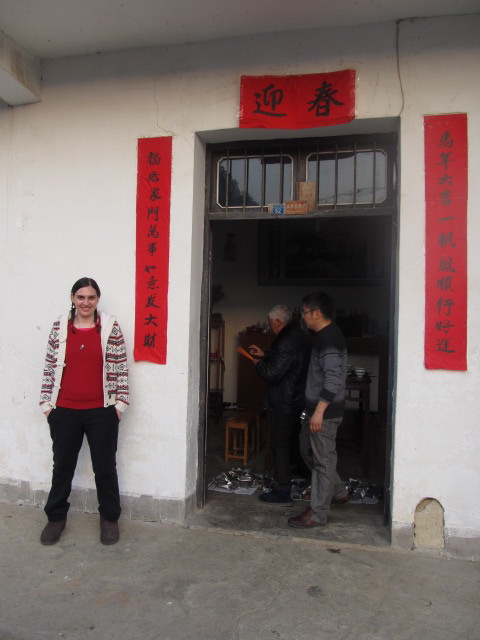
Add to that the fact that I also divide my time between the city and the countryside, and you’ve got a recipe ripe for isolation.
I have friends in China on my WeChat account, and we do chats every now and then. But honestly, just straight online chatting doesn’t really do it for me. Video chats are much better, though slow Internet can make it difficult too.
I’m learning the importance of reaching out to people when I’m struggling. Even then, I know that isolation will sometimes be a part of my life and I need to learn to find good coping strategies for it.
#3: Feeling misunderstood by your foreign family
I recently wrote, “It’s hard not to care about the happiness of my mother-in-law when, frankly, she spends so much of her time caring about ours.” and it’s a testament to how much I love her and the family I have here in China.
But the thing is, no matter how much I love them, there are things about my life that they don’t always understand. Especially things that have happened to me and my husband in America or places far removed from their rural Hangzhou life.
I can handle being misunderstood in small doses. But let me tell you, during Chinese New Year this month I was getting pummeled with it almost every single day from family members. And even though I know that words can’t really hurt you, I couldn’t help but feel down from it all.
Sometimes the best antidote to this is my husband, who tells me that I’m not alone in feeling like I do. With his experience living abroad and traveling, his family doesn’t always understand him or his decisions either. He’s a reminder that it’s OK.
To me, Jun was the guy who first kissed me to the tune of cicadas, next to Hangzhou’s West Lake. The man who loved to pick me up from the metro station late at night, and ferry me home on the back of his bicycle. But to the visa officer at the US Consulate in Shanghai, Jun was just another immigration risk from China with no apartment or car, let alone a wife or children. “You’re too young,” the officer declared in Mandarin, stamping a denial in permanent red ink into the passport….
I shouldn’t have pushed Jun to apply for that US tourist visa — except I longed for him to meet my parents. I had met his months before, but he’d only known mine through the occasional long-distance phone call. But instead of getting the third degree from my dad, Jun had to get it first from a US visa officer, a guy who wasn’t kidding about “no.”
But it can go both ways. In online chat groups with foreigners, I often hear about the seemingly interminable troubles that they’re facing with applying work visas. Things like having to make the expensive journey back to their home country just to submit an application, figuring out how to get an acceptable criminal background check completed, and more. Sigh.
#5: When people laugh at your foreign accent
The Chinese are known for their excitement whenever Westerners say even a simple “Ni Hao” or “Xie Xie” – but that doesn’t mean it’s impossible for people here to laugh at your accent.
It has actually happened to me, particularly when I’m around kids (and often in a classroom setting). When I speak my accented Chinese to them, they think it’s funny and then don’t respect me so much. Or make jokes about me behind my back.
Granted, it’s nothing compared to what Chinese might experience in America. Many Americans are such racists sticklers that they consider certain accents – including Asian accents – as proof that you can’t speak proper English. (Or worse, that you should “go back home”….)
But the experiences I’ve had here have made me even more sympathetic to foreigners in America. And they’ve given me a taste of the unhappy experiences you can have when you don’t speak exactly like a native.
—–
Don’t get me wrong – I’m happy most of the time. I love my husband, I love China, and couldn’t imagine living anywhere else in the world. But sometimes, it’s good to share the flip side of it all. For all the ups we experience as expats, there will also be plenty of downs as well.
So next time you’re feeling a little unhappy in your supposedly “amazing” expat life, just remember one very important thing – you’re not alone.
What do you think? What unhappy experiences have you had as an expat and/or as someone married to a foreigner?
Going abroad can change you a lot — sometimes, enough to realize you were never meant to date your own countrymen.
That’s the conclusion Lena, the blogger behind Lena Around, has come to, who believes the cultural differences between her and the local Danes are too great for her to go out with them. Read on for her story!
Do you have a surprising story to share or other guest post you’d like to see featured on Speaking of China? Visit the submit a post page to learn how to have your words published here.
—–
I’ve been at home for a few months now. 2015 was a crazy year. I started out with a broken heart and a lost soul. But there wasn’t much time to think about it because I was going to Australia and then moving onto China. My heart was growing back together during the month in the beautiful nature of Australia, and when I came to China I was getting stronger again. I started to believe a little bit in love or I thought so.
I met a great guy in Beijing and I was determined to move on from past experiences and be happy with this person. He was a great match for me and he loved me just like I am. I should have been happy and I tried. I fought for him for a long time while I kept wishing my heart would open up, but I was afraid. I wasn’t ready to open up yet so I had to move on again.
I travelled through China, Malaysia, Singapore, Korea, Thailand, Laos, Hong Kong and Taiwan, I met loads of amazing new friends and hot fellas I could fall for, but I didn’t. I was just having fun. I told myself it was okay to still be nervous about the pain another person could cause you, so I let it go and travelled on my own discovering, exploring, thinking, learning and growing.
Coming back to Denmark, I was tired. I was just exhausted after 10 months on the road. I’d seen so many things and now it was time to sit down, relax and reflect. But it didn’t take long before my wanderlust came back with even bigger power than before. I felt the need to do something, so I quit my little vacation at my parents’ house and moved back to my university town. I thought to myself that now everything would be nice and I could be happy with friends around.
The problem is just that when you come back from such a long trip, not many people are around anymore. Or if they are, they are doing tons of other things. So I sat there in my new apartment thinking, Why not try Tinder? I’d tried before and it was a fun way to meet nice boys. I’ve got to be honest and say that I was pretty bored, which was probably the reason why I turned to Tinder.
After a few days, I had a match. You see the problem here is that I just do like the Asian look. I’m not saying that I only date Asian guys but I am just quite fond of them. So if I see an Asian-looking guy, I’m just more curious than a blue-eyed, blond-haired tall Dane. But anyway, the match was with a Vietnamese-Chinese guy born and raised in Denmark. I know from experience that this doesn’t mean they have any interest in Asia but I always hope a little bit anyway.
We started talking and the conversation quickly turned to the topic of Asia. I said that I’d been around. I didn’t want to mention all the places because I wouldn’t want to sound like a show-off, but he insisted on me telling. I told him about my last trip and he asked me if I spoke Mandarin. I said yes. He himself had only been to Beijing and Hong Kong for a week like most other tourists and I felt a little disappointed deep inside.
I knew I was comparing him to my first and only great love. He had the same background as this guy. But instead of not giving a s… about China, he was totally in love with China, just like me.
In the end, this guy left me hanging. Twenty minutes before meeting up, he told me he was going to play football instead. I was furious. I told him what an ass he was and deleted his number. Even though he chose to screw things up, I think it was for the best anyway. I should not date around here. My China stories can be pretty overwhelming. I don’t know why this guy didn’t want to meet. Was it because of my greater knowledge of Asia or did he really just want to play football? Who knows?
Now I know that I shouldn’t try to find a guy in this town. With a big population of pale people and no Asian studies at the university, I don’t think there’s much for me here. Also, I’m planning on moving back to Beijing immediately after graduation so why start a relationship here, right? I think it would be better to just deal with the boredom myself, become stronger, and not think too much about boys right now. I’ll just have to wait for my prince charming, who’s probably sitting on a subway in Beijing hoping for my arrival.
Lena is a 20-something Danish girl who is currently working on a master’s degree in Beijing and writing about her travels, China (her favorite place) and love. You can follow her at lenaaround.com.
But it’s not always easy to transition to a new country. After all, as Linda writes, “Before I met Jeongsu, the only thing I knew about Korea was that its capital is Seoul. I hadn’t even tried Korean food.” I asked Linda to share some of her tips for a smooth transition to life in South Korea – read on!
Do you have some advice, a story or other guest post you’d like to see featured on Speaking of China? Check out the submit a post page to learn more about what I like to publish and then submit yours today.
—–
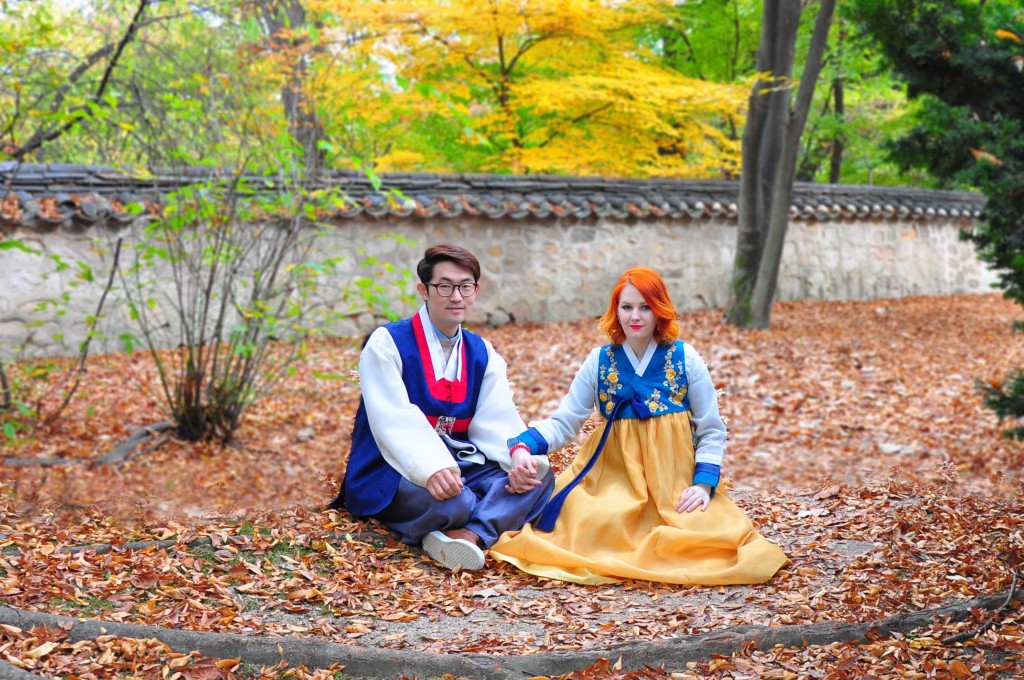
I’ve always been interested in Asia and its different cultures and nations. China had especially caught my eye and I decided to study Mandarin and even move to China – which I did and it was awesome. Then, I went to California to get my bachelor’s degree, with a plan in mind to move back to China – maybe even for good.
However, something, and I like to argue it were higher powers, had completely changed my path. Actually it wasn’t something but much rather someone. While studying in San Diego, I met a handsome Korean exchange student who instantly caught my eye. We quickly started dating and he is now my fiancé.
After graduating, I did, in fact, move back to China, were I stayed for a year in Hunan’s capital of Changsha. I got to travel the country and experience the local culture to a great extent. However, I wasn’t fully happy there. Being in a long distance relationship was hard and after 1 year in China, I decided to make the big move to South Korea.
Before I met Jeongsu, the only thing I knew about Korea was that its capital is Seoul. I hadn’t even tried Korean food. However, all of this quickly changed and is now a big part of my life. I would like to share some of the strategies that helped ease my transition into living in South Korea.
#1: Learn the Language
Soon after I met Jeongsu, I started learning Korean. I’m by far not fluent but the basics help me fit in the daily life here and make it a lot easier to live here. I signed up at the local YMCA and took a Korean course with other foreigners. The good thing was that I met other foreigners – some of which also have Korean partners.
#2: Eat local food
Food is a key part of every culture. It seems like Korea even takes it to a new level, having a certain set of side dishes for every meal. I remember the first time I saw “kimchi” (the most popular Korean side dish) in Jeongsu’s fridge back in San Diego. “I’m never going to eat that!” I screamed because of the foul smell. Now, I love it and eat it with almost every meal.
#3: Do as the Koreans Do
Koreans work a lot, but also take their free time seriously and love hanging out with friends. Drinking, karaoke or even Korean traditional sauna include only few of the dozens of things Korean take on in their free time. You should also be aware of the strict hierarchy here in Korea. When you treat people older than you in a polite way, you’re going to be much more successful living here.
#4: Make local Friends
Obviously, the reason why I moved to Korea was to be with Jeongsu. Having him here helps me a lot since he can support me when I have problems of communication and he explains cultural differences to me. However, even if you move to Korea alone, you should definitely make Korean friends. You’re Korea experience is going to be so much deeper when you have a chance to see how locals really live.
What are you waiting for?
If you are thinking about moving to South Korea, don’t hesitate too long! It’s a wonderful country to fall in love with. I didn’t know a lot about Korea before moving here but now I am astounded by the country’s vast history and culture. Korean BBQ, KPOP, awesome skincare products and loads of themed cafes are waiting for you here!
Linda writes about life in Korea, her AMWF relationship with a Korean man, traveling around Asia and studying Asian languages at www.lindagoeseast.com . She is also very active on social media, especially Facebook, Twitter and Instagram.
Shannon gave me an advance copy of Ferry Tale. It’s as enchanting as any big-screen rom com – but better, thanks to the Hong Kong setting and charming AMWF couple. Here’s the synopsis:
She wants to be someone else…
Katrina Keller flees to Hong Kong after the most humiliating moment of her life goes viral on YouTube. She starts over as a lounge singer in a fancy hotel, wishing only to be anonymous. But that’s tricky when you’re the wrong end of an Internet joke.
He doesn’t want to risk another heartbreak…
Sam So transfers to Hong Kong after his long-term girlfriend cheats on him. He doesn’t want to risk another heartbreak by dating again, and he’s not even sure how people date in the world of Tinder and texting anyway.
When the two meet on the Star Ferry, Katrina will tell him she’s someone else, someone who’s as cool and sophisticated as she’s always wanted to be. Sam will be too caught up in her spell to remember he’s supposed to be avoiding relationships. But it’s only a matter of time before the truth comes out. Will they get their enchanted romance, or will Katrina’s lie destroy it all?
This is also a really fun, lighthearted romance perfect for whiling away the hours. It’s the sort of book I’d take with me on the plane, or to the beach, or even a weekend getaway. And if you’re looking for a good Valentine’s Day read, this book would be ideal.
For those of you who’d love to hear about how I came to China, some of dating experiences, or even what I sound like, have a look at the video. And if you love it, share it!
A few years back, I wrote an article titled The Chinese Relatives Name Game, reflecting on the challenges of trying to remember all of the names for relatives here in China. It’s funny that I’ve been married to my husband for over 10 years and I still can’t keep them straight! (In the post, I even wondered if it might take me a lifetime to get the names right… 😉 )
Of course, with Chinese New Year coming up, it’s as if I’m facing the yearly final exam on this subject – one that I’m not entirely sure I’m going to pass. (Ah well, at least my blunders might provide a bit of comic relief during the holidays?)
That’s why I’m grateful Yiwen Yang has graciously provided this article. It’s an introduction to some of the basics every Western woman who marries a Chinese man should know when it comes to what to call your Chinese family members.
Do you have a guest post that you think ought to be featured on Speaking of China? Check out the submit a post page to learn more about writing for this blog.
—–
The other day we were reading Jocelyn’s article The Chinese Relatives Name Game again, and thought about how confusing understanding all about Chinese family members can be!
Whilst we’re sure it’s not a new topic for many foreigners who are learning Mandarin Chinese, it’s definitely still a big challenge—especially if you are new to your Chinese family, and them to you.
As Chinese New Year is once again looming, why not refresh some of your Chinese language skills in advance so that you can impress your Chinese family—or maybe give them surprise at how fluent you have become in the language.
So, today, we are going to help you out!
As many of you know, Chinese family trees can be talked about forever. To actually remember the names and titles of people in Chinese family trees takes time; indeed, it’s also challenging for many native Chinese.
As Jocelyn from Speaking of China is more focused on AMWF (Asian male/Western female) love, let’s get started by looking at terms for Western women married to Chinese men.
Here’s an easy one if you are married to a Chinese man:
Husband: 老公,丈夫,先生 (lǎogōng, zhàngfu, xiānsheng)
What will your husband call you? (wife): 老婆,妻子,夫人 (lǎopó, qīzi, fūrén)
Note: 老公 (lǎogōng)/老婆 (lǎopó) are the most popular names which you can use in basically every situation, whilst 丈夫 (zhàngfu)/妻子 (qīzi),先生 (xiānsheng)/夫人 (fūrén) are a bit more formal and used to introduce a couple to other people.
For example, 这是我的先生 (Zhè shì wǒ de xiānsheng):This is my husband
In-laws:
Father in-law (your husband’s father): 公公 (gōnggong)
Mother in-law (your husband’s mother): 婆婆 (pópo)
公公 (gōnggong) and 婆婆 (pópo) are the most common words in use although, in many cases, people just use the same words as their husband use, which are father(爸,bà)or mother(妈,mā).
Also, when you have a child, some people will follow the words the child speaks, namely: grandfather(爷爷,yéye),grandmother (奶奶,nǎinai) 。
So what will your in-laws call you? 媳妇 (xífù)/儿媳 (érxí):(daughter in-law)
Note: in many cases, if they are talking to you, they will just say your name naturally.
Other useful names you might use:
Your husband’s older brother: 大伯(dàbó)
Your husband’s older sister: 大姑子(dàgūzi)
Your husband’s younger brother: 小叔子(xiǎoshūzi)
Your husband’s younger sister: 小姑子(xiǎogūzi)
Sounds complicated already?
Well, here are some great tips for you to follow:
For the older generation/seniors, if you forget the correct way to speak to them, just to follow your husband is fine. (Eg. it’s okay to call your parents in-law just “father” or “mother”.)
For the younger generation/seniors, you can either follow your husband or just say their name directly. (Eg. Your husband’s younger sister. If her name is 筱钧(xiǎojūn),you can just say her name directly.)
You may not need to use all of the above every day but, don’t worry, you’ll soon get used to the best/correct ways of addressing family members.
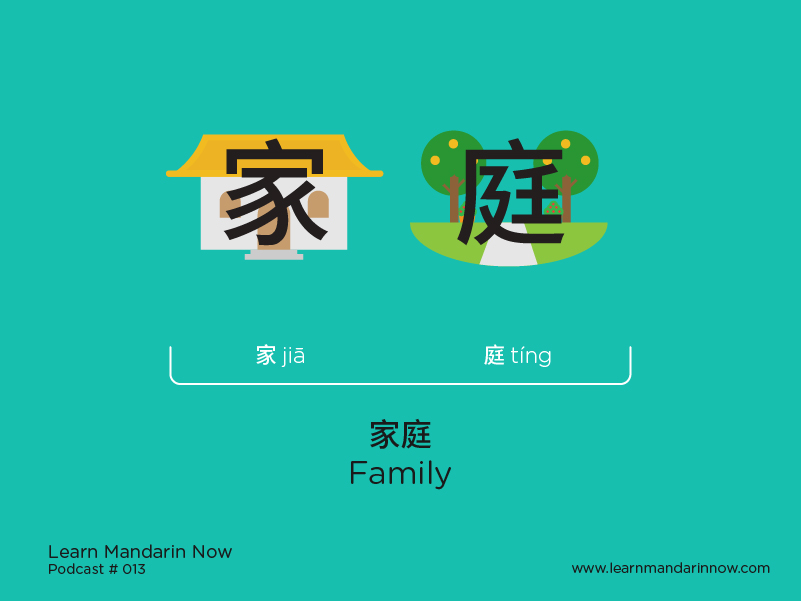
Actually, on our site Learn Mandarin Now, we recently published two Podcasts about Chinese family members:
direct family members: http://www.learnmandarinnow.com/podcast13
extended family members: http://www.learnmandarinnow.com/podcast19
We are now publishing our exciting Podcasts every day from Monday-Friday, covering a variety of interesting topics to help you learn Mandarin Chinese more effectively. They are totally free for everyone to view and listen to but, if you can kindly leave your honest opinion and ratings in i-Tunes or just simply tell us what kind of topics you like us to talk about in the near future, we’d greatly appreciate this. In any event, we’d love hear from you.
Some books are so captivating that I even cherish the memories of scrolling through the pages with my e-reader in hand. The Girl Who Wrote in Silk by Kelli Estes is that kind of book.
I’m surrounded by bookish friends and bloggers who get really excited whenever they hear about interracial love stories (especially AMWF pairings) and this was one of those books everyone seemed to be talking about the summer of 2015.
I finally got my hands on a copy from the library sometime in August, which is coincidentally one of the most dreadful months weather-wise in Hangzhou. It’s so humid you feel like you’re wrapped up in a steaming wet towel wherever you walk. Normally it’s a month that doesn’t register much in my mind, as I usually spend most of it shut up indoors with the A/C cranked on high.
But I vividly remember the August days when I read The Girl Who Wrote in Silk, as though the book itself provided a much-needed vacation from the oppressive heat. Granted, the novel takes place in the gorgeous San Juan Islands (which allowed me to imagine myself into this refreshingly cool summer destination), but it’s much more than just the setting.
Kelli has woven together the lives of Inara and Mei Lien – two women separated by over 100 years, but bound together by an embroidered silk sleeve with secrets of its own – into an enchanting story filled with love, courage and humanity. There’s interracial love in the past and present (Inara catches the eye of a handsome young Chinese American professor in her quest to understand the story behind that silk sleeve; Mei Lien falls for Joseph, a man whose kindness and generosity seem as endless as the oceans that surround their island). The story spotlights atrocities against the Chinese in America, exposing history that never should have been forgotten. And did I mention it’s all so beautifully written, a real page-turner that will keep you engaged from the beginning to the end?
Kelli Estes grew up in the apple country of Eastern Washington before attending Arizona State University where she learned she’d be happiest living near the water, so she moved to Seattle after graduation. Today she lives in a Seattle suburb with her husband and two sons. When not writing, Kelli loves volunteering at her kids’ schools, reading (of course!), traveling (or playing tourist in Seattle), dining out, exercising (because of all the dining), and learning about health and nutrition.
In this interview, I asked Kelli about everything from how she approached her research to what it felt like to learn her book was a USA Today Bestseller:
—-
You’ve written before that you knew nothing about Chinese culture prior to beginning this book, and yet your book does a good job of portraying Chinese culture. How did you approach your research to ensure your portrayal was as authentic as possible?
You’re right, before this book I knew very little about Chinese culture. When the idea for The Girl Who Wrote in Silk came to me, I really wanted to write the story, but I was completely overwhelmed with the belief that I wasn’t qualified to write it. I’m not Chinese, I don’t have any Chinese family members, I’ve never studied Chinese culture, etc. And yet, I realized that this story needed to be written because so few people knew about the anti-Chinese riots and ethnic cleansing through all Western states in the last half of the nineteenth century. No one else was writing the story, so it was up to me. I started my research by reading everything I could get my hands on…from non-fiction books on Chinese traditions, symbolism, and customs, to all kinds of fiction books with a Chinese protagonist to help me get into the point-of-view of my Chinese character. In Seattle there is a museum called the Wing Luke Museum of the Asian Pacific American Experience and they were a wealth of information for me in both their exhibits and their archives. The Wing Luke also happened to host a dinner I attended that was presented by a food and cultural anthropologist discussing and sharing food eaten by “Chinese settlers in the 1880’s.” Basically, I soaked up as much knowledge and culture as I could until I felt confident enough to write.
You were first inspired to write this story in part because of a horrifying account of a smuggler in the San Juan Islands who killed his illegal Chinese passengers rather than risk getting caught with them. And in the process of researching the novel, you went on to discover more of the darker side of American history. What surprised or shocked you most in the process of researching the story?
So much of what I learned about how Chinese people were treated shocked me, but probably what stands out the most was that other victimized cultures at the time (Native Americans, Irish immigrants, etc.) were sometimes the perpetrators of violence against Chinese. I would have liked to think that these groups would feel compassion toward one another and aid one another, but the reality is that the nation was so filled with an “Us against them” mentality, that very little compassion existed. We’ve learned some in the years since, but our nation still has a long way to go in this regard.
Your story features two cross-cultural/interracial relationships — Inara and Daniel in the present, and Mei Lien and Joseph in the past. Which couple was your favorite to write and why?
If you asked me which time period was my favorite to write I would answer the historical because I loved being able to sprinkle in the bits of information I learned in my research and I loved bringing the period to life. When you ask which was my favorite couple, however, it’s more difficult to answer. I loved Mei Lien and Joseph because Joseph’s love for Mei Lien did not see their differences that others couldn’t see past. I loved that he gave up the life he thought he wanted for a life with Mei Lien. However, when I think about Inara and Daniel, I also love them. Their cultural differences weren’t an issue at all, which I hope reflects interracial couples of today and certainly reflects my own belief that at the heart and soul level, we are all the same. When taking a look at both couples together, I loved showing that in this area, at least, our nation has grown and matured. Most of us can see that love is what matters; not skin color, eye color, speech patterns, or even gender.
Your novel uses scenes from the present and the past to tell the story. Was it challenging weaving these two storylines together?
It wasn’t as challenging as you might think. I wrote the entire historical story first. Then I wrote the whole contemporary story. When it was time I wove the two stories together in a way that made the most sense to me. My agent then suggested we weave in a slightly different way…and then my editors suggested yet another way. So, in a way, I guess it did get a little challenging trying to figure out the best way to weave (i.e. should we “see” the event happening in the historical story before the contemporary characters discover it in their research or vice versa?). I think how we landed was the best way and it took several people to get there!
In the novel, there’s a stunning silk sleeve embroidered with a story that ties the past and present together. How did you decide to have a story hidden within that embroidered silk sleeve?
I chose a silk sleeve because my plotting partner, Carol, showed me a framed and embroidered silk sleeve she had purchased as a souvenir in China. I thought it was beautiful and unique so I started researching Chinese embroidery. I fell in love with the artistry and meaning revealed through the symbols on the embroideries. They seemed to me to be communicating something that I would never truly know without intensive research into symbolism, fables, and cultural beliefs. I loved that.
Your novel landed on the USA Today Bestsellers list in December 2015. How did you respond to the news that The Girl Who Wrote in Silk has been so well-received among readers?
I still can’t believe it! This is a dream come true that I truly didn’t think could happen with my debut novel. My first response was an overwhelming feeling of gratitude because so many people had a hand in making this happen: my agent, editors, publicist, marketing team, sales team, everyone at Sourcebooks; all the independent bookstore owners who voted for my book so that it appeared on the Indie Next list, which directly led to readers learning about my book who otherwise wouldn’t have. And then there are the booksellers who read my story and hand sold it to customers; readers who wrote reviews online and told their friends about the book; other authors who told their readers about my story… Truly, so many people had a hand in this achievement and I am so grateful for each and every one.
What do you hope people gain from reading your novel?
I hope people find the story entertaining and thought-provoking. I hope they think about racial issues and how racism is still very much a problem, which I hope leads them to thinking how they might individually make a difference in their own community. I hope readers learn that there are fascinating stories in our history that still impact us today. Most of all, I hope my novel helps readers look at the people around them and see not the color of their skin nor their cultural trappings, but a fellow human with the need for love, joy, and connection.
How many of you have had your heart broken? I’m willing to bet pretty much everyone reading this has their own sad, crushing stories of love lost.
Well, Ning Li of Ning Li Dating has graciously offered to share his first heartbreak – and why, in the long run, he’s grateful for everything that happened with her, even the painful times.
Do you have a heartbreaking story or other guest post you’d like to see here on Speaking of China? Check out the submit a post page to learn more about having your words published here.
—–
You always remember your first real crushing, aching heartbreak. The kind where you don’t sleep, your stomach feels hollow, and food tastes like ash.
Mine actually saved my life.
I’ve always been attracted to white girls my entire life. I grew up in a white town, hung out with white friends, and spoke like a white person.
I look… incredibly Asian.
On the scale of mouse to elephant, I would probably say my Asian eyes are probably about ant-sized.
Tiny, even for an Asian.
Nonetheless, I had a weakness for white girls that looked cute and innocent, like the kind you’d bake cookies with.
While the traditional “hot club girl” was visually (and mentally) stimulating, they were never the types of girls I could see myself sitting by a fireplace with, staring deep into her eyes, and uttering those three words that made your armor disappear.
Which was why when I met Cheerio girl, my brain basically exploded.
It was my junior year at Cornell, and I was at the running club, stretching out.
There were a couple other people there, and then she walked in.
She had green running shorts, a yellow “Cheerio” shirt, and a bouncing, brown ponytail. Freckles dotted her face, and she had big doe eyes that glowed hazel in the sunlight.
Her shirt read “Graham” across the back.
“Oh, you guys are running the Forest Home route? I was just thinking that!”
Smooth, Ning. Smooth.
We got to chatting on the run, and I found out that she’s pre-medical school, a swimmer, and was from a town only an hour away from Ithaca.
We walked back to our dorms together, and I thought to myself, “oh boy Ning, we’re in trouble.”
I saw her a couple times a week for about a month, and I eventually mustered up the courage to stammer through a dinner invitation.
We went to probably the most romantic place you could think of: the dining hall.
There, we were talking about our plans for the weekend when she dropped an anvil on the table that I tried to brush off:
“My boyfriend is coming up to visit …”
Okay.
It’s okay, I guess we’ll just be friends, I convinced myself.
At the next run, I pulled a sneaky, devilish move that Jesus and my mother would both have been ashamed of.
“Hey, I was thinking of doing a triathlon, and I’m terrible at swimming. Do you think you could give me a few pointers?”
We started meeting at the pool each Thursday, and then going to dinner afterwards.
I started thinking about her. Daydreaming about her.
I looked for her on Facebook under “Graham,” before I face-palmed, realizing that that had been the name of the cereal company, not her last name.
At the end of the semester, we met up after finals to feed the goslings. As we squatted next to the lake, tossing bread onto the grass, my heart hammered.
“What’s going on between us?” I asked.
She froze.
“I don’t know, Ning… I really like you, but I have my boyfriend…”
“I really like you, too.”
Ugh, were we in middle school or something?
That summer, they broke up, and in the fall, Cheerio girl and I became an item.
We started eating together, doing crosswords together, and one night, cuddling on a worn out sofa and on the edge of sleep, I told her I loved her.
“I love you too.”
Before it started falling apart, we spent the next five years on what felt like a rollercoaster ride.
It would be all love, daisies, and fuzzy warm blankets for a couple weeks, and then it would crash into jealousy, insecurity, and tears the next.
Over and over again, like a record on repeat.
For what it’s worth, we went on some life-changing adventures together.
I brought her to China.
We met each other’s families.
We went on two cross-country bicycle tours.
We went on vacation together.
We ran races together.
I visited her in Nicaragua on her study abroad semester.
Her family brought me to Mexico with them.
I thought that I was going to marry this girl.
Ning Li
When she moved to Buffalo, we naturally tried to make the distance thing work. I’d drive up one weekend a month, and she would come down the next.
One weekend when I was up, she was taking a test, and I was packing to go, when I noticed a note she had written, lying in a box.
Something about that note didn’t feel right.
I felt like a slug for snooping, but I took it out, and as I read, I felt more and more pressure on my chest.
She had written this to some guy in medical school, and she told him that she liked feeling his body next to her.
In a jealous rage, I leapt in my car and sped the three hours back to Ithaca. I left her a scathing voicemail, and alternated between screaming and sobbing on the phone to my sister the whole way back.
I sat on my porch and stared, a hollow, empty gargoyle.
Ten minutes later, she got out of her car and sat down next to me.
“Did you hook up with him?”
Her eyes flickered.
“No, Ning. It’s nothing. I care about us, I care about you.”
I was desperate to believe her, so I did.
When we stopped having sex, she told me it was because she was stressed and tired from med school.
When she made plans to do a “Floating Doctors” program in Panama that summer, she swore that med school guy was in the same program purely by coincidence.
Again, I was desperate, so I believed her.
I was an idiot.
At times, even when she told me she loved me, I knew that it was a wish, not a declaration.
Looking back, I learned my lesson.
A lie isn’t necessarily a manipulation as much as an agreement. To be lied to, you have to believe the lie.
Crushed, heart broken, and lost, I decided to pull some “Eat, Pray, Love” shit and go on a cross-country bicycle ride on my own.
Across New York, Ohio, and Indiana I cried.
I should’ve been having the adventure of a lifetime, meeting people and seeing places, but all I did was cry.
My lowest point came one night as I was camped out on Carlisle Lake just east of St. Louis. I remember the moon was full, and despite being on the shore of a serene reservoir, there were no mosquitoes.
She skyped me from Panama, and on the phone with her, I cracked and had a nervous breakdown.
All I could think was, she would’ve loved this place.
“I miss you so much,” I told her over and over again.
Having a good crying session is like having a lollipop. It always makes things better, at least for a little bit.
It wasn’t until the middle of Kansas that I started feeling better.
I met a wonderful family in the middle-of-nowhere town of Riley, Kansas that took me in, fed me, and listened to my stories.
I played X-box with their son, played basketball with the father, and they even let me drive around town in their golf cart.
It was one of those magical traveling moments where you realize that no matter how different people are, no matter how strange their culture, they are humans just like you and me.
In the middle of the sprawling, barren Kansas prairie, I thought to myself, I’m finally recovered.
It had taken almost 1,500 miles on a bicycle, but I finally felt whole again.
Naturally, the next day she Skyped me.
“What do you think about me flying in to Denver and joining you for the rest of your trip?”
She was supposed to go to Peru after Panama. Apparently she had had a change of heart.
How was I supposed to say no to that?
We spent the rest of the summer camping in the desert, climbing mountains, and falling back in love.
“Okay, let’s finally make this work,” we told each other.
When we flew back from San Francisco, I moved to Buffalo.
We lived a mile away from each other, and in November, she finally came clean.
She had been hooking up with this med school guy all throughout the spring, all through Panama, and had been lying to me about it for 8 months.
I couldn’t take it anymore. I had moved to a shit-hole city, taken a shit-hole job, all for what? For this?
I told her it was over.
I moved back to Ithaca, got my old job back, and focused on one thing: moving forward.
I got some graduate school interviews, and started filling the void inside me with a slew of meaningless hook-ups and one night stands.
In June, I stopped my overstuffed van at her house in Buffalo, ready to say good-bye one last time.
We both cried it out, and finally I headed off to Colorado, where I was to start my life anew at a PhD program in Fort Collins.
From the ground up, I built my social circle and created my universe. I immersed myself in my studies and started dating again.
I felt whole.
Cheerio girl still called and we still talked, but she was seeing someone and I was seeing someone.
I was happy, and I told her that after all was said and done, I was grateful for everything that happened.
I was grateful for all that we had been through together.
I was grateful for the challenges she brought me.
I was grateful for having the chance to grow and become stronger than who I was.
I was grateful because hey, what’s life without a couple curve balls, right?
A year later, she called me and said something surprising…
“Hey, I know that you’re seeing someone and I am, too, but I got a residency interview in Denver in January. Do you want to hang out, and maybe climb a mountain or something?”
I replied with one word.
“Sure.”
Ning Li blogs, and writes dating advice for Asian American men at Ning Li Dating (http://ninglidating.com), and currently resides in Fort Collins, Colorado.
—–
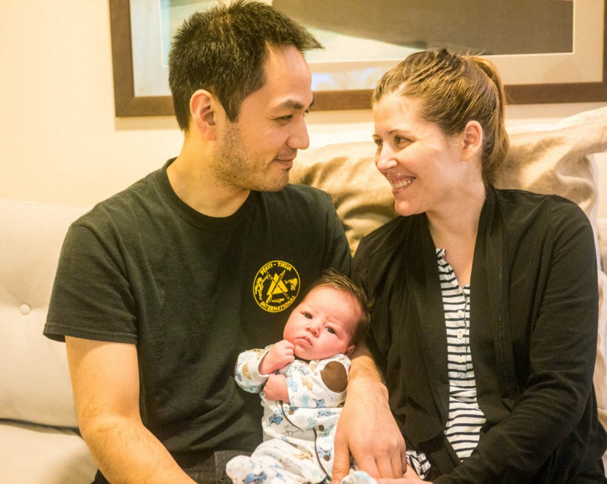
One of the greatest joys of blogging has been the opportunity to meet incredible people in the AMWF community around the world and learn their stories. A little over two years ago, I met a wonderful guy named Logan Lo, happily married to a woman named Alison McCarthy. They’re such a lovely couple that if there were a magazine for the AMWF community, they’d look perfect on the cover.
In fact, 2015 was looking like a bright and beautiful year for this couple. On November 3, 2015, Alison gave birth to a healthy baby boy named Nathan. But five days later, tragedy struck Alison – she had a seizure, caused by a very serious brain tumor. Here’s the full story from the family’s YouCaring page:
On November 3rd, my sister Alison gave birth to her first child, a beautiful baby boy named Nathan. Five days later while recuperating at home, Alison suddenly had a seizure and was rushed to the hospital where a CT scan showed a large mass in her brain. Tragically, a biopsy has confirmed that Alison has a high grade glioblastoma brain tumor, a very aggressive form of brain cancer. Alison’s tumor is inoperable and average life expectancy is less than 18 months without treatment.
We are hoping to raise funds for Alison and her husband Logan as unfortunately their insurance is not accepted at leading cancer-centers like Memorial Sloan Kettering or for clinical trials with experimental treatments which are options we would like to have for her. Alison will also not be able to work for the foreseeable future and Logan cannot work full time as he is caring for Alison and their baby. The loss of income and added expenses will be financially devastating for this new family. Your donations will go to help pay for medical treatments, travel expenses, and childcare and are crucial in our fight to save Alison. The Brain Tumor Foundation estimates the cost of treating a brain tumor at more than $450,000 and says costs of treating a brain tumor can reach $700,000 in a lifetime.
This whole situation just breaks my heart. I know what it’s like when someone who means the world to you is fighting for their life – I’ve witnessed it with my own mother, and it is not a situation I would wish on anyone, especially a young couple with a new baby.
I once said that all stories end sad; every relationship that matters will always end in tears. That’s the nature of the world. But I think the unexpected tragedies are the hardest. That’s when life knocks you to your knees and you can’t stand up again.
My wife is sick. And on top of the sickness, we have all the bonuses that come with the sickness – the fear, the uncertainty, the loss of control, etc.
Yet I hold out hope that somehow, this isn’t all of our story. That we can find a happy sequel to this news. And in the end, I want what everyone wants when they love someone – for them to stay.
When my wife first got sick, I slept on the floor next to her hospital bed for a week. Said I did it because I didn’t want her to be alone, which was true. But equally true was that I didn’t want to be alone either.
I’m sorry for the lack of updates – especially to those that have so generously donated.
On December 10th, Alison was unresponsive so we rushed her to the hospital. There, the doctors had to remove part of her skull to save her life. They said she might not survive the night. I fell to my knees.
But she survived. Then she had another surgery just a week later. That’s three brain surgeries in a month, just days after giving birth.
To say that my wife is crazy tough is like saying that New York City is a small town. She’s made of steel.
Unfortunately, she’s been in the hospital since the 10th and will be for quite a while. I’m there most days; other days, other relatives are with her.
This is not how we imagined our first Christmas and New Year’s as a family.
Still, I go to the hospital and have bread with her when she’s able. When she’s not, I just sit there. And we dream of home.
Dunno how doctors regularly give bad news. Where do they find the strength to tell someone that that their lives are in grave jeopardy on the regular? Do they drink every night at their desk?
Me: …he said you might not wake up. But you did. Then he said you might be permanently damaged… Her: (horrified) Me: …but you’re not. And then another doctor said he had to open you again and said you might not come back, but you did. This cancer has been wanting to kill you but you just won’t let it.
Somewhere along the line, the alarms that were going off because of her rapid heartbeat, stopped ringing. And she started breathing normally again. Her voice became stronger.
But even if you cannot donate, you can also support them by simply sharing their story through social media. In doing so you’ll help them garner more support and ultimately more donations.
In the meantime, I’ll be keeping Logan Lo and Alison in my thoughts – and wishing them a Happy New Year that includes a full recovery for Alison.
This website uses cookies to improve your experience. We'll assume you're ok with this, but you can opt-out if you wish.AcceptRejectRead More
Privacy & Cookies Policy
Privacy Overview
This website uses cookies to improve your experience while you navigate through the website. Out of these cookies, the cookies that are categorized as necessary are stored on your browser as they are essential for the working of basic functionalities of the website. We also use third-party cookies that help us analyze and understand how you use this website. These cookies will be stored in your browser only with your consent. You also have the option to opt-out of these cookies. But opting out of some of these cookies may have an effect on your browsing experience.
Necessary cookies are absolutely essential for the website to function properly. This category only includes cookies that ensures basic functionalities and security features of the website. These cookies do not store any personal information.
Any cookies that may not be particularly necessary for the website to function and is used specifically to collect user personal data via analytics, ads, other embedded contents are termed as non-necessary cookies. It is mandatory to procure user consent prior to running these cookies on your website.

 I call it “golden” because of the golden yellow rapeseed flowers that dominate the fields at this time of year. There’s nothing quite like standing among these fields of gold in the sunshine…
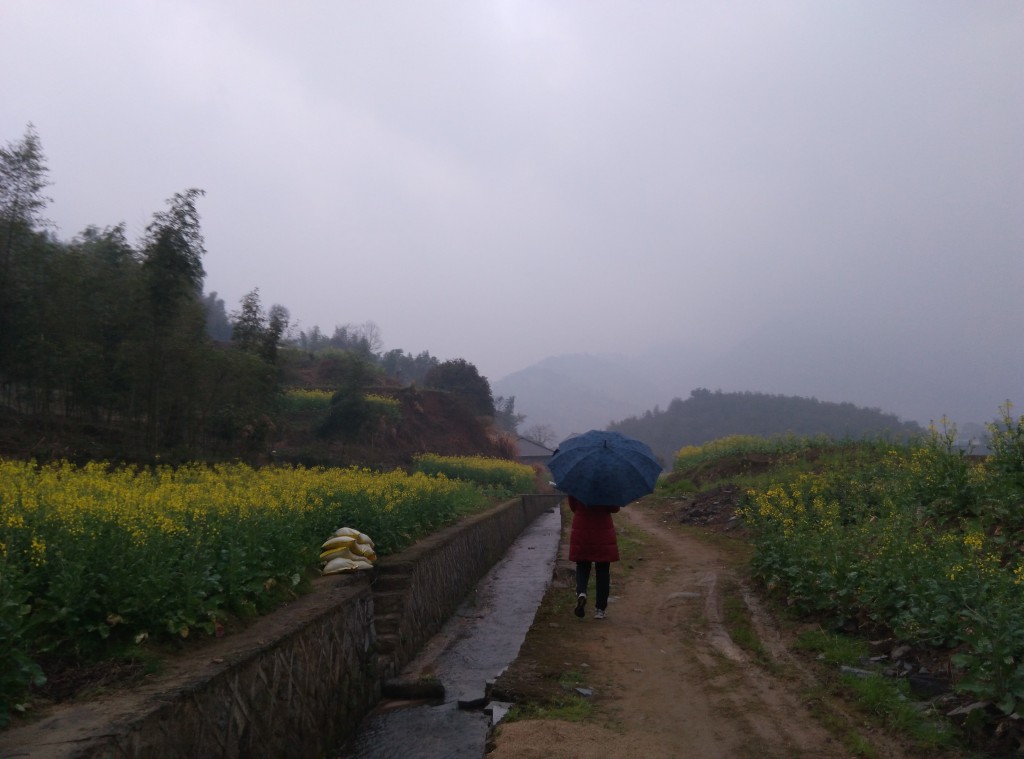 Or even the rain.
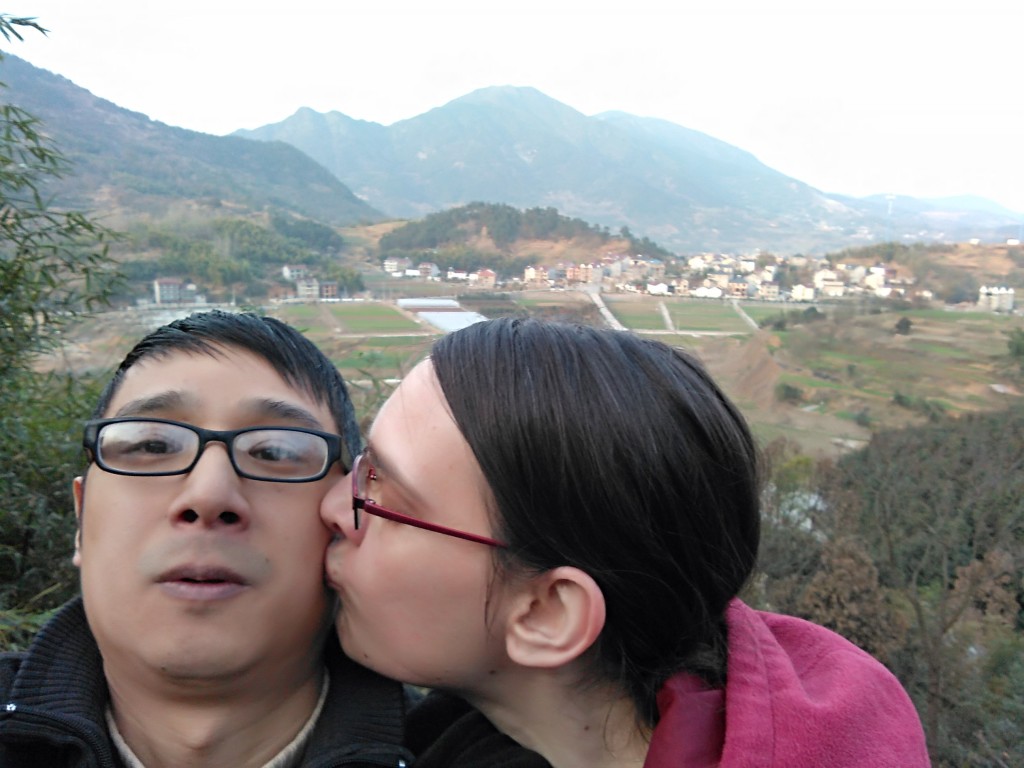 It’s even better when you can enjoy them with your best friend (and husband). Thanks John. 🙂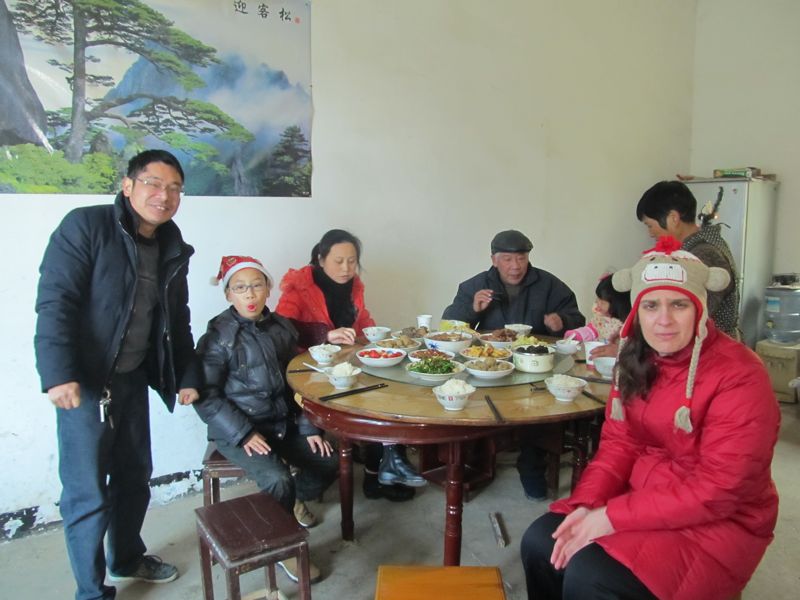
 #1: Missing friends and family from your home country
 #2: Feeling isolated
 #3: Feeling misunderstood by your foreign family
 #4: Visa woes
 #5: When people laugh at your foreign accent
 I’ve been at home for a few months now. 2015 was a crazy year. I started out with a broken heart and a lost soul. But there wasn’t much time to think about it because I was going to Australia and then moving onto China. My heart was growing back together during the month in the beautiful nature of Australia, and when I came to China I was getting stronger again. I started to believe a little bit in love or I thought so.
 After a few days, I had a match. You see the problem here is that I just do like the Asian look. I’m not saying that I only date Asian guys but I am just quite fond of them. So if I see an Asian-looking guy, I’m just more curious than a blue-eyed, blond-haired tall Dane. But anyway, the match was with a Vietnamese-Chinese guy born and raised in Denmark. I know from experience that this doesn’t mean they have any interest in Asia but I always hope a little bit anyway.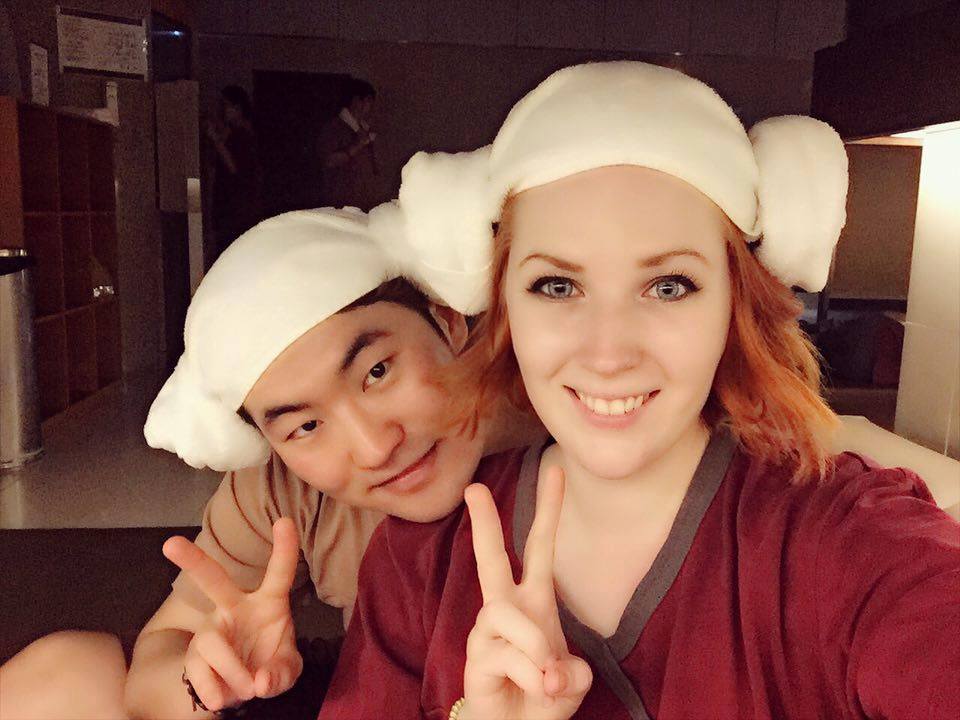
 I’ve always been interested in Asia and its different cultures and nations. China had especially caught my eye and I decided to study Mandarin and even move to China – which I did and it was awesome. Then, I went to California to get my bachelor’s degree, with a plan in mind to move back to China – maybe even for good.
 Linda writes about life in Korea, her AMWF relationship with a Korean man, traveling around Asia and studying Asian languages at




 Here’s