Justifying Cross-Cultural Love By Hating On Others?

(photo by Sebastien Wiertz via Flickr.com)

The other day, I was reading an article on chinaSMACK about Men in China taking Vietnamese wives, and noticed one of the translated comments:

My wife is German, blonde hair blue eyed, but I think I’m very ordinary and it was just fate. Actually, I think Western women apart from being a bit more independent-minded, they’re [also] much more virtuous/chaste than Chinese women, are kind-hearted, aren’t vain, are frugal, emphasize love and family on a spiritual level, and these alone totally blow modern Chinese young women away. I’m currently constantly introducing German girlfriends to my brothers [fellow male friends], exhorting them to not seek Chinese women. Oh yeah, Western women don’t demand that you have a house.

While this comment was written by a Chinese man, it echoed the sentiments of certain white Western men I encountered online — men who also justified their decision to date/marry Chinese women (or other Asian women) in a somewhat similar way:

Chinese women on the other hand are beautiful, intelligent, happy, and just plain pleasant to be with. They don’t have the associated  emotional fluctuations Western women have and they are not demanding. They are serious about love and marriage and use common sense…. Single western women cannot compete with Chinese women and you can see it in their faces when you walk happily by with your Chinese girlfriend while they grimace and pretend to not notice.

(NOTE — that’s just one commenter in a thread that overwhelmingly criticizes Western women while commending the virtues of Chinese women. Read at your own risk.)

Honestly, I don’t get it. Continue reading “Justifying Cross-Cultural Love By Hating On Others?”

On Working-Class White Women, Interracial Dating and China

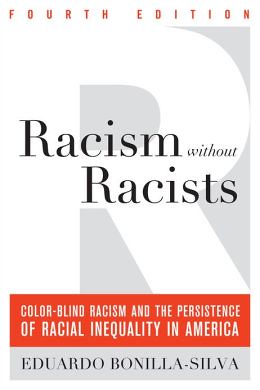
Recently, I’ve been reading this book by Eduardo Bonilla-Silva titled Racism Without Racists: Color-blind Racism & Racial Inequality in Contemporary America. On the chapter regarding white progressives, Silva mentioned the following in his conclusion:

Contrary to those who hold the “commonsense” view on racial matters, racial progressives are more likely to come from working-class backgrounds. Specifically, I found that young, working-class women are more likely than any other segment of the white community to be racially progressive. They were more likely to support…interracial marriage, have close personal relations with minorities in general and blacks in particular…

Elsewhere I have argued that whiteness is “embodied racial power” because “all actors socially regarded as ‘white’…receive systemic privileges just by virtue of wearing the white outfit whereas those regarded as nonwhite are denied those privileges. However, the wages of whiteness are not equally distributed. Poor and working-class whites receive a better deal than their minority brethren, but their material share of the benefits of whiteness is low, as they remain too close to the economic abyss. Hence, white workers have a powerful reason to exhibit more solidarity toward minorities than whites in other classes…

…racially progressive women, one after the other, used their own experiences of discrimination as women as a lens through which to comprehend minorities’ racial oppression. It was also clear that their shared class vulnerability with minorities (such as bad jobs and low wages) was involved in their racial progressiveness and it may even be the reason why they were the most likely subgroup of all the whites in these samples to have dated across the color line…

Continue reading “On Working-Class White Women, Interracial Dating and China”

Why Ignoring Cultural Differences in Cross-Cultural Relationships is Harmful

(photo by Maxx R via Flickr.com)

While reading Laura Banks’ dissertation about interracial relationships with a Chinese partner, something in the conclusion caught my eye:

Each couple has different ways of viewing their own situation. Some address it directly and define the boundaries and what must be done to ensure cultural understanding. For example one couple said; ‘from the outset of our relationship, we have been conscious of intercultural issues and keen to address them by talking then through and explaining to each other what we are thinking.’ Other couples like B…and L…have addressed it in a completely different way and have ‘done something that is very unusual in Chinese-foreign relationships; we have never talked about that I am from a different country especially not in the case of conflicts’ and they feel that ‘many people like to overemphasize the influence of cultural differences.’ The way in which they address the situation is what works for them as a couple and as with many things in life there is no wrong or right way of dealing with it.

Naturally, since I write a blog meant to promote cross-cultural understanding between Chinese-Western couples, it seemed bizarre to just ignore cultural differences in a cross-cultural relationship. But as much as I would love to say that “there is no wrong or right way,” I can’t agree. In fact, the B/L way — essentially, a colorblind approach to interracial/cross-cultural relationships — is harmful. Continue reading “Why Ignoring Cultural Differences in Cross-Cultural Relationships is Harmful”

Highlights from study into mixed relationships/marriages with a Chinese partner

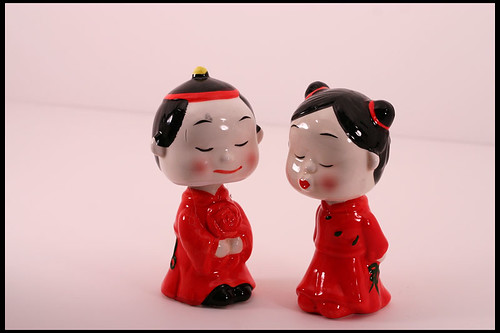
Small porcelain dolls showing a Chinese husband and wife in traditional red clothing
(photo from rickz Flickr)

Many of you might remember about a year ago, when I posted an ad: UK Chinese Studies Student Seeks Chinese/Non-Chinese Couples for Dissertation Survey. Some of you participated in her survey, including myself. Ultimately, she surveyed 33 couples in her research, 18 with a Chinese female partner and 15 with a Chinese male partner.

Laura Banks just successfully defended her dissertation a few weeks ago and sent me a copy. I’m excerpting the abstract and quoting some of her findings, which you can scroll down to read.

In addition, some of you who participated asked Laura for a copy of the dissertation. I’ll be glad to send a copy to anyone who e-mails me (jocelyn (at) speakingofchina.com), with the understanding that the dissertation is meant for your personal use only and not to be posted publicly online.

And now, onto the highlights… Continue reading “Highlights from study into mixed relationships/marriages with a Chinese partner”

On Cultural Encapsulation and Cross-Cultural Relationships

(photo by Sarah G via Flickr.com)

Recently, in the course of doing research for a paper I’m working on with my husband, we came across the concept of cultural encapsulation:

Cultural encapsulation is the lack of understanding, or ignorance, of another’s cultural background and the influence this background has on one’s current view of the world. The purpose of this encapsulation, or “cocoon,” is to allow people to protect themselves from the rapid global changes occurring in technology, families, economy, education, and social health. Cultural encapsulation can lead to a counselor applying his or her own experiences to the client’s experiences despite the reality that both developed in different worlds, cultures, and values. To define one’s experience as the truth or reality may result in potentially harming the client, given the possible differences between the counselor and client.

The authors intended to write this information for counselors and psychologists in relationships with clients — but I feel that the idea of cultural encapsulation could easily apply to other relationships. Continue reading “On Cultural Encapsulation and Cross-Cultural Relationships”

Despite the China-America Divide, We’re On The Same Team

The other day, my husband and I were having a conversation in the car about discrimination and racism in America — two things he knew firsthand from his own experiences over here.
“Mean and wicked, that’s what these people were to me,” he said, referring to the Americans who had betrayed him in the past. “They just don’t care, they have no concern for you at all. They think they can just bully you.”

My heart ached to see him this way. “I’m so sorry. It just goes to show how much work in this country is still undone. We Americans have a lot to learn.”

“Don’t say ‘we’! Don’t put yourself in the same category as them, you should be careful of your language!”

“Sorry, I didn’t mean to say ‘we’, it just came out by accident. Just a reflex, that’s all.”

But his words haunted me the rest of the way home. I couldn’t believe that the word “we” — a word that normally brings John and I together as one — could divide us into two in a completely different context. Continue reading “Despite the China-America Divide, We’re On The Same Team”

Fenshou: “I Was Once Engaged to a Chinese Man”

(photo by Eternal Vagabond via Flickr)

When I called for submissions a couple of weeks ago, never did I imagine the overwhelming response from readers. Literally within days of posting, the submissions started rolling in.

The first I received was this piece from a woman with the nickname “Smallsquirrel”. It is a poignant and thoughtfully penned story of how her engagement to a Chinese man from a prominent Beijing family eventually ended. I’m honored to kick off my new series — which I’m calling “Fenshou” from the pinyin for the Chinese word for breakup — with what I’ve titled “I Was Once Engaged to a Chinese Man.” Continue reading “Fenshou: “I Was Once Engaged to a Chinese Man””

Love or Fetish? On “Yellow Fever” and Creepy/Sketchy Attractions

In the past few weeks, I’ve discovered They’re All So Beautiful, an online forum about race and dating that’s features a five-part online series and is also a companion to the documentary Seeking Asian Female.

Yes, it’s a conversation in part about “yellow fever” — but one with more intelligence, one that seeks to transcend the usual boundaries and assumptions.

The site really got me thinking when I discovered Jeff Yang’s blog post. For those of you who don’t know him, he’s an Asian-American journalist for the Wall Street Journal — and one who has written some of my favorite articles exploring why you see so few Asian men with non-Asian women (such as this piece).

He points out that the white guys interviewed in Episode one of the online series seem to embody the worst possible stereotypes about white men who pursue Asian women: Continue reading “Love or Fetish? On “Yellow Fever” and Creepy/Sketchy Attractions”

Does Peer Pressure Ever Discourage Dating Differently?

(“Peer Pressure” by Hannah Nino via Flickr.com)

Just last week, a review of the anthology Unsavory Elements appeared in the Global Times, and had this to say about my contribution:

Jocelyn Eikenburg gives insight into the seldom spoken of (or seen) relationships between foreign women and Chinese men in “Red Couplets.” She writes, “From the first time I started to love a Chinese man, hiding became part of my life.” As she watches droves of Western men couple up with Chinese women, she feels alienated by her expat girlfriends, too, who openly express their romantic disdain for all Chinese men.

She’s referring to this portion of my essay: Continue reading “Does Peer Pressure Ever Discourage Dating Differently?”