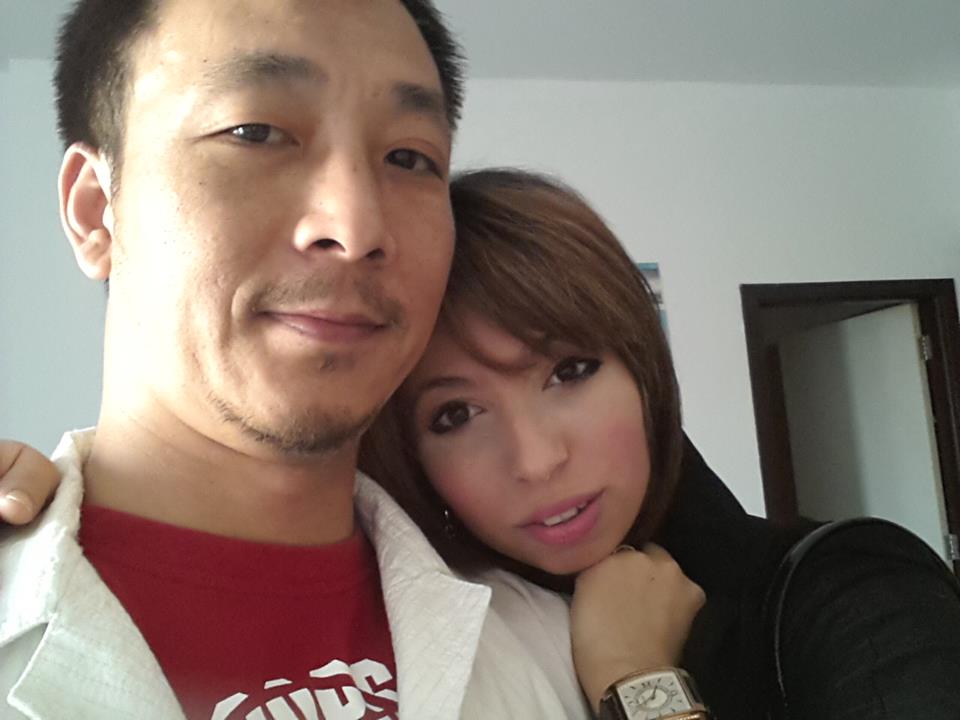
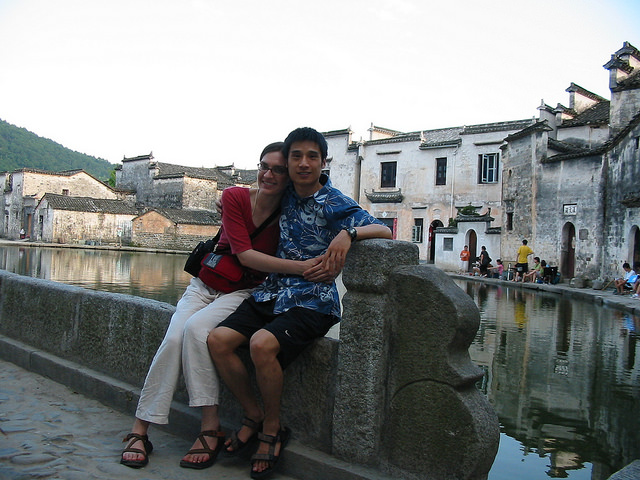
Ask the Yangxifu: Has marriage to a Chinese man changed your feminist views?

14188544581_817b858e00_z

M asks:

I have been reading your blog for some time now and the majority of your female readers are independent, intelligent women whom have (some) “feminist” values/ideas such as equality, rights, freedom of choice.

I would like to know has being married to a Chinese man and to the Chinese “extended family” changed your…“feminist” ( independent ) views? Did you have to change your way of thinking and adapt to situations, traditions, culture that may not share your own ideas and beliefs? Do you accept things in China that you wouldn’t accept back in your own country? If so how did/do you handle this? How does it make you feel?

—–

I thought about this question for many weeks and could never seem to come up with the right answer. And then I realized the issue here — the thing is, my marriage to John hasn’t really changed my core feminist/independent views all that much.

See, I married a feminist guy who just happens to come from the countryside of Zhejiang, China, as I’ve written before:

Over the years, from dating through marriage, John continued to blast stereotypes about Chinese men, that they’re so sexist. He loved my larger, curvier body in all of its beautiful imperfections, and never suggested I change a thing. During all those times when I was the family breadwinner, he always felt proud of me and my ability to make a living. He grew up in a household where no one hit women and children, and condemned domestic violence in all of its forms. He kept doing the dishes and his share of the housework, and never assigned a gender role to any household chores.

John has always loved me just as I am and always supported me in my endeavors, even when it comes to writing about him and our marriage together. In fact, if it wasn’t for him, I wouldn’t be writing this blog at all!

As for his family, sure, not everyone is as progressive as he is. But that doesn’t mean that I’ve had to somehow change myself to fit their expectations. We can disagree. And if we do, I usually say something to them. It might surprise you, but I find it far easier to speak up in front of his family as opposed to my own in the States. Perhaps it’s because foreigners in China are expected to be a little weird and get a pass when we do things differently. Maybe it’s because I’m speaking to them in a foreign language, which liberates me because it’s not the language I grew up with. And it probably helps that John’s parents (and most of his family) don’t fit those stereotypes of the strict and conservative Chinese family.

Of course, there are things about Chinese culture that, on the surface, seem to clash with feminist/independent views. Take for example the dependency among family members in China and the expectation that children should care for their parents when they’re older. Yet, some families in the US do these things too. My dad invited his father (my grandfather) to spend his final years living together with him, and my aunts and uncles take care of my grandmother so she doesn’t have to stay in a nursing home. As independent and feminist as I am, I still believe these are good values and would want to do the same if John’s parents needed our help.

And ultimately, there’s a difference between understanding a culture and completely overhauling your own views for someone else. It’s important to know and respect your partner’s culture, but that doesn’t mean you have to hide who you are to do it. Otherwise, you’re just dealing with a one-sided relationship and those are usually doomed to fail. Just as I’ve become closer to John’s culture, he’s also become closer to mine — and the whole process has only made our marriage that much stronger. Yet when it comes to our beliefs and our way of thinking, we’re still pretty much the same as we were all those years before when we first met.

Maybe my marriage really is unusual. And maybe to some people I might not seem “independent enough” or even “feminist enough”. But then again, that should tell you that there are no hard or fast rules for cross-cultural marriages in China or even what defines a woman as independent and feminist.

Sometimes, you really can find happily ever after in the most unlikely places in the world. 😉

How about you? How would you respond to this question?

—–

Do you have a question about life, dating, marriage and family in China/Chinese culture or Western culture? Send me yours today.

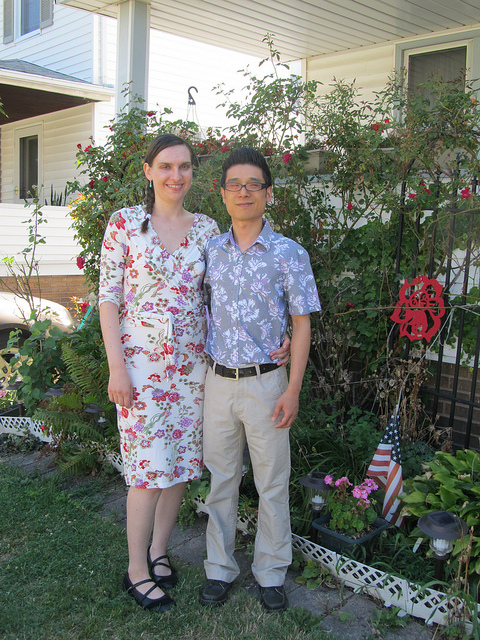
Guest Post on Texan in Tokyo: 6 Things I Cherish about my Cross-Cultural Marriage to a Chinese Man

13617156333_26d247cd27_z
Grace of Texan in Tokyo just published a guest post I did for her site titled 6 Things I Cherish about my Cross-Cultural Marriage to a Chinese Man. Here’s a snippet:

My name is Jocelyn Eikenburg and I grew up in Cleveland, Ohio, USA. This summer, I’ll be celebrating 10 years of marriage with my husband John, who is a Chinese national.

Sure, we’ve weathered our share of misunderstandings over the years and had to learn to adapt to each other, both culturally and personally. But I still love him just as much as the day when I said “Wo yuanyi!” (I do) to him in the Shanghai Marriage Registry Office.

And over the years, I’ve discovered a lot to cherish about our relationship.

To learn about those six things I cherish so much, head on over to Texan in Tokyo and read the full guest post. And if you love it, share it!

The “love, location, career” dilemma for Chinese men/Western women in love

John and I knew exactly where we wanted to live and work in the future: China. But these decisions don't always come easy for other couples -- and sometimes lead to breakups.
John and I knew exactly where we wanted to live and work in the future: China. But these decisions don’t always come easy for other couples — and sometimes lead to breakups.

Over the years, I’ve noticed a certain e-mail finds its way into my Ask the Yangxifu inbox. The story usually goes like this: Chinese boy who was born and raised in China meets Western girl, they fall crazy in love and the future seems ripe with possibilities for the two of them…until reality hits in the form of a few simple questions. What about our careers? Where will we live?

So when I receive these questions — which are invariably confidential — it either happens that 1) the couple can’t decide where to live (often China versus her Western country) because each country somehow handicaps one person career-wise, or 2) the relationship ended because one or both of them gave up.

Whenever people talk about Chinese-Western international marriages, you would think that language or culture pose the greatest barriers. But when it comes to Chinese men and Western women in love, this “love, location, career” dilemma more often threatens an otherwise outstanding relationship. Career options aren’t always the same for both people in his home country (China or another Asian country) versus hers. Sometimes, when a couple can’t reach an agreement, they sadly break up — just as my Chinese ex and I did years ago.

At the time, he had moved from China to a European country for university and hoped I would follow him and, in his words, “be his wife.” It sounded glorious at first when he whispered this to in my arms…but not when I discovered the unappealing possibilities for a US national in this European country (not to mention all of the visa headaches for me). It didn’t help that his phone calls, e-mails and other communications dwindled over time, until an entire month passed without a single e-mail from him. So on top of the whole “where to live/work” issue, I also started doubting our very relationship — the foundation of everything we had together. In the end, I had to say, “Enough!” I couldn’t justify all of the headaches of moving to this country when he couldn’t make the time to even write me a simple e-mail or call me.

My face was glazed with tears the day that I called him and said I couldn’t move there. I knew our relationship would collapse and sure enough, we broke things off officially in the weeks that followed. But looking back, I also realize that — in a sense — he determined our fate the moment he put down a deposit for that European university. He was fluent in English and could easily have chosen to study abroad in the US, my home country…but he didn’t, citing a personal distaste for America.

Hence I learned my first lesson in cross-cultural relationships: love isn’t always enough. When you add into the mix each person’s careers and dreams (often linked with a specific country or place in the world, especially if a person only speaks one language) it complicates things in a way that couples from the same country would hardly understand.

I think about my stepsister, for example, who is happily married to her college sweetheart. They both were born and raised in the Cleveland, Ohio region in the US and, naturally, always wanted to settle and build their careers up there as well. There was never any question about what country might offer the two of them the most opportunities and most benefits, no tug-of-war about living here versus there or somewhere else.

Nothing like what I experienced with my ex-boyfriend in China. It was his lifelong dream to reside in this European country, so naturally he wanted to study abroad there. But his dreams clashed completely with mine. Granted, I was still trying to find my way in the world at the time. But the longer I pondered moving there with him, the more I intuitively realized I just didn’t belong in that country — that following him would be a colossal mistake.

With my husband John, though, the choices were a lot easier and, in the end, much more obvious. John had always envisioned getting educated in the US and then bringing his talents back to China to start a business. We had discussed this years before when we started dating, developing a long-term plan together to help him achieve his dreams. But it’s not as if I was putting his needs before mine. In fact, China made sense for me personally and professionally for a variety of reasons…not to mention that I’m fluent in Mandarin Chinese, absolutely love this place, and find endless inspiration here for my writing.

Unfortunately, decisions don’t always come so easy.

For example, I’ve heard from couples where she wants to settle in her home country in the West for career reasons, but he doesn’t for reasons of his own (he can’t speak the language, he has better opportunities in China). I’ve also met couples who decided to live in her country, only to realize even more problems with his career — for example, people don’t value his degree from China. Even gaining an education in her country offers no guarantees of employment, as prospective employers may discriminate against him.

Then there’s the flip side — he says, “Let’s live in China,” and she’s not sure. Maybe she struggles with Mandarin Chinese or can’t even say a word. Or she spent years studying in a certain field — which offers few or no opportunities in China — and doesn’t want to abandon her chosen career.

How should Chinese men and Western women handle a “love, location, career” dilemma? Here are some of my thoughts:

Support, support, support. He’s into pharmacy, she dreams of being a physical therapist. Whatever your partner’s work dreams are, you should say, “More power to you!” In other words, support them.

Think about both of your respective careers first and foremost. Don’t get caught up in finding the ideal for your own career — instead, the question you should be asking is, “What’s good for both of us?”

Don’t fall into the “sacrifice your job for my sake” trap either. I’ve heard of couples, where one person expects the other to quit their careers or jobs for all sorts of reasons — but that should honestly be your last resort, if at all. It breeds resentment (i.e., “How come I have to make the sacrifice and he/she doesn’t?”), and resentment is not a good bedfellow in any relationship.

Compromises sometimes have to be made — but if so, give it an expiration date. For example, my husband washed dishes in a restaurant in the US, but we both agreed he would only do this for half a year. I also know of an American woman considering teaching English in China for a year, which would give her the chance to remain closer to her fiancee while they apply for his US green card from China.

Never choose places over him/her. Preferences and prejudices about where to live and work can sometimes wreck an otherwise awesome international relationship. For example, my Chinese ex could have chosen to go to the US; maybe that wasn’t his dream location, but he would have had no problem finding endless universities with his field of study (a very popular one) and I would have had no problems finding a job. Instead, he prioritized geography over me — and contributed to our eventual breakup.

If you and your partner both agree on where to live (like John and me) you’re fortunate! If not, look for locations that benefit both of you career-wise. It could be your home countries or even a third country or region. For example, one American woman married to a fellow from Northeast China agreed to try living in the US first, with Hong Kong and Singapore as backup options.

Back to school. Sometimes all you or your partner needs is a little education — whether graduate school or business school — and suddenly you end up with a great location for everyone in the relationship. I know several couples of American women and Chinese men who are moving to the US, where both husband and wife will enroll in graduate school. Studying Mandarin Chinese at one of China’s many universities (like Sara Jaaksola) can offer foreign women a wealth of career opportunities in China.

It’s the relationship, stupid. Still butting heads over London versus Shanghai? Sometimes that’s just a symptom and the real issue is your relationship. Look at my Chinese ex — he didn’t e-mail me for an entire month, proving that we had bigger issues going on in our relationship.

If you have a relationship problem and both of you feel motivated to work on it, consider relationship counseling.

What do you think? What advice do you have for couples struggling over where to work and live?

Double Happiness: Tunisian woman & Shanghai man live happily ever after

Sabine and her Shanghainese husband.
Sabine and her husband, who live happily ever after in Dubai.

It’s always a thrill to hear from yangxifu around the world, especially countries outside the usual Anglosphere (Australia, North America, the UK). So when Sabine, a woman from Tunisia, sent me a lovely photo of her with her Shanghainese husband, I leapt at the opportunity to share the story of how they met in Tunisia, married, and moved to Dubai.

Wishing this beautiful couple success in the year of the horse!

—–

I am a Tunisian woman. Seven months ago, I married a man from Shanghai.

The first time we met was in 2012. He came to Tunisia for a business meeting. At that time I was a student and the company that happened to host him was also training me.

While he was visiting the company, we had some conversations. He said he wanted to know more about Tunisia and visit our tourist attractions. We exchanged e-mails. Then we met up a couple of times, where we had coffee together and enjoyed a nice Tunisian lunch. Before he left Tunisia he gave me his phone number in Dubai and his Facebook ID so we could keep in touch.

Within three months, our relationship evolved from normal friends to “shy lovers”. I became so attached to him and found myself falling in love with him. He is always nice, tender, understanding and wise. These qualities are very hard to find nowadays in Tunisian men.

Eventually we decided to get engaged after my graduation. Initially, my family was very surprised with my choice. After they met him, they liked his personality and realized that his values were the same as ours.

We married in Spring 2013. His family couldn’t attend the wedding because of distance and the cost of airplane tickets, but they offered us their blessings. His best friend, however, was able to partake in the celebrations. One month after our wedding, I followed him to Dubai, where we now live together. Next year we hope to visit his family in China.

I would like to encourage single women out there to give Chinese men a chance. While I’ve only dated a few men, I never met a man as honest, committed and affectionate as my husband.

Sabine and her husband are enjoying their happily ever after together in Dubai.

—–

We’re looking for a few good stories from Chinese men and Western women in love — or out of love — to share on Fridays. Submit your original story or a published blog post today.

Why “white loser laowai & Chinese women” is a thorny topic

2198623502_801e329120
(photo by Daniel R. Blume via Flickr.com)

Yesterday, I received an e-mail from a friend who urged me to read an essay by Virginia Proud of Tales of Expatria. She dubbed the essay “controversial” but then again, as she put it “blogs thrive on controversy” and encouraged me to introduce the topic. Well, she said the magic word — “controversy” — so of course, I immediately clicked on the link and dove into the first paragraph.

But when I finished the essay, a feeling of dread settled over me…which had nothing to do with Virginia’s essay per se.

First off, let me say that I thoroughly enjoyed the essay. The writing was exceptional — humorous, thoughtful and self-reflective — and you could clearly tell that Virginia has, as you might say, “been around the global block” in her own experiences as an expat.

No, my dread stemmed from the subject itself, which I’ll let Virginia describe for you:

If you spend enough time in Expatria you’ll meet this chap, we affectionately call him the LBH. The Loser Back Home. Best described as someone you wouldn’t normally touch with a barge pole, but transplanted to foreign soil, is suddenly hot property, especially with attractive, young local women….

The LBH has always been with us and probably always will be. I remember my first LBH encounters as a teenager, when my family lived in Hong Kong. I couldn’t understand these corpulent old buggers with their gorgeous Chinese wives, until my mother pointed out their diamonds. It was the glory days of British rule and massive salaries and no one cared if the men were boring, ugly, stupid, or even mean. But then again, money and power has always been enough to make men wildly attractive, even back home….

Yes, the LBH — or, as people call him here in China, the Loser Laowai. Or for the purposes of this blog, the white Loser Laowai who only dates local Chinese women.

To me, this topic feels like the “skeleton in the closet” in the realm of cross-cultural and interracial dating in China — a topic so icky I’ve wanted to stay far, far away from it. And in the few times I’ve gathered the gumption to attempt a blog post on it in the past, invariably I abandoned my drafts and turned my attention to other topics.

Yet Virginia was able to produce a splendid essay that, to an extent, dealt with this topic, and I can’t help but wonder if it’s a matter of perspective. After all, Virginia, who is originally from Australia, currently calls Budapest, Hungary home and referred to this LBH in a more universal sense. She doesn’t have to address the proverbial “panda in the room” that immediately comes to mind once you move the topic to China — yellow fever. And for the purposes of this blog post, I’m referring to those white Laowai men who prefer Asians and potentially have highly racialized notions about Asian women.

See what I mean? Loaded stuff.

In my opinion the majority of white men with Chinese women do NOT fall into this “Loser Laowai” category. But still, we all know there are white loser laowai out there hooking up with Chinese women. And like the yellow fever phenomenon, their existence does have ramifications for couples of white men and Chinese women around the world. As Christine Tan of Shanghai Shiok wrote:

The problem, to me, is that shallow, superficial relationships between white men and Asian women vastly outnumber the same sort of suspicious pairings between Asian men and white women. And sadly, these types of WM/AF pairings are the most visible ones, because they often create spectacles of themselves….They are the Douchebags, the Jerks, and the Ambitious who think dating a white man or Asian woman betters them, financially or socially….those are the types of WM/AF pairings we remember, because they were too in-your-face to forget.

Which unfortunately could lead to the wrong assumptions when you see a white man and an Chinese woman walking down the street. Again, as Christine wrote:

I know that the white male/Asian female pairing has numerous negative associations attached to it. Words that immediately come to mind: Opportunistic. Gold-digger. Fetish. Sexualization. White-worship. Money. Exploitation. Lust. Pinkerton Syndrome. ‘Sarong Party Girl’ behavior was something I was warned against growing up.

I think a lot about why those associations exist. There are poorer women in China and the rest of Asia who view a foreign man as a meal ticket. There are Asian women who only date white men because most of the men they meet are white, and/or they find them more culturally/sexually appealing. There are white men who only date Asian women because of the society they live in — where the women are mostly Asian — or yes, they do find Asian women more culturally/sexually appealing. There are white men who come to Asia to hook up with local women in certain seedier places. There are local women who go to these places to hook up with the white men who come to Asia.

But then there are cases like mine — a mutual friend introduces a man and a woman and they get along, they like each other, they both like eating, and books, and the Barbie store. And oh, by the way, they happen to be white and Asian, respectively.

Enough said.

There’s another side to this topic of white Loser Laowai who only date Chinese women — when the men justify their dating choices by insulting the women back home, which Virginia alludes to in her essay. I’ve addressed this before and find it abhorrent that anyone would defend their relationship in such a hateful way. But it happens, most often in anonymous online forums. And because the expat gender balance is so skewed — far more expat men, who are overwhelming white, than women — well, let’s say if you’re a woman like me, you need a lot of courage to speak up about it in public.

Additionally, let’s not forget what Virginia mentioned near the end of the post: “And the fall out of all this, of course, lands on the head of the single expat women, who need to keep adjusting their ideas of ‘attractive’ as their dating pool starts to feel more like a puddle.” Or in other words, it’s the China Daily article published a few years back titled Foreign women label [China] a dating wasteland. This is also thorny territory…because then the question comes, why aren’t they interested in dating Chinese men? Some women have understandable reservations (for example, they’re not interested in marriage or getting too serious in a relationship) but others exclude locals for completely superficial reasons, often based on stereotypes.

Ugh.

In the end, I’ll never be able to write something like Virginia, not with all the baggage that accompanies this idea of white Laowai Losers with Chinese women. Still, I believe the subject deserves a conclusion. So, as someone who writes about relationships, perhaps it’s fitting that I sum this up with a phrase used on dating sites around the world: it’s complicated.

P.S.: For further reading on this “thorny topic”, I recommend They’re So Beautiful, the companion website to the compelling documentary Seeking Asian Female.

Double Happiness: How Alex married Fei, and became a wedding planner in Qingdao, China

Canadian Alex calls it destiny. She went to China in June 2010 as an exchange student, never realizing she would leave her heart in Qingdao — and end up becoming a wedding planner together with her husband, Fei.

Today, they run H-Flower together in Qingdao, and their story is as beautiful as the designs they create for weddings and more. Even better, Alex shares her how-we-met-and-married tale in two languages — and has graciously provided a video starring the two of them (with subtitles in English and Chinese). In addition to their company website, you can also follow Alex and Fei’s company on Weibo.

—–

Our hometowns share an ocean, but are on different continents. We both celebrate a new year, but at a different time. We both have parents, but only one of us has siblings.

I can tell the story of how Fei and I met in two languages. This type of meeting is called 缘分 (yuanfen) which depicts that by fate or destiny two people come together.

Like most foreigners here I began my journey as an exchange student in June 2010. At the same time Fei agreed to help his friend by teaching a class on Business in China. Fei studied and lived in Dublin, Ireland for nine years. When we met it was not in Canada, it was not in Ireland, nor was it in Fei’s hometown Qingdao (青岛). We met in a small suburb outside the city, in an old classroom on the 6th floor.

In class we exchanged cards and arranged to meet later on. We went with several friends for a dinner of roast duck, which led to night market shopping, and further an intimate pot of blue mountain coffee shared between the two of us. After coffee I followed like a puppy to watch a football match in a pub even though I had never been a fan.

Fei

The next day I left to Xi’an. It was painful leaving but the Terracotta warriors, Yangzte River, and Wuhan Dam all distracted me for a little while. As I traveled throughout China we kept in contact every day via text message. Through these short but meaningful first messages we subtly developed our relationship.

We met in a classroom, bonded over coffee, and spent only one week together in Qingdao, China before I had to fly home to Canada. Over the distance our relationship grew closer and commitment solidified.

Today we work side-by-side creating weddings and events here in Qingdao. Everyday we share a cup of coffee together, we make jokes and laugh in both languages, and when I am not at home working we are often crazily texting each other about some little wedding detail or color combination.

Alex, doing a floral arrangement for a wedding.

It feels surreal to think that my small exchange student opportunity has opened up this entire new world. I am fluent in Chinese, married to a wonderful husband, and we are both building our careers and future together everyday.

It’s quite complicated how we came to be in the wedding industry. After we were engaged we of course began to think about how to arrange and coordinate an international wedding party. We also went to check out a few of the local wedding planners (婚庆公司). At first I saw their weddings and just didn’t really understand how there was such a huge T-shaped stage, many different colored lights, and aisle decorations that were nearly touching the ceiling? I thought to myself this isn’t the wedding that I imagined and just doesn’t feel right.

So after some trials and tribulations and meeting the right people, in May 2011 we had our first wedding client (a friend of a friend of course). Our first wedding was an amazing (and frustrating) learning experience about the different between Western and Chinese style weddings. I learned very quickly that creating hand-made seating arrangements for 300+ people just do not work!

One year later I had the chance to design and create our own wedding. I wanted to give my Chinese family and friends the experience of what a western style wedding is like. We were married by the sea, in the yard of a 100 year old building, we ate delicious steak and drank wine, we danced, we ate cake, and we drank some more. It was the best day of my life and Fei agrees it was his too.

Our company is growing, we are learning so much everyday and being challenged in every way possible. I feel honored that I can help other brides and grooms create the same wonderful memories that we had after our wedding day.

我来自加拿大的西海岸, 我未婚夫来自中国的东海岸。 我经常会被问到我们相遇的故事,通常我都会用中文和英文一起来描绘这一段。

2010年春天,我当时的大学组织到到青岛的一所合作大学交流学习。我从没有想到过会来到中国,但是还是欣然接收了这为期6周的越洋学习的机会。我未婚夫的朋友当时请他帮忙来这所大学教一节“在中国做生意”的课,用英文。第一次我看见他,第一次听见他的声音,我知道我喜欢他整个人 。

(photo by TANG VISION from Shanghai www.tangvision.com)

他在跟我们讲经济的时候我当时在凝视他的眼睛… … 之后有一次机会,我们和我的朋友,我们一起去吃饭,然后逛街,一直到只剩我们两个人的一壶醉人的蓝山咖啡。那天晚上,我就高兴的跟着他去看足球比赛(世界杯),在那之前我从来不看足球比赛,但是突然间我发觉紧张的被这项运动吸引了。

那天晚上,Fei送我回到我朋友的楼下,第二天我就要去西安旅行了,一去就是十天。刚刚遇到他就要离开让我很舍不得。 当我游览中国的名胜古迹(也是最热的城市)的时候我们每天都不断的互发短信。 当时我还不确定他对我的感觉,直到当我收到一条消息,说,“我想你”。那个时候我就想马上回到青岛!

我们在教室里遇到,一壶咖啡让我们靠近,在我回加拿大之前我们在一起短短的一周时间。当时的我不知道我们之间会发生什么但是我有强烈的愿望要回来。我们各自恢复了正常的生活,我回到了学校,Fei开始了一家公司(每天我们都用Skype和QQ在网上见面。随着时间过去我们的感情也成长了,秋天的时候,我们彼此知道心里只有对方。现在的我坐在这里看着我手指上美丽的订婚戒指,其他的都仿佛是历史了。

Alex lives with her husband Fei in Qingdao, China, where she is the executive designer, florist and stylist for H-Flower.

—–

We’re looking for a few good stories from Chinese men and Western women in love — or out of love — to share on Fridays. Submit your original story or a published blog post today.

Here in China, my US life feels like a dream

Was that really me? Were we really there?

The thought crossed my mind as I scrolled through the photos of John and me in the US. In one, I crouched before the cream-colored house in the suburbs we once called home. In another, he posed like a triumphant warrior before the rolling hills of Ohio we hiked every evening.

Some two weeks ago, I slept under the roof of that cream-colored house in Ohio and meandered through the trails in those hills. But now that I sleep under the roof of a white-washed home in rural Zhejiang and hike through mountains filled with bamboo and pines, my former life in the US feels like a fantasy — as if someone photoshopped me and John into those photos.

And oddly enough, it’s not the first time I felt this way. Whenever I’ve traveled between China and the US, my life in the country I left behind always seemed more like a long, extended dream to me. Not even artifacts of that previous life — such as those photos — could completely dispel this feeling that it was all just a hallucination.

Maybe that’s what happens when you’re in an international, cross-cultural relationship — where you straddle two different worlds. It’s not just geography that separates China and the US; different cultures and languages only serve to reinforce the separation. Meanwhile, I’m surrounded by people here in China who couldn’t really understand what it was like for John and me to live in the US — while in the US, most people I know don’t understand life in China. Sometimes, I feel as if these two separate worlds of mine will always remain strangers in a sense — where never the two shall meet.

Perhaps that’s also the power of living in foreign countries. Suddenly, you realize that the reality you knew growing up isn’t universal…that reality changes when you cross borders and oceans.

In the meantime, I’m enjoying my new reality in China. And someday, when I return to the US for a visit, perhaps this will all feel like a dream all over again.

A Tumultuous European-Chinese Marriage + Advice Needed

(photo by Leolein via Flickr.com)

When I usually share stories about couples of Chinese men and Western women, they usually fall into two camps: the “happily-ever-after” couples and the couples that once were. 

And then there’s the story I’m about to share — about a couple fighting for their marriage. Petya reached out to me recently to ask that I publish her tale on my blog, hoping that readers could also weigh in with advice on how to save her marriage and family. So please, don’t be shy in the comments! If you have any ideas, Petya would love to hear them. 

Petya, thanks so much for your courage to share this publicly.

—–

I’m Bulgarian. My childhood passed under Communism in the Eastern Block. When I went to study in Western Europe, I got on very well with my Chinese colleagues. There was something deeply similar in the education and behavior that made contact very easy.

Years later I went to study Japanese in Tokyo. The second time I went to Japan, in my class I met a Chinese man who was interested in me. He was working in a big multinational Japanese company and they took him in Japan and payed for his Japanese lessons because they were preparing him to become their Marketing Director for China. I didn’t return his interest, even though we were getting along well. I knew we lived in different worlds — I would go back to Europe and he had brilliant career prospects in Asia.

But one day, we had a debate in class about love and he said in front of everybody that the perfect person to be his girlfriend exists and it was me. Of course it was very flattering for me, but most importantly, I found this very brave and I decided this guy is exactly like me — a fighter — so I gave him a chance.

We started a beautiful relationship. I had to go back to Europe to work. As I have a flexible and well paying job, I was traveling every month to Japan for approximately 10 days to be with him. We got engaged and continued like this. He came two or three times to Europe. We also went to China and he introduced me to his family. His mother passed away a long time ago, and his father is remarried. He has an elder brother who is married with one child.

This situation could have continued for years. He had business trips everywhere in Asia and if I could, I joined him in exotic destinations. Then the big earthquake and the tsunami hit Japan. He was in Tokyo and I was deadly worried. Then Fukushima happened too. It was horrible to be so far away. And suddenly, even though I always said I didn’t want to hurry to have children, I changed. I thought life is so short and we are so vulnerable. I could lose the love of my life and will have nothing left except some beautiful memories. Then I decided I’m ready for a family. We married one month later. A few months later I got pregnant. The big surprise was I was pregnant with twins. We decided it’s better for me to stay and give birth in Europe, because of the radiation in Tokyo. So we did. Meanwhile he moved back to China for the new position. I travelled two times during my pregnancy to China The twins were born in Europe, but he couldn’t be here to see their birth.

My life changed completely. Before I knew I was pregnant with twins, I was still planning to travel. I overestimated myself. With the two newborns and no family to help me, only a full-time nanny, I was crazy tired here. And I had to resume working on the third month after the birth, because we went through all our savings. It was impossible to travel. I thought going to Shanghai to live there, but my husband’s job, even as Marketing Director didn’t pay well enough to allow him to support our big family. I had to take care of the two babies. And I don’t speak Chinese. How could I bring the babies to a doctor without speaking the language if my husband is on business trip? I couldn’t even order a taxi. He said he would send the babies to his family, but I doubted his step-mother would take care of the babies of somebody else’s son. I went to visit him with the babies and the nanny, a long and difficult flight from Brussels to Shanghai. His father didn’t even come to see the boys in Shanghai. Only the wife of his brother came and she helped me a lot.

If we move to Shanghai, we don’t have enough money to live normally, I don’t speak Chinese, and the only solution is we hire an English-Chinese speaking nanny and I still have to travel to Europe to work for at least one or two weeks every month in order to contribute to the family budget and eventually pay my loan for the apartment I’ve bought in Brussels.

If I quit completely my job, I have to sell the flat in Brussels, abandon everything, and become a housewife and somehow live there. I’m not the housewife type. I’m conference interpreter, working for Heads of States and Governments, the European Commission and Parliament. But my main language, Bulgarian, is too small to be interesting for somebody in China.

The third solution was for him to abandon everything, but I didn’t want this. I know how difficult is to make a career from a scratch because I did it too. I could not destroy his career. And as a Bulgarian from the former Soviet Block, I know what discrimination means in Western Europe. I lived as a second category citizen in France during all my studies there, even if I had more diplomas and better notes than most of the French people. I know what humiliation means. I didn’t want him to experience the same as a Chinese.

I was getting more and more tired, depressed, and even crazy. I had also some health problems resulting from complications of giving birth, so I had surgery.

I started asking him to come. We fought, we argued. Then I asked for a divorce. He realized it was serious and quit his job. He came here. Was I happy? No, I was crying over his destroyed career. I was feeling guilty. He came here broken. I think unconsciously he was hating me because I destroyed his career. He hated also to be dependent on me. I tried to find him something to do while we were searching for a job. I registered him to study French and to go to driving school. He refused to finish the classes. He said he will decide when to go to classes and what to do. We argued about how could I help him. He said my job-hunting assistance wasn’t helpful and he doesn’t need my help.

I was nervous, often crying and shouting. He said he hated this kind of woman and if he knew I was like this, he would never marry me. He accused me of using the boys as a tool to make him come here. We fought for half a year. Although I found him a job as a shipment manager, and not a bad one, he wasn’t satisfied and hated it. The atmosphere in the company was bad, he said. Because of the family reunion law, he couldn’t leave the country for 6 months. He felt even worse – like my hostage.

And one day he saw me completely broken, crying and telling him that I made a mistake to ask him come here, that all I did was stupid and I’m ready to quit my job and Europe and go to China. The colleague who replaced him as Marketing director in China had left, so his position was free and he could have gone back. He refused.

So this is our story until now. We stopped arguing and I don’t ask anything from him. I just try to stay calm and he also seemed to calm down recently. But I don’t know what will happen.

What do you think? What advice do you have for Petya?

—–

We’re looking for a few good stories from Chinese men and Western women in love — or out of love — to share on Fridays. Submit your original story or a published blog post today.

Three Things I Wish I Had Known About Dating in China

The other day, someone asked me why I started up this blog. I mentioned a number of reasons, including this one — because it’s the kind of blog I wish I had discovered when I first went to China and started dating men over there.
That got me thinking about my first year in China in 1999, when I stumbled into a cross-cultural relationship — and knew little of China’s culture and could barely even speak full sentences in Chinese. I wondered, if I met my 1999 self, what advice would I have given her about dating Chinese men?

Well, here are three things I wish I had known back then:

1. Actions matter more than words

In the weeks leading up to that first relationship, I was caught in the midst of an “is he into me?” guessing game. As I wrote before:

We spent over a month together in this “dating limbo”. We took late evening walks, our shoulders dangerously close, and he would say things like “I love the color of your eyes” or “I think foreign women are beautiful.” He would also inquire about what I was doing at certain times, or, if we were together, what I would be doing next — and then casually suggest we do something. But it wasn’t until we were crossing the street one day (to escape a beggar running after me) that we finally locked hands together — hands that didn’t part after crossing. Then he kissed me at my apartment, and I knew we were together.

I longed for the reassurance of his words in understanding where we were — and where we were headed — because that’s what people generally do in the US. Of course, once he held my hand and kissed me that evening, I had all the reassurance I needed! Yet when I look back on that time, his actions were saying “I love you” even though he never uttered those words to me.

Later, I had similar experiences in dating — including with my future husband, John. And when I came to know John’s family, I also realized that they show their love, instead of saying it.

2. Keep that past relationship in the past

One of my first arguments with a boyfriend in China happened over something that many Americans think nothing about. I happened to tell him about a relationship with an ex-boyfriend during my senior year in university.

While couples in the US bond over swapping relationship “war stories”, discussing your exes with your Chinese boyfriend could blow up in your face. I’m not saying there aren’t guys in China who might be amenable to such discussions — just realize it’s the usually exception and not the norm. After all, my friend and fellow yangxifu Jessica once told me, “My husband does not want to hear anything about my ex-boyfriends, sexual history, or even ‘regular’ history.”

But on the flip side, it’s kind of liberating to enter a relationship without some unspoken expectation that you should unpack all of your past relationship baggage before your significant other. Some Americans actually judge you over your past relationships, which can obviously sting. Instead, you can leave that past where it belongs and focus on the present happiness.

3. It takes a lot longer to meet the parents

When I was in high school and I started to date guys in the US, they often met my parents on the first or second or even third date. Maybe it was just a handshake and a few quick words of hello, but you could still call it a “meeting”.

Not so in China. With one exception (I met his mom well before we were even considering dating) it took a long time before my boyfriends in China would actually introduce me to their parents. In one case, I never even got to that point — we broke up. Later on, I learned that Chinese usually don’t introduce their boyfriends or girlfriends to the family unless it’s a serious, heading-towards-marriage kind of relationship.

And maybe that’s a good thing. I remember one guy I dated in college and how I came so close to his mom that she even wrote to me while I was studying abroad in Spain. So when he and I finally broke things off, I had a double heartache — losing both him and her.

What about you? What dating advice do you wish you would have had in your first cross-cultural or interracial relationship?

On Cross-Cultural Relationships & Pop Culture References

(photo by Todd Mecklem via Flickr.com)

It was a frigid March evening when John and I went to a local bar downtown to meet up with his professor. The professor invited all of the students taking his course that semester — and their spouses, companions or friends — for a few brews that night. Normally, the freezing temperatures would have easily deterred John and me from venturing out — but it was a sort of “class outing” and the professor, who we had run into on occasion, seemed like a genuinely nice guy. Or so I thought.

But that changed after we walked in and sat down. It wasn’t just that the space reminded me of a bad 1970s basement playroom — from the kelly green walls and tired pool tables to the beat up chairs and couches that looked like someone salvaged them from a garbage bin. It was the conversation that, in its own way, told John and me we weren’t really invited to this party. Continue reading “On Cross-Cultural Relationships & Pop Culture References”