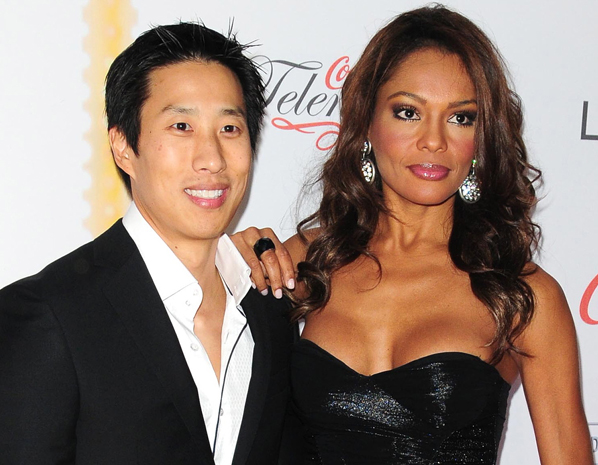
Award-winning journalist and Univision anchor Ilia Calderon, with husband Eugene Jang. (photo by Johnny Louis)
Every week, the entertainment mags churn out list after list of swoon-worthy celebrity and Hollywood couples. But these couples are almost always white…and I can’t remember the last time, if ever, that I’ve seen a single couple of Asian men and non-Asian women on their lists.
If my Pinterest board with real-life couples of Chinese men and Western women has taught me anything, it’s that the community of Asian men and non-Asian women in love is bigger than I ever expected — with plenty of beautiful faces. So it’s no surprise that our community includes some stunning celebrities and their equally stunning partners. Don’t they deserve a little love for once?
Move over, Brangelina! Here are six dazzling couples that could turn heads on the red carpet, while showing the world how lovely it is when Asian men and non-Asian women get together.
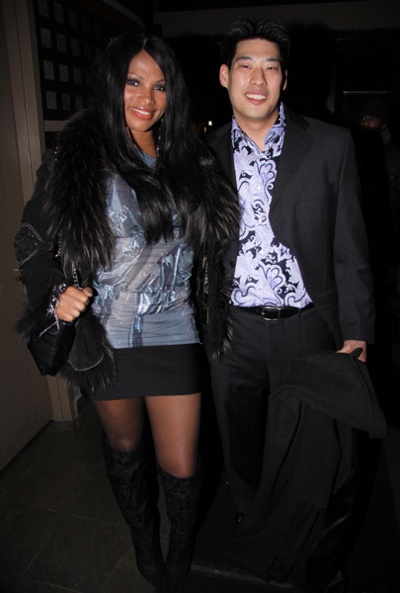
Sandra Denton and Tom Lo
Sandra first rocked our world as “Pepa” from the rap group Salt-N-Pepa, and now she has rocked the interracial dating world by choosing to date Tom Lo (as part of her 2010 reality show Let’s Talk About Pep). Was it romance or just reality TV? Are they still a thing? I have no idea. But they sure make one handsome Blasian couple, don’t they?
Diane Farr and Seung Yong Chung
(photo by John Solano Photography)
Who says that Asian men can’t land babelicious former MTV hosts? Seung Yong Chung (who is tall and handsome himself) snagged the lovely actress Diane Farr, best known for her roles on Numb3rs and Rescue Me (as well as a stint hosting MTV’s Loveline). Their relationship and marriage became the heart of Diane’s outstanding memoir on interracial dating, Kissing Outside the Lines.
Grant Imahara and Jennifer Newman
(photo via Twitter, @Jennernugen)
You know Grant from Mythbusters. Even if he’s the geekiest guy on this list (he’s one of the official operators for Star Wars’ R2-D2 and helped engineer the Energizer Bunny), he looks awesome in a tux and would make my shortlist of hottest electrical engineers any day. Put him together with his lovely blonde girlfriend Jennifer Newman (a self-proclaimed “robot girl”) and you have a couple that could turn heads almost anywhere.
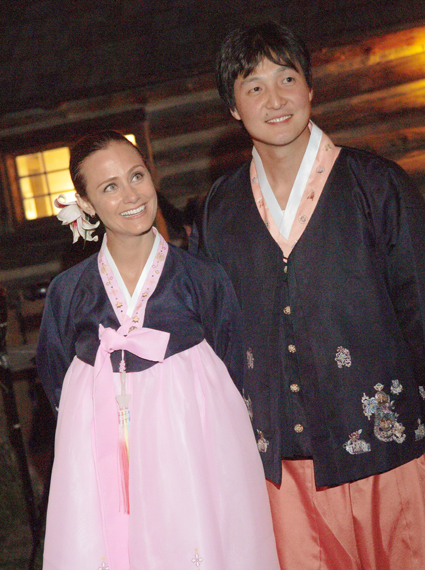
Will Yun Lee and Jennifer Birmingham
Actor Will Yun Lee (best known for his TV roles in Witchblade and Bionic Woman and on-screen roles for Die Another Day, Elektra and The Wolverine) was named one of People’s Sexiest Men Alive in 2007. His wife Jennifer Birmingham, a Hollywood actress as well, looks like a natural on the red carpet. Together, they make one stunning AMWF (Asian Male, White Female) couple. If the Academy handed out Oscars for most gorgeous couple in the business, I’m sure these two could nab a nomination!
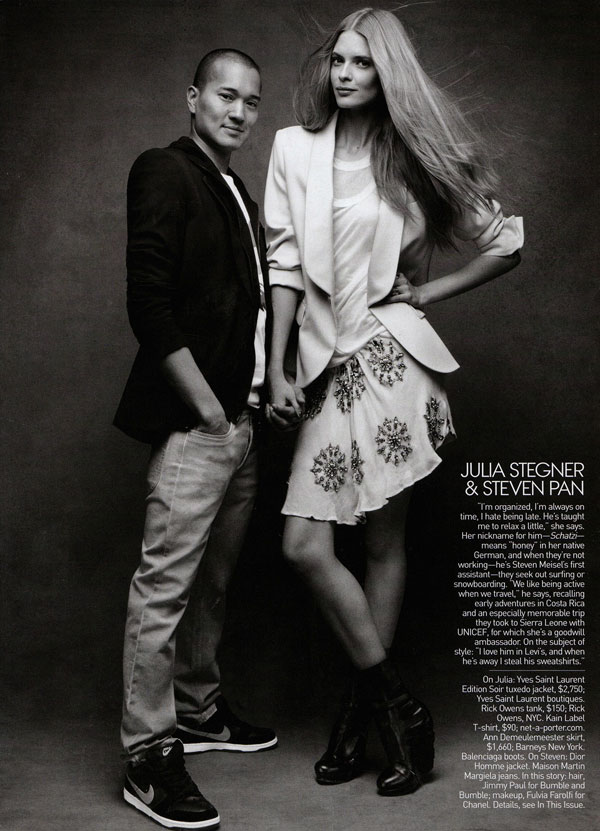
Julia Stegner and Steven Pan
Could this gorgeous German supermodel and her handsome boyfriend Steven (a fashion photographer) make interracial dating between Asian men/non-Asian women a little more “en vogue”? They’ve already landed in a Vogue spread and could easily rock the magazine’s cover. The camera clearly loves them both!
Ilia Calderon and Eugene Jang
Award-winning Colombian journalist Ilia Calderon is the striking anchor for Univision’s Noticiero Univision: Edicion Nocturna (so hot, she’s listed on the site TV anchor babes) — and also the wife of Eugene Jang, a physical therapist who is quite the looker himself. They fell in love at first sight, and look lovely together on the red carpet!
Who do you think are the most stunning couples of Asian men and non-Asian women? Who would you put on your list?
I was born and raised in a very white and very average suburb of Cleveland, Ohio in the United States. Yet now, I live in the countryside of Zhejiang, China with my Chinese husband and his family, where bamboo and tea bushes grow wild in the mountains, the chickens are always free range, dog leashes are optional, and central heating doesn’t exist.
Nothing in my life before prepared me for this one — and to be sure, the first time I came here I never imagined I would ever feel comfortable in this home or area. But it’s amazing how you can adapt and learn in a new environment. Over time, I’ve found myself feeling extremely at home in this home and this village. And in the process, I’ve experienced and learned things that, when I think about the woman I once was back in the US, really surprise me at times.
1. When you live without central heating, there are ingenious ways to stay warm
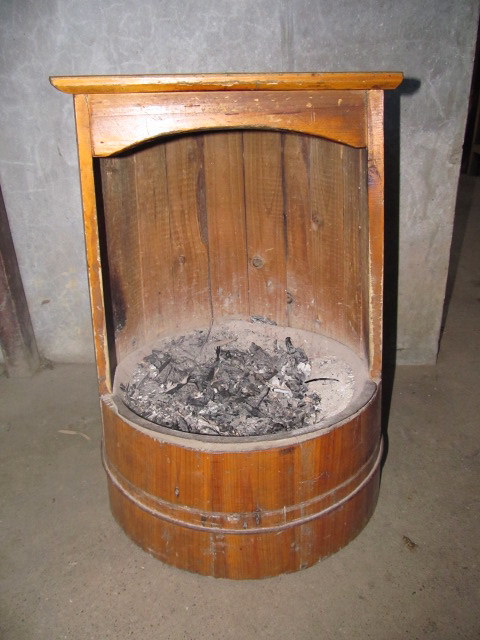
No heating in the dining room? No problem! Meet the huǒtǒng (火桶). You just add warm coals to the receptacle in the bottom, then sit and enjoy the warmth underneath while you eat. This is how I survived many a dinner in the wintertime (when I wasn’t bundled under the covers, with the electric blanket cranked up!).
One of the huotongs in our home is even a family heirloom, gifted to my in-laws more than 40 years ago for their wedding. And according to my mother-in-law, it still warms your behind just as well as it did the first time they used it.
2. There’s nothing like the “sunshine scent” of freshly sunned laundry
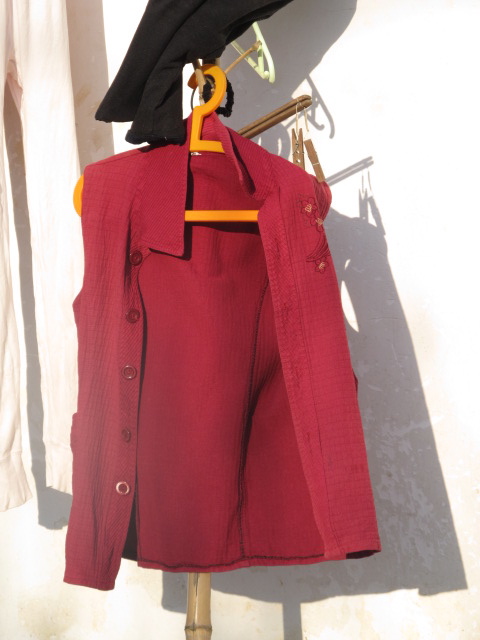
Growing up, my family and our neighbors never used laundry lines to dry clothing, robbing me of the chance to discover one of the great wonders of sunshine — that alluring “sunshine scent” after sunning clothes for an entire day. The sun-dried laundry smells especially fragrant where I live, thanks to the absence of smog and plenty of glorious blue sky afternoons with lots of fresh air.
If you’ve never experienced the “sunshine scent” from a sheet or towel or shirt left to sun for a golden afternoon, well, you’re missing out on one of life’s wonders.
3. Fire-powered woks truly rock
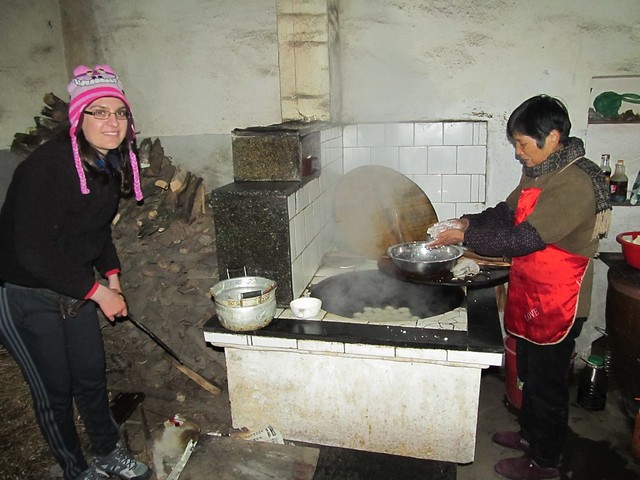
I’ll admit, the first time I peered into my mother-in-law’s kitchen and found a pile of wood stacked up behind her wok, a part of me felt like I was transported to another era. People still use wood to fire their woks?
But soon I discovered the wonders of a fire-powered wok — namely, that it makes some amazing dishes.
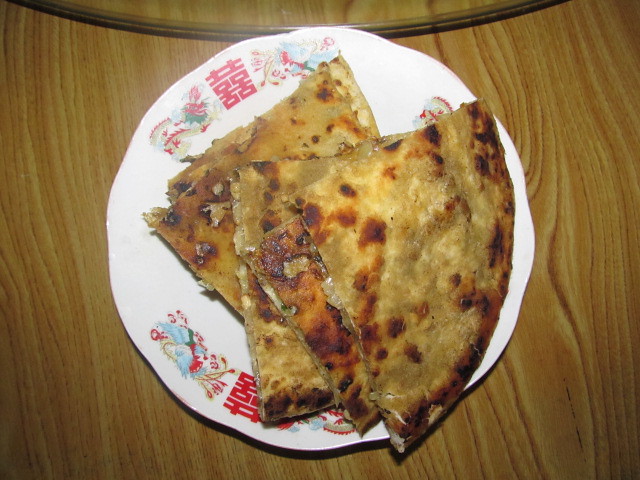
I still can’t get over the jianbing my mother-in-law once made. The flavor and even texture of it was so reminiscent of tandoori-style Indian flatbreads, and even more delicious with the vegetables tucked inside. You could never get the same satisfying taste making the flatbread in a wok heated by gas or even electricity.
My mother-in-law’s jianbing fresh from her fire-powered wok — so delicious!
Maybe it’s no wonder, then, that when I imagine my future dream home, I envision a fire-powered oven or wok somewhere in the kitchen!
4. How to clean up chicken droppings
My mother-in-law raises a flock of free-range chickens. So from time to time, they meander into the house to forage for scraps and leave behind a little something we’d rather not step on. Well, when I spotted one of these offending “presents” near the front door, I instinctively sought out the remedy my mother-in-law uses time and time again: ashes. Just cover the droppings with ashes, wait a few minutes, then you can easily sweep them up (and out the door) with a broom.
I still can’t believe “cleaning up chicken droppings” is now part of my house-cleaning repertoire.
5. Even the scariest unleashed dogs can fear sticks and clubs
I never thought that “speak softly and carry a stick” could also help protect you from dogs.
Where we live, dogs are the countryside version of home alarm systems — everyone has one. But leashes are optional. So when my husband and I take our hikes through the mountains in the village, well, you can imagine how I’ve felt when we suddenly hear a threatening bark or growl — and have no idea if “Cujo” is even tied up.
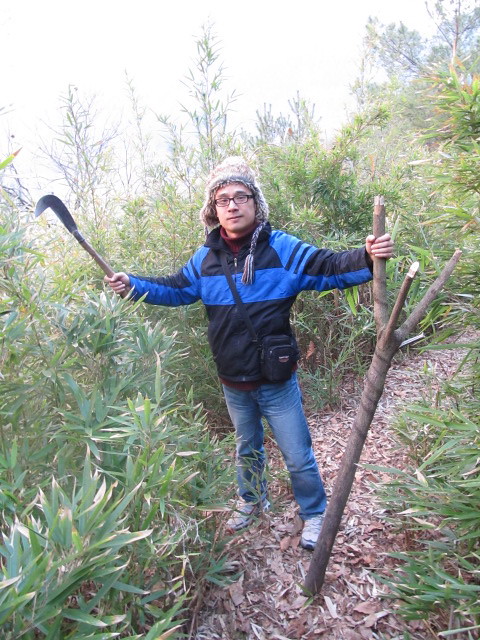
The first time this happened, my husband just grabbed a stick beside the trail and waved the stick above his head so the dog could see it. Instantly, the dog backed off from us…and I could breathe again. 😉
I don’t know exactly why this works, but it does. Along with water and a sturdy pair of shoes, “walking stick” has now become one of my must-haves for hiking out here!
6. Hot water from the tap is a precious thing
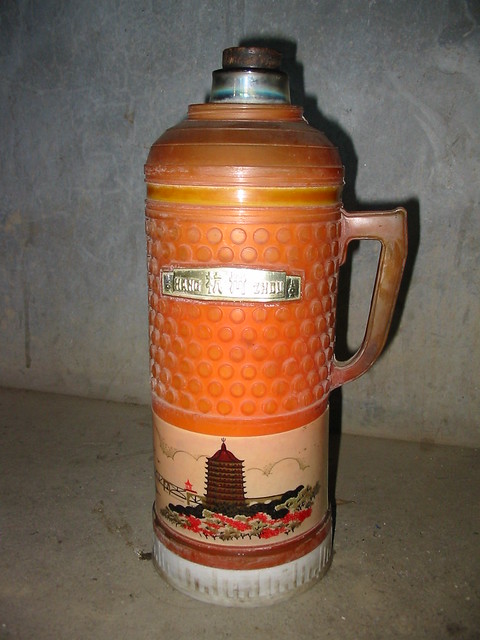
When there’s no hot water from the tap, we turn to boiled water, which we usually store in a thermos like this.
Our house has a solar-powered water heater. But when there’s no sunshine, there’s also no hot water from the tap.
Still, who says we have to go without? We can always have hot water…provided we boil it and store it up in thermoses, ready to mix with cold or lukewarm water for washing up or a bath. Some evenings, I spent an as much as an hour preparing all of that hot water to bathe.
The experience of preparing my own hot water makes me appreciate the precious hot water from the tap so much more.
7. Irrigation ditches make really awesome hiking trails
I’ll be honest, it’s hard to hike the mountains out here in the countryside, where there’s no such thing as “trail maintenance”. Sometimes we’ll be on a perfect trail tracing a mountain ridge…only to find that the deeper we walk into the woods, the more it descends into a thorny mess of bushes and vines that will slash your clothes and even your tender hands. Don’t even ask me about that time we climbed to the top of that mountain, only to take a different trail down…that landed us in the most odious field of thorns I’ve ever encountered.
So I’ve come to love the irrigation ditches out here that are built into the hillsides. The stone walls reinforcing these ditches repel those noisome thorny bushes and vines. But even better, the wall itself becomes a perfect trail, naturally “maintained” and kept open by the heavy foot traffic beside the ditches (essential for watering the terraced fields in the village).
My most favorite trail in the area includes an extra-long irrigation ditch that passes some of the most beautiful scenery in the area — from a natural river that cuts through a wooded hillside to the brilliant green terraced fields in the villages.
8. You can make a home in some of the most unlikely places
If you had told me years before I would be happily residing in the countryside — in the same home as my in-laws — I might have called you crazy or even laughed at the thought. Yet here I am, living under the same roof as my in-laws…and actually having a pretty good time of it.
Life hasn’t always turned out as I expected it, including the circumstances that have necessitated my current residence. But I feel so incredibly loved and cared for here.
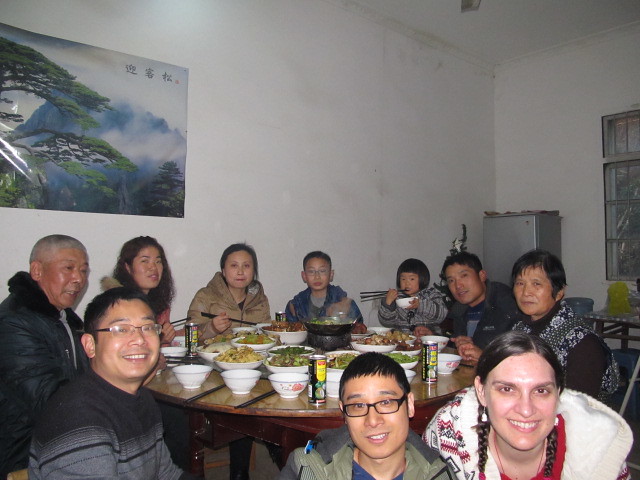
Every meal with the family feels like a small holiday feast, beguiling us with the wonderful aroma of eight or nine different home-cooked dishes on the table — and always with an ample selection of my vegan favorites, from spicy pickled daikon radish to the local smoked tofu stir-fried with peppers or celery. My mother-in-law refuses to let me even lift a finger to do my own laundry, preferring instead to wash it herself by hand and then hang it to dry on the clotheslines that criss-cross the front yard. My father-in-law will slip John an overly generous sum of RMB he withdrew from the bank, refusing to let us return a single note. Our relatives in the village insist on inviting the two of us over to their homes only a short walk away for dinners as lavish as a wedding banquet, telling us to eat, eat, eat. And John and I sleep snugly in our very own private suite in the home, outfitted with every possible comfort we could need — from our soft, warm bed to the TV and Internet — and a view of bamboo fronds and orange trees just outside the window.
Most importantly, I’ve learned that it’s always home to me as long as I have my loving husband, space to read and write, and time for hiking or walks. It’s that simple.
Have you ever lived in a place you never expected to live? Did you learn some surprising things from your experience?
My Chinese Grandma is a lovely woman…who doesn’t speak Mandarin Chinese at all.
“Learn some Mandarin Chinese” is a suggestion I offer any foreigner dating someone Chinese, especially if they want to make a great first impression with the family. Even just knowing a handful of phrases makes a difference.
But what happens if you’re like me, someone now fluent in Mandarin Chinese after years of study…with a Chinese family whose local dialect is a completely different language.
My husband John hails from Western Zhejiang Province and his local language is one of China’s Wu Dialects (a family of languages that includes the dialects of Shanghai, Suzhou, Hangzhou, Ningbo and Wenzhou). There are literally thousands of dialects within this family. Even here in the Hangzhou region, which includes the county where my husband was born and raised, his local dialect differs from the county seat’s local dialect which also differs from the Hangzhou dialect. When John and I visited a friend in Yiwu, a city in Central Zhejiang Province, the local dialect there was completely different as well — and tough for both of us to understand. Still, nothing can beat Wenzhou dialect, considered one of China’s most difficult local languages to comprehend (supposedly, it was used for communications in China during World War II to ensure no enemies — especially Japan — could intercept wartime messages).
How is John’s local language different from Mandarin Chinese? Here are few examples:
Grandmother
– Mandarin Chinese: Waipo
– John’s local dialect: Abu
Play/have a good time
– Mandarin Chinese: wan
– John’s local dialect: xi
Shoe
– Mandarin Chinese: xie
– John’s local dialect: a
Oneself
– Mandarin Chinese: ziji
– John’s local dialect: xiguo
Hour – Mandarin Chinese: xiaoshi – John’s local dialect: zhongtou
You get the idea…it’s an entirely different language!
But unlike Cantonese or Shanghainese, which are local languages in some of China’s biggest business/financial centers (Guangzhou, Hong Kong, Shanghai), my husband’s local dialect is only spoken in John’s hometown, a mountainous rural backwater. You won’t see foreign language students flocking to study John’s dialect, nor will doing so boost my resume.
So why bother learning at all?
That was my initial feeling when I first spent time at my husband’s home in the village. I had invested so much of my language study on Mandarin Chinese…and besides, we never stayed at his hometown for more than a few days or a week, providing me few opportunities to learn or practice.
But over the years, I started to find myself hitting a wall — and that wall was named Grandma (Waipo to you Mandarin speakers, Abu out here). See, Grandma doesn’t speak a word of Mandarin Chinese. And to make matters worse, she was born in the Wenzhou area…so her local dialect is clouded with a Wenzhou accent, making it even more of a challenge to understand her. During the summer of 2011, when John left me here at the family home, I passed many uncomfortable moments at Grandma’s house, trying to decipher what she was trying to say — missing out on opportunities to get to know her as person.
That’s the thing: this is the language of people I care about.
I don’t know where the tipping point was when dialects turned from a communication obstacle to a cherished heritage for Chinese culture. But when I stumbled upon children in my hometown talking to each other in Mandarin while playing on the street, it dawned on me that the days for most dialects are doomed. They would disappear within one generation or two. Possibly within my lifetime, most dialects would go down the road of calligraphy, or worse the abacus, where they would be under academic scrutiny and government protection, but out of the daily use of the common folk.
By learning John’s local dialect, even if it isn’t obviously “useful” or “practical”, I could actually help preserve part of China’s cultural heritage.
Of course, that’s if I ever actually master the language. For now, it’s just a phrase here, a phrase there, and a smattering of words.
But you should have seen the way John’s Grandma beamed at me when I opened her door and finally called her “Abu!” It warmed my soul to know that we were finally communicating for the first time in years. And though I have a long way to go (John still does most of the talking with her) I know in my heart I made the right decision to learn.
Have you ever considered learning an uncommon Chinese dialect? Why or why not?
Update: scratched out the entries under “Hour” above, thanks to the commenters who noted that Mandarin Chinese speakers may use both. Good catch!
While the other men in the background have to drink up their baijiu, my husband (front and left) is off the hook — because of me.
During Chinese New Year, the alcohol flows as freely as the conversation — and sometimes a little too much so. On the second day of the new year, a lunch packed with mostly male relatives and well-lubricated with baijiu — the vodka-like hard liquor of choice — actually landed two of the men in the hospital for alcohol poisoning.
It works like this. The elder male relatives at the table insist their younger male relatives drink in a gesture of respect. Of course, nobody in Chinese history ever said filial piety involved imbibing the alcohol for your elders — but such reasoning is pointless at the table, where peer pressure and the expectation that “real men” can handle their alcohol rules.
Yet my husband John survived the entire holiday without a single drunken incident and ultimately only enjoying a few sips of red wine by choice. And when I asked him why, he cited me, his foreign wife, as the reason.
“I have a yangxifu,” he said. “You’re a good excuse not to drink.” In other words, because I’m a foreigner here, John’s relatives assume he needs to care for me more than if I was just Chinese (despite my fluent Chinese and years of living in this country). So if he was stupid drunk, he couldn’t fulfill his so-called “responsibility” to me.
We both laughed at this comical idea — that my being John’s wife actually shielded him from the pressure to drink in China.
Still, given John’s low alcohol tolerance, drinking among relatives will always be a dangerous pursuit. So as bizarre as it is, if my presence might save him from a drunken stupor — or worse, a trip to the hospital — I’ll take it. 😉
This is the first Chinese New Year we’ve spent with the family in China since returning home and it has been one explosive holiday (pun intended)! So in lieu of the usual Friday content, I thought I’d share the day’s excitement with you through photos.
Wish you all success in the year of the horse! 马到成功!
Red couplets — just written by my father-in-law — frame the doorway to the family home and welcome the new year (and the Spring)
My husband John gives our bedroom door a thumbs-up, now that we have a freshly written “success in the horse year” (马到成功) pasted on for good luck!
Visiting the ancestors’ graves, offering them dinner, incense and money for the afterlife.
Family bustling in the kitchen to prepare the big new year’s eve dinner, known as nianye fan (年夜饭)
Before we even sit down to dine, ancestors eat first. Here my family sets the table for them in the entrance way, right down to lighting the candles.
John sets the firecrackers out by the gate to the family home.
Burning money for the ancestors while setting off firecrackers in the background.
The best meal of the year, nianye fan (年夜饭). Since 10 of us sat down for dinner, my mother-in-law said we needed at least 20 different dishes on the table. My favorites? Taro root, winter bamboo, vegetarian meatballs, and water chestnuts.
The whole family gathers around the table for dinner.
Giving the kids in the family hongbao (red envelopes filled with money) for the new year.
Raise the red lanterns! It’s nightfall and the year of the horse is galloping our way.
One villager in John’s hometown in China couldn’t believe we were married
As the wife of a Chinese man, I’m used to attracting attention when I’m out and about in China. The stares, the questions about where I’m from, the way cars slow down to gawk at us — it’s all par for the course.
So during one of our evening walks in the village, I wasn’t surprised when an elderly woman walking in the opposite direction suddenly began asking my husband questions.
“Where are you from?” she inquired in the local dialect.
John mentioned the name of his village, nestled right in the heart of the valley.
“Where is she from?”
“America. She’s my wife.”
The woman grimaced at him in disbelief. “That’s nonsense!” Yes, she refused to believe that someone from John’s little mountain village could have possibly married a woman from America. And she walked away, not to be bamboozled by us.
When John translated the whole conversation for me (I’m still working on my local dialect) I nearly doubled over in laughter. “Are you kidding? She thought you were lying about me?”
Hiking the mountains in John’s hometown
It was the first time anyone in China doubted the authenticity of our relationship. But as strange as it sounded, I could understand why. In John’s hometown, it’s not uncommon to meet people who have spent their entire lives, knowing little else beyond these mountains thick with hardy bamboo and fragrant Chinese red pines, and the rice paddies and terraced gardens sculpted into the hillsides. Who could imagine that one of their hometown sons would meet and marry a foreigner, let alone spend years in her country? As rare as it is to find Chinese men and Western women together in China’s urban playgrounds, out here in the Zhejiang countryside such a coupling sounds impossible and even ridiculous.
The Chinese government advises foreigners to carry their passports with them at all times in China. I have to wonder, should I also carry around my Chinese marriage license so I’m prepared for the next time someone calls my marriage “nonsense”?
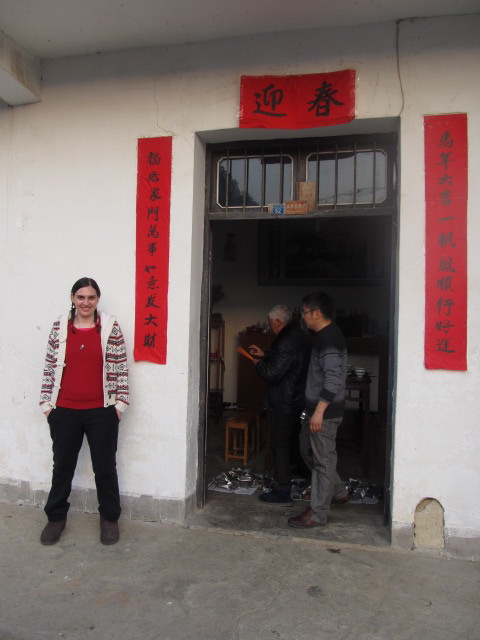
The other day, someone asked me why I started up this blog. I mentioned a number of reasons, including this one — because it’s the kind of blog I wish I had discovered when I first went to China and started dating men over there.
That got me thinking about my first year in China in 1999, when I stumbled into a cross-cultural relationship — and knew little of China’s culture and could barely even speak full sentences in Chinese. I wondered, if I met my 1999 self, what advice would I have given her about dating Chinese men?
Well, here are three things I wish I had known back then:
1. Actions matter more than words
In the weeks leading up to that first relationship, I was caught in the midst of an “is he into me?” guessing game. As I wrote before:
We spent over a month together in this “dating limbo”. We took late evening walks, our shoulders dangerously close, and he would say things like “I love the color of your eyes” or “I think foreign women are beautiful.” He would also inquire about what I was doing at certain times, or, if we were together, what I would be doing next — and then casually suggest we do something. But it wasn’t until we were crossing the street one day (to escape a beggar running after me) that we finally locked hands together — hands that didn’t part after crossing. Then he kissed me at my apartment, and I knew we were together.
I longed for the reassurance of his words in understanding where we were — and where we were headed — because that’s what people generally do in the US. Of course, once he held my hand and kissed me that evening, I had all the reassurance I needed! Yet when I look back on that time, his actions were saying “I love you” even though he never uttered those words to me.
One of my first arguments with a boyfriend in China happened over something that many Americans think nothing about. I happened to tell him about a relationship with an ex-boyfriend during my senior year in university.
But on the flip side, it’s kind of liberating to enter a relationship without some unspoken expectation that you should unpack all of your past relationship baggage before your significant other. Some Americans actually judge you over your past relationships, which can obviously sting. Instead, you can leave that past where it belongs and focus on the present happiness.
3. It takes a lot longer to meet the parents
When I was in high school and I started to date guys in the US, they often met my parents on the first or second or even third date. Maybe it was just a handshake and a few quick words of hello, but you could still call it a “meeting”.
Not so in China. With one exception (I met his mom well before we were even considering dating) it took a long time before my boyfriends in China would actually introduce me to their parents. In one case, I never even got to that point — we broke up. Later on, I learned that Chinese usually don’t introduce their boyfriends or girlfriends to the family unless it’s a serious, heading-towards-marriage kind of relationship.
And maybe that’s a good thing. I remember one guy I dated in college and how I came so close to his mom that she even wrote to me while I was studying abroad in Spain. So when he and I finally broke things off, I had a double heartache — losing both him and her.
What about you? What dating advice do you wish you would have had in your first cross-cultural or interracial relationship?
Not long ago, I received an e-mail from a reader with a Chinese partner inquiring about infidelity in China. While I cannot reveal the actual e-mail since I promised confidentiality, from reading between the lines I could sense this reader seemed worried about the potential for the partner to engage in extramarital affairs in China. Isn’t it funny that a stranger would ask me to shed light on this for reassurance about their relationship?
That e-mail echoed the concerns of a white woman I knew. She had a Chinese husband and considered moving back to China with him, where he hoped to realize his dreams of entrepreneurship. But in the end, she couldn’t do it. Among the reasons why, she fretted over some hypothetical “private secretary” who would surely steal her husband away from her.
As my husband and I plan to return to China, I’m far more worried about how to ship our things over or make that connection in New York’s JFK airport than I am about phantom mistresses and potential affairs. So what if China has “private secretaries” and KTV “hostesses” and entire communities of ernai? China sure didn’t invent the concept of cheating on spouses, as people do it all around the world (including in my home country, the US). More importantly, I know my husband and I know the strength of our marriage. Anyone who believes that a move to China will lead John astray knows nothing about him or us.
I’m not sure what the future holds. But I am sure about the love and trust I hold in my heart for my husband — and that’s enough for me to believe that our future will be a blissful one, together.
Have you ever heard people discuss China’s infidelity — and worry about their relationship or marriage? What do you think?
My wife is German, blonde hair blue eyed, but I think I’m very ordinary and it was just fate. Actually, I think Western women apart from being a bit more independent-minded, they’re [also] much more virtuous/chaste than Chinese women, are kind-hearted, aren’t vain, are frugal, emphasize love and family on a spiritual level, and these alone totally blow modern Chinese young women away. I’m currently constantly introducing German girlfriends to my brothers [fellow male friends], exhorting them to not seek Chinese women. Oh yeah, Western women don’t demand that you have a house.
Chinese women on the other hand are beautiful, intelligent, happy, and just plain pleasant to be with. They don’t have the associated emotional fluctuations Western women have and they are not demanding. They are serious about love and marriage and use common sense…. Single western women cannot compete with Chinese women and you can see it in their faces when you walk happily by with your Chinese girlfriend while they grimace and pretend to not notice.
(NOTE — that’s just one commenter in a thread that overwhelmingly criticizes Western women while commending the virtues of Chinese women. Read at your own risk.)
Each couple has different ways of viewing their own situation. Some address it directly and define the boundaries and what must be done to ensure cultural understanding. For example one couple said; ‘from the outset of our relationship, we have been conscious of intercultural issues and keen to address them by talking then through and explaining to each other what we are thinking.’ Other couples like B…and L…have addressed it in a completely different way and have ‘done something that is very unusual in Chinese-foreign relationships; we have never talked about that I am from a different country especially not in the case of conflicts’ and they feel that ‘many people like to overemphasize the influence of cultural differences.’ The way in which they address the situation is what works for them as a couple and as with many things in life there is no wrong or right way of dealing with it.
Naturally, since I write a blog meant to promote cross-cultural understanding between Chinese-Western couples, it seemed bizarre to just ignore cultural differences in a cross-cultural relationship. But as much as I would love to say that “there is no wrong or right way,” I can’t agree. In fact, the B/L way — essentially, a colorblind approach to interracial/cross-cultural relationships — is harmful. Continue reading “Why Ignoring Cultural Differences in Cross-Cultural Relationships is Harmful”
This website uses cookies to improve your experience. We'll assume you're ok with this, but you can opt-out if you wish.AcceptRejectRead More
Privacy & Cookies Policy
Privacy Overview
This website uses cookies to improve your experience while you navigate through the website. Out of these cookies, the cookies that are categorized as necessary are stored on your browser as they are essential for the working of basic functionalities of the website. We also use third-party cookies that help us analyze and understand how you use this website. These cookies will be stored in your browser only with your consent. You also have the option to opt-out of these cookies. But opting out of some of these cookies may have an effect on your browsing experience.
Necessary cookies are absolutely essential for the website to function properly. This category only includes cookies that ensures basic functionalities and security features of the website. These cookies do not store any personal information.
Any cookies that may not be particularly necessary for the website to function and is used specifically to collect user personal data via analytics, ads, other embedded contents are termed as non-necessary cookies. It is mandatory to procure user consent prior to running these cookies on your website.












 The other day, someone asked me why I started up this blog. I mentioned a number of reasons, including this one — because it’s the kind of blog I wish I had discovered when I first went to China and started dating men over there.