“All Under Heaven” by Carolyn Phillips – Your Ultimate Chinese Cookbook (+ 2 FREE Recipes)

If I was exiled to a desert island and forced to bring only one Chinese cookbook with me, it would have to be All Under Heaven by Carolyn Phillips.
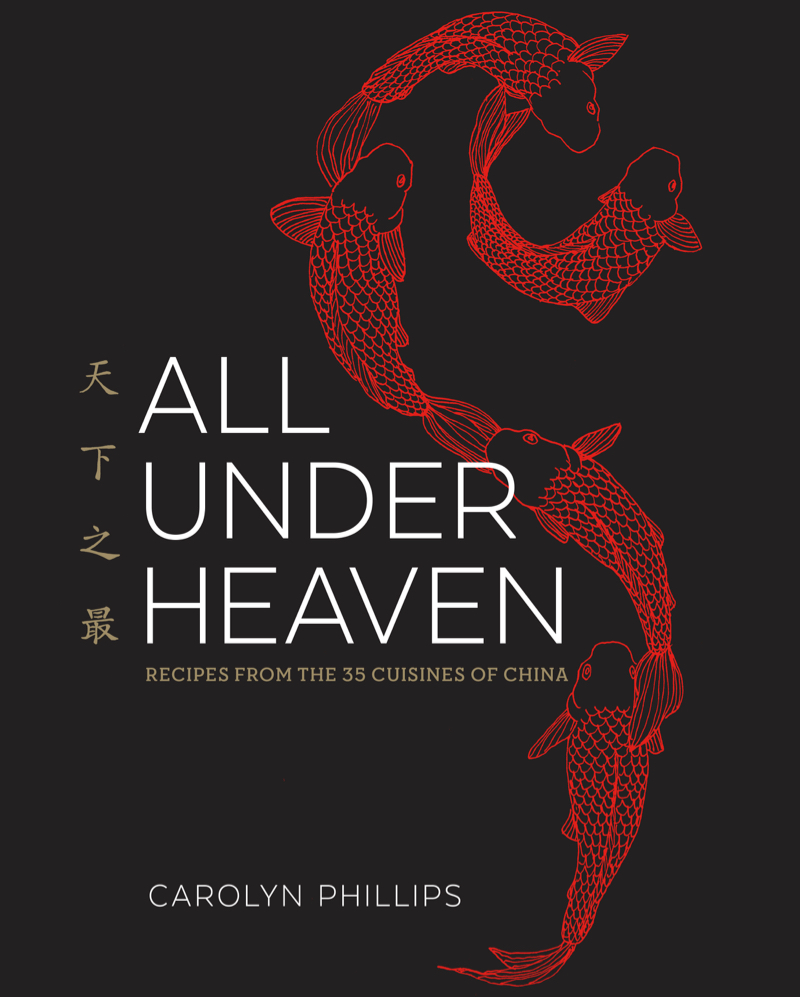
For years, I’ve longed for an ultimate Chinese cookbook. An encyclopedic guide to the finest culinary pleasures of China without prejudice to one particular region. A book that would honor the foods of Zhejiang and Shaanxi and Xinjiang as much as the flavors of Sichuan, Hunan and the Cantonese region.

Thanks to Carolyn, that cookbook (All Under Heaven) is a reality – and it’s a must-buy for anyone serious about Chinese cuisine.

All Under Heaven is over 500 pages of the greatest recipes from all over the Middle Kingdom, which Carolyn divides into five regions:

  • The ageless North and Manchurian Northeast (Shandong, Beijing, Tianjin, Hebei, and the Northeast)
  • The elegant Yangtze River environs (Huai Yang, Jiangsu, Shanghai, Zhejiang, Northern Fujian, Anhui, Henan, Hubei, and Jiangxi)
  • The savory Coastal Southeast (the Hakka, Chaozhou, Southern Fujian, Taiwan, Taiwan’s Military Families, Hainan, Guangdong and Southern Guangxi, the Pearl River Delta, Macau, and Hong Kong)
  • The spicy Central Highlands (Sichuan, Hunan, Yunnan, Guizhou, and Northern Guangxi)
  • The arid Northwest (Shaanxi, Shanxi, Gansu, the Great Northwest, Inner Mongolia, and Tibet)

It was such a thrill to see every single province and region included (along with an in-depth introduction to each), which I’ve yet to find in any other Chinese cookbook. Carolyn writes with such passion about Chinese food – whether it’s in the introductions to the regions, peppered with her own culinary experiences, or the recipes themselves – that you can’t help but feel excited every time you open this book. The recipes are also easy to follow and span everything from elegant banquet dishes to simple everyday stir-fries to even those magical essentials for great Chinese food (like dough and breads and sauces and oils). And if you’re a vegan like me, you’ll appreciate the many vegetarian options scattered throughout the pages.

All Under Heaven is so comprehensive that you might never need another Chinese cookbook again.

It’s also the kind of cookbook I wish I could have owned when my husband and I were living in America, desperately longing for the diverse and authentic flavors of the Middle Kingdom. It also would have been fun to prepare some of the more exotic and lesser-known cuisines for my family, introducing them to Chinese food beyond the typical Sichuan, Hunan and Cantonese flavors common to Chinese restaurants in America.

It’s my great pleasure to introduce you to Carolyn Phillips and All Under Heaven through this interview.

Carolyn Phillips (photo by Jennifer Graham)

Here’s Carolyn Phillips’ bio from Amazon.com:

Carolyn Phillips is a food writer, scholar, and artist. She is the author of the fully illustrated All Under Heaven: Recipes from the 35 Cuisines of China (McSweeney’s + Ten Speed Press, August 2016) and The Dim Sum Field Guide: A Taxonomy of Dumplings, Buns, Meats, Sweets, and Other Specialties of the Chinese Teahouse (Ten Speed Press, August 2016).

Her work has appeared in Saveur, Best Food Writing 2015, Lucky Peach, Gastronomica, Life & Thyme, Buzzfeed, Zester Daily, Alimentum, Huffington Post, Food52, and at the 2013 MAD Symposium. She has appeared on such podcasts as KCRW’s “Good Food,” PRI’s “The World,” and on Berkshire “Bookworld,” and has been interviewed by such outstanding newspapers as the San Jose Mercury News and the San Francisco Chronicle. Upcoming appearances include the Smithsonian, 92nd Street Y, San Francisco’s Litquake, Goop, and Bon Appetit.

You can learn more about Carolyn Phillips at her website MadameHuang.com, and follow her on Twitter (@madamehuang) and Instagram (@therealmadamehuang). All Under Heaven is available on Amazon.com, where your purchase helps support this site.

It was a pleasure to sit down with Carolyn Phillips to talk about her book — see our interview below. Additionally, I’ve also included two FREE recipes, reprinted here courtesy of Carolyn Phillips, All Under Heaven and Ten Speed Press. Scroll down and enjoy!
—–

Tell us about the inspiration for this book.

After eating like royalty in Taiwan for eight years, I was more than a bit spoiled. Taiwan in the late seventies and early eighties was foodie heaven on earth, because so many of China’s great chefs had moved there after the end of the civil war and then opened up fabulous restaurants when Taiwan became seriously wealthy due to the tech boom.

I knew what real Chinese food was supposed to taste like because I was married to a serious gourmet and also worked at many cultural institutions that “required” me to eat out at massive banquets many times a week. I was happily devouring just about every cuisine that China has to offer.

But after we returned to the States, no restaurants offered the dishes we loved. I had cooked a lot in Taipei, and by this time was starting to cook even more out of a genuine hunger for China’s great foods. However I couldn’t find the right ingredients. So I started to figure out how to make really basic things, like salted Shanghainese greens (xuelihong), fermented rice (jiuniang), steamed breads (mantou and huajuan), brined eggs (xiandan), and so forth, in addition to expanding on my repertoire of everyday and banquet dishes.

I started to collect old Chinese cookbooks, as well as more modern ones in Chinese and English, and I noticed that the foods we had come to love in Taipei were rarely found in these modern cookbooks. Plus, whenever we flew back to China or Taiwan, we rarely ate the foods we had learned to enjoy, and sometimes restaurateurs had never even heard of them.

This is a long tale that I talk about more fully throughout All Under Heaven, but long story short, I realized that too many of China’s great recipes were on the verge of being forgotten. As I set out to re-create those dishes, a whole new world opened up. I came to realize that food is so much more than simply fuel for our bodies. It’s the key to a culture and a people. And China’s cuisines turned out to be much more complex and breathtaking that I would have ever believed. Here’s a link, for example, to an article I wrote for Vice Munchies about why there are many more than just eight great cuisines in China. Each realization led to more questions. I started going down various rabbit holes, and my quest for recipes turned into a lifelong passion. The 524 pages of Heaven are just the tip of this particular iceberg.

There’s such a wealth of recipes in a country as large as China. How were you able to choose the best of the best from across the country when there are so many delicious foods in China?

Paring down these recipes was one of the most difficult things I had to do. I initially gave my publisher an outline that included so many dishes they thought I was crazy. The book could have easily been a couple thousand pages long at that rate.

What I did was first figure out the five major culinary regions of China, and then I divided each one up into the individual cuisines. I tried to determine which dishes and ingredients were most emblematic of each cuisine, things that showed off idiosyncratic flavors and cooking techniques. For example, Russian influences in the braises of the Northeast, Central Asian seasonings and grilled dishes in the Arid Lands of the west, and the mellow, ancient Hakka flavors that are shared throughout the Coastal Southeast.

You infused this cookbook and the recipes with many of your own personal experiences with Chinese cuisine, from your remembrances of dinners with your Chinese in-laws to the meals you savored while living in Taipei as a young woman. Could you tell us about one of your favorite food-related personal experiences from the book?

One of the funniest of these happened when I was working as the head interpreter for the National Museum of History. Since few foreigners stayed on long enough in Taiwan to master the language, I worked out a great arrangement with the museum and library, where I could leave after I finished my work and that way help out other cultural institutions in the capital. Nobody realized how much extra work I was taking on, though. I would zoom in a place and zoom out as fast as I could. I was getting the work done, but this really was nothing less than moonlighting at around ten different jobs. Then, one day a great China scholar, Joseph Needham of Cambridge, came for a visit, and the museum hosted a big lunch in his honor. I was called on to interpret, and when I showed up, every one of my bosses was sitting at the same table. It was rather embarrassing, to say the least. Thank goodness the Chinese people are known for their great sense of humor!

Your cookbook is one of the few to profile culinary traditions lesser-known to most Westerners, such as the foods of Tibet and Xinjiang, China’s far North. Why do you think people have largely ignored these cuisines when writing about Chinese food?

It’s not just Tibet and Xinjiang and the North, but just about any region outside of the great metropolises. Henan, for example, was once home to China’s imperial capital, and its foods are an extraordinary mixture of east and west, north and south. Chaozhou and the Pearl River Delta offer foods that always blow my mind with their creativity and sparkling flavors. Guangxi, Tianjin, Jiangxi, Yunnan, Inner Mongolia… these provinces and cities all are home to unique and marvelous foods, but few people have opened up restaurants in the West that highlight these cuisines.

I keep telling people that both sides of this arrangement need to work to get all of China’s 35 on diners’ radars. Restaurateurs have to have the confidence to offer the great foods of their homeland, rather than aim to please everyone with the same-old same-old. They should use excellent ingredients and thoughtful, authentic recipes. Chefs should be trained well and paid well. Diners, though, have to become more sophisticated. They should go to, say, a Beijing-style restaurant and be able to order a genuine Northern meal with confidence.

This really requires learning and work on both sides, though. I mean, look at how Japanese restaurants can charge pretty much what they want for top-shelf kaiseki and sushi meals. At this level the chefs have genuine pride in their work, their restaurants are clean and tasteful, the menus are simple yet perfect, the service is impeccable. Why can’t we have the same thing with China’s great cuisines? Why not a temple to the foods of Hangzhou or Suzhou in New York, a shrine to Guangzhou and Chaozhou’s cuisines in San Francisco, and every place in-between?

What I’m hoping is that Heaven sparks interest in the magical culinary map of China and that more people – especially local people who have access to old people with gastronomical secrets and tattered cookbooks – will come out with great books about every single facet of this massive country’s culinary culture. China is the size of Europe, but with 5,000 years of culinary history. We will never learn it all, but that shouldn’t stop us from trying.

Anyone who digs into this cookbook will find plenty of humor in your writing as well. One of the sections that had me giggling was the revelation that your traditional fermented Sichuan-style pickles actually make farting noises during the fermentation process. Could you talk about that?

Ha! That farting is caused by the carbon dioxide created during the fermenting process. The little beasties in the pickles start to eat away at the sugars in the brine and vegetables, and they poop like every other creature does, I guess. But they are microbes, so what we get is just lots of gas. Traditional Chinese pickle jars have this ingenious pool of water that surrounds the lid. This gives the gas a convenient exit route while keeping out bugs and dust. And so, as the gas builds up in the jar, it turns into little farts as the fermentation process kicks into high gear.

It’s lots of fun to have a pickle jar farting happily on the kitchen counter. No smells, just wet farts.

Could you share with us a few of your favorite recipes from this book and why you love them?

Oh, this book pretty much is filled with my favorites. I’ve been eating the foods of China pretty much on a solid basis for four decades, and please remember that I had to seriously whittle down that recipe list for the final book!

That being said, I could never live without things like Yunnan’s big thin slices of a pig’s head, Sichuan’s dry-dried chicken wings, Guizhou’s spicy mung bean jelly shreds, the Pearl River Delta’s Shunde braised fish puffs, Taiwan’s sesame oil chicken soup, Huai Yang’s crystalline jellied pork, the North’s shaobing, Shaanxi’s spicy biangbiang noodles, the Northwest’s Silk Road fajitas, and Beijing-style smoked chicken.

But that is just off the top of my head. I’m definitely an addict.
—–

Dry-fried Chicken Wings (Gānpēng jīchì 乾烹雞翅)

Sichuan • serves about 4

(recipe from All Under Heaven, reprinted courtesy of Carolyn Phillips and Ten Speed Press)

Most fried chicken has a thick coating, but these wings, simply dusted with cornstarch, offer a nice, light crunch. When making the sauce, be sure to caramelize the sugar properly: as soon as the vinegar has boiled down and large bubbles start to form, watch the sauce carefully and swirl it around so that it heats evenly. The sugar can burn easily, so this part of the process requires close attention. Once the sauce is done, it should be sticky and syrupy.

Middle sections from 12 chicken wings, or 6 whole chicken wings
1⁄4 cup cornstarch
2 cups (or so) peanut or vegetable oil for frying
6 cloves garlic, finely chopped
1⁄2 inch fresh ginger, peeled and finely chopped
2 green onions, trimmed and finely chopped
10 dried Thai chilies, or to taste, broken in half
and seeds discarded, and/or smoked paprika
3⁄4 cup pale rice vinegar
6 tablespoons sugar, or to taste
1 teaspoon toasted Sichuan peppercorn salt, or to taste
2 teaspoons regular soy sauce

1. Start this recipe at least 6 hours before you want to serve it. If you are using whole wings, cut o the tips and use them for stock, and then cut the wings between the first and second joints so that you have 12 pieces. Place the wing pieces in a work bowl and sprinkle the cornstarch over them. Toss the wings in the bowl until each piece is thoroughly coated.

2. Place a cake rack on a large plate or small baking sheet, then arrange the wings, not touching, on the pan. Refrigerate uncovered so the cool air slightly dries out the wings. Refrigerate for at least 6 hours and up to 1 day.

3. Pour the oil into a wok and heat over high heat until a wooden chopstick inserted in the oil is immediately covered with bubbles. Hold a spatter screen in one hand while using the other hand to carefully add half of the wing pieces to the hot oil. Cover with the screen to reduce the possibility of burns and mess. As soon as the wings are golden on one side, turn them over, adjusting the heat as necessary. Remove the wings to a large work bowl once they are nicely browned and cooked through (see Tips). Repeat with the other half of the wings.

4. Drain off all but 1 tablespoon of oil from the wok (or put 1 tablespoon of the oil in a saucepan), place it over medium-high heat, and add the garlic, ginger, onions, and chilies. (Smoked paprika can be used instead of, or in addition to, the chilies.) Toss them in the hot oil to release their fragrance, and then add the rest of the ingredients. Turn the heat to high and quickly boil down the sauce. Just before it turns syrupy and starts to caramelize, taste and adjust the seasoning. Once it is the consistency of maple syrup, remove from the heat. Toss the wings in the sauce to coat them completely. Arrange the wings on a serving platter and eat while hot.

My preference here is for the middle section of the wings, which offers a nice ratio of crispy skin to juicy chicken.

Chicken wings will generally take 10 to 15 minutes to cook through. The wings will be done when they are a lovely golden brown all over. Blood will seep out of the core if they are not completely cooked, so check them in the work bowl before you toss them with the sauce.

Thank you Mission Street Food for this dandy way to coat wings.

Silk Road Fajitas (Báobĭng jiān níuròu 薄餅煎牛肉)

The Northwest • serves 4

(recipe from All Under Heaven, reprinted courtesy of Carolyn Phillips and Ten Speed Press)

As a California kid, I practically grew up on Mexican food. However, I have to admit that as much as I adore the Mexican way with steak and tortillas, I think I prefer this version of fajitas from China’s Northwest. The two styles have so much in common— our wrappers, grilled steak, barely cooked vegetables, cilantro, cumin, garlic, and a pinch of salt—that they almost seem like mirror images of each other. But the green onions, rice wine, and ginger let you know that this dish is a Xinjiang special.

BEEF
12 ounces boneless beefsteak of any kind 2 tablespoons mild rice wine
1⁄2 teaspoon sea salt
1⁄2 teaspoon ground toasted cumin
1⁄2 teaspoon (more or less) finely ground dried chilies 2 tablespoons peanut or vegetable oil

WRAPPERS
1 recipe wheat wrappers, or 16 small store-bought flour tortillas*

VEGETABLES
2 tablespoons peanut or vegetable oil
2 cloves garlic, finely chopped
1 tablespoon peeled and finely minced fresh ginger
1 sweet red pepper, seeded and cut into thin strips
3 green onions, trimmed and julienned
1 cup coarsely chopped cilantro

1. Trim the fat and any gristle off the steak before cutting it against the grain into thin slices. Cut these slices to form strips less than 1⁄4 inch thick. Place the steak strips in a small work bowl and toss with the rice wine, salt, cumin, chilies, and oil. The steak can be prepared earlier in the day up to this point, covered, and refrigerated to give it extra time to marinate.

2. When it is close to mealtime, prepare the wheat wrappers and grill as directed, or heat store-bought tortillas on an ungreased griddle until they puff up lightly. Place them in a clean tea towel and fold it around them to retain their heat. Just before serving, peel the home- made wrappers apart into thin crêpes if you wish, or leave them as is.

3. About 10 minutes before serving, heat a dry wok over high heat. Toss in the steak and all of the marinade. Sear the steak before dipping the strips over. When most of the pink has disappeared and the meat has a good brown sheen, drizzle the oil around the edge of the meat and then add the garlic, ginger, and red pepper to the wok. Toss these together over high heat. As soon as the peppers start to wilt, remove the pan from the heat and toss in the green onions and finally the cilantro. Taste and adjust the seasoning. Serve alongside the warm wrappers.

*NOTE: All Under Heaven includes a recipe for making your own wheat wrappers from scratch; it was omitted here for simplicity.

“Empire of Glass” by Kaitlin Solimine – an Interview

There’s something inherently powerful in cross-cultural relationships and exchanges.

When I think back to my formative first years here in China – before I met my husband Jun — I’m also struck by the fact that many of the people closest to me then still remain a part of my life. They were the ones who helped me go beyond the guidebooks and primers on Chinese culture, the people who made China personal for me. To this day, I still consider these people my Chinese “brothers” and “sisters”.

For Kaitlin Solimine, the relationships she forged during a homestay experience in Beijing (her first foray into China) set the stage for her literary debut, Empire of Glass. In particular, she became close to her homestay “Chinese father” (a man she still calls “Baba” to this day) and soon that closeness allowed her the opportunity to hear his family stories. This surprising intimacy — along with what Kaitin calls “the promise and also the potential cultural miscommunications that could result” — ultimately inspired her to write Empire of Glass.

Empire of Glass – which spans the Cultural Revolution up to modern times – stands apart from many novels about China for a simple reason: it is presented as a translation by an American named “Lao K”. Lao K herself is one of the actors in the story, a young woman who invariably becomes a part of the narrative she is attempting to illuminate for foreign readers, the epic story of Li-Ming and her husband Wang, filled with love, drama and tragedy.

Moreover, Empire of Glass is stunning for its lyrical prose. Every sentence is beautifully crafted with imagery that captures China in ways that will surprise and delight you (“I witnessed hutong alleyways paved over by four-lane highways, a landscape of construction cranes pocking the horizon with hungry, steel arms”). Anyone who loves literary fiction about China will savor each page and paragraph in Empire of Glass.

It is an honor and pleasure to introduce you to Kaitlin Solimine and Empire of Glass through this interview.

Here’s Kaitlin’s bio from Goodreads:

Kaitlin Solimine holds a BA from Harvard University and an MA from the University of Southern California, both in East Asian Studies with an emphasis on Chinese language, culture, and history. She studied international relations at Beijing University as a Harvard-Yenching Scholar, wrote and edited the travel series, Let’s Go: China (St. Martin’s Press), and received a Fulbright creative grant to research her forthcoming first novel, Empire of Glass. At the 2010 Bread Loaf Writers’ Conference, she was the Donald E. Axinn Scholar in Fiction. She received an MFA in writing from UC-San Diego, where she also taught undergraduate writing. An excerpt from Empire of Glass won the 2012 Dzanc Books/Disquiet International Literary Program award, judged by Colson Whitehead. Another excerpt, ‘Thoughts of Sinking,’ is featured in Kartika Review. She is a Huffington Post contributor and columnist at The World of Chinese Magazine. She co-founded HIPPO Reads, a literary startup focused on curating and delivering high quality, previously published content with an academic bent. After recently living in Singapore, she moved to San Francisco where she was a 2016 SF Grotto Writing Fellow. Empire of Glass is her first novel.

You can learn more about Kaitlin Solimine and the novel at her website, follow Kaitlin on Twitter, and find Empire of Glass on Amazon.com, where your purchases help support this blog.

—–
You conceived of this novel based on your homestay experience in China as well as your relationship with your Chinese father, who you still call “Baba” to this day. Could you tell us a little more about your inspiration for the novel?

I was living with Baba during the summer of 2005 while conducting research for my master’s thesis (on the socio-cultural impact of American baseball in China). Most of the day, it was just the two of us, sharing a meal, watching wushu dramas on CCTV, going for walks in the park after dinner. I knew, already, that our relationship was not typical—he is 40 years my elder and we aren’t related by blood. Yet, here I was in his home, hanging my underwear to dry, sharing meals, chatting about life, politics, and my research. He began sharing some stories with me, showing me old photographs from his life. While none of the stories in Empire of Glass are true to Baba’s history, there are a few small geographical details I’ve chosen to honor him with (e.g., there is a tree he called a “soap tree” in his hometown, one that dropped astringent seed pods used locally when washing clothes). The largest inspiration for the novel was simply the strange intimacy of our relationship, the promise and also the potential cultural miscommunications that could result.

The stories your Chinese father told you had never been shared with his own daughter. How did that impact your approach to writing the novel?

It’s funny—I think Baba didn’t share the stories with me because he trusted me especially but because he was, like many do in retirement, reflecting about his life, its path, at the very time I was living with him. He was excited that I cared to listen and to travel with him to his hometown (which I did during my Fulbright in 2007). He didn’t share these stories with his daughter likely only due to a logistical inability—she was very busy and also, as most children are with their parents, not particularly interested in his past. As an outsider to the family and China, I also found some of the historical and cultural elements more interesting than his daughter likely would have. That said, I was very aware, in writing the novel, of deeply fictionalizing the stories so as not to have any resemblance to the real “Baba” in my life. He and his daughter both knew of my novel and my Chinese sister even said that I should add some romance and sex to ensure the story was interesting (I didn’t add enough of the latter!).

Could you talk about your decision to present the novel as an American’s translation of a diary written by a Chinese woman named Li-Ming?

While both researching and writing the novel, I knew that my outsider status (both with my family and in China) was a blessing and a curse. Being an outsider meant I may be able to see things native Chinese didn’t see as clearly about their own culture and also provided for a necessary cross-cultural conversation; however, it also meant that, in writing a Chinese story (that of Baba and Li-Ming) as a foreigner, I was enacting a project of cultural appropriation in that I was assuming I could adequately tell the “native Chinese” story. I knew that was impossible, inappropriate, and also, that I didn’t want to do that. What compelled me to write the book was always the relationship of Lao K and her Chinese family. I knew that she would have her own cultural and racial biases, and that she was potentially (and historically, when framed within American cultural imperialism) dangerous (in that she could erase or re-frame important Chinese cultural elements). But at the same time, I believed this relationship, and her desire to “translate” the story, was a compelling frame through which readers could approach a personal history. In truth, any fiction project, the act of inhabiting a character, of bringing that character’s life to the page, comes with a certain responsibility, complexity, and danger. I wanted the frame of Empire of Glass to reflect that wider examination as well.

Why did you title the novel Empire of Glass?

Earlier drafts of the novel were called “The Soap Tree” (a reference to the tree in Baba’s hometown which played a much larger role in those drafts). As the novel moved away from that geography and plot, I was drawn to the glass grinding profession of Baba, his father, and uncles. The title was taken from a line in the novel: “His father: the farmer’s son who learned a trade as best he could, who built from wide country hands a quiet empire of glass, now living alone, impoverished, in his hometown’s granary, sleeping beside well-fed rats and cockroaches.” I liked not only the sound of the phrase but also the way it reflected the fragility of modern China, of how far China has come and yet, like any nation and culture, how easily it is that the façade of a prosperous or promising life could be shattered. Similarly, the reflective quality of glass relates to the translator’s role in the book, so I thought the revised title was a useful reference to that as well.

Your novel references the poetry of the enigmatic 9th Century Chinese poet Han Shan throughout the story. Could you talk about why you include Han Shan in Empire of Glass?

I find novel writing such a bizarrely personal and yet also inexplicable process. Han Shan would never have entered the novel if I hadn’t decided to attend a poetry talk (which was way outside my writing wheelhouse!) while at the Bread Loaf conference in Vermont (a magical few weeks!). Arthur Sze, an incredible poet who led the talk, asked the class if anyone could read, in Mandarin, a poem by Han Shan so we could examine the language therein. I bashfully volunteered and Arthur was kind enough to assist me with a few words I didn’t know. In reading the poem, and in the subsequent analysis, I was very drawn to Han Shan’s clear, natural language choices, as well as the Taoist philosophies he encounters in his writing. I began researching him and knew that he would become a central figure to the characters in the book, particularly Li-Ming who already had a lyrical, naturalist’s heart. I was also interested by the fact that Han Shan played a role in the writing of many of the Beat writers (namely Kerouac and Gary Snyder). I wanted to allow a woman (both Li-Ming as a character and me as author) to encounter Han Shan’s work and digest it’s application to female existence more widely (something the Beats hadn’t done as fully in their examinations).

The press release on your novel notes Empire of Glass “illuminates the possibilities in cross-cultural connection, but also the complications, even violence, inherent in these relationships”. What do you think are some of the complications inherent in cross-cultural connections?

That’s a great, and necessary, question. When I referenced the violence, I was especially speaking of cultural imperialism (the way in which a culture can subsume another—whether in a literal act of violence, such as war, or via stealthier elements like capitalism or pop culture). In the case of the rape of “American Nurse” (spoiler alert!), I was intending to subvert a much more privileged narrative of the Western man having sexual power over the Asian woman. Of course, this was complicated by Baba’s own virginity at the time and the reader’s questioning of what lens through which we are viewing this re-telling.

In terms of the complications within a more intimate relationship, I think one’s cultural perspective can often cause unintended misunderstandings or miscommunications, and it can be incredibly difficult to love empathetically when also balancing differences in world perspectives or even the way in which a thought is framed. For example, because Chinese language itself is so grammatically straightforward (and lacking conjugation), a lot of non-Chinese speakers will find a Chinese person speaking English to be really curt, almost forceful. That could lead to a lot of misunderstandings about Chinese culture or judgments drawn based simply on the way in which the language itself is constructed.

At the same time, in the West, for example, we often think love needs to be expressed physically or verbally. It took me a long time to realize that my Chinese father expressed his love for me by anxiously requiring me to check in with him frequently when I was away from home or by preparing my favorite meal. He may not hug me when we say good-bye, but his love is expressed in a way that feels appropriate for him and his upbringing. Understanding and accepting his form of love was an important step toward overcoming a cultural misunderstanding that otherwise may have driven a wedge between us. 

What do you hope people come away with after reading your novel?

As I wrote the novel, I was particularly drawn to Li-Ming’s intended lessons of slowing down and paying attention. I hope readers find moments of reflection and of clarity in not only the text itself but also in their own lives. There is a shared human experience that cuts across culture, one that I hope the novel portrays. And in the end, I hope readers realize that everything—this book, life in general—is all, like Han Shan and his laughing poetry, nonsense!
—–

A huge thanks to Kaitlin for doing this interview! Once again, you can learn more about Kaitlin Solimine and the novel at her website, follow Kaitlin on Twitter, and find Empire of Glass on Amazon.com, where your purchases help support this blog.

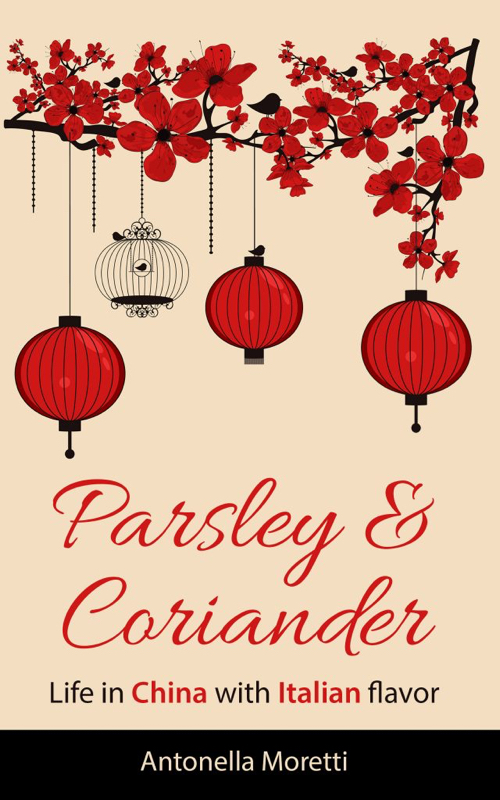
Interview & FREE Book Giveaway: “Parsley & Coriander” by Antonella Moretti

There’s not a month that goes by here in China without some remembrance of my first tentative steps into this country. How I stammered my way through even the simplest of conversations, and could hardly understand anything people said in return. My fears of venturing out to do commonplace things we usually take for granted – going to the post office, shopping at the supermarket, buying meds at the pharmacy, dining at a restaurant. The times when I would cry out of frustration of adapting to such a foreign culture, or simply because I was lonely and longed for the comforts of something familiar. The moment I fell in love with a local Chinese man.

Getting to know China that first year was such a formative time for me. I never realized that a chance decision to work here would eventually change my life and love forever. Despite all the challenges involved, I look back on that time with gratitude, knowing I wouldn’t be who I am today without it.

It’s a joy to remember this. But it’s also a joy when I happen to read a book that captures the spirit of finding your own path in China, especially as a woman. Parsley & Coriander is a delightful novel by Antonella Moretti that does just that, through the stories of Italian expat women in China.

In this compelling story of Luisella and her circle of friends and acquaintances, Moretti brings to life many of the foreigners I’ve met in China. Entrepreneurs and working girls. Foreign students smitten with Chinese men. Expat wives-turned-writers. Trailing spouses, uncertain what to make of their new home.

Despite the fact that this is a novel told through an expat lens, Moretti doesn’t shy away from the darker, more prejudicial sides of the China expat community – those content to criticize China about everything. While Parsley & Coriander is never preachy, the underlying message is clear – open yourself up to new perspectives, and give China a chance.

You’ve already had a taste of Parsley & Coriander through the guest post Antonella Moretti penned for the blog last month (On Being An Expat Wife in China). I’m excited to feature Parsley & Coriander and Antonella Moretti once again through this interview.

Here’s her bio from Goodreads:

Antonella Moretti is an Italian expat blogger and writer living in China since 2011. In her blog cucinanto.com she likes to share her experience as an Italian mom and trailing spouse living in China, always trying to understand the differences and contradictions between the Chinese society and Western culture. She is a contributor for online magazines and writes about expat life. Her first novel “Parsley and Coriander” tells the story of three Italian women who left their life in Italy behind and followed their husbands in China: it is a story about love, friendship and the courage of making choices.

You can learn more about Antonella Moretti at her blog. Her new novel Parsley & Coriander is available at Amazon.com, where your purchases help support Speaking of China.

Would you like to win a FREE copy of Parsley & Coriander? If you have a mailing address in China, why not participate in a giveaway today! Scroll down for details.

—-

Tell us about what inspired you to write this novel.

When I started my expat journey, living in China was new and exciting for me and I wanted to share everything about it. Moreover, I had the chance to know many different women and I was fascinated by their stories. Each of them had an interesting point of view and a different experience and I thought this was the right topic for a novel. In the book, all the characters live a different adventure, and yet they have a lot in common.

You’ve based much of your writing on the people you’ve met here in China, including your friends. How have they responded to the book?

Yes, I took a lot from daily life and many of my friends told me they really could relate to the emotions of the women in the book. But at the same time I mixed everything in order to create different stories and fictional characters, so nobody could really identify with a specific one! I confess I was a little afraid about how they could respond to the book, but they loved it! And I still have all of my friends!

How did you come up with Assunta’s, the Italian cafe featured in the novel run by a Chinese woman who has lived in Italy?

I liked the idea that the most popular hangout place for Italians in town was actually run by a Chinese woman. Italians are very proud of their food, their wine and coffee and I found it funny that Assunta chooses for herself a typical name from Southern Italy and claims to make the best Espresso in China.

Unfortunately, that is a completely imaginary place: in Suzhou we don’t have a cafe like that, where you can go and always find some Italians to chat with, drinking the perfect Espresso. And we really miss it!

Which character was your favorite to write and why?

My favorite character to write was Emma, because her adventure is the most tormented and romantic in the book. Writing her story, I really identified with her feelings: I got angry when she did, I cried when she was sad… I found her personality fascinating and I really loved her.

Your novel features a variety of relationships experienced by expat women in China, from trailing spouses to students to entrepreneurs. Without revealing any major spoilers, could you share with us some of your favorite relationship moments in the book?

I found interesting the relationship between Camilla, the young student in love with China, and Fulvia who, instead, hates everything of her Chinese experience and is very negative and sarcastic. Of course, in the story they have many occasions to fight! This also gave me the chance to talk about the different perceptions of China by foreigners.

What do you hope readers gain from reading your novel?

I hope readers will identify with the emotions of the characters, and discover they are not alone when they must cope with the difficulties of expat life in China. And also realize that living here can be a great opportunity when you are flexible and able to adapt. For those used to China, it can represent a memory of their experience while living in the country. And I also hope it can be useful for those who plan to move here: it gives a glimpse of what you could expect once arrived in the Middle Kingdom.

—–

A big thanks to Antonella Moretti for this interview on Parsley & Coriander!

Would you like to win a FREE copy of Parsley & Coriander? If you have a mailing address in China, why not enter the FREE book giveaway going on right now on WeChat?

(For those of you not based in mainland China, but with friends or family over in China who could receive it for you, you can enter too!)

Here’s how to enter:

1. To be eligible to win, you must use WeChat on your mobile phone and have a mailing address in mainland China. (Note – if you haven’t installed WeChat, it’s easy to download. You can find it in most major app stores by searching for WeChat or微信, or get it directly from their website here).

2. Follow my official WeChat account. If you’re not already a follower, just scan the QR Code below using your WeChat app (here are directions on how to scan QR codes in WeChat):Or, you can search for my official WeChat account under the words “speakingchina”.

3. Finally, just send a message to my official WeChat account with the phrase “pc” and you’re entered.

It’s THAT simple.

Remember, entries must be received by 11:59pm tonight (May 18) Beijing time. Only one entry per person. Tomorrow, on May 19, I will randomly choose a winner from all the entries and notify them via my WeChat official account.

Good luck to everyone!

By the way, if you’re in Suzhou, China on Saturday May 20 and would fancy an evening of fine wine and books, you can meet Antonella Moretti in person:

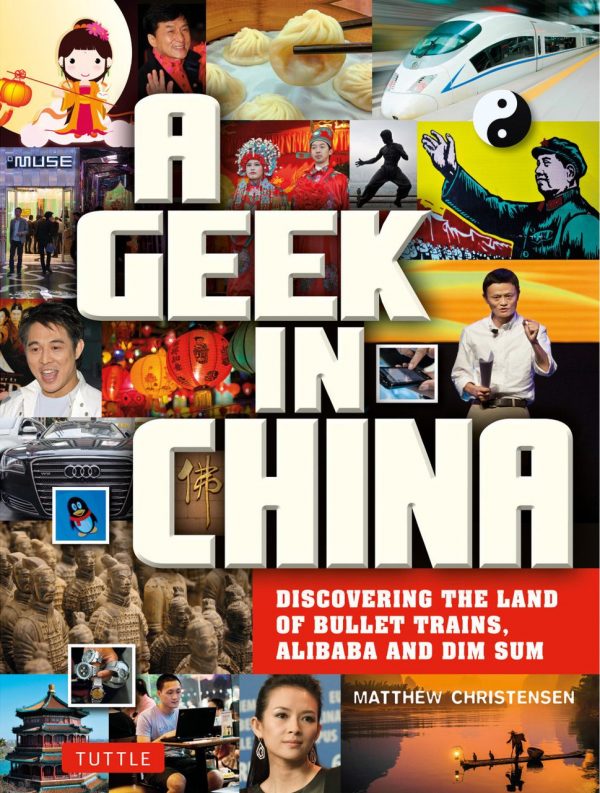
“A Geek in China” by Matthew Christensen – an Interview

Many years ago, when I first stepped foot into that Beijing airport, there was one thing I desperately longed for. Something that, no matter how hard I tried, it could never fit into my luggage.

A better understanding of China.

I had spent the previous months that summer on a crash-course in all things China. It was a frantic attempt to fill in the gaps that my educational background – a newly graduated environmental biology major – didn’t begin to cover. I read stacks of books and every news story I could find about China. I reached out to Americans who had lived there and peppered them with all sorts of questions about the country. I even talked to students from China.

But despite all of that, I felt woefully uninformed about China as I took those first tentative steps there as a foreigner. It wasn’t easy to find a book that encompassed everything I wanted to know about the country – the culture, literature and history, as well as the people, places and even guidance for foreigners new to China.

If only A Geek in China, the new book by Dr. Matthew Christensen, had been around then.

A Geek in China is the perfect book for anyone who wants to be culturally savvy about China, fast. In 150 pages that make for terrific reading, you can quickly transcend the usual travel guide stuff on China and really delve into the intricacies of the country.

You’ll find out who is Li Bai and why everyone loves the Monkey King. You’ll meet the butterfly lovers, China’s version of Romeo and Juliet, and get a rundown on how to order Chinese food and where to find the best eats, wherever you are. You’ll read about the meaning of a “harmonious society”, how Chinese date and marry, and many popular slang terms, including diaosi. You can discover why more people in China own dogs, what it’s like working in a Chinese office, and how to make the most of your study abroad experience in China. You’ll learn about the growth in Chinese overseas tourism, superstar singers such as Faye Wong and Teresa Teng, and talented artists beyond Ai Weiwei (such as Ding Yi). You’ll get a rundown on the best movies, TV shows and actors today. You’ll also find recommendations for where to travel, from Beijing’s Great Wall to Xinjiang’s ancient desert oasis of Tuyoq.

By the time you finish A Geek in China, you’ll gain a more nuanced, comprehensive understanding of China – and also have all the basics to talk intelligently about the country with average people. I’ve met many foreigners who have been here for years and still don’t know a lot of the information in this book. It should be required reading for anyone who wants to be more knowledgeable about China, especially when it comes to basic cultural literacy.

Dr. Matthew Christensen

I’m honored to introduce A Geek in China and Dr. Matthew B. Christensen through this interview.

Here is Dr. Christensen’s bio from his publisher:

Dr. Matthew B. Christensen holds degrees in Chinese, international relations, and Chinese linguistics. He is Professor of Chinese in the Department of Asian & Near Eastern Languages at Brigham Young University where he has been teaching for the past twenty years. His research interests include Chinese language and culture, Chinese poetry, Chinese culinary culture, and teaching Chinese as a foreign language. He blogs about his adventures exploring China at intothemiddlekingdom.com.

You can learn more about A Geek in China at Tuttle Publishing, and follow Dr. Christensen on his blog. A Geek in China is available at Amazon.com, where your purchases help support this blog.

—–

Tell us how you came to write this book.

I have been interested in cultural literacy for quite some time now. By cultural literacy I mean the kinds of everyday knowledge that kids in China grow up with, like who Confucius was, the importance of face in Chinese culture, and the Chinese obsession with food and eating. I teach Chinese at the university level and it is disheartening to see students with good language skills but have never heard of the famous poets Li Bai or Du Fu. It would be like someone in the West who had never heard of Shakespeare. With this book I wanted to provide short essays on the many cultural references that come up in everyday speech, in the news, literature, film and so on. If you don’t understand something about Chinese history and culture, you miss an awful lot in everyday conversations and in the media.

Could you talk about how you approached the research for this guide?

The research for this book was a combination of several things, including books from my own library, Internet sources, previous research for other projects (my previous book Decoding China), first-hand experience, as well as native Chinese colleagues and students. Some of the topics I am quite familiar with, such as the sections on the Chinese language, Chinese food, communication, history and so on. However, there were sections that took a great deal more work. Being at a University, I was also able to get feedback from colleagues as well. For example, the section on Chinese history was fact-checked by a colleague in the Department of History, and the sections dealing with politics were reviewed by a colleague in political science who specializes in Chinese politics.

I am not too big on popular culture so I had to rely on native Chinese colleagues and Chinese students for the sections on television, film, and pop music. For those sections I would do some research, then have native Chinese review it and give me some feedback and suggestions. When I did use the Internet I tried to focus on academic-oriented websites and always double and triple checked all my information for accuracy.

You cover so much information in this book. Was it difficult deciding what to include — and conversely, what to leave out?

Yes, it was difficult. Obviously, one could write volumes about China and the Chinese. I wanted this book to be accessible to a broad audience. The biggest challenge was to keep the essays succinct, especially in areas that I found most interesting. What I find interesting may not be of that much interest to the general reader, so I had to keep things broad and general. In the end, I was thinking about my students and others who plan to go to China and the kinds of information that would be most valuable for them to know.

What was your favorite section or chapter to write, and why?

I’m pretty passionate about Chinese food so that was a fun chapter to work on. I’m actually working on a book about Chinese culinary culture so I really had to cut back on this section of the book. Chinese food is so varied and complex and over my career I have been exploring all the different varieties around China.

Your guide includes an entire section just about the experience of being a foreigner in China, including a helpful list of dos and don’ts. Could you share with us some of the tips you wish you had read when you were first coming to China?

When I first went to China in the early 1980’s there was very little written about visiting China. There were lots of history books about China but most things were academic in nature and did not deal with encountering the Chinese at the street level. Most of that section would have been very valuable for me to have. Instead I had to learn mostly through experience, trial and error, and so on. I did do some reading about Chinese philosophy which was helpful in understanding how the Chinese view the world, and how their behavior is a reflection of their world view.

You recommend a number of off-the-beaten path destinations in China. Could you share with us one of your personal favorites and tell us why you love it?

I’m quite fond of Tibetan culture, but it is expensive and more difficult to travel in Tibet proper. Yunnan Province, particularly the northwest part of the province that borders Tibet and Sichuan Province, is a great place to visit Tibetan communities without the hassle of getting the permits and guides to travel in Tibet. The city of Shangrila is a great jumping off point to exploring the surrounding mountainous area that is full of Tibetan villages. I did a few posts on my blog (intothemiddlekingdom.com) about this area.

Trekking in Shangri-la: Songzanlin Monastery

Trekking in Shangri-la: Up a remote river valley

Trekking in Shangri-la: Niru Village

Trekking in Shangri-la: Over the pass to Shudu Lake

—–
A big thank you to Dr. Matthew Christensen for this interview! You can learn more about A Geek in China at Tuttle Publishing, and follow Dr. Christensen on his blog. A Geek in China is available at Amazon.com, where your purchases help support this blog.

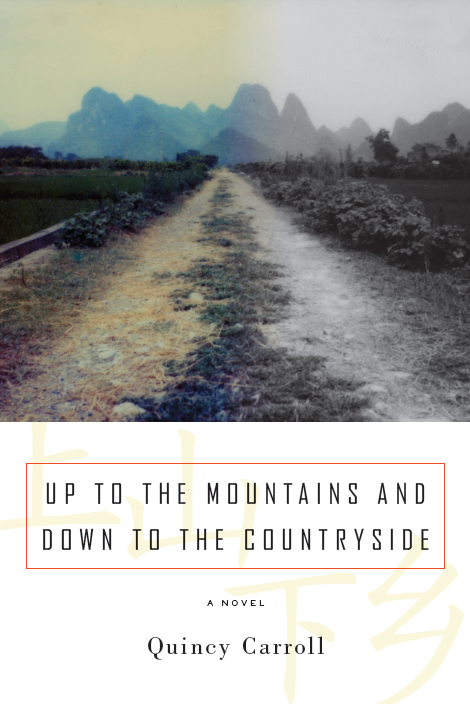
“Up to the Mountains and Down to the Countryside” by Quincy Carroll – An Interview

Up to the Mountains and Down to the Countryside

Ask foreigners in China what they do for a living, and chances are you’ll hear a common answer – teaching English.

I’ve done it before. Most of my friends here have too. In fact, it’s such a prevalent gig for foreigners in China that you might even call it a rite of passage.

But anyone who has taught English in China also knows there’s a dark side to the profession.

During my first year teaching in China, this one white American guy who had signed on to work for our program never showed up and placed us all in jeopardy. (I later discovered he was a hard-core alcoholic.)

Later in Hangzhou, I bumped into a white American guy on a Hangzhou bus who confessed his secret for getting English teaching jobs – lying about his credentials. He smirked about how he had hoodwinked schools in China into believing he actually had a college degree, even though he was only a high school graduate.

Egads.

It’s hard to believe that I could actually inhabit the same profession as those two guys. But it happens, more than we’d like to talk about.

For writer Quincy Carroll, this is the stuff of a great novel. In this case, his new novel Up to the Mountains and Down to the Countryside.

Up to the Mountains and Down to the CountrysideSet in the rural town of Ningyuan, Hunan Province (where Carroll himself actually taught English as a volunteer), the story centers on the clash between two white Americans — deadbeat Thomas Guillard and the idealistic Daniel – and the young Chinese student who gets caught between them. Up to the Mountains and Down to the Countryside is a thoughtful look into the experience of being a foreigner in China, as well as the good, bad and the ugly of teaching English.

It’s my great pleasure to introduce you to Quincy Carroll and his new novel Up to the Mountains and Down to the Countryside through this interview.

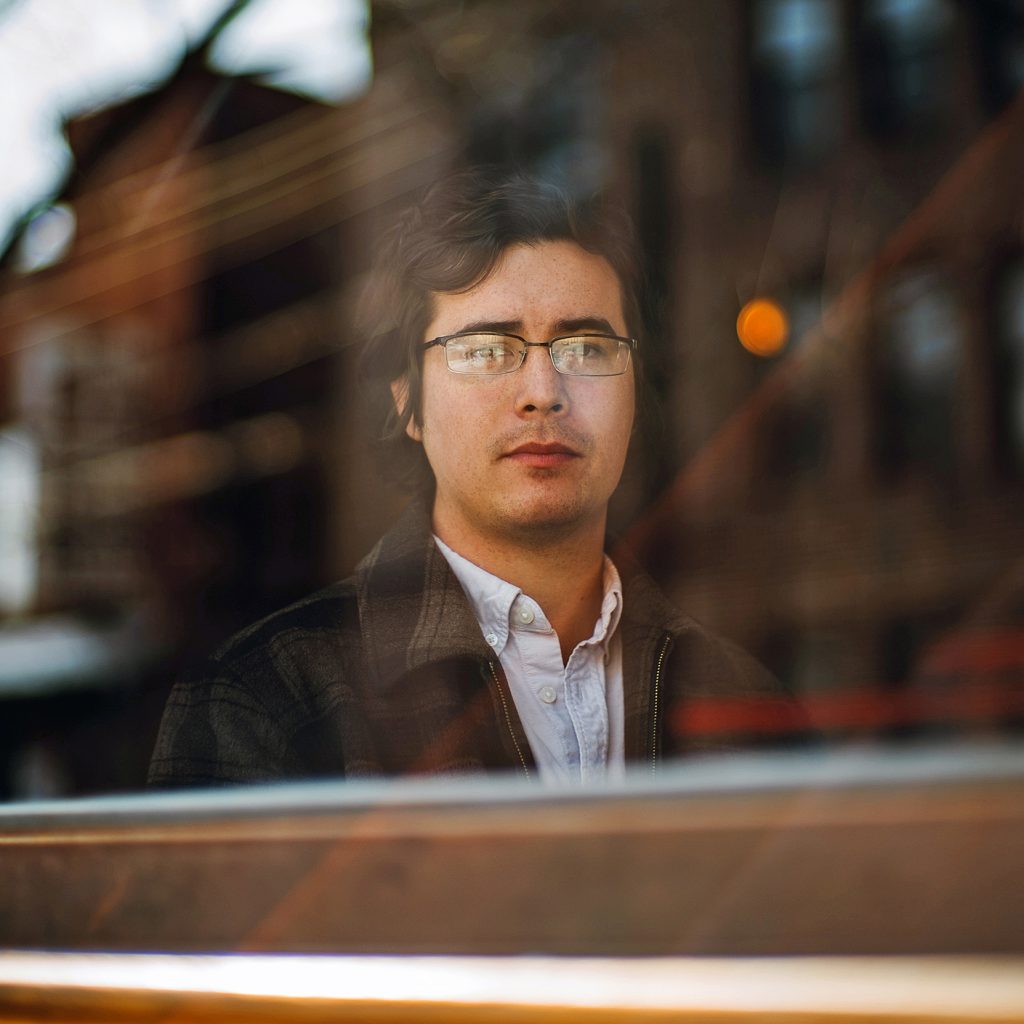
Quincy CarrollHere’s Quincy’s bio from Goodreads:

Quincy Carroll is a writer from Boston, Massachusetts. After graduating from Yale in 2007, he lived in China for three years, where he taught English and worked as a copywriter. He currently teaches Mandarin in Oakland, California. His debut novel, Up to the Mountains and Down to the Countryside, was published in November 2015 by Inkshares.

You can learn more about Quincy and his new novel at his website. Up to the Mountains and Down to the Countryside is available on Amazon.com, where your purchase helps support this site.

As a bonus, Quincy has an original song from the novel that you can hear at Soundcloud. (It’s the song Daniel performs in Chapter 12 for his students at the English competition in the school gymnasium.)
—–

What drove you to write this novel?

I arrived in China with quite a bit of uncertainty; I’d just quit my job in finance, and I was looking for direction. I didn’t know how to define myself. One of the first things I noticed was that there were a lot of other expats in the same boat—people of all backgrounds and ages, looking for some type of purpose. What I found most interesting, however, were the different ways in which people handled said uncertainty. For the most part, the volunteers in my cohort (I served through a program named WorldTeach) were gracious and curious when it came to interacting with people from another culture, but there was another group of foreigners (Westerners, especially) that seemed to view everything in China as beneath them.

That was really what spurred me to begin brainstorming a plot for the novel. I understand that Up to the Mountains and Down to the Countryside is far from the first story to examine the questionable influence of Westerners in Asia, but given the massive influx of foreigners in China over the past several decades, I believe it’s a timely, important tale worth retelling.

How did you conceive of Guillard?

Again, I was astounded by the number of “arrogant, lewd and racist” people I met when I touched down in China. Similarly to other characters in the book, Guillard is an amalgam of numerous expats I had encounters with over the course of my time abroad. I have been surprised since the novel’s release by how many readers have written to ask if I based the character on so-and-so from such-and-such a province, most of whom I’ve never met and most of which places I’ve never even been to before. Just goes to show how prevalent the archetype is.

I’ve also had many people ask me whether all Westerners in China are “that bad.” I’d like to state that I met some of the most thoughtful, kind people while abroad. I hope the story avoids coming off as an indictment—it’s more of a critique.

How did you conceive of Daniel?

I’ll just say it to get it out of the way: Daniel is the most autobiographical character in the book, although I’m sure that surprises no one. His struggles with questions of identity and purpose were written as a form of catharsis, but I took inspiration from additional sources as well (both literary and personal). I like to think that there is a bit of John Grady Cole in him, but that’s probably an overestimation of my writing. Fellow volunteers from the WT China program will probably be able to pick out aspects of Daniel’s personality that were drawn from their own or those of others we knew. In the end, a writer’s primary source of inspiration is almost always direct experience—what’s fun is that you get to play with the details you’re given and turn disorder into art.

One example of this in Up to the Mountains and Down to the Countryside is Daniel’s appearance: long, dyed hair, sleeve tattoos and gauged ears. Now, as far as I can remember, I didn’t meet anyone who looked like that in China, but just like Guillard’s deformities, I chose to give him these characteristics to add an external layer to his personality: in this case, a young man who has gone off the beaten path and is desperately trying to stand out. Another reason I think this worked is that, as a foreigner in China, you’re constantly under the attention of others. I was trying to capture some of this in Daniel’s outlandish physical appearance, but maybe it was just hyperbole, more than anything else.

What are some of the greatest challenges of teaching English in China?

I held two very different positions when I was in China that I believe are common among expats. Both are touched upon in Up to the Mountains and Down to the Countryside. As I’ve already mentioned, I volunteered in the Chinese countryside for two years via a Western NGO. Resources were scant, enthusiasm among our students was mixed, and aside from a modest stipend we received each month, payment was non-existent. For me, one of the biggest challenges was maintaining a sense of commitment throughout the year when it felt like we were there more because we were foreigners than because we were dedicated teachers. I certainly took the job seriously, but at times I wondered if anybody—my students, the administration, fellow teachers—cared about what I was doing. I collected grades my first semester in town, for example, only to find out that they were never included on my students’ report cards.

When I lived in Changsha, the provincial capital, several years later, I tutored high-school students from affluent families who were willing to pay through the roof for an American teacher. Since I had graduated from Yale, rates were even higher than expected, and even though I came prepared to each lesson, it was hard not feeling at least a little extortionary. Once again, my status as a foreigner made me uncomfortable, but I was in need of money and trying to support myself as a writer, so I didn’t say anything.

During the second half of that year, I started working for a local consumer tech company, and in addition to my copywriting duties, I ran a class in Business English every Monday. That was undoubtedly the most satisfying teaching experience I had in the country, as my colleagues genuinely wanted to learn. Most of them were in customer service, so they had to use the language every day.

What do you want people to come away with after reading the book?

More than anything, I hope that readers come away from the novel with a greater sense of humility and the ability to see themselves as part of a larger, globalized world. In addition to that, I hope the story makes them feel somewhat uncertain of who they are. I know that probably sounds a bit strange, but I’m a staunch believer that many of the greatest evils in our world result from one thing: an overinflated sense of self-importance. As the U.S. and China continue to challenge each other on the world stage, I hope that stories like Up to the Mountains and Down to the Countryside continue to remind us that we’re all lost in this together.

—–

Thanks so much to Quincy Carroll for this interview! You can learn more about Quincy and his new novel at his website. Up to the Mountains and Down to the Countryside is available on Amazon.com, where your purchase helps support this site.

As a bonus, Quincy has an original song from the novel that you can hear at Soundcloud. (It’s the song Daniel performs in Chapter 12 for his students at the English competition in the school gymnasium.)

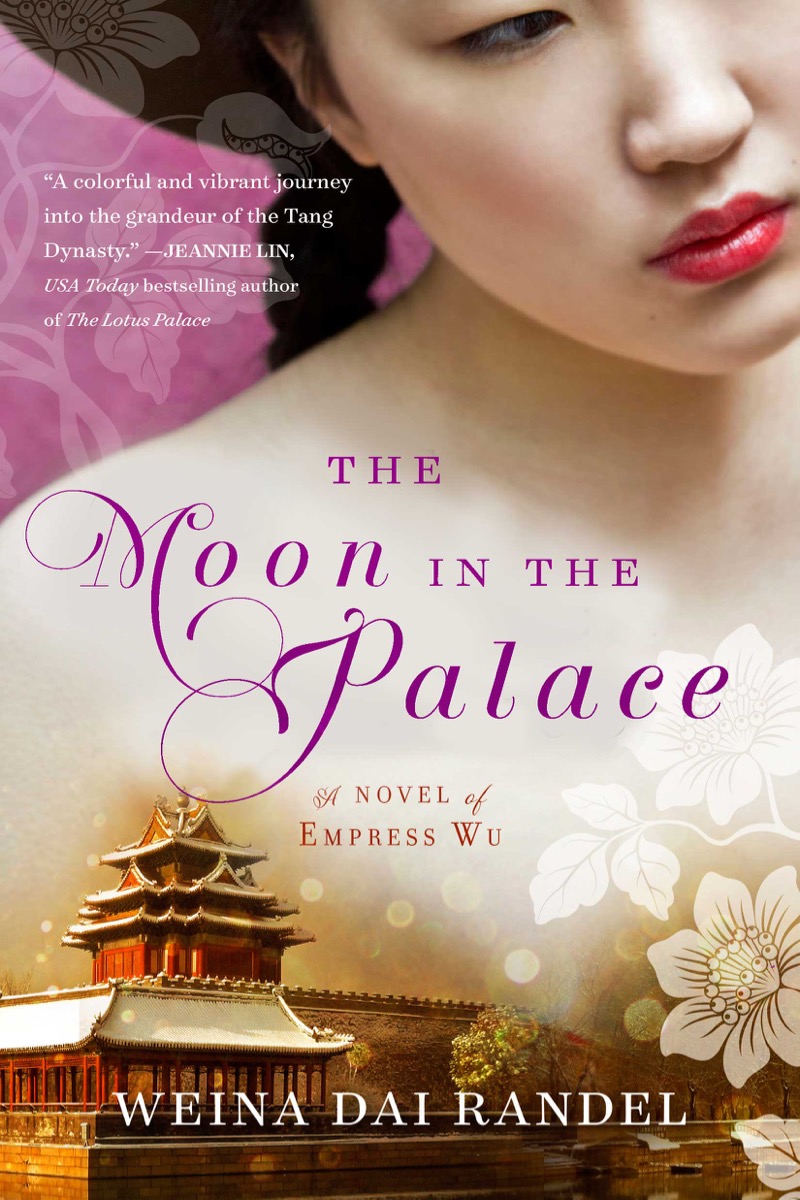
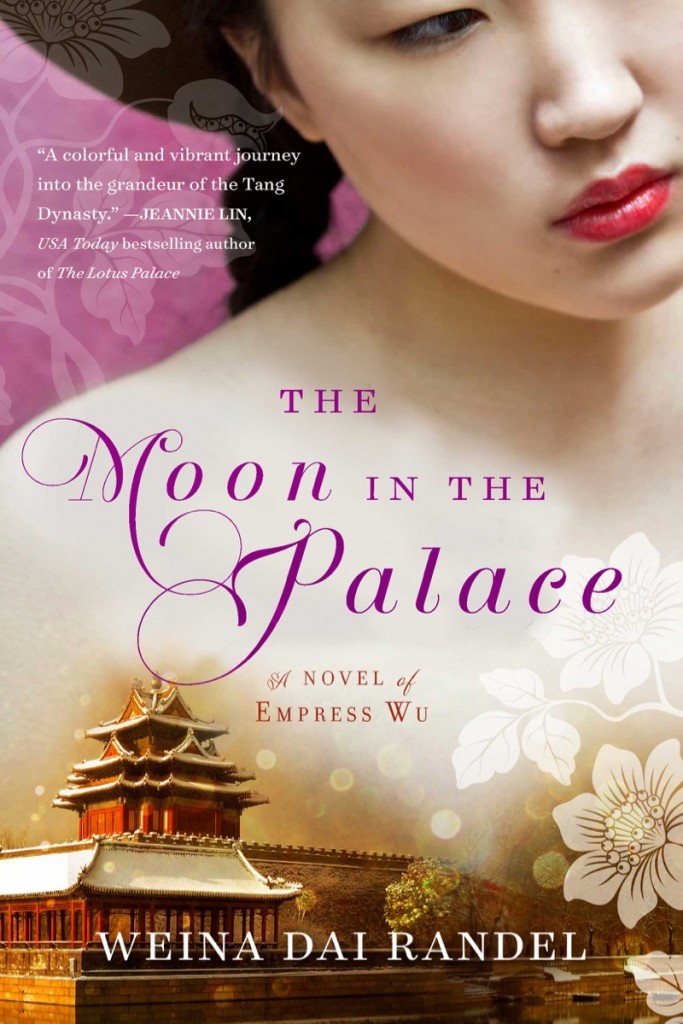
“The Moon in the Palace” by Weina Dai Randel – An Interview

The Moon in the Palace by Weina Dai Randel

I have a confession — I adore “Cinderella stories”.

Nonfiction or fiction, it doesn’t matter. As long as the story features a strong, intelligent woman who rises from unlikely circumstances and has to fight her way up, I’m all in. Especially if she ends up saving herself and the guy too.

That’s why I’m a huge fan of The Moon in the Palace by Weina Dai Randel.

The Moon in the Palace by Weina Dai RandelIt’s about the rise of the young Empress Wu – before she became the Empress – and truly reads like a Tang Dynasty era Cinderella story, with everything you’d expect. A smart, powerful young woman who has struggled with extreme poverty and loss in her childhood. Conniving foes and lots of intrigue. A dashing prince that she helps save. A gorgeous palace setting.

Of course, we all know going into this story that the young Mei Wu will indeed ascend to the throne. Yet that reality doesn’t detract in any way from the pleasure of reading this novel. In fact, The Moon in the Palace is a real page-turner. This is book you’ll be flipping through late into the evening, complete with lots of plot twists and surprises. Yes, it’s that compelling.

If you’re a fan of historical fiction about China or curious about the life of Empress Wu, you must read The Moon in the Palace.

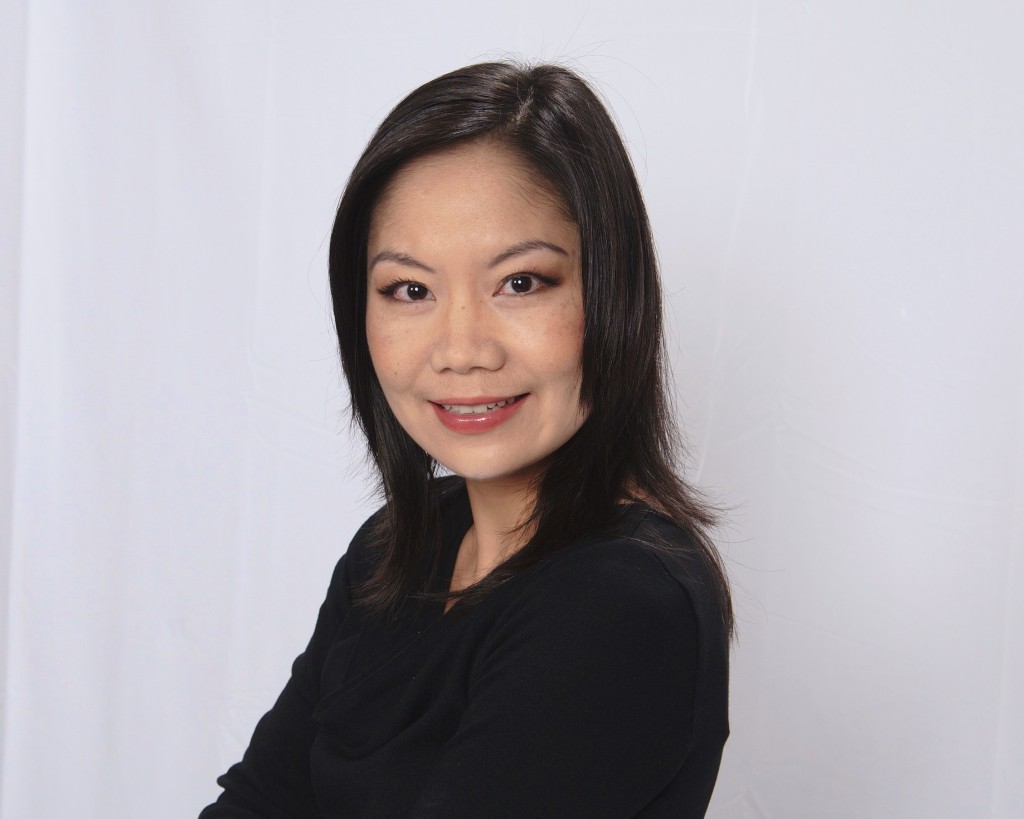
Weina Dai Randel
Weina Dai Randel

I’m thrilled to introduce you to The Moon in the Palace by Weina Dai Randel through this interview.

Here’s Weina’s bio from Goodreads:

Weina is the author of The Moon in the Palace and The Empress of Bright Moon, historical novels of Empress Wu of China.

From Weina: “I love to see how words form an image that transcends the banal reality or how words join together to create a morsel of wisdom that tickles your mind.”

Born and raised in China, Weina has worked as a journalist, a magazine editor, and an adjunct professor.

She received an M.A. in English from Texas Woman’s University in Denton, Texas, where she was inspired to write about Empress Wu of China when she took a class in Asian American literature.

She lives in Flower Mound, Texas, with her loving husband and two children.

You can learn more about Weina Dai Randel at her website, and follow her on Twitter and Facebook. The Moon in the Palace is available at Amazon.com, where your purchase helps support this site.

—–

Tell us about the inspiration for writing this novel.

I was inspired to write this novel after I read Maxine Hong Kingston’s The Woman Warrior in graduate school. I did a presentation about the pregnant woman who drowned herself because she was not married and her pregnancy was considered a disgrace to her family and village. I didn’t like that piece that much, and I wanted to show my classmates that China had strong women who were able to control their destinies, and the first woman who came into my mind was Empress Wu.

While I researched, I found out there were not many novels about Empress Wu during recent years. Well, there were a few novels written in 1950s and 1960s, but those novels depicted her in a rather harsh light and criticized her because she didn’t follow Confucian rule that women should serve men. Today, the world has changed so much, and I believe we need a book about her that should look at her in a positive light, as a woman, a daring, intellectual woman as she must have been. And I seriously believed that a woman should write her story. (There was another novel by San Sa, called Empress, but it was initially written in French, and I had not read it so I can’t comment on it.)

So I decided to write a book about Empress Wu from her point of view, showing her rich and complicated life as how she lived through it.

But I didn’t want to write her as an empress. I wanted to write her entire life, from when she was young to when she was old, so readers would know what she was like when she was a nobody, how she survived, how she outwitted the others, how she changed in the palace, and why she changed. And most importantly, I wanted to show readers what she was like when she was young, and how her romantic relationship with Emperor Gaozong changed her life. That was where The Moon in the Palace was started.

Your story paints a captivating portrait of life within the Emperor’s palace with astounding detail. What research did you do to help you recreate what it would have been like for Empress Wu to live in the palace?

Oh, the research I had done! Looking back, I can tell you it was an education that lasted for almost ten years.

For the palace, I first studied the layout of Daming Palace and the original palace in Chang’an, which don’t exist anymore, and the map of the current Forbidden Palace in Beijing, which was said to be inspired by the palace in Chang’an. I also visited the Forbidden Palace in person and walked through the entire palace from the front entrance to the garden in the back. Oh boy, it was cold then when I visited Beijing, and I was freezing even with six layers on. I also visited the Summer Palace twice and the city of Xi’an, which was Chang’an in Tang Dynasty to obtain a feel of the city and the life inside the walled city. I was even tempted to visit Kyoto in Japan, which I heard was designed after Chang’an and still preserved many features of Chang’an very well.

It was not enough to simply know the palace’s layout, of course, so I also studied the architecture; the gardens – the vital features of a Chinese garden, Japanese garden and their features, the vegetations, flowers, types of trees thrived in the northern China; birds; silk – types of silk, designs of silk gowns etc.; silkworms – their life cycles, silkworm farming; food – the preparations of food, types of food and the use of food as medicine, and yes, medicine too.

I also spent a lot of time studying the paintings in Tang Dynasty and ancient China. It was very helpful to see the nature’s landscape, the garden of private scholars, and the clothes they wore. I also learned a lot about the ancient world through the lenses of poets, whose descriptions of nature were another vibrant paintings of lyrics.

What I really dug into was women’s life in the palace. I researched the fragrance they used, the types of sachets they carried, the incense stick they held, and fashion, especially, which was another topic I was fascinated about. We all know how important appearance determined a woman’s status in the palace, and I think this still works in the society today. So from silk, I also looked into the hairstyle that distinguished women, the jewelry that emphasized their rank, and even their shoes that made them stand out. Yes. I’m also fascinated with shoes!

But you know none of the research would work if the character’s “mindset” is missing – to borrow the word from Elizabeth Chadwick. So in a way, the setting and all the research I had completed was like the gown the character wears, and once she dons it, she is transformed into that world, where she would try to reach her goal, where she would find temptations, and most importantly, where she would face animosity and even danger, which would wind around her waist and tighten around her neck like a sash if she’s not careful.

Could you talk about how you developed the young Empress Wu as a character for your story? What research, clues or inspiration guided you?

The real young Empress Wu was, and still is, a myth to many of us. Many records described what she was like and what she had done the year before she became the Empress and during the time when she was a ruler, but few stories gave insight to what she was like as a young girl. So creating her was a freedom for me.

My first imagination of the young Empress Wu was she had to be smart, very smart, and I worked really hard to transmit that idea to readers. But it really was a challenge to show a girl’s wit when she was confined within walls and unable to meet the Emperor. So for a long time after I completed writing the whole manuscript, I couldn’t figure out how Mei would use her wit to see the Emperor and what she would give the Emperor as a gift. I read many books that told stories of ancient women who were very smart but still couldn’t relate to Mei’s situation. Then one day I was doing dishes and the book I had read when I was a kid appeared in my head and it dawned on me – The Arabian Nights: Tales of One Thousand and One Nights.

And I realized the gift must not be something physical. It had to be something else. That’s how Mei found a birthday gift for the Emperor.

I was tempted to make Mei not beautiful – beauty is kind of trite to me, and I didn’t like it that all female protagonists had to be beautiful! I also had another reason when I was writing. If she was too beautiful then Emperor Taizong would have deflowered her, especially since she was around him all the time. But the plot just didn’t work very well if she was ugly, or plain, and the setup was hard to do – how would she be summoned if she wasn’t beautiful?

So in the end, I decided Mei had to be beautiful too, otherwise she wouldn’t be summoned to the palace to serve Emperor Taizong. With that detail down, all the other questions were solved. Of course the Emperor wanted to deflower her, if he could!

Those two characteristics of Mei were the clues that helped me from the very beginning, and from there, I set the foot down and began her transformation, the process of surviving in the court, learning the women’s art of backstabbing, and then making mistakes, and then being punished as she tried to win the Emperor’s affection.

Mei’s other traits, her bond to her father and her devotion to her mother and family, were purely invented by me, although we, and many Chinese people, can easily imagine this is plausible. Filial piety is still one of the important traits that will determine if you’re a good person in China.

Your story includes people plotting against each other to gain more prominence and power within the court. One of the most fascinating individuals in your story is the conniving Jewel. Could you talk about how you conceived of this character and whether she was based on anyone from history?

(**Spoiler alert**)

Oh, I’m so glad you asked this question! Jewel is my favorite character from the very beginning, but she was so hard to write, which I will get to later. But no, she was not based on anyone from history or the research I had done, nor was she inspired by anyone I know. But we all know of conniving people littered across history and they usually did not end up very well.

When I started the story, Jewel was supposed to be a friend to Mei, I mean, a real friend like the Noble Lady, and she didn’t die in the middle of the book, and her death would happen later, near the end, which would make her a real victim. But as I plotted the story, I just didn’t feel the tension, the dynamics that was needed to move the rivalry forward. So I wrote the betrayal scene, and then, instantly, everything gained flavor and the subtext of deceit and rivalry just jumped out.

I liked the re-branding of Jewel, but then Jewel demanded me to give her more depth since she was more complex and enigmatic. I had to rewrite the bath scene during which she talked about her past – she would tell Mei a bit of herself and be very frank about it, but she would also word everything differently since she had a hidden motive. I rewrote that scene five times. Three times during developmental editing, and then twice during copyediting. It drove me absolutely nuts!

I also found the complexity of Jewel’s character made it difficult to plot the interactions between her and Mei. Mei knew now what Jewel truly was and she would not tell her what she wanted, but Mei was smart too and she learned that quickly so she tried to detect Jewel’s motives. So each time when they saw each other, a silent duel of eyes began. There were several scenes during which neither of them spoke the truth and both tried to pry some secret from each other.

It was very stressful and exhausting to write like that at the beginning, but then I grew used to it and had fun playing with each other. The hardest part, however, was to write them in a way that would transfer the idea of animosity but still keep the prose beautiful and appealing.

Throughout the novel, the young Empress Wu recalls passages from The Art of War for direction in the face of the great challenges of life in the palace. What links between Empress Wu and The Art of War did you uncover in your research?

I didn’t find any links between Empress Wu and The Art of War, to be honest. The connection between the ancient book and Empress Wu was purely invented by me.

But I imagine the real Empress Wu would be familiar with the strategies and deftly use them when she reigned the country – it was often mentioned that she had impeccable skills for managing the ministers with big egos and she also won some important battles against Korea and some northern tribes during her reign. And also, since The Art of War predates Tang Dynasty by almost one thousand years, it is also easy to imagine Empress Wu, who was well read and familiar with all classics, would employ master Sun Tzu’s advice as needed.

But of course, no one would know whether she really relied on The Art of War when she was young.

There, you may wonder, why would I connect her with The Art of War?

It has to do with the immense influence The Art of War had on people in America and Europe. The Art of War is an icon of Chinese wisdom, a book often quoted by many businessmen, leaders, and politicians. It showcases the enduring wisdom of ancient Chinese and carries this connotation that whoever studies it is smart, if not calculative.

I am aware that this book mainly had male readership, not woman, but Empress Wu was not a common woman, and the female gender should not limit her and dictate her behavior. The Art of War, after all, was about the making of a leader, about protecting yourself, and about winning with ease and with grace, and I think Empress Wu had accomplished them all.

What do you hope people will gain from reading your novel?

Even today, Empress Wu remains to be a controversial figure in China. People admire her because she was the only female who ruled China, but on the other hand, people inherit many colorful views of her due to some biased comments made by Confucian scholars who attacked her because of her gender.

I wanted to change that perception with these two novels. I would like to provide another view of Empress Wu; I would like to show readers that she was not the vile, calculative, murderous woman some opinionated male Confucian scholars have painted.

I would also like people to understand Empress Wu was not just a sex symbol as described by many books, movies, and TV shows. She was intellectual, she was strong, she made her own destiny when few women were even allowed to do so. And if you read the second book, The Empress of Bright Moon, you’ll understand her appeal came from her wisdom, her persistence, her ability to lead, and also her extraordinary resilience.

I hope when people visit her tomb in Xi’an, they would have my novels in their mind when they read the brochure handed to them. They would read the biased paragraphs and they would understand this might not be true. And they would look at the Empress with sympathy, and maybe, with awe as well.

It’s also my greatest ambition to introduce classical Chinese literature to people in America and Europe. I don’t know if you noticed, the novel has many references to poems, stories popular in the Chinese culture, and I did that on purpose. I adore classical Chinese literature, the condensed prose so polished but vivid, with images so pure that they were paintings themselves, and in mentioning them, writing them, I hope people outside China will be intrigued to study them as well.

—–

Thanks so much to Weina for this interview! You can learn more about Weina Dai Randel at her website, and follow her on Twitter and Facebook. The Moon in the Palace is available at Amazon.com, where your purchase helps support this site.

P.S.: Be sure to check out these other posts about The Moon in the Palace by my fellow bloggers Amanda at Two Americans in China, Nicki Chen at Behind the Story, Mary Halloran at The Ruby Ronin and Autumn Ashbough at When West Dates East.

Exclusive $0.99 E-Book Deal on New AMWF Romance Novel “Ferry Tale” (Ends in 24 Hours!)

Shannon Young has just launched her new AMWF romance novel Ferry Tale: A Hong Kong Love Story.

Because you, my readers, have been so supportive of her own AMWF memoir Year of Fire Dragons, she asked me to offer you an exclusive $0.99 deal on Ferry Tale.

That’s right – you can buy a copy of Shannon’s latest novel Ferry Tale for only $0.99. But you’ve got to act fast. This deal is only good for 24 hours!

Ferry Tale - A Hong Kong Love Story

Shannon gave me an advance copy of Ferry Tale. It’s as enchanting as any big-screen rom com – but better, thanks to the Hong Kong setting and charming AMWF couple. Here’s the synopsis:

She wants to be someone else…

Katrina Keller flees to Hong Kong after the most humiliating moment of her life goes viral on YouTube. She starts over as a lounge singer in a fancy hotel, wishing only to be anonymous. But that’s tricky when you’re the wrong end of an Internet joke.

He doesn’t want to risk another heartbreak…

Sam So transfers to Hong Kong after his long-term girlfriend cheats on him. He doesn’t want to risk another heartbreak by dating again, and he’s not even sure how people date in the world of Tinder and texting anyway.

When the two meet on the Star Ferry, Katrina will tell him she’s someone else, someone who’s as cool and sophisticated as she’s always wanted to be. Sam will be too caught up in her spell to remember he’s supposed to be avoiding relationships. But it’s only a matter of time before the truth comes out. Will they get their enchanted romance, or will Katrina’s lie destroy it all?

From the author of Year of Fire Dragons and The Art of Escalator Jumping comes a modern day fairytale about finding romance in an age when we tend to Google the mystery right out of love.

Shannon Young is such a gifted writer (to see what I mean, read this guest post she submitted for my site) – so really, getting her new book Ferry Tale for $0.99 is a real bargain!

This is also a really fun, lighthearted romance perfect for whiling away the hours. It’s the sort of book I’d take with me on the plane, or to the beach, or even a weekend getaway. And if you’re looking for a good Valentine’s Day read, this book would be ideal.

So what are you waiting for? Pick up your $0.99 copy of Ferry Tale: A Hong Kong Love Story by Shannon Young right now. You won’t regret it! And act fastthis deal only lasts for 24 hours before the price goes up!

Shannon Young
Shannon Young

Interview with Kelli Estes on Her Novel “The Girl Who Wrote in Silk”

The Girl Who Wrote in Silk by Kelli Estes

Some books are so captivating that I even cherish the memories of scrolling through the pages with my e-reader in hand. The Girl Who Wrote in Silk by Kelli Estes is that kind of book.

The Girl Who Wrote in Silk by Kelli EstesI’m surrounded by bookish friends and bloggers who get really excited whenever they hear about interracial love stories (especially AMWF pairings) and this was one of those books everyone seemed to be talking about the summer of 2015.

I finally got my hands on a copy from the library sometime in August, which is coincidentally one of the most dreadful months weather-wise in Hangzhou. It’s so humid you feel like you’re wrapped up in a steaming wet towel wherever you walk. Normally it’s a month that doesn’t register much in my mind, as I usually spend most of it shut up indoors with the A/C cranked on high.

But I vividly remember the August days when I read The Girl Who Wrote in Silk, as though the book itself provided a much-needed vacation from the oppressive heat. Granted, the novel takes place in the gorgeous San Juan Islands (which allowed me to imagine myself into this refreshingly cool summer destination), but it’s much more than just the setting.

Kelli has woven together the lives of Inara and Mei Lien – two women separated by over 100 years, but bound together by an embroidered silk sleeve with secrets of its own – into an enchanting story filled with love, courage and humanity. There’s interracial love in the past and present (Inara catches the eye of a handsome young Chinese American professor in her quest to understand the story behind that silk sleeve; Mei Lien falls for Joseph, a man whose kindness and generosity seem as endless as the oceans that surround their island). The story spotlights atrocities against the Chinese in America, exposing history that never should have been forgotten. And did I mention it’s all so beautifully written, a real page-turner that will keep you engaged from the beginning to the end?

The Girl Who Wrote in Silk even made the USA Today Bestseller’s List in December 2015. Wow.

I’m thrilled and honored to interview Kelli Estes about her debut novel The Girl Who Wrote in Silk.

Kelli EstesHere’s Kelli Estes’ bio from Goodreads:

Kelli Estes grew up in the apple country of Eastern Washington before attending Arizona State University where she learned she’d be happiest living near the water, so she moved to Seattle after graduation. Today she lives in a Seattle suburb with her husband and two sons. When not writing, Kelli loves volunteering at her kids’ schools, reading (of course!), traveling (or playing tourist in Seattle), dining out, exercising (because of all the dining), and learning about health and nutrition.

You can follow Kelli at her website www.kelliestes.com, on her Facebook page, and Twitter. Her debut novel The Girl Who Wrote in Silk is available at Amazon.com, where your purchase helps support this blog.

In this interview, I asked Kelli about everything from how she approached her research to what it felt like to learn her book was a USA Today Bestseller:

—-

You’ve written before that you knew nothing about Chinese culture prior to beginning this book, and yet your book does a good job of portraying Chinese culture. How did you approach your research to ensure your portrayal was as authentic as possible?

You’re right, before this book I knew very little about Chinese culture. When the idea for The Girl Who Wrote in Silk came to me, I really wanted to write the story, but I was completely overwhelmed with the belief that I wasn’t qualified to write it. I’m not Chinese, I don’t have any Chinese family members, I’ve never studied Chinese culture, etc. And yet, I realized that this story needed to be written because so few people knew about the anti-Chinese riots and ethnic cleansing through all Western states in the last half of the nineteenth century. No one else was writing the story, so it was up to me. I started my research by reading everything I could get my hands on…from non-fiction books on Chinese traditions, symbolism, and customs, to all kinds of fiction books with a Chinese protagonist to help me get into the point-of-view of my Chinese character. In Seattle there is a museum called the Wing Luke Museum of the Asian Pacific American Experience and they were a wealth of information for me in both their exhibits and their archives. The Wing Luke also happened to host a dinner I attended that was presented by a food and cultural anthropologist discussing and sharing food eaten by “Chinese settlers in the 1880’s.” Basically, I soaked up as much knowledge and culture as I could until I felt confident enough to write.

You were first inspired to write this story in part because of a horrifying account of a smuggler in the San Juan Islands who killed his illegal Chinese passengers rather than risk getting caught with them. And in the process of researching the novel, you went on to discover more of the darker side of American history. What surprised or shocked you most in the process of researching the story?

So much of what I learned about how Chinese people were treated shocked me, but probably what stands out the most was that other victimized cultures at the time (Native Americans, Irish immigrants, etc.) were sometimes the perpetrators of violence against Chinese. I would have liked to think that these groups would feel compassion toward one another and aid one another, but the reality is that the nation was so filled with an “Us against them” mentality, that very little compassion existed. We’ve learned some in the years since, but our nation still has a long way to go in this regard.

Your story features two cross-cultural/interracial relationships — Inara and Daniel in the present, and Mei Lien and Joseph in the past. Which couple was your favorite to write and why?

If you asked me which time period was my favorite to write I would answer the historical because I loved being able to sprinkle in the bits of information I learned in my research and I loved bringing the period to life. When you ask which was my favorite couple, however, it’s more difficult to answer. I loved Mei Lien and Joseph because Joseph’s love for Mei Lien did not see their differences that others couldn’t see past. I loved that he gave up the life he thought he wanted for a life with Mei Lien. However, when I think about Inara and Daniel, I also love them. Their cultural differences weren’t an issue at all, which I hope reflects interracial couples of today and certainly reflects my own belief that at the heart and soul level, we are all the same. When taking a look at both couples together, I loved showing that in this area, at least, our nation has grown and matured. Most of us can see that love is what matters; not skin color, eye color, speech patterns, or even gender.

Your novel uses scenes from the present and the past to tell the story. Was it challenging weaving these two storylines together?

It wasn’t as challenging as you might think. I wrote the entire historical story first. Then I wrote the whole contemporary story. When it was time I wove the two stories together in a way that made the most sense to me. My agent then suggested we weave in a slightly different way…and then my editors suggested yet another way. So, in a way, I guess it did get a little challenging trying to figure out the best way to weave (i.e. should we “see” the event happening in the historical story before the contemporary characters discover it in their research or vice versa?). I think how we landed was the best way and it took several people to get there!

In the novel, there’s a stunning silk sleeve embroidered with a story that ties the past and present together. How did you decide to have a story hidden within that embroidered silk sleeve?

I chose a silk sleeve because my plotting partner, Carol, showed me a framed and embroidered silk sleeve she had purchased as a souvenir in China. I thought it was beautiful and unique so I started researching Chinese embroidery. I fell in love with the artistry and meaning revealed through the symbols on the embroideries. They seemed to me to be communicating something that I would never truly know without intensive research into symbolism, fables, and cultural beliefs. I loved that.

Your novel landed on the USA Today Bestsellers list in December 2015. How did you respond to the news that The Girl Who Wrote in Silk has been so well-received among readers?

I still can’t believe it! This is a dream come true that I truly didn’t think could happen with my debut novel. My first response was an overwhelming feeling of gratitude because so many people had a hand in making this happen: my agent, editors, publicist, marketing team, sales team, everyone at Sourcebooks; all the independent bookstore owners who voted for my book so that it appeared on the Indie Next list, which directly led to readers learning about my book who otherwise wouldn’t have. And then there are the booksellers who read my story and hand sold it to customers; readers who wrote reviews online and told their friends about the book; other authors who told their readers about my story… Truly, so many people had a hand in this achievement and I am so grateful for each and every one.

What do you hope people gain from reading your novel?

I hope people find the story entertaining and thought-provoking. I hope they think about racial issues and how racism is still very much a problem, which I hope leads them to thinking how they might individually make a difference in their own community. I hope readers learn that there are fascinating stories in our history that still impact us today. Most of all, I hope my novel helps readers look at the people around them and see not the color of their skin nor their cultural trappings, but a fellow human with the need for love, joy, and connection.

—–
Thanks so much to Kelli Estes for this interview! You can follow Kelli at her website www.kelliestes.com, on her Facebook page, and Twitter. Her debut novel The Girl Who Wrote in Silk is available at Amazon.com, where your purchase helps support this blog.

Interview with Atom Yang on His New Romance Novel “Red Envelope”

Atom Yang Red Envelope

I’ll never forget that first Chinese New Year I spent with John at his family home back in February 2003. It was the first time someone in China had ever brought me home for the holidays to meet the parents, filling me with all the and dread and anxiety of someone about to go through the biggest interview in their entire lives. Deep in my soul, I already believed Jun was the one for me. But I also knew that families in China didn’t always welcome the news of their sons dating Western women. After all, when John first told his parents about me, here’s what his father said: “You can be friends with foreign women but not date them.”

Yikes.

It’s no wonder that my greatest worries during the visit revolved around gaining the love and acceptance of John’s family – something that eventually came with time and determination.

Atom Yang Red Envelope

A thread of love, acceptance and family also permeates the debut romance novel by Atom Yang titled Red Envelope, a funny and charming interracial/intercultural love story between two men during Chinese New Year:

The Lunar New Year is the biggest holiday in the Chinese calendar, a time for family reunions, and for saying goodbye to the past and hello to the future. Clint, however, doesn’t want to bid farewell to what happened after last year’s celebration, when he and his Cousin Maggie’s handsome Caucasian friend, Weaver, shared an unexpected but long-desired passionate encounter. East is East and West is West, and Weaver seems to want to keep it that way, but maybe Clint can bridge that great divide this coming New Year, and show Weaver what it means to be loved and accepted.

Red Envelope is as enchanting as any romantic comedy you’ve ever seen on the big screen. Plus, it’s so refreshing to see a love story immersed in Chinese culture – with all of the delightful cultural and Mandarin language references I’ve come to know and love. (For example, the line “You mean Wuliangye? Five grains on a mission to make you puke?” was spot on, and reminded me of that Chinese New Year when Wuliangye did resulted in some serious vomiting and a passed out cousin.) Thanks to Atom Yang’s exceptional writing and terrific sense of humor, Red Envelope is a fun romp through the most wonderful time of the year for Chinese, and it will forever change the way you look at mapo tofu (read the book to see what I mean). Why not kick off this year’s Chinese New Year season with a little romance and laughter in Red Envelope by Atom Yang?

It’s my great pleasure to interview Atom Yang about his debut romance novel Red Envelope.

Atom Yang
Atom Yang

Here’s Atom Yang’s bio from Goodreads:

Atom was born to Chinese immigrant parents who thought it’d be a hoot to raise him as an immigrant, too–so he grew up estranged in a familiar land, which gives him an interesting perspective. He’s named after a Japanese manga (comic book) character his father loved, in case you were wondering.

You can follow Atom Yang on Facebook and Twitter, and learn more about his journey to becoming a romance novelist in his guest post for this blog titled How I Came to Write Gay (Asian Male/Western Male) Romance Novels. His debut novel Red Envelope is available on Amazon.com, where your purchase helps support this blog.

—–

Tell us about the inspiration for this novel.

The main inspiration came from the first time I brought someone back for my family’s celebration of the Lunar New Year. Everybody was so accepting of us, it gave me the idea of a story set in this family, about love and acceptance. I was also inspired by my partner’s struggles with his family, and the redemptive quality of our love for each other.

Why did you choose to set this novel during Chinese New Year?

When an editor asked me to submit to The Spirit of Giving series of winter holiday stories, I wanted to represent my culture and pick a holiday that wasn’t one of the traditional Western celebrations. Chinese New Year was a natural choice, largely overlooked in the West as a winter holiday, so I was happy to provide readers something rare. I also love that the New Year epitomizes the culture (food, family, and finances—let’s not forget those money-filled red envelopes!), and I would’ve set a story during this holiday in another novel if I didn’t write “Red Envelope.”

How did you conceive of the two major characters, Clint and Weaver?

Clint is based on some of my own experiences and philosophy of life. I conceived of him as being intelligent and emotionally insecure, shaped by his loving and overbearing mother, guided by his wise and funny cousin, who goes through a process where he learns that it’s okay to be himself and becomes more emotionally secure. He doesn’t have to rebel against his family to find out who he is—he has to learn that he is lovable, and that his love for someone else is valued.

Weaver’s based on men I’ve dated or wished I’d dated. Sometimes when I think of Weaver, I think of some teen idol I had a crush on back when I was a kid! He’s similarly intelligent, and his emotional insecurity comes from his family, who are not accepting of who he is, and do not value what he gives—or needs. He’s someone who also is in a process of self-discovery, and since we don’t get through this life alone, he draws strength and love from Clint and Clint’s extended family in order to become the person he wants to be.

Like Clint, the narrator in this story, you also fell in love with a non-Asian man. How much did your own relationship influence your writing in this book?

The short answer is romance. My relationship with my partner is an example of how romance can be a constructive and powerful force in people’s lives. Our love, respect, and support for each other has helped us to weather storms in our personal lives, and this experience, which I’ve never had before with any other partner, influenced the story I wanted to tell. If I hadn’t met my partner, and somehow still found my way into writing romance, I wouldn’t have had a successful career—one of the genre requirements is a “happily ever after” ending, and before I knew what a great relationship could be, I would’ve written something all sturm und drang romantic tragedy instead of what I did write.

A major theme in your story is “what it means to be loved and accepted,” and you present two families with two different reactions to their sons’ dating choices — a family that ultimately embraces it, and a family that shuns the son. What do you think it takes to have a family accept who you are in love and life?

I think it takes time, openness, and resolution. People generally don’t like change, whether it’s in their heads or outside of it. People cherish their assumptions and expectations, and anything that challenges those things will be met with a lot of resistance and emotions like sadness and anger.

However, if people have enough time, they can accommodate new ideas and experiences—it’s almost unfair to expect family to accept something immediately that might have taken the individual years to accept about themselves!

And to have the probability of accommodating the new ideas and experiences, there has to be openness. Somewhere in the family, there has to be a crack in the psyche that allows entry into the imagination—so that they can imagine and create a new life around the novel piece of information. If there’s no openness to change, all the time in the world is useless, except for those on the train of progress to watch those stuck on the platform recede quickly into the distance.

Lastly, there has to be resolution. People give up their principles and their loved ones if they aren’t resolute about who they strive to be, and whom they choose to love. Why should a family work to accept change and choice if there’s no motivation to do it? The path of least resistance for those who are resisting change is to keep things the same or get them back to the status quo! So being resolute sets the boundary for both the individual and the family, to push the issue of acceptance.

What do you hope people gain from reading your novel?

I hope people gain a different perspective on Chinese culture, as well as interracial and intercultural relationships; a moment in their lives where they could smile, laugh, cry, and sigh; and most important, hope.

—–

Thanks so much to Atom Yang for this interview! You can follow Atom Yang on Facebook and Twitter, and learn more about his journey to becoming a romance novelist in his guest post for this blog titled How I Came to Write Gay (Asian Male/Western Male) Romance Novels. His debut novel Red Envelope is available on Amazon.com, where your purchase helps support this blog.

2015 Gift Recommendations For Books Featured On This Blog

The Good Shufu

Does your 2015 holiday shopping list include book lovers? Over the past year, I’ve featured a lot of fantastic books on this blog (including AMWF titles); they could also make amazing gifts for that special someone in your life.

I’ve listed them in alphabetical order according to the author’s last name, along with a recommendation for who would love it and a link to my interview with the author. Happy holidays! (Note: titles are linked to Amazon.com, where your purchase helps support this blog.)

For people fascinated with intercultural relationships:

There's Something I Want To Tell You: True Stories of Mixed Dating in Japan

There’s Something I Want to Tell You: True Stories of Mixed Dating in Japan by Yuta Aoki (Read my interview with Yuta)

For anyone who loves an easy, breezy romance:

The Reluctant Brides of Lily Court Lane

The Reluctant Brides of Lily Court Lane by Susan Chan (Read my interview with Susan)

For readers who want a smashing good romance novel (with a little Bollywood flair):

ABOLLYWOODAFFAIR_Cover

A Bollywood Affair by Sonali Dev (Read my interview with Sonali)

For fans of expat stories set in China:

Pearl River Drama: Dating in China

Pearl River Drama: Dating in China by Ray Hecht (Read my interview with Ray) SouthChinaMorningBlues_800

South China Morning Blues by Ray Hecht (Read my interview with Ray)

For fans of Chinese history and culture:

The Porcelain Thief

The Porcelain Thief by Huan Hsu (Read my interview with Huan)

For fans of Eat, Pray, Love:

Here Comes the Sun by Leza Lowitz

Here Comes the Sun: A Journey to Adoption in 8 Chakras by Leza Lowitz (Read my interview with Leza)

The Good Shufu

The Good Shufu by Tracy Slater (Read my interview with Tracy)

For anyone who loves comics and stories about the ups and downs of living abroad:

My Japanese Husband (Still) Thinks I'm Crazy_

My Japanese Husband (Still) Thinks I’m Crazy by Grace Buchele Mineta (Read my interview with Grace)

For fans of Lisa See’s China novels:

51V5mM+M6gL

Secret of a Thousand Beauties by Mingmei Yip (Read my interview with Mingmei)

For readers who love coming-of-age stories:

Year of Fire Dragons

Year of Fire Dragons by Shannon Young (Read my interview with Shannon)

What books do you think would make great Christmas gifts?