Should You Leave Behind Facebook and Its AMWF Communities? – Pub’d on WWAM BAM!

The group blog WWAM BAM! just published my post titled Should You Leave Behind Facebook and Its AMWF Communities?

While I’ve been following the news on Facebook and Cambridge Analytica, I was particularly inspired to write this post after hearing the most recent episode of the NPR show On the Media. They invited a number of experts on the show, who highlighted how Facebook, not Cambridge Analytica, ought to concern us more.

Then I started pondering how I’ve used Facebook to connect to the community — and whether or not I could leave, turning into this post. Here’s an excerpt:

Unless you’ve been taking a social media detox or avoiding the news, you’ve probably heard about the recent scandal involving the Facebook data leak. But while much of the spotlight has been on Cambridge Analytica, many experts are saying we should be far more concerned about Facebook.

So what does this have to do with the relationships we write about — such as AMWF (Asian Male, White Female), AMXF (Asian Male, Non-Asian Female) and WWAM (Western Women, Asian Men)? The many, many connections I’ve made on Facebook through the community.

I don’t know about you but I’ve long turned to Facebook to connect with many people in the AMXF/AMWF/WWAM communities.

Head on over to WWAM BAM to read the full post.

How about you? Have you thought about leaving Facebook?

Pub’d on China Daily: Inheriting Memories – My Feature on Kaitlin Solimine and “Empire of Glass”

China Daily just published my first feature story for the paper, an interview with Kaitlin Solimine about her debut novel Empire of Glass. It was published in the paper and also on the website. Here’s an excerpt from the piece:

At the heart of Kaitlin Solimine’s lyrical debut novel Empire of Glass are relationships she first forged over two decades ago with her Chinese homestay family in Beijing.

“I hadn’t married into this family. Really, there was nothing except the happenstance of having been assigned to them. But we were very, very close,” says Solimine, who spent a high school semester living with them in 1996.

“My family was very American middle class, which meant something very different compared to what was Chinese middle class in the 1990s. Yet I was taken in. It wasn’t like, ‘Oh you’re American, how special you are.’ It was really, ‘Hey, you’re family now.'”

That intimacy deepened after a death in the family.

Just weeks into her first year in college, Solimine received a letter from her host family with a photo of a gravestone bearing the name of its matriarch Liming (her given name).

You can read the full piece here on the website. Or if you’d prefer, you can also read a PDF version of what was published on the paper this morning.

BTW, if you would like to learn more about Empire of Glass, read my interview here last year with Kaitlin Solimine for the blog.

Determination Is Everything, Even When It Comes to Making Interracial Relationships Work

Recently, I awoke to a powerful headline in the China Daily:

Determination is everything

The headline accompanied a group of photos underlining elite athletes’ perseverance in the world of sports. But I found myself so inspired by the phrase that I used a pair of scissors to cut it out of the paper and asked my husband to paste it on a door in our apartment.

Given the determination we’ve had to summon in the past several years to fight against a grave injustice (a fight that is still ongoing as I write this), it was inspiring and comforting to read these words, to be reminded of the power of sticking with it even when times are tough.

But as I pondered the phrase, I also recognized that it could apply to interracial relationships, including what I’ve experienced and observed among interracial couples here in China.

Longtime readers of this blog will recall what happened many years ago when Jun and I first began dating, and he returned home to share the news about his new girlfriend from America. His father said, “You can be friends with a foreign girl, but not date her.”

Whoa.

I knew what a big deal this was, because I had also experienced the “parental objections” before with another Chinese boyfriend, prior to meeting Jun. Even though that guy (who I’ll call “Shen”) really loved me, he realized his family could never accept me and abruptly ended things after barely a month of being together.

You can imagine, then, that when I once again encountered this response from Jun’s father, I thought our relationship was done. It was as if a parent merely uttering any rejection toward dating a foreign woman would automatically set in motion a cascade of events that inexorably led to breakup.

Except, in our case, it didn’t.

Jun just shrugged his shoulders, as if his father had merely offered an opinion on the latest news or one of their neighbors. It didn’t matter to Jun that his father disagreed with him about dating me. Jun was going to date me anyway.

He was determined to date me. So we stayed together, and eventually got married.

Over the years, I’ve had the privilege to connect with and meet many other women like myself, who were not Asian and happened to date or marry Asian men. And what I’ve found is that many of them have very similar stories, with their beloved’s parents voicing some kind of opposition to the relationship. But they persisted, they stayed together and everything turned out OK too.

I’m also reminded of the many stories I’ve read of other interracial couples, who had to navigate all sorts of landmines before they eventually made it to their wedding vows, and more than just a statement that it’s not good to date someone. Things like friends who reject your partner, racial epithets from strangers who happen to see you and, worst of all, family who decide to disown you. I’ve read stories of couples so deeply committed that being shunned and even disowned by their families didn’t stop them from moving forward in a life together.

Now I’m not saying that determination is the answer for everyone. Sometimes we’re faced with really tough choices when we date differently, and not everyone can afford to risk a rupture for life with their families.

At the same time, I’ve also learned that there’s a difference between families who would outright expel you for your choice to date outside cultural and/or racial borders, versus families who might not initially welcome it (but could warm up to your presence, over time). And in the latter, a strong dose of determination by a couple could decide whether the two of you end up together in a glossy wedding photo – or apart, writing out the painful history of what went wrong in a diary.

What do you think? Do you believe determination is everything, even in interracial relationships?

Photo Essay: Amazing Buddhas in Living Color at Yungang Grottoes, Datong, China

The first time I heard of Datong, it was in a Saturday morning Mandarin Chinese class.

Anyone who has ever studied a language class will remember their share of dialogues in that language. Especially the ones you encounter when you’re just starting out. There was nothing terribly special about the dialogue that referenced Datong. It was just a conversation about places to travel — places that happened to be close to Beijing. A kind of, “Hey let’s go to Datong!” suggestion.

Datong, China? What’s in Datong, I thought.

Then I cracked open my dogeared copy of Lonely Planet China, and discovered Datong was home to one of the most spectacular displays of ancient Buddhist cave carvings, the Yungang Grottoes. I was familiar enough with the Longmen Grottoes in Luoyang, an extraordinary collection of Buddhist cave carvings that I eventually visited in 2009.

But the Yungang Grottoes had a huge draw over its counterpart in Luoyang — color. Brilliant, vivid, inspiring color.

It’s one thing to witness a collection of Buddhist carvings, and another to see them painted with royal blue, gold, scarlet red and many more striking hues. Just beholding these great works of art in color felt like a spiritual experience itself.

Who would have thought the humble and windswept city of Datong, deep in the heart of China’s northern coal country, could deliver such an experience?

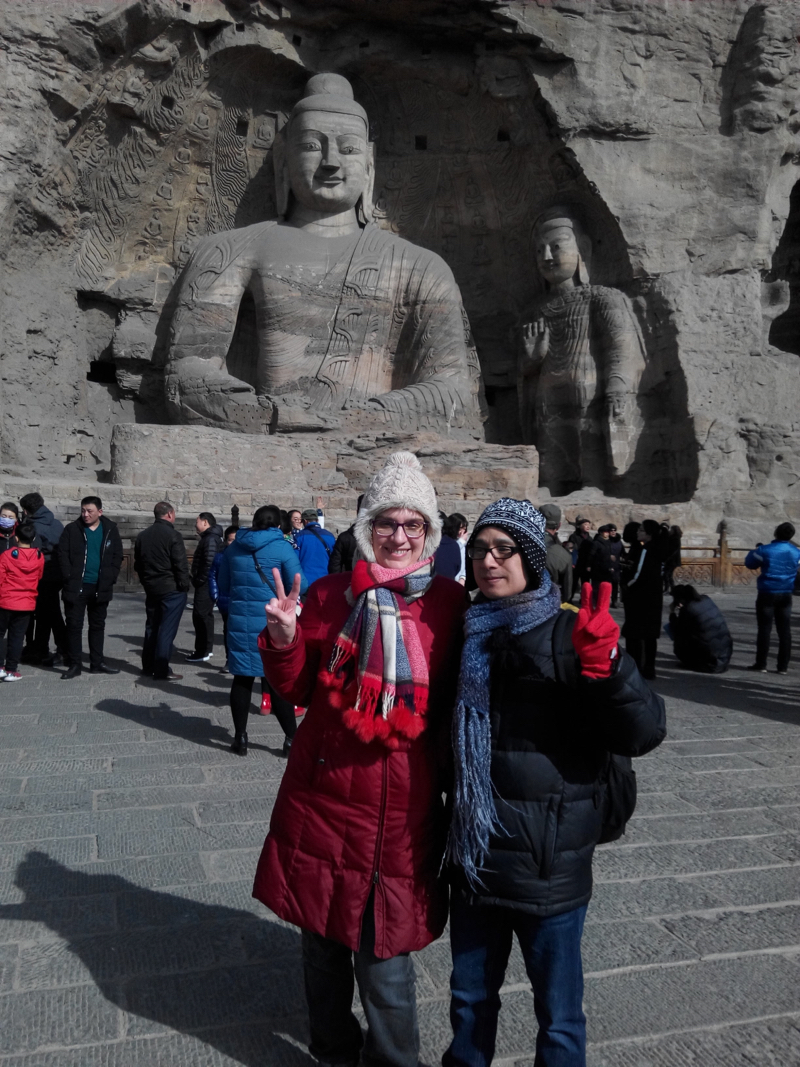
I thought I’d share with you a few of my favorite pictures from our recent visit to Datong’s Yungang Grottoes, when we braved below-freezing temperatures to see this wonder of China.

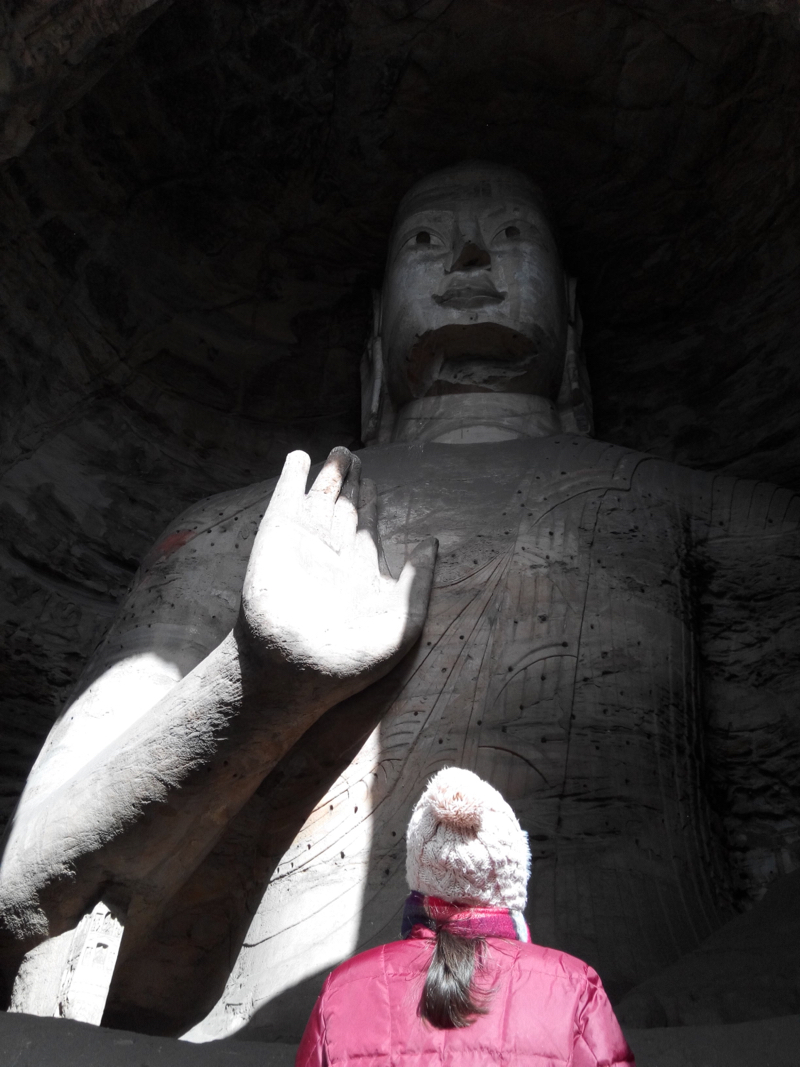
The scale of the Yungang Grottoes is incredible itself. You feel dwarfed just by the imposing cliffs that house these historical treasures.

Just consider how high up this statue is…

Or how enormous this one is!

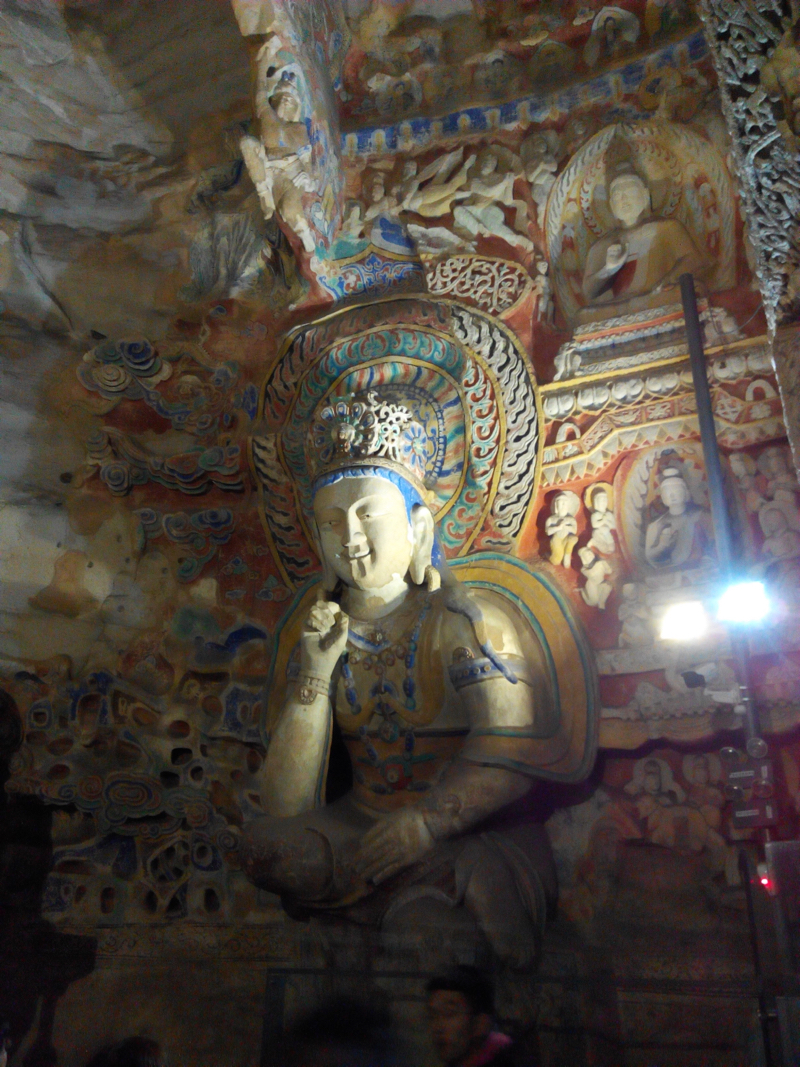
But the true wonder of the Yungang Grottoes is tucked away within several caves that still house full-color carvings, murals and statues.

This massive Buddha, crowned with royal blue hair and a golden face, is one of my favorites.

It’s amazing how many colossal Buddhist statues we found at the Yungang Grottoes — many more than the Longmen Grottoes.

I highly recommend a trip to Datong, China to view this extraordinary world heritage site.

Wishing all of you a wonderful March, filled with colorful adventures of your own!

WWAM of the Month: Jess Meider – Pub’d on WWAM BAM!

Jess Meider

The group blog WWAM BAM just published my interview with WWAM of the Month: Jess Meider. Here’s the introduction to the interview:

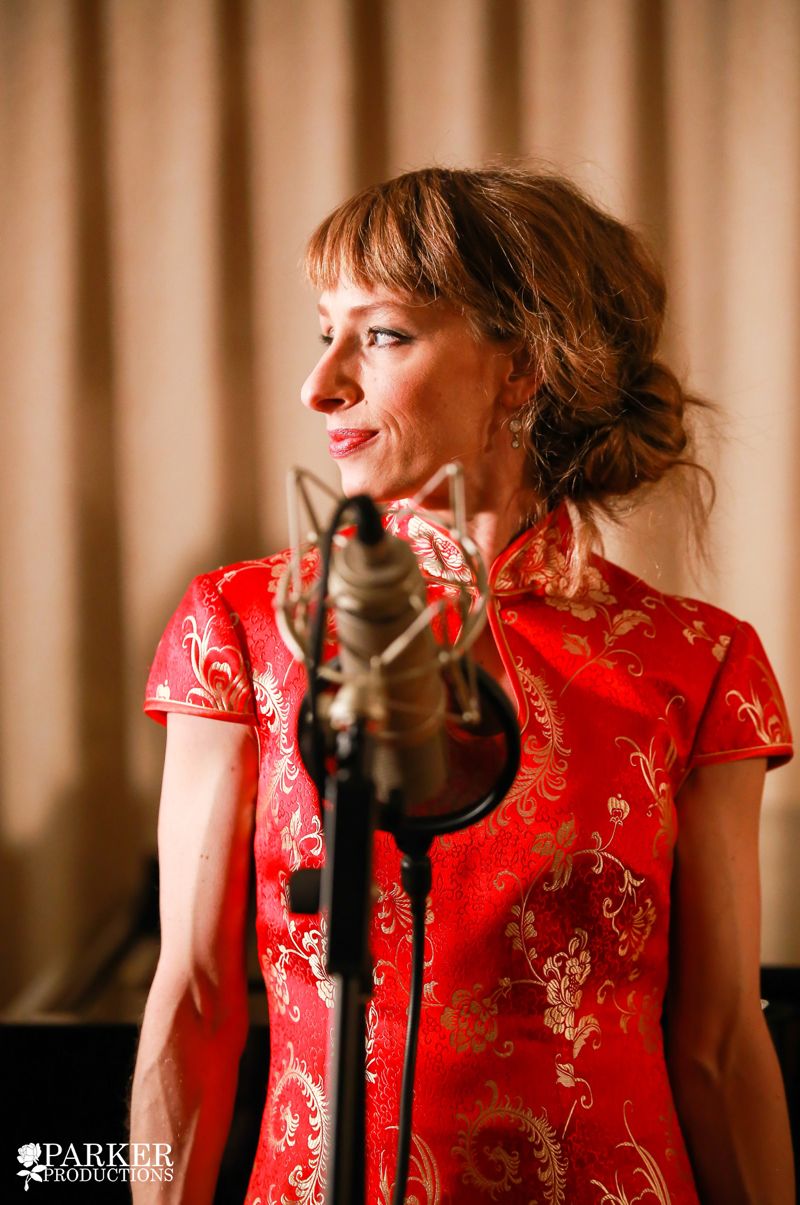
Several years ago, when I was invited to be a guest on the cross-cultural talk show “Crossover” on China Central Television (now China Global Television Network), one of the highlights of the experience was the opportunity to meet two other very talented women in the WWAM community, including Jess Meider. Jess sat next to me on the couch and I marveled at her at the end of the show when she and her husband Gao Fang performed a song from their musical group “Chinatown”. What a voice!

I later interviewed her on my blog (see Interview with Jess Meider, One of China’s Best Jazz Vocalists), where I asked her all about how she ended up in China some 20 years ago, how she met her Chinese husband Gao Fang, her start in the music scene in Beijing, and her musical projects over the years. You can purchase her music on iTunes and Amazon.com, follow her on Youtube and Facebook, and learn more about her at Jessmeider.com.

But Jess is more than just an incredible singer-songwriter with some outstanding credentials (such as performing in the VIP venues at the Beijing Olympics and having her music featured in the major Chinese movie “What Women Want”).

She has become known for the natural skincare serums and oils she and her partners sell through The Green Room Skincare company. And did I mention she is a prized instructor at the Yoga Yard here in Beijing?

Since interviewing Jess Meider in late 2015, I wanted to catch up with her in this WWAM of the Month spotlight, exploring everything from her new business and musical projects to what it takes to make a cross-cultural relationship work and how Beijing has changed since she first arrived.

Head on over to WWAM BAM to read WWAM of the Month: Jess Meider. And if you love it, share it!

9 Awesome Olympic Moments from Asian Figure Skaters Around the World

If there’s one thing I love about the Winter Olympics, it’s figure skating. And at this year’s Winter Olympics in Pyeongchang, Asian figure skaters from around the world have delivered some incredible Olympic moments in figure skating, even making and breaking records.

Here are 9 awesome Olympic moments from Asian figure skaters from around the world:

Vincent Zhou becomes first to land quadruple lutz at the Olympics

While American figure skater Vincent Zhou ultimately ended up in sixth place, he created a golden moment at the Olympics with his pioneering quadruple lutz, becoming the first person to complete the jump at the Games.

Boyang Jin pulls off record fourth-place performance for China

Never mind that Chinese figure skater Boyang Jin came in fourth place, just shy of a medal. He’s now beloved in China for becoming the country’s highest-ranked Olympic athlete in men’s figure skating. Besides, his choice of Star Wars music won plenty of applause from audiences, so maybe the force will be with him next time around.

Nathan Chen lands a record six quadruple jumps in his free program

While American figure skater Nathan Chen couldn’t bring home a medal in men’s figure skating, he stunned audiences by landing a record six quadruple jumps during his free program, with a score that even topped Yuzuru Hanyu’s free skating performance. Wow! He’s proven he’s worthy of a medal, and at 18 he still has Olympic chances ahead of him.

Mirai Nagasu thrills as first American woman to nail a triple axel

Despite her inconsistency on the ice, Mirai Nagasu still delivered one of the most thrilling moments of the Olympic Games when she successfully landed a triple axel during the ladies free skating event in the team figure skating competition — a first for American women. Mirai Nagasu also became the third woman to do so in any competition after Tonya Harding and Kimmie Meissner, and her performance helped America walk away with a team bronze.

Alex Shibutani and Maia Shibutani become first ice dancers of Asian descent to receive Olympic medals

American ice dancers Alex Shibutani and Maia Shibutani (the “Shib Sibs”) didn’t just wow audiences with stunning performances in ice dancing. They also made history as the first ice dancers of Asian decent to win Olympic medals — a bronze as part of team USA and a bronze in ice dancing. Alex Shibutani also shared an inspiring thread of tweets, noting “Our differences are what make us unique.”

China’s silver medalists Han Cong and Sui Wenjing dazzle with near-perfect short program

While this duo ultimately took the silver in figure skating pairs, Chinese figure skaters Han Cong and Sui Wenjing will be remembered for a powerful short program performance — one that judges considered the second strongest the world has ever witnessed.

“Pocket rocket” Shoma Uno delivers silver for Japan

Though Japanese figure skater Shoma Uno was invariably overshadowed by Olympic champion and fellow compatriot Yuzuru Hanyu, Uno — also known as the “pocket rocket” for his superlative jumping skills — secured a silver medal in his first Olympic appearance, allowing Japan to occupy two positions on the podium.

Hallelujah! Patrick Chan finally gets Olympic gold through Canada’s team medal

The Canadian figure skater’s song for his free skate program — Jeff Buckley’s “Hallelujah” — turned out to be apropos. After years of chasing Olympic gold, Patrick Chan finally secured the medal through Canada’s team win in figure skating.

Yuzuru Hanyu clinches a second consecutive Olympic gold in men’s figure skating — and gets showered with Winnie-the-Pooh bears

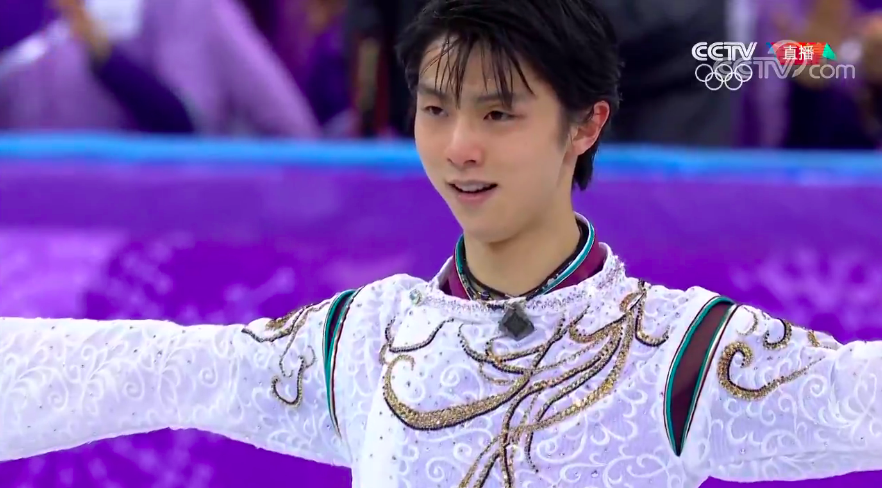
Japanese figure skater Yuzuru Hanyu’s consummate run in the men’s figure skating competition earned him a second consecutive Olympic gold, and legendary status as the second person to accomplish this after Dick Button. Some are calling him the greatest figure skater of all time. But he’s also famous for his love of Winnie the Pooh, leading his entourage of fans to rain down stuffed Pooh bears after his performances. It’s quite a phenomenon to behold at the Olympics, much like Yuzuru Hanyu himself.

What are your favorite Olympic moments?

Olympic Figure Skater Yan Han Performs to “Twilight” Song, and Reminds Us of Edward in “Twilight”

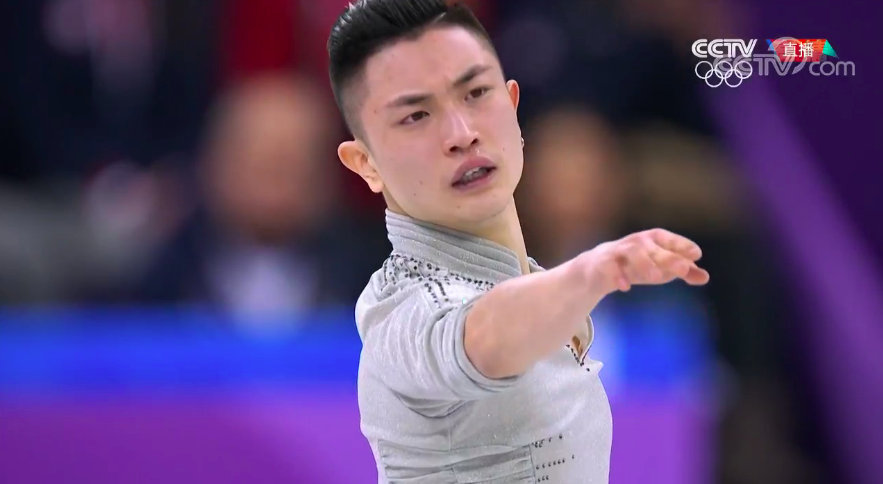
Yan Han TwilightRecently, Chinese Olympic figure skater Yan Han took to the ice to a version of Christina Perri’s “A Thousand Years” — and audiences cheered his choice of such a romantic, moving song. (In 2011 and 2012, the song became synonymous with Bella, Edward and their legendary human-vampire romance when it played in the “Twilight: Breaking Dawn” movies).

Never mind that he had some stumbles. His song for the men’s figure skating short program was endearing to audiences, especially those of us who adore “Twilight”. (Team Yan Han, anyone?)

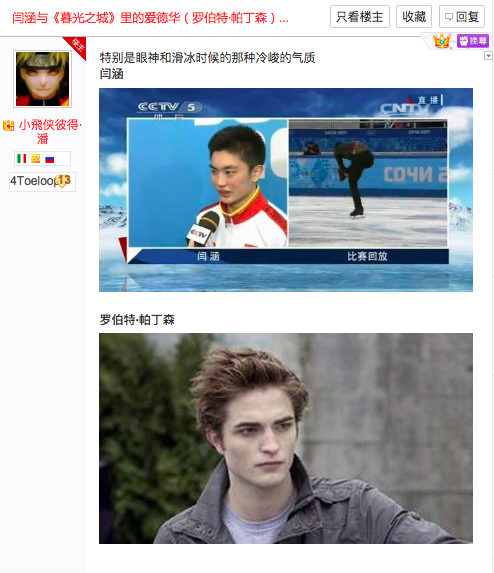
But if you’ve seen the Edward in the “Twilight” movies (played by Robert Pattinson) and witnessed figure skater Yan Han on the ice, you might just agree with something Chinese fans have been saying. That he looks like Edward in “Twilight”.

When asked about it by the Chinese media, Yan Han acknowledged the similarity. (Interestingly, CCTV mentioned in their Olympic commentary that his choreographer Lori Nichols noticed the resemblance between Yan Han and Edward, and used this to tailor his moves for the short program.)

In response to a question about who was more handsome, Yan Han said that in the movies, of course Edward was more handsome, but joked that on the ice, he is more confident.

It’s great to see him display a little humor after his uneven performance. Let’s hope that spirit and confidence, boosted by this gorgeous song, will help him land those jumps next time around. (Admittedly, he’s has had a tough Olympics, since he is still healing from a number of injuries, as he told Chinese press in an emotional interview.)

In the meantime, you can once again sigh over his routine set to “A Thousand Years” online. And you can learn more about the Olympic figure skater at his Wikipedia page.

Did you see Olympic figure skater Yan Han perform to the “Twilight” song? Do you think he looks like Edward in “Twilight”?

Photo Essay: A “Heavenly” Visit to Beijing’s Iconic Temple Before Chinese New Year

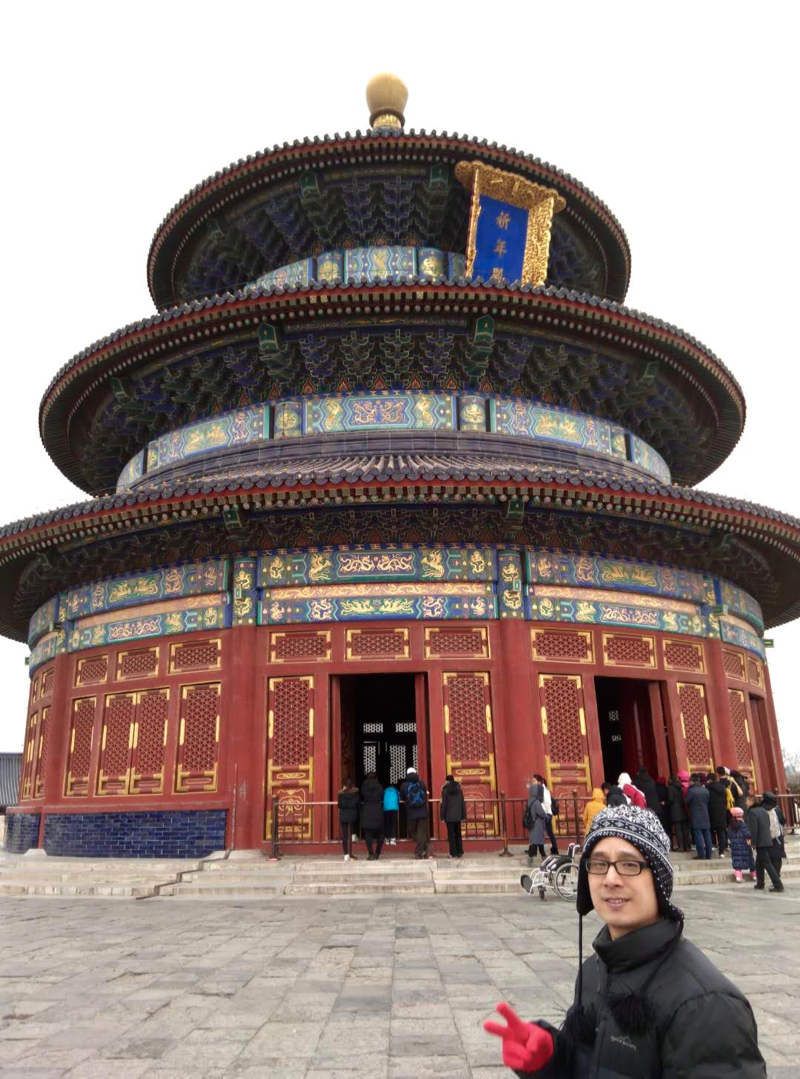
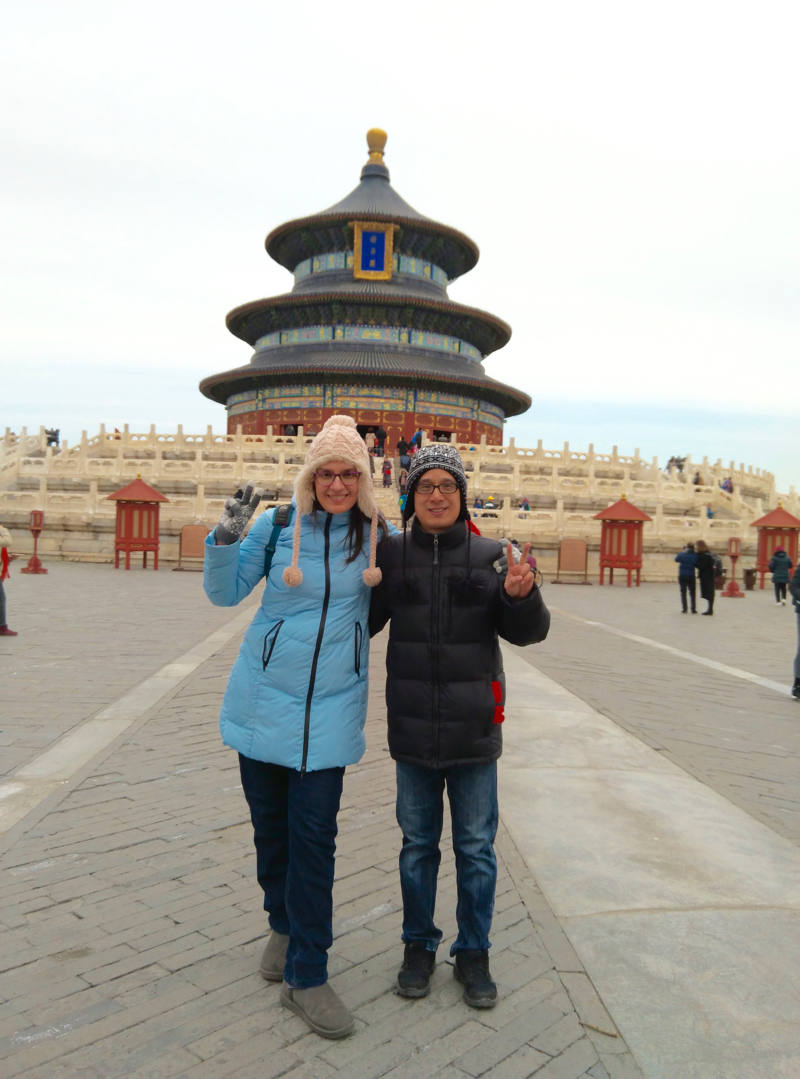
Beijing’s Temple of Heaven was where Ming and Qing dynasty emperors would pray to Heaven for a good harvest that year. So on the cusp of the Year of the Dog, Jun and I made a visit to this iconic Beijing landmark — and it was indeed heavenly to behold.

While we’re still relaxing and enjoying the Chinese New Year holiday, I thought I’d share a few photos from our visit.

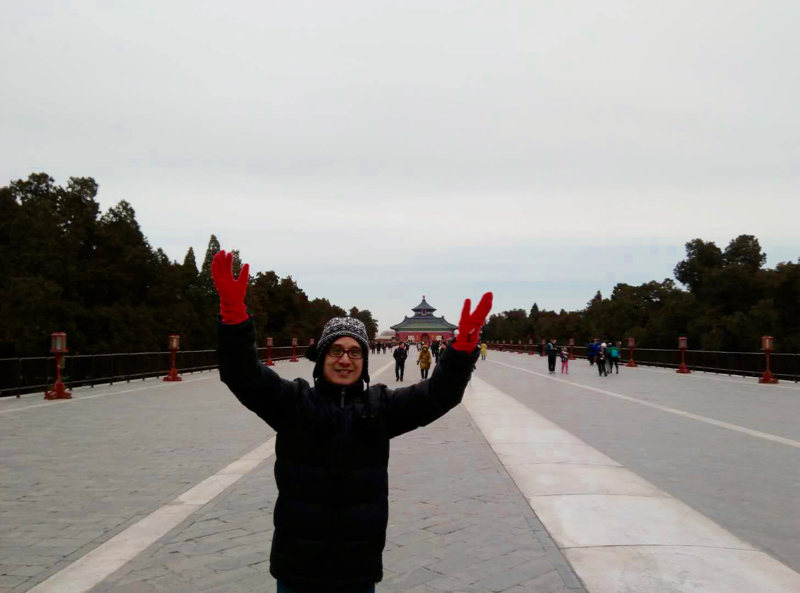
It’s thrilling to walk the boulevards of the Temple of Heaven park and catch your first glimpse of the main temple complex.

The Hall of Prayer for Good Harvests, decorated in a tapestry of brilliant colors, deserves its status as a symbol of Beijing, if not China.

With an overcast sky and temperatures finally hovering above zero, it was an ideal time to get out and enjoy this magnificent attraction.

We also walked down the grand entrance leading to the Hall of Prayer for Good Harvests in the Temple of Heaven — and you can see the roof rising just above the entranceways.

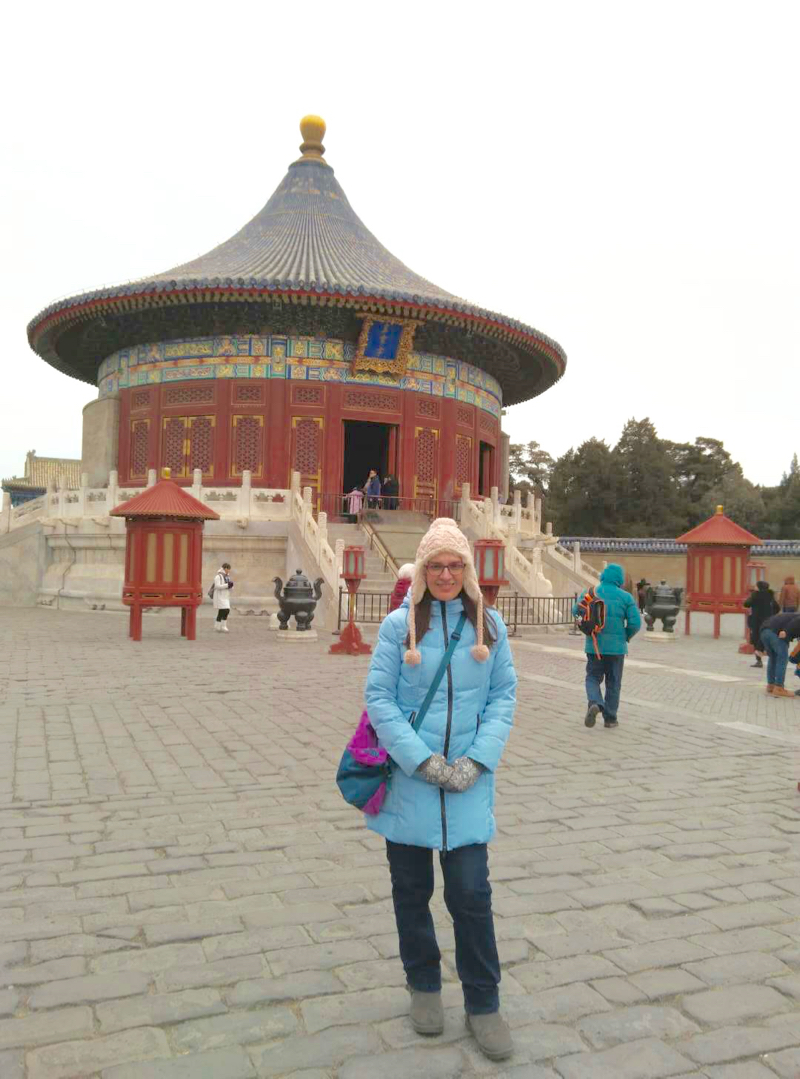
But there’s much more to the Temple of Heaven complex than that iconic structure. We also visited the Imperial Vault of Heaven, whose design echoes the Hall of Prayer for Good Harvests…

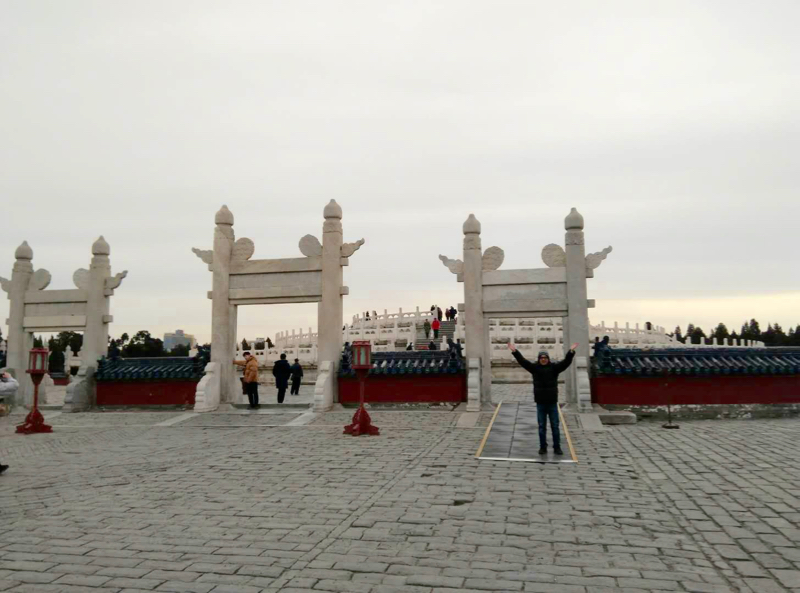
And the Circular Mound Altar, where emperors once prayed to the Heavens for good weather.

Here’s one of my favorite photos (taken by a woman who insisted I make the “V for victory” sign along with my husband Jun 😉 ). Wishing you all a “heavenly” Year of the Dog and prosperous Chinese New Year!

Photo Essay: My Favorite Chinese New Year Moments

While this is the first year in many that we won’t be spending Chinese New Year with family, I still have fond memories experiencing China’s most important holiday – and I’d like to share some of those highlights through my favorite photos from Chinese New Year.

Chinese New Year Traditions

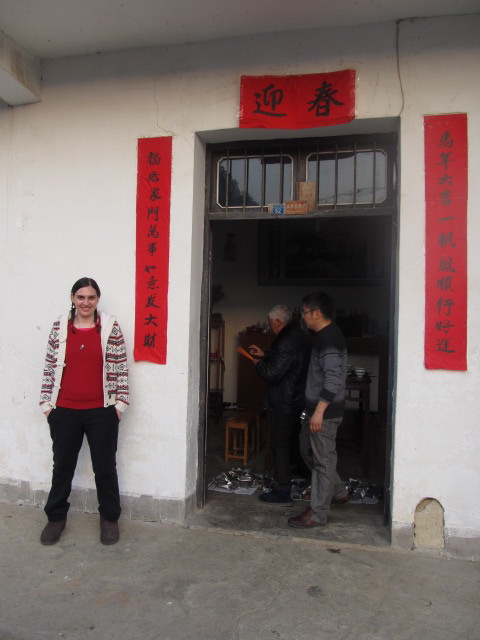
Red couplets, known as duilian in Chinese, are one of the most vibrant decorations for Chinese New Year. Here, I stand by the door of the family home adorned with red couplets just written by my father-in-law, a yearly tradition for him.

On Chinese New Year’s Eve, the family always visits ancestors’ graves — offering them dinner, incense and money for the afterlife.

On Chinese New Year’s Eve, my husband and his brother pay respects to a camphor tree that watches over the family.

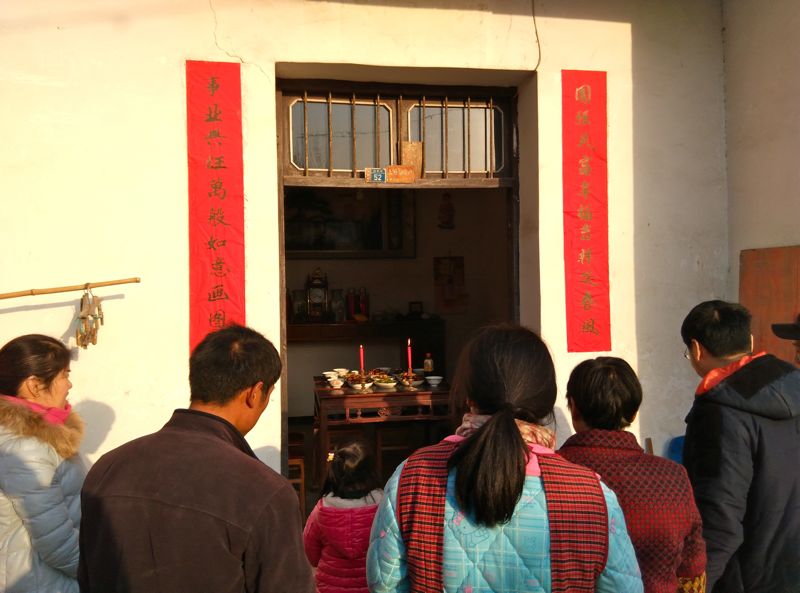
The ancestors’ dinner table is always set first, complete with candles and wine, on Chinese New Year’s Eve. We will then pray to them and pay our respects.

Jun sets the firecrackers and fireworks at the gate to the family home on Chinese New Year’s Eve.

Before the ancestors table, we burn paper money to send to them in the afterlife.

On Chinese New Year’s Eve, the whole family gathers before the door to pray to the ancestors.

Here I’m carrying two festive gift boxes filled with Chinese New Year goods, also known as nianhuo. It’s customary to give gifts for the holiday.

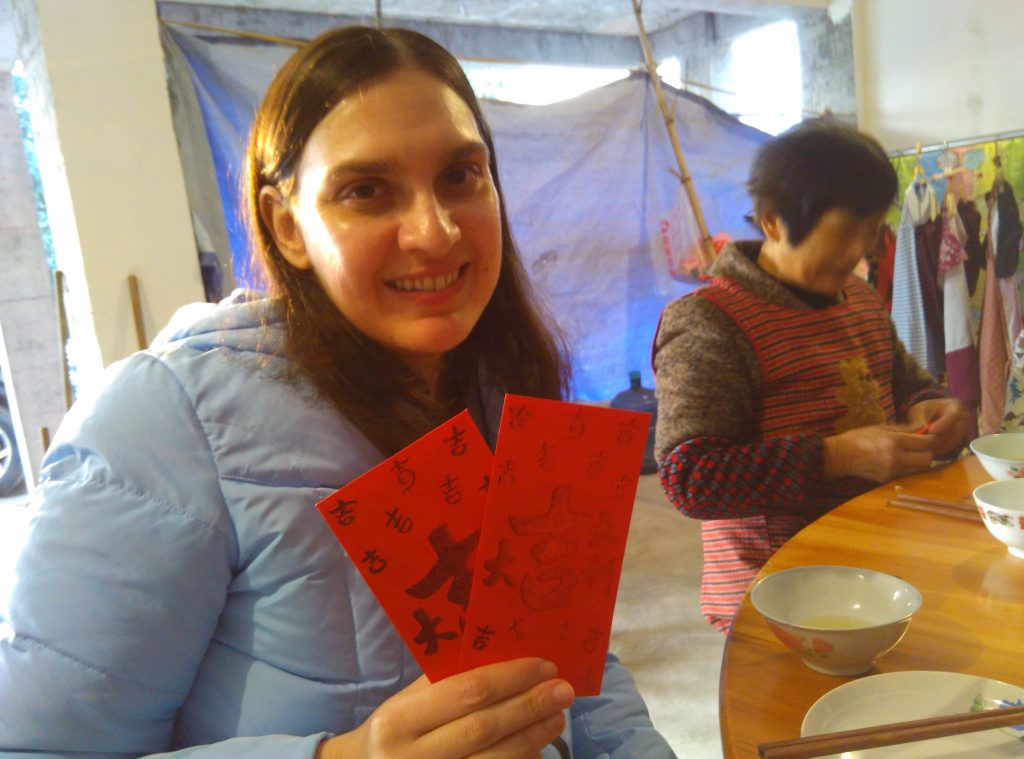
Giving out red envelopes, known as hongbao, is also a family tradition Chinese New Year’s Eve.

Hanging red lanterns at the family home is an annual tradition to ring in the new lunar year.

The family watches the firecrackers and fireworks exploding at midnight, welcoming the new lunar year.

Jun and I greet the new lunar year dressed head to toe in our new clothing.

Chinese New Year Food

The Laba Festival (which was January 24 this year) falls on the eighth day of the final month of the lunar year and is considered the official start to the Chinese New Year season. Every year, my mother-in-law commemorates the day by dishing up the traditional laba porridge (腊八粥) for breakfast.

At my in-laws’ home, no Chinese New Year is complete without a heaping bag of dongmitang (冻米糖) sitting in the corner of our bedroom, ready for snacking at a moment’s notice. These crispy Chinese New Year treats are made from puffed rice mixed with rice syrup.

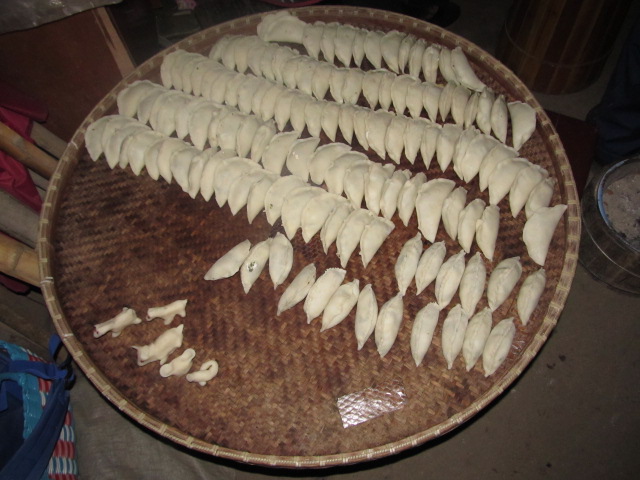
Every Chinese New Year, we always prepare savory rice turnovers known as migu in the local dialect. They’re stuffed with either veggies (salted bamboo, pickled greens and tofu) or veggies and pork.

You haven’t had tofu until you’ve tried tofu made from scratch. Here my mother-in-law is in the process of preparing homemade tofu.

Chinese New Year’s Eve dinner is the most sumptuous meal of the year, with so many dishes on the table there’s barely enough room for them.

Family at Chinese New Year

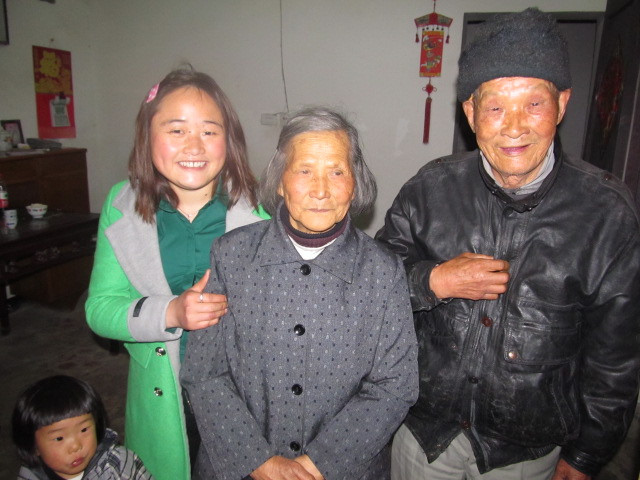
Bainian, or Chinese New Year calls, is one of the most important traditions for family, where relatives visit one another at home to send wishes for a prosperous new year. This is one of my favorite bainian memories — Jun’s grandma and grandpa, who have since passed away, happened to visit us at our home in 2014.

Jun’s grandma was actually one of my favorite people to see during the holidays. Here, she and I spend time in front of the family home.

Toasting family at the table is an important ritual during Chinese New Year. Here, I’m attending the first dinner of the year at an aunt’s home — she never fails to make a scrumptious tofu dish and some of the best kimchi I’ve ever tasted.

During Chinese New Year, we also travel to other relatives’ homes to dine and socialize. Here I sit with family before an aunt and uncle’s home, where we are having lunch.

I especially love when family come together to prepare food. Here relatives sit around the table making those savory turnovers.

But most of all, it’s a pleasure to spend Chinese New Year’s Eve together with family at the dinner table.

Wherever you are in the world, here’s wishing you an auspicious Year of the Dog filled with great fortune and blessings.
Olympic Speedskater Shaolin Sandor Liu Has a Cool China Connection Beyond His Chinese Father

While Jun and I were watching China compete in the men’s 1,500m speedskating event at the Pyeongchang Winter Olympics, we happened across a fascinating young man among the competition: Hungary’s Olympic speedskater Shaolin Sandor Liu.

Shaolin Sandor Liu Chinese

After seeing his name, I knew one of his parents must be Chinese. Turns out, besides his Hungarian mother, he has a Chinese father.

But that’s not his most fascinating connection to China. Here’s what I discovered on his athlete page at the Olympics website:

He and younger brother Liu Shaoang were given the opportunity to train in People’s Republic of China earlier in their career. “We were really lucky. When we started there was a world championships in Hungary and the Chinese team came. My father, being Chinese, started speaking with them, helped with different things in Hungary and getting to know the country. They said since his two sons were Chinese they should come and train in China. It sounded good to him so he decided to take the chance to bring us to China and we were training there for one-and-a-half years. Before our results weren’t really good. After that time we came back from China and we won every competition.”

As anyone who follows short track speedskating knows, China has a powerhouse of a team in this sport, with a total medal count only second to the leading country, South Korea. So I’m not surprised that Shaolin Sandor Liu improved so much after training with the Chinese team.

Shaolin Sandor Liu claimed gold in the 500m short track speedskating event at the 2016 World Championships in Seoul. During the current World Cup short track speedskating season, he’s had a number of strong performances, including ranking first in the 500m event at Budapest and the 1,000m event at Seoul.

That’s why, while he only finished in fifth place in the 1,500m short track speedskating finals the other day, Shaolin Sandor Liu is still a solid contender in the Pyeongchang Winter Olympics. He’s set to compete in the 1,000m event Tuesday, February 13 at 19:26 Korea time. If you happen to tune in, watch for him — and why not root him on as well?

Additionally, here are few more interesting things about Shaolin Sandor Liu:

  • His parents — a Chinese father and Hungarian mother — aren’t the only reason I’ve tagged this post AMWF (Asian male/White female, in this case). Liu’s current girlfriend is Elise Christie, the short track speedskating star from Britain.
  • For curious readers who happen to know Chinese, his name Shaolin is written as 少林 (shàolín), the same as the famous Shaolin Temple in Henan province. (And according to an anonymous post online in Chinese, his Mandarin is pretty good.)

To learn more about Shaolin Sandor Liu, head on over to his athlete page for the Olympics or follow him on Facebook and Twitter.

What fascinating athletes have you encountered so far while watching the Pyeongchang Winter Olympics?