“You Must Be Russian” – On Mistaken Identity in China and America

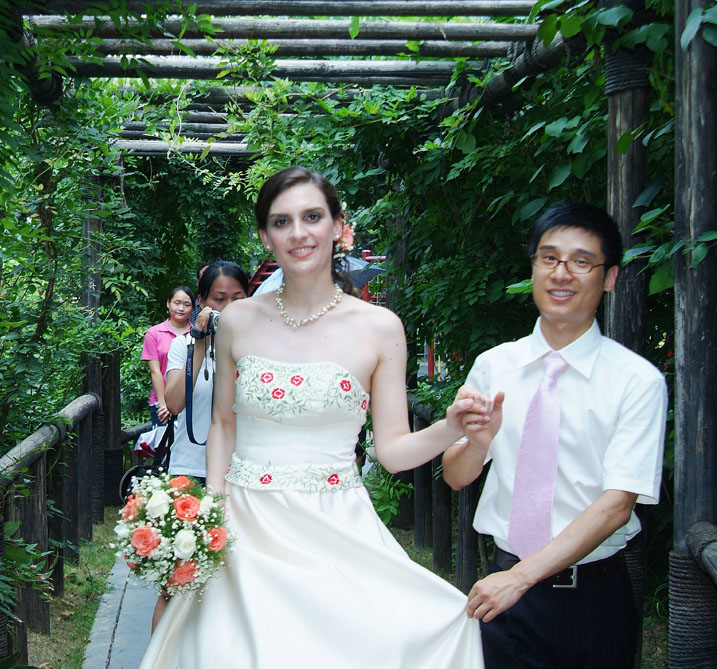
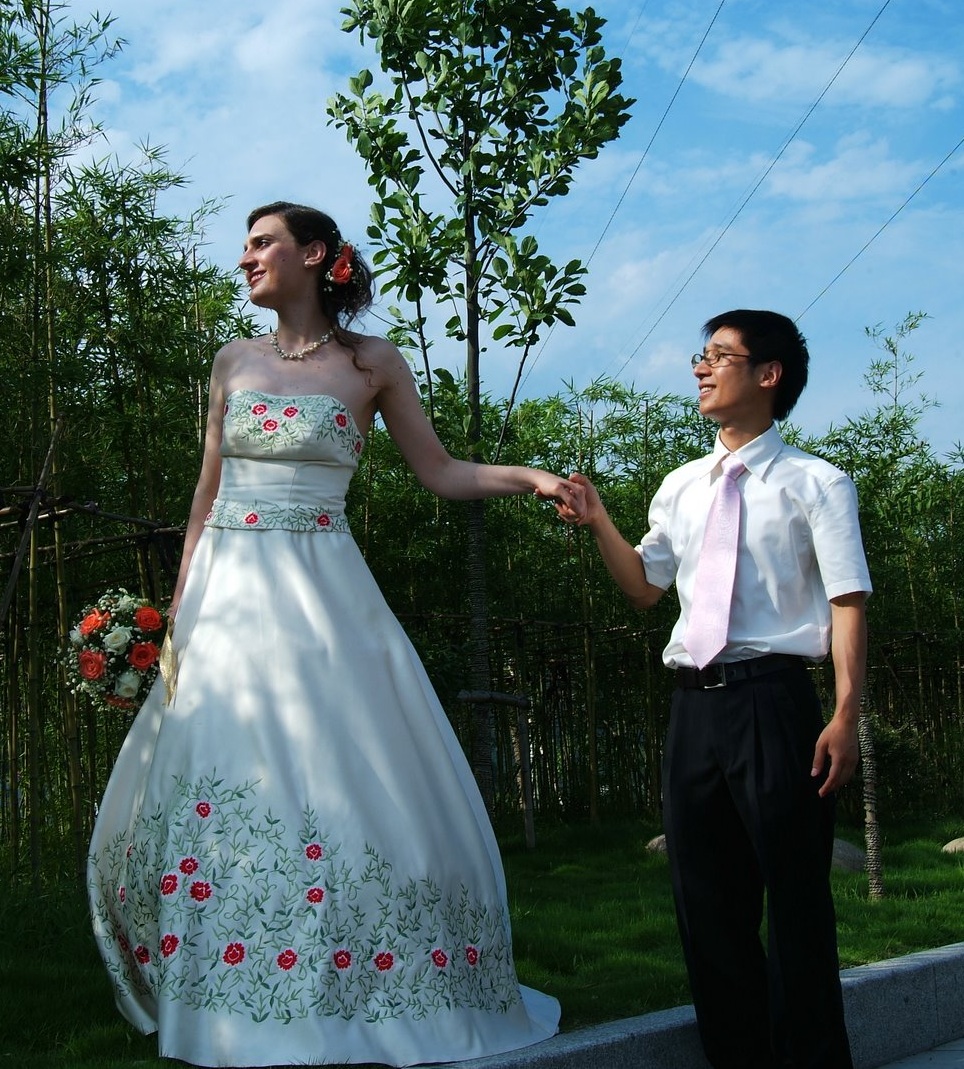
“She must be Russian…even her hat is Russian.” 😉

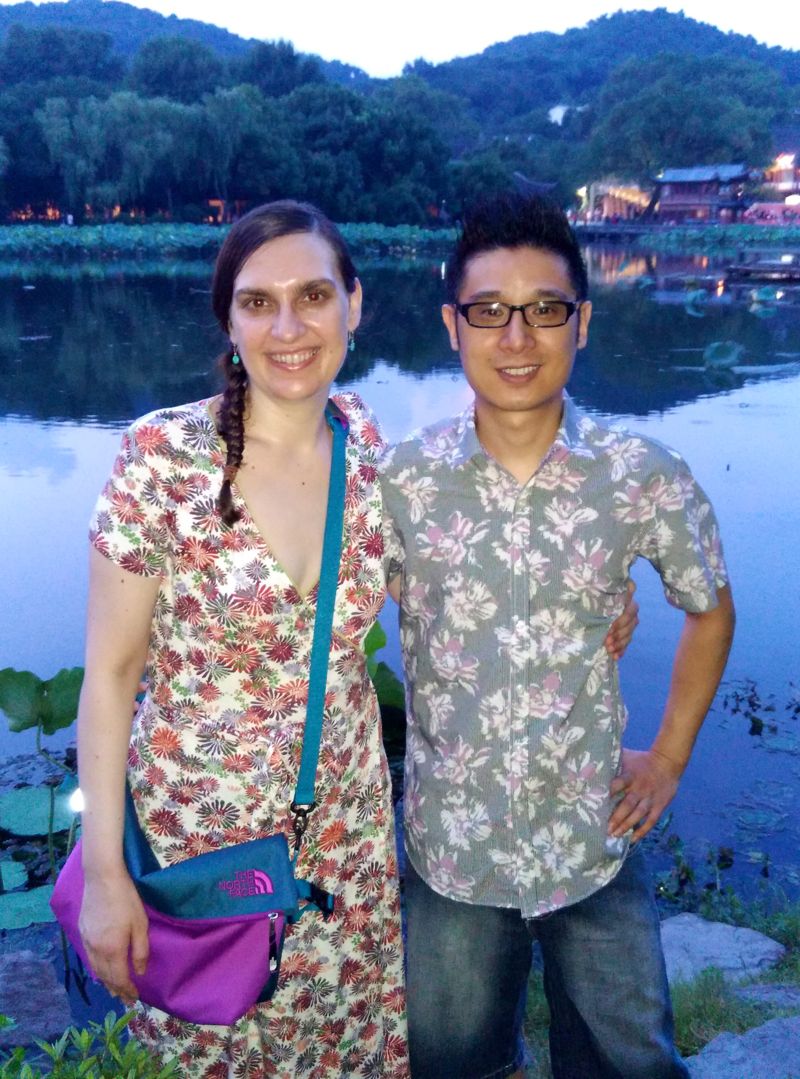
“Are you Russian?” someone asked me the other day here in Hangzhou.

It felt like a total a palm-in-face moment. After all, hadn’t he read my CV, which explicitly stated I was an American, in bold letters?

But the truth is, I had heard this same question – which more often came out as a statement (“She’s Russian”) – hundreds of times here in China. I can’t tell you the many times I’ve been standing on a metro or riding the bus, and all of a sudden I catch someone whispering in Chinese that I’m Russian, never knowing that I understood their every single word.

The thing is, I do understand where this comes from. Because I’ve heard many other white foreign women married to Chinese men share similar stories of being called citizens of China’s Northerly neighbor. Given Russia’s promixity, it’s not surprising.

But yet…sometimes the conclusion isn’t flattering either. Not when some people think we’re Russian prostitutes.

Sadly, I’ve heard stories from white women in China who were stalked and even nearly raped because someone assumed they were “for hire”. My Chinese husband, who has seen how some men look at me (and not always in a good way), makes it his duty to “protect my butt” from wandering eyes.

But here’s the fascinating thing in my case – Americans have also mistaken me for being Russian. Yes, Americans.

In fact, when I was at university, I was stopped on two occasions and explicitly asked if I wasn’t from Russia.

I had to confess feeling a little strange. What was it about me that prompted them to think this? Then again, this is America, a country where news giant CNN actually ran a map showing Hong Kong as part of South America.

Come to think of it, now that’s a true palm-in-face moment.

Do you have any stories of mistaken identity?

I’m in Awe of How My Husband Eats Fish With Bones, Unshelled Sunflower Seeds & More

(Photo by Alpha via https://www.flickr.com/photos/avlxyz/3225213462)

Whenever my husband and I happen to be back at the family home in rural Hangzhou, China, you can almost guarantee there’s fish for dinner, prepared just how my husband likes it. His mom stews the whole fish with ginger, garlic, soy sauce, hot chili peppers and Shaoxing wine, and finishes it with a sprinkle of fragrant green onion.

And if there’s fish on the table, you’ll also find something else next to my husband’s rice bowl – a neat little pile of fish bones. No, he didn’t pull the bones out first and then eat the fish. He sorted the meat from the bones with his mouth, something that amazes me to no end.

Of course, it’s not just fish with bones. I have a similar sense of awe for the way he deftly devours unshelled sunflower seeds. By the time I’ve clumsily cracked open one of them and spilled out the seed, he has easily consumed three or four of them.

I’ve also witnessed his mouth do other extraordinary things at the table, including removing the rough skin from Chinese jujube dates after chewing on them and separating the rough fibers from celery. Every time he does something like this, I’m filled with wonder, thinking, “How does he do it?”

But then again, I feel the same way about the rest of his family, whose dinner table socialization included a how-to on managing some challenging comestibles.

In the America I grew up in, the kind of fish my husband’s family serves up – from head to tail – was never on the menu. I wanted my fish batter fried and served with a heaping side of French fries and hush puppies, just like those greasy fast seafood dinners. No muss, no fuss and no bones. I was so picky on this point that I even shunned my dad’s favorite fish snack – kipper snacks – because of the bones.

This ethos – that food should be as convenient as possible – applied to much of what I ate. It wasn’t just bones I didn’t care for (which turned me off chicken wings and ribs). Unshelled seeds and nuts were a no-go as well. I even got fussy about fruit when it had seeds inside; I would rather pick the watermelon seeds out of my slice first, rather than burden my mouth with the task of spitting them out.

Looking back, though, I now wonder if I missed out on something critical. Would I have enjoyed food much more if someone had schooled me in the many ingenious ways for eating challenging things? Would I have been more adventurous as a child and more willing to try new things?

As an adult, I’ve been playing catch up on that score. I now happily devour watermelon and oranges with seeds. I’ve learned it’s not so hard to eat unshelled nuts and seeds with a little practice (and, sometimes, patience).

But as for bones, I’ll never have the chance to exercise my mouth in that regard. I’m a vegan after all. And as much as I’ll always admire my husband’s ability to process those bones in his mouth, a part of me is relieved I’m exempt. What can I say? I’m still a little picky at heart – and still don’t like bones. 😉

My Husband Puts Hot Sauce on Everything – and I Think It’s Fantastic

(By [http://www.flickr.com/photos/snips/etoile] – Flickr, CC BY 2.0, https://commons.wikimedia.org/w/index.php?curid=1225603)
There’s one condiment you’re sure to find on my dinner table: Lee Kum Kee’s Chinese-style hot sauce.

In fact, it’s not just one but two sauces you’ll notice sitting next to our bowls and dishes. One is the extra-spicy fragrant hot sauce, heavy with chili oil and the pungent smell of chili, and the other a milder garlic chili sauce perfect for noodles and hot pot.

At any given meal, you’ll see my husband add dabs of hot sauce to his rice or soup or even noodles. You’ll also hear him utter a delighted “mmmmmm” every time the peppery flavors dance across his tongue. After all, he once confessed that while he could happily go without meat, the same couldn’t be said for hot sauce.

Meanwhile, he’s married to me, a woman who can’t even remember the last time she tasted anything remotely spicy. A woman who was forced to quit even the mildest peppers last year after having her appendix removed. It’s been over a year since that surgery, but I still haven’t found the courage to test my stomach with hot sauce. Not yet. I eye my husband’s favorite condiments with a mixture of curiosity and fear, and for now prefer to have only garlic, ginger, sea salt and soy sauce as my flavorings of choice.

But I’m happy with this arrangement. I’m grateful that my husband’s deepest longings for spicy food are satisfied with these two simple condiments. I’m glad that what could have been a great disagreement about what to eat has now become a moot point, thanks to the presence of two small bottles courtesy of Lee Kum Kee.

Jun was born with a penchant for hot peppers. My husband grew up in a region of Zhejiang known for its more fiery flavors. Milder than Sichuan and Hunan, his hometown dishes up a delicious “fragrant and spicy” regional cuisine. That meant home cooking where nearly every dish – save a few greens and picked vegetables – had a touch of fire, sometimes stronger than you might expect. In fact, his family loved hot peppers so much that his father would even dab his favorite hot sauce into his rice during meals.

(Little did I know, when I first witnessed his father doing this, I would one day watch my husband do the very same thing.)

Meanwhile, I was raised on an average white middle-class diet of American staples – from spaghetti to hamburgers to fried chicken. Though we flirted with hot peppers from time to time, they were mostly absent from our meals. Dinner didn’t need them to be dinner. And some of us, notably my grandmother, wanted nothing to do with them. For her, even some varieties of black pepper were too spicy.

Who would have thought I’d now have hot sauce on my dinner table?

An American friend of mine once wondered if my husband wasn’t “ruining” dinner by putting hot sauce on every single dish. She argued that the hot sauce overpowered the more subtle flavors in every meal. I’m sure she would have thought it sacrilege if I had mentioned to her that Jun even loved hot sauce with his spaghetti.

But I say, who are we to judge his dining preferences? So what if he puts hot sauce on everything at the table? It brings him an immeasurable sense of happiness, and it doesn’t impact my meal in any way. It also means no arguments about whether or not to add hot peppers to the meal.

I’d like to think that our mutual respect regarding cravings has enhanced our marriage in so many ways. It’s how we, a vegan and a guy who has called himself “80 percent vegan” (but still loves his pork and beef and fish), have managed to happily dine together for so many years.

Which is why I’m certain my husband won’t object when I suggest buying a little vegan cheese to satisfy my own deepest cravings – cravings he will never understand either.

I figure we’re even now. 😉

Are China’s AMWF Couples Rarer Just Because Only 25% of Foreigners in China Are Women?

A couple weeks ago, I happened to share a Global Times article titled, “When a Chinese Man Loves a White Woman”, which mentioned me and this blog. Naturally, it generated some conversation on social media. One of the comments came from a guy, asking why the author hadn’t mentioned the preponderance of male foreigners as a reason for the rarity of couples of Western women and Chinese men in China.

For those of you who don’t know, approximately 75 percent of the foreign population in China is in fact male.

It would be tempting to point to this gender imbalance as the primary explanation for why couples of Western women and Asian men are such a minority. But if you did, you’d be missing the big picture.

After all, this gender imbalance fails to explain why there are so few AMWF couples around the world, and why even Chinese American men don’t feel the love from their fellow Americans (see the essay “Are Asian Men Undateable?”). If Asian men who were born and raised in the West have it tough in the dating world, we could hardly expect better for Asian foreign men who come to the West for work or education.

I would argue, then, that even if the foreign population in China was equally split among gender – 50 percent female and 50 percent male – you would still see an imbalance in the interracial dating world in China. You would still see far more couples of Western men and Asian women, and far fewer couples of Western women and Asian men.

The reality is, prejudices and stereotypes are slow to fade. Even 50 years after the Loving versus Virginia US Supreme Court decision, interracial couples still feel the sting of discrimination from their fellow Americans (as reported by NPR). Meanwhile, Hollywood has an abysmal record when it comes to featuring interracial romance on the screen overall (and we’re not even talking about just AMWF couples here).

It’s going to take a lot more than enticing more foreign women to come to China to boost the numbers of Western women and Asian men in love over here.

P.S.: If you’re wondering why couples of Western women and Asian men are so rare, have a look at On the Rarity of Foreign Women and Chinese Boyfriends/Chinese Husbands. See also my piece for the Huffington Post titled Why Won’t Western Women Date Chinese Men?

“Empire of Glass” by Kaitlin Solimine – an Interview

There’s something inherently powerful in cross-cultural relationships and exchanges.

When I think back to my formative first years here in China – before I met my husband Jun — I’m also struck by the fact that many of the people closest to me then still remain a part of my life. They were the ones who helped me go beyond the guidebooks and primers on Chinese culture, the people who made China personal for me. To this day, I still consider these people my Chinese “brothers” and “sisters”.

For Kaitlin Solimine, the relationships she forged during a homestay experience in Beijing (her first foray into China) set the stage for her literary debut, Empire of Glass. In particular, she became close to her homestay “Chinese father” (a man she still calls “Baba” to this day) and soon that closeness allowed her the opportunity to hear his family stories. This surprising intimacy — along with what Kaitin calls “the promise and also the potential cultural miscommunications that could result” — ultimately inspired her to write Empire of Glass.

Empire of Glass – which spans the Cultural Revolution up to modern times – stands apart from many novels about China for a simple reason: it is presented as a translation by an American named “Lao K”. Lao K herself is one of the actors in the story, a young woman who invariably becomes a part of the narrative she is attempting to illuminate for foreign readers, the epic story of Li-Ming and her husband Wang, filled with love, drama and tragedy.

Moreover, Empire of Glass is stunning for its lyrical prose. Every sentence is beautifully crafted with imagery that captures China in ways that will surprise and delight you (“I witnessed hutong alleyways paved over by four-lane highways, a landscape of construction cranes pocking the horizon with hungry, steel arms”). Anyone who loves literary fiction about China will savor each page and paragraph in Empire of Glass.

It is an honor and pleasure to introduce you to Kaitlin Solimine and Empire of Glass through this interview.

Here’s Kaitlin’s bio from Goodreads:

Kaitlin Solimine holds a BA from Harvard University and an MA from the University of Southern California, both in East Asian Studies with an emphasis on Chinese language, culture, and history. She studied international relations at Beijing University as a Harvard-Yenching Scholar, wrote and edited the travel series, Let’s Go: China (St. Martin’s Press), and received a Fulbright creative grant to research her forthcoming first novel, Empire of Glass. At the 2010 Bread Loaf Writers’ Conference, she was the Donald E. Axinn Scholar in Fiction. She received an MFA in writing from UC-San Diego, where she also taught undergraduate writing. An excerpt from Empire of Glass won the 2012 Dzanc Books/Disquiet International Literary Program award, judged by Colson Whitehead. Another excerpt, ‘Thoughts of Sinking,’ is featured in Kartika Review. She is a Huffington Post contributor and columnist at The World of Chinese Magazine. She co-founded HIPPO Reads, a literary startup focused on curating and delivering high quality, previously published content with an academic bent. After recently living in Singapore, she moved to San Francisco where she was a 2016 SF Grotto Writing Fellow. Empire of Glass is her first novel.

You can learn more about Kaitlin Solimine and the novel at her website, follow Kaitlin on Twitter, and find Empire of Glass on Amazon.com, where your purchases help support this blog.
—–
You conceived of this novel based on your homestay experience in China as well as your relationship with your Chinese father, who you still call “Baba” to this day. Could you tell us a little more about your inspiration for the novel?

I was living with Baba during the summer of 2005 while conducting research for my master’s thesis (on the socio-cultural impact of American baseball in China). Most of the day, it was just the two of us, sharing a meal, watching wushu dramas on CCTV, going for walks in the park after dinner. I knew, already, that our relationship was not typical—he is 40 years my elder and we aren’t related by blood. Yet, here I was in his home, hanging my underwear to dry, sharing meals, chatting about life, politics, and my research. He began sharing some stories with me, showing me old photographs from his life. While none of the stories in Empire of Glass are true to Baba’s history, there are a few small geographical details I’ve chosen to honor him with (e.g., there is a tree he called a “soap tree” in his hometown, one that dropped astringent seed pods used locally when washing clothes). The largest inspiration for the novel was simply the strange intimacy of our relationship, the promise and also the potential cultural miscommunications that could result.

The stories your Chinese father told you had never been shared with his own daughter. How did that impact your approach to writing the novel?

It’s funny—I think Baba didn’t share the stories with me because he trusted me especially but because he was, like many do in retirement, reflecting about his life, its path, at the very time I was living with him. He was excited that I cared to listen and to travel with him to his hometown (which I did during my Fulbright in 2007). He didn’t share these stories with his daughter likely only due to a logistical inability—she was very busy and also, as most children are with their parents, not particularly interested in his past. As an outsider to the family and China, I also found some of the historical and cultural elements more interesting than his daughter likely would have. That said, I was very aware, in writing the novel, of deeply fictionalizing the stories so as not to have any resemblance to the real “Baba” in my life. He and his daughter both knew of my novel and my Chinese sister even said that I should add some romance and sex to ensure the story was interesting (I didn’t add enough of the latter!).

Could you talk about your decision to present the novel as an American’s translation of a diary written by a Chinese woman named Li-Ming?

While both researching and writing the novel, I knew that my outsider status (both with my family and in China) was a blessing and a curse. Being an outsider meant I may be able to see things native Chinese didn’t see as clearly about their own culture and also provided for a necessary cross-cultural conversation; however, it also meant that, in writing a Chinese story (that of Baba and Li-Ming) as a foreigner, I was enacting a project of cultural appropriation in that I was assuming I could adequately tell the “native Chinese” story. I knew that was impossible, inappropriate, and also, that I didn’t want to do that. What compelled me to write the book was always the relationship of Lao K and her Chinese family. I knew that she would have her own cultural and racial biases, and that she was potentially (and historically, when framed within American cultural imperialism) dangerous (in that she could erase or re-frame important Chinese cultural elements). But at the same time, I believed this relationship, and her desire to “translate” the story, was a compelling frame through which readers could approach a personal history. In truth, any fiction project, the act of inhabiting a character, of bringing that character’s life to the page, comes with a certain responsibility, complexity, and danger. I wanted the frame of Empire of Glass to reflect that wider examination as well.

Why did you title the novel Empire of Glass?

Earlier drafts of the novel were called “The Soap Tree” (a reference to the tree in Baba’s hometown which played a much larger role in those drafts). As the novel moved away from that geography and plot, I was drawn to the glass grinding profession of Baba, his father, and uncles. The title was taken from a line in the novel: “His father: the farmer’s son who learned a trade as best he could, who built from wide country hands a quiet empire of glass, now living alone, impoverished, in his hometown’s granary, sleeping beside well-fed rats and cockroaches.” I liked not only the sound of the phrase but also the way it reflected the fragility of modern China, of how far China has come and yet, like any nation and culture, how easily it is that the façade of a prosperous or promising life could be shattered. Similarly, the reflective quality of glass relates to the translator’s role in the book, so I thought the revised title was a useful reference to that as well.

Your novel references the poetry of the enigmatic 9th Century Chinese poet Han Shan throughout the story. Could you talk about why you include Han Shan in Empire of Glass?

I find novel writing such a bizarrely personal and yet also inexplicable process. Han Shan would never have entered the novel if I hadn’t decided to attend a poetry talk (which was way outside my writing wheelhouse!) while at the Bread Loaf conference in Vermont (a magical few weeks!). Arthur Sze, an incredible poet who led the talk, asked the class if anyone could read, in Mandarin, a poem by Han Shan so we could examine the language therein. I bashfully volunteered and Arthur was kind enough to assist me with a few words I didn’t know. In reading the poem, and in the subsequent analysis, I was very drawn to Han Shan’s clear, natural language choices, as well as the Taoist philosophies he encounters in his writing. I began researching him and knew that he would become a central figure to the characters in the book, particularly Li-Ming who already had a lyrical, naturalist’s heart. I was also interested by the fact that Han Shan played a role in the writing of many of the Beat writers (namely Kerouac and Gary Snyder). I wanted to allow a woman (both Li-Ming as a character and me as author) to encounter Han Shan’s work and digest it’s application to female existence more widely (something the Beats hadn’t done as fully in their examinations).

The press release on your novel notes Empire of Glass “illuminates the possibilities in cross-cultural connection, but also the complications, even violence, inherent in these relationships”. What do you think are some of the complications inherent in cross-cultural connections?

That’s a great, and necessary, question. When I referenced the violence, I was especially speaking of cultural imperialism (the way in which a culture can subsume another—whether in a literal act of violence, such as war, or via stealthier elements like capitalism or pop culture). In the case of the rape of “American Nurse” (spoiler alert!), I was intending to subvert a much more privileged narrative of the Western man having sexual power over the Asian woman. Of course, this was complicated by Baba’s own virginity at the time and the reader’s questioning of what lens through which we are viewing this re-telling.

In terms of the complications within a more intimate relationship, I think one’s cultural perspective can often cause unintended misunderstandings or miscommunications, and it can be incredibly difficult to love empathetically when also balancing differences in world perspectives or even the way in which a thought is framed. For example, because Chinese language itself is so grammatically straightforward (and lacking conjugation), a lot of non-Chinese speakers will find a Chinese person speaking English to be really curt, almost forceful. That could lead to a lot of misunderstandings about Chinese culture or judgments drawn based simply on the way in which the language itself is constructed.

At the same time, in the West, for example, we often think love needs to be expressed physically or verbally. It took me a long time to realize that my Chinese father expressed his love for me by anxiously requiring me to check in with him frequently when I was away from home or by preparing my favorite meal. He may not hug me when we say good-bye, but his love is expressed in a way that feels appropriate for him and his upbringing. Understanding and accepting his form of love was an important step toward overcoming a cultural misunderstanding that otherwise may have driven a wedge between us. 

What do you hope people come away with after reading your novel?

As I wrote the novel, I was particularly drawn to Li-Ming’s intended lessons of slowing down and paying attention. I hope readers find moments of reflection and of clarity in not only the text itself but also in their own lives. There is a shared human experience that cuts across culture, one that I hope the novel portrays. And in the end, I hope readers realize that everything—this book, life in general—is all, like Han Shan and his laughing poetry, nonsense!
—–

A huge thanks to Kaitlin for doing this interview! Once again, you can learn more about Kaitlin Solimine and the novel at her website, follow Kaitlin on Twitter, and find Empire of Glass on Amazon.com, where your purchases help support this blog.

Featured in the Global Times – “When a Chinese Man Loves a White Woman”

The Global Times just published an article titled “When a Chinese Man Loves a White Woman”, and I was honored to be included:

American Jocelyn Eikenburg, founder of the popular Speaking of China blog has played a key role in the integration of the global WWAM community.

“Why don’t Western women date Asian men?” one of Eikenburg’s articles featured in the Huffington Post, wisely invited women to look at the vast ethnic and cultural diversity of Chinese men instead of writing them all off per se as a single, homogenized race.

A huge thanks to Katrin Büchenbacher for inviting me to be a part of the article, which begins like this:

The brunette with sparkling blue eyes beneath long eyelashes could pass for any American exchange student. Dressed in a simple khaki shirt, blue jeans and a spiky bronze necklace, she is stuck in the Shanghai traffic, running late for her video shoot with the Global Times Metro Shanghai. What sets this young lady, Vicky, apart from other expats in this city, however, is the person sitting next to her – a tall, handsome man in a crisp white shirt, speaking with a deep, confident voice. It’s her long-term boyfriend, a Chinese national.

Chinese men dating or married to foreign women are still a rather rare form of interracial love. When they walk down the streets holding hands, they can literally feel people staring at them and whispering to each other, or even pointing fingers.

Head on over to the Global Times to read “When a Chinese Man Loves a White Woman”. And if you like it, share it. 🙂

7 Things That Make Living in China Better Than America

Why would you want to go to China?

An American actually asked me this very question years ago when I confessed my plans to move back to the Middle Kingdom. It didn’t matter how many good reasons I gave her – she stared at me with incredulity, as if I had just proposed rocketing straight to Mars and not a country on this very planet.

Of course, she’s not the only one guilty of being down on China. “Bad China Days” are a phenomenon for every expat who lives here, even me. In the worst moments, it can be easy to forget why we’re here or even why we love this place so much, warts and all.

But the truth is, there are actually some pretty incredible things about living in China. Things that, on balance, are better than America. Here are 7 of my favorites:

#1: Doing your entire grocery shopping online, with fast home delivery and no shipping charges

When I was back in America last year, I happened to tell my uncle about how I was doing my grocery shopping in China online, courtesy of Taobao’s Tmall online supermarket. “They deliver straight to your door the next day. You can order almost anything from them – even fresh fruits and vegetables.”

He was astonished, as if I was speaking of some magical Shangri-La of online shopping.

No, I didn’t need to be a VIP. And no, I hadn’t joined their paid premium club. All I had to do was order at least 88 RMB (~$13) worth of groceries for free one-day shipping.

Not even Amazon Prime or Walmart (which both offer two-day shipping in the US) can beat that.

And did I mention the delivery guys for Taobao’s Tmall always place the boxes inside our apartment (never leaving them tossed outside the door) and offer to take the garbage out too, for no extra charge?

#2: You don’t need to own a car to conveniently get around

As much as I love the freedom to drive around, sometimes you’d like to leave the driving to someone else.

But in America, outside the biggest cities, you don’t have a lot of options. Want to get around town without a car? Good luck catching the public bus with its limited hours and stops. Want to travel to another city or across the country? If you’re not flying, the only options are those grimy Greyhound buses (which make lots of stops at often dodgy stations) or Amtrak trains (which, apart from the East Coast, are really inconvenient and slow).

In China, you always have plenty of public transport options everywhere you go – even smaller cities. Public buses are frequent and convenient, and so are long distance buses too. High-speed trains can zoom you across most of China and they always leave on time (unlike flights). Bicycles you can rent with your smartphone have popped up all over major cities in China too (including Hangzhou), as well as docked bicycles you can rent out with your bus pass.

It’s gotten to the point that, when I want to visit Hangzhou’s legendary West Lake, it’s usually easier (and more fun) to bicycle or just take the bus.

#3: Authentic Chinese food

I know this is so obvious you must be wondering, why would she even bother pointing it out? Simple – if you are an aficionado of Chinese cuisine, as I am, you feel a sense of deprivation whenever you’re away from authentic food for too long.

When my husband and I used to live in America, I can’t tell you how many times we would reminisce about all of our favorite Chinese dishes that we just couldn’t find in America. Like that secret-recipe smoked tofu from Jun’s hometown, or the slender Asian eggplant deliciously stir-fried with green peppers, or even Jun’s mother’s homemade fried flatbread (it’s like Chinese pizza…mmmmm). You can’t walk up to your American “Panda Express” and find this kind of stuff among the deep fried “General Tso’s Chicken” (a dish that doesn’t even exist in China) and fortune cookies.

Even when we attempt to recreate authentic dishes from China, it never tastes the same. In America, we don’t have the fragrant rapeseed oil that my Chinese mother-in-law harvests and cold-presses herself. The soy sauce is different, too. And good luck trying to find those local ingredients like fresh bamboo shoots, winter melon, and red bean paste. (Even when we do find them, they’re often not fresh enough to justify the purchase.)

So if you’re as addicted to authentic Chinese food as I am, why live anywhere else but the country that does it best?

#4: More authentic food from other Asian countries

Whenever I visit my family back in the US, you can guarantee we’ll be going out for Thai food at least once. There’s a wonderful little spot right up the street from my parents’ home, where a dinner of pad thai and fragrant green curries makes for one delicious meal.

But as much as I love the food, I have to say it – it’s not that authentic.

I should I know. My husband and I visited Thailand years ago, where the succulent red, green, yellow and Massaman curries we had were as much of an attraction as the temples, ancient ruins, and azure blue shores. The food in Thailand is so incredible you could tell people you were traveling there just for the dining experience and they would believe it.

While I can’t travel to Thailand every time a curry craving strikes, living in China means I have the next best thing – authentic Thai restaurants. Here in Hangzhou, there’s nothing better than an evening at Sawasdee in the five-star Wyndham Hotel. You can enjoy an elegant and surprisingly affordable night out of delectable Thai curries, transporting you right back to Bangkok and the beaches.

#5: You can pay by mobile phone almost anywhere

In the US, a mobile wallet is still a dream for most consumers. And every time I’m back in America, I still have to lug around my credit cards.

But here in China, we pay almost exclusively by phone almost everywhere we go – from shopping at Wal-Mart to buying clothes at our favorite clothing retailers to going to out to eat to even getting our hair cut. It’s so ubiquitous that my husband once ran into a street peddler selling rice cakes who could offer pay by mobile phone.

I love the freedom and convenience – just grab your mobile phone and shop!

By bjornfalkevik – Own work, CC BY-SA 4.0, https://commons.wikimedia.org/w/index.php?curid=50948551

#6: It’s easy to get everyday things repaired and improved

In the community where we live, there’s a guy who goes around singing out his knife-sharpening services. For the equivalent of a few US dollars this guy can magically transform your lackluster kitchen knives, making them slice and dice like new.

There’s also a guy who sits around the gate offering to repair umbrellas, and someone else out there who repairs bicycles. Around the fresh market, there’s even someone who repairs your shoes.

In America, it’s tough to find someone who offers these simple – but very useful – repair and improvement services. If you want sharper knives, you probably have to buy a grinding tool (which, trust me, won’t do nearly the job this guy did with our knives). There’s no such thing as umbrella repair over there. And if you want someone to fix your bicycle or your shoes, you’ll have to venture out to a professional store for that (assuming such a store even exists in your town).

Besides, even if America had them, I doubt you’d ever hear someone advertising with such a beautiful song as the professional knife-sharpening guy. (Here’s an example of the melody our guy sings when he canvasses the community.)

When I was in the hospital last year, they offered me some traditional Chinese medical treatments.

#7: Traditional Chinese medicine is always available and can be affordable

In America, traditional Chinese medicine providers are out there. But good luck finding a convenient one – or even someone affordable who accepts your insurance.

Not here in China, where you’ll find traditional Chinese medicine options at the average hospital or even your local pharmacy. I’ve often found them to be reasonably priced, by and large. And if you have insurance, traditional Chinese medicine is usually covered by the plan. How great is that?

What do you like better about living in China?

Guest Post: What It’s Like to Raise Multicultural Children in Beijing

I’m thrilled to run this guest post from Jackie, a Beijing-based blogger who writes about raising multicultural kids at Bringing Up The Parks.

Do you have a story that you’d like to share on Speaking of China? Visit the submit a post page to learn more about what gets published here.
—–

I grew up in a country that wasn’t reflected on my passport and was raised in a culture that had nothing to do with the actual local customs. And yet despite everything you’ve just read, I grew up mostly monocultural.

Multiculturalism, contrary to the popular assumption, doesn’t always happen naturally. Take it from me—I’m from one. My multicultural family is headed by a Chinese-Filipino and a Chinese-Malaysian. Today, multiculturalism is when parents share their heritage with their children to help strengthen or solidify their identity. But back then, people didn’t really think much of the term. The extent of my understanding of Malaysia was limited to the stories my mom shared and the annual traveling that we did.

Not just that: growing up Filipino-Chinese (or Chinoy as some might call it) in the Philippines means knowing what the local culture is like, but not necessarily knowing it on a more personal level. And so I mainly grew up in the company of fellow Chinoys, only meeting full-blooded Filipino friends for the first time when I got to college.

College was when I realized I had issues with identity. But I didn’t even really understand the depth of my inner conflict until I recently reread some stories I wrote from those days. A number of it involved racial differences and even discrimination, and this is why I love raising my children in Beijing.

In Beijing, I Can Teach Culture on a more Balanced Scale

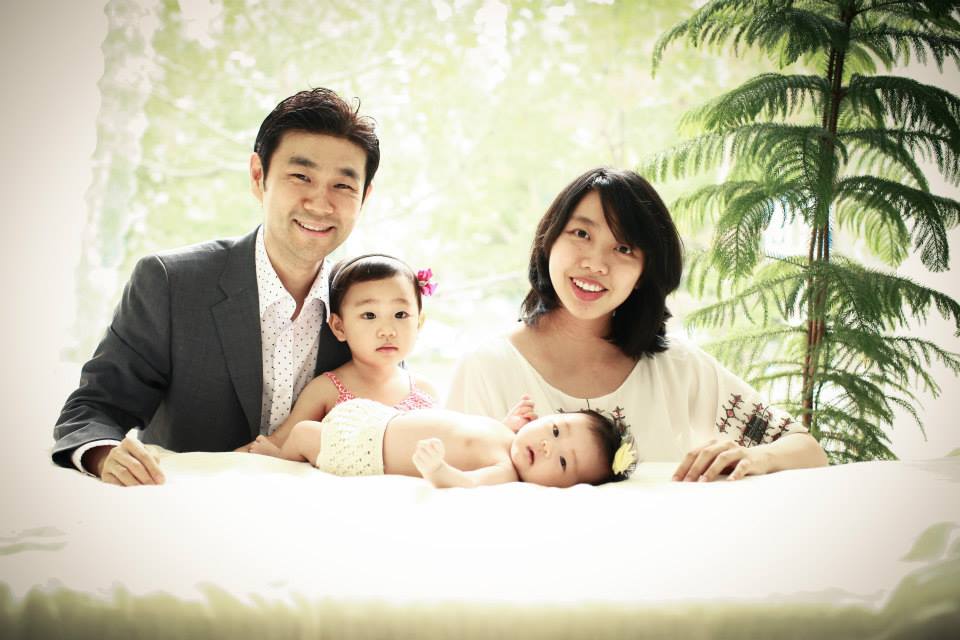
“Good morning Mommy,” greets my older daughter with a peck on the cheek. Envious, the younger will usually also approach, giving me a few more than her sister did. The older one will see it as a challenge, and next thing you know I’m drowning in kisses. I love it, because it’s fun and kissing elders on the cheek is quite normal back home. In my husband’s country, however, Korean children are expected to bow instead.

My children know that, and I love that they know that. My goal is to give them the tools to have the ability to jump, wait no, to effortlessly walk from one culture into the other as if there was no boundary distinguishing the two. It is sweet to receive a kiss on the cheek, but not every culture is open to that. And in our home, there are four cultures I’d like to expose my children to so that they have an idea of their roots.

When I was much younger, no one really asked me where I was from because my mother did all the answering. It was when I started traveling on my own that the question really bothered me. Malaysia is my passport country, but my inability to speak the local language and my accent screams foreigner. The Philippines is my home country, because that’s literally where my original home is but I need a “Balikbayan” stamp (foreign Filipino returnee) for a one-year stay. China is the country my family were originally from, whose culture we still practice in the Philippines and in Malaysia up until today, but China’s not going to recognize us. And Korea… oh most importantly Korea. Korea is now my home, because it is my husband’s. Though I’m not certain I really belong anywhere, I’d still like my children to understand them on a deeper level.

Because, truth is, identity (or the lack of it) can be crippling, or a thorn you can’t seem to get rid of. This is why so many multicultural families nowadays are intentionally raising their children to know their parents’ backgrounds.

Likewise, if we were still living in Korea, my children would be expected to be Korean, and only Korean. The reason is simple: outsiders get bullied, especially if they don’t look like Koreans. South Korea has been a monocultural society for so long that it’s still struggling to teach its younger generations to be more accepting of multicultural families.

In Beijing, however, as a foreign mom I can raise my children my way. Also helpers are more affordable here, and ours is a Korean-Chinese lady who only speaks to the children in Korean. My older daughter is learning about Chinese culture from her school, and I’m teaching my girls Filipino and Malaysian culture through small things like books and stories.

In Beijing, My Children Can be Naturally Multilingual

My husband and I really wanted our children to learn Mandarin, but it wasn’t easy to do so while we were in Korea considering how expensive it is. Fortunately we were expatriated to China, a dream come true, and now my older daughter is in a bilingual school where her peers are from all over the world. At the moment, my older daughter can speak three languages while my younger daughter can speak two and a bit of Chinese. This excites us, especially my mother whose native language is Mandarin. Finally someone in her family who can speak Mandarin as well!

In Beijing, My Children Can Meet People from All Over the World

In school, my firstborn’s classmates are from all over the world. Some of her closest friends (who are children of my own friends) are from different parts of Asia. Having friends from everywhere means that we always have an excuse to eat our native food or even learn about the different cultures from those countries. But most importantly, my children have more opportunity to become more accepting and more open-minded and more aware of different cultures.

My friend, for example, quickly corrected her half-German daughter when she was calling me by my name. When my daughter asked what happened, I explained that in Europe, it’s acceptable to call adults by their first names. My daughter accepted the explanation and just kept on playing. I almost doubted that she understood what I told her until she later on repeated the story to me!

Another importance is that my children will be less inclined to be racists. Some Chinoys I know from back in the Philippines see Filipinos in a negative light. The reason is simple: they don’t know enough people. I’ve met Filipinos who I look up to, whom I admire for their own personal qualities. Truth is, the more people my children know from different places, the less inclined they will be to think negatively of those places.

In Beijing, We Can Make our Own Identity

When people ask my daughter where she’s from, she simply answers Korea. I’m okay with that, because it’s simpler. But when it’s just us talking about where we’re from, we do it by discussing where all our family is from. My children know that they have family in South Korea, Philippines and even in Malaysia, and that our home is in China. My older daughter doesn’t like calling herself a Korean-Filipino-Malaysian-Chinese just because it’s too long. But rest assured, we’re thinking of a shorter name for all the cultures we hold.

What’s important is that we recognize and embrace our multiculturalism. And for my family, Beijing is the best place to do it.

Jackie is a Chinese-Malaysian-Filipina who blogs about raising multicultural kids at Bringinguptheparks.com.
—–

Speaking of China is always on the lookout for outstanding guest posts! If you have something you’d like us to feature, visit the submit a post page for details — and then submit yours today.

Why I Don’t Have the Luxury to Think “Marriage Is Outdated”

The other day, a friend told me the idea of marriage was outdated and totally over-commercialized. She said she had absolutely no interest in getting married.

I totally understood where she was coming from – because, after all, there was a moment in my life when I felt exactly the same way.

I’m not sure when it started – probably sometime in high school – but I was ambivalent about marriage and weddings. Whether it was the rising divorce rate, the growing acceptance of cohabitation or the fact that I never met anyone I could even picture myself married to, I can’t really say. I just know I didn’t grow up with dreams of the perfect white dress and honeymoons and the house in the suburbs with that white picket fence.

My mother once told me about the girls she remembered from college, there for the so-called “MRS” degree. I started my freshman year at university with her advice echoing in my mind – how I should just enjoy myself and not get too tied down to anyone. I enjoyed going out with guys during college, but I always intuitively understood that it was never about finding “the one” and more about finding out who I was. Though I never explicitly said so to anyone or even to myself, looking back, I realize I struggled with the idea of being committed to anyone — making thoughts of the greatest commitment of all, marriage, impossible for me.

But all that changed when I went to work in China after graduation, and fell for a Chinese man. It was the first time the M-word – marriage – was a serious possibility.

It wasn’t just that I was deeply in love with him, more than I had ever felt for anyone else in my life up to that point. Nor was it some generalized cultural pressure from family, his or mine.

No, it had to do with something most of us take for granted – the ability to introduce someone to your family and your parents and even your hometown.

At some point in my first year in China, during that time when this guy and I were dating, I imagined what my dad and stepmom might say when they finally shook his hand in their home. Or what my grandma would make for us when we came to visit. Or what he would think after seeing the high school I attended and the library my mother once worked at.

But these thoughts were easily derailed by the harsh reality for Chinese passport holders, who included my boyfriend. After all, he had applied twice for a US visa and was rejected both times. It didn’t matter how much I hoped to take him home to see the family and my hometown, because there was always this huge international bureaucratic hurdle that stood between us.

It’s one thing to ask your parents if it’s OK to bring your steady boyfriend or girlfriend over, not certain how Mom and Dad might respond.

But it’s another thing entirely to have to ask an entire country for permission to bring this person over in an embassy or consulate, where your love for them and your word no longer matters. Where decisions can sometimes feel arbitrary and capricious in the cold, aseptic visa interview rooms. Where it’s sometimes hard to understand why some people get visas and others don’t.

In addition, there’s a flip side to this conversation – namely, the right to remain in the foreign country where you met your foreign boyfriend or girlfriend. While I never had this issue, consider what Canadian singer-songwriter Ember Swift once wrote regarding her marriage with Guo Jian:

For me, my decision to marry him wasn’t about pleasing him or pleasing his family and culture either; to be perfectly honest, it was about securing a visa! Anyone who has lived in China without a permanent work visa knows that the Chinese system for foreign visas is an ever-changing nightmare. And, by extension, I admit that I liked being identified as “the one” in his eyes—the one worthy of a life commitment. Are those first reasons selfish reasons to marry? Was I wrong to marry him when it benefitted me and my ego? I’ll concede that I stepped around my previous political views on marriage in order to express my respect for his culture, too, but that’s not exactly a selfless act of love; it’s more about mutual human respect.

While of course she loved Guo Jian, the added benefit of gaining a visa to stay in China was among the reasons she wanted to marry him.

I ultimately broke up with that guy I met my first year in China – but I’ve faced similar visa-related issues while dating Jun, who is also from China and who I eventually married.

What I’ve learned over the years is that debates about the “usefulness of marriage” or whether “marriage is outdated” or even whether “marriage is too commercialized and therefore pointless” are a luxury not everyone has.

You don’t have this option to talk about whether marriage matters when you’re a Westerner in love with a foreigner who isn’t given a visa on arrival for your country. Or when you’re a foreigner loving someone in his or her country, where securing a visa through marriage could ensure the two of you remain together. Being subject to the heartless bureaucracies that go hand in hand with immigration rules and residency gives you an entirely new perspective on the value of marriage.

I recognize that there are off-putting things about modern marriage and weddings. And I should know, because I’ve blogged openly about my dislike for weddings in China (to the point that I’d rather not attend them, if possible). We should have conversations about these things.

At the same time, I’m not advocating for sham marriages that exist only for the sole purpose of gaining a visa or residency in a specific country.

But the fact of the matter is, nothing is perfect. Not marriage or weddings or, especially, the immigration rules that can potentially wreck the best of plans between a young international couple genuinely in love with one another. Sometimes we do the best we can with what we have.

And sometimes, marriage matters simply because it could mean the chance to take your loved one abroad and finally see him shake hands with your father in your hometown, just as you always dreamed of.

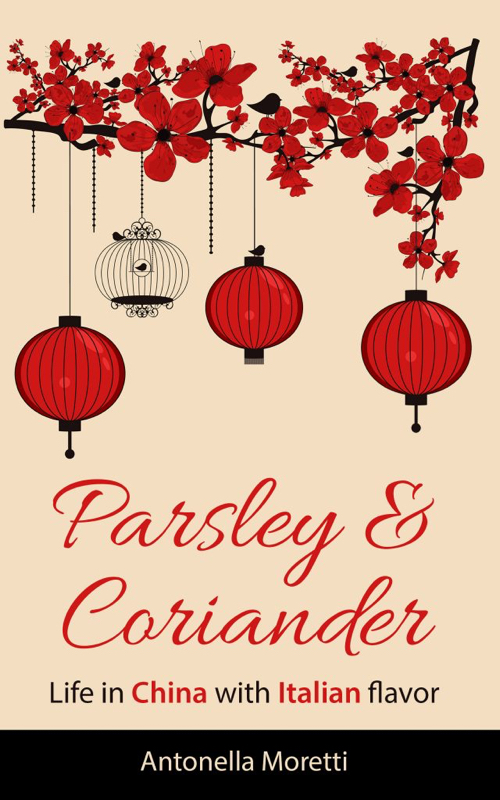
Interview & FREE Book Giveaway: “Parsley & Coriander” by Antonella Moretti

There’s not a month that goes by here in China without some remembrance of my first tentative steps into this country. How I stammered my way through even the simplest of conversations, and could hardly understand anything people said in return. My fears of venturing out to do commonplace things we usually take for granted – going to the post office, shopping at the supermarket, buying meds at the pharmacy, dining at a restaurant. The times when I would cry out of frustration of adapting to such a foreign culture, or simply because I was lonely and longed for the comforts of something familiar. The moment I fell in love with a local Chinese man.

Getting to know China that first year was such a formative time for me. I never realized that a chance decision to work here would eventually change my life and love forever. Despite all the challenges involved, I look back on that time with gratitude, knowing I wouldn’t be who I am today without it.

It’s a joy to remember this. But it’s also a joy when I happen to read a book that captures the spirit of finding your own path in China, especially as a woman. Parsley & Coriander is a delightful novel by Antonella Moretti that does just that, through the stories of Italian expat women in China.

In this compelling story of Luisella and her circle of friends and acquaintances, Moretti brings to life many of the foreigners I’ve met in China. Entrepreneurs and working girls. Foreign students smitten with Chinese men. Expat wives-turned-writers. Trailing spouses, uncertain what to make of their new home.

Despite the fact that this is a novel told through an expat lens, Moretti doesn’t shy away from the darker, more prejudicial sides of the China expat community – those content to criticize China about everything. While Parsley & Coriander is never preachy, the underlying message is clear – open yourself up to new perspectives, and give China a chance.

You’ve already had a taste of Parsley & Coriander through the guest post Antonella Moretti penned for the blog last month (On Being An Expat Wife in China). I’m excited to feature Parsley & Coriander and Antonella Moretti once again through this interview.

Here’s her bio from Goodreads:

Antonella Moretti is an Italian expat blogger and writer living in China since 2011. In her blog cucinanto.com she likes to share her experience as an Italian mom and trailing spouse living in China, always trying to understand the differences and contradictions between the Chinese society and Western culture. She is a contributor for online magazines and writes about expat life. Her first novel “Parsley and Coriander” tells the story of three Italian women who left their life in Italy behind and followed their husbands in China: it is a story about love, friendship and the courage of making choices.

You can learn more about Antonella Moretti at her blog. Her new novel Parsley & Coriander is available at Amazon.com, where your purchases help support Speaking of China.

Would you like to win a FREE copy of Parsley & Coriander? If you have a mailing address in China, why not participate in a giveaway today! Scroll down for details.

—-

Tell us about what inspired you to write this novel.

When I started my expat journey, living in China was new and exciting for me and I wanted to share everything about it. Moreover, I had the chance to know many different women and I was fascinated by their stories. Each of them had an interesting point of view and a different experience and I thought this was the right topic for a novel. In the book, all the characters live a different adventure, and yet they have a lot in common.

You’ve based much of your writing on the people you’ve met here in China, including your friends. How have they responded to the book?

Yes, I took a lot from daily life and many of my friends told me they really could relate to the emotions of the women in the book. But at the same time I mixed everything in order to create different stories and fictional characters, so nobody could really identify with a specific one! I confess I was a little afraid about how they could respond to the book, but they loved it! And I still have all of my friends!

How did you come up with Assunta’s, the Italian cafe featured in the novel run by a Chinese woman who has lived in Italy?

I liked the idea that the most popular hangout place for Italians in town was actually run by a Chinese woman. Italians are very proud of their food, their wine and coffee and I found it funny that Assunta chooses for herself a typical name from Southern Italy and claims to make the best Espresso in China.

Unfortunately, that is a completely imaginary place: in Suzhou we don’t have a cafe like that, where you can go and always find some Italians to chat with, drinking the perfect Espresso. And we really miss it!

Which character was your favorite to write and why?

My favorite character to write was Emma, because her adventure is the most tormented and romantic in the book. Writing her story, I really identified with her feelings: I got angry when she did, I cried when she was sad… I found her personality fascinating and I really loved her.

Your novel features a variety of relationships experienced by expat women in China, from trailing spouses to students to entrepreneurs. Without revealing any major spoilers, could you share with us some of your favorite relationship moments in the book?

I found interesting the relationship between Camilla, the young student in love with China, and Fulvia who, instead, hates everything of her Chinese experience and is very negative and sarcastic. Of course, in the story they have many occasions to fight! This also gave me the chance to talk about the different perceptions of China by foreigners.

What do you hope readers gain from reading your novel?

I hope readers will identify with the emotions of the characters, and discover they are not alone when they must cope with the difficulties of expat life in China. And also realize that living here can be a great opportunity when you are flexible and able to adapt. For those used to China, it can represent a memory of their experience while living in the country. And I also hope it can be useful for those who plan to move here: it gives a glimpse of what you could expect once arrived in the Middle Kingdom.

—–

A big thanks to Antonella Moretti for this interview on Parsley & Coriander!

Would you like to win a FREE copy of Parsley & Coriander? If you have a mailing address in China, why not enter the FREE book giveaway going on right now on WeChat?

(For those of you not based in mainland China, but with friends or family over in China who could receive it for you, you can enter too!)

Here’s how to enter:

1. To be eligible to win, you must use WeChat on your mobile phone and have a mailing address in mainland China. (Note – if you haven’t installed WeChat, it’s easy to download. You can find it in most major app stores by searching for WeChat or微信, or get it directly from their website here).

2. Follow my official WeChat account. If you’re not already a follower, just scan the QR Code below using your WeChat app (here are directions on how to scan QR codes in WeChat):Or, you can search for my official WeChat account under the words “speakingchina”.
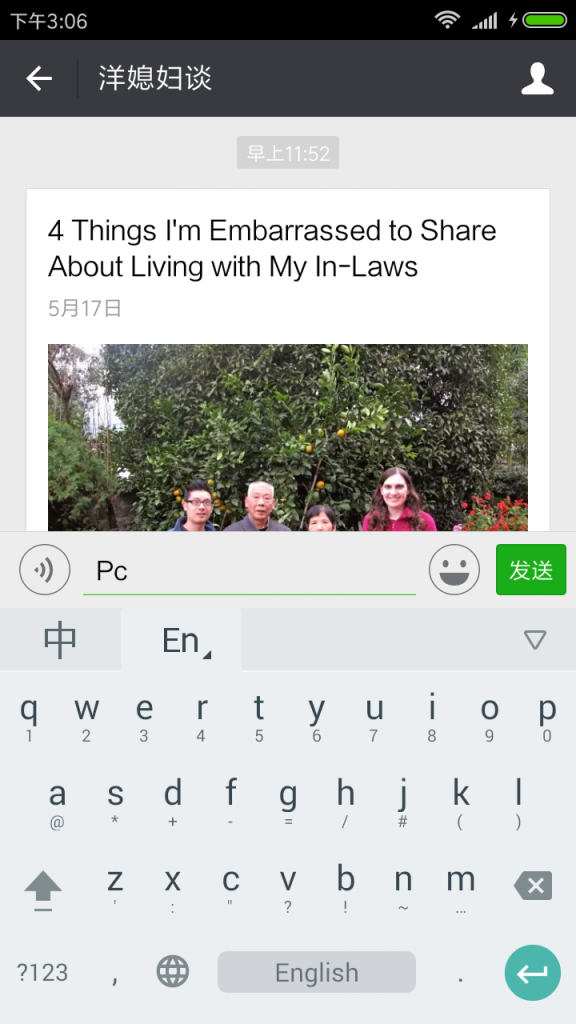
3. Finally, just send a message to my official WeChat account with the phrase “pc” and you’re entered.

It’s THAT simple.

Remember, entries must be received by 11:59pm tonight (May 18) Beijing time. Only one entry per person. Tomorrow, on May 19, I will randomly choose a winner from all the entries and notify them via my WeChat official account.

Good luck to everyone!

By the way, if you’re in Suzhou, China on Saturday May 20 and would fancy an evening of fine wine and books, you can meet Antonella Moretti in person: