To The Girl Tired of Hearing, “Why Would You Date Chinese Men?”

The other day, you told me how people constantly ask you, “Why would you date Chinese men?” You recalled that girl who grimaced at you just because you dared to date men in China. You said you felt like you were spending so much energy and time trying to defend your choices. You sounded tired of it all.

Believe me, I understand. Your comments brought me back to my first year in China, when I was sitting around the lunch table with my foreign female colleagues. One woman said, “When I arrive at the airport in America, the first thing I notice is the men, how handsome and how tall they are. I’ll just stare at them for hours, as if I were Chinese and had never seen a foreign man before in my life.” I knew what she was getting at, though another foreign female colleague put it more bluntly. “Chinese men don’t really seem that attractive.”

Even though I understood their every word, I couldn’t understand how they could brand an entire population of men as undateable. China is, after all, a country of nearly 1.4 billion people – and more people means more diversity and, ultimately, more great men.

It would take me years before I understood the depths of this problem – why Western women won’t date Chinese men. But I don’t need to tell you all this. You know it as well as I do. You’ve lived it.

But what do you do when the people around you just don’t get it? When they keep annoying you with the same worn-out questions about why you’d dare to date Chinese men?

Then again, who says you have to justify anything?

There’s nothing wrong with your decision to date Chinese men. Love is love. In a world rocked by so much hatred, fear and uncertainty, shouldn’t we all be delighted when someone gives their heart to someone else? Doesn’t that tiny act of goodness make the earth just a little bit brighter for everyone? Why should it matter that person happens to be a Chinese man?

It’s sad when people are so caught up in their own stereotypes about an entire group of people that they’re blinded to the possibility of happiness for someone like you.

But what’s worse is when they try to verbally walk you into a corner, putting you on the defensive for something nobody needs to defend in the first place.

So next time someone asks you “Why would you date Chinese men?” it’s time to put their proposed conversation in perspective. You might start with, “Why don’t you have something better to say?”

AMWF History: Mei Quong Tart, A Chinese Gentleman and Leader in Victorian Australia

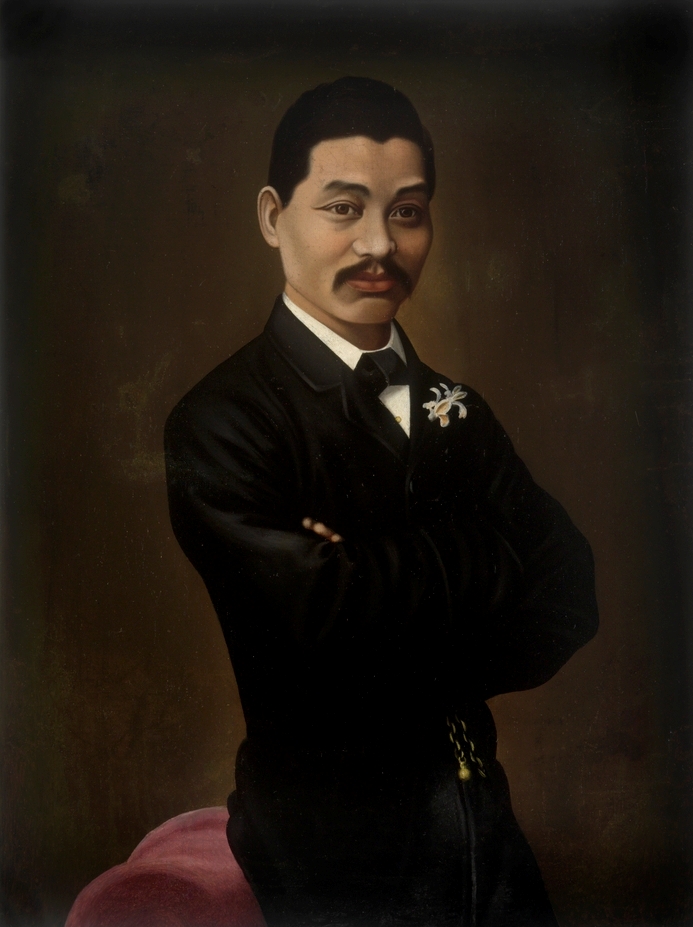
Mei Quong Tart By Unknown – This image is available from the Manuscripts, Oral History and Pictures Search of the State Library of New South Wales under the Item ID: 441601This tag does not indicate the copyright status of the attached work. A normal copyright tag is still required. See Commons:Licensing for more information.Deutsch |English |+/−, Public Domain, https://commons.wikimedia.org/w/index.php?curid=17880332

Mei Quong Tart may have married a white woman (Margaret Scarlett) in the late 1800s, a time when few dared to cross racial lines in the name of love. But he’s known less for his interracial marriage and more as one of the most beloved Chinese public figures in late Victorian Sydney, Australia.

Mei Quong Tart was born in Guangzhou, China, and migrated to the goldfields near New South Wales, Australia when he was only nine years old, accompanied by his uncle. But he was fortunate to have the Simpsons, a well-to-do Scottish family, serve as his guardians:

He was educated by Mrs. Simpson, who took a lively interest in his welfare during the years he remained on the field, and, on leaving, Mr. Simpson gave him a big interest in an important gold claim, which the fortunate young protege turned to the best advantage. Mr. Tart employed about two hundred Chinese and Europeans, and in the course of a few years his mining speculations made him a comparatively wealthy man.

His education and the affluence that surrounded him also turned him into an unusual figure among the Chinese community:

He could sing Scotch songs with singular pathos, recite Burns’ poems with a genuine accent, play Scotch airs on the piano, and jokingly alluded to himself as being a native of Aberdeen.

People would come to think of him as a regular English gentleman.

So it’s not surprising that when he resolved to marry, he chose to marry a Western woman. “…Quong’s good sense asserted itself, for he told his mother that when he did marry, it would be a European, for a Chinese woman in Australia would be but little help for him in carrying out the good works he intended doing.”

That woman turned out to be Margaret Scarlett, who went ahead with the marriage despite objections from her father.

…Quong asked Margaret’s father, George Scarlett, for his daughter’s hand in marriage. Even though he was a friend of Quong’s, George refused. Quong Tart and Margaret waited until the day after her twenty-first birthday, on 30 August 1886, and married anyway. Quong was then thirty-six. The appearance of grandchildren eventually reconciled Margaret’s parents to their daughter’s marriage.

I have to wonder, did her family ever take note of Mei Quong Tart’s success as an entrepreneur? His teahouses and restaurants in Sydney were some of the most popular meeting places of the era, where he dazzled patrons with fine tea and even finer service:

His employees were ordered to treat all alike, whether they wore silk dresses or cheap prints, for Quong Tart had long learned that the silk dress did not make the lady, nor the fine black coat the gentleman.

Mei Quong Tart also became a well known philanthropist of his time, including building schools, caring for the poor, and supporting the local arts scene. He campaigned against the scourge of opium addiction in Sydney’s Chinatown.

But no story about Mei Quong Tart is complete without acknowledging the contradiction in his presence. He was a popular Chinese man in a Victorian-era Australia marked by a venomous case of yellow peril:

…a well-known labour man was speaking in public and was pouring out his vials of wrath on “the wretched Chinese,” “everyone of whom,” he said, “he would, if he had his way, drive out of the State.” “Would you do that to Quong Tart,” cried out one from the crowd. “No, certainly not,” replied the Labour orator. “If they were all as good as Tart, I would let them stay here and come here, as they would be sure to be good citizens.”

Mei Quong Tart’s prominence in Sydney and his interest in the welfare of others, including his fellow Chinese, led to his involvement in some of Australia’s tragic anti-Chinese episodes.

For example, consider the case of the Afghan, a steamer carrying a large number of Chinese immigrants bound for Sydney in 1888. While the ship was en route to Australia, anti-Chinese groups successfully lobbied the government to pass a drastic Chinese Restriction Bill that made it impossible for anyone Chinese to land. It didn’t matter if they had all the lawful paperwork – if you were Chinese, you were denied entry. (Just replace “Chinese” with “a citizen of one of seven Muslim majority countries” and it sounds an awful lot like the US immigration brouhaha after Trump abruptly enacted his Muslim Ban 1.0 in early 2017.)

Quong Tart served as a mediator between the Chinese passengers and the government, but even his best efforts couldn’t undo the harm, as this excerpt from a Sydney Morning Herald article shows:

[Quong Tart] says that we can form little idea of the anger that was manifested by the masses in Hong Kong and Canton upon the return of the ships with the rejected immigrants on board. Many of the unfortunate people were landed in their native country in a state of utter destitution….when they landed after their enforced trip back they formed a rather striking illustration of the manner in which Australia had come to regard the question of Chinese immigration. Their want and destitution appealed to the sympathies of their countrymen and their stories of imprisonment on board the ships in Sydney Harbour inflamed the popular anger.

Mei Quong Tart’s service to the Chinese in Australia didn’t go unnoticed by the Chinese government, who named him acting Consular official to China and later conferred the title of Mandarin upon him.

You can learn more about Mei Quong Tart and his fascinating life by reading The Life of Quong Tart or, How A Foreigner Succeeded in A British Community by Margaret Tart.

“I Don’t Lend Out My Car or Wife” Is a Real Bumper Sticker in China – Pub’d on WWAM Bam

WWAM Bam just published my piece titled “I Don’t Lend Out My Car or Wife” Is a Real Bumper Sticker in China. Here’s an excerpt:

My husband always says that what’s popular in America will find its way to China, somehow. I see it all around me whenever we venture out. There’s a Wal-Mart across the street from us, a Starbucks Coffee at the closest mall, and lots of American car brands weaving through traffic. And when we’re at home, perusing the Chinese versions of Netflix, there’s a seemingly endless supply of Hollywood movies and TV shows.

So it was only a matter of time before rude bumper stickers made inroads into China.

Americans love their rude bumper stickers, and there are tons of them. Most say something rude about the driver behind them. Some insult groups of people according to ethnicity, gender, politics or sexual orientation. I’m convinced America gave birth to the idea of putting totally inappropriate phrases on your car’s bumper. And given that America elected Donald Trump as President, a man who spews rude comments every time he takes to Twitter, it’s not hard to believe this. So I expect this kind of rudeness displayed on someone’s bumper in America.

Wouldn’t you know it, rude bumper stickers are now making headways in China.

Head on over to WWAM Bam to read the full post. And if you love it, share it!


Guest Post: No One Knew Wei Loved Ella, a French Girl in China

Sometimes, one great guest post leads to another. Inspired by the story Crying Over Him After 5 & A Half Years, my guest writer Raymond Chen (who is the author of the graphic novel “Borderlands”) shares the haunting tale of a man named Wei who fell in love with a French girl — but never told anyone about it.

Do you have a sad story or other guest post you’d like to share here? Visit the submit a post page to learn how to have your words published on Speaking of China.
—–

By Mstyslav Chernov – Self-photographed, http://mstyslav-chernov.com/, CC BY-SA 3.0, https://commons.wikimedia.org/w/index.php?curid=27730254

Good evening fellow storytellers. Now you are probably wondering what does this tired looking man in the dusty old coat have to say about a love story between a Chinese man and a French woman. Hell, I look like someone you talk to when you need advice on what gun you should use when you are tryin’ to take down a grizzly bear in the Rockies. Half the time I give that kind of advice. But tonight, in response to another story in this place titled “Crying Over Him“, I feel like I got some’ to say that has been in my memory for the past 15 years.

Now I dabble in writing now and then and even try to work on my own literature. But most of the time I find myself drawn again and ‘gain to that old fifth of Jacks. But tonight I got a true story to tell that brings a tear even to this weathered face time again.

So pull your chairs around the table and get me the barkeep if you will? I’ll take a bottle of Jim Beam and I am buying for the rest of yeh’…

This story is one that my Uncle shared with me about one of the young men on his work team back in 1997. First off, we must realize that Asian men, most particularly Chinese men, are very reserved and self-conscious. As a man of Chinese descent myself I can say that I am no exception. We simply don’t make the “first move”. Especially in this day and age, ANY woman is approached on a daily basis by many creeps and shady men with bad intentions. We DON’T want to be potentially thought of as “ugh, yet another guy is trying to hit on me”. Because the life of most Chinese men revolve around how others think of him, so he does not want to be put in a position where someone may judge him negatively. So most Chinese males do not ask the girls they like on dates, and wait for them to ask first.

Now on to the story. My uncle is an excavation supervisor in one of the numerous ore mines that dot the northern borderlands of the China-Mongolia frontier. In 1997 a new man joined his team. Lets call him Wei, shortened version of his much longer Chinese name. A man from Shanghai, around age 22, whose dream to operate heavy equipment and drive industrial machinery just came true. He was one of the best workers on the team and would be the first to respond to any crisis that occurred, and always exceeded expectations. He was extremely popular with his coworkers, always shared jokes, drinks, and laughs. And a manly man of the truest sense who did not mind going into danger.

Then we found out about Ella. Ella was a French girl who studied in Shanghai. Blonde hair, with the face of an angel. She, in her beautiful sky-blue dress, just did not fit in amongst the backdrop of the harsh ruggedness of the northern borderlands, their ravines of carved rocks and the huge diesel excavators belching acrid smoke into the winter sky. But there she stood, amongst the flashing lights of the rescue trucks and running figures of shouting paramedics and military men, tears streaming down her face.

Ella had met Wei when he was working in a bakery in Shanghai’s Meilong district. She had been living in Shanghai for just over 4 months, pursuing a career in the performing arts. Which was exactly the point of their first conversation, while he tried to fill orders and clean kitchenware at the same time. Their mutual understanding of English helped them out in miraculous ways. Wei loved Chinese TV serials, and the two of them talked about acting and movies in general. Their first conversation became the one of many. They began to see each other outside of work. Usually Wei would take Ella to one of the more traditional restaurants in the area and they would spend long hours simply walking around the town or watch the city skyline from the banks of the Suzhou River. Wei showed genuine care and concern for her, even going of his way to place his jacket over her when a freak snow squall began to blow one day as they tried to make it back home. Despite Ella’s insisting that she was not cold even though all she had was a light sweater, Wei told her to keep the jacket on. He said nothing, even though his shivering betrayed his true condition. But he did not say anything else. And he did not say anything else to suggest that their friendship may progress to anything else. Even though now they began to walk hand in hand and every time they said their goodbye in front of her apartment, he would kiss her hand and press it against his face for a long moment before turning to leave. And each day, Ella would look forward to spending more time with Wei, as we found out afterward. He in turn, as well, and on multiple occasions, showing more concern for her well being than his own. Even though deep inside, Ella yearned for the day Wei would ask her the question, that question never came.

One day, Wei told Ella that he planned to get a “real job” instead of the chump change that retail and food service always is. When she asked him what he meant, he told her that he had scored a position as a tunnel excavator in a firm that was blasting megatons of metallic ore from the long extinct volcanic ridges of the northern high country. He would be leaving soon, embarking by train to his new place of employment up in the country where people always referred to as the “meeting place between Heaven and Earth. He told her that he will write often. The one thing he said before leaving was that “Ella, if you ever feel lonely, depressed or that something in the world is letting you down, don’t, because I will always care about you and be there for you”.

Seven months after Wei had started working in Lower Mongolia and just 2 days after Ella had received his last letter, Wei was rousted from sleep one night by the team foreman. Wei had excelled as a worker and did not hesitate to be coached in a new position as equipment maintainer and diesel mechanic trainee. Well on this particular night in the bleak February of 1997, watchmen had reported smelling hydrocarbon fumes coming from the entrance of a newly dug set of tunnels. One suspected that maybe one of the big Tilley lamps used to illuminate the grounds was leaking from a faulty valve. Wei was told to inspect the premises and check for any sign of trouble. As a backup, Wei had two of the team excavators to go with him in case he need help moving something.

He did not see anything out of place as he went deeper into the shaft, even though the rancid odor of mercaptan was almost unbearable. Then he remembered that no power had been connected to this set of shafts yet and propane was still being used for illumination in the outer vestibule of the tunnel. The black hoses of the mainline led further back into the shaft, and in one of the recesses dug into the walls of the corridor, a large metal door, partly off its hinges and now unmovable due to it being wedged against the mouth of the recess, lay between him and the bulk tanks that supplied the gas to the mantles of the overhead fixtures. The stench was the most profound here and Wei decided that this metal slab had to be removed so he could look at the tanks. Despite the combined efforts of three muscular men, that damned slab just would not budge. Cursing whichever idiot had apparently rammed the door with a hi-lo machine and never bothered to report it, Wei had the door handles attached to a winch that one of the men outside had brought, mounted on the front bumper of a 500 HP FAW ore loader. The chains now connected, Wei signaled for the man in the truck to start the winch motor.

The winch had proved to be extremely effective at removing the obstruction, but it was not really built for this type of work. As a matter of fact, the winch was designed for shunting disabled vehicles or railcars that had no motive power and must be moved immediately. It was entirely too powerful, and before the cries of the frantic men in the tunnel had reached the driver to shut off the engine, the door, along with a section of the wall, had exploded free and was now hurtling towards the opening of the shaft, bulldozing everything in it’s path. The several hundred pound payload struck the support beams of the shaft and they came tumbling down, bringing rocks and cement thundering to the floor. By the time the loader operator had engaged the emergency shutoff and cut the engine, the entire crew of the sector had stumbled out of their bunks, watching a pillar of dust rise from the place where the new shafts had been.

They, the experts in their suits and the military engineers in their green uniforms, had told us that it was by a stroke of luck that the leaking propane had not detonated. That if it did, the firestorm would have jeopardized the lives of everyone in that sector. But was it really good luck for the family members of the four workmen that were in the tunnel when the winch and it’s payload had turned the tunnel into the bore of a monstrous cannon? For the next several days, men, women and children gathered at the mine entrance as rescuers frantically tried to remove the multiple tons of debris that now blocked the shafts. Among those crying for their beloved husbands and sons was a beautiful young French woman named Ella, who had arrived from Shanghai as soon as my uncle had sorted through Wei’s emergency contacts and saw the number listed among those of his immediate family.

They had found him by then, his body crushed into an unrecognizable mass by the tons of cement and steel that came down from the tunnel’s overhead supports. My uncle stood there and watched as Ella, sobbing hysterically, had ran to the tent where the corpses were stored, only to be carried back to the perimeter entrance by soldiers and firemen.

It took this incident, and several more after that, before China’s government began a nationwide campaign to address the lack of regard for safety that existed in a lot of the heavy industrial settings, most particularly in the mining sector. As to Ella, my uncle had never heard from her again, although an English speaking member of the work team had tried to console her when she had arrived at the mine, telling her that Wei was the best worker this company has ever hired. Loyal, faithful, and badass to the core.

I had never met this Wei, and only have heard stories from my Uncle, when I would go visit his ranch house in the borderlands, and we would head to the saloon and guzzle down our favorite whiskeys. I would tell my uncle about my life in the USA, and how the great the hunting and fishing was in the hill country of western Pennsylvania. I would tell him about the guns, the bows, the snowmobiles and the winter nights around campfires with my backcountry friends after a day of stalking for bucks with our scoped Winchesters. He in turn, would tell me about the hardassed old guys in his neck of the mountains that still built bows of steel and bronze that could bring down elephants. But more often than not, he would tell about Wei, and how no one in the team knew he fell in love with a French woman. Whiskey is my favorite drink. In fact, it is the one of the only things I love to drink. The other being hill country homebrew straight from the cabin distilleries of the Appalachian. But no matter how warm the alcohol flowing through my bloodstream makes me feel, I cannot bring myself to think about just what went through Wei’s head the second he realized that something had gone truly and terribly wrong down in that dark and cold shaft deep in the cliff.

Raymond Chen is the author of the graphic novel “Borderlands”, a story about a Chinese student and his beloved Peruvian wife. His harrowing journey through a landscape of death and brutality would become the fight for the survival of an entire nation. The novel is available to read at no charge here: http://blueskycountry.tumblr.com.
—–

Speaking of China is always on the lookout for outstanding guest posts! If you have something you’d like us to feature, visit the submit a post page for details — and then submit yours today.

Guest Post: On Being an Expat Wife in China

I’m thrilled to publish this guest post from Antonella Moretti, author of the novel Parsley & Coriander: Life in China with Italian Flavor. Here’s the description from Amazon.com:

How would you feel if you are told that you have to give up your whole life and move to China? This is what happens to the three Italian women in the story, who decide to follow their husbands abroad.

Challenges, thrills, ups and downs and the struggle of having to deal with a very different culture.

Antonella Moretti portrays a group of trailing spouses: some of them adapt to the new reality and reinvent themselves, others simply can’t bear the cultural shock and give up.

Stay tuned, as I’ll be featuring an interview with Antonella about her novel later on the blog.

Do you have a guest post you’d like to see featured here on Speaking of China? Visit the submit a post page to learn how to get published on the blog.
—–

My name is Antonella and I moved to China from Italy in 2012. It was our family’s first experience abroad and I didn’t know what to expect from this new adventure.

So, what happens when your husband receives a job offer in China and you decide to follow him?

You’ll probably become a taitai. 

Taitai in Chinese means married woman. But for us, the wives of foreigners who work in China, it also means to be a lady who sacrifices a part of her life and goes toward the unknown. A woman who will probably become a privileged housewife, with an ayi hired to clean the house, kids all day long at some international school, maybe a driver to take her around. And a lot of free time.

Sounds great, isn’t it? But sometimes, if you were used to being a busy woman, you struggle to fill that time.

Taitais meet in foreign coffee shops, trying to deal with the diversity of Chinese culture. Some of them like their new life. Others are overwhelmed by cultural shock and only desire to go back to their motherland. Many of them become addicted to shopping and fill their wardrobe with fake bags and clothes. Others are obsessed with their body and spend their days at the gym. Some try to work, but for spouses it is not easy to find a job in the same field you were employed in, especially in China.

When I decided to follow my man, like many others I quit my job. I was an accountant and never really loved that job, So no tears from me when I told my boss I was going to resign.

Becoming a taitai myself, I had to deal with all the unusual spare time. To find myself without anything to do was really weird! I feared I had no purpose anymore. Shopping sprees and neverending chitchats were not meaningful activities to me. I wanted something more! So I had to reinvent myself. And what was better than rediscovering my old passion for writing? I started a blog and after a while, I wrote and published a novel.

What is this novel about? About expat women, of course! The topic I know best. I didn’t have to do much research to write about it. Even if the book isn’t a memoir, I poured into the pages all the experiences, the stories, and the feelings of my first years in China.

I wrote a novel because I wanted to describe the most expats I could — from the ones who adapt easily to the ones who never fit in. And fiction helped me to mix everything and create a captivating plot.

The women in the book try to get the best out of their “taitai life”. They challenge themselves, doing new things that sometimes frighten them. Like Astrid, who becomes a stronger person:

“Every choice she made, trembling with fear, she did wondering if it was the right one. It was anything but a smooth process and left her worn out, tired and nervous. But now she understood that dealing with it all, taking all those risks, had made her able to do things she, knowing herself, would have considered totally impossible until a few months earlier.

For someone this is just too much, and they lock themselves at home, frightened and shocked. There’s the young Livia, who says:

“Not everyone is like you, Luisella! Not everyone can keep smiling through difficult times. I know you don’t appreciate those who honestly admit not being happy in China, but we are not all the same, you know? Some of us need a long time to adapt, some will never fit in, but they should not be judged for it!”

In my case, I didn’t have that much of a cultural shock. Maybe because I’m flexible, maybe because I’m curious. Or maybe because, when I was young, I was a girl scout and certain things don’t shock me! But, joking aside, I understand that this is not true for everybody. This is the reason why many expats live in the “expat bubble”. They rent an apartment in a very nice compound and spend their time inside it, hanging out almost exclusively with fellow countrymen.

On the contrary, there are also expats like the young student Camilla, a truly China-lover, who arrives in the Middle Kingdom full of expectations, declaring she wants to find a local boyfriend.

“Astrid looked at the picture on her smartphone screen: only Camilla could find the courage to photograph a bank employee, not at all ashamed to be seen!

– He’s actually really handsome!

– He is tall, has dark, almond-shaped, irresistible eyes, a prominent jawline, a straight and long neck, broad shoulders…

Astrid laughed:

– Did you X-ray him? Okay, but now what’s the next move? Are you going to ask him out?”

But dreams and reality do not always match, and she will clash with difficulties she didn’t expect.

Because of her declared love for Asia, she will become the favorite target of Fulvia’s mockery. Fulvia is one of the so-called “three witches”, a group of ladies who don’t miss a chance to speak ill about their life in China, giving voice to the ones who think they are right just because they are Westerners.

“The Three Witches (…) never missed a chance to rant about China and the Chinese people, and didn’t make the slightest effort to learn more about the country and the people that were hosting them. Indeed, their mouths were filled with mostly racist platitudes.”

Emma, instead, arrives China without expectations or prejudices. She comes to save her broken marriage and end up finding a new, complicated love: she falls for a calm, strong Chinese man. But their love will be destroyed by doubts, prejudices and guilt. Eventually, she understands that all she wants is to save their romance…but is it too late? Will she win his heart again?

“She felt as if she were floating on the clouds. The meetings with Shen had become a regular thing, and although nothing had happened between them, Emma felt satisfied and complete. She knew little or nothing about him, and yet she seemed to have known him for a lifetime.(…)

Sometimes, as they sat gazing at the river, their shoulders touched. Emma felt a strong urge to take his arm and put it around her shoulders, but at the same time she didn’t dare. She was savoring the tension that grew stronger every time but didn’t force his hand in any way.”

This was the only part of the story that required some research. Neither I nor any friend of mine have ever been involved in a cross-cultural relationship and I wanted to make it sound realistic. In this, Jocelyn and other women who share their AMWF experiences in their blogs helped me a lot. I discovered for instance that Chinese men show their love differently. They don’t use many words, they show their appreciation in a subtle way. Yet Shen is a very romantic character, and my readers loved him!

Living day by day in this country, you’ll learn to appreciate things you wouldn’t think you could. Like coriander, the herb which gives the title to the novel. At the beginning I really couldn’t stand its smell. I found it nearly disgusting. Then, little by little, I learned to enjoy it. And now I really love it!

Italian writer Antonella Moretti, who resides in Suzhou, China, is the author of Parsley & Coriander: Life in China with Italian Flavor.
—–

Speaking of China is always on the lookout for outstanding guest posts! If you have something you’d like us to feature, visit the submit a post page for details — and then submit yours today.

Guest Post: Gaining a “Chinese Family” While Teaching English in China

Sometimes the family you discover in China isn’t the family you married into. It’s the family you create through meaningful connections. That’s the story Josh and Liz of Career China have to share in this guest post.

Do you have a story about your Chinese family or other guest post you’d like to share on Speaking of China? Visit the submit a post page to learn how to have your words featured here.
—–

Swirling my chopsticks around in the giant pot of boiling oil and spices, I make a feeble attempt to snag a piece of thinly sliced beef floating about. Finally I catch one, but that’s the easy part. Now I must have confidence in my shaky chopstick skills to get it out of the pot and into my bowl of sauce, then into my mouth without dropping it on the table…or my shirt. After my success in this seemingly minor act, my husband and our Chinese hosts, CJ and Gigi, cheer and hold up their glasses of wine for a toast. “To good friends from around the world, China and the USA!” our new friend CJ proclaims. But for us, the relationship is more than just friends, it feels more like we have a Chinese family.

How Did We End Up In China?

My husband and I arrived in Guangzhou, China back in 2014. The previous year we had decided that we weren’t satisfied with our old lives in the United States, even though we had good jobs and a comfortable middle-class lifestyle. The two of us always had a passion for exploring the world, not just traveling and seeing the sights, but interacting with the local people and learning about the culture.

We realized that we weren’t fulfilling this passion with only a few weeks of vacation each year, so we made a plan to save up some money and then sell everything to hit the road for a while. Setting off in August 2014, we spent time in South East Asia as well as New Zealand before ending up back in Thailand for TEFL training (teaching English as a foreign language). Our plan was to be able to stay longer in a country by working as English teachers, that way we could really experience the culture more closely and for a longer period of time.

Shortly after finishing our month-long program, we began searching for teaching opportunities. Knowing that China has such a massive market for English learning, and such an interesting ancient culture, we set our sights on finding a job in China. And we were surprised how quickly it all happened — within a matter of weeks, we were flying to China!

Our “Chinese Family”

When we decided to move to China, we had absolutely no idea what to expect. And now as we look back on our time here, we can’t imagine not having our “Chinese family” in our lives. We were really fortunate to make good friends during our time in China, including Gigi and CJ, who are a Chinese couple that run an English school and have a little daughter. We also became great friends with another expat, Stephen, who is from England and had been living and working in China for many years; he has a Chinese wife, Wendy.

One of our fears about living in China was that we would feel isolated or lonely without close friends and family. But we’ve discovered that it has been the opposite. Our social calendars seem to always be full. And while we also had some other expat friends who were teaching in China also, we spent a significant part of our time with CJ, Gigi, Stephen and Wendy.

But it wasn’t only for fun. Our “Chinese Family” was there for us when we needed them. Whether it was helping to solve problems with our bank account, getting our internet upgraded in our apartment, or talking to the landlord to fix a wall. They would help translate and take us through the process. If we were sick, they brought us medicine and even food. And when I broke my foot, they were there to take me to the hospital for check-ups. They have been like family to us in just about every way!

Alike, But So Different…

Whenever we travel and meet people from around the world, it’s interesting to note the similarities and differences. In many ways, our “Chinese family” was just like us. Young couples who talked a lot about their futures and their dreams. They discussed their apartments and what they loved about them, and what they wished they could remodel. We all spoke fondly of our childhood and families, but also vented about frustrations with our parents.

But at the same time, we also came from very different backgrounds and had quite different family situations. With my husband and I both being from the States, we discovered just how fortunate we were to have fun-loving childhoods with minimal pressure. We also began to appreciate how we were able to choose on our own who we wanted to marry, without much input from our parents. But in Chinese culture, the parents are quite involved in match-making. And for our Chinese friends growing up, there was a lot more pressure on the children to do well in school and get good jobs.

Another area that we discovered a difference was in our desire to travel freely and not worry about having children. In fact, whenever people in China found out I was married, they would immediately ask about children. Not that they were intending to be rude, they were just curious how I could travel if I had kids. And when they found out I didn’t, they wanted to know why.

In China, children are expected almost immediately after marriage — and in the States, many people are happy to enjoy themselves with their new spouse for some time before they consider having kids. It’s also perfectly acceptable if people choose not to have children in the States, while that’s not really the case in China. If a couple is married for some time and don’t have kids, people will start to think something is wrong.

It was definitely eye-opening to chat with our Chinese friends about the subject of family structure and children. We could see that they wanted to make their parents happy, and that there were expectations of them when it came to having kids. While we didn’t feel like they were unhappy with these expectations, we could feel that there was maybe some pressure on them. Gigi and CJ were happy to have their daughter, but they were also planning to have a second child — and Gigi kept saying how she really was praying for a son, so she could make her husband happy. Personally, we know CJ would be happy with either a son or a daughter – he is a great father. But but deep down, we knew that there was a cultural aspect to this pressure to have a son too.

Oh the Memories!

Because of our “Chinese family” we were able to experience so many things that many other expats may not have been able to experience. For example, during Chinese holidays we felt like we got an inside scoop about the holiday from our friends, and were even be able to participate in special family activities. In fact, one of our best memories of our time China was during the Spring Festival holiday (Chinese New Year). We were invited over to Gigi & CJ’s apartment to cook homemade dumplings, which is an important tradition during the festival.

We made everything from scratch together, even mincing the meat with big cleavers! While the men chopped the meat with lighting speed, Gigi, Wendy and I were out on the large patio rolling the dough and chopping vegetables. Then we all handmade what seemed like hundreds of pork stuffed dumplings!

I discovered quickly that making dumplings is not as easy as it looks…in fact, mine were downright ugly! Our friends also told us how we needed to put little “surprises” in some of the dumplings for good luck, such as a big garlic clove or a pepper. Then if a person bites into it, they should have good luck in the next year!

It sounds like a fun little game, until later when you are eating them and somehow manage to be the only person not to find a “surprise” until you’ve eating about 15 dumplings and your stomach is about to explode! “Come on Lizzie,” Gigi told me “you have to eat another until you find one so you can have good luck next year!”

In addition to spending time with our friends over other holidays like the Dragon Boat Festival or Mid-Autumn festival, we also enjoyed having fun with them at sporting events. CJ was a huge football (soccer in the States) fan, and the local professional team, the Guangzhou Dragons, was actually one of the best in the country. So they purchased us tickets to go to a couple local games, where we all wore our jerseys and cheered loudly for the local team. We also enjoyed sporting our jerseys and playing football together in the park on pleasant evenings, or going to a local bar to watch the team play while having a few drinks.

Being a huge sports fan, my husband was really excited to have a local friend here in China who enjoyed sports just as much as him. And he was really excited to learn more about football and have a team to cheer for. Growing up in the US, he was more into American football, so he has definitely developed a new appreciation for the international football game that is so popular everywhere else in the world.

Bringing the World Together, With Open Hearts

We really couldn’t imagine our experience in China without our lovely local friends. From sharing their special holidays with us and letting us experience it with them, to making us feel at home, and even taking care of us when we needed them. It has been the ultimate cultural exchange, and something we never could have experienced if we didn’t take a risk to move to China to live for a while.

China has been great to us, and it’s not just our “Chinese family” — we’ve made so many other friends and met many other people who have touched our hearts. Never again will we see this country the same way. And that’s the point. To bring the world together by opening our hearts to each other and learning about one another.

Liz and her husband Josh have been living and traveling around Asia since 2014. Currently they split their time between the USA and China, working on their travel blog and assisting those who are interested in living and working in China through their project Career China.
—–

Speaking of China is always on the lookout for outstanding guest posts! If you have something you’d like us to feature, visit the submit a post page for details — and then submit yours today.

How “Italian Eggplant” Divided Us, and Then United Us in Love

(Photo by Alice Henneman via Flickr.com)

The old saying goes that the way to a man’s heart is through his stomach. But what of a woman’s heart? I have to wonder if that’s even more true for us, especially after the culinary feat my husband accomplished in the past few months.

In case you didn’t know, my husband is now the chef in our family. He’s the one who toils every evening in the kitchen to put together some of the most scrumptious meals I’ve ever tasted.

That’s quite a feat from a fellow who once shied away from the wok. Whenever people asked him if he could cook, he’d always laugh and reply, “I only know how to add in oil and salt.” He always used to claim I was the one more skilled in this arena, preferring to leave the spatula to me.

But in the past few years, my husband started shouldering more of the cooking responsibilities. Until at some point (I still can’t remember exactly when) he took over preparing all the meals in our home. It was a godsend in many respects, especially when I was in the hospital last year and couldn’t have managed the recovery without his support in the kitchen.

The last thing I expected, however, was for my husband to prepare that infamous eggplant dish, just for me.

Jun and I have a fascinating history with eggplant – specifically, a Chinese-style dish I’ve nicknamed “Italian Eggplant”. It’s one of the first dishes I ever prepared for him when we started dating years ago. It’s also a dish that led to one of our first heated (no pun intended) arguments.

I remember that muggy summer evening in Hangzhou, proudly setting that blue and white porcelain bowl on the dinner table after toiling over the wok. The whole apartment was redolent with the savory aroma of eggplant stir-fried with tomatoes, garlic, ginger, soy sauce, a dash of vinegar, and a touch of sea salt. I inhaled with satisfaction as I thought of all the friends who had tasted the very same dish, heaping on the compliments as big as the second and third helpings they enjoyed at my place.

Surely, Jun was going to love this dish just as much. Or so I thought…until he started eating.

“Too sour. Too much soy sauce. Too much tomato,” he said. Jun grimaced with every bite – and I could feel my anger rising with every complaint. How dare he insult the food I so lovingly prepared for him! Where was his appreciation for my hard work?

I let him have it, as I slammed my chopsticks on the table and asked him what the hell was wrong with him?

Admittedly, I was a little hot-headed at the time. But it had to do with how I’d been raised – to always say thank you to the chef, even if you didn’t like the food. It was a lesson I’d learned well after years of dining at my paternal grandmother’s house. She was a notoriously horrible cook who would entertain us with things like soggy, tasteless macaroni and veggies from a can. Even though I could sometimes barely stomach the stuff on my plate, I would force myself to say how good the food was.

When I told Jun about this, his face turned as red as the tomatoes in the dish. Turns out, he had a completely different experience growing up at the table. Every dinner included a course of blunt feedback about how everything tasted – even if that meant saying the food was unequivocally bad.

I apologized for my outburst, and he apologized for criticizing my food, instead of saying thanks.

Meanwhile, I figured that was the last time we would ever dine on my Italian Eggplant.

Except, it wasn’t.

Over the years, Jun surprised me by actually giving the dish a second chance – and loving it. It gradually became a favorite for us. Yes, a favorite! Who would have thought?

Then, after Jun assumed the role of chef in our home, he surprised me again.

One evening, our house was once again redolent with the aroma of dinner, courtesy of Jun. And it smelled very familiar. Was that eggplant and tomato in the air? And soy sauce? I followed my nose to the table, only to discover that Jun had cooked Italian Eggplant just for me, from scratch.

With one bite, I found myself in ecstasy once again. “Mmmm, this is so delicious!” I exclaimed, unable to contain myself over the delectable flavor. How had he so perfectly replicated the dish I once lovingly crafted for him all those years before?

Jun likes to say he transcended himself in finally learning to make this dish. I like to say he did it for love. But honestly, whenever it’s on the table, we don’t say much at all. We just eat and eat and eat, thankful that the food that we once argued over brought us together in delicious harmony.

Interview with Lita, China’s WeChat Cookie Queen

If you’ve never heard of Lita (also known as China’s cookie queen on WeChat) you’re missing out on some heavenly desserts. Especially her pie cookies.

A native of Atlanta, Georgia, USA, Lita came to China looking for adventure, and found a husband here as well as her groove in the baking business. She opened Sweet Tooth Confections and now sells her delectable cookies across China, with plans to start a “cookie of the month” club. Lita’s pie cookies — the goodness of a homemade pie, baked into a convenient cookie size — are a big reason people keep coming back for more. 

Plus, it’s not hard to love Lita, who shines happiness upon everyone in her friendly little corner of WeChat.

I’m thrilled to introduce you to Lita and Sweet Tooth Confections through this interview. To order Lita’s cookies on WeChat, just scan the QR code below and add her on WeChat (her WeChat ID is “Chocolatasian”). (Note: delivery limited to residents of China.)

Tell us a little about yourself.

My name is Shalita, but most people just call me Lita. I was born in Atlanta, Georgia. After high school, I moved in with my grandmother and attended Georgia State University. During that time my grandmother developed uterine cancer, and in my senior year passed away. Nine short months later, my mother passed away. I was just turning 21. Maybe my mother knew that she didn’t have much time left because after my grandmother’s funeral, she made me make her two promises if anything was to happen to her. Promise number one was to not let anyone separate us and promise number two was that my brother and sister get an education. At age 21 I became guardian and mother to an 8-year-old and a 13-year-old who had no parents and no grandparents. I dropped out of college and devoted my life raising and loving them. Many years later after the kids had grown and gone, I found that I didn’t have much of a life. I had never even had a boyfriend. They had become my everything. A decision that I have never regretted. What I did regret was that I hadn’t spent enough time building a life for myself. I had been working for the government for 9 plus years. I had a good job with great benefits. I was good at my job, had a nice apartment downtown, but something was missing. So I went back to school, which led me to China and led me to my husband. I always told my brother and sister, we are not defined by the pain and loss we have suffered, but shaped by them to become better people. I never allowed them to feel sorry for themselves, to wallow in self-pity, or to use excuses. Now my brother is married and the proud father of four. He is a very successful military man. He has done very well for himself and family. My sister is a professional chef and mother of three with two degrees. As for me, I am creating and living my dream.

How did you first come to China?

I first came to China in 2006 on a study abroad trip through my university. It was a great experience and I not only made lasting memories, but I also made some great friends. Afterwards, I went back to life as usual, but I knew that I wanted to someday return. In 2009, I reconnected with a friend from that time and she asked me when I was coming back. Long story short, a few months later I was back in China, this time as a teacher instead of a student and embarking on a new adventure.

You reside in Yiwu with your husband, who is Chinese. How did you two meet?

I met my husband at church. I was working in Jinhua at the time, which didn’t have an English church service. A friend told me about services in Yiwu. So, every Sunday I would travel by bus to attend the service. My first Sunday there, the Pastor asked me to teach classes after service. I agreed and started teaching that very same day. My husband was in that class. The topic was about being single and waiting. My husband made a comment about how he had lost faith in love because Chinese women were only concerned about money. I asked him if they were blind, crazy or both, because he was so handsome. He smiled and that was it for me. Love at first smile. Let him tell it, it was the same for him. I continued to visit the church and become quite active. I harbored feelings for him the next years and a half. In 2011 he was moving to another city for a job and the only person alive that knew how I felt about him decided that he should know before he moved away. It turns out that he felt the same way. We were married the following year in 2012.

How did you start your business, Sweet Tooth Confections?

I was always baking and posting pictures on my moments on WeChat. My friends would comment on how delicious it looked and several suggested that I start a business. I had thought about starting a business but I was really having a hard time personally. I hadn’t been back home in over six years and I was constantly battling homesickness. My husband and I were also trying to overcome serious cultural differences that were putting a strain on our marriage. I wanted to start a business but I was not in the right frame of mind. So, I let it go. During that time a good friend, Jo Bai moved to my city and I took a much-needed trip back home. She gave me a well-deserved kick in the butt. My trip home rejuvenated me and gave me clarity and perspective. I came back to China with a new attitude. Months passed and I had no idea how I was going to start. Initially it was going to be a joint venture between myself and Jo, but even that seemed to move slow. Then during the holidays, I promised that I would make her a pie because she was feeling a bit homesick. Unfortunately, due to unforeseen circumstances it burned. When I told her about it, she was so disappointed. I knew that I had to make it up to her so I decided to make her something special and surprise her. She loved the pie cookies that I made her and shared pictures in our group and on her moments. Consequently, I also made some for other members of the group as a gift. Right away I was asked, “When can I buy more of these?” That was the beginning.

What is it like behind the scenes, when you’re putting together batches of cookies for your customers? Is there something interesting or surprising that people might not know about your business?

I make every batch of cookies on my own. I usually get up at 5 and start baking by 6. I must have everything organized and laid out before I start. I can be very strict about my tools and area. I have an entire ritual when I am baking. It involves a lot of music and dancing. I believe that whatever attitude or spirit I have at the time of baking inevitably makes its way into my cookies, so I like to fill my kitchen and prep area with lots of joy and love.

How has your husband helped support your business?

My husband handles packaging and shipping, which enables me to focus solely on baking. After I finish a batch, he prepares them for shipping. Because of his help, it allows me to spend more time on what I do best.

What are some of your most popular cookies?

Right now my most popular cookies are pecan pie, lemon pie, sweet potato pie, and salted caramel.

Could you share some of the sweets or desserts that are off the menu — you know, things you like to bake for yourself or people you love?

That’s easy. When I am baking just for us, it’s always carrot cake, chocolate cake, or apple pie.
—–

Thanks so much to Lita for this interview! To order cookies from Sweet Tooth Confections on WeChat, just scan the QR code at the top of this post and add her on WeChat.

Guest Post: How a Chinese Student Found Love in Finland

It’s always exciting to hear love stories from the guy’s perspective. I’m thrilled to share this tale of how Zhao, a Chinese student in Finland, fell in love with a Finnish girl and eventually married her.

Do you have a love story or other guest post you’d like to see featured on this blog? Visit the submit a post page today to learn how to have your words published here.
—–

The first time I met Saara was on June 5, 2015 when I went to meet a Chinese girl named Xiaofeng in the city center square. Saara was together with Xiaofeng. That’s how we met.

On that day, we went to Xiaofeng’s apartment to cook and chat. It was far from my living place, and I was not familiar with the way to get back. Saara drew me a map in an interesting way. I was impressed by that. Plus, she was cute and good at drawing.

One month later, I posted a status on Facebook saying I am bored. So she contacted me to show some care, and we met the second time in her apartment. It was the first time I ever went to a Finn’s home. I was impressed by three bookshelves, the style of the room, and her talent with languages talents (she speaks many languages). Yet, I didn’t even consider the possibility of a relationship with her.

We met for the third time two days later. There, in her apartment, she proposed to be my girlfriend. I was quite surprised since I had never imagined it can happen. It was also our third time to meet, which seemed too soon for me. But I told myself, “Why not have a try?” So I agreed to be her boyfriend.

I was very excited and anxious in the following few days after we began dating. Before meeting Saara, I had struggled with interacting with Finns. I told myself it would never be possible to have girlfriend in Finland. Also, this relationship happened so fast. I was not sure if I was right to date her. I thought, “Wow, is this a dream?”

It was summer holiday, and she started inviting me to hang out. Soon she took me to meet her Finnish friends, while I was still not sure if I should take her to meet my friends. Her friends gave me a good impression, and I noticed some similarities between her and her friends. They were more reserved, preferred casual clothing, and, struck me as sincere, honest, and kind. They were such genuine people.

Meeting Her Parents, Taking Her to My Home

She became my girlfriend from mid July 2015. At the end of the month, Finnair began offering discounted airfares back to China. I had already planned to go back home to China during Chinese New Year, so I asked her if she wanted to go with me. I didn’t think it was so serious at the moment. I was just thinking to take a foreign friend back to China. She agreed immediately, and her courage also surprised me. So when she asked her mom for money for the trip, her parents got to know that their daughter who had never had a boyfriend before then had a boyfriend, and he is a foreigner, an Asian guy! So, her parents wanted to meet us in Helsinki.

Her parents, especially her mom, gave me a very good impression. It was interesting that I was not nervous, while her mom very anxious and shy. After over an hour, her parents agreed to let their daughter to go with me, and I could see they liked me a lot. Her cousin has a Japanese wife, and her uncle works with Chinese, so her family are familiar with Asians. However, I could feel her mom still had some worries after that meeting. None of them had ever visited China before, and China was another far away world to them. She also wanted to see if I am reliable or not. So she didn’t give Saara the money immediately, but I paid for the ticket for her, which gave her mom a good impression.

During that summer holiday in Finland, her parents took us to visit her relatives and grandma at the places where they grew up. Her relatives also gave me very good impression and all welcomed me. From her parents and relatives, I could see this is a very good family. They are very knowledgeable and open-minded.

Weekly Meetings to Keep in Touch

She lived at the Western end of the city, while I lived in the Southeastern end of the city. Her university is in the city center, right in between where we lived. I proposed that I go to visit her every weekend, and we go to class together every Wednesday evening, because I was taking a course in her university in that semester. We kept in touch like that, twice per week. Now I know every stop of Bus 13 from my place to her place. It’s a romantic memory to me now.

Worries, Struggles, Puzzles, and Breaking-up

Very soon after that, I felt more and more pressure. I was not sure if I really loved her, since I couldn’t feel love at all. There were lots of misunderstandings between us because of our different cultures. I had never had a girlfriend before meeting her, so I also didn’t know what was normal for a relationship. But she was sure of me. She felt so strongly about me, which confused me. Since I didn’t expect a relationship could come so soon and a girl could behave like that, I worried it wasn’t normal.

I felt like I was playing with fire. I also played two roles to talk to myself. On the one hand, I told myself I should continue the relationship. On the other hand, I warned myself I shouldn’t force myself to go in the wrong direction. Lots of things were unclear in my mind. She noticed my struggle and worried about our relationship. In addition, I was planning to continue my studies and research in Germany after graduating from the university in Finland, I didn’t plan to stay in Finland for a long time. I was so confused, with so many ideas in my mind.

One day in late October, I finally decided to end things. We broke up. I had actually expected her to say something, to hold me, or to confess her real feelings, but she didn’t. She accepted the breakup without words. What I didn’t realize was she didn’t feel courageous enough in that moment to reach out and hold me. What I didn’t know was that her bad childhood experiences had made her believe nobody would want to be her boyfriend.

Relationship Recovery After 4 Days

I felt anxious about her very soon after breaking-up. I was worried, because deep down I sensed that the breakup had been harder on her than she let on. What if she couldn’t continue her studies? What if she did something stupid?

Before breaking up, I told myself that I didn’t feel love for her. But then I came to realize that after breaking-up, on the contrary, I cared for her even more. Then I understood that I loved her, otherwise I would not have had those feelings.

I was taking a course of Finnish culture and society at her university at that period. The class was on Wednesday evenings. Before breaking-up, she was waiting at the bus stop every time and we went to the class together. But that Wednesday, I felt so lost and empty when I arrived. I looked around, and hoped to spot her, yet no.

That lecture rescued our relationship! The lecture was about typical Finnish behavior and the general character of the people there. When the teacher said being silent in communication is very common and regarded as politeness in Finland, I was stunned. At that moment, I understood why she was not talkative when we were together! I understood that my tendency to talk a lot could be regarded as not being polite to a Finn! I understood she was not hiding anything from me when she was not talkative. It was just normal to Finns. I realized how much I misunderstood her, and that she had probably misunderstood some of my behavior.

Then I felt our breaking-up was caused by lots of misunderstandings and a lack of mutual understanding. Breaking-up enabled me to see I loved her.

Even though I was nervous and struggling, I told myself I need to visit her. When arrived at her apartment, I was shocked by her crying. I didn’t expect this Finnish girl would want me so much and show such a strong emotions. She touched me. Plus, I understood her better now.

So, after four days of being apart, I decided to restart the relationship. But I was honest with her. I said, “We can recover and start again. But I have to say that this doesn’t guarantee a future. If it doesn’t go well, breaking up is also possible.” She agreed.

Relationship Grew, Still Some Worries

It was great to be in a stable relationship again. I cared about her and her feelings for me were serious too. At the end of October 2015, we booked our tickets back to China to return during the Spring Festival.

But then I started to worry about my family. What if my family didn’t like her or wouldn’t accept a foreigner? Before going abroad, my grandparents warned me not to find girlfriend from abroad. What would they think? Still, the tickets had already been paid for. So I decided take her back and have a try.

Visiting My Family During Spring Festival

In February 2016, she came to my home with me and we stayed one week. The result was better than I expected. All my family and relatives liked her, and she was used to the people and life in China. This made me feel so at ease.

After returning to Finland, our relationship developed quickly. She and I both felt more secure in our relationship.

Cohabitation – A New Period

We also made plans about the future. We agreed to move back to China in the future. She studies education and will be a teacher. Somehow, she has Chinese friends more than I do and she likes Chinese people a lot. She wants to do education development work in a developing country like China. I am also very sure of going back China. Therefore, we could foresee a future life together in China.

She proposed we live together, which is very common in Finland but not common in China. I thought it would be challenging but good to try. It would also be good for us to better understand each other better. So we applied for a family apartment and moved in May 2016. Her parents were also in favor of this, and they came to help move our stuff for two days.

However, when started living together, we had lots of conflicts in terms of our habits and opinions. We quarreled four to five times in the first month, twice during the second month, and then much less. Later on, I came to realize that we often argued about politics. Her opinions about China are limited by the Western media and their negative portrayal of China. We are similar because we both feel strongly about our own opinions. But a major reason for our quarreling was due to cultural differences in how we talk. Now we have no more problems. I came to realize she was the right person, since we were able to solve our previous difficulties one by one. We both were willing to change ourselves for the sake of the relationship. If we had been too stubborn, the relationship would not have gone on.

Now when look back, I realize I learned a lot about handling relationships. She helped me understand what is true love. True love is not perfect without any conflicts, but true love can enable both people to learn a lot and to grow to be better people.

Marriage

In September 2016, Saara suggested we marry.

While it seemed fast at first, I thought it over and realized a number of things. I loved her very much. I also loved Finland and wanted to further my own studies of the Finnish language. Plus, it would be wonderful to be connected to this country, to have family there.

So I agreed to marry her. I said yes.

We were engaged on November 8, and had an engagement celebration party after Christmas, where her relatives wished us great joy. We hope to register our marriage in March and have a wedding ceremony in May or June in Finland. Now I feel so certain, so confident in our upcoming marriage. It is truly just like a dream.

A 26-year-old from Xiaogan, Hubei Province, China, Zhao is finishing his master’s degree in material sciences in Tampere, Finland, where he met his Finnish fiancée. You can follow his adventures at http://chinameetswest.wordpress.com.
—–

Speaking of China is always on the lookout for outstanding guest posts! If you have something you’d like us to feature, visit the submit a post page for details — and then submit yours today.
Photo Essay: How My Chinese Husband Shows Love in Everyday Moments

Later today after 8pm Beijing time, the new group blog WWAM Bam (Western Women & Asian Men – Breaking All Molds) will be publishing a group post on how our Chinese husbands show their love for us, including a short contribution from me. I wrote:

My husband is the kind of guy who shows his love in those thoughtful everyday moments. You know, the little things he does to tell me — through actions, not words — just how much he cares.

To honor Valentine’s Day, I thought I’d extend that with a photo essay highlighting some of those everyday moments – in no particular order — that remind me just how much he loves me.

#1: Bringing me a steaming hot cup of my favorite dragonwell tea every morning

Jun knows exactly how I love my green tea, and always has it ready just after I wake up. 😉

#2: Putting bandages on my cuts (like when I cut myself shaving)

I’m such a klutz…but Jun is such a sweetie to want to bandage my cuts.

#3: Blow-drying my hair after I shower

Once I step out of the bathroom, Jun is usually ready — blow-dryer in hand — to serve. Thanks Jun!

#4: Tucking the covers around me to help me stay warm

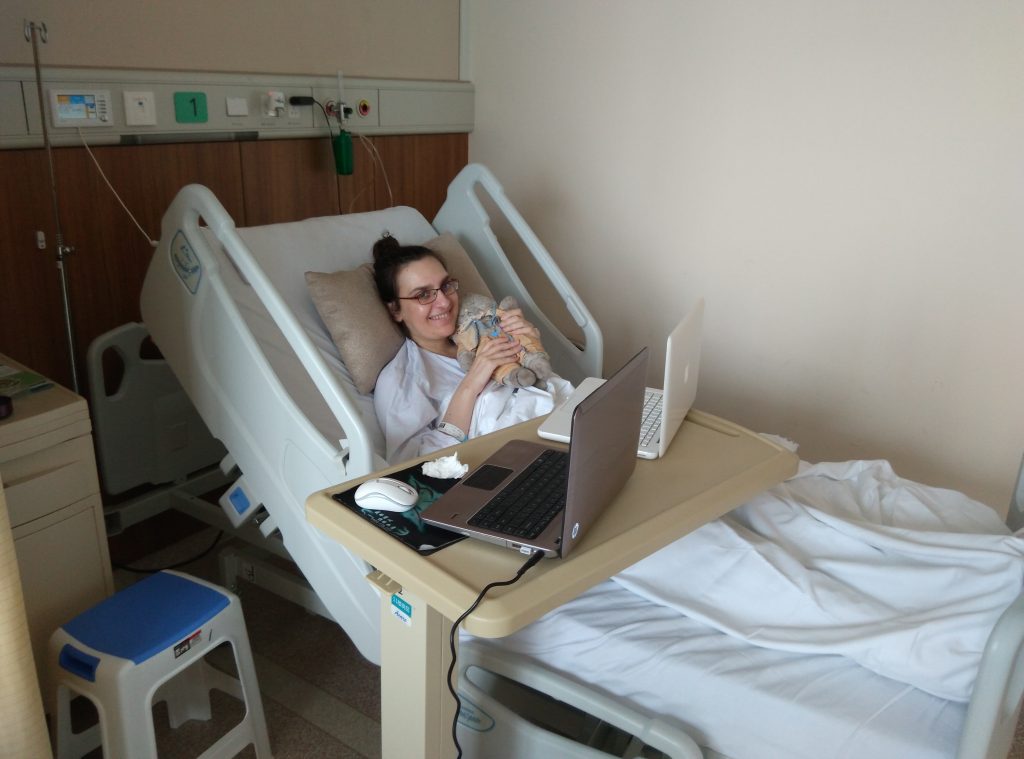
When Jun goes to bed after me or gets up before I do, he often tucks the covers snugly around my shoulders. (He also did it when I was in the hospital last year, which is where this picture was taken.)

#5: Taking the garbage out (and doing other “dirty jobs” around the house)

Ever since we married, Jun has this thing about “dirty jobs” (like taking out the garbage) — he prefers to take care of them. (Did I also mention he loves to help my dad mow the lawn, as he did last year when we went to the US?)

#6: Warming my hands in his when they’re too cold

I love it when Jun holds my hands, especially just to warm them up when it’s cold outside.

Happy Valentine’s Day, Jun. I love you.