Guest Post: Kiss and Tell from China and the UK

What’s the difference between dating in China and the UK? Here’s one personal take on that question from Miriam, including the story of how she met her Chinese husband.

Do you have your own “kiss and tell” story you’d like to share here on Speaking of China? Check out the submit a post page to learn more about what we’re looking for.
—–

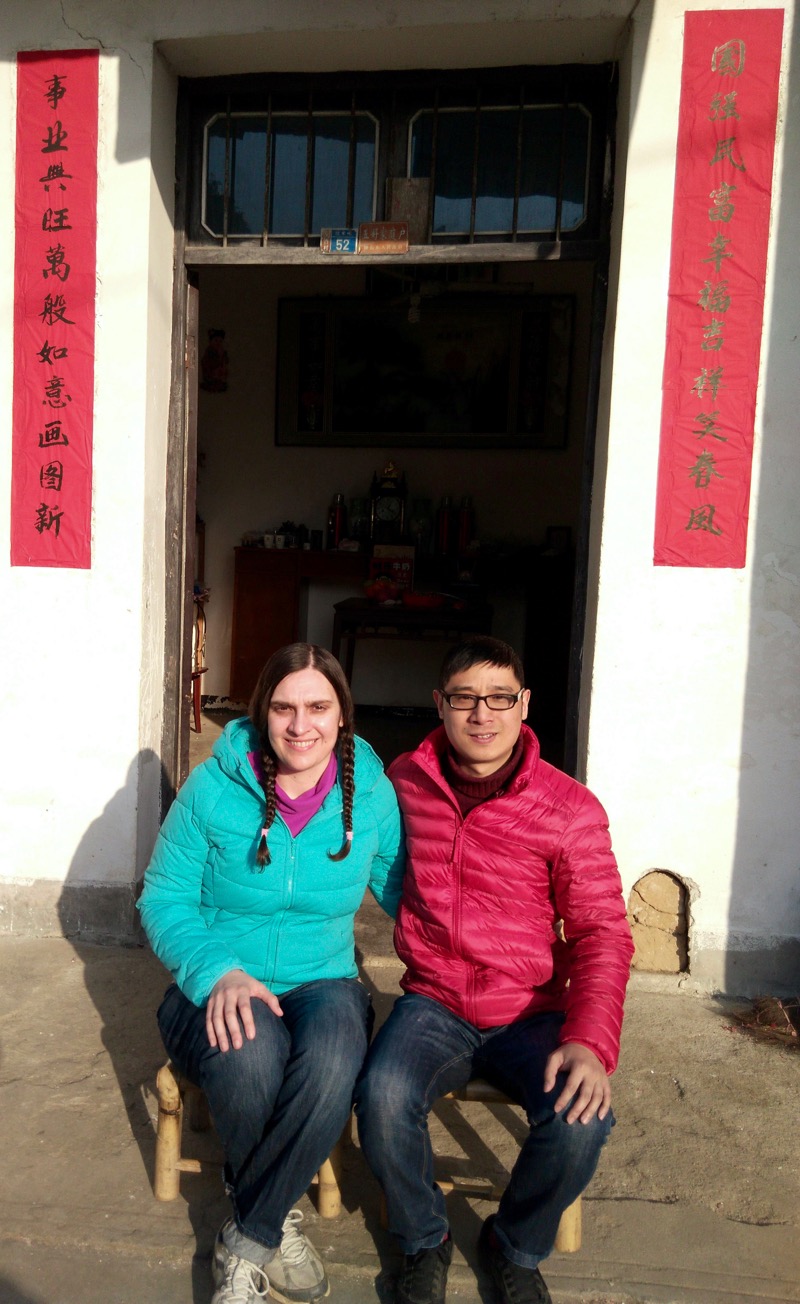
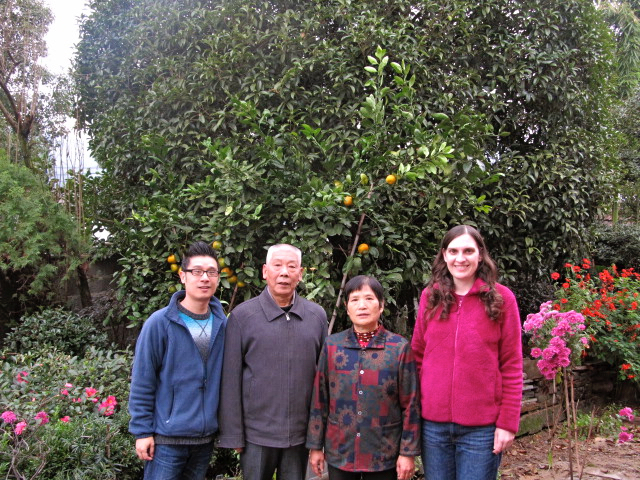
The author with her husband and his family.

I came to China at the age of 26 and already knew about more divorces than I could count on both hands and feet (including my parents), as well as many more single women my age than married (or happily partnered) ones. I’d also had enough experience with men to know I wasn’t impressed with the dating and marriage culture in the UK.

One evening in the UK I was out having a drink with two female colleagues after work. While I was at the bar, an attractive guy in his late 20s/early 30s came up to me.

“I just got promoted today and I’d love to buy you a drink to celebrate.”

I was flattered by this and looked back at my colleagues to make sure they didn’t mind me being waylaid. The two girls looked back and me with smiles on their faces and motioned for me to keep talking to him.

“Thanks, a gin and tonic would be great.”

We got talking and I found myself thinking: why would this guy not have a girlfriend already? To find out whether he was single or not I casually asked: “So where’s your girlfriend tonight?”

“Oh, she’s at home having a night in with the girls.”

What!?!? And this wasn’t the only time.

For several months a man used to come into my work in the UK just to talk to me. They didn’t seem like especially romantically driven exchanges – he would just ask me how I was and talk about other neutral topics. However, finding myself bored of being single, I took the plunge and asked him out. If he had a girlfriend he would decline and we would go back to regular, friendly chit-chat. I was pleased when he accepted my invitation for coffee, but still had a little doubt in my mind. I decided to act on these doubts and ask directly whether he was seeing anyone else.

“So, do you have a girlfriend?”

“Yes, I have two actually. One’s 25 and the other’s 32.”

I repeat: what?!?!?

He proceeded to talk to me about how much difficulty he had deciding on which girl he should be with, but felt no rush to make a decision about it right away. I was tired of this attitude towards dating, which seemed to be getting more and more common.
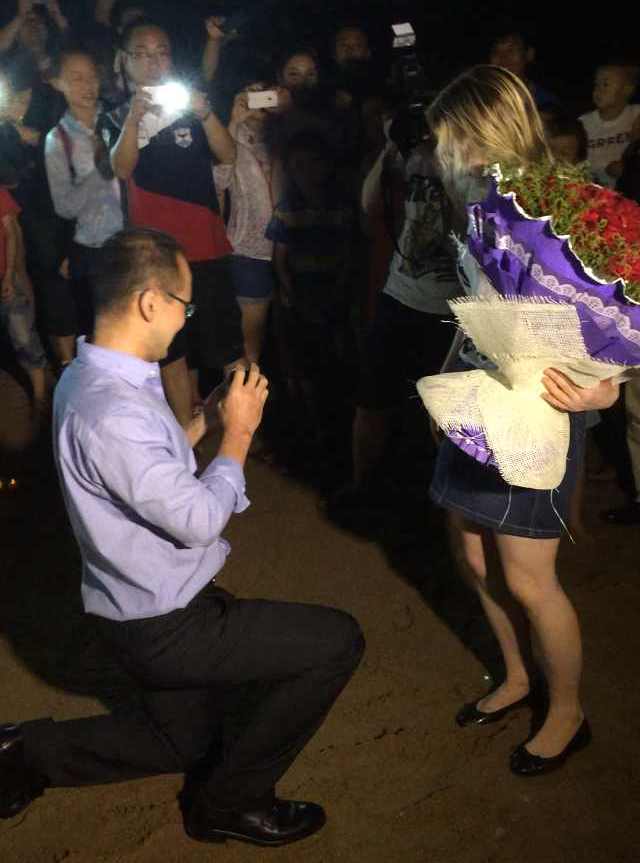
The author's husband proposing to her
The author’s husband proposing to her

Before coming to China, I was open to the idea that it might be for the long-term, as my job prospects would be better in China. On researching Chinese culture before I came to China, I was pleased to read about the emphasis on marriage and also pleased about the less liberal attitude towards sex. In saying this, I’m not suggesting that I thought it would be “easy” to get married in China, or that there would be any fewer relationship difficulties than I might have had in the UK. However, just knowing that marriage was valued and that both men and women were strongly encouraged to seek marriage at my age gave me a sense of security and confidence that I hadn’t had before.

I met my husband on a dating website. His profile told me he was 34 and “looking for marriage”. He messaged me first saying something about his surprise seeing a British woman on an Asian dating website and we exchanged a few emails after that. From his emails he was clearly talkative, charming and open-minded (willing to talk about anything from Astrology to books on popular science). And yes, he had excellent English (a very understandable barrier to AM/WF relationships as mentioned on Jocelyn’s blog in different posts). Just over a year after we met he proposed to me on a beach in Qingdao and the following year we got registered as married.

My family in the UK are all delighted for me and I’ve been told numerous times about what an excellent choice of husband I’ve made! My in-laws in China were also incredibly supportive of our relationship from the start and my mother-in-law especially treats me like I’m her flesh and blood daughter. Although we’ve gone through our rough patches, my husband’s complete commitment to the values of marriage and family have made it so much easier to resolve any conflicts or misunderstandings as soon as they occur. We’re both committed to making our future a happy and fulfilling one, even though we both know that a happy marriage takes work. I’m also delighted that my husband is now planning our approaching wedding party in China with as much zeal and enthusiasm as his bride!
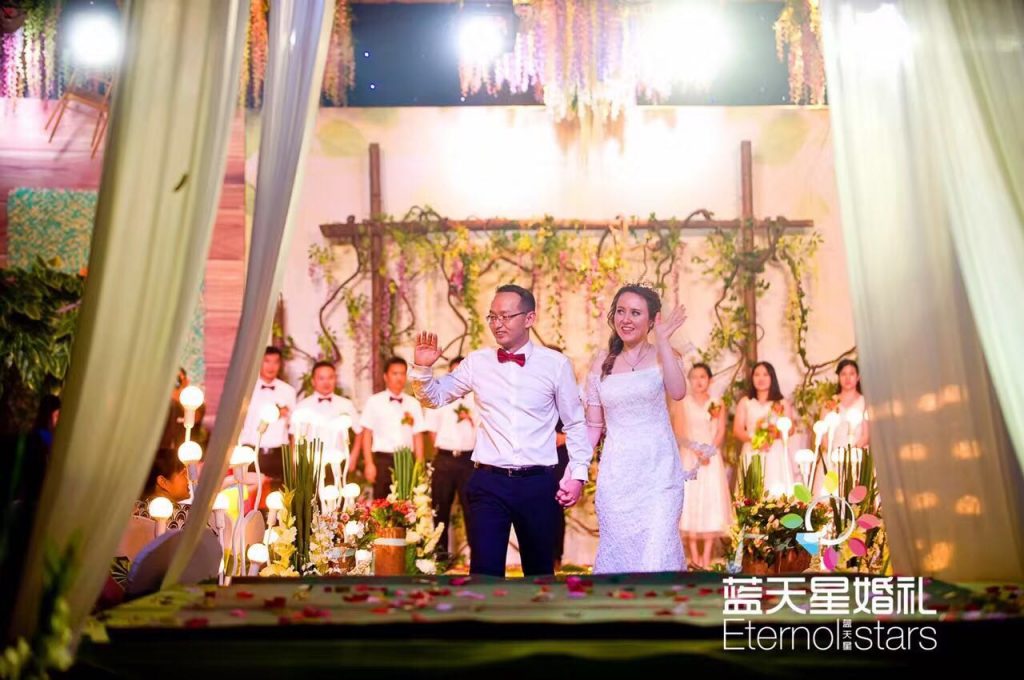
partyP.S.: This comparison is just from my experience of living and dating in the UK and China. I do know many happily married British couples from my generation…just not as many as you might expect. Please don’t be offended if you’re a British woman who isn’t the least bit interested in getting married, or a British man who would like nothing more than to walk down the aisle, or a Chinese man who has ‘two girlfriends’ and isn’t looking for a wife!

P.P.S.: If you’ve had similar experiences dating in the West then you may be interested in the book Date-onomics: How Dating Became a Lopsided Numbers Game by Jon Birger. Although the book is written about dating in America, many of the points apply to the UK as well.

Miriam is a British woman married to a wonderful Chinese man. Her interests are reading, thinking and writing and she works as a teacher in an international school in China.
—–

Speaking of China is always on the lookout for outstanding guest posts! If you have something you’d like us to feature, visit the submit a post page for details — and then submit yours today.
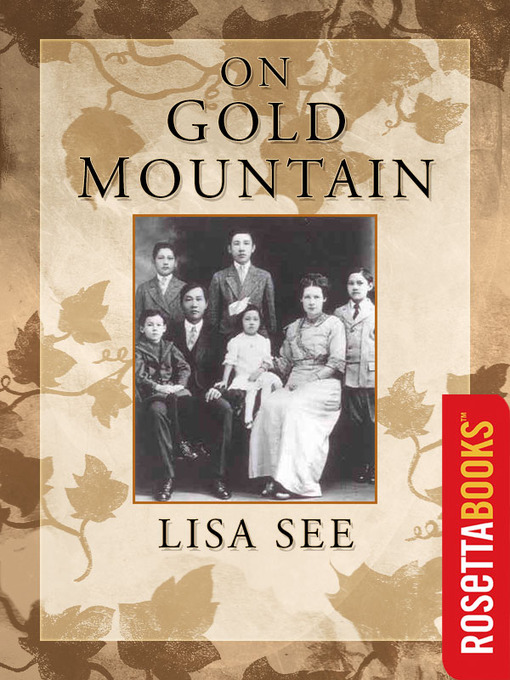
Letticie “Ticie” Pruett and Fong See from Lisa See’s “On Gold Mountain”

on-gold-mountain-by-lisa-seeLisa See’s great-great-grandfather Fong See, a Chinese immigrant who emerged as one of the wealthiest businessmen in LA’s Chinatown, is the heart of her memoir On Gold Mountain. Yet it’s Letticie “Ticie” Pruett, a white woman from Oregon who becomes his partner in marriage and business, who stands out as one of the most pivotal individuals in Fong See’s life.

Fong See and Ticie Pruett first met when she was 18 and stumbled into his shop in Sacramento, California in 1894, asking him for a job. (Fong See owned a factory that manufactured crotchless undergarments for prostitutes.) He refused her the first time around and it took her two more times to convince him to hire her. According to Lisa See’s book,

In the following weeks and months, Fong See continued to be amazed by the auburn-haired apparition who appeared at his front door each morning. She was so different from the other Caucasian women that he had met in his years on the Gold Mountain. She didn’t wear feathers or satin or lace. She was practically and simply dressed – maybe a cotton ruffle here or there. She didn’t stink of perfume or men. Instead, she exuded an intoxicating odor of soap, powder, and lavender water. And while she was in no way like the prostitutes who came to him for their underwear, she was always kind to them, almost respectful.

“That is not a job I would want to have,” she once said. “But I can understand how circumstances could lead a person into becoming a fancy lady.”

Ticie was also kind to Fong See’s workers, who were Chinese. “She didn’t seem afraid to sit down at the work table and companionably sip a cup of tea. Lately she’d even begun to share their pot of noodles, sometimes looking over Fong Lai’s shoulder to watch how he cooked them.”

Even though “…there were few Chinese who had either the courage or the charisma to pursue a white woman,” Fong See thought of marrying Ticie. Of course it was illegal for him to marry a white woman at the time. He also had a wife he had left behind in China; they never consummated their marriage, but he sent her money every month. Still, he wanted Ticie:

….marriage to Ticie would change him from a sojourner to a resident….Fong See and Ticie Pruett made good partners and that was important in this country. For years he had thought, If only I had an American partner who could see the opportunities that I see. Letticie wasn’t a man, but she was much like him. She had bamboo in her heart.

To Ticie, marriage also made sense because “she knew she could help Fong See. He needed her, which was more than she could say for anyone else.” She had already expanded his business to include regular ladies’ underwear and curios like fans and inexpensive porcelain.

The couple married on January 15, 1897 through a contract marriage drawn up by a lawyer. It was the only pathway to a legally recognized union for interracial couples at the time. Also,

Letticie wrote her brothers of her marriage, and received a terse letter back, in which her family disowned her. How could she marry a Chinese? It was disgusting, they wrote, and she was no longer their sister. She knew she would never see or hear from any of them ever again.

Her family’s response to their marriage symbolizes the national sentiment towards Chinese and interracial marriage.

Ticie and Fong See enjoyed a good partnership in many ways. They moved to Los Angeles, where their business thrived (they focused more on antiques, as Ticie suggested) and eventually expanded into multiple stores. They had five children together, and the two would travel to China together for business and pleasure.

Yet their 22 years of marriage would eventually dissolve. As Lisa See wrote, “The way Fong See saw it, Ticie wouldn’t obey him, didn’t respect him, and refused to see him as the person he had become,” or the potential he had to truly achieve his dreams in China.

In 1921, Fong See secretly married a 16-year-old girl named Ngon Hung from his hometown in China, and the rumors of what happened spread throughout the Los Angeles Chinatown. “Finally, Ticie stole the letter Fong See had written Uncle, took it to a professional letter reader, and discovered positive proof that her husband had married again.” Consequently, Ticie filed for legal separation from Fong See; their contract marriage would become null and void.

Meanwhile, Fong See would go on to marry once again in China in 1929, to a girl named Si Ping who was close in age to Ngon Hung.

Ticie would live until 1942, passing away after the marriage of her daughter Sissee. She would eventually forgive Fong See. But as Lisa See puts it, Ticie’s “one true legacy [was] her love for the family and her belief that her children were stronger together than apart.” Fong See passed away in March 1957.

If you’ve never read Lisa See’s memoir On Gold Mountain, I highly recommend it. The book includes the full story of Fong See and Ticie Pruett and truly encompasses the fascinating and often tragic history of Chinese America itself (including the severe racism that threatened people’s lives).

First Lady Faina Chiang, Russian Wife of President Chiang Ching-kuo

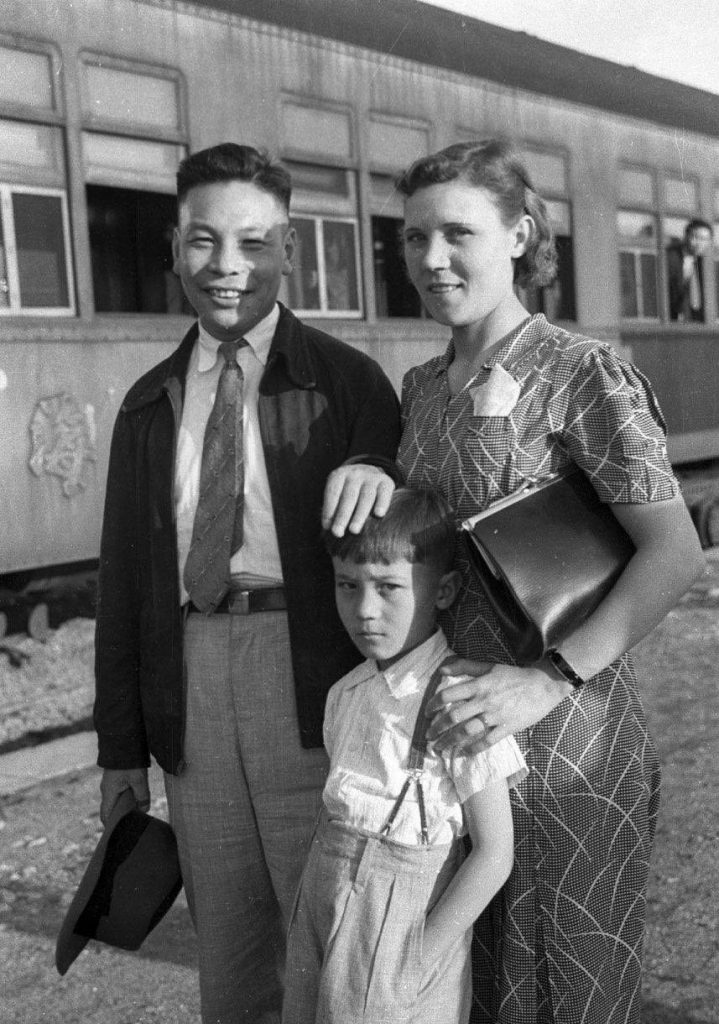
Faina Chiang with her husband Chiang Ching-kuo and their son in Gannan Prefecture. (By Unknown – http://bbs.big5.voc.com.cn/archiver/tid-2084241.html, Public Domain, https://commons.wikimedia.org/w/index.php?curid=15237990)

Faina Chiang (nee Vahaleva) and Chiang Ching-kuo were one of the few AMWF couples known as a First Lady and President. But while researching this couple for the blog, I found myself continually drawn to the story of Faina herself, for reasons such as this quote from the Taipei Times:

Chiang Fang-liang lived her life with the weighty crown of first lady. While she never enjoyed the glamour associated with the title, she will be remembered for her stoicism.

Faina and Chiang met and married in the former Soviet Union in the 1930s. In 1937, Stalin permitted Chiang to return to China, so the couple moved there. As many of us in international and intercultural marriages know, it can be tough to settle in a foreign country. Yet as the Taipei Times noted, “the Russian bride followed her husband to China.” They added:

Perhaps Vahaleva had thought little of the different language, culture and traditions in China that would no doubt be a great barrier to her, or perhaps her love for her husband gave her all the courage needed.

Reminds me of how many Western women I’ve known have chosen to move to Asia to be with their boyfriends and husbands, despite the challenges.

Faina Chiang and Chiang Ching-kuo in the Soviet Union. (By Unknown – http://tw.people.com.cn/GB/26741/15384128.html, Public Domain, https://commons.wikimedia.org/w/index.php?curid=16283523)

Speaking of which, Faina encountered another one all too familiar to me – the parental objection, as described in the Taipei Times:

Chiang Kai-shek was reportedly at first dismayed to have a Communist Russian daughter-in-law. But after the two met, Vahaleva — who has been described as possessing the virtues of a traditional Chinese woman to a greater degree than a Chinese woman — soon won the approval of her father-in-law and was given the name Fang-liang.

She even learned Ningbo dialect and forged a good relationship with her mother-in-law, Mao Fumei (Chiang Ching-kuo’s mother and Chiang Kai-shek’s first wife).

Faina Chiang with Chiang Ching-kuo, his mother Mao Fumei, and their first son Chiang Hsiao-wen in 1937. (By Unknown – http://service.photo.sina.com.cn/show_mop.php?type=orignal&pic_id=4a8a18bfg967637c6b217&pm=1&v=690, Public Domain, https://commons.wikimedia.org/w/index.php?curid=15629523)

As first lady, Faina rarely appeared in public, preferring a simple life behind the scenes:

She was used to doing all the household chores herself instead of employing servants. She would ask for her husband’s approval for everything. Private household expenses, such as water and electricity bills, as well as salaries for servants, were all paid directly by Fang-liang from Chiang Ching-kuo’s paycheck, instead of being deducted as public expenses.

At the same time, Faina never entirely lost her foreign customs, as the LA Times reported:

…she often spoke Russian with her husband and preserved several traditions from her homeland.

“Faina regularly greeted her husband at the airport with a hug and a kiss, to the wonder and embarrassment of Chinese spectators,” Jay Taylor wrote in his biography of Chiang Ching-kuo, “The Generalissimo’s Son,” published in 2000.

She braved many tumultuous years in China with her husband, reflected in the fact that three of her four children were born in different cities in China.

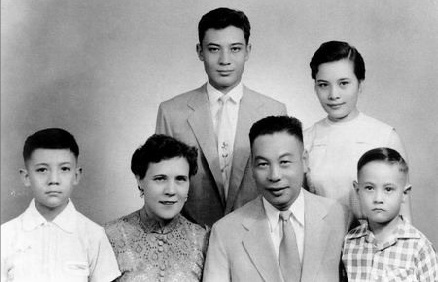
Faina Chiang, Chiang Ching-kuo and their family. (By Unknown – [1], Public Domain, https://commons.wikimedia.org/w/index.php?curid=15237453)
And, unbeknownst to her until after his death, she also endured an adulterous husband whose mistress in China bore him two sons. Imagine how heartbreaking it was to discover the truth through media reports of her husband’s death:

After Chiang Ching-kuo died, Fang-liang reportedly asked her second son Hsiao-wu, “I only have three sons, why are there reports saying I have five?”

Hsiao-wu, who had publicly reconciled with his half-brother Chang Hsiao-yan (章孝嚴/John Chang) chose to respond with silence.

On top of that, she suffered the loss of her three sons in the years after her husband passed away. The China Daily called her “the loneliest woman in Taipei”:

She had no real friends and no descendants close to her. Her closest relatives all lived overseas and even after her death, her only daughter was unable to attend the funeral because she herself was seriously ill.

How tragic.

Faina Chiang Fang-liang in 1944, cropped from the image at http://lz.book.sohu.com/chapter-1251-4-2.html

Faina died of complications from lung cancer on December 15, 2004 at the age of 88. Even though she eschewed the public spotlight, she’ll always be remembered for her hard work, modesty and devotion to her family.

The Love Affair of Mussolini’s Daughter Edda & Zhang Xueliang, Heroic China Warlord

Zhang Xueliang and Edda Ciano, Mussolini's daughter.
Zhang Xueliang and Edda Ciano, Mussolini’s daughter.

Here’s a romantic footnote you might have missed in your China history lessons. Did you know that Countess Edda Ciano, Mussolini’s daughter, had an affair with Zhang Xueliang? He’s the warlord who helped unite China against Japanese forces after his bold kidnapping of Chiang Kaishek in Xi’an in 1936 (aka the “Xi’an Incident”).

The New York Times actually mentions the two in this 2001 remembrance, when Zhang Xueliang passed away at the ripe old age of 100 (wow!):

Zhang Xueliang, a onetime warlord who in two turbulent weeks in 1936 helped turn the course of Chinese history — and then spent the next 55 years under house arrest, gradually and reluctantly becoming a national hero — died on Sunday in Honolulu, where he had been living in recent years. He was 100.

…His Northeastern Border Defense Army grew to 400,000 men, and in 1930 he was named deputy commander in chief of the Chinese armed forces. But he was distracted from military affairs by an active social life, including a dalliance with Countess Edda Ciano, daughter of Mussolini and wife of the Italian minister to China.

Here’s a more intimate look into their relationship from the book Zhang Xueliang: The General Who Never Fought:

Zhang and Edda Ciano first met in Beijing at a dinner for the League of Nations delegation headed by Lord Lytton. The delegation was there to investigate the roots of the Manchurian Incident and its developments. According to her testimony, Edda sat across from Zhang at the table and at the end of the evening he passed her a note inviting her to join him for a tour of the Imperial Summer Palace the next day, which she gladly accepted. The following day they spent a number of hours at the palace, with Zhang serving as Edda’s guide and giving her all his attention, while almost completely ignoring the other members of her entourage, including high-level personalities. The attention of the strongest man in China and ruler of its northern provinces, the daughter of the Italian dictator noted years later, ‘flattered my ego’. This indicated how Zhang had maintained his position in the kingdom, even at his lowest point after his defeat by the Japanese.

During the month following that tour of the Summer Palace, the friendship between the two deepened…. Edda managed to convince Zhang to purchase three Italian-made aircraft for the Chinese Air Force. The close relationship between the Italian and Chinese air forces, which developed during the 1930s, can be attributed to the personal friendship between Zhang and Edda. Years later, Zhang testified that Edda wrote many letters to him over a long period of time, but at some point asked him to return them to her. When he was asked if they were love letters, he refused to reply.

The two met frequently in Shanghai during Zhang’s drug rehabilitation process. [NOTE: Zhang was addicted to opium for a time.] One evening, Zhang held a festive dinner at his magnificent villa in honor of Edda and her husband ahead of their return to Italy, even though he and his entourage were about to sail on the same ship with their guests.

From right to left: Yu Fengzhi (wife of Zhang Xueliang), W.H. Donald (Australian consultant of Zhang Xueliang), Zhang Xueliang. In center the comtesse Edda Ciano (daughter of Mussolini and wife of Italian ambassador in China Galeazzo Ciano)
Edda Ciano, Mussolini’s daughter (third from left) stands with Zhang Xueliang (third from right) in Beijing, 1931.

According to the book Mao: The Real Story, there’s a fascinating political backdrop to the love affair between Zhang and Edda:

The naive marshal, who was sympathetic toward the fascists, invested particular hope in Il Duce, believing that only an ironlike totalitarian dictatorship like Mussolini’s could rescue China from the crisis. He also counted on help from the Duce’s daughter, Edda, the wife of the Italian consul general in Shanghai and future Italian minister of foreign affairs, Count Ciano. Zhang was a ladies’ man. Good-looking, youthful and dark-haired with a bristling mustache, he adored nightclubs and cabarets, was a splendid dancer, and courted women elegantly. The passionate Italian lady could not resist the handsome marshal, whose personal fortune, incidentally, amounted to some $50 million. It is hard to blame her, particularly since Count Ciano slighted her and preferred to linger in Shanghai’s bars and houses of prostitution. Edda’s romance with Zhang Xueliang continued for only a short time. In 1932 Edda and her husband returned to Rome.

A suave China warlord (who eventually makes history) romances the daughter of Italy’s infamous fascist dictator during the 1930s. Wouldn’t this make for an incredible movie? If it ever hits the big screen, I’ll be there.

How Loving a “Foreign Enemy” (And Writing About It) Changes Lives

IMG_20160726_175050Ronaldo A. Coulter is the lawyer representing my husband Jun Yu in US Federal Court (learn more about the case here).

He also happens to follow my blog. And it’s interesting what he thought about China before he met me and my husband.

Here’s what he wrote to my husband earlier this summer in response to my post about being in the hospital in China:

…as a U.S. Marine raised in the Cold War era, I have always considered China and Russia the enemy. I have to admit that after working with you on this case and reading some posts on Jocelyn’s blog, I actually realize that just as in the United States there are everyday people in China.

Whether foreign relations will improve from where it is today is anyone’s guess. However, the pictures taken in the hospital on Jocelyn’s blog allow me to place a human element to my version of China.

Yes, he had considered China the enemy — until he started representing my husband and, later, reading my blog.

China as the enemy? It just sounds wrong to me. When you’ve lived in China for as long as I have – when you’re married to China, with family here – it’s impossible to think of this country as the enemy.

IMG_3338This is the country that fostered my career as a writer. The country that taught me how to love and gave me an incredible husband. The country I plan to call home for the rest of my life.

China has given me so much, and continues to give more than I ever imagined. How could I feel anything but affection for this place? How could I possibly consider China the enemy?

Here’s the thing, though. I have to admit that it wasn’t always this way. Maybe my current self would never accept “China is the enemy” but my past self was different. There were moments in my past when I actually viewed China through skeptical eyes. And yes, there were even times when I thought of China in opposition to the United States.

US-China relations were tense when I first entered the Middle Kingdom back in August 1999. That was just months after the NATO bombing of the Chinese embassy in Belgrade, sparking widespread demonstrations in China.

I was so anxious at the time for reasons that had nothing to do with the political situation. After all, I was a total teach in China newbie. I knew only the basics of Chinese history and culture, and my language skills were limited to laughable “phrasebook Mandarin Chinese”. I had never taught anything in my life, yet I had committed myself to a year of training college students in English.

But when I saw the news reports of those demonstrations – which included protesters chucking rocks at US Embassies and Consulates – my worries suddenly went beyond the usual troubles of teaching English in a truly foreign country.

I wondered, would being an American in China suddenly turn me into a target? Should I start telling everyone I’m a Canadian? What in the heck did I get myself into?

But after arriving in Zhengzhou, China, it was nothing like I had imagined.

Students welcomed me with giant bouquets of flowers and invitations to dinners out.

Teachers helped me arrange lessons in Tai Chi and Mandarin, with one teacher buying me the conversational Chinese book that helped me finally find my groove in the language.

I easily fell into close friendships and later began dating a local man, my first truly adult relationship.

The love and appreciation that surrounded me made it impossible to imagine US-China tensions. If anything, in my little world in Zhengzhou, US-China relations were at an all-time high.

I’ll never forget that one final exam I delivered to my students in a classroom with a bulletin board about the NATO bombing in Belgrade.

The bulletin board stridently denounced the actions of Americans as barbaric and criminal. And, along with photographs of actual protests, the board urged patriotic students to demonstrate against this gross violation of China’s sovereign rights.

What a contrast to the students on those desks, who put on their warmest smiles afterwards and insisted we all take a class photo together. It was as if the final exam was merely an excuse for us to hang out one last time.

This was not a world where people angrily chucked rocks at me for the actions of my government. This was not a country where people outwardly hated me for my citizenship. From this side of the Pacific, China looked more like a friend and nothing like an enemy.

Over the years, I’ve dated several Chinese men – and ultimately, I married one. Jun Yu is the love of my life, the husband who truly completes me in every way that matters. Who would have thought I’d find him half a world away from my hometown of Cleveland, Ohio?

IMG_20160208_160634_BURST3Now that I’m intimately connected to this country, which is home to family too, it’s unthinkable to view China in the black-and-white terms people use in politics and the news. It just doesn’t fit my more nuanced perspective of this place. There’s so much we miss about a country if we only picture it through the eyes of the media.

Our lawyer Ron Coulter reminded me of the value that comes from writing about what it’s like to live with – and even sleep with – the so-called “enemy” country.

When we share stories of our daily lives across unlikely borders, we offer a chance to go beyond the headlines. To understand that there’s more to these places than what the reports suggest. To connect with the people and realize that, despite the cultural and linguistic differences, we have things in common too.

Maybe we really can change the world, one blog post (about a so-called “enemy” country) at a time.

All I know is, there’s one US Marine-turned-lawyer who will never see China the same again.

What do you think?

Guest Post: A Chinese Family Refused To Hire Me Because I’m Black

Linda Ogutu

Linda Ogutu, a Kenyan living in Scotland, shares what happened to her when she applied to be an au pair with a family in China. She writes, “I think I ‘knew’ that discrimination does take place, but now I KNOW based on experience.”

Do you have a story you’d like to share here on this blog? Check out the submit a post page and then contact me today with your ideas.

—–

Linda Ogutu
Linda Ogutu

I applied for a job. A cultural exchange job as an au pair in China. I enjoy traveling and desire to explore and experience cultures which are different from my own. Going to China would have been one way to begin traveling around Asia as I had always wanted to do that.

I applied for the job being hopeful, but also reminding myself that nothing may come of it.

I received a response much sooner than I had expected. Oh how I was giddy with excitement!

We arranged a time to video-chat. We exchanged pleasantries and then we were off to official business. I was asked where I was from and following my response, the interviewer apologized profusely and said I unfortunately did not fit what they were looking for.

“Oh! I am so sorry but unfortunately we will not be able to take you. My partner does not like black people. I was going to try and convince them if you were from the West, but since you are not, they will not accept it at all. I am so sorry, really.”

Of course I understood and wished them all the best in their search.

I was disappointed the family did not want to take me as the husband of the lady that interviewed me probably had ingrained in his mind all the negative stereotypes of black people. I wasn’t angry at her as she knew I was black (we have to provide a profile photo on the au pair website). I also surprisingly wasn’t angry at her husband because I knew he just had the wrong idea of what black people are like.

I thought about their response and honestly was not surprised by it.

I have been prepared for experiences like these as my father always told my siblings and me that a day would come when we would unfortunately have to experience discrimination based on either our gender, the colour of our skin, or our religious beliefs. He had experienced his fair share whilst studying in the West when he was younger. He always reminded us that when people discriminate it is because they don’t know.

I think I ‘knew’ that discrimination does take place, but now I KNOW based on experience. Granted it wasn’t extreme as in most other cases. I suppose now it has made me more aware, but I don’t want to ever get to a point where I lash back or hate those that discriminate against me. I’d honestly rather fight hatred with love; MLK and Gandhi-style (haha).

I would still apply for another au pair job in China. I know not all Chinese still view black people in a negative light. Also, I could probably au pair for a foreign family living in China as well.

As for the Chinese family who interviewed me, I wonder if the husband’s mind will ever be opened. Someday. Perhaps.

Linda Ogutu is a Kenyan living in Scotland. She blogs about her experiences at http://comeseewhatiknow.tumblr.com.
—–

Speaking of China is always on the lookout for outstanding guest posts! If you have something you’d like us to feature, visit the submit a post page for details — and then submit yours today.

Interview with Joke Tummers, Professional Clarinetist and Music Instructor/Entrepreneur in China

IMG_0180Many foreigners come to China hoping for opportunity and a little adventure. But how many can say they joined a symphony orchestra here? Or ended up running a music school in China?

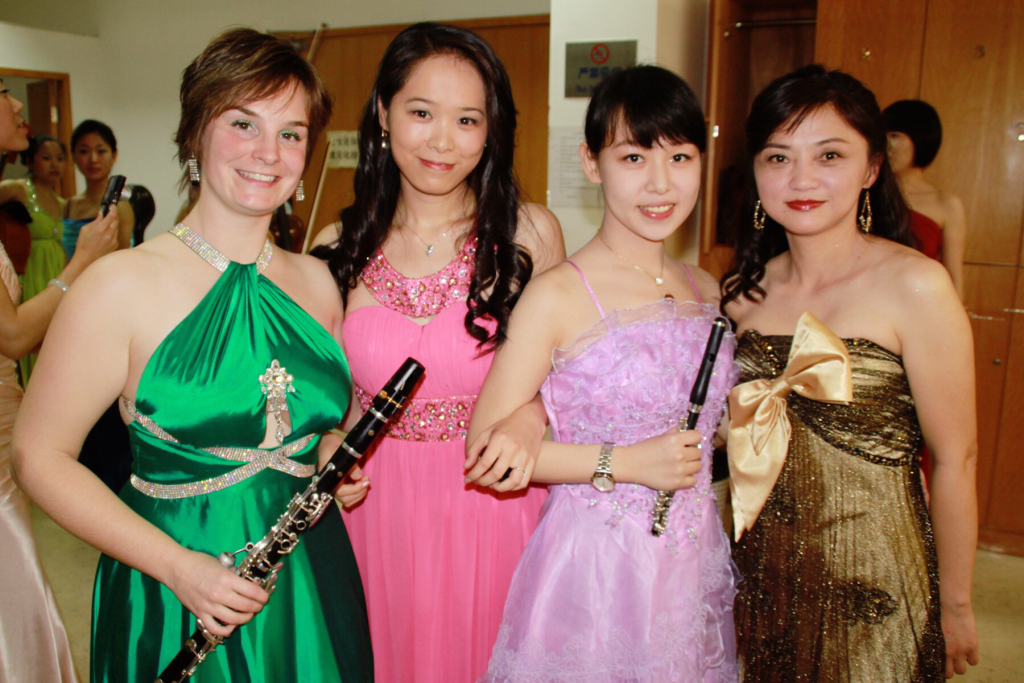
For clarinetist Joke Tummers, China adventures mean making beautiful music with others (including her husband Haiwen, who manages the JT Music Academy along with her). I talked to her to learn more about how China shaped her career as a professional musician and later entrepreneur/instructor.

Here’s her bio translated from the Netherlands group blog China2025.nl:

Joke Tummers has lived in Guangzhou for 8 years. The first five years she served as an associate clarinet in the Guangzhou Symphony Orchestra. After the birth of her first daughter, motherhood and orchestra proved not to be a good combination. After a short break and the birth of her second daughter, it was time for a new challenge. She and her husband took over a music school. Joke is now the artistic director of the JT Music Academy where she also gives private lessons.

You can follow Joke on her blog, LinkedIn, and WeChat (JT_22_QK).
—–

image1
Joke with her husband Haiwen and one of their daughters.

Tell us about how you and your husband first met.

We met in Holland at my part time job a youth hostel. I was in charge of giving residents an evening snack and doing the dishes afterwards. Haiwen had just arrived at the hostel to start his job in the area. The company had given him the choice between a hotel and the hostel where I worked at. They told him that it would be much easier to make friends and meet people at the hostel. Hahaha, prophetic words!

I was urging the residents to eat a bit faster as I needed to go to a rehearsal of my wind band because we had a concert the next day. Long story short: Haiwen came to listen to the concert and we started dating soon after.

IMG_1548
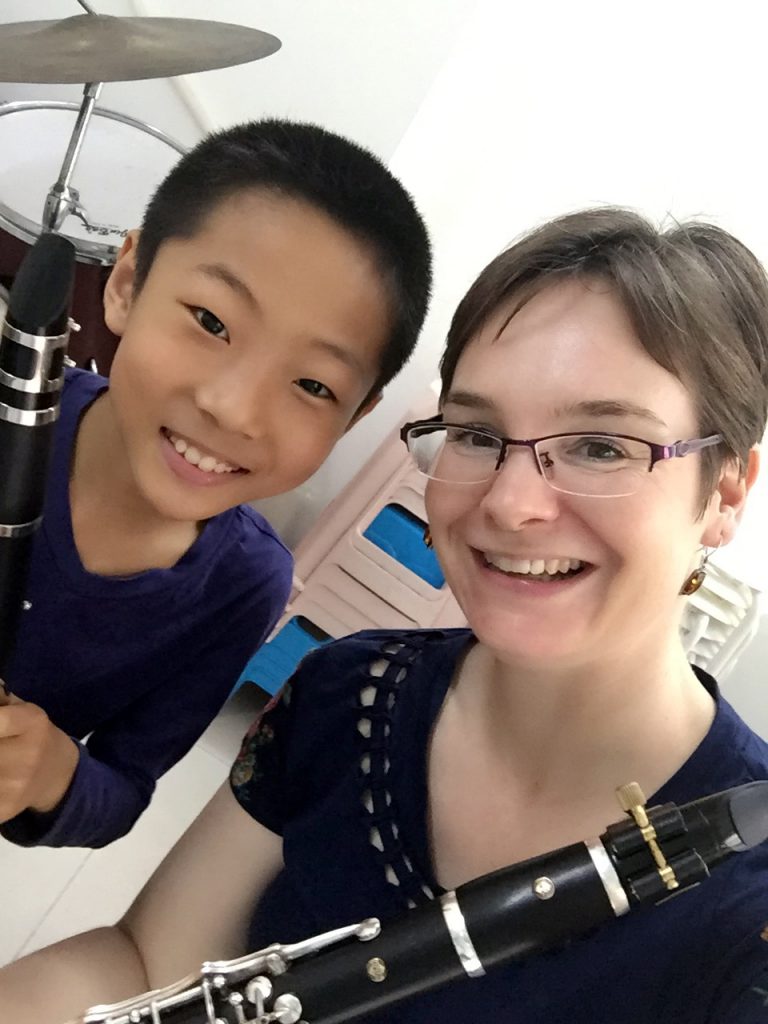
Joke with one of her students.

How did you and your husband come to move to China?

I was finishing up my Master of Music studies in Amsterdam when Haiwen suggested we go to China. He felt he had been abroad for a long time already (he studied in the UK before coming to Holland) and he wanted to return to Guangzhou.

I on the other hand was ready for some adventure as teaching at a local music school where all classes are only 25 min long didn’t sound very appealing. Orchestra jobs were really hard to get in those days and the situation has only deteriorated since then, with a lot of funding for the arts being cut.

IMG_0252
Joke along with her orchestra colleagues.

You were the associate principal clarinet for the Guangzhou Symphony Orchestra for 5 years. What was it like?

It was an interesting experience for sure. The cultural differences in how to approach and make music were huge. I’m used to showing up to a rehearsal knowing my parts, but my colleagues saw rehearsal time as their personal practice time. Management was very rigid and that is a big problem in the creative arts, where expression and flexibility are very important. It was very hard to communicate with my colleagues about how to play together better because most players were my seniors and they felt that they didn’t have to listen to me anyway. Music is all about communication so it was really hard for me to play in this stifling structure. After the birth of my first daughter I went back for a few months but decided to quit at the end of the season.

IMG_8310
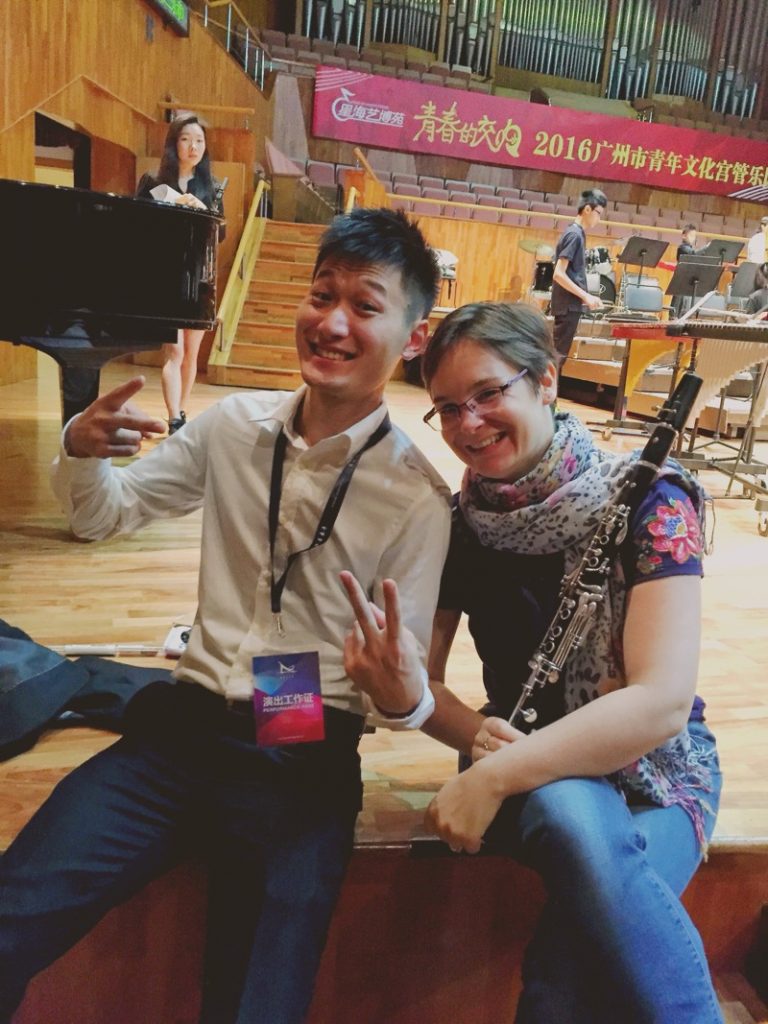
Joke with another musician.

How has China influenced your career as a musician?

In China I got the chance to play in a professional symphony orchestra. Of course it wasn’t always a smooth ride but I still had great experiences. I got to play many repertoire pieces and also played in many different concert halls, both in and outside China. We had many guest conductors and soloists and it was fun to get to know them. As one of the few foreigners in the orchestra I felt a bit like an ambassador so I would always go greet them and welcome them to China. With my colleagues I had a woodwind trio. We played at various locations and even did a concert in Taiwan together. That was a lot of fun.

IMG_0122
Joke with one of her students.

Tell us about how you came to open your own music school in China, and what it’s like running your own school.

After quitting the orchestra I became pregnant with my second daughter so I was home to take care of her. When she was a few months old my husband and I decided to take over a music school in our area. We didn’t have a specific one in mind but hubby worked his Internet magic and found a school 2 bus stops from our house. We did it this way to avoid having the additional start up costs and also to already have a name and teachers working for us. We added myself into the mix so to say. I teach clarinet, saxophone, flute, piano and music theory. This is a direct result of being in China: in Holland I would have been limited to clarinet only as that was my specialization. I had to get out of this frame of thinking and that was easier once I realized that I would teach the kids more about music and not just the specific techniques of their instruments. The added benefit for me personally is that my teaching days are very varied, just the way I like it.

It is rewarding to run the school and to teach kids at a level they cannot easily get outside of our school. Since woodwind specialists are quite rare over here I’m in a good position to attract eager students. It helps that I speak Mandarin as some kids aren’t comfortable with English. Of course there are also parents that are happy that I can teach their kids in English to improve their language skills as well. With a lot of students I use a mixture of Chinese and English. Once I’m sure that their English is quite good, I switch to English only.

IMG_1547
Joke with one of her students.

What do you think it takes to be a successful musician here in China?

As a classical musician I find it a bit hard to say. I usually join an orchestra or play chamber music concerts that my friends organize, I’m very lucky that way. As with every kind of artistic profession in China the problem is the outward fixation of many people. As long as it looks good, it must be amazing, right? The actual skills seem to be of lesser importance.

I think that some not yet established musicians may feel that they need to be very commercial and only play standard repertoire, preferably with Chinese songs mixed in to catch the attention of the audience. I’ve seen some change though as I went to listen to a contemporary music concert a while back. The music was very avant-garde but the hall was full of people. I thought that this was really cool and I hope that people will start listening to more and different kinds of music.

Joke and her daughters

—–

Thanks so much to Joke Tummers for this interview! To learn more, you can follow Joke on her blog, LinkedIn, and WeChat (JT_22_QK).

Traveling to the USA for the 1st Time in 3 Years

IMG_0721When Jun and I used to live in the US, we always heard the stories from Chinese students and friends. How years would pass before they ever traveled to China to see friends and family. It was too difficult for them to return – because of the cost of travel, the hassle of renewing their visa, or both.

It was unimaginable to me.

At the time, the longest I had ever been away from my family in the US was a little over a year. Even that absence had plagued me with a deep homesickness – so great that I once sobbed quietly in a bathroom stall at work over missing the US.

I never thought the same thing would happen to Jun and me. Or that I would learn to manage the distance over not one or two, but nearly three years.

Wow.

Of course, we have a different reason for our travel. Jun is ordered by the Court to return to the US for case-related business. (There’s no trial yet. You can learn more about Jun’s case and support him here.)

We also plan to visit with family and friends, the people who have sustained us through some of the hardest years of our lives.

While we’re there, I’ll continue to blog about our experiences every week – and no doubt I’ll be inspired by the change of surroundings to discover (or rediscover) some excellent topics.

We will return to China — our home — this fall.

Whether you’re traveling after years of being away or just enjoying a staycation with family or friends, wishing you a wonderful summer!

My 6 China Must-Haves When Traveling Back Home

It’s the summer travel season – and this summer, Jun and I will be traveling back to the US.

Granted, it’s more business than pleasure – Jun is court-ordered to return to Idaho to continue participating in his lawsuit. (You can learn more about that and support Jun here.)

But regardless, it’s also a trip back home, which means reconnecting with family and friends we haven’t seen in years. We hope to make the most of that.

At the same time, it’s an opportunity for me to flex my packing and organization “muscles” so to speak. After all, when you’ve lived in China as long as I have, you become accustomed to certain things – and can’t imagine being anywhere in the world without them. Even when traveling back home.

Here are 6 things from China that I always pack along with me when I return to the US:

IMG_20160710_184039#1: Chinese remedies and medicines

No matter where I am in the world, the must-have at the top of my list is my personal “first-aid kit” filled with my preferred remedies from China.

While everyone has their favorites, here’s what I always pack:

  • Sweets Golden Throat (or other herbal lozenges)
  • Fengyou Jing
  • Pain-relieving medicinal patches
  • Tiger balm (or similar pain-relieving medicinal ointment)

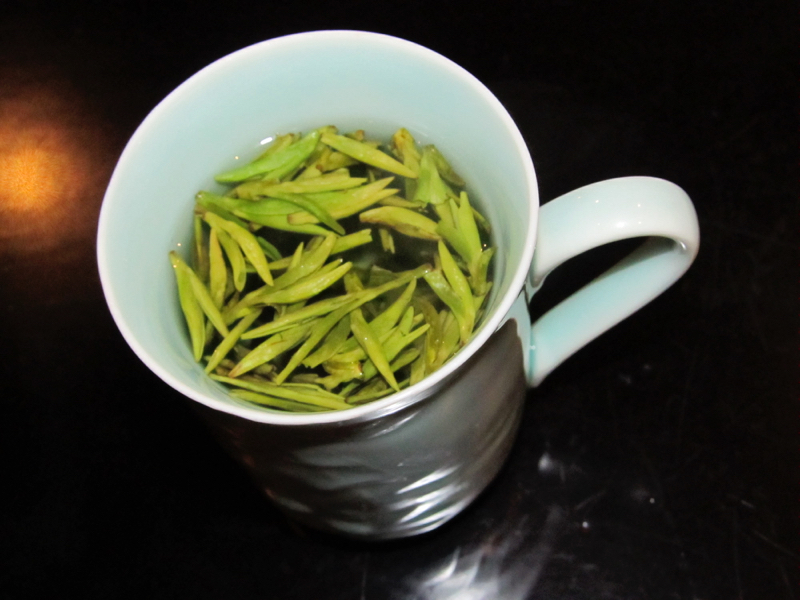
Fine teas#2: Tea

One of the things I’ve learned from China (and my husband) is that there’s nothing like a nice, fragrant cup of loose-leaf green tea to start your day.

But as we all know, the best green teas come from China and NOT America.

That’s why I always pack a canister of the best green tea I can afford. When I’m back in the US, it’s like a little taste of China every single morning. Mmmmmm!

IMG_20160710_183322#3: Red Chinese jujube dates

The Chinese have touted the health benefits of these tasty little dates for thousands of years. So it’s no wonder that they’re a popular snack here in China, and one of my favorite things to munch on.

But good luck finding them in the US!

So I always pack a bag of delicious dried jujube dates in my luggage (especially the dates from the Xinjiang region, which are usually sweeter). They’re a terrific snack and wonderful for sharing.

Who knows? This trip, I might just convert a few family and friends over to these fantastic dates. 😉

IMG_20160710_183108_HDR#4: Hair accessories

When I lived in the US, I always came across a familiar phrase on every single hair accessory I purchased.

Made in China.

Yes, China is responsible for producing all of those lovely hairpins, hair ties, hair clips, headbands and more. So what’s the point of buying in the US when I can purchase straight from the source?

With the convenience of online shopping, it’s so easy to find the best and most beautiful accessories in China. That means I can save my money for something else in the US…such as buying more of those delicious avocadoes. 😉

IMG_20160710_184349#5: Silk scarves

Throwing on a nice silk scarf is the perfect way to dress up your outfit, especially when you’re traveling and trying to pack light. And since China is the silk road country – with a wide selection of silk scarves at great prices – guess where all of my scarves come from?

This trip, I’m packing my favorite floral silk scarf, which will add a touch of class to my black shirt and black maxi skirt for any dressy occasion.

版本 2#6: Renminbi cash

Yeah, I know what you’re thinking. Why would she put RMB cash on this list?

Well, you would be surprised by the times when I’ve left China to travel abroad – and wished I packed more cash with me.

Having some cash from China comes in handy if you get stranded at a major international airport and, for whatever reason, cannot use your credit cards or bank cards. Just head to a currency exchange window and you’re set.

It gives me extra peace of mind whenever I’m navigating the uncertainties that come along with international travel.

It’s also a wonderful conversation piece for friends and family back home. Most of them have never seen Chinese money or even touched it. Americans love the novelty of red money, not to mention those portraits of Chairman Mao! 😉

What do you like to bring when you’re traveling back home?

How China (and My Chinese Husband) Helped Me Love Grapes & Other Fresh Fruit

(Photo by Prerak Patel via Flickr: https://www.flickr.com/photos/prerak77/3344428542/)

It was day five of my hospital stay and I was just beginning to overcome the biggest hurdle of having my appendix removed – eating food again.

The previous day, I had struggled through the bowls of rice porridge delivered to my room. Not even adding a pinch of salt made me excited about them (though, really, rice porridge isn’t exactly the sexiest food to begin with).

Most of the bowls ended up sitting half-eaten (or hardly touched) on my hospital tray, making the nurses worry about whether I was getting enough nutrition.

Honestly, I was just worried about whether I could get anything down my throat.

But on day five, my husband changed the whole game with one question – how about some grapes?

Now let’s talk grapes for a minute. Personally, they’ve never rated in my mind as a luscious, sexy kind of fruit. In fact, they were downright boring to me. Growing up in America, I quickly tired of grape juice as a child and the ubiquitous grape jelly in peanut butter and jelly sandwiches. While I did eventually warm up a bit to green seedless grapes, I wanted nothing to do with their red and especially dark purple counterparts. Dark purple reminded me of tasteless grape juice and bland grape jelly…basically, the worst stuff about grapes.

So when my husband mentioned grapes and held up that dark purple cluster, I almost rolled my eyes. He has to be kidding? I’m struggling to spoon up plain rice porridge and he wants me to nibble on one of my least favorite fruits?

But he insisted. “Try one, they’re good.”

My husband got me there. How could I argue with the most basic rule about eating? That you have to give everything a shot at least once – even those dodgy dark purple grapes.

So I picked one up and prepared myself for total fruit mediocrity — and the likelihood that I’d never eat any more grapes in China.

Oh, how wrong I was.

These were not grapes, folks. These were the dictionary definition of ambrosial, the true manna from the heavens that the gods themselves would feast upon. Each grape was bursting with a delightful tart sweetness that in America could probably only be found in the best artisanal grape juice. A flavor so thrilling I couldn’t help saying “mmmmmm” and “ahhhhhhhh” with each bite.

Now this was sexy fruit.

“Oh my god, how have I missed this about grapes my whole life? These are amazing!”

A smile played across my husband’s lips – more out of surprise towards me than the fruit. “These taste a lot like most of the grapes I’ve had.”

Suddenly, I was so shocked I almost dropped the grape in my hand. How was this possible? How had my husband had the “in” on amazing grapes his whole life, while I had been given the sorriest excuses for grapes in America?

While these grapes had been the most dramatic example, the truth is I’ve found a LOT of fruit in season tastes better here in China than the US. Apples. Bananas. Mandarin oranges. Peaches. Pineapples. Mangos. Even kiwi fruit, which grows wild in the mountains in my husband’s hometown and tastes a thousand times better than anything I ever bought in a US supermarket.

And I’m not alone in realizing China’s fruit is so delicious, as Huan Hsu noted in his memoir The Porcelain Thief:

Fruit is China’s apple pie. Dessert in China most commonly takes the form of a plate of fresh-cut fruit. The phrase for “consequently” or “result” in Chinese is jieguo, or “bear fruit.” Even the humblest fruit shack in china offers dragonfruits with flaming petals and pink or bloodied flesh, like a sweeter, milder kiwi; strands of purple grapes, plump as roe and bursting with intense, bubblegum flavor; or crispy, refreshing starfruit. The native kiwis, known as Chinese gooseberries before New Zealand farmers rebranded them, are sweeter and more pungent than their exported counterparts. Bowling-ball-sized pomelos, like meaty fragrant grapefruits, whose rinds my grandmother used to fashion into hats for her children. Mangos of all kinds, from the small champagne varietals to the leathery giants named “elephant horns.” Lychees, grown in southern China and quick to spoil, but the taste so ethereal that one emperor supposedly uprooted an entire tree and had it shuttled back to Beijing in horse carts. Sacks of tiny sha tang ju, aptly named “sugar mandarins,” that I peeled and ate whole, a dozen at a time.

It’s funny that it took moving to another country and marrying into another family to discover just how blissful a good bunch of grapes could be. To make me realize that when grapes are at their freshest and sweetest, they could even be one of my favorite fruits.

Have you rediscovered fruit or other food after moving abroad?