Well, I chose to learn my husband’s local dialect, and now I can proudly say I’m proficient in many of the common conversational phrases. It’s amazing to finally connect with my husband’s family and friends in the local dialect.
But more than that, learning your partner’s obscure language or dialect can also be a LOT of fun, as I’ve discovered.
Here are 3 reasons why:
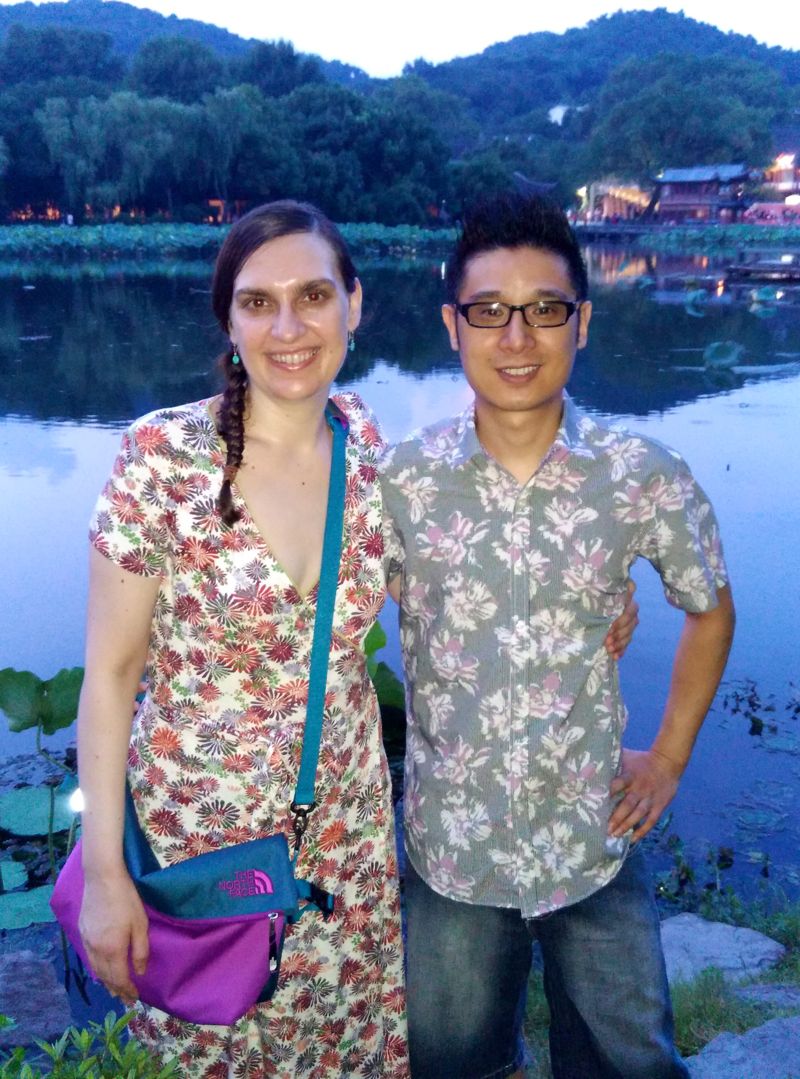
#1: Being able to talk privately when you travel with your partner
My husband’s entire home county has a population of only 400,000 people. Most folks there are also homebodies, preferring to stay close to family.
So when we travel outside the county, the chances of actually running into someone from there – especially if we go abroad – are practically nil.
That makes speaking my husband’s local dialect our go-to language to express anything we’d rather keep private. You know, like the fact that I find my husband’s butt very sexy… 😉
#2: Making the family laugh, because they never expected to hear you say THAT in their language
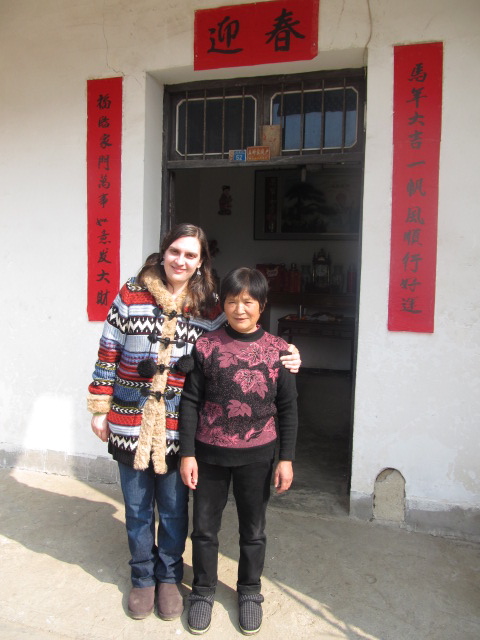
There’s nothing quite like watching my mother-in-law giggle when she hears me say “I’m going to wash clothes” or “I can’t eat this” in the local dialect.
Yes, plain, everyday phrases like that suddenly become hilarious whenever I speak them in front of family (even my husband). And it’s all because it’s so odd to see me – a white American woman – using the local dialect.
(I have to admit, sometimes even I have to laugh when I speak in it. Never in a million years did I imagine myself learning this language, one that had once seemed impossible and completely unintelligible to me!)
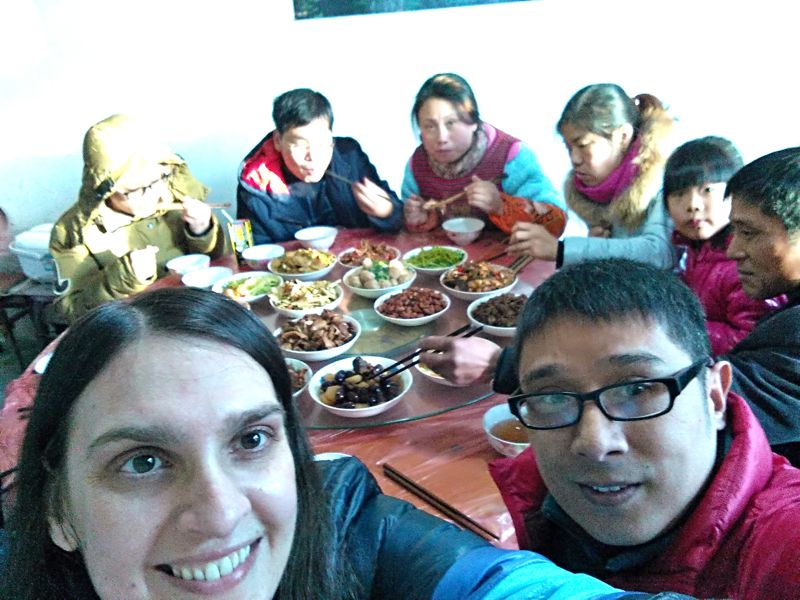
#3: Finally being able to follow conversations around the family dinner table
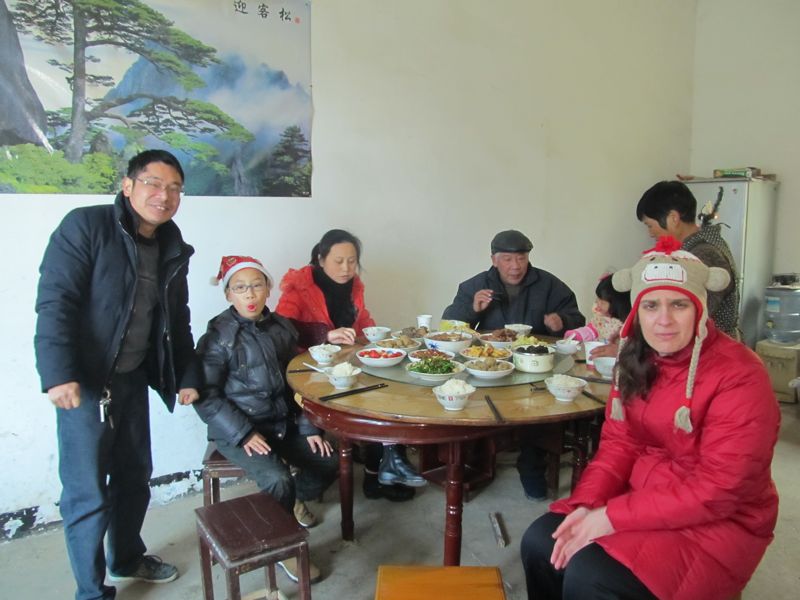
One of the reasons I used to dread visiting my husband’s family was the fact that I got really, really bored sitting around the table at dinner. After all, everyone would fall into the local dialect – the preferred language – and I couldn’t understand a single word.
Not so anymore.
Nowadays, I understand more than 60 percent of the conversations in local dialect – and whatever I don’t understand, I can usually figure out by the context. (I still can’t believe how much I’ve learned!)
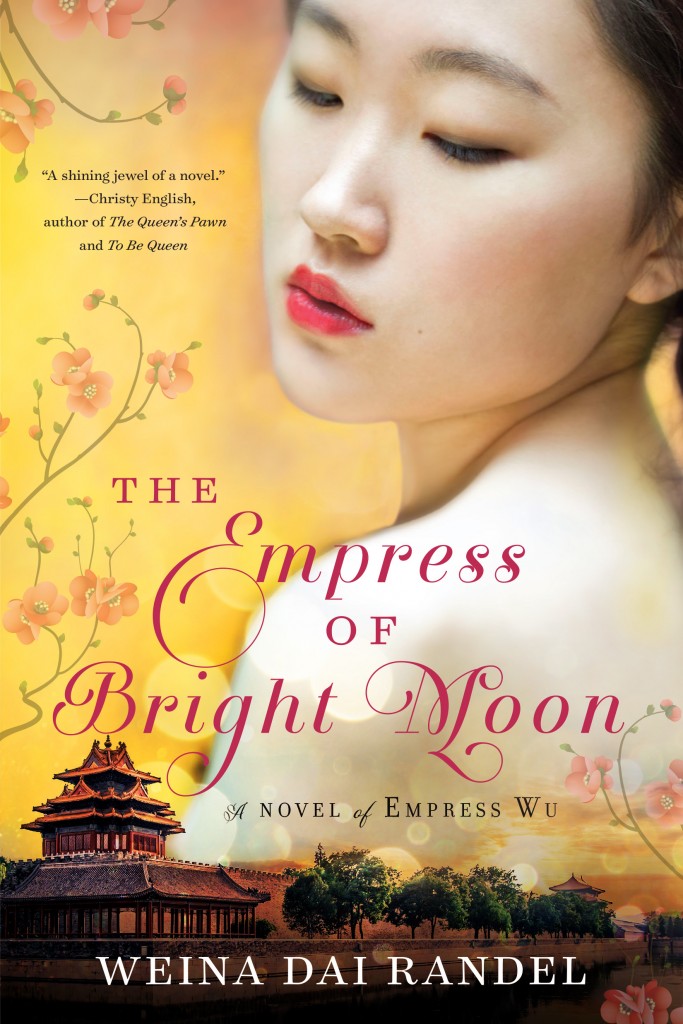
What was sexuality and sex education really like during China’s Tang Dynasty Era? Weina Dai Randel researched this topic while writing her duology about China’s Empress Wu (The Moon in the Palace and the forthcoming The Empress of Bright Moon). I’ve asked her to share her insights (as well as a few blush-worthy moments!) in this lovely guest post.
Do you have something you’d like to see published here on Speaking of China? Check out the submit a post page to learn more about how to get your writing featured on the blog.
Chinese people have a reputation of being reserved, and talking about coupling was not recommended or encouraged even in the family, even today. But on the other hand, Confucian scholars believed it was vital to have as many progenies as possible, and it was common to see a man with ten or fifteen children. So that tells us, they were doing it, definitely doing it, behind the screen or the closed doors.
When I researched this topic, what I found astounded me. Ancient Chinese people were not shy or reserved at all, they were very passionate and open about sex.
To have sex was a beautiful thing, and they believed that the intimate encounter could promote mental and physical health and that it was important for the peace of the household. When you think about it, it has to be so since ancient Chinese men usually had five or six wives, so not every wife could spend the night with the husband every week. So it was possible the wives would need to fight to share a night with the husband, and of course, that also meant there would be many nights without the husband.
Ancient Chinese were very creative about educating the women, by the way. You would find explicit sex scenes playing out in sequence on fans, bamboo slats, silk handkerchiefs, ceramic statues or ceramic statues shaped as men and women coupling, and even on the walls, vases, and shoes. The scenes often described vivid lovemaking that demonstrated excellent painting skills and detailed descriptions of positions.
Viewing the erotic paintings on silk was a more decent way of sex education, believe it or not. It was a secret tradition among palace women and the nobles as well. Often, such paintings were shared within a closed circle and with discretion.
During research I found the book titled 春梦遗叶, literally, it means Spring Dreams, Forgotten Leaves, but the English title is named Dreams of Spring. It’s actually a collection of Erotic Art in China. I requested it through Interlibrary Loan since I was still at school, and when I received it, the librarian took a look at the cover and her face turned red. Later, I bought the book and studied it. Let me tell you the scenes on those paintings were not simply showing two beautiful women having a bath. It was more than that, and I was so shocked to see the content and the details.
This is the cover of the book, which inspired me to put it in The Moon in the Palace. What the book contained is similar to a scene I depicted in The Moon in the Palace, but instead of lovemaking, I intended that scene to be a moment of self discovery and Mei’s sexual awakening. Here’s the cover of the book, which is only a modest, yes, very modest erotic picture that the book has:
What else is in the book? Many pictures. I’m afraid I can’t describe them without giggling, but I can tell you the relationship between the Crown Prince and the flutist was inspired by the paintings.
Since having male heir was very important, it also devoted abundant attention on how to conceive, not just children, but sons. I was shocked again – there are so many conventional wisdoms and secret recipes for conceiving a son! If you want to hear more about this, it has to do with the way of coupling, the time of coupling, the food you eat before coupling, the moon’s phase on the night of coupling, etc. It was so fascinating. Unfortunately I couldn’t use any of them since this was not the focus, but the information did prove to be useful for the second book The Empress of Bright Moon.
You can find these examples of ancient erotic art in many places in China nowadays, and they would pop up at some shopping places that you would never expect.
Two months ago when I was strolling with my family in the shopping district near Yu Garden in Shanghai, we passed a stall selling many paintings, fans, statues. My daughter, a nine-year-old, picked up a fan and asked me, “What’s this, mom?” I leaned over. Oh lord, the fan contained nine scenes which revealed the famous sex styles – the Nine Ways.
My husband and I were so embarrassed. We dropped the fan and quickly fled.
The other night, while staying over at my in-laws’ place in the countryside, my husband and I were just about to get ready for bed when it hit us.
Oh crap, we’d left the laundry in the washing machine all afternoon. We’d forgotten to hang it out to dry.
We bounded downstairs to the laundry room with flashlight in hand, and fully expected to spend 10 to 15 minutes doing what we should have done more than six hours ago.
Except, when I ran over to the washing machine, it was empty. Totally empty. And when I turned my head, sure enough, there was our laundry, neatly hung on clothes hangers on a bamboo rack.
As much as I felt relieved that I’d been saved the trouble of doing that laundry this evening, a slight sense of guilt pricked me.
Once again, my mother-in-law had done housework for me. Housework I could have easily done for myself…and should have done, given it was my laundry.
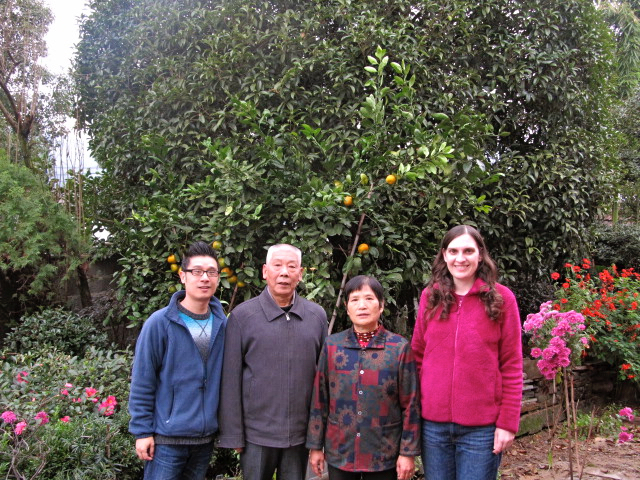
It’s embarrassing to admit that I’m in my thirties and still enjoy laundry assistance from my mother-in-law whenever we stay at her home in the countryside of Zhejiang Province. But it’s true. This sort of thing happens ALL the time.
So in the spirit of being honest, I’m sharing 4 embarrassing things that I’ve experienced with my Chinese in-laws. Here they are:
#1: My mother-in-law will still do laundry for us
Yes, it’s true. My mother-in-law has been known to hang up my clothing left in the washing machine…and she’s even done entire loads of laundry for us.
To be sure, though, I generally don’t ask her to do it. Even I know it’s embarrassing to be in your 30s and have your parents or in-laws do your laundry. (I mean, come on, anyone who has seen Legally Blonde would remember how Elle and Brooke howled over the fact that Warner still took his laundry home to get it cleaned.)
Here’s what usually happens. Either I put the clothing in the washing machine, but stupidly forget to hang it up on time (like I mentioned in the introduction). Or, my mother-in-law grabs my dirty clothing without telling me, and does the entire load for me (this happened ALL THE TIME when I stayed with my in-laws during the summer of 2011).
Sometimes, though, I do ask for her help. The other day, we were in a hurry to leave their house and I had just thrown a load of laundry into the washing machine. So I asked her if she could hang it and she said, “No problem” with a smile.
So now you know one of my biggest dirty secrets.
#2: My mother-in-law cooks all our meals
When we stay with my in-laws at their home, there’s one thing we can count on – three square meals, all home-cooked by my mother-in-law. Always.
This is the complete opposite of how things work at my parents’ home back in the US. There, the assumption is we’re on our own and have to make our own meals (or buy them). Unless, of course, my dad or mom specifically asks us to join them for a meal (or invites us out).
The difference totally blew my husband’s mind.
Anyhow, here at my in-laws’ home in China there’s never any concern about cooking. Everyone knows that when it’s lunch and dinner, my mother-in-law’s voice will echo through the corridors – time to eat! – and we’ll all come bounding down the stairs.
It’s a strange place for me. I spent so many years handling all my cooking (and enjoying much of it). Now, when I’m staying with my in-laws, I just show up to eat at the table.
I have spent some time with my mother-in-law in the kitchen, learning how to cook from her. (She taught me how to make vegan Chinese-style flatbread, for example.) But in many ways, I feel foreign in her kitchen, a feeling that has nothing to do with my nationality, actually. After all, she uses a fire-powered wok to do the majority of her cooking, and I honestly have no idea how to manage the fire. Given how clumsy I am, I might just burn down the kitchen if I tried!
Now that I think about it, maybe it is better to leave the cooking to a woman who won’t cause a conflagration in the kitchen.
#3: My in-laws give us money more often than you think
When a friend of mine — also a Western woman with a Chinese husband – posted in a private chat about how guilty she felt because her mother-in-law gave her some cash to buy a new laptop (her old one crashed), oh, how I could sympathize.
I thought about the many Chinese New Years that had passed since John and I returned to China in late 2013, and how his parents always gave us heaping hongbao filled with more money than adults in the family should have.
I remembered how my mother-in-law handed over an additional stack of bills last year because my husband was starting his business (and she wanted him to have some “lucky money”).
In America, the ultimate badge of adulthood is having your own place, separate from mom and dad.
Well, the most embarrassing thing I could mention on this list is the fact that we’ve lived in the same house as my in-laws – for long periods of time.
Even now, we divide our time between an apartment in Hangzhou and their home. Heck, they added an entire suite to the house just for my husband and me, which proves how welcoming they are.
It’s worlds away from America. I can guarantee you that if I asked my American friends and classmates, none of them would say that their parents or in-laws renovated their homes so they could live together. It’s just not done there.
As embarrassing as it is to admit this, I have to confess I’m also grateful. This suite they’ve provided us is symbolic of the incredible support they’ve given me and my husband.
—–
Life isn’t always easy for John and me. But knowing that we have a couple of incredibly loving parents behind us – willing to do things that I’m a little embarrassed to talk about – makes the hard times a little more bearable.
If you’re all grown up, is there anything you’re embarrassed that your parents or in-laws still do for you?
You could easily call my Chinese in-laws’ home a family farm. There’s a garden out back that supplies the majority of our veggies. Chickens and ducks roam around (and, often, beyond) the front yard. And there’s a guard dog keeping it all together, stationed at the door (and, when we’re eating dinner, under the table).
It’s all a far cry from my childhood home in the Cleveland, Ohio suburbs. And over the years, I’ve learned a thing or two about farm animals.
Here are 5 interesting things I’d like to share with – including the real reason why chickens cross the road (ha ha!):
#1: How to feed a dog scraps from the table, instead of dog food
Back in the US, my neighborhood was a world of golden retrievers, terriers and poodles that lived for those daily helpings of dog food from the supermarket. I couldn’t imagine ever feeding dogs anything else…until I started spending time at my in-laws’ home.
Here, dogs are a mainstay in the house, where my mother-in-law loves them for protecting the house. (Whenever the current dog barks, my husband likes to joke the dog is “on duty”.) But when it’s mealtime, there’s no canned or packaged dog food on the menu. Instead, “Bruiser” (yes, that’s the dog’s name) enjoys leftover bones from the table and/or a mixture of leftover rice/veggies and things like lard, fish remnants, and discarded meat.
Isn’t it odd that, to me, anything but store-bought dog food is unusual? When you think about it, this is how people must have traditionally fed their beloved canine friends. Now that I’ve seen another side of how to feed the family dog, I can’t help but wonder if all that canned pet food is such a good idea.
#2: Shushing the chickens will make them run away
I’ll never forget the first time I heard my mother-in-law saying “shhhhh!” around the house. Who did she need to quiet?
Then I noticed that every time she said this, the chickens would high-tail it out of the room with a glint of fear in their eyes. Like they were caught stealing from the rice stores.
What I’ve learned is that “shhhhh!” sounds threatening to their avian ears, and it’s nearly effective enough on its own to banish them from any room or space. (Sometimes you have to add a hand motion, but they usually get the idea.)
It has become so ingrained in me that I swear if I ever heard “shhhhh” in a library, I might still think of panicky chickens dashing out the door.
#3: Hot ashes can dissolve the most stubborn animal droppings
Okay, okay, so this will probably never end up as a tip in your Good Housekeeping magazine. But trust me, if you have free-range animals around your house – especially chickens and ducks – things can get pretty sticky. (Pun seriously intended.)
Thankfully, when your house happens to have a fire-powered wok (like the family house here) hot ashes are plentiful. Just tip them directly on the pile in question, let it sit for a few minutes, then sweep it away with your broom of choice.
I’ve watched my in-laws do this hundreds of times and it’s almost become second nature to me. Can’t believe it either. Who would have thought that this girl born and raised in the Cleveland, Ohio suburbs would become a pro at tackling animal droppings? 😉
#4: Dogs and chickens can coexist…sort of
No, I swear that’s not a typo. While it doesn’t seem intuitive to keep dogs and chickens together, I know it’s possible because it happens here at my in-laws’ home.
But it can’t happen without a little help and oversight from my mother-in-law. She knows you have to train the dogs. Last year, she had to discipline “Bruiser” a number of times for trying to nip at the free-range chickens. (I also could have sworn that I once caught “Bruiser” with some chicken feathers around the mouth.)
#5: Why the chickens really crossed the road
Who hasn’t heard that time-honored joke? You know, “Why did the chicken cross the road? To get to the other side.”
Well, I’ve seen the chickens here cross the road. A lot. And honestly, I don’t think that’s the entire answer.
I know why the chickens really crossed the road. There’s lots of grass, bushes and trees over there, so they can forage for their most favorite food of all – insects and worms.
It’s that simple.
Have you ever lived on a farm or a farm-like home? What have you learned about farm animals?
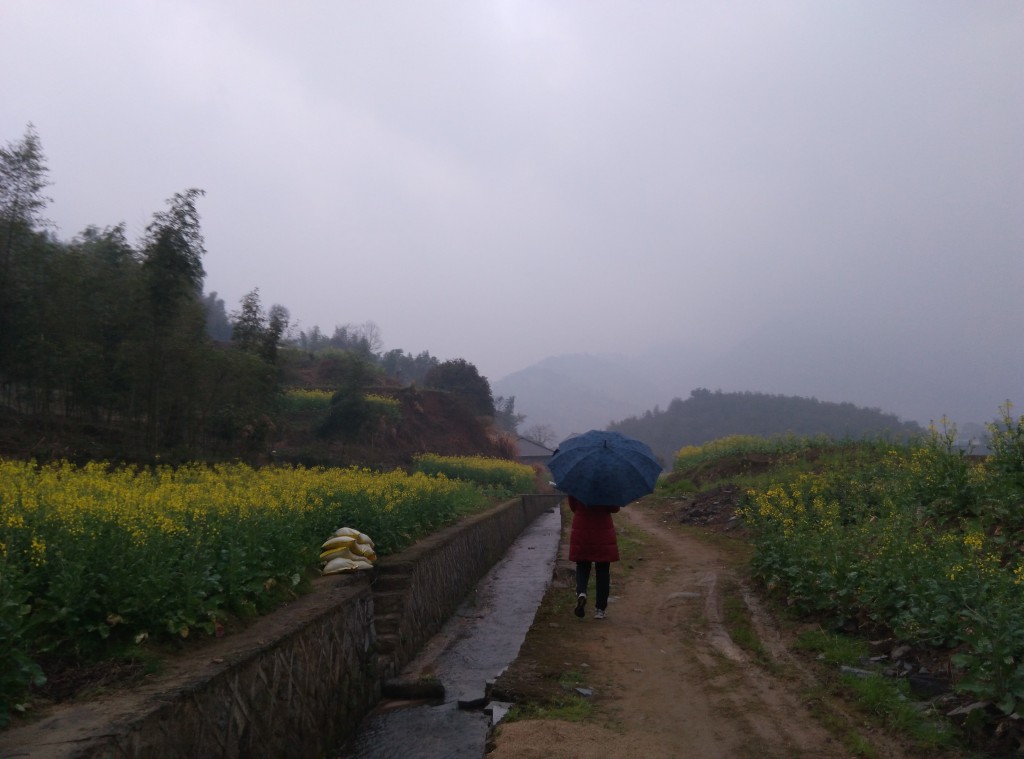
While I’m still on break this week, I thought I’d share some recent photos from the gorgeous “golden” spring blooming all around us here in the Hangzhou countryside.
I call it “golden” because of the golden yellow rapeseed flowers that dominate the fields at this time of year. There’s nothing quite like standing among these fields of gold in the sunshine…
Or even the rain.
Even when it’s overcast, the fields shine with the golden radiance of these flowers.
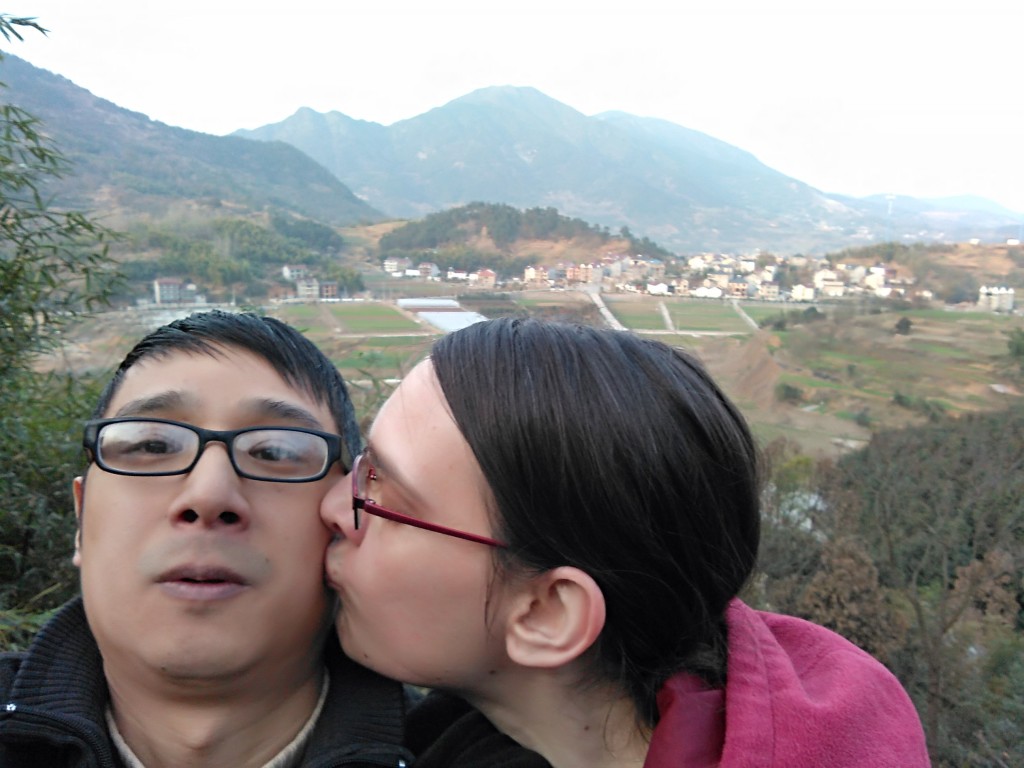
It’s even better when you can enjoy them with your best friend (and husband). Thanks John. 🙂
I have a confession — I adore “Cinderella stories”.
Nonfiction or fiction, it doesn’t matter. As long as the story features a strong, intelligent woman who rises from unlikely circumstances and has to fight her way up, I’m all in. Especially if she ends up saving herself and the guy too.
It’s about the rise of the young Empress Wu – before she became the Empress – and truly reads like a Tang Dynasty era Cinderella story, with everything you’d expect. A smart, powerful young woman who has struggled with extreme poverty and loss in her childhood. Conniving foes and lots of intrigue. A dashing prince that she helps save. A gorgeous palace setting.
Of course, we all know going into this story that the young Mei Wu will indeed ascend to the throne. Yet that reality doesn’t detract in any way from the pleasure of reading this novel. In fact, The Moon in the Palace is a real page-turner. This is book you’ll be flipping through late into the evening, complete with lots of plot twists and surprises. Yes, it’s that compelling.
If you’re a fan of historical fiction about China or curious about the life of Empress Wu, you must read The Moon in the Palace.
Weina Dai Randel
I’m thrilled to introduce you to The Moon in the Palace by Weina Dai Randel through this interview.
From Weina: “I love to see how words form an image that transcends the banal reality or how words join together to create a morsel of wisdom that tickles your mind.”
Born and raised in China, Weina has worked as a journalist, a magazine editor, and an adjunct professor.
She received an M.A. in English from Texas Woman’s University in Denton, Texas, where she was inspired to write about Empress Wu of China when she took a class in Asian American literature.
She lives in Flower Mound, Texas, with her loving husband and two children.
You can learn more about Weina Dai Randel at her website, and follow her on Twitter and Facebook. The Moon in the Palace is available at Amazon.com, where your purchase helps support this site.
—–
Tell us about the inspiration for writing this novel.
I was inspired to write this novel after I read Maxine Hong Kingston’s The Woman Warrior in graduate school. I did a presentation about the pregnant woman who drowned herself because she was not married and her pregnancy was considered a disgrace to her family and village. I didn’t like that piece that much, and I wanted to show my classmates that China had strong women who were able to control their destinies, and the first woman who came into my mind was Empress Wu.
While I researched, I found out there were not many novels about Empress Wu during recent years. Well, there were a few novels written in 1950s and 1960s, but those novels depicted her in a rather harsh light and criticized her because she didn’t follow Confucian rule that women should serve men. Today, the world has changed so much, and I believe we need a book about her that should look at her in a positive light, as a woman, a daring, intellectual woman as she must have been. And I seriously believed that a woman should write her story. (There was another novel by San Sa, called Empress, but it was initially written in French, and I had not read it so I can’t comment on it.)
So I decided to write a book about Empress Wu from her point of view, showing her rich and complicated life as how she lived through it.
But I didn’t want to write her as an empress. I wanted to write her entire life, from when she was young to when she was old, so readers would know what she was like when she was a nobody, how she survived, how she outwitted the others, how she changed in the palace, and why she changed. And most importantly, I wanted to show readers what she was like when she was young, and how her romantic relationship with Emperor Gaozong changed her life. That was where The Moon in the Palacewas started.
Your story paints a captivating portrait of life within the Emperor’s palace with astounding detail. What research did you do to help you recreate what it would have been like for Empress Wu to live in the palace?
Oh, the research I had done! Looking back, I can tell you it was an education that lasted for almost ten years.
For the palace, I first studied the layout of Daming Palace and the original palace in Chang’an, which don’t exist anymore, and the map of the current Forbidden Palace in Beijing, which was said to be inspired by the palace in Chang’an. I also visited the Forbidden Palace in person and walked through the entire palace from the front entrance to the garden in the back. Oh boy, it was cold then when I visited Beijing, and I was freezing even with six layers on. I also visited the Summer Palace twice and the city of Xi’an, which was Chang’an in Tang Dynasty to obtain a feel of the city and the life inside the walled city. I was even tempted to visit Kyoto in Japan, which I heard was designed after Chang’an and still preserved many features of Chang’an very well.
It was not enough to simply know the palace’s layout, of course, so I also studied the architecture; the gardens – the vital features of a Chinese garden, Japanese garden and their features, the vegetations, flowers, types of trees thrived in the northern China; birds; silk – types of silk, designs of silk gowns etc.; silkworms – their life cycles, silkworm farming; food – the preparations of food, types of food and the use of food as medicine, and yes, medicine too.
I also spent a lot of time studying the paintings in Tang Dynasty and ancient China. It was very helpful to see the nature’s landscape, the garden of private scholars, and the clothes they wore. I also learned a lot about the ancient world through the lenses of poets, whose descriptions of nature were another vibrant paintings of lyrics.
What I really dug into was women’s life in the palace. I researched the fragrance they used, the types of sachets they carried, the incense stick they held, and fashion, especially, which was another topic I was fascinated about. We all know how important appearance determined a woman’s status in the palace, and I think this still works in the society today. So from silk, I also looked into the hairstyle that distinguished women, the jewelry that emphasized their rank, and even their shoes that made them stand out. Yes. I’m also fascinated with shoes!
But you know none of the research would work if the character’s “mindset” is missing – to borrow the word from Elizabeth Chadwick. So in a way, the setting and all the research I had completed was like the gown the character wears, and once she dons it, she is transformed into that world, where she would try to reach her goal, where she would find temptations, and most importantly, where she would face animosity and even danger, which would wind around her waist and tighten around her neck like a sash if she’s not careful.
Could you talk about how you developed the young Empress Wu as a character for your story? What research, clues or inspiration guided you?
The real young Empress Wu was, and still is, a myth to many of us. Many records described what she was like and what she had done the year before she became the Empress and during the time when she was a ruler, but few stories gave insight to what she was like as a young girl. So creating her was a freedom for me.
My first imagination of the young Empress Wu was she had to be smart, very smart, and I worked really hard to transmit that idea to readers. But it really was a challenge to show a girl’s wit when she was confined within walls and unable to meet the Emperor. So for a long time after I completed writing the whole manuscript, I couldn’t figure out how Mei would use her wit to see the Emperor and what she would give the Emperor as a gift. I read many books that told stories of ancient women who were very smart but still couldn’t relate to Mei’s situation. Then one day I was doing dishes and the book I had read when I was a kid appeared in my head and it dawned on me – The Arabian Nights: Tales of One Thousand and One Nights.
And I realized the gift must not be something physical. It had to be something else. That’s how Mei found a birthday gift for the Emperor.
I was tempted to make Mei not beautiful – beauty is kind of trite to me, and I didn’t like it that all female protagonists had to be beautiful! I also had another reason when I was writing. If she was too beautiful then Emperor Taizong would have deflowered her, especially since she was around him all the time. But the plot just didn’t work very well if she was ugly, or plain, and the setup was hard to do – how would she be summoned if she wasn’t beautiful?
So in the end, I decided Mei had to be beautiful too, otherwise she wouldn’t be summoned to the palace to serve Emperor Taizong. With that detail down, all the other questions were solved. Of course the Emperor wanted to deflower her, if he could!
Those two characteristics of Mei were the clues that helped me from the very beginning, and from there, I set the foot down and began her transformation, the process of surviving in the court, learning the women’s art of backstabbing, and then making mistakes, and then being punished as she tried to win the Emperor’s affection.
Mei’s other traits, her bond to her father and her devotion to her mother and family, were purely invented by me, although we, and many Chinese people, can easily imagine this is plausible. Filial piety is still one of the important traits that will determine if you’re a good person in China.
Your story includes people plotting against each other to gain more prominence and power within the court. One of the most fascinating individuals in your story is the conniving Jewel. Could you talk about how you conceived of this character and whether she was based on anyone from history?
(**Spoiler alert**)
Oh, I’m so glad you asked this question! Jewel is my favorite character from the very beginning, but she was so hard to write, which I will get to later. But no, she was not based on anyone from history or the research I had done, nor was she inspired by anyone I know. But we all know of conniving people littered across history and they usually did not end up very well.
When I started the story, Jewel was supposed to be a friend to Mei, I mean, a real friend like the Noble Lady, and she didn’t die in the middle of the book, and her death would happen later, near the end, which would make her a real victim. But as I plotted the story, I just didn’t feel the tension, the dynamics that was needed to move the rivalry forward. So I wrote the betrayal scene, and then, instantly, everything gained flavor and the subtext of deceit and rivalry just jumped out.
I liked the re-branding of Jewel, but then Jewel demanded me to give her more depth since she was more complex and enigmatic. I had to rewrite the bath scene during which she talked about her past – she would tell Mei a bit of herself and be very frank about it, but she would also word everything differently since she had a hidden motive. I rewrote that scene five times. Three times during developmental editing, and then twice during copyediting. It drove me absolutely nuts!
I also found the complexity of Jewel’s character made it difficult to plot the interactions between her and Mei. Mei knew now what Jewel truly was and she would not tell her what she wanted, but Mei was smart too and she learned that quickly so she tried to detect Jewel’s motives. So each time when they saw each other, a silent duel of eyes began. There were several scenes during which neither of them spoke the truth and both tried to pry some secret from each other.
It was very stressful and exhausting to write like that at the beginning, but then I grew used to it and had fun playing with each other. The hardest part, however, was to write them in a way that would transfer the idea of animosity but still keep the prose beautiful and appealing.
Throughout the novel, the young Empress Wu recalls passages from The Art of War for direction in the face of the great challenges of life in the palace. What links between Empress Wu and The Art of War did you uncover in your research?
I didn’t find any links between Empress Wu and The Art of War, to be honest. The connection between the ancient book and Empress Wu was purely invented by me.
But I imagine the real Empress Wu would be familiar with the strategies and deftly use them when she reigned the country – it was often mentioned that she had impeccable skills for managing the ministers with big egos and she also won some important battles against Korea and some northern tribes during her reign. And also, since The Art of War predates Tang Dynasty by almost one thousand years, it is also easy to imagine Empress Wu, who was well read and familiar with all classics, would employ master Sun Tzu’s advice as needed.
But of course, no one would know whether she really relied on The Art of War when she was young.
There, you may wonder, why would I connect her with The Art of War?
It has to do with the immense influence The Art of War had on people in America and Europe. The Art of War is an icon of Chinese wisdom, a book often quoted by many businessmen, leaders, and politicians. It showcases the enduring wisdom of ancient Chinese and carries this connotation that whoever studies it is smart, if not calculative.
I am aware that this book mainly had male readership, not woman, but Empress Wu was not a common woman, and the female gender should not limit her and dictate her behavior. The Art of War, after all, was about the making of a leader, about protecting yourself, and about winning with ease and with grace, and I think Empress Wu had accomplished them all.
What do you hope people will gain from reading your novel?
Even today, Empress Wu remains to be a controversial figure in China. People admire her because she was the only female who ruled China, but on the other hand, people inherit many colorful views of her due to some biased comments made by Confucian scholars who attacked her because of her gender.
I wanted to change that perception with these two novels. I would like to provide another view of Empress Wu; I would like to show readers that she was not the vile, calculative, murderous woman some opinionated male Confucian scholars have painted.
I would also like people to understand Empress Wu was not just a sex symbol as described by many books, movies, and TV shows. She was intellectual, she was strong, she made her own destiny when few women were even allowed to do so. And if you read the second book, The Empress of Bright Moon, you’ll understand her appeal came from her wisdom, her persistence, her ability to lead, and also her extraordinary resilience.
I hope when people visit her tomb in Xi’an, they would have my novels in their mind when they read the brochure handed to them. They would read the biased paragraphs and they would understand this might not be true. And they would look at the Empress with sympathy, and maybe, with awe as well.
It’s also my greatest ambition to introduce classical Chinese literature to people in America and Europe. I don’t know if you noticed, the novel has many references to poems, stories popular in the Chinese culture, and I did that on purpose. I adore classical Chinese literature, the condensed prose so polished but vivid, with images so pure that they were paintings themselves, and in mentioning them, writing them, I hope people outside China will be intrigued to study them as well.
—–
Thanks so much to Weina for this interview! You can learn more about Weina Dai Randel at her website, and follow her on Twitter and Facebook. The Moon in the Palace is available at Amazon.com, where your purchase helps support this site.
The Wall Street Journal Expat Blog just published an article titled Strategies for Coping as an Unhappy Expat. While I loved the suggestions provided by the author, the thing that struck me most about it was the focus. The idea of the unhappy expat.
Unhappy moments are not the sexy sort of thing we’d like to plaster all over our blogs and social media accounts.
Before I met Jun, I imagined international love to be as sexy as a James Bond movie, where lovers went from Monte Carlo to the Casbah as easily as ordering a martini. But then I went to China, and I was shaken and stirred by the reality there…
I think we’re all a little shaken a stirred – and not always in a positive way – when we chose to make another country home, with a spouse from that country. There are inevitable sacrifices and challenges that people don’t always talk about, but probably should. It would be a great leap forward to helping us all overcome the shame of feeling sad when we’re supposed to have these “fabulously sexy” expat lives.
Here are 5 unhappy things I’ve struggled with as a longtime expat in China married to a foreigner:
#1: Missing friends and family from your home country
I chose to live in China, half a world away from my friends and family back home. But, goodness, not a day goes by when I don’t think about them – and wish I could see them again.
Right now, for personal reasons, it’s just not feasible for me to return to the US. In fact, I haven’t returned ever since I moved here to China at the end of 2013, making it more than two years since I’ve been away.
This is probably a huge surprise to a lot of people, who might think expats always make those trips home at least once a year. But it’s not uncommon among the yangxifu (foreign wives of Chinese men) that I know. There’s one woman who actually lived six years straight in China before hopping on a plane to return to her home country. (Her reason was having kids in China – it was just too difficult for her to make the trip.)
#2: Feeling isolated
I live in Hangzhou, China. While it’s not a Beijing or Shanghai, it’s definitely right up there with the major cities in China. But there’s one thing Hangzhou doesn’t have – a vibrant, more permanent expat community.
The majority of expats in the city are pretty transient – overwhelmingly students at the universities – and don’t stick around too long. The rest of the working expats are scattered all over town. I almost never run into folks in the city, and there aren’t tons of venues to meet up with them either.
Add to that the fact that I also divide my time between the city and the countryside, and you’ve got a recipe ripe for isolation.
I have friends in China on my WeChat account, and we do chats every now and then. But honestly, just straight online chatting doesn’t really do it for me. Video chats are much better, though slow Internet can make it difficult too.
I’m learning the importance of reaching out to people when I’m struggling. Even then, I know that isolation will sometimes be a part of my life and I need to learn to find good coping strategies for it.
#3: Feeling misunderstood by your foreign family
I recently wrote, “It’s hard not to care about the happiness of my mother-in-law when, frankly, she spends so much of her time caring about ours.” and it’s a testament to how much I love her and the family I have here in China.
But the thing is, no matter how much I love them, there are things about my life that they don’t always understand. Especially things that have happened to me and my husband in America or places far removed from their rural Hangzhou life.
I can handle being misunderstood in small doses. But let me tell you, during Chinese New Year this month I was getting pummeled with it almost every single day from family members. And even though I know that words can’t really hurt you, I couldn’t help but feel down from it all.
Sometimes the best antidote to this is my husband, who tells me that I’m not alone in feeling like I do. With his experience living abroad and traveling, his family doesn’t always understand him or his decisions either. He’s a reminder that it’s OK.
To me, Jun was the guy who first kissed me to the tune of cicadas, next to Hangzhou’s West Lake. The man who loved to pick me up from the metro station late at night, and ferry me home on the back of his bicycle. But to the visa officer at the US Consulate in Shanghai, Jun was just another immigration risk from China with no apartment or car, let alone a wife or children. “You’re too young,” the officer declared in Mandarin, stamping a denial in permanent red ink into the passport….
I shouldn’t have pushed Jun to apply for that US tourist visa — except I longed for him to meet my parents. I had met his months before, but he’d only known mine through the occasional long-distance phone call. But instead of getting the third degree from my dad, Jun had to get it first from a US visa officer, a guy who wasn’t kidding about “no.”
But it can go both ways. In online chat groups with foreigners, I often hear about the seemingly interminable troubles that they’re facing with applying work visas. Things like having to make the expensive journey back to their home country just to submit an application, figuring out how to get an acceptable criminal background check completed, and more. Sigh.
#5: When people laugh at your foreign accent
The Chinese are known for their excitement whenever Westerners say even a simple “Ni Hao” or “Xie Xie” – but that doesn’t mean it’s impossible for people here to laugh at your accent.
It has actually happened to me, particularly when I’m around kids (and often in a classroom setting). When I speak my accented Chinese to them, they think it’s funny and then don’t respect me so much. Or make jokes about me behind my back.
Granted, it’s nothing compared to what Chinese might experience in America. Many Americans are such racists sticklers that they consider certain accents – including Asian accents – as proof that you can’t speak proper English. (Or worse, that you should “go back home”….)
But the experiences I’ve had here have made me even more sympathetic to foreigners in America. And they’ve given me a taste of the unhappy experiences you can have when you don’t speak exactly like a native.
—–
Don’t get me wrong – I’m happy most of the time. I love my husband, I love China, and couldn’t imagine living anywhere else in the world. But sometimes, it’s good to share the flip side of it all. For all the ups we experience as expats, there will also be plenty of downs as well.
So next time you’re feeling a little unhappy in your supposedly “amazing” expat life, just remember one very important thing – you’re not alone.
What do you think? What unhappy experiences have you had as an expat and/or as someone married to a foreigner?
Going abroad can change you a lot — sometimes, enough to realize you were never meant to date your own countrymen.
That’s the conclusion Lena, the blogger behind Lena Around, has come to, who believes the cultural differences between her and the local Danes are too great for her to go out with them. Read on for her story!
Do you have a surprising story to share or other guest post you’d like to see featured on Speaking of China? Visit the submit a post page to learn how to have your words published here.
—–
I’ve been at home for a few months now. 2015 was a crazy year. I started out with a broken heart and a lost soul. But there wasn’t much time to think about it because I was going to Australia and then moving onto China. My heart was growing back together during the month in the beautiful nature of Australia, and when I came to China I was getting stronger again. I started to believe a little bit in love or I thought so.
I met a great guy in Beijing and I was determined to move on from past experiences and be happy with this person. He was a great match for me and he loved me just like I am. I should have been happy and I tried. I fought for him for a long time while I kept wishing my heart would open up, but I was afraid. I wasn’t ready to open up yet so I had to move on again.
I travelled through China, Malaysia, Singapore, Korea, Thailand, Laos, Hong Kong and Taiwan, I met loads of amazing new friends and hot fellas I could fall for, but I didn’t. I was just having fun. I told myself it was okay to still be nervous about the pain another person could cause you, so I let it go and travelled on my own discovering, exploring, thinking, learning and growing.
Coming back to Denmark, I was tired. I was just exhausted after 10 months on the road. I’d seen so many things and now it was time to sit down, relax and reflect. But it didn’t take long before my wanderlust came back with even bigger power than before. I felt the need to do something, so I quit my little vacation at my parents’ house and moved back to my university town. I thought to myself that now everything would be nice and I could be happy with friends around.
The problem is just that when you come back from such a long trip, not many people are around anymore. Or if they are, they are doing tons of other things. So I sat there in my new apartment thinking, Why not try Tinder? I’d tried before and it was a fun way to meet nice boys. I’ve got to be honest and say that I was pretty bored, which was probably the reason why I turned to Tinder.
After a few days, I had a match. You see the problem here is that I just do like the Asian look. I’m not saying that I only date Asian guys but I am just quite fond of them. So if I see an Asian-looking guy, I’m just more curious than a blue-eyed, blond-haired tall Dane. But anyway, the match was with a Vietnamese-Chinese guy born and raised in Denmark. I know from experience that this doesn’t mean they have any interest in Asia but I always hope a little bit anyway.
We started talking and the conversation quickly turned to the topic of Asia. I said that I’d been around. I didn’t want to mention all the places because I wouldn’t want to sound like a show-off, but he insisted on me telling. I told him about my last trip and he asked me if I spoke Mandarin. I said yes. He himself had only been to Beijing and Hong Kong for a week like most other tourists and I felt a little disappointed deep inside.
I knew I was comparing him to my first and only great love. He had the same background as this guy. But instead of not giving a s… about China, he was totally in love with China, just like me.
In the end, this guy left me hanging. Twenty minutes before meeting up, he told me he was going to play football instead. I was furious. I told him what an ass he was and deleted his number. Even though he chose to screw things up, I think it was for the best anyway. I should not date around here. My China stories can be pretty overwhelming. I don’t know why this guy didn’t want to meet. Was it because of my greater knowledge of Asia or did he really just want to play football? Who knows?
Now I know that I shouldn’t try to find a guy in this town. With a big population of pale people and no Asian studies at the university, I don’t think there’s much for me here. Also, I’m planning on moving back to Beijing immediately after graduation so why start a relationship here, right? I think it would be better to just deal with the boredom myself, become stronger, and not think too much about boys right now. I’ll just have to wait for my prince charming, who’s probably sitting on a subway in Beijing hoping for my arrival.
Lena is a 20-something Danish girl who is currently working on a master’s degree in Beijing and writing about her travels, China (her favorite place) and love. You can follow her at lenaaround.com.
Every year, I swear this Chinese New Year is not going to kick my butt. And somehow, every year, I’m totally wrong on this.
Yes, Chinese New Year 2016 — welcoming the year of the monkey — has been an exhausting parade of lunches, dinners, toasts, and meetings.
By the last day I had rings under my eyes (the “panda” look that my husband kids me about) and a desperation about me that said, “Please, Chinese New Year, let me have a little peace and quiet.”
And so it came. Finally! I survived!
While I’m recovering from all the hustle and bustle of the holidays, I thought I’d share some of the pics from Chinese New Year 2016.
New year, new picture of John and me in front of the family house. We may be smiling, but we’re beat. With all the fireworks set off all night, I got maybe four or five hours of decent sleep.
This is our first dinner of the new year at an uncle’s house. There’s lots of toasting, and lots of fantastic food. My husband’s aunt is an extraordinary cook and she happened to dish up a serving of Chinese-style kimchi more delicious than anything I’ve ever had (Must corner her and get the recipe!)
Yeah, I know, eating again. Seriously, that’s the heart of this holiday. Lots and lots of lunches and dinners. As always, we ate…
…and ate…
…and ate!
Even when you’re not having lunch or dinner, people usually offer you lots of food to snack on. Notice the trays of assorted nuts, fruit and candies arranged on the tables before us.
Here I am at an aunt and uncle’s home, attempting (unsuccessfully) to snack on raw sugar cane. Sweet, but a little too pulpy for my taste. This was day 6. Do you see the fatigue on my face yet?
This is John and me at the end of the holiday. I’m looking haggard (see the “panda” eyes?) — and longing for a little peace. Fortunately, when we returned from this walk, the village was quiet. Finally, I could rest.
Wishing everyone a wonderful year of the monkey (with hopefully more sleep than I got during the first days of the new year)! 😉
We’re busy celebrating Chinese New Year, the biggest holiday of the year here in China, at John’s family home in rural Hangzhou. I thought I’d share a few photos from Chinese New Year’s Eve.
It was a lovely day to celebrate Chinese New Year’s Eve, with some of the most gorgeous blue skies of the winter.
My brother-in-law took his daughter to pay her respects to the spirits in an old camphor tree beside the river, as he does every year on this day.
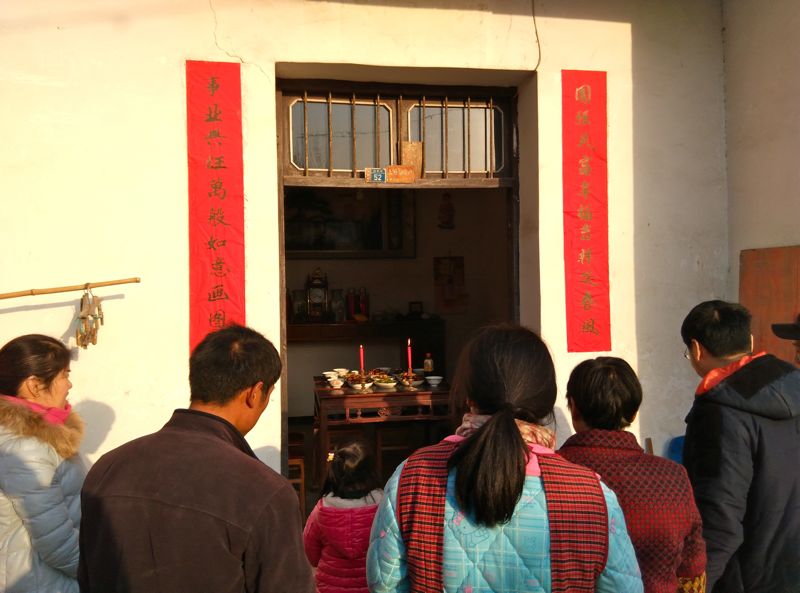
On Chinese New Year’s Eve, ancestors come first. Here we pay our respects to the ancestors at their table, filled with dishes fresh from my mother-in-law’s kitchen.
Let’s eat! It’s the most wonderful dinner of all the year, the table loaded with delicious dishes made by my amazing mother-in-law. (I consider her kitchen one of my favorite “restaurants” in China… 😉 )
As usual, John is one of the last to leave the table — he loves to eat, and takes his time. Here he’s enjoying some free-range chicken raised by my mother-in-law (his favorite dish of the evening).
Wishing you all a very auspicious and prosperous year of the monkey! Happy Chinese New Year!
This website uses cookies to improve your experience. We'll assume you're ok with this, but you can opt-out if you wish.AcceptRejectRead More
Privacy & Cookies Policy
Privacy Overview
This website uses cookies to improve your experience while you navigate through the website. Out of these cookies, the cookies that are categorized as necessary are stored on your browser as they are essential for the working of basic functionalities of the website. We also use third-party cookies that help us analyze and understand how you use this website. These cookies will be stored in your browser only with your consent. You also have the option to opt-out of these cookies. But opting out of some of these cookies may have an effect on your browsing experience.
Necessary cookies are absolutely essential for the website to function properly. This category only includes cookies that ensures basic functionalities and security features of the website. These cookies do not store any personal information.
Any cookies that may not be particularly necessary for the website to function and is used specifically to collect user personal data via analytics, ads, other embedded contents are termed as non-necessary cookies. It is mandatory to procure user consent prior to running these cookies on your website.
 #1: Being able to talk privately when you travel with your partner
 #1: Being able to talk privately when you travel with your partner
 #2: Making the family laugh, because they never expected to hear you say THAT in their language
 #3: Finally being able to follow conversations around the family dinner table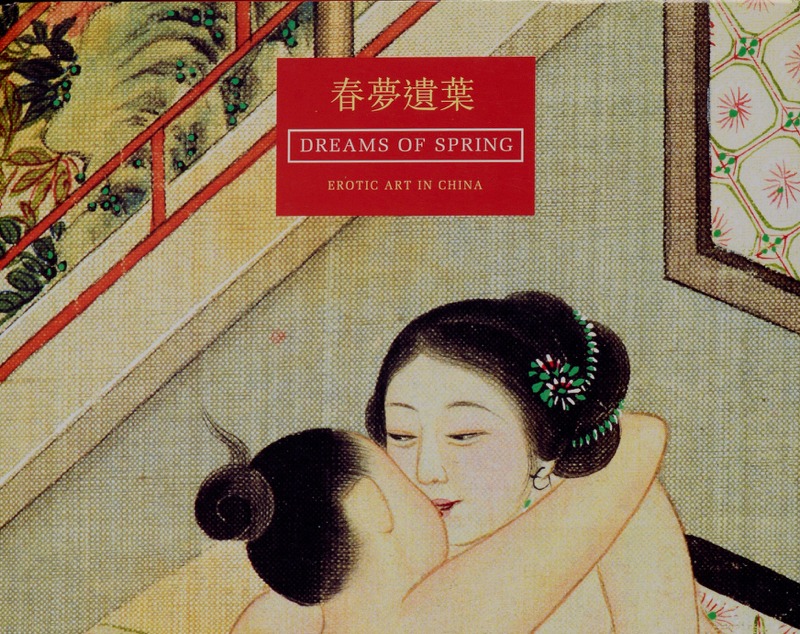
 #1: My mother-in-law will still do laundry for us
 #2: My mother-in-law cooks all our meals
 #3: My in-laws give us money more often than you think

 #2: Shushing the chickens will make them run away
 #3: Hot ashes can dissolve the most stubborn animal droppings
 #4: Dogs and chickens can coexist…sort of
 Or even the rain.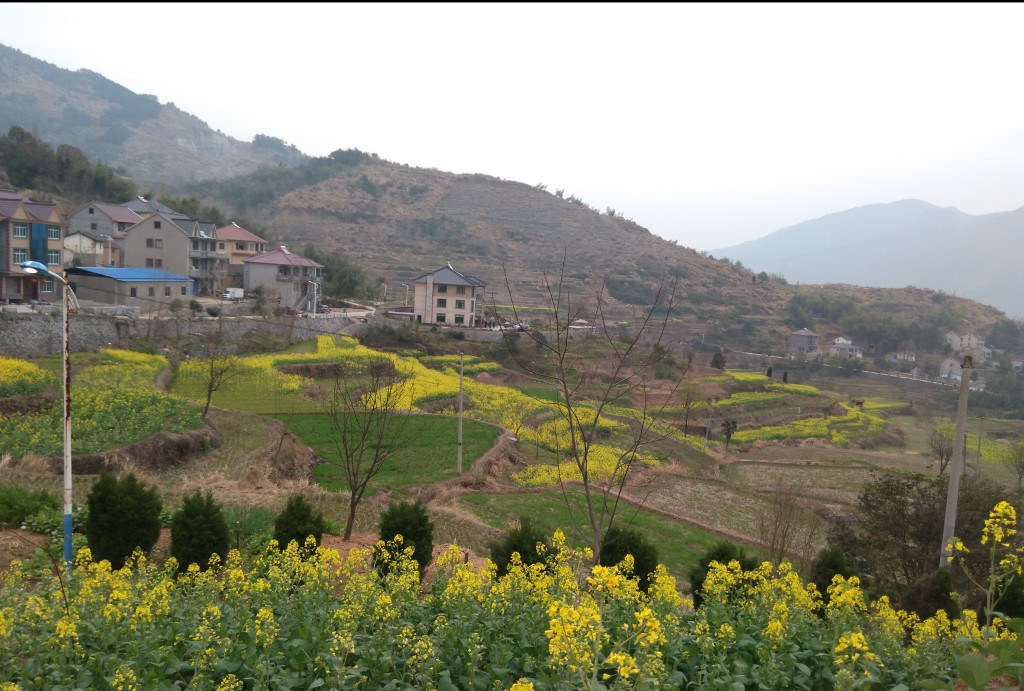
 It’s even better when you can enjoy them with your best friend (and husband). Thanks John. 🙂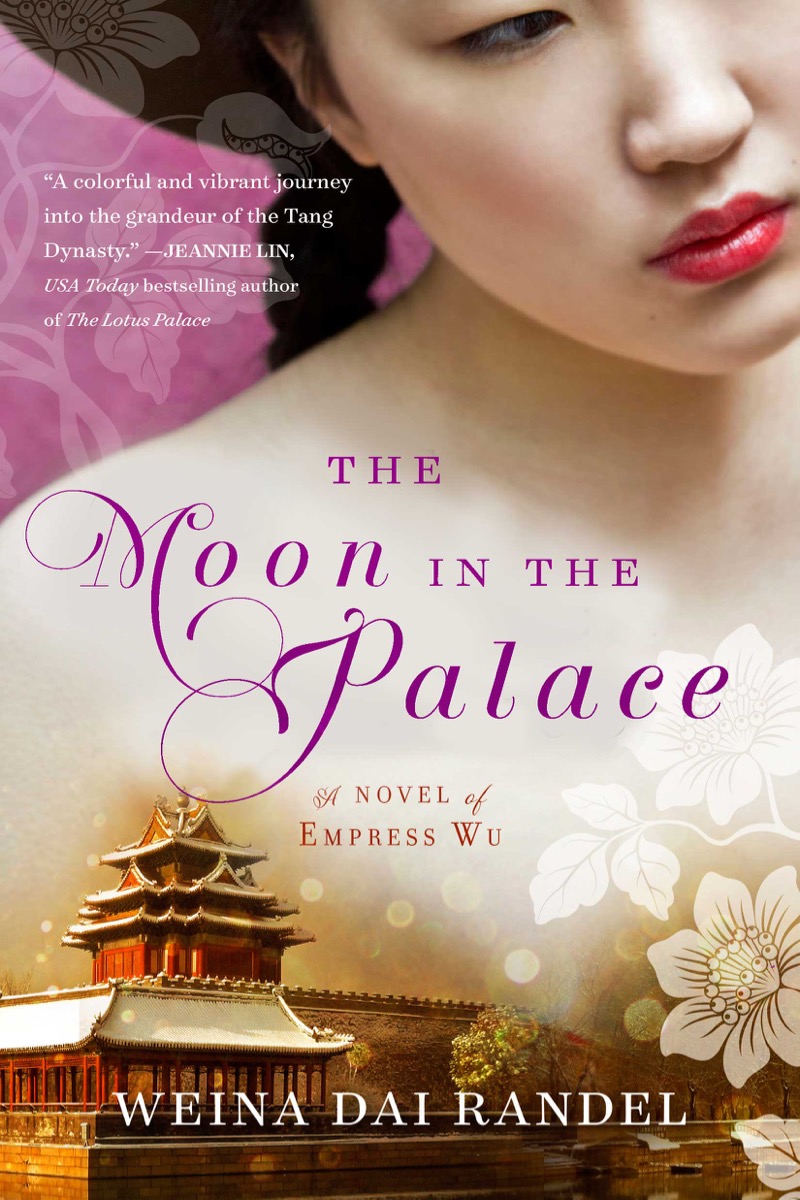

 #1: Missing friends and family from your home country
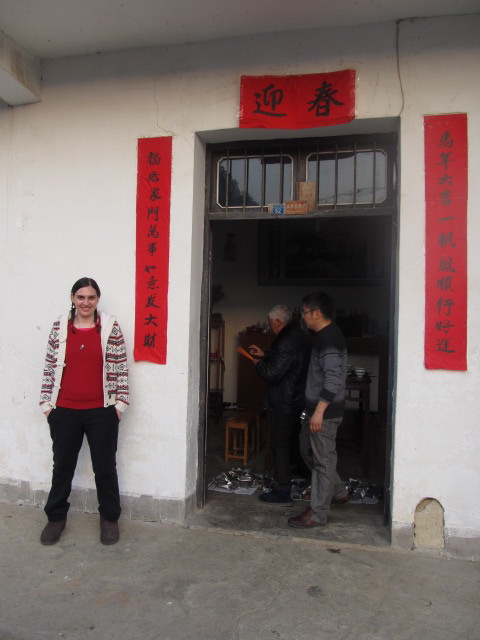 #2: Feeling isolated
 #3: Feeling misunderstood by your foreign family
 #4: Visa woes
 #5: When people laugh at your foreign accent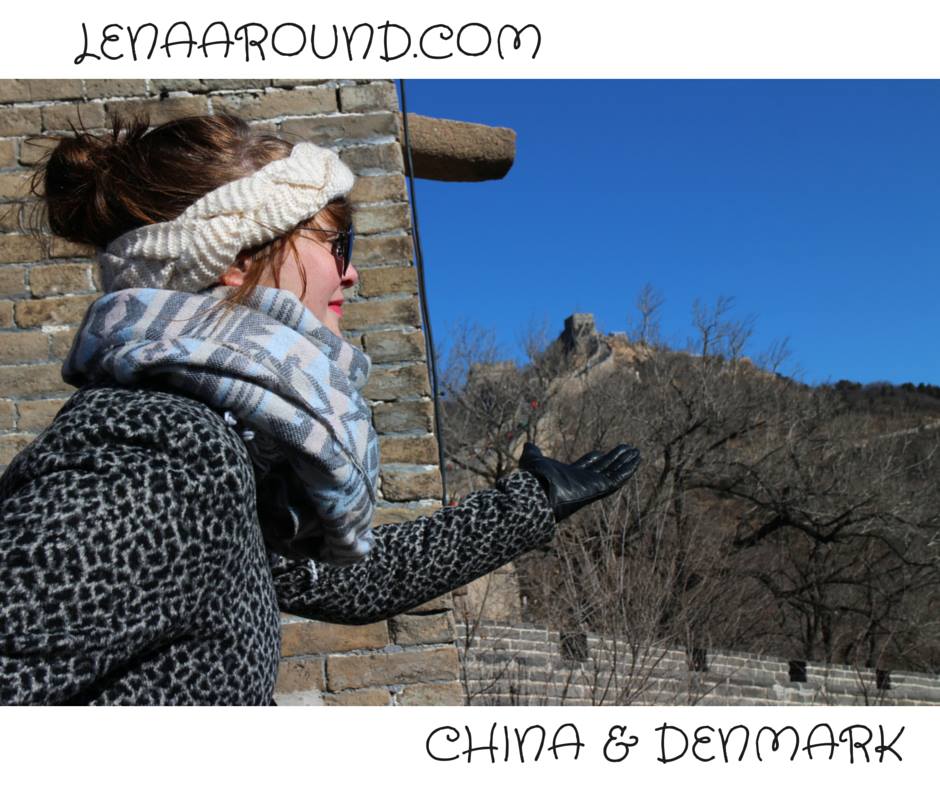
 I’ve been at home for a few months now. 2015 was a crazy year. I started out with a broken heart and a lost soul. But there wasn’t much time to think about it because I was going to Australia and then moving onto China. My heart was growing back together during the month in the beautiful nature of Australia, and when I came to China I was getting stronger again. I started to believe a little bit in love or I thought so.
 After a few days, I had a match. You see the problem here is that I just do like the Asian look. I’m not saying that I only date Asian guys but I am just quite fond of them. So if I see an Asian-looking guy, I’m just more curious than a blue-eyed, blond-haired tall Dane. But anyway, the match was with a Vietnamese-Chinese guy born and raised in Denmark. I know from experience that this doesn’t mean they have any interest in Asia but I always hope a little bit anyway.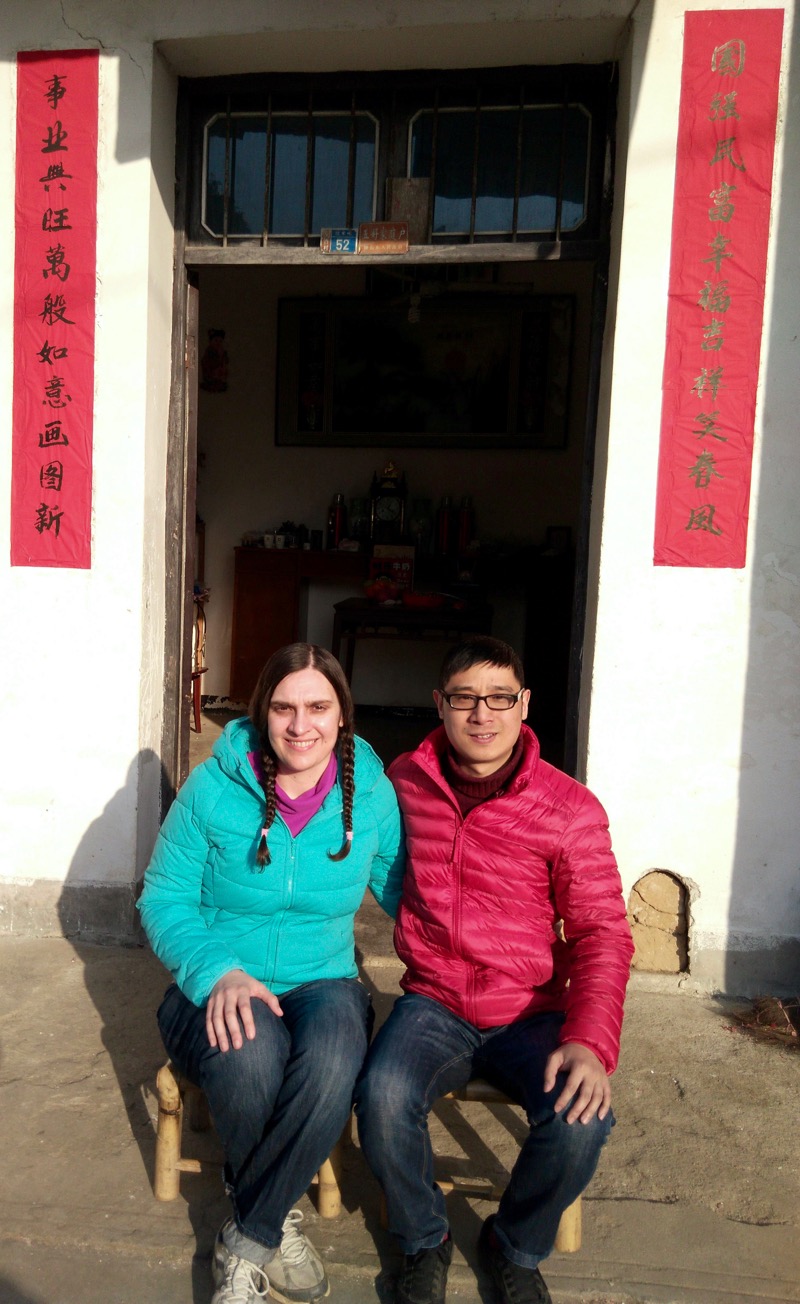
 New year, new picture of John and me in front of the family house. We may be smiling, but we’re beat. With all the fireworks set off all night, I got maybe four or five hours of decent sleep.
 This is our first dinner of the new year at an uncle’s house. There’s lots of toasting, and lots of fantastic food. My husband’s aunt is an extraordinary cook and she happened to dish up a serving of Chinese-style kimchi more delicious than anything I’ve ever had (Must corner her and get the recipe!)
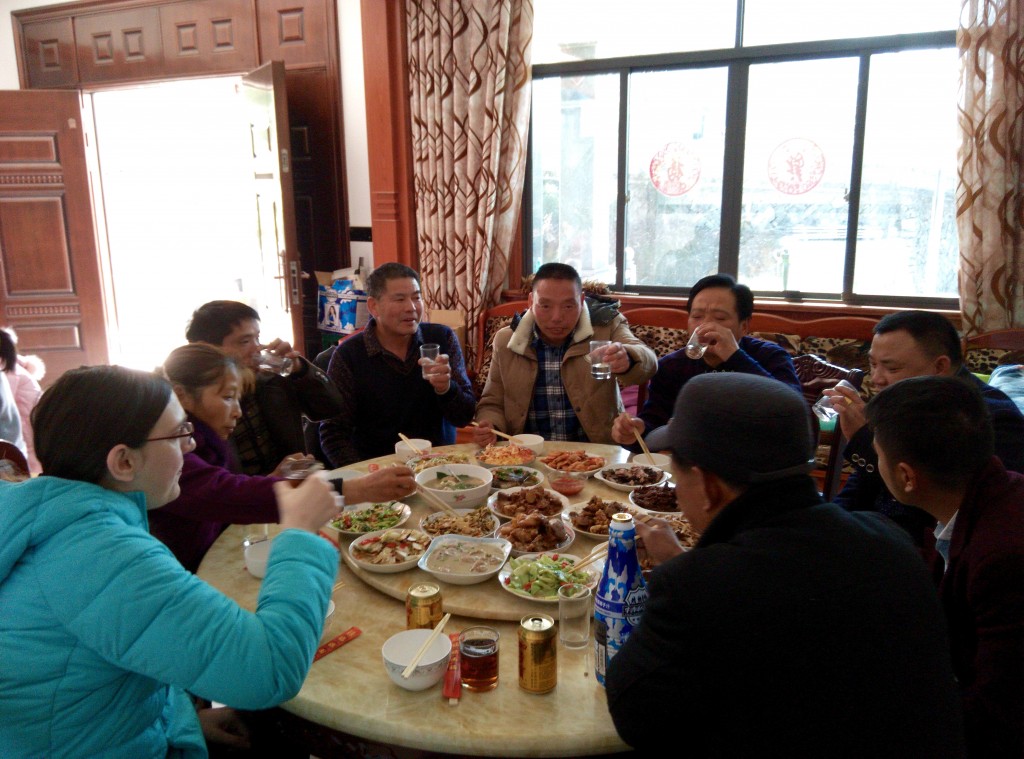 Yeah, I know, eating again. Seriously, that’s the heart of this holiday. Lots and lots of lunches and dinners. As always, we ate…
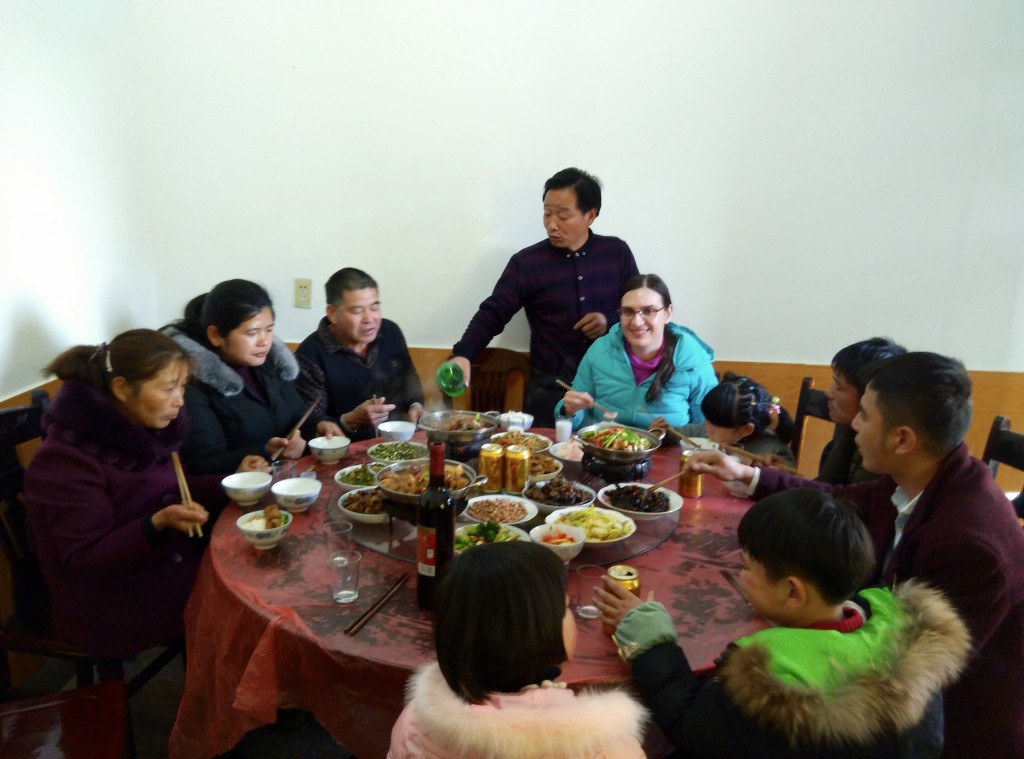 …and ate…
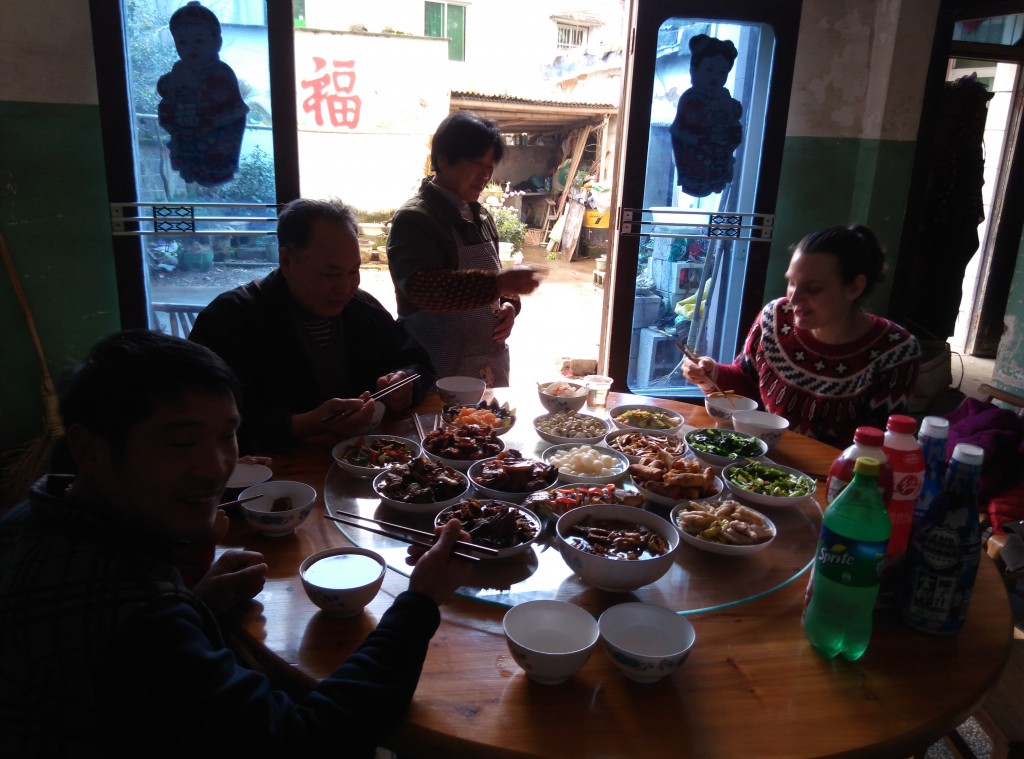 …and ate!
 Even when you’re not having lunch or dinner, people usually offer you lots of food to snack on. Notice the trays of assorted nuts, fruit and candies arranged on the tables before us.
 Here I am at an aunt and uncle’s home, attempting (unsuccessfully) to snack on raw sugar cane. Sweet, but a little too pulpy for my taste. This was day 6. Do you see the fatigue on my face yet?