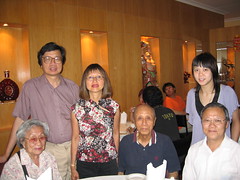
Advice to help relate to your Chinese family. Stories about Chinese family, and the experience of being a foreigner in a Chinese family, from one Western woman with a Chinese husband.
The other day, John’s grandma invited the two us over all of a sudden for dinner at her house. When I say “all of a sudden”, I mean that she interrupted us in the midst of preparing handmade dumplings and told John and me we were dining on fried rice noodles instead.
As much as I love fried rice noodles, her invitation arrived on an evening when I had been craving the very handmade dumplings we were preparing with John’s father. But what could we do? Here was grandma, who had been hospitalized for two months in fall of 2013, standing at the door and asking us to dine on the noodles she had already finished preparing. It was the kind of situation with “just go with it” written all over it. Besides, my mother-in-law said we only had to eat a little, just to be polite. So I hid my dumpling disappointment behind a smile, hooked my arm in grandma’s arm, and strolled out the door with John beside us.
Once at grandma’s home, she immediately plunked heaping bowls of rice noodles in front of us — each bowl easily three times larger than her own. When she said dinner, boy did she mean it.
“Aiya, too much!” John said in protest, which I repeated in turn. What happened to just eat a “little bit”, like my mother-in-law said?
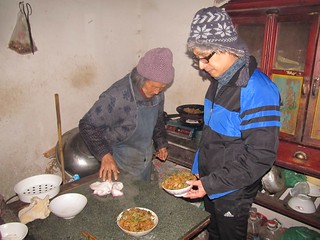
“Not too much!” Grandma said in a gruff voice, followed by nagging us to “Eat, eat!” as if we had to finish our bowls of rice…or else.
So we tucked into the rice noodles with our chopsticks and discovered that, if this was indeed a “responsibility”, it was the most delicious kind. I couldn’t help savoring the baby bok choy perfectly seasoned with garlic and dark aged soy sauce. It wasn’t too salty or overdone, and arguably it was the finest rice noodles she had ever fried up for us. So as I cleared the last of the noodles in my bowl, I couldn’t help but tell her, “So delicious!”
For grandma, that wasn’t praise but rather a cue to provide seconds. Before we could utter “bu yao!” grandma was on her feet, trying to shovel more rice noodles into our bowls. We each shielded the bowls with our hands, pleading to her not to add more. And when that failed, we simply rose from our stools and headed for the door itself.
Grandma chased after us with mandarin oranges, trying to press the fruits into our hands with far more strength than you might expect from a recently hospitalized woman over 80. But we pushed them back into her hands and then trotted outside, saying “Save them for next visit!”
Grandma, interrupting our “regularly scheduled” dumplings for a spot of fried rice noodles at her place.
“You know, she shouldn’t have made us those rice noodles,” I said to John on the way back home, shaking my head. “She’s still recovering from her heart condition.”
John shrugged and smiled. “That’s how she shows her love for us.” His words echoed what my mother-in-law would say after we returned home: “She shouldn’t do it, but she wants to do it because she likes you.” You could say the same about the black striped polyester pants I never asked her to buy for me (and which I could barely squeeze into) or the hulking bag of puffed rice sweets she delivered to us one afternoon.
Grandma has never hugged or kissed me, nor told me she loves me. But these days — and especially after this impromptu dinner — I’ve never felt closer to her.
What do you do when no one else notices Christmas is coming? That’s what it’s like here in China’s countryside as I spend December with my husband’s family — a family that never had the tradition to celebrate this holiday.
Well, I say — if they can’t bring the holiday to you, you bring the holiday to them. So this year, I’m giving my Chinese family a taste of Christmas…with some inevitable Chinese characteristics.
1. Pull out the old Christmas tree. There’s nothing that says Christmas quite like a tree — and fortunately, they’re easy enough to find in larger cities in China. Back when I first lived in China, I bought a fake Christmas tree from a local supermarket and it followed me through the years…until I left, and it was left at my inlaws’ home. Well, turns out they stored it all these years and it’s still lovely enough to bring me some holiday cheer. I plan to decorate it with the supply of Chinese-style ornaments I’ve acquired over the years, and can’t wait to see it shining brightly on Christmas Eve.
2. Stream holiday music online. One of the best gifts anyone living in China can have is a fully functional Internet connection. Find your favorite online station and stream holiday music, if available (I’m impartial to Folk Alley’s holiday stream myself). And if you’re really ambitious, use it to teach your family a few favorite Christmas carols.
3. Serve your family a Christmas dinner. Isn’t eating half the pleasure of the holidays? And everyone has to eat — so your family in China surely won’t protest if you suggest doing dinner for Christmas or Christmas Eve.
Of course, I can’t make exactly the same dinner my mom or grandma used to make. Here in China, I have a toaster oven and a cupboard full of ingredients completely different from those I used in the US. But I can always improvise. For example, Chinese haw fruit makes a wonderful substitute for cranberries and they’re widely available in China during the winter. Instead of the chocolate cake I hoped to make (sorry, no cocoa powder in the supermarket), I’ll flavor it with the mandarin oranges that are so plentiful nearly everyone in the village gives me a few when I visit. Ham is a traditional Christmas roast not commonly found in China, but I can make something else from pork (my husband insists on ribs, who can blame him?).
But if, say, you can’t live without cranberries at the table, then head to one of China’s online stores. Yes, Virginia, you can buy dried cranberries in China…though it will cost much, much more.
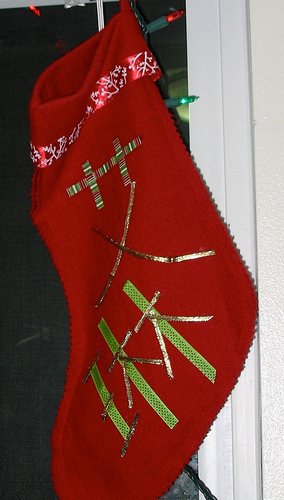
4. Spread some generosity. The Christmas season is all about giving…so why not give a little something back to your family in the form of some gift? It doesn’t have to be expensive either, just something to show your generosity and love. I’m planning on setting up some “Christmas hats” (using the plethora of knitted hats around the house in place of Christmas stockings) and stuffing them with some candies from the local supermarket.
If you’re in China, how are you planning to celebrate Christmas? Or if you’ve spent Christmas in China, what did you do? Share your experiences or ideas in the comments!
“My parents miss us,” said John, who beamed like a Mid-Autumn moon. “They want us to be back at home. They like it better when it’s renao,” or lively.
While working on to-dos for our trip back to China, my thoughts turned to living in the family home once again. And just like that, John reminded me of the warm welcome we’ll enjoy when we move back into the same two-story building his parents call home.
I felt that same welcome from John’s parents during the summer of 2009. On the phone, my father-in-law spoke of home renovations they planned to complete before our arrival. “Why are they wasting their money on that?” I once asked John. Turns out, the renovations were a whole new addition to the family home — including a two-bedroom and bathroom suite that my father-in-law would later dub our xinfang, that new home every newly married couple should have. “This is your home,” my father-in-law said to me once, after I claimed John and I didn’t have a home of our own.
In the US, this reads more like a fairytale — or even a myth. While your parents might kick in some cash for your wedding, they’re sure not likely to leave a “vacancy” sign on for you and your spouse to move in and call it home. And as for the married child, well, moving back home with your spouse is an utter embarrassment — or even life failure.
But John’s parents wanted us living with them so much they made room for us — literally.
And, strange as it may seem, I want nothing more than to live with them too. I love the way his father gets excited about the flowers in the garden and Chinese poetry and writing about the history of his ancient village. I love how his mother keeps me stuffed with the most sumptuous home-cooked vegetarian dishes, and won’t let me do my laundry, and teaches me how to cook with her fire-powered wok.
Maybe most Americans can’t understand why I’m excited about moving in with my in-laws. And that’s okay. The more time I’ve spent with John, the more I’ve realized that not everything about the white US culture I grew up in makes sense either. Sometimes, it’s not about what makes sense to the world or to others, but what makes sense to you.
All I can say is, I’m already missing my mother-in-law and father-in-law and can’t wait to be home with them.
Sometimes, when I come across a memento of my pre-China life, I can’t believe that now I think of a foreign country as home. I imagine that girl, the one who longed to break free of the suburbs, who dreamed of the world beyond the Cleveland, Ohio area she’d always known. Who’d have thought those dreams would take me across the Pacific, to a whole different country?
I even think back to my first steps in China, imagining the whole experience would turn into nothing more than some “gap year” between my graduation and eventual career back in the US. It’s funny how a small decision like teaching English in China can change your life forever. Soon, one year turned into several years, where I found my calling as a writer and eventually met my husband John, a native of the Hangzhou region.
But while John and I moved together to the US, our attention — and plans for the future — shifted back towards the Pacific shores. Maybe that seems counterintuitive — honestly, even I wondered that sometimes. After all, most of the other yangxifu I know who met their husbands in China invariably packed up their lives, left China and never returned. But after a while we couldn’t imagine living forever in the US; it never felt like home and never fully ignited our dreams and our potential.
Of course, there’s another factor in China’s favor — that we actually have our own home there, awaiting our return. John’s parents added a new suite to their family house just for John and me. They called it our “xinfang” or new home in Chinese. There, the delicious aroma of my mother-in-law’s stir-fried specialties — from smoked tofu with spicy peppers to fresh bamboo with soy sauce — fills the entire household, and delights us at every meal. There, my father-in-law spins stories of life in his ancient village and shares his latest artwork and calligraphy with me. There, my niece bounces through the household with the exuberance of a toddler while my sister-in-law just grins. There, the relatives come over almost every day to visit, or invite us over for dinner, or share some of the freshest fruit in season with us.
When I think of this home in China, anticipating our arrival, I am filled with enormous gratitude. Maybe it’s not a coincidence, then, that our departure date just happens to be November 28 — Thanksgiving Day in the US.
Almost two months ago, while scanning through my inbox, I came across a post called How to be Mistaken for a Prostitute in China. What a title — and what dazzling writing. I devoured the entire post, right down to the byline introducing the author and her forthcoming memoir about her experiences in China.
That’s how I first discovered Dorcas Cheng-Tozun, and I’m thrilled to be sharing her essay with you, titled “Three Words From a Chinese Father”.
Dorcas’ story revolves around something I’ve touched upon in the past — how Chinese families show their love through actions, not words. She explores this as she looks back on her relationship with her late father, a man who had never told her “I love you”.
Thanks so much to Dorcas for contributing her work!
—–
“I miss you,” my father said to me over the phone.
I hadn’t seen him for four days. He had been in the hospital for more weeks than I could keep track of, and had recently been transferred to a specialist hospital about an hour away from home. I was only a freshman in high school at the time, so I had to attend school during the week and could only visit him on weekends. My mom spent most nights at the hospital with him while I stayed home alone.
My surprise lasted only a couple seconds, during which I became very still and swallowed hard. “I miss you too,” I choked out, holding back tears. They were the three most significant words my father had ever said to me.
When he passed away less than a month later, they became the most significant words he would ever say to me. He had never said “I love you” to me. That night was the first and only time he ever told me he missed me.
My father had never been a man of many words. He left that to my mother, the chatty, extroverted half of the pair. For years I barely understood what he did for a living. All I knew was that he was an engineer, which in my young mind meant one thing: trains. I imagined my dad driving steam engines across the back roads of America, always somehow returning home in time for dinner. (He was, in fact, an electrical engineer.) I certainly knew nothing about his childhood in Guangdong Province in China, the few years he spent there before the realities of the new Communist regime prompted his family to send him away to Hong Kong.
I’m sure being the only male in a family with three women—his wife and two daughters—didn’t help. My father would often escape to the garage to tinker with small pieces of technology—a circuit board, a watch, a cassette player. He would take a Chinese-language novel with him to the bathroom or bedroom and remain out of sight for hours. Or he would park himself in front of the television to watch a San Francisco 49ers football game.
By the time I was ten, I had become an obsessive 49ers fan. It had started from curiosity, from a young girl’s intangible desire to connect with her father, but it soon became my own passion. I would pepper my dad with questions about the rules, about certain plays, about this player or that coach. He didn’t seem to mind having his younger daughter impose upon his weekly ritual; I suspect he secretly relished it. We fueled one another’s passions for the sport to the point where we drove my mother and sister a little nuts with our single-minded devotion. I promised my dad that as soon as I was old enough to work and earn money, I would take him to a 49ers game.
I began following my father into other arenas of his life. When my mom and sister went shopping for clothes at the mall, I would go with my dad to the bookstore. I watched with awe as he practiced his pseudo kung fu moves with a wooden rod from a closet. I often stood behind his chair with my chin resting on his head as he and my mom lingered after a meal.
He enjoyed telling corny jokes at the dinner table, jokes that often made my mom groan and roll her eyes. I would always laugh loudly at his jokes, even when I didn’t understand them, and was rewarded by a knowing, just-between-us grin that my dad would send across the table. In those fleeting moments, I may not have understood what he meant, but I felt like I understood him.
It’s hard for me to explain why I felt this way. In many regards my dad was the stereotypical Chinese father. He didn’t trouble himself with the day-to-day details of raising two daughters. He wasn’t the type to shower us with hugs or kisses. He wasn’t the one we went to when we were in need of parental advice. Looking back, I can’t remember a single conversation of deep significance that I had with my father.
But this is what he did do: on one of the rare occasions he cooked dinner for the family, he made salt-and-pepper prawns with so much salt and pepper that my sister and I were raving about it for weeks. (My mother promptly scolded him and switched us back to bland, low-salt food the following day.) He sincerely thanked my sister and me every time we gave him yet another striped tie for Christmas. He watched Beauty and the Beast and other Disney movies with me. He let me into his world and the things he loved on a regular basis. But he just didn’t let me in; he welcomed me and let me know—somehow, without words—that he was delighted to be sharing these things with me.
And finally, just weeks before we had to say goodbye forever, he overcame thousands of years of cultural norms and said aloud what he actually felt: “I miss you.” At the time none of us thought he wouldn’t make it; we were convinced that a cure or a miracle was just around the corner. I wonder, though, if my dad knew he was running out of time, which is why he chose to give me what remains one of my most precious memories of him all these years later.
Those are not the three words that we typically think of in American culture. “I love you” has taken on the status of myth and legend, three tiny words with the power of giants to slay or fairy godmothers to bring enchanted happy endings. We wonder if any relationship can ever feel authentic or complete without these words. Even I have occasionally fallen into this trap.
My dad never told me he loved me—at least, not in words. In the end, that doesn’t matter. What matters is that I knew he loved me. And with each passing year that he’s not in my life, I know it with even more certainty.
I miss you too, Daddy.
—–
Dorcas Cheng-Tozun is a writer and editor who lives in the San Francisco Bay Area. She is currently writing a memoir about her experience as a Chinese American living in Shenzhen, China. Learn more at www.transformativewords.com or follow her on Twitter: @dorcas_ct.
“Your parents raised you up to such a big age, and they still haven’t enjoyed the benefits of having you.” That’s what the mother of one of my husband John’s best friends said to him a few years back. By then, John was already over 30 by then (30 is an age where, according to the saying that comes from Confucian ideals, a man should stand on his own feet and earn a living) and still a graduate student — meaning, no job, no owned apartment and not much money — with no children.
“Didn’t you feel invalidated when she said that?” I asked John the other day.
When I called for submissions a couple of weeks ago, never did I imagine the overwhelming response from readers. Literally within days of posting, the submissions started rolling in.
The first I received was this piece from a woman with the nickname “Smallsquirrel”. It is a poignant and thoughtfully penned story of how her engagement to a Chinese man from a prominent Beijing family eventually ended. I’m honored to kick off my new series — which I’m calling “Fenshou” from the pinyin for the Chinese word for breakup — with what I’ve titled “I Was Once Engaged to a Chinese Man.” Continue reading “Fenshou: “I Was Once Engaged to a Chinese Man””
In late 2011, Fred graciously shared his own inspiring story of how he fell in love with — and eventually married — a woman from Brazil.
Then last year, he started filling me in via e-mail on a new and completely different story. He decided to try and set up his Hong Kong nephew, who was in his late 30s and still single, with some American women he knew. As Fred wrote below, “I thought with 100 percent certainty that any man would leap to his death to be able to date not just one or two but three ladies!”
The story developed over the summer and just recently he updated me on what finally happened. Will Fred’s nephew find love in another country, just as Fred did? Read on.
It’s March 8 — International Women’s Day — and time for an update to my list of blogs by Western women who love Chinese men!
Last year, I had a little over 40 on my list. Now we’re up to over 50, so the community keeps growing! I’ve still grouped the blogs loosely according to their focus, and I also added a *NEW* tag to denote all new additions to the list.
For some young Chinese, the very possibility of seeing family means the potential for annoying personal questions — ones they’d sometimes rather not answer (photo by Chew – Lin YIP via Flickr.com)
The other night, while talking to our close Chinese friend Caroline during Chinese New Year, my husband asked a common question. “Did you go out to bàinián?” Bàinián (拜年), of course, is the tradition of paying new year’s calls to your relatives and friends, usually by going over to their homes.
Caroline laughed with embarrassment. “I didn’t want to go out, I’ve stayed at home. People ask too many questions!”
This website uses cookies to improve your experience. We'll assume you're ok with this, but you can opt-out if you wish.AcceptRejectRead More
Privacy & Cookies Policy
Privacy Overview
This website uses cookies to improve your experience while you navigate through the website. Out of these cookies, the cookies that are categorized as necessary are stored on your browser as they are essential for the working of basic functionalities of the website. We also use third-party cookies that help us analyze and understand how you use this website. These cookies will be stored in your browser only with your consent. You also have the option to opt-out of these cookies. But opting out of some of these cookies may have an effect on your browsing experience.
Necessary cookies are absolutely essential for the website to function properly. This category only includes cookies that ensures basic functionalities and security features of the website. These cookies do not store any personal information.
Any cookies that may not be particularly necessary for the website to function and is used specifically to collect user personal data via analytics, ads, other embedded contents are termed as non-necessary cookies. It is mandatory to procure user consent prior to running these cookies on your website.
 The other day, John’s grandma invited the two us over all of a sudden for dinner at her house. When I say “all of a sudden”, I mean that she interrupted us in the midst of preparing handmade dumplings and told John and me we were dining on fried rice noodles instead.
 “Not too much!” Grandma said in a gruff voice, followed by nagging us to “Eat, eat!” as if we had to finish our bowls of rice…or else.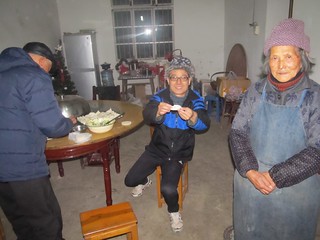


 “My parents miss us,” said John, who beamed like a Mid-Autumn moon. “They want us to be back at home. They like it better when it’s renao,” or lively.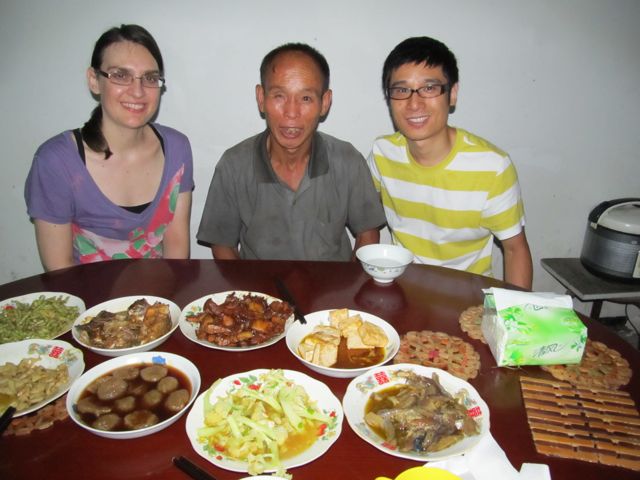


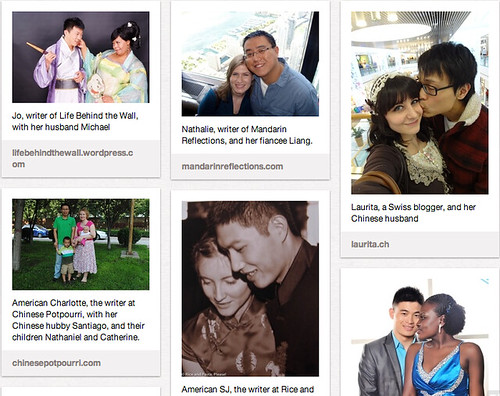 It’s March 8 — International Women’s Day — and time for an update to my list of blogs by Western women who love Chinese men!