
Many years ago, when my husband first received clearance in China his US Green Card, I breathed a huge sigh of relief. “Now the greatest challenges are finally over,” I thought.
Oh, how wrong I was.
It was only after I moved to America with my Chinese husband that I finally learned the truth — that the most challenging things happen after you set foot in American soil.
Here are 7 major challenges we faced after we moved together from China to America:
1. Nobody really cares about what you did in China

Returning to the US with a new spouse after years in China is like coming home from the greatest world adventure ever. You’ve both seen and experienced incredible things you’re dying to share with everyone you meet, from old family and to new friends. You want to enlighten your fellow Americans about the “real” China.
Except, there’s just one problem — nobody really cares!
As Marissa of Xiananigans noted:
Those closest do care, and job interviewers take a keen interest in my unconventional background, but for the most part I feel it’s a polite interest, not a deeply profound one. I’m a lone wolf in the sense that I don’t really know too many people, acquaintances or otherwise, interested in China. Many have a hard time placing Xi’an, even when I mention the Terracotta Warriors.
But is this really surprising for a country that often treats international headlines as an afterthought to Kim Kardashian’s bod and the popular reality show du jour? A country where a cable TV news show actually ran a map locating Hong Kong on the East Coast of South America?
John and I felt like the odd-couple-out at hundreds of social gatherings in the US, surrounded by Americans who would rather talk about TV shows neither of us had ever heard of.
It was a sad reversal of what we experienced in China, where friends and family would remain rapt with attention when we spoke of America. They were always hungry to hear about what things were really like in my home country, and excited to discuss the latest news headlines, movies and even TV shows.
Ultimately, the few people who actually wanted to talk China were usually from the country, former expats, or traveled there once upon a time. And sadly, there were never enough of them to go around.
2. Americans are incredibly judgmental towards non-native English speakers

Growing up, I often gravitated towards foreigners in the US who didn’t speak native English. When a young girl from Belgrade joined our high school orchestra for a period of time, I loved hanging out with her in the hallway and hearing her spin stories of the former Yugoslavia through her splendidly imperfect English. In college, I used to enjoy green tea with a couple of Japanese guys who sometimes paused in the middle of a sentence, and once helped put together a party to welcome a gaggle of Brazilian girls who spoke English with heavy accents.
None of these imperfections in their English bothered me in the least. After all, we could communicate and in the end, that’s all that mattered. Right?
Then I returned to the US with my Chinese husband who speaks English as a second language – and discovered the shocking truth. Most Americans were not like me at all.
Americans are extremely judgmental towards non-native English speakers – even when they speak outstanding English (as my husband does).
They’re even judgmental when they haven’t met your foreign spouse. People who had never even heard my husband speak a single word automatically assumed his English must be poor because he’s Chinese. (Sadly, in the hierarchy of non-native English speakers, Chinese place somewhere at the bottom.)
Whether you like it or not, language discrimination is a reality in the US – and it’s going to make life for you and your spouse that much harder. But that leads me to the next challenge you’ll face:
3. Discrimination

If you’re a white American like me, get ready to experience a new kind of education through your Chinese spouse: discrimination.
As I’ve written before in this piece published in Hippo Reads, discrimination is real for Asians of all stripes in the US (including those born and raised on American soil). But it’s going to be that much harder for your spouse because they’re not used to it – and, if you’re white, neither are you.
Even worse, if you’re like the vast majority of white people (who have no people of color as friends), you’re going to feel incredibly isolated when your spouse finally experiences the worst. Most whites don’t believe discrimination still happens in America today. Suddenly, the friends you thought would always be there for you just don’t get it. If you’re anything like me, you’ll grow tired of trying to convince them of the fact that it’s a real thing – and will be forced to move on and forge completely new friendships.
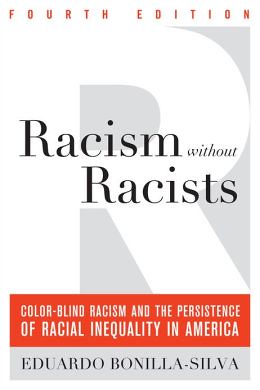
My advice? Be prepared. Read about how modern discrimination and racism in America really works (Eduardo Bonilla-Silva’s Racism Without Racists is my favorite, but it’s not the last word on this). Make more friends with people of color – they can share their experiences with you and will become your allies when the worst hits your spouse.
4. Deep cravings for authentic Chinese food that are tough to satisfy
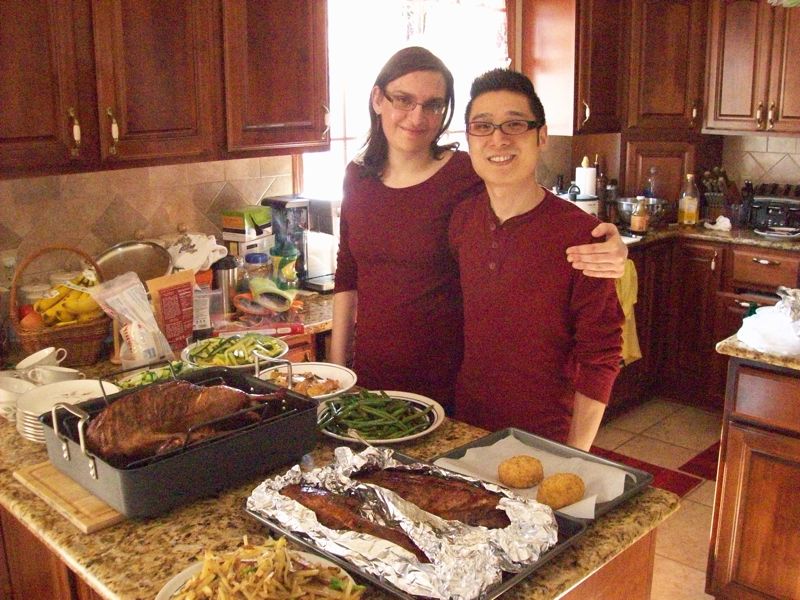
Call it the American Chinese food conundrum. There are literally hundreds of thousands of Chinese restaurants that cover the US – and only a small fraction of them can deliver anything close to the ambrosial delights that you fell in love with in China.
It’s a nightmare for your Chinese partner, accustomed to the incredible diversity of Chinese food you can find in most urban areas in China.
On the streets right beside our apartment, we can dine on cross-the-bridge noodles from Yunnan, spicy BBQ from Chongqing and Hunan, Lanzhou-style pulled noodles, and at least four or five different specialties from cities in Zhejiang province you’ve probably never even heard of.
When you move to America, you’re trading in that kind of rich culinary heritage for a blandly bastardized version that’s either breaded and deep-fried or drowning in some unnaturally pink glop.
Ugh.
If you’re lucky, one or both of you can actually cook decent Chinese food and satisfy those cravings on a regular basis. Even then, you’ll never cover it all. There are some things that are WAY too complicated to prepare on a regular basis (Beijing duck, anyone?). There are others you’ll struggle to buy or never find at all, such as fresh Spring bamboo roots, tang hulu, and Suzhou-style mooncakes.
(Well, at least it’ll give you something to look forward to when you return to China for visits, right?)
5. Teaching your spouse how to drive a car

Unless you’re one of the fortunate few Americans returning to a city with excellent mass transportation (like New York City) you’ll need a car to get around. So will your spouse, except for one small problem: chances are, he or she doesn’t know how to drive.
Guess who will become their teacher?
This is a dangerous proposition – “dangerous” as in it could seriously wreck your marriage.
Anyone who has ever listened to the popular NPR show Car Talk knows that many a couple gets into an argument over something as simple as how to drive (and we’re talking about two adults who already have their license). There’s nothing more nervewracking than sitting shotgun as your sweetie is swerving in between lanes and on the verge of clipping someone else’s car – and it’s your job to yell at them and get the car under control.
In the end, I helped my husband successfully earn his US driver’s license. But ask me to do it all over again? Please…no!
6. Helping your foreign spouse through the exhausting task of finding work while you’re finding work

Anyone who recalls that demanding post-graduation job hunt knows it’s not easy to land on your feet with that perfect job and apartment. Just imagine how much harder that whole process is when you have to do it as you’re guiding a foreigner through the ins and outs of a whole job hunting culture that’s not second nature to them.
If you haven’t already, you’ll soon learn that the process is NOT as universal as you imagined. You’ll also learn that America puts a premium on appearances (aka job interviews) so even if your spouse is wholly qualified for the work, they still might not get the job. Sadly, discrimination (especially language-based discrimination) looms large in subjective situations like interviews, leading to a lot of potential disappointments and frustrations that you never even expected.
Worst case scenario? You’ll give up on ever finding employment for your Chinese spouse.
That might sound easy enough if you’re an American man with a Chinese wife, but it flips the traditional marriage expectation on its head for American women with Chinese husbands. Still, I know of American women who have returned to the US with their families, understanding that their husbands will either be underemployed or become stay-at-home dads.
7. Realizing the American dream isn’t always what you imagined

So many Chinese remain starstruck with America, believing everything must be better in the “beautiful country” (the literal translation of “America” in Chinese). Their enthusiasm is so infectious that you’ll be dreaming of those Technicolor blue skies, sweet clean air, and the smell of freshly cut green grass on the lawn. Before you know it, you’ll build up your very own country into this perfect American dream that will deliver everything you ever hoped for – and more – to you and your new spouse.
One of the most painful things about moving to America was when the experience shattered all the fantasies I ever had about settling there with my husband. My own country crushed us and let us down in countless ways.
I know of couples who pushed past the imperfect and frustrating reality to eventually build a “good enough” for themselves and their families.
As for us, we’ve had it with the American dream, trading it in for our own China dream instead.
Have you moved from China to America? Are you planning your own move? Weigh in with your thoughts on the challenges of bringing your family to the USA!





 The other day, my husband and I were having a conversation in the car about discrimination and racism in America — two things he knew firsthand from his own

