I’ll never forget the way friends and family questioned me back in 1999 when I announced my decision to spend a year teaching English in Zhengzhou, China after my graduation that year. And who could blame them? Nothing about my life suggested all roads lead to China.
I studied environmental biology in college, minored in Spanish and chemistry, and the only foreign country I had ever lived in was Spain (when I studied abroad in Granada for a semester). I hadn’t spent my childhood dreaming of visits to the Great Wall or the Terracotta Warriors. I couldn’t even speak a word of Mandarin Chinese and hadn’t read much about Chinese history since my sophomore year in high school.
It was one of the craziest decisions I had ever made – a total detour from everything I had planned before.
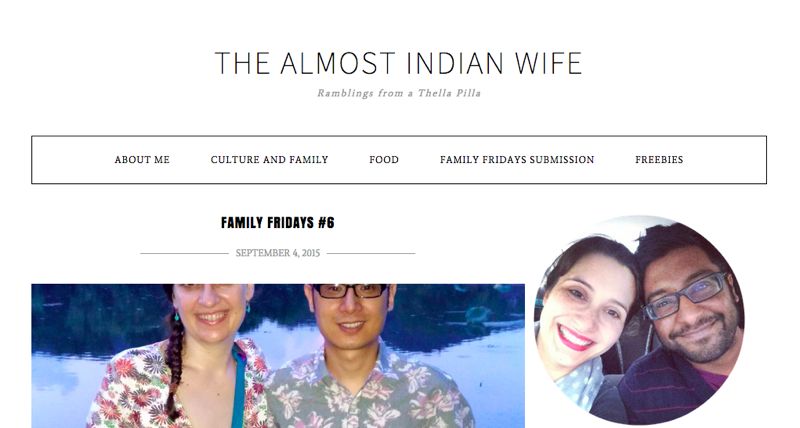
Head on over to Ning Li Dating to read the full post. And if you love it, share it!
One of the coolest things about my mother-in-law is that she’s totally accepting of my vegan lifestyle. I never expected that a woman who grew up in Hangzhou’s mountainous countryside – where people tend to be pretty traditional when it comes to food – would embrace my dietary needs. But she does. Maybe it’s because the two of us have really bonded over food. I love asking her about her secrets for, say, crispy tofu or spicy pickled daikon radish. But when I discovered that one of the local snack foods was shaobing, a fried flatbread stuffed with savory salted veggies and then pan-fried until crispy, I knew I had to learn how to make it myself!
Most shaobing include bacon-like bits of fatty pork, making the food typically off-limits to vegans like me. But thanks to my mother-in-law, I’ve learned an amazing recipe for vegan shaobing. It’s even a little reminiscent of pizza back from home, so much so that I often jokingly call it “Chinese pizza”.
FYI, here’s what the shaobing look like when they’re done:
Head on over to The Almost Indian Wife for the full post and recipe. And if you love it, share it!
We’ve all heard about yellow fever and the associated stereotypes. So what happens when you’re a Western man dating or married to an Asian woman and you’re supposedly living the stereotype?
That’s the heart of this thoughtful guest post by Gerald Zhang-Schmidt, who is married to a Chinese woman.
It’s my own fault, after all. I’ve known Jocelyn, at least via Speaking of China, for years and read of her thoughts and travails with great interest. The way that Chinese society puts everyone into place, in their gender roles and in gendered expectations about behavior and the course of a life has fascinated me.
How could you not be fascinated? While public displays of affection are still viewed askance in many places, the requirements for an ideal partner are proudly and straightforwardly proclaimed in ‘marriage markets’? (“Westerners” may also see these advertisements as superficial and appalling, but one could just as well call them honest.)
How about a place where the women are portrayed as if they would prefer (and be preferred by) foreigners over their own men, whereas the men hardly even seem to stand a chance with anyone anymore? That’s where I’m caught squat in the middle. Speaking of China is all about the rarity of foreign woman – Asian man couples, draws readers because of that same rarity, and has lots of issues to talk about. Meanwhile I’m living all of those other, wicked, dominant, problematic positions.
I mean, according to all the talk about white male privilege – and its experience – I must clearly be privileged. I’m not supposed to talk, for it just reflects my attempts at staying on top and maintaining my privileged position. As the WM part of a WM-AF (white male – Asian female) relationship, I’m living the stereotype. “Oh my, clearly one of those guys with an Asian fetish and one of those stupid and/or calculating women dumb enough to fall for him.”
The privilege of being in a majority is that you’re questioned less. As a friend recently put it, “you are given more second chances.” For the same reason, though, you are also less visible — for better and worse. You don’t have to explain yourself nearly as much as the unusual Western (or other) woman who marries an Asian man or the lucky Asian man who was able to attract a Western woman. Because they are considered unusual, they attract attention. They get questioned. They have to explain themselves and live with the puzzled looks. But, they also get much-visited blogs and book deals for their memoirs. And so, they have a need, but also get a chance, of explaining themselves. In breaking the mold, they are viewed askance, but also as avant-garde.
Such observations of upsides and downsides all too quickly devolve into nothing but discussions of who’s got it worse or better, “the culture of shut-up,” as it was recently called. So who does have it better? The one in an extraordinary situation beyond usual stereotypes, yet facing more scrutiny because of it? Or the one barely noticed because the situation is so stereotypical, no one even bothers wondering?
It’s similar to how feminism and stereotypes are discussed in general terms rather easily, but then suddenly turn personal and get vicious, until the discussion turns into something that has nothing to do with them. The likes of a “sure, there is a privilege to being a white male, but *I* am hardly privileged (or do you see me becoming rich just so?)” even as the systemic difficulties of the not-privileged (and advantages of the privileged) certainly are there, or the “yeah, I’m all for feminism, I like strong women” from men, as if feminism were all about strength, let alone one person’s likes.
But that’s not what I want to discuss. I don’t want to discuss anything, really. I just want to provide my observations and make a humble suggestion. Relationships, be they romantic or otherwise, will always be influenced by ethnic, cultural, and other backgrounds and the views they give rise to. But relationships are, at heart, not between ethnic groups, not between social groupings, nor even between men and women. They are between individual people.
The trouble starts when we don’t want to see individual people and individual situations, and don’t suspend judgment. When we see someone who fits into a stereotypical opinion and immediately think we have a handle on who they are.
We should remember that we tend to not even understand ourselves half as well as we may think we do.
Gerald Zhang-Schmidt is an ecologist and cultural anthropologist who spent three years living in China, and now resides with his wife in his native Austria where he writes about the ecology of happiness, chili peppers and being at home in the world.
My name is Jocelyn Eikenburg and I grew up in Cleveland, Ohio, USA. This summer, I’ll be celebrating 10 years of marriage with my husband John, who is a Chinese national.
Sure, we’ve weathered our share of misunderstandings over the years and had to learn to adapt to each other, both culturally and personally. But I still love him just as much as the day when I said “Wo yuanyi!” (I do) to him in the Shanghai Marriage Registry Office.
And over the years, I’ve discovered a lot to cherish about our relationship.
Sara Jaaksola offers insight from her own relationship with a Chinese man on what to do when language barriers get in the way of your love.
Over a month ago, Jin Feng asked me if I could share some advice on a special kind of relationship between Chinese men and Western women — where language poses a problem.
I said “sure, I’ll do it.” But then faced a problem of my own. How could I write about this? After all, the closest I came to this happened in my relationship with Frank — but even then, I spoke decent enough Chinese that communication didn’t really get in the way.
This website uses cookies to improve your experience. We'll assume you're ok with this, but you can opt-out if you wish.AcceptRejectRead More
Privacy & Cookies Policy
Privacy Overview
This website uses cookies to improve your experience while you navigate through the website. Out of these cookies, the cookies that are categorized as necessary are stored on your browser as they are essential for the working of basic functionalities of the website. We also use third-party cookies that help us analyze and understand how you use this website. These cookies will be stored in your browser only with your consent. You also have the option to opt-out of these cookies. But opting out of some of these cookies may have an effect on your browsing experience.
Necessary cookies are absolutely essential for the website to function properly. This category only includes cookies that ensures basic functionalities and security features of the website. These cookies do not store any personal information.
Any cookies that may not be particularly necessary for the website to function and is used specifically to collect user personal data via analytics, ads, other embedded contents are termed as non-necessary cookies. It is mandatory to procure user consent prior to running these cookies on your website.

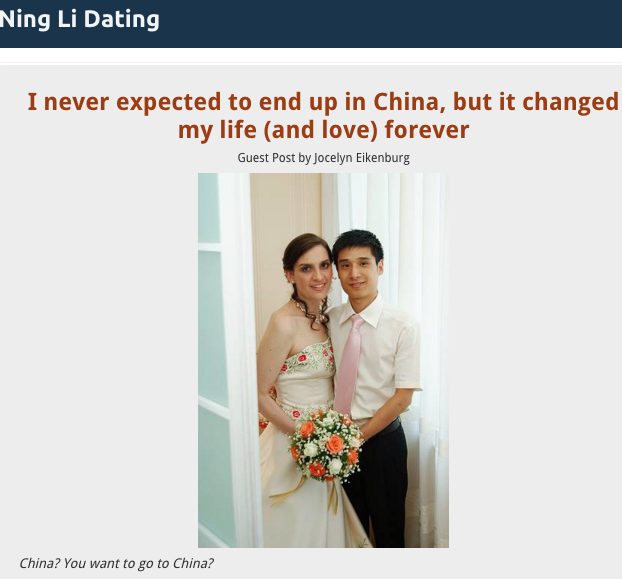 Ning Li of Ning Li Dating has just published a guest post I wrote for him titled I Never Expected to End up in China, but It Changed My Life (and Love) Forever. Here’s an excerpt from the full post: