On our first date, which was also my birthday, Jun gifted me with a CD from his favorite group, Yu Quan (羽泉). I had never heard of this Chinese singer-songwriter duo and wondered, would I really like them? While I always kept an open mind when it came to music, I had very particular tastes — and overproduced pop wasn’t my thing.
Still, I decided we could listen on the bus to the restaurant. At least, it would help us pass the time.
Little did I know, that CD would become the soundtrack to our burgeoning romance. One song in particular stole my heart — Rainbow (彩虹), an acoustic love ballad about the beauty of two people coming together. The song’s folk-rock sensibility reminded me of the American and European folk music I loved. It could have easily played on the folk music shows I used to hear back in Cleveland, Ohio.
So that night I came away with two loves — first Jun and then Yu Quan.
Over the years, we would come to discover many other surprising commonalities you wouldn’t necessarily expect between a guy from rural China and a girl from the Midwestern suburbs in America.
For example, my husband loves the fact that I’m a vegan; he likes to say he was raised on an “80 percent vegetarian diet” and doesn’t care for dairy products. As children, we both used to creekwalk and catch “critters” in the streams nearby our homes. We’re both awed by the vast cosmos and delight in stargazing whenever we have the chance. And when it comes to personality, we’re both idealists (according to the Kinsey Temperment Sorter).
That doesn’t mean we don’t have our differences. I have to admire my husband for being able to identify the make and model of almost every military plane we’ve ever seen fly above us, but I’ll probably never share his deep fascination. Meanwhile, most of my guilty pleasure movies — especially romantic comedies from America — are definitely not favorites with Jun, though he’s gentleman enough to give me space to watch them.
One thing hasn’t changed about us, though. We’re still huge fans of Yu Quan, and “Rainbow” will always be our song.
An American actually asked me this very question years ago when I confessed my plans to move back to the Middle Kingdom. It didn’t matter how many good reasons I gave her – she stared at me with incredulity, as if I had just proposed rocketing straight to Mars and not a country on this very planet.
Of course, she’s not the only one guilty of being down on China. “Bad China Days” are a phenomenon for every expat who lives here, even me. In the worst moments, it can be easy to forget why we’re here or even why we love this place so much, warts and all.
But the truth is, there are actually some pretty incredible things about living in China. Things that, on balance, are better than America. Here are 7 of my favorites:
#1: Doing your entire grocery shopping online, with fast home delivery and no shipping charges
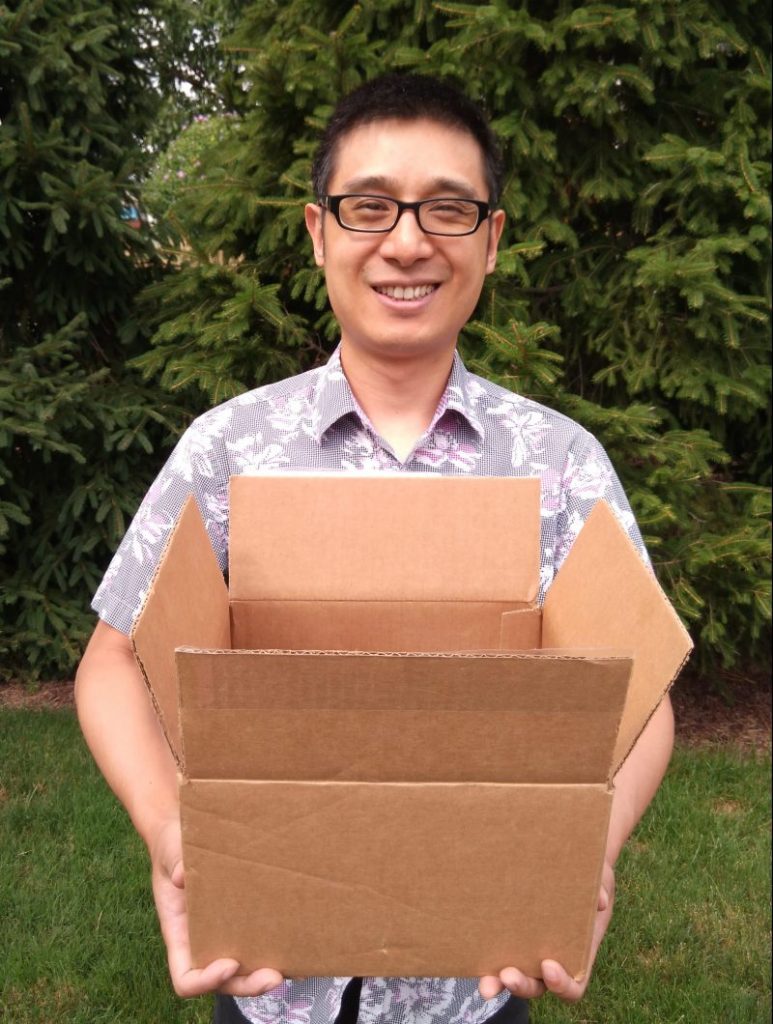
When I was back in America last year, I happened to tell my uncle about how I was doing my grocery shopping in China online, courtesy of Taobao’s Tmall online supermarket. “They deliver straight to your door the next day. You can order almost anything from them – even fresh fruits and vegetables.”
He was astonished, as if I was speaking of some magical Shangri-La of online shopping.
No, I didn’t need to be a VIP. And no, I hadn’t joined their paid premium club. All I had to do was order at least 88 RMB (~$13) worth of groceries for free one-day shipping.
Not even Amazon Prime or Walmart (which both offer two-day shipping in the US) can beat that.
And did I mention the delivery guys for Taobao’s Tmall always place the boxes inside our apartment (never leaving them tossed outside the door) and offer to take the garbage out too, for no extra charge?
#2: You don’t need to own a car to conveniently get around
As much as I love the freedom to drive around, sometimes you’d like to leave the driving to someone else.
But in America, outside the biggest cities, you don’t have a lot of options. Want to get around town without a car? Good luck catching the public bus with its limited hours and stops. Want to travel to another city or across the country? If you’re not flying, the only options are those grimy Greyhound buses (which make lots of stops at often dodgy stations) or Amtrak trains (which, apart from the East Coast, are really inconvenient and slow).
In China, you always have plenty of public transport options everywhere you go – even smaller cities. Public buses are frequent and convenient, and so are long distance buses too. High-speed trains can zoom you across most of China and they always leave on time (unlike flights). Bicycles you can rent with your smartphone have popped up all over major cities in China too (including Hangzhou), as well as docked bicycles you can rent out with your bus pass.
It’s gotten to the point that, when I want to visit Hangzhou’s legendary West Lake, it’s usually easier (and more fun) to bicycle or just take the bus.
#3: Authentic Chinese food
I know this is so obvious you must be wondering, why would she even bother pointing it out? Simple – if you are an aficionado of Chinese cuisine, as I am, you feel a sense of deprivation whenever you’re away from authentic food for too long.
When my husband and I used to live in America, I can’t tell you how many times we would reminisce about all of our favorite Chinese dishes that we just couldn’t find in America. Like that secret-recipe smoked tofu from Jun’s hometown, or the slender Asian eggplant deliciously stir-fried with green peppers, or even Jun’s mother’s homemade fried flatbread (it’s like Chinese pizza…mmmmm). You can’t walk up to your American “Panda Express” and find this kind of stuff among the deep fried “General Tso’s Chicken” (a dish that doesn’t even exist in China) and fortune cookies.
Even when we attempt to recreate authentic dishes from China, it never tastes the same. In America, we don’t have the fragrant rapeseed oil that my Chinese mother-in-law harvests and cold-presses herself. The soy sauce is different, too. And good luck trying to find those local ingredients like fresh bamboo shoots, winter melon, and red bean paste. (Even when we do find them, they’re often not fresh enough to justify the purchase.)
So if you’re as addicted to authentic Chinese food as I am, why live anywhere else but the country that does it best?
#4: More authentic food from other Asian countries
Whenever I visit my family back in the US, you can guarantee we’ll be going out for Thai food at least once. There’s a wonderful little spot right up the street from my parents’ home, where a dinner of pad thai and fragrant green curries makes for one delicious meal.
But as much as I love the food, I have to say it – it’s not that authentic.
I should I know. My husband and I visited Thailand years ago, where the succulent red, green, yellow and Massaman curries we had were as much of an attraction as the temples, ancient ruins, and azure blue shores. The food in Thailand is so incredible you could tell people you were traveling there just for the dining experience and they would believe it.
While I can’t travel to Thailand every time a curry craving strikes, living in China means I have the next best thing – authentic Thai restaurants. Here in Hangzhou, there’s nothing better than an evening at Sawasdee in the five-star Wyndham Hotel. You can enjoy an elegant and surprisingly affordable night out of delectable Thai curries, transporting you right back to Bangkok and the beaches.
#5: You can pay by mobile phone almost anywhere
In the US, a mobile wallet is still a dream for most consumers. And every time I’m back in America, I still have to lug around my credit cards.
But here in China, we pay almost exclusively by phone almost everywhere we go – from shopping at Wal-Mart to buying clothes at our favorite clothing retailers to going to out to eat to even getting our hair cut. It’s so ubiquitous that my husband once ran into a street peddler selling rice cakes who could offer pay by mobile phone.
I love the freedom and convenience – just grab your mobile phone and shop!
By bjornfalkevik – Own work, CC BY-SA 4.0, https://commons.wikimedia.org/w/index.php?curid=50948551
#6: It’s easy to get everyday things repaired and improved
In the community where we live, there’s a guy who goes around singing out his knife-sharpening services. For the equivalent of a few US dollars this guy can magically transform your lackluster kitchen knives, making them slice and dice like new.
There’s also a guy who sits around the gate offering to repair umbrellas, and someone else out there who repairs bicycles. Around the fresh market, there’s even someone who repairs your shoes.
In America, it’s tough to find someone who offers these simple – but very useful – repair and improvement services. If you want sharper knives, you probably have to buy a grinding tool (which, trust me, won’t do nearly the job this guy did with our knives). There’s no such thing as umbrella repair over there. And if you want someone to fix your bicycle or your shoes, you’ll have to venture out to a professional store for that (assuming such a store even exists in your town).
When I was in the hospital last year, they offered me some traditional Chinese medical treatments.
#7: Traditional Chinese medicine is always available and can be affordable
In America, traditional Chinese medicine providers are out there. But good luck finding a convenient one – or even someone affordable who accepts your insurance.
Not here in China, where you’ll find traditional Chinese medicine options at the average hospital or even your local pharmacy. I’ve often found them to be reasonably priced, by and large. And if you have insurance, traditional Chinese medicine is usually covered by the plan. How great is that?
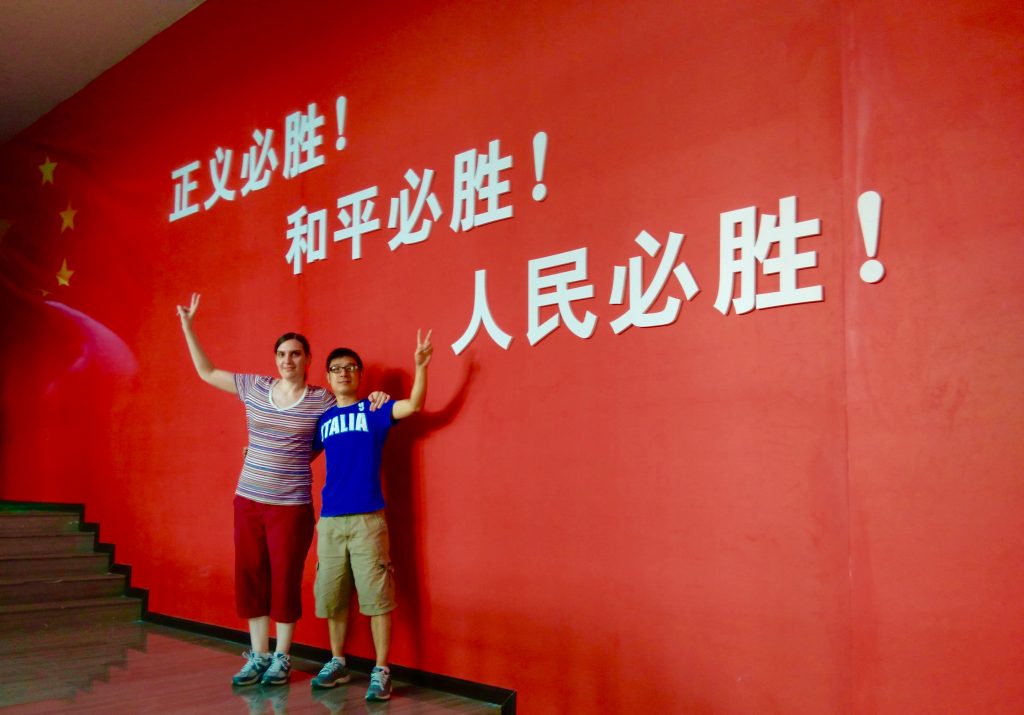
As a white American woman married to a Chinese man, June 12 is not just another summer day. It’s Loving Day, a day commemorating the landmark US Supreme Court decision in Loving v. Virginia that finally struck down anti-miscegenation laws, granting interracial couples the legal right to marry.
So what about me? What does Loving v. Virginia mean to me?
You might think, since I’m in an interracial marriage, the answer is obvious: the right to love and marry anyone, regardless of race. Of course, I must acknowledge this. Without Loving v. Virginia, the United States would never have recognized my marriage to Jun as lawful.
But Loving v. Virginia means a lot more to me than just the right to love.
It means courage. The courage to move forward with what you know is right in your heart, even if the law isn’t on your side just yet. The courage to battle that injustice, all the way to the nation’s highest court.
It means determination. The determination to fight injustice, even if it means waiting years (or nearly a decade) for the relief you know you deserve.
It means sacrifice. The sacrifice that comes from two people so committed to staying together that you’re willing to risk jail time and penalties, and even willing to move far away from family just to remain a couple.
While interracial couples in America and the world over honor Richard and Mildred Loving, the historic Supreme Court decision bearing their name is only the beginning.
There is still so much injustice in our world, and there are still reasons for interracial couples to seek redress through the US Court system. I should know, because my husband and I are currently doing just that. When I look back on the day we first filed our lawsuit, in light of this upcoming anniversary of Loving Day, I remember that Richard and Mildred Loving made it possible for Jun and I to fight this unfathomable injustice together, as a legitimate couple. Their indomitable spirit and determination inspire me every day.
They proved there’s enormous power in Loving, together.
The other day, a friend told me the idea of marriage was outdated and totally over-commercialized. She said she had absolutely no interest in getting married.
I totally understood where she was coming from – because, after all, there was a moment in my life when I felt exactly the same way.
I’m not sure when it started – probably sometime in high school – but I was ambivalent about marriage and weddings. Whether it was the rising divorce rate, the growing acceptance of cohabitation or the fact that I never met anyone I could even picture myself married to, I can’t really say. I just know I didn’t grow up with dreams of the perfect white dress and honeymoons and the house in the suburbs with that white picket fence.
My mother once told me about the girls she remembered from college, there for the so-called “MRS” degree. I started my freshman year at university with her advice echoing in my mind – how I should just enjoy myself and not get too tied down to anyone. I enjoyed going out with guys during college, but I always intuitively understood that it was never about finding “the one” and more about finding out who I was. Though I never explicitly said so to anyone or even to myself, looking back, I realize I struggled with the idea of being committed to anyone — making thoughts of the greatest commitment of all, marriage, impossible for me.
But all that changed when I went to work in China after graduation, and fell for a Chinese man. It was the first time the M-word – marriage – was a serious possibility.
It wasn’t just that I was deeply in love with him, more than I had ever felt for anyone else in my life up to that point. Nor was it some generalized cultural pressure from family, his or mine.
No, it had to do with something most of us take for granted – the ability to introduce someone to your family and your parents and even your hometown.
At some point in my first year in China, during that time when this guy and I were dating, I imagined what my dad and stepmom might say when they finally shook his hand in their home. Or what my grandma would make for us when we came to visit. Or what he would think after seeing the high school I attended and the library my mother once worked at.
But these thoughts were easily derailed by the harsh reality for Chinese passport holders, who included my boyfriend. After all, he had applied twice for a US visa and was rejected both times. It didn’t matter how much I hoped to take him home to see the family and my hometown, because there was always this huge international bureaucratic hurdle that stood between us.
It’s one thing to ask your parents if it’s OK to bring your steady boyfriend or girlfriend over, not certain how Mom and Dad might respond.
But it’s another thing entirely to have to ask an entire country for permission to bring this person over in an embassy or consulate, where your love for them and your word no longer matters. Where decisions can sometimes feel arbitrary and capricious in the cold, aseptic visa interview rooms. Where it’s sometimes hard to understand why some people get visas and others don’t.
For me, my decision to marry him wasn’t about pleasing him or pleasing his family and culture either; to be perfectly honest, it was about securing a visa! Anyone who has lived in China without a permanent work visa knows that the Chinese system for foreign visas is an ever-changing nightmare. And, by extension, I admit that I liked being identified as “the one” in his eyes—the one worthy of a life commitment. Are those first reasons selfish reasons to marry? Was I wrong to marry him when it benefitted me and my ego? I’ll concede that I stepped around my previous political views on marriage in order to express my respect for his culture, too, but that’s not exactly a selfless act of love; it’s more about mutual human respect.
While of course she loved Guo Jian, the added benefit of gaining a visa to stay in China was among the reasons she wanted to marry him.
I ultimately broke up with that guy I met my first year in China – but I’ve faced similar visa-related issues while dating Jun, who is also from China and who I eventually married.
What I’ve learned over the years is that debates about the “usefulness of marriage” or whether “marriage is outdated” or even whether “marriage is too commercialized and therefore pointless” are a luxury not everyone has.
You don’t have this option to talk about whether marriage matters when you’re a Westerner in love with a foreigner who isn’t given a visa on arrival for your country. Or when you’re a foreigner loving someone in his or her country, where securing a visa through marriage could ensure the two of you remain together. Being subject to the heartless bureaucracies that go hand in hand with immigration rules and residency gives you an entirely new perspective on the value of marriage.
I recognize that there are off-putting things about modern marriage and weddings. And I should know, because I’ve blogged openly about my dislike for weddings in China (to the point that I’d rather not attend them, if possible). We should have conversations about these things.
At the same time, I’m not advocating for sham marriages that exist only for the sole purpose of gaining a visa or residency in a specific country.
But the fact of the matter is, nothing is perfect. Not marriage or weddings or, especially, the immigration rules that can potentially wreck the best of plans between a young international couple genuinely in love with one another. Sometimes we do the best we can with what we have.
And sometimes, marriage matters simply because it could mean the chance to take your loved one abroad and finally see him shake hands with your father in your hometown, just as you always dreamed of.
This project started back in April when I published 25 Stunning Photos of Western Women & Asian Men Who Got Married on WWAM BAM! The post quickly went viral (garnering mentions on major blogs including YOMYOMF and NextShark). Soon I started hearing from even more couples with amazing photos to share, asking to be included in the next blog post.
It has been a wonderful labor of love to share these photos and show the world just how beautiful WWAM couples can be.
If you’d like to be a part of this project, why not join us by submitting your own photos?
Here are the guidelines:
Photo submissions must come from the individuals featured in the photos (and not a 3rd party).
Ideally, I’m looking for engagement, pre-wedding or wedding photos – but I welcome anything that appears professional, regardless of your engagement or marital status. (Again, see the original post to get a sense for what I mean.)
Please include any information you feel comfortable sharing about yourself and your partner. For example, your names or where the photo was taken or where you both are from. (You can read the original post to get a sense of what couples chose to share.)
Please also provide me with a link to any websites/blogs/social media sites you would like to include in the post.
Send your favorite photos to me at jocelyn(at)speakingofchina.com
When I first met Jun, I was nursing a major heartbreak. I had just broken up with someone and spent much of my days in the office – the place where we both worked – in a melancholy funk.
To cheer me up, a mutual friend invited us both back to her hometown in Zhejiang Province for the weekend. That’s when I really got to know Jun. He kept making me laugh during the whole trip, to the point that I couldn’t help smiling (and even flirting) in his presence. I also discovered he was the kind of guy who really cared about your problems. When I finally opened up about my failed relationship, he listened in a way that made me feel heard and understood.
We exchanged numbers after that weekend and soon became close friends in the office. I would dig for any possible excuse just to visit him in the adjacent department – collaborating on a translation, editing some work for a client. I couldn’t wait for that moment when he would pull out the chair beside him and invite me to sit down in a prim British accent, as if I were a long lost Western princess arriving for a visit to his palace.
In fact, whenever I think about our courtship, I have to say I never felt more cherished by a man before. After all, this is a guy who cared so much for me he would accompany me the entire evening after work, from the gym to my apartment door. A man who would text me every evening without fail just to say “good night.”
It’s no wonder, then, that when he finally asked me out for an official date, it was perhaps the most romantic evening I had ever had. A candlelit dinner for two at a cozy vegetarian restaurant, followed by a walk under the stars beside the West Lake (and a lakeside kiss on a bench).
From that moment on, my heart would never be broken again by another man. And I would cherish him forevermore.
WWAM Bam has just published a group post I contributed to titled Our Top 10 Picks for an Asian James Bond. It’s a part of the blog’s Where’s Wang series that examines the portrayal of Asian men in Western media.
James Bond, the British Secret Service agent with a penchant for explosive story-lines and pretty ladies has been flitting across our screens for all of 55 impressive years. In that time, he has been played by a host of different actors; or maybe not so different after all? A quick scroll through James Bond actors past and present reveals a painful truth: the height of diversity for the Bond Brand is Scottish or Irish ancestry (not that we don’t love you Sean Connery and Pierce Brosnan!). However, in light of our increasingly multicultural societies and this abysmal diversity record, we here at WWAM BAM! have decided that it’s time for an Asian Bond. We voted on our Top Ten list of Asian males who could play the suave agent and bring a bit of global flair to the role; but only if they master a posh British accent of course! Who do you think should be the next Asian Double-0? Let us know below!
The other day, you told me how people constantly ask you, “Why would you date Chinese men?” You recalled that girl who grimaced at you just because you dared to date men in China. You said you felt like you were spending so much energy and time trying to defend your choices. You sounded tired of it all.
Believe me, I understand. Your comments brought me back to my first year in China, when I was sitting around the lunch table with my foreign female colleagues. One woman said, “When I arrive at the airport in America, the first thing I notice is the men, how handsome and how tall they are. I’ll just stare at them for hours, as if I were Chinese and had never seen a foreign man before in my life.” I knew what she was getting at, though another foreign female colleague put it more bluntly. “Chinese men don’t really seem that attractive.”
Even though I understood their every word, I couldn’t understand how they could brand an entire population of men as undateable. China is, after all, a country of nearly 1.4 billion people – and more people means more diversity and, ultimately, more great men.
It would take me years before I understood the depths of this problem – why Western women won’t date Chinese men. But I don’t need to tell you all this. You know it as well as I do. You’ve lived it.
But what do you do when the people around you just don’t get it? When they keep annoying you with the same worn-out questions about why you’d dare to date Chinese men?
Then again, who says you have to justify anything?
There’s nothing wrong with your decision to date Chinese men. Love is love. In a world rocked by so much hatred, fear and uncertainty, shouldn’t we all be delighted when someone gives their heart to someone else? Doesn’t that tiny act of goodness make the earth just a little bit brighter for everyone? Why should it matter that person happens to be a Chinese man?
It’s sad when people are so caught up in their own stereotypes about an entire group of people that they’re blinded to the possibility of happiness for someone like you.
But what’s worse is when they try to verbally walk you into a corner, putting you on the defensive for something nobody needs to defend in the first place.
So next time someone asks you “Why would you date Chinese men?” it’s time to put their proposed conversation in perspective. You might start with, “Why don’t you have something better to say?”
My husband always says that what’s popular in America will find its way to China, somehow. I see it all around me whenever we venture out. There’s a Wal-Mart across the street from us, a Starbucks Coffee at the closest mall, and lots of American car brands weaving through traffic. And when we’re at home, perusing the Chinese versions of Netflix, there’s a seemingly endless supply of Hollywood movies and TV shows.
So it was only a matter of time before rude bumper stickers made inroads into China.
Americans love their rude bumper stickers, and there are tons of them. Most say something rude about the driver behind them. Some insult groups of people according to ethnicity, gender, politics or sexual orientation. I’m convinced America gave birth to the idea of putting totally inappropriate phrases on your car’s bumper. And given that America elected Donald Trump as President, a man who spews rude comments every time he takes to Twitter, it’s not hard to believe this. So I expect this kind of rudeness displayed on someone’s bumper in America.
Wouldn’t you know it, rude bumper stickers are now making headways in China.
When my blogging friend sent me that link the other day, I didn’t even have to click to know where this was going. The URL contained a malicious slur, and the thread’s title included a vulgar phrase, something I’ve never stooped to utter in any conversation.
These were haters, pure and simple. Hardcore racists who scorned interracial relationships.
Sure enough, when I clicked through I saw my friend’s photo in the forum. It was a photo taken with her Asian husband. But with the things these goons had written about her, it was like finding her photo inside the men’s bathroom stall, defiled by graffiti and infantile racist screeds.
I could understand why she wanted to share this with me. It’s chilling when you find total strangers essentially crapping all over you in such an unsavory place. She didn’t post that photo on her blog, expecting this to happen. It’s the kind of thing that makes you say, “Damn, something’s seriously wrong on the Internet.”
But the question is, what do you do when the haters start harping on you? Or your blog? Should you go public with it on your blog?
In a sense, hate mail and hate comments are a badge of honor. You angered someone so much they felt compelled to respond to your work. Granted it’s an ugly response, but it shows you have some power. There are ways to blog about it.
Likewise, when I blogged about the white supremacist group, I was careful not to mention them in name OR link to their forum. The last thing I wanted to do was give a hate group more publicity. I chose not to make any screenshots of the forum either, concerned that – once again – it might reveal the group’s identity.
Yet just because we blogged about it, should you?
Ultimately, that’s a personal decision – but one that comes with a huge asterisk. My bottom line is this: a blogger should never feel obligated to publicly share every time someone attacks them online. After all, you would not believe the sickening racist comments/e-mails that I’ve seen. If I devoted a post to every single instance, I’d be busy for months. Besides, my blog is valuable space – I don’t want to deign to quote from racists (unless there’s a compelling reason to do so). It’s enough to say I’ve received many awful racist comments/e-mails and I’ll receive many more in the future.
However, I always, always talk about it with someone. It might be my husband, a friend, a family member or even a fellow blogger. It’s so important to share our experiences, to know we’re not the only ones.
Keep documentation. Keep screenshots with dates and times of all the harassment, throw it into a file (without looking at it) and save it for later. You never know when you’ll need it.
Internet trolls have very predictable patterns. They often use the same IP addresses and they often attack at certain times of the day. These timings can tell you a lot about your troll – for example, if they attack at 3pm Eastern time – that’s after school time. And the more frequently they attack you – the more lazy they get in covering up their tracks.
TRY to report it to authorities. Go to your local police. If you’re in the U.S.A, you can report it to the FBI’s cyber crimes unit. If your pictures are being stolen and defaced, contact DMCA.
Ultimately, the haters are gonna hate, no matter what. While blogging about it is optional, staying silent is not. If you’ve received a hateful racist e-mail or comment, or found your blog mentioned in a hate forum, please talk to someone about it. It could be your friends, family or even a fellow blogger like me.
One of the most powerful things we can do in response to hate is stay united, supporting anyone who has been attacked by racists or worse. The haters would rather I wasn’t here, but I’m not going anywhere. How about you?
This website uses cookies to improve your experience. We'll assume you're ok with this, but you can opt-out if you wish.AcceptRejectRead More
Privacy & Cookies Policy
Privacy Overview
This website uses cookies to improve your experience while you navigate through the website. Out of these cookies, the cookies that are categorized as necessary are stored on your browser as they are essential for the working of basic functionalities of the website. We also use third-party cookies that help us analyze and understand how you use this website. These cookies will be stored in your browser only with your consent. You also have the option to opt-out of these cookies. But opting out of some of these cookies may have an effect on your browsing experience.
Necessary cookies are absolutely essential for the website to function properly. This category only includes cookies that ensures basic functionalities and security features of the website. These cookies do not store any personal information.
Any cookies that may not be particularly necessary for the website to function and is used specifically to collect user personal data via analytics, ads, other embedded contents are termed as non-necessary cookies. It is mandatory to procure user consent prior to running these cookies on your website.

 The group blog WWAM BAM recently featured a collaborative post titled Unexpected Commonalities between 6 Western Women and their Asian Husbands (inspired by an idea from Monica of Learning to Love Anywhere). In case you missed it, here’s my contribution to the piece: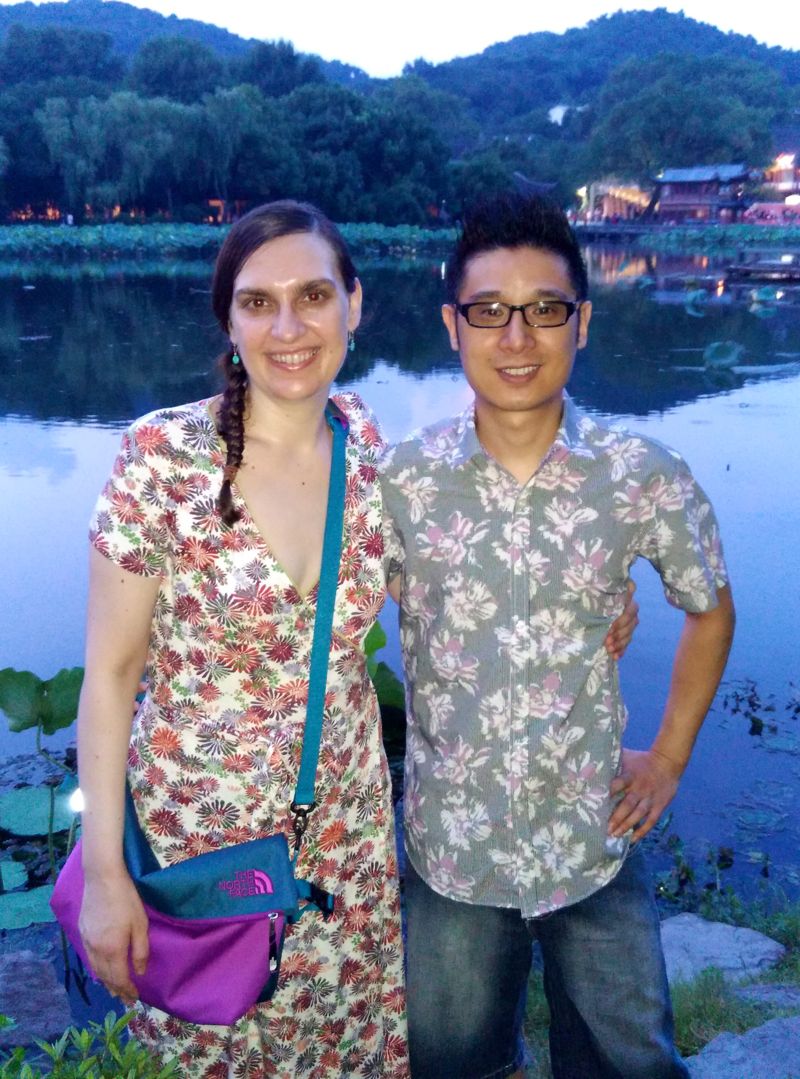
 #1: Doing your entire grocery shopping online, with fast home delivery and no shipping charges
 #2: You don’t need to own a car to conveniently get around
 #3: Authentic Chinese food
 #4: More authentic food from other Asian countries
 #5: You can pay by mobile phone almost anywhere


 As a white American woman married to a Chinese man, June 12 is not just another summer day. It’s Loving Day, a day commemorating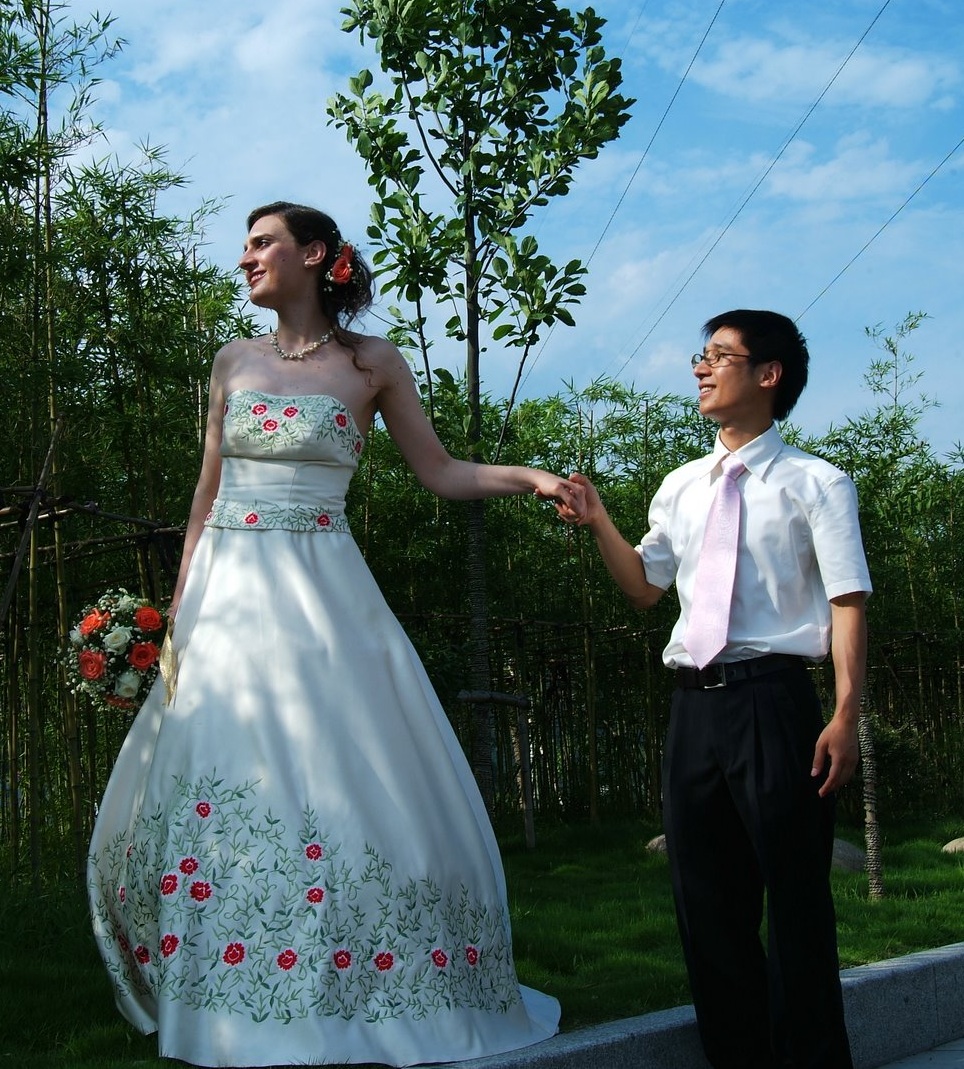


 Are you in a WWAM (Western woman/Asian men) relationship? Do you happen to have some share-worthy photos of the two of you? Something really stunning?

 The other day, you told me how people constantly ask you, “Why would you date Chinese men?” You recalled that girl who grimaced at you just because you dared to date men in China. You said you felt like you were spending so much energy and time trying to defend your choices. You sounded tired of it all.
