The Ups and Downs of Spending Christmas Abroad (in a Country That Doesn’t Celebrate It)


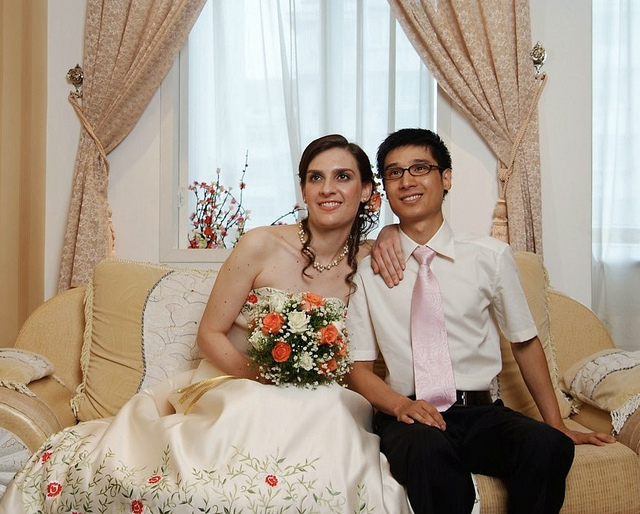
My husband and I spent Christmas Eve in Shanghai's Xintiandi many years ago.
My husband and I spent Christmas Eve in Shanghai’s Xintiandi many years ago.

Initially, I had this perfect little holiday-themed post all sketched out to run today. It would snappy, upbeat and fun. Everything Christmas should be, right?

But after I let it sit for a day and revisited it, I realized it didn’t hit the right note with me. The thing is, I wasn’t feeling snappy, upbeat or fun.

I didn’t like the idea of having to force a happy face out there when it wasn’t the truth. The heaviness in my heart that weighed upon me as I stared at the computer screen told me I just couldn’t run that post in good conscience – not when I’m still facing my own share of ups and downs over spending Christmas in China, a country that doesn’t officially celebrate it.

I live here in China because it’s my husband’s home country. We moved back here from America in November 2013 and plan to reside here permanently for the rest of our lives. Part of that means that, sometimes, I’ll spend Christmas in China too.

In theory, the holidays can be a lot of fun here in China. We’ve got our own Christmas tree decked out in shiny ornaments, sparkling colored lights, and golden ribbon. “Santa Claus” already has gifts ready to go for us. We’re planning a romantic Christmas Eve dinner at our favorite restaurant, followed by a nighttime stroll beside the West Lake to take in the stunning views of the gardens lit up in pink, blue and green lights. On Christmas Day, we’ll climb up to the top of a beautiful pagoda and enjoy some breathtaking views of the city. It’ll be a Christmas like no other – in theory.

But in practice, in anticipation, it doesn’t always feel as fun as you might expect. I can hardly find a hint of the Christmas season on the Chinese TV stations I have available and it’s tough to find more than a handful of Christmas movies. In my community, I don’t see folks making the same Christmas preparations I remember from back home – and I have a feeling that my Christmas tree is quite possibly the only one in the entire block. I can’t make Christmas cookies at home and the ones I tried finding online looked nothing like the batches of warm, cinnamon-scented joy that used to come out of your mother’s oven. I told my family not to send Christmas cards because it can take up to a month to receive the mail here and, anyhow, I’d get it late because an out-of-town relative receives our mail; but a part of me secretly mourns the fact that this might just be the first Christmas I won’t receive a single physical Christmas card from anyone.

That’s what it feels like for me on some days – the days when nostalgia for Christmases past gets the best of me.

IMG_2986_2

Now, this isn’t the end of the world. I know that things could be far worse. I know this Christmas will come and I’ll be okay. In fact, in all likelihood it’ll turn out to be a nice Christmas. But that doesn’t mean that some days I won’t be a little down – like I have been recently.

It’s a relief to finally be honest about how I’m feeling – especially when it seems the online world would rather us all put on our best “holiday cheer” face. I was on Facebook the other day and confronted by a neverending stream of happy, confident, “we have perfect lives and never get depressed” kind of posts. It was really hard for me to read it at times. It was as if every ultra-positive post was saying to me, “This is the holiday season and if you’re not happy, there must be something wrong with you.”

But when I got off social media, meditated along with my favorite meditation song, and chatted with my husband about how I was feeling, I remembered that, in fact, there’s nothing wrong with me. That’s it’s all right to have those down days during the holidays – especially when you’re far from your family and friends in your home country. And that social media is often like smoke and mirrors, hiding away the darkest parts of our own lives.

My holiday wish to you is honesty – as in, being honest with yourself during this holiday season. No matter where you are in the world, perhaps you might find yourself facing another round of the holiday blues. Maybe you don’t even have the “I’m living abroad and missing family” excuse. Whatever the reason, know that it’s okay. Know that you’re not alone. A lot of us don’t speak up because it’s not cool or not the kind of thing everyone wants to hear. But we should.

I can’t predict exactly how I’ll feel on Christmas. I’d like to hope it will be a very merry Christmas. But I know that if it isn’t, I’ll give myself the permission to acknowledge that, to feel my feelings, and to remind myself that it’s part of being human. That life – even a Christmas spent abroad with your husband in China – will have its share of ups and downs.

Has spending the holidays abroad — or even, in a country that doesn’t celebrate your holiday — left you with a touch of blues sometimes?

3 Joys of Celebrating Christmas With Someone Who Didn’t Grow Up With It

Ask my husband John about Christmas and he lights up with wonder in his eyes. You’d think he spent his entire life anticipating that one magical day of the year, when everything seems possible.

But in fact, Christmas wasn’t even a part of his life until the two of us started dating years ago. People in China don’t traditionally observe the holiday.

Since then, we’ve enjoyed 12 Christmases together. And I have to say, there’s something joyful about celebrating it with a total newcomer to the holiday – a person who brings a fresh perspective on that silent night.

Here are three things I love about spending Christmas with someone who didn’t grow up with Christmas:

1. Playing Santa Claus all over again

My husband John loved how "Santa" brought him an inflatable globe for Christmas one year.
My husband John loved how “Santa” brought him an inflatable globe for Christmas one year.

When I was a kid, Santa Claus was the real deal. We used to sit on his lap in “Santaland” at the local mall and tell him what we wanted, write him letters asking how the reindeer were able to land on our roof, and leave out milk and cookies. It brought a sense of anticipation and magic to the holiday season – one that can easily slip away from you as you grow up into the “there’s no such thing as Santa Claus” reality of adulthood.

Or does it have to slip away? Not if you’re married to someone who loves the idea of Santa Claus – enough to will him into existence into your life all over again. As I’ve written before in my post titled My Husband and His Childlike Christmas Cheer:

The other day, I caught John pouring over his inflatable globe — and couldn’t help but remind him of its origins.

“Remember when ‘Santa Claus’ gave that to you last year?” I said with a wink.

He giggled in response. “‘Santa Claus’ really knows what I like.”

It’s the sort of thing you’d hear a parent ask their child — instead of a wife asking her husband. Yet, even though we both know who “Santa Claus” really is, any talk of the jolly old man never fails to bring a smile to his face.

I have to admit, it makes me smile to see John loving the idea of Santa Claus. He reminds me that you’re never too old to appreciate Santa.

2. Creating new and unique Christmas traditions together

My husband inspired me to hang all sorts of non-traditional -- but fun -- Chinese ornaments on our tree, including one of the mascots from the Beijing Olympics!
My husband inspired me to hang all sorts of non-traditional — but fun — Chinese ornaments on our tree, including one of the mascots from the Beijing Olympics!

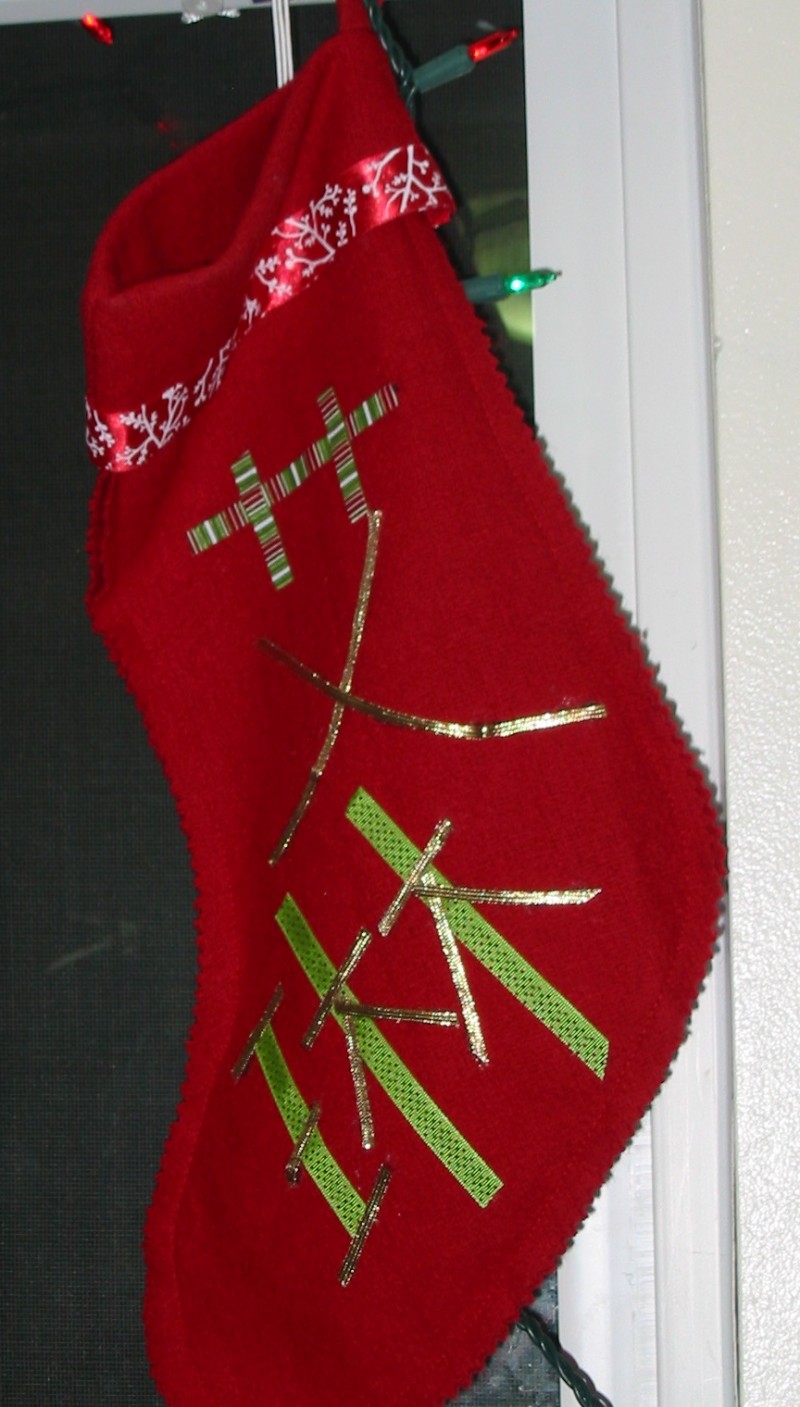
In my Midwestern Catholic family back in America, it’s not traditional to have a Christmas stocking with Chinese characters on it. Or hang one of the mascots from the Beijing Olympics on your tree. Or even worship your ancestors on the holiday.

But since marrying my husband John, Christmas has taken on some decidedly Chinese characteristics – all because he never grew up with the typical traditions I did. (See my post titled How To Make It A Very Chinese Christmas.)

Sometimes, it’s just fun to be able to ignore the usual “Christmas rulebook” and create your own new and unique traditions for the holidays as a couple.

3. Discovering that Christmas doesn’t mean the same thing around the world

Christmas in China
For my husband, romance and Christmas go hand in hand.

Is this Christmas or Valentine’s Day? That’s something I’ve wondered after celebrating a few Christmases here in China with my husband. As I wrote before in my post China and Its Oh So Romantic Christmas:

Christmas is oh so romantic. At least, that’s what my Chinese husband thinks of the holiday — and I know he’s not alone.

I’ll never forget one Christmas Eve when I stepped out onto Huaihai Road, Shanghai’s equivalent of Fifth Avenue, and right into a sea of twentysomething and thirtysomething couples, strolling hand-in-hand under strings of soft white led Christmas lights up and down the street. There were so many young people in love all around me, I almost felt like I walked onto a set-in-China romantic holiday movie.

My husband gets all starry-eyed when I ask about what we’re going to do on Christmas. To him, the entire holiday is candy-coated with lots of love and romance, thanks to all of the romantic Hollywood and TV movies about Christmas that have come over to China.

Granted, the Christmas I grew up with was more about family than falling in love (or falling in love all over again). But on the other hand, there’s something lovely about having a husband who gets all excited about all the romantic things we might do together this year on Christmas – like sharing coffee and Christmas cookies for two at Starbucks, or holding hands as we stroll around the West Lake all bundled up in our winter best.

Sigh.

Have you celebrated Christmas with someone who didn’t grow up with Christmas? What joys have you experienced, thanks to their unique perspective on the holiday?

How spending the holidays in China taught me the meaning of the song “White Christmas”

Christmas in ChinaA couple of weeks ago, John and I made a quick day trip to Shanghai to run an important errand. Our journey also brought us to Nanjing Road – the ultimate shop-till-you-drop heart of Shanghai’s retail world – and the many malls towering over the street. We happened to pass through some of them during the day where I spied glittering silver tinsel, wreaths, painted wooden nutcrackers and even a montage of snowflakes twinkling under the soft white lighting in a department store.

There they were, all the signs that Christmas is coming. And yet, with every sight of a Christmas decoration, I felt all melancholy inside, as though I were housebound in the midst of a huge winter blizzard.

After all, they’re a reminder that another Christmas in America will pass among my family members – and I won’t be there to share it with them. I’ll be spending it here in Hangzhou, China with my husband.

“Home for the holidays” sounds like the title of yet another saccharine made-for-TV Christmas movie. In the holiday movie world, the script of my life would work like this. A young American woman who returns to China with her husband says “good riddance” to her seemingly dysfunctional family in the US. But she suddenly has a change of heart on Christmas Eve, rushing to Shanghai’s Pudong Airport with her Chinese husband, where they buy tickets for two to Cleveland, Ohio and make it just in time for Christmas Eve mass at Grandma’s Catholic church with the whole family, singing “Silent Night” together as the credits roll.

IMG_7637In reality, none of that’s true. I didn’t return to China with my husband John to escape my family in the US. I still love them all very, very much. In fact, I would love more than anything to once again be reunited with everyone around Grandma’s cozy little table in Cleveland for Christmas Eve, and then wake up the following morning at my father’s home to a delicious spread of bagels, sweet figs and truffle chocolates.

Unfortunately, I’m just not able to make it home this time around.

For months leading up to this holiday season, I expected this. I told myself, It’s just another holiday season. You did it last year, after all. And you even spent a number of Christmases away from family in the US. Why the big deal now?

Yes, why should I feel so blue about the holidays? I’d love to offer a rational explanation for that and yet, I come up empty every time. How can you have a rational explanation for something that comes from the heart?

My Chinese husband John has long become a home to me – an adult home, in a sense, a home that I’ve created on my own. He is the one person in the world who has seen all of me – the Midwestern American, the woman who came of age in China, even the me that speaks half a sentence in English and the other half in local dialect (making him erupt in a fit of giggles). It is the greatest gift that I have someone who knows who I really am and loves all of the messy and imperfect things about me.

But when the holidays arrive, I still long for the home I knew as a child and the Christmases that once captivated me year after year. It was a place where the snow covered the ground like thick layers of sweet white frosting, where the aroma of cinnamon-spice pinecones greeted you at the local supermarket, and the local electric company put on a dazzling show of Christmas lights strung together to make Santa’s sleigh and reindeer and Christmas stockings and stars.

As much as I have come to love Hangzhou, my husband’s hometown and my new home, and as much as I appreciate the many signs of Christmas that you can find in China, there are some things that I’ll never quite replicate in this place. That’s part of life when you choose to make a life for yourself in a foreign country like China – especially one that doesn’t officially celebrate the holidays you do.

Christmas tree in Shanghai

Of course, it’s not the end of the world. I’ll make the best of the season by decorating our apartment in Christmas stockings and lights, and I’ll buy a small tree to place in the corner. We’ll make a plan for Christmas Day to stroll around the West Lake and then indulge in a little coffee and Christmas cookies for two at a local Starbucks. I’ll call family that day and wish everyone the happiest of holidays.

But now I truly understand the meaning of that nostalgic tune, “White Christmas,” because I’m dreaming of my own white Christmas back in the US – and wishing that sometime, maybe next year, I’ll finally make it home.

Gift Recommendations For Books Featured On This Blog

Does your holiday shopping list include book lovers? Over the years, I’ve featured a lot of fantastic books on this blog (including AMWF titles); they could also make amazing gifts for that special someone in your life.

I’ve listed them in alphabetical order according to the author’s last name, along with a recommendation for who would love it and a link to my interview with the author and/or other post. Happy holidays! (Note: titles are linked to Amazon.com, where your purchase helps support this blog.)

For fans of love stories with lots of drama:

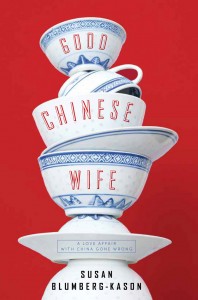
Good Chinese Wife: A Love Affair with China Gone Wrong

Good Chinese Wife: A Love Affair With China Gone Wrong by Susan Blumberg-Kason (Read my interview with Susan)

For the armchair traveler fascinated by Asia:

Almost Home by Janet Brown

Almost Home: The Asian Search of a Geographic Trollop by Janet Brown

tonedeafinbangkok

Tone Deaf in Bangkok (And Other Places) by Janet Brown (Read my interview with Janet)

For fans of Pearl Buck’s wartime China stories:

9781457526756cvr.indd

Tiger Tail Soup: A Novel of China at War by Nicki Chen (Read my interview with Nicki)

For anyone interested in interracial relationships:

12931317

Kissing Outside the Lines: A True Story of Love and Race and Happily Ever After by Diane Farr (Read my post about Kissing Outside the Lines)

For chick lit fans:

16045087

Love Me Anyway by Tiffany Hawk (Read my interview with Tiffany)

For the person who wants to be happier, but hates self-help books:

A Field Guide to Happiness revised

A Field Guide to Happiness: What I Learned in Bhutan about Living, Loving, and Waking Up by Linda Leaming (Read my interview with Linda)

For anyone who loves comics and stories about the ups and downs of living abroad:

My Japanese Husband Thinks I'm Crazy

My Japanese Husband Thinks I’m Crazy by Grace Buchele Mineta (Read my interview with Grace)

For fans of mysteries and thrillers:

18693763_2

Everything I Never Told You by Celeste Ng (Read my interview with Celeste)

For people who like reading about road trips and love stories:

15818532

Secret of the Nightingale Palace by Dana Sachs (Read my interview with Dana)

For readers interested in the Asian American experience:

Big Little Man: In Search of My Asian Self

Big Little Man: In Search Of My Asian Self by Alex Tizon (Read my interview with Alex)

For readers who love coming-of-age stories:

Fire-Dragons_A

Year of Fire Dragons: An American Woman’s Story of Coming of Age in Hong Kong by Shannon Young (Read Shannon’s guest post here)

For fans of travel stories with a little heart and soul:

13891247578_770814d2ef_b

How Does One Dress to Buy Dragonfruit? True Stories of Expat Women in Asia edited by Shannon Young (See my post on favorite essays from the anthology and a post about my own essay “Huangshan Honeymoon”)

What books do you think would make great Christmas gifts?

Photo Essay: A Cozy, Chinese-Style Thanksgiving in China

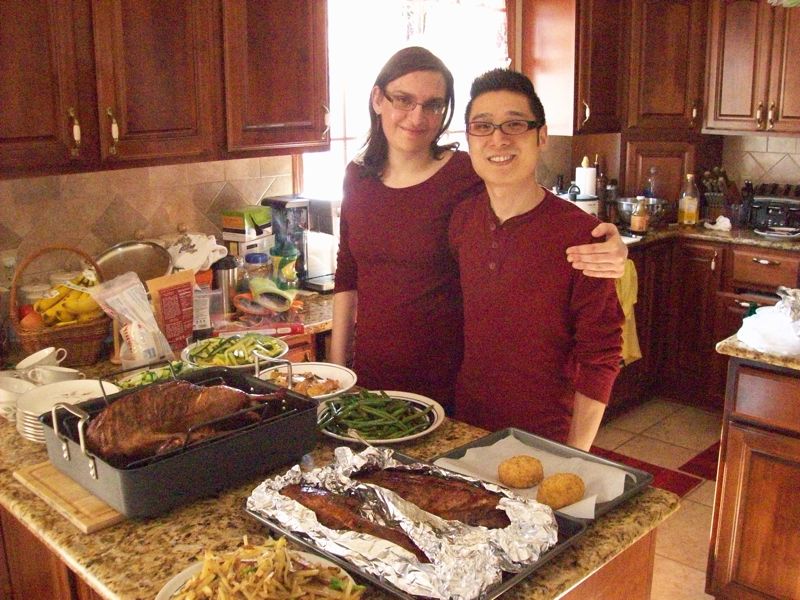
Even though we’ve moved to China, there are some holidays that will always remain in our lives — such as Thanksgiving. We spent a cozy afternoon at home cooking up a little something to celebrate. Granted,  it’s not the kind of Thanksgiving your American grandma would have served up — but it served us (and our friends) well for the holiday.

While I’m taking a break this day to remember the holidays, I thought I’d share a few photos from our quiet little celebration at home.

Yes, Virginia, you can mash sweet potatoes in a wok! (Just like John here.)
Instead of turkey, we decided to cook up pig's feet.
Instead of turkey, we decided to cook up pig’s feet.
China has the perfect solution to your cranberry sauce problem -- candied Chinese hawthorn, which tastes almost exactly like cranberry sauce. Who'd have thought?
China has the perfect solution to your cranberry sauce problem — candied Chinese hawthorn, which tastes almost exactly like cranberry sauce. Who’d have thought?
Who needs tofurkey when you can whip up a little home-style tofu with shitake mushrooms, green onion and black bean sauce. Yum!
Mashed sweet potatoes have always been one of my favorite dishes at Thanksgiving -- and they're still easy to make in China.
Mashed sweet potatoes have always been one of my favorite dishes at Thanksgiving — and they’re still easy to make in China.
A random salad of romaine lettuce...just because I've always loved salads with Thanksgiving dinner.
A random salad of romaine lettuce…just because I’ve always loved salads with Thanksgiving dinner.
The table is set with rice, chopsticks and coconut milk to drink!
Add a few friends and, voila, you have a real holiday atmosphere! To Thanksgiving!

How to Explain American Thanksgiving Dinner to Chinese Family and Friends

Chinese Thanksgiving“Well, we have this big meal and eat things like turkey and cranberries…”

As I tried describing one of the most essentially American holidays of the year to my Chinese in-laws, I could already see their eyes glaze over with confusion and sense the questions forming in their minds. Turkey? Cranberries? Even though I expressed these perfectly in Chinese, the result was still gibberish because neither of them had ever seen a turkey or tasted cranberries in their entire lives.

Sigh.

When you’re an American like me, living abroad as part of a foreign family that doesn’t understand the importance of what we call “Turkey Day”, let alone what foods we traditionally eat, it can be frustrating. American Thanksgiving is part of the culture I grew up with. It’s something I’d like to share with my family in China – or at the very least, describe the holiday to them in a way that actually makes sense to them.

Fortunately, there is a way. Over the years, I’ve discovered that some of the most important things about Thanksgiving dinner have counterparts or equivalents in Chinese culture. You know, something your Chinese family actually knows and has probably tasted in their lives.

So if you’re struggling to explain American Thanksgiving to your Chinese loved ones, here are 5 suggestions that might just help you:

1. Roast turkey is America’s version of roast duck (kǎoyā, 烤鸭)

"Dry for 5 hours cropped" by FotoosVanRobin - http://www.flickr.com/photos/fotoosvanrobin/324209168/. Licensed under Creative Commons Attribution-Share Alike 2.0 via Wikimedia Commons - https://commons.wikimedia.org/wiki/File:Dry_for_5_hours_cropped.jpg#mediaviewer/File:Dry_for_5_hours_cropped.jpg
“Dry for 5 hours cropped” by FotoosVanRobin – http://www.flickr.com/photos/fotoosvanrobin/324209168/. Licensed under Creative Commons Attribution-Share Alike 2.0 via Wikimedia Commons – https://commons.wikimedia.org/wiki/File:Dry_for_5_hours_cropped.jpg#mediaviewer/File:Dry_for_5_hours_cropped.jpg

Outside the world of China’s well-heeled expats and cushy five-star hotels, turkeys just aren’t a thing here. They’re not native to China – so of course, most people haven’t actually tasted one. Even using the appropriate Chinese word for “turkey” (huǒjī, 火鸡) won’t necessarily make it easier for people like Baba and Mama to understand what you mean.

Fortunately, Chinese cuisine includes roast poultry (Beijing duck, anyone?), so you could always start off by comparing roast turkey to China’s roast duck (kǎoyā, 烤鸭). It doesn’t taste same (so this vegan has heard) but it’s in the ballpark.

What about stewed chicken (dùn jīròu, 炖鸡肉)? You usually baste roast turkey in the bird’s own juices, which is sort of like stewing chicken meat. You could even tell them what I’ve said before – that turkey is really just an oversized chicken.

P.S.: For those of you looking for a great Chinese-American turkey recipe, this soy sauce and honey-glazed turkey will satisfy Chinese and American palates alike.

2. Cranberries are like Chinese hawthorn (shānzhā,山楂)

edb1b5ece9d3246dd9f8b20a66f9c590
Chinese hawthorn (image via http://baike.baidu.com/view/6877.htm)

How do you explain the sweet-tart goodness of cranberries to people who have lived all their lives without cranberry sauce or Craisins (those fantastic raisin-like dried cranberries that have become one of my favorite snacks ever in America)?

Simple – tell them it’s like Chinese hawthorn (shānzhā,山楂). These sour berries are the quintessential fruit for tanghulu, delectable candied fruit skewers made popular in Northern China and now available in most Chinese cities. When Chinese hawthorn are warmed up and sugar coated, they taste surprisingly like cranberry sauce – a crunchier, less sauce-like version, mind you.

So guess what I’m cooking up for Thanksgiving this Thursday to substitute for cranberry sauce on the table? If you’d also like to try your hand at making candied Chinese hawthorn, check out this recipe.

3. Stuffing is like a savory version of eight-treasures rice (bābǎofàn, 八宝饭)

Image via http://www.xiachufang.com/dish/512948/
Eight-treasures rice (image via http://www.xiachufang.com/dish/512948/)

In a China where rice, noodles and steamed buns rule, try explaining stuffing — seasoned Western-style bread mixed with things like carrots, onions and celery — to your Chinese relatives. I once tried listing off the ingredients to my Chinese mother-in-law; while she never said “That’s weird,” I could somehow read it in her puzzled eyes – eyes that have never seen or heard of Stove Top (the number one stuffing brand in the US).

If only I had realized that China already has a stuffing-like dish called eight-treasures rice (bābǎofàn, 八宝饭). Granted, the sweet, rather than savory, flavors reign in this dish of sugary glutinous rice stuffed with all sorts of colorful dried fruits, seeds, and nuts. But many versions of Thanksgiving stuffing include dried fruits and other “treasures”. So just tell your Chinese family and friends stuffing is like a savory version of eight-treasures rice (xián de bābǎofàn, 咸的八宝饭), where we use bread instead of rice and vegetables or spices as the “treasures”.

By the way, here’s an ingenious recipe that mediates a truce between Western-style stuffing and eight-treasures rice called sticky-rice dressing.

4. Pumpkin pie is like a pumpkin-flavored gāodiǎn (糕点)

e4df08249f07041edd4d56630b271ab1
Mung-bean cakes, a Chinese dessert or gaodian.

No Thanksgiving Day – or explanation of a Thanksgiving Day – is complete without a little dessert. But here’s where it gets challenging, because desserts as Americans know them – you know, death by chocolate and the endless fluffy white frosting and whipped cream – just aren’t in traditional Chinese culture.

Fortunately, Western-style bakeries serving up pastries, cakes and loaves of bread have exploded all over China, which means a lot of people – especially the younger set – know what you mean when you’re talking about cakes and pies.

It’s the older generations — people like my mother-in-law and John’s grandma – you have to worry about. They’ve probably never even set foot in one of these bakeries.

Still, China has plenty of home-grown pastries or gāodiǎn (糕点), such as mooncakes (yuèbing, 月饼) and mung-bean cakes (lǜdòugāo, 绿豆糕). For the elders in your family, you could call pumpkin pie a sort of pumpkin gaodian (nánguāgāo, 南瓜糕).

5. American Thanksgiving itself is like China’s Winter Solstice (dōngzhì, 冬至)

Winter Solstice Dinner in China is a lot like Thanksgiving Dinner in the US.
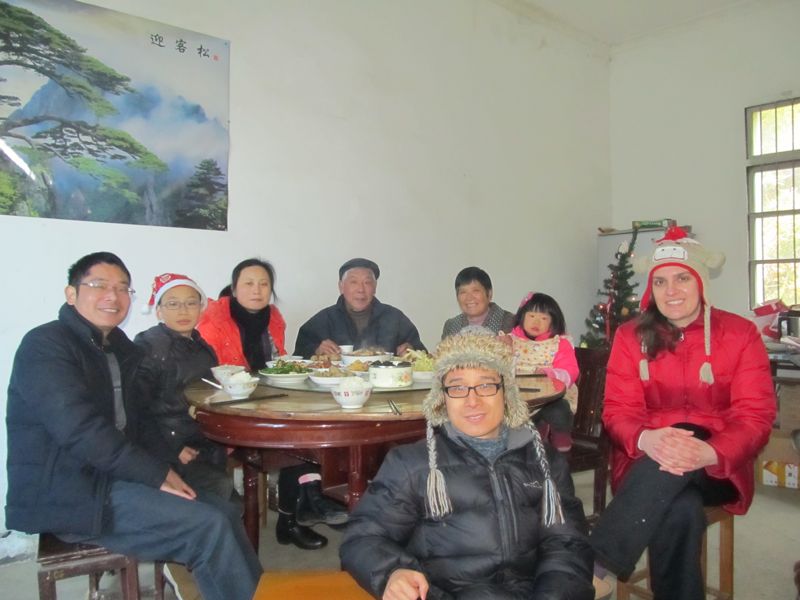
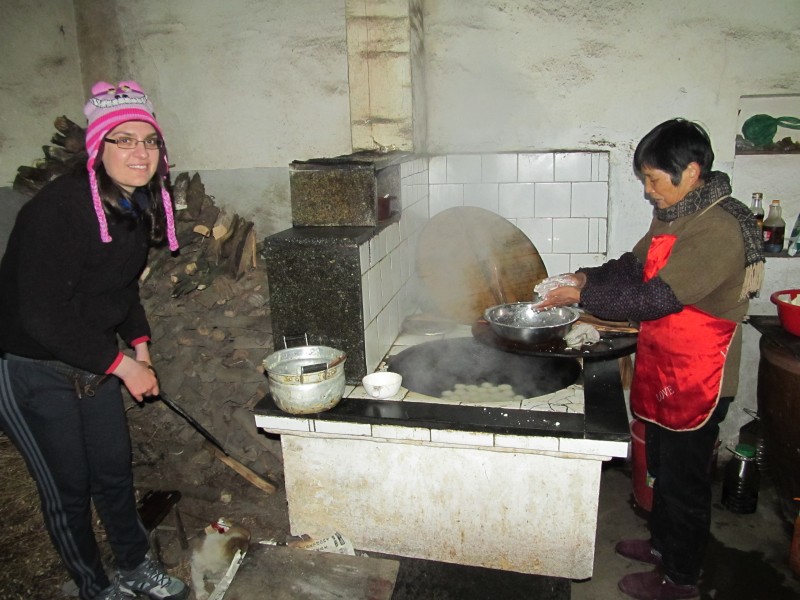
Winter Solstice dinner with the family in China.

I’ve heard lots of people equate Thanksgiving Day with China’s Mid-Autumn Festival because both holidays occur in the fall and stress being together with family. But honestly, it’s a terrible comparison for lots of other reasons – especially in terms of food.

To celebrate China’s Mid-Autumn Festival, people eat mooncakes. Meanwhile, to celebrate American Thanksgiving Day, people feast on turkey and mashed potatoes and stuffing and everything else until their stomachs can’t bear it. Food and family both take center stage in Thanksgiving – something you can’t say about China’s Mid-Autumn Festival.

My suggestion? American Thanksgiving equals China’s Winter Solstice (dōngzhì, 冬至). Not only do both of these holidays bring family together and involve huge feasts, they also share a very important characteristic – they both kick off the holiday season in their respective countries. While American Thanksgiving signals the start of the Christmas season, it’s China’s Winter Solstice that reminds us Chinese New Year is just around the corner.

Now if you’ll excuse me, I’ve got an American Thanksgiving dinner of my own to prepare for here in China. To those of you celebrating, happy American Thanksgiving Day!

How do you explain American Thanksgiving dinner to your Chinese family and friends?

6 Ways to Prepare for Meeting the Parents in China

“Nervous” doesn’t even begin to describe how I felt when I was about to meet John’s parents in rural Hangzhou for the first time. After all, once John told his parents he was dating me, his father famously told him that while he could be friends with a foreign girl, but shouldn’t date her.

Ouch.

Meeting the parents inspires all sorts of anxiety no matter where you live in the world – but even more so when you’re a foreigner and you’re about to meet the parents of your Chinese boyfriend or girlfriend here in China. On top of all the usual pitfalls, you’re also dealing with a different culture, language and living customs. It’s like getting ready for an exam when you don’t even know the entire curriculum.

Fortunately, I’ve survived meeting the parents. And I’ve heard from a lot of others who have successfully made it through. Here are 6 tips I’ve learned over the years to help you prepare for meeting the parents in China:

1. Ask your girlfriend or boyfriend all about their parents

IMG_1824
My husband’s mother is a fantastic cook.

There’s always a story behind everyone’s parents. Why not find out? It’s a great way to get to know them before you actually meet them and figure out potential ways to bond with them.

I always wish I had done this before I first met John’s parents. Maybe then I would have figured out how much his mom loves to cook – just like me — and asked to watch her in the kitchen more? Or that his dad likes to read classic Chinese texts – which I’m always interested in — so I could have asked him about, say, Confucianism or Taoist stories.

2. Learn everything you can about the hometown

John's hometown is famous for this mountain at the center of it all.
John’s hometown is famous for this mountain at the center of it all.

One thing I’ve learned from years of living in China? Everyone has a little hometown pride. So if you want to get a little closer to the parents, what better way than to learn about their hometown?

Start with your boyfriend or girlfriend first – they’re your closest experts – and also don’t forget to consult travel guides (which, depending on what attractions/history the hometown has, might tell you something). Most Chinese cities and counties even have Wikipedia pages in English, which might even teach you something your significant other doesn’t know.

3. Prepare gifts for the family

By Goaname (Own work) [GFDL (http://www.gnu.org/copyleft/fdl.html) or CC-BY-SA-3.0 (http://creativecommons.org/licenses/by-sa/3.0)], via Wikimedia Commons
Gift giving is such an important thing in Chinese culture – so important, that you don’t want to show up to your first meeting with the parents without a gift in your hands. Chances are, they’re going to entertain you with a home-cooked dinner and even put you up for the night. There’s no better way to show your appreciation from the moment you enter their home than bearing a present for them.

I’ve written a number of posts on what to give to your Chinese family (including ideas for those of you coming to China from overseas). Honestly, I would ask your girlfriend or boyfriend first for some ideas before rushing out to the store.

But if they can’t think of anything – and you’re still stumped about what to purchase – repeat after me: fruit basket. You really can’t go wrong with buying them a nice fruit basket. You’ll find fruit baskets at any major supermarket in China or those fruit stores on the street. Everyone loves them.

4. Learn a few phrases in the local dialect

IMG_2038
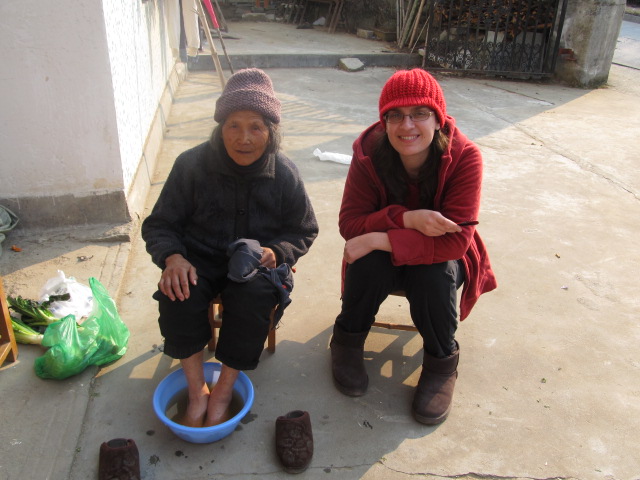
My husband’s grandmother only speaks the local dialect.

Mandarin Chinese may be the official language – but chances are, it’s not your girlfriend’s or boyfriend’s mother tongue. The vast majority of people grew up speaking a local dialect. It’s their linguistic equivalent of that comfy pair of jeans you love wearing around the house, and that’s what you’ll probably hear around the dinner table.

Just think how amazed they’ll be if you can master a handful of simple words or phrases in the local dialect! Even if it’s as elementary as “Hello” or “Thank you” you’ll probably have everyone in smiles. Or laughing! After all, you’re probably the first foreigner they’ve ever seen speaking it. (My husband always giggles whenever I try out his local dialect!)

5. Dress casual, comfortable and err on the conservative side

IMG_2151

Here in urban China, I’ve seen enough Daisy Dukes, mini-skirts and skorts, and tank tops to know that fashion has come a long way since the days of dull blue and gray Mao suits. And after witnessing my sister-in-law pull off an ultra-short jean skort at Grandpa’s funeral – something I would have never dared to do for a funeral in the US — I also know that my idea of what’s appropriate doesn’t always apply.

Still, if you want to give Baba and Mama a great first impression, you’re better off leaving your Daisy Dukes and ultra mini-skirts behind. Many Chinese parents feel wary about having foreigners in the family, and stereotypes about foreigners (such as the idea that Western women are promiscuous) only fuel their concerns. Yeah, I know it’s unfair, but that’s the reality.

Look at it this way. Even in Western countries – like the US, my home country – people agonize over what to wear to meet the parents for the first time, enough to write articles about it. Here’s what one of them wrote: “No matter how classy your mini-dress is, his mom will say the skirt was too short.”

Enough said.

Instead, go for something that’s casual, comfortable and on the conservative side. Think nice jeans and T-shirts (with long or short sleeves) or sweaters if it’s cooler out; for summer, you can do nice shorts or skirts just above the knee or below.

Forget about wearing a nice dress or suit, unless you’re told otherwise. This is, after all, a country where people routinely show up to wedding banquets dressed in jeans, T-shirts and sneakers. Seriously!

5. Dress to stay warm enough in their home

Even though John's hometown is not that cold in the wintertime, I must wear multiple layers to stay warm inside homes without central heating.
Even though John’s hometown is not that cold in the wintertime, I must wear multiple layers to stay warm inside homes without central heating.

My husband is still shocked that I never used to wear long johns under my clothing while growing up in Cleveland, Ohio. Even though I faced a winter that could last as long as four months or more, with below-freezing temperatures and tons of snow, staying warm was never an issue. We had central heating at home and pretty much anywhere we traveled. Even our car had heat.

Meanwhile, my husband’s hometown sits at the very same latitude as New Orleans and Houston, and he’s spent his entire life counting on long johns to help stay warm through the fall, winter and spring. Why? Because he’s used to having no heat inside the house, wherever he is – even in school.

So don’t just look at the weather when you’re packing your bags – ask your girlfriend or boyfriend what it’s actually like in their home. Find out whether they have any heat, including hot water, and if it will be available when you’re there. Also, ask him or her what they usually wear around the house at home.

Here’s a good general rule of thumb – China’s Yangtze river is like the Mason-Dixon line of heating through the country, where North of that people usually have some form of heat provided by the government (they turn it on sometime in November and off sometime in April) and South of that people do without. That said, there are ALWAYS exceptions and it pays to ask ahead of time.

And please, if you’re traveling during the winter months, don’t forget your long johns – trust me!

6. Bring photos

I brought photos like this one of me and my grandmother to show to John's parents.
I brought photos like this one of me and my grandmother to show to John’s parents.

As the old cliché goes, a picture’s worth a thousand words – and who couldn’t use an extra thousand words or two when you’re in front of two parents you’ve never met? Photographs provide a perfect way for you to connect with your significant other’s Baba and Mama without saying a lot. You can show them your family, pictures from your hometown and even the beautiful places you’ve visited. Thanks to the photos I lugged around to my first visit to meet John’s parents, I was able to break the ice with his dad and finally make a connection – enough to make him realize I was the kind of foreign girl worth dating (and, later, marrying).

What has been your experience with meeting the parents? What advice do you have?

On sexual assault in China (and how my husband “guards my butt”)

IMG_1971

Whenever we take walks in the park every afternoon, my Chinese husband John takes on what he considers an incredibly important responsibility.

He “guards” my butt from the wandering eyes of other men.

I always used to think John was going a little overboard when, not long after we moved to Hangzhou, he chose to start walking behind me. At some point, I know there was a conversation between the two of us that went something like this:

Me: “Why are you walking behind me?”
John: “To protect your butt.”
Me: “My butt needs to be protected?”
John: “Absolutely!”

I never thought I had the kind of butt – like, say, Kim Kardashian – that could go viral or inspire butt-envy. Why would anyone need to guard it?

But then there was this one day where, while strolling through the park (yes, with John behind me guarding my own behind) we came upon a group of men. There were at least three of these guys and they were loitering on this bridge we had to cross. I happened to be wearing a light pink shirt over a hot pink sports bra, and a pair of navy blue spandex exercise pants that fell just below my knees.

Most days, I try not to stare too much at the people around me – especially men – because, chances are, they’re already looking at me. I’m a foreigner, after all.

On this day, I wasn’t looking directly at any of these men, yet I felt their dirty stares all over my body. This wasn’t foreigner curiosity in China, but something perverted.

Behind me, my husband whispered in my ear, “Move, get away from them. Fast!” We both hurried past them across the bridge and jogged until they were far away and out of sight. Even though not one of those men had laid a hand on me, I still remember feeling disturbed by the whole experience. I wondered, How could someone look at me like that? Why had I never noticed this before?

The thing, once this happened, I started noticing shades of the same behavior while walking through the park. Like glancing back at some guys we just passed, only to catch them stealing a look at my behind. Or passing a group of men, ogling me in a decidedly uncomfortable way.

I don’t think it’s fair to simply blame the attention on my spandex pants or how my butt happened to appear while wearing them. Still, as ridiculous as it sounded for my husband to “guard my butt,” I understood he did it for love.

(Well, love and the fact that he likes to stare at my butt while we walk.) 😉

IMG_20140823_182101
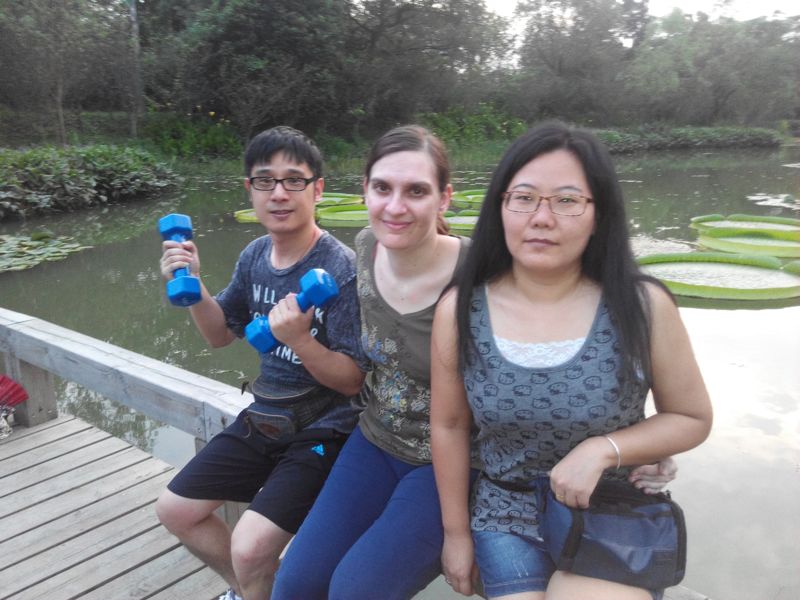
My husband John, me and our friend Caroline on a walk in the park, wearing my spandex pants.

So why am I writing about this experience? Something that, frankly, I push from my mind more than I want to admit?

I was reminded of it a few months ago when I came across this blog post from the Shandongxifu, describing how she was sexually assaulted by three men in Shenzhen (and, by the looks of it, in danger of being raped):

There were 3 men. They were middle aged and obviously transients to the city from their country-side, labor-worn appearances.

“She speaks Chinese!” one of the men exclaimed. Now I had really sparked their interest. They got closer and started to critique my appearance more. They told me how I didn’t look American because I wasn’t fat. They said they loved my blond hair. I kept walking assuring myself that I was in public in broad daylight, but I felt awkward.

They started talking about my pale skin. Then as one of men pointed out I was slighted tanned on my chest, he literally used his hand to point it out by brushing his finger above the opening of my button down dress.

I reactively swatted his hand away and looked the man in horror. The men smiled. I was feisty.

I started forward but was detained. The other men had grabbed my arms and my attempts to get away only brought them forward with me. Panic rushed through me. I momentarily looked around at the passersby who watched me with curiosity and pity. I had been in China before and I knew that no one would ever help a stranger; They would simply stop and watch. I had been in Shenzhen long enough to know that the police wouldn’t help, even if I had happened to see one in that very second. I was scared.

I fought against the three men as they started to pull me away out the crowds, move their hands towards forbidden places, and start to tear at buttons on my dress.

I am not a passive person. I have dealt with sticky situations before but never 3 men at the same time. I fought and struggled and squirmed some more. I finally got an arm free. It was enough freedom to physically assault one of my assailants. In all of the times I had been harassed in China, I had never physically punched anyone for fear of legal ramifications as a foreigner. I wasn’t thinking about that right then.

I could see the shock on the hit man’s face. Did Chinese women not fight back? Did he still think I was a prostitute and would take it as long as I was paid? I don’t know, and I didn’t stay to find out.

While the 3 men were momentarily stunned, I freed my other appendages and ran. I took off in my heels running through the busy crowd. I can run distance so I knew I would out run them. I ran as fast as I could and went a round about way back to my apartment in case they somehow kept up. I ran into my building and up the 9 flights of stairs. No one was following so I opened the door, went inside, and locked it. A million thoughts rushed through my mind, but I couldn’t sort through them and I couldn’t breathe.

Whoa.

The worst thing, though, is that I can relate to her experience. I was once sexually assaulted in China myself. And like the Shandongxifu, I’ve not wanted to share it for a long time – believing, as she did, that somehow it was all my fault.

It happened in Beijing when a driver a friend arranged to send me to the airport ended up touching one of my breasts. He did it just before I was about to leave his car – as if he had wanted to touch me the entire time and held out for the right moment. It was creepy and despicable and the kind of thing I hope will never happen again.

I wore this same outfit that day when the driver in Beijing sexually assaulted me.

I honestly thought nothing like this could ever happen to me in China. I always used to feel so safe and even protected in China. Years ago, I often told friends how I would walk through Shanghai late into the evenings and never feel worried about getting raped or jumped by anyone.

But now I wonder if I really had it right or not. Was I safe in Shanghai because we lived in the center of the city, where lots of people streamed through the streets day and night? Or was I simply naïve?

But then again, I never thought I would be sexually assaulted in the US either – and that also happened to me. Back in the Spring of 2001, while riding in the passenger side of a fifty-something man’s car, he suddenly laid his hand on my thigh and caressed it in a creepy and even disgusting way (I don’t suppose there is any other way when you’re touching a woman who doesn’t want you to touch her that way). This silver-haired fellow was the president of a professional organization I belonged to (I never went to another meeting again after that). There I was, utterly trapped in this man’s car (with no cell phone, mind you), with the frightening thoughts flashing through my mind. Is this it or will he do more? Will he do worse?

Thankfully, that’s all he did.

One night, while John and I were traversing the park beside our community in Hangzhou with our Chinese friend Caroline, she said she was feeling a little nervous. When I questioned her about it, she told us she was worried about running into bad people in the park. John naturally reassured her that, with the three of us together, that was unlikely to happen. It did reassure her, in a way. But then she admitted she wouldn’t dare to walk through the park at night on her own. “I’d be worried about rape or assault.”

It’s the kind of thing I always used to think to myself in the US. And now that I’m in China – and understand that the same dangers exist here too – I realize it’s my worry too.

What do you think about this subject? Have you ever experienced sexual assault?

3 Ideas for Reducing Arguments in Your Cross-cultural Relationship

If you’ve ever thought that John and I had this perfect marriage where nothing ever goes wrong, well, I’m here to burst your bubble.

7673749600_070c70d55d_z
This picture may look perfect, but my marriage with John is not — and we’ve had our share of arguments!

You should have seen us a decade ago when we lived in Shanghai and had our share of arguments (including some explosive ones, with yours truly losing her temper and doing lots of yelling). I’m pretty certain I must have given some of our neighbors quite a “show” at times.

Arguments aren’t fun in any relationship, but they can get really ugly when you’re dealing with a cross-cultural relationship. Why? Because sometimes the ways in which we argue – and the things that get us irritated – relate back to culture.

After 10 years of marriage, we’ve learned a thing or two about each other and how to maintain a harmonious cross-cultural relationship – with a lot more happiness and a lot less arguing. Here are three things that have helped us get over arguments:

1.  How you manage anger and even argue can be a cultural thing – and sometimes the differences can set you off unexpectedly

IMG_2145

In my husband’s home, his family has always valued a certain emotional restraint and don’t really show their anger that much. But I’ve seen his family angry – specifically, his brother – and guess how he responded initially? He was silent. Didn’t say a word. (I can tell you, it was a pretty painful silence!)

On the other hand, in the family I grew up in, when you’re angry, you show it – which means you might raise your voice, yell and even go red in the face. I come from a long line of fiery women. We’re an expressive bunch and, when something bad happens, it needs to be hashed out immediately – even if it gets a little emotional.

So you’ve got one emotionally restrained guy who goes silent when he’s upset, with an emotionally expressive woman who vents her anger and wants to talk it out. Put us together and you’ve got the potential for a disastrous argument to happen. How do I know? Because John and I have had plenty of them.

They used to go something like this: I would start out with some anger, and because John wouldn’t respond to me, my anger would escalate until I suddenly turned into a mad tiger on the prowl (which made John even more likely to clam up and avoid me).

It took us a while to realize that part of the problem was our totally different styles of handling anger.

So, John has learned that it’s important to acknowledge and respond to me when I’m upset.

I’ve also learned that it’s important to manage my own anger. Sometimes when I let my temper loose, things can go a little overboard. John’s a great model and reminder that you don’t always have to be like that when you’re angry.

2. Recognize that living in a different culture can be stressful — so it’s important to provide some “compensations” to the person who left their culture

IMG_2698

When John and I lived in America, I started noticing that he was much more irritable than he used to be back in China. And it didn’t take much to set him off and start another argument. It was so unlike John, who had always been so easy-going, always ready to greet me with a smile. What had happened?

Then one day, it hit me – he was stressed out because of living in America, a different country and culture from his own. And adding to all of that stress, he was forced to navigate this new and stressful world in English, his second language.

Of course, this didn’t occur to me for a long time. Because I felt so comfortable to be back in America, the country and culture that I grew up in, I took it for granted that John would feel as comfortable as I did.

So, eventually, I realized what I needed to do: make room for some things that John missed from his own culture. In other words, provide some “cultural compensations” if you will.

Naturally, it started with food. You know how they say that the way to a man’s heart is through his stomach? Well, I figured that the way to quiet a man’s heart – especially when he’s stressed over living in another culture — is through his stomach too. I started cooking up his favorite Chinese foods and putting rice on the menu more often.

But then I moved on to other things that he missed from China. We rented Chinese movies and streamed Chinese TV shows on the Internet. I even let John teach me how to play some soccer (a sport that, while not Chinese, is so popular in China it might as well be the national sport).

All of it made John a much happier guy – and, by extension, ours a much happier marriage. And if I had only figured it out sooner, I might have prevented a lot of unhappy moments we had together.

3. Practice reciprocity

102_2242

When I tell people that I make my husband red-braised pork, yet I’m still a devoted vegan, they look at me like I’m insane.

Well, believe me, it wasn’t easy to pick up that raw meat one afternoon and turn it into one of my husband’s most favorite comfort dishes from China. A part of me (the part that knows I was definitely made to be vegan) still recoils whenever I see any kind of raw animal flesh in the kitchen.

Ultimately I did it out of love – or, more specifically, to reduce arguments in our marriage.

See, at the time all this started, I had subjected my husband to months of vegan dining, thinking that we could eat vegan together in America and live happily ever after.

But there was a huge problem with that.

John grew up in a culture and household where people eat meat. It’s a normal part of life in China. Granted, when he was younger meat wasn’t as prevalent as it is today. But if people had meat, they were going to put it on the table.

So when you try to force a guy who grew up eating meat to go without, he gets grumpy. And it’s not fun to live with a grumpy husband.

So I started making a little meat on the side, just for John. Some red-braised pork. Baked chicken legs and chicken wings. The occasional fish too. Anything his carnivorous side desired.

Suddenly, my husband transformed into a much pleasant guy. It was a miracle for both of us to finally live in a house with a lot less arguing going on.

And since he was happy about his food, he decided to reciprocate. So whenever I went to do shopping at the store, he would encourage me to indulge my crazy vegan cravings and buy what John called a little “rewarding food”. Things like vegan cheese and faux meats and soy yogurt.

Sometimes, we’d end up having meals where the two of us might eat completely different things. At one end, there’s John digging into his red-braised pork. And at the other, there’s me tucking into a vegan Mexican wrap (with my favorite Daiya vegan cheese).

As bizarre as it might seem to be eating two different things at exactly the same time, it has really worked for us. This is reciprocity in action – both of us were happy because we accommodated each other’s personal cravings and needs.

We’ve extended that kind of reciprocity to other things in our life. For example, nowadays when we watch TV here in Hangzhou, I’ll let me husband tune into some of his favorite China news programs. Then he’ll toss me the remote after a while, so I can catch the kind of TV I like (such as romantic comedies and love stories – yeah, I’m a sucker for romance, can’t you tell?).

I think any couple – especially couples who hail from different cultures – would benefit from a little reciprocity in their lives.

What do you think? What strategies have you used in your own relationship to reduce arguments?

“Is he your foreign exchange student?” When you’re a white woman who looks older than her Asian husband

Actually, he's my husband.
Actually, he’s my husband.

I never thought a simple trip to the grocery store with my husband would give me one of the most embarrassing experiences I’ve ever had.

It happened while we were checking out of a grocery store in the US. My husband, as usual, started bagging our stuff while I pulled out my credit card to pay for everything. It was just another typical checkout experience – until the cashier, a white woman in her fifties, started chatting with me.

“Nice to have some help,” she said, referring to my husband who had already bagged everything and placed it neatly in our shopping cart.

“Yeah, he is pretty great.” I couldn’t help but smile with pride. Who doesn’t love it when her husband is the envy of others?

Or so I thought, until the cashier opened her mouth again.

“So, is he your foreign exchange student?”

That’s right – a casher in America actually mistook my own husband for some foreign exchange student I was hosting.

A flush of red mounted my face as I realized exactly what this meant. One, that she had noticed my thirty-something husband was a foreigner and thought he looked old enough to be an undergraduate in college or younger. And two, that she thought I looked too old to be his wife.

She might as well have pointed out every single wrinkle on my thirty-something face, because that’s exactly how embarrassed I felt.

I cleared my throat. “Actually, he’s my husband.”

“Oh, I’m so sorry!” The cashier seemed genuinely apologetic, right down to the way her own cheeks turned a self-conscious shade of scarlet.

But it was too late for that. She’d already put the idea out there. And let me tell you, I never hurried out of a checkout line faster than that moment.

I never thought a simple trip to the grocery store with my husband would give me one of the most embarrassing experiences I’ve ever had.

Honestly, I shouldn’t have been surprised. Long before this ever happened, relatives and friends doted on John’s youthful appearance. In fact, it seemed like a month never went by in America without my dad saying, “John, you look like you’re still in high school!” They schooled me a reality that had remained hidden to me until I married an Asian man: the popular belief that Asians look younger than white people.

But until that moment in that checkout line, I was blissfully unaware that some Americans might actually think I was old enough to, say, be a guardian to a foreign exchange student. And might mistake my Asian husband for said student.

Of course, I’m not the only white woman in an AMWF relationship who has had an embarrassingly personal reminder of how Asians look younger than white people, as Constance of Foreign Sanctuary reminds me in her post My Taiwanese Husband & His Most Amazing Moment in Vegas!!:

While dining in Las Vegas a couple of years ago, my 30-something year old husband (who, might I add, is two years older than me) heard the most magical words from a waitress when he tried to order a beer.

‘May I see your ID, please?’

Smiling from ear to ear, his dimples as defined as ever, like a kid in a candy store, he turned to me and asked me for his passport which I was holding for safe keeping in my bag.

He passed her his passport and she began to examine it. She looked at his passport photo, she looked at him, and then back at the photo. She continued by checking the edges, clearly thinking that it must have been a fake one.

Then, she said ‘Oh my God! You are in your 30’s!!’

Talk about inflating someone’s ego with one sentence!

Trying to salvage some dignity, even just a little, I casually asked the following question.

‘Would you like to see mine as well?’

And to add more salt to the wound, to drive the dagger further into my heart, she made the following reply:.

‘No, that’s fine! You’re OK.’

Oh, the humiliation! The embarrassment!

Ouch.

I’ll be honest – for the longest time, I swore I would never go public with this encounter in the grocery store. I wanted it to be like the diary I used to hide under my mattress in grade school, forever safe from scrutiny. Who wants to admit before the world that, in fact, people think she looks old?

(John to me): Is that a gray hair?

Yet, the older I get, the more I realize the importance of accepting myself, warts and all. After all, aging is a reality for everyone. Maybe some of us are lucky enough to look younger (ahem, John), while others are not so lucky (ahem, me!). But in the end, we’re all headed in the same direction.

And honestly, who hasn’t seen the person with the dyed hair that’s obviously there to hide the gray and isn’t fooling anyone? Or someone like the late Joan Rivers, with so much plastic surgery and botox she doesn’t even look real anymore?

I cringe over the extremes we turn to just to hide our real age, when the treatment we really need is simple — accepting ourselves exactly as we are.

I also recognize that looking younger isn’t always what it’s cracked up to be, as Mabel Kwong points out in her post “Asians’ Youthful Looks: A Blessing or A Curse In Disguise?”

Besides, my husband still thinks I’m the sexiest woman in the world. He can’t keep his hands off me – wrinkles and stretch marks and hidden gray hairs and all. He loves me just as passionately as that night over 12 years ago when we first kissed beside the West Lake.

So what if he doesn’t “look” like he matches me in age to some folks? I know he’s my perfect match and that’s all I’ll ever need to know.

Picture 462

Have you ever had an experience where someone mistook you or your boyfriend/girlfriend or spouse for a different age? How did it make you feel?

P.S.: This post was inspired by Constance’s post My Taiwanese Husband & His Most Amazing Moment in Vegas!! Head over to Constance’s blog Foreign Sanctuary and read her post, as well as the comment section, which is packed with examples of other people who have had embarrassing experiences of their own!