Guest Post: No One Knew Wei Loved Ella, a French Girl in China

Sometimes, one great guest post leads to another. Inspired by the story Crying Over Him After 5 & A Half Years, my guest writer Raymond Chen (who is the author of the graphic novel “Borderlands”) shares the haunting tale of a man named Wei who fell in love with a French girl — but never told anyone about it.

Do you have a sad story or other guest post you’d like to share here? Visit the submit a post page to learn how to have your words published on Speaking of China.
—–

By Mstyslav Chernov – Self-photographed, http://mstyslav-chernov.com/, CC BY-SA 3.0, https://commons.wikimedia.org/w/index.php?curid=27730254

Good evening fellow storytellers. Now you are probably wondering what does this tired looking man in the dusty old coat have to say about a love story between a Chinese man and a French woman. Hell, I look like someone you talk to when you need advice on what gun you should use when you are tryin’ to take down a grizzly bear in the Rockies. Half the time I give that kind of advice. But tonight, in response to another story in this place titled “Crying Over Him“, I feel like I got some’ to say that has been in my memory for the past 15 years.

Now I dabble in writing now and then and even try to work on my own literature. But most of the time I find myself drawn again and ‘gain to that old fifth of Jacks. But tonight I got a true story to tell that brings a tear even to this weathered face time again.

So pull your chairs around the table and get me the barkeep if you will? I’ll take a bottle of Jim Beam and I am buying for the rest of yeh’…

This story is one that my Uncle shared with me about one of the young men on his work team back in 1997. First off, we must realize that Asian men, most particularly Chinese men, are very reserved and self-conscious. As a man of Chinese descent myself I can say that I am no exception. We simply don’t make the “first move”. Especially in this day and age, ANY woman is approached on a daily basis by many creeps and shady men with bad intentions. We DON’T want to be potentially thought of as “ugh, yet another guy is trying to hit on me”. Because the life of most Chinese men revolve around how others think of him, so he does not want to be put in a position where someone may judge him negatively. So most Chinese males do not ask the girls they like on dates, and wait for them to ask first.

Now on to the story. My uncle is an excavation supervisor in one of the numerous ore mines that dot the northern borderlands of the China-Mongolia frontier. In 1997 a new man joined his team. Lets call him Wei, shortened version of his much longer Chinese name. A man from Shanghai, around age 22, whose dream to operate heavy equipment and drive industrial machinery just came true. He was one of the best workers on the team and would be the first to respond to any crisis that occurred, and always exceeded expectations. He was extremely popular with his coworkers, always shared jokes, drinks, and laughs. And a manly man of the truest sense who did not mind going into danger.

Then we found out about Ella. Ella was a French girl who studied in Shanghai. Blonde hair, with the face of an angel. She, in her beautiful sky-blue dress, just did not fit in amongst the backdrop of the harsh ruggedness of the northern borderlands, their ravines of carved rocks and the huge diesel excavators belching acrid smoke into the winter sky. But there she stood, amongst the flashing lights of the rescue trucks and running figures of shouting paramedics and military men, tears streaming down her face.

Ella had met Wei when he was working in a bakery in Shanghai’s Meilong district. She had been living in Shanghai for just over 4 months, pursuing a career in the performing arts. Which was exactly the point of their first conversation, while he tried to fill orders and clean kitchenware at the same time. Their mutual understanding of English helped them out in miraculous ways. Wei loved Chinese TV serials, and the two of them talked about acting and movies in general. Their first conversation became the one of many. They began to see each other outside of work. Usually Wei would take Ella to one of the more traditional restaurants in the area and they would spend long hours simply walking around the town or watch the city skyline from the banks of the Suzhou River. Wei showed genuine care and concern for her, even going of his way to place his jacket over her when a freak snow squall began to blow one day as they tried to make it back home. Despite Ella’s insisting that she was not cold even though all she had was a light sweater, Wei told her to keep the jacket on. He said nothing, even though his shivering betrayed his true condition. But he did not say anything else. And he did not say anything else to suggest that their friendship may progress to anything else. Even though now they began to walk hand in hand and every time they said their goodbye in front of her apartment, he would kiss her hand and press it against his face for a long moment before turning to leave. And each day, Ella would look forward to spending more time with Wei, as we found out afterward. He in turn, as well, and on multiple occasions, showing more concern for her well being than his own. Even though deep inside, Ella yearned for the day Wei would ask her the question, that question never came.

One day, Wei told Ella that he planned to get a “real job” instead of the chump change that retail and food service always is. When she asked him what he meant, he told her that he had scored a position as a tunnel excavator in a firm that was blasting megatons of metallic ore from the long extinct volcanic ridges of the northern high country. He would be leaving soon, embarking by train to his new place of employment up in the country where people always referred to as the “meeting place between Heaven and Earth. He told her that he will write often. The one thing he said before leaving was that “Ella, if you ever feel lonely, depressed or that something in the world is letting you down, don’t, because I will always care about you and be there for you”.

Seven months after Wei had started working in Lower Mongolia and just 2 days after Ella had received his last letter, Wei was rousted from sleep one night by the team foreman. Wei had excelled as a worker and did not hesitate to be coached in a new position as equipment maintainer and diesel mechanic trainee. Well on this particular night in the bleak February of 1997, watchmen had reported smelling hydrocarbon fumes coming from the entrance of a newly dug set of tunnels. One suspected that maybe one of the big Tilley lamps used to illuminate the grounds was leaking from a faulty valve. Wei was told to inspect the premises and check for any sign of trouble. As a backup, Wei had two of the team excavators to go with him in case he need help moving something.

He did not see anything out of place as he went deeper into the shaft, even though the rancid odor of mercaptan was almost unbearable. Then he remembered that no power had been connected to this set of shafts yet and propane was still being used for illumination in the outer vestibule of the tunnel. The black hoses of the mainline led further back into the shaft, and in one of the recesses dug into the walls of the corridor, a large metal door, partly off its hinges and now unmovable due to it being wedged against the mouth of the recess, lay between him and the bulk tanks that supplied the gas to the mantles of the overhead fixtures. The stench was the most profound here and Wei decided that this metal slab had to be removed so he could look at the tanks. Despite the combined efforts of three muscular men, that damned slab just would not budge. Cursing whichever idiot had apparently rammed the door with a hi-lo machine and never bothered to report it, Wei had the door handles attached to a winch that one of the men outside had brought, mounted on the front bumper of a 500 HP FAW ore loader. The chains now connected, Wei signaled for the man in the truck to start the winch motor.

The winch had proved to be extremely effective at removing the obstruction, but it was not really built for this type of work. As a matter of fact, the winch was designed for shunting disabled vehicles or railcars that had no motive power and must be moved immediately. It was entirely too powerful, and before the cries of the frantic men in the tunnel had reached the driver to shut off the engine, the door, along with a section of the wall, had exploded free and was now hurtling towards the opening of the shaft, bulldozing everything in it’s path. The several hundred pound payload struck the support beams of the shaft and they came tumbling down, bringing rocks and cement thundering to the floor. By the time the loader operator had engaged the emergency shutoff and cut the engine, the entire crew of the sector had stumbled out of their bunks, watching a pillar of dust rise from the place where the new shafts had been.

They, the experts in their suits and the military engineers in their green uniforms, had told us that it was by a stroke of luck that the leaking propane had not detonated. That if it did, the firestorm would have jeopardized the lives of everyone in that sector. But was it really good luck for the family members of the four workmen that were in the tunnel when the winch and it’s payload had turned the tunnel into the bore of a monstrous cannon? For the next several days, men, women and children gathered at the mine entrance as rescuers frantically tried to remove the multiple tons of debris that now blocked the shafts. Among those crying for their beloved husbands and sons was a beautiful young French woman named Ella, who had arrived from Shanghai as soon as my uncle had sorted through Wei’s emergency contacts and saw the number listed among those of his immediate family.

They had found him by then, his body crushed into an unrecognizable mass by the tons of cement and steel that came down from the tunnel’s overhead supports. My uncle stood there and watched as Ella, sobbing hysterically, had ran to the tent where the corpses were stored, only to be carried back to the perimeter entrance by soldiers and firemen.

It took this incident, and several more after that, before China’s government began a nationwide campaign to address the lack of regard for safety that existed in a lot of the heavy industrial settings, most particularly in the mining sector. As to Ella, my uncle had never heard from her again, although an English speaking member of the work team had tried to console her when she had arrived at the mine, telling her that Wei was the best worker this company has ever hired. Loyal, faithful, and badass to the core.

I had never met this Wei, and only have heard stories from my Uncle, when I would go visit his ranch house in the borderlands, and we would head to the saloon and guzzle down our favorite whiskeys. I would tell my uncle about my life in the USA, and how the great the hunting and fishing was in the hill country of western Pennsylvania. I would tell him about the guns, the bows, the snowmobiles and the winter nights around campfires with my backcountry friends after a day of stalking for bucks with our scoped Winchesters. He in turn, would tell me about the hardassed old guys in his neck of the mountains that still built bows of steel and bronze that could bring down elephants. But more often than not, he would tell about Wei, and how no one in the team knew he fell in love with a French woman. Whiskey is my favorite drink. In fact, it is the one of the only things I love to drink. The other being hill country homebrew straight from the cabin distilleries of the Appalachian. But no matter how warm the alcohol flowing through my bloodstream makes me feel, I cannot bring myself to think about just what went through Wei’s head the second he realized that something had gone truly and terribly wrong down in that dark and cold shaft deep in the cliff.

Raymond Chen is the author of the graphic novel “Borderlands”, a story about a Chinese student and his beloved Peruvian wife. His harrowing journey through a landscape of death and brutality would become the fight for the survival of an entire nation. The novel is available to read at no charge here: http://blueskycountry.tumblr.com.
—–

Speaking of China is always on the lookout for outstanding guest posts! If you have something you’d like us to feature, visit the submit a post page for details — and then submit yours today.

Guest Post: On Being an Expat Wife in China

I’m thrilled to publish this guest post from Antonella Moretti, author of the novel Parsley & Coriander: Life in China with Italian Flavor. Here’s the description from Amazon.com:

How would you feel if you are told that you have to give up your whole life and move to China? This is what happens to the three Italian women in the story, who decide to follow their husbands abroad.

Challenges, thrills, ups and downs and the struggle of having to deal with a very different culture.

Antonella Moretti portrays a group of trailing spouses: some of them adapt to the new reality and reinvent themselves, others simply can’t bear the cultural shock and give up.

Stay tuned, as I’ll be featuring an interview with Antonella about her novel later on the blog.

Do you have a guest post you’d like to see featured here on Speaking of China? Visit the submit a post page to learn how to get published on the blog.
—–

My name is Antonella and I moved to China from Italy in 2012. It was our family’s first experience abroad and I didn’t know what to expect from this new adventure.

So, what happens when your husband receives a job offer in China and you decide to follow him?

You’ll probably become a taitai. 

Taitai in Chinese means married woman. But for us, the wives of foreigners who work in China, it also means to be a lady who sacrifices a part of her life and goes toward the unknown. A woman who will probably become a privileged housewife, with an ayi hired to clean the house, kids all day long at some international school, maybe a driver to take her around. And a lot of free time.

Sounds great, isn’t it? But sometimes, if you were used to being a busy woman, you struggle to fill that time.

Taitais meet in foreign coffee shops, trying to deal with the diversity of Chinese culture. Some of them like their new life. Others are overwhelmed by cultural shock and only desire to go back to their motherland. Many of them become addicted to shopping and fill their wardrobe with fake bags and clothes. Others are obsessed with their body and spend their days at the gym. Some try to work, but for spouses it is not easy to find a job in the same field you were employed in, especially in China.

When I decided to follow my man, like many others I quit my job. I was an accountant and never really loved that job, So no tears from me when I told my boss I was going to resign.

Becoming a taitai myself, I had to deal with all the unusual spare time. To find myself without anything to do was really weird! I feared I had no purpose anymore. Shopping sprees and neverending chitchats were not meaningful activities to me. I wanted something more! So I had to reinvent myself. And what was better than rediscovering my old passion for writing? I started a blog and after a while, I wrote and published a novel.

What is this novel about? About expat women, of course! The topic I know best. I didn’t have to do much research to write about it. Even if the book isn’t a memoir, I poured into the pages all the experiences, the stories, and the feelings of my first years in China.

I wrote a novel because I wanted to describe the most expats I could — from the ones who adapt easily to the ones who never fit in. And fiction helped me to mix everything and create a captivating plot.

The women in the book try to get the best out of their “taitai life”. They challenge themselves, doing new things that sometimes frighten them. Like Astrid, who becomes a stronger person:

“Every choice she made, trembling with fear, she did wondering if it was the right one. It was anything but a smooth process and left her worn out, tired and nervous. But now she understood that dealing with it all, taking all those risks, had made her able to do things she, knowing herself, would have considered totally impossible until a few months earlier.

For someone this is just too much, and they lock themselves at home, frightened and shocked. There’s the young Livia, who says:

“Not everyone is like you, Luisella! Not everyone can keep smiling through difficult times. I know you don’t appreciate those who honestly admit not being happy in China, but we are not all the same, you know? Some of us need a long time to adapt, some will never fit in, but they should not be judged for it!”

In my case, I didn’t have that much of a cultural shock. Maybe because I’m flexible, maybe because I’m curious. Or maybe because, when I was young, I was a girl scout and certain things don’t shock me! But, joking aside, I understand that this is not true for everybody. This is the reason why many expats live in the “expat bubble”. They rent an apartment in a very nice compound and spend their time inside it, hanging out almost exclusively with fellow countrymen.

On the contrary, there are also expats like the young student Camilla, a truly China-lover, who arrives in the Middle Kingdom full of expectations, declaring she wants to find a local boyfriend.

“Astrid looked at the picture on her smartphone screen: only Camilla could find the courage to photograph a bank employee, not at all ashamed to be seen!

– He’s actually really handsome!

– He is tall, has dark, almond-shaped, irresistible eyes, a prominent jawline, a straight and long neck, broad shoulders…

Astrid laughed:

– Did you X-ray him? Okay, but now what’s the next move? Are you going to ask him out?”

But dreams and reality do not always match, and she will clash with difficulties she didn’t expect.

Because of her declared love for Asia, she will become the favorite target of Fulvia’s mockery. Fulvia is one of the so-called “three witches”, a group of ladies who don’t miss a chance to speak ill about their life in China, giving voice to the ones who think they are right just because they are Westerners.

“The Three Witches (…) never missed a chance to rant about China and the Chinese people, and didn’t make the slightest effort to learn more about the country and the people that were hosting them. Indeed, their mouths were filled with mostly racist platitudes.”

Emma, instead, arrives China without expectations or prejudices. She comes to save her broken marriage and end up finding a new, complicated love: she falls for a calm, strong Chinese man. But their love will be destroyed by doubts, prejudices and guilt. Eventually, she understands that all she wants is to save their romance…but is it too late? Will she win his heart again?

“She felt as if she were floating on the clouds. The meetings with Shen had become a regular thing, and although nothing had happened between them, Emma felt satisfied and complete. She knew little or nothing about him, and yet she seemed to have known him for a lifetime.(…)

Sometimes, as they sat gazing at the river, their shoulders touched. Emma felt a strong urge to take his arm and put it around her shoulders, but at the same time she didn’t dare. She was savoring the tension that grew stronger every time but didn’t force his hand in any way.”

This was the only part of the story that required some research. Neither I nor any friend of mine have ever been involved in a cross-cultural relationship and I wanted to make it sound realistic. In this, Jocelyn and other women who share their AMWF experiences in their blogs helped me a lot. I discovered for instance that Chinese men show their love differently. They don’t use many words, they show their appreciation in a subtle way. Yet Shen is a very romantic character, and my readers loved him!

Living day by day in this country, you’ll learn to appreciate things you wouldn’t think you could. Like coriander, the herb which gives the title to the novel. At the beginning I really couldn’t stand its smell. I found it nearly disgusting. Then, little by little, I learned to enjoy it. And now I really love it!

Italian writer Antonella Moretti, who resides in Suzhou, China, is the author of Parsley & Coriander: Life in China with Italian Flavor.
—–

Speaking of China is always on the lookout for outstanding guest posts! If you have something you’d like us to feature, visit the submit a post page for details — and then submit yours today.

25 Stunning Photos of Western Women & Asian Men Who Got Married – Pub’d on WWAM Bam

The group blog WWAM Bam just published my blog post titled 25 Stunning Photos of Western Women & Asian Men Who Got Married. Here’s an excerpt from that:

When it comes to interracial couplings, Western women and Asian men are a much rarer sight. But our numbers are on the rise. And if these photos are any measure, when we get married we look stunning together.

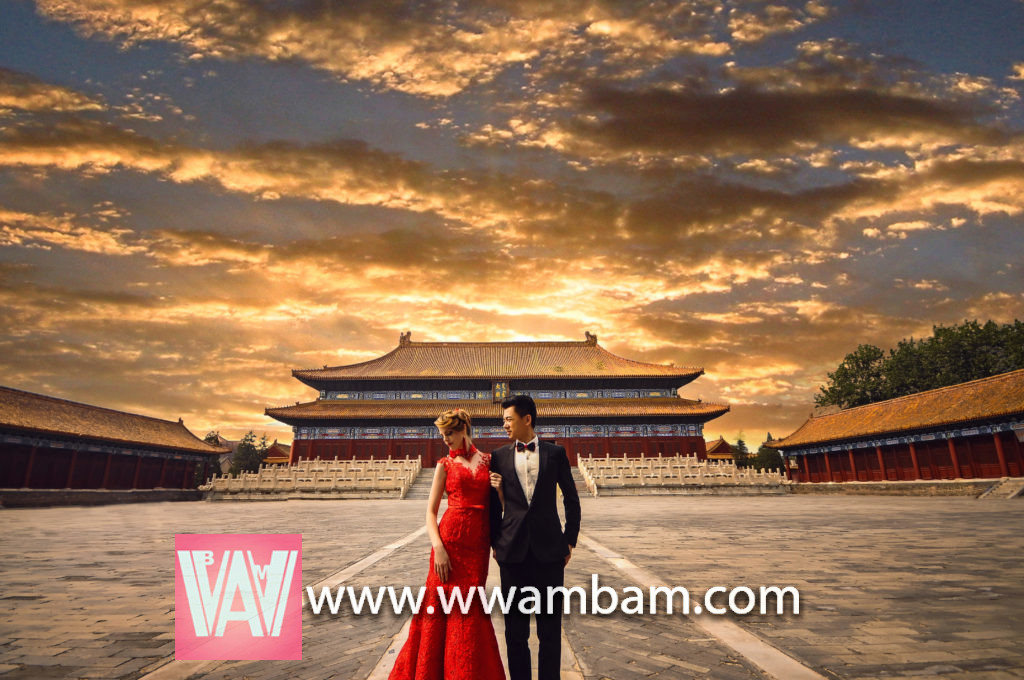
Australian Marie Smurthewaite (aka 江南) and her Chinese husband Wang Shuai (王帅), from Jilin, China, are a breathtaking sight among the splendor of Beijing’s Forbidden City. You can follow this pair (who sing and perform together in their group 帅江南组合) on Sina Weibo at 帅江南组合-王帅 and 澳大利亚的江南.

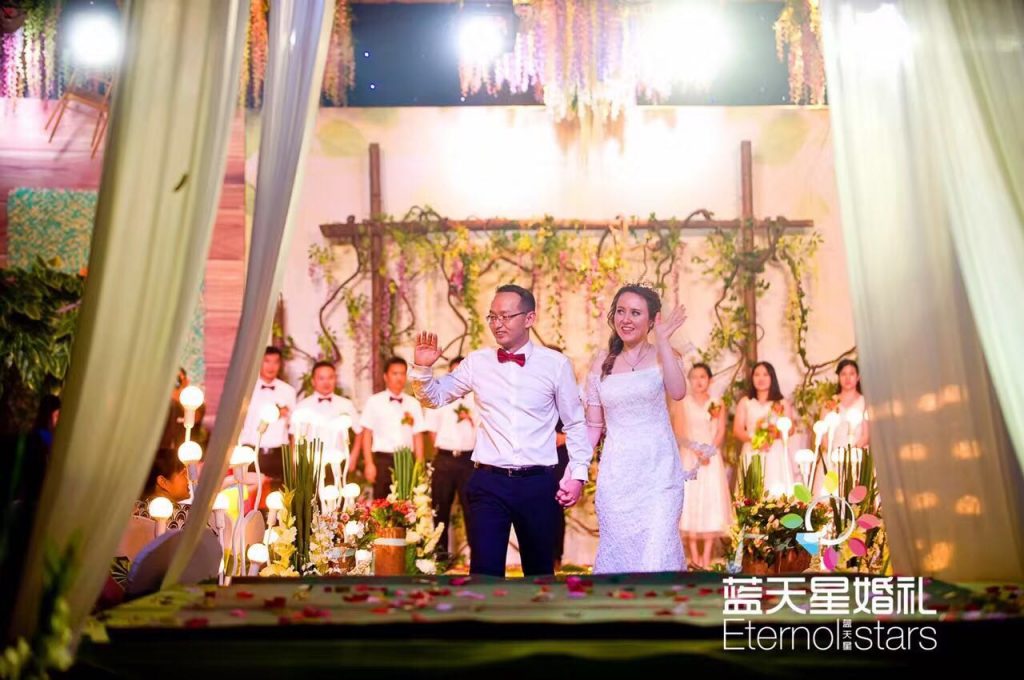
If the community of Western women and Asian men had a magazine, these two could easily grace the cover. This editorial fashion shot pre-wedding picture of Xenia Olivia of Spain and her Hong Kong husband J was taken in Interlaken Village in Shenzhen, China.
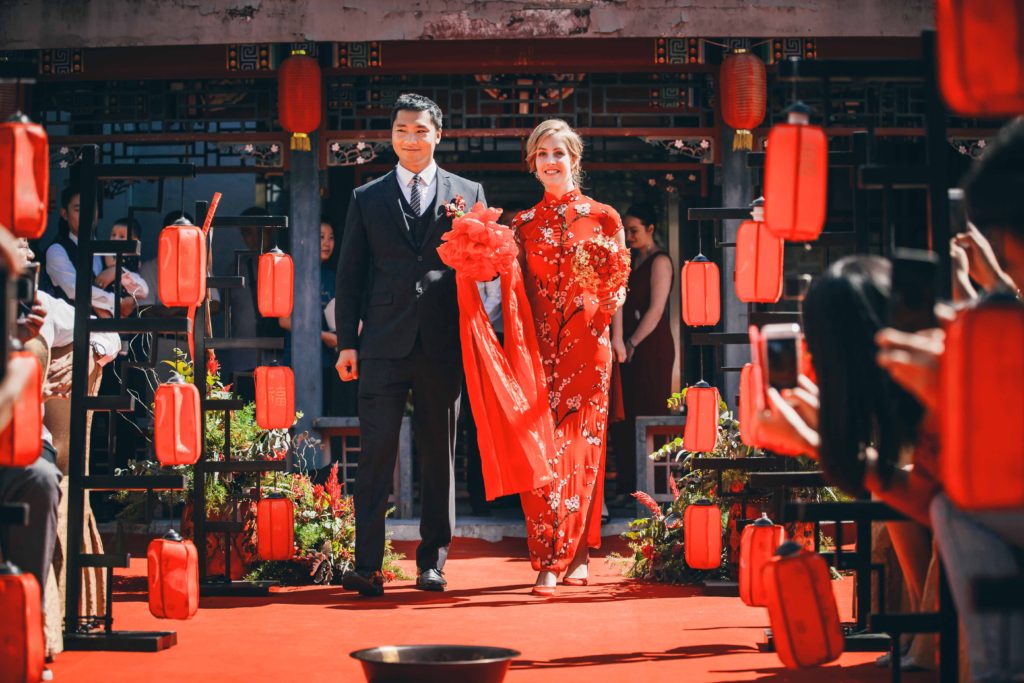
They truly raised the red lanterns in celebration of this gorgeous wedding in Beijing, China between Morag, who hails from Scotland, and her husband Peng, a native of Beijing, China.
Read the full post, with all 25 stunning photos, at WWAM Bam. And if you love it, share it!

Update on AMWF Family Needing Help: New Mother with Brain Cancer

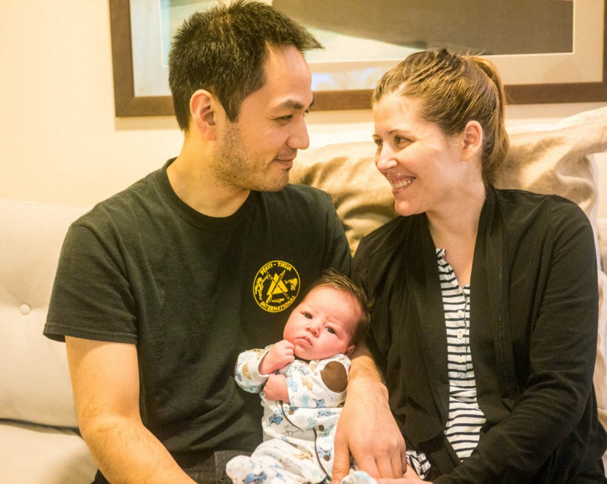
At the close of 2015, I shared with you the tragic news of how Alison McCarthy, the wife of fellow blogger Logan Lo, suffered a seizure just five days after giving birth to their son. That seizure was caused by a serious form of brain cancer, as the family detailed on You Caring:

On November 3rd, [2015] my sister Alison gave birth to her first child, a beautiful baby boy named Nathan. Five days later while recuperating at home, Alison suddenly had a seizure and was rushed to the hospital where a CT scan showed a large mass in her brain. Tragically, a biopsy has confirmed that Alison has a high grade glioblastoma brain tumor, a very aggressive form of brain cancer. Alison’s tumor is inoperable and average life expectancy is less than 18 months without treatment.

Miraculously, Alison is still here and still fighting, with the support of her family. At the request of a loyal reader, I wanted to share some updates with you on how she’s doing from Logan Lo’s blog. Here’s an update from February 20, 2017:

…I spoke to a cancer researcher last week too. He said that Alison was the longest lived butterfly glioma patient he’s ever heard of. It’s a dubious distinction, and still not enough for us.

On that note, had numerous friends and relatives ask if she can get a break: Can’t she just have a few months without swallowing 30 pills a day, without having needles stuck in her every week, without wearing a helmet of magnets 24/7, without inhaling an astringent four times a day?

The short answer is no.

Because they don’t become friends with other glioblastoma patients and caregivers. They don’t have to hear: We put David in hospice this week. Jessica had three new tumors on her last scan. Maddie passed away today.

It’s tough to hear because you hope everyone else can pull through. You hope your loved one can pull through.

But the truth is a powerful thing. The truth is, most people are dead from this damn thing within 18 months. And most of those people are people that can walk and use their arms. People that had 100% of their cancer removed. People that went to the best cancer centers in the world.

Most people start off far better than Alison and still died.

If there’s any way at all for her to survive this, it’s because she doesn’t stop until the job is done.

Here’s another update from March 15, 2017:

…We got good news last Monday that was taken away from us on Friday – the doc missed something. Our good news never ends up being good for very long.

So we’re back to trying to figure out what to do next.

Which means that I stay up at night, thinking of all our possible pasts, trying to determine the cascading consequences of my actions. Or inaction.

Logan Lo also wrote about how they’ve used the donations from You Caring:

No one’s asked me but I’m sure people are wondering: “What are you doing with all the money you’ve raised?” It’s only fair I answer it.

Originally, we weren’t sure how much our original insurance was going to pay towards Alison’s treatment. Her cancer was on the aggressive side of aggressive. The only “lucky” thing about our situation was that we were already on the platinum level of Obamacare, which essentially meant that we pay 10% and insurance pays 90%.

It has been a godsend to us. At last count, Alison’s 2016 cost of care was around $2.8 million dollars. Without the Affordable Care Act, Nathan and I would be bankrupt and Alison would be dead. It’s that simple.

But we’re not and she’s not, thanks to the ACA and everyone’s generosity.

With what’s left of our money, we’re paying for normal expenses – mortgage, food, bills – some experimental drugs, physical and occupational therapy, and exploring future options, like a potential cancer vaccine in Germany.

Mainly, though, we’re saving up to see what happens with the ACA. So we’re watching the news daily to see what unfolds.

You can follow Alison’s progress on Logan Lo’s blog, and support them at You Caring and/or by sharing their story on social media.

In the meantime, I’ll continue to keep this couple in my thoughts, wishing they will find new hope and courage in 2017.

Guest Post: Odd Questions I’ve Heard About My Interracial Love

Anyone who has ever dated outside their race will relate to this wonderful guest post by Chi, who blogs at Talking of Chinese.

Do you have a guest post you’d like to see featured on Speaking of China? Visit the submit a post page to learn how to have your words published here.
—–

The vast majority of people (whether consciously or unconsciously) date and marry within their own race.

According to Wikipedia, 97% of married white men and women in America are married to another white person, 89% of married black men and women are married to another black person and 91% of married Asian men and women are married to another Asian person.

If you happen to be in the less than 4% (according to Wikipedia only 3.9% of married couples in the US in 2008 were interracial couples – this is a big increase from less than 1% in 1990 but still an extremely low percentage) you are almost certain to get a question or comment about your interracial relationship at some point.

Both my fiance and I are Australian. I was born in Australia to anglo parents, he was born in China to Chinese parents.

While most people I’ve encountered don’t (at least openly) say anything about us being an interracial couple, I have encountered curiosity from both westerners and Asians as well as a few rare comments that are at least misguided if not racist.

The most common question I have gotten from Asians is a surprised “but how did you meet/get together with a Chinese guy?” while I’ve had both Asians and white people ask if I am “attracted to Asians”.

The first question stems mostly from curiosity, I think. While it’s fairly common to see white men with Asian women it is far more rare to see Asian men with white women (although I am happy to see it does seem to be getting more common).

The first question is also easy to answer – we were flatmates, we didn’t get along at all at first but slowly became friends and eventually fell in love.

The second question I honestly find bizarre. Imagine you asked that of a white person who was dating another white person “so, you are attracted to white people?”

No, I am not attracted to white people, or Asians, or black people or any race.

I am attracted to the man I am with because of WHO he is not what race he is.

I am attracted to him because he is strong but also prepared to show true vulnerability with me (something I have found to be incredibly rare).

I am attracted to him because he takes responsibility (for himself, for his decisions, for his family). He doesn’t expect anything from anyone.

I am attracted to him because he has an adventurous spirit and finds ways things can be done rather than putting them in the too hard basket.

I am attracted to him because he doesn’t shy away from things that are difficult, he faces challenges as they come up.

I am attracted to him because he knows what he wants and is prepared to work hard for it.

I am attracted to him because he prioritises what’s important to him and doesn’t let other things or other people run his life.

I am attracted to him because he’s upfront, he doesn’t manipulate or play games.

I am attracted to him because he is great at solving problems, an excellent traveller and can fix things.

Most of all I am attracted to him because we get each other on a level I find hard to explain – I haven’t felt this in any other relationship (even one that lasted for years).

Also, I think he’s pretty cute and his snuggles are second to none 🙂

Chi (her real name, no exotic background, pronounced Chai, like the tea) is engaged to a man who was born in China and grew up in Argentina before immigrating to Australia. Chi writes about her experiences (mostly her struggles trying to learn Mandarin) at www.talkingofchinese.com. —–

Speaking of China is always on the lookout for outstanding guest posts! If you have something you’d like us to feature, visit the submit a post page for details — and then submit yours today.

Photo Essay: How My Chinese Husband Shows Love in Everyday Moments

Later today after 8pm Beijing time, the new group blog WWAM Bam (Western Women & Asian Men – Breaking All Molds) will be publishing a group post on how our Chinese husbands show their love for us, including a short contribution from me. I wrote:

My husband is the kind of guy who shows his love in those thoughtful everyday moments. You know, the little things he does to tell me — through actions, not words — just how much he cares.

To honor Valentine’s Day, I thought I’d extend that with a photo essay highlighting some of those everyday moments – in no particular order — that remind me just how much he loves me.

#1: Bringing me a steaming hot cup of my favorite dragonwell tea every morning

Jun knows exactly how I love my green tea, and always has it ready just after I wake up. 😉

#2: Putting bandages on my cuts (like when I cut myself shaving)

I’m such a klutz…but Jun is such a sweetie to want to bandage my cuts.

#3: Blow-drying my hair after I shower

Once I step out of the bathroom, Jun is usually ready — blow-dryer in hand — to serve. Thanks Jun!

#4: Tucking the covers around me to help me stay warm

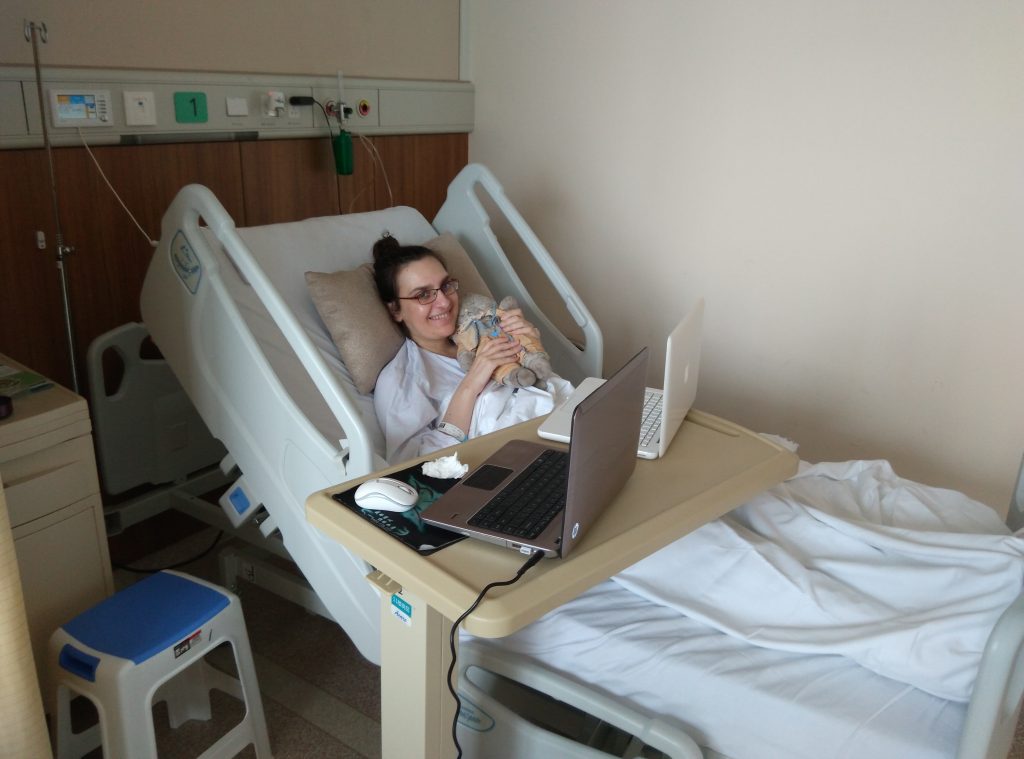
When Jun goes to bed after me or gets up before I do, he often tucks the covers snugly around my shoulders. (He also did it when I was in the hospital last year, which is where this picture was taken.)

#5: Taking the garbage out (and doing other “dirty jobs” around the house)

Ever since we married, Jun has this thing about “dirty jobs” (like taking out the garbage) — he prefers to take care of them. (Did I also mention he loves to help my dad mow the lawn, as he did last year when we went to the US?)

#6: Warming my hands in his when they’re too cold

I love it when Jun holds my hands, especially just to warm them up when it’s cold outside.

Happy Valentine’s Day, Jun. I love you.

An Open Letter to the Girl Whose Interracial Relationship Ended

(Photo by Shauntel Bruner via https://www.flickr.com/photos/follefille20/256052973/)

I was shocked to learn your steady Asian boyfriend of several years had left you.

Even though we’ve never met in person, I feel like you’re an old friend. Maybe that’s because we’ve both been in interracial relationships with Asian men. Or because I came to know you through what you shared with me over the years. Or even because you’ve supported me when I needed it most.

So I don’t think it’s enough to just say, “I’m sorry.” Sorry is such a small word, and small comfort. Honestly, I would rather give you hugs, just holding you the way friends have for me when I’ve weathered breakups.

Although I wasn’t the one on the receiving end of this experience, I could feel your heartbreak in the messages you sent to me. I know what it’s like. I’ve had Asian boyfriends break up with me out of the blue. I’ve spent days, even weeks, mourning the loss of a relationship.

One Chinese guy left me after studying abroad in Europe; he just couldn’t manage the distance. Another said goodbye to me because his parents could never accept a foreign girl. There was also that young man studying in Nanjing who I was smitten with for months; things never got off the ground because his parents insisted he marry a Chinese girl. That felt almost as bad as a breakup.

All of these were relationships I desperately wanted to continue. They did not.

With every breakup or rejection, my heart shattered. Somehow, it felt even harder to carry this sadness with me in China. When these Chinese men said goodbye to me, sometimes I wondered if the country was doing the same. Especially when family got in the way. Why did his family have to stand in the way of love?

Let’s just say I’ve weathered a lot of negative experiences in the dating world here in China.

You told me you still have hope. Hope was one thing that always guided me through the darkest hours of these breakups, resurrecting my ability to love again.

I feel like hope is as magical as love itself.

But then again, so is friendship. So remember you always have friends, like me. If you’re ever feeling lonely or desperate for someone to talk to, I’ll be here. We’ll survive this breakup together.

Guest Post: Nothing Can Prepare You for Living with Chinese Relatives

Becky writes, “there is nothing within a traditional British upbringing that can prepare you for living with Chinese relatives.” If you’ve ever lived with Chinese family, this post is for you.

Do you have a story about Chinese family or something else you’d like to share on Speaking of China? Check out the submit a post page to learn more about how to have your writing published here.
—–

slothloveWhen Disney taught me about happily ever after, they forgot to add in some additional clauses about cross-cultural relationships. In particular the challenges that accompany a AMWF (Asian Man, White Female relationship). Thus when I fell in love last summer to the sweetest, gentlest man I’d ever met, I never realised that the happy ever after I’d always longed for had inadvertently sent me on a cultural collision course. In fact, despite being in my mid-20’s, I assumed, as my good friends Cinderella and Pocahontas had once taught me, that love could, and would, solve everything.

As I’m rudely awoken on the other side of the planet a year or so later by my boyfriend’s mobile, I can’t help thinking I may have been a little naive. I pretend to be asleep despite knowing exactly what will happen next. Sure enough, within minutes the doorbell, which his mum has erected in his room, starts ringing. From this point I know that my cuddle time is very shortly to expire. As if on cue, I hear shouting in Mandarin coming progressively closer and, before I have time to move, his mum barges into the room and begins tidying around us.

It’s hours before I’d planned to get up. It’s Saturday. I want to cry.

I’d never planned to be in this position, but after my partner’s student visa had expired and following eight-months struggling with the many nuances of long-distance relationships, we’d decided that enough was enough and so, despite protests from my friends that I was crazy, I packed my bags and headed to live with my boyfriend, and his Chinese parents.

A month into the experience and I can say categorically that there is nothing within a traditional British upbringing that can prepare you for living with Chinese relatives.

In the UK, we are taught to strive for independence, in China children are taught to be deferent to their elders. In the UK we value personal space, in China the concept doesn’t really exist. In the UK we are reminded that it’s the taking part that counts, in China people are reminded that success (which is largely measured by the size of your bank balance) is what matters.

None of these things are right or wrong but the gulf between the two can, at times, seem unbridgeable.

Perhaps the hardest thing for a westerner trying to make AMWF’s work is that you have to completely redefine your concept of space. The fact that you are a grown adult and have been making your own life decisions for many years ultimately means very little. For example, you will be asked many times a day about your food; what you’ve had, when you had it and would you like anymore?

This is nothing more than an expression of love, and to be treated with such hospitality is something you’d be unlikely to find back at home. Nonetheless, when the first question you’re asked each morning is what are you having for breakfast, it can get a little grinding.

For all the times I want to scream (and there are many), there’s the time I get to spend with my best friend. The truth is that however hard it gets, being without the person you love would be far worse.

For those considering moving to the East to be with their loved one, you must be aware that the step you are trying to make is a huge one. You will feel nagged, claustrophobic and completely alien. If that sounds daunting, then it’s meant to. But if your partner is prepared to make you part of his family, and you’re prepared to sacrifice so much in moving to be with him, then it sounds like your awkwardly packaged happy ending might be something worth fighting for.

penanghillBecky is a self-confessed golf addict blogging about the world’s best, quirkiest and most obscure golf courses at The Nomadic Golfer.
—–

Speaking of China is always on the lookout for outstanding guest posts! If you have something you’d like us to feature, visit the submit a post page for details — and then submit yours today.

Guest Post: Kiss and Tell from China and the UK

What’s the difference between dating in China and the UK? Here’s one personal take on that question from Miriam, including the story of how she met her Chinese husband.

Do you have your own “kiss and tell” story you’d like to share here on Speaking of China? Check out the submit a post page to learn more about what we’re looking for.
—–

The author with her husband and his family.

I came to China at the age of 26 and already knew about more divorces than I could count on both hands and feet (including my parents), as well as many more single women my age than married (or happily partnered) ones. I’d also had enough experience with men to know I wasn’t impressed with the dating and marriage culture in the UK.

One evening in the UK I was out having a drink with two female colleagues after work. While I was at the bar, an attractive guy in his late 20s/early 30s came up to me.

“I just got promoted today and I’d love to buy you a drink to celebrate.”

I was flattered by this and looked back at my colleagues to make sure they didn’t mind me being waylaid. The two girls looked back and me with smiles on their faces and motioned for me to keep talking to him.

“Thanks, a gin and tonic would be great.”

We got talking and I found myself thinking: why would this guy not have a girlfriend already? To find out whether he was single or not I casually asked: “So where’s your girlfriend tonight?”

“Oh, she’s at home having a night in with the girls.”

What!?!? And this wasn’t the only time.

For several months a man used to come into my work in the UK just to talk to me. They didn’t seem like especially romantically driven exchanges – he would just ask me how I was and talk about other neutral topics. However, finding myself bored of being single, I took the plunge and asked him out. If he had a girlfriend he would decline and we would go back to regular, friendly chit-chat. I was pleased when he accepted my invitation for coffee, but still had a little doubt in my mind. I decided to act on these doubts and ask directly whether he was seeing anyone else.

“So, do you have a girlfriend?”

“Yes, I have two actually. One’s 25 and the other’s 32.”

I repeat: what?!?!?

He proceeded to talk to me about how much difficulty he had deciding on which girl he should be with, but felt no rush to make a decision about it right away. I was tired of this attitude towards dating, which seemed to be getting more and more common.

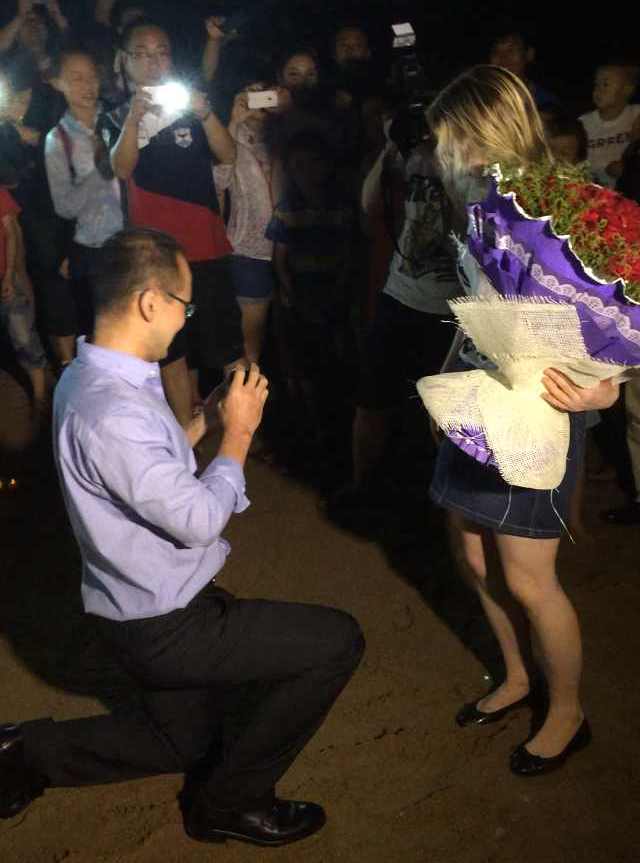
The author's husband proposing to her
The author’s husband proposing to her

Before coming to China, I was open to the idea that it might be for the long-term, as my job prospects would be better in China. On researching Chinese culture before I came to China, I was pleased to read about the emphasis on marriage and also pleased about the less liberal attitude towards sex. In saying this, I’m not suggesting that I thought it would be “easy” to get married in China, or that there would be any fewer relationship difficulties than I might have had in the UK. However, just knowing that marriage was valued and that both men and women were strongly encouraged to seek marriage at my age gave me a sense of security and confidence that I hadn’t had before.

I met my husband on a dating website. His profile told me he was 34 and “looking for marriage”. He messaged me first saying something about his surprise seeing a British woman on an Asian dating website and we exchanged a few emails after that. From his emails he was clearly talkative, charming and open-minded (willing to talk about anything from Astrology to books on popular science). And yes, he had excellent English (a very understandable barrier to AM/WF relationships as mentioned on Jocelyn’s blog in different posts). Just over a year after we met he proposed to me on a beach in Qingdao and the following year we got registered as married.

My family in the UK are all delighted for me and I’ve been told numerous times about what an excellent choice of husband I’ve made! My in-laws in China were also incredibly supportive of our relationship from the start and my mother-in-law especially treats me like I’m her flesh and blood daughter. Although we’ve gone through our rough patches, my husband’s complete commitment to the values of marriage and family have made it so much easier to resolve any conflicts or misunderstandings as soon as they occur. We’re both committed to making our future a happy and fulfilling one, even though we both know that a happy marriage takes work. I’m also delighted that my husband is now planning our approaching wedding party in China with as much zeal and enthusiasm as his bride!

partyP.S.: This comparison is just from my experience of living and dating in the UK and China. I do know many happily married British couples from my generation…just not as many as you might expect. Please don’t be offended if you’re a British woman who isn’t the least bit interested in getting married, or a British man who would like nothing more than to walk down the aisle, or a Chinese man who has ‘two girlfriends’ and isn’t looking for a wife!

P.P.S.: If you’ve had similar experiences dating in the West then you may be interested in the book Date-onomics: How Dating Became a Lopsided Numbers Game by Jon Birger. Although the book is written about dating in America, many of the points apply to the UK as well.

Miriam is a British woman married to a wonderful Chinese man. Her interests are reading, thinking and writing and she works as a teacher in an international school in China.
—–

Speaking of China is always on the lookout for outstanding guest posts! If you have something you’d like us to feature, visit the submit a post page for details — and then submit yours today.

Is Interracial Dating Easier for Asian Men in Non-English-Speaking Countries?

(Photo by Eleazar via Flickr.com)

When I recently shared my classic HuffPost piece Why Won’t Western Women Date Chinese Men? some of you spoke up to tell me I missed something.

Here’s what one anonymous e-mailer had to say:

… I have heard from a multitude of sources that places like Bali, France, Holland, Russia (and other eastern European countries) as well as various Latin American countries have the disparity between Asian men paired with local women vs vice versa as either being near equal or vastly skewed in favor of Asian males. I just wanted to point out that our dating situation is not so extremely pathetic in every part of the world as your article may make us out to be. From what I hear amongst Asian male travelers abroad is that the dating scene for Asian men is most bleak in Anglo nations. [Emphasis added]

Comments like this reminded me of the following quote in a piece in SFGate on interracial dating for Asian Men:

Any sexual imbalances that exist due to the unique alchemy of sex, race and class in the United States fade in the face of a globalized world; one in which the playing field is different, and so are the players and rules. In the Caribbean, for instance, intermarriages between black women and Asian men are relatively common. In fact, asserts AznLover member David Nghiem, a globetrotter who recently completed an epic bicycle trip across the entire length of Latin America, “Outside of the ‘anglosphere’ — North America, England, Australia and New Zealand — things are completely different. Asian men are in general seen as dateable, sexy and interesting. Most of the world has their own media, in their own languages and subtleties, and Hollywood’s attempts to spread stereotypes about Asian men and their sexuality literally stops at the anglosphere’s edge, simply because the rest of the world doesn’t understand it and doesn’t care.” [Emphasis added]

So, is the interracial dating scene friendlier to Asian men when you leave the Anglosphere, the English-speaking world? There’s some tantalizing anecdotal evidence in support of this.

In a post on Reddit titled The dating situation for Asian men in the West, someone noted:

…it seems that French women seem to have a thing for Asian men…. I’ve also noticed that Russian women don’t seem to dismiss Asians as easily as most other white women, maybe because of Russia’s proximity to Asia. In general, it seems that the worse that women speak English, the nicer they are to Asians….

In another Reddit thread, titled Where in the anglosphere is the best living opportunity in terms of how Asian men are treated? a commenter called out France as a great place to be:

Come to Paris, I’m french and with a little bit of introspection I had it easy…. Girls are open minded and you stand out a lot for breaking the stereotype if you’re Asian, funny and outgoing with above average game!

And I’m not even from Paris but the countryside. I’ve been on a weekend with the Gf in Paris and we’ve spent the entire day in China town and I kinda missed standing out because I was far from being the only Asian with a white girl like I’m used to. I also saw a lot of mixed group of friends with both Asians boys and girls with people from other race which is nice….

Here’s yet another interesting thread from Reddit called A reminder that Asian men are valued as husbands/boyfriends by women outside the Anglosphere – excerpts from the Polish community:

…It’s not a coincidence that women outside the Anglosphere view Asian men differently.

I came across a post of a Polish woman who had asked other Polish women if they had any experience with Asian men as she met an American Chinese whom she liked very much, but she wasn’t sure if our two cultures were compatible. The feedback was overwhelmingly positive!…

These women praised Asian men on many dimensions, from being “wonderful and sexy” to “playful, romantic, sensitive, responsible, honest, handsome” – you can read translated excerpts in the thread and also the original piece in Polish.

In Hey-Ai, a poster singled out a number of places he considered friendlier to Asian men, including France, Germany, Austria, Estonia, Sweden and Denmark:

…But overall, I think French people are very tolerant about Asian people….

Germany seems to be a very good place for Asian men. I was approached by pretty german girls in Munich, Budapest and NYC. And I often have very good relationship with german people usually.

I’ve just been in Austria a few days, but the perception of asian people seems the same….

Tallinn, Estonia. Asians people are almost non existent, there are very few tourists, so we are very rare. I felt very welcomed by Estonian people (men or women), they want to know more about you and some girls may flock you…

Northern Europe. I think that Sweden and Denmark are very open toward Asians people. They are very tolerant, polite and sometimes curious. I think a lot of people from Scandinavia have an interest about Asian culture. In fact, I met so many Swedish people when I traveled in Asia….

There’s also this article on Happier Abroad, which mentions:

…Large areas in Eastern Europe, in particular, the Baltic countries of Estonia and Lithuania (currently EU members), have shown to be very accepting and friendly to American Asian males, and is a place where a growing number of such travelers have been able to find incredible opportunities for social life and romance….

Belarus is another country where Asian men, even those who are not American, have been able to feel accepted, and where they have enjoyed good treatment and many new possibilities for abundant “romancing”.

Parts of Russia and other CIS countries (outside of Moscow and St. Petersburg) have also been described as very good for such Asian men…

Parts of Brazil, according to some sources, have proven to be excellent, and some Asian men have been able to mingle freely with the local population and date beautiful women there.

France is another country in which Asian men (those who can speak French- a necessity there) have reported that they have been treated quite well by the local females….

I would stress these are only personal reports. Still, unlike what I’ve laid out in my Huffington Post piece, these anecdotes suggest a more hopeful picture of interracial dating for Asian men.

But I’d love to hear from you too. What do you think? Do you have any stories or other evidence of how Asian men fare in the interracial dating scene outside the Anglosphere? Sound off in the comments!