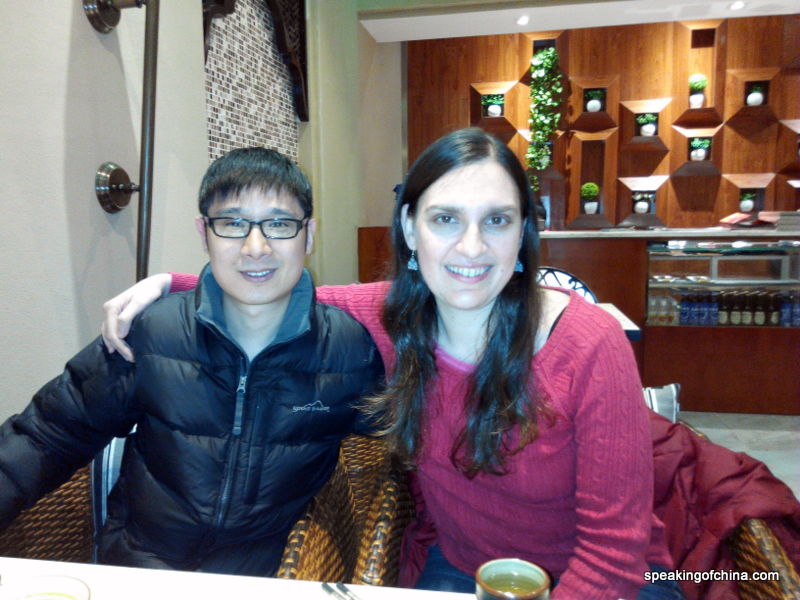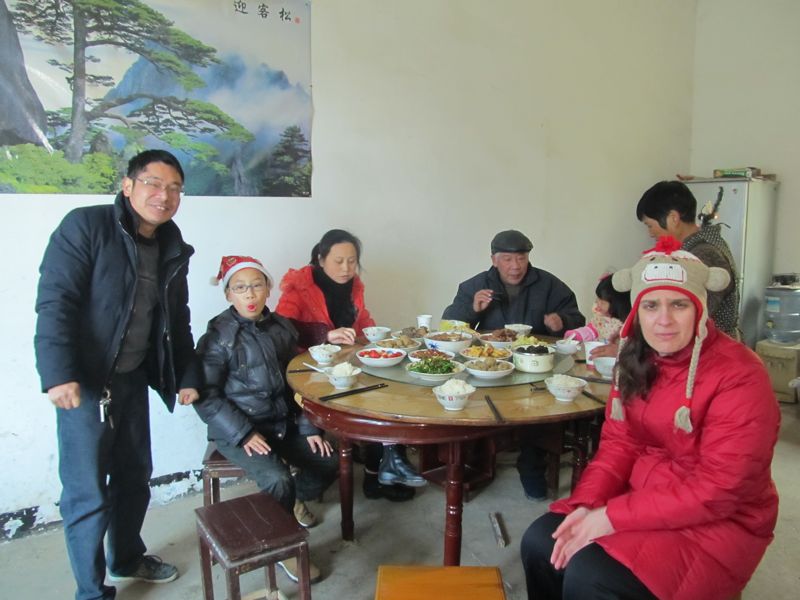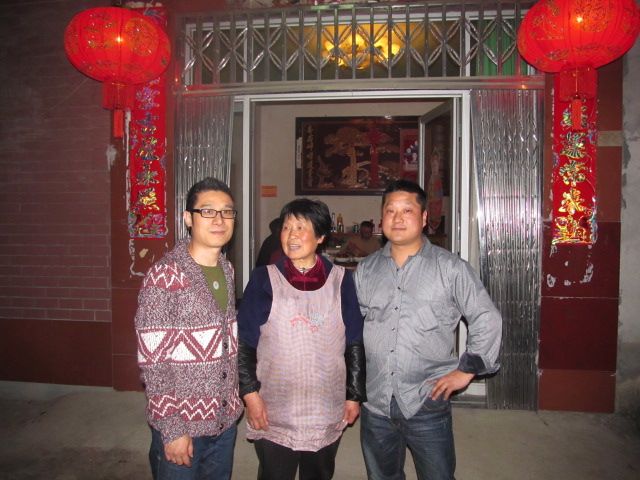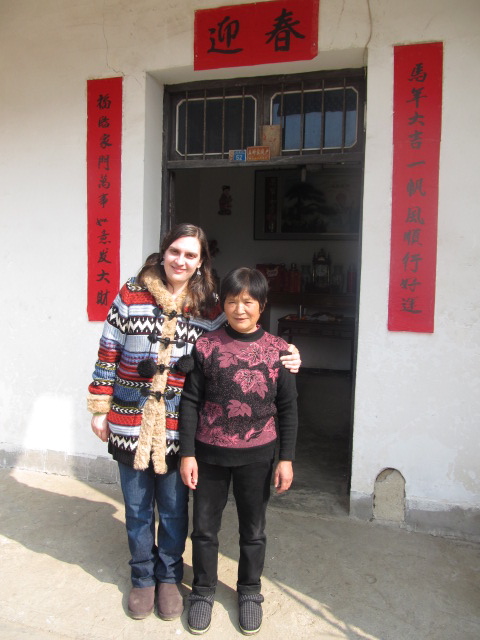
The Courage to Blog Personally About Love, Family and Marriage in China

IMG_2145

A few months back, I received an e-mail from a reader, who told me this:

I love to tell stories, too, but have so far limited myself to sharing them verbally so that I can measure the responses of the other person. I think what you’ve done takes quite a bit of bravery, and I hope one day I’ll be able to write some of my stories, too.

My first thought was, Me, brave? I thought about how I run this blog from my bed, tapping out stories on my laptop and responding to comments while in my pajamas or a comfy T-shirt. It sure doesn’t look like bravery at first glance. And sometimes, I’m convinced it looks kind of silly. (Seriously, you should see some of my “office” getups while I’m doing this blog.)

But as I pondered her words, I once again remembered how right she was. Yes, there’s courage in writing something incredibly personal about your marriage to a Chinese man, about living with him in China (and, before, America), and what it’s like to be a part of his family.

If there’s anyone who knows how scary it is to put yourself out there, it’s me. After all, there was a time in my blogging history when I quit big time. Yes, you read that right – I quit my blog. There was a time when I lost the confidence to write, and couldn’t find the courage in myself to overcome it.

Here’s a big secret for you – when I pressed that publish button on Speaking of China over six years ago, it wasn’t the first time. I actually started blogging on speakingofchina.com in 2002. I didn’t really know what I was doing as a blogger at the time (it was a pretty new thing back then). But I enjoyed posting my writing online, which was more like random journal entries about whatever was going on in my life in China. And some people actually read it – not a ton, but enough to make me care about it. I kept blogging for a few years into late 2005, when my husband and I had a major life change. We moved to the US together to pursue our dreams.

That’s when my blog completely tanked.

The stress of transitioning back into America, along with helping my husband through it, weighed upon my harder than I ever imagined. Well, one of the things nobody ever tells you about blogging is that it takes energy to be courageous, to write and publish your writing publicly. And because all of my energy was sucked away into this extraordinary life transition, I stopped blogging.

It wasn’t really a conscious decision I made. It was just that as the days, weeks and later months passed, I couldn’t think of a single thing to write that was actually worth sharing. And the longer my blog remained without a single update, I experienced an even more painful feeling – shame. I was ashamed that, for everything I had done to build up my blog in China, I was throwing it away because I lacked the energy and chutzpah to continue writing.

Guess what? It takes enormous courage to overcome feelings of shame about yourself. And I didn’t have that courage. Not yet.

So I quit. There was no fanfare, no big announcement, nothing. I just stopped posting on my blog and desperately tried to forget that I had even bothered in the first place.

As if that was possible.

As 2006, 2007 and 2008 passed, I watched my blogging peers in China – people who had started their blogs in China the same time as I had – make their mark in the blogosphere. A prickly feeling of shame gripped me whenever I encountered their names or posts online. I wondered, Could that have been me – if only I have summoned the courage to fight through my confidence issues and just keep blogging? And in the worst moments, I just felt utter despair – that I’d had my chance and wasted it by abandoning my blog.

It wasn’t until 2009 that the idea of blogging about something I truly loved occurred to me. I had just founded a writer’s group in town and gave a few talks to the members about the value of having a blog. At the same time, I was laboring on the first drafts of what would eventually turn into a manuscript for a memoir (one I’m editing as I write this). It was ironic that I lectured my fellow writers on starting up a blog when I had quit doing the one blog that I had always been my first passion.

Then in May 2009, inspiration arrived in my e-mail inbox from a most unlikely source – Rachel DeWoskin. (Or rather, Rachel DeWoskin’s publicist.)

Did I mention I’ve been one of her biggest fans over the years? Big enough to gush over her memoir Foreign Babes in Beijing in my business blog. (A blog that almost nobody was reading.) Well, because I happened to blog about her book, her publisher found me and invited me to review Rachel’s new novel, Repeat After Me.

Me? Really?

Well, that e-mail hit me with all of the power of a huge adrenaline shot – and sparked a host of crazy thoughts that I had hidden deep within myself a long time ago. Like, Could I start up Speaking of China again, in a different version? Could blogging help me build a career as a writer? Did I have the courage to finally do this? I had no idea and yet, I didn’t care anymore. My passion had such a momentum at that point that I couldn’t even slow down to consider all of the “what ifs” – and it was so unstoppable that it demolished those walls of shame, fear and discouragement that had held me back for years.

On May 18, 2009, I pressed the “publish” button for the first time on my revamped version of Speaking of China (that date has since become my blog’s anniversary or “blog-iversary”).

Of course, it’s one thing to find the courage to restart your blog, and another thing completely to be courageous enough to keep doing it. As any blogger knows, one of the greatest disappointments comes when you start out and you’re scraping to get anyone to read it. In my first few months, I was lucky to break 100 visits in a day!

It takes a toll. You wonder, what’s the point? Why I should I put myself out there when nobody’s bothering to read it? In my worst moments, I could feel those old feelings of shame and unworthiness creeping back into my mind, telling me I was no good, wondering why I was even trying. And, of course, kicking myself for quitting all those years before.

Miraculously, I didn’t quit. I kept posting, writing and believing in this new blog. So I made it through to late August 2009, which is when I ended up writing about the rarity of Chinese men and Western men in China. It was a big leap for me to tackle such a personal topic, and honestly, I felt pretty nervous about pressing the button on this one. It took some courage to push through it all.

I just never expected that post would go viral.

I also never expected that once the post went viral, the avalanche of comments that flooded my blog would make me so anxious. Like any blogger, I worried about what they were saying (or going to say) about me. A lot. And it took courage to just tell myself, It’s okay, you can keep blogging.

The anxiety didn’t end there. If anything, it got even worse once I committed myself even further to blogging (especially when I spent nearly five months publishing blog posts five days a week). Can you imagine what it’s like to wake up in the middle of the night almost five nights a week, struck with terror over what you’re about to publish on your blog? Or compulsively editing a scheduled post in the early morning hours because you’re afraid of what people will say about it? That it’s too personal or too revealing or the kind of thing people are going to laugh at you for?

Nobody ever told me that blogging would feel scary at times – that it would take courage to overcome all of those scary feelings.

Sometimes, I didn’t even have the courage – and that meant turning to my husband to help me through some of my darkest moments as a blogger and writer. I think pretty much every writer struggles with feelings of inadequacy. But when you’re posting your writing online without an editor behind you or any of the usual endorsements, it’s tough. You wonder, am I good enough? I swear there were times when I was powered by nothing more than hugs from my husband John, whose unswerving belief in me and my blog made all the difference.

Now that I’ve been doing this for over six years, you might think, Oh, well, now she doesn’t worry about any of that.

Yeah, right!

I still obsess about what people think about my writing. It’s not uncommon for me to feel nervous about what I’m posting. And there still are days when I wonder if I really am good enough. (Or worse, when I wonder if my best blogging days are over!)

I still have to rally that inner courage to continue writing, blogging and connecting with people out there.

In fact, I’m rallying it now as I write this post. It’s frightening to admit that I quit blogging, that my journey to the present was messy and incredibly imperfect and involved a lot of personal (and psychological) healing on my part.

So, yes, I may wear silly pajamas and T-shirts, and curl up on my bed, which has long been my unofficial office. Yet by simply letting my fingers dance across the keyboard in an effort to share an experience in my marriage to John or with his family, I’ve realized it really is an act of bravery. (Granted, an act of bravery in incredibly casual attire, but bravery all the same.)

And to the person who wrote me that e-mail, I hope that one day you too will find your own courage to share your stories with the world. I’ll be rooting for you.


How Could I Forget About the Cultural Differences in My Intercultural Marriage?

116The other day, someone asked me during an interview, “Tell me about some cultural differences between you and your husband.”

You would have thought I had a million things to say on the topic. After all, that’s a big part of what I blog about – the cultural differences between interracial and international couples in China.

But in fact, I couldn’t come up with a single decent example! (Crazy, I know.)

I mentioned what I thought were a couple of good ones – from differences in diet (I’m a vegan, he’s not) to those explosive arguments that my husband and I weathered early on in our relationship. Instead, the woman talking with me laughed in a lighthearted way – the kind of laughter that tells you that you’ve veered off course. “But those are personality differences, not cultural!” she said.

My face started to flush red. Had I just completely bombed this conversation? There I was, mentally lashing myself, wondering why I hadn’t prepared examples for this very important topic ahead of time?

Afterwards, I couldn’t help replaying the whole conversation in my mind – especially the part about cultural differences. Was it just nerves that made me forget?

But then I considered the most frustrating cultural differences in my marriage. You know, the “big fat Chinese wedding” Johns family insisted we have, which completed exploded all my dreams of having a small ceremony at their whitewashed rural family home. Or the way John’s relatives can’t stop pestering us about when we’re going to have a baby.

That’s when I realized why I had stumbled all over that question. The most obvious cultural clashes in my marriage weren’t between me and John. They were between me and his family.

When you think about it, it’s not surprising. John and I have been married for over 10 years. Yep, there’s more than a decade of marital experience between us – and if you’ve made it as far as we have, you’ve already worked through the major kinks in your relationship, including the cultural stuff. Cultural clashes? That’s like ancient history to us. I can’t even remember the last time we fought over anything cultural. Seriously.

IMG_2698

John’s family, however, is another story. I’ve written about challenges with weddings, things relatives say to us, pressure to have kids and more. And here’s the really interesting part – John feels that sometimes certain relatives don’t 100 percent understand him either.

John likes to say I know him better than anyone else in the world, even many close friends here in China. And you know what? I feel the same about him. He really gets me like no one else ever could — whether it’s how I can’t live without writing, my passion for birdwatching, or the fact that I secretly love really cheesy romantic comedies.

When you’re in an intercultural relationship with someone for a long time, and things work out, I think both people eventually come to a consensus or understanding on these things. You’re not negotiating cultural stuff all of the time, because it’s now second nature to you. John’s culture has become a part of who I am, and my culture has become a part of him.

As for his family, god knows that’ll never happen. Which means I can expect a future filled with plenty of cultural conundrums.

(Now if I can just remember this for my next interview!)

P.S.: One thing I should add – it’s always important to recognize and understand your partner’s cultural background when you’re in an intercultural (cross-cultural) and international relationship. To learn why, check out my article on Why Ignoring Cultural Differences in Cross-Cultural Relationships is Harmful.

P.P.S.: To the interviewers, if you’re reading, thanks for the opportunity — and for making the conversation a great one!

P.P.P.S.: To everyone else, if you’re curious about the interview (as in, who did it and where it’s going to end up) stay tuned in to my blog for some news later this month! 😉

Mom, if only you could have known the person I became after China

IMG_2145
My mother could never have imagined I would one day be married to a Chinese citizen and living in China.

What if my mother could have seen me in China? What if she could have met my Chinese husband John?

The question taunted me a few months back when I encountered this post by Susan Blumberg-Kason (my friend and author of Good Chinese Wife), recounting one time when her mother and father flew to Hong Kong to spend time with her. This was a regular thing for Susan’s parents, who loved to travel and longed to see their daughter more often than her occasional jaunts back to her hometown of Chicago. My heart ached as I scrolled through photos of her mom and dad smiling at the camera, knowing I could never have posted pics of my parents together in China.

After all, my mother had passed away long before I first boarded that Air China flight in 1999 headed straight for Beijing.

A pained expression flashed across my face as I recalled 1994, the same year my mother lost her battle with a late-stage skin cancer that had aggressively metastasized all over her body.

Weeks before she passed away, she gifted me with an Audubon guide to the Eastern birds of North America – a reflection of my career aspirations at the time, the hope that I would one day become an ornithologist. I spent huge chunks of my summers chasing after warblers, swifts and ospreys with a pair of binoculars, and dreamed that I might earn a PhD one day from Cornell, which housed America’s preeminent laboratory of ornithology. Even though I studied a foreign language, it was Spanish – and I viewed it as little more than fulfilling a requirement to graduate. I only wrote poetry or in my trusted journal, where I felt freer to pour my heart out than with anyone else. And when it came to my adolescent love life at the time, I dated a string of gangly, shy white guys – never daring to kiss outside my own race.

In short, my mother carried a very different image of me to her grave.

A painting of my mother done by my sister.

How did I end up in China? That’s a long story in itself – but suffice to say, I arrived in this country knowing hardly a phrase in Mandarin and little about the culture or history, never expecting I’d find a new career, a husband and a future for myself. I never expected I’d shed away much of the girl my mother once knew, turning into a completely different woman.

My greatest regret is that my mother will never be able to meet the person I am here in China – or, for that matter, to meet my husband John. Second to that, it saddens me to think that she’ll never be able to read my blog or anything else I’ve written – from the articles I’ve published elsewhere to essays I’ve contributed to two anthologies. What would she think of my decision to be a writer? How would she react when hearing me chortling away in Mandarin? Most of all, would she love my husband John? Would she see the same indomitable spirit in him that made me want to marry him?

I’ll never know the answers. And sometimes, when I contemplate these questions, I can fall into a melancholy funk, even crying. It’s funny that so much time has passed and yet, at times, it can feel as if my mother died just yesterday.

In light of all of that, here’s the strangest thing – I also don’t know who I would have become, had my mother not passed away.

Before her death, fear was my almost constant companion whenever I ventured into foreign settings. (I famously cried quite a lot during a high school trip to Spain without my parents, and I swear that were it not for the really caring teacher in charge of us, I never would have survived the entire journey.) I was such a homebody back then, so completely attached to my parents…and especially, to my mother. Deep down, I realize that her passing forced upon me one of the scariest things a young girl could ever face – and as a result, the fears I once had about living far from my parents and home eventually fell away. Without that experience, I don’t know if I would have had the courage to leave my own country for one I barely even knew.

A fortune teller in Taiwan once advised me that I had the ability to turn the bad things in life into something better. Was my unlikely detour towards China in the years following my mother’s death yet another example of this?

On this coming Mother’s Day, I’ll once again remember my own mother. And I know that, as much as I wish she could have been here to see me now, she’s still shaping the person I am in subtle and yet remarkable ways. That the legacy of being loved so deeply by a mother never really ends, even when the direction of my life takes me to places she never could have imagined.

Why It’s a Really Bad Idea to Teach Your Spouse Your Language

John and I have a bilingual relationship, but I've learned that's not the norm (and why it's not a good idea to teach your spouse your language)
John and I have a bilingual relationship, but I’ve learned that’s not the norm (and why it’s not a good idea to teach your spouse your language)

A few years ago, I wrote about the fact that my husband and I happened to fall in love with each other in English and Chinese, facilitating the bilingual relationship we share to this day. We still delight in the joys of playing around with language together (both in English and Chinese) which has only strengthened our relationship (making me once wonder, does the couple that wordplays together stay together?).

Yet after years of meeting countless other international and intercultural couples like us, one thing has become very clear to me – John and I are kind of unusual in the language department. That’s right, most of the couples I’ve encountered usually share only one language amongst themselves, usually either his or her native language (or sometimes, unexpectedly, a second language, which can make for some of the most fascinating how-we-met stories I’ve ever heard).

I was reminded of this recently when Anna of the Lost Panda wrote:

When I met my husband a few years ago my Chinese was already fairly good, and his English was non-existent to be exact. So naturally our language choice to communicate was Chinese….

But there is a downside to this effortless comfort in our language choice. My husband really wants to improve his English. Over the past years he has learned quite a few words from friends, students, the TV, and even books. But I haven’t taught him a single word.

This phenomenon defies what you might think about being married to someone whose native language is not your own. Isn’t “pillow talk” supposed to be one of those secret language learning “hacks”? How could you not learn someone’s language when all of your most intimate moments at home are spent in his or her presence?

Naturally, this line of thinking would then lead you to admonish someone like Anna for having shirked what must surely be one of her most important marital duties. After all, shouldn’t an English speaking wife be teaching her husband, a guy so desperate to learn the language?

Of course, the supposed fault can fall both ways, even on the would-be learner’s shoulders. I should know because many years ago, I was the girlfriend to a local Chinese guy in Henan and our relationship thrived in the one language that was otherwise useless to me outside of his cozy little bedroom – English. Back then, my Chinese was so poor that I even stumbled when I attempted communicating with my phrasebook. I remember turning a shameful shade of red one evening when, in conversation with a friend at my local gym, I admitted that I had learned hardly a word of Mandarin from my boyfriend at the time – as if I should have innately understood that being his girlfriend also meant becoming his language student at the same time.

Or is it really anyone’s fault?

It’s ironic that we believe native speakers have this almost contractual responsibility to pass on their mother tongue on to their spouses – to the point where their “other half” speaks as perfectly as them — lest they create a breach that would even have Mother Nature up in arms.

Yet at the same time, we don’t demand the same of other skills in a relationship. For example, I’m reminded of the marriage between my stepsister Maria and her husband Josh. Josh dishes out such tantalizing meals from the kitchen – the kind of stuff that could give the Food Network chefs a run for their money – while Maria, who was never as gifted as him in the culinary department, happily lets him work his magic. I’ve never heard anyone pressure her to become his sous chef and learn all of his secrets for making gourmet flatbread pizzas or filet mignon. And as far as I know, she’s not keen on being his student either.

Of course not! When you think about it, a marriage is supposed to be a relationship between two equals. It’s about loving and supporting each other through life (at least, in my world it is).

Jun and Jocelyn drink the wedding champagne together.Now that’s TOTALLY different from being a student and teacher, where there’s a power or skill differential involved. All of a sudden, you have one party as the polished expert and the other as the beginner waddling through their first steps and making tons of mistakes in the process. Trust me, this kind of dynamic will wreak havoc in your marriage – and I should know, because I once experienced it when I was forced to teach my husband to drive:

Anyone who has ever listened to the popular NPR show Car Talk knows that many a couple gets into an argument over something as simple as how to drive (and we’re talking about two adults who already have their license). There’s nothing more nervewracking than sitting shotgun as your sweetie is swerving in between lanes and on the verge of clipping someone else’s car – and it’s your job to yell at them and get the car under control.

In the end, I helped my husband successfully earn his US driver’s license. But ask me to do it all over again? Please…no!

Correcting your spouse when they’re starting out in anything – whether it’s driving or linguistic missteps – invariably leads to tension and uncomfortable feelings. Which is the polar opposite to the kind of contentment and love we’re looking for in our marriages.

Even worse, language is a tool for communication, the very tool we use to help foster that connection with our spouses. How can you connect with someone in a language when one of you is blundering his or her way through it? It’s not relaxing, not fun, and not at all the kind of thing you want when you’re in bed with your sweetheart late at night after a very exhausting day.

Can you see why it’s just completely crazy to expect that, say, a wife like Anna could teach her husband English? It’s not wonder that Anna reported in her post: “…I feel so awkward to speak in English with him…. every time I try to talk in English to my husband, the words just get stuck in my throat. I feel incredibly silly.”

Still, if you insist that spouses should teach each other a language, then I suggest sticking only to the most universal language of all – love.

What do you think?

“What will they think?” The fear of being seen as a failure before family at Chinese New Year

The other night, I suddenly burst out in tears over what might probably be the silliest of all things – the fact that Chinese New Year was fast approaching, and I was really afraid of spending it with the family.

It sounds ridiculous to admit that I was sobbing in my bed over another holiday with the family, but it’s true. And it was all triggered by an equally ridiculous thing – that none of my husband’s friends could lend us their extra cars.

We knew we weren’t in a position to rent a car to drive home for the holiday, but John and I had talked about borrowing one of his friends’ cars for a while. The only problem? We waited too long to ask for that second car – and of his friends who had an extra vehicle, all of them had been promised away to someone else.

As frivolous as it sounds, I had secretly daydreamed about driving back to the family home in a car. I often imagined myself, the sunshine beating down upon me like a spotlight as I stepped out of an actual automobile in front of the family – how great it would feel for them to see us driving home to the house (instead of taking the two buses we’d normally have to brave to make the trip back).

Deep down, I know it was all about face, our own mianzi. That I thought if only we had a car – even if it was a borrowed one – it would somehow make up for everything else about our lives that seems totally imperfect or open to family criticism. Like how we don’t have kids (and everyone keeps bugging us about it). Or how we don’t own an apartment or a car (unlike all of John’s relatives his own age). Or even the fact that we live in a tiny apartment. Having a car would somehow prove our “worthiness” before everyone else in the family.

IMG_2173

Well, without the “armor” of a borrowed car at our disposal, all of my fears came pouring out, along my tears. That everyone will notice how not much has changed for us over the year of the horse. That they might think we’re failures.

The problem of “what will others think?” has weighed upon me for much of my life. I’m a recovering perfectionist, exacerbated by the fact that I’m also incredibly sensitive. The old saying goes, “sticks and stones may break my bones, but names will never hurt me” – and yet for most of my life, I’ve taken to heart time and time again what other people say about me. Even though I should have known better.

Meanwhile, Chinese New Year is one of those times when it seems like everyone in the family makes it their business to tell you what they think about your life – whether it’s your marital status, whether you have kids, or even your own possessions. And even when people don’t say anything, sometimes just being the one who “sticks out” of the crowd – like, say, the only thirty-something couple in the family that doesn’t have a home, car, lots of money, and kids – can make you feel truly like the odd one out. As if you don’t belong (and, perhaps, never will).

Hence, all of my fears about heading home. And my crazy thinking that, somehow, having a car might make us “look better” in the eyes of everyone else.

I’d be lying if I told you I’m somehow over “what other people think,” because I’m not. I think it’s the biggest struggle of my entire life. It’s one I fight on a daily basis. Sometimes, it’s even the reason I can’t fall asleep right away; there are nights when I must whisper the mantra, “You are good enough just as you are,” over and over again, just like my mother used to whisper to me as a child when I couldn’t sleep.

Facing my family at Chinese New Year is like being tossed into my own personal three-ring circus of “what will other people think?” Specifically, people who I love and care about very much, which makes it even harder.

IMG_2151

Yet, in another sense, I also realize that facing my worst fear – what others who love me will think – could also be my salvation. That sometimes, you have to face the darkness and plunge right into it, instead of just running away (which tends to be my knee-jerk reaction to things I am afraid of).

That instead of hiding behind someone’s borrowed car in order to feel worthy, I can feel worthy right now, exactly as I am. And not because someone else – or, especially, someone in the family – told me so.

So in a few days, John and I will walk our way over to one of Hangzhou’s bus stations and board the first of two buses to make our way back to his hometown. I don’t know what my Chinese family will say about us this holiday season. But for the first time in a long time, I’m going to try out something new – listening less to their criticism, and more to my own heart (which I’m certain that deep down inside already knows I’m good enough).

Have you ever been afraid of what other people — family or otherwise — might think of you? How do you manager your own “demons”?

P.S.: When I first drafted this post, it seemed my husband and I had no possibility of borrowing a car to head home. Then a miracle happened — when my husband happened to call a forgotten old classmate, she offered us her extra car. Still, that car won’t change my perspective; I’m still planning on listening to my heart!

4 Habits I’ve Learned from my Chinese Husband

Everyone always say marriage changes you. Well, when you marry someone from another culture and country – like I have – you’re bound to change in ways you never would have expected growing up, picking up some of your foreign spouse’s new habits.

What habits have I learned from living all these years with John, my Chinese husband? Here are four of my favorites:

P.S.: This post was first inspired by a question posted on the AMWF Facebook Group Ichiro & Juliet, run by Ranier Maningding (who is also the guy behind The Love Life of an Asian Guy, one of my favorite blogs).

Drinking loose-leaf tea

IMG_0143

Some of my fondest childhood memories include watching my mother bob her teabag up and down in her cup before taking a sip. She introduced me to Orange Pekoe, Earl Grey, chamomile, peppermint and many other fine brews, the tea leaves or herbal blends always neatly wrapped in permeable bags. After all, who would want stray leaves floating around in your a teacup?

Or so I thought, until I arrived in China.

I’ll never forget the first time someone thrust a paper cup of hot steaming tea into my hands, the tea leaves drifting around without a single thing to keep them in place. I stared awkwardly at it, wondering how in the world I was going to drink without swallowing a leaf or having one end up plastered to my front teeth. Could anyone enjoy a cup of tea this way?

Years later, when John moved into my heart and life, he brought along his joy of drinking loose-leaf green tea. You might say it’s in his DNA – he is, after all, from Hangzhou, an area renowned for its world-famous Dragonwell. He never had a filter stand between him and his green tea leaves, and loved it. And, ultimately, he’s the one who helped me learn how to navigate a hot cup of the brew with loose leaves. (It’s a must-have skill in China, where people are always welcoming me with hot cups of loose-leaf tea everywhere I go!)

Now, his habits for drinking green tea (letting the tea sit a few minutes so the leaves begin falling to the bottom, blowing on the surface before taking a sip to keep the leaves away from your lips) have become a daily morning ritual for me. And a real pleasure, because the finest of these teas have complex, nuanced flavors that probably you’ll never enjoy from anything in a teabag.

Using toilet seat covers

IMG_2970

It was early in my relationship with John and we were out shopping in Watson’s, a health and beauty care store that’s so ultra-feminine I swear it repels men with its teal signage and bright pink tags all over the store. John came along with me because it was a weekend and shopping together was one of those things we liked to do (even if it meant bringing John into a store he wouldn’t normally visit without me).

So there I was, going through my long list of Watson’s must-haves (including their luxurious papaya-scented body creams), expecting John to just tag along for the ride, when the sight of one simple product made his eyes shine like two silvery 1 yuan coins.

Toilet seat covers.

“We need one of these,” he said. And he was all serious about it, sifting through the packages and many color options (most of them, admittedly, in pastels like baby blue and powder pink).

I was totally stunned. My family never used fabric toilet seat covers, and the few times I actually saw them (usually in an elderly woman’s home, along with lots of other cutesy décor) made me believe that guys usually ran screaming from the idea of putting one on your toilet.

What I didn’t realize, however, was that John had an incredibly smart reason for buying one – to protect our behinds from the shock an extremely cold toilet seat in the cold. After all, we didn’t have heat in our apartment (like most people in China who live South of the Yangtze River), which did actually make the toilet seat pretty frigid (especially at night).

Admittedly, he was also trying to be a gentleman in suggesting a toilet seat cover. Maybe it’s not a typical Hallmark moment, but worrying about your girlfriend’s butt getting too cold when she pees at night is one way to say “I love you” (albeit an unusual one).

So we bought one (in a pastel color – they were all pastels, so what can you do?) and later that night when nature called, that little piece of fabric between the cold seat and my behind made a big difference. I was hooked.

We’ve been buying toilet seat covers here in China ever since, to the point that now I’m the one reminding him we need one!

Of course, last time we shopped for toilet seat covers, John couldn’t help being the gentleman. He refused my suggestion choose the cheaper brand and instead told me to buy the one with the velvety cushion (pictured above). “It’s more comfortable for your butt,” he said. (Nothing but the best for his wife, right down to her behind! 😉 )

Having soup with fried rice

(photo by cm2003 from http://www.dianping.com/photos/3551102/tag)

Fried rice always struck me as a perfect meal in itself. Who needs anything else?

Or so I thought, until I met John. I’ll never forget that first time I prepared fried rice for him, when he requested a very specific thing on the side. A bowl of soup.

“Why do we need soup?” I was so tired and desperately hungry that evening, the last thing I wanted to do was fix something else in the kitchen.

“Because fried rice is too dry.”

It never before occurred to me that fried rice could be considered dry. That a side of soup might just balance out the meal in a way I never imagined.

That night, I dug out some instant soup from the cabinet and John was all smiles. Over the years, I kept serving it every time fried rice was on the menu, always to please John. Never did I think that, in the end, I’d come to think that fried rice and soup was one of the best combinations ever.

That’s why, last time we had fried rice for dinner, I was already pulling out the soup before the meal even hit the table. There’s something about the flavor of a nice hot soup (especially miso) that makes fried rice even more delicious.

Wearing slippers inside the house

IMG_0588

When I was growing up in America, we weren’t super-strict about taking our shoes off at the door. I often wandered upstairs still wearing my flats or sneakers and we almost never asked our guests to remove their shoes either (unless it was wintertime, where everybody’s boots were caked in wet snow). And when we weren’t wearing shoes, we opted for socks or went barefoot. In fact, I didn’t really use slippers much until I went off to college, and even then they were just your standard flip-flops for showering in the bathroom down the hall.

All that has changed since I married John. He’s from China and, like most people here, grew up with the habit of removing his shoes at the door and changing into a pair of indoor slippers or flip-flops. He likes this, because it keeps the outside dirt from coming into the house – a perfectly reasonable thing to do. (This, off course, makes me cringe a little when I think about all of the dirt I must have tracked around my family home!)

So now I’m an indoor slipper girl who owns multiple pairs of them. Soft, fuzzy slippers with woolen linings for the wintertime, and airy plastic flip-flops for showering and bumming around the house for the rest of the year.

Removing my shoes at the door has practically become second nature to me; I don’t even think about it and I never, ever ask, “Should I remove my shoes?” (which I used to do in America).

I’ve also become strangely adept at landing my feet perfectly into my slippers whenever I get up in the middle of the night to use the bathroom. Don’t ask me how I know exactly where they are – call it slipper intuition. 😉

What habits have you learned from your husband/wife or boyfriend/girlfriend?

The Ups and Downs of Spending Christmas Abroad (in a Country That Doesn’t Celebrate It)


My husband and I spent Christmas Eve in Shanghai's Xintiandi many years ago.
My husband and I spent Christmas Eve in Shanghai’s Xintiandi many years ago.

Initially, I had this perfect little holiday-themed post all sketched out to run today. It would snappy, upbeat and fun. Everything Christmas should be, right?

But after I let it sit for a day and revisited it, I realized it didn’t hit the right note with me. The thing is, I wasn’t feeling snappy, upbeat or fun.

I didn’t like the idea of having to force a happy face out there when it wasn’t the truth. The heaviness in my heart that weighed upon me as I stared at the computer screen told me I just couldn’t run that post in good conscience – not when I’m still facing my own share of ups and downs over spending Christmas in China, a country that doesn’t officially celebrate it.

I live here in China because it’s my husband’s home country. We moved back here from America in November 2013 and plan to reside here permanently for the rest of our lives. Part of that means that, sometimes, I’ll spend Christmas in China too.

In theory, the holidays can be a lot of fun here in China. We’ve got our own Christmas tree decked out in shiny ornaments, sparkling colored lights, and golden ribbon. “Santa Claus” already has gifts ready to go for us. We’re planning a romantic Christmas Eve dinner at our favorite restaurant, followed by a nighttime stroll beside the West Lake to take in the stunning views of the gardens lit up in pink, blue and green lights. On Christmas Day, we’ll climb up to the top of a beautiful pagoda and enjoy some breathtaking views of the city. It’ll be a Christmas like no other – in theory.

But in practice, in anticipation, it doesn’t always feel as fun as you might expect. I can hardly find a hint of the Christmas season on the Chinese TV stations I have available and it’s tough to find more than a handful of Christmas movies. In my community, I don’t see folks making the same Christmas preparations I remember from back home – and I have a feeling that my Christmas tree is quite possibly the only one in the entire block. I can’t make Christmas cookies at home and the ones I tried finding online looked nothing like the batches of warm, cinnamon-scented joy that used to come out of your mother’s oven. I told my family not to send Christmas cards because it can take up to a month to receive the mail here and, anyhow, I’d get it late because an out-of-town relative receives our mail; but a part of me secretly mourns the fact that this might just be the first Christmas I won’t receive a single physical Christmas card from anyone.

That’s what it feels like for me on some days – the days when nostalgia for Christmases past gets the best of me.

IMG_2986_2

Now, this isn’t the end of the world. I know that things could be far worse. I know this Christmas will come and I’ll be okay. In fact, in all likelihood it’ll turn out to be a nice Christmas. But that doesn’t mean that some days I won’t be a little down – like I have been recently.

It’s a relief to finally be honest about how I’m feeling – especially when it seems the online world would rather us all put on our best “holiday cheer” face. I was on Facebook the other day and confronted by a neverending stream of happy, confident, “we have perfect lives and never get depressed” kind of posts. It was really hard for me to read it at times. It was as if every ultra-positive post was saying to me, “This is the holiday season and if you’re not happy, there must be something wrong with you.”

But when I got off social media, meditated along with my favorite meditation song, and chatted with my husband about how I was feeling, I remembered that, in fact, there’s nothing wrong with me. That’s it’s all right to have those down days during the holidays – especially when you’re far from your family and friends in your home country. And that social media is often like smoke and mirrors, hiding away the darkest parts of our own lives.

My holiday wish to you is honesty – as in, being honest with yourself during this holiday season. No matter where you are in the world, perhaps you might find yourself facing another round of the holiday blues. Maybe you don’t even have the “I’m living abroad and missing family” excuse. Whatever the reason, know that it’s okay. Know that you’re not alone. A lot of us don’t speak up because it’s not cool or not the kind of thing everyone wants to hear. But we should.

I can’t predict exactly how I’ll feel on Christmas. I’d like to hope it will be a very merry Christmas. But I know that if it isn’t, I’ll give myself the permission to acknowledge that, to feel my feelings, and to remind myself that it’s part of being human. That life – even a Christmas spent abroad with your husband in China – will have its share of ups and downs.

Has spending the holidays abroad — or even, in a country that doesn’t celebrate your holiday — left you with a touch of blues sometimes?

6 Ways to Prepare for Meeting the Parents in China

“Nervous” doesn’t even begin to describe how I felt when I was about to meet John’s parents in rural Hangzhou for the first time. After all, once John told his parents he was dating me, his father famously told him that while he could be friends with a foreign girl, but shouldn’t date her.

Ouch.

Meeting the parents inspires all sorts of anxiety no matter where you live in the world – but even more so when you’re a foreigner and you’re about to meet the parents of your Chinese boyfriend or girlfriend here in China. On top of all the usual pitfalls, you’re also dealing with a different culture, language and living customs. It’s like getting ready for an exam when you don’t even know the entire curriculum.

Fortunately, I’ve survived meeting the parents. And I’ve heard from a lot of others who have successfully made it through. Here are 6 tips I’ve learned over the years to help you prepare for meeting the parents in China:

1. Ask your girlfriend or boyfriend all about their parents

IMG_1824
My husband’s mother is a fantastic cook.

There’s always a story behind everyone’s parents. Why not find out? It’s a great way to get to know them before you actually meet them and figure out potential ways to bond with them.

I always wish I had done this before I first met John’s parents. Maybe then I would have figured out how much his mom loves to cook – just like me — and asked to watch her in the kitchen more? Or that his dad likes to read classic Chinese texts – which I’m always interested in — so I could have asked him about, say, Confucianism or Taoist stories.

2. Learn everything you can about the hometown

John's hometown is famous for this mountain at the center of it all.
John’s hometown is famous for this mountain at the center of it all.

One thing I’ve learned from years of living in China? Everyone has a little hometown pride. So if you want to get a little closer to the parents, what better way than to learn about their hometown?

Start with your boyfriend or girlfriend first – they’re your closest experts – and also don’t forget to consult travel guides (which, depending on what attractions/history the hometown has, might tell you something). Most Chinese cities and counties even have Wikipedia pages in English, which might even teach you something your significant other doesn’t know.

3. Prepare gifts for the family

By Goaname (Own work) [GFDL (http://www.gnu.org/copyleft/fdl.html) or CC-BY-SA-3.0 (http://creativecommons.org/licenses/by-sa/3.0)], via Wikimedia Commons
Gift giving is such an important thing in Chinese culture – so important, that you don’t want to show up to your first meeting with the parents without a gift in your hands. Chances are, they’re going to entertain you with a home-cooked dinner and even put you up for the night. There’s no better way to show your appreciation from the moment you enter their home than bearing a present for them.

I’ve written a number of posts on what to give to your Chinese family (including ideas for those of you coming to China from overseas). Honestly, I would ask your girlfriend or boyfriend first for some ideas before rushing out to the store.

But if they can’t think of anything – and you’re still stumped about what to purchase – repeat after me: fruit basket. You really can’t go wrong with buying them a nice fruit basket. You’ll find fruit baskets at any major supermarket in China or those fruit stores on the street. Everyone loves them.

4. Learn a few phrases in the local dialect

IMG_2038
My husband’s grandmother only speaks the local dialect.

Mandarin Chinese may be the official language – but chances are, it’s not your girlfriend’s or boyfriend’s mother tongue. The vast majority of people grew up speaking a local dialect. It’s their linguistic equivalent of that comfy pair of jeans you love wearing around the house, and that’s what you’ll probably hear around the dinner table.

Just think how amazed they’ll be if you can master a handful of simple words or phrases in the local dialect! Even if it’s as elementary as “Hello” or “Thank you” you’ll probably have everyone in smiles. Or laughing! After all, you’re probably the first foreigner they’ve ever seen speaking it. (My husband always giggles whenever I try out his local dialect!)

5. Dress casual, comfortable and err on the conservative side

IMG_2151

Here in urban China, I’ve seen enough Daisy Dukes, mini-skirts and skorts, and tank tops to know that fashion has come a long way since the days of dull blue and gray Mao suits. And after witnessing my sister-in-law pull off an ultra-short jean skort at Grandpa’s funeral – something I would have never dared to do for a funeral in the US — I also know that my idea of what’s appropriate doesn’t always apply.

Still, if you want to give Baba and Mama a great first impression, you’re better off leaving your Daisy Dukes and ultra mini-skirts behind. Many Chinese parents feel wary about having foreigners in the family, and stereotypes about foreigners (such as the idea that Western women are promiscuous) only fuel their concerns. Yeah, I know it’s unfair, but that’s the reality.

Look at it this way. Even in Western countries – like the US, my home country – people agonize over what to wear to meet the parents for the first time, enough to write articles about it. Here’s what one of them wrote: “No matter how classy your mini-dress is, his mom will say the skirt was too short.”

Enough said.

Instead, go for something that’s casual, comfortable and on the conservative side. Think nice jeans and T-shirts (with long or short sleeves) or sweaters if it’s cooler out; for summer, you can do nice shorts or skirts just above the knee or below.

Forget about wearing a nice dress or suit, unless you’re told otherwise. This is, after all, a country where people routinely show up to wedding banquets dressed in jeans, T-shirts and sneakers. Seriously!

5. Dress to stay warm enough in their home

Even though John's hometown is not that cold in the wintertime, I must wear multiple layers to stay warm inside homes without central heating.
Even though John’s hometown is not that cold in the wintertime, I must wear multiple layers to stay warm inside homes without central heating.

My husband is still shocked that I never used to wear long johns under my clothing while growing up in Cleveland, Ohio. Even though I faced a winter that could last as long as four months or more, with below-freezing temperatures and tons of snow, staying warm was never an issue. We had central heating at home and pretty much anywhere we traveled. Even our car had heat.

Meanwhile, my husband’s hometown sits at the very same latitude as New Orleans and Houston, and he’s spent his entire life counting on long johns to help stay warm through the fall, winter and spring. Why? Because he’s used to having no heat inside the house, wherever he is – even in school.

So don’t just look at the weather when you’re packing your bags – ask your girlfriend or boyfriend what it’s actually like in their home. Find out whether they have any heat, including hot water, and if it will be available when you’re there. Also, ask him or her what they usually wear around the house at home.

Here’s a good general rule of thumb – China’s Yangtze river is like the Mason-Dixon line of heating through the country, where North of that people usually have some form of heat provided by the government (they turn it on sometime in November and off sometime in April) and South of that people do without. That said, there are ALWAYS exceptions and it pays to ask ahead of time.

And please, if you’re traveling during the winter months, don’t forget your long johns – trust me!

6. Bring photos

I brought photos like this one of me and my grandmother to show to John's parents.
I brought photos like this one of me and my grandmother to show to John’s parents.

As the old cliché goes, a picture’s worth a thousand words – and who couldn’t use an extra thousand words or two when you’re in front of two parents you’ve never met? Photographs provide a perfect way for you to connect with your significant other’s Baba and Mama without saying a lot. You can show them your family, pictures from your hometown and even the beautiful places you’ve visited. Thanks to the photos I lugged around to my first visit to meet John’s parents, I was able to break the ice with his dad and finally make a connection – enough to make him realize I was the kind of foreign girl worth dating (and, later, marrying).

What has been your experience with meeting the parents? What advice do you have?

On sexual assault in China (and how my husband “guards my butt”)

IMG_1971

Whenever we take walks in the park every afternoon, my Chinese husband John takes on what he considers an incredibly important responsibility.

He “guards” my butt from the wandering eyes of other men.

I always used to think John was going a little overboard when, not long after we moved to Hangzhou, he chose to start walking behind me. At some point, I know there was a conversation between the two of us that went something like this:

Me: “Why are you walking behind me?”
John: “To protect your butt.”
Me: “My butt needs to be protected?”
John: “Absolutely!”

I never thought I had the kind of butt – like, say, Kim Kardashian – that could go viral or inspire butt-envy. Why would anyone need to guard it?

But then there was this one day where, while strolling through the park (yes, with John behind me guarding my own behind) we came upon a group of men. There were at least three of these guys and they were loitering on this bridge we had to cross. I happened to be wearing a light pink shirt over a hot pink sports bra, and a pair of navy blue spandex exercise pants that fell just below my knees.

Most days, I try not to stare too much at the people around me – especially men – because, chances are, they’re already looking at me. I’m a foreigner, after all.

On this day, I wasn’t looking directly at any of these men, yet I felt their dirty stares all over my body. This wasn’t foreigner curiosity in China, but something perverted.

Behind me, my husband whispered in my ear, “Move, get away from them. Fast!” We both hurried past them across the bridge and jogged until they were far away and out of sight. Even though not one of those men had laid a hand on me, I still remember feeling disturbed by the whole experience. I wondered, How could someone look at me like that? Why had I never noticed this before?

The thing, once this happened, I started noticing shades of the same behavior while walking through the park. Like glancing back at some guys we just passed, only to catch them stealing a look at my behind. Or passing a group of men, ogling me in a decidedly uncomfortable way.

I don’t think it’s fair to simply blame the attention on my spandex pants or how my butt happened to appear while wearing them. Still, as ridiculous as it sounded for my husband to “guard my butt,” I understood he did it for love.

(Well, love and the fact that he likes to stare at my butt while we walk.) 😉

IMG_20140823_182101
My husband John, me and our friend Caroline on a walk in the park, wearing my spandex pants.

So why am I writing about this experience? Something that, frankly, I push from my mind more than I want to admit?

I was reminded of it a few months ago when I came across this blog post from the Shandongxifu, describing how she was sexually assaulted by three men in Shenzhen (and, by the looks of it, in danger of being raped):

There were 3 men. They were middle aged and obviously transients to the city from their country-side, labor-worn appearances.

“She speaks Chinese!” one of the men exclaimed. Now I had really sparked their interest. They got closer and started to critique my appearance more. They told me how I didn’t look American because I wasn’t fat. They said they loved my blond hair. I kept walking assuring myself that I was in public in broad daylight, but I felt awkward.

They started talking about my pale skin. Then as one of men pointed out I was slighted tanned on my chest, he literally used his hand to point it out by brushing his finger above the opening of my button down dress.

I reactively swatted his hand away and looked the man in horror. The men smiled. I was feisty.

I started forward but was detained. The other men had grabbed my arms and my attempts to get away only brought them forward with me. Panic rushed through me. I momentarily looked around at the passersby who watched me with curiosity and pity. I had been in China before and I knew that no one would ever help a stranger; They would simply stop and watch. I had been in Shenzhen long enough to know that the police wouldn’t help, even if I had happened to see one in that very second. I was scared.

I fought against the three men as they started to pull me away out the crowds, move their hands towards forbidden places, and start to tear at buttons on my dress.

I am not a passive person. I have dealt with sticky situations before but never 3 men at the same time. I fought and struggled and squirmed some more. I finally got an arm free. It was enough freedom to physically assault one of my assailants. In all of the times I had been harassed in China, I had never physically punched anyone for fear of legal ramifications as a foreigner. I wasn’t thinking about that right then.

I could see the shock on the hit man’s face. Did Chinese women not fight back? Did he still think I was a prostitute and would take it as long as I was paid? I don’t know, and I didn’t stay to find out.

While the 3 men were momentarily stunned, I freed my other appendages and ran. I took off in my heels running through the busy crowd. I can run distance so I knew I would out run them. I ran as fast as I could and went a round about way back to my apartment in case they somehow kept up. I ran into my building and up the 9 flights of stairs. No one was following so I opened the door, went inside, and locked it. A million thoughts rushed through my mind, but I couldn’t sort through them and I couldn’t breathe.

Whoa.

The worst thing, though, is that I can relate to her experience. I was once sexually assaulted in China myself. And like the Shandongxifu, I’ve not wanted to share it for a long time – believing, as she did, that somehow it was all my fault.

It happened in Beijing when a driver a friend arranged to send me to the airport ended up touching one of my breasts. He did it just before I was about to leave his car – as if he had wanted to touch me the entire time and held out for the right moment. It was creepy and despicable and the kind of thing I hope will never happen again.

I wore this same outfit that day when the driver in Beijing sexually assaulted me.

I honestly thought nothing like this could ever happen to me in China. I always used to feel so safe and even protected in China. Years ago, I often told friends how I would walk through Shanghai late into the evenings and never feel worried about getting raped or jumped by anyone.

But now I wonder if I really had it right or not. Was I safe in Shanghai because we lived in the center of the city, where lots of people streamed through the streets day and night? Or was I simply naïve?

But then again, I never thought I would be sexually assaulted in the US either – and that also happened to me. Back in the Spring of 2001, while riding in the passenger side of a fifty-something man’s car, he suddenly laid his hand on my thigh and caressed it in a creepy and even disgusting way (I don’t suppose there is any other way when you’re touching a woman who doesn’t want you to touch her that way). This silver-haired fellow was the president of a professional organization I belonged to (I never went to another meeting again after that). There I was, utterly trapped in this man’s car (with no cell phone, mind you), with the frightening thoughts flashing through my mind. Is this it or will he do more? Will he do worse?

Thankfully, that’s all he did.

One night, while John and I were traversing the park beside our community in Hangzhou with our Chinese friend Caroline, she said she was feeling a little nervous. When I questioned her about it, she told us she was worried about running into bad people in the park. John naturally reassured her that, with the three of us together, that was unlikely to happen. It did reassure her, in a way. But then she admitted she wouldn’t dare to walk through the park at night on her own. “I’d be worried about rape or assault.”

It’s the kind of thing I always used to think to myself in the US. And now that I’m in China – and understand that the same dangers exist here too – I realize it’s my worry too.

What do you think about this subject? Have you ever experienced sexual assault?

“Is he your foreign exchange student?” When you’re a white woman who looks older than her Asian husband

Actually, he's my husband.
Actually, he’s my husband.

I never thought a simple trip to the grocery store with my husband would give me one of the most embarrassing experiences I’ve ever had.

It happened while we were checking out of a grocery store in the US. My husband, as usual, started bagging our stuff while I pulled out my credit card to pay for everything. It was just another typical checkout experience – until the cashier, a white woman in her fifties, started chatting with me.

“Nice to have some help,” she said, referring to my husband who had already bagged everything and placed it neatly in our shopping cart.

“Yeah, he is pretty great.” I couldn’t help but smile with pride. Who doesn’t love it when her husband is the envy of others?

Or so I thought, until the cashier opened her mouth again.

“So, is he your foreign exchange student?”

That’s right – a casher in America actually mistook my own husband for some foreign exchange student I was hosting.

A flush of red mounted my face as I realized exactly what this meant. One, that she had noticed my thirty-something husband was a foreigner and thought he looked old enough to be an undergraduate in college or younger. And two, that she thought I looked too old to be his wife.

She might as well have pointed out every single wrinkle on my thirty-something face, because that’s exactly how embarrassed I felt.

I cleared my throat. “Actually, he’s my husband.”

“Oh, I’m so sorry!” The cashier seemed genuinely apologetic, right down to the way her own cheeks turned a self-conscious shade of scarlet.

But it was too late for that. She’d already put the idea out there. And let me tell you, I never hurried out of a checkout line faster than that moment.

I never thought a simple trip to the grocery store with my husband would give me one of the most embarrassing experiences I’ve ever had.

Honestly, I shouldn’t have been surprised. Long before this ever happened, relatives and friends doted on John’s youthful appearance. In fact, it seemed like a month never went by in America without my dad saying, “John, you look like you’re still in high school!” They schooled me a reality that had remained hidden to me until I married an Asian man: the popular belief that Asians look younger than white people.

But until that moment in that checkout line, I was blissfully unaware that some Americans might actually think I was old enough to, say, be a guardian to a foreign exchange student. And might mistake my Asian husband for said student.

Of course, I’m not the only white woman in an AMWF relationship who has had an embarrassingly personal reminder of how Asians look younger than white people, as Constance of Foreign Sanctuary reminds me in her post My Taiwanese Husband & His Most Amazing Moment in Vegas!!:

While dining in Las Vegas a couple of years ago, my 30-something year old husband (who, might I add, is two years older than me) heard the most magical words from a waitress when he tried to order a beer.

‘May I see your ID, please?’

Smiling from ear to ear, his dimples as defined as ever, like a kid in a candy store, he turned to me and asked me for his passport which I was holding for safe keeping in my bag.

He passed her his passport and she began to examine it. She looked at his passport photo, she looked at him, and then back at the photo. She continued by checking the edges, clearly thinking that it must have been a fake one.

Then, she said ‘Oh my God! You are in your 30’s!!’

Talk about inflating someone’s ego with one sentence!

Trying to salvage some dignity, even just a little, I casually asked the following question.

‘Would you like to see mine as well?’

And to add more salt to the wound, to drive the dagger further into my heart, she made the following reply:.

‘No, that’s fine! You’re OK.’

Oh, the humiliation! The embarrassment!

Ouch.

I’ll be honest – for the longest time, I swore I would never go public with this encounter in the grocery store. I wanted it to be like the diary I used to hide under my mattress in grade school, forever safe from scrutiny. Who wants to admit before the world that, in fact, people think she looks old?

(John to me): Is that a gray hair?

Yet, the older I get, the more I realize the importance of accepting myself, warts and all. After all, aging is a reality for everyone. Maybe some of us are lucky enough to look younger (ahem, John), while others are not so lucky (ahem, me!). But in the end, we’re all headed in the same direction.

And honestly, who hasn’t seen the person with the dyed hair that’s obviously there to hide the gray and isn’t fooling anyone? Or someone like the late Joan Rivers, with so much plastic surgery and botox she doesn’t even look real anymore?

I cringe over the extremes we turn to just to hide our real age, when the treatment we really need is simple — accepting ourselves exactly as we are.

I also recognize that looking younger isn’t always what it’s cracked up to be, as Mabel Kwong points out in her post “Asians’ Youthful Looks: A Blessing or A Curse In Disguise?”

Besides, my husband still thinks I’m the sexiest woman in the world. He can’t keep his hands off me – wrinkles and stretch marks and hidden gray hairs and all. He loves me just as passionately as that night over 12 years ago when we first kissed beside the West Lake.

So what if he doesn’t “look” like he matches me in age to some folks? I know he’s my perfect match and that’s all I’ll ever need to know.

Picture 462

Have you ever had an experience where someone mistook you or your boyfriend/girlfriend or spouse for a different age? How did it make you feel?

P.S.: This post was inspired by Constance’s post My Taiwanese Husband & His Most Amazing Moment in Vegas!! Head over to Constance’s blog Foreign Sanctuary and read her post, as well as the comment section, which is packed with examples of other people who have had embarrassing experiences of their own!